Article

First Detection of Meloidogyne luci (Nematoda: Meloidogynidae) Parasitizing Potato in the Azores, Portugal


1
Instituto Nacional de Investigação Agrária e Veterinária (INIAV, I.P.), 2780-159 Oeiras, Portugal
2
Direção Regional da Agricultura, Azores, Vinha Brava, 9700-240 Angra do Heroísmo, Portugal
3
Direção-Geral de Alimentação e Veterinária, DGAV, 1349-017 Lisboa, Portugal
4
GREEN-IT Bioresources for Sustainability, ITQB NOVA, Av. da República, 2780-157 Oeiras, Portugal
*
Author to whom correspondence should be addressed.
Plants 2021, 10(1), 99; https://doi.org/10.3390/plants10010099

Submission received: 22 November 2020 / Revised: 31 December 2020 / Accepted: 4 January 2021 / Published: 6 January 2021
(This article belongs to the Special Issue Plant Parasitic Nematodes)

Abstract

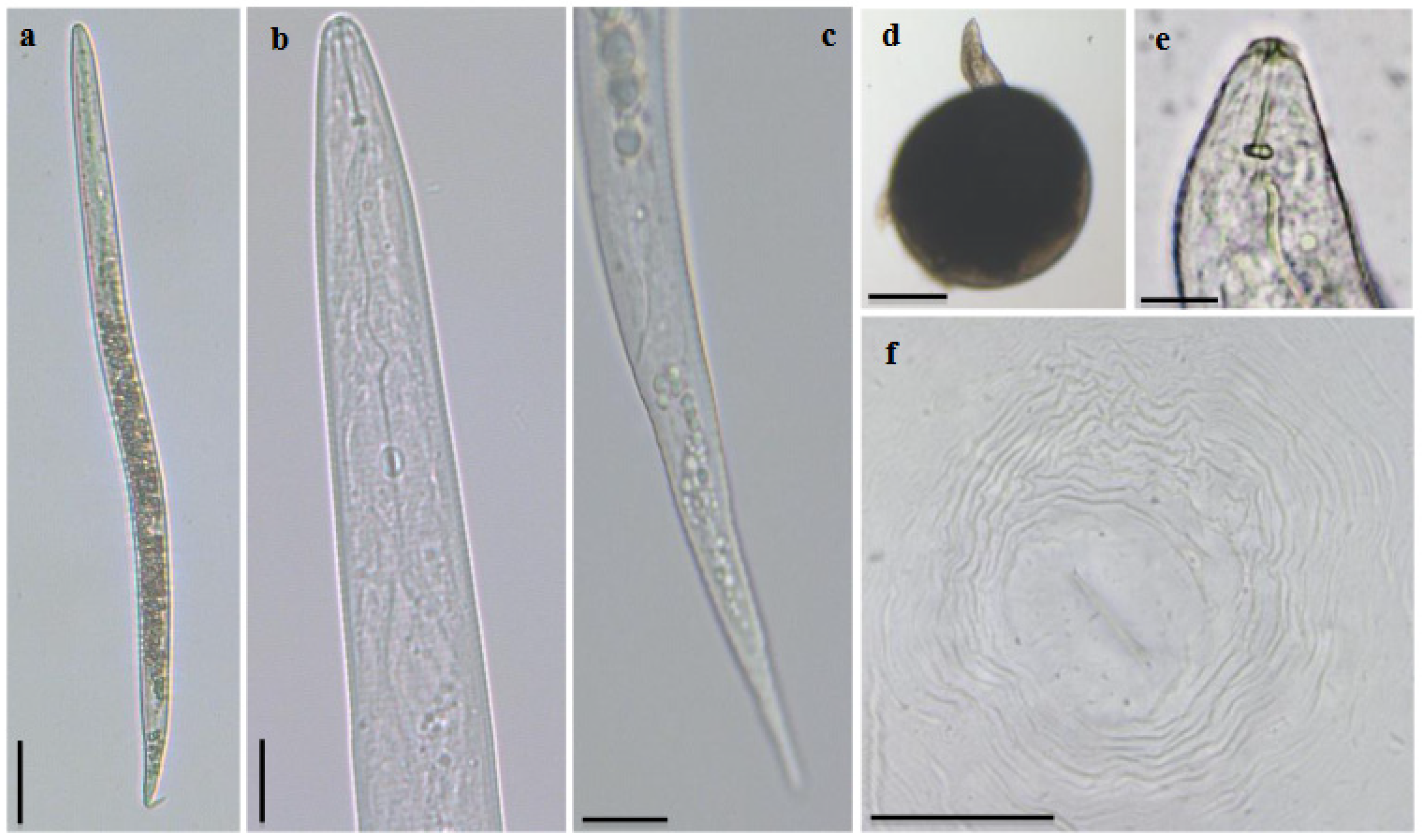
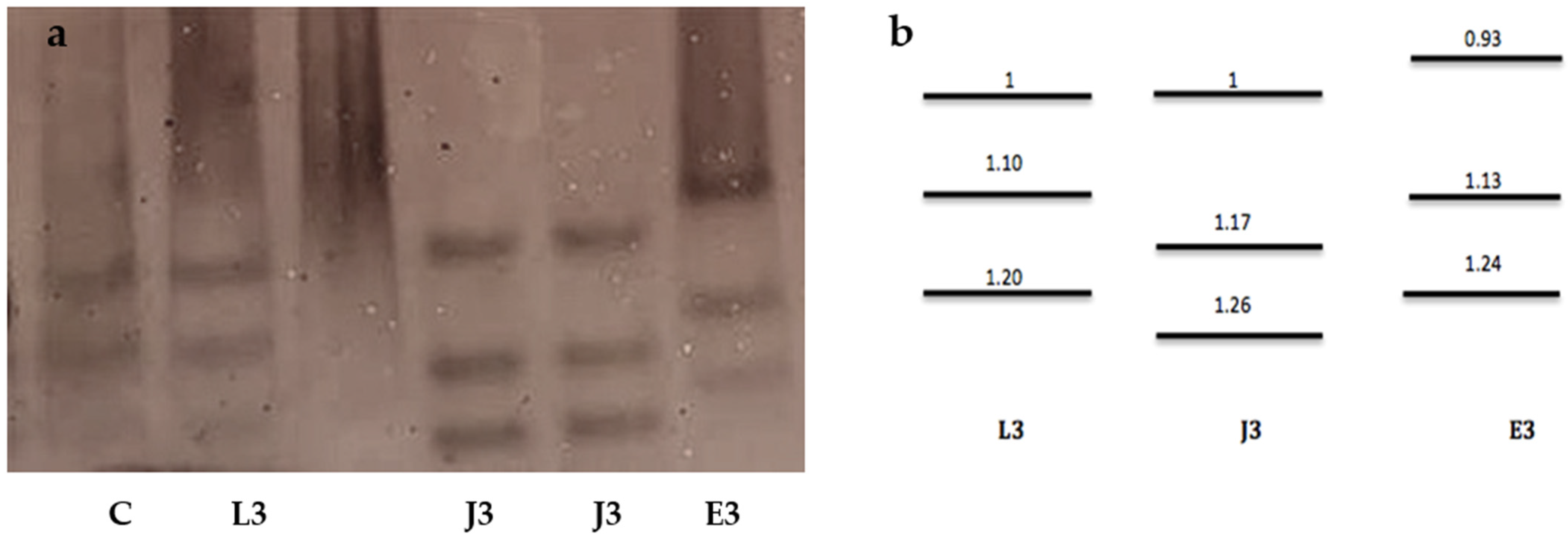
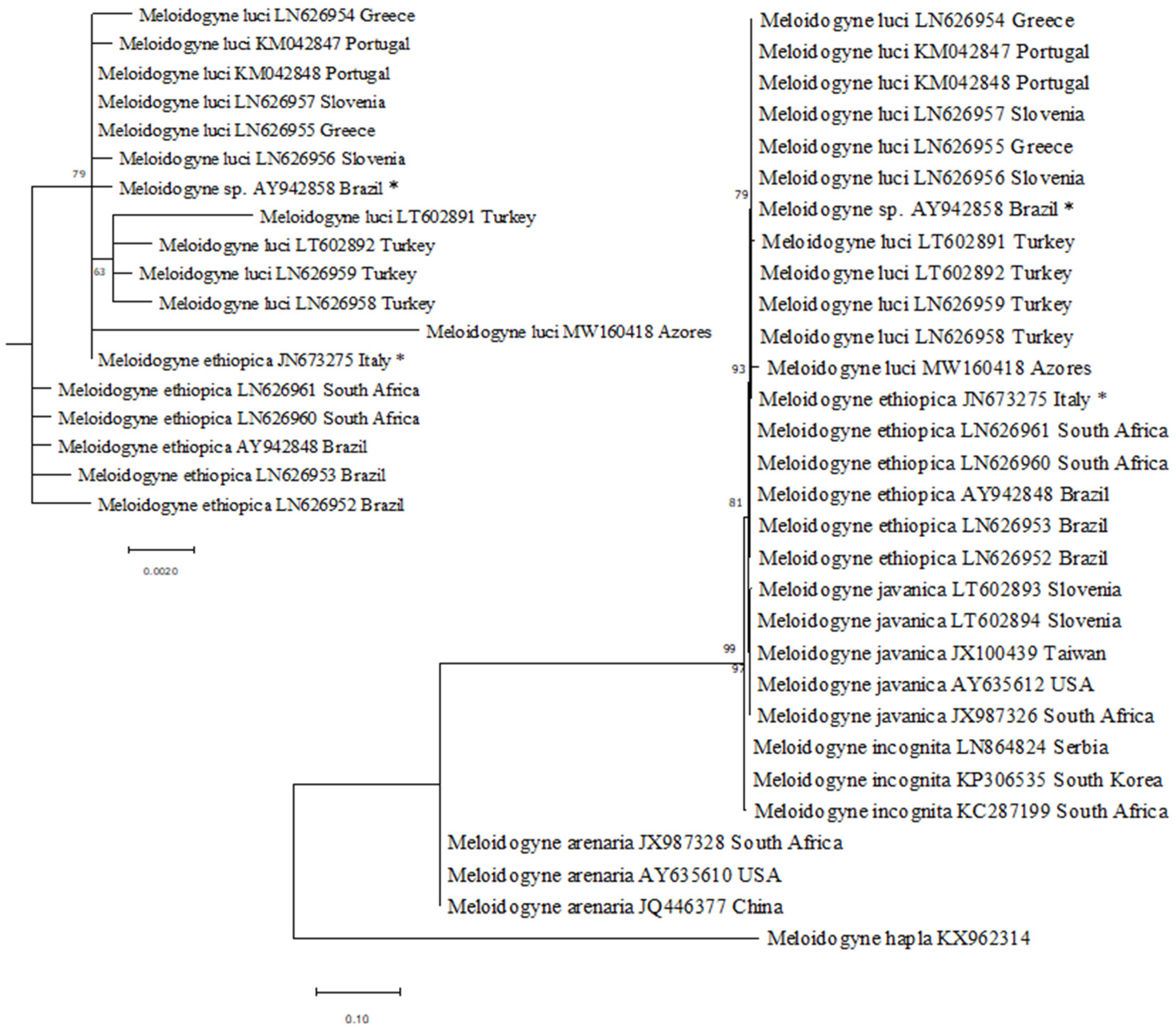
Potato is the third most important crop in the world after rice and wheat, with a great social and economic importance in Portugal as it is grown throughout the country, including the archipelagos of Madeira and the Azores. The tropical root-knot nematode (RKN) Meloidogyne luci is a polyphagous species with many of its host plants having economic importance and the ability to survive in temperate regions, which pose a risk to agricultural production. In 2019, M. luci was detected from soil samples collected from the council of Santo António in Pico Island (Azores). Bioassays were carried out to obtain females, egg masses, and second-stage juveniles to characterize this isolate morphologically, biochemically, and molecularly. The observed morphological features and morphometrics showed high similarity and consistency with previous descriptions. Concerning the biochemical characterization, the esterase (EST) phenotype displayed a pattern with three bands similar to the one previously described for M. luci and distinct from M. ethiopica. Regarding the molecular analysis, an 1800 bp region of the mitochondrial DNA between cytochrome oxidase subunit II (COII) and 16S rRNA genes was analyzed and the phylogenetic tree revealed that the isolate grouped with M. luci isolates (99.17%). This is the first report of M. luci parasitizing potato in the Azores islands, contributing additional information on the distribution of this plant-parasitic nematode.
Keywords: identification; EST phenotype; root-knot nematodes; mtDNA identification; EST phenotype; root-knot nematodes; mtDNA