Article

A Bioinformatics Pipeline to Identify a Subset of SNPs for Genomics-Assisted Potato Breeding


Department of Plant Breeding, Swedish University of Agricultural Sciences (SLU), Box 101, SE-230 53 Alnarp, Sweden
*
Author to whom correspondence should be addressed.
Plants 2021, 10(1), 30; https://doi.org/10.3390/plants10010030

Submission received: 13 November 2020 / Revised: 9 December 2020 / Accepted: 10 December 2020 / Published: 24 December 2020
(This article belongs to the Special Issue Plant Genetic Resources and Breeding of Clonally Propagated Crops)

Abstract

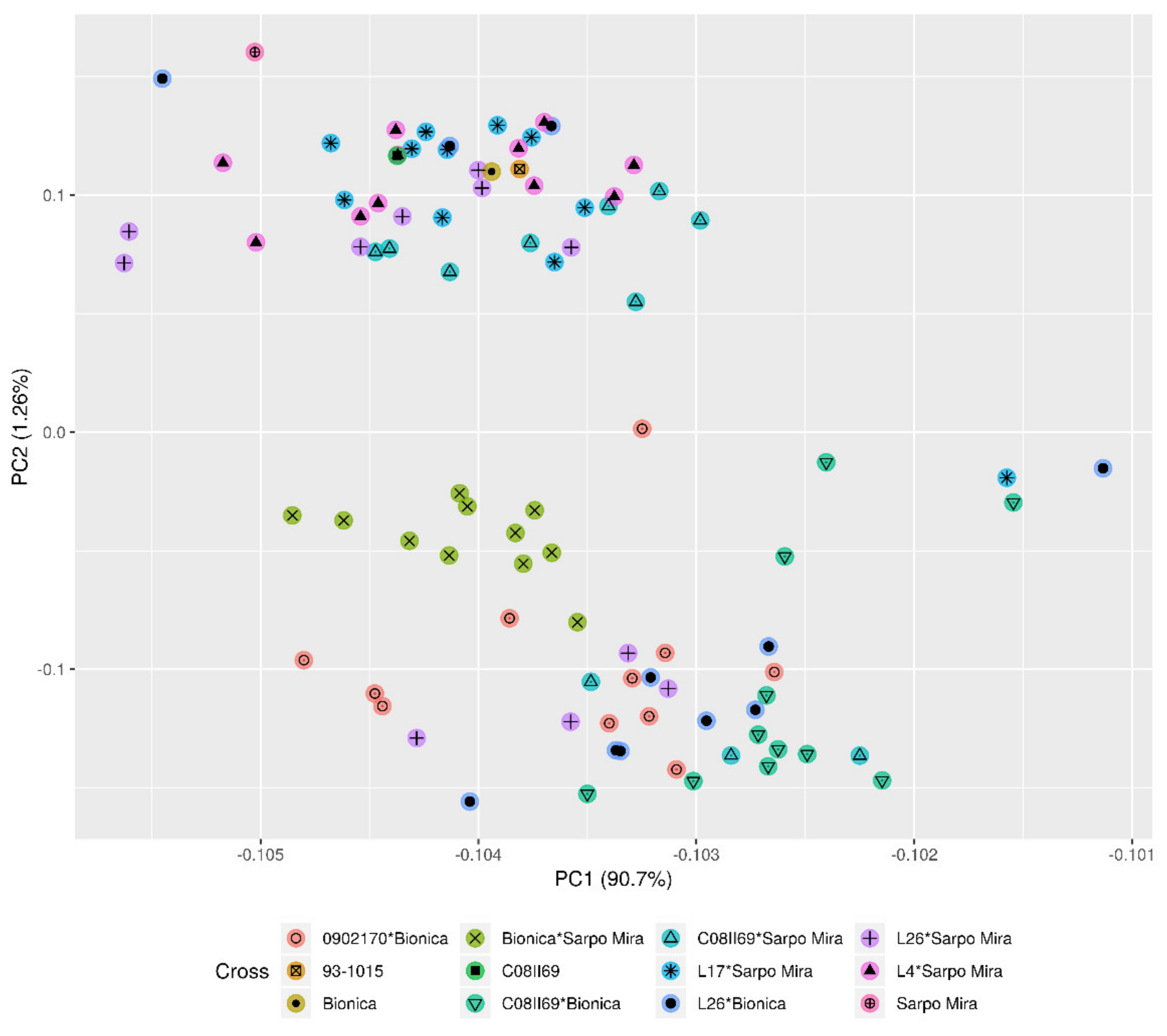
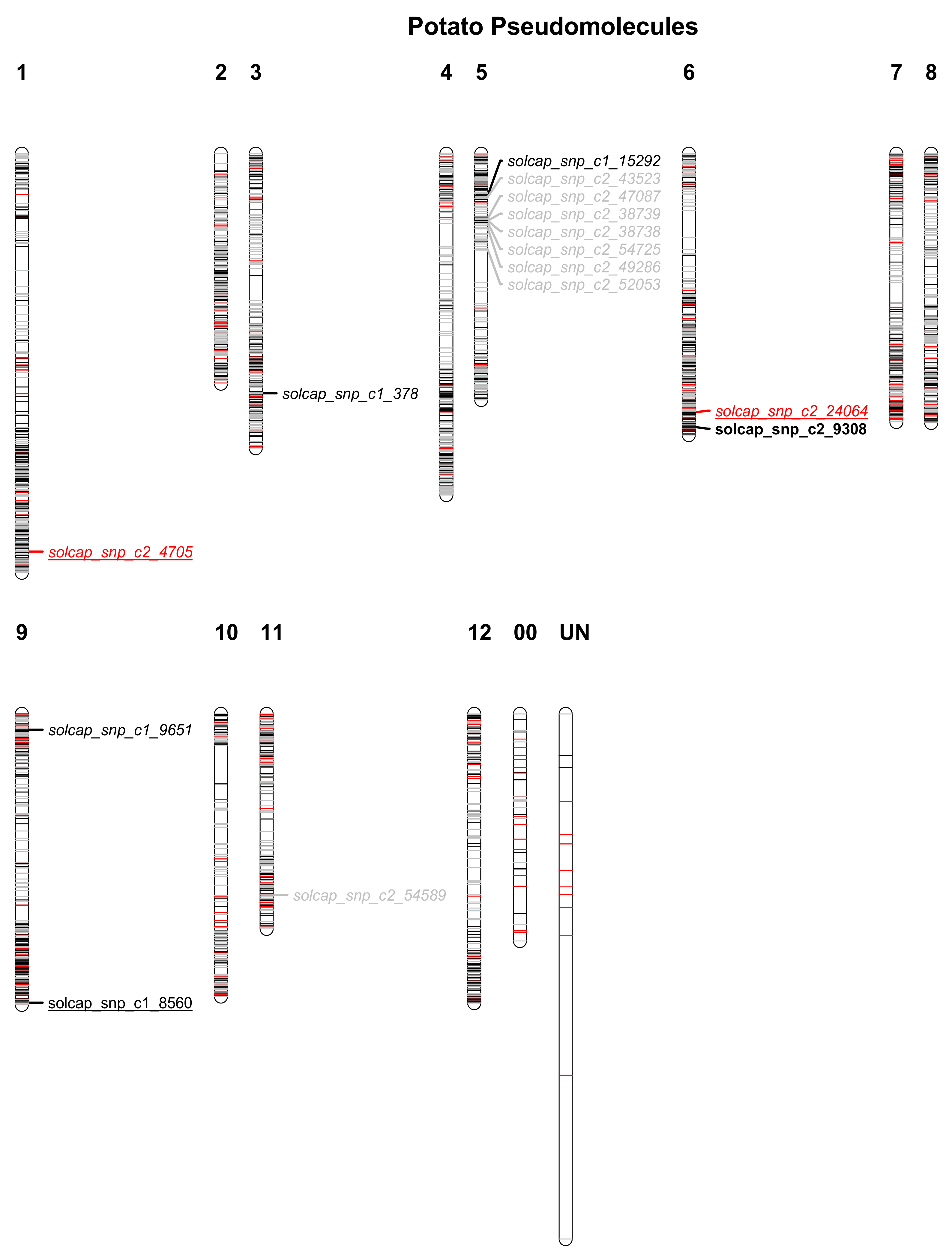
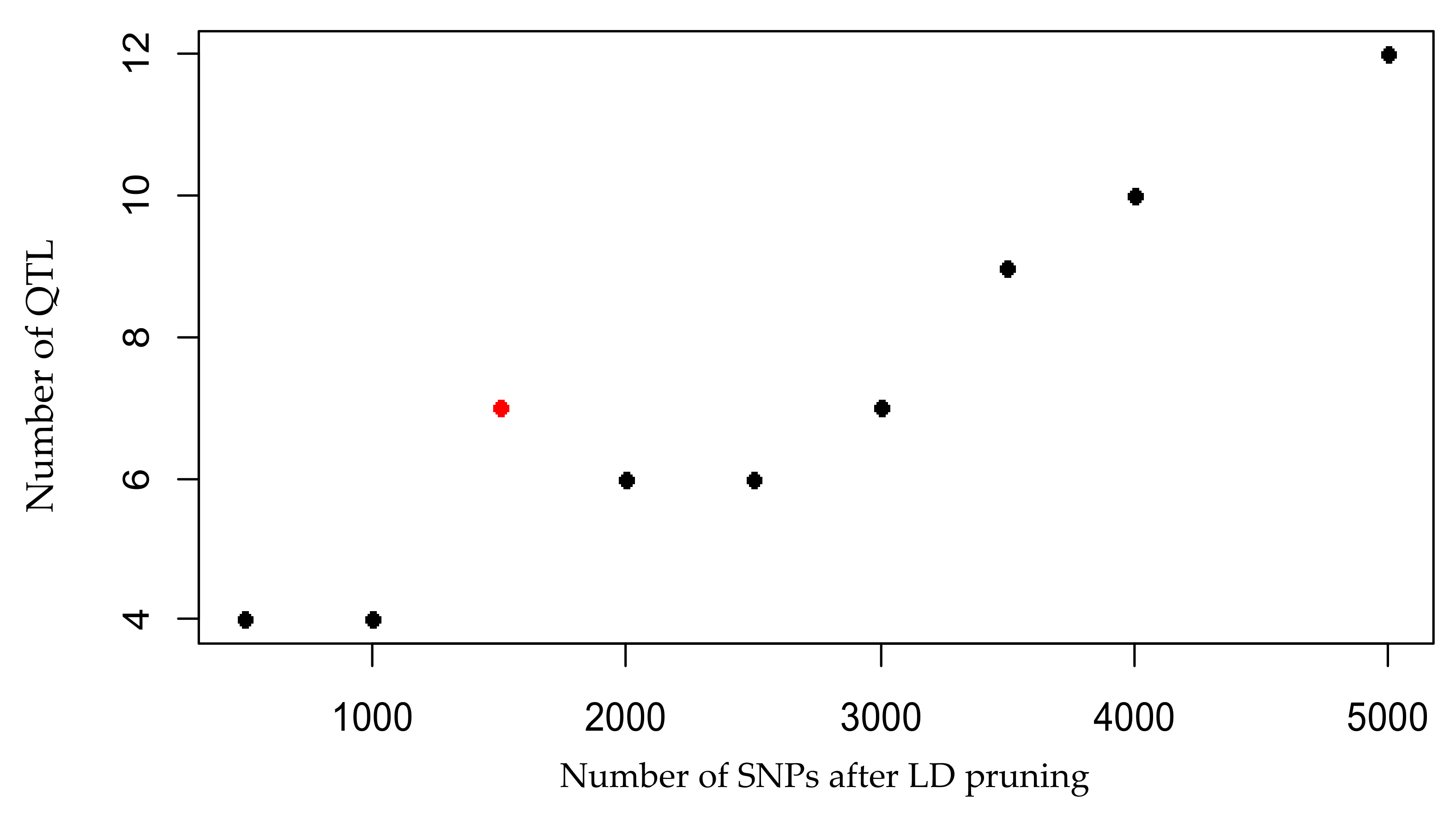
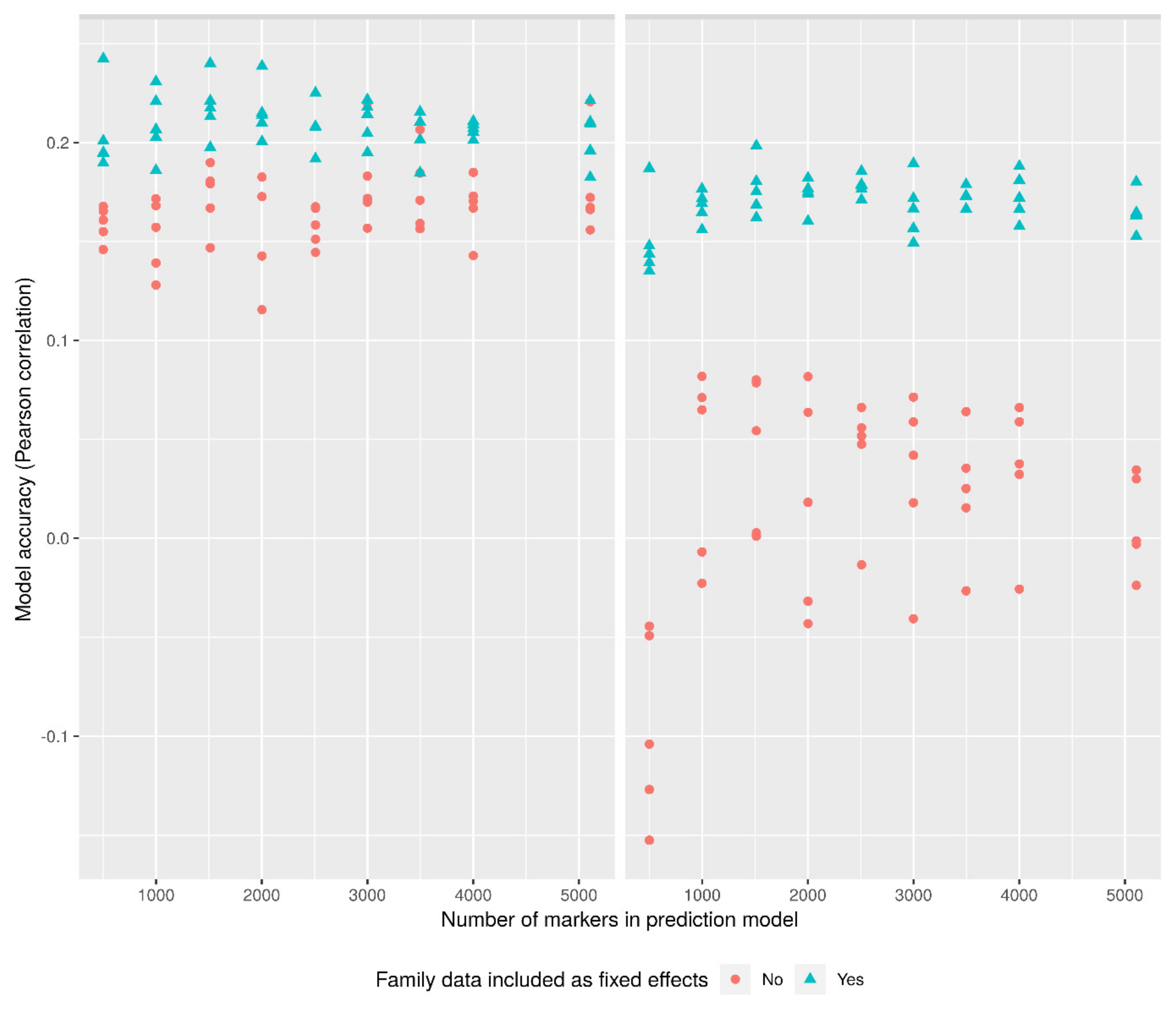
Modern potato breeding methods following a genomic-led approach provide means for shortening breeding cycles and increasing breeding efficiency across selection cycles. Acquiring genetic data for large breeding populations remains expensive. We present a pipeline to reduce the number of single nucleotide polymorphisms (SNPs) to lower the cost of genotyping. First, we reduced the number of individuals to be genotyped with a high-throughput method according to the multi-trait variation as defined by principal component analysis of phenotypic characteristics. Next, we reduced the number of SNPs by pruning for linkage disequilibrium. By adjusting the square of the correlation coefficient between two adjacent loci, we obtained reduced subsets of SNPs. We subsequently tested these SNP subsets by two methods; (1) a genome-wide association study (GWAS) for marker identification, and (2) genomic selection (GS) to predict genomic estimated breeding values. The results indicate that both GWAS and GS can be done without loss of information after SNP reduction. The pipeline allows for creating custom SNP subsets to cover all variation found in any particular breeding population. Low-throughput genotyping will reduce the genotyping cost associated with large populations, thereby making genomic breeding methods applicable to large potato breeding populations by reducing genotyping costs.
Keywords: linkage disequilibrium pruning; genomic selection; genotyping; GWAS; potato breeding linkage disequilibrium pruning; genomic selection; genotyping; GWAS; potato breeding