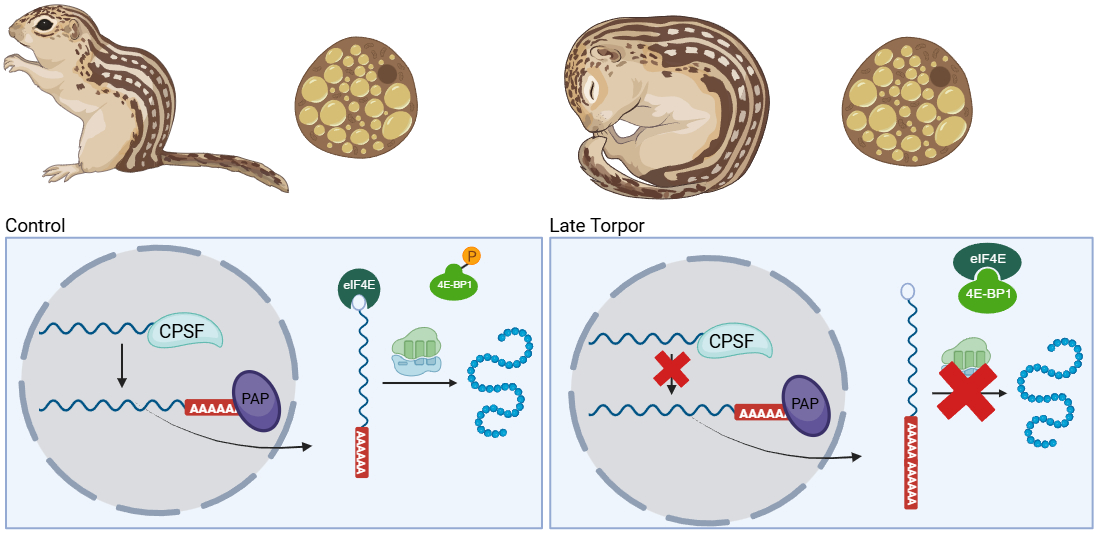

Torpor-Induced Regulation of Poly(A) Tail Machinery in 13-Lined Ground Squirrel Brown Adipose Tissue



Abstract
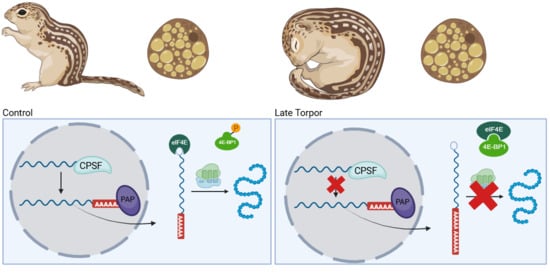
1. Introduction
2. Materials and Methods
2.1. Animal Treatment
2.2. Total Protein Extraction for Immunoblots
2.3. SDS PAGE and Immunoblotting
3. Results
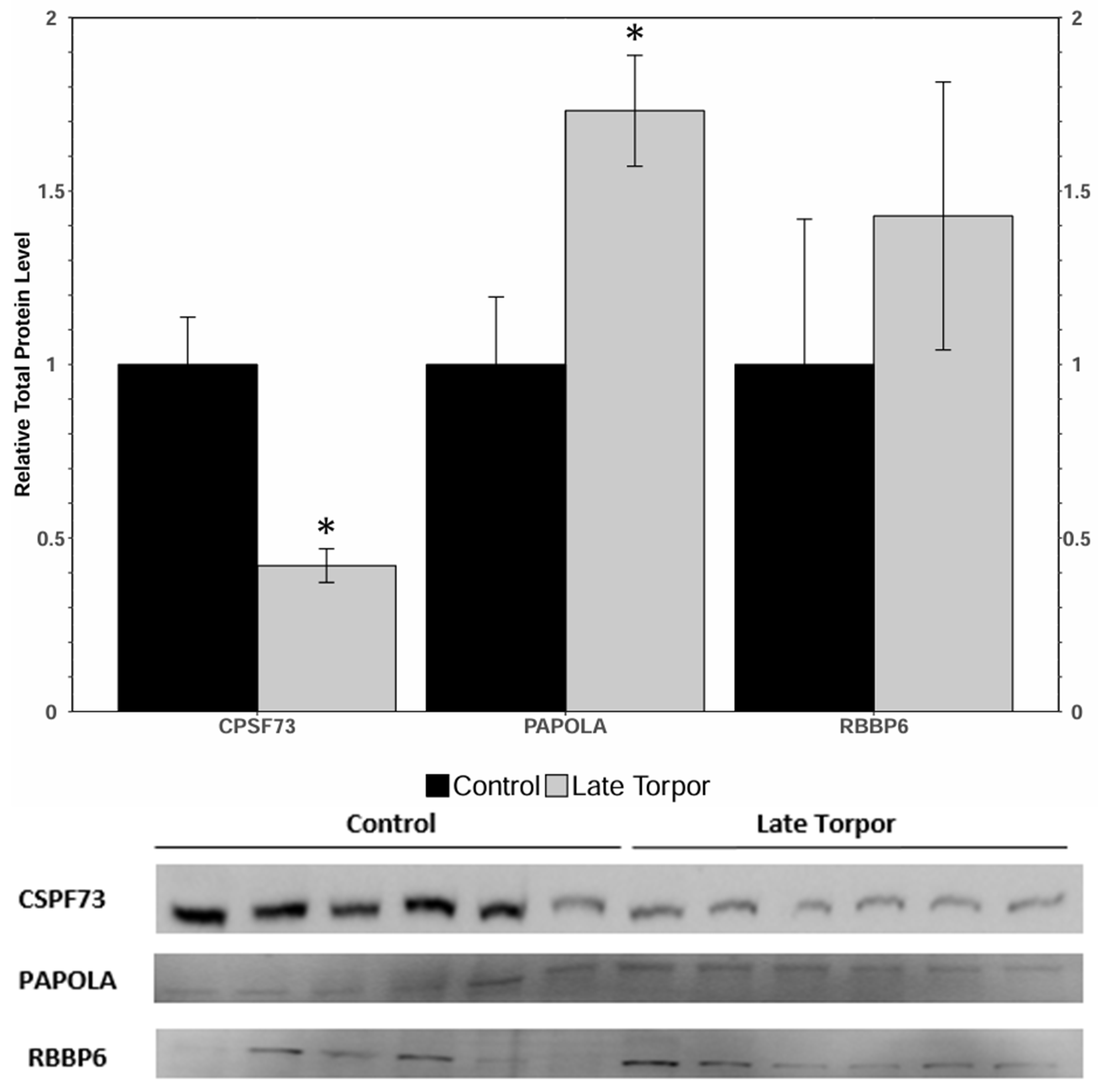
3.1. Cleavage and Polyadenylation Complex
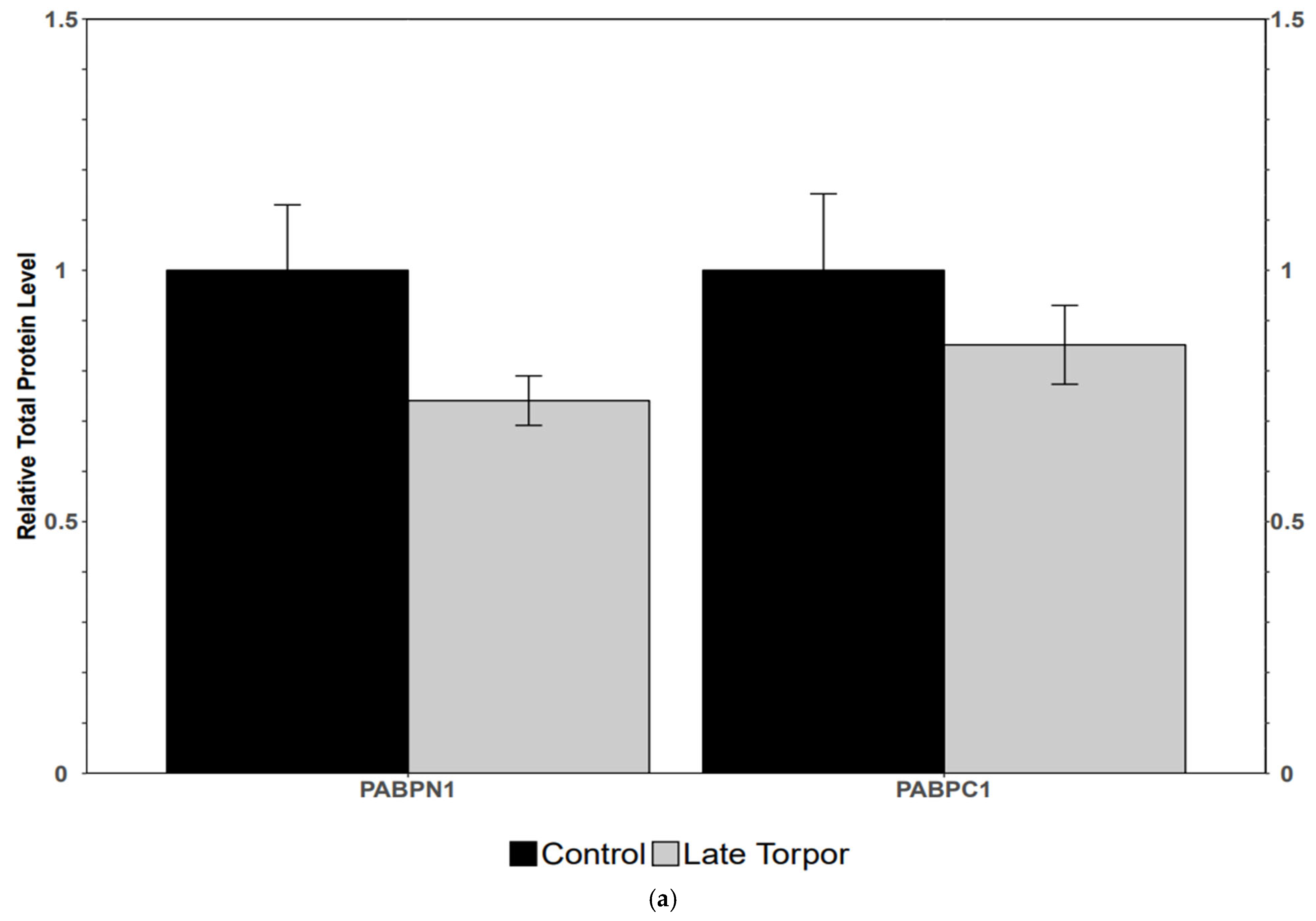
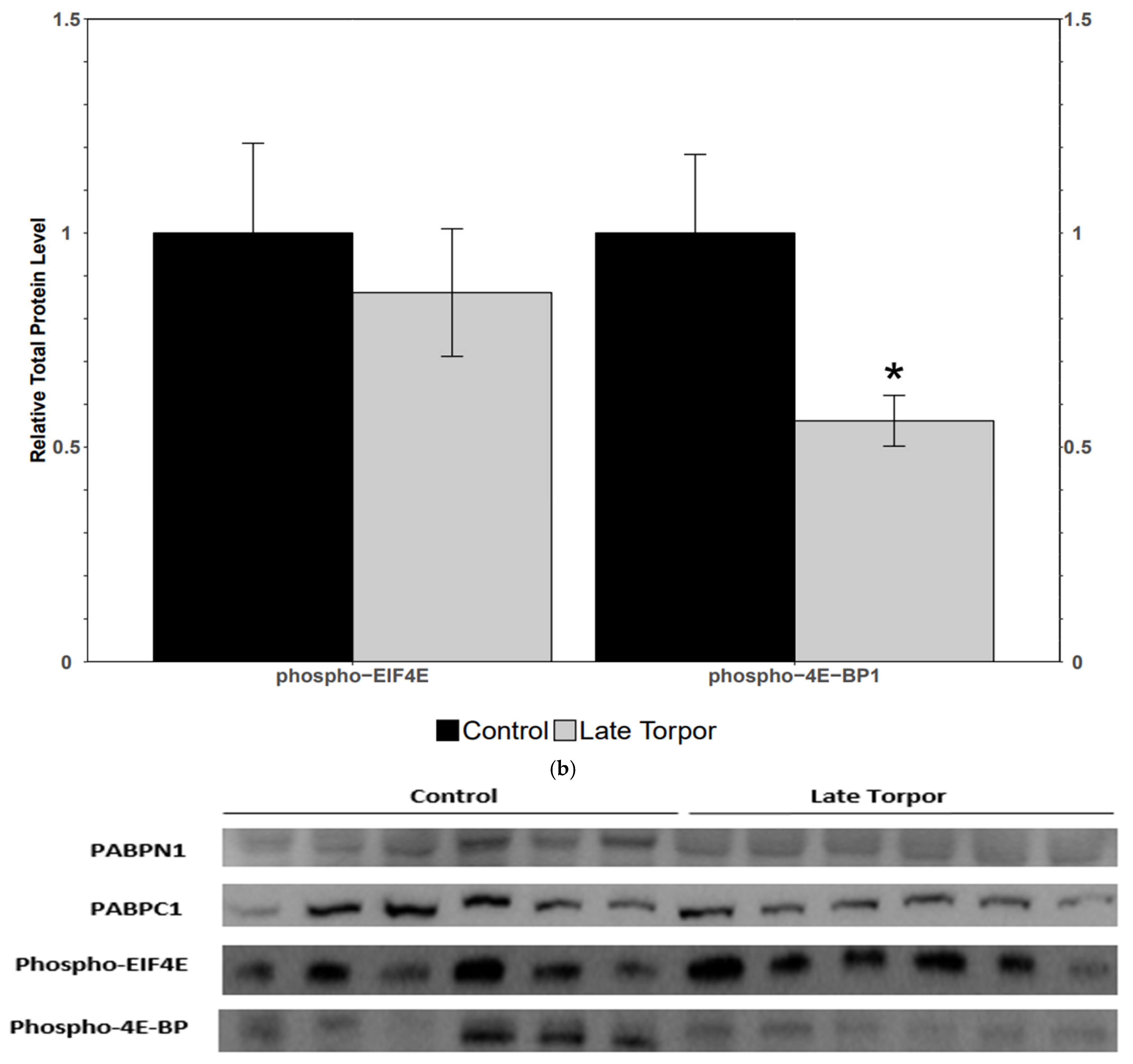
3.2. Poly(A)-Binding Proteins and Translation Initiation
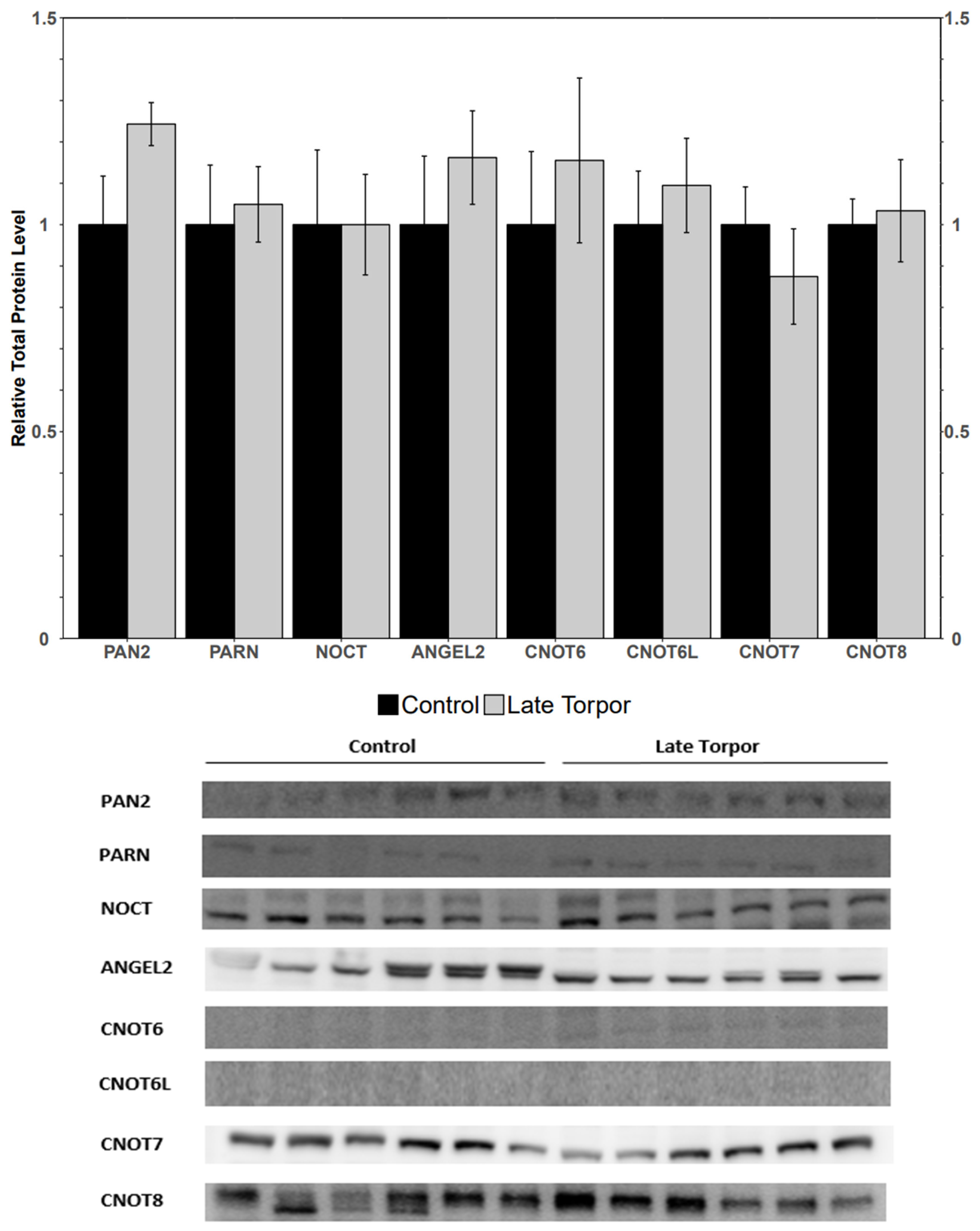
3.3. Poly(A) Tail Deadenylation Machinery
4. Discussion
5. Conclusions
Supplementary Materials
Author Contributions
Funding
Institutional Review Board Statement
Data Availability Statement
Conflicts of Interest
Abbreviations
| 13LGS | 13-lined ground squirrel |
| BAT | Brown adipose tissue |
| Poly(A) | Polyadenylation |
| PAPOLA | Poly(A) polymerase alpha |
| PABP | Poly(A) Binding Protein |
| CPSF | Cleavage and polyadenylation specificity factor |
| CCR4 | Carbon catabolite repression 4 |
| PAN | Poly(A) nuclease deadenylation complex |
| NOCT | Nocturnin |
| PARN | Poly(A)-specific ribonuclease |
Appendix A

| Antibody | Company | Catalog Number |
|---|---|---|
| CPSF73 | Abclonal (Woburn, MA, USA) | A2222 |
| RBBP6 | Abclonal | A14776 |
| PAPOLA | Invitrogen (Carlsbad, CA, USA) | PA5-30414 |
| PABPN1 | Invitrogen | PA5-102924 |
| PABPC1 | Invitrogen | PA5-66900 |
| Phospho-eIF4E (ser209) | Cell Signalling (Danvers, MA, USA) | 9741 |
| Phospho-4E-BP (ser65) | Cell Signalling | 9451 |
| PARN | Genetex (Hsinchu, Taiwan) | GTX115020 |
| PAN2 | Abclonal | A15373 |
| NOCT | Abclonal | A15805 |
| ANGEL2 | Abclonal | A12799 |
| CNOT6L | Novus Biologicals (Centennial, CO, USA) | NBP1-84186 |
| CNOT6 | Novus Biologicals | NBP1-86564 |
| CNOT7 | Abclonal | A8959 |
| CNOT8 | Novus Biologicals | NBP2-15930 |
References
- Carey, H.V.; Andrews, M.T.; Martin, S.L. Mammalian Hibernation: Cellular and Molecular Responses to Depressed Metabolism and Low Temperature. Physiol. Rev. 2003, 83, 1153–1181. [Google Scholar] [CrossRef] [PubMed]
- Taiwo, O.O.; Rehman, S.; Storey, K.B. Pancreatic MicroRNAs in Ictidomys tridecemlineatus Associated with Metabolic Diseases: Nature’s Insights into Important Biomarkers. Biomolecules 2025, 15, 616. [Google Scholar] [CrossRef]
- Han, Y.; Miao, W.; Hao, Z.; An, N.; Yang, Y.; Zhang, Z.; Chen, J.; Storey, K.B.; Lefai, E.; Chang, H. The Protective Effects on Ischemia–Reperfusion Injury Mechanisms of the Thoracic Aorta in Daurian Ground Squirrels (Spermophilus dauricus) over the Torpor–Arousal Cycle of Hibernation. Int. J. Mol. Sci. 2022, 23, 10248. [Google Scholar] [CrossRef]
- Shi, Z.; Qin, M.; Huang, L.; Xu, T.; Chen, Y.; Hu, Q.; Peng, S.; Peng, Z.; Qu, L.; Chen, S.; et al. Human torpor: Translating insights from nature into manned deep space expedition. Biol. Rev. 2020, 96, 642–672. [Google Scholar] [CrossRef]
- Junkins, M.S.; Feng, N.Y.; Murphy, L.A.; Curtis, G.; Merriman, D.K.; Bagriantsev, S.N.; Gracheva, E.O. Neural control of fluid homeostasis is engaged below 10 °C in hibernation. Curr. Biol. 2024, 34, 923–930.e5. [Google Scholar] [CrossRef]
- Russell, R.L.; O’neill, P.H.; Epperson, L.E.; Martin, S.L. Extensive use of torpor in 13-lined ground squirrels in the fall prior to cold exposure. J. Comp. Physiol. B 2010, 180, 1165–1172. [Google Scholar] [CrossRef][Green Version]
- Ballinger, M.A.; Andrews, M.T. Nature’s fat-burning machine: Brown adipose tissue in a hibernating mammal. J. Exp. Biol. 2018, 221, jeb162586. [Google Scholar] [CrossRef] [PubMed]
- Srere, H.K.; Wang, L.C.; Martin, S.L. Central role for differential gene expression in mammalian hibernation. Proc. Natl. Acad. Sci. USA 1992, 89, 7119–7123. [Google Scholar] [CrossRef]
- Carter, R.; Storey, K.B. Levels of post-translationally modified histones in ground squirrel livers are altered during deep torpor. Cryobiology 2025, 119, 105256. [Google Scholar] [CrossRef]
- Biggar, K.K.; Wu, C.-W.; Tessier, S.N.; Zhang, J.; Pifferi, F.; Perret, M.; Storey, K.B. Modulation of Gene Expression in Key Survival Pathways During Daily Torpor in the Gray Mouse Lemur, Microcebus murinus. Genom. Proteom. Bioinform. 2015, 13, 111–118. [Google Scholar] [CrossRef] [PubMed]
- Tessier, S.N.; Storey, K.B. To be or not to be: The regulation of mRNA fate as a survival strategy during mammalian hibernation. Cell Stress Chaperones 2014, 19, 763–776. [Google Scholar] [CrossRef] [PubMed]
- Marescal, O.; Cheeseman, I.M. Cellular Mechanisms and Regulation of Quiescence. Dev. Cell 2020, 55, 259–271. [Google Scholar] [CrossRef]
- Casañal, A.; Kumar, A.; Hill, C.H.; Easter, A.D.; Emsley, P.; Degliesposti, G.; Gordiyenko, Y.; Santhanam, B.; Wolf, J.; Wiederhold, K.; et al. Architecture of eukaryotic mRNA 3′-end processing machinery. Science 2017, 358, 1056–1059. [Google Scholar] [CrossRef]
- Wigington, C.P.; Williams, K.R.; Meers, M.P.; Bassell, G.J.; Corbett, A.H. Poly(A) RNA-binding proteins and polyadenosine RNA: New members and novel functions. Wiley Interdiscip. Rev. RNA 2014, 5, 601–622. [Google Scholar] [CrossRef]
- Khaleghpour, K.; Pyronnet, S.; Gingras, A.-C.; Sonenberg, N. Translational Homeostasis: Eukaryotic Translation Initiation Factor 4E Control of 4E-Binding Protein 1 and p70 S6 Kinase Activities. Mol. Cell. Biol. 1999, 19, 4302–4310. [Google Scholar] [CrossRef] [PubMed]
- Villa, N.; Fraser, C.S. Human eukaryotic initiation factor 4G directly binds the 40S ribosomal subunit to promote efficient translation. J. Biol. Chem. 2024, 300, 107242. [Google Scholar] [CrossRef]
- Yan, Y. Deadenylation: Enzymes, regulation, and functional implications. Wiley Interdiscip. Rev. RNA 2014, 5, 421–443. [Google Scholar] [CrossRef]
- Wolf, J.; Passmore, L.A. mRNA deadenylation by Pan2–Pan3. Biochem. Soc. Trans. 2014, 42, 184–187. [Google Scholar] [CrossRef] [PubMed]
- Nanjappa, D.P.; Babu, N.; Khanna-Gupta, A.; O’DOnohue, M.-F.; Sips, P.; Chakraborty, A. Poly (A)-specific ribonuclease (PARN): More than just “mRNA stock clearing”. Life Sci. 2021, 285, 119953. [Google Scholar] [CrossRef]
- Clemente, P.; Calvo-Garrido, J.; Pearce, S.F.; Schober, F.A.; Shigematsu, M.; Siira, S.J.; Laine, I.; Spåhr, H.; Steinmetzger, C.; Petzold, K.; et al. ANGEL2 phosphatase activity is required for non-canonical mitochondrial RNA processing. Nat. Commun. 2022, 13, 1–15. [Google Scholar] [CrossRef]
- Hughes, K.L.; Abshire, E.T.; Goldstrohm, A.C. Regulatory roles of vertebrate Nocturnin: Insights and remaining mysteries. RNA Biol. 2018, 15, 1255–1267. [Google Scholar] [CrossRef] [PubMed]
- Frerichs, K.U.; Kennedy, C.; Sokoloff, L.; Hallenbeck, J.M. Local Cerebral Blood Flow during Hibernation, a Model of Natural Tolerance to “Cerebral Ischemia”. J. Cereb. Blood Flow Metab. 1994, 14, 193–205. [Google Scholar] [CrossRef]
- Logan, S.M.; Storey, K.B. MicroRNA expression patterns in the brown fat of hibernating 13-lined ground squirrels. Genomics 2021, 113, 769–781. [Google Scholar] [CrossRef]
- Rehman, S.; Varma, A.; Gupta, A.; Storey, K.B. The regulation of m6A-related proteins during whole-body freezing of the freeze-tolerant wood frog. Biochem. Cell Biol. 2023, 101, 77–86. [Google Scholar] [CrossRef]
- Rehman, S.; Parent, M.; Storey, K.B. The mRNA N6-Methyladenosine Response to Dehydration in Xenopus laevis. Animals 2024, 14, 3288. [Google Scholar] [CrossRef]
- Welinder, C.; Ekblad, L. Coomassie Staining as Loading Control in Western Blot Analysis. J. Proteome Res. 2010, 10, 1416–1419. [Google Scholar] [CrossRef] [PubMed]
- Eaton, N.R.; Krueger, R.F.; Markon, K.E.; Keyes, K.M.; Skodol, A.E.; Wall, M.; Hasin, D.S.; Grant, B.F. The structure and predictive validity of the internalizing disorders. J. Abnorm. Psychol. 2013, 122, 86–92. [Google Scholar] [CrossRef]
- Gillen, A.E.; Fu, R.; Riemondy, K.A.; Jager, J.; Fang, B.; Lazar, M.A.; Martin, S.L. Liver Transcriptome Dynamics During Hibernation Are Shaped by a Shifting Balance Between Transcription and RNA Stability. Front. Physiol. 2021, 12, 662132. [Google Scholar] [CrossRef]
- Bouma, H.R.; Verhaag, E.M.; Otis, J.P.; Heldmaier, G.; Swoap, S.J.; Strijkstra, A.M.; Henning, R.H.; Carey, H.V. Induction of torpor: Mimicking natural metabolic suppression for biomedical applications. J. Cell. Physiol. 2012, 227, 1285–1290. [Google Scholar] [CrossRef] [PubMed]
- Logan, S.M.; Wu, C.-W.; Storey, K.B. The squirrel with the lagging eIF2: Global suppression of protein synthesis during torpor. Comp. Biochem. Physiol. Part A Mol. Integr. Physiol. 2019, 227, 161–171. [Google Scholar] [CrossRef]
- Xiang, K.; Bartel, D.P. The molecular basis of coupling between poly(A)-tail length and translational efficiency. eLife 2021, 10, e66493. [Google Scholar] [CrossRef] [PubMed]
- Oh, A.; Lee, S.; Park, H.-J.; Yoon, S.; Ha, D.; Lee, J.; Lee, S.; Roh, G.; Cho, Y.; Lee, S.-Y.; et al. Loop structure in poly(A) tail of mRNA vaccine enhances antigen translation efficiency and mRNA stability. npj Vaccines 2025, 10, 234. [Google Scholar] [CrossRef]
- Park, J.-E.; Yi, H.; Kim, Y.; Chang, H.; Kim, V.N. Regulation of Poly(A) Tail and Translation during the Somatic Cell Cycle. Mol. Cell 2016, 62, 462–471. [Google Scholar] [CrossRef]
- Passmore, L.A.; Coller, J. Roles of mRNA poly(A) tails in regulation of eukaryotic gene expression. Nat. Rev. Mol. Cell Biol. 2021, 23, 93–106. [Google Scholar] [CrossRef]
- Takada, Y.; Fierro, L.; Sato, K.; Sanada, T.; Ishii, A.; Yamamoto, T.; Kotani, T. Mature mRNA processing that deletes 3′ end sequences directs translational activation and embryonic development. Sci. Adv. 2023, 9, eadg6532. [Google Scholar] [CrossRef]
- Miao, X.; Hu, G. Poly(A) tail regulation in stem cells and early development. Cell Regen. 2025, 14, 48. [Google Scholar] [CrossRef]
- Xiang, K.; Bartel, D.P. PAL-AI reveals genetic determinants that control poly(A)-tail length during oocyte maturation, with relevance to human fertility. Nat. Commun. 2025, 16, 7079. [Google Scholar] [CrossRef] [PubMed]
- Hill, C.H.; Boreikaitė, V.; Kumar, A.; Casañal, A.; Kubík, P.; Degliesposti, G.; Maslen, S.; Mariani, A.; von Loeffelholz, O.; Girbig, M.; et al. Activation of the Endonuclease that Defines mRNA 3′ Ends Requires Incorporation into an 8-Subunit Core Cleavage and Polyadenylation Factor Complex. Mol. Cell 2019, 73, 1217–1231.e11. [Google Scholar] [CrossRef] [PubMed]
- Laishram, R.S. Poly(A) polymerase (PAP) diversity in gene expression—Star-PAP vs canonical PAP. FEBS Lett. 2014, 588, 2185–2197. [Google Scholar] [CrossRef]
- Mendez, R.; Murthy, K.G.; Ryan, K.; Manley, J.L.; Richter, J.D. Phosphorylation of CPEB by Eg2 Mediates the Recruitment of CPSF into an Active Cytoplasmic Polyadenylation Complex. Mol. Cell 2000, 6, 1253–1259. [Google Scholar] [CrossRef]
- Liu, H.; Moore, C.L. On the Cutting Edge: Regulation and Therapeutic Potential of the mRNA 3′ End Nuclease. Trends Biochem. Sci. 2021, 46, 772–784. [Google Scholar] [CrossRef]
- Fähling, M. Surviving hypoxia by modulation of mRNA translation rate. J. Cell. Mol. Med. 2009, 13, 2770–2779. [Google Scholar] [CrossRef]
- Serdar, L.D.; Egol, J.R.; Lackford, B.; Bennett, B.D.; Hu, G.; Silver, D.L. mRNA stability fine-tunes gene expression in the developing cortex to control neurogenesis. PLoS Biol. 2025, 23, e3003031. [Google Scholar] [CrossRef]
- Lemay, J.-F.; Lemieux, C.; St-André, O.; Bachand, F. Crossing the borders: Poly(A)-binding proteins working on both sides of the fence. RNA Biol. 2010, 7, 291–295. [Google Scholar] [CrossRef]
- Nicholson-Shaw, A.L.; Kofman, E.R.; Yeo, G.W.; E Pasquinelli, A. Nuclear and cytoplasmic poly(A) binding proteins (PABPs) favor distinct transcripts and isoforms. Nucleic Acids Res. 2022, 50, 4685–4702. [Google Scholar] [CrossRef]
- Francis, N.; Laishram, R.S. Transgenesis of mammalian PABP reveals mRNA polyadenylation as a general stress response mechanism in bacteria. iScience 2021, 24, 103119. [Google Scholar] [CrossRef] [PubMed]
- Wang, Z.; Kiledjian, M. The Poly(A)-Binding Protein and an mRNA Stability Protein Jointly Regulate an Endoribonuclease Activity. Mol. Cell. Biol. 2000, 20, 6334–6341. [Google Scholar] [CrossRef] [PubMed]
- Grabek, K.R.; Behn, C.D.; Barsh, G.S.; Hesselberth, J.R.; Martin, S.L. Enhanced stability and polyadenylation of select mRNAs support rapid thermogenesis in the brown fat of a hibernator. eLife 2015, 4, e04517. [Google Scholar] [CrossRef] [PubMed]
- van Breukelen, F.; Sonenberg, N.; Martin, S.L. Seasonal and state-dependent changes of eIF4E and 4E-BP1 during mammalian hibernation: Implications for the control of translation during torpor. Am. J. Physiol. Integr. Comp. Physiol. 2004, 287, R349–R353. [Google Scholar] [CrossRef]
- Slobodin, B.; Bahat, A.; Sehrawat, U.; Becker-Herman, S.; Zuckerman, B.; Weiss, A.N.; Han, R.; Elkon, R.; Agami, R.; Ulitsky, I.; et al. Transcription Dynamics Regulate Poly(A) Tails and Expression of the RNA Degradation Machinery to Balance mRNA Levels. Mol. Cell 2020, 78, 434–444.e5. [Google Scholar] [CrossRef]
- Collart, M.A. The Ccr4-Not complex is a key regulator of eukaryotic gene expression. Wiley Interdiscip. Rev. RNA 2016, 7, 438–454. [Google Scholar] [CrossRef] [PubMed]
- Virtanen, A.; Henriksson, N.; Nilsson, P.; Nissbeck, M. Poly(A)-specific ribonuclease (PARN): An allosterically regulated, processive and mRNA cap-interacting deadenylase. Crit. Rev. Biochem. Mol. Biol. 2012, 48, 192–209. [Google Scholar] [CrossRef] [PubMed]


Disclaimer/Publisher’s Note: The statements, opinions and data contained in all publications are solely those of the individual author(s) and contributor(s) and not of MDPI and/or the editor(s). MDPI and/or the editor(s) disclaim responsibility for any injury to people or property resulting from any ideas, methods, instructions or products referred to in the content. |
© 2026 by the authors. Licensee MDPI, Basel, Switzerland. This article is an open access article distributed under the terms and conditions of the Creative Commons Attribution (CC BY) license.
Share and Cite
Rehman, S.; Willmore, W.G.; Storey, K.B. Torpor-Induced Regulation of Poly(A) Tail Machinery in 13-Lined Ground Squirrel Brown Adipose Tissue. J. Dev. Biol. 2026, 14, 21. https://doi.org/10.3390/jdb14020021
Rehman S, Willmore WG, Storey KB. Torpor-Induced Regulation of Poly(A) Tail Machinery in 13-Lined Ground Squirrel Brown Adipose Tissue. Journal of Developmental Biology. 2026; 14(2):21. https://doi.org/10.3390/jdb14020021
Chicago/Turabian StyleRehman, Saif, William G. Willmore, and Kenneth B. Storey. 2026. "Torpor-Induced Regulation of Poly(A) Tail Machinery in 13-Lined Ground Squirrel Brown Adipose Tissue" Journal of Developmental Biology 14, no. 2: 21. https://doi.org/10.3390/jdb14020021
APA StyleRehman, S., Willmore, W. G., & Storey, K. B. (2026). Torpor-Induced Regulation of Poly(A) Tail Machinery in 13-Lined Ground Squirrel Brown Adipose Tissue. Journal of Developmental Biology, 14(2), 21. https://doi.org/10.3390/jdb14020021