
Adenosine Receptor Functionality and Desensitization Machinery in a Neuronal Cell Model of Angelman Syndrome

 , ,
, ,  ,
,  and
and 
Abstract
1. Introduction
2. Materials and Methods
2.1. Cell Cultures
2.2. Cell Pharmacological Treatments
2.3. Cell Metabolic Activity—MTS
2.4. Protein Expression by Western Blot Analysis
2.5. Measurement of Cyclic AMP Levels in SH-SY5Y Cells
2.6. Adenosine Receptor Desensitization Kinetics
2.7. Lysate Samples Preparation for Immunoenzymatic Assays
2.8. Adenosine Receptors and GRK2 Complex Formation Under Agonist Stimulation
2.9. Cellular Morphology in SH-SY5Y Cellular Model
2.10. Statistical Analysis
3. Results
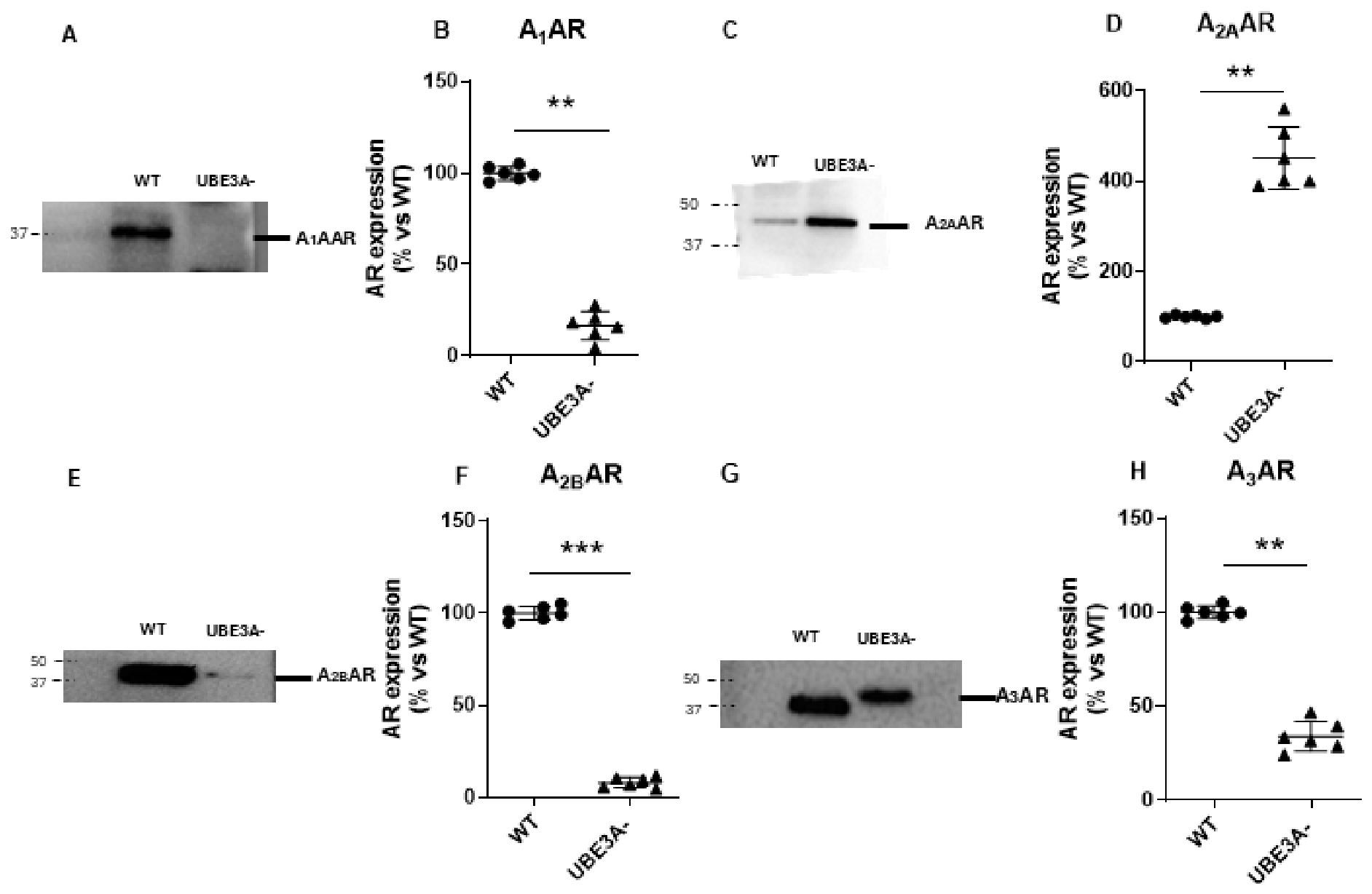
3.1. Adenosine Receptor Expression
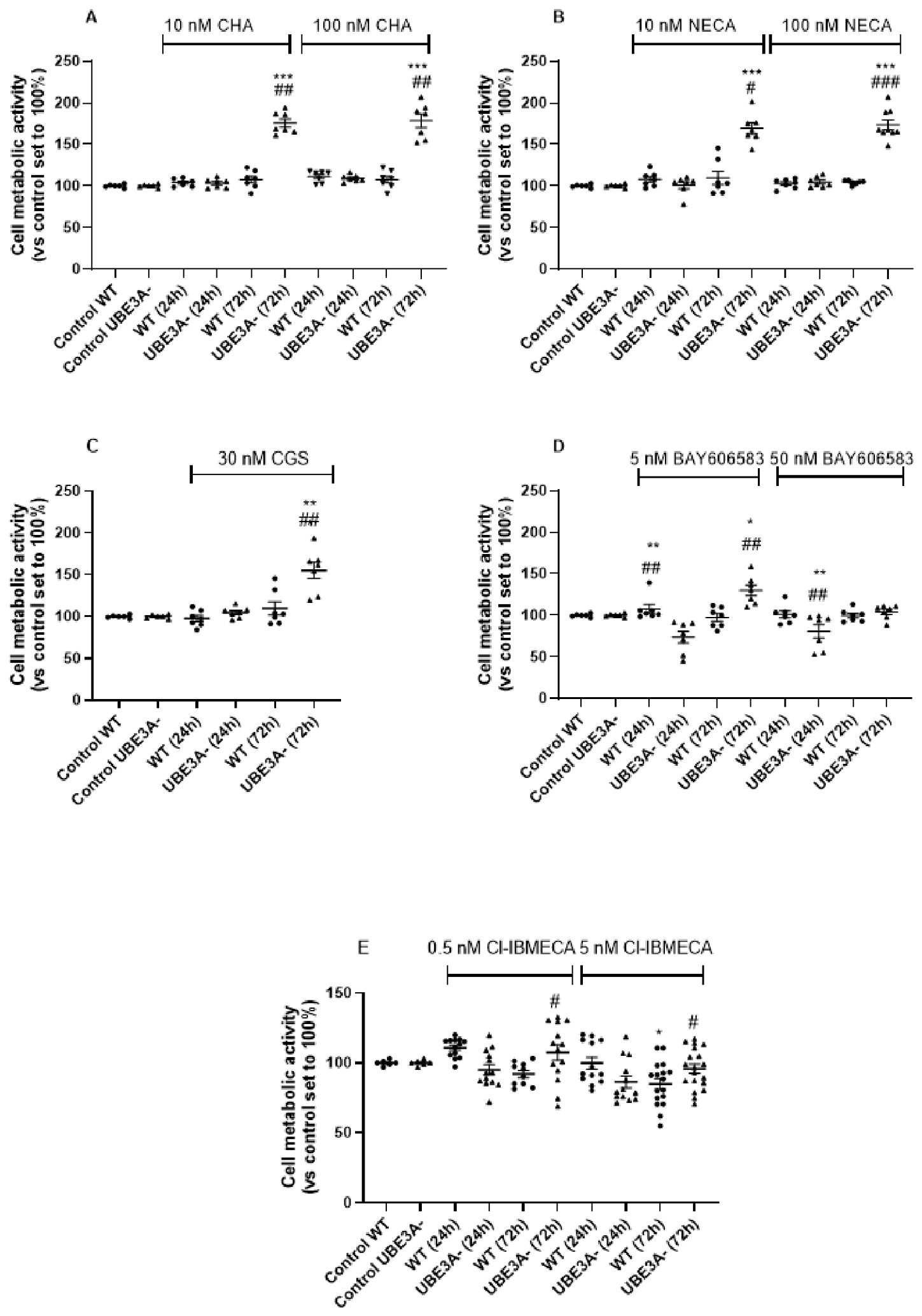
3.2. Effects of AR Stimulation on Cellular Metabolic Rate/Survival
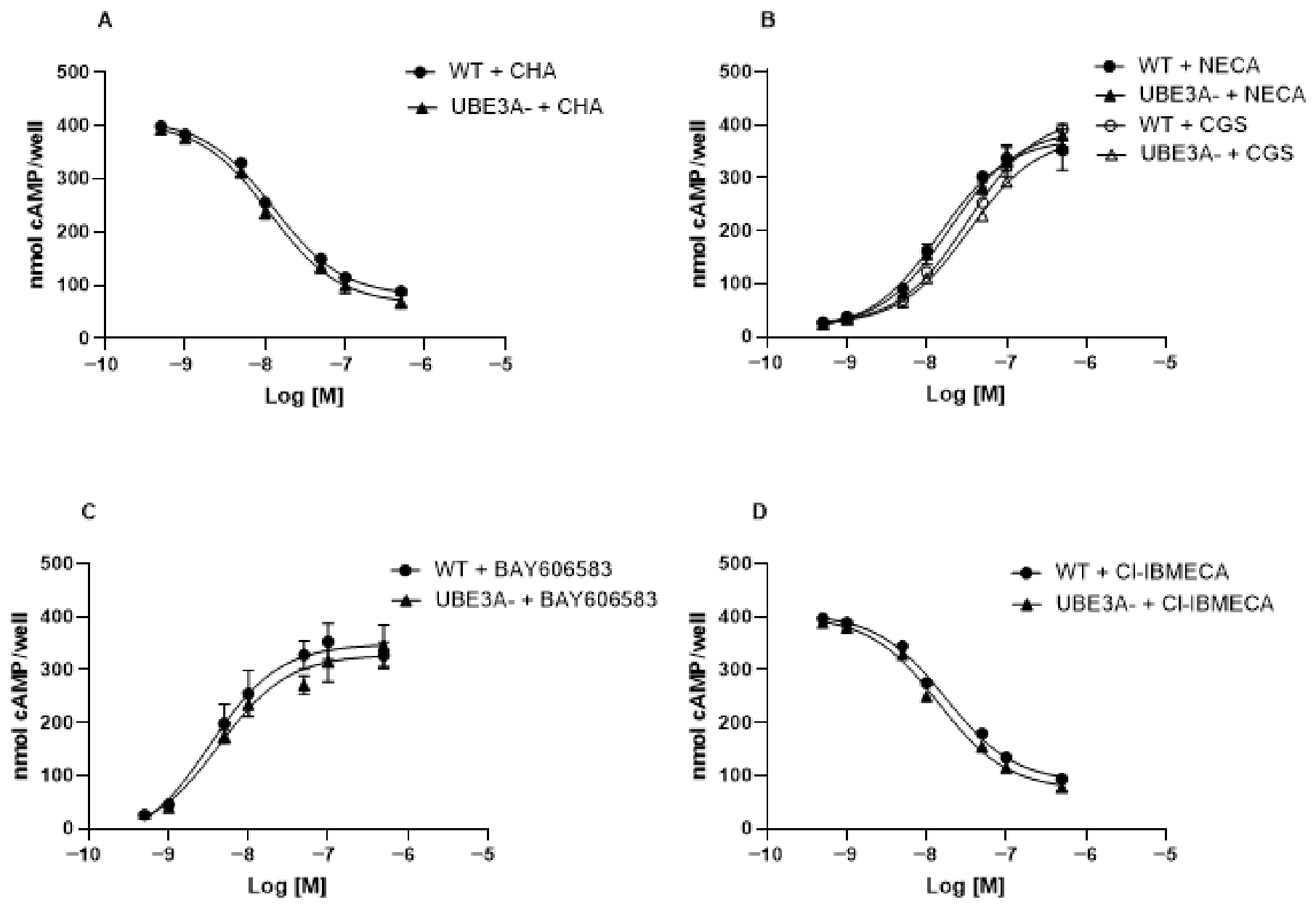
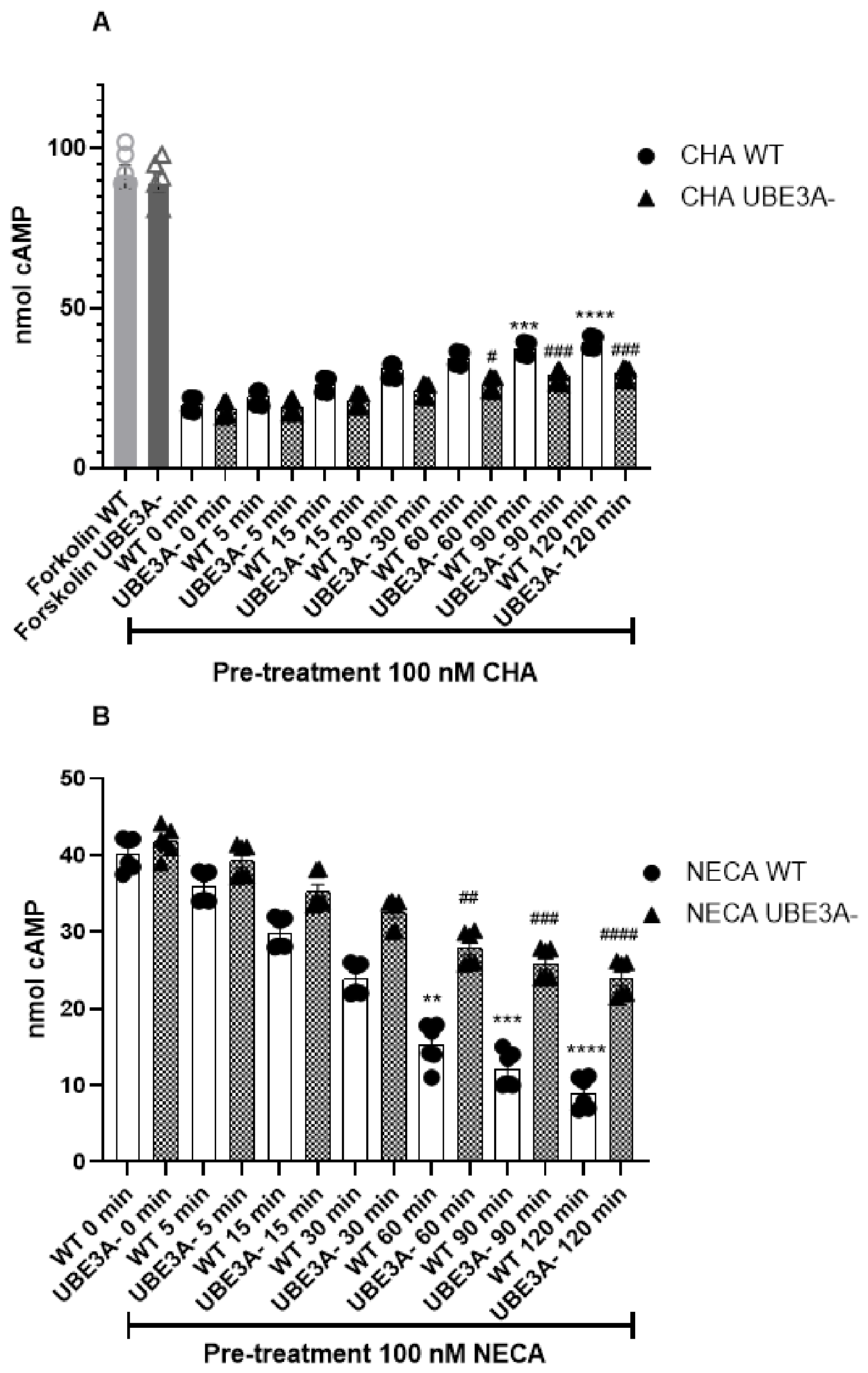
3.3. cAMP Signaling
3.4. Kinetics of Adenosine Receptor Desensitization
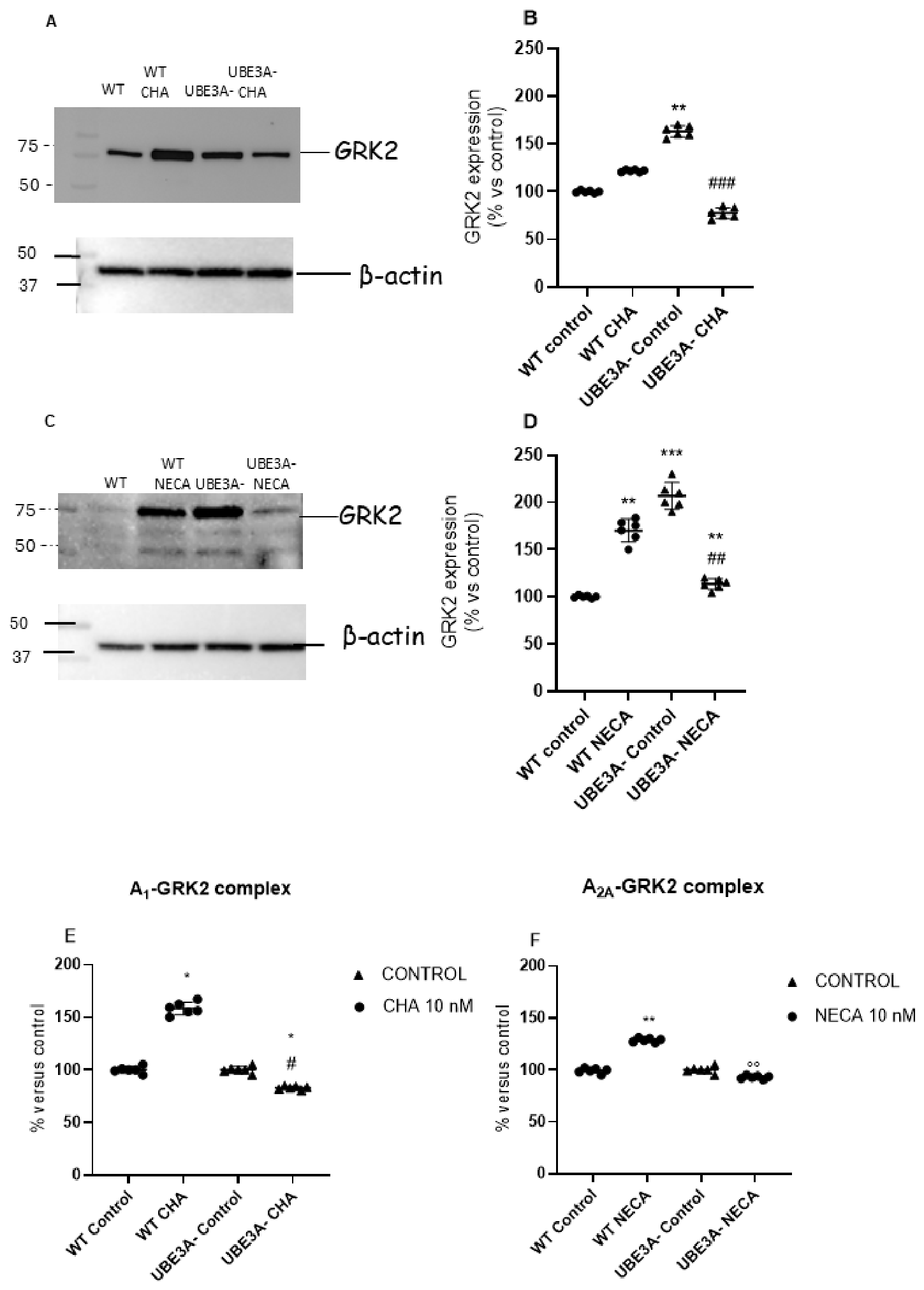
3.5. GRK2 Interaction with ARs and Desensitization Machinery
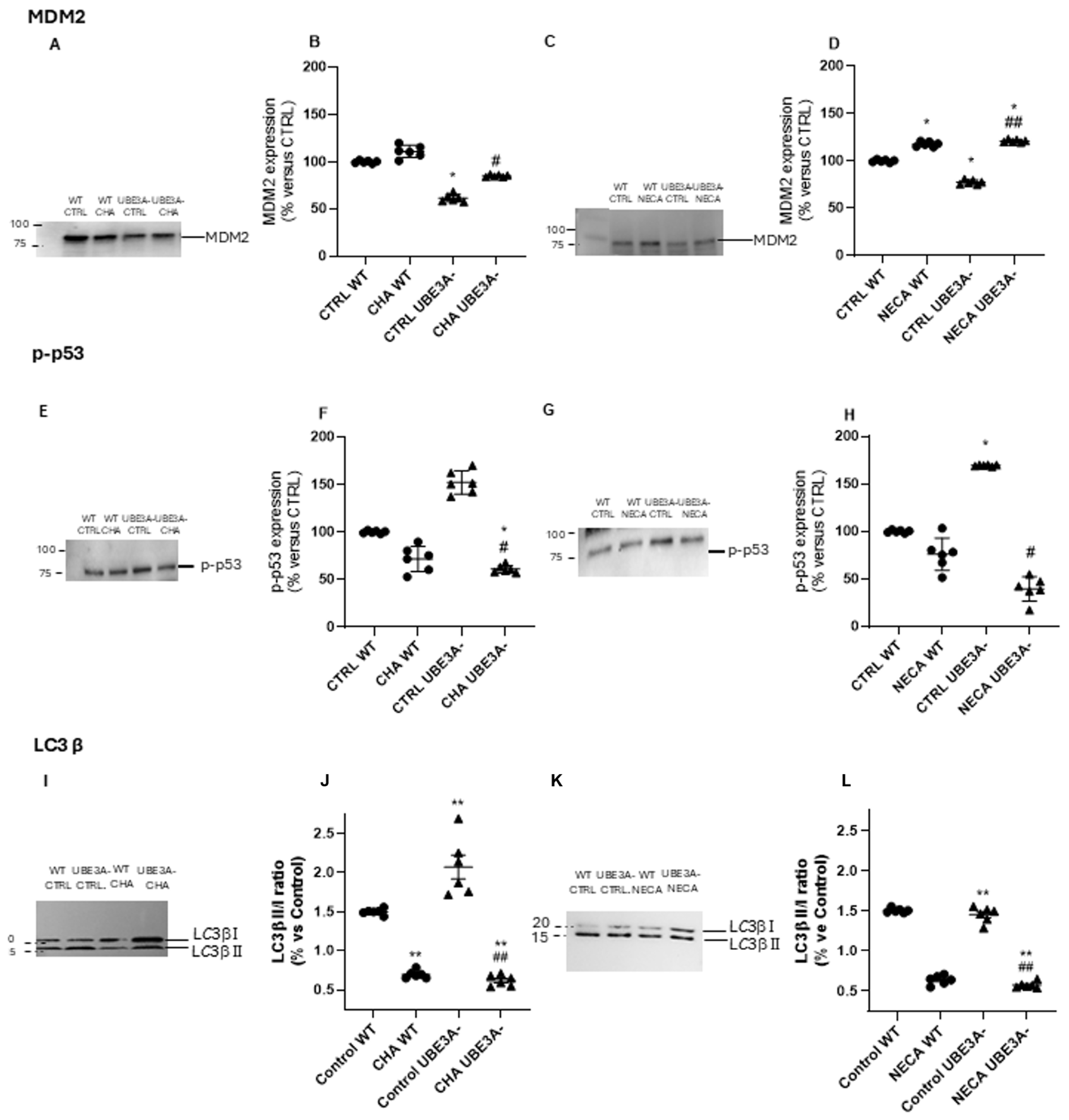
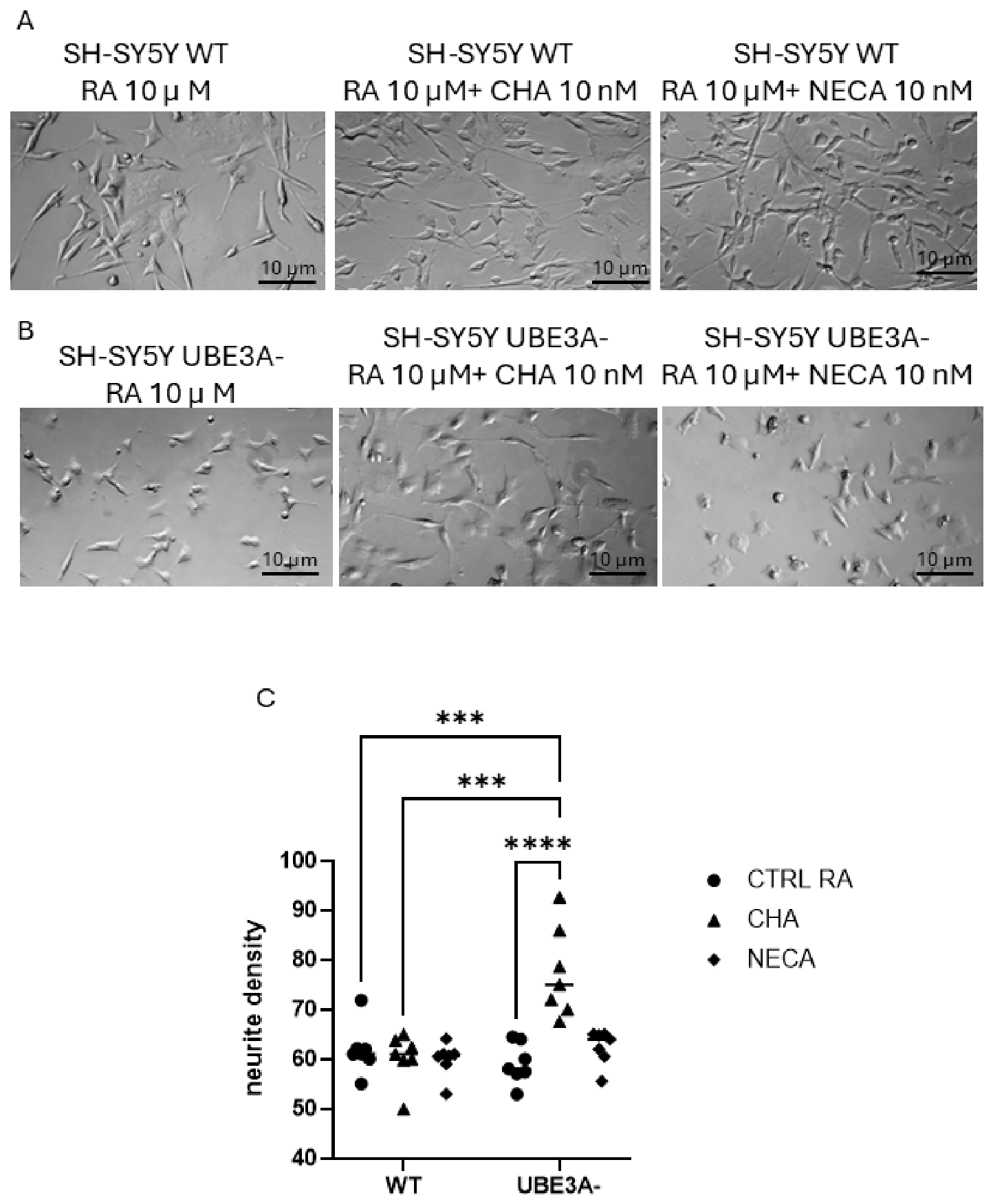
3.6. Proteasome System and Neurite Morphology upon AR Stimulation
4. Discussion
5. Conclusions
Supplementary Materials
Author Contributions
Funding
Institutional Review Board Statement
Informed Consent Statement
Data Availability Statement
Conflicts of Interest
Abbreviations
| AS | Angelman syndrome |
| AR | Adenosine receptor |
| A1AR | Adenosine A1 receptor |
| A2AAR | Adenosine A2A receptor |
| A2BAR | Adenosine A2B receptor |
| A3AR | Adenosine A3 receptor |
| UBE3A | Ubiquitin protein ligase E3A |
| WT | Wild type |
| SH-SY5Y | Human neuroblastoma SH-SY5Y cell line |
| cAMP | Cyclic adenosine monophosphate |
| GPCR | G protein-coupled receptor |
| GRK2 | G protein-coupled receptor kinase 2 |
| CHA | N6-cyclohexyladenosine |
| NECA | 5′-N-ethylcarboxamidoadenosine |
| CGS21680 | Selective A2A adenosine receptor agonist |
| BAY 60-6583 | Selective A2B adenosine receptor agonist |
| Cl-IB-MECA | Chloro-IB-methyladenosine |
| DPCPX | 8-Cyclopentyl-1,3-dipropylxanthine |
| ZM241385 | Selective A2A adenosine receptor antagonist |
References
- Folci, A.; Mirabella, F.; Fossati, M. Ubiquitin and Ubiquitin-Like Proteins in the Critical Equilibrium between Synapse Physiology and Intellectual Disability. eNeuro 2020, 7, ENEURO.0137-20.2020. [Google Scholar] [CrossRef] [Scilit]
- Kishino, T.; Lalande, M.; Wagstaff, J. UBE3A/E6-AP Mutations Cause Angelman Syndrome. Nat. Genet. 1997, 15, 70–73. [Google Scholar] [CrossRef] [Scilit]
- Matsuura, T.; Sutcliffe, J.S.; Fang, P.; Galjaard, R.J.; Jiang, Y.H.; Benton, C.S.; Rommens, J.M.; Beaudet, A.L. De Novo Truncating Mutations in E6-AP Ubiquitin-Protein Ligase Gene (UBE3A) in Angelman Syndrome. Nat. Genet. 1997, 15, 74–77. [Google Scholar] [CrossRef] [Scilit]
- Almeida, J.F.M.D.; Tonazzini, I.; Daniele, S. Molecular Aspects of Angelman Syndrome: Defining the New Path Forward. Biomol. Biomed. 2025, 25, 1928–1936. [Google Scholar] [CrossRef] [Scilit] [PubMed]
- Borea, P.A.; Gessi, S.; Merighi, S.; Vincenzi, F.; Varani, K. Pharmacology of Adenosine Receptors: The State of the Art. Physiol. Rev. 2018, 98, 1591–1625. [Google Scholar] [CrossRef] [Scilit]
- Fredholm, B.B.; IJzerman, A.P.; Jacobson, K.A.; Klotz, K.N.; Linden, J. International Union of Pharmacology. XXV. Nomenclature and Classification of Adenosine Receptors. Pharmacol. Rev. 2001, 53, 527–552. [Google Scholar] [CrossRef] [Scilit]
- Trincavelli, M.L.; Daniele, S.; Martini, C. Adenosine Receptors: What We Know and What We Are Learning. Curr. Top. Med. Chem. 2010, 10, 860–877. [Google Scholar] [CrossRef] [Scilit] [PubMed]
- Cordeaux, Y.; Ijzerman, A.P.; Hill, S.J. Coupling of the Human A1 Adenosine Receptor to Different Heterotrimeric G Proteins: Evidence for Agonist-Specific G Protein Activation. Br. J. Pharmacol. 2004, 143, 705–714. [Google Scholar] [CrossRef] [Scilit] [PubMed]
- Burnstock, G. Purinergic Signalling: Therapeutic Developments. Front. Pharmacol. 2017, 8, 661. [Google Scholar] [CrossRef] [Scilit]
- Shaban, M.; Smith, R.A.; Stone, T.W. Adenosine Receptor-Mediated Inhibition of Neurite Outgrowth from Cultured Sensory Neurons Is via an A1 Receptor and Is Reduced by Nerve Growth Factor. Dev. Brain Res. 1998, 105, 167–173. [Google Scholar] [CrossRef] [Scilit]
- Gomez-Castro, F.; Zappettini, S.; Pressey, J.C.; Silva, C.G.; Russeau, M.; Gervasi, N.; Figueiredo, M.; Montmasson, C.; Renner, M.; Canas, P.M.; et al. Convergence of Adenosine and GABA Signaling for Synapse Stabilization during Development. Science 2021, 374, eabk2055. [Google Scholar] [CrossRef] [Scilit] [PubMed]
- Blum, D.; Lopes, L.V. Stabilizing Synapses. Science 2021, 374, 684–685. [Google Scholar] [CrossRef] [Scilit]
- Moreira-de-Sá, A.; Gonçalves, F.Q.; Lopes, J.P.; Silva, H.B.; Tomé, Â.R.; Cunha, R.A.; Canas, P.M. Motor Deficits Coupled to Cerebellar and Striatal Alterations in Ube3am−/P+ Mice Modelling Angelman Syndrome Are Attenuated by Adenosine A2A Receptor Blockade. Mol. Neurobiol. 2021, 58, 2543–2557. [Google Scholar] [CrossRef] [Scilit]
- Dos Santos, B.; Piermartiri, T.; Tasca, C.I. The Impact of Purine Nucleosides on Neuroplasticity in the Adult Brain. Purinergic Signal. 2025, 21, 113–131. [Google Scholar] [CrossRef] [Scilit]
- Zappettini, S.; Bernard, C. Adenosine Signaling Throughout Development. In Adenosine Receptors in Neurodegenerative Diseases; Elsevier: Amsterdam, The Netherlands, 2017; pp. 23–43. ISBN 978-0-12-803724-9. [Google Scholar]
- Gao, X.; Jing, D.; Zhang, Y.; Zhu, F.; Yang, Y.; Zhou, G. Unveiling the Role of GRK2: From Immune Regulation to Cancer Therapeutics. Mediat. Inflamm. 2025, 2025, 8837640. [Google Scholar] [CrossRef] [Scilit]
- Penela, P.; Alvarez-Dolado, M.; Muñoz, A.; Mayor, F. Expression Patterns of the Regulatory Proteins G Protein-Coupled Receptor Kinase 2 and β-Arrestin 1 during Rat Postnatal Brain Development: Effect of Hypothyroidism. Eur. J. Biochem. 2000, 267, 4390–4396. [Google Scholar] [CrossRef] [Scilit] [PubMed]
- Ji, Z.; Cai, Z.; Zhang, J.; Liu, N.; Chen, J.; Tan, M.; Lin, H.; Guo, G. Rho Kinase Regulates Neurite Outgrowth of Hippocampal Neurons via Calcium Dependent Cytoskeleton Regulation. Am. J. Transl. Res. 2017, 9, 762–773. [Google Scholar]
- Rahman, M.M.; Islam, M.R.; Mim, S.A.; Sultana, N.; Chellappan, D.K.; Dua, K.; Kamal, M.A.; Sharma, R.; Emran, T.B. Insights into the Promising Prospect of G Protein and GPCR-Mediated Signaling in Neuropathophysiology and Its Therapeutic Regulation. Oxidative Med. Cell. Longev. 2022, 2022, 8425640. [Google Scholar] [CrossRef] [Scilit] [PubMed]
- Kühnle, S.; Mothes, B.; Matentzoglu, K.; Scheffner, M. Role of the Ubiquitin Ligase E6AP/UBE3A in Controlling Levels of the Synaptic Protein Arc. Proc. Natl. Acad. Sci. USA 2013, 110, 8888–8893. [Google Scholar] [CrossRef] [Scilit]
- Daniele, S.; Trincavelli, M.L.; Fumagalli, M.; Zappelli, E.; Lecca, D.; Bonfanti, E.; Campiglia, P.; Abbracchio, M.P.; Martini, C. Does GRK–β Arrestin Machinery Work as a “Switch on” for GPR17-Mediated Activation of Intracellular Signaling Pathways? Cell. Signal. 2014, 26, 1310–1325. [Google Scholar] [CrossRef] [Scilit]
- Fumagalli, M.; Bonfanti, E.; Daniele, S.; Zappelli, E.; Lecca, D.; Martini, C.; Trincavelli, M.L.; Abbracchio, M.P. The Ubiquitin Ligase Mdm2 Controls Oligodendrocyte Maturation by Intertwining mTOR with G Protein-Coupled Receptor Kinase 2 in the Regulation of GPR17 Receptor Desensitization. Glia 2015, 63, 2327–2339. [Google Scholar] [CrossRef] [Scilit]
- Martins De Almeida, J.F.; Contestabile, M.; Tonazzini, I.; De Cesari, C.; Baroncelli, L.; Martini, C.; Daniele, S. Dysfunction of the Autophagy System and MDM2–P53 Axis Leads to the Accumulation of Amyloidogenic Proteins in Angelman Syndrome Models. Int. J. Mol. Sci. 2025, 26, 11032. [Google Scholar] [CrossRef] [Scilit] [PubMed]
- Targett, I.L.; Crompton, L.A.; Conway, M.E.; Craig, T.J. Differentiation of SH-SY5Y Neuroblastoma Cells Using Retinoic Acid and BDNF: A Model for Neuronal and Synaptic Differentiation in Neurodegeneration. In Vitr. Cell. Dev. Biol.-Anim. 2024, 60, 1058–1067. [Google Scholar] [CrossRef] [Scilit]
- Aydin, D.; Öner, Ç.; Öztürk, S.A.; Çolak, E. Short-Term Effects of Retinoic Acid on the Proliferation of SH-SY5Y Cells via mitophagy and Apoptosis. Cell. Mol. Biol. 2024, 70, 64–70. [Google Scholar] [CrossRef] [Scilit] [PubMed]
- Mundell, S.; Kelly, E. Adenosine Receptor Desensitization and Trafficking. Biochim. Biophys. Acta (BBA)—Biomembr. 2011, 1808, 1319–1328. [Google Scholar] [CrossRef] [Scilit]
- Zhai, R.; Snyder, J.; Montgomery, S.; Sato, P.Y. Double Life: How GRK2 and β-Arrestin Signaling Participate in Diseases. Cell. Signal. 2022, 94, 110333. [Google Scholar] [CrossRef] [Scilit] [PubMed]
- Nash, C.A.; Nelson, C.P.; Mistry, R.; Moeller-Olsen, C.; Christofidou, E.; Challiss, R.A.J.; Willets, J.M. Differential Regulation of Β2-Adrenoceptor and Adenosine A2B Receptor Signalling by GRK and Arrestin Proteins in Arterial Smooth Muscle. Cell. Signal. 2018, 51, 86–98. [Google Scholar] [CrossRef] [Scilit]
- Yi, J.J.; Berrios, J.; Newbern, J.M.; Snider, W.D.; Philpot, B.D.; Hahn, K.M.; Zylka, M.J. An Autism-Linked Mutation Disables Phosphorylation Control of UBE3A. Cell 2015, 162, 795–807. [Google Scholar] [CrossRef] [Scilit]
- Tonazzini, I.; Van Woerden, G.M.; Masciullo, C.; Mientjes, E.J.; Elgersma, Y.; Cecchini, M. The Role of Ubiquitin Ligase E3A in Polarized Contact Guidance and Rescue Strategies in UBE3A-Deficient Hippocampal Neurons. Mol. Autism 2019, 10, 41. [Google Scholar] [CrossRef] [Scilit]
- Chen, J.-F.; Eltzschig, H.K.; Fredholm, B.B. Adenosine Receptors as Drug Targets—What Are the Challenges? Nat. Rev. Drug. Discov. 2013, 12, 265–286. [Google Scholar] [CrossRef] [Scilit]
- Stepien, P.; Polit, A.; Wisniewska-Becker, A. Comparative EPR Studies on Lipid Bilayer Properties in Nanodiscs and Liposomes. Biochim. Biophys. Acta (BBA)—Biomembr. 2015, 1848, 60–66. [Google Scholar] [CrossRef] [Scilit]
- Inden, M.; Takata, K.; Yanagisawa, D.; Ashihara, E.; Tooyama, I.; Shimohama, S.; Kitamura, Y. A4 Nicotinic Acetylcholine Receptor Modulated by Galantamine on Nigrostriatal Terminals Regulates Dopamine Receptor-Mediated Rotational Behavior. Neurochem. Int. 2016, 94, 74–81. [Google Scholar] [CrossRef] [Scilit] [PubMed]
- Lagostena, L.; Ashmore, J.F.; Kachar, B.; Mammano, F. Purinergic Control of Intercellular Communication between Hensen’s Cells of the Guinea—Pig Cochlea. J. Physiol. 2001, 531, 693–706. [Google Scholar] [CrossRef] [Scilit]
- Moreira-de-Sá, A.; Gonçalves, F.Q.; Lopes, J.P.; Silva, H.B.; Tomé, Â.R.; Cunha, R.A.; Canas, P.M. Adenosine A2A Receptors Format Long-Term Depression and Memory Strategies in a Mouse Model of Angelman Syndrome. Neurobiol. Dis. 2020, 146, 105137. [Google Scholar] [CrossRef] [Scilit] [PubMed]
- Fink, J.J.; Robinson, T.M.; Germain, N.D.; Sirois, C.L.; Bolduc, K.A.; Ward, A.J.; Rigo, F.; Chamberlain, S.J.; Levine, E.S. Disrupted Neuronal Maturation in Angelman Syndrome-Derived Induced Pluripotent Stem Cells. Nat. Commun. 2017, 8, 15038. [Google Scholar] [CrossRef] [Scilit]
- Greer, P.L.; Hanayama, R.; Bloodgood, B.L.; Mardinly, A.R.; Lipton, D.M.; Flavell, S.W.; Kim, T.-K.; Griffith, E.C.; Waldon, Z.; Maehr, R.; et al. The Angelman Syndrome Protein Ube3A Regulates Synapse Development by Ubiquitinating Arc. Cell 2010, 140, 704–716. [Google Scholar] [CrossRef] [Scilit]
- Marchetto, M.C.; Belinson, H.; Tian, Y.; Freitas, B.C.; Fu, C.; Vadodaria, K.C.; Beltrao-Braga, P.C.; Trujillo, C.A.; Mendes, A.P.D.; Padmanabhan, K.; et al. Altered Proliferation and Networks in Neural Cells Derived from Idiopathic Autistic Individuals. Mol. Psychiatry 2017, 22, 820–835. [Google Scholar] [CrossRef] [Scilit] [PubMed]
- Wang, M.; Wei, P.-C.; Lim, C.K.; Gallina, I.S.; Marshall, S.; Marchetto, M.C.; Alt, F.W.; Gage, F.H. Increased Neural Progenitor Proliferation in a hiPSC Model of Autism Induces Replication Stress-Associated Genome Instability. Cell Stem Cell 2020, 26, 221–233.e6. [Google Scholar] [CrossRef] [Scilit]
- Milazzo, C.; Narayanan, R.; Badillo, S.; Wang, S.; Almand, R.; Monshouwer, R.; Tzouros, M.; Golling, S.; Mientjes, E.; Chamberlain, S.; et al. UBE3A Reinstatement Restores Behaviorand Proteome in an Angelman Syndrome Mouse Model of Imprinting Defects. Mol. Autism 2025, 16, 45. [Google Scholar] [CrossRef] [Scilit]
- Echeverría, E.; Cabrera, M.; Burghi, V.; Sosa, M.; Ripoll, S.; Yaneff, A.; Monczor, F.; Davio, C.; Shayo, C.; Fernández, N. The Regulator of G Protein Signaling Homologous Domain of G Protein-Coupled Receptor Kinase 2 Mediates Short-Term Desensitization of Β3-Adrenergic Receptor. Front. Pharmacol. 2020, 11, 113. [Google Scholar] [CrossRef] [Scilit]
- Yao, Y.; Zhang, Q.; Li, Z.; Zhang, H. MDM2: Current Research Status and Prospects of Tumor Treatment. Cancer Cell Int. 2024, 24, 170. [Google Scholar] [CrossRef] [Scilit] [PubMed]
- Cunha, R.A. Neuroprotection by Adenosine in the Brain: From A1 Receptor Activation to A2A Receptor Blockade. Purinergic Signal. 2005, 1, 111–134. [Google Scholar] [CrossRef] [Scilit] [PubMed]
- Ribeiro, F.; Sebastião, A. Adenosine A2A Receptors in Neuronal Outgrowth: A Target for Nerve Regeneration? Neural Regen. Res. 2016, 11, 706–708. [Google Scholar] [CrossRef] [Scilit]
- Estridge, R.C.; Yagci, Z.B.; Sen, D.; Johnson, T.J.; Kelkar, G.R.; Ptacek, T.S.; Simon, J.M.; Keung, A.J. Loss of UBE3A Impacts Both Neuronal and Non-Neuronal Cells in Human Cerebral Organoids. Commun. Biol. 2025, 8, 838. [Google Scholar] [CrossRef] [Scilit]
- Duan, J.; Liu, H.; Zhao, F.; Yuan, Q.; Ji, Y.; Cai, X.; He, X.; Li, X.; Li, J.; Wu, K.; et al. GPCR Activation and GRK2 Assembly by a Biased Intracellular Agonist. Nature 2023, 620, 676–681. [Google Scholar] [CrossRef] [Scilit] [PubMed]




Disclaimer/Publisher’s Note: The statements, opinions and data contained in all publications are solely those of the individual author(s) and contributor(s) and not of MDPI and/or the editor(s). MDPI and/or the editor(s) disclaim responsibility for any injury to people or property resulting from any ideas, methods, instructions or products referred to in the content. |
© 2026 by the authors. Licensee MDPI, Basel, Switzerland. This article is an open access article distributed under the terms and conditions of the Creative Commons Attribution (CC BY) license.
Share and Cite
Contestabile, M.; Martins de Almeida, J.F.; De Cesari, C.; Tonazzini, I.; Artini, P.G.; Daniele, S. Adenosine Receptor Functionality and Desensitization Machinery in a Neuronal Cell Model of Angelman Syndrome. J. Dev. Biol. 2026, 14, 20. https://doi.org/10.3390/jdb14020020
Contestabile M, Martins de Almeida JF, De Cesari C, Tonazzini I, Artini PG, Daniele S. Adenosine Receptor Functionality and Desensitization Machinery in a Neuronal Cell Model of Angelman Syndrome. Journal of Developmental Biology. 2026; 14(2):20. https://doi.org/10.3390/jdb14020020
Chicago/Turabian StyleContestabile, Martina, Jacqueline Fátima Martins de Almeida, Chiara De Cesari, Ilaria Tonazzini, Paolo Giovanni Artini, and Simona Daniele. 2026. "Adenosine Receptor Functionality and Desensitization Machinery in a Neuronal Cell Model of Angelman Syndrome" Journal of Developmental Biology 14, no. 2: 20. https://doi.org/10.3390/jdb14020020
APA StyleContestabile, M., Martins de Almeida, J. F., De Cesari, C., Tonazzini, I., Artini, P. G., & Daniele, S. (2026). Adenosine Receptor Functionality and Desensitization Machinery in a Neuronal Cell Model of Angelman Syndrome. Journal of Developmental Biology, 14(2), 20. https://doi.org/10.3390/jdb14020020