
Data–Knowledge Collaborative Learning Framework for Cellular Traffic Forecasting via Enhanced Correlation Modeling
 ,
,  ,
,
Abstract
1. Introduction
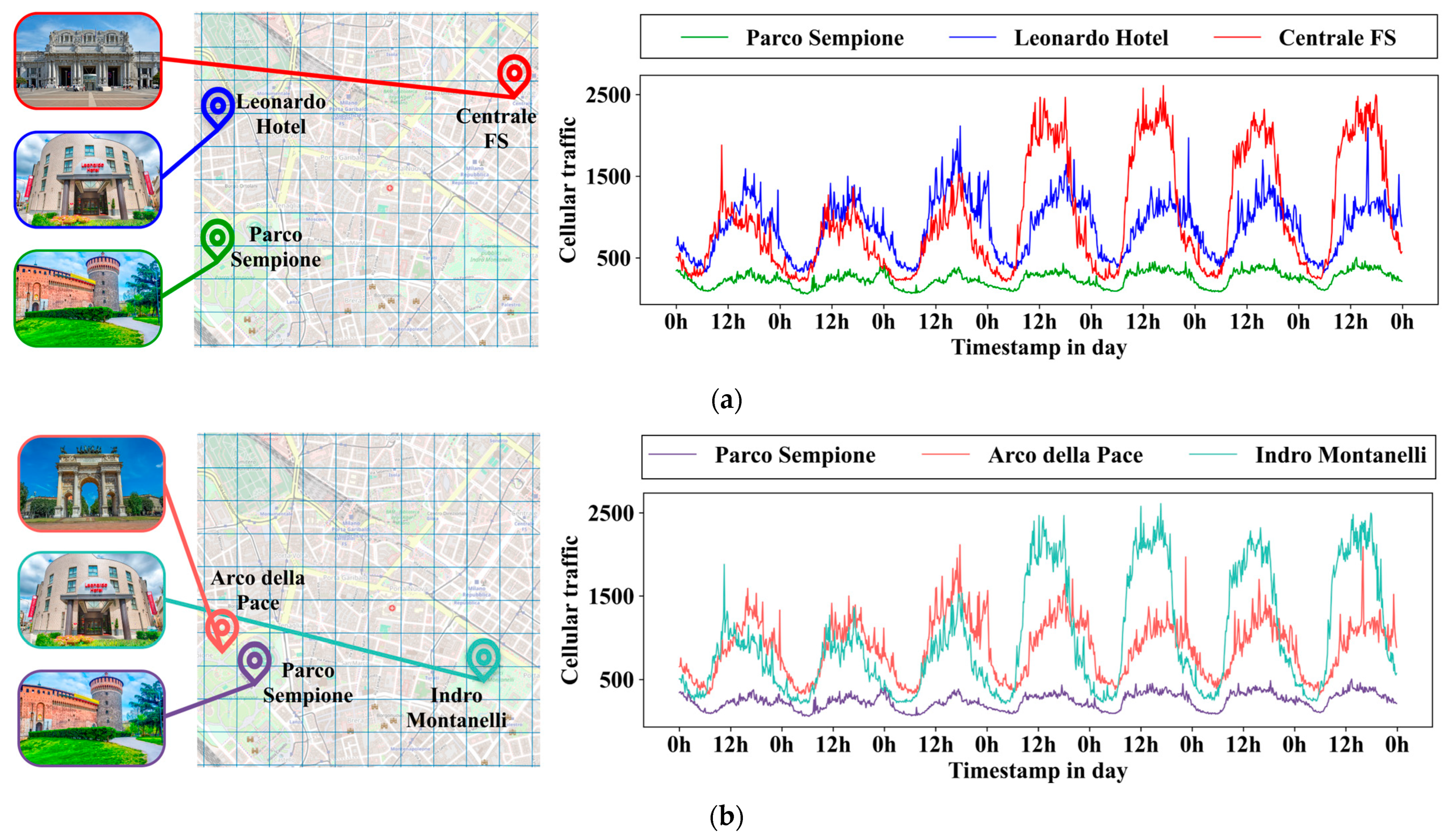
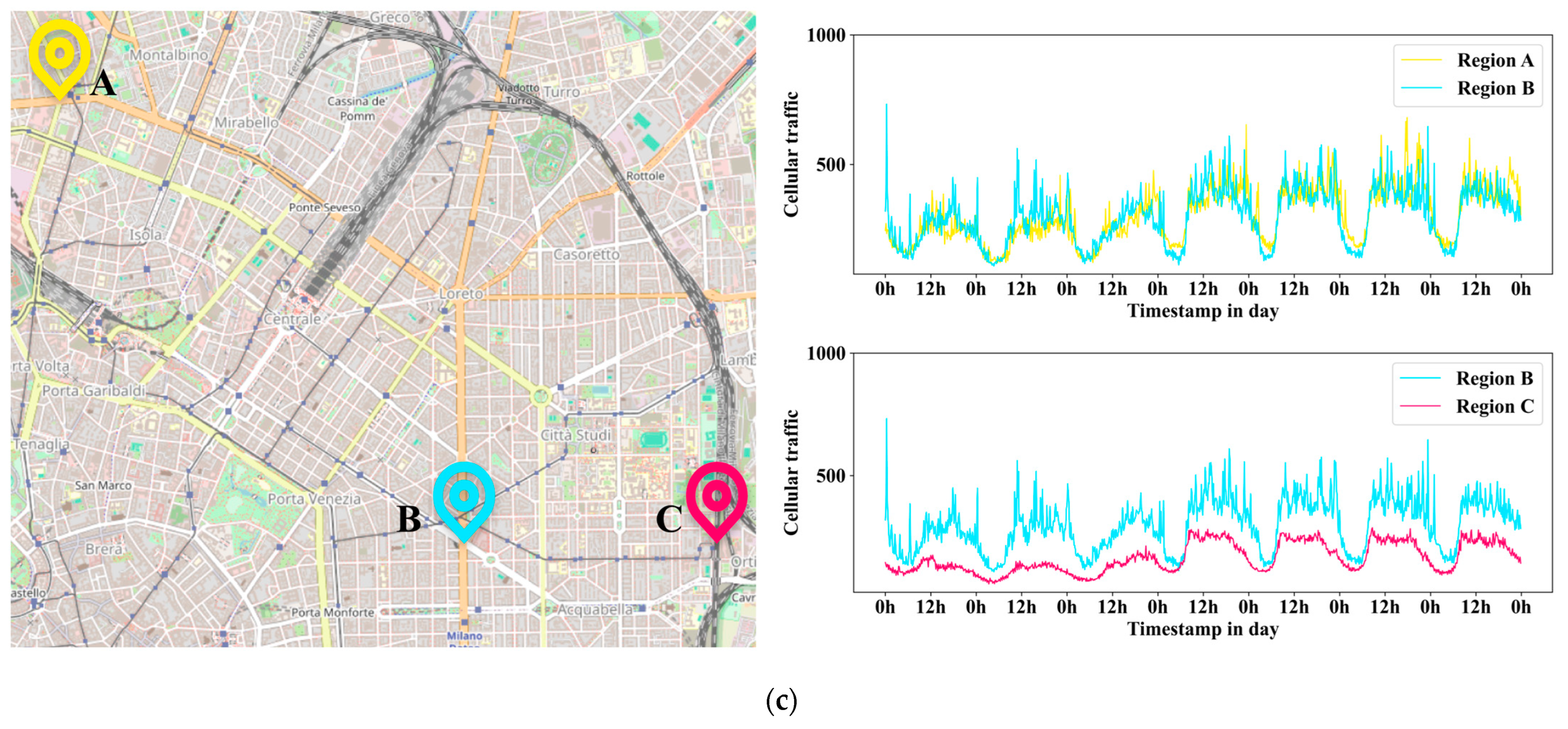
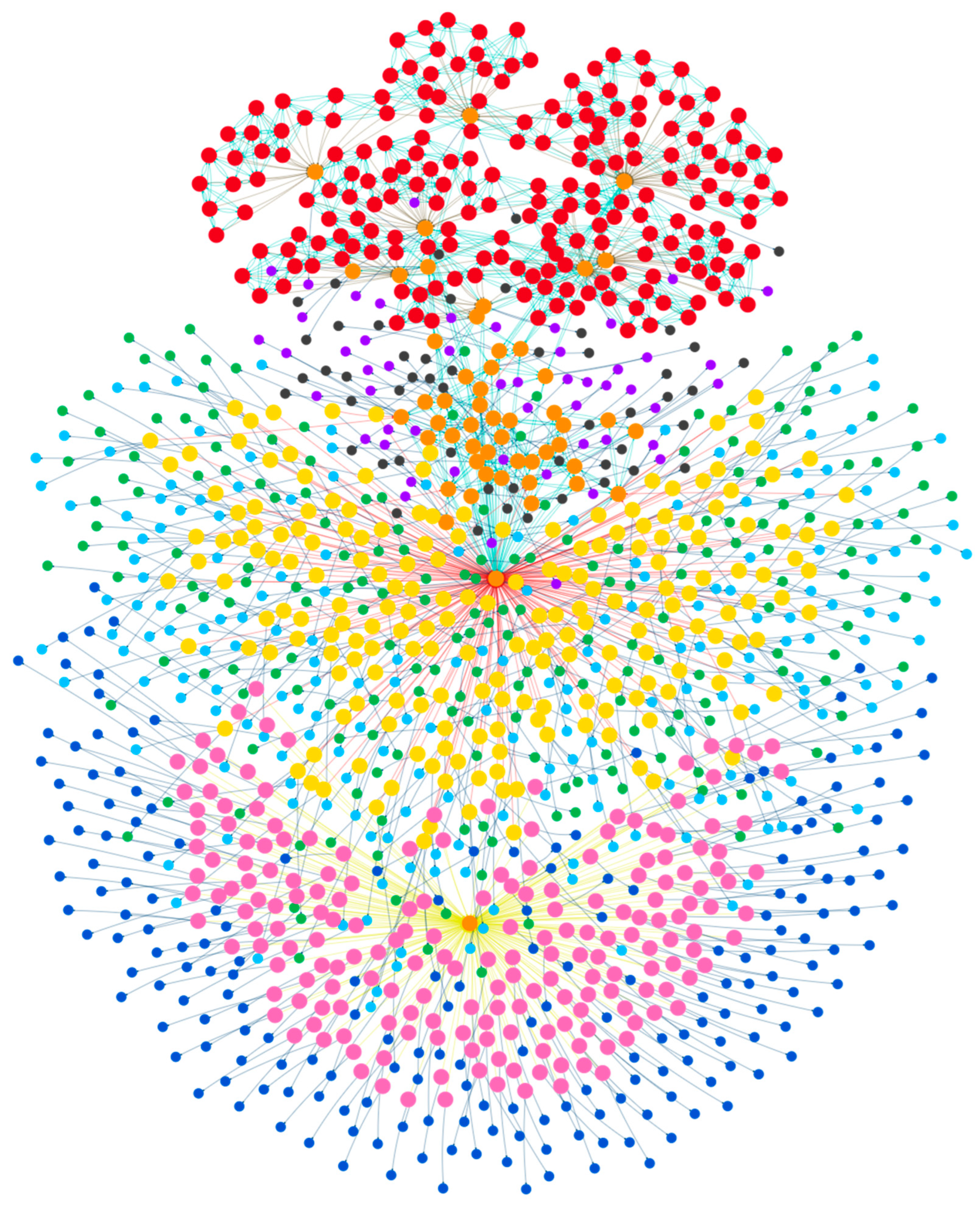
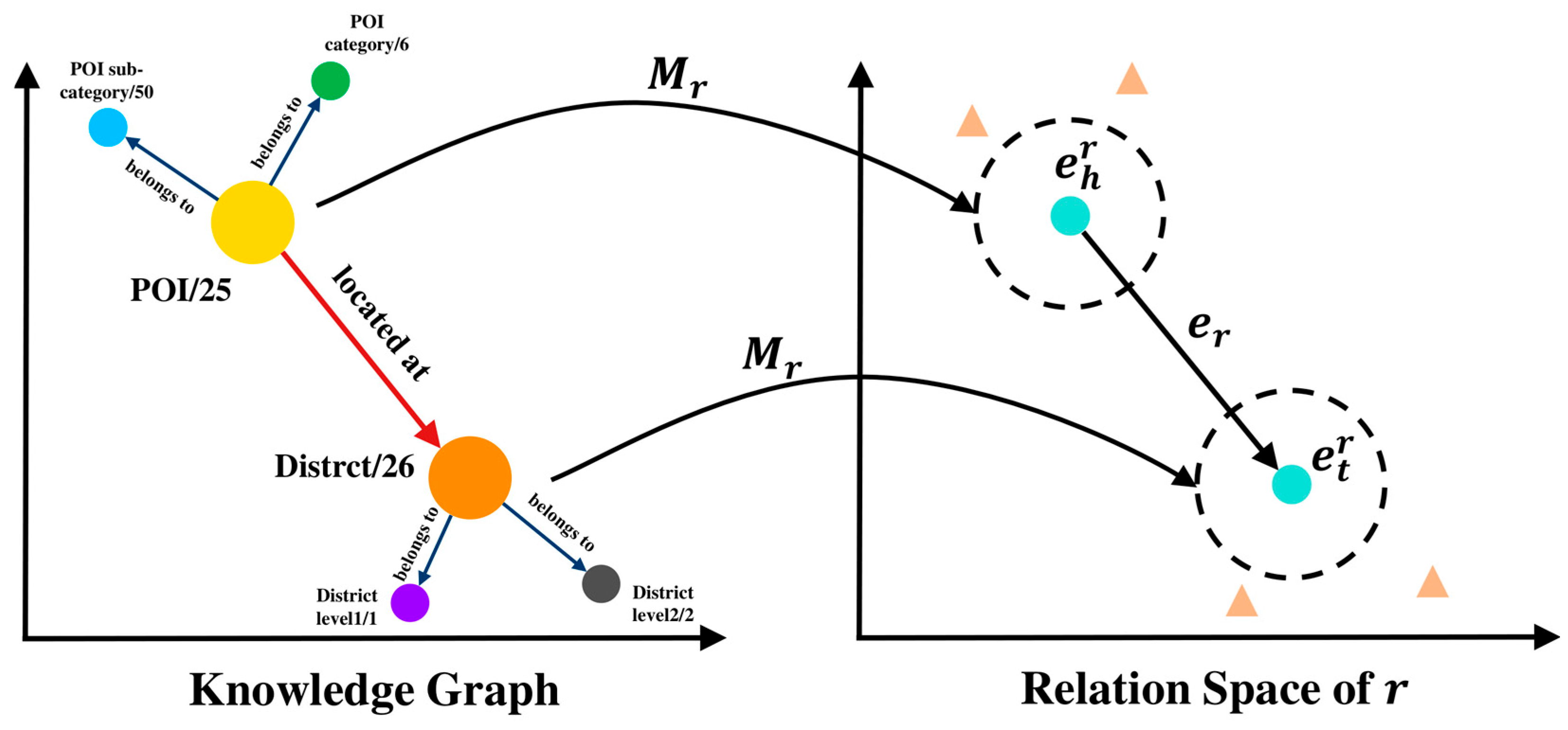
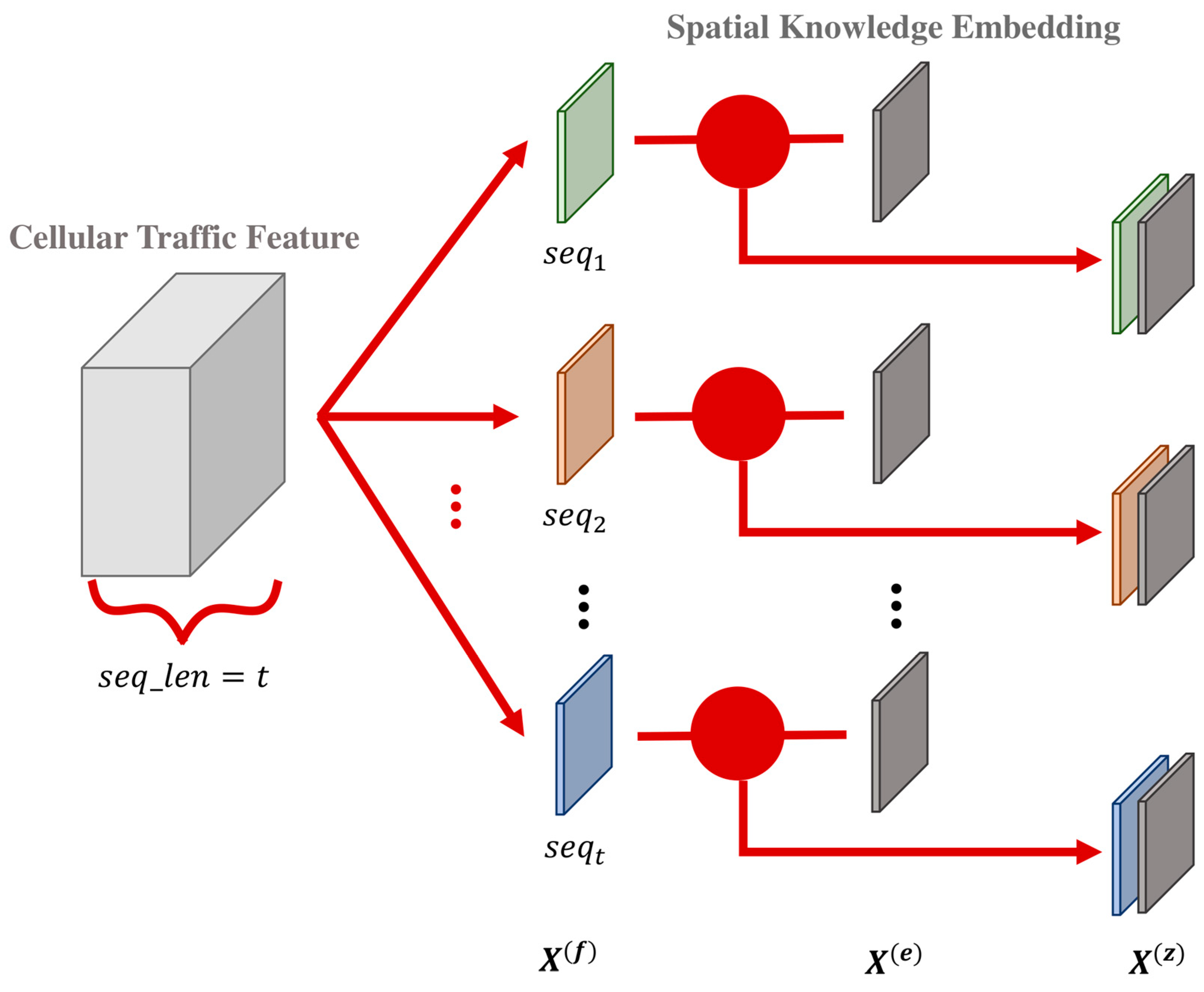
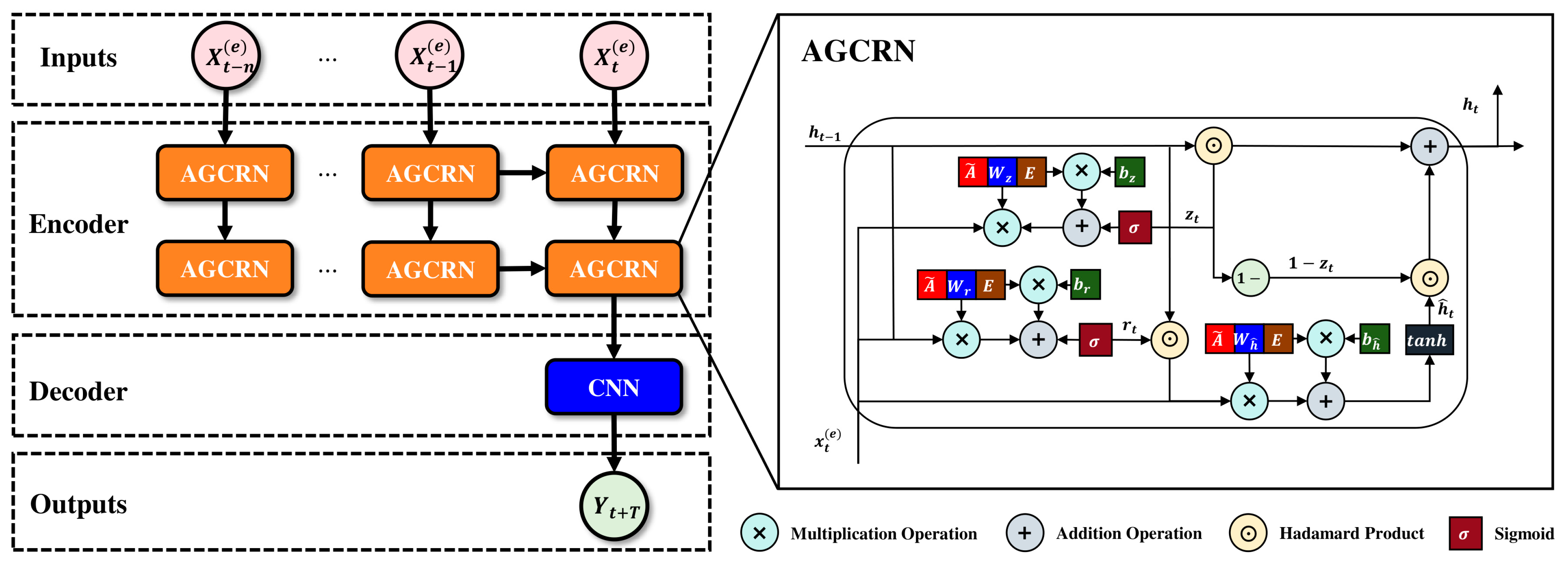
- We devise a hybrid learning paradigm that fuses data-driven signals with prior knowledge for spatio-temporal forecasting. Data and knowledge are two main information sources for forecast learning. While previous studies have integrated both data and knowledge, the application of knowledge and its collaboration with data-driven processes must be more targeted to mitigate the “model-blindness” challenge. In our framework, we extract knowledge triplets representing urban structures. These triplets characterize latent similarities across urban spaces and are embedded into the forecast learning process, enabling the collaborative learning of data and knowledge through backpropagation while estimating a correlation matrix. This approach to knowledge-enhanced correlation modeling offers a new perspective for collaborative data–knowledge forecast learning.
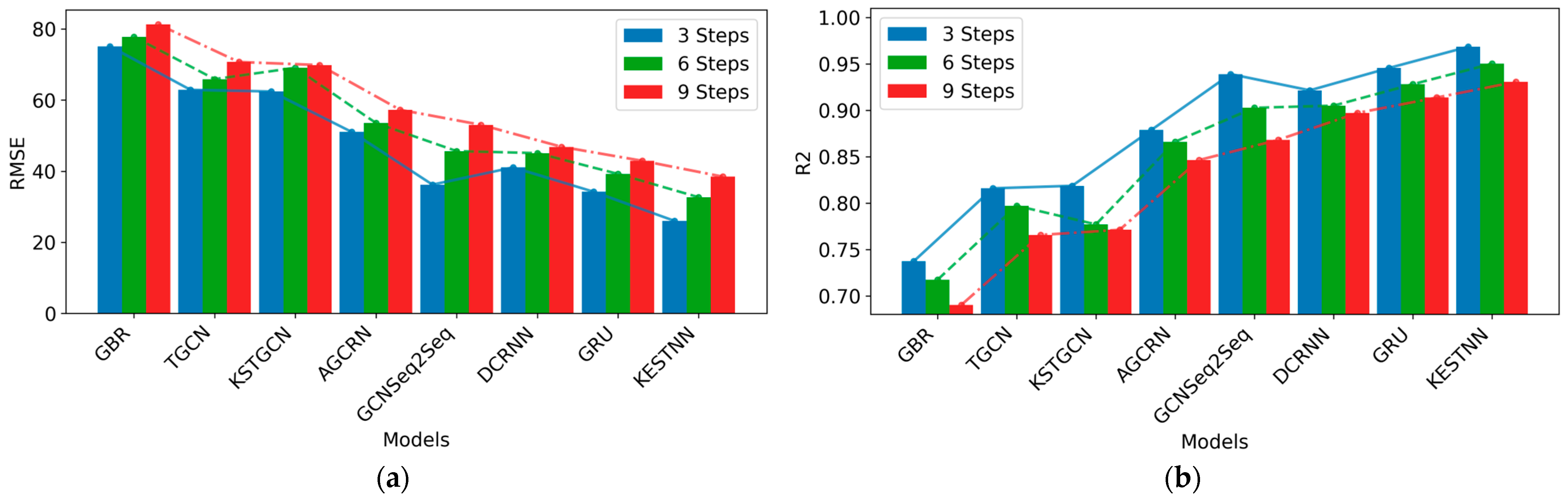
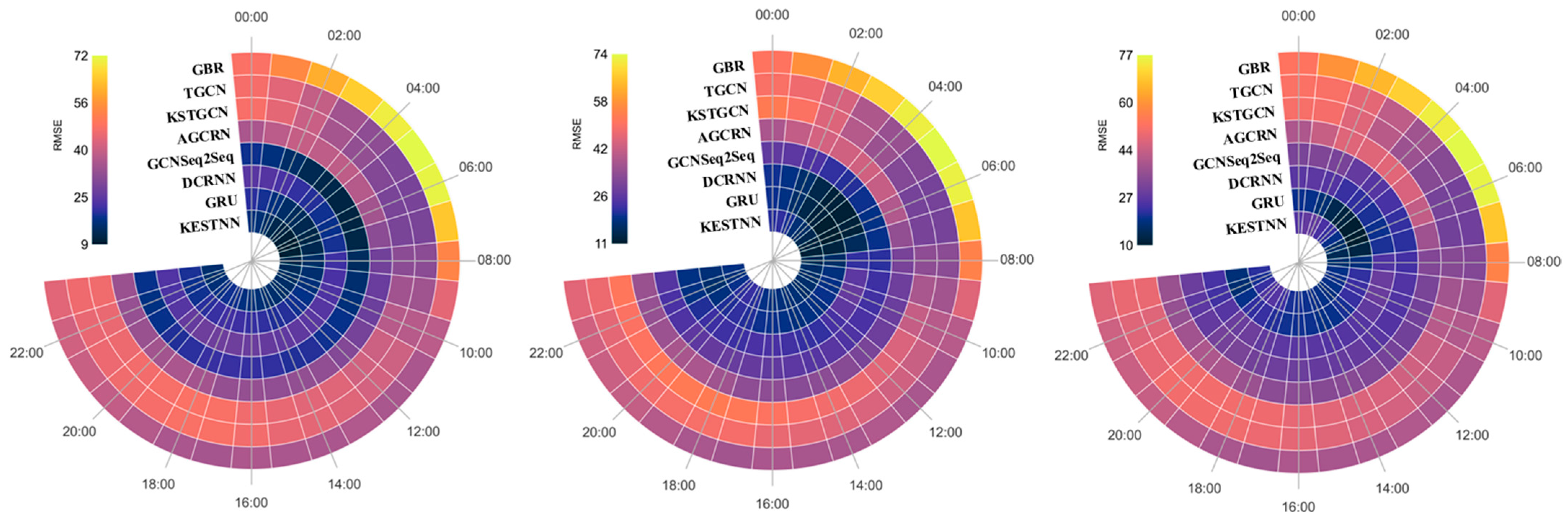
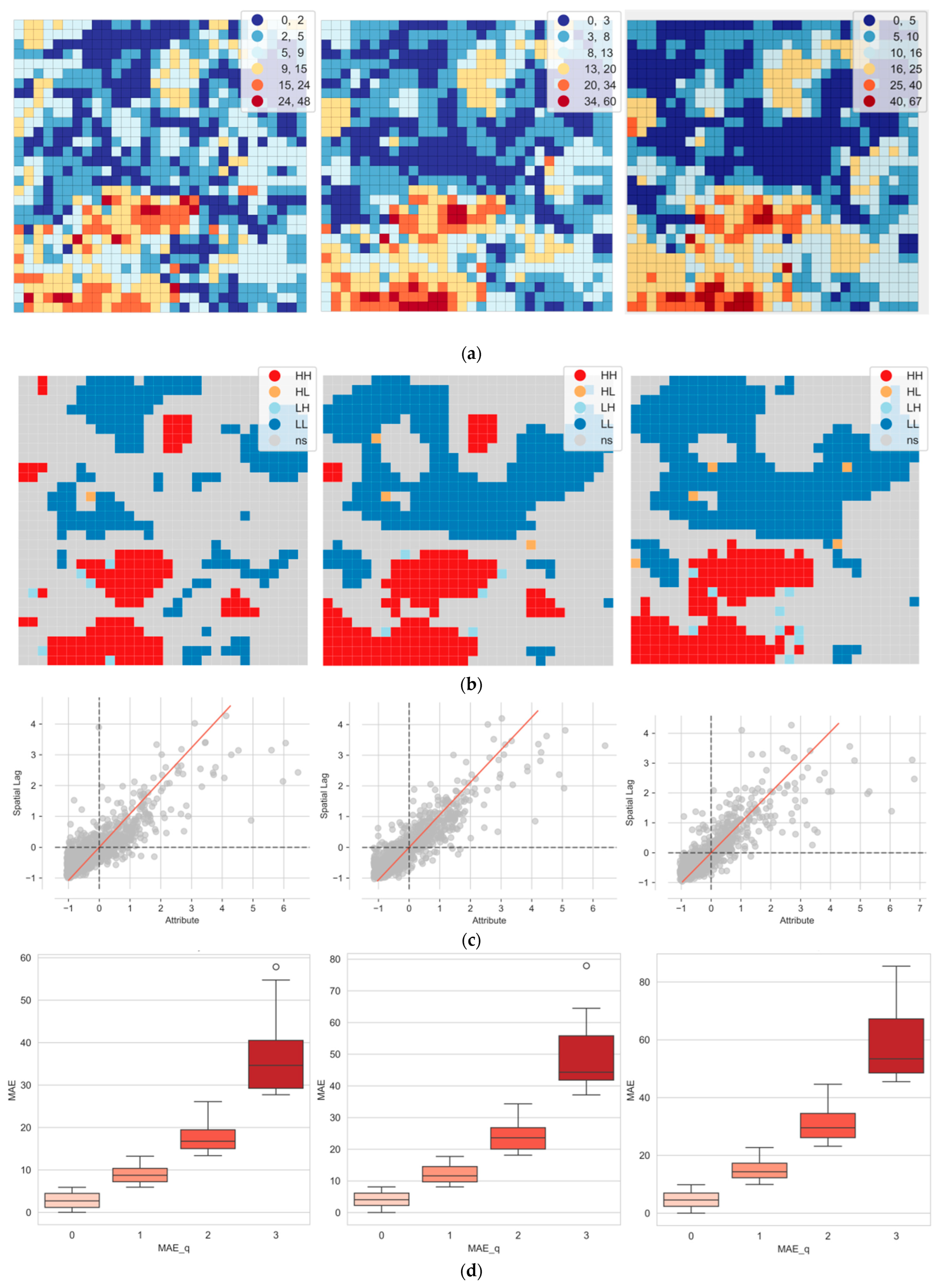
- Tests on the Milan communication dataset reveal that the proposed scheme sharply lifts the cellular traffic forecasting quality: KESTNN cuts the RMSE of the best rival by 23.91% at horizon-3, 16.73% at horizon-6, and 10.40% at horizon-9, while also surpassing prior work in MAE and R2, evidencing superior stability and generalization. Furthermore, spatio-temporal error analysis validated the model’s performance advantages in complex scenarios involving sudden changes and weak correlations. Knowledge ablation experiments analyzed the critical roles of POI semantics, road networks, and administrative hierarchy knowledge in achieving stable short-term, long-term, and multi-step forecasts demonstrating the effectiveness of knowledge. Moreover, KESTNN maintains low error rates during both daytime high-dynamic periods and nighttime stable periods, significantly outperforming other comparison methods. This fully demonstrates the effectiveness and necessity of the data–knowledge collaborative learning framework in cellular traffic forecasting.
2. Related Works
2.1. Machine Learning Methods for Cellular Traffic Forecasting
2.2. Deep Learning Methods for Cellular Traffic Forecasting
2.3. Large Language Model Methods for Cellular Traffic Forecasting
3. Methodology
3.1. Construction of Urban Geospatial Structure Knowledge Graph
3.2. Data–Knowledge Collaborative Representation Learning
3.3. Spatio-Temporal Model for Cellular Traffic Forecasting
3.4. Data–Knowledge Collaborative Learning Mechanism in Backpropagation
4. Results and Discussions
4.1. Datasets
4.2. Evaluation Metrics
4.3. Training Settings
4.4. Accuracy Comparison with Baselines
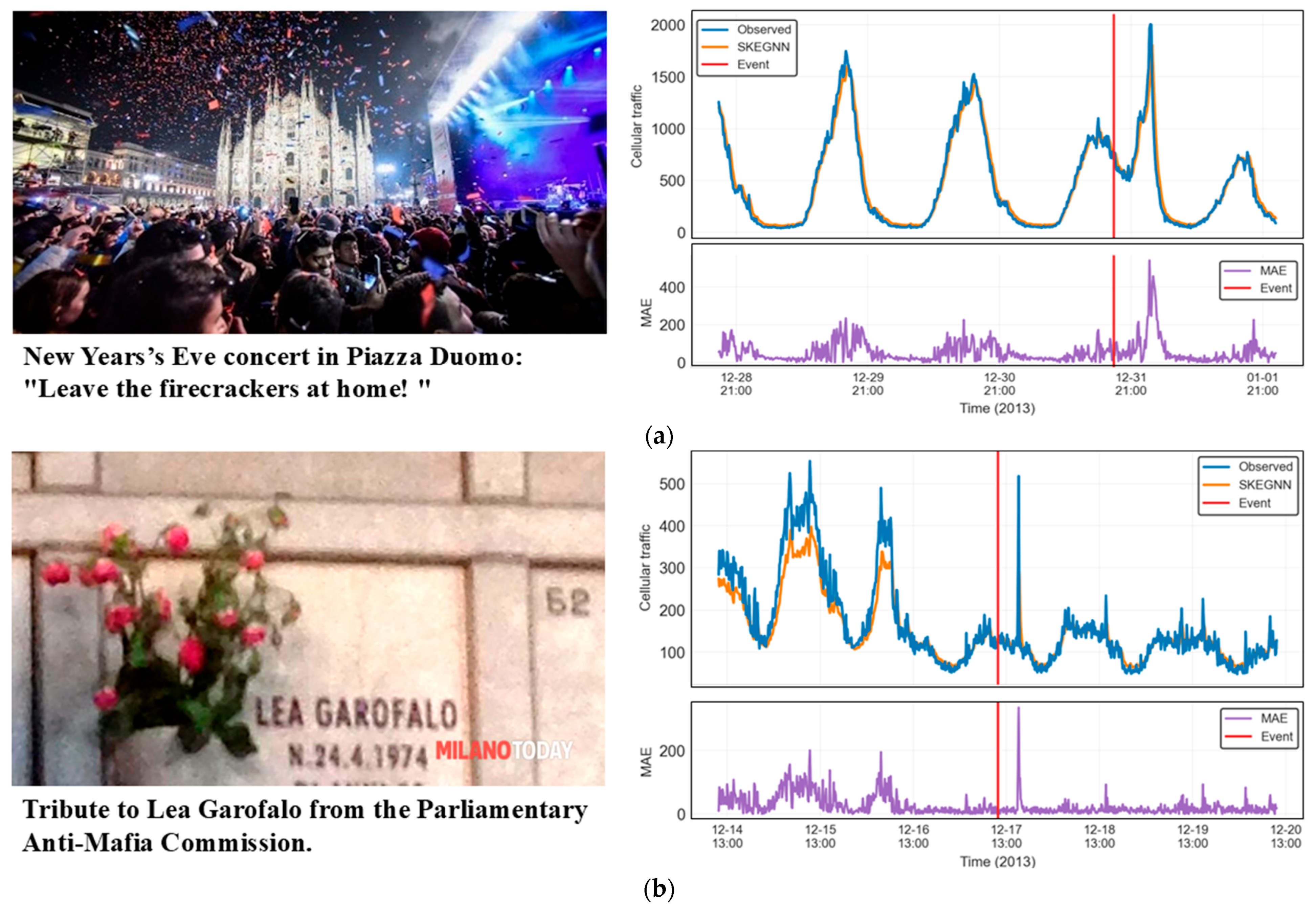
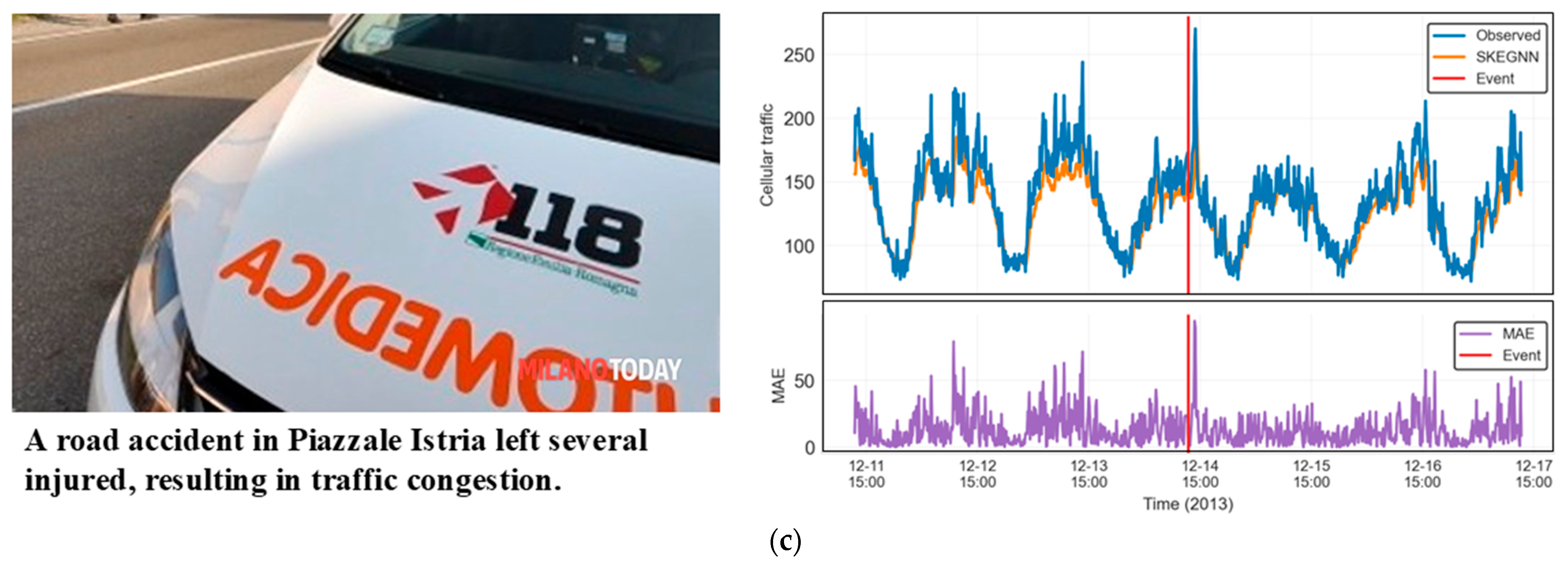
4.5. Spatio-Temporal Analysis of Forecasting Error
4.5.1. Temporal Distribution of Forecasting Error
4.5.2. Spatial Distribution of Forecasting Error
4.6. Assessment of Knowledge Validity
4.7. Limitation Analysis
5. Conclusions and Future Works
- KESTNN exhibits optimal performance in 3-step, 6-step, and 9-step forecasting tasks. Compared to the best baseline model, KESTNN reduces RMSE by 23.91%, 16.73%, and 10.40% in 3-step, 6-step, and 9-step forecasts, respectively.
- KESTNN demonstrates strong generalization capabilities and robustness. Spatio-temporal error analysis validates the auxiliary gains from knowledge embedding in KESTNN for scenarios involving sudden changes and weak correlations.
- The spatial structural knowledge modeled by KESTNN is effective. Knowledge ablation experiments indicate that short-term forecasting accuracy is primarily constrained by POI semantics, while long-term forecasting relies on road network topology. The hierarchical semantics of administrative divisions provide sustained gains for multi-step forecasts.
- The completeness and granularity of the knowledge graph directly determine the upper limit of forecasting accuracy. Future efforts could integrate real-time event streams from social media, emergency dispatch systems, and meteorological environments to construct richer, semantically diverse hybrid knowledge graphs combining static and dynamic data.
- Current knowledge embedding primarily relies on linear projection and concatenation. Subsequent research may explore incorporating triplet constraints directly into the generation of graph convolution kernels to achieve deeper physical consistency.
- Although our work validated the effectiveness of KESTNN using the Milan dataset, its framework is generalizable and can be extended to other urban environments. By replacing local POIs, road networks, cellular cells, and administrative boundaries, this method can adapt to diverse urban structures. Future work will further validate its generalization capabilities across multi-city, multi-source datasets. Additionally, we will explore knowledge transfer strategies to enable the model to rapidly adapt to new dataset distributions through a pre-training-fine-tuning approach, thereby enhancing its generalization performance.
- The analysis results of event perturbations can be used for further research. Future work may incorporate point processes or stochastic differential equations to perform the generative modeling of chain reactions involving events, crowds, and traffic flows, enabling the interpretable and quantifiable modeling of sudden incidents.
- The Milan dataset used in this study was collected in 2013–2014. While it effectively validates the model’s superiority in modeling complex urban spatial correlations and knowledge collaborative learning mechanisms, it does not reflect the impacts of emerging network technologies like 5G or recent shifts in user behavior. Future research will further validate the framework’s generalization capability and temporal adaptability across multiple cities using updated multi-source datasets.
Author Contributions
Funding
Data Availability Statement
Conflicts of Interest
References
- Amini, M.; Stanica, R.; Rosenberg, C. Where are the (cellular) data? ACM Comput. Surv. 2023, 56, 1–25. [Google Scholar] [CrossRef]
- Barlacchi, G.; De Nadai, M.; Larcher, R.; Casella, A.; Chitic, C.; Torrisi, G.; Antonelli, F.; Vespignani, A.; Pentland, A.; Lepri, B. A multi-source dataset of urban life in the city of Milan and the Province of Trentino. Sci. Data 2015, 2, 150055. [Google Scholar] [CrossRef]
- Gao, Z. 5G traffic prediction based on deep learning. Comput. Intell. Neurosci. 2022, 2022, 3174530. [Google Scholar] [CrossRef]
- Krige, D.G. A statistical approach to some basic mine valuation problems on the Witwatersrand. J. South. Afr. Inst. Min. Metall. 1951, 52, 119–139. [Google Scholar]
- Brunsdon, C.; Fotheringham, A.S.; Charlton, M.E. Geographically Weighted Regression: A Method for Exploring Spatial Nonstationarity. Geogr. Anal. 1996, 28, 281–298. [Google Scholar] [CrossRef]
- Martin, R.L.; Oeppen, J.E. The identification of regional forecasting models using space: Time correlation functions. Trans. Inst. Br. Geogr. 1975, 66, 95–118. [Google Scholar] [CrossRef]
- Xu, L.; Chen, N.; Chen, Z.; Zhang, C.; Yu, H. Spatio-temporal forecasting in earth system science: Methods, uncertainties, predictability and future directions. Earth-Sci. Rev. 2021, 222, 103828. [Google Scholar] [CrossRef]
- Tobler, W.R. A computer movie simulating urban growth in the Detroit region. Econ. Geogr. 1970, 46, 234–240. [Google Scholar] [CrossRef]
- Noulas, A.; Scellato, S.; Lambiotte, R.; Pontil, M.; Mascolo, C. A tale of many cities: Universal patterns in human urban mobility. PLoS ONE 2012, 7, e37027. [Google Scholar] [CrossRef]
- Zhao, B.; Deng, M.; Shi, Y. Inferring nonwork travel semantics and revealing the nonlinear relationships with the community built environment. Sustain. Cities Soc. 2023, 99, 104889. [Google Scholar] [CrossRef]
- Zhao, B.; Deng, Y.; Luo, L.; Deng, M.; Yang, X. Preferred streets: Assessing the impact of the street environment on cycling behaviors using the geographically weighted regression. Transportation 2025, 52, 1485–1511. [Google Scholar] [CrossRef]
- Wang, X.; Wang, Z.; Yang, K.; Song, Z.; Bian, C.; Feng, J.; Deng, C. A survey on deep learning for cellular traffic prediction. Intell. Comput. 2024, 3, 0054. [Google Scholar] [CrossRef]
- Gu, B.; Zhan, J.; Gong, S.; Liu, W.; Su, Z.; Guizani, M. A spatial-temporal transformer network for city-level cellular traffic analysis and prediction. IEEE Trans. Wirel. Commun. 2023, 22, 9412–9423. [Google Scholar] [CrossRef]
- Lu, J.; Chen, Z. Spatio-temporal graph attention network and graph-based Transformer architecture for distributed urban wind sequence reconstruction and forecasting. Measurement 2025, 252, 117400. [Google Scholar] [CrossRef]
- Chen, K.; Chu, G.; Yang, X.; Shi, Y.; Lei, K.; Deng, M. HSETA: A heterogeneous and sparse data learning hybrid framework for estimating time of arrival. IEEE Trans. Intell. Transp. Syst. 2022, 23, 21873–21884. [Google Scholar] [CrossRef]
- Deng, M.; Chen, K.; Lei, K.; Chen, Y.; Shi, Y. MVCV-Traffic: Multiview road traffic state estimation via cross-view learning. Int. J. Geogr. Inf. Sci. 2023, 37, 2205–2237. [Google Scholar] [CrossRef]
- Santos Escriche, E.; Vassaki, S.; Peters, G. A comparative study of cellular traffic prediction mechanisms. Wirel. Netw. 2023, 29, 2371–2389. [Google Scholar] [CrossRef]
- Chen, G.; Guo, Y.; Zeng, Q.; Zhang, Y. A novel cellular network traffic prediction algorithm based on graph convolution neural networks and long short-term memory through extraction of spatial-temporal characteristics. Processes 2023, 11, 2257. [Google Scholar] [CrossRef]
- Alzate Mejia, N.; Perelló, J.; Santos-Boada, G.; de Almeida-Amazonas, J.R. Evaluating a Multidisciplinary Model for Managing Human Uncertainty in 5G Cyber–Physical–Social Systems. Appl. Sci. 2024, 14, 8786. [Google Scholar] [CrossRef]
- Zhang, C.; Zhang, H.; Yuan, D.; Zhang, M. Citywide cellular traffic prediction based on densely connected convolutional neural networks. IEEE Commun. Lett. 2018, 22, 1656–1659. [Google Scholar] [CrossRef]
- Zhao, N.; Ye, Z.; Pei, Y.; Liang, Y.; Niyato, D. Spatial-temporal attention-convolution network for citywide cellular traffic prediction. IEEE Commun. Lett. 2020, 24, 2532–2536. [Google Scholar] [CrossRef]
- Sun, F.; Wang, P.; Zhao, J.; Xu, N.; Zeng, J.; Tao, J. Mobile data traffic prediction by exploiting time-evolving user mobility patterns. IEEE Trans. Mob. Comput. 2021, 21, 4456–4470. [Google Scholar] [CrossRef]
- Chen, K.; Tan, X.; Deng, M.; Lei, K.; Yang, W.; Liu, H.; Huang, C. Learning dynamic relational heterogeneity for spatio-temporal prediction with geographical meta-knowledge. Int. J. Geogr. Inf. Sci. 2025, 39, 2913–2942. [Google Scholar] [CrossRef]
- Lei, K.; Chen, K.; Deng, M.; Tan, X.; Yang, W.; Liu, H.; Huang, C. CSSKL: Collaborative Specific-Shared Knowledge Learning framework for cross-city spatio-temporal forecasting in cellular networks. Int. J. Geogr. Inf. Sci. 2025, 39, 1391–1428. [Google Scholar] [CrossRef]
- Calabrese, F.; Diao, M.; Di Lorenzo, G.; Ferreira, J., Jr.; Ratti, C. Understanding individual mobility patterns from urban sensing data: A mobile phone trace example. Transp. Res. Part C Emerg. Technol. 2013, 26, 301–313. [Google Scholar] [CrossRef]
- Zhang, D.; Liu, L.; Xie, C.; Yang, B.; Liu, Q. Citywide cellular traffic prediction based on a hybrid spatio-temporal network. Algorithms 2020, 13, 20. [Google Scholar] [CrossRef]
- Zhao, N.; Wu, A.; Pei, Y.; Liang, Y.; Niyato, D. Spatial-temporal aggregation graph convolution network for efficient mobile cellular traffic prediction. IEEE Commun. Lett. 2021, 26, 587–591. [Google Scholar] [CrossRef]
- Chen, K.; Liu, E.; Deng, M.; Tan, X.; Wang, J.; Shi, Y.; Wang, Z. DKNN: Deep kriging neural network for interpretable geospatial interpolation. Int. J. Geogr. Inf. Sci. 2024, 38, 1486–1530. [Google Scholar] [CrossRef]
- Bai, L.; Yao, L.; Li, C.; Wang, X.; Wang, C. Adaptive graph convolutional recurrent network for traffic forecasting. arXiv 2020, arXiv:2007.02842. [Google Scholar] [CrossRef]
- Wang, X.; Wang, Z.; Yang, K.; Song, Z.; Feng, J.; Zhu, L.; Deng, C. Deep learning based traffic prediction in mobile network-a survey. TechRxiv 2023. [Google Scholar] [CrossRef]
- Wang, X.; Yang, K.; Wang, Z.; Feng, J.; Zhu, L.; Zhao, J. Adaptive hybrid spatial-temporal graph neural network for cellular traffic prediction. In Proceedings of the ICC 2023-IEEE International Conference on Communications, Rome, Italy, 28 May–1 June 2023; pp. 4026–4032. [Google Scholar] [CrossRef]
- Jiang, W. Cellular traffic prediction with machine learning: A survey. Expert Syst. Appl. 2022, 201, 117163. [Google Scholar] [CrossRef]
- Kaur, J.; Khan, M.A.; Iftikhar, M.; Imran, M.; Emad Ul Haq, Q. Machine learning techniques for 5G and beyond. IEEE Access 2021, 9, 23472–23488. [Google Scholar] [CrossRef]
- Haidine, A.; Salmam, F.Z.; Aqqal, A.; Dahbi, A. Artificial intelligence and machine learning in 5G and beyond: A survey and perspectives. In Moving Broadband Mobile Communications Forward: Intelligent Technologies for 5G and Beyond; IntechOpen: London, UK, 2021; p. 47. [Google Scholar] [CrossRef]
- Rzeszótko, J.; Nguyen, S.H. Machine learning for traffic prediction. Fundam. Informaticae 2012, 119, 407–420. [Google Scholar] [CrossRef]
- Pan, B.; Demiryurek, U.; Shahabi, C. Utilizing real-world transportation data for accurate traffic prediction. In Proceedings of the 2012 IEEE 12th International Conference on Data Mining, Brussels, Belgium, 10–13 December 2012; pp. 595–604. [Google Scholar] [CrossRef]
- Wang, L.; Zang, C.; Cheng, Y. The short-term prediction of the mobile communication traffic based on the product seasonal model. SN Appl. Sci. 2022, 2, 399. [Google Scholar] [CrossRef]
- Dang, X.; Yan, L. Traffic flow prediction based on multivariate linear AR model. Comput. Eng. 2012, 38, 84–86, 89. [Google Scholar] [CrossRef]
- Tran, Q.T.; Hao, L.; Trinh, Q.K. A novel procedure to model and forecast mobile communication traffic by ARIMA/GARCH combination models. In Proceedings of the 2016 International Conference on Modeling, Simulation and Optimization Technologies and Applications (MSOTA2016), Xiamen, China, 18–19 December 2016; pp. 29–34. [Google Scholar] [CrossRef]
- Sun, H.; Liu, H.; Xiao, H.; Ran, B. Short Term Traffic Forecasting Using the Local Linear Regression Model. 2002. Available online: https://escholarship.org/uc/item/540301xx (accessed on 20 May 2024).
- Rizwan, A.; Arshad, K.; Fioranelli, F.; Imran, A.; Imran, M.A. Mobile internet activity estimation and analysis at high granularity: SVR model approach. In Proceedings of the 2018 IEEE 29th Annual International Symposium on Personal, Indoor and Mobile Radio Communications (PIMRC), Bologna, Italy, 9–12 September 2018; pp. 1–7. [Google Scholar] [CrossRef]
- Qiu, C.; Zhang, L.Y.; Feng, Z.; Zhang, P.; Cui, S. Spatio-temporal wireless traffic prediction with recurrent neural network. IEEE Wirel. Commun. Lett. 2018, 7, 554–557. [Google Scholar] [CrossRef]
- Wang, J.; Tang, J.; Xu, Z.; Wang, Y.; Xue, G.; Zhang, X. Spatio-temporal modeling and prediction in cellular networks: A big data enabled deep learning approach. In Proceedings of the IEEE INFOCOM 2017—IEEE Conference on Computer Communications, Atlanta, GA, USA, 1–4 May 2017; pp. 1–9. [Google Scholar] [CrossRef]
- Trinh, H.D.; Giupponi, L.; Dini, P. Mobile traffic prediction from raw data using LSTM networks. In Proceedings of the 2018 IEEE 29th Annual International Symposium on Personal, Indoor and Mobile Radio Communications (PIMRC), Bologna, Italy, 9–12 September 2018; pp. 1827–1832. [Google Scholar] [CrossRef]
- Ngo, D.; Piamrat, K.; Aouedi, O.; Hassan, T.; Parvédy, P.R. FLEXIBLE: Forecasting Cellular Traffic by Leveraging Explicit Inductive Graph-Based Learning. In Proceedings of the 2024 IEEE 35th International Symposium on Personal, Indoor and Mobile Radio Communications (PIMRC), Valencia, Spain, 2–5 September 2024; pp. 1–6. [Google Scholar] [CrossRef]
- Wang, J.; Shen, L.; Fan, W. A TSENet Model for Predicting Cellular Network Traffic. Sensors 2024, 24, 1713. [Google Scholar] [CrossRef]
- Mao, H.; Zhao, X.; Du, S.; Teng, F.; Li, T. Short-term Subway Passenger Flow Forecasting Based on Graphical Embedding of Temporal Knowledge. Comput. Sci. 2023, 50, 213–220. [Google Scholar] [CrossRef]
- Li, J.; Li, Y. Spatial-temporal multi-graph convolution for traffic flow prediction by integrating knowledge graphs. J. Zhejiang Univ. (Eng. Sci.) 2024, 58, 1366–1376. [Google Scholar] [CrossRef]
- Gong, J.; Li, T.; Wang, H.; Liu, Y.; Wang, X.; Wang, Z.; Deng, C.; Feng, J.; Jin, D.; Li, Y. Kgda: A knowledge graph driven decomposition approach for cellular traffic prediction. ACM Trans. Intell. Syst. Technol. 2024, 15, 1–22. [Google Scholar] [CrossRef]
- Liu, L.; Yu, S.; Wang, R.; Ma, Z.; Shen, Y. How can large language models understand spatial-temporal data? arXiv 2024, arXiv:2401.14192. [Google Scholar] [CrossRef]
- Jin, M.; Wang, S.; Ma, L.; Chu, Z.; Zhang, J.Y.; Shi, X.; Chen, P.; Liang, Y.; Li, Y.; Pan, S.; et al. Time-llm: Time series forecasting by reprogramming large language models. In Proceedings of the International Conference on Learning Representations (ICLR), Vienna, Austria, 7–11 May 2024. [Google Scholar] [CrossRef]
- Sun, C.; Li, Y.; Li, H.; Hong, S. Test: Text prototype aligned embedding to activate llm’s ability for time series. In Proceedings of the International Conference on Learning Representations (ICLR), Vienna, Austria, 7–11 May 2024. [Google Scholar] [CrossRef]
- Cao, D.; Jia, F.; Arik, S.O.; Pfister, T.; Zheng, Y.; Ye, W.; Liu, Y. Tempo: Prompt-based generative pre-trained transformer for time series forecasting. In Proceedings of the International Conference on Learning Representations (ICLR), Vienna, Austria, 7–11 May 2024. [Google Scholar] [CrossRef]
- Liu, C.; Yang, S.; Xu, Q.; Li, Z.; Long, C.; Li, Z. Spatial-temporal large language model for traffic prediction. In Proceedings of the 2024 25th IEEE International Conference on Mobile Data Management (MDM), Brussels, Belgium, 24–27 June 2024; IEEE: New York, NY, USA, 2024; pp. 31–40. [Google Scholar] [CrossRef]
- Chen, J.; Shao, Q.; Chen, D.; Yu, W. Decoupling Spatio-Temporal Prediction: When Lightweight Large Models Meet Adaptive Hypergraphs. arXiv 2025, arXiv:2505.19620. [Google Scholar] [CrossRef]
- Lee, G.; Yu, W.; Shin, K.; Cheng, W.; Chen, H. Timecap: Learning to contextualize, augment, and predict time series events with large language model agents. In Proceedings of the AAAI Conference on Artificial Intelligence, Philadelphia, PA, USA, 25 February–4 March 2025; Volume 39, pp. 18082–18090. [Google Scholar] [CrossRef]
- Lin, Y.; Liu, Z.; Sun, M.; Liu, Y.; Zhu, X. Learning entity and relation embeddings for knowledge graph completion. In Proceedings of the Twenty-Ninth AAAI Conference on Artificial Intelligence (AAAI 2015), Austin, TX, USA, 25–30 January 2015. [Google Scholar]
- Kingma, D.P.; Ba, J. Adam: A Method for Stochastic Optimization. arXiv 2014, arXiv:1412.6980. [Google Scholar] [CrossRef]
- Friedman, J.H. Greedy function approximation: A gradient boosting machine. Ann. Stat. 2001, 29, 1189–1232. [Google Scholar] [CrossRef]
- Chung, J.; Gulcehre, C.; Cho, K.; Bengio, Y. Empirical evaluation of gated recurrent neural networks on sequence modeling. arXiv 2014, arXiv:1412.3555. [Google Scholar] [CrossRef]
- Zhao, L.; Song, Y.; Zhang, C.; Liu, Y.; Wang, P.; Lin, T.; Deng, M.; Li, H. T-GCN: A temporal graph convolutional network for traffic prediction. IEEE Trans. Intell. Transp. Syst. 2019, 21, 3848–3858. [Google Scholar] [CrossRef]
- Li, Y.; Yu, R.; Shahabi, C.; Liu, Y. Diffusion convolutional recurrent neural network: Data-driven traffic forecasting. arXiv 2017, arXiv:1707.01926. [Google Scholar] [CrossRef]
- Zhu, J.; Han, X.; Deng, H.; Tao, C.; Zhao, L.; Wang, P.; Lin, T.; Li, H. KST-GCN: A knowledge-driven spatial-temporal graph convolutional network for traffic forecasting. IEEE Trans. Intell. Transp. Syst. 2022, 23, 15055–15065. [Google Scholar] [CrossRef]
- Han, P.; Wang, J.; Yao, D.; Shang, S.; Zhang, X. A graph-based approach for trajectory similarity computation in spatial networks. In Proceedings of the 27th ACM SIGKDD Conference on Knowledge Discovery & Data Mining, Virtual Event, 14–18 August 2021; pp. 556–564. [Google Scholar] [CrossRef]
- Medrano, R.; Aznarte, J.L. On the inclusion of spatial information for spatio-temporal neural networks. Neural Comput. Appl. 2021, 33, 14723–14740. [Google Scholar] [CrossRef]
- Wu, Z.; Pan, S.; Long, G.; Jiang, J.; Chang, X.; Zhang, C. Connecting the dots: Multivariate time series forecasting with graph neural networks. In Proceedings of the 26th ACM SIGKDD International Conference on Knowledge Discovery & Data Mining, Virtual Event, 6–10 July 2020; pp. 753–763. [Google Scholar] [CrossRef]



| Entity | Description | Symbol |
|---|---|---|
| Region | Cellular traffic cell |  |
| District | Administrative division area |  |
| POI | City points of interest |  |
| Road | City road segment |  |
| Head Entity | Tail Entity | Relationship | Symbol |
|---|---|---|---|
| Region | Region | Region adjacent to Region |  |
| District | District | District adjacent to District |  |
| POI | Region | POI located at Region |  |
| POI | District | POI located at District |  |
| Road | Region | Road intersects with Region |  |
| Region | District | Region contained within District |  |
| Road | District | Road subordinate to District |  |
| Entity | Attribute Information | Symbol |
|---|---|---|
| POI | POI belongs to POI category |  |
| POI | POI belongs to the POI subcategory |  |
| Road | Road belongs to the Road type |  |
| District | District belongs to District level 1 (the first level) |  |
| District | District belongs to District level 2 (the second level) |  |
| Model | 3 Steps | 6 Steps | 9 Steps | ||||||
|---|---|---|---|---|---|---|---|---|---|
| RMSE | MAE | R2 | RMSE | MAE | R2 | RMSE | MAE | R2 | |
| GBR | 75.1217 | 47.1178 | 0.7372 | 77.7935 | 48.8656 | 0.7172 | 81.2973 | 50.9675 | 0.6901 |
| GRU | 34.1902 | 17.4987 | 0.9456 | 39.2240 | 17.5402 | 0.9281 | 42.9152 | 18.8079 | 0.9137 |
| TGCN | 62.8802 | 40.8986 | 0.8159 | 65.8941 | 42.7381 | 0.7971 | 70.7121 | 44.0781 | 0.7656 |
| DCRNN | 41.0592 | 23.2137 | 0.9215 | 45.0818 | 20.4092 | 0.9050 | 46.8489 | 25.6928 | 0.8971 |
| GCNSeq2Seq | 36.2036 | 16.7790 | 0.9390 | 45.6397 | 24.3235 | 0.9027 | 53.0462 | 27.7382 | 0.8681 |
| AGCRN | 51.0185 | 33.6359 | 0.8788 | 53.5359 | 35.3194 | 0.8661 | 57.2496 | 37.6483 | 0.8463 |
| KSTGCN | 62.4183 | 41.1469 | 0.8186 | 69.0864 | 45.0657 | 0.7770 | 69.8529 | 44.2113 | 0.7712 |
| KESTNN | 26.0137 | 14.4724 | 0.9685 | 32.6603 | 18.3016 | 0.9502 | 38.4522 | 21.6237 | 0.9307 |
| Model | 3 Steps | 6 Steps | 9 Steps | ||||||
|---|---|---|---|---|---|---|---|---|---|
| RMSE | MAE | R2 | RMSE | MAE | R2 | RMSE | MAE | R2 | |
| ATDM | 71.5012 | 42.7988 | 0.7620 | 67.1569 | 37.0764 | 0.7893 | 69.6654 | 41.1105 | 0.7725 |
| KSTGCN | 62.4183 | 41.1469 | 0.8186 | 69.0864 | 45.0657 | 0.7770 | 69.8529 | 44.2113 | 0.7712 |
| AGCRN | 51.0185 | 33.6359 | 0.8788 | 53.5359 | 35.3194 | 0.8661 | 57.2496 | 37.6483 | 0.8463 |
| GTS | 41.1444 | 21.4566 | 0.9212 | 46.3424 | 25.4622 | 0.8997 | 51.9245 | 28.9784 | 0.8736 |
| MTGNN | 38.8506 | 18.4130 | 0.9297 | 39.9455 | 21.6301 | 0.9254 | 45.0419 | 23.4755 | 0.9049 |
| KESTNN | 26.0137 | 14.4724 | 0.9685 | 32.6603 | 18.3016 | 0.9502 | 38.4522 | 21.6237 | 0.9307 |
| Model | Steps | RMSE | MAE | MAPE |
|---|---|---|---|---|
| w/o road | 3 | 26.0405 | 14.4912 | 11.5307% |
| w/o POI | 25.9929 | 15.1774 | 12.0768% | |
| w/o district | 25.9311 | 14.7910 | 11.7692% | |
| KESTNN | 26.0137 | 14.4724 | 11.5158% | |
| w/o road | 6 | 32.8046 | 18.3050 | 14.6380% |
| w/o POI | 32.7416 | 18.3178 | 14.6482% | |
| w/o district | 32.7240 | 18.2855 | 14.6224% | |
| KESTNN | 32.6603 | 18.3016 | 14.5742% | |
| w/o road | 9 | 38.8598 | 21.8964 | 17.4506% |
| w/o POI | 38.7657 | 21.6568 | 17.2597% | |
| w/o district | 38.8894 | 21.7707 | 17.3505% | |
| KESTNN | 38.4522 | 21.6237 | 17.2333% |
Disclaimer/Publisher’s Note: The statements, opinions and data contained in all publications are solely those of the individual author(s) and contributor(s) and not of MDPI and/or the editor(s). MDPI and/or the editor(s) disclaim responsibility for any injury to people or property resulting from any ideas, methods, instructions or products referred to in the content. |
© 2026 by the authors. Published by MDPI on behalf of the International Society for Photogrammetry and Remote Sensing. Licensee MDPI, Basel, Switzerland. This article is an open access article distributed under the terms and conditions of the Creative Commons Attribution (CC BY) license.
Share and Cite
An, K.; Li, Q.; Chen, K.; Deng, M.; Liu, Y.; Wang, S.; Lei, K. Data–Knowledge Collaborative Learning Framework for Cellular Traffic Forecasting via Enhanced Correlation Modeling. ISPRS Int. J. Geo-Inf. 2026, 15, 43. https://doi.org/10.3390/ijgi15010043
An K, Li Q, Chen K, Deng M, Liu Y, Wang S, Lei K. Data–Knowledge Collaborative Learning Framework for Cellular Traffic Forecasting via Enhanced Correlation Modeling. ISPRS International Journal of Geo-Information. 2026; 15(1):43. https://doi.org/10.3390/ijgi15010043
Chicago/Turabian StyleAn, Keyi, Qiangjun Li, Kaiqi Chen, Min Deng, Yafei Liu, Senzhang Wang, and Kaiyuan Lei. 2026. "Data–Knowledge Collaborative Learning Framework for Cellular Traffic Forecasting via Enhanced Correlation Modeling" ISPRS International Journal of Geo-Information 15, no. 1: 43. https://doi.org/10.3390/ijgi15010043
APA StyleAn, K., Li, Q., Chen, K., Deng, M., Liu, Y., Wang, S., & Lei, K. (2026). Data–Knowledge Collaborative Learning Framework for Cellular Traffic Forecasting via Enhanced Correlation Modeling. ISPRS International Journal of Geo-Information, 15(1), 43. https://doi.org/10.3390/ijgi15010043