
Article

A GIS-Based Approach to Analyzing Traffic Accidents and Their Spatial and Temporal Distribution: A Case Study of the Antalya City Center

by
Mehmet Arikan Yalcin
1,
Sevil Kofteci
1,
Bekir Taner San
2 and
Halil Ibrahim Burgan
1,*
1
Department of Civil Engineering, Akdeniz University, Antalya 07070, Turkey
2
Department of Geological Engineering, Akdeniz University, Antalya 07070, Turkey
*
Author to whom correspondence should be addressed.
ISPRS Int. J. Geo-Inf. 2026, 15(1), 19; https://doi.org/10.3390/ijgi15010019 (registering DOI)
Submission received: 7 November 2025 / Revised: 26 December 2025 / Accepted: 28 December 2025 / Published: 1 January 2026

Abstract

This study aims to analyze the spatial and temporal distribution of traffic accidents between 2017 and 2021 and their underlying causes. Antalya (Turkey) was selected as the study area due to its significant seasonal population fluctuations, which influence traffic patterns. Geographic Information Systems (GIS) were employed to investigate the spatial and temporal interactions of factors contributing to accidents, categorized as internal (e.g., driver age, driver errors) and external (e.g., road density, holiday periods, and the effects of the COVID-19 pandemic). Accidents were classified by type (e.g., fatal, injury related) to identify critical areas for intervention. The Kernel Density Estimation method was employed to detect accident hotspots, while driver characteristics, accident outcomes, and age distributions were systematically analyzed. The obtained results reveal that most accidents involved drivers aged 20–39 years, primarily due to negligence or failure to adjust speed to road conditions. Seasonal variations and holiday periods were also found to influence the spatial distribution of accidents. A detailed evaluation of high-risk roundabouts using Torus software 6.1 identified a potential design deficiency at one specific roundabout. These results provide valuable insights for improving traffic safety and optimizing road infrastructure in regions experiencing dynamic population changes.

1. Introduction

Antalya is one of the Turkish provinces with the highest population growth rates. Additionally, the city’s status as a tourist destination is sustained by its climate, which allows for tourism to be practiced for 12 months of the year [1]. These circumstances exert a multifaceted influence on urban environments. For this reason, the number of vehicles on the road has increased significantly.
Many studies have been carried out in various areas of transport, such as sustainability and safety [2,3,4,5,6,7]. The prevention of traffic accidents is important in terms of both sustainability and safety. In fact, 164,039 people lost their lives in accidents in Europe in 2021 [8]. In the same year, approximately 5500 people died in accidents in Türkiye [9]. Therefore, various studies have been conducted on traffic accidents. These studies include identifying regions with a high concentration of accidents, designating ‘accident black spots’, and implementing statistical analyses that include the age of drivers involved in accidents, accident causes, road slope, and assessing existing road designs, particularly at intersections.
Determining the regions where traffic accidents are concentrated in large areas is complex and laborious. The use of Geographic Information Systems (GIS) in identifying accident hotspots reduces the difficulties that may be experienced. For example, accident regions in Hong Kong were investigated using GIS with 12 years of accident data [4]. A study for the Mayland region was conducted [10]. They reported that police data were between 65 and 80 percent accurate. Accidents that occurred in Konya province of Turkey were analyzed in GIS, and it was determined that 22 regions were accident prone [11]. The accidents on the E313 motorway in the region of Flamiders were evaluated [12]. The average number of accidents per road segment was found to be 1.3. The road sections where traffic accidents were concentrated in Kahramanmaraş city center were analyzed using GIS [13]. In 2012, 615 of 942 traffic accidents occurred at intersections; in 2013, 548 of 980 traffic accidents occurred at intersections. Thus, they determined that traffic accidents occur mostly at intersections. In the Iranian province of Ilam, the hotspots with traffic accidents that occurred in 2013 were identified [13]. They used ‘Moran’s I’ and ‘Getis-OrdGi*’ methods to identify hot spots. As a result of the study, they found that accidents were concentrated in three regions in the northeast of the province. They found that the fatality rate was higher for accidents in the northwest of the state [14]. Three years of accident data in Hosanna City were analyzed [15]. A hotspot was identified for the Sri Racha district in Chon Buri province of Thailand [16]. Road accident data from 2012 to 2017 were used to identify accident hotspots. A comprehensive analysis of accidents that occurred from 2007 to 2016 on a 215 km section of the Pernambuco State Highway (BR-232) in Brazil was conducted [17]. It showed that road gradient and curve radius are associated with an increased probability of accidents occurring on curves. The accidents that occurred between 2017 and 2020 in Ohio, USA, were examined [18]. Hot spots were found to be concentrated in the cities of Cincinnati, Cleveland, Columbus, and Toledo in Ohio. The accident regions of Konya province using GIS were examined [19]. As a result of the study, 59 new hot spots were identified. In addition to the studies reviewed, there are similar studies on traffic accidents using GIS in the literature [20,21,22,23].
Geographical identification studies are of critical importance in the understanding of traffic accidents. However, to make accidents more understandable, the data should also be evaluated statistically. For example, not only should the accident sites be identified but the ages of the people involved in the accidents should also be examined [15]. As a result, they found that the most common age group involved in accidents was people between 18 and 30 years old. Studies evaluated the accidents in their regions according to hourly periods [19,24]. It is reported that traffic accidents occurred more between 12 and 18 h [24]. It is indicated that traffic accidents occurred more between 8 and 18 h in their regions [19].
In order to further analyze traffic accidents, new methods such as machine learning and artificial intelligence were used [25,26,27,28]. For example, they used Fuzzy methods and Graph theory-based clustering (GTBC) together to investigate the effect of dynamic changes without being constrained by static approaches in traffic [29]. A similar study was conducted; however, they used doubly robust learning as the machine learning model. In machine learning-based studies of this kind, when a large number of evaluation parameters are considered, it is possible to make predictions that are closer to reality. However, computer-based studies of this kind may need to be verified [30]. In another study, they used a simulation program to test the accuracy of the model they developed [31].
Although new methods are used to analyze traffic accidents, analyses based on field observations have not yet been evaluated in terms of traffic engineering parameters. Literature reviews have revealed deficiencies in both traffic engineering and field studies in accident-prone areas. This study aimed to address these deficiencies. This study aimed to address these shortcomings by analyzing accidents occurring in Antalya city center, obtained from the General Directorate of Security (GDS), and subsequently analyzing them using spatial statistics with GIS. To perform field observations more effectively, hot spots based on the density map of the model were determined rather than accident black spots, which usually have accident numbers such as 3, 4, or 5 assigned to them. This study examined accident causes through statistical analyses, including investigating the ages of individuals involved in accidents and the seasonal distribution of accidents. In addition to accident maps, this study examined the relationship between accidents and density maps of structures such as schools and administrative buildings. Finally, some of the accident-prone areas identified in this study were evaluated using intersection geometric programs following field investigations. These programs showed that areas with accident potential can be analyzed geometrically in accordance with traffic engineering rules. As a result, this study not only includes GIS-based statistical analyses of traffic accidents but also interprets the causes of accidents from a traffic engineering perspective, based on field observations.

2. Study Area and Datasets

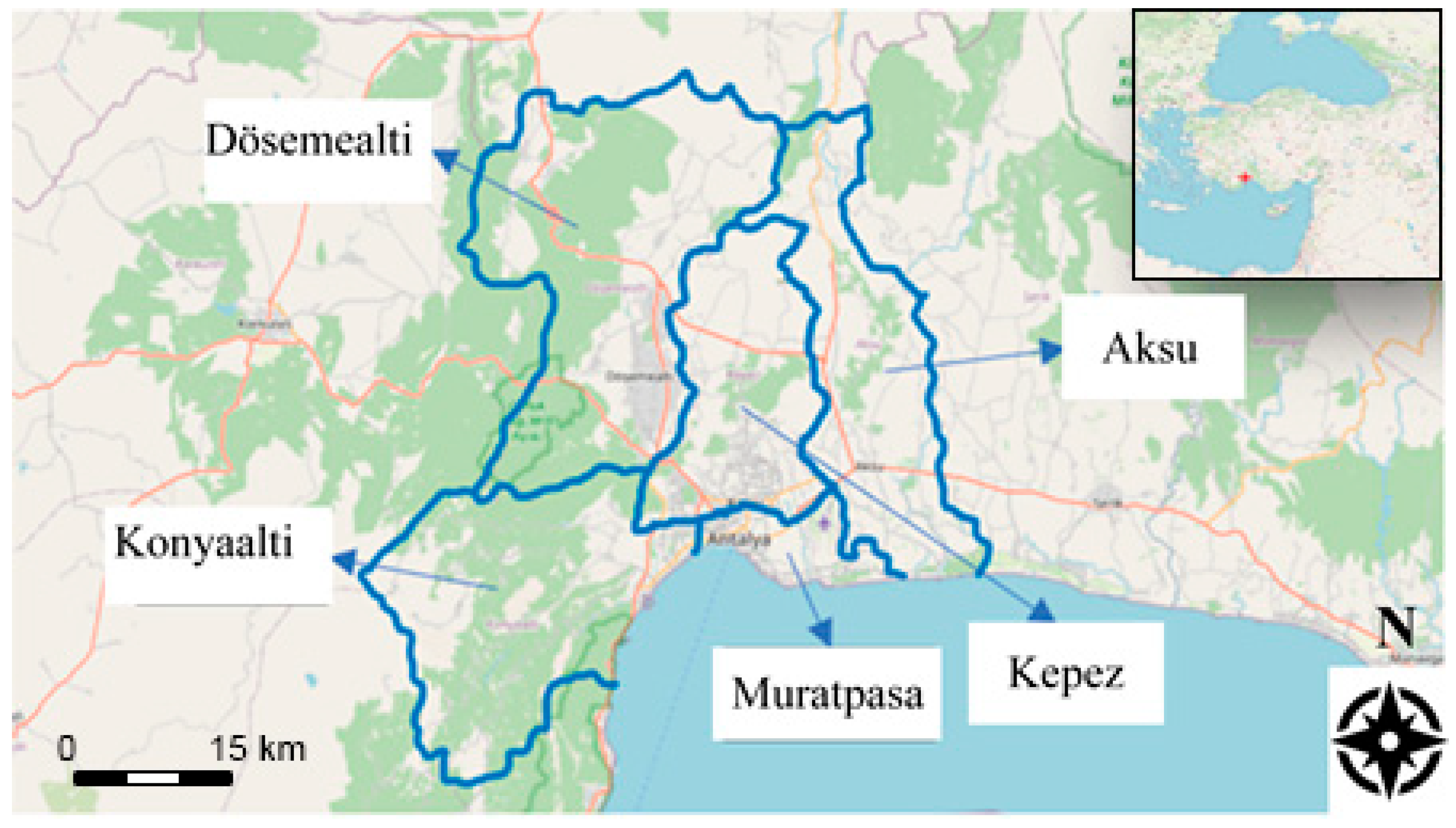
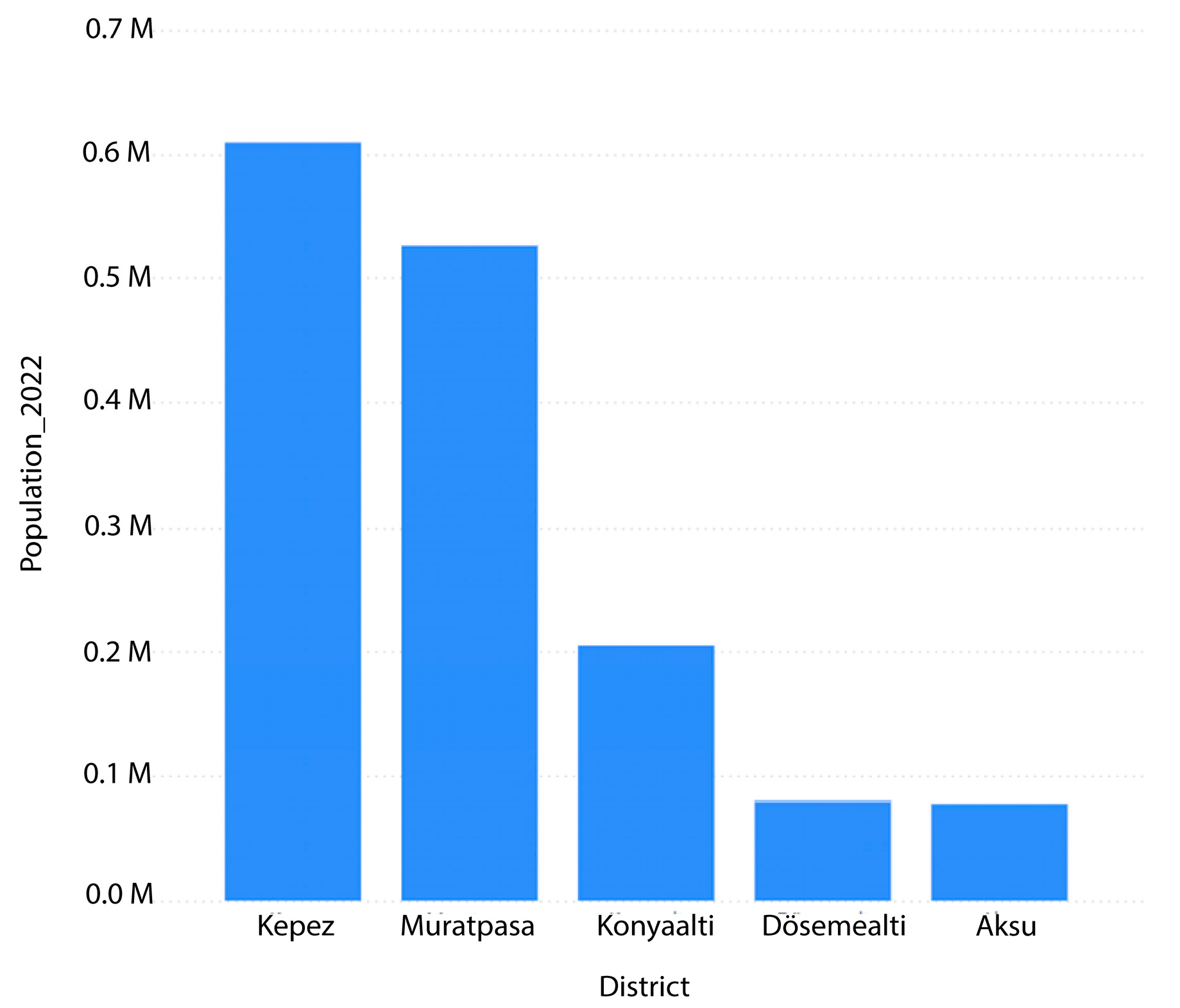
Antalya, one of the five largest cities in Turkey by population, is a popular tourist destination that benefits from the Mediterranean climate [32,33]. This attracts both tourists and workers in the service sector [1,34]. In addition, Antalya has an agriculturally suitable geography [35]. Thus, population density changes seasonally. Besides factors such as tourism and agriculture, forced migration due to various reasons (climate, war, etc.) has affected the population of the region. In this study, the central districts of Antalya with high traffic and population density were examined (Figure 1). Figure 2 shows the population data for the regions considered in this study, taken from the Turkish Statistical Institute [36].
For this study, more than 30,000 data points relating to fatal injury accidents in the entire Antalya region were obtained from GDS between 2017 and 2021. Approximately 19,000 of these accidents occurred in the central districts. Information collected by police officers after a traffic accident (location of the accident, age of the drivers involved, date of the accident, causes of the accident, status of the drivers (killed, injured, etc.)) is archived by GDS. The spatial distribution of these accidents, derived from the relevant data, was organized using MS Excel and Notepad++ software and prepared as a database for GIS software. The data were then transferred to the GIS environment using GIS software (ArcGIS 9.1 and QGIS 3.28) and prepared for analysis. For a few of the roundabouts with a high number of accidents, the geometry of the intersection was analyzed using Torus Roundabout software 6.1.

3. Methodology

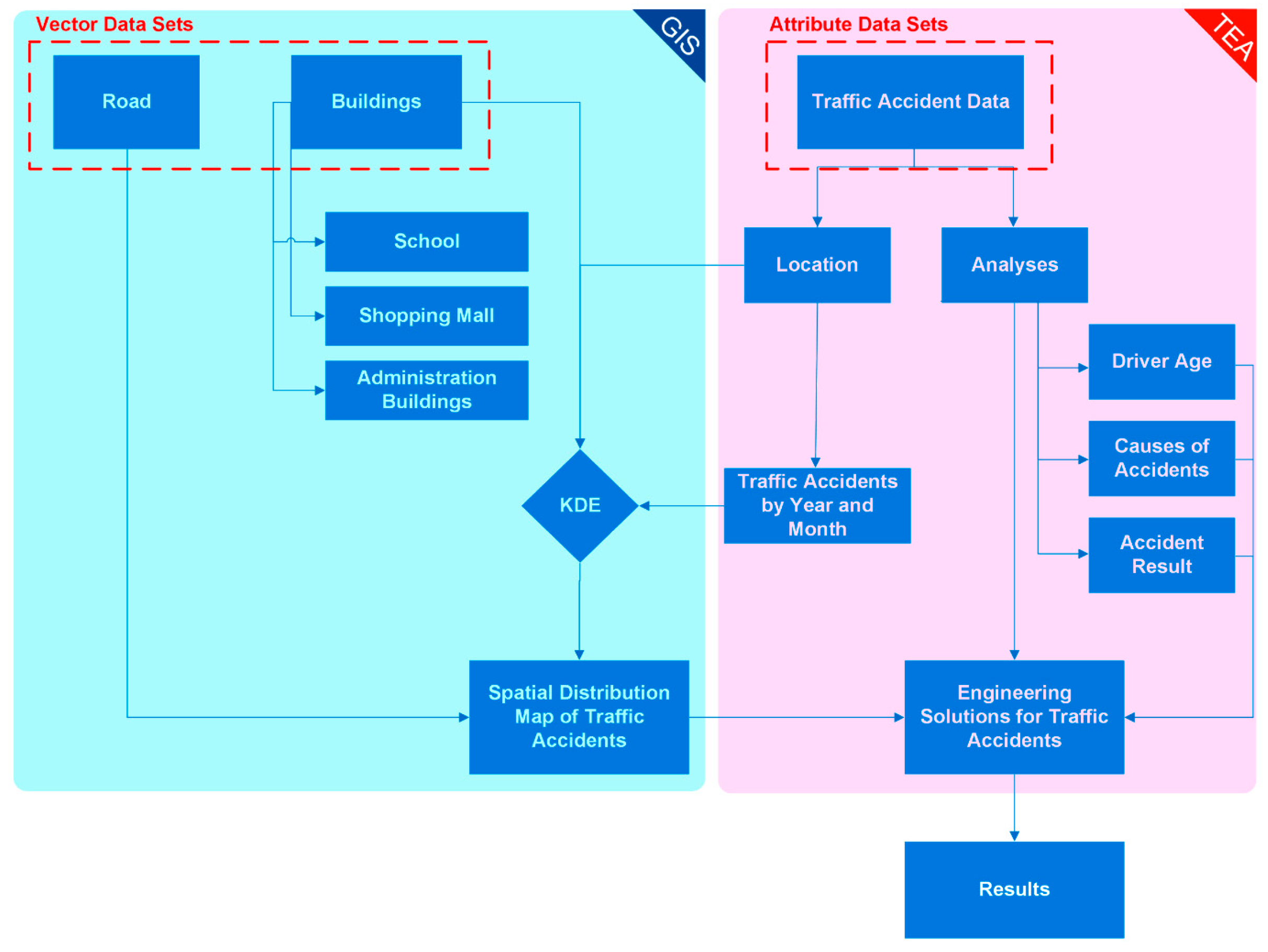
The flow diagram of this study is shown in the graph in Figure 3. This study can be categorized into two groups that analyze traffic accidents using GIS and designing roads. The first one is a map of the spatial distribution of traffic accidents using roads and coordinates. The other is based on the statistics of accident data and the use of design software (Torus Roundabout), which includes traffic engineering.

3.1. Spatial Analysis of Trafic Accidents

The Kernel Density Estimation (KDE) method is one of the techniques used for accident analysis [22]. In this method, in the regions where accidents are concentrated, distortions due to area-based distance are reduced [38]. KDE is given as follows [39]:
f ( x , y ) =   1 n × h 2 ×   i = 1 n K × ( d i h )
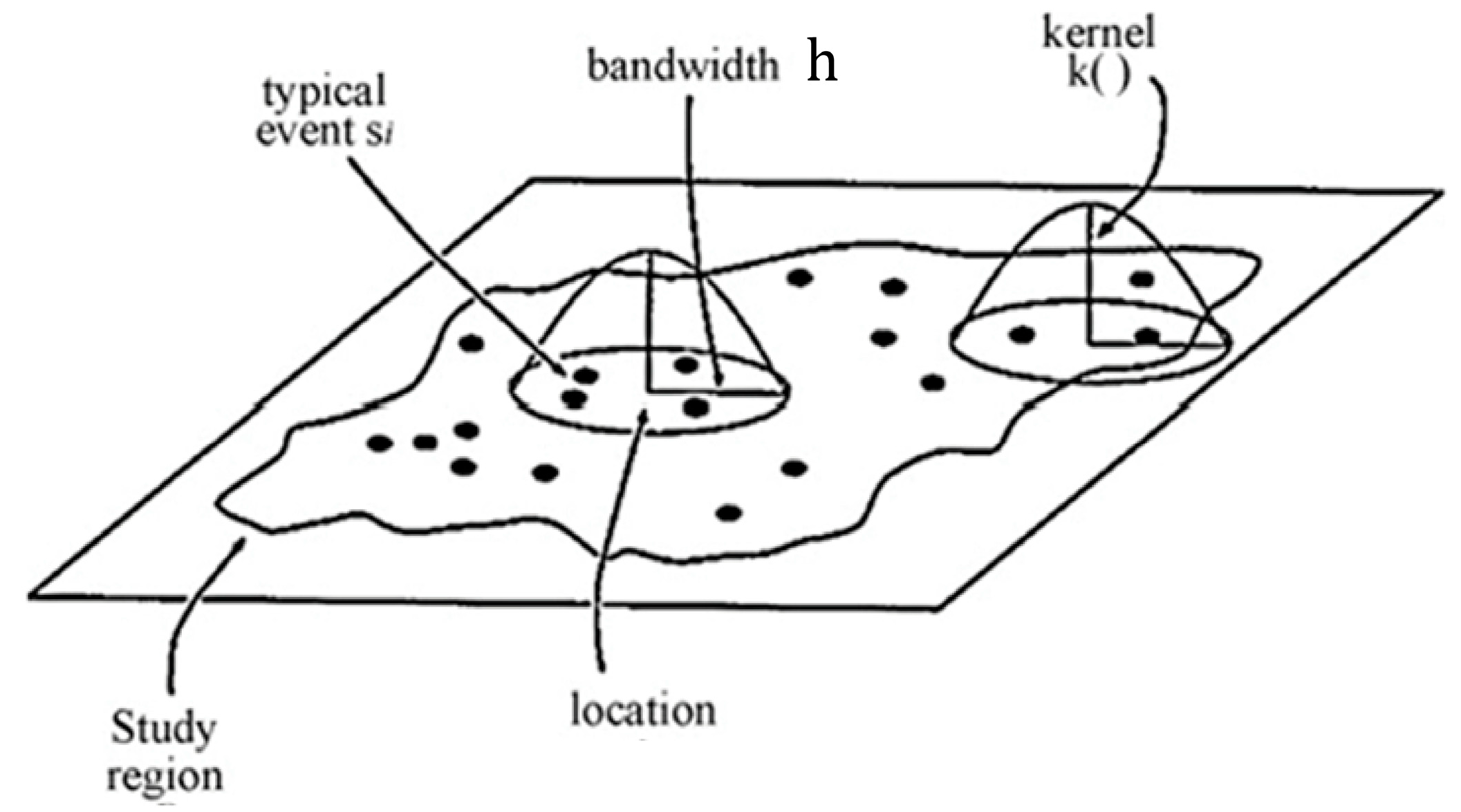
In the formula, f ( x , y ) represents the density estimate of point x, n represents the number of observations, h represents the bandwidth, d i ( x , y ) represents the distance between location i and location x , and K represents the kernel function [39]. Figure 4 shows the clustering produced by this method. In the image, the black dots represent the data, k represents the kernel number, and h represents the bandwidth.
After the density maps of accidents were created using KDE, high population areas were created using point datasets of schools, shopping centers, and government buildings. Open Street Map (OSM) data was used for building the density map. Thus, the spatial distribution of buildings was also analyzed. In the maps, densities are shown in blue and red, respectively, from less to more. In this study, the output cell size used is 30 m, and the search radius for density computation is 300 m. The spatial distribution of the density maps was generated as density values per square-km.

3.2. Statistical Analysis

Statistical analyses of the data were also carried out to more effectively assess the regions where accidents were concentrated.

3.2.1. An Analysis of the Causes of Accidents and the Situation Resulting from Accidents

At this stage, the causes of accidents were evaluated according to the accident data obtained from the GDS. The causes of accidents were examined rather than their impact on the number of accidents, with the fault of each driver involved in the accident being included in the assessment. Then, all these datasets were analyzed. In addition, accident types were divided into four categories: fatal, injured, intact, and no driver (vehicle parked). The data was then analyzed and presented graphically.

3.2.2. Distribution of Accidents by Age

The ages of drivers involved in accidents were analyzed statistically. For this analysis, those involved in accidents (i.e., drivers or victims) were divided into five groups to determine whether there was a meaningful and understandable relationship between age and accidents. The age groups were (in years) 1–19, 20–39, 40–59, 60–79, and 80+. Furthermore, the fact that the minimum age for obtaining a driving license in our country is 18 years and that licenses must be renewed every 10 years influenced the determination of the age groups [40]. Additionally, an accident-population index was created by dividing this data by the population data from the Turkish Statistical Institute [9] for each age group in the region.

3.2.3. Periodic Analysis

Traffic accidents were analyzed on an annual, monthly, and weekly basis. In addition, accidents were also evaluated in terms of holidays and working days.

3.3. Designing Roundabout

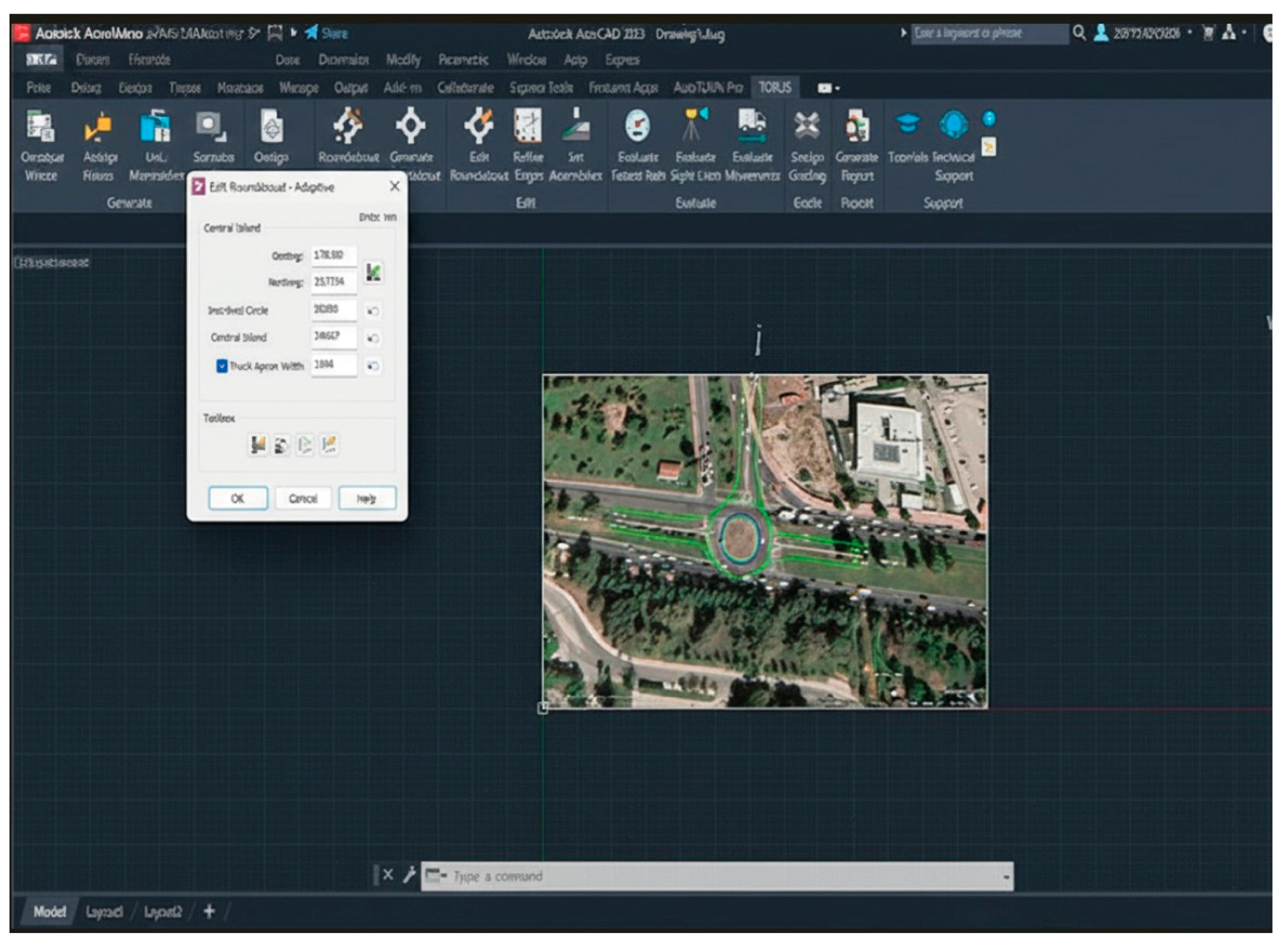
This phase involved examining the geometric design of certain intersections identified by means of traffic engineering as having high accident rates. To this end, the geometric layout of the intersection was created using the Torus Roundabout design program. This program provides a geometric analysis of the intersection islands to determine whether vehicles can safely execute a turning maneuver at 60 km/h with a steering angle of 36.5 degrees. Thus, the compatibility of the intersections with their geometric designs was evaluated. Figure 5 shows the interface of the intersection design program. The paths followed by vehicles were examined.

3.4. Stopping Sight Distance

Most traffic accidents are caused by drivers not having sufficient stopping sight distance. The total stopping sight distance equation consists of 2 separate equations. The first is the reaction distance at which drivers can see an object and react to objects (Equation (2)), and the second is the stop distance, which is the length of the road necessary to stop.
L r d = 0.278 × V ×   t r
In this equation, 0.278 is a constant resulting from the unit conversion, V is the vehicle speed (km/h), and t r is a constant based on the driver’s perception. Equation (3) shows the distance required for the vehicle to stop:
L b d = 0.00394 ×   V 2 f s
In the equation, 0.00394 is the constant value resulting from the unit conversion, V is the vehicle speed (km/h), f is the coefficient of friction according to the road type, and s is the value of the longitudinal slope of the road. In this chapter of the study, the locations where accidents occur in the stance-visibility distance are concentrated. The f value in the equation has been taken as 0.55 and 0.25 for asphalt roads. These f values were selected based on Yayla’s work for average and wet ground [41]. The distances were determined by taking the value of s as 0.02. According to the results obtained, observations were made during the field survey by first determining the location using Google Maps. Using these sight distances, the proximity of accidents to intersection areas, the connection points of side roads, and the presence of objects that could restrict visibility in these areas were evaluated.

4. Results

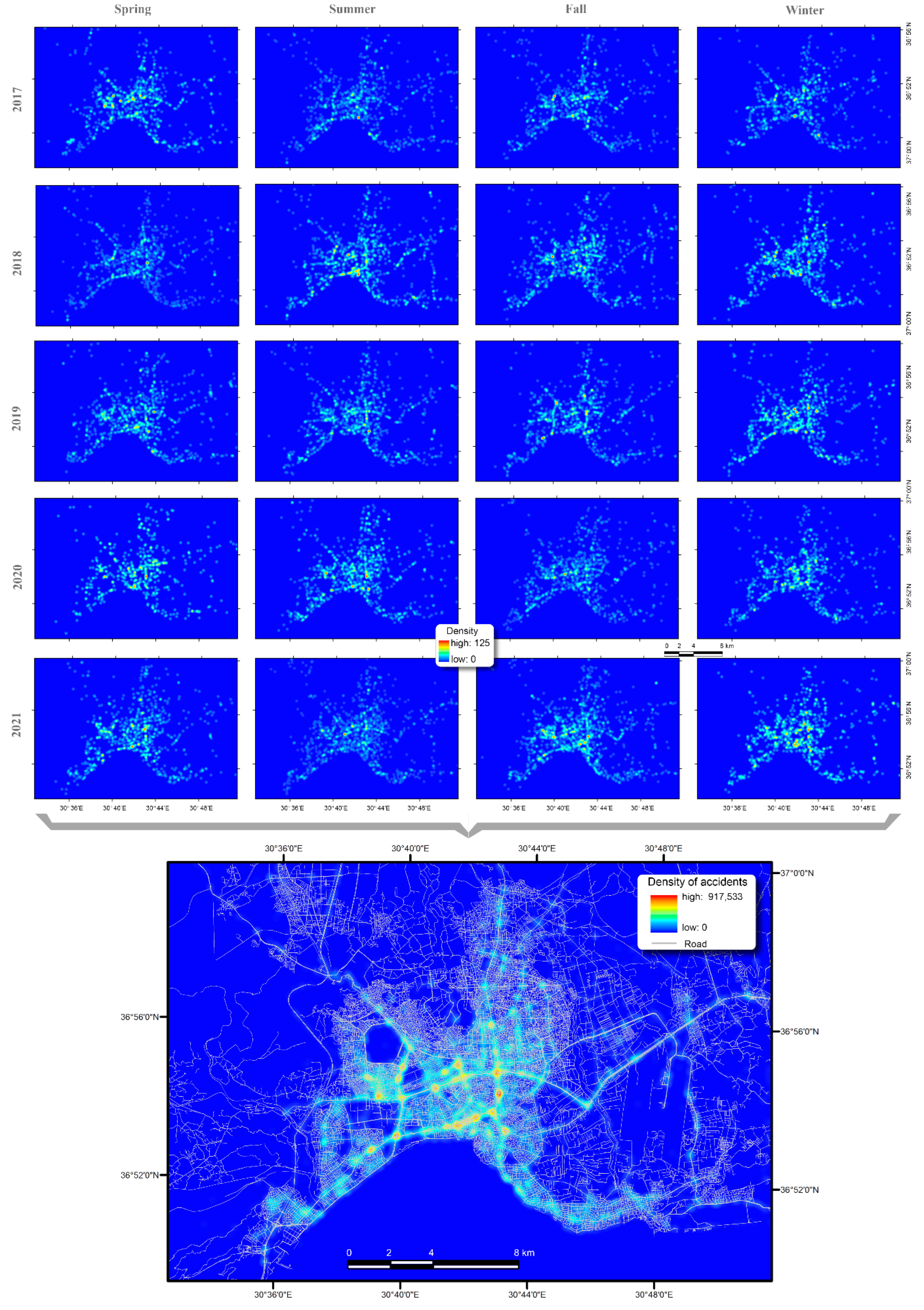
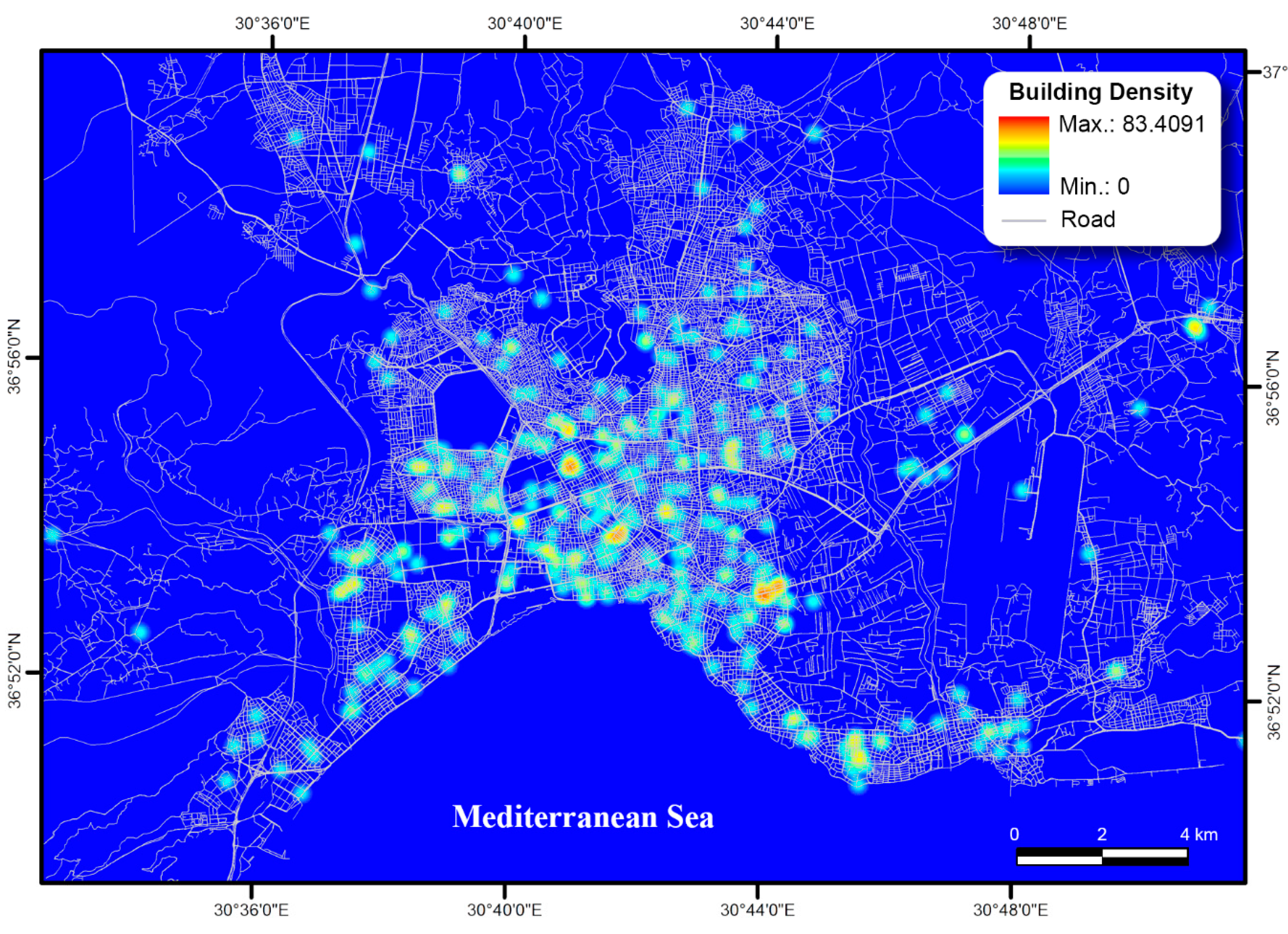
After the database was converted into spatial data and analyzed using GIS, the spatial representation of the detailed locations of accidents concentrated in the city center over a 5-year period was revealed (Figure 6). Accidents are particularly frequent in the center during the summer and winter months, while in the fall and spring seasons, they are concentrated more in areas where districts converge. Figure 7 also shows the distribution of buildings, including educational institutions and commercial establishments. Building density was high in the Muratpasa district and part of the Kepez district. When compared to the accident density map, it was found that accidents are not concentrated in these areas, but concentration may occur in nearby areas.
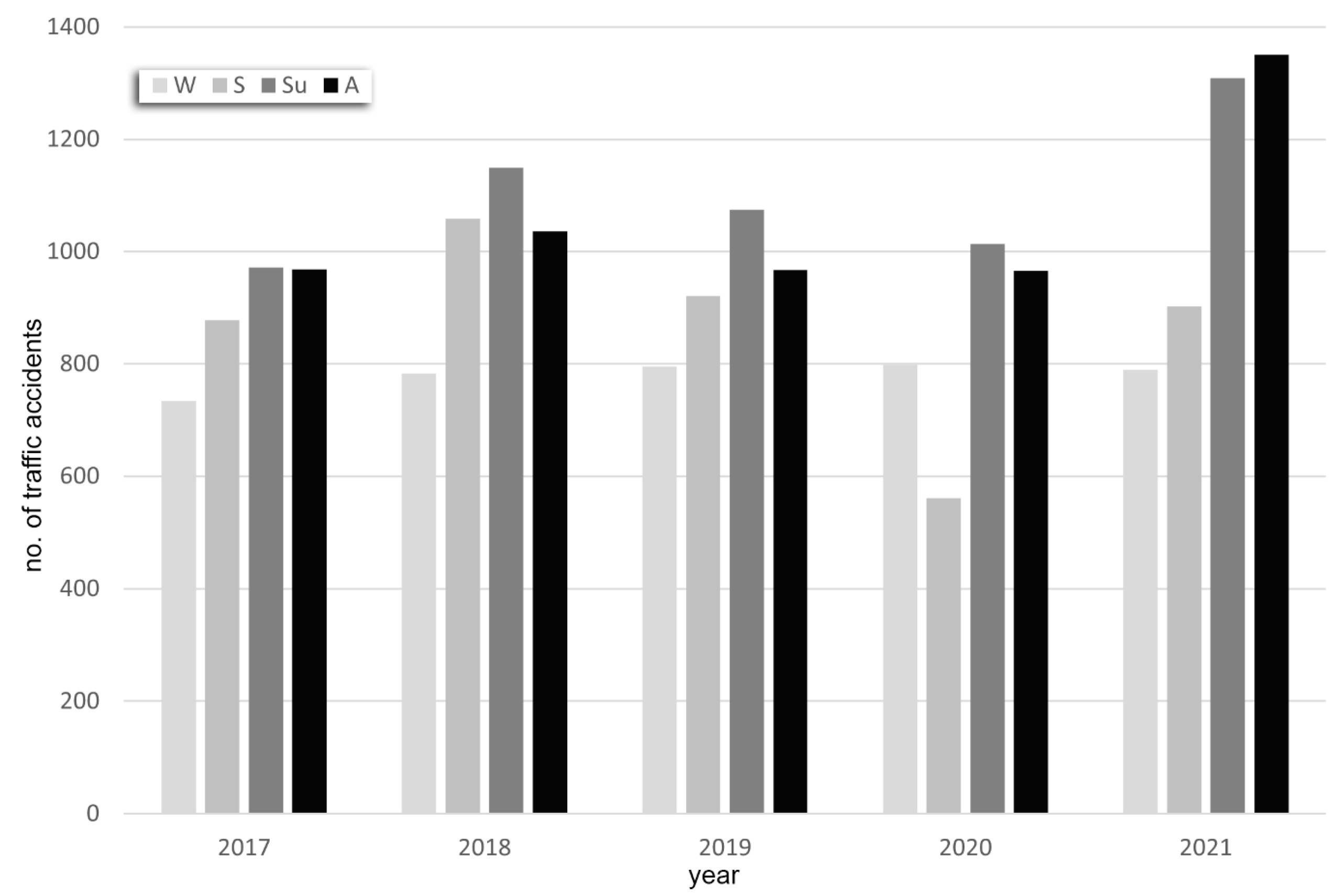
The distribution of traffic accidents by year and season varies across different regions depending on factors such as precipitation, temperature, and humidity. Figure 8 shows the distribution of accidents in the work area according to the seasons: winter (w), summer (su), autumn (a), and spring (s). There was a decrease in accidents in 2019 and 2020. The main reason for this was thought to be the COVID-19 pandemic. The total number of fatal and injury accidents during the pandemic accounts for approximately 22.07% of the total number of fatal and injury accidents that occurred over five years. Furthermore, when comparing the rate of traffic accidents occurring in the year in which the restrictions were implemented, the rate of fatal and injury accidents peaked in July, following the start of restrictions in April. This rate remained at its highest level even after the restrictions ended. However, it should be noted that this high level is attributable to the significant decrease in outdoor activity during the pandemic months of 2021. Although this rate may seem normal, it should be noted that pandemic-related restrictions on going out would reduce the volume of traffic on the roads. This situation shows that, while traffic is normal, drivers are in a state of collective attention, but when traffic volume on the roads decreases, they switch to a state of scattered attention. The rapid decline in 2020, in particular, was due to restrictions on going out. In addition, more accidents occurred during the summer season. The reason for this can be attributed to the region’s propensity for tourism. However, from Antalya’s perspective, the fact that the surrounding regions are suitable for tourism and that Antalya is centrally located among these regions can exponentially increase traffic accidents. A detailed examination of the analysis in Figure 6 shows that the concentration of accidents on highways connecting cities can be considered evidence of this.
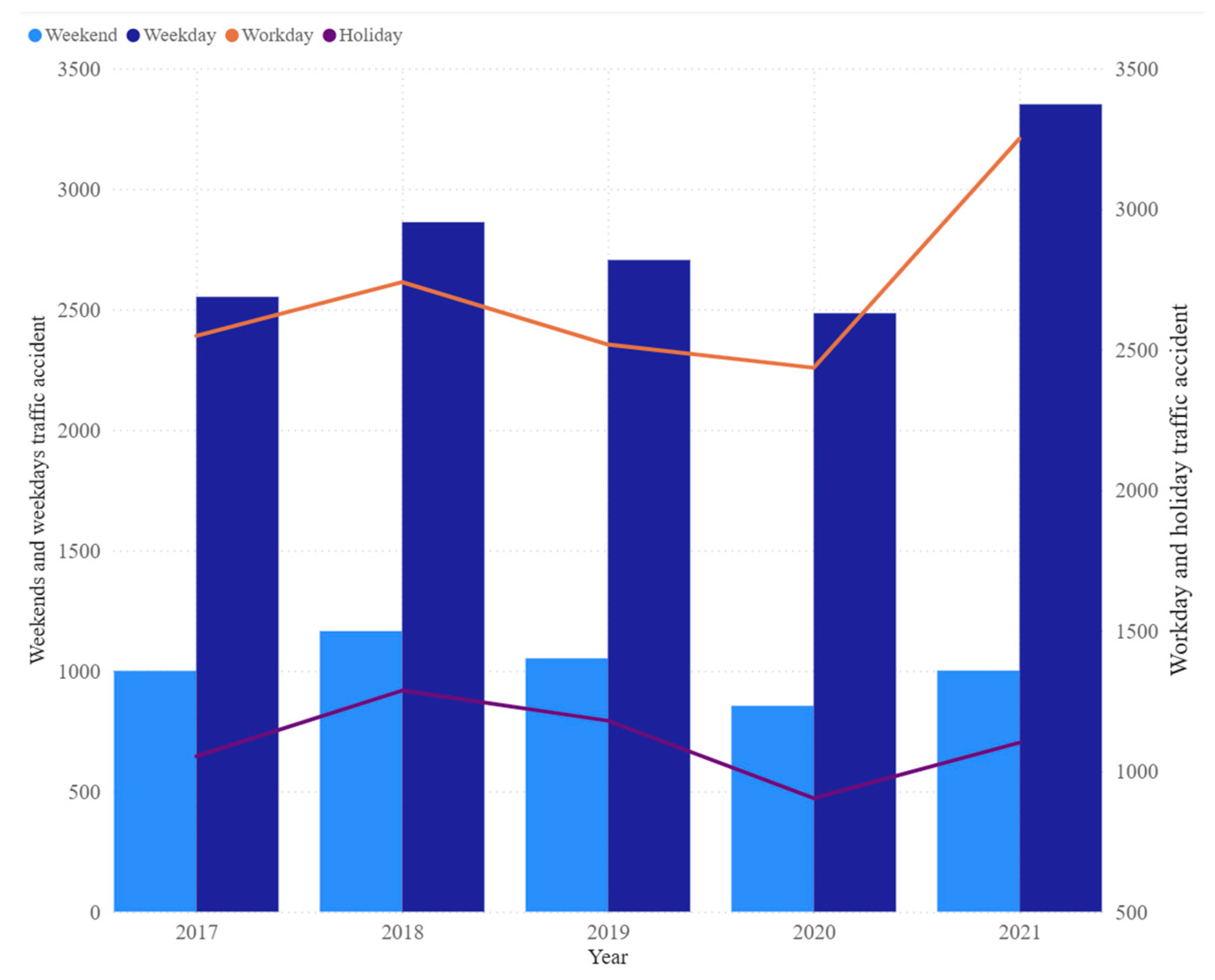
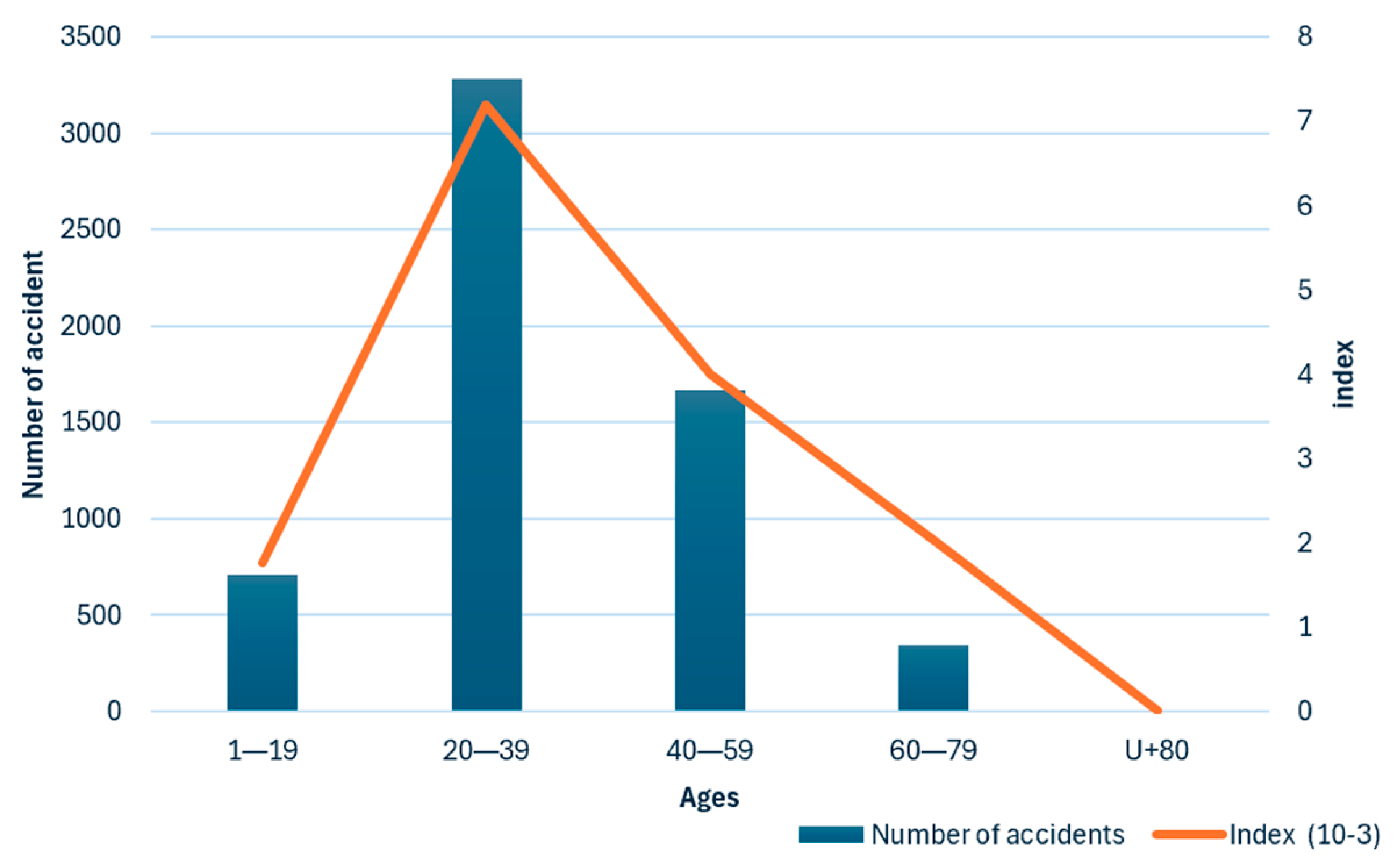
Figure 9 gives the distribution of accidents over the years, broken down by weekdays and weekends. According to this, more accidents occurred on weekdays. Figure 9 shows the distribution of traffic accidents occurring on public holidays and working days. Traffic accidents occurred more frequently on working days. Figure 10 shows the distribution of accidents by age. According to this, most traffic accidents involve people between the ages of 20 and 39 years. Additionally, drivers aged 20 to 39 years were found to have the highest accident involvement index. This situation can be attributed to socioeconomic factors, such as obtaining a driver’s license for the first time, drivers generally being inexperienced, and entering the workforce or pursuing higher education.
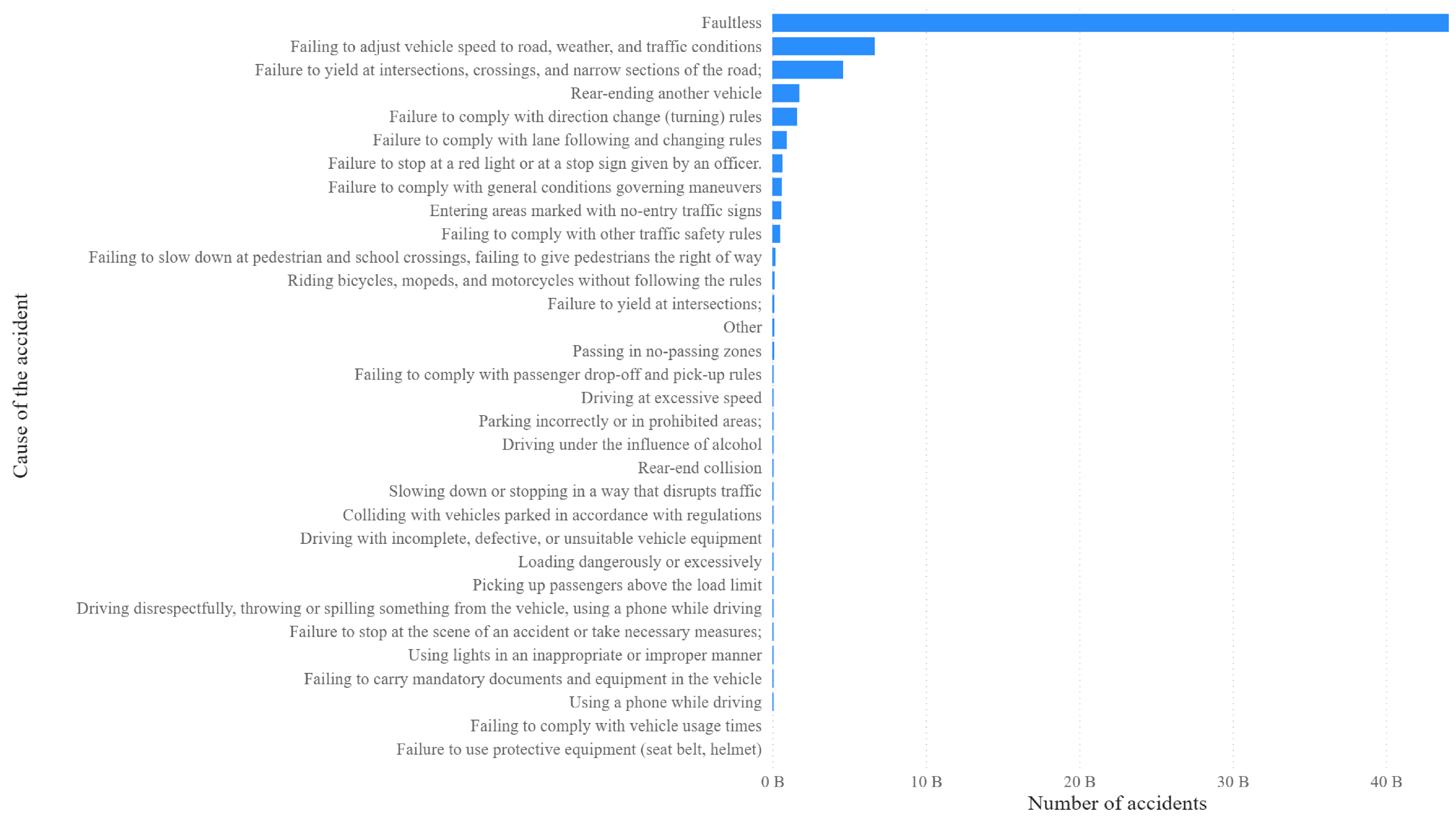
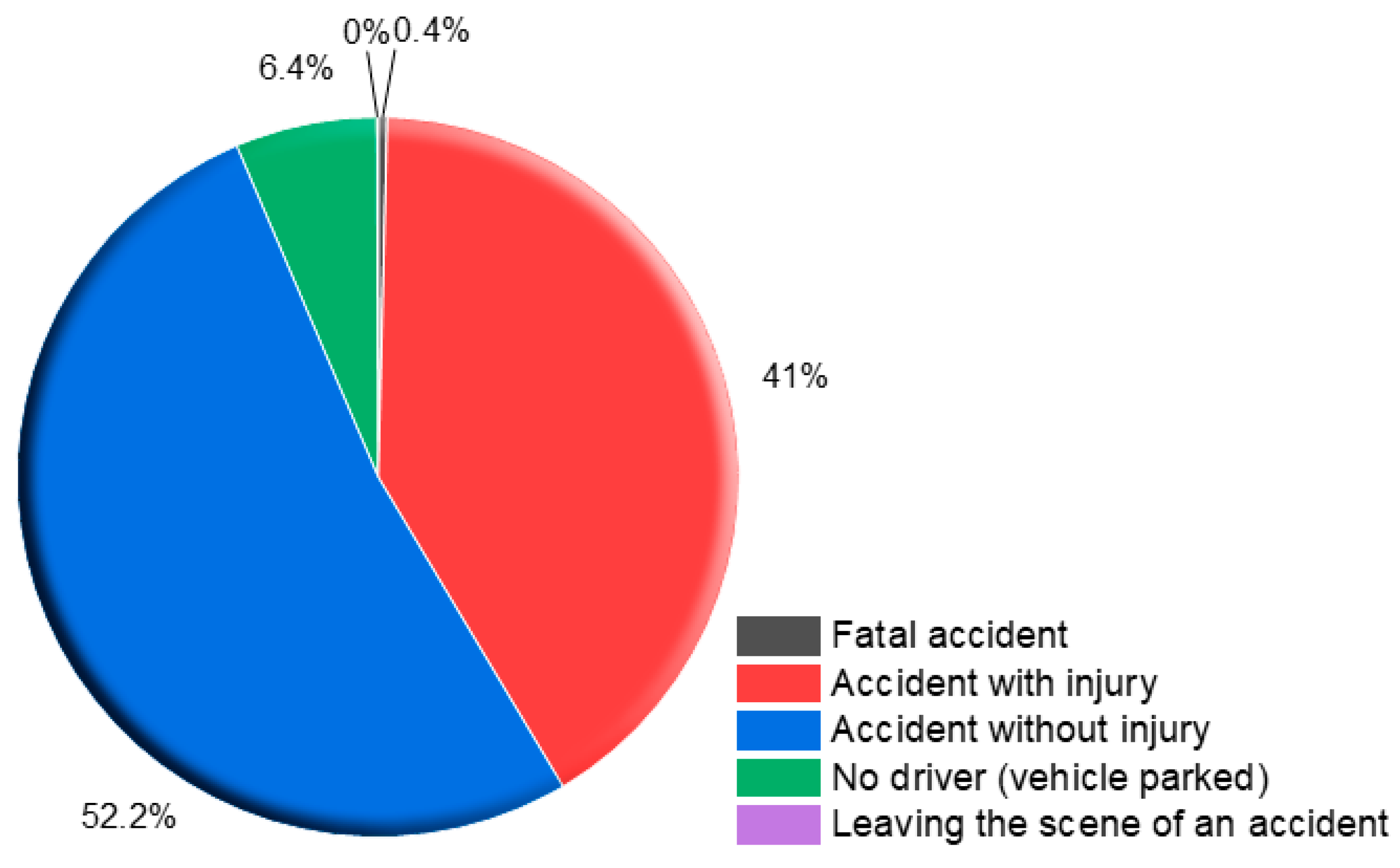
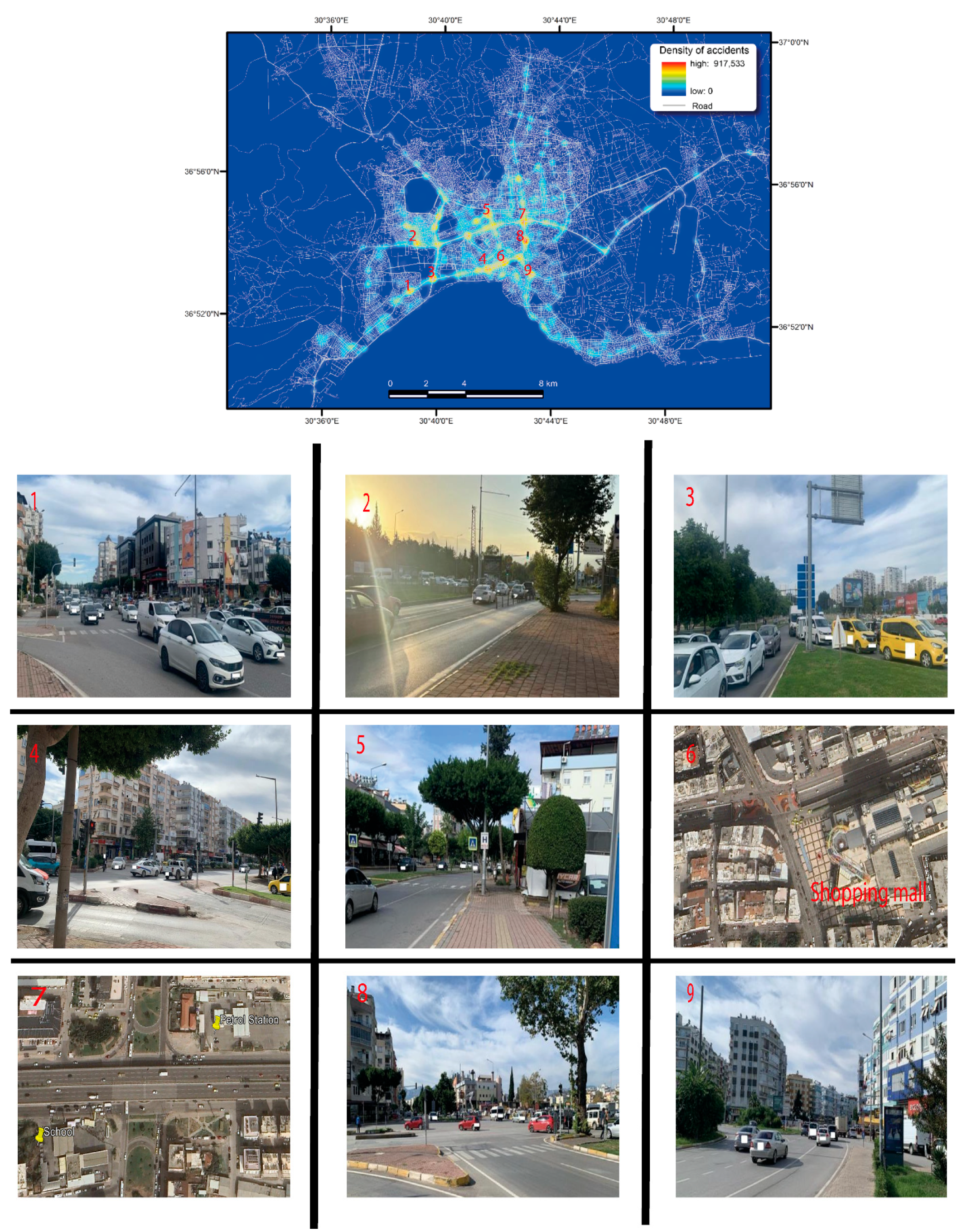
Many factors (e.g., drunk drivers, wet road surfaces) can cause accidents. Figure 11 shows the underlying causes of accidents that occurred in central Antalya. According to this, it was determined that a large proportion of the causes of traffic accidents were the faults of the drivers involved in the accidents. Another major factor was that drivers did not drive appropriately for the current road and weather conditions. Figure 12 shows the post-accident status of drivers involved in traffic accidents. It was found that a significant proportion of people involved in accidents (approximately 41%) were injured, but the majority (approximately 59%) escaped without significant harm. Deaths rarely occurred as a result of accidents. Figure 13 shows the regions identified as a result of the analyses. Table 1 contains the number of accidents in areas identified as high-accident zones and information on the causes of accidents based on field studies. As can be seen in the table, while there were three such areas with the highest number of accidents, region number 8 was found to have a higher accident density. The reason for this is that the accidents occurred in a smaller area compared to other areas. It is important to evaluate from both perspectives (density and number of accidents). For these regions in the table, suggestions that could be the subject of separate studies in the future are briefly presented.
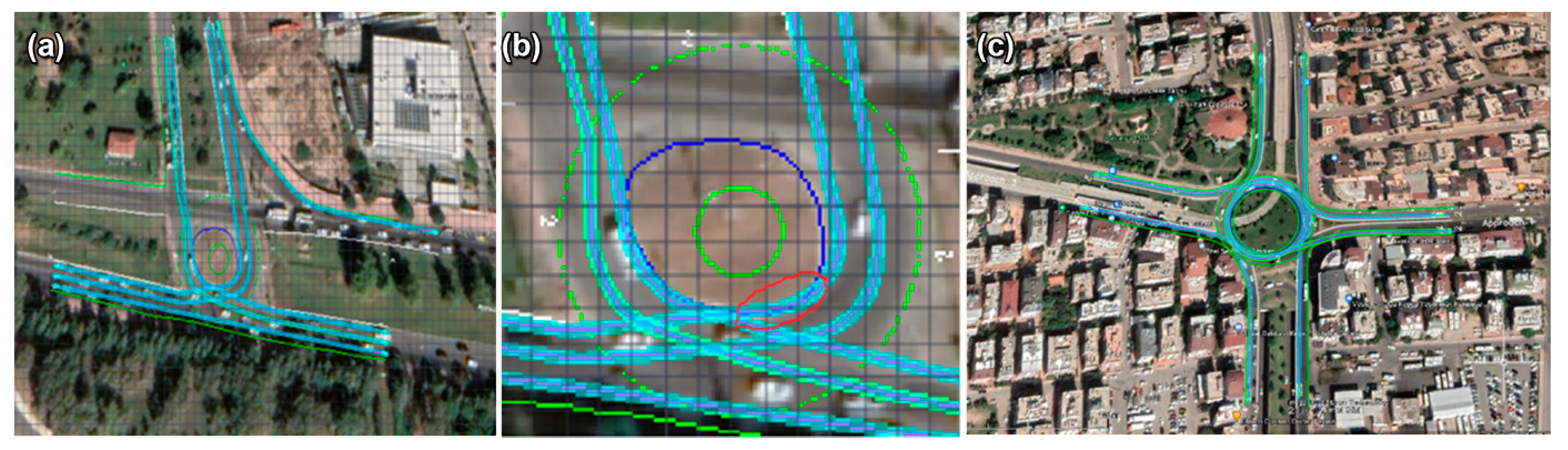
In regions 1 and 8, it was observed that drivers do not obey rules such as traffic lights. Therefore, a special signalization study or more frequent inspections are required for these regions. With the Torus Roundabout program, it was determined that the accidents in region 2 were caused by the roundabout design. Figure 14a,b show a visualization of the study for this intersection. It was found that a vehicle entering the roundabout with these characteristics exits to the island in the center. Specifically, it was observed that vehicles veered onto the central island during a 36-degree steering turn. Figure 14c illustrates the design of a roundabout in another area with a high incidence of accidents. The analysis demonstrates that the geometric design of the roundabout is safe for vehicle turns.
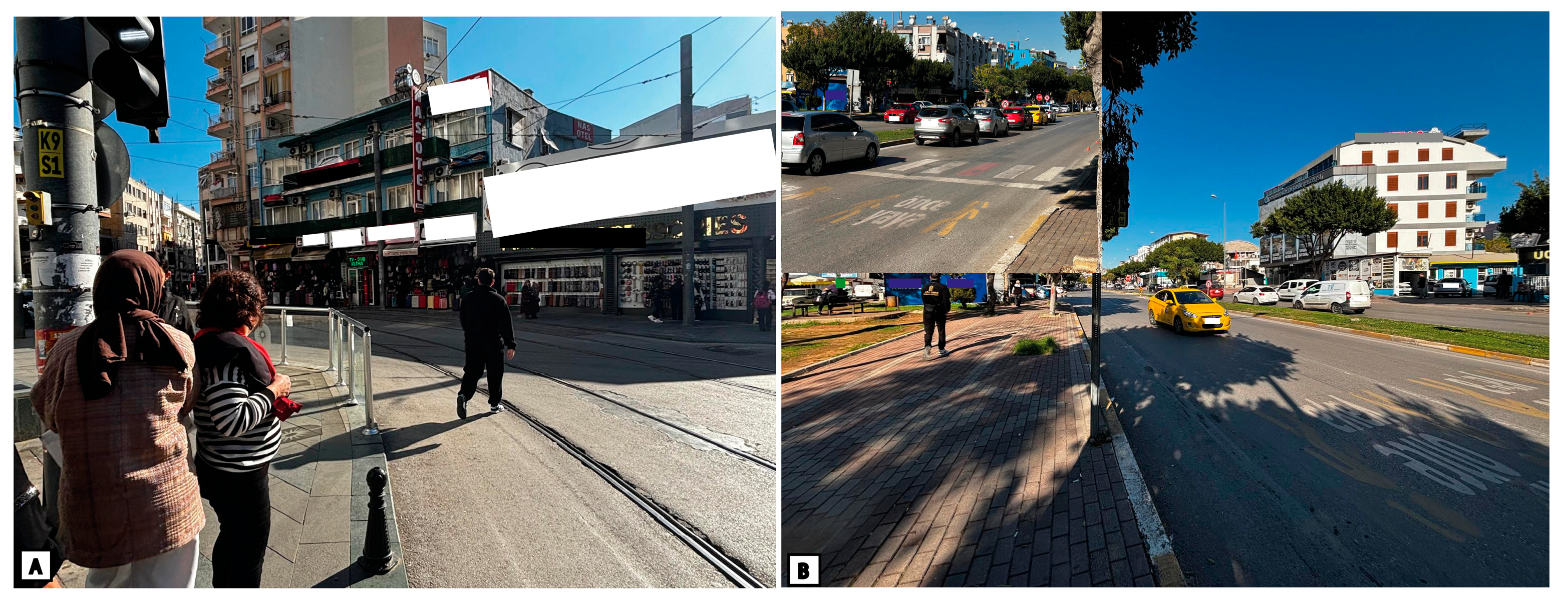
In region 3, there are not enough access roads for vehicles exiting the shopping center, which may result in insufficient reaction distance. In addition, an underpass for vehicles could be constructed to allow drivers to make “U” turns more safely. In region 4, traffic signal plan error was observed. It has been observed that vehicles from different directions are simultaneously joining the traffic flow due to the inadequacy of the yellow light duration. This situation creates the risk of accidents. In region 5, the presence of a hospital increases both pedestrian and road traffic. The lack of signalization at the intersection in this region, the non-compliance with the rule that “U” turns are prohibited, and the lack of a vehicle pocket for left-turning vehicles all contribute to the occurrence of accidents (Figure 15A) Therefore, designing a new intersection that takes into account the presence of pedestrians can reduce the number of accidents. The presence of one of the busiest shopping centers in Antalya in region 6 increases the impact of pedestrians on traffic. Unconscious pedestrian crossings increase the number of accidents (Figure 15B). In addition, the presence of various modes of transportation (tram and road transportation) in the area also contributes to the number of accidents. The construction of a pedestrian crossing could reduce the number of accidents in the area. In region 7, the proximity of the intersection to the beginning of the bridge and the thickness of the bridge abutments may cause insufficient reaction-braking distances. In region 9, the high slope of the underpass for vehicles and the low radius horizontal curve cause accidents due to inadequate braking distances and vehicle skidding. There are also various modes of transportation in the region, such as trams and road transport. A new intersection design can reduce the number of accidents.

5. Discussion

As a result of this study, traffic accidents were concentrated in the center. Similar situations were experienced in the studies conducted in Hanoi (Vietnam) [22] and in the Mashhad regions [42]. However, intense areas also appear on highways connecting cities. In a similar situation, the traffic accidents are concentrated on highways and arterial roads [43]. This can be attributed to the fact that the economy is concentrated in the centers of cities, and the related traffic is concentrated in these parts. However, when dealing with a large amount of accident data, knowing only the coordinates and using traditional methods may not be sufficient [44,45,46,47]. Therefore, accidents may also need to be evaluated using statistical approaches [44,46].
Accidents are increasing across the regions in the northern hemisphere due to reasons such as the summer holidays and the increase in tourism. It was also found that accidents increased in the summer season in a study conducted in the Welsh region [48]. However, this situation may vary from region to region, especially in regions with a high level of development. For example, accidents may become more frequent in the state of California and Bangkok during the winter season [49,50].
Fewer accidents were occurring in 2020 due to COVID-19. A similar reduction was happening in the state of California [49]. However, a study conducted in Poland found that, despite the decrease in traffic volume due to the pandemic, accidents did not decrease [51]. When the distribution of weekly accidents is analyzed, it is seen that there may be more accidents on weekdays due to busy work. However, it is observed that most traffic accidents in Afyonkarahisar occurred on weekends [24]. This difference was thought to be due to factors such as the location and dynamic structure of the regions.
The age groups of people most frequently involved in accidents are seen to be approximately the same as those in various other studies. For example, it is discovered that drivers between the ages of 21 and 25 years are involved in vehicle accidents [52]. It is found that individuals aged 18 to 30 years are disproportionately involved in traffic accidents [15]. People between the ages of 19 and 30 years were more likely to be involved in accidents [53]. This could be interpreted as the fact that, in most countries, accidents are more common around the age of obtaining a driver’s license and that people become less involved in accidents as they age.
Accidents caused by drivers are the biggest cause of road accidents. Similarly, it is evaluated that the inattention of drivers and pedestrians is a contributing factor to man-made accidents [54]. It is found that the main cause of traffic accidents is drivers speeding [53,55].
The health status of living organisms at the end of an accident varies according to the region and the severity of the accident. For example, it is found that 0.38% of traffic accidents resulted in death, 35.11% were accidents with material damage, and 61.52% were accidents with injuries [56]. More than 50% of the accidents occurred as risky accidents with environmental and economic risks [57,58].

6. Conclusions

Traffic accidents present risks to the city’s traffic infrastructure, the national economy, public health, and the environment. For these reasons, accidents must be prevented. To prevent accidents, various approaches are implemented, such as identifying areas with high accident rates and developing solutions for these locations.
GIS are used to identify accident-prone areas. The use of GIS can be highly effective, particularly due to its ability to quickly track changes in data. This enables the generation of up-to-date analysis results. This study aims to analyze the spatial distribution of traffic accidents, identify risky areas, and develop approaches to traffic engineering in these areas. In this respect, GIS were used as a powerful and efficient tool to determine traffic accidents in metropolitan areas, and the proposed approach was tested in the city center of Antalya.
Using GIS, we identified the most frequent traffic accident locations in the central districts of Antalya province. Accident-intensive areas are highlighted in red on maps created using the KDF method. The analysis revealed that most accidents occurred at intersections in the Kepez, Konyaalti, and Muratpasa districts. Furthermore, the findings indicated that prominent buildings can influence the number of accidents.
To thoroughly evaluate traffic accidents, the location where the accident occurred should not be the only factor considered. In this context, a comprehensive study was conducted that included a multifaceted analysis taking into account variables such as the age distribution of drivers, the characteristics of the accident, and the condition of the victims after the accident.
According to the analysis results, while there has been a general increase in traffic accidents over the years, an unexpected effect such as the pandemic has changed this situation. This situation can be seen in the increase in the number of accidents until 2019 and the decrease observed until 2021 due to the impact of COVID-19. However, when looking at the annual distribution rates of accidents in the year they occurred, it was observed that the pandemic period had a high rate. Furthermore, the number of accidents increases in the summer in the center of Antalya, a tourist city. It has also been determined that accidents occur more frequently on weekdays and working days.
When driver ages were evaluated, it was determined that the majority of individuals involved in traffic accidents were between the ages of 20 and 39 years, consistent with the socioeconomic impact of the region, while the second largest age group was between 40 and 59 years old.
When the causes of accidents are examined, it is generally understood that they are due to driver errors. Field investigations also confirm this. However, in one region, the Torus Program was used to determine that accidents occurring in that region could be due to the geometry of the roundabout. Across the region as a whole, it was determined that 48 out of every 100 people were injured in accidents, and 1 out of every 200 people lost their lives.

Author Contributions

Conceptualization, Mehmet Arikan Yalcin, Sevil Kofteci, and Bekir Taner San; methodology, Mehmet Arikan Yalcin, Sevil Kofteci, and Bekir Taner San; software, Mehmet Arikan Yalcin and Bekir Taner San; validation, Sevil Kofteci and Bekir Taner San; investigation, Mehmet Arikan Yalcin; resources, Mehmet Arikan Yalcin; data curation, Mehmet Arikan Yalcin, Sevil Kofteci, and Bekir Taner San; writing—original draft preparation, Mehmet Arikan Yalcin; writing—review and editing, Mehmet Arikan Yalcin, Sevil Kofteci, Bekir Taner San, and Halil Ibrahim Burgan; visualization, Mehmet Arikan Yalcin and Bekir Taner San; supervision, Sevil Kofteci; project administration, Sevil Kofteci; funding acquisition, Sevil Kofteci and Halil Ibrahim Burgan. All authors have read and agreed to the published version of the manuscript.

Funding

This study is a part of the MSc thesis of the first author under the supervision of the second. This research received no external funding.

Data Availability Statement

Data available upon request.

Acknowledgments

Traffic accident data were provided by the General Directorate of Security.

Conflicts of Interest

The authors declare no conflicts of interest.

Abbreviations

The following abbreviations are used in this manuscript:
GISGeographic Information Systems
GDSGeneral Directorate of Security
KDFKernel Density Estimation
SuSummer
SSpring
AAutumn
WWinter

References

  1. Aksoy, E.; San, B.T. Geographical Information Systems (GIS) and Multi-Criteria Decision Analysis (MCDA) Integration for Sustainable Landfill Site Selection Considering Dynamic Data Source. Bull. Eng. Geol. Environ. 2019, 78, 779–791. [Google Scholar] [CrossRef]
  2. Ebot Eno Akpa, N.A.; Booysen, M.J.; Sinclair, M. A Comparative Evaluation of the Impact of Average Speed Enforcement (ASE) on Passenger and Minibus Taxi Vehicle Drivers on the R61 in South Africa. J. S. Afr. Inst. Civ. Eng. 2016, 58, 2–10. [Google Scholar] [CrossRef]
  3. Beyazit, E. Achieving Sustainable Mobility—Everyday and Leisure-Time Travel in the EU. Transp. Rev. 2011, 31, 807–808. [Google Scholar] [CrossRef]
  4. Loo, B.P.Y. Validating Crash Locations for Quantitative Spatial Analysis: A GIS-Based Approach. Accid. Anal. Prev. 2006, 38, 879–886. [Google Scholar] [CrossRef]
  5. Sivaraman, S.; Trivedi, M.M. Looking at Vehicles on the Road: A Survey of Vision-Based Vehicle Detection, Tracking, and Behavior Analysis. IEEE Trans. Intell. Transp. Syst. 2013, 14, 1773–1795. [Google Scholar] [CrossRef]
  6. Tiwari, G.; Bangdiwala, S.; Saraswat, A.; Gaurav, S. Survival Analysis: Pedestrian Risk Exposure at Signalized Intersections. Transp. Res. Part F Traffic Psychol. Behav. 2007, 10, 77–89. [Google Scholar] [CrossRef]
  7. Hussain, Q.; Alhajyaseen, W.K.M.; Brijs, K.; Pirdavani, A.; Reinolsmann, N.; Brijs, T. Drivers’ Estimation of Their Travelling Speed: A Study on an Expressway and a Local Road. Int. J. Inj. Control. Saf. Promot. 2019, 26, 216–224. [Google Scholar] [CrossRef]
  8. Anonim Accidents and Injuries Statistics. Available online: https://ec-europa-eu.translate.goog/eurostat/statistics-explained/index.php?title=Accidents_and_injuries_statistics&_x_tr_sl=en&_x_tr_tl=tr&_x_tr_hl=tr&_x_tr_pto=tc (accessed on 15 December 2025).
  9. TürkStat—Data Portal. Available online: https://data.tuik.gov.tr/Kategori/GetKategori?p=Nufus-ve-Demografi-109 (accessed on 10 December 2025).
  10. Clifton, K.J.; Kreamer-Fults, K. An Examination of the Environmental Attributes Associated with Pedestrian-Vehicular Crashes near Public Schools. Accid. Anal. Prev. 2007, 39, 708–715. [Google Scholar] [CrossRef]
  11. Gundogdu, I.B. Applying Linear Analysis Methods to GIS-Supported Procedures for Preventing Traffic Accidents: Case Study of Konya. Saf. Sci. 2010, 48, 763–769. [Google Scholar] [CrossRef]
  12. Van Raemdonck, K.; Macharis, C. The Road Accident Analyzer: A Tool to Identify High-Risk Road Locations. J. Transp. Saf. Secur. 2014, 6, 130–151. [Google Scholar] [CrossRef]
  13. Geymen, A.; Dedeoğlu, O.K. Coğrafi Bilgi Sistemlerinden Yararlanılarak Trafik Kazalarının Azaltılması: Kahramanmaraş Ili Örneği. Iğdır Üniversitesi Fen. Bilim. Enstitüsü Derg. 2016, 6, 79–88. [Google Scholar]
  14. Aghajani, M.A.; Dezfoulian, R.S.; Arjroody, A.R.; Rezaei, M. Applying GIS to Identify the Spatial and Temporal Patterns of Road Accidents Using Spatial Statistics (Case Study: Ilam Province, Iran). Transp. Res. Procedia 2017, 25, 2126–2138. [Google Scholar] [CrossRef]
  15. Hayidso, T.H.; Gemeda, D.O.; Abraham, A.M. Identifying Road Traffic Accidents Hotspots Areas Using GIS in Ethiopia: A Case Study of Hosanna Town. Transp. Telecommun. 2019, 20, 123–132. [Google Scholar] [CrossRef]
  16. Pleerux, N. Gis-based analysis to detect road accident hotspots using network kernel density estimation. Suranaree J. Sci. Technol. 2021, 28, 030056. [Google Scholar]
  17. Macedo, M.R.O.B.C.; Maia, M.L.A.; Kohlman Rabbani, E.R.; Lima Neto, O.C.C.; Andrade, M. Traffic Accident Prediction Model for Rural Highways in Pernambuco. Case Stud. Transp. Policy 2022, 10, 278–286. [Google Scholar] [CrossRef]
  18. Alam, M.S.; Tabassum, N.J. Spatial Pattern Identification and Crash Severity Analysis of Road Traffic Crash Hot Spots in Ohio. Heliyon 2023, 9, e16303. [Google Scholar] [CrossRef]
  19. Bilim, A. Identifying Unsafe Locations for Pedestrians in Konya with Spatio-Temporal Analyses. Cities 2025, 156, 105523. [Google Scholar] [CrossRef]
  20. Colak, H.E.; Memisoglu, T.; Erbas, Y.S.; Bediroglu, S. Hot Spot Analysis Based on Network Spatial Weights to Determine Spatial Statistics of Traffic Accidents in Rize, Turkey. Arab. J. Geosci. 2018, 11, 151. [Google Scholar] [CrossRef]
  21. Dereli, M.A.; Erdogan, S. A New Model for Determining the Traffic Accident Black Spots Using GIS-Aided Spatial Statistical Methods. Transp. Res. Part A Policy Pr. 2017, 103, 106–117. [Google Scholar] [CrossRef]
  22. Le, K.G.; Liu, P.; Lin, L.T. Determining the Road Traffic Accident Hotspots Using GIS-Based Temporal-Spatial Statistical Analytic Techniques in Hanoi, Vietnam. Geo-Spat. Inf. Sci. 2020, 23, 153–164. [Google Scholar] [CrossRef]
  23. Kazmi, S.S.A.; Ahmed, M.; Mumtaz, R.; Anwar, Z. Spatiotemporal Clustering and Analysis of Road Accident Hotspots by Exploiting GIS Technology and Kernel Density Estimation. Comput. J. 2022, 65, 155–176. [Google Scholar] [CrossRef]
  24. Erdogan, S.; Yilmaz, I.; Baybura, T.; Gullu, M. Geographical Information Systems Aided Traffic Accident Analysis System Case Study: City of Afyonkarahisar. Accid. Anal. Prev. 2008, 40, 174–181. [Google Scholar] [CrossRef]
  25. Karniadakis, G.E.; Kevrekidis, I.G.; Lu, L.; Perdikaris, P.; Wang, S.; Yang, L. Physics-Informed Machine Learning. Nat. Rev. Phys. 2021, 3, 422–440. [Google Scholar] [CrossRef]
  26. Sidey-Gibbons, J.A.M.; Sidey-Gibbons, C.J. Machine Learning in Medicine: A Practical Introduction. BMC Med. Res. Methodol. 2019, 19, 64. [Google Scholar] [CrossRef]
  27. Arikan Yalcin, M.; Ugur Kockal, N.I. Prediction of Properties of Fiber-Reinforced Composite Materials Using Fuzzy Method. Montes Taurus J. Pure Appl. Math. 2025, 7, 45–54. [Google Scholar]
  28. Li, C.; Zhang, B.; Wang, Z.; Yang, Y.; Zhou, X.; Pan, S.; Yu, X. Interpretable Traffic Accident Prediction: Attention Spatial-Temporal Multi-Graph Traffic Stream Learning Approach. IEEE Trans. Intell. Transp. Syst. 2024, 25, 15574–15586. [Google Scholar] [CrossRef]
  29. Ou, J.; Xia, J.; Wang, Y.; Wang, C.; Lu, Z. A Data-Driven Approach to Determining Freeway Incident Impact Areas with Fuzzy and Graph Theory-Based Clustering. Comput.-Aided Civ. Infrastruct. Eng. 2020, 35, 178–199. [Google Scholar] [CrossRef]
  30. Li, S.; Pu, Z.; Cui, Z.; Lee, S.; Guo, X.; Ngoduy, D. Inferring Heterogeneous Treatment Effects of Crashes on Highway Traffic: A Doubly Robust Causal Machine Learning Approach. Transp. Res. Part C Emerg. Technol. 2024, 160, 104537. [Google Scholar] [CrossRef]
  31. Wang, Z.; Zheng, Z.; Chen, X.; Ma, W.; Yang, H. Modeling the Evolution of Incident Impact in Urban Road Networks by Leveraging the Spatiotemporal Propagation of Shockwaves. Transp. Res. Part C Emerg. Technol. 2024, 164, 104668. [Google Scholar] [CrossRef]
  32. Manap, H.S.; San, B.T. Data Integration for Lithological Mapping Using Machine Learning Algorithms. Earth Sci. Inform. 2022, 15, 1841–1859. [Google Scholar] [CrossRef]
  33. Balsak, A.; San, B.T. Evaluation of the Effect of Spatial and Temporal Resolutions for Digital Change Detection: Case of Forest Fire. Nat. Hazards 2023, 119, 1799–1818. [Google Scholar] [CrossRef]
  34. Aksoy, E.; San, B.T. Using mcda and gis for landfill site selection: Central districts of Antalya province. Int. Arch. Photogramm. Remote Sens. Spat. Inf. Sci. 2016, XLI-B2, 151–157. [Google Scholar] [CrossRef]
  35. Selim, S.; San, B.T.; Koc-San, D.; Selim, C. A Two-Level Approach to Geospatial Identification of Optimal Pitaya Cultivation Sites Using Multi-Criteria Decision Analysis. J. Sci. Food Agric. 2025, 105, 5851–5862. [Google Scholar] [CrossRef]
  36. TürkStat Population Data Portal. Available online: https://www.tuik.gov.tr/ (accessed on 1 December 2023).
  37. Arikan Yalcin, M. Analysis of Traffic Accidents Based on Geographic Information Systems: Example of Antalya Province Central Distircts; Akdeniz University, Institute of Science: Antalya, Turkey, 2024. [Google Scholar]
  38. Xie, Z.; Yan, J. Detecting Traffic Accident Clusters with Network Kernel Density Estimation and Local Spatial Statistics: An Integrated Approach. J. Transp. Geogr. 2013, 31, 64–71. [Google Scholar] [CrossRef]
  39. Anderson, T.K. Kernel Density Estimation and K-Means Clustering to Profile Road Accident Hotspots. Accid. Anal. Prev. 2009, 41, 359–364. [Google Scholar] [CrossRef]
  40. Anonim General Directorate of Population and Citizenship Affairs—Driver’s License. Available online: https://www.nvi.gov.tr/ssss-surucu-belgesi (accessed on 11 December 2025).
  41. Yayla, N. Road Engineering; Birsen Publishing House: Istanbul, Turkey, 2004; ISBN 975-511-287-1. [Google Scholar]
  42. Amiri, A.M.; Nadimi, N.; Khalifeh, V.; Shams, M. GIS-Based Crash Hotspot Identification: A Comparison among Mapping Clusters and Spatial Analysis Techniques. Int. J. Inj. Contr Saf. Promot. 2021, 28, 325–338. [Google Scholar] [CrossRef]
  43. Kamh, H.; Alyami, S.H.; Khattak, A.; Alyami, M.; Almujibah, H. Exploring Road Traffic Accidents Hotspots Using Clustering Algorithms and GIS-Based Spatial Analysis. IEEE Access 2025, 13, 60944–60954. [Google Scholar] [CrossRef]
  44. Ferreira-Vanegas, C.M.; Velez, J.I.; Garcia-Llinas, G.A. Analytical Methods and Determinants of Frequency and Severity of Road Accidents: A 20-Year Systematic Literature Review. J. Adv. Transp. 2022, 2022, 7239464. [Google Scholar] [CrossRef]
  45. Zhang, C.; He, J.; Wang, H.; Ye, Y.; Yan, X.; Wang, C.; Zhang, X. A Systematic Review of the Application and Prospect of Road Accident Blackspots Identification Approaches. Transp. Lett. 2025, 17, 1114–1137. [Google Scholar] [CrossRef]
  46. Dong, C.; Chang, N.; Dong, C.; Chang, N. Overview of the Identification of Traffic Accidentprone Locations Driven by Big Data. Digit. Transp. Saf. 2023, 2, 67–76. [Google Scholar] [CrossRef]
  47. Xiao, D.; Zhang, B.; Chen, Z.; Xu, X.; Du, B. Connecting Tradition with Modernity: Safety Literature Review. Digit. Transp. Saf. 2023, 2, 1–11. [Google Scholar] [CrossRef]
  48. Ma, Q.; Huang, G.; Tang, X. GIS-Based Analysis of Spatial–Temporal Correlations of Urban Traffic Accidents. Eur. Transp. Res. Rev. 2021, 13, 50. [Google Scholar] [CrossRef]
  49. Alsahfi, T. Spatial and Temporal Analysis of Road Traffic Accidents in Major Californian Cities Using a Geographic Information System. ISPRS Int. J. Geo-Inf 2024, 13, 157. [Google Scholar] [CrossRef]
  50. Iamtrakul, P.; Chayphong, S. GIS-Based Analysis of Spatio-Temporal Clustering of Road Traffic Accidents in Bangkok Metropolitan Region (BMR), Thailand from 2012 to 2021. Transp. Res. Interdiscip. Perspect. 2025, 31, 101489. [Google Scholar] [CrossRef]
  51. Krukowicz, T.; Firlag, K.; Chrobot, P. Spatiotemporal Analysis of Road Crashes with Animals in Poland. Sustainability 2022, 14, 1253. [Google Scholar] [CrossRef]
  52. Benedek, J.; Ciobanu, S.M.; Man, T.C. Hotspots and Social Background of Urban Traffic Crashes: A Case Study in Cluj-Napoca (Romania). Accid. Anal. Prev. 2016, 87, 117–126. [Google Scholar] [CrossRef]
  53. Aati, K.; Houda, M.; Alotaibi, S.; Khan, A.M.; Alselami, N.; Benjeddou, O. Analysis of Road Traffic Accidents in Dense Cities: Geotech Transport and ArcGIS. Transp. Eng. 2024, 16, 100256. [Google Scholar] [CrossRef]
  54. Singh, N.; Katiyar, S.K. Application of Geographical Information System (GIS) in Reducing Accident Blackspots and in Planning of a Safer Urban Road Network: A Review. Ecol. Inf. 2021, 66, 101436. [Google Scholar] [CrossRef]
  55. Shahzad, M. Review of Road Accident Analysis Using GIS Technique. Int. J. Inj. Contr Saf. Promot. 2020, 27, 472–481. [Google Scholar] [CrossRef]
  56. Doğru, E.; Aydın, F. Analyzing of the Traffic Accident by the Geographic Information Systems (GIS): Karabük Merkez District Example. International Geography Symposium on the 30th Anniversary of TUCAUM, Ankara, Turkey, 3–6 October 2018; pp. 3–6. [Google Scholar]
  57. Choudhary, A.; Mishra, V.; Garg, R.D.; Jain, S.S. Spatio–Temporal Analysis of Traffic Crash Hotspots- an Application of GIS-Based Technique in Road Safety. Appl. Geomat. 2025, 17, 129–146. [Google Scholar] [CrossRef]
  58. Ugural, M.N.; Aghili, S.; Burgan, H.I. Adoption of Lean Construction and AI/IoT Technologies in Iran’s Public Construction Sector: A Mixed-Methods Approach Using Fuzzy Logic. Buildings 2024, 14, 3317. [Google Scholar] [CrossRef]
Figure 1. Study area and the boundary of the central districts [37].
Ijgi 15 00019 g001
Figure 2. Population data for 2022 [36].
Ijgi 15 00019 g002
Figure 3. Flowchart of study.
Ijgi 15 00019 g003
Figure 4. Kernel Density Estimation [39] (black dots represent the data).
Ijgi 15 00019 g004
Figure 5. Torus Roundabout Program (parameters used in the analyses: diameter: 20.5, speed: 60 km/h).
Ijgi 15 00019 g005
Figure 6. Density distribution of traffic accidents.
Ijgi 15 00019 g006
Figure 7. Density map of private buildings.
Ijgi 15 00019 g007
Figure 8. Distribution of accidents by year and seasons (winter (W), summer (Su), autumn (A), and spring (S)).
Ijgi 15 00019 g008
Figure 9. Accident distribution by weekdays and weekends and holidays and working days.
Ijgi 15 00019 g009
Figure 10. Ages of people involved in the accident.
Ijgi 15 00019 g010
Figure 11. Causes of accidents.
Ijgi 15 00019 g011
Figure 12. Health status after the accident.
Ijgi 15 00019 g012
Figure 13. Detailed field examination of the road sections with the most traffic accidents.
Ijgi 15 00019 g013
Figure 14. (a,b) Design of the first roundabout; (c) design of the second roundabout. (The green lines represent the outer boundaries of the road, the dark blue lines represent the inner boundaries of the road, and the light blue lines represent the route the vehicle follows along the road).
Ijgi 15 00019 g014
Figure 15. Photos of (A) region 5 and (B) region 6.
Ijgi 15 00019 g015
Table 1. Information about the regions.
RegionsNumber of Traffic AccidentsCause of Accident
141Drivers’ error: Red light violation
232Road geometry error: Inappropriate intersection curve
3128Road geometry error: Insufficient length of connecting road
434Irregularities in the signal plan
524Driver and road geometry error: Drivers making incorrect “U” turns and insufficient storage distance for left turns.
654Pedestrian error: Pedestrians crossing the road uncontrolled
757Road geometry error: Drivers do not have sufficient stopping-visibility distance due to bridge abutments
859Drivers’ error: Red light violation
972Road geometry error: Skidding of vehicles on a narrow radius horizontal curve when entering an underpass with a steep descent ramp
Disclaimer/Publisher’s Note: The statements, opinions and data contained in all publications are solely those of the individual author(s) and contributor(s) and not of MDPI and/or the editor(s). MDPI and/or the editor(s) disclaim responsibility for any injury to people or property resulting from any ideas, methods, instructions or products referred to in the content.