Article

Effects of a VR Mountaineering Education System on Learning, Motivation, and Cognitive Load in Compass and Map Skills

Institute of Learning Sciences and Technologies, National Tsing Hua University, Hsinchu 30013, Taiwan
*
Author to whom correspondence should be addressed.
ISPRS Int. J. Geo-Inf. 2025, 14(12), 499; https://doi.org/10.3390/ijgi14120499
Submission received: 11 November 2025 / Revised: 15 December 2025 / Accepted: 17 December 2025 / Published: 18 December 2025

Abstract

This study aimed to design a virtual reality (VR)–based mountaineering education system and examined its effects on junior high school students’ learning outcomes, motivation, and cognitive load in compass operation and map reading. The system integrated 3D terrain models and interactive mechanisms across four instructional modules: Direction Recognition, Map Symbols, Magnetic Declination Adjustment, and Resection Positioning. By incorporating immersive 3D environments and hands-on virtual exercises, the system simulates authentic mountaineering scenarios, enabling students to develop essential field orientation and navigation skills. An experimental design was implemented, with participants assigned to either an experimental group learning with the VR system or a control group receiving slide-based instruction. Data were collected using pre-tests, post-tests, and questionnaires, and analyzed using SPSS for descriptive statistics, paired-sample t-tests, independent-sample t-tests, and one-way ANCOVA at a significance level of α = 0.05. The findings indicated that the experimental group achieved significantly higher post-test learning performance than the control group (F = 6.37, p = 0.014). Moreover, significant or highly significant improvements were observed across the four dimensions of learning motivation—attention, relevance, confidence, and satisfaction. The experimental group also exhibited a significantly lower extraneous cognitive load (p = 0.024). Therefore, the VR mountaineering education system provides an immersive, safe, and effective approach to teaching mountaineering and outdoor survival skills.

1. Introduction

With the rapid advancement of digital technology, game-based learning (GBL) has become an essential component of contemporary education. Li [1] emphasized that the interactive nature, goal orientation, and sense of achievement inherent in GBL can effectively enhance learners’ engagement and intrinsic motivation. Prensky [2] further emphasized that motivation is central to successful learning, noting that GBL stimulates curiosity and sustains learners’ desire to engage with instructional content. Moreover, Tsai, Yu, and Hsiao [3] noted that the effectiveness of GBL depends on multiple factors, such as learners’ prior knowledge and motivational levels, emphasizing the importance of designing adaptive educational games that address diverse learner needs.
Mountaineering has become increasingly popular in Taiwan; however, the number of related accidents has risen in recent years. Traditional slide-based instruction, which primarily relies on textual and two-dimensional materials, provides limited opportunities for learners to gain hands-on experience in realistic contexts, often hindering the transfer of mountaineering knowledge to practical application. Furthermore, such approaches are limited in developing learners’ spatial awareness, risk assessment, and decision-making skills—competencies essential for safe outdoor navigation, effective problem-solving, and emergency response during mountaineering activities [4].
As the spatial orientation and directional skills emphasized in mountaineering education closely correspond to those covered in junior high school geography—such as map reading, scale, and contour lines—this study aims to develop a VR-based mountaineering education system that employs 3D immersive environments to simulate common mountaineering scenarios, encompassing orientation recognition, map reading, and positional operations. By enabling students to engage interactively with the virtual environment through practice-based exercises, the system minimizes the risks associated with real-world training while enhancing learner engagement and effectiveness. It comprises modules covering orientation recognition, map elements, magnetic declination correction, and resection positioning. Using 3D instructional content and interactive quiz-based activities, students can engage in learning tasks within the virtual environment to develop essential mountaineering and outdoor survival skills.
The main objective of this study is to develop a VR system as a supplementary instructional tool for mountaineering education and to evaluate its effectiveness on learning outcomes, motivation, and cognitive load through a controlled study. A teaching experiment was conducted to compare the performance of an experimental group utilizing the VR system with a control group receiving slide-based instruction across three instructional dimensions: (1) learning outcomes, (2) learning motivation, and (3) cognitive load. These comparisons aimed to assess whether VR technology can effectively supplement traditional mountaineering education and to explore its broader educational potential. Accordingly, the research questions are outlined as follows:
(1)
How does the VR mountaineering education system influence junior high school students’ learning outcomes?
(2)
How does the VR mountaineering education system impact junior high school students’ learning motivation?
(3)
How does the VR mountaineering education system affect junior high school students’ cognitive load?

2. Literature Review

To establish the theoretical foundation of this study, relevant literature was reviewed across the following domains: (1) digital game-based learning, (2) VR applications in education, (3) theoretical foundations in educational psychology, (4) mountaineering education, (5) VR integration with mountaineering maps, (6) VR flight simulation training, and (7) experiential learning theory. Together, these perspectives informed the design of the VR mountaineering education system and its instructional framework, providing a solid basis for enhancing students’ learning outcomes.

2.1. Digital Game-Based Learning

Instructional learning emphasizes consolidating knowledge through structured content and practice, which is commonly employed in traditional teaching models. In this study, instructional materials are integrated with Virtual Reality (VR) to provide 3D visualizations and task-based exercises, enabling learners to deepen their understanding within an immersive virtual environment. Although guided learning may offer less entertainment value than game-based learning, it minimizes distractions and focuses learners’ attention on mastering essential skills. In this study, the VR-based instructional materials were designed to incorporate key elements of game-based learning, promoting active engagement with the instructional content to enhance learning motivation.
Learners can perform tasks such as map reading and orientation recognition within a virtual environment that provides clear goals, structured challenges, and real-time visual and directional feedback, fostering interactivity and responsiveness. The immersive 3D terrain and realistic visual effects further promote engagement, enabling learners to maintain sustained attention during exploration. These design principles reflect the key characteristics identified by Hogle [5]—task orientation, feedback reinforcement, and situational immersion. Although the VR system does not adopt traditional game levels, it embodies the motivational mechanisms of game-based learning.
Building on these principles, Tan, Ling, and Ting [6] proposed that an adaptive game-based learning framework primarily comprises elements such as story, challenge, objectives, feedback, and outcomes, which together enhance learner motivation, satisfaction, engagement, and overall learning effectiveness. Although this study does not emphasize game challenges, it incorporates the goal-oriented and feedback-driven principles of game-based learning into the design of instructional exercises and real-time assessments within the VR mountaineering education system. By replacing traditional game mechanics with visual stimuli and task-driven structures, the objective is to achieve “learning through play” within a structured, immersive environment.

2.2. VR Applications in Education

Pantelidis [7] emphasized that VR provides an immersive learning experience, allowing students to explore simulated environments while minimizing the risks associated with real-world contexts. Similarly, Freina and Ott [8] noted that VR enables learners to participate in hands-on activities within a safe environment, thereby enhancing motivation and engagement. Collectively, these studies highlight the capacity of VR to deliver interactive, safe learning experiences that foster active learner participation and improve learning outcomes. Kavanagh et al. [9] identified several limitations of VR, including high costs and hardware constraints, and observed that students’ initial motivation often stems from the novelty of VR, which may decline with repeated utilization. Elmqaddem [10] noted that as VR hardware becomes increasingly affordable and accessible, its feasibility for educational applications has significantly improved, underscoring its strong potential for integration into instructional materials and learning systems.
With the declining cost of hardware and the widespread adoption of mobile devices, VR’s educational applications have become increasingly feasible, gradually evolving from research prototypes to practical classroom implementation. VR integrates visual, auditory, and motion feedback, offering a multi-sensory learning experience that supports situational and inquiry-based learning in simulated environments. Furthermore, integrating VR with real-world contexts supports the development of more extensible and interactive learning models [11,12], providing students with real-time interaction and immersive experiences. Overall, the strength of VR education lies in its high immersion and multi-sensory engagement, which can enhance learning outcomes and motivation, highlighting its potential for innovative integration into educational materials.
Recent research has shown that VR holds considerable promise for enhancing learning in geography and spatial cognition, offering immersive experiences that traditional media cannot easily replicate [13]. VR environments have been used to improve spatial orientation skills, an essential component of map reading and navigation, by engaging learners in active exploration and wayfinding tasks. Carbonell-Carrera and Saorín [14] demonstrated that immersive VR tasks significantly enhance students’ spatial orientation abilities in virtual urban environments, highlighting the effectiveness of VR in developing spatial competence. Studies in geography education have further reported that VR can support deeper spatial reasoning and decision-making by enabling learners to interact with geospatial content from multiple perspectives and scales, rather than relying solely on 2D representations.
Applied research has also examined navigation and spatial knowledge acquisition in virtual environments, showing that controlled VR exploration can contribute to understanding how spatial representations are formed and transferred to real-world contexts. Additionally, immersive VR has been shown to increase engagement, motivation, and usability in geoscience and geospatial learning, overcoming barriers associated with inaccessible physical field trips [15]. These findings suggest that VR’s immersive, interactive nature can meaningfully enhance geographic and outdoor education by supporting experiential learning of orientation, navigation, and map-reading skills.

2.3. Theoretical Foundations in Educational Psychology

Learning motivation is a crucial psychological factor that affects both the learning process and outcomes. Even the most well-designed instructional materials may fail to produce effective learning if learners lack sufficient motivation. The ARCS Motivation Model, developed by American educational psychologist John M. Keller, was formally systematized in 1984 and fully published in 1987 [16]. This model integrates multiple theories of learning and motivation, bridging psychological principles with instructional design, and offers educators practical strategies to stimulate and sustain students’ motivation. Keller emphasized that traditional instructional design often neglects motivational factors—when materials fail to capture learners’ attention or interest, learning effectiveness declines significantly. The ARCS model focuses on four key components:
  • Attention—Capturing learners’ curiosity and interest. Strategies include using varied instructional content, questioning techniques, and novel stimuli.
  • Relevance—Connecting learning materials to learners’ experiences, goals, or personal values. Strategies involve linking content to familiar contexts or aligning it with students’ needs and characteristics.
  • Confidence—Enhancing learners’ self-efficacy by fostering confidence in task mastery through clear goals, scaffolded challenges, and successful experiences.
  • Satisfaction –Fostering accomplishment and motivation through performance opportunities, timely feedback, and fair rewards that reinforce learning success.
Keller emphasized that the ARCS model is not merely a theoretical framework but an actionable instructional strategy. Educators can design activities that capture attention, establish relevance, build confidence, and sustain satisfaction based on learners’ characteristics and course objectives [17]. In this study, the ARCS framework was integrated into the design of the VR instructional materials. For example, 3D immersive learning environments and interactive quizzes were employed to capture attention; map-reading and orientation tasks were linked to students’ real-life experiences to establish relevance; task-oriented design was used to enhance confidence; and immediate feedback along with positive reinforcement was provided to sustain satisfaction. Learners’ motivational responses were quantified using a 7-point Likert scale [18] to measure perceived interest, confidence, and satisfaction toward the learning materials.
Cognitive Load Theory (CLT), initially proposed by Sweller [19], explains the limitations of working memory capacity and their implications for instructional design. According to Sweller’s later synthesis [20], cognitive load affects learning because high mental demands can overwhelm working memory, reducing comprehension, retention, problem-solving, and the ability to apply new knowledge effectively. Cognitive load is generally categorized as intrinsic, extraneous, or germane, with the present study emphasizing the first two types for instructional design purposes.
Intrinsic load refers to the inherent complexity of learning materials and the degree of element interactivity [21]. It reflects the intrinsic difficulty of the task and varies with the learner’s prior knowledge and expertise. When learners can integrate related concepts into schemas, intrinsic load is reduced, allowing working memory to function more efficiently. Extraneous load refers to unnecessary mental effort caused by poor instructional design or ineffective information presentation. Examples include redundant text, fragmented information sources, or overly complex interfaces, all of which can distract learners and hinder learning efficiency. Effective instructional design aims to minimize extraneous load while managing intrinsic load to facilitate cognitive processing [22].
The VR instructional materials developed in this study emphasize visualization and interactive operations. By integrating multiple information sources within an immersive environment, the system reduces operational confusion (lowering extraneous load) and effectively guides learners progressively through map-reading and orientation tasks (optimizing intrinsic load), thereby enabling them to focus cognitive resources on understanding and applying core concepts in mountaineering education efficiently.

2.4. Mountaineering Education

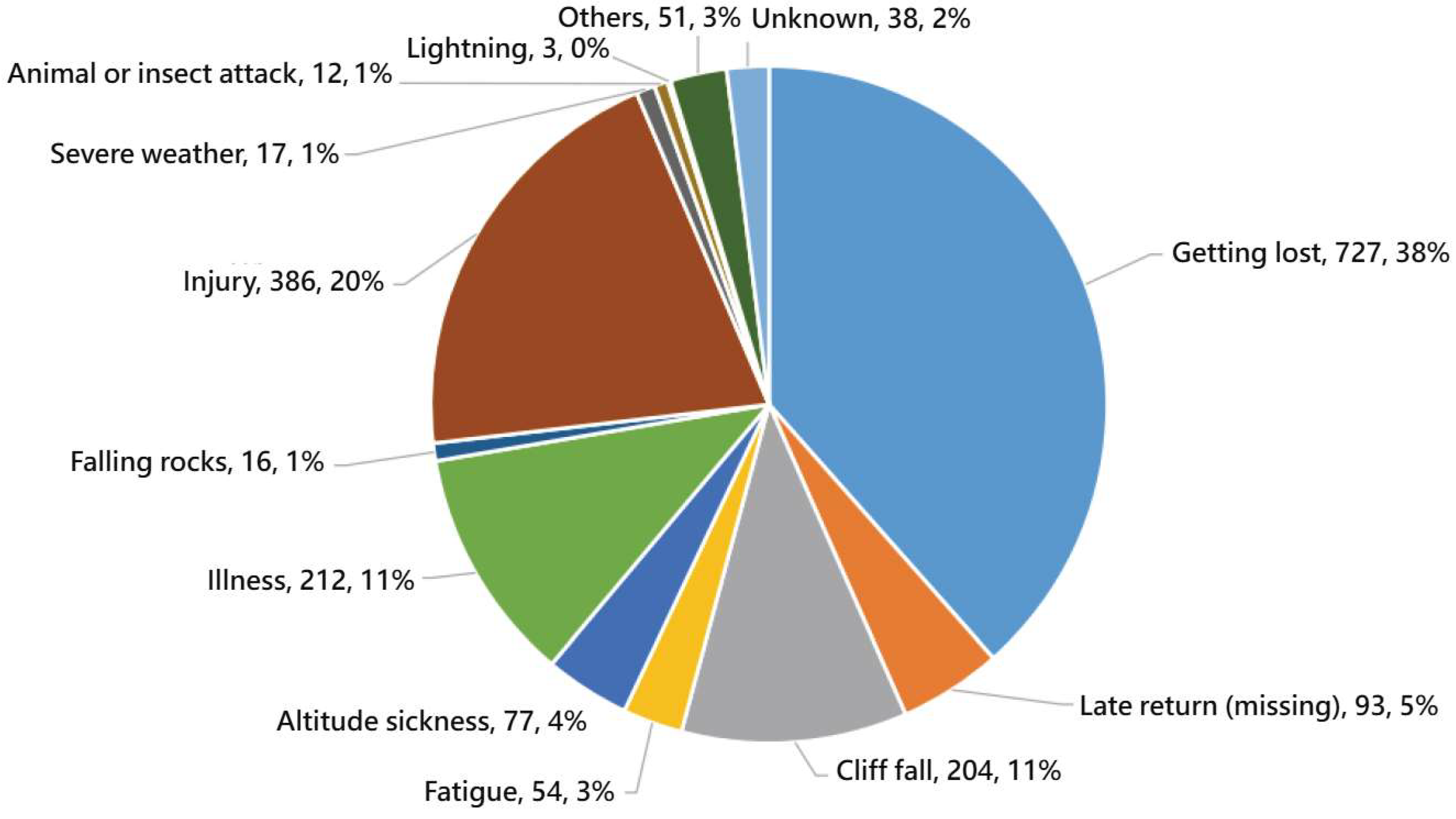
The Sports Administration, Taiwan launched the Mountain Education Promotion and Implementation Plan in 2024 [23] to promote mountaineering education and the popularization of mountain knowledge. Despite these efforts, mountaineering accidents have continued to increase annually. Based on 2022 statistics from the National Fire Agency, Ministry of the Interior, Taiwan [24], getting lost and delayed returns are among the primary causes of mountaineering incidents, showing the importance of map-reading and orientation training in mountaineering education. Recent statistics from the National Fire Agency show that the leading causes of mountain rescue incidents include getting lost, physical injuries, falls into valleys, and delayed returns (Figure 1). These patterns offer valuable insights for designing instructional materials in mountaineering education.
From the above discussion, it is evident that the core of mountaineering education lies not only in physical fitness and equipment but also in strengthening directional and map-reading skills. These abilities represent fundamental spatial concepts within geographic knowledge and closely align with the content of school geography curricula. Therefore, although this study originates from the perspective of mountaineering education, its instructional design and analysis of learning outcomes primarily focus on the geographical aspects of map and orientation interpretation.
Gasser and Schwendinger [25], in their study of the Alps, found that hikers getting lost are often influenced by environmental conditions (e.g., dense fog), physical factors (e.g., fatigue), or insufficient team experience. In Taiwan, relevant literature also emphasizes that lost hikers should avoid descending slopes and instead remain in place or move toward a ridgeline to facilitate rescue. Map reading is thus recognized as a fundamental competency in mountaineering education. Several authoritative resources provide comprehensive guidance on map interpretation, orientation, and essential equipment for hiking and mountaineering education.
The above literature indicates that map and orientation skills are among the key abilities for preventing getting lost. Therefore, fostering students’ map-reading skills in mountaineering education holds direct significance for both safety and practical application. In terms of instructional design, the Colorado Mountain Club’s Wilderness Trekking School curriculum covers essential topics such as navigation, map and compass skills [26], and off-trail travel techniques [27]. Additionally, the National Park Service’s “Ten Essentials” list outlines critical gear for safe backcountry travel, emphasizing navigation tools, first aid kits, and emergency supplies [28]. These resources support the development of effective educational programs in hiking and mountaineering, ensuring learners acquire the necessary skills and knowledge for safe and informed outdoor activities.
The map teaching guides published by Ordnance Survey [29,30,31] systematically explain concepts such as scale, grid lines, contour lines, and compass operation. The content covers map symbol interpretation, terrain relief analysis, orientation correction, and magnetic declination application, providing a reference framework corresponding to map-reading training in mountaineering education. These principles are highly consistent with the content of geography textbooks in Taiwan and can serve as an important basis for instructional design.
Mountaineering education and geography education share strong overlaps in areas such as map reading, direction recognition, and magnetic declination adjustment. Therefore, this study designed the VR instructional material based on the geography curriculum, transforming mountaineering application scenarios into practical learning tasks for geography education. The instructional materials developed in this study include modules on orientation recognition, map elements, magnetic declination correction, and the resection method. These concepts are presented through 3D visualizations and immersive interaction to help students grasp abstract concepts more effectively to enhance their practical application skills in mountaineering activities.

2.5. VR Integration with Mountaineering Maps

In designing instructional materials for mountaineering education, although this study did not construct a fully immersive mountain ecological environment, reviewing relevant literature was essential to understand the distribution and risk characteristics of mountaineering accidents. Taiwan features diverse ecological environments, including forests, freshwater systems, and marine ecosystems, which not only provide important contextual backgrounds for mountaineering education but also illustrate the potential challenges inherent in such activities.
Statistics from the National Fire Agency [24] indicate that the number of mountaineering rescue requests in Taiwan is closely correlated with the popularity of specific mountain areas; the more frequently visited a mountain area is, the higher the number of rescue cases tends to be. These data offer valuable background information for instructional design, helping educators understand the relationship between accident hotspots and mountaineering risks. However, due to the absence of precise national statistics on the total number of hikers in different mountain regions, it is currently not possible to calculate accurate accident rates. Consequently, the number of rescue cases must be used as a reference indicator.
Furthermore, the distribution of accident hotspots is closely linked to primary causes such as getting lost and delayed return. In developing the instructional materials for this study, these data underscore the importance of map reading and orientation skills. Nevertheless, since the primary objective of this research is to teach fundamental navigational skills such as map reading and compass operation, the instructional system does not simulate high-risk mountain environments in full ecological detail. Instead, it emphasizes foundational training in map interpretation and orientation recognition.
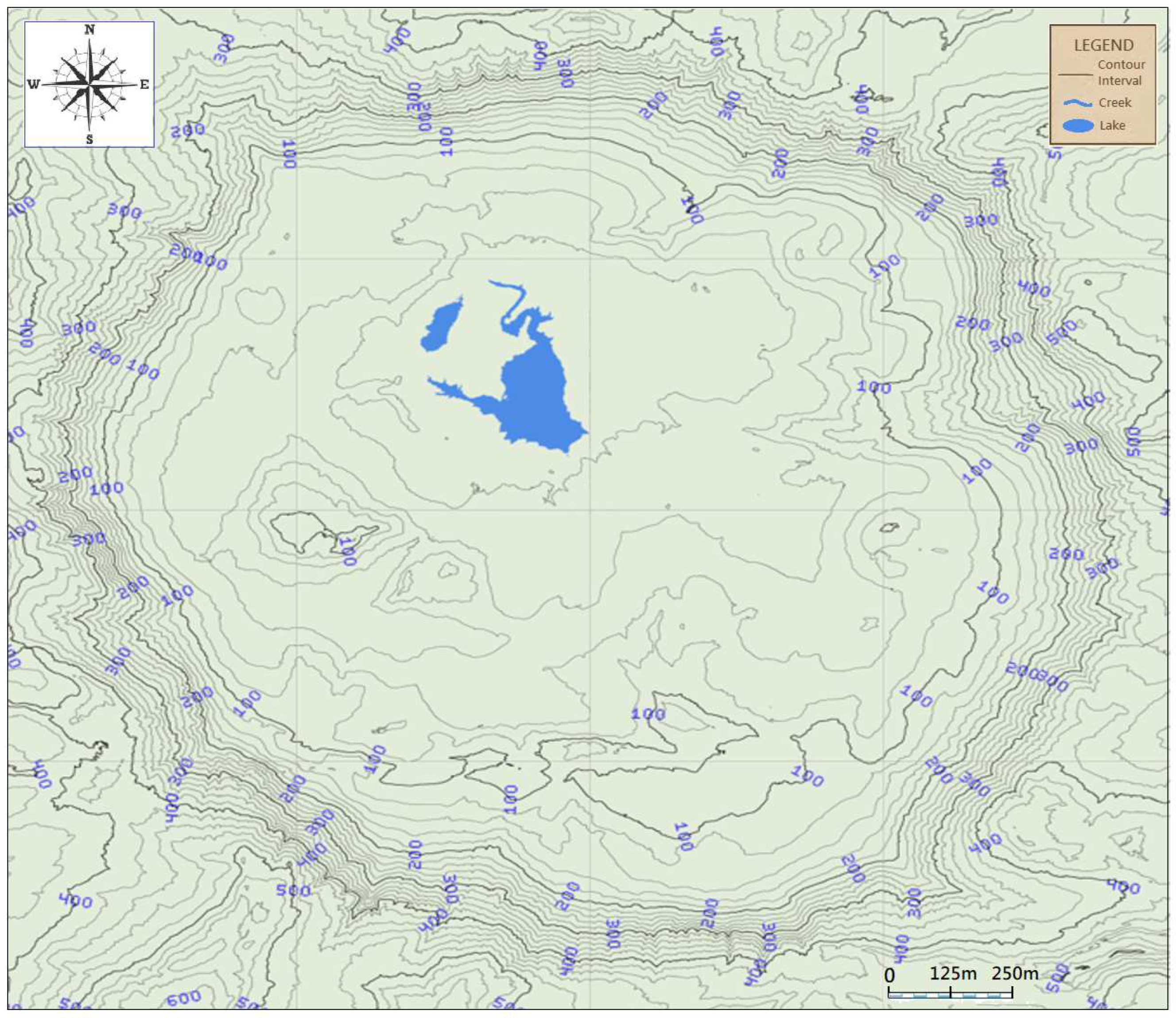
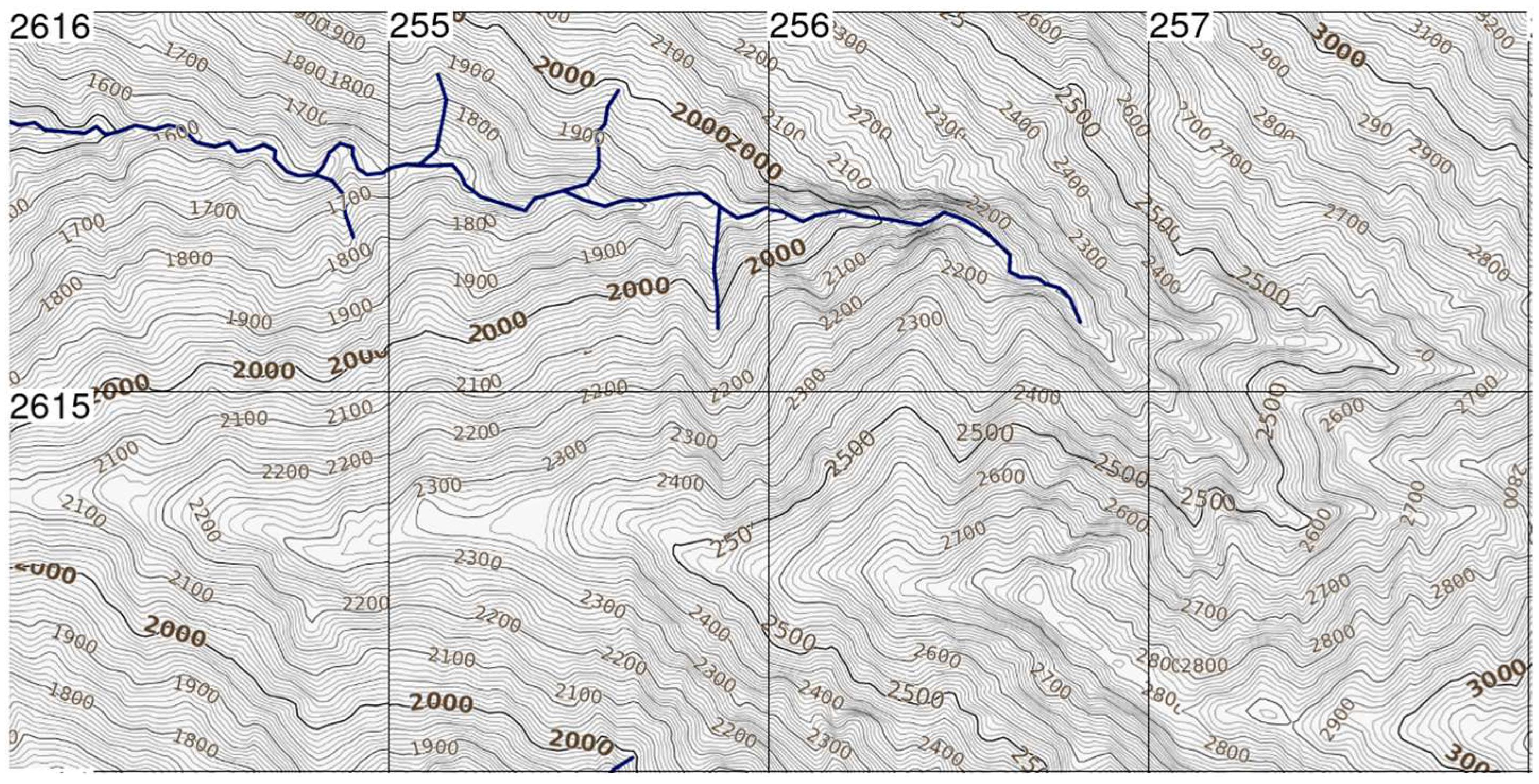
Standard mountaineering maps must adhere to professional cartographic conventions, including proper scale selection, accurate contour line depiction, terrain feature labeling, and consistent use of map symbols. The U.S. Geological Survey [32] provides comprehensive guidelines on topographic map symbols, detailing elevation markers, contour intervals, hydrographic features, and landform representations, serving as widely recognized cartographic standards. Additionally, NASA’s Jet Propulsion Laboratory [33] offers instructional resources on generating topographic maps, providing step-by-step guidance for creating accurate printed maps from digital terrain data (NASA). Figure 2 illustrates an example of a standardized mountaineering map produced according to these guidelines, demonstrating correct topographic conventions and serving as a practical reference for map-based learning activities.
Although the instructional materials in this study did not directly utilize official topographic maps, the maps were developed in Unity following standard cartographic design principles. This version retained essential cartographic elements such as contour lines, grid lines, elevations, and rivers, but was simplified based on instructional needs to help students concentrate on core directional and map-reading skills. The 3D presentation supports the development of spatial concepts in an immersive environment, enhancing the connection between geography learning and mountaineering education.
While professional maps provide high accuracy, they are not easily adaptable to interactive learning environments. By creating customized maps in Unity game engine, the study could flexibly control terrain features and visual elements, enabling smooth integration with instructional modules and enhancing both the interactivity and pedagogical effectiveness of the VR mountaineering education system.

2.6. VR Flight Simulation Training

Recent research on flight simulators provides a strong foundation for understanding the instructional value of immersive simulation-based learning and offers meaningful parallels to the VR mountaineering education system developed in this study. Flight simulators have been widely applied in aviation training to enhance procedural performance, perceptual-motor skills, and situational awareness, demonstrating that high-fidelity virtual environments can replicate complex real-world tasks while ensuring learner safety. Zhang et al. [34] showed that simulator-based training significantly improved cadets’ perceptual-motor learning and accelerated skill acquisition, highlighting the benefits of controlled, repeatable virtual practice. Similarly, Hebbar et al. [35] found that VR-based flight simulations provide measurable cognitive load advantages, helping trainees manage task complexity through immersive visualization and interactive feedback.
Rochon et al. [36] demonstrated that instructional modalities embedded within flight simulators can directly influence cognitive processing and learning efficiency, emphasizing the importance of thoughtful simulation design. These findings collectively illustrate how realistic, interactive simulations promote experiential learning, reduce risk, and support complex skill development. Applying these insights to VR mountaineering education, students can safely and repeatedly practice compass and map navigation, develop critical spatial skills, and build motivation and confidence in authentic, scenario-based mountaineering environments, demonstrating the pedagogical effectiveness of immersive VR and interactive training for outdoor skill training.

2.7. Experiential Learning Theory

This study is grounded primarily in experiential learning theory, which emphasizes learning through direct experience, active engagement, reflection, and practical application in authentic contexts. Experiential learning theory posits that learners construct knowledge most effectively through active interaction with environments that support exploration, purposeful action, and immediate feedback, thereby fostering deeper understanding and more effective skill acquisition. Research shows that immersive VR environments facilitate experiential learning by enabling learners to engage with realistic tasks that closely resemble real-world conditions, improving both knowledge and practical competencies in controlled, interactive settings [37].
Immersive VR has been found to improve undergraduate students’ knowledge and evaluation skills through experiential engagement, demonstrating that VR supports the kind of learning-by-doing central to experiential theory. Moreover, the immersion principle in VR multimedia learning highlights how presence and interactive engagement enhance reflective observation and conceptual understanding, providing key components of experiential learning theory [38]. In this study, the gamification elements serve to support engagement and reinforce the core experiential processes rather than constitute a full game-based learning model. Therefore, experiential learning theory more appropriately explains the immersive, hands-on nature and instructional effectiveness of the VR mountaineering education system, where students can actively explore, perform, receive feedback, and refine navigation skills in a realistic virtual context.

3. Materials and Methods

The research methodology of this study consists of two main components: the research process and the conceptual framework. The research process outlines the overall procedures, encompassing preliminary planning, experimental design, data collection, and statistical analysis. The conceptual framework, on the other hand, illustrates the logical relationships among the research variables, providing the theoretical basis for hypothesis formulation and subsequent statistical testing.
In the research process, the study first established its research objectives and questions, then designed VR instructional materials for mountaineering education and developed corresponding teaching materials for the control group to facilitate comparative instruction. The process encompasses participant selection, instructional implementation, data collection, and results analysis, ensuring that the overall research design is systematic and replicable. The research framework is grounded in educational psychology and multimedia learning theory, integrating theories on VR applications in education, learning motivation, and cognitive load to develop the conceptual model and formulate the research hypotheses. This framework helps clarify the relationships among variables and provides the theoretical foundation for subsequent statistical validation.

3.1. Research Process and Framework

The research process begins with the formulation of research objectives and focuses on junior high school students as the target participants. The students were divided into an experimental group (using VR instructional materials) and a control group (using traditional instructional materials). Both groups were required to complete pre-tests and post-tests, including the Compass and Map Reading Test, the ARCS Motivation Questionnaire, and the Cognitive Load Questionnaire. Finally, the collected data were analyzed using ANCOVA and t-tests to assess the effects of different instructional approaches on learning outcomes, learning motivation, and cognitive load.
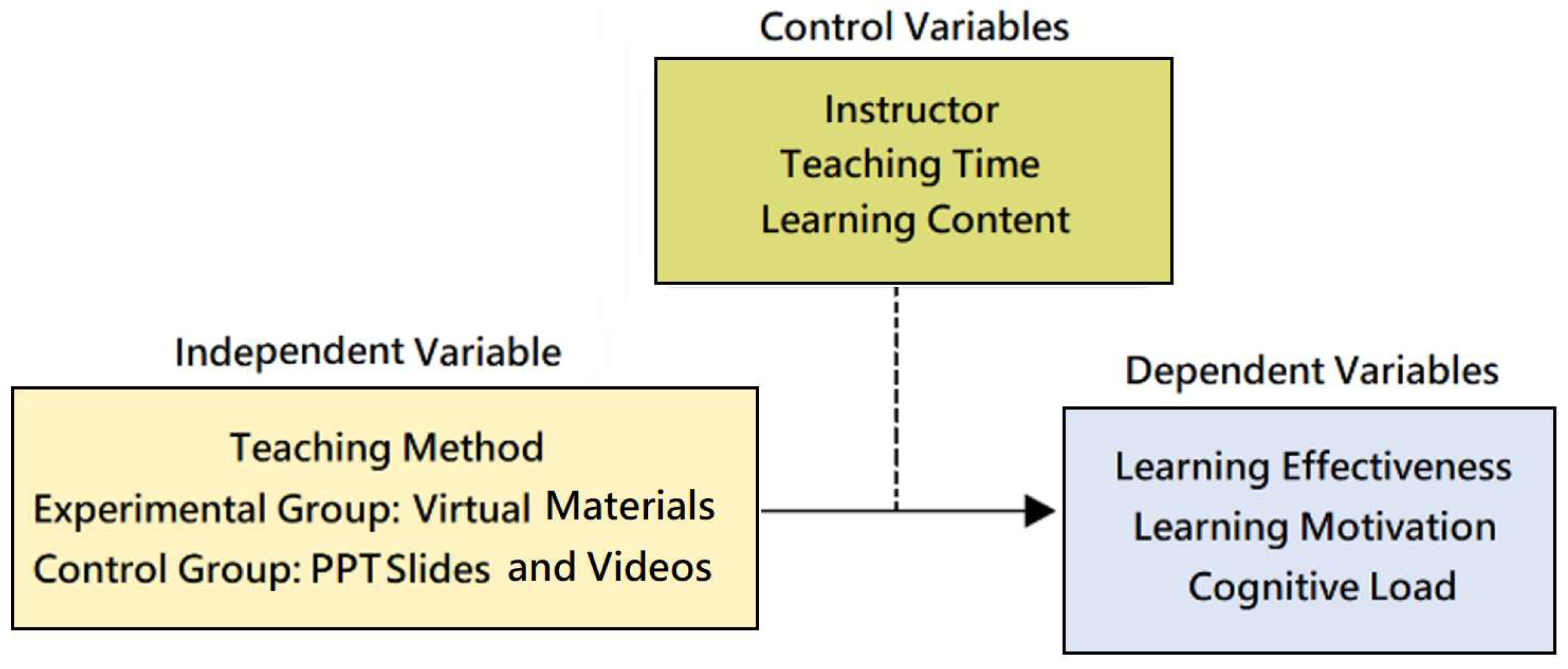
In this study, teaching methods (using VR-based materials versus traditional materials) served as the independent variable, while learning outcomes, learner motivation, and cognitive load were treated as dependent variables. To eliminate potential content-related confounds, the instructional materials—addressing orientation recognition, map reading, and resection methods—were standardized, ensuring that any observed group differences could be attributed exclusively to the instructional approach. The research variables in this study are defined as follows (Figure 3):
  • Independent Variable: Instructional materials (VR materials vs. traditional materials)
  • Dependent Variables: Learning effectiveness, learning motivation, and cognitive load
  • Control Variables: Instructor, teaching time, and learning content

3.2. Research Participants

The study involved junior high school students as participants because the geography curriculum at this level covers foundational topics relevant to mountaineering education, including orientation recognition, contour line interpretation, and map symbol identification. These skills are critical for mountaineering safety and allow for a direct assessment of the effectiveness of VR-based instructional materials in both geographic and basic mountaineering training. Additionally, students at this stage are generally receptive to emerging learning technologies, such as VR, which can enhance learning motivation and engagement, facilitate experiential understanding, and provide opportunities for applying theoretical knowledge in simulated real-world contexts.
Participants were recruited through partner schools to ensure alignment of age, prior knowledge, and curricular content with the research objectives. A convenience sampling method was employed, with classroom teachers recommending and organizing participants. Efforts were made to ensure sample diversity, as well as the representativeness and interpretability of the experimental results, while maintaining ethical considerations and voluntary participation. Table 1 presents the participant groups, their assigned instructional methods, and the corresponding number of participants.

3.3. Research Tools and Instructional Design

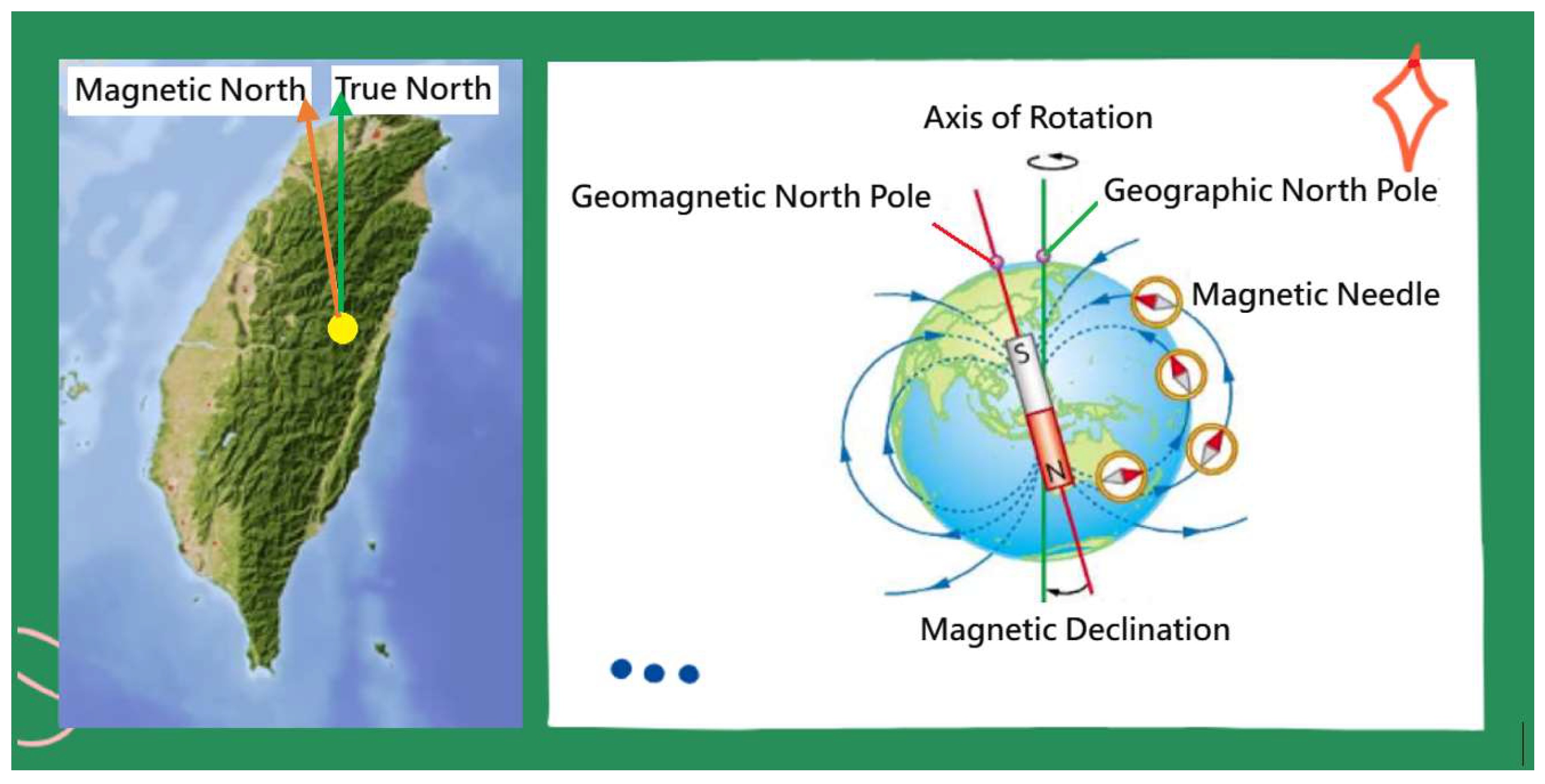
The traditional teaching materials consisted mainly of researcher-developed PowerPoint slides and instructional videos, supplemented by in-class explanations and practice exercises. The course content covered topics such as orientation, map reading, compass operation, magnetic declination, and the resection method. Instruction was delivered using slides and teacher explanations to help students understand fundamental concepts of mountaineering through traditional teaching methods. Figure 4 depicts the class presentation interface, with learning content systematically organized as follows:
(1)
Orientation: Introduction to the cardinal directions (East, South, West, North) and their English abbreviations.
(2)
Map: Overview of map symbols, contour lines, and grid lines.
(3)
Compass: Description of the compass structure and instructions for its proper use.
(4)
Magnetic Declination: Explanation of the difference between geographic (true) north and magnetic north.
(5)
Resection Method: Determination of one’s position using a map and bearing lines.
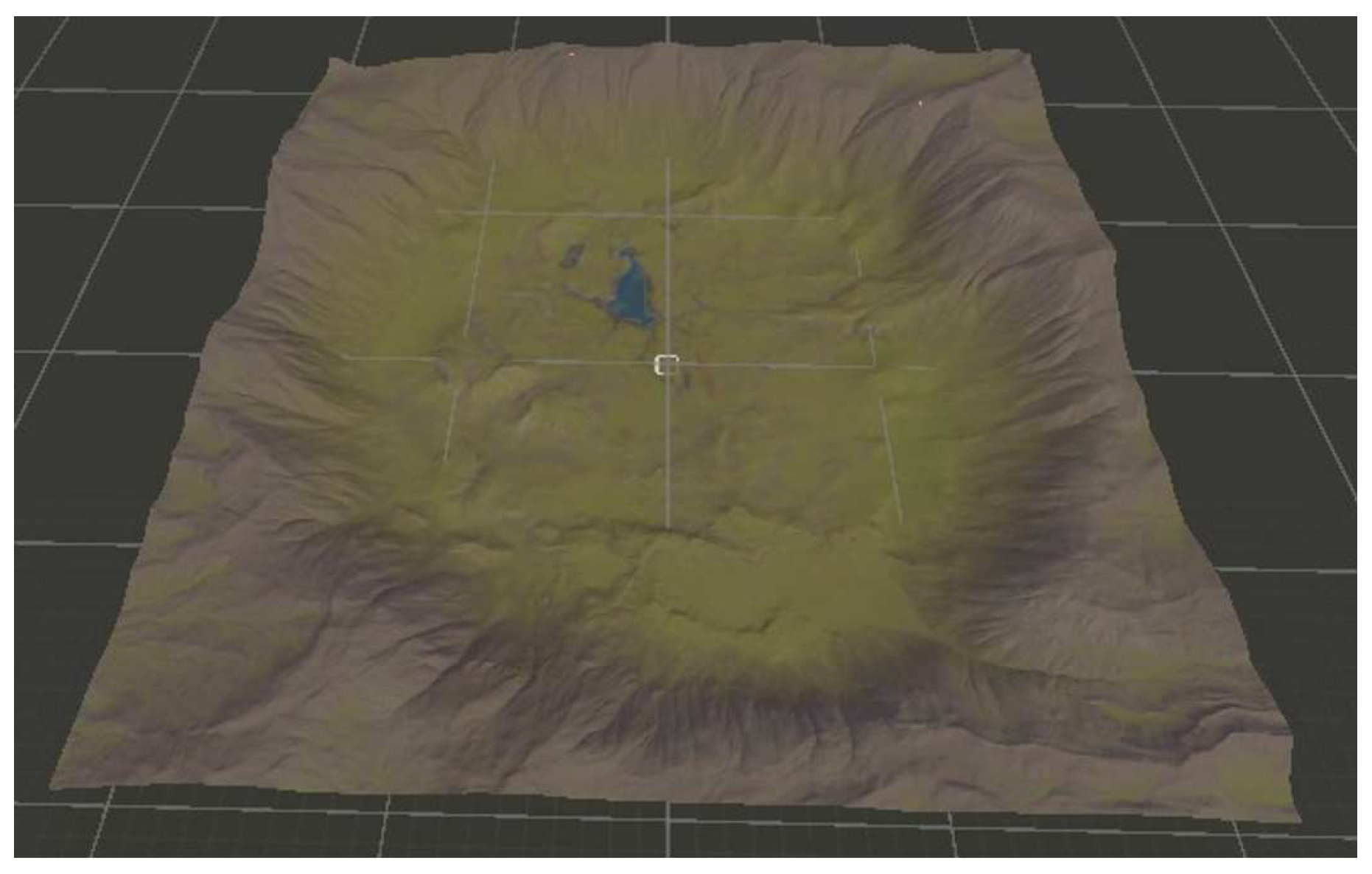
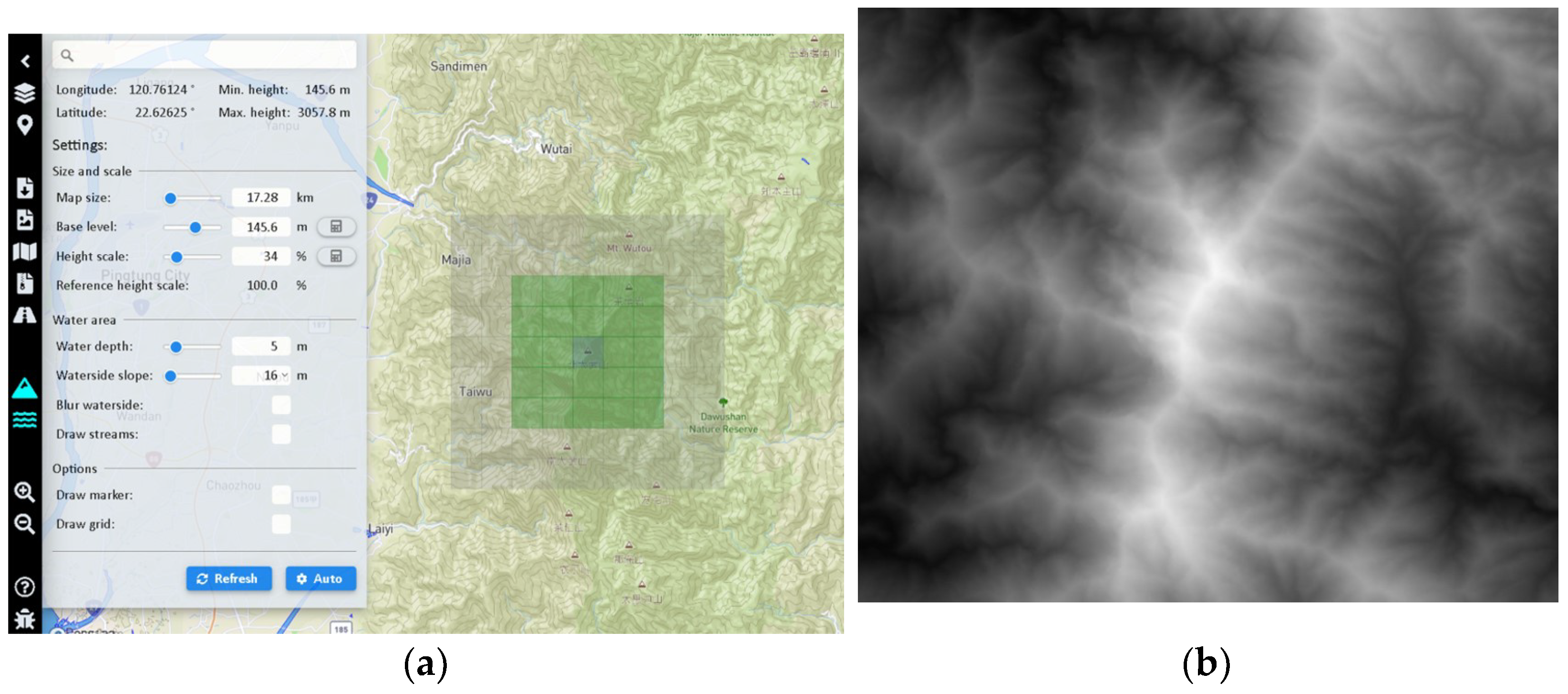
The traditional instructional materials were developed based on Ordnance Survey map education guides [29] to align with international map-reading standards, covering scale, grid lines, contour lines, compass operation, and magnetic declination correction. The VR system was implemented using a Meta Quest 2 headset paired with a computer, ensuring stable operation and an immersive learning experience. Development was carried out in Unity game engine 2022.3.44f1 with the Universal Render Pipeline (URP) for optimized performance and visual fidelity. Terrain heightmaps were generated using the Cities: Skylines Map Generator [39] to test terrain modeling approaches in Unity game engine (Figure 5). Although not included in the final instructional materials, this process provided critical insights into terrain modeling for educational purposes.
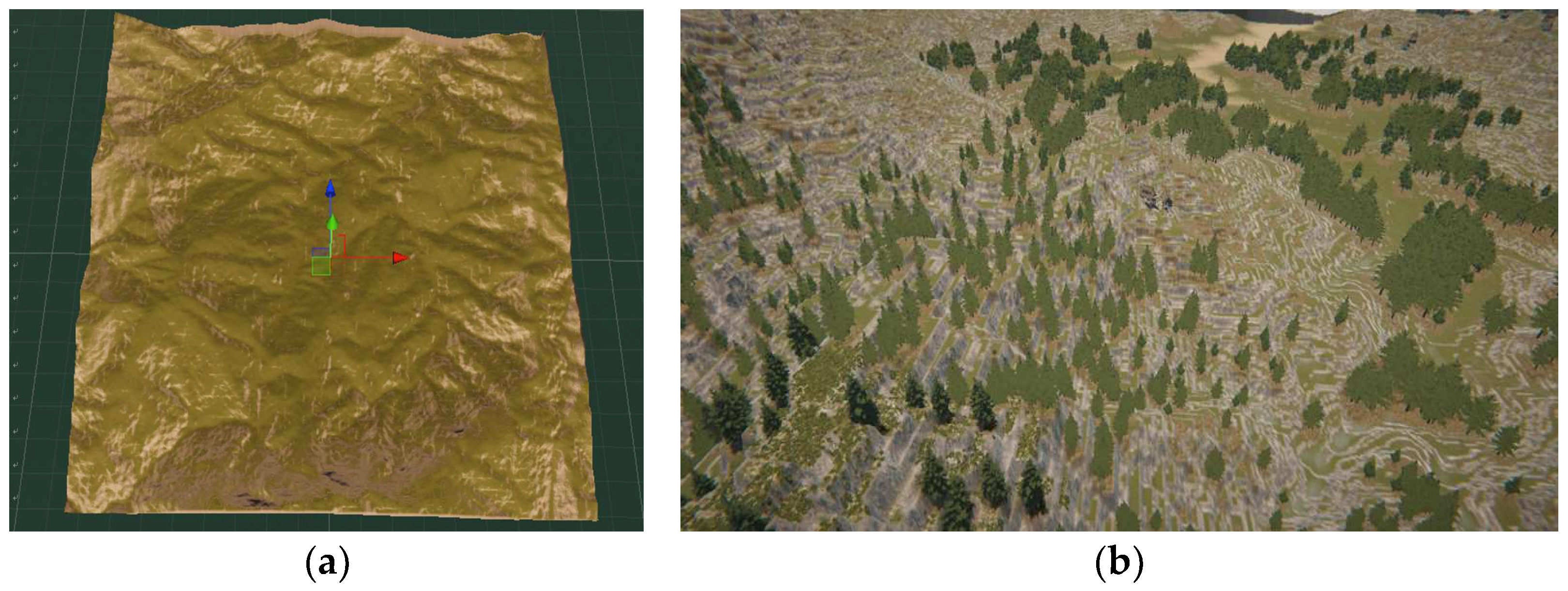
The Unity Gaia plugin 4.1.3 was assessed for terrain and vegetation generation (Figure 6), but it was not included in the final version of the instructional materials. The final instructional scenes were constructed using Unity’s built-in Terrain system and the URP Demo scene, enhanced by a custom map-drawing tool generating contour lines, grids, elevation data, and river features, enabling seamless integration with the map-reading module.
The custom map-drawing tool developed for this study can merge multiple terrains and automatically generate contour lines, grids, elevation data, and water bodies. Its primary function is the conversion of 3D terrain into a 2D representation resembling standard topographic maps, making it particularly suitable for use in mountaineering education materials. The generated map was produced at a scale of 1:12,500, where 1 cm on the map corresponds to 125 m in reality. To support map-reading and positioning exercises, grid intervals were set to 1000 m (approximately 8 × 8 cm on the map), as shown in Figure 7. This design closely mirrors conventional topographic maps, enabling students to effectively practice positioning, orientation, and distance estimation skills.
The tool allows rapid regeneration of maps to meet instructional needs. Because the 2D maps are derived directly from Unity’s terrain data, any modification to the 3D environment—such as adding ridges, lakes, or slopes—can immediately produce an updated 2D map. This capability significantly enhances the flexibility and efficiency of developing instructional materials. To illustrate the correspondence between the 2D maps and Unity’s 3D environment, Figure 8 presents a top-down view of the Unity scene, showing how the 2D maps were generated from the underlying 3D terrain.
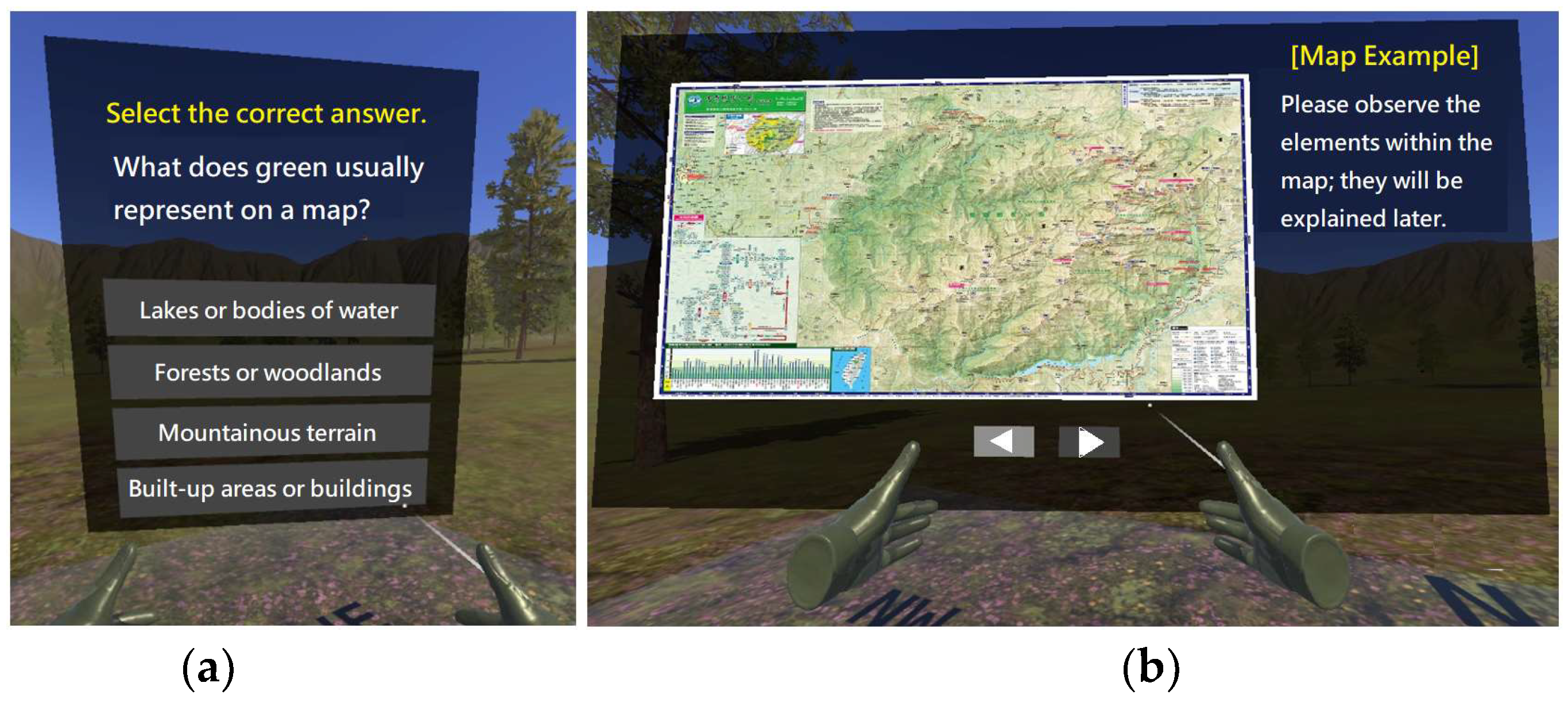
In addition to the map-drawing tool, two supplementary tools were developed to enhance interactivity and learning outcomes. Implemented in Unity game engine, the quiz tool in Figure 9a enables embedding multiple-choice questions related to the course content within VR instructional materials. It provides immediate feedback by displaying a positive cue for correct answers and disabling incorrect options until the correct one is selected, reinforcing conceptual understanding and discouraging rote memorization. The page-flipping tool in Figure 9b allows teachers or students to navigate slides within the VR environment using buttons or keyboard shortcuts. It can present text, images, and key points in a structured format similar to traditional teaching materials.
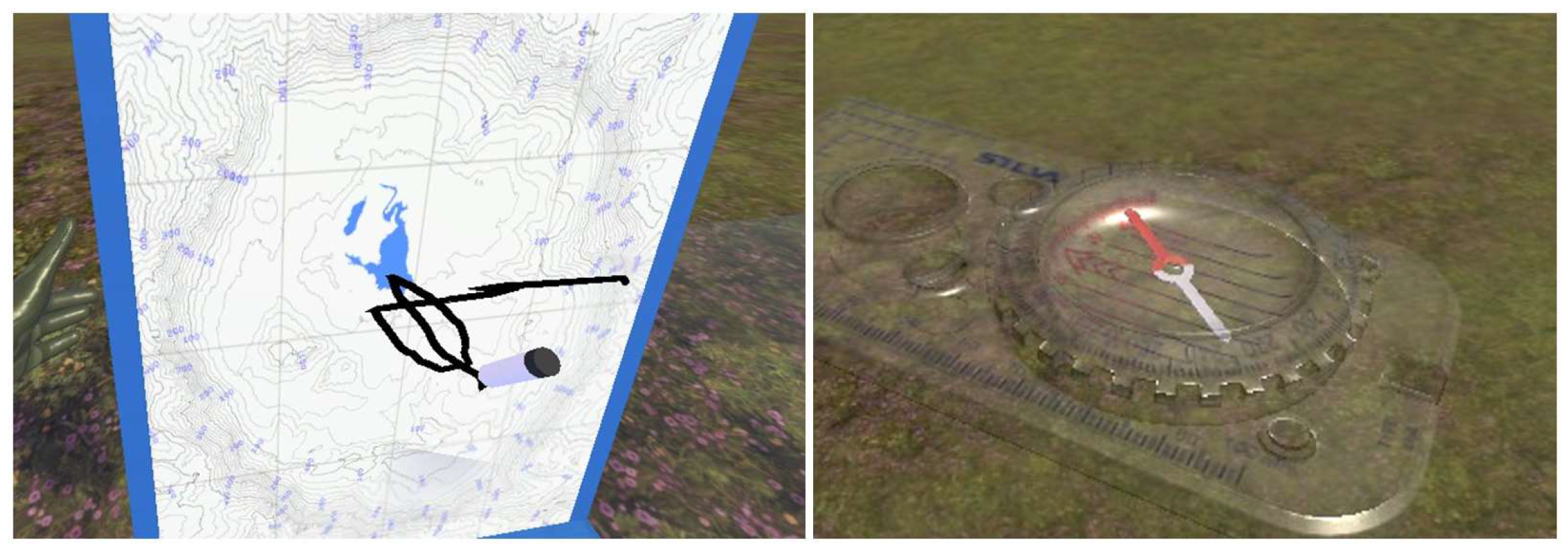
During system development, additional modules, including a drawing tool and a virtual compass, were created to support extended instructional objectives such as resection practice and magnetic declination correction. The drawing tool in Figure 10 allows learners to sketch lines directly within the 3D environment to mark positions or record spatial reasoning processes. The virtual compass simulates real-world compass functions, including azimuth rotation, declination adjustment, and automatic magnetic needle alignment. These tools highlight the system’s scalability and potential for future applications in mountaineering education. The VR learning system integrates multiple interactive components, including map generation, orientation recognition, compass simulation, drawing, and quiz-based learning functions.
The VR instructional material is not merely an extension of digital teaching resources; it represents a digital teaching model that integrates game-based learning theory with immersive experiences, demonstrating both engagement and educational value in mountaineering education. Within the three-dimensional mountaineering scenarios, learners are required to complete clearly defined map-reading and orientation tasks. During task execution, the system provides immediate visual and directional feedback, while immersive environments simulate authentic field exploration experiences. This instructional design fosters a sense of challenge and achievement as learners progress through tasks, realizing a gamified learning experience characterized by task-driven engagement, feedback reinforcement, and immersive participation to enhance learner motivation and sustained attention during the VR training game.
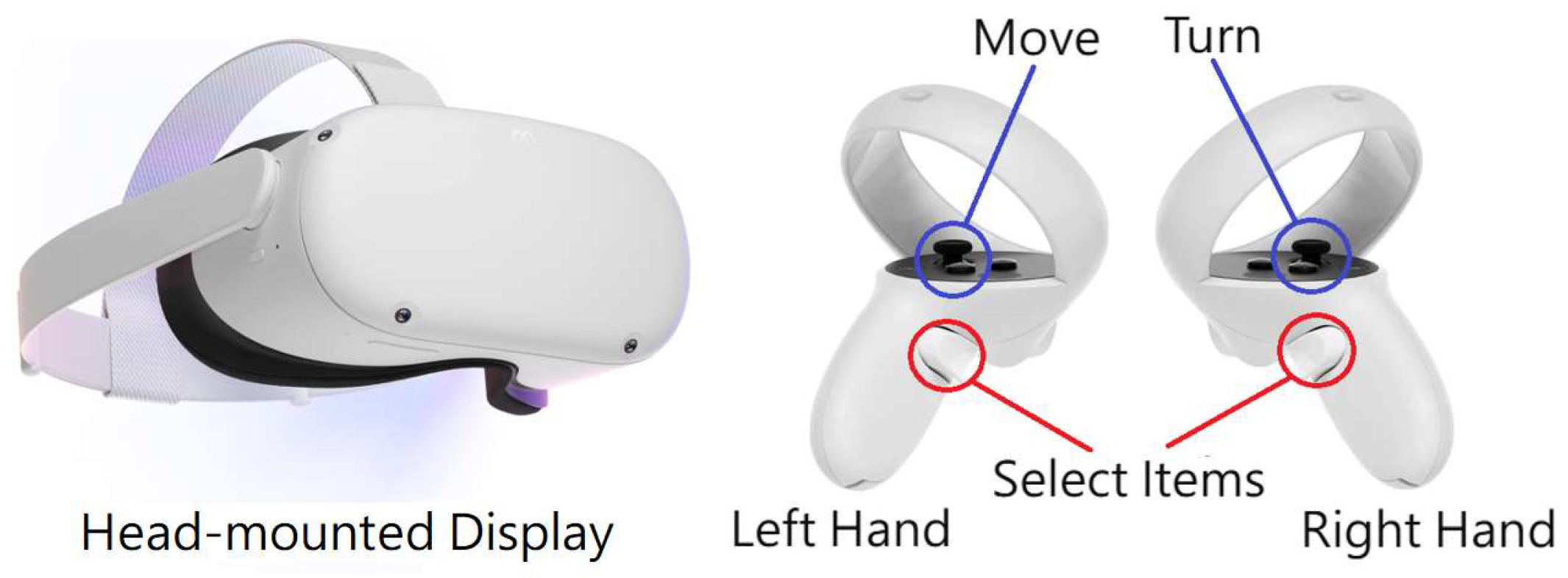
The VR instructional materials developed in this study integrate task-oriented and interactive feedback mechanisms within a mountaineering education context, including compass manipulation, map drawing using a virtual pen tool, and directional recognition activities. Through active exploration, hands-on operation, and real-time feedback in a virtual environment, students experience challenge and accomplishment. The learning focus emphasizes visualized content and contextual immersion, enabling learners to concentrate on core conceptual understanding and map-reading tasks while engaging meaningfully with the VR learning environment. To ensure smooth participation, the researcher first demonstrated the basic operations of the VR system and provided a brief instruction guide before the experiment. Interaction with the VR materials was facilitated using Meta Quest 2 controllers, with the left-hand controller primarily controlling movement and positioning, and the right-hand controller managing turning, page-flipping, and task responses. This design allowed students to complete learning activities intuitively without operational interruptions. The user interface is shown in Figure 11.
The VR instructional materials were developed in Unity (2022.3.44f1, URP) to present a fully 3D environment, enabling students to engage in immersive, interactive learning. The content was organized into four core modules:
(1)
Orientation Recognition
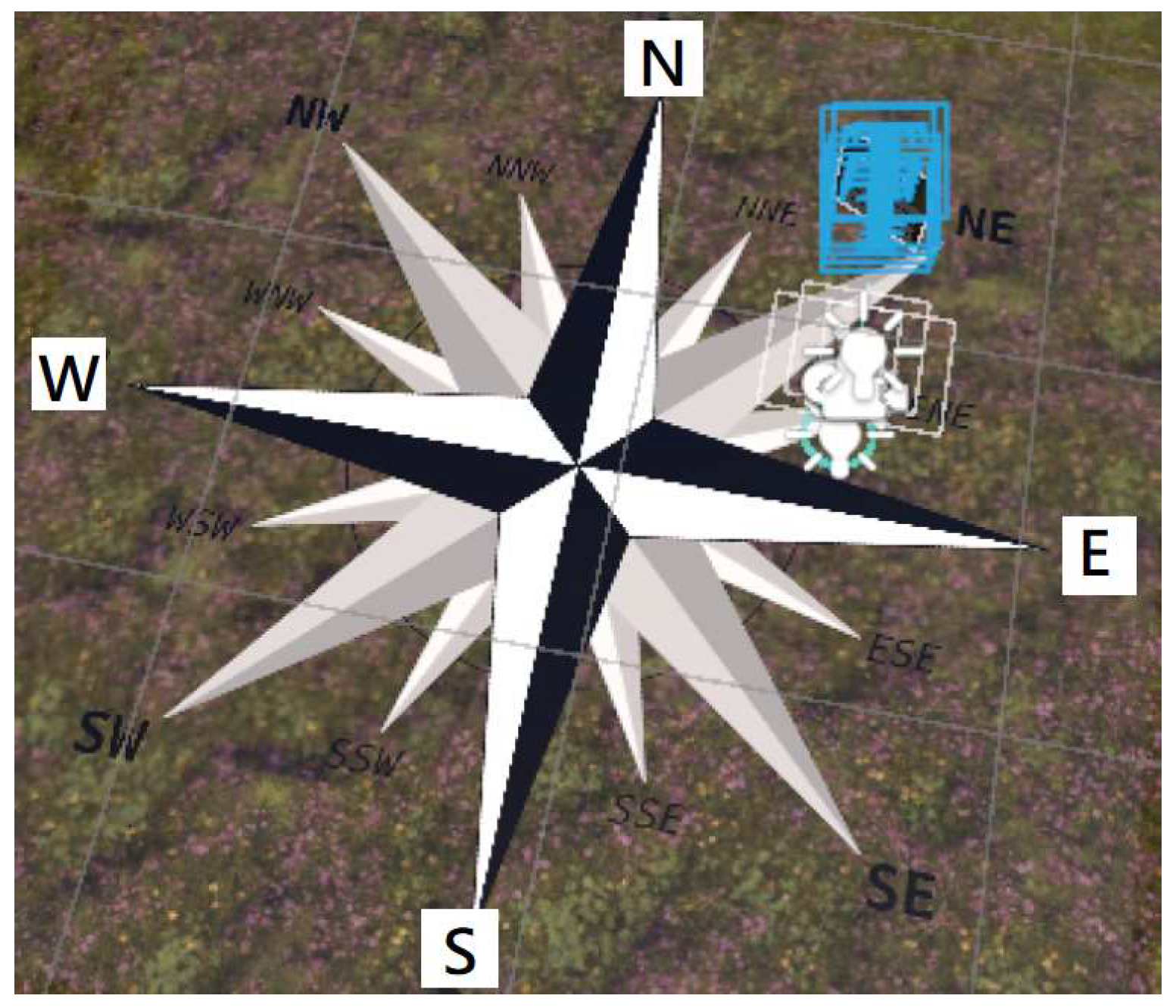
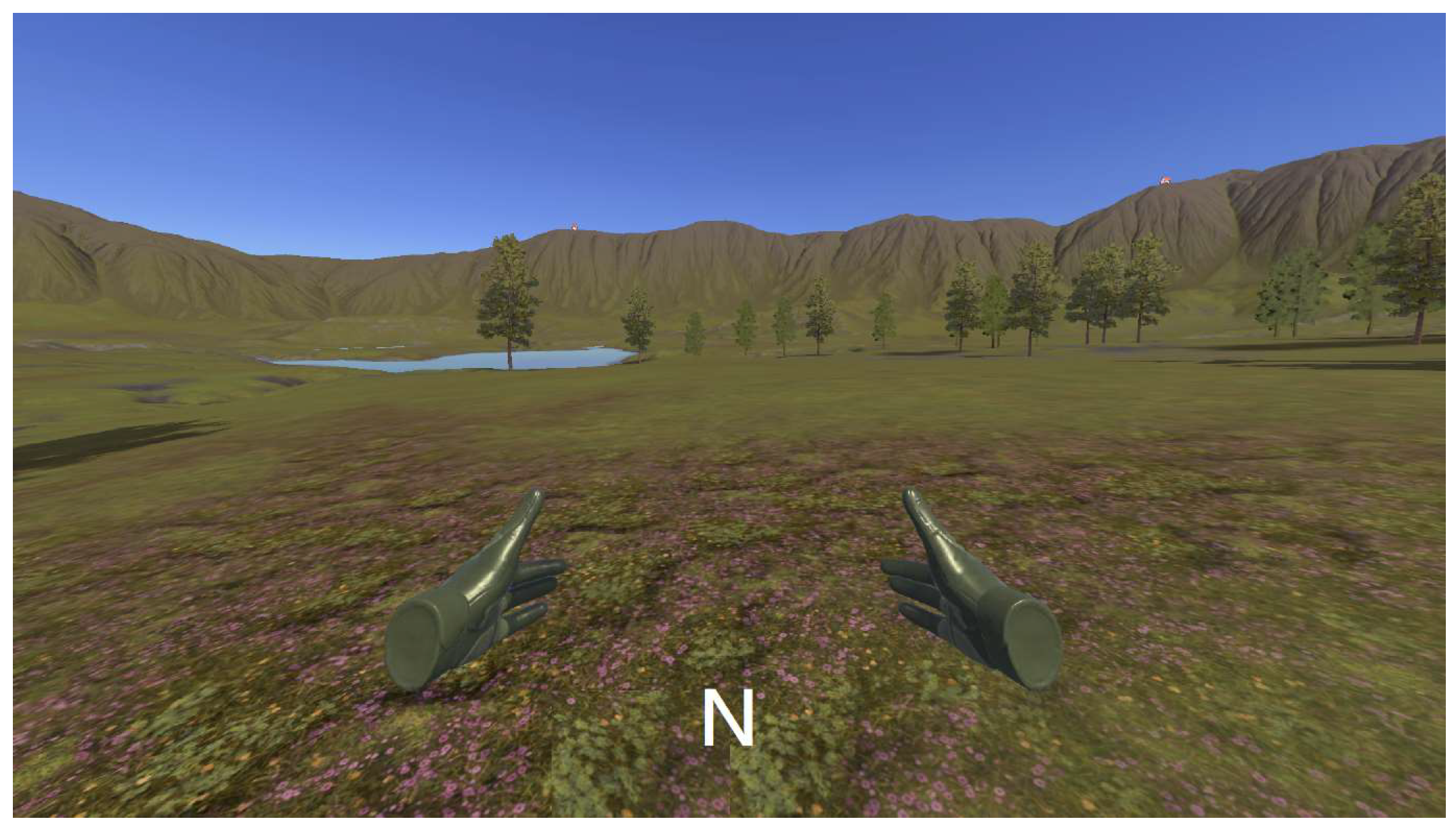
This module illustrates the difference between the orientation system and magnetic north. In the virtual scene, the floor displays both directions and the corresponding labels, allowing learners to grasp positional relationships and bilingual correspondences. An illustrative diagram is provided in Figure 12. The module’s design aligns with orientation and map-calibration principles from Ordnance Survey [29], emphasizing the concept of “understanding space through symbols.” This approach facilitates the development of a genuine sense of direction within a three-dimensional learning environment.
(2)
Map Elements
This module presents contour lines, elevations, grid lines, and river legends within a 3D virtual environment, allowing comparisons with aerial imagery. Drawing on the terrain and scale teaching framework from Ordnance Survey [30], it converts traditional map elements—such as legends, contour lines, and landform symbols—into interactive 3D terrain models. This approach enables students to understand topographic variations and slope differences through enhanced spatial visualization.
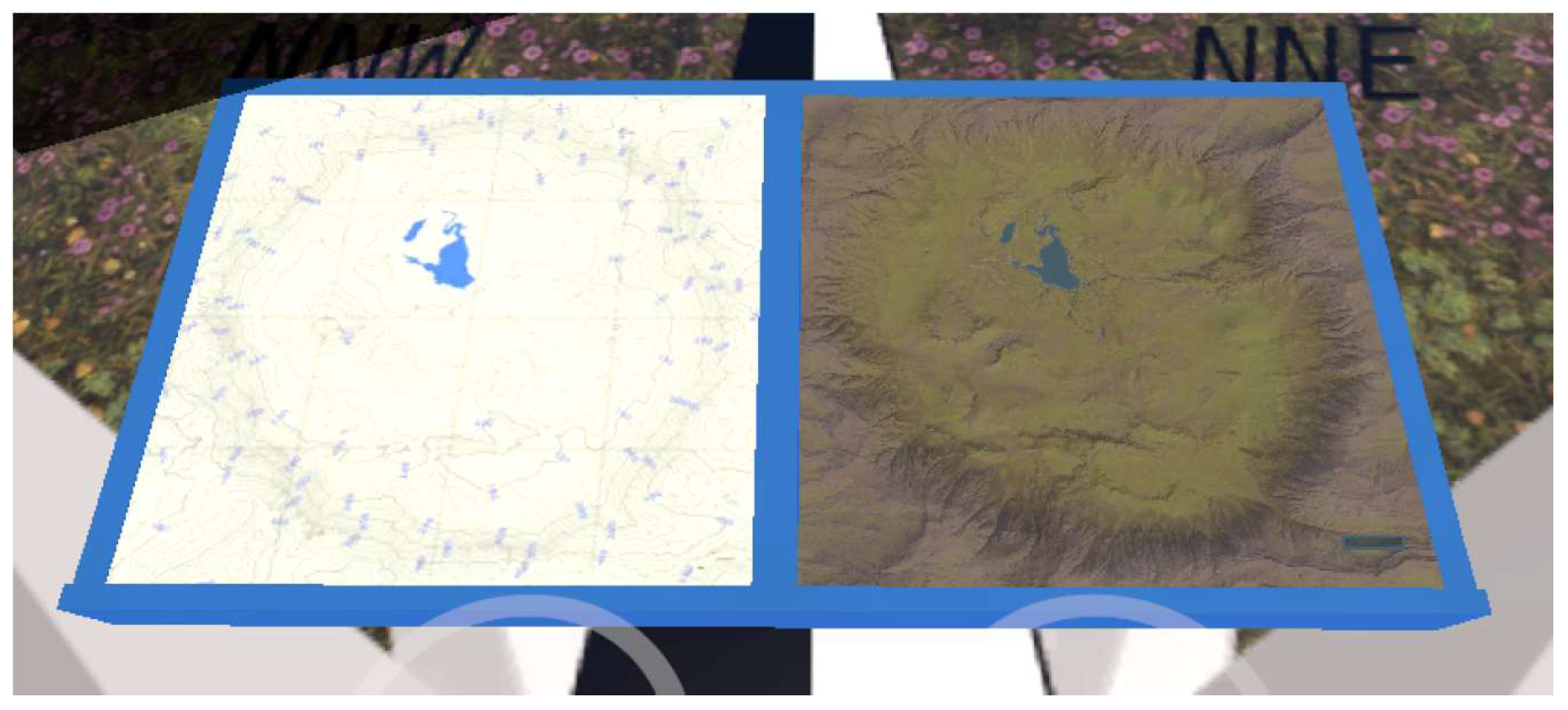
The goal of this module is to help students understand the correspondence between map symbols and real-world landforms. As shown in Figure 13, the instructional material simultaneously displays a contour map and an aerial image, allowing learners to observe differences in terrain patterns and surface features. In addition, students can use the “Real-Scene Observation” view in the VR system to explore the surrounding environment and match it with map locations, thereby strengthening their spatial correspondence and orientation skills, as shown in Figure 14. This module, based on the 3D terrain and scale teaching framework of Ordnance Survey [29], emphasizes visual comparison over interactive manipulation. It is designed to help students understand the relationship between map elements and the real environment, while developing foundational skills in terrain interpretation and map reading.
(3)
Compass and Magnetic Declination
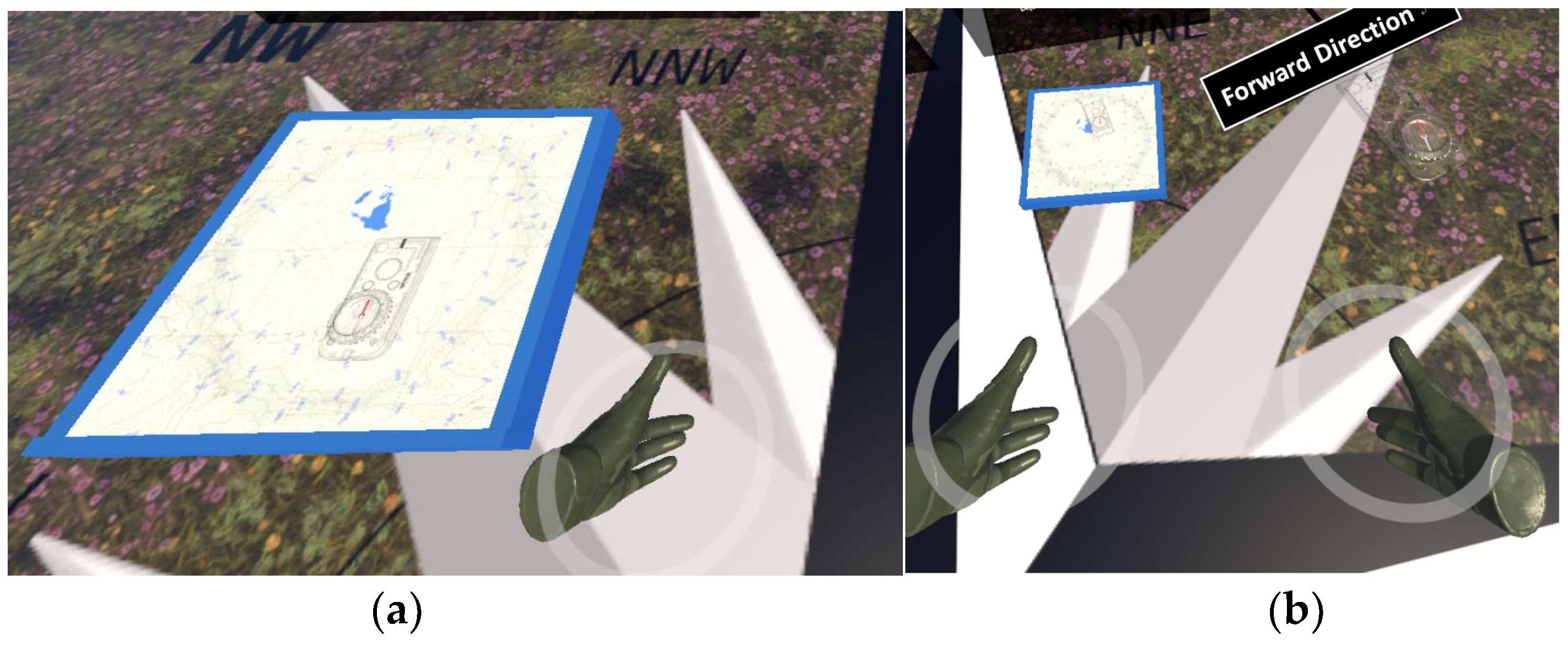
This module combines compass operation with magnetic declination correction to help students understand the difference between the geographic North Pole and magnetic north. The design includes two parts: (1) map orientation adjustment (Figure 15a) and (2) route planning (Figure 15b). In the first stage, students practice aligning the map with magnetic north and identifying the directional shift caused by magnetic declination. In the second stage, the module shows how to position the compass between the current and target locations, rotate the dial to align with north, and plan the route using the baseplate arrow. Students can learn magnetic declination, map alignment, and compass-based route planning for accurate navigation and spatial orientation skills.
During navigation, learners are required to keep the compass needle’s north aligned with the dial’s north to ensure directional accuracy. This process reinforces the practical relationship between compass operation and map orientation. To improve visibility and conceptual clarity, the compass is enlarged within the module. Based on the compass operation principles of the Ordnance Survey [30], the VR module offers a dynamic simulation of magnetic declination, allowing students to observe and correct the deviation between the compass needle and true north. Through route-planning tasks, students cultivate essential skills in spatial positioning, orientation, and direction judgment.
(4)
Resection Method
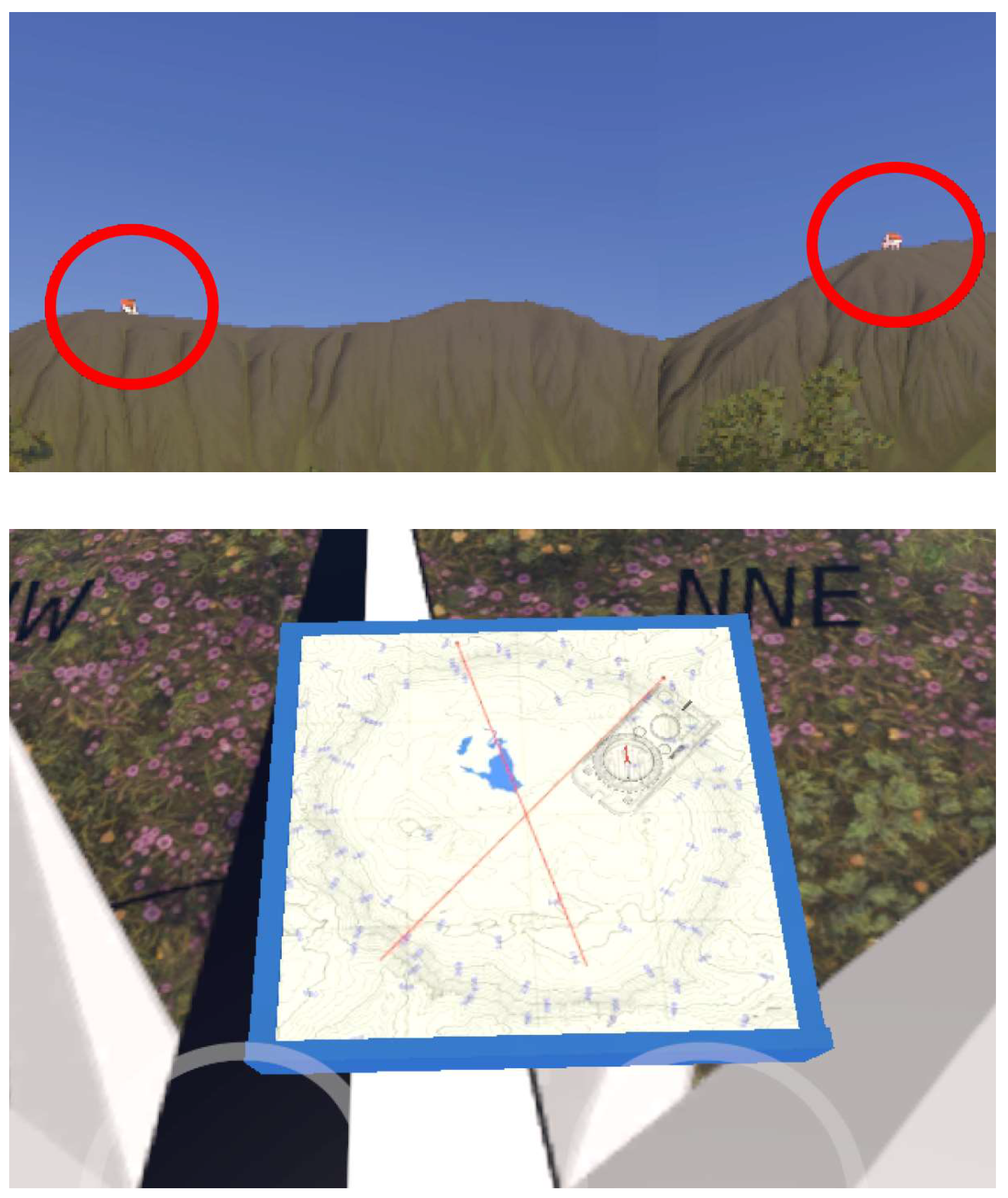
The Ordnance Survey [29] identifies the resection method as an advanced map-reading skill that emphasizes the use of landmarks, bearings, and intersection observations to determine one’s current position on a map accurately. Building on this principle, the present study developed 3D instructional materials to visually illustrate the concept of resection. Although the module does not incorporate interactive manipulation, it functions as a valuable supplementary tool for teaching mountain navigation and positioning. The operational procedure of the resection method, a fundamental skill in map interpretation and spatial localization, is depicted in Figure 16.
This module is primarily demonstration-oriented and is designed to help students understand the principles of positioning. In the 3D instructional material, students can observe the relative spatial positions of two known landmarks (reference points), which form the basis for performing intersection observations in the resection method. This design enables students to conceptually connect orientation with map correspondence in a virtual environment, facilitating a clear understanding of the fundamental principle of determining one’s position by intersecting two reference points.
Although the VR instructional material follows a “textbook-style” structure, its design incorporates the core principles of game-based learning and VR education theory. Game-based learning emphasizes task orientation, feedback mechanisms, and challenge, while VR education focuses on immersion, presence, and interactivity. This module integrates both approaches: within a 3D mountaineering scenario, learners perform explicit map-reading and orientation tasks while receiving real-time visual and directional feedback. The immersive environment simulates the experience of exploring a real field, allowing learners to encounter challenges and experience a sense of accomplishment. This design provides a gamified learning experience characterized by task-driven engagement, feedback-enhanced learning, and immersive participation, aligning with Tsai et al. [3], who noted that gamified learning can enhance motivation and attention.
The operating procedure of the VR mountaineering education system is straightforward and designed for smooth participation. Students receive a brief demonstration of the VR system, and an instruction guide before the experiment. Interaction is facilitated via Meta Quest 2 controllers: the left-hand controller manages movement and positioning, while the right-hand controller handles turning, task responses, and page-flipping. Contextual prompts and visual cues guide learners through tasks, minimizing distractions and reducing extraneous cognitive load. Screenshots of the VR environment show clearly labeled hotspots and interactive markers that focus attention on learning content. By combining intuitive navigation, task-oriented interactions, and real-time feedback within an immersive environment, the system ensures learners remain engaged while concentrating on core concepts and map-reading tasks. This design effectively balances operational simplicity with educationally meaningful, immersive learning experiences.


3.4. Experimental Setup for Both Groups

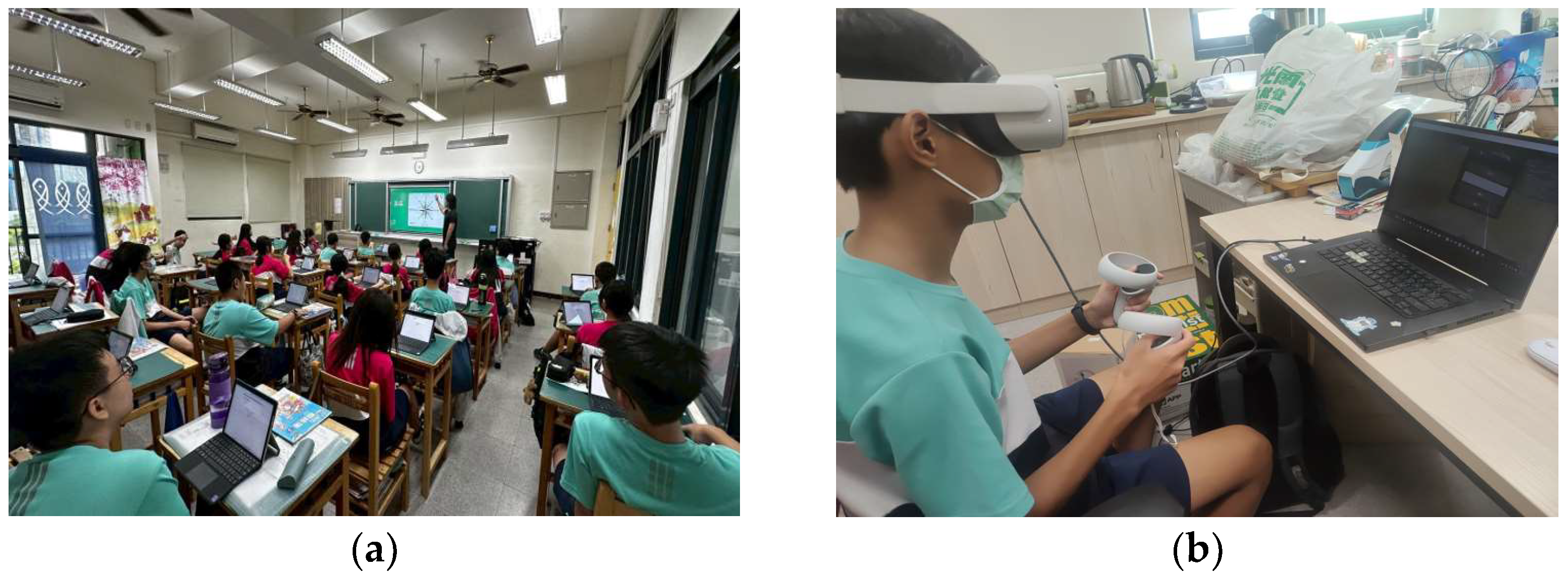
In this study, two types of instructional materials were developed: traditional and VR-based, both focusing on compass use and map reading. The traditional materials comprised slides and videos covering orientation, map reading, compass operation, resection, and magnetic declination, delivered through classroom instruction as shown in Figure 17a. The VR materials, developed in Unity 2022.3.44f1, included immersive 3D modules on orientation recognition, map elements and contours, compass operation with magnetic declination, and resection practice. Prior to the experiment, participants received a brief tutorial on system operation. Interaction with the VR materials was facilitated using Meta Quest 2 controllers as shown in Figure 17b, with the left controller managing movement and positioning, and the right controller handling orientation, page navigation, and quiz responses, ensuring intuitive and seamless interaction.
Table 2 compares the design features of traditional and VR instructional materials across presentation mode, interactivity, sensory engagement, feedback mechanisms, and instructional objectives. The comparison highlights the VR materials’ advantages in interactivity and immersion, whereas traditional materials provide predictable, structured instruction. Because of the limited research schedule, the VR materials contained fewer instructional modules than the traditional version, and this reduction should be considered when interpreting the design comparison and learning outcomes.
This study employed a quasi-experimental design with two groups:
  • Experimental Group: Engaged with VR materials (Meta Quest 2 + Unity 3D scene).
  • Control Group: Used traditional materials (PPT slides and instructional videos).
Both groups completed the following measures:
  • Learning Performance Test: Pre-test and post-test on compass and map reading
  • Learning Motivation Questionnaire: ARCS-based motivation scale
  • Cognitive Load Questionnaire: Intrinsic and extraneous load
  • The instructional session lasted approximately 45 min
  • Pre-test (10 min): Compass operation and map reading assessment
  • Instruction (20 min): Control group viewed traditional materials; experimental group interacted with VR materials.
  • Post-test (15 min): Repeated compass operation and map reading test, and completed motivation and cognitive load questionnaires

3.5. Data Analysis Methods

This study used SPSS 30 statistical software for data analysis, primarily employing the following methods:
  • Descriptive Statistics: The mean and standard deviation of each variable were calculated to examine the overall data distribution.
  • Paired Samples t-test: Conducted to determine within-group differences between pretest and posttest scores, assessing learning gains for each instructional approach (VR materials vs. traditional materials).
  • Independent Samples t-test: Used to compare learning outcomes, learning motivation, and cognitive load between the two groups.
  • Analysis of Covariance (ANCOVA): Implemented with pretest scores as covariates to compare posttest performance between groups while controlling for initial differences in ability, providing a more accurate assessment of the instructional effect.
Given the directional nature of the research hypothesis, which posited that learning outcomes using VR materials would surpass those achieved with traditional materials, a one-tailed test was conducted. The significance level was set at α = 0.05, with statistical significance levels indicated as follows:
  • p < 0.05: significant (*)
  • p < 0.01: highly significant (**)
  • p < 0.001: very highly significant (***)
The collected data were analyzed using descriptive statistics, independent-sample t-tests, and analysis of covariance (ANCOVA) to compare the effects of VR and traditional instructional materials on students’ learning outcomes, motivation, and cognitive load. Prior to conducting ANCOVA, the assumptions of normality and homogeneity of variance were verified. As no significant interaction effect between groups and pretest scores was detected, the assumption of homogeneity of regression slopes was satisfied, confirming the suitability of the data for one-way ANCOVA.

4. Results

4.1. Learning Outcomes

Table 3 presents the descriptive statistics for the experimental and control groups on the pre- and post-tests of learning outcomes. For the pre-test, there was no significant difference (p = 0.926) between the experimental group (M = 8.20, SD = 2.63) and the control group (M = 8.13, SD = 2.92), indicating comparable baseline abilities. For the post-test, the experimental group (M = 10.47, SD = 2.83) outperformed the control group (M = 8.97, SD = 2.91). An independent-samples t-test indicated that the difference was statistically significant (t(58) = 2.027, p = 0.047 < 0.05), suggesting that VR materials effectively enhanced learning outcomes. The effect size for the pre-test comparison was negligible (Cohen’s d = 0.03), whereas the post-test comparison yielded a moderate effect size (Cohen’s d = 0.52).
To examine within-group changes in performance before and after instruction, paired-samples t-tests were conducted (Table 4). In the experimental group, post-test scores (M = 10.47, SD = 2.83) were significantly higher than pre-test scores (M = 8.20, SD = 2.63), t(29) = −4.93, p < 0.001, with a large effect size (Cohen’s d = 0.90). In the control group, post-test scores (M = 8.97, SD = 2.91) were slightly higher than pre-test scores (M = 8.13, SD = 2.92), t(29) = −1.98, p = 0.057, with a moderate effect size (Cohen’s d = 0.36), approaching significance. Although both groups demonstrated improvement, the experimental group exhibited a more pronounced increase in learning performance.
Prior to conducting ANCOVA, the homogeneity of regression slopes was evaluated. The interaction term Group × Pre-test yielded a p-value of 0.903, well above the 0.05 significance level, indicating that the relationship between pre-test and post-test scores did not differ significantly between groups. Therefore, the assumption of homogeneity of regression slopes was satisfied, permitting ANCOVA to be conducted with pre-test scores included as a covariate to adjust for group differences in post-test outcomes.
To control for potential effects of pre-test scores on post-test performance, a one-way ANCOVA was conducted with pre-test scores as a covariate. As shown in Table 5, pre-test scores significantly influenced post-test outcomes (F(1, 57) = 38.46, p < 0.001), confirming the impact of baseline ability on learning results. After adjusting for pre-test scores, the main effect of group remained significant (F(1, 57) = 6.37, p = 0.014), indicating that the experimental group outperformed the control group. The overall model explained R2 = 0.442 (adjusted R2 = 0.423), accounting for approximately 42.3% of the variance in post-test scores, demonstrating substantial explanatory power. The partial eta-squared (η2) = 0.10, indicating a medium effect size according to conventional guidelines.
The findings suggest that VR instructional materials can significantly enhance students’ map-reading and compass-operation skills compared to traditional materials, supporting the notion that immersive, interactive, three-dimensional presentations can improve spatial understanding, engagement, and learning outcomes.

4.2. Learning Motivation

Learning motivation is a key factor influencing students’ engagement, persistence, and overall learning outcomes. This study examined how immersive VR learning environments impact students’ motivation compared to traditional instruction. Motivation was assessed across four dimensions—attention, relevance, confidence, and satisfaction—using validated self-report measures. Descriptive statistics and independent-samples t-test results for these dimensions are presented in Table 6, and the results indicated:
  • Attention: experimental group scored significantly higher than the control group (t = 4.47, p < 0.001), indicating VR materials effectively increase attention.
  • Relevance: The experimental group scored significantly higher than the control group (t = 3.06, p = 0.002), suggesting students found the content more meaningful and connected to personal experiences.
  • Confidence: The experimental group was significantly higher than the control group (t = 1.81, p = 0.038), demonstrating that VR materials enhance learning confidence.
  • Satisfaction: The experimental group also scored significantly higher than the control group (t = 3.40, p < 0.001), indicating an improved overall learning satisfaction in the VR environment.

4.3. Cognitive Load

Cognitive load was measured to examine the mental effort required for learning and determine whether VR instruction could reduce unnecessary cognitive demands compared to conventional teaching methods. The independent-samples t-test results for the two dimensions of cognitive load are shown in Table 7.
  • Intrinsic Load: No significant difference was observed between the experimental and control groups (p = 0.424), with a negligible effect size (Cohen’s d = −0.05), indicating that both instructional approaches imposed comparable levels of task difficulty. This suggests that the complexity of the learning content—compass operation and map reading—was similar across groups, and that the observed differences in learning outcomes are unlikely to be attributed to variations in baseline task difficulty.
  • Extraneous Load: A significant difference was found between groups (t = −2.02, p = 0.024), with the experimental group reporting lower extraneous cognitive load (M = 2.08) compared to the control group (M = 2.88), with a medium effect size (Cohen’s d = −0.53). This finding suggests that VR materials effectively reduced additional cognitive burden, likely due to the immersive 3D environment and interactive elements, which provided clear visual cues, step-by-step guidance, and immediate feedback. By minimizing unnecessary mental effort, the VR system allowed students to focus on understanding key spatial concepts and practicing essential skills, thereby enhancing both learning efficiency and engagement.

5. Discussion

This section presents an integrated discussion of experimental results, focusing on the relationship among the game-based design concept, operational characteristics, and learning effects of the VR-based approach employed in this study.

5.1. Game-Based Learning Design and Operation

The VR instructional materials in this study were designed based on the principles of game-based learning, integrating task orientation and feedback mechanisms within mountaineering education scenarios. The initial prototype featured interactive components such as compass operation, map drawing (using pen tool), and direction recognition, enabling students to explore, manipulate objects, and receive real-time feedback in the virtual environment. These elements promoted engagement by fostering a sense of challenge and accomplishment. However, for the formal experiment, certain interactive features—such as compass rotation and map drawing—were removed to minimize learners’ operational complexity and enhance system stability. As a result, the instructional design evolved from a high-interactivity, game-based model to a low-load yet highly immersive learning environment, allowing students to concentrate on mastering core concepts and performing map-reading tasks with greater attentional resources.
Future studies will include richer interactive features, such as dynamic compass manipulation, map annotation, and adaptive task feedback, to better capture the interactive affordances of VR. Learners can navigate the three-dimensional mountaineering environment using intuitive movement controls, manipulate viewpoints, and engage with key environmental elements, allowing active exploration and spatial orientation. During map-reading and directional tasks, the system will provide immediate visual and directional feedback, reinforcing correct actions and fostering a sense of challenge and accomplishment. This enables a more comprehensive examination of how varying levels of interactivity influence learning effectiveness, engagement, and cognitive load.

5.2. Impact of Visual Stimulation

After the interactive elements were removed, the VR instructional materials primarily relied on 3D terrain visualization, simulated maps, and animated directional indicators to provide rich visual stimuli and spatial hints. This design enabled learners to perceive 3D terrain variations and directional changes from a first-person perspective, thereby strengthening their spatial orientation and map-reading abilities. Experimental results showed that the experimental group achieved significantly higher learning performance than the control group, indicating that visual stimulation and immersive contexts can effectively enhance comprehension, attention, and memory construction even in the absence of explicit interaction. These results further reveal that immersive visual and spatial experiences alone can partially reproduce many of the benefits of game-based learning, implying that challenge and active manipulation are not the only mechanisms driving learning engagement and conceptual understanding.

5.3. Effects on Learning Motivation and Cognitive Load

The experimental group illustrated significantly higher learning motivation than the control group across all measured dimensions—attention, relevance, confidence, and satisfaction—indicating that immersive VR materials effectively enhance students’ engagement, perceived meaningfulness, confidence, and overall satisfaction in learning. It is inferred that the immersive and visually enriched design effectively maintained learners’ interest, underscoring the importance of visualization in sustaining attention within virtual learning environments. Furthermore, the comparable cognitive load between the two groups suggests that the addition of 3D visual information did not overburden learners. Consistent with Cognitive Load Theory (CLT) [19,20,21], the VR system’s visual richness, coupled with contextual guidance, helped minimize extraneous load and support germane processing, thereby enabling learners to focus cognitive resources more effectively on meaningful understanding and task performance.

5.4. Implications for Educational Practice

The results of this study demonstrate that even with reduced interactivity, VR instructional materials can still achieve significant learning outcomes through visual and immersive design. This finding suggests that game-based learning does not rely solely on hands-on interaction but can also be achieved through visual stimulation and contextual experience. This aligns with the Attention and Relevance dimensions of the ARCS motivation model, indicating that well-designed instructional visuals can effectively enhance motivation and improve learning performance. Furthermore, this study extends game-based learning theory by showing that even under technical or temporal constraints, comparable instructional benefits can be achieved through immersive visual feedback and task-oriented contextual design. Future work may incorporate more interactive missions—such as navigation challenges or orientation recognition competitions—to further enhance the game-based learning experience and sustain long-term motivation.
The above findings are consistent with previous research, which has demonstrated the benefits of immersive VR for spatial learning and outdoor education. Specifically, VR environments enhance spatial orientation and map-reading skills by enabling interaction with realistic three-dimensional terrains [14], which is in line with the improved performance observed in the experimental group. Similarly, research in geography education indicates that immersive virtual environments support the development of cognitive mapping, decision-making, and situational awareness by providing first-person perspectives that are difficult to achieve through traditional instructional approaches [15]. Our results further indicate that rich visual and spatial stimuli alone can sustain engagement and comprehension, even with limited interactivity.
The motivational benefits observed in this study are consistent with prior research, indicating that immersive experiences enhance learners’ attention, perceived relevance, and satisfaction by fostering experiential learning and a sense of presence [37]. Students in the VR group reported higher levels of engagement and confidence, suggesting that cognitive and affective benefits depend not only on game mechanics but also on scenario-based immersion that encourages exploration and reflection. With respect to cognitive load, the findings support previous evidence that VR can reduce extraneous load while facilitating relevant cognitive processing, thereby enabling learners to focus on essential learning tasks [35]. Overall, these results reveal that immersive VR effectively enhances spatial skills, learner engagement, and confidence in outdoor education contexts.

6. Conclusions and Suggestions

This study aimed to develop VR-based mountaineering instructional materials and evaluate their effects on junior high school students’ compass-operation and map-reading skills, learning motivation, and cognitive load. A teaching experiment was conducted with two groups: an experimental group using VR materials and a control group using traditional materials. Data collected included pre- and post-test scores assessing learning outcomes, learning motivation and cognitive load responses. Statistical analyses were performed using SPSS 30, including descriptive statistics, independent-samples t-tests, and one-way ANCOVA with pre-test scores as a covariate to control for baseline differences. The significance level was set at α = 0.05, with p < 0.05 considered significant, p < 0.01 considered highly significant, and p < 0.001 considered very highly significant. The main results and conclusions are summarized as follows:
6.1. Conclusions

The following summarizes the key effects of VR instructional materials on students’ learning outcomes, motivation, and cognitive load.
(1)
Superior learning outcomes in the VR Group
Pre-test results indicated no significant difference between groups (p = 0.926), confirming sample comparability. Post-test results showed that the experimental group (M = 10.47) scored significantly higher than the control group (M = 8.97), with an independent-samples t-test yielding t(58) = 2.03, p = 0.024 *. ANCOVA controlling for pre-test scores further confirmed a significant main effect of group (F(1, 57) = 6.37, p = 0.014 *), demonstrating the VR materials’ effectiveness in improving map-reading and spatial understanding. The overall model explained R2 = 0.442 (adjusted R2 = 0.423), indicating that 42.3% of post-test variance was accounted for, reflecting good model fit.
(2)
Enhancing learning motivation through VR instruction
Independent-samples t-tests showed that the VR group scored significantly higher than the control group across all four ARCS dimensions of learning motivation—Attention, Relevance, Confidence, and Satisfaction—with significance levels ranging from significant to very highly significant. Specifically, Attention (p < 0.001 *), Relevance (p = 0.002 **), Confidence (p = 0.038 *), and Satisfaction (p < 0.001 ***) indicate that VR materials effectively stimulate learning interest, enhance focus, build confidence, and increase satisfaction with the learning process. These results confirm that VR materials can foster learning motivation through multi-sensory interaction and contextual simulation.
(3)
Reducing extraneous cognitive load through VR learning
Analysis of cognitive load revealed a significant difference in extraneous load (p = 0.024 *), with the experimental group (M = 2.08) scoring lower than the control group (M = 2.88). This finding suggests that VR materials reduce cognitive burden during operation and comprehension, enabling students to allocate more attention to core learning content. In contrast, intrinsic load showed no significant difference within the two groups (p = 0.424), indicating comparable task difficulty and that differences in cognitive load were mainly due to the presentation format of instructional materials.
(4)
Limitations of instructional duration and design.
The instructional experiment consisted of a single 45 min teaching session. Due to time constraints, some VR features—such as terrain interaction simulation and dynamic reverse-bearing demonstrations—could not be fully implemented, potentially underestimating the full impact of immersive interaction. Extending the instructional duration may allow the VR materials’ full potential to be realized. In addition, the limited sample size and singular sampling method constitute a research constraint, which may affect representativeness and generalizability. Future work will address this limitation by expanding sample sizes and including students from diverse regions and academic backgrounds.
(5)
Feasibility and educational potential
The study confirmed that VR materials are feasible and educationally valuable in junior high geography and mountaineering education. Students can deepen their understanding of compass-operation and map-reading concepts through interactive operations such as 3D terrain simulation, spatial positioning, and orientation recognition. Integrating additional interactive modules (e.g., compass exercises, terrain profile analysis, landmark localization simulations) in the future could further demonstrate VR’s potential in field-based education and geography instruction.

6.2. Suggestions

Based on the study’s results and limitations, the following suggestions are proposed for future research and practical applications to further enhance the effectiveness and sustainability of VR-based learning.
(1)
Extending instructional time and implementing full interactive modules
Future studies should implement longer teaching sessions to allow students to fully engage with VR-based tasks and workflows, emphasizing the benefits of immersive learning for knowledge internalization and skill development. Additionally, expanding the mountaineering education module into a series of continuous learning activities—such as segmented missions or multi-stage challenges—could better incorporate the challenge and achievement feedback elements of game-based learning, thereby enhancing students’ active exploration and sustaining motivation.
(2)
Increasing sample size to cover diverse educational backgrounds
Future research should expand sample size and diversity across regions, grade levels, and genders to verify the generalizability and stability of VR instructional materials, thereby enhancing external validity. Additionally, comparing learners at different educational levels (e.g., high school, vocational programs, or university mountaineering clubs) could provide insights into how age and prior experience affect both the acceptance of and performance with VR-based instruction.
(3)
Learning logs with behavioral data analysis
Beyond tests and questionnaires, future research could integrate learning process data (e.g., interaction frequency, time spent, task completion rate) to comprehensively analyze students’ behavior and learning processes in VR environments, providing insights for improving instructional design. Particularly, by utilizing Learning Analytics techniques, learning process data can be visualized to understand students’ exploration paths and interpretation strategies within VR scenarios, thereby assessing the development of their map reading and spatial orientation concepts.
(4)
Extending VR applications in geography education
VR materials could be applied in outdoor education, disaster prevention, and environmental conservation courses, using immersive simulations to strengthen safety awareness and environmental understanding, broadening instructional applicability. Moreover, if integrated with existing geography or civic education curricula, it could form an interdisciplinary unit on “Wilderness Safety and Map Interpretation,” facilitating students’ transfer of knowledge to real-life contexts, while aligning with the Ministry of Education’s policy on Outdoor Education and Sustainable Development.
(5)
Assessing long-term retention and knowledge transfer effects
This study demonstrates that VR-based instructional materials significantly enhance learning motivation and outcomes while reducing extraneous cognitive load. These findings support the use of immersive teaching in map-reading and mountaineering education, providing empirical evidence and guidance for the integration of VR technology in educational practice. Future research is recommended to examine whether students can transfer the map-reading and spatial orientation skills acquired in VR to outdoor activities, thereby evaluating the effectiveness of learning transfer and practical application. Additionally, delayed post-tests or follow-up assessments could be conducted to assess long-term knowledge retention and skill transfer, providing insights into the sustained impact and deeper learning outcomes of VR-based instruction.
(6)
Recommendations for educational practice and policy
This study highlights the feasibility and educational value of integrating mountaineering education into geography curricula. It is recommended that educational authorities incorporate the prosed approach into curricula or teaching guidelines, complemented by VR or digital learning materials, to foster students’ geographic literacy and awareness of wilderness safety. Additionally, schools are encouraged to collaborate with local education units to develop localized VR materials through school-based curricula or project-based learning, enabling students to acquire mountaineering skills and environmental conservation knowledge within familiar geographic contexts.
(7)
Optimizing VR interface design to reduce operational redundancy
To further improve VR materials and reduce extraneous cognitive load, future designs could streamline interface navigation, simplify control operations, and minimize unnecessary visual or interactive elements that may distract learners. Implementing intuitive guidance cues, context-sensitive prompts, and adaptive feedback can also reduce operational redundancy. Additionally, integrating user testing to identify confusing interactions and continuously refining the VR interface can also help students focus more on core learning content, further lowering extraneous cognitive load.
In summary, the results of this study indicate that VR mountaineering education system can enhance students’ learning motivation and outcomes while effectively reducing extraneous cognitive load. These findings confirm the practical potential of immersive learning environments in map interpretation and mountaineering education and provide concrete empirical evidence and developmental directions for the future integration of VR technology into geography and outdoor education curricula.

Author Contributions

Conceptualization, Cheng-Pin Yu; methodology, Cheng-Pin Yu; software, Cheng-Pin Yu; formal analysis, Cheng-Pin Yu; writing—original draft preparation, Cheng-Pin Yu; writing—review and editing, Wernhuar Tarng; All authors have read and agreed to the published version of the manuscript.

Funding

This research was funded by National Science and Technology Council (NSTC), Taiwan under the grant number 112-2410-H-007-043-MY2.

Institutional Review Board Statement

The study was conducted in accordance with the Declaration of Helsinki, and approved by the Research Ethics Committee of National Tsing Hua University, Taiwan (REC No. 11112HT130, 10 February 2022).

Informed Consent Statement

Written informed consent has been obtained from the participant(s) to publish this paper.

Data Availability Statement

Data available on request due to restrictions.

Conflicts of Interest

The authors declare no conflicts of interest.

References

  1. Li, L.; Hew, K.F.; Du, J. Gamification enhances student intrinsic motivation, perceptions of autonomy and relatedness, but minimal impact on competency: A meta-analysis and systematic review. Educ. Technol. Res. Dev. 2024, 72, 765–796. [Google Scholar] [CrossRef]
  2. Prensky, M. Digital Game-Based Learning. Comput. Entertain. 2003, 1, 21. [Google Scholar] [CrossRef]
  3. Tsai, F.-H.; Yu, K.-C.; Hsiao, H.-S. Exploring the Factors Influencing Learning Effectiveness in Digital Game-Based Learning. J. Educ. Technol. Soc. 2012, 15, 240–250. [Google Scholar]
  4. Wall, I. Mountaineering Risk, Safety and Security. J. Tour. Himal. Adventures 2021, 3, 23–36. [Google Scholar] [CrossRef]
  5. Hogle, J.G. Considering Games as Cognitive Tools. In Search of Effective Edutainment; University of Georgia Department of Instructional Technology: Griffin, GA, USA, 1996. [Google Scholar]
  6. Tan, P.-H.; Ling, S.-W.; Ting, C.-Y. Adaptive Digital Game-Based Learning Framework. In Proceedings of the 2nd International Conference on Digital Interactive Media in Entertainment and Arts, Perth, Australia, 19–21 September 2007; Association for Computing Machinery: New York, NY, USA, 2007; pp. 142–146. [Google Scholar]
  7. Pantelidis, V.S. Reasons to Use Virtual Reality in Education and Training Courses and a Model to Determine When to Use Virtual Reality. Themes Sci. Technol. Educ. 2010, 2, 59–70. [Google Scholar]
  8. Freina, L.; Ott, M. A Literature Review on Immersive Virtual Reality in Education: State of the Art and Perspectives. In Proceedings of the International Scientific Conference eLearning and Software for Education, Bucharest, Romania, 25–26 April 2015; Volume 1, pp. 1000–1007. [Google Scholar]
  9. Kavanagh, S.; Luxton-Reilly, A.; Wuensche, B.; Plimmer, B. A Systematic Review of Virtual Reality in Education. Themes Sci. Technol. Educ. 2017, 10, 85–119. [Google Scholar]
  10. Elmqaddem, N. Augmented Reality and Virtual Reality in Education: Myth or Reality? Int. J. Emerg. Technol. Learn. 2019, 14, 3. [Google Scholar]
  11. Tarng, W.; Tseng, Y.-C.; Ou, K.-L. Application of Augmented Reality for Learning Material Structures and Chemical Equilibrium in High School Chemistry. Systems 2022, 10, 141. [Google Scholar] [CrossRef]
  12. Huang, S.-Y.; Tarng, W.; Ou, K.-L. Effectiveness of AR Board Game on Computational Thinking and Programming Skills for Elementary School Students. Systems 2023, 11, 25. [Google Scholar] [CrossRef]
  13. Czimre, K.; Teperics, K.; Molnár, E.; Kapusi, J.; Saidi, I.; Gusman, D.; Bujdosó, G. Potentials in Using VR for Facilitating Geography Teaching in Classrooms: A Systematic Review. ISPRS Int. J. Geo-Inf. 2024, 13, 332. [Google Scholar] [CrossRef]
  14. Carbonell-Carrera, C.; Saorín, J.L. Virtual Learning Environments to Enhance Spatial Orientation. Eur. J. Math. Sci. Technol. Educ. 2018, 14, 709–719. [Google Scholar] [CrossRef] [PubMed]
  15. Shen, Y.; Wang, Z.; Li, M.; Yuan, J.; Gu, Y. An Empirical Study of Geography Learning on Students’ Emotions and Motivation in Immersive Virtual Reality. Front. Educ. 2022, 7, 831619. [Google Scholar] [CrossRef]
  16. Keller, J.M. Development and Use of the ARCS Model of Instructional Design. J. Instr. Dev. 1987, 10, 2–10. [Google Scholar] [CrossRef]
  17. Zhou, Q.; Zhang, H. Flipped Classroom Teaching and ARCS Motivation Model: Impact on College Students’ Deep Learning. Educ. Sci. 2025, 15, 517. [Google Scholar] [CrossRef]
  18. Likert, R. A Technique for the Measurement of Attitudes. Arch. Psychol. 1932, 140, 55. [Google Scholar]
  19. Sweller, J. Cognitive Load During Problem Solving: Effects on Learning. Cogn. Sci. 1988, 12, 257–285. [Google Scholar] [CrossRef]
  20. Sweller, J. Cognitive Load Theory. In Psychology of Learning and Motivation; Mestre, J.P., Ross, B.H., Eds.; Academic Press: Amsterdam, The Netherlands, 2011; Volume 55, pp. 37–76. [Google Scholar] [CrossRef]
  21. Paas, F.; van Gog, T.; Sweller, J. Cognitive Load Theory: New Conceptualizations, Specifications, and Integrated Research Perspectives. Educ. Psychol. Rev. 2010, 22, 115–121. [Google Scholar] [CrossRef]
  22. de Jong, T. Cognitive load theory, educational research, and instructional design: Some food for thought. Instr. Sci. 2010, 38, 105–134. [Google Scholar] [CrossRef]
  23. Sports Administration, Ministry of Education, Taiwan. My Connection with the Mountains. 2024. Available online: https://english.moe.gov.tw/cp-117-39770-2dc03-1.html (accessed on 10 November 2025).
  24. National Fire Agency, Ministry of the Interior. Annual Report on Mountain Rescue and Outdoor Activity Incidents in Taiwan. 2022. Available online: https://www.nfa.gov.tw/eng/index.php (accessed on 24 October 2025).
  25. Gasser, B.A.; Schwendinger, F. Has Being Lost While High-Altitude Mountaineering Become Less Frequent? A Retrospective Analysis from the Swiss Alps. Int. J. Environ. Res. Public Health 2022, 19, 1844. [Google Scholar] [CrossRef]
  26. Bushcraft & Survival Hiker Outdoors. How to Use a Compass and a Map [Video]. YouTube, 10 July 2020. Available online: https://youtu.be/NG2D5Vk7u8k?si=2vydlHRRMsgjgftz (accessed on 24 October 2025).
  27. Colorado Mountain Club. Wilderness Trekking School Curriculum. 2023. Available online: https://www.cmc.org/groups-sections/front-range-groups/denver/course-templates/wilderness-trekking-school-denver/course-materials/curriculum (accessed on 24 October 2025).
  28. National Park Service. Ten Essentials. 2023. Available online: https://www.nps.gov/articles/10essentials.htm (accessed on 24 October 2025).
  29. Ordnance Survey. Map Reading: From the Beginner to the Advanced Map Reader; Ordnance Survey: Southampton, UK, 2016. [Google Scholar]
  30. Ordnance Survey. Map Reading Made Easy; Ordnance Survey: Southampton, UK, 2024. Available online: https://www.ordnancesurvey.co.uk/documents/resources/map-reading-made-easy.pdf (accessed on 24 October 2025).
  31. Ordnance Survey. Election Maps: Access Election Maps and Find Electoral Boundaries. 2024. Available online: https://www.ordnancesurvey.co.uk/election-maps (accessed on 24 October 2025).
  32. U.S. Geological Survey. Topographic Map Symbols. 2017. Available online: https://pubs.usgs.gov/gip/TopographicMapSymbols/topomapsymbols.pdf (accessed on 24 October 2025).
  33. NASA Jet Propulsion Laboratory. Making Topographic Maps. 2024. Available online: https://www.jpl.nasa.gov/edu/resources/lesson-plan/making-topographic-maps (accessed on 24 October 2025).
  34. Zhang, Y.; Chen, J.; Zhong, X.; Shao, Y.; Fu, W. Evaluating the effectiveness of flight simulator training on developing perceptual-motor skills among flight cadets: A pilot study. Sci. Rep. 2025, 15, 28062. [Google Scholar] [CrossRef] [PubMed]
  35. Hebbar, P.A.; Vinod, S.; Shah, A.K.; Pashilkar, A.A.; Biswas, P. Cognitive load estimation in a VR flight simulator. J. Eye Mov. Res. 2023, 15, 1–16. [Google Scholar] [CrossRef]
  36. Rochon, L.-J.; Karran, A.J.; Rolon-Merette, T.; Courtemanche, F.; Coursaris, C.; Senecal, S.; Léger, P.-M. Cognition in the cockpit: Assessing instructional modalities in pilot training simulations. Front. Psychol. 2025, 16, 1625321. [Google Scholar] [CrossRef] [PubMed]
  37. Chen, P.-H.; Ho, H.-W.; Chen, H.-C.; Tam, K.-W.; Liu, J.-C.; Lin, L.-F. Virtual reality experiential learning improved undergraduate students’ knowledge and evaluation skills relating to assistive technology for older adults and individuals with disabilities. BMC Med. Educ. 2024, 24, 101. [Google Scholar] [CrossRef] [PubMed]
  38. Makransky, G.; Mayer, R.E. Benefits of Taking a Virtual Field Trip in Immersive Virtual Reality: Evidence for the Immersion Principle in Multimedia Learning. Educ. Psychol. Rev. 2022, 34, 1771–1798. [Google Scholar] [CrossRef] [PubMed]
  39. Skydark. Cities: Skylines Map Generator. 2023. Available online: https://terraining.ateliernonta.com/ (accessed on 24 October 2025).
Figure 1. Mountaineering accident statistics (National Fire Agency, Ministry of the Interior [24]). Each slice in the above pie chart represents a specific cause of mountaineering accidents. Percentages indicate the proportion of total reported incidents, calculated as (number of incidents in each category divided by total number of incidents) × 100%.
Ijgi 14 00499 g001
Figure 2. A standardized mountaineering map generated using a map creation tool.
Ijgi 14 00499 g002
Figure 3. Relationships among the independent, dependent, and control variables in this study.
Ijgi 14 00499 g003
Figure 4. Class presentation interface of traditional teaching materials (PowerPoint).
Ijgi 14 00499 g004
Figure 5. (a) Skylines Map Generator and (b) the created terrain heightmap.
Ijgi 14 00499 g005
Figure 6. (a) Terrain and (b) vegetation models generated with Unity Gaia plugin.
Ijgi 14 00499 g006
Figure 7. Instructional map generated with grids and contour lines.
Ijgi 14 00499 g007
Figure 8. Top-down view of Unity’s 3D terrain showing 2D map correspondence.
Ijgi 14 00499 g008
Figure 9. Illustration of (a) quiz tool and (b) page-flipping tool.
Ijgi 14 00499 g009
Figure 10. Map-drawing tool and compass function supporting instructional activities.
Ijgi 14 00499 g010
Figure 11. VR instrument user interface showing Meta Quest 2 controller functions.
Ijgi 14 00499 g011
Figure 12. Orientation recognition module in VR instructional materials.
Ijgi 14 00499 g012
Figure 13. Displaying differences between contour lines and aerial imagery.
Ijgi 14 00499 g013
Figure 14. Demonstration of map orientation using north alignment.
Ijgi 14 00499 g014
Figure 15. (a) Map orientation adjustment and (b) using the baseplate arrow to plan the route.
Ijgi 14 00499 g015
Figure 16. Using the resection method to determine the current position on a map. The red circles in the image indicate two known landmarks used for intersection observations.
Ijgi 14 00499 g016
Figure 17. Instructional materials used in this study: (a) traditional materials and (b) VR materials.
Ijgi 14 00499 g017
Table 1. Participant groups, numbers and instructional methods.
ItemDescription
Research ParticipantsJunior high school students
Age/Grade LevelAge between 13 and 15/Grades 7 to 9
Sampling MethodConvenience sampling, with participants recommended and organized by cooperating school teachers
Sample Size60 participants in total, divided into two groups of 30 each
Instructional MethodExperimental group: VR instruction; Control group: traditional instruction using slides and videos
Table 2. Comparison between conventional and VR instructional materials.
ItemConventional MaterialsVR Materials
Presentation ModePowerPoint and instructional videosUnity 3D environment (VR)
Content ModulesDirections, maps, compass, resection method, magnetic declinationDirection recognition, map symbol, compass and magnetic declination, resection method
Learning FeaturesTraditional, teacher-centered instructionImmersive and student-centered exploration
Table 3. Descriptive statistics and independent-samples t-test results of learning outcomes.
VariableGroupNMSDtdfpCohen’s d
Pre-test ScoreExperimental Group308.202.630.09580.9260.03
Control Group308.132.92
Post-test ScoreExperimental Group3010.472.832.03580.047 *0.52
Control Group308.972.91
Note: * p < 0.05.
Table 4. Paired-samples t-test results of pre-test and post-test for the two groups.
GroupPre-Test MeanPost-Test MeantdfpCohen’s d
Experimental Group8.2010.47−4.9329<0.001 ***0.90
Control Group8.138.97−1.98290.0570.36
Note: *** p < 0.001.
Table 5. One-way ANCOVA results of learning effectiveness for the two groups.
SourceSum of SquaresdfMean SquareFp
Corrected Model225.6992112.85022.611<0.001 ***
Intercept115.5631115.56323.155<0.001 ***
Pre-test Scores (Covariate)191.9491191.94938.459<0.001 ***
Group (Fixed Factor)31.811131.8116.3740.014 *
Error284.484574.991
Total6175.00060
Corrected Total510.18359
Note: * p < 0.05; *** p < 0.001; R2 = 0.442 (adjusted R2 = 0.423).
Table 6. Descriptive statistics and independent-samples t-test of learning motivation for the two groups.
DimensionGroupNMSDtdfpCohen’s dEffect Size
AttentionExperimental Group306.041.104.4758<0.001 ***1.15Large
Control Group304.691.25
RelevanceExperimental Group306.091.063.06580.002 **0.79Medium-Large
Control Group305.101.42
ConfidenceExperimental Group305.571.281.81580.038 *0.47Medium
Control Group304.971.29
SatisfactionExperimental Group306.101.073.4058<0.001 ***0.95Large
Control Group305.031.35
Note: * p < 0.05; ** p < 0.01; *** p < 0.001.
Table 7. Descriptive statistics and independent-samples t-test of cognitive load for the two groups.
DimensionGroupNMSDtdfpCohen’s dEffect Size
Intrinsic LoadExperimental Group303.471.340.19580.424−0.05Negligible
Control Group303.541.65
Extraneous LoadExperimental Group302.081.422.02580.024 *−0.53Medium
Control Group302.881.61
Note: * p < 0.05.
Disclaimer/Publisher’s Note: The statements, opinions and data contained in all publications are solely those of the individual author(s) and contributor(s) and not of MDPI and/or the editor(s). MDPI and/or the editor(s) disclaim responsibility for any injury to people or property resulting from any ideas, methods, instructions or products referred to in the content.