1. Introduction
This systematic review assesses and summarizes the current state of the art in wheeled robots equipped with ROS for use in engineering programs in higher education and academic competitions. Historically, the integration of mobile robotics into Science, Technology, Engineering and Maths (STEM) curricula has been saturated with toy-like kits primarily designed for primary education (e.g., Bee-bot, Lego Mindstorms) [
1,
2]. However, there is a high demand for university-level platforms capable of supporting Industry 4.0/5.0 skills, specifically ROS, computer vision, and embedded co-design. In these advanced contexts, DIY and open-source hardware are heavily preferred over proprietary “black-box” systems. Open architectures expose students to real-world complexity, hardware assembly, and hardware–software integration.
Furthermore, it is important to recognize that not all robotic platforms are general-purpose. Many are designed for specific objectives, whether focused on teaching fundamental robotics concepts (e.g., locomotion kinematics, human–robot interaction) or tailored for specific competition domains (e.g., social robotics, robotic soccer, autonomous racing). This review fills the current gap in the literature by synthesizing the technical architectures of affordable platforms, ultimately helping educators avoid software obsolescence and logistical burdens. It aims to guide the design of such dual-purpose platforms, which implement
de facto standard middleware and promote teamwork and learning in the field of robotics [
3,
4,
5].
Educational robotics uses physical robots to support learning by doing. In higher education, it is often used to learn programming, control, electronics, and perception (e.g., using platforms like EUROPA or TurtleBot 3) [
2,
6]. In competitions, it is used to test systems under temporal constraints and to benchmark solutions (e.g., in the RobotCraft or Robot@Factory 4.0 intensive programs) [
4,
5]. In both cases, the platform should be safe, easy to maintain, and robust in repeated use.
A wheeled robot platform usually includes a mobile base, a power system, sensors, motors, wheels, and computing units. A common pattern is to split the system into two levels: a microcontroller (e.g., Arduino or STM32) for low-level motor control and time-critical tasks, and a single-board computer (e.g., Raspberry Pi or Intel NUC) for high-level functions such as mapping, planning, and user interfaces [
4,
7,
8]. This separation maintains control stability and allows for complex tasks.
Software is now a major part of educational robotics. Many recent platforms rely on ROS to support modular code development, sensor integration, and reuse of existing packages. Modular hardware platforms such as TurtleBot (
https://www.turtlebot.com/turtlebot3/, (accessed on 12 January 2026)) and open designs such as FOSSBot [
9] with ROS can shorten the setup time and promote reuse between cohorts. In practice, this can reduce the effort of teaching staff and give students a clean development workflow [
6,
9]. This review focuses on wheeled robots that can support both learning and competition needs, identifies common design choices, and reports gaps that affect long-term use and reproducibility. Specifically, this study investigates the electronic and hardware architectures that characterize current wheeled robotic platforms used in educational and competitive settings, with particular attention to how these architectures are implemented in ROS-based designs. Emphasis is placed on real-time performance constraints and the integration of heterogeneous sensor modalities.
The remainder of this article is organized as follows.
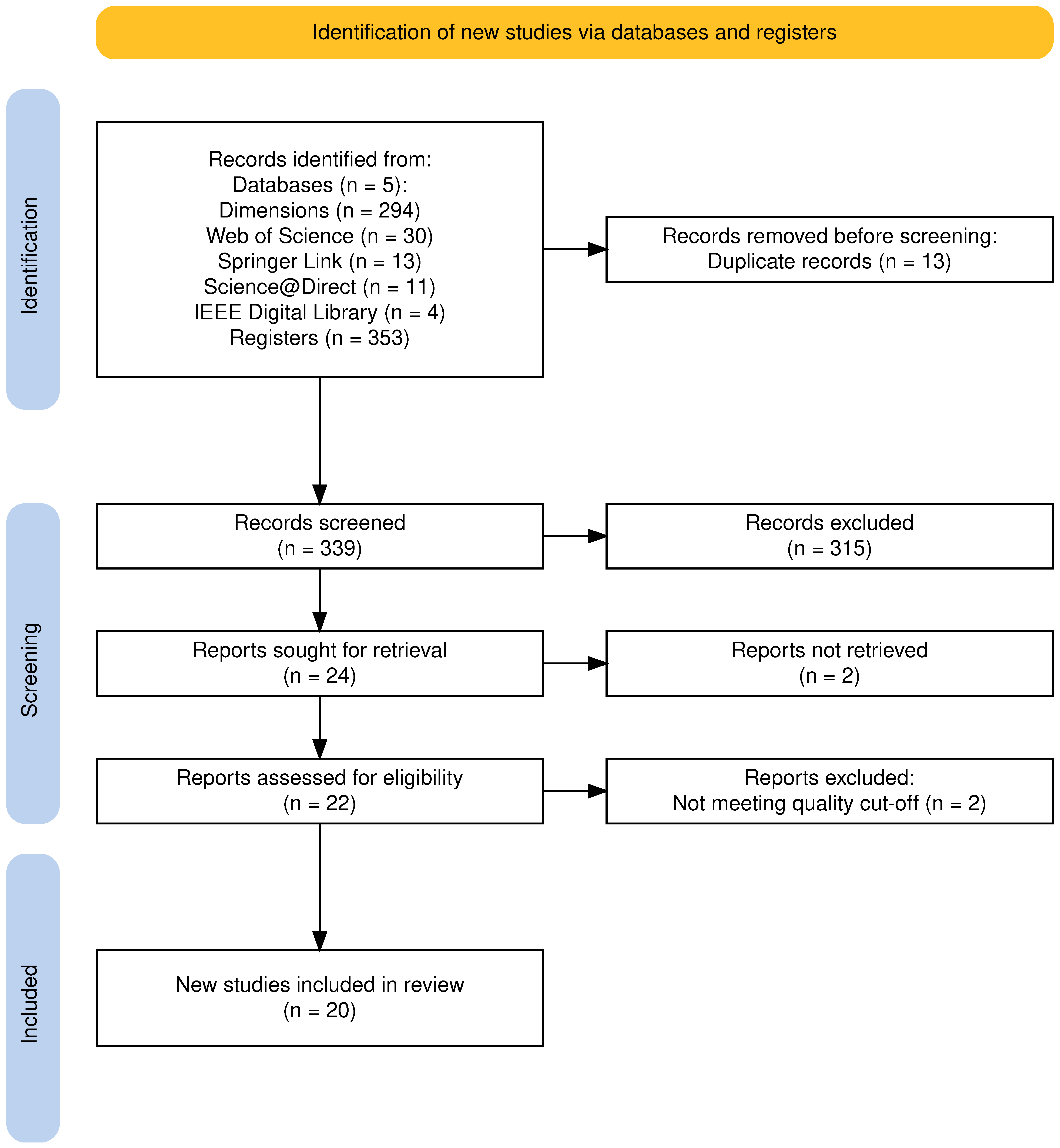
Section 2 details the methodology applied in this systematic review, including the PRISMA guidelines, search strategy, and eligibility criteria.
Section 3 presents the results, categorizing the findings by hardware architectures, software middleware, and manufacturing approaches.
Section 4 discusses the results in depth, answering the research questions while identifying persistent challenges and pedagogical gaps. Finally,
Section 5 concludes the study and outlines its methodological limitations.
3. Results
This section analyzes the selected works by applying a consistent review protocol and by summarizing evidence across studies.
Table 12 lists for the obtained studies the platform name, middleware ROS usage, hardware description, and application context.
Most educational robotics papers present a specific platform and describe its use within a course or a competition. Examples include TurtleBot-based teaching setups, PiBot, EdUcational Ros rObot PlAtform (EUROPA), and the Robotont line of platforms. These papers are useful because they provide concrete bills of materials, software stacks, and lessons learned from deployment [
1,
2,
6,
8,
18,
19].
The integration of mobile robotics into STEM curricula has shifted from the use of proprietary, black-box platforms (e.g., KUKA (
https://www.kuka.com/, (accessed on 12 January 2026)), Pioneer 3-DX (
https://robots.ros.org/pioneer-3-dx/, (accessed on 12 January 2026)), TurtleBot (
https://www.turtlebot.com/, (accessed on 12 January 2026))) toward open-source hardware (OSH) and DIY solutions. Prior educational-robotics studies show extensive use of low-cost kits in pre-university contexts; however, higher-engineering courses require platforms that expose students to ROS, perception, embedded control, and hardware–software integration. The reviewed university-level platforms support Industry 4.0/5.0 skills—specifically ROS, computer vision, and embedded co-design—at an accessible price range of 50€ to 500€ [
3,
6,
8,
17,
19].
Other works focus on reusable design ideas and platform requirements. For instance, Rosillo et al. [
17] discussed general criteria for educational robots and their underlying architectures. Such contributions prove particularly valuable when designing a new platform that must balance cost, ease of assembly, sensor coverage, and long-term maintainability. Another example is the 5dpo robotic platform (
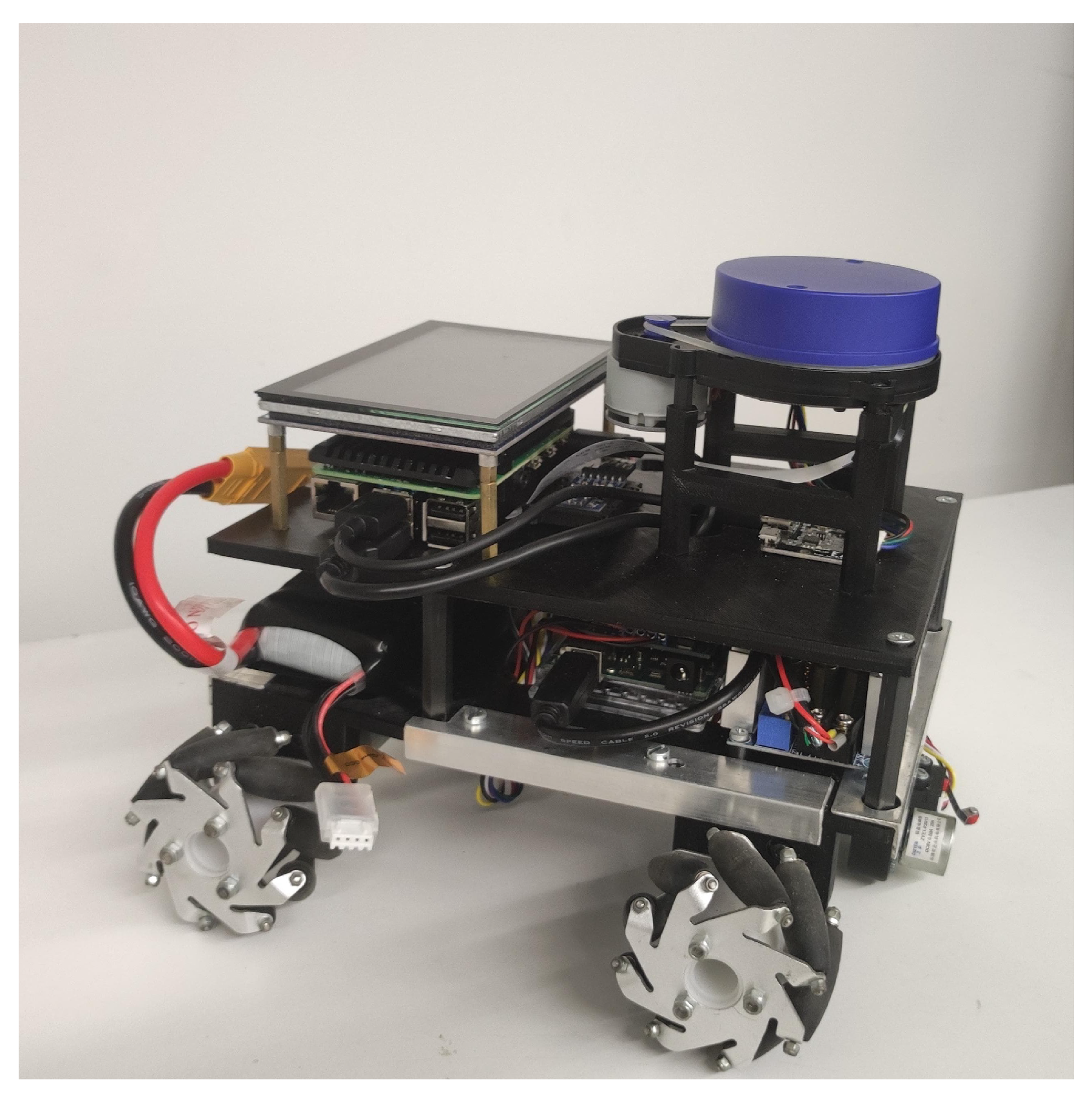
Figure 4), a system initially developed for competitive use and later adopted for laboratory classes in an Autonomous Systems Master’s course. This work aims to bridge the gap between simulation and physical deployment by providing hands-on experience with real robotic hardware [
5].
As summarized in
Table 12, the platforms from these 20 studies can be grouped by their primary application domain to enhance analytical depth. In the domain of Industrial Logistics and Competitions, platforms such as the 5dpo platform and RobotCraft are highlighted for their use in simulated factory navigation, holonomic movement, and intensive deadline-driven learning [
4,
5,
20,
21]. Conversely, in the domain of Foundational STEM, platforms like FOSSBot, CrowBot BOLT, and X-Lakbay focus heavily on rapid prototyping, snap-fit modularity, and accessibility for foundational programming and structural learning [
3,
9,
22]. Meanwhile, in the domain of Higher Education and Advanced Perception, platforms such as the TurtleBot 3, Robotont, and SROS are utilized for teaching autonomous navigation, 3D mapping, and Simultaneous Localization And Mapping (SLAM) without requiring industry-priced hardware [
6,
7,
8,
19]. The PiBot and Andruino-R2 focus heavily on computer vision and machine learning tasks using onboard or smartphone cameras, while the EUROPA platform links data acquisition and physics with an advanced sensor suite [
1,
2,
18,
23]. For specialized engineering curricula, the PSoC 4 and Balancing Robot platforms target Embedded Systems Co-design and Control Systems, and platforms like Mona are specifically engineered for Swarm Robotics research [
24,
25,
26].
Table 12.
Overview of included studies ().
Table 12.
Overview of included studies ().
|
Reference | Year | Platform | Middleware | Context | Application |
|---|
| [27] | 2015 | TraxBot (v1, v2) and StingBot (Arduino-based) | ROS 1 | Higher education | Autonomous Navigation/Multi-Robot |
| [4] | 2019 | RobotCraft | ROS 1 | Competition, higher education | Competition/Industrial Logistics |
| [18] | 2018 | PiBot | Other | – | Computer Vision/Foundational STEM |
| [20] | 2018 | RobotCraft | ROS 1 | Competition, higher education | Competition/Industrial Logistics |
| [21] | 2018 | RobotCraft | ROS 1 | Higher education | Competition/Industrial Logistics |
| [1] | 2019 | EUROPA | ROS 1 | Higher education | Data Acquisition/Physics |
| [25] | 2019 | Mona | ROS 1 | Higher education | Swarm Robotics |
| [24] | 2019 | ROS-controlled Balancing Robot | ROS 1 | Higher education | Control Systems |
| [6] | 2019 | Turtlebot 3 Burger | ROS 1 | Higher education | Autonomous Navigation/SLAM |
| [17] | 2020 | MATLAB/ROS framework | ROS 1 | Higher education | Autonomous Navigation/Control |
| [2] | 2020 | EUROPA | ROS 1 | – | Data Acquisition/Physics |
| [7] | 2020 | SROS | ROS 1 | Higher education | Autonomous Navigation/SLAM |
| [23] | 2021 | Andruino-R2 | ROS 1 | Higher education | Intelligent Control/Machine Learning |
| [9] | 2022 | FOSSBot | Other | Higher education | Foundational STEM |
| [26] | 2023 | PSoC 4 evaluation kit | Other | Higher education | Embedded Systems/Hardware Co-design |
| [19] | 2023 | Robotont | ROS 1 | Higher education | Autonomous Navigation/3D Mapping |
| [8] | 2024 | Robotont 3 | ROS 2 | Higher education | Autonomous Navigation/3D Mapping |
| [3] | 2024 | CrowBot BOLT | ROS 1 | Higher education | Foundational STEM/Intro to ROS 1 |
| [5] | 2025 | 5dpo Robotics Team platform | ROS 1/ROS 2 | Competition, Higher education | Competition/Industrial Logistics |
| [22] | 2025 | X-Lakbay UGV | Other | Higher education | Foundational STEM |
3.1. Hardware Architectures
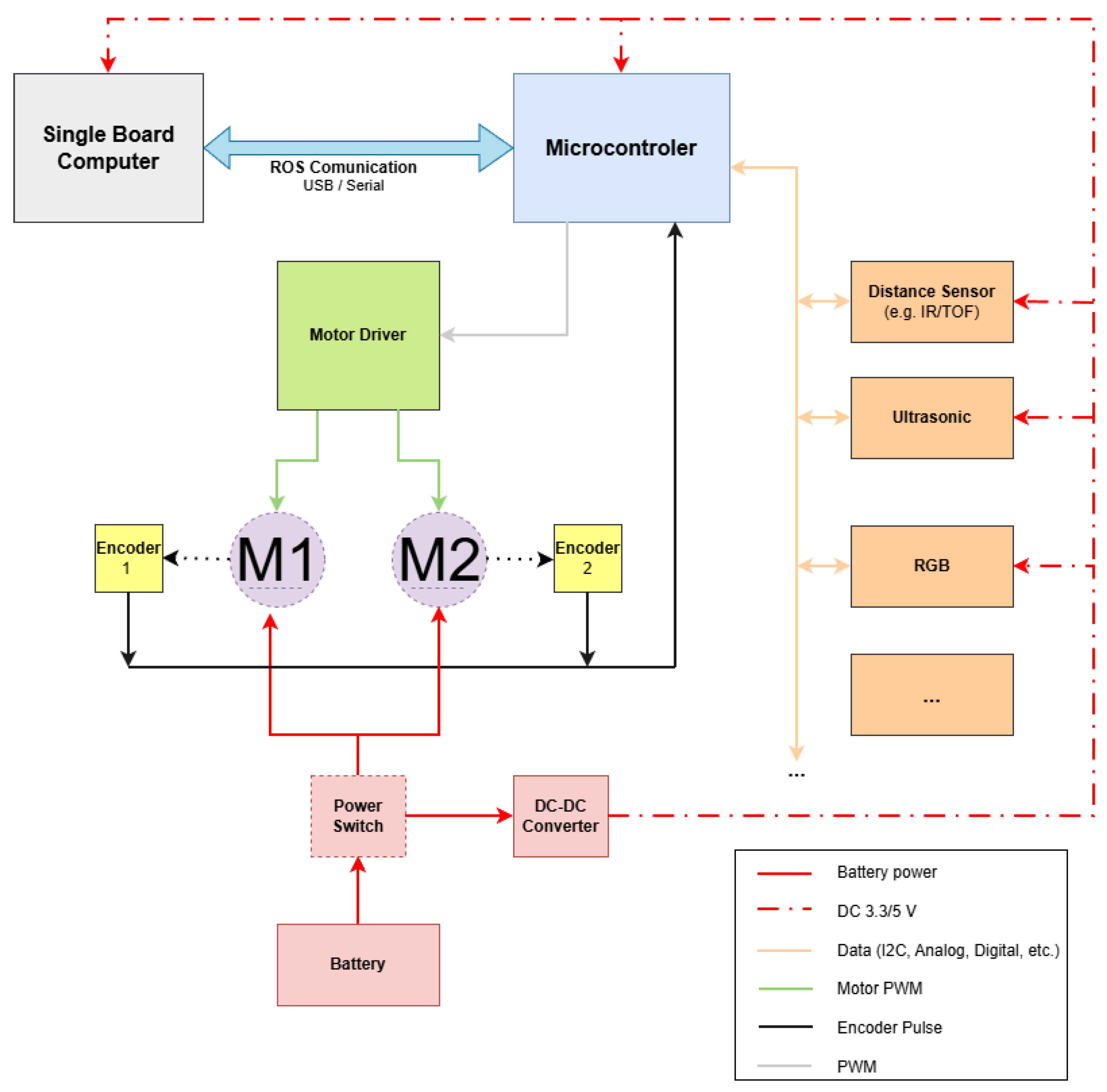
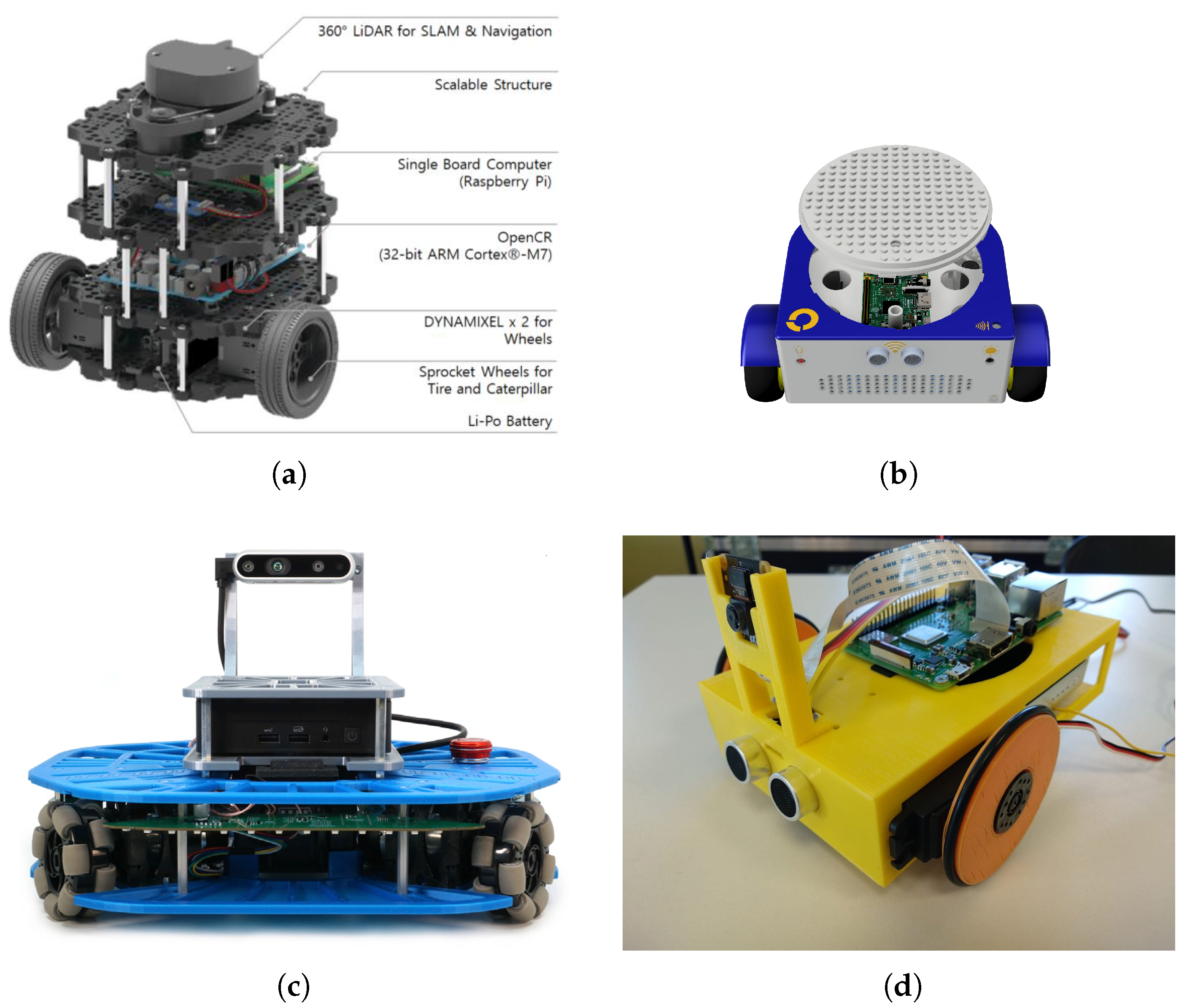
Current state-of-the-art platforms predominantly adopt a distributed dual-processor architecture. This design separates real-time kinematic control (low-level) from computationally intensive perception and planning (high-level).
Figure 5 illustrates the concept.
3.1.1. Low-Level Control Units
The low-level controller manages motor Pulse Width Modulation (PWM), quadrature encoder acquisition, and safety interrupts. The Arduino Mega 2560 is widely adopted for this role due to its high Input/Output (I/O) count, notably in the RobotCraft and SROS platforms. RobotCraft employs it to interface ultrasonic and infrared (IR) sensors via a custom shield [
4,
20], while SROS uses it to handle differential-drive kinematics [
7].
STM32 and Programmable System-On-Chip (PSoC) are used in newer platforms, migrating to more powerful 32-bit Micro-Controller (μC). Robotont 3 utilizes an ARM Cortex-M4 (STM32F407VGT6) to handle holonomic kinematics and power management on a single consolidated Printed Circuit Board (PCB) [
8]. Similarly, the PSoC-based robot uses a Cypress PSoC 4 Bluetooth Low Energy (BLE), allowing students to design custom hardware peripherals inside the chip (hardware/firmware co-design) [
26]. The CrowBot BOLT leverages the ESP32 System-on-Chip (SOC), integrating Wireless Fidelity (Wi-Fi) and Bluetooth directly into the low-level controller, reducing costs to approx. 50
$ while maintaining ROS connectivity via Transport Control Protocol (TCP)/Internet Protocol (IP) [
3].
3.1.2. High-Level Computing Units
High-level units run the operating system (typically Ubuntu Linux) and the ROS Master node (ROS 1). The Raspberry Pi (RPi) 3 Model B+ is used in EUROPA, SROS, and TurtleBot 3 (
Figure 6a) to run SLAM algorithms and image processing [
2,
6,
7]. The RPi Zero is used in FOSSBot (
Figure 6b) and PiBot (
Figure 6d) to minimize power consumption and footprint [
9,
18]. Intel Next Unit of Computing (NUC) is used in Robotont (
Figure 6c) to provide x86 architecture power to process depth data from RealSense cameras, enabling 3D mapping tasks that overwhelm ARM-based Single-Board Computers (SBCs) [
19]. Alternatively, the Andruino-R2 platform integrates the student’s smartphone via the Universal Serial BUS (USB) On-The-Go (OTG) communication mechanism. This low-cost approach eliminates the need for a dedicated SBC by exploiting the phone’s Inertial Measurement Unit (IMU), Global Positioning System (GPS), camera, and high-resolution display [
23].
3.1.3. Actuators
Standard educational platforms include Direct Current (DC) motors with magnetic quadrature encoders. RobotCraft employs the Hercules Dual 15 A 6 V to 20 V motor controller to drive high-torque DC motors. The SROS uses a Pololu Dual VNH5019 shield to drive 12
motors with a 1:19 gear ratio. The Robotont 3 integrates an MC33886 H-bridge directly onto its main PCB to drive three motors in a Kiwi (120° offset) holonomic configuration [
4,
5,
7,
8,
19,
20,
21].
3.1.4. Sensors
Light Detection and Ranging (LiDAR) sensing is essential for Two-Dimensional (2D) SLAM. TurtleBot 3 uses the LDS-01 360° scanner, while the Robot@Factory 4.0 platform uses the YDLIDAR X4PRO for beacon detection. Considering depth cameras, Robotont employs the Intel RealSense D435i Red-Green-Blue–Depth (RGB-D) camera for 3D point cloud generation. SROS uses the older Microsoft Kinect v1 (Xbox 360), keeping costs under 200€. For standard perception, all platforms include the HC-SR04 ultrasonic sensor and Sharp GP2Y0A21 IR sensors for basic obstacle avoidance and wall following [
5,
6,
7,
9,
18,
19]. Camera-based sensing complements LiDAR, ultrasonic, and infrared sensors by enabling visual perception, object detection, RGB-D mapping, and vision-based navigation. In the reviewed platforms, RGB-D cameras such as Intel RealSense and Microsoft Kinect are used for depth perception and point-cloud generation, while smartphone-based platforms exploit integrated cameras to reduce hardware cost. These sensors increase pedagogical value but also introduce calibration, driver-maintenance, and computational-load constraints.
3.1.5. Power Systems
The reviewed platforms indicate a design shift from raw Lithium Polymer (LiPo) batteries, reported in platforms such as TraxBot and RobotCraft, toward consumer-grade power-tool batteries with integrated protection circuits. Robotont 3, for example, uses 18
Makita Lithium-ion (Li-ion) batteries, which reduce handling complexity in student laboratories [
8,
19,
27]. No included study reported quantified battery-safety incident rates; therefore, this trend should be interpreted as a design-safety rationale rather than as a statistically validated safety comparison.
3.2. Middleware and Software Architectures
The transition from raw sensor data to intelligent autonomous behavior in educational robotics is fundamentally enabled by the software architecture that governs the robot’s operation. Central to this architecture is the concept of middleware—a software layer that abstracts the complexities of heterogeneous hardware, manages inter-process communication, and provides reusable services such as device drivers and control algorithms. In modern robotics education, this middleware layer determines both the accessibility of the platform for beginners and its capability to demonstrate advanced concepts. This section reviews the main software frameworks used in educational platforms, focusing on the industry-standard ROS middleware, simulation, and digital twinning that support scalable and flexible learning.
3.2.1. Robot Operating System
ROS 1 and, increasingly ROS 2, form the software backbone of ROS-compliant platforms. Bridges are used for communication between the low-level μC and the ROS network, e.g., the
rosserial protocol adopted by SROS, RobotCraft, and CrowBot. This protocol serializes ROS messages over the Universal Asynchronous Receiver-Transmitter (UART), allowing the Arduino to publish topics like
odom and subscribe to
cmd_vel. Some platforms, like Andruino, use custom serial protocols over USB OTG to reduce the overhead associated with
rosserial on limited microcontrollers [
7,
23,
27].
3.2.2. Simulation and Digital Twins
The state of the art proposes simulation and digital twinning to allow scalable testing and teaching. PiBot, Robotont, and SROS provide full Unified Robot Description Format (URDF) models for Gazebo. This allows students to run the exact same navigation code in simulation as they would on the physical robot. At the Katholieke Universiteit Leuven, digital twinning is explored at master’s level using TurtleBot 3 and MATLAB Robotics System Toolbox (
https://www.mathworks.com/products/robotics.html, (accessed on 12 January 2026)), enabling engineering students to interact with ROS topics using MATLAB code. While Gazebo remains prevalent, other industry-standard simulation environments, such as Webots (
https://cyberbotics.com/, (accessed on 12 January 2026)) CoppeliaSim (
https://www.coppeliarobotics.com/, (accessed on 12 January 2026)), and NVIDIA Isaac Sim (
https://developer.nvidia.com/isaac/sim, (accessed on 12 January 2026)), are also highly relevant for robotics education, though they are less frequently detailed in the reviewed literature [
6,
7,
18,
19].
3.3. Manufacturing and Modularity
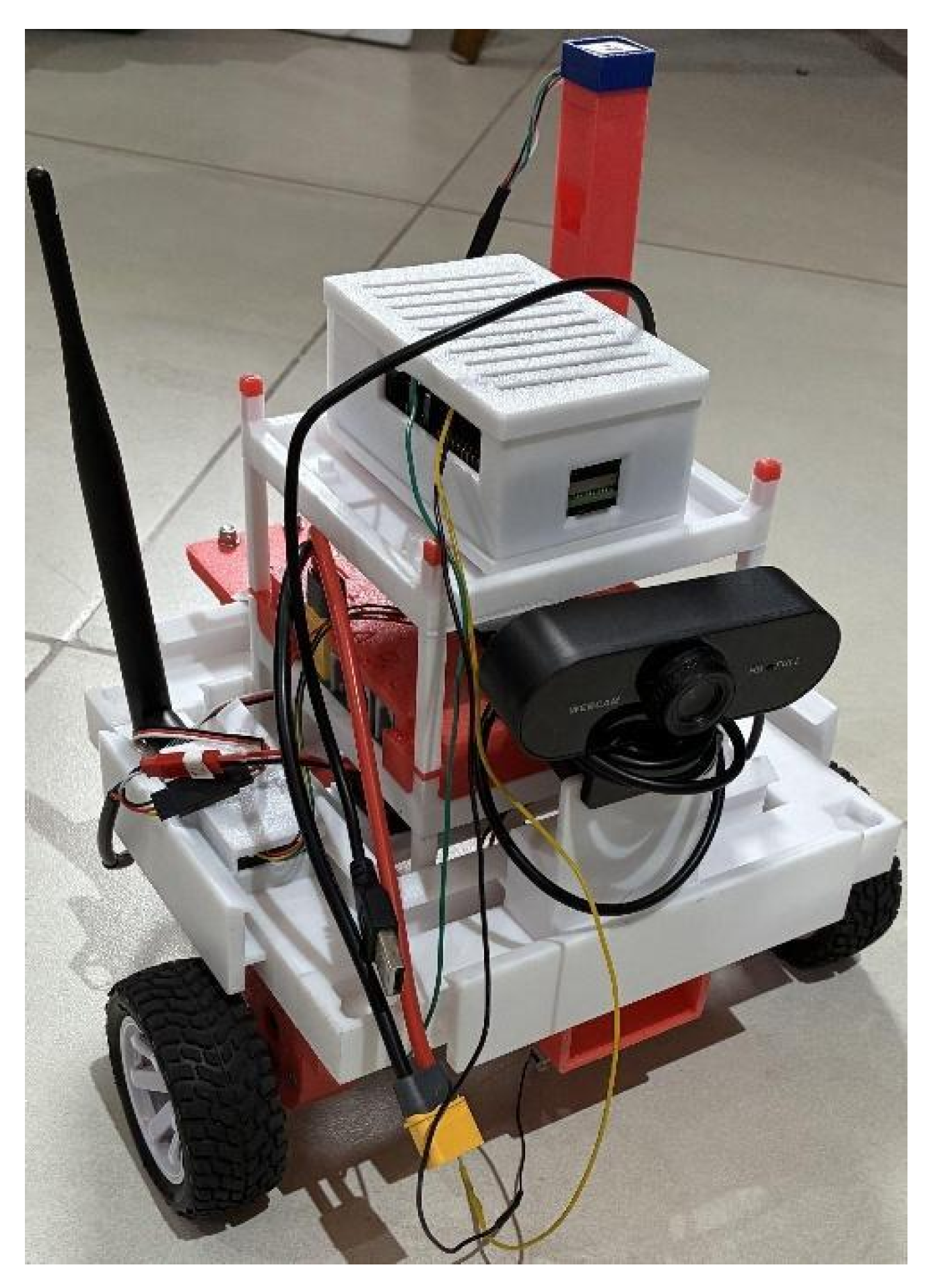
The transition from Computer Numerical Control (CNC)-milled parts to fused deposition modeling (FDM) is ubiquitous. Robotont 3 reduced chassis production costs from 200€ with CNC polycarbonate to 25€ with Polylactic Acid (PLA)/Polyethylene Terephthalate Glycol (PETG) filament by redesigning the chassis with a lattice structure for rigidity. The X-Lakbay rover (
Figure 7) features a snap-fit modular design printed in PETG, allowing assembly without screws, lowering the barrier for high school students. Modern designs rely on generative techniques to optimize strength-to-weight ratios, ensuring that 3D-printed chassis can support payloads (e.g., laptops, manipulators) without warping [
8,
22].
4. Discussion
The included studies show repeated patterns: modular hardware, separation between low-level and high-level control, and strong use of ROS for integration and reuse. The following discussion addresses the research questions and identifies the current challenges and gaps in educational and competition-oriented wheeled robotic platforms.
Table 12 lists the source, year, middleware, and application context of the identified robotic platforms.
4.1. Hardware Architectures for Wheeled Robotic Platforms (RQ1)
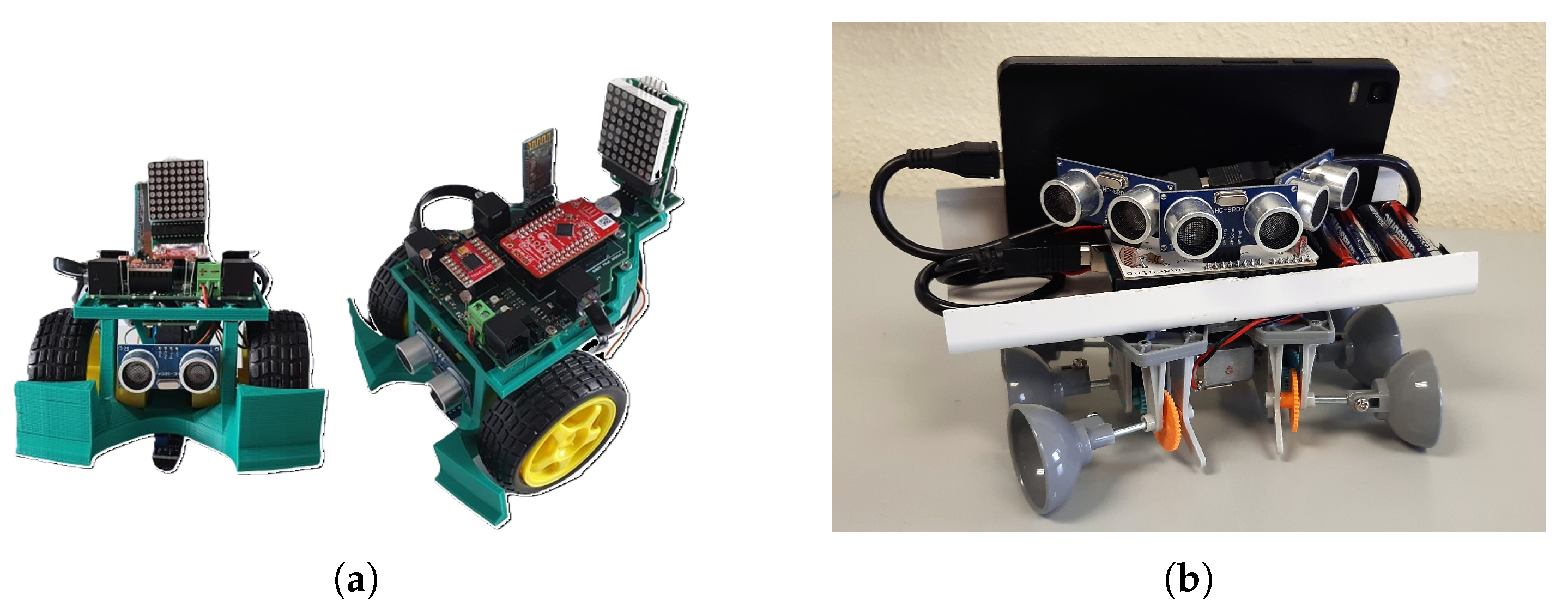
One dominant configuration identified across the reviewed literature is the adoption of a distributed dual-processor architecture to balance cost, performance, and educational flexibility. This architecture typically separates low-level, real-time kinematic control from high-level cognitive processing. μCs, such as the Arduino Mega, Arduino Uno, STM32, or PSoC (
Figure 8a), are universally employed to handle time-critical tasks like managing motor drivers, reading encoders, and processing basic sensor data. Meanwhile, high-level processing is typically transferred to a companion SBC, most commonly a Raspberry Pi or an Intel NUC, which provides the necessary computational power to run Linux-based operating systems and complex algorithms. In highly resource-constrained scenarios, platforms like Andruino-R2 (
Figure 8b) innovate by replacing the SBC with individual student Android smartphones, leveraging the built-in camera, IMU, and processing power to dramatically reduce costs [
2,
5,
7,
19,
20,
21,
23,
26,
27].
To foster student-centric learning and accessibility, citizen manufacturing via 3D printing has become a staple in modern platform design. Platforms such as PiBot, FOSSBot, and X-Lakbay utilize 3D-printed chassis for easy replication, rapid prototyping, and modularity. The X-Lakbay Unmanned Ground Vehicle (UGV) specifically features a snap-fit modular frame that requires no screws, minimizing mechanical frustration and allowing students to focus on programming. For competition-oriented environments, hardware robustness is prioritized without sacrificing open-source principles. The 5dpo Robot@Factory 4.0 platform utilizes Mecanum wheels for omnidirectional movement in simulated industrial logistics. Similarly, the RobotCraft training program requires students to fully assemble a differential drive robot from components, exposing them to the practical mechatronic challenges of real-world robotics [
5,
9,
18,
20,
22].
4.2. ROS-Based Designs for Multi-Sensor Integration and Real-Time Operation (RQ2)
ROS has emerged as standard middleware, providing essential hardware abstraction, message-passing, and software modularity for educational platforms. To bridge the high-level ROS network with the real-time physical hardware, most platforms rely on serial communication protocols. The
rosserial package is widely used (e.g., in SROS, RobotCraft, and the MATLAB/ROS framework) to wrap ROS messages over the UART or USB interfaces, allowing the low-level μC to directly publish sensor topics (like
/odom) and subscribe to velocity commands (like
/cmd_vel). To reduce communication latency and overhead, some platforms like Andruino-R2 deploy custom serial protocols over bidirectional USB OTG connections [
4,
7,
20,
23,
27].
This ROS-centric design greatly facilitates multi-sensor integration for advanced perception tasks. Educational platforms seamlessly integrate 360° LiDARs, Red-Green-Blue (RGB) and RGB-D cameras (such as Microsoft Kinect or Intel RealSense), and standard ultrasonic/IR sensors to perform SLAM and autonomous navigation. Real-time performance is preserved by isolating non-deterministic, computationally heavy ROS nodes on the companion computer, while the μC executes strict real-time Proportional–Integral–Derivative (PID) control loops for motor actuation. Furthermore, ROS allows the creation of digital twins in simulation environments such as Gazebo and Stage, enabling students to safely test sensor fusion and control algorithms before deploying them on physical hardware [
5,
6,
7,
8,
19,
20,
23,
27].
4.3. Challenges and Gaps
Despite the advantages of open-source robotic platforms, several significant challenges and gaps remain.
First, robot management and software maintenance in a classroom environment pose a major logistical burden. As noted in the Turtlebot 3 study, manually updating individual robots—via Secure Digital (SD) card cloning or Secure SHell (SSH)—is inefficient for teaching staff, highlighting the absence of automated mechanisms for batch wireless updates [
6].
Second, the physical robustness and wiring complexity of DIY robots often hinder the learning experience. Platforms built with prototyping boards and loose jumper wires frequently suffer from connection failures, leading students to incorrectly blame the hardware for software bugs. To mitigate this, evolutionary designs like Robotont 3 have transitioned from loose wiring harnesses to a single consolidated PCB. However, this configuration reduces the scope for students to gain hands-on experience in component-level electronic assembly.
Third, the steep learning curve associated with ROS and Linux remains a barrier for novice students. Courses often require extensive preliminary training or must rely on abstraction layers, such as the MATLAB Robotics System Toolbox, to shield students from the underlying operating system complexities. Students repeatedly identify ROS integration as the most challenging component of their robotics coursework in multiple surveys [
4,
6,
8,
20,
26].
Finally, there is a technological gap regarding software obsolescence. Much of the current educational literature and platform infrastructure relies on ROS 1 (e.g., Noetic), which has reached its end of life. Migrating entire software stacks and curricula to ROS 2 to maintain industry relevance requires significant development effort, a transition that only a few platforms, like Robotont, have actively addressed [
8]. Although studies rarely provide long-term maintenance and upgrade plans, they often include open-source code and build details for reproducibility.
Beyond software and hardware maintenance, there is a notable pedagogical gap regarding advanced manipulation tasks. While modern, robust chassis like the X-Lakbay can mechanically support the integration of manipulators [
22], and the EUROPA platform [
1] successfully incorporates a 3-DOF robotic arm to teach basic inverse kinematics, the overwhelming majority of the reviewed curricula remain strictly dedicated to mobile wheeled base kinematics, sensor fusion, and perception. Complex manipulation in unstructured environments remains outside the scope of these low-cost DIY platforms.
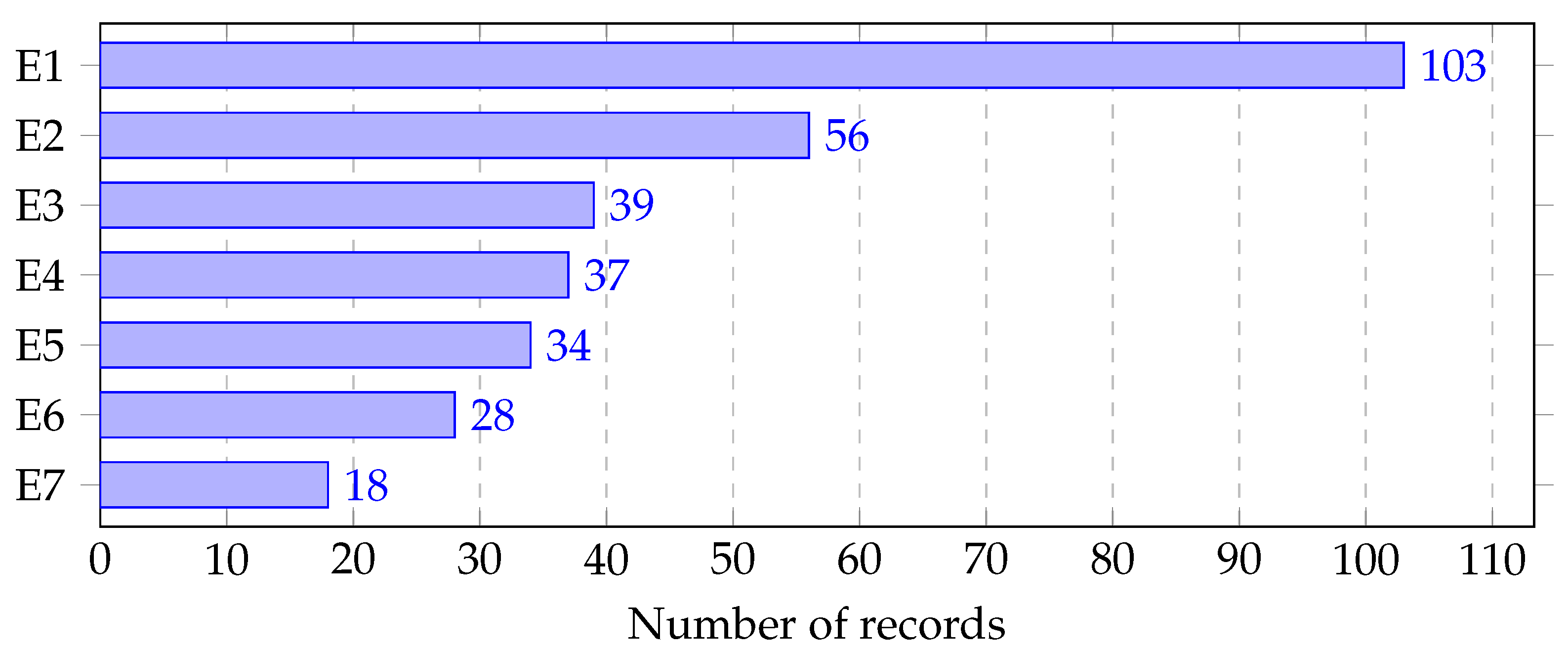
The negative findings reported across the included studies indicate that open-source educational platforms remain difficult to scale beyond a small age group. Manual SD-card cloning, SSH-based updates, loose jumper wiring, connector failures, and inconsistent ROS deployments increase maintenance effort and reduce reproducibility. These issues are particularly relevant in competition-oriented scenarios, where robots are repeatedly assembled, repaired, and redeployed under time pressure. Future platforms should therefore include automated deployment, version-controlled software images, connectorized wiring, and documented maintenance procedures. The absence of Scopus access and the lack of eligible ACM Digital Library results further constrain the breadth of the search and should be considered when interpreting the generalizability of the synthesis.
5. Conclusions
This systematic literature review on open-source DIY wheeled robotic platforms designed for higher education in engineering and competitions has identified a trend toward 3D-printed, modular, ROS-compatible, open-source designs. However, the results reveal persistent limitations in terms of hardware maintenance and scalability, software lifecycle management, and long-term sustainability. Key open challenges include the definition of interoperable reference architectures, explicit design for maintenance, scalability, and sustainability, automated deployment of multi-robot systems, and reproducible integration workflows. Addressing these challenges is essential to support sustainable teaching practices while effectively bridging educational, competitive, and research-driven goals.
Limitations
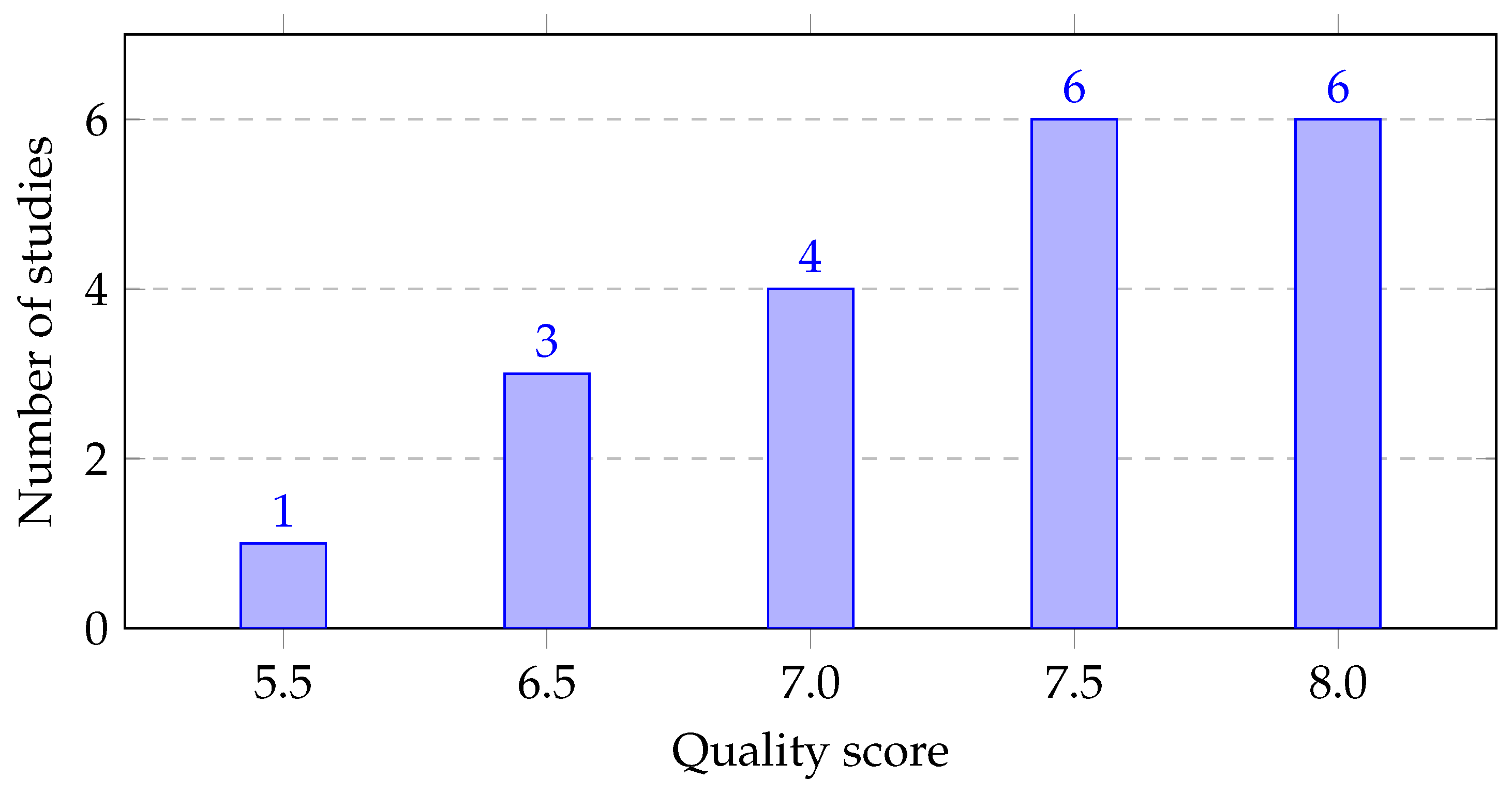
This review acknowledges distinct limitations within both the synthesized primary studies and the review methodology itself. Regarding the primary literature, there is a high prevalence of missing technical data—specifically, 80% of studies lack ROS version information and 70% omit course or competition contexts. This significantly hinders reproducibility and longitudinal comparisons. Methodologically, this review restricts its scope to physical, open-source, and DIY wheeled platforms. Consequently, the findings do not generalize to commercial, legged, or research-grade robotic systems. Furthermore, although screening and data extraction were performed independently, they were not double-blinded, and the restriction to English-language publications across the selected databases may have introduced language and selection bias, potentially excluding relevant platforms developed in other languages.