1. Introduction
Driven by the strategic goals of carbon neutrality, intelligent manufacturing, and high-quality industrial development, the coal industry is undergoing a profound transformation toward intelligent and autonomous mining systems [
1,
2,
3]. In recent years, the integration of robotics, artificial intelligence, machine vision, and multi-sensor perception has significantly accelerated the development of smart mines and intelligent mining equipment [
4,
5,
6]. Among the various subsystems in intelligent mines, material transportation and loading/unloading operations play a critical role in ensuring production continuity, operational safety, and transportation efficiency. Consequently, the development of autonomous and intelligent transportation systems has become a key research direction in modern coal mine engineering [
7,
8,
9].
Coal mine transportation systems are generally classified into rail-bound and trackless categories, which are further divided into primary and auxiliary transportation systems according to operational functions [
10,
11,
12]. Existing studies have explored intelligent transportation robots, transfer robots, and automated auxiliary transportation systems for mining environments. For example, Chen Min [
13] and Xu Jinyi [
14] designed transfer robots and corresponding control algorithms for small-scale mine transportation applications. Zhou Peng [
15] proposed a 5G-based intelligent auxiliary transportation robot system for underground mines, while Liang Honglei et al. [
16] developed an intelligent inspection robot for transportation systems operating in harsh underground environments. Rong Guoqing [
17] built a patrol robot system based on TD-LTE technology, and Zhou Dehua [
18] studied key technologies of a multi-agent control system for trackless coal mine transportation robots. In addition, research on autonomous perception, wireless communication, and multi-agent collaborative control has further promoted the development of intelligent transportation technologies in coal mines [
19].
Despite these advances, the loading and unloading processes of mining materials still rely heavily on manual or semi-automatic operations in most mines and storage facilities. The diversity of transported materials, the complexity of underground environments, and the lack of standardized transportation carriers result in low operational efficiency, high labor intensity, and considerable safety risks. Traditional mine cars are widely adopted because of their simple structure and high reliability; however, they suffer from several limitations, including poor material classification capability, inefficient loading and unloading processes, low space utilization, and scheduling difficulties among different vehicle types. Moreover, harsh geological conditions and confined underground environments further increase the operational risks faced by workers. Therefore, achieving a fully automated and intelligent loading/unloading workflow remains a significant challenge for current mining transportation systems.
To address these issues, recent studies have introduced the concept of standardized modular transportation inspired by containerized logistics systems. Cui Tengfei et al. [
20] proposed and validated a containerized auxiliary transportation mode, demonstrating its advantages in safety, economy, and transportation efficiency. Wang Wen [
21] designed a transfer robot system based on standardized transport containers and hydraulic manipulators for automated loading and unloading operations. Tian Xiang [
22] further developed an innovative transfer robot for rail transportation scenarios, promoting the realization of continuous, standardized, and unmanned transportation processes. Hao Mingrui [
23] proposed a design for a mine wheeled material transport robot with clean power, environment perception, positioning navigation, and autonomous driving functions. These studies indicate that modularized transportation carriers combined with robotic automation provide an effective solution for improving transportation flexibility and reducing manual intervention in mining operations.
Meanwhile, advances in artificial intelligence and machine vision technologies have provided new opportunities for intelligent perception and autonomous manipulation in industrial environments. Deep learning-based perception algorithms have demonstrated remarkable performance in object detection, visual recognition, and fault diagnosis tasks [
24,
25,
26]. In particular, the YOLO series of real-time object detection algorithms has been widely adopted in industrial robotics due to its high accuracy and fast inference speed. Furthermore, multimodal perception methods integrating depth cameras, ultra-wideband (UWB), inertial measurement units (IMUs), and visual sensors have significantly improved the robustness and reliability of positioning and environmental perception systems in complex industrial scenarios [
27,
28]. In parallel, multi-manipulator collaborative control techniques have enabled coordinated robotic operations in dynamic and constrained environments, providing an effective approach for automated loading and unloading tasks [
29,
30,
31,
32]. The design of specialized end-effectors for such tasks has also been explored, as demonstrated by Wang et al. [
33], who developed a multi-functional robotic gripper with optimized design and deep vision-based control for automatic loading systems. For related applications in container handling, the development of twist lock technology has been systematically reviewed [
34], and multi-camera-based recognition and localization methods have been studied [
35]. Recent surveys have further consolidated the state of the art in autonomous robots and multi-robot navigation, covering perception, planning, and collaboration [
36].
Motivated by these developments, this paper proposes an intelligent loading system for standardized mining material transportation based on multimodal perception and multi-manipulator collaboration. Inspired by automated container loading technologies in ports and logistics systems, the proposed framework introduces a standardized carrier platform and modular transport boxes to replace conventional mine cars, thereby improving transportation standardization and operational flexibility. The system integrates multimodal perception technologies, including multiple depth cameras, UWB sensors, and IMU sensors, to achieve accurate positioning and robust state estimation of transport boxes under complex operating conditions. In addition, a multi-manipulator collaborative control strategy is designed to realize autonomous loading and unloading operations, effectively reducing manual labor intensity and improving transportation efficiency.
Compared with traditional mine transportation methods, the proposed system offers several advantages. First, the modular transport boxes support classified transportation and standardized management of mining materials, improving storage and dispatch efficiency. Second, multimodal sensor fusion provides redundant perception and real-time safety monitoring capabilities, enhancing operational reliability in harsh mining environments. Third, the collaborative robotic loading/unloading mechanism significantly reduces operation time and minimizes human exposure to hazardous conditions. Furthermore, the standardized transportation units are compatible with multiple transportation platforms, including underground rail systems, trucks, and trains, enabling flexible deployment across various mining scenarios.
The main contributions of this paper are summarized as follows:
A standardized modular transportation architecture for intelligent mining material transportation is proposed, improving transportation flexibility and standardization.
A multimodal perception framework integrating depth vision, UWB, and IMU sensors is developed for robust transport box localization and state estimation.
A multi-manipulator collaborative loading/unloading strategy is designed to realize autonomous and efficient transportation operations.
An intelligent loading system prototype is implemented and validated, demonstrating the feasibility and effectiveness of the proposed framework in mining transportation scenarios.
5. Multimodal Perception and Positioning System
5.1. Multi-Sensor Configuration and Layout
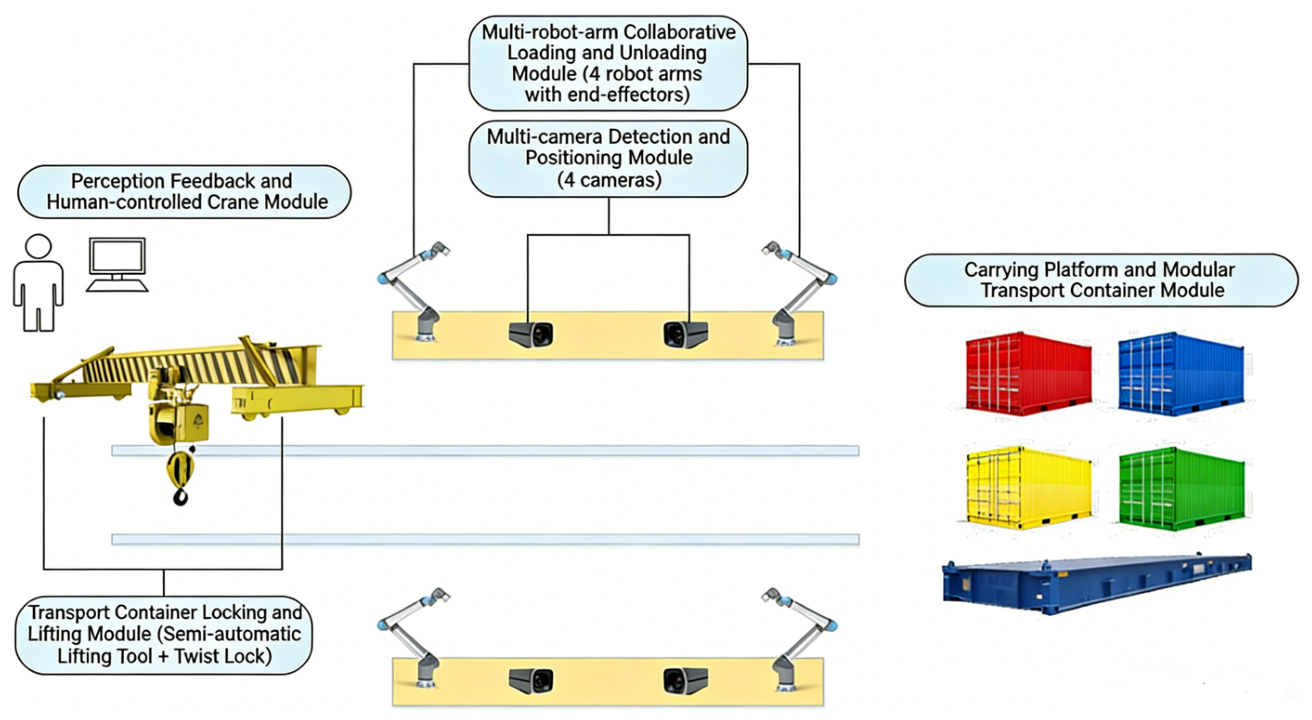
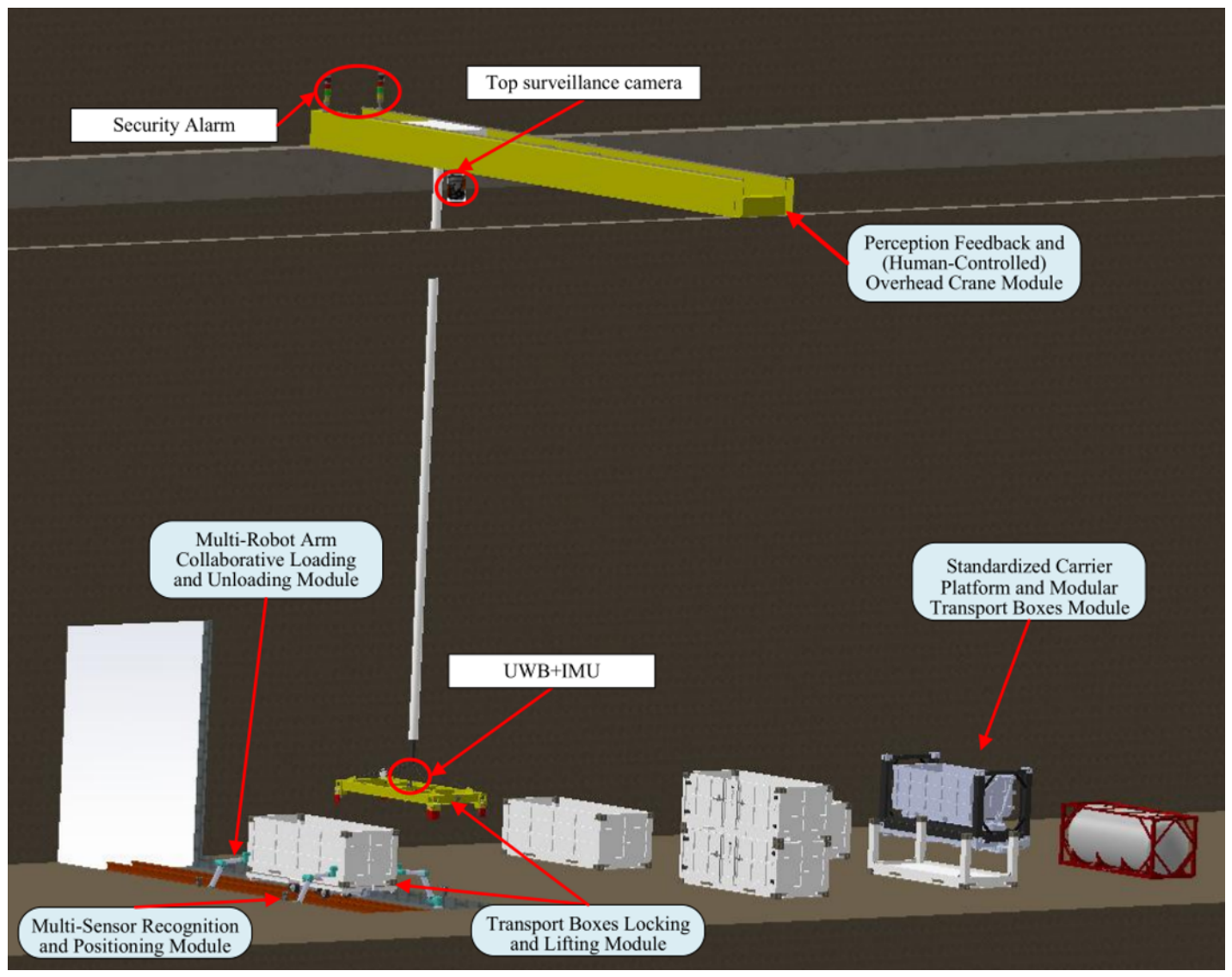
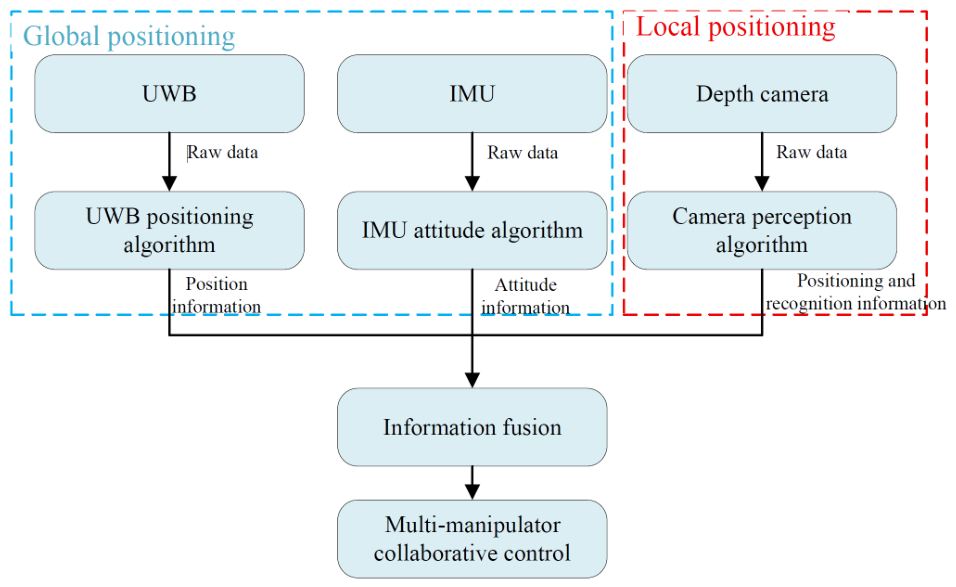
The system’s perception accuracy and robustness rely on the collaboration of heterogeneous sensors (
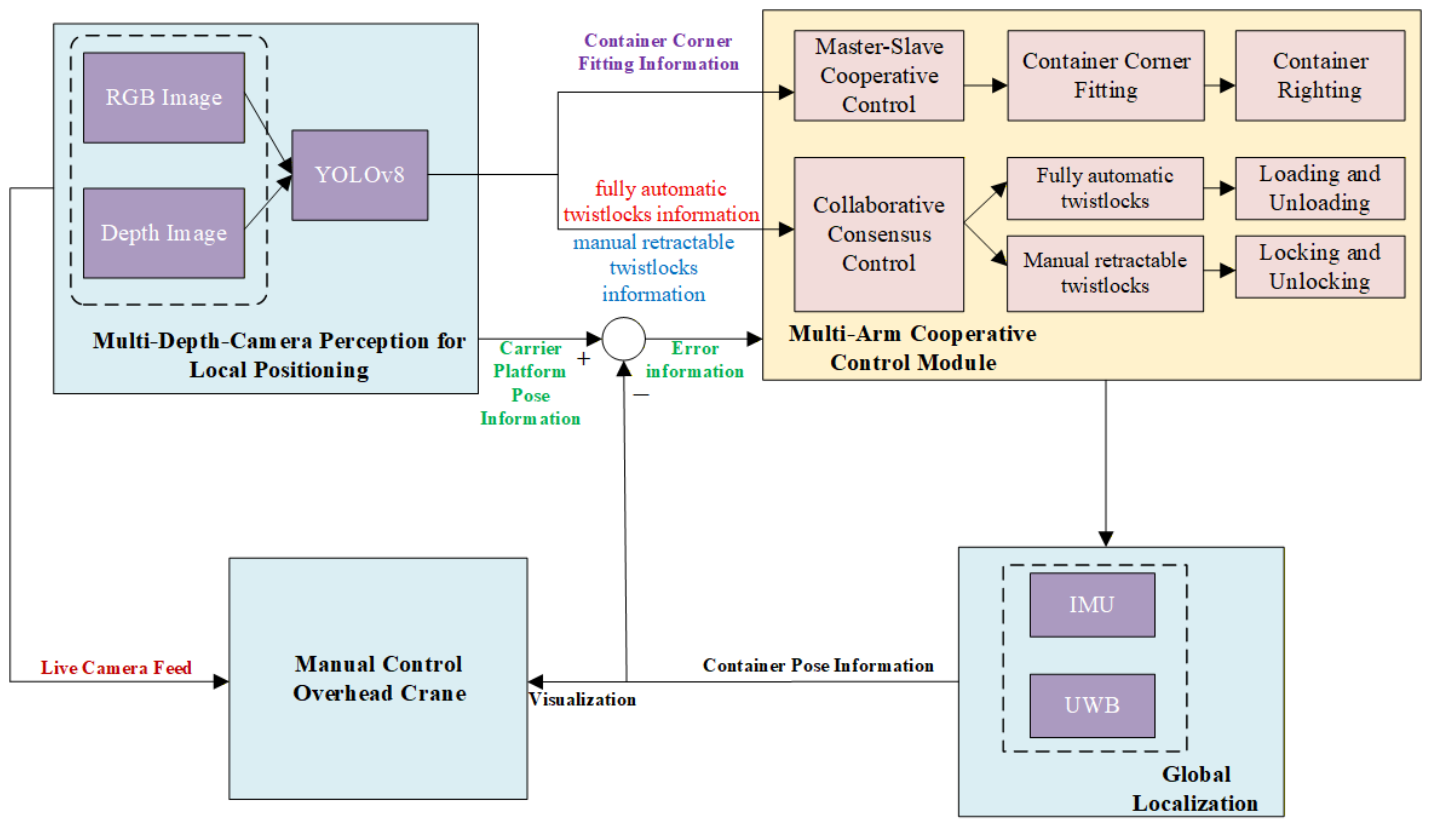
Figure 8). UWB provides global absolute coordinates with lower accuracy, IMU provides high-frequency attitude updates with drift, and vision provides high-precision relative pose but is susceptible to occlusion and lighting. Information fusion combines their strengths into a “global coarse positioning—local fine perception—real-time attitude tracking” solution.
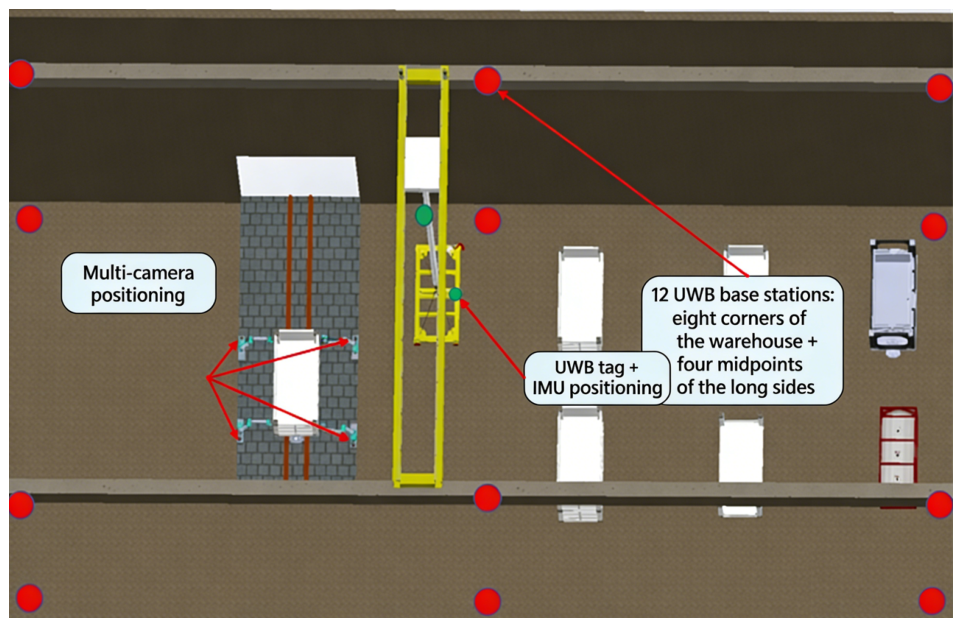
Multiple depth cameras recognize the box’s pose relative to the platform. UWB locates the box’s 3D position in the warehouse, and depth cameras perceive its 3D attitude. Redundancy between the sensors improves safety, and Kalman filtering enhances accuracy. Their layout is shown in
Figure 9.
5.2. Global Localization and Attitude Perception
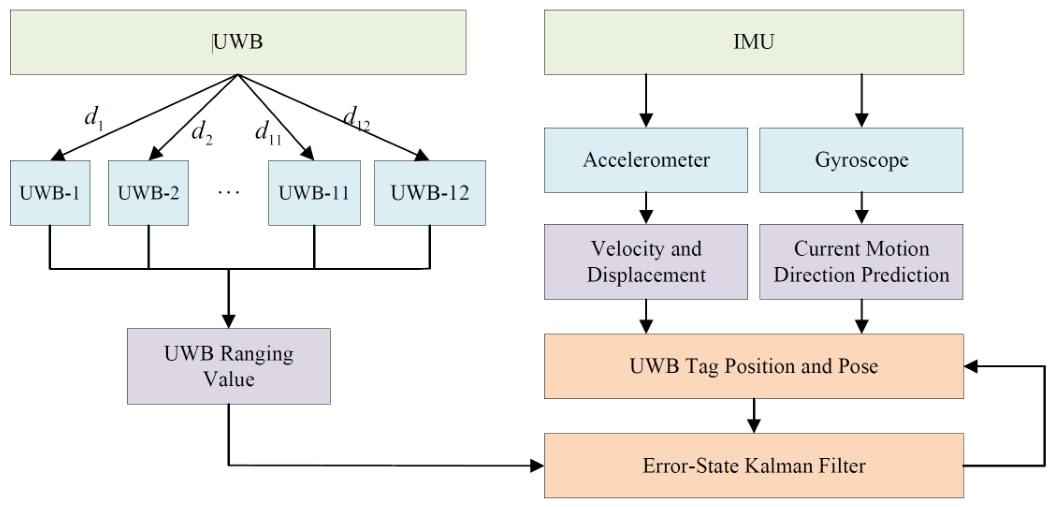
For coarse positioning and dynamic attitude tracking in the large warehouse space, this unit combines UWB and IMU. Twelve UWB base stations are installed on the warehouse ceiling. A UWB tag with an integrated IMU on the spreader provides real-time 3D coordinates (X, Y, Z) and high-frequency attitude angles (pitch, roll, yaw). The fusion principle is shown in
Figure 10. This overcomes the limitations of vision sensors (occlusion, limited range) in macro-scale environments, providing visual guidance for the crane operator to efficiently and accurately transport the box to the target area.
During box transfer, its world coordinates and relative position to the platform are needed. UWB Time Difference of Arrival (TDoA) is used. With known signal speed and base station positions, the tag sends signals. Receiving base stations record arrival times. A positioning engine calculates time differences to determine distances between the tag and base stations. Solving these distance equations yields the tag’s coordinates.
Assuming the i-th base station position is
, the tag position is
, signal arrival times are
, and signal speed is
c, we get:
where
is the speed of light,
are raw timestamps recorded by base stations (hardware delays pre-calibrated and subtracted),
is the unknown emission time, and all distances are in meters. Time differences are in seconds. The hyperbolic equation for the distance difference between base stations
i and
j is:
Solving these equations yields . Placing the tag on the spreader allows the system to guide the crane operator.
As shown in
Figure 10, the IMU provides high-rate acceleration and angular velocity measurements for short-term pose estimation, while UWB absolute position updates correct accumulated IMU drift. An Error State Kalman Filter (ESKF) manages nominal and error states, suppressing IMU bias drift and handling UWB signal jumps, outputting continuous 6-DOF pose estimates at 1 kHz with accuracy better than 10 cm.
To validate the claimed <10 cm accuracy at 1 kHz, a ground-truth trajectory was obtained using a Leica laser tracker (accuracy mm). The UWB tag and IMU were mounted on the spreader, which was moved along a predefined 3D path (10 m × 5 m × 2 m). The ESKF-estimated positions were compared to ground truth at 1 kHz. Over 10 runs, the root-mean-square error (RMSE) was cm (max cm) for positions, and (max ) for orientation. Non-line-of-sight (NLOS) conditions were simulated by placing a metal plate between two base stations—RMSE increased to cm, triggering a warning in the HMI. No calibration was performed online; offline calibration using 100 static points took 5 min.
It is important to note that while UWB/IMU provides sufficient accuracy for global coarse positioning (within 10 cm), it does not meet the millimeter-level precision required for twist lock manipulation, which is instead handled by the vision-based subsystem described in
Section 5.3.
5.3. Local Visual Recognition
Machine vision is widely used in industry. It involves image acquisition, preprocessing, processing, and output for subsequent actions. This system applies object detection and positioning based on machine vision for motion control [
35].
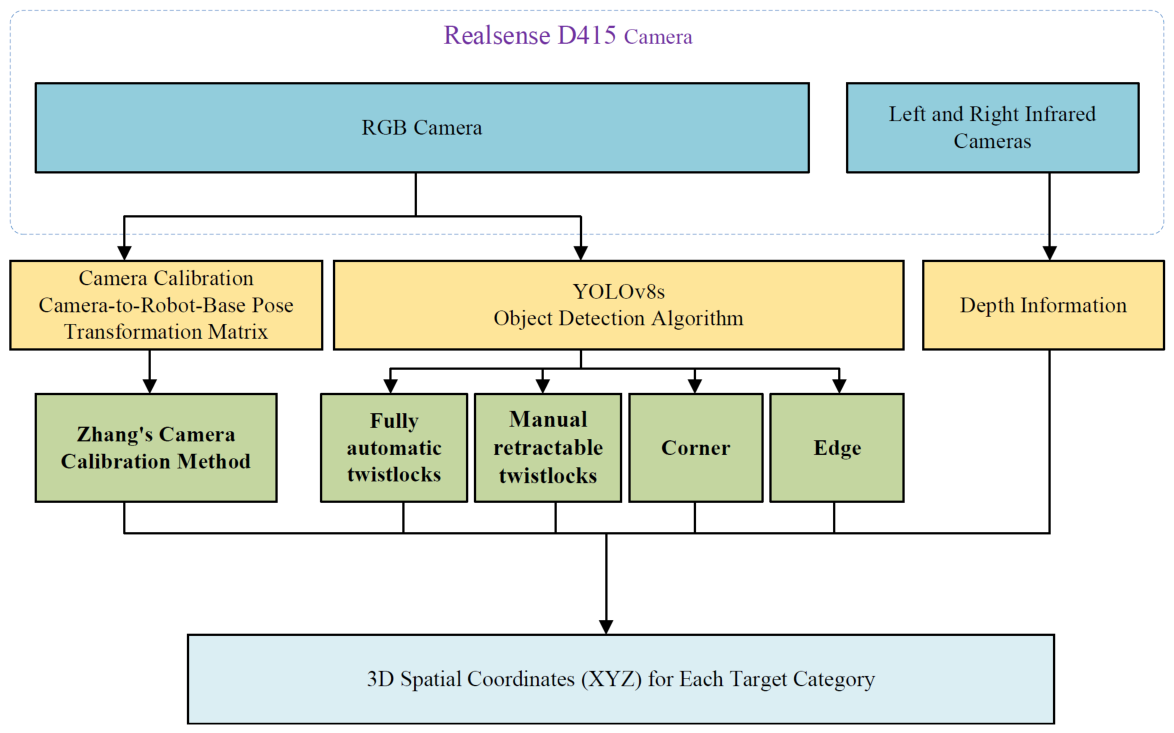
During box transfer, the system uses UWB/IMU for macro pose. When the box enters the manipulator workspace, the perception task switches to millimeter-level precision, where UWB/IMU accuracy is insufficient. A vision-based scheme using multiple depth cameras is employed. Four depth cameras, each fixed to a manipulator base and calibrated (hand–eye calibration) to its coordinate system, are used. The system uses a YOLOv8 deep learning model to detect and locate key features (corner castings, twist locks), extract pixel coordinates, fuse depth data, and transform coordinates to obtain precise 3D positions in the manipulator’s base frame (
Figure 11).
A dataset of 5000 annotated images was collected from the prototype warehouse under varying lighting conditions (100–500 lux) and with controlled dust injection (0–50 mg/m3). Images were split into training (70%), validation (15%), and test (15%). Training was performed on an NVIDIA RTX 4090 GPU (24 GB) using PyTorch 2.0.1 with CUDA 11.7. The hyperparameters were set as follows: batch size of 16, initial learning rate of 0.01, SGD optimizer with momentum 0.937, 300 epochs, and input image size of pixels. Data augmentation included random HSV shifts, horizontal flip, and mosaic (disabled for the last 100 epochs). Bounding boxes were labeled for five classes: corner_casting, manual_lock_red, manual_lock_black, auto_lock, and platform_edge. The YOLOv8m model was trained for 200 epochs. On the test set, the mean average precision (mAP@0.5) was 0.92, with per-class precision/recall: corner_casting (0.94/0.91), manual_lock_red (0.89/0.86), manual_lock_black (0.79/0.74), auto_lock (0.93/0.90), platform_edge (0.96/0.94). Under heavy dust (50 mg/m3) or extreme low light (100 lux), manual_lock_black recall dropped to 0.52, which motivated the use of platform edge features as a fallback.
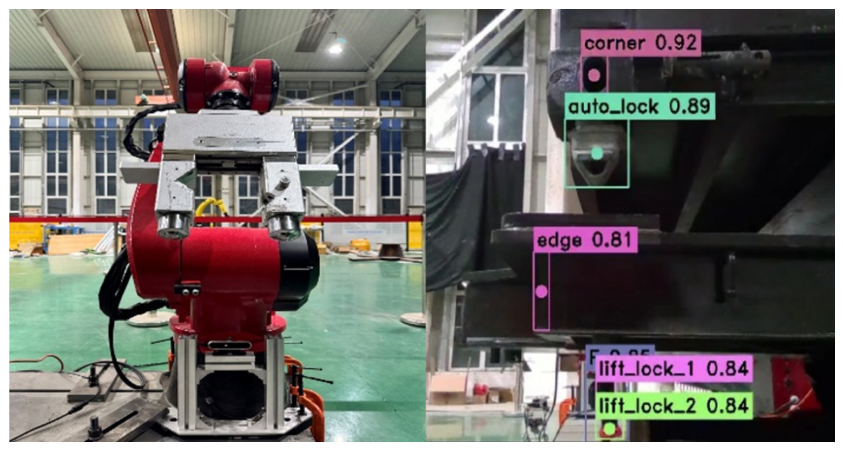
After camera calibration, the YOLOv8 algorithm (
Figure 12) is used for differentiated visual recognition strategies for key components:
Box Corner Castings: The center area of the corner casting is hollow, causing depth data gaps. Direct center coordinate acquisition is inaccurate. Thus, a geometric center estimation method based on the 2D detection box is used. Let the image pixel coordinate system have origin at the top-left corner,
u-axis rightward,
v-axis downward. The YOLO detection box
is defined by its top-left and bottom-right corners. The bounding-box center
approximates the corner casting’s projection under the assumption that the casting’s visible face is approximately fronto-parallel and symmetric. For oblique views or partial occlusion, this approximation introduces <2 pixel error, acceptable given the subsequent depth search. For a detection box
, its four vertices are considered key feature points
, where
The pixel coordinates of the corner center
are:
Manually Operable Twist Locks: The recognition strategy depends on the operation phase. For loading, the red handle (lift_lock_2) is targeted; for unloading, the black handle (lift_lock_1) is targeted. The lock can have two orientations (front/back during loading, left/right during unloading), so the YOLO model must subclassify orientations for accurate feature acquisition and 3D coordinate calculation.
During unloading, vision recognition of the black handle can be unreliable due to environmental factors, leading to feature loss. Similarly, black handle recognition can fail during loading. Feature distinction improves robustness.
Let
be a rectangular search window of size
(pixels) centered at the bounding-box center
, clipped to image boundaries. For our setup,
,
. Instead of raw minimum, we use the 5th percentile of depth values within
after removing flying pixels (depth gradient
of median). The selected pixel
is then back-projected using camera intrinsic matrix
K and extrinsics
.
where
is the depth value. Its 3D coordinates are then back-projected using camera calibration parameters.
Automatic Twist Locks: For automatic locks, the strategy uses the center of the YOLO detection box (named ‘auto_lock’) directly mapped to 3D space. This is based on analysis of multi-view observations: the lock’s appearance is consistent for camera pairs (1,3) and (2,4) but differs between these groups. Relying on specific contours would require complex heterogeneous models. The structure is approximately centrally symmetric within the detection box, making the geometric center a stable attribute, avoiding interference from surface irregularities.
Carrier Platform Edge Features: During loading/unloading of manual twist locks, factors like lighting changes, dust, and background clutter can reduce recognition confidence (below 50%) for the colored handles. To enhance robustness, the platform’s edge dimensions (‘edge’) are used as key recognition features. The spatial relationship between the platform edge and the manual twist locks is constant, ensuring reliable recognition.
7. System Integration and Experimental Testing
To validate the feasibility and effectiveness of the proposed system and methods, a prototype system was built for experimental verification.
7.1. Prototype Experiment
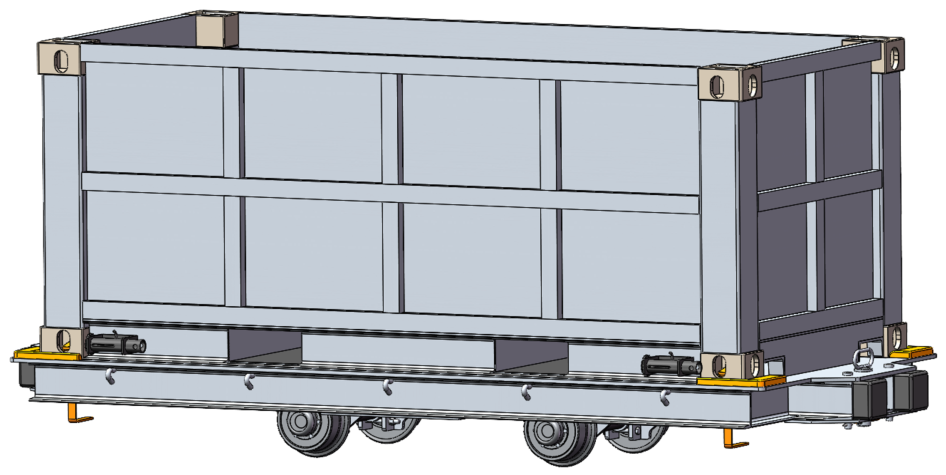
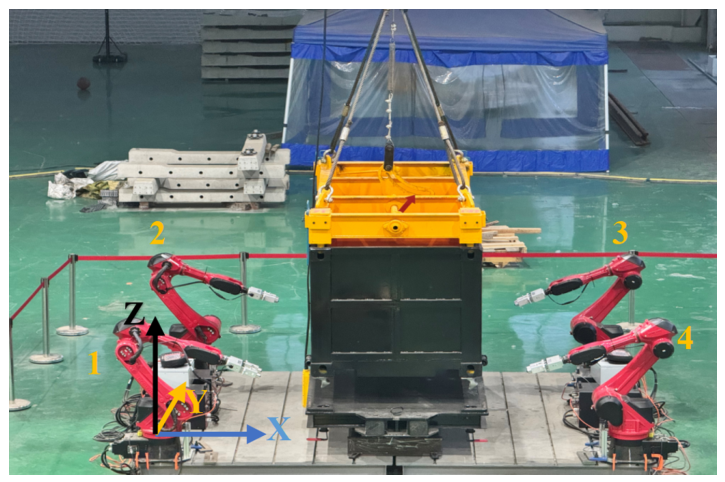
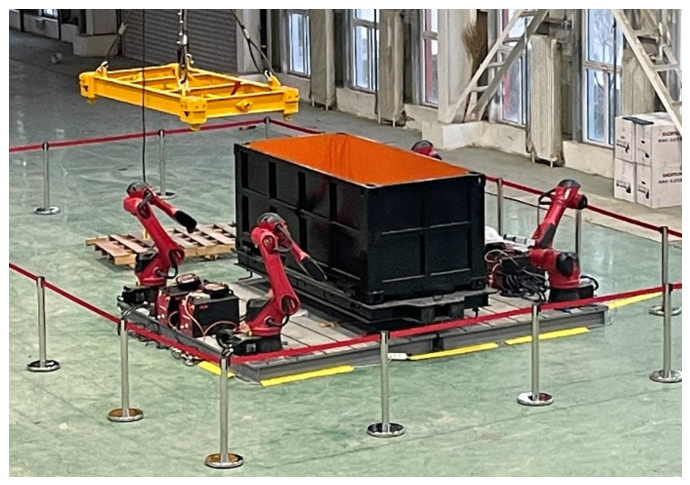
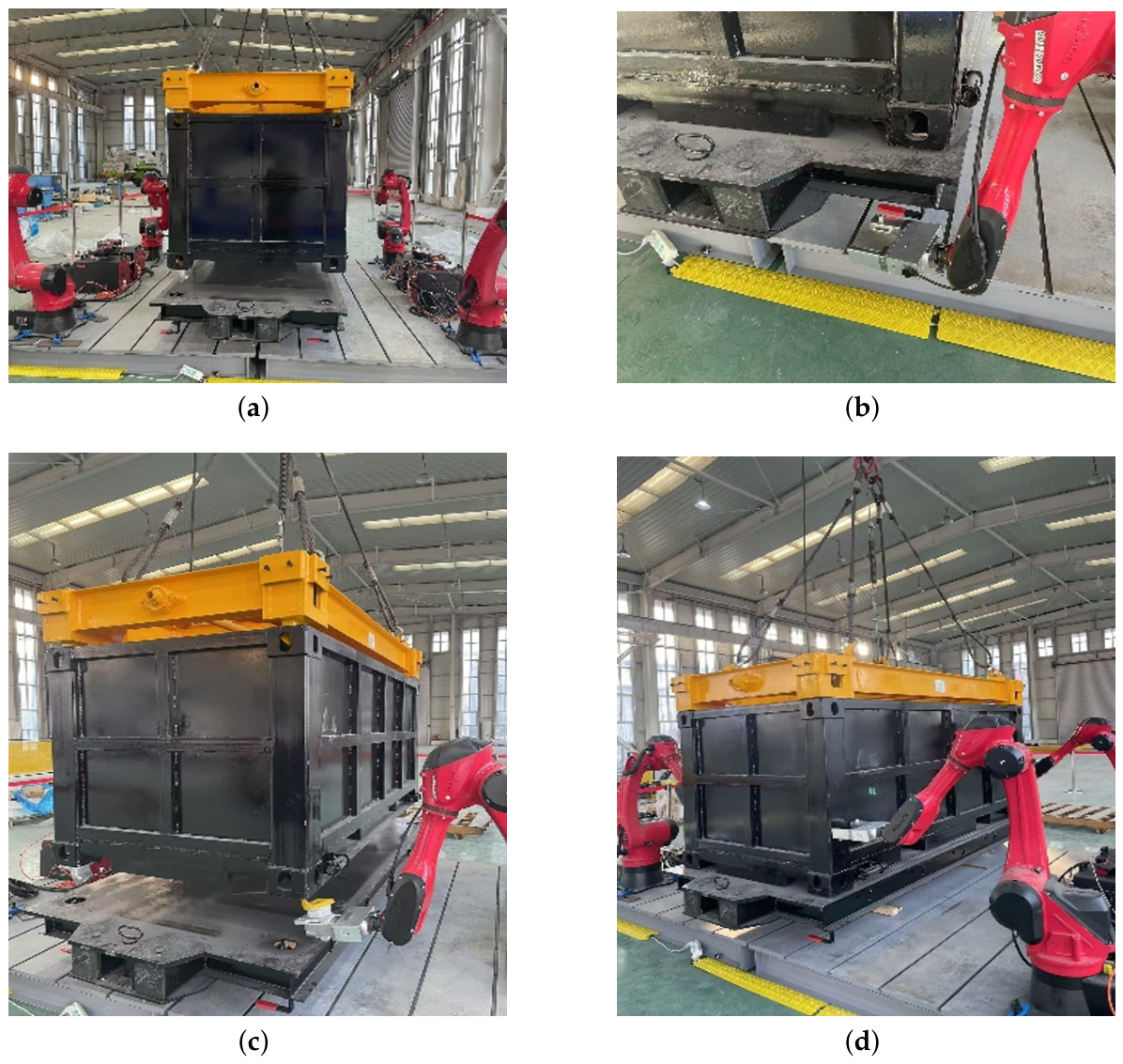
The open-top transport box and carrier platform were fabricated, and the complete intelligent loading system was assembled, as shown in
Figure 16. Prototype experiments were then conducted for loading the open-top box onto the carrier platform, as shown in
Figure 17.
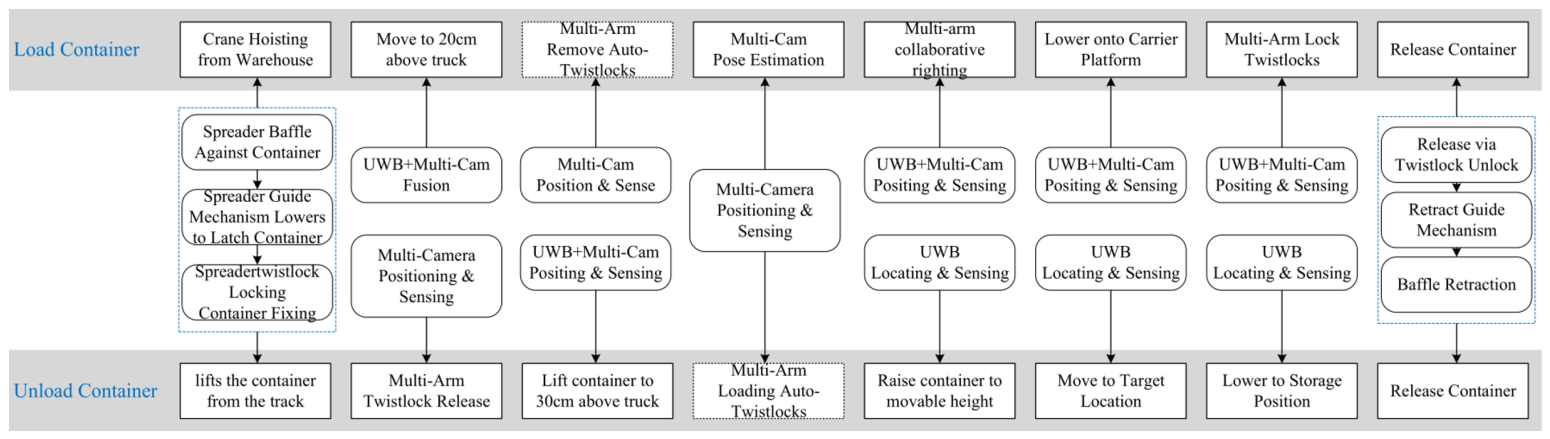
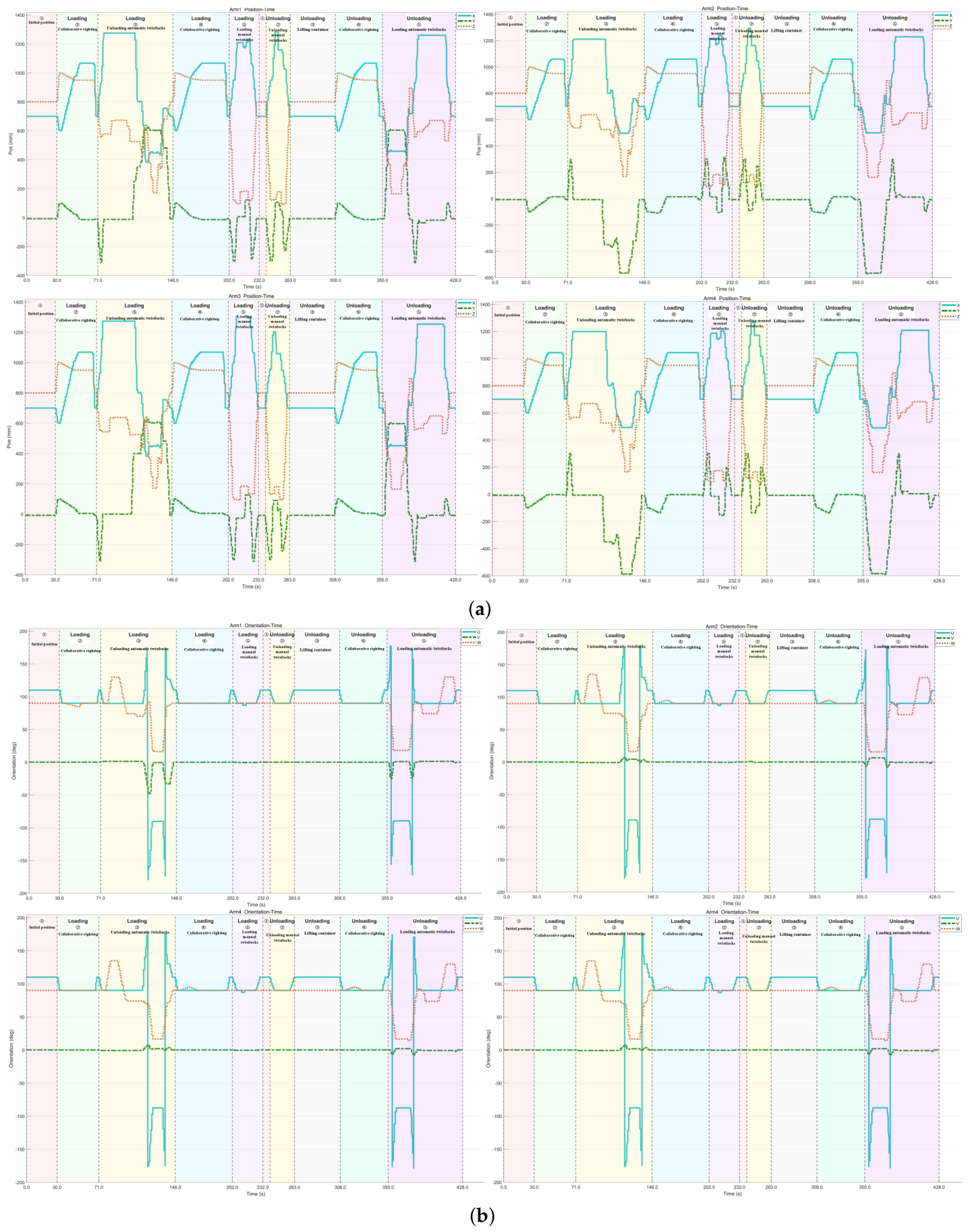
The multi-manipulator loading workflow consists of five main stages: moving the box into the workspace, collaborative alignment, grasping automatic twist locks, final collaborative alignment and precise positioning onto the platform, and loading manual twist locks. The unloading workflow similarly comprises five stages: unloading manual twist locks, lifting the box (1.5 m above platform), real-time alignment adjustment, grasping automatic twist locks, and finally moving and placing the box in a designated area.
In these experiments, crane operations (moving boxes into/out of the workspace, lifting to/from 1.5 m height) were performed manually by the crane operator. All other steps were automated.
7.2. Complete Loading/Unloading Process
To ensure statistical reliability, the complete loading/unloading process was repeated 100 times under identical conditions (same operator, same environmental lighting, no dust injection). For each trial, the following sub-step durations were recorded: (1) coarse positioning of crane (human-controlled), (2) collaborative alignment by manipulators, (3) automatic twist lock removal/attachment, (4) final alignment and lowering, (5) manual twist lock locking/unlocking. The mean, standard deviation (SD), and 95% confidence interval (CI) were computed for each sub-step and for the total automated time. Success rate was defined as the percentage of trials where the box was correctly locked onto the platform without manual intervention or abort.
The manual baseline was established by a single skilled crane operator with 5 years of experience in mine warehouse operations, using the same standardized carrier platform and open-top modular box, but without any manipulator assistance. All operations (crane lifting, coarse positioning, fine alignment, twist lock handling) were performed manually using standard tools (manual twist lock wrench). The manual timing started when the box was suspended at 1.5 m height above the platform and ended when all four manual twist locks were fully engaged. The same safety constraints (no personnel intrusion in the work zone) were applied. The boundary conditions of manual trials (crane movement speed, starting position, target platform location) were identical to those used in automated trials. The same operator performed both manual and automated (HITL) crane control to ensure consistency.
Table 4 shows the duration times of manual and automatic operations. Compared to manual operation, the automated operation increased efficiency by 21.26% and 14.03% for the loading and unloading processes, respectively. For high-frequency, repetitive tasks, this cumulative efficiency gain is significant.
Figure 18 shows the motion curves for one complete automated loading/unloading process. In addition, the success rates of automated loading and unloading operations are 95% and 91%, respectively.
The ‘automated time’ reported in
Table 4 excludes the human-controlled crane travel to/from the workspace, but includes the time from the moment the operator stops the crane at the target height to the moment the last manual twist lock is engaged. Operator behavior was standardized via on-screen prompts and voice commands; reaction time variance was below 2 s across trials.
Beyond efficiency, the system offers substantial comprehensive benefits. The time saved per operation translates into significant labor and time cost savings in the context of high daily throughput. More importantly, it frees workers from high-intensity, high-risk repetitive tasks to higher-value roles like equipment monitoring and management, achieving the goals of “reducing manpower, enhancing safety, and improving efficiency.” The system also provides operational consistency, high precision, and 24/7 operation, reducing equipment damage, material spillage, and accidents caused by human error, yielding profound intangible benefits in production stability, safety, and quality.
7.3. Computational Resource Evaluation for Edge Deployment
The deep learning perception module is deployed on an industrial computer (Intel Core i7-12700, 32 GB RAM, NVIDIA RTX 3060 12 GB) mounted near the crane.
Table 5 reports the model size, computational complexity, and measured inference speed.
The end-to-end perception latency (camera capture → YOLO detection → 3D projection) is 28 ms, well below the 100 ms control cycle requirement. Even under worst-case dust or low light, inference time remains stable ( ms). This confirms that the system can run in real time on edge industrial hardware without offloading to a remote server.
7.4. Ablation Study and Baseline Comparisons
To quantify the contribution of key components in the proposed system, four ablation experiments were conducted under the same protocol described in
Section 7.2 (20 trials for the full system, 10 trials for each ablation). The results are summarized below.
(a) UWB+IMU only (vision disabled). In this configuration, the depth cameras and YOLOv8 perception were turned off, and only UWB and IMU provided pose estimates for alignment. The alignment success rate dropped to 40% (4 out of 10 trials) because the UWB/IMU fusion (accuracy ∼10 cm) was insufficient for precise twist lock grasping, which requires millimeter-level positioning. The remaining six trials failed due to misalignment exceeding the allowable tolerance (>10 mm).
(b) UWB+IMU+vision with a single manipulator. Only one manipulator (arm No. 1) was used for alignment, while the other three arms remained stationary. The task could not be completed in any of the 10 trials because a single arm cannot constrain the box’s rotational degree of freedom; the box would rotate or tilt during pushing, leading to a success rate of 0%. This confirms that at least two opposing manipulators are necessary for stable alignment.
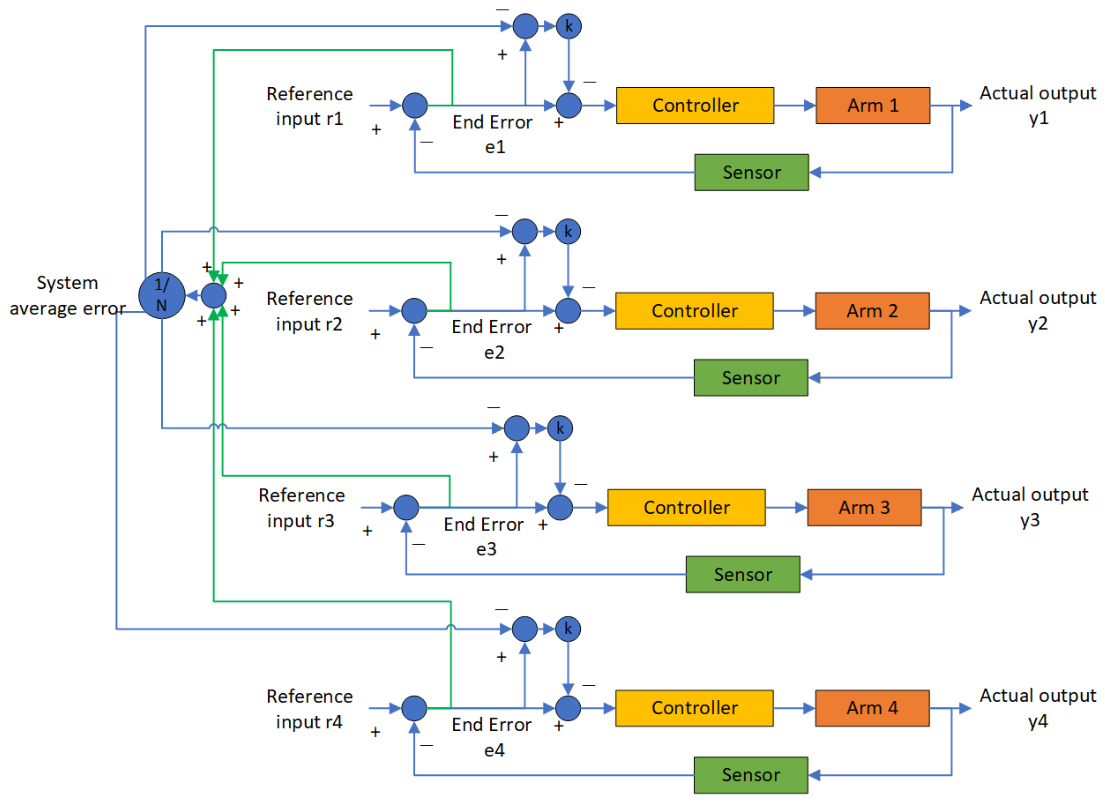
(c) Consensus control replaced with independent PID. Each manipulator was controlled by an independent PID controller that tracked its own goal pose without the consensus term (). The average alignment time increased from 45.9 s (with consensus) to 112.5 s, and manual intervention was required in 6 out of 10 trials because the box would tilt or become wedged due to inconsistent motion among the arms. This demonstrates the critical role of the multi-agent consensus scheme in coordinating the four manipulators.
(d) Vision using YOLOv5 instead of YOLOv8. The YOLOv8 detector was replaced by YOLOv5 (same training dataset). The detection mean average precision (mAP@0.5) dropped from 0.92 to 0.78, and four trials (40%) failed because the corner castings or manual twist locks were missed. The remaining trials required longer manual verification time. This highlights the advantage of YOLOv8’s improved feature extraction for mining warehouse environments.
Overall, these ablation results confirm that the full system—integrating UWB/IMU for coarse positioning, multi-depth-camera vision for fine perception, four manipulators for multi-point constraint, and consensus-based collaborative control—is essential for achieving reliable and efficient automated loading/unloading.
7.5. Failure Mode Analysis and Recovery
The system is designed to handle multiple failure modes with specific detection and recovery actions. When UWB signal loss is detected (no new data for >0.5 s), the system pauses, alerts the operator, and falls back to IMU-only drift mode for a maximum of 5 s. If IMU drift exceeds (detected by comparison with vision), the ESKF is reinitialized using the vision-based pose estimate. Depth camera occlusion is identified when the depth map coverage of the region of interest falls below ; the system then switches to an adjacent camera and reduces manipulator speed. When YOLO confidence remains below for more than 10 consecutive frames (monitored via logits), the system retries detection after 1 s; if the low confidence persists, it pauses and alerts the operator. A manipulator joint fault is detected by motor torque anomaly, triggering immediate stop of all arms, brake engagement, and HMI notification for manual recovery. For all failures, the system enters a safe state (all actuators stopped, crane brake engaged), and the HMI displays a specific error code with recovery instructions. No single-point failure leads to uncontrolled motion or drop of the transport box.
7.6. Limitations and Realism Plan
The current experiments were conducted in a laboratory/warehouse environment without underground-specific stressors (high humidity, vibration, EMI, coal dust). To bridge this gap, we performed staged stress tests: (i) dust injection up to 50 mg/m3 reduced vision mAP from 0.92 to 0.83, still above the 0.7 threshold for safe operation; (ii) vibration table (10–50 Hz, 2 mm amplitude) increased UWB noise to 12 cm RMSE, still within tolerances; (iii) simulated UWB multipath (by adding reflectors) caused occasional false lock detection, mitigated by temporal consistency checks. Full underground trials are pending safety certification. Future work will report performance metrics in an operational mine.
8. Conclusions
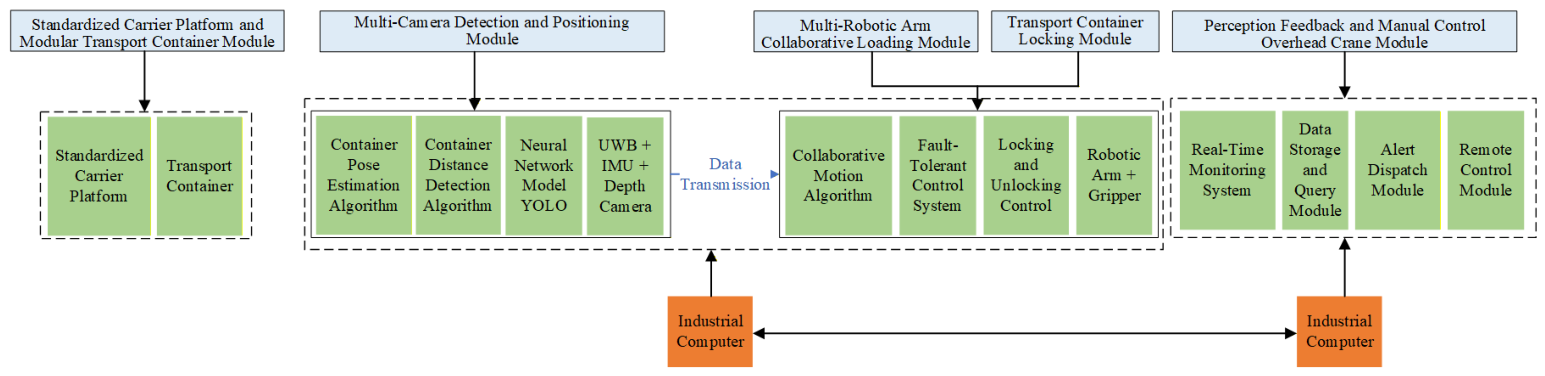
Material transportation in mining warehouses is a critical area in the coal industry. With the ongoing upgrade towards intelligence and automation, increasing research is focused on material transportation, extending to broader applications. This paper proposes an intelligent loading system for standardized mining material transportation based on multimodal perception and multi-arm collaboration, along with its key technologies. Through analysis of design requirements, a complete loading/unloading workflow was established, and each system module was detailed, utilizing various technologies and methods for automated material transport and handling.
The system comprises five modules: a standardized carrier platform and modular transport boxes, a box locking and spreader module, a multi-sensor recognition and positioning module, a multi-manipulator collaborative loading/unloading module, and a perception feedback and (human-controlled) overhead crane module. It involves three key technologies: standardization of the carrier platform and modularization of transport boxes; multimodal perception data fusion and recognition positioning; and multi-manipulator collaborative control.
- 1.
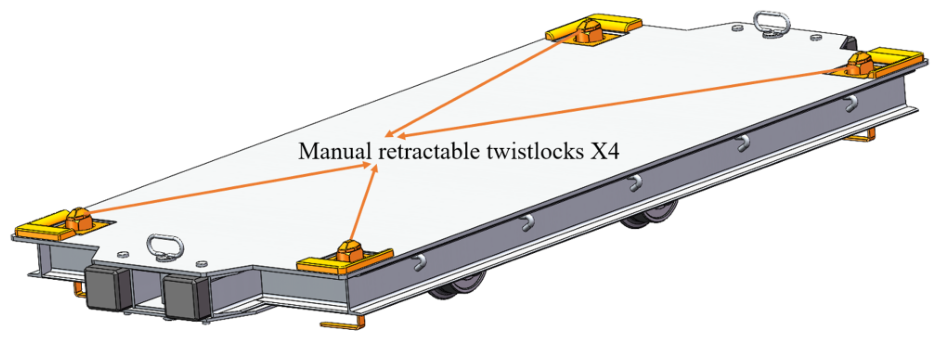
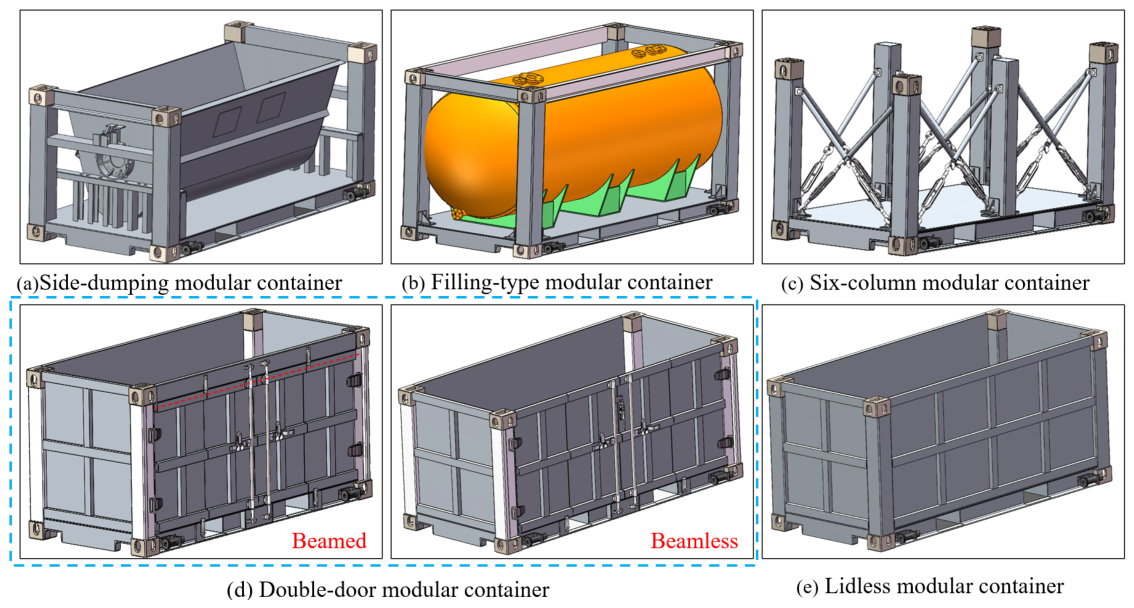
Standardized Carrier Platform and Modular Transport Box Technology based on Separable and Easily Detachable Design: Based on standardization and modularity principles, an open-top modular transport box and standardized carrier platform were designed. This includes a semi-automatic spreader for box lifting, manually operable twist locks for fixing boxes to the platform, and automatic twist locks for stacking boxes.
- 2.
Multimodal Perception Data Fusion and Recognition Positioning Technology based on Multiple Depth Cameras + UWB + IMU: Multiple depth cameras, UWB units, and IMU sensors were configured. Intelligent perception algorithms were developed to quickly recognize the overall pose of the modular transport box, calculate its relative pose to the carrier platform, guide the multi-manipulator collaborative control, and ensure real-time, fast, and secure data transmission.
- 3.
Multi-Manipulator Collaborative Control Technology based on Multi-Agent Error Consensus: A vision-guided and error consensus-based multi-manipulator collaborative control method was designed, utilizing real-time pose data from the recognition module. It employs a “two-master, two-slave” architecture, where master arms adaptively plan pushing trajectories based on box deflection, and slave arms track in real time. A weighted control strategy combining individual and system consensus errors achieves high-precision collaborative alignment, twist lock operations, and pose adjustments, significantly enhancing the automation level, coordination, and robustness of the loading/unloading process.
Additionally, a human–machine collaborative information monitoring system technology was investigated. An HMI software was developed, using image acquisition interfaces to monitor the relative state of the box and platform in real time. When the box reaches the predetermined position, the operator receives a prompt to stop the crane via the software. Manipulators then collaboratively align the box. Once aligned, a signal prompts the operator to slowly lower the box while the manipulators maintain its stable pose. During operation, the system also monitors personnel in the work area for safety warnings.
Together, the standardized carrier platform and boxes, the multi-depth-camera perception pipeline, and the multi-manipulator collaborative motion module constitute an integrated material-loading system with supporting information software. It can replace manual loading, adapt to harsh environments, and achieve standardized transport and automated loading. The authors expect the system to be competitive within the domestic coal industry and to reach an internationally comparable technical level. The system is safe and reliable, with self-diagnosis and minor fault auto-recovery functions. Faults that cannot be auto-recovered are displayed on the HMI. Maintenance is convenient, aiming for minimal maintenance.
As the transport boxes and carrier platform are intended for underground use, the system is currently undergoing application for Coal Mine Safety Certification. Despite the promising results, the current system has several technical limitations: (1) Under extreme dust (>50 mg/m3) or ultra-low illumination (<50 lux), YOLOv8 detection recall for manual_lock_black drops below 0.5. (2) In enclosed metal environments, UWB multipath degrades 3D positioning to >15 cm RMSE. (3) Upon a single manipulator failure, the remaining three arms cannot perform four-point twist lock operations. Future work will address these via multi-spectral vision, UWB+LiDAR fusion, and fault-tolerant control reconfiguration and focus on system refinement, production application, and developing an information system for mining material transportation based on this system to enable traceable and digital management of material transport and storage.