Article

Quantitative Evaluation of Thumb Degrees of Freedom Relevance in Anthropomorphic Robot Hands

1
Institute of Mechanism Theory, Machine Dynamics and Robotics, RWTH Aachen University, 52062 Aachen, Germany
2
The Sirindhorn International Thai-German Graduate School of Engineering, King Mongkut’s University of Technology North Bangkok, Bangkok 10800, Thailand
*
Author to whom correspondence should be addressed.
These authors contributed equally to this work.
Robotics 2026, 15(5), 101; https://doi.org/10.3390/robotics15050101

Submission received: 20 April 2026 / Revised: 12 May 2026 / Accepted: 18 May 2026 / Published: 21 May 2026
(This article belongs to the Section Humanoid and Human Robotics)

Abstract

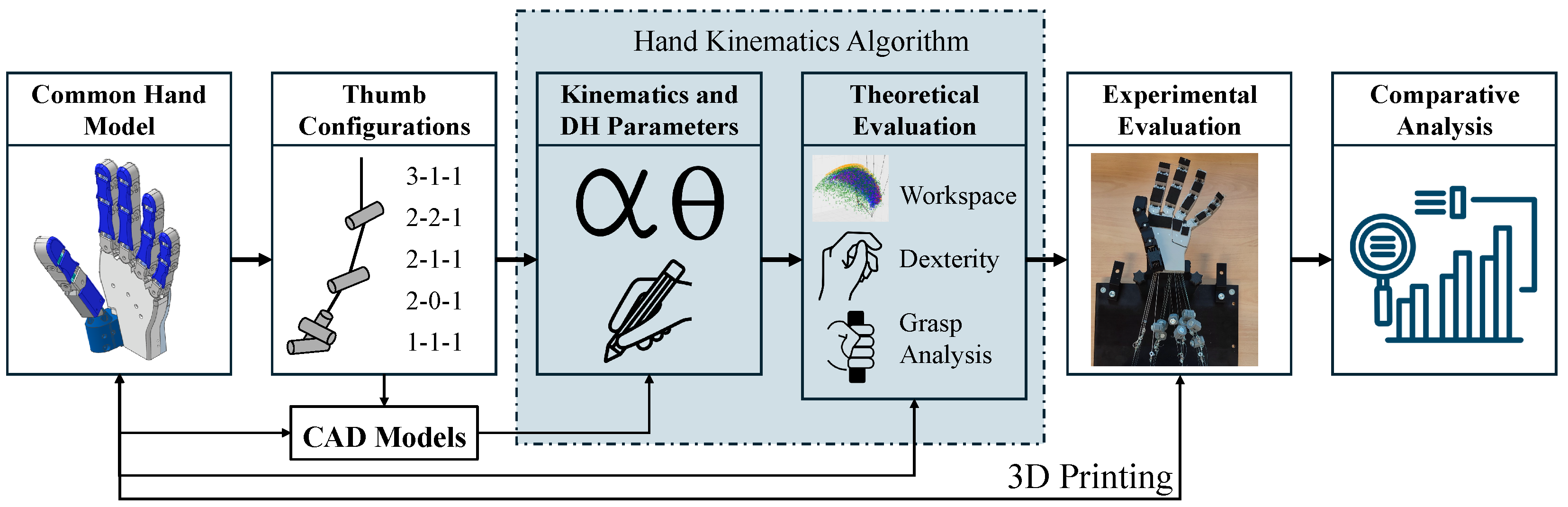
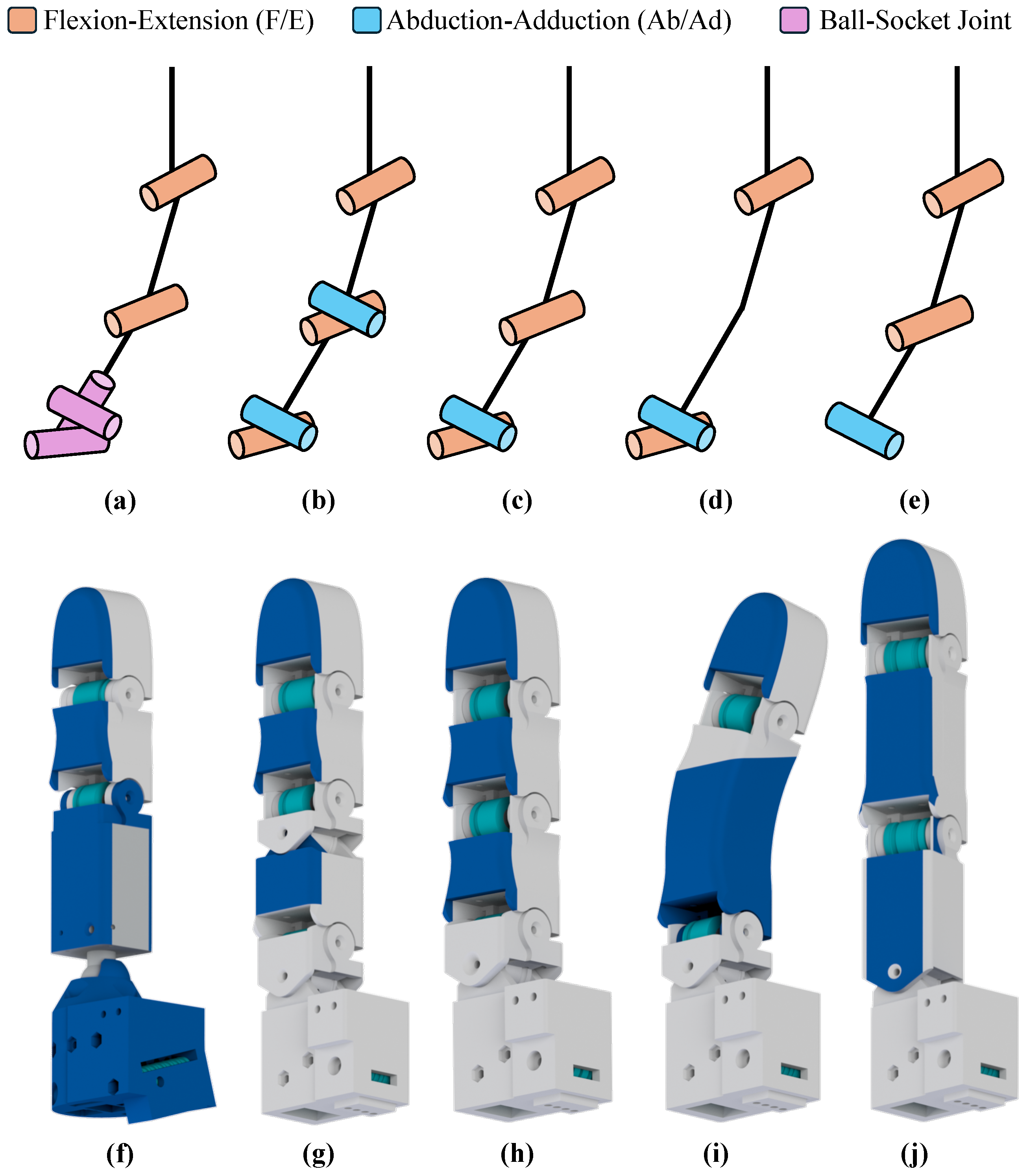
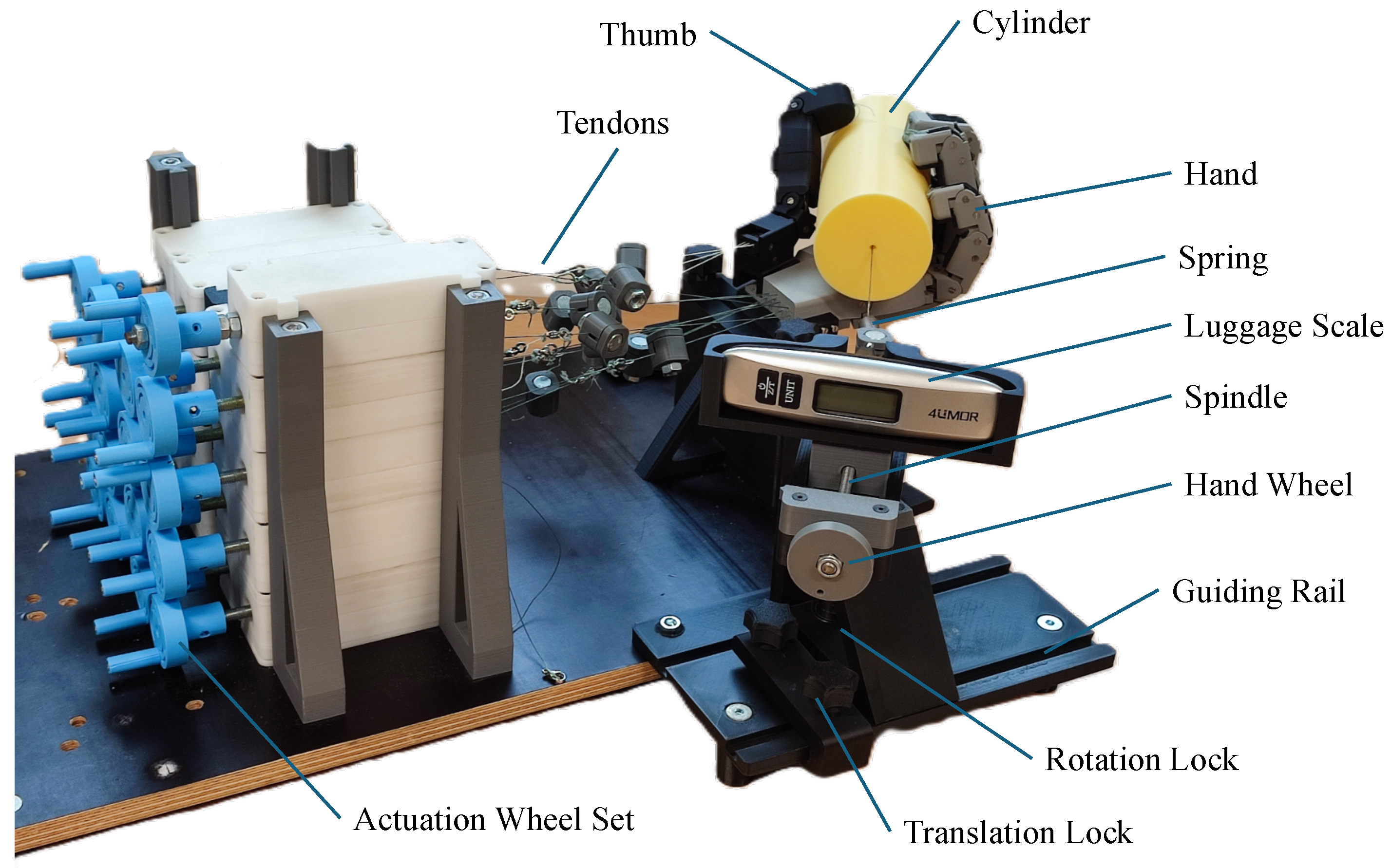
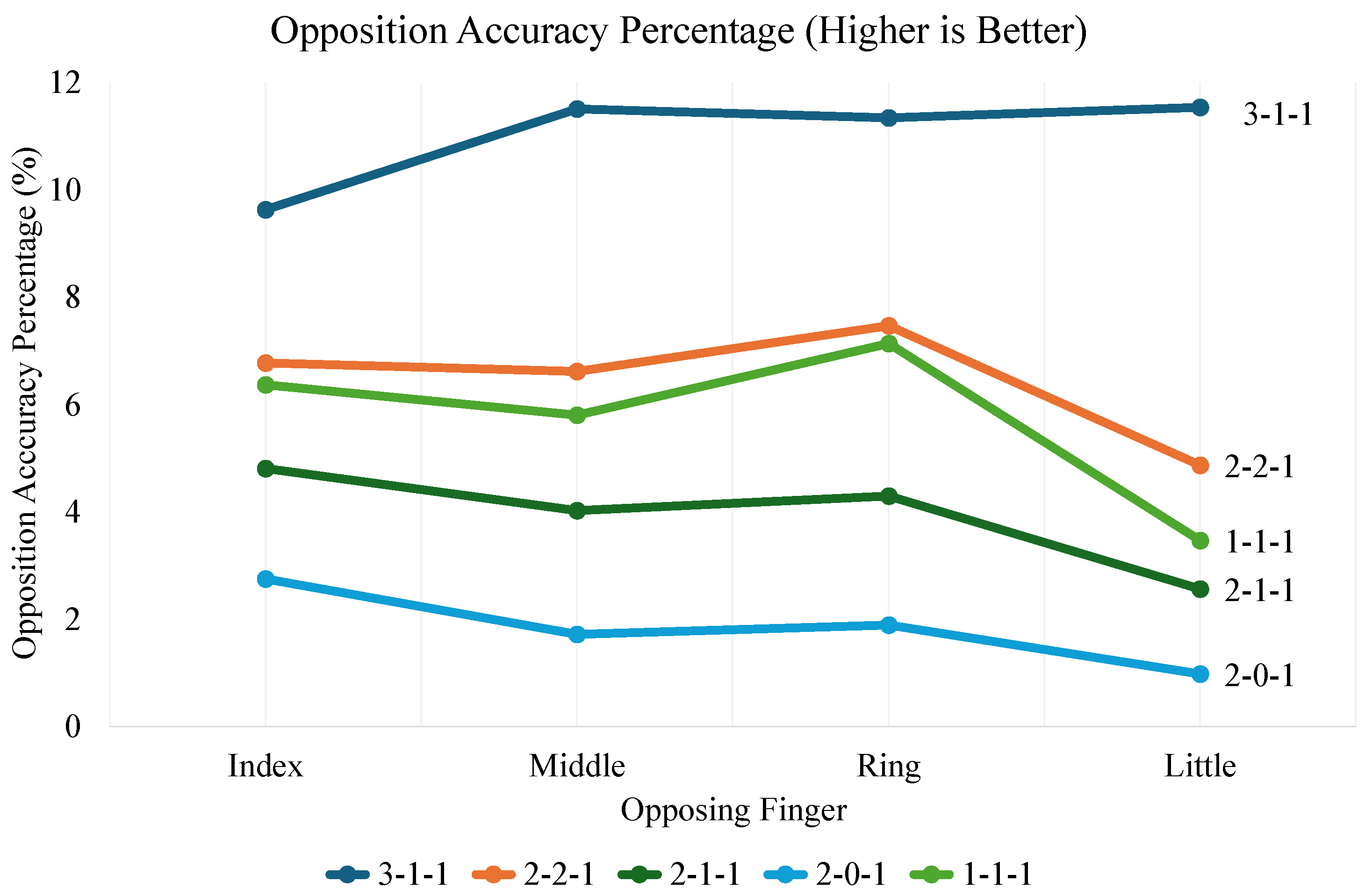
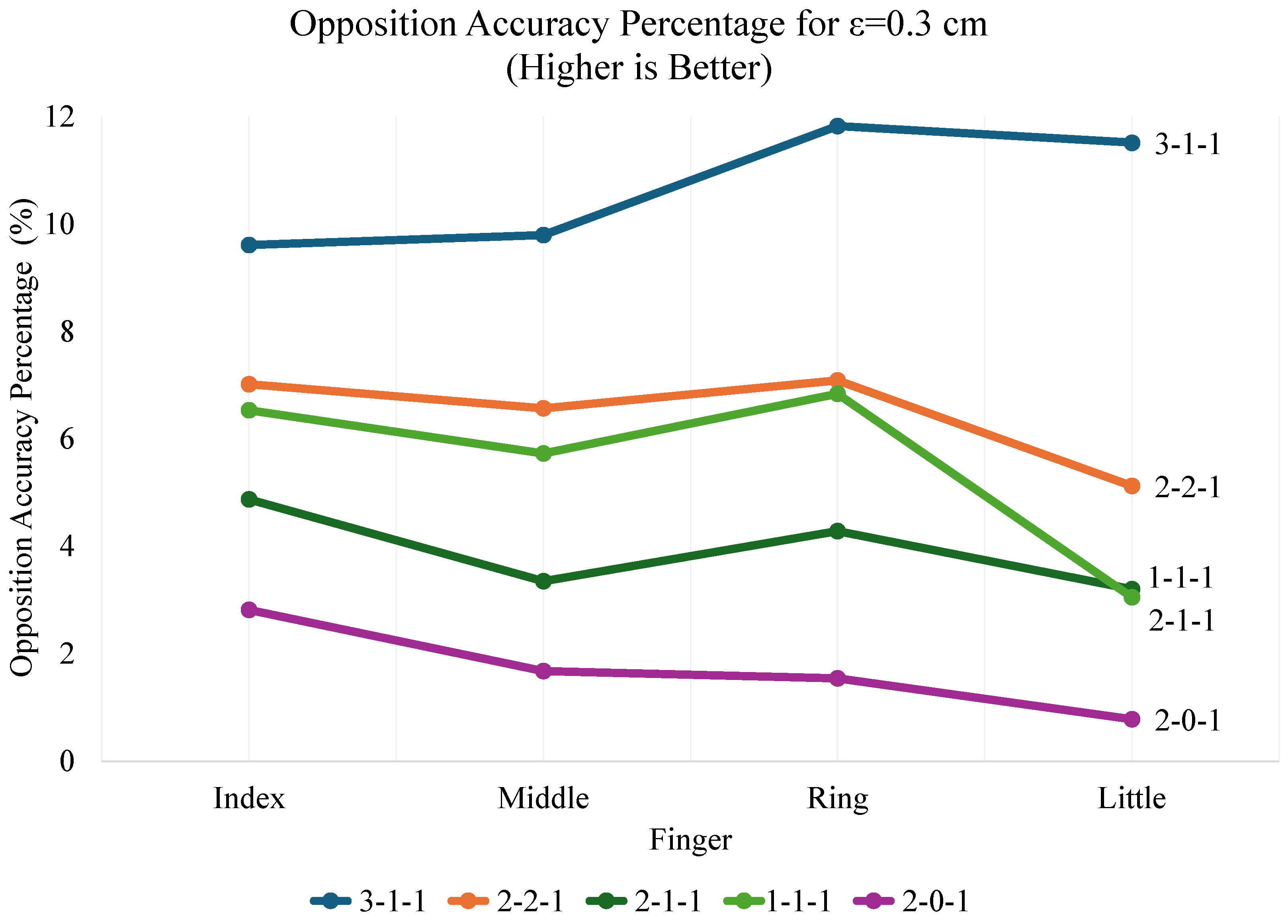
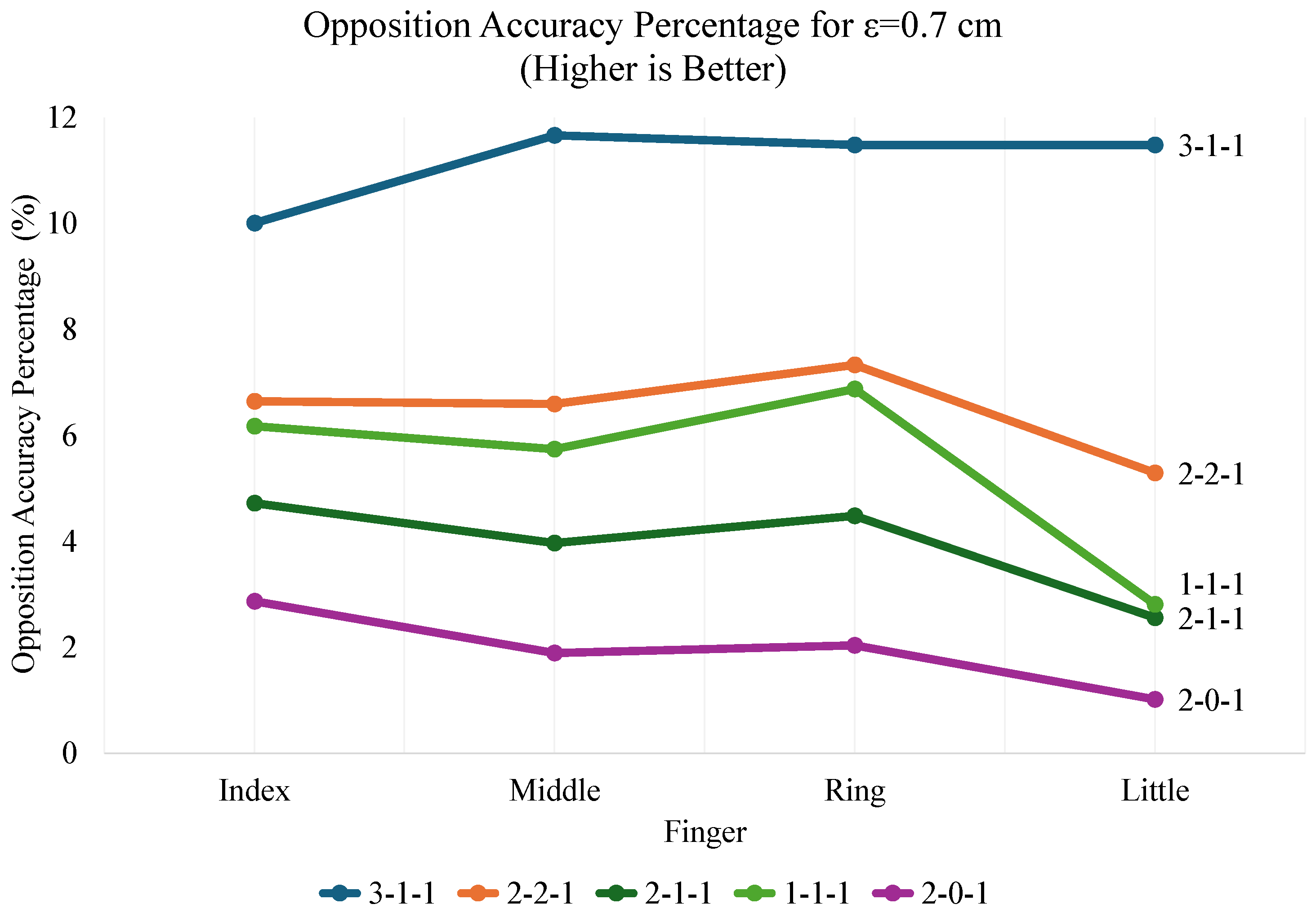
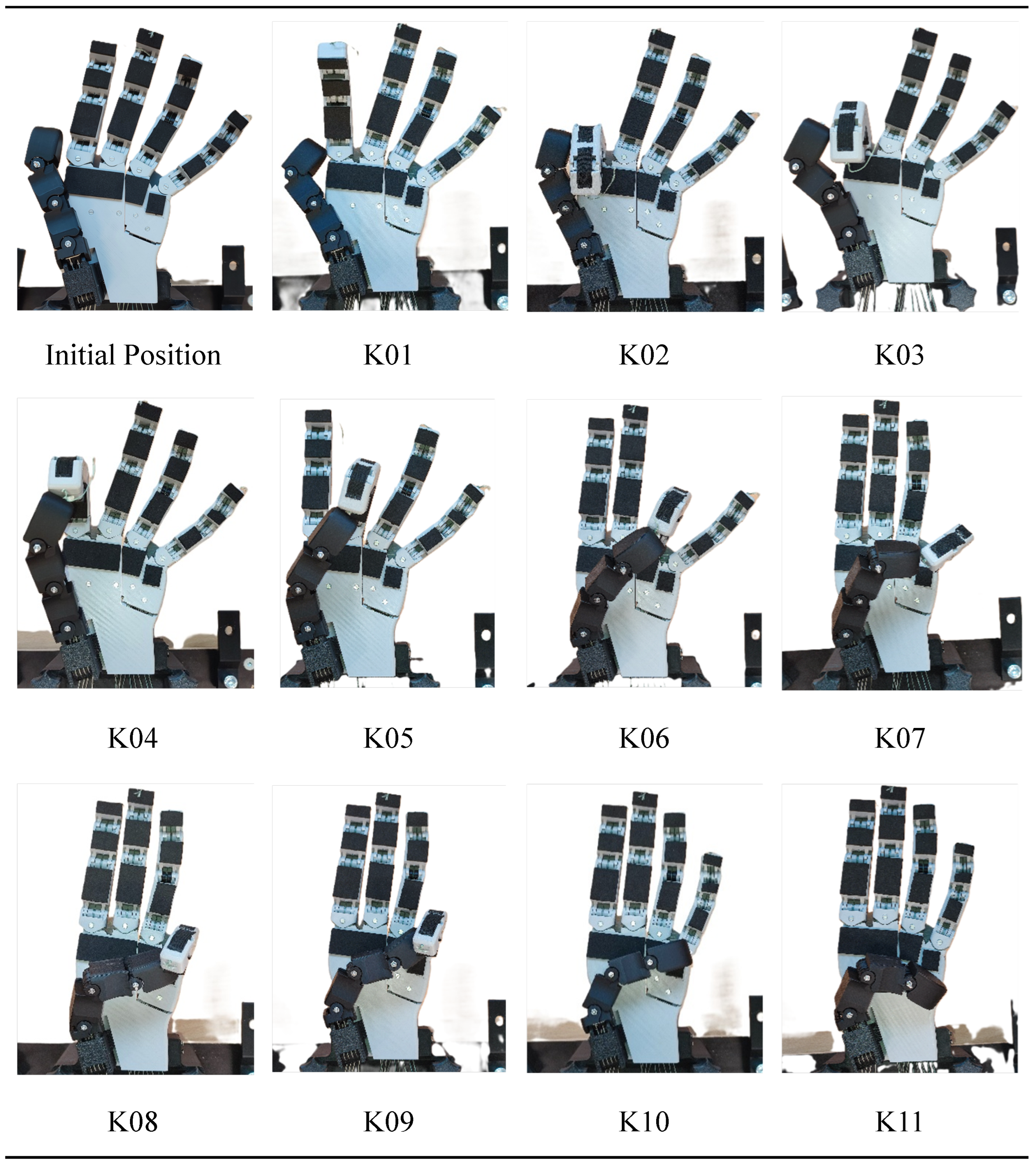
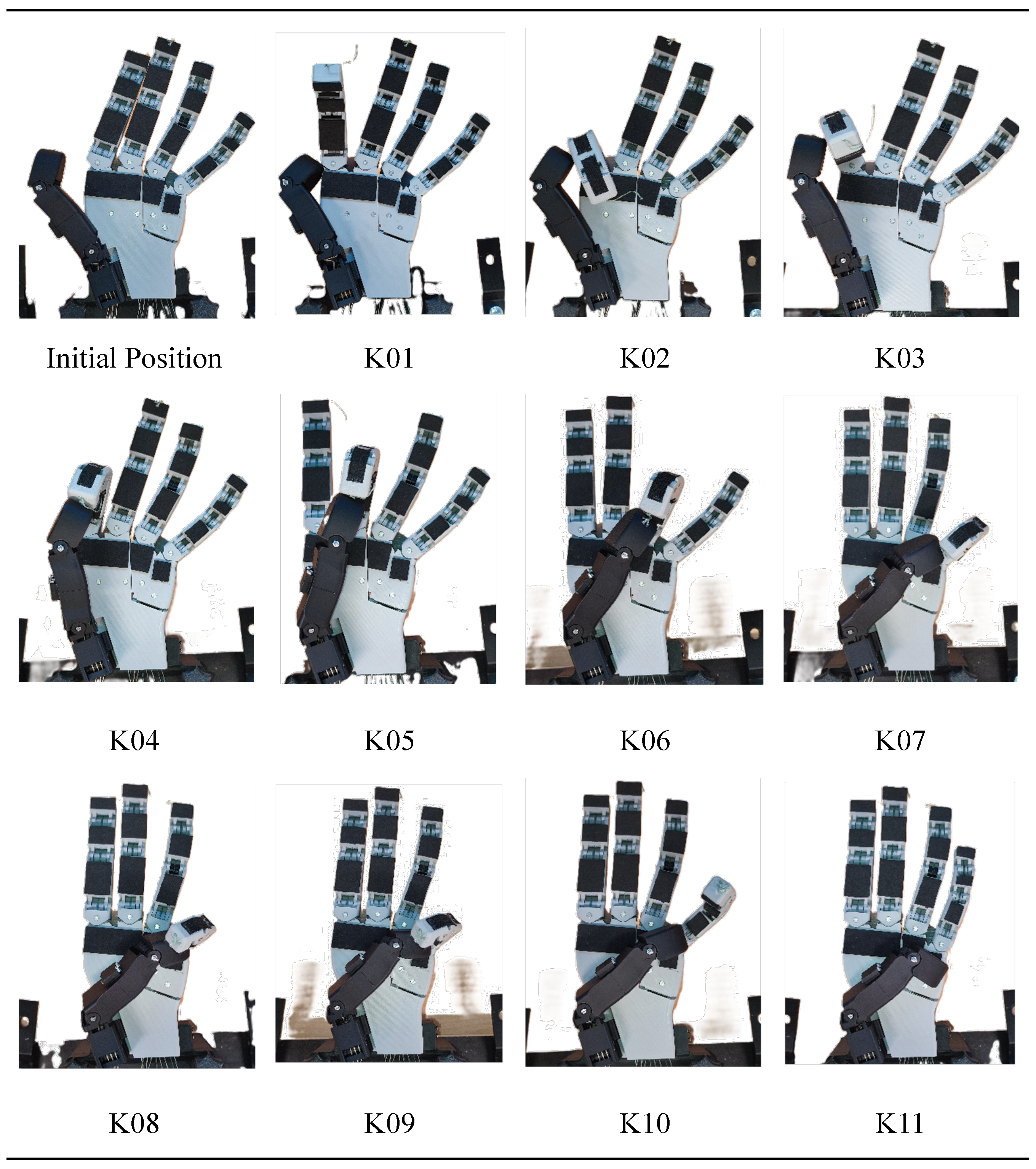
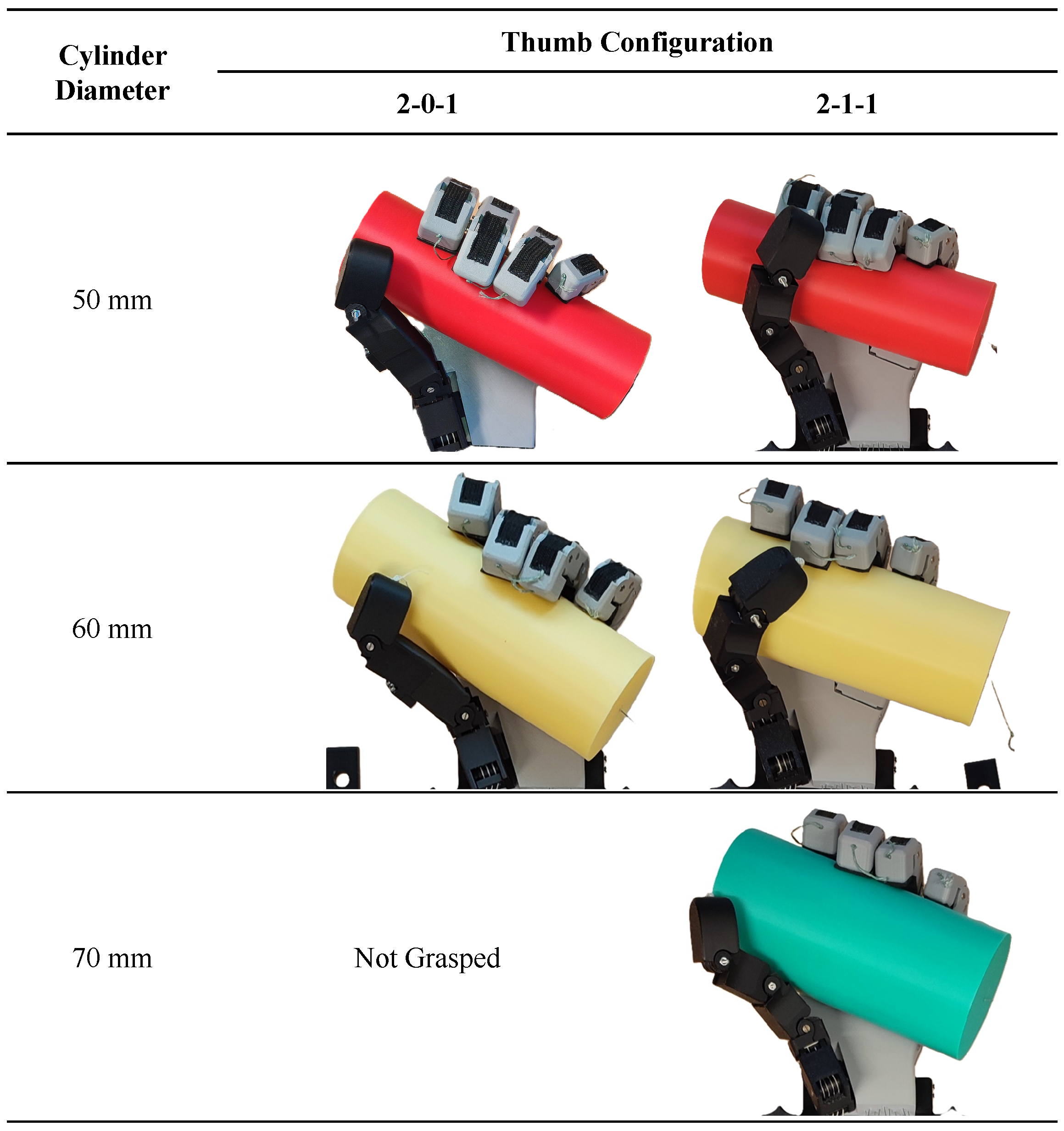
Thumb degree-of-freedom (DOF) allocation in anthropomorphic robot hands involves a trade-off between functional mobility and mechanical-control complexity. This study presents a controlled multi-metric framework for comparing recurring thumb DOF configurations under common palm geometry, non-thumb finger structure, reference frames, Denavit–Hartenberg kinematics, and sampling assumptions. Five literature-derived thumb configurations, namely 3-1-1, 2-2-1, 2-1-1, 2-0-1, and 1-1-1, were evaluated to determine which thumb DOFs should be preserved when kinematic complexity is reduced. The theoretical evaluation included Kapandji Opposition Test reachability, opposition alignment, workspace volume, workspace compactness, cylindrical grasp opportunity, and Jacobian-based dexterity. A targeted experimental validation of the 2-1-1 and 2-0-1 prototypes was then performed on a tendon-driven test bench. The results showed that qualitatively similar thumb configurations are quantitatively unequal: several designs achieved identical Kapandji scores but differed substantially in workspace, alignment, dexterity, and grasp feasibility. Overall, 3-1-1 achieved the strongest overall capability, while 2-2-1 emerged as the strongest reduced-complexity alternative and achieved the best mean dexterity. Retaining two active carpometacarpal DOFs preserved a large share of dexterous function, whereas metacarpophalangeal fixation maintained selected cylindrical grasps but narrowed the feasible task boundary.
Keywords: anthropomorphic robot hand; robotic thumb design; thumb degree of freedom; opposition; Kapandji opposition test; workspace analysis; kinematic dexterity; grasp analysis; reduced-complexity design anthropomorphic robot hand; robotic thumb design; thumb degree of freedom; opposition; Kapandji opposition test; workspace analysis; kinematic dexterity; grasp analysis; reduced-complexity design