
Beyond Visual and Force Feedback: Role of Vibrotactile and Auditory Cues in Robot Teleoperated Assembly

Abstract
1. Introduction
1.1. Background
1.2. Related Works
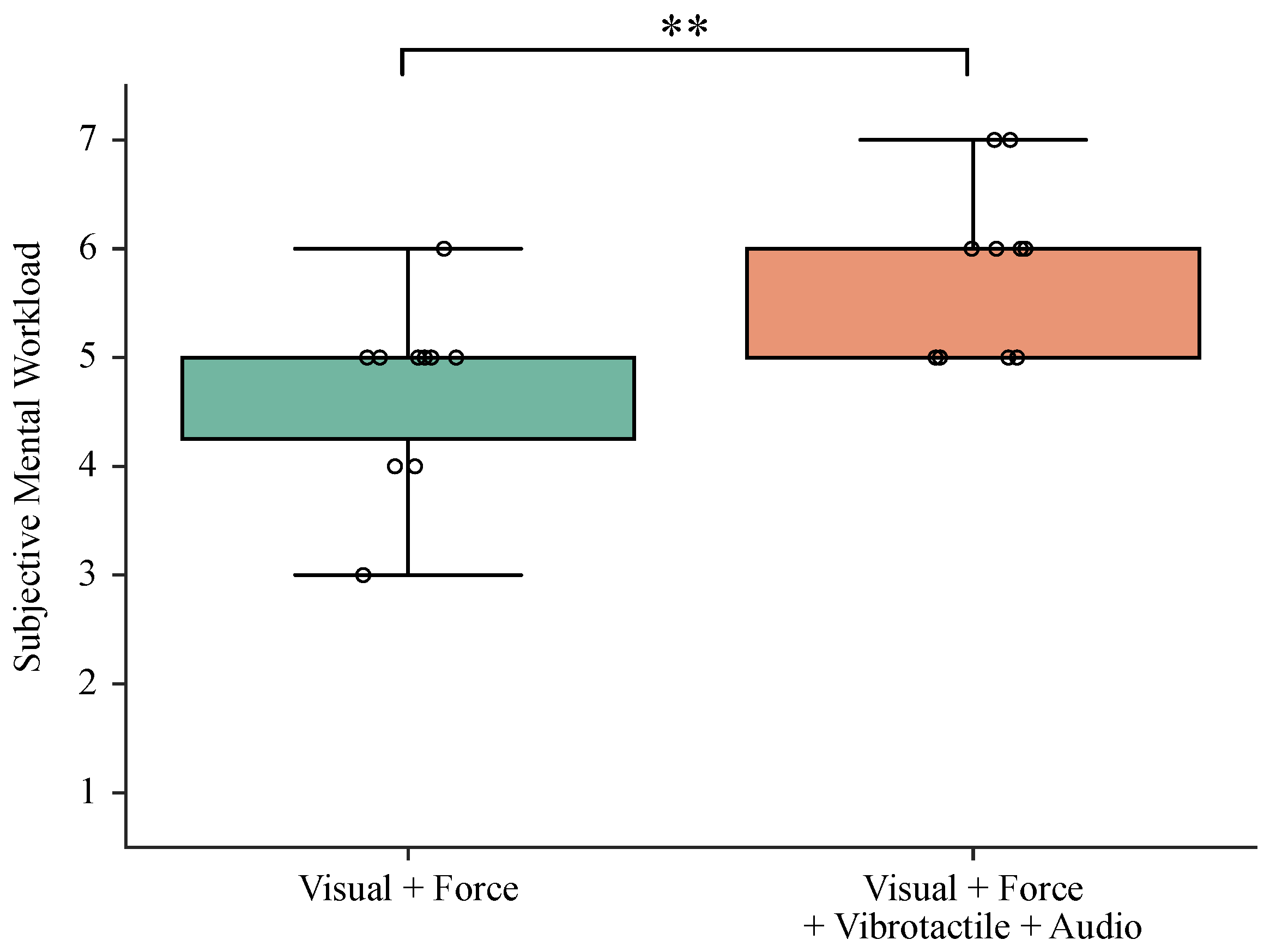
1.2.1. Haptic (Kinesthetic and Cutaneous) and Auditory Feedback
1.2.2. Limitations of Previous Studies
1.3. Research Objective
- Experiment 1:
- Mating Detection: We compared the proposed multimodal condition (Visual + Force + Vibrotactile + Audio) against Visual-only and Visual + Force baselines. This experiment demonstrates the necessity of non-visual cues for reliable detection under visual occlusion.
- Experiment 2:
- Modality Contribution: We investigated the individual contributions of vibrotactile and auditory cues by comparing them separately and together. We evaluated detection rates, subjective ease of use, and mental workload to determine whether these modalities play complementary or redundant roles.
- Experiment 3:
- Connector Insertion: We examined whether improved mating detection translates into enhanced performance during active robot control. We assessed whether multimodal feedback reduces task completion time and peak insertion forces and evaluated subjective performance metrics in a realistic teleoperation scenario.
1.4. Contributions
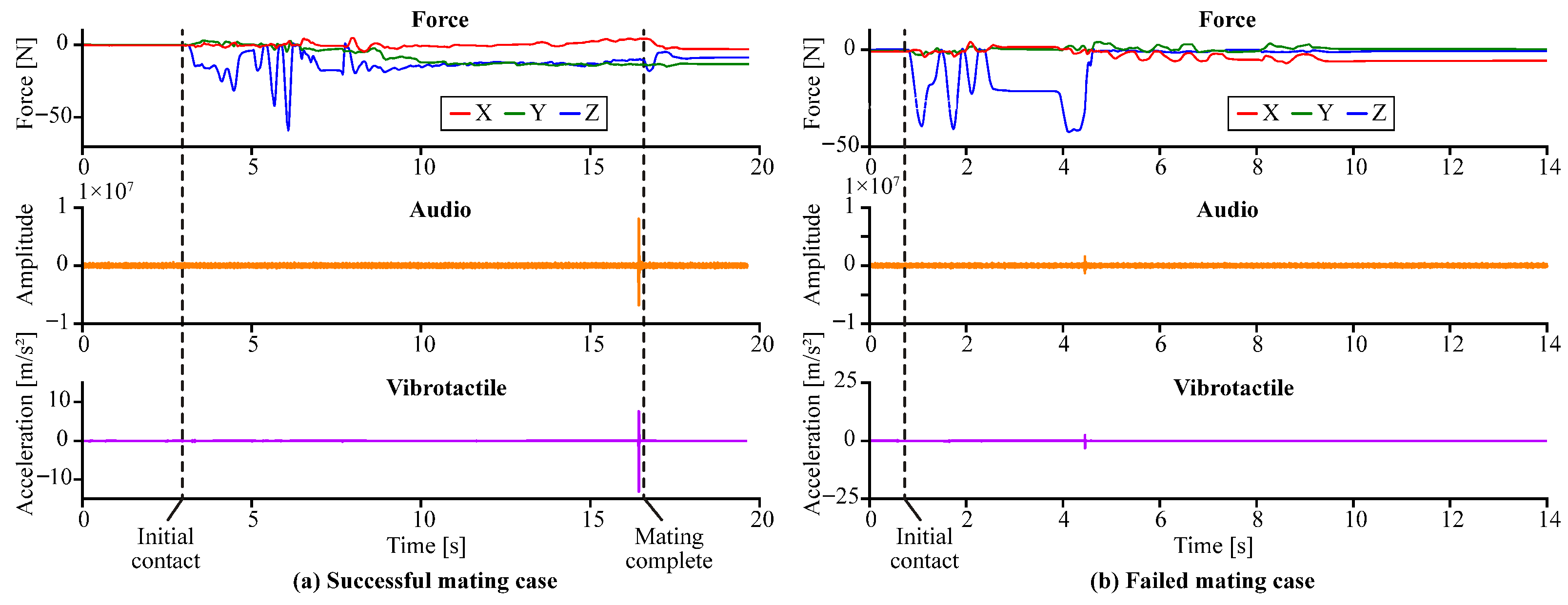
- We formulate connector mating as a high-frequency transient event in teleoperated assembly and show why conventional visual and band-limited force feedback can be insufficient under realistic occlusions.
- We propose a record-based multimodal feedback design that replays measured high-frequency transients through vibrotactile and auditory channels while preserving the stability constraints of the bilateral force loop.
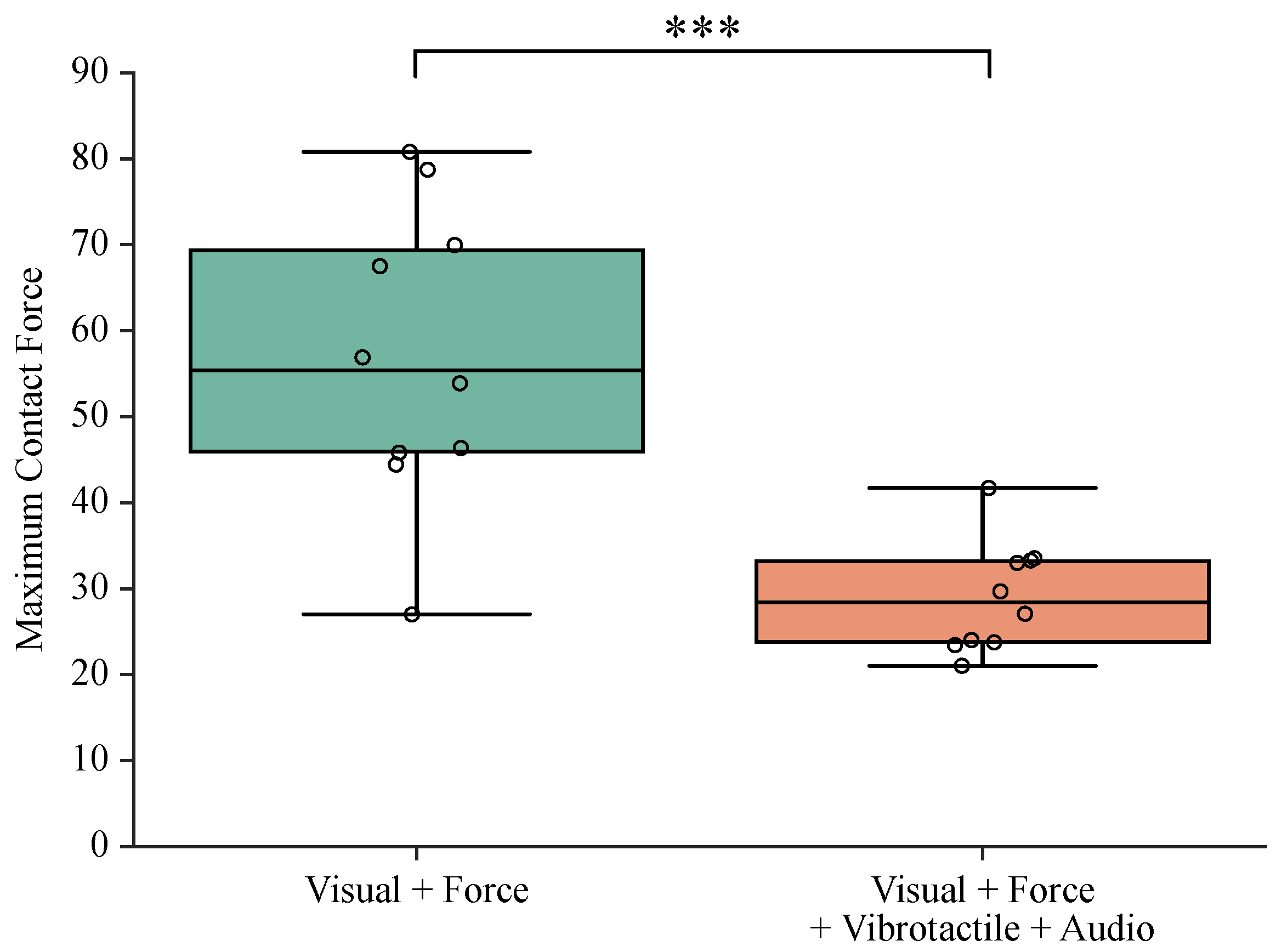
- Through three human-subject experiments, we quantify (i) improvements in mating detection accuracy and clarity and (ii) a significant reduction in post-mating maximum contact force, demonstrating enhanced physical safety.
- We provide a modality contribution analysis showing that vibrotactile and auditory cues are largely redundant yet complementary, supporting robust operation when one modality is compromised.
2. Teleoperation System with Multimodal Feedback
2.1. System Overview
2.1.1. Follower-Side System
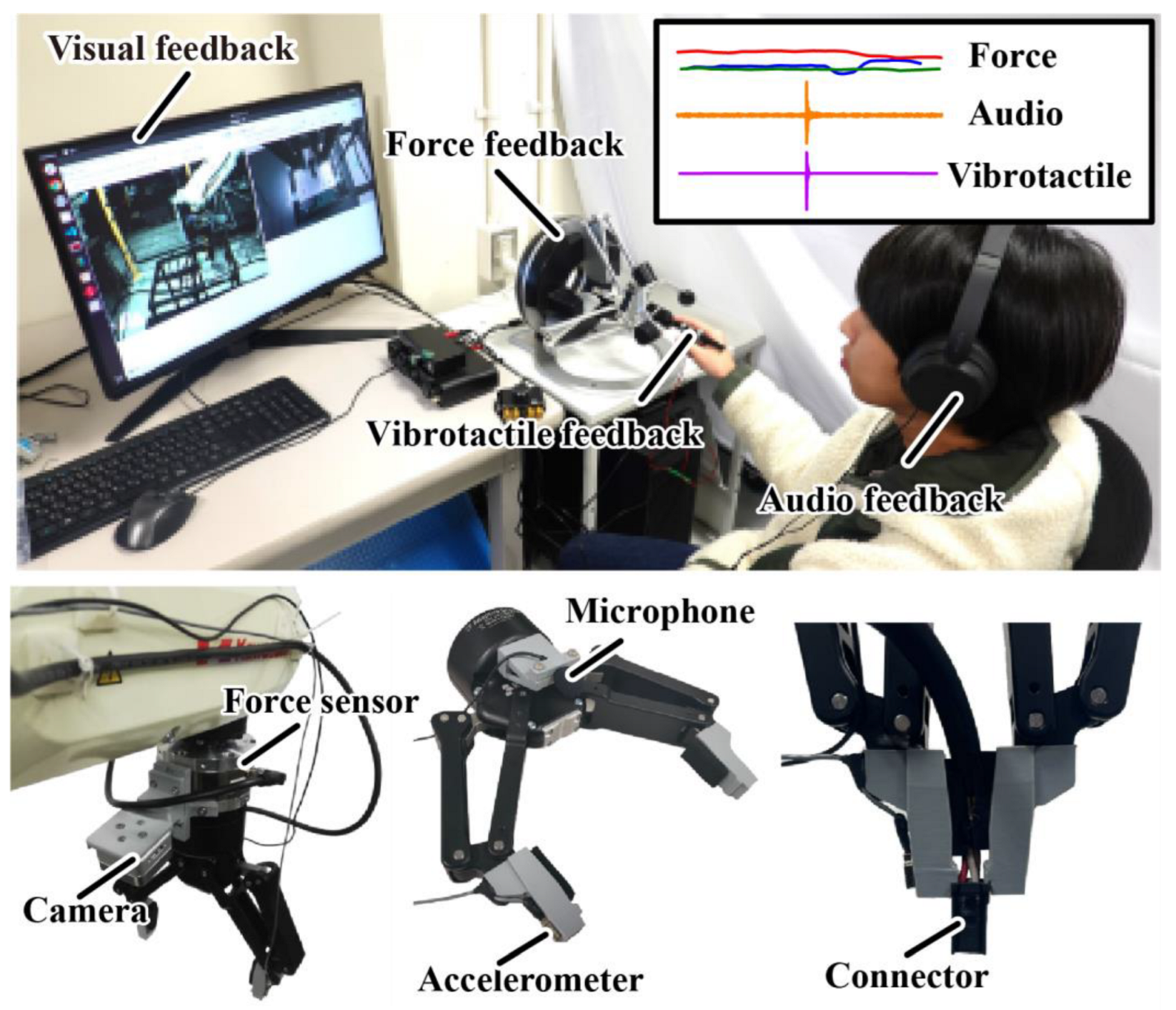
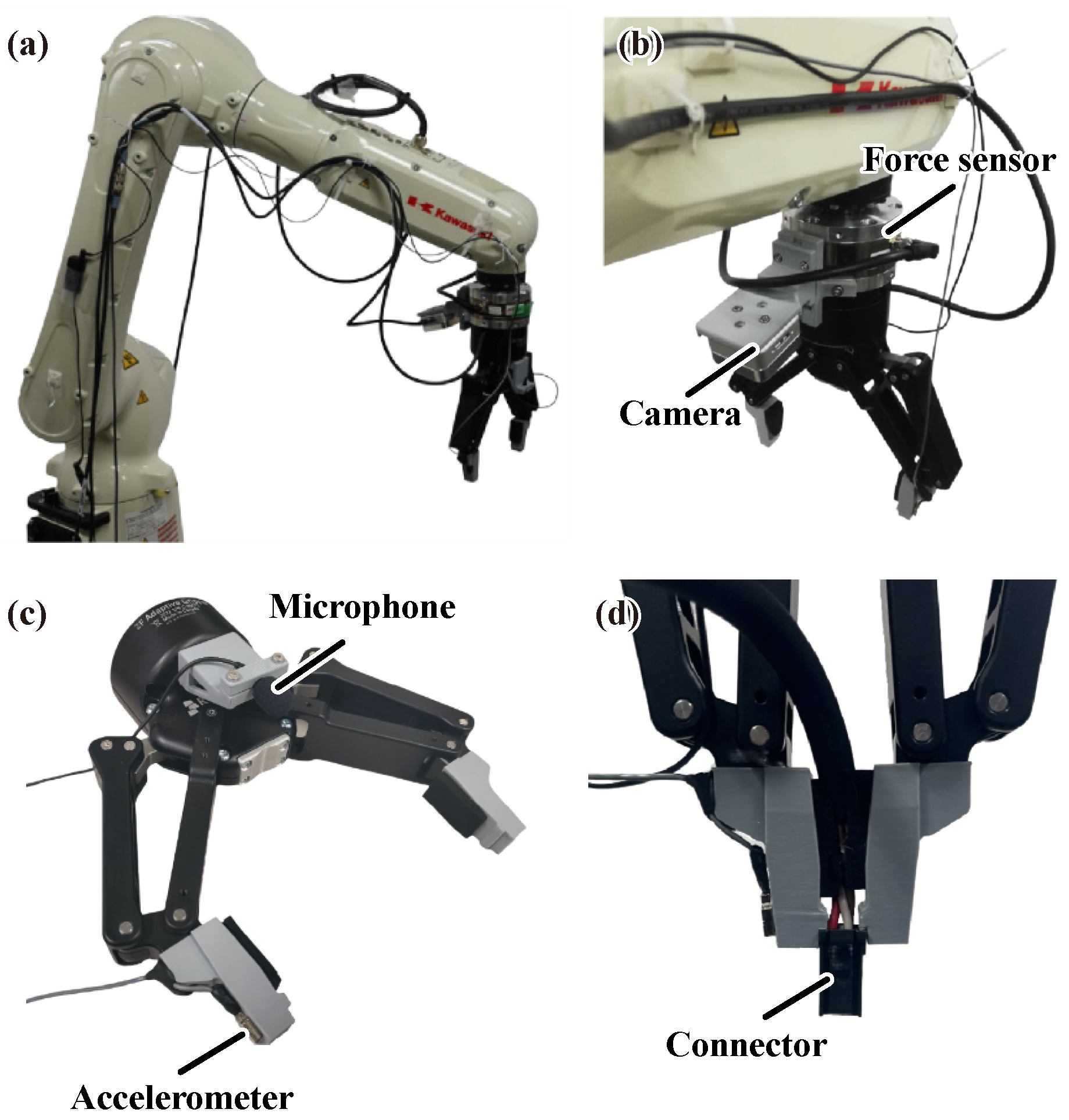
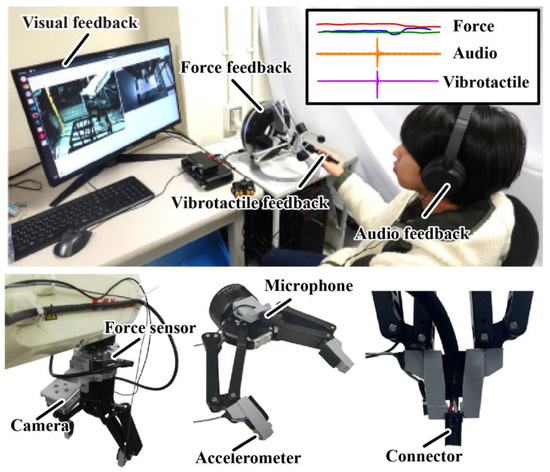
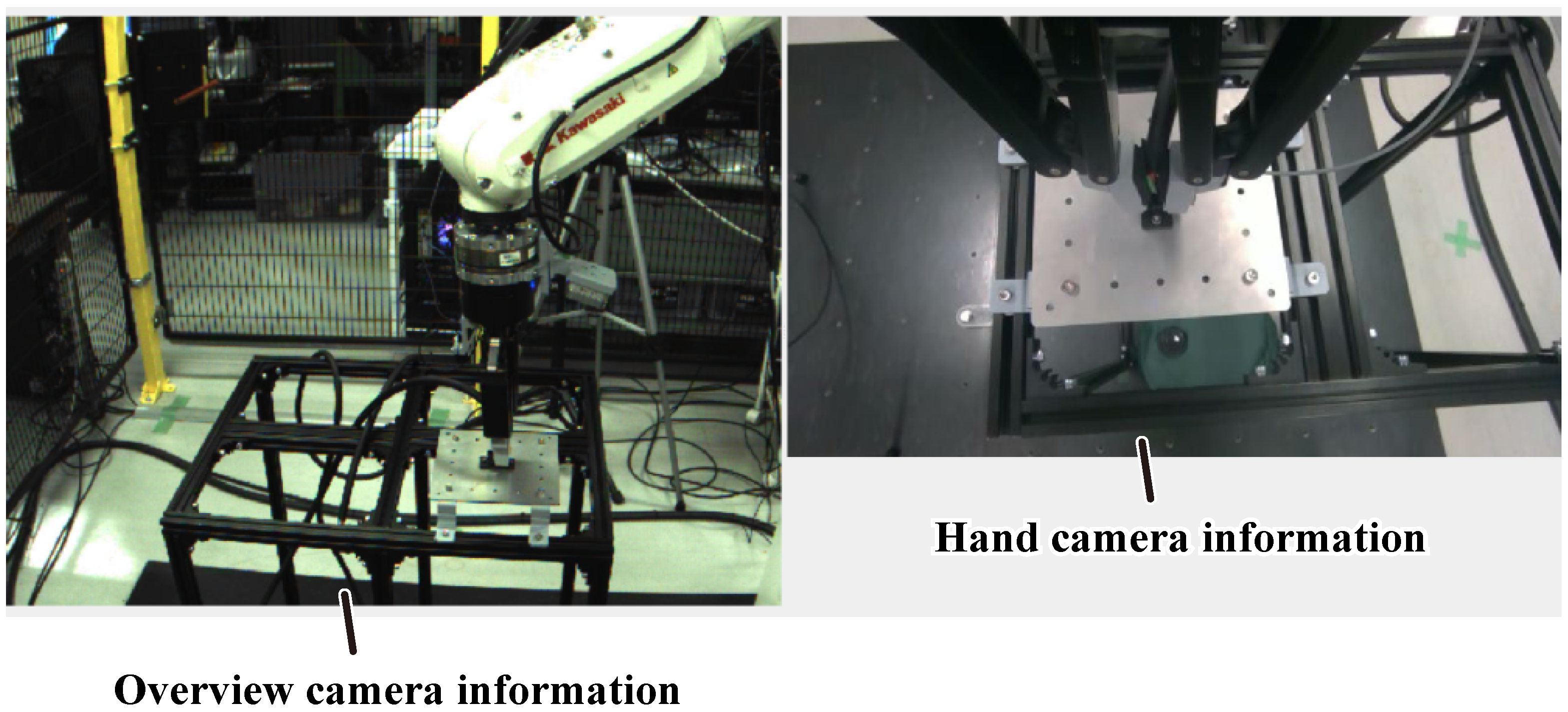
- Visual: A close-up camera (RealSense D405, Intel Corporation, Santa Clara, CA, USA) captured the gripper view (, 30 fps), and an overview camera (STC-MCS322U3V, OMRON SENTECH CO., LTD., Kanagawa, Japan) captured the workspace (, 30 fps).
- Force: A 6-axis force/torque sensor (Axia80-M20, ATI Industrial Automation, Apex, NC, USA) mounted between the wrist and the gripper measured interaction forces.
- Vibrotactile: A high-bandwidth accelerometer (VS-BV20, TOKIN Corporation, Miyagi, Japan) was attached to a gripper finger to capture high-frequency transients during connector mating.
- Audio: An omnidirectional microphone (AT9904, Audio-Technica Corporation, Tokyo, Japan) was placed near the gripper fingers to capture contact sounds.
2.1.2. Leader-Side System
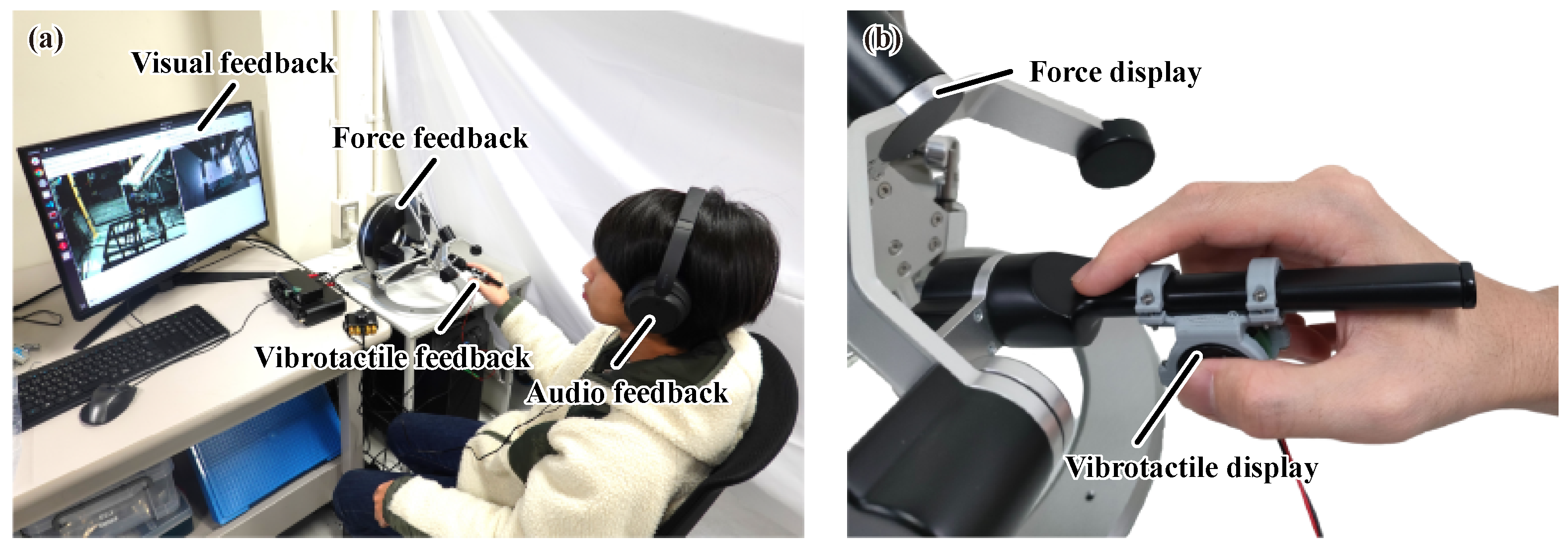
- Visual: A monitor displayed the two camera feeds side-by-side, as shown in Figure 3.
- Force: A haptic device (omega.6, Force Dimension, Nyon, Switzerland) provided 6-DOF pose input and 3-DOF translational force feedback.
- Vibrotactile: A vibrotactile actuator (639897, Foster Electric Co., Ltd., Tokyo, Japan) was mounted on the stylus of the haptic device using a 3D-printed jig, enabling fingertip vibration presentation.
- Audio: Earphones (E500, final Inc., Kanagawa, Japan) presented the audio acquired on the follower side. Ambient noise was attenuated using noise-canceling headphones (WH-CH720N, Sony Corporation, Tokyo, Japan).
2.2. Control Method
2.3. Force Feedback
2.4. Vibrotactile and Auditory Feedback
3. Experiment 1: Mating Detection
3.1. Objective
3.2. Method
3.2.1. Participants
3.2.2. Conditions
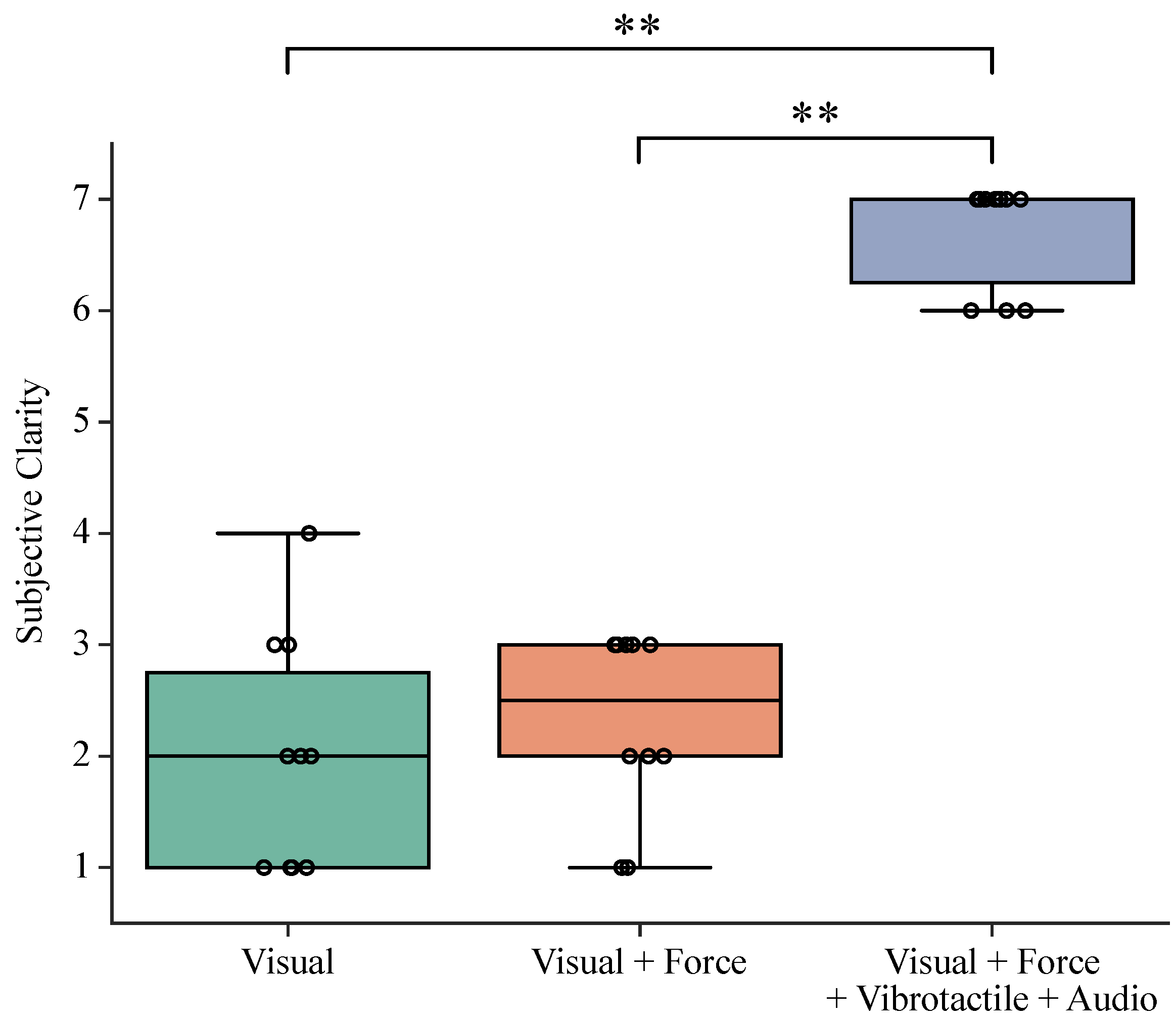
- V (Visual only): Participants judged the mating status based solely on the camera view.
- VF (Visual + Force): Visual feedback combined with force feedback rendered through the haptic device.
- VFVA (Visual + Force + Vibrotactile + Audio): The proposed method, which presents vibrotactile and auditory feedback by direct playback of the measured acceleration and sound signals, in addition to VF.
3.2.3. Stimuli and Procedure
3.2.4. Metrics
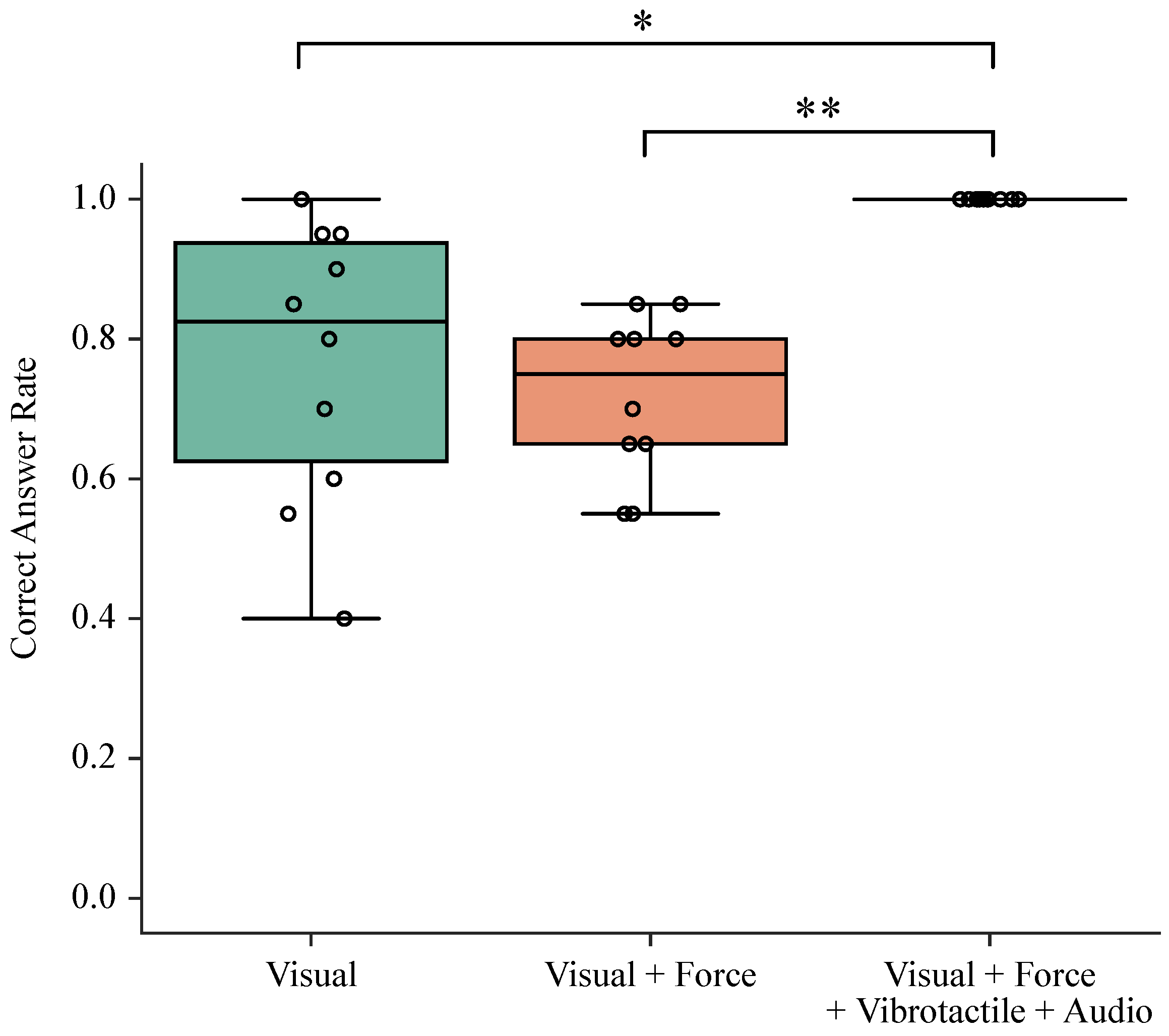
- Correct Answer Rate: The ratio of correctly identified trials (success/failure).
- Subjective Clarity: After each trial, participants rated the subjective easiness of perception on a 7-point Likert scale (1: Did not understand at all, 7: Understood clearly).

3.3. Results
3.3.1. Correct Answer Rate
3.3.2. Subjective Clarity
4. Experiment 2: Modality Contribution
4.1. Objective
4.2. Method
4.2.1. Participants
4.2.2. Conditions
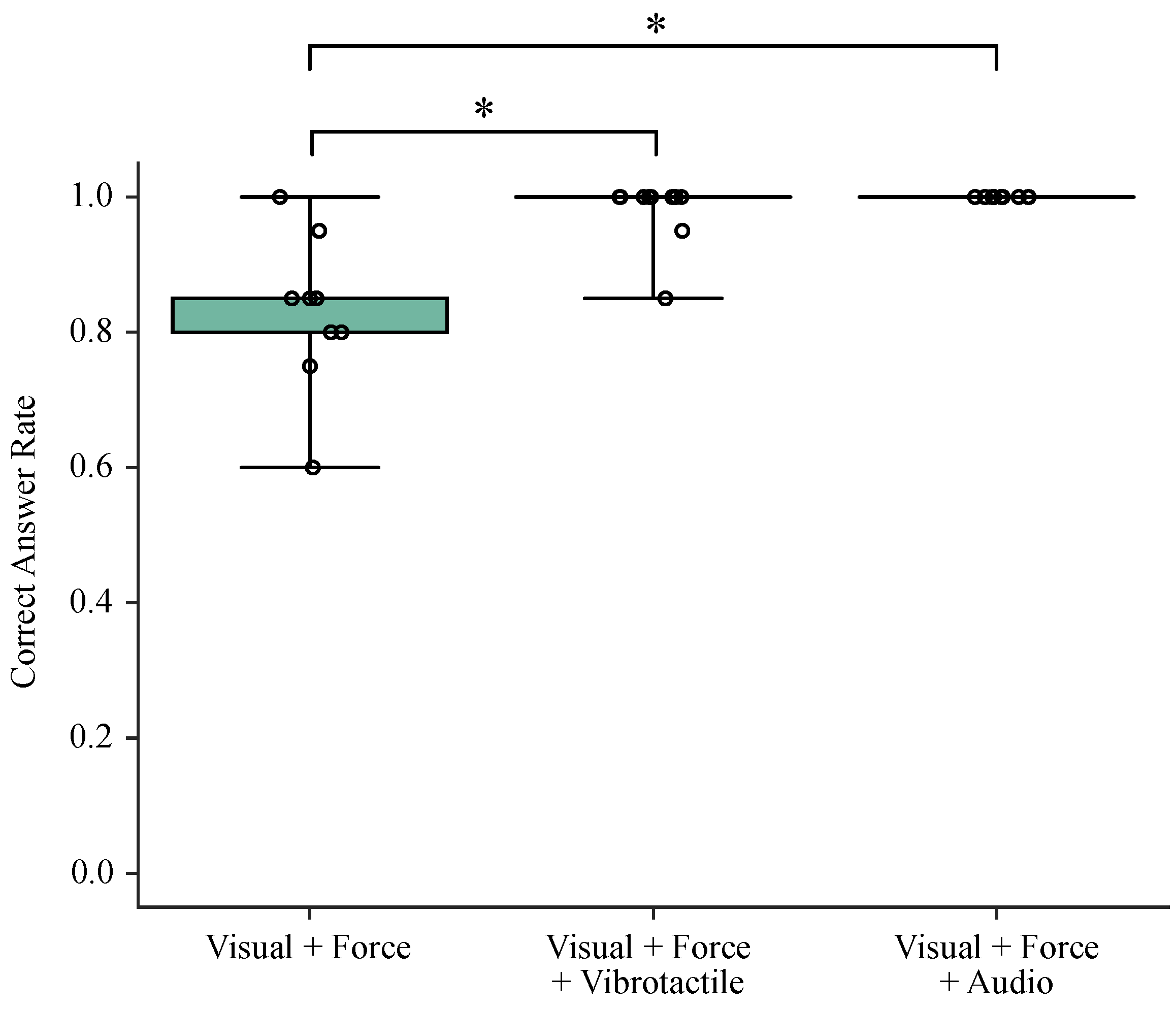
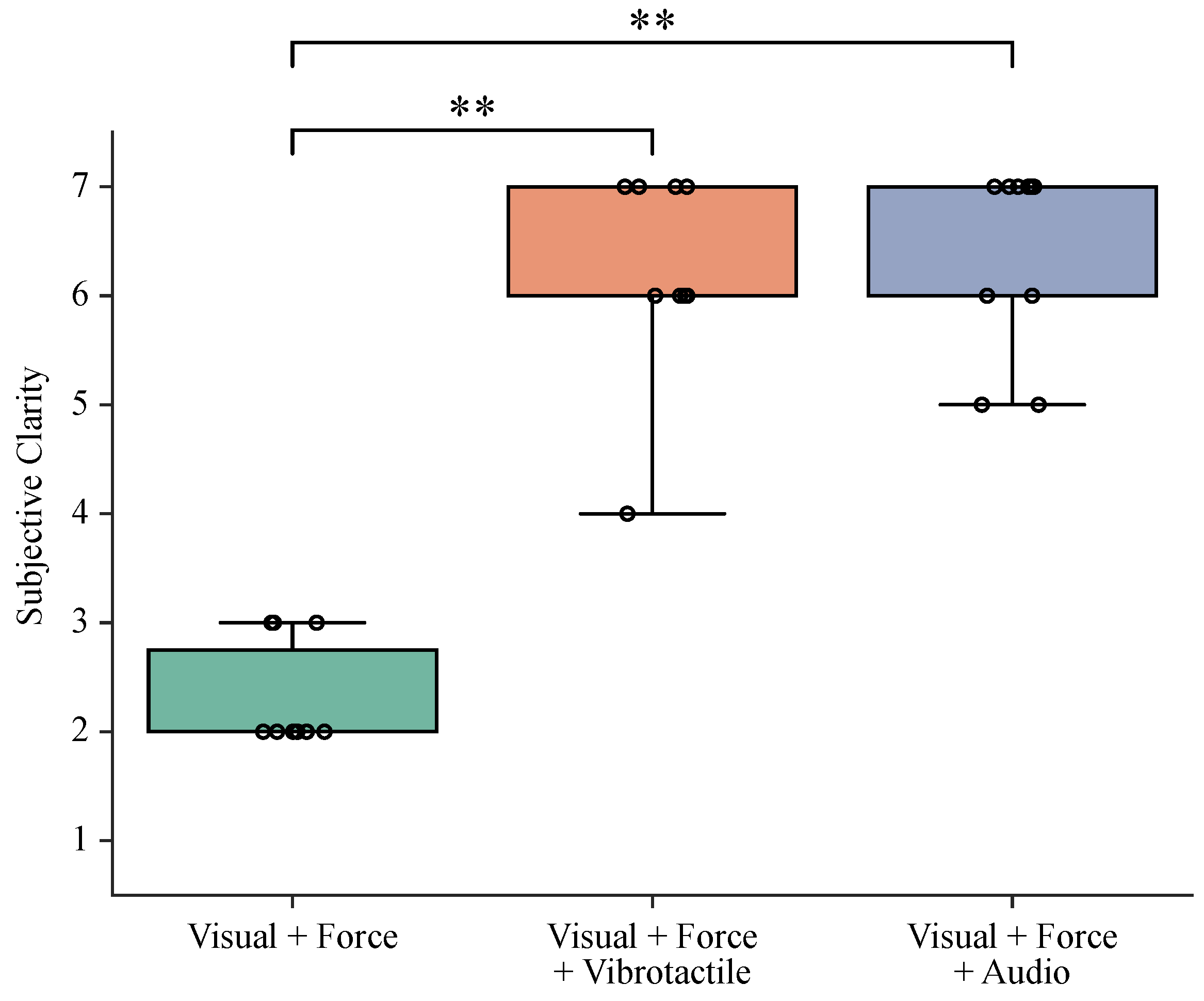
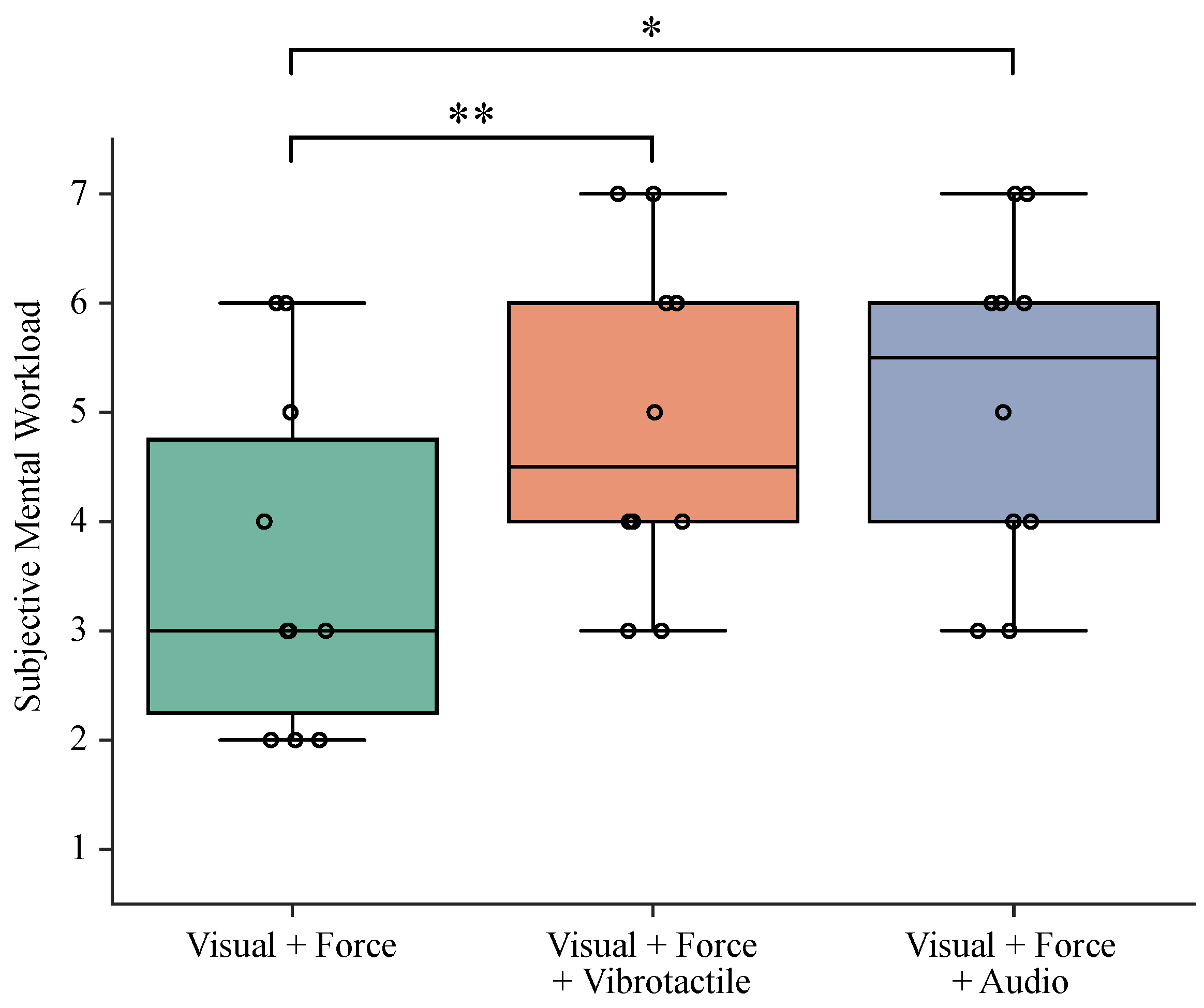
- VF (Visual + Force)
- VFV (Visual + Force + Vibrotactile)
- VFA (Visual + Force + Audio)
4.2.3. Procedure
4.2.4. Metrics
4.3. Results
4.3.1. Correct Answer Rate
4.3.2. Subjective Clarity
4.3.3. Subjective Mental Workload
5. Experiment 3: Connector Insertion
5.1. Objective
5.2. Method
5.2.1. Participants
5.2.2. Conditions
- VF (Visual + Force)
- VFVA (Visual + Force + Vibrotactile + Audio)
5.2.3. Task and Procedure
5.2.4. Metrics
- Objective Metrics:
- –
- Contact Force: The maximum contact force exerted on the connector after the mating event occurred, serving as an indicator of excessive force application.
- –
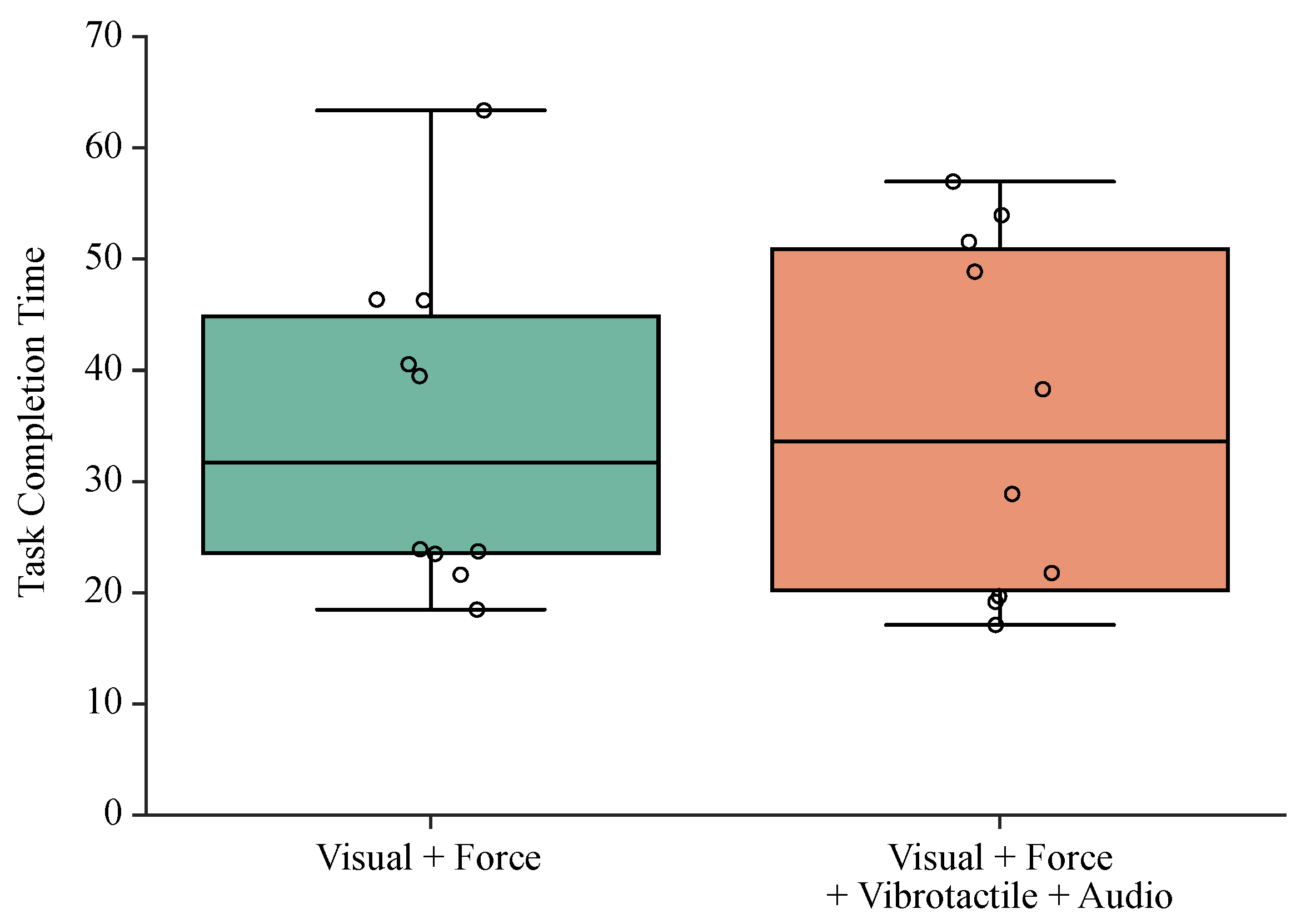
- Task Time: The duration from the start of the insertion phase to the participant’s verbal report of completion.
- Subjective Metrics: After completing the trials for each condition, participants rated the following aspects on a 7-point Likert scale:
- –
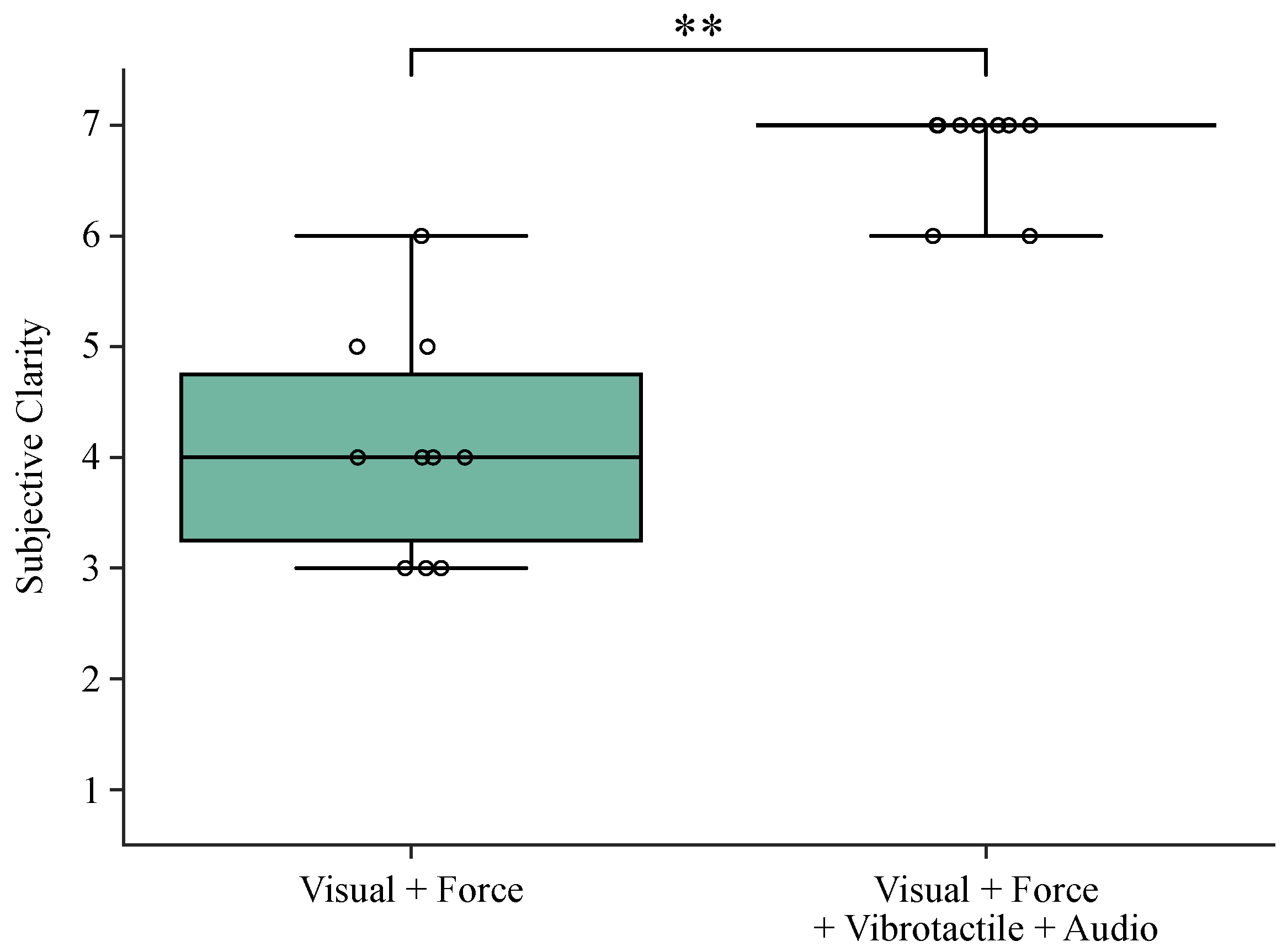
- Subjective Clarity: How clear was the mating sensation? (1: Not clear at all, 7: Very clear)
- –
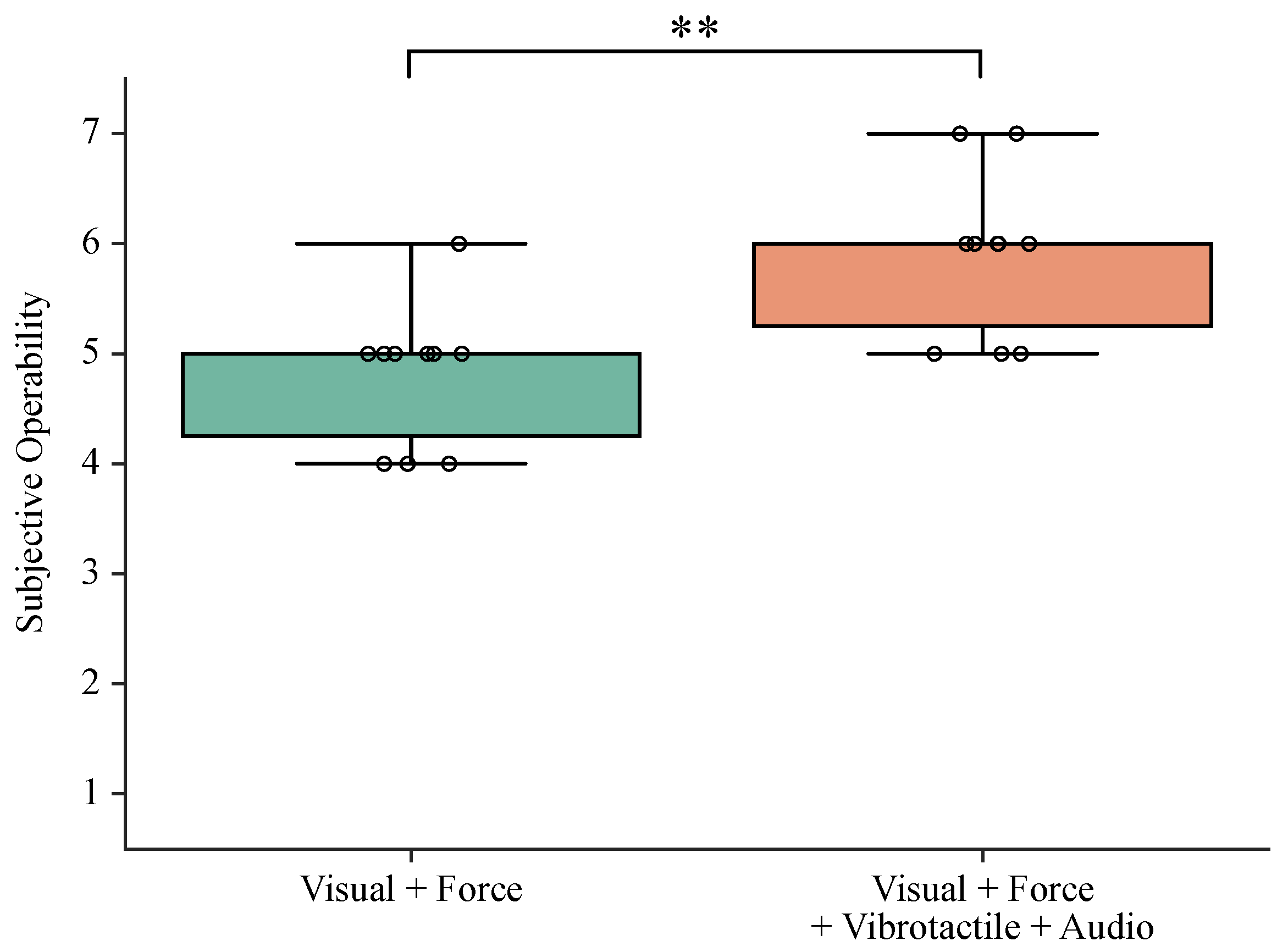
- Subjective Operability: How easy was it to operate the robot? (1: Very difficult, 7: Very easy)
- –
- Subjective Mental Workload: How much mental effort was required? (1: Very low, 7: Very high)
- –
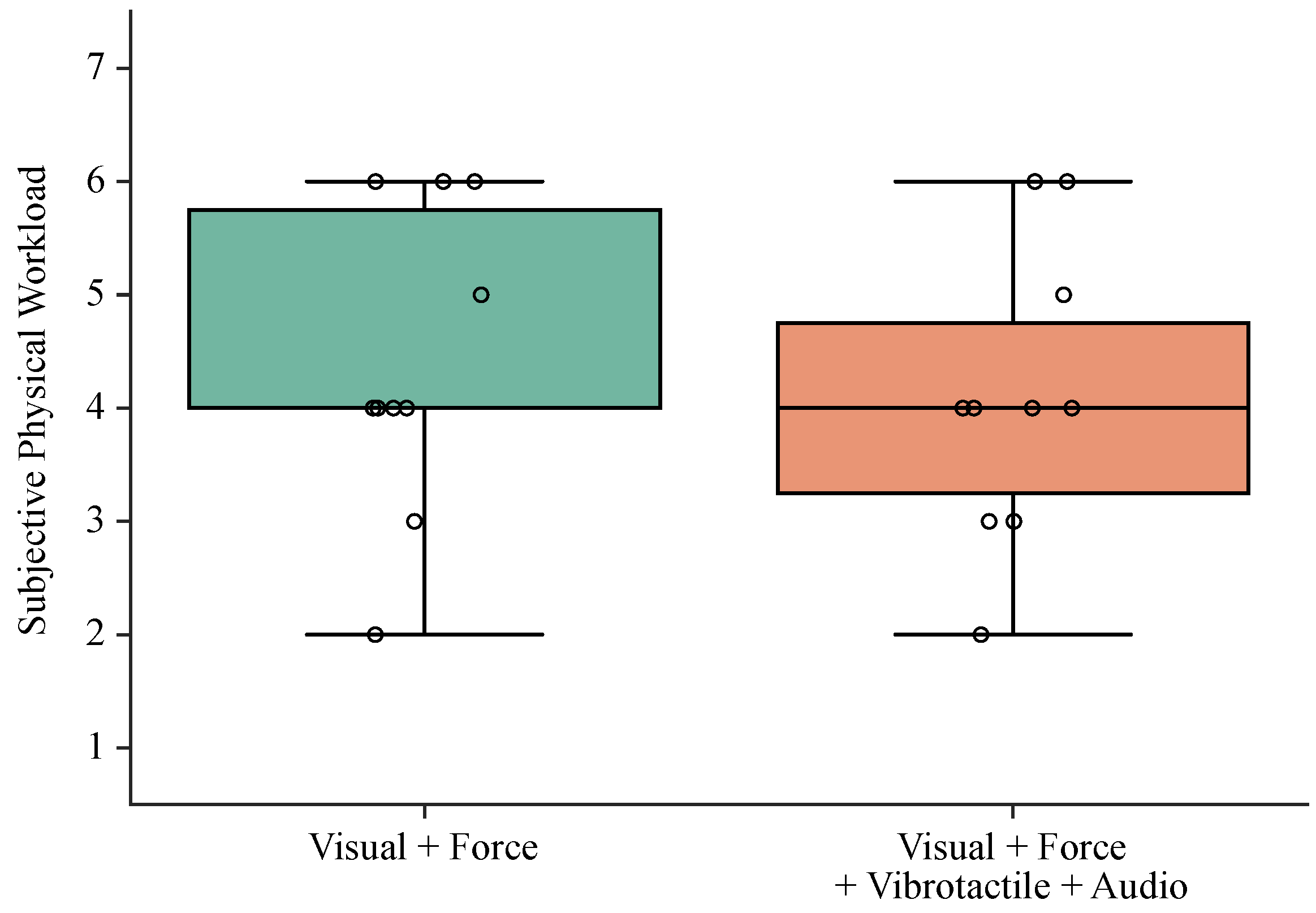
- Subjective Physical Workload: How much physical effort was required? (1: Very low, 7: Very high)
5.3. Results
5.3.1. Maximum Contact Force
5.3.2. Task Completion Time
5.3.3. Subjective Clarity
5.3.4. Subjective Operability
5.3.5. Subjective Mental Workload
5.3.6. Subjective Physical Workload
6. Discussion
6.1. Effectiveness of Multimodal Feedback
6.2. Redundancy of Vibrotactile and Auditory Cues
6.3. Trade-Off Between Performance and Mental Workload
6.4. Impact on Physical Safety
6.5. Limitations and Future Work
7. Conclusions
- Performance and Clarity: The addition of vibrotactile and auditory cues significantly improves the accuracy and subjective clarity of mating detection compared to visual and force feedback alone.
- Robustness via Redundancy: Vibrotactile and auditory cues contribute comparably to this performance improvement. This functional redundancy ensures robust operation even if one modality is masked or unavailable.
- Safety vs. Mental Workload Trade-off: While the proposed feedback enhances physical safety by significantly reducing post-mating contact forces, it imposes a higher mental workload on the operator due to the cognitive demand of sensory integration.
Author Contributions
Funding
Institutional Review Board Statement
Informed Consent Statement
Data Availability Statement
Acknowledgments
Conflicts of Interest
References
- Hägele, M.; Nilsson, K.; Pires, J.N.; Bischoff, R. Industrial robotics. In Springer Handbook of Robotics; Springer: Cham, Switzerland, 2016; pp. 1385–1422. [Google Scholar]
- Arents, J.; Greitans, M. Smart industrial robot control trends, challenges and opportunities within manufacturing. Appl. Sci. 2022, 12, 937. [Google Scholar] [CrossRef]
- Hokayem, P.F.; Spong, M.W. Bilateral teleoperation: An historical survey. Automatica 2006, 42, 2035–2057. [Google Scholar] [CrossRef]
- Niemeyer, G.; Preusche, C.; Stramigioli, S.; Lee, D. Telerobotics. In Springer Handbook of Robotics; Springer: Cham, Switzerland, 2016; pp. 1085–1108. [Google Scholar]
- Zhao, T.Z.; Kumar, V.; Levine, S.; Finn, C. Learning Fine-Grained Bimanual Manipulation with Low-Cost Hardware. In Proceedings of the Robotics: Science and Systems, Daegu, Republic of Korea, 10–14 July 2023. [Google Scholar]
- Chi, C.; Xu, Z.; Feng, S.; Cousineau, E.; Du, Y.; Burchfiel, B.; Tedrake, R.; Song, S. Diffusion policy: Visuomotor policy learning via action diffusion. Int. J. Robot. Res. 2025, 44, 1684–1704. [Google Scholar] [CrossRef]
- Sasagawa, A.; Fujimoto, K.; Sakaino, S.; Tsuji, T. Imitation learning based on bilateral control for human–robot cooperation. IEEE Robot. Autom. Lett. 2020, 5, 6169–6176. [Google Scholar] [CrossRef]
- Buamanee, T.; Kobayashi, M.; Uranishi, Y.; Takemura, H. Bi-act: Bilateral control-based imitation learning via action chunking with transformer. In Proceedings of the 2024 IEEE International Conference on Advanced Intelligent Mechatronics (AIM), Boston, MA, USA, 15–19 July 2024; IEEE: Piscataway, NJ, USA, 2024; pp. 410–415. [Google Scholar]
- Liu, W.; Wang, J.; Wang, Y.; Wang, W.; Lu, C. Forcemimic: Force-centric imitation learning with force-motion capture system for contact-rich manipulation. In Proceedings of the 2025 IEEE International Conference on Robotics and Automation (ICRA), Atlanta, GA, USA, 19–23 May 2025; IEEE: Piscataway, NJ, USA, 2025; pp. 1105–1112. [Google Scholar]
- Rusli, L.; Luscher, A.; Sommerich, C. Force and tactile feedback in preloaded cantilever snap-fits under manual assembly. Int. J. Ind. Ergon. 2010, 40, 618–628. [Google Scholar] [CrossRef]
- Lawrence, D.A. Stability and transparency in bilateral teleoperation. IEEE Trans. Robot. Autom. 2002, 9, 624–637. [Google Scholar] [CrossRef]
- Hannaford, B.; Ryu, J.H. Time-domain passivity control of haptic interfaces. IEEE Trans. Robot. Autom. 2002, 18, 1–10. [Google Scholar] [CrossRef]
- Hannaford, B.; Kim, W.S. Force reflection, shared control, and time delay in telemanipulation. In Proceedings of the Conference Proceedings, IEEE International Conference on Systems, Man and Cybernetics, Cambridge, MA, USA, 14–17 November 1989; IEEE: Piscataway, NJ, USA, 1989; pp. 133–137. [Google Scholar]
- Wagner, C.R.; Howe, R.D. Force feedback benefit depends on experience in multiple degree of freedom robotic surgery task. IEEE Trans. Robot. 2007, 23, 1235–1240. [Google Scholar] [CrossRef]
- Tanioka, T.; Nagano, H.; Tazaki, Y.; Yokokohji, Y. Effects of Haptic Feedback on Precision Peg Insertion Tasks Under Different Visual and Communication Latency Conditions. Robotics 2025, 14, 34. [Google Scholar] [CrossRef]
- Kuchenbecker, K.J.; Fiene, J.; Niemeyer, G. Improving contact realism through event-based haptic feedback. IEEE Trans. Vis. Comput. Graph. 2006, 12, 219–230. [Google Scholar] [CrossRef]
- Kontarinis, D.A.; Howe, R.D. Tactile display of vibratory information in teleoperation and virtual environments. Presence Teleoperators Virtual Environ. 1995, 4, 387–402. [Google Scholar] [CrossRef]
- Kuchenbecker, K.J.; Gewirtz, J.; McMahan, W.; Standish, D.; Martin, P.; Bohren, J.; Mendoza, P.J.; Lee, D.I. VerroTouch: High-frequency acceleration feedback for telerobotic surgery. In Proceedings of the Haptics: Generating and Perceiving Tangible Sensations: International Conference, EuroHaptics 2010, Amsterdam, The Netherlands, 8–10 July 2010; Proceedings, Part I. Springer: Berlin/Heidelberg, Germany, 2010; pp. 189–196. [Google Scholar]
- Nagano, H.; Takenouchi, H.; Cao, N.; Konyo, M.; Tadokoro, S. Tactile feedback system of high-frequency vibration signals for supporting delicate teleoperation of construction robots. Adv. Robot. 2020, 34, 730–743. [Google Scholar] [CrossRef]
- Gong, Y.; Mat Husin, H.; Erol, E.; Ortenzi, V.; Kuchenbecker, K.J. AiroTouch: Enhancing telerobotic assembly through naturalistic haptic feedback of tool vibrations. Front. Robot. AI 2024, 11, 1355205. [Google Scholar] [CrossRef] [PubMed]
- Minamizawa, K.; Kakehi, Y.; Nakatani, M.; Mihara, S.; Tachi, S. TECHTILE toolkit: A prototyping tool for design and education of haptic media. In Proceedings of the 2012 Virtual Reality International Conference, Laval, France, 28–30 March 2012; pp. 1–2. [Google Scholar]
- Wildenbeest, J.G.; Abbink, D.A.; Heemskerk, C.J.; Van Der Helm, F.C.; Boessenkool, H. The impact of haptic feedback quality on the performance of teleoperated assembly tasks. IEEE Trans. Haptics 2012, 6, 242–252. [Google Scholar] [CrossRef] [PubMed]
- Takahashi, M.; Nagano, H.; Tazaki, Y.; Yokokohji, Y. Effective haptic feedback type for robot-mediated material discrimination depending on target properties. Front. Virtual Real. 2023, 4, 1070739. [Google Scholar] [CrossRef]
- Massimino, M.J.; Sheridan, T.B. Sensory substitution for force feedback in teleoperation. In Analysis, Design and Evaluation of Man–Machine Systems 1992; Elsevier: Amsterdam, The Netherlands, 1993; pp. 109–114. [Google Scholar]
- Aviles-Rivero, A.I.; Alsaleh, S.M.; Philbeck, J.; Raventos, S.P.; Younes, N.; Hahn, J.K.; Casals, A. Sensory substitution for force feedback recovery: A perception experimental study. ACM Trans. Appl. Percept. (TAP) 2018, 15, 1–19. [Google Scholar] [CrossRef]
- Kitagawa, M.; Dokko, D.; Okamura, A.M.; Yuh, D.D. Effect of sensory substitution on suture-manipulation forces for robotic surgical systems. J. Thorac. Cardiovasc. Surg. 2005, 129, 151–158. [Google Scholar] [CrossRef] [PubMed]
- van Beek, F.E.; Bisschop, Q.; Gijsbertse, K.; de Vries, P.S.; Kuling, I.A. A Comparison of Haptic and Auditory Feedback as a Warning Signal for Slip in Tele-Operation Scenarios. In Proceedings of the International Conference on Human Haptic Sensing and Touch Enabled Computer Applications, Hamburg, Germany, 22–25 May 2022; Springer: Cham, Switzerland, 2022; pp. 101–109. [Google Scholar]
- Hart, S.G.; Staveland, L.E. Development of NASA-TLX (Task Load Index): Results of Empirical and Theoretical Research. Adv. Psychol. 1988, 52, 139–183. [Google Scholar]
- Yamauchi, T.; Okamoto, S.; Konyo, M.; Hidaka, Y.; Maeno, T.; Tadokoro, S. Real-time remote transmission of multiple tactile properties through master-slave robot system. In Proceedings of the 2010 IEEE International Conference on Robotics and Automation, Anchorage, AK, USA, 3–7 May 2010; IEEE: Piscataway, NJ, USA, 2010; pp. 1753–1760. [Google Scholar]
- Morita, N.; Ichijo, A.; Konyo, M.; Kato, H.; Sase, K.; Nagano, H.; Tadokoro, S. Wearable high-resolution haptic display using suction stimuli to represent cutaneous contact information on finger pad. IEEE Trans. Haptics 2023, 16, 687–694. [Google Scholar] [CrossRef] [PubMed]
- Ujitoko, Y.; Taniguchi, T.; Sakurai, S.; Hirota, K. Development of finger-mounted high-density pin-array haptic display. IEEE Access 2020, 8, 145107–145114. [Google Scholar] [CrossRef]
- McMahan, W.; Kuchenbecker, K.J. Spectral subtraction of robot motion noise for improved event detection in tactile acceleration signals. In Proceedings of the International Conference on Human Haptic Sensing and Touch Enabled Computer Applications, Tampere, Finland, 13–15 June 2012; Springer: Berlin/Heidelberg, Germany, 2012; pp. 326–337. [Google Scholar]
- Bussolan, A.; Baraldo, S.; Gambardella, L.M.; Valente, A. Assessing the impact of human-robot collaboration on stress levels and cognitive load in industrial assembly tasks. In Proceedings of the ISR Europe 2023; 56th International Symposium on Robotics, Stuttgart, Germany, 26–27 September 2023; VDE: Frankfurt am Main, Germany, 2023; pp. 78–85. [Google Scholar]


Disclaimer/Publisher’s Note: The statements, opinions and data contained in all publications are solely those of the individual author(s) and contributor(s) and not of MDPI and/or the editor(s). MDPI and/or the editor(s) disclaim responsibility for any injury to people or property resulting from any ideas, methods, instructions or products referred to in the content. |
© 2026 by the authors. Licensee MDPI, Basel, Switzerland. This article is an open access article distributed under the terms and conditions of the Creative Commons Attribution (CC BY) license.
Share and Cite
Ohno, K.; Nagano, H.; Yokokohji, Y. Beyond Visual and Force Feedback: Role of Vibrotactile and Auditory Cues in Robot Teleoperated Assembly. Robotics 2026, 15, 39. https://doi.org/10.3390/robotics15020039
Ohno K, Nagano H, Yokokohji Y. Beyond Visual and Force Feedback: Role of Vibrotactile and Auditory Cues in Robot Teleoperated Assembly. Robotics. 2026; 15(2):39. https://doi.org/10.3390/robotics15020039
Chicago/Turabian StyleOhno, Kaoru, Hikaru Nagano, and Yasuyoshi Yokokohji. 2026. "Beyond Visual and Force Feedback: Role of Vibrotactile and Auditory Cues in Robot Teleoperated Assembly" Robotics 15, no. 2: 39. https://doi.org/10.3390/robotics15020039
APA StyleOhno, K., Nagano, H., & Yokokohji, Y. (2026). Beyond Visual and Force Feedback: Role of Vibrotactile and Auditory Cues in Robot Teleoperated Assembly. Robotics, 15(2), 39. https://doi.org/10.3390/robotics15020039