1. Introduction
Firefighting robots currently represent one of the most effective means of fire protection, enabling the suppression of fires with water jets or other extinguishing agents without direct human presence in zones exposed to hazardous fire factors [
1]. At certain facilities, the task of ensuring fire safety is often complicated by the risk of collapse of load-bearing structures or tanks containing flammable substances due to heating to critical temperatures. In such cases, firefighting robots are also employed for cooling various protected objects [
2]. Analysis of current research [
1,
3] indicates that the development of firefighting robots is focused on the creation of autonomous or teleoperated mobile platforms [
4], including those based on unmanned aerial vehicles (UAVs) [
5], enhancement of fire-seat detection algorithms [
6], improvement of targeting and guidance systems for directing extinguishing agent jets using artificial intelligence and computer vision [
7,
8], and increasing the reliability of mechanical systems, among other areas.
A key control objective for firefighting robots is directing the flow of fire-extinguishing agent (FEA) towards a fire source, an object requiring cooling, etc. As shown in [
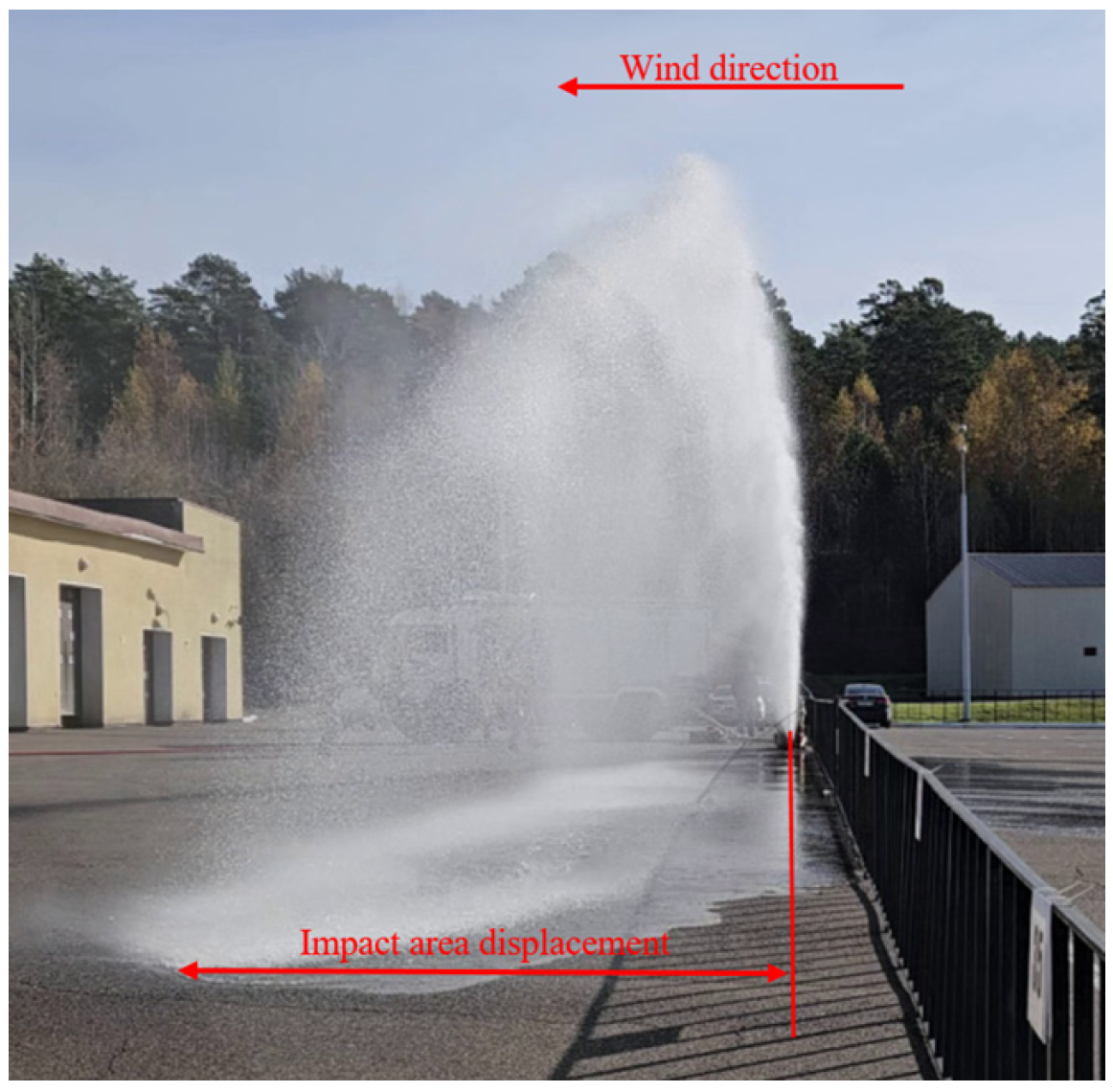
9], achieving this in open spaces can be significantly complicated by turbulence and external factors. Specifically, wind can alter the jet trajectory and cause its disintegration, while low temperatures reduce jet height and range by altering the physical parameters of the ambient air and the extinguishing agent. This can ultimately lead to a significant displacement of the impact area (
Figure 1).
Turbulence significantly influences the solution of fire suppression jet targeting and control problems. The flow at the nozzle outlet of a fire monitor has a high velocity, which induces the formation of vortices at its boundaries. This leads to the mixing of the extinguishing agent with the ambient air through which it travels, resulting in the gradual breakup of the jet into fragments (disintegration) and individual droplets (atomization), an increase in its cross-sectional area, and a deceleration of its core [
10]. The disintegrated and atomized portions of the extinguishing agent flow are substantially more susceptible to external disturbances, particularly wind, compared to the compact (coherent) part of the jet. As can be seen in
Figure 1, the deviation of the jet in its initial region is practically negligible, whereas after its disintegration, the displacement of the impingement zone reaches a significant magnitude. The breakup of the FEA flow and its turbulent mixing with air complicate the targeting of the jet and can reduce the effectiveness of fire suppression or structural cooling due to a substantial decrease in the application density (the discharge rate of the extinguishing agent per unit area of the protected surface) [
11].
Under such conditions, solving the targeting problem using visual feedback can be hindered by the following factors: smoke obscuration, visual noise from external objects overlapping the agent flow, and poor distinguishability of its fragmented part against a background of similar brightness and color. When targeting with a compact (solid) segment of the jet or a short-range jet, one can use trajectory data obtained from field tests under various control parameters without accounting for wind, as the influence of disturbances is less pronounced in this case. However, this approach may be ineffective for controlling a long-range, elevated trajectory jet. Conducting field tests to obtain empirical data describing the behavior of a fire robot’s jet across a wide spectrum of external factor parameters, corresponding to various usage scenarios, is extremely challenging. Furthermore, the trajectory of the fire-extinguishing agent flow under wind influence represents a geometrically complex figure of potentially significant dimensions.
Photogrammetry [
12] is one of the most accessible methods for 3D reconstruction of real objects. Currently, established methodologies and their software implementations exist [
13], allowing for highly accurate creation of 3D models of various objects, buildings, structures, etc., based on multiple photographs taken from different viewpoints, including those from unmanned aerial vehicles (UAVs) [
14]. However, the applicability of these methods is largely limited to static objects, whose shape and position remain stable during the “scanning” process. Consequently, standard photogrammetry algorithms may be inefficient for reconstructing 3D models of free jets, whose boundaries change substantially during motion due to various factors, particularly turbulence. Furthermore, this task is complicated by the following characteristics of the studied flow processes:
Varying optical density of the jet along its length.
Dependence of the optical density of the same jet fragment on the camera viewpoint.
Poor distinguishability of the jet against a background of similar brightness and color (e.g., a water flow from a fire monitor against a cloudy sky).
Visual noise of the semi-transparent jet by external objects in the background.
Limited jet lifetime (e.g., during field tests without access to a continuous supply of the test fluid).
Significant jet dimensions (e.g., tens of meters during fire monitor field tests).
These characteristics can complicate tasks such as obtaining synchronized, high-quality images of the process from a sufficient number of viewpoints, boundary extraction, feature point detection [
15], image rectification [
16], etc. Difficulties related to optical density, visual noise, and poor distinguishability are particularly pronounced in the jet breakup and spray regions, which are often of primary interest for targeting control.
In [
17], a method for jet trajectory determination based on UAV imagery using trainable prompt vectors is presented. This method demonstrated high efficiency in tracking the fire-extinguishing agent flow without accounting for wind and potential image noise from smoke in fire conditions. In [
18,
19], a method for predicting jet trajectory based on a short-range computer vision system is described. This approach can be used in smoky conditions; however, under strong crosswinds and at long ranges, predicting the impact area position based on the jet’s compact core may yield low accuracy. This is because the solid flow segment deviates only slightly from its initial direction, so an estimate of trajectory change over a long distance may differ significantly from the actual displacement. In [
20], a method for predicting water jet falling point position under wind influence, based on a neural network model, was proposed and showed relatively high accuracy. However, that study used a water cannon with a short range, and the falling point was predicted only in a single horizontal plane. To enable jet targeting to any point within the fire robot’s operational radius, information about the position of the extinguishing agent flow along its entire trajectory is required.
In [
9], a method for predicting fire-extinguishing agent jet trajectory under wind load, based on Computational Fluid Dynamics (CFD) methods, was proposed, along with experience in using this method accounting for the influence of sub-zero temperatures. The primary drawback of this approach in the context of fire robot control is its significant computational complexity, which precludes its use in real-time mode, where simulation must proceed at the speed of the actual physical processes. To address this problem, various approaches are currently employed, including the following:
Model simplification by increasing computational grid cell size [
21], which can significantly reduce simulation time at the cost of calculation accuracy. This approach is largely ineffective for predicting fire-extinguishing agent trajectory, as it is difficult to achieve both acceptable error and prediction speed corresponding to real-time operation.
Increasing the speed of numerical solution of differential equations by reducing the number of iterations based on the Arnoldi method [
22]. This typically results in a minor increase in error. However, for predicting fire-extinguishing agent trajectory under disturbances, this approach does not achieve the speed required for real-time operation.
Reducing simulation time via parallel computing for solving CFD equations [
23] while maintaining high accuracy. However, the application of this approach to fire robots is significantly constrained by the available hardware, which cannot provide acceptable calculation speeds.
Calculating specific characteristics of the studied processes, such as impact area position, using machine learning [
20]. This approach can potentially provide the required computational speed. However, constructing sufficient and high-quality training and validation datasets for configuring such models is a complex problem, as fire-extinguishing agent jets have significant geometric dimensions, dynamically changing boundaries, variable optical density, etc. These characteristics significantly complicate the measurement of the studied parameters via field tests.
The hypothesis of this work is that the combined use of machine learning (ML) and Computational Fluid Dynamics [
24,
25] can solve this problem. In this approach, numerical simulation of gas–liquid flow processes is used to generate datasets across a wide range of control and disturbance parameters. The data thus obtained are then used to train and verify neural network models intended for real-time estimation of relevant jet parameters. Validation datasets are formed based on field tests of robotic firefighting systems or their actuators (fire monitors). Implementing this approach is only possible if the target characteristics describing the dynamics of the studied flow processes are consistent between simulation and experimental results.
In this study, the primary target characteristic of the fire-extinguishing agent jet from a fire monitor is its trajectory, described by the upper boundary of the studied gas–liquid flow. This choice is motivated by the fact that it enables the determination of instrumentally measurable jet parameters: range, height, and coordinates of the farthest point of the impact area. These characteristics can be used for experimental validation of the obtained results.
To implement the proposed approach, the following tasks were accomplished within this study:
Development of a methodology for real-time prediction of fire-extinguishing agent flow trajectory.
Development of a methodology for reconstructing the fire-extinguishing agent flow trajectory from experimental data using photogrammetry methods for forming validation datasets.
Development of a methodology for calculating the fire-extinguishing agent flow trajectory from simulation results that is consistent with experimental data.
Selection of Computational Fluid Dynamics methods for simulating the motion of the fire-extinguishing agent under disturbances.
Experimental evaluation of the effectiveness of the developed methodology for real-time water jet trajectory prediction.
This article is structured as follows:
Section 2 presents the methods used to solve the aforementioned tasks;
Section 3 presents the results of reconstructing the fire-extinguishing agent flow trajectory from experiments, the selection of CFD methods for simulating the agent’s motion under disturbances, and the evaluation of the developed real-time water jet trajectory prediction methodology’s effectiveness;
Section 4 presents conclusions and directions for future research.
2. Materials and Methods
2.1. Methodology for Real-Time Forecasting of Fire-Extinguishing Agent Trajectory
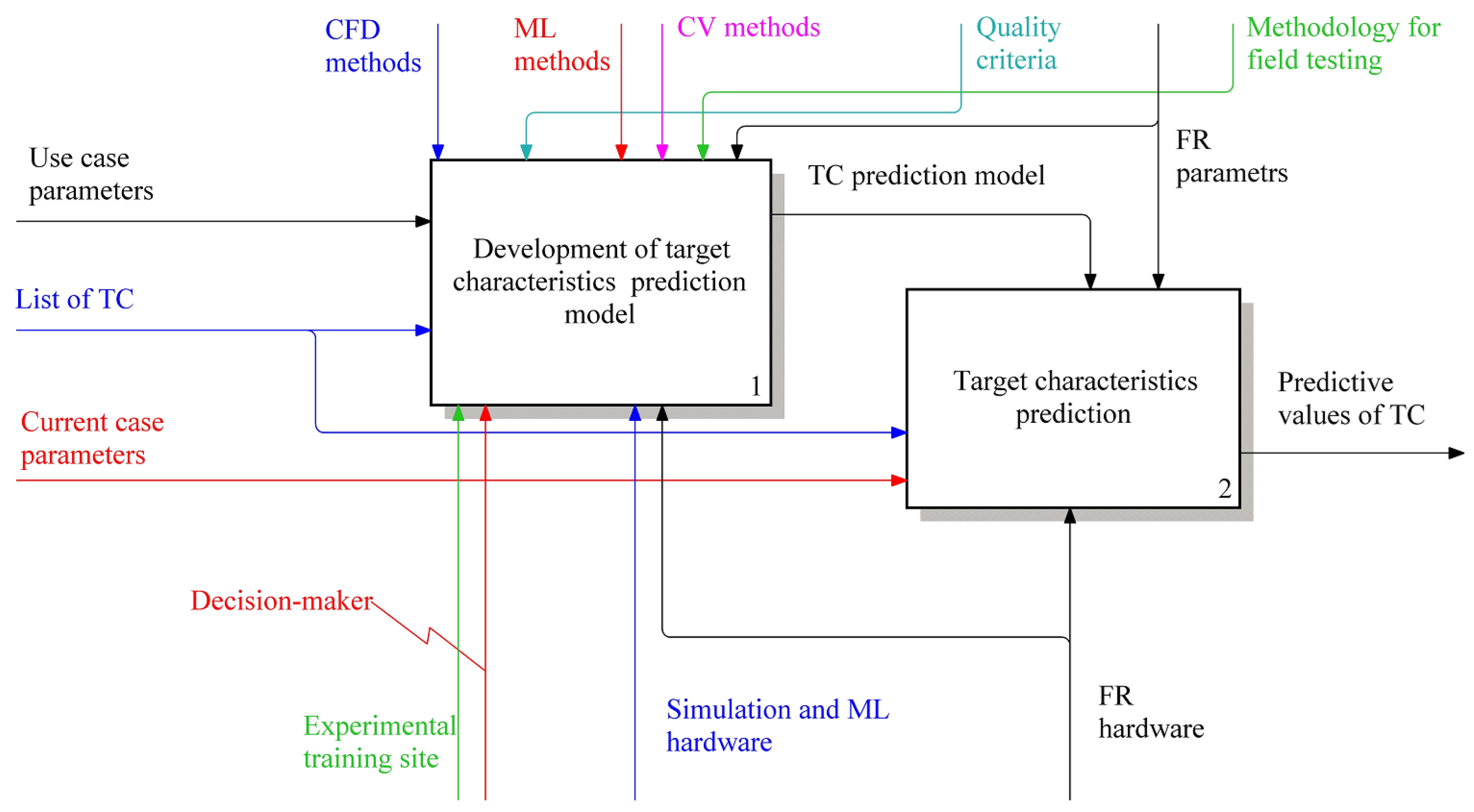
The core of the developed methodology is a trained computational model (
Figure 2).
The construction of this model (
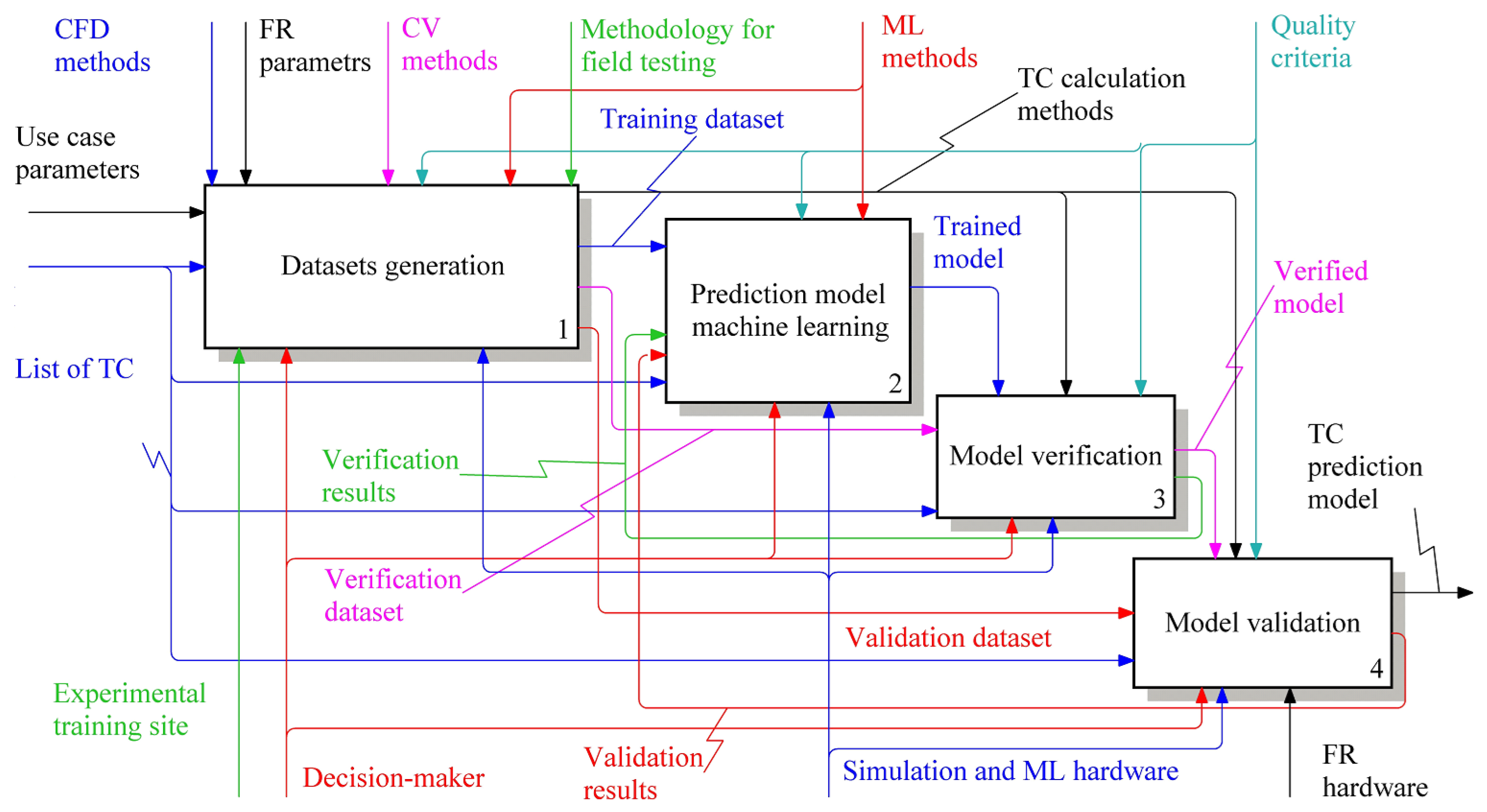
Figure 2, block 1) consists of four main stages (
Figure 3): initial data generation, machine learning, verification, and validation.
The generation of initial data (
Figure 3, block 1) is based on the usage scenarios of the fire monitor under investigation. Within this work, these scenarios are described by the following set of parameters:
Ambient air temperature range (T);
Range of wind load directions (γ—the wind direction angle relative to the horizontal projection of the fire monitor nozzle axis) and velocities (vw);
Range of elevation angles for the fire robot monitor’s output nozzle (α);
Range of fire-extinguishing agent flow rates (qfea).
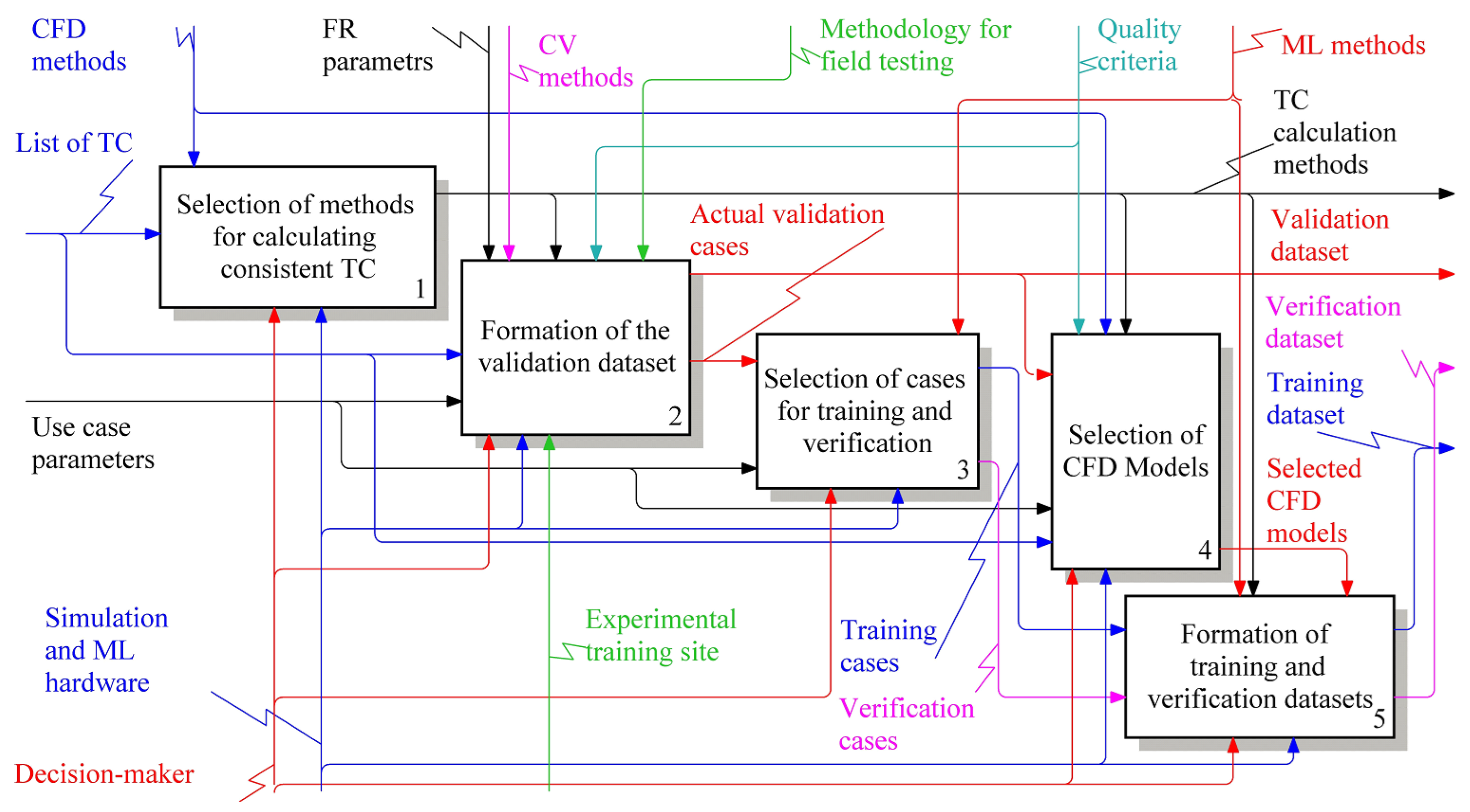
Based on these parameters, sets of scenarios are selected (
Figure 4, block 3) for machine learning (
Figure 3, block 2), verification (
Figure 3, block 3), and validation (
Figure 3, block 4) of the trajectory forecasting computational model, adhering to the following principles:
The sets of training and verification scenarios must not overlap, i.e., scenarios used to check the model’s adequacy against results obtained via Computational Fluid Dynamics methods (verification) are not used in its training [
26].
The sets of training and validation scenarios must also not overlap, i.e., scenarios used to check the model’s adequacy against results obtained from field tests (validation) are not used in its training.
The boundaries of the parameter value ranges in the training set must correspond to the usage scenarios of the investigated robotic firefighting systems.
The validation scenario set can be formed and adjusted based on the results of conducted field tests, as ensuring precise values for the main physical parameters of the experiment is not always feasible.
Based on the formed scenario sets, corresponding datasets are generated (
Figure 4, block 5): a training set and a test (verification) set from simulations using CFD methods for modeling the fire-extinguishing agent motion, and an experimental (validation) set (
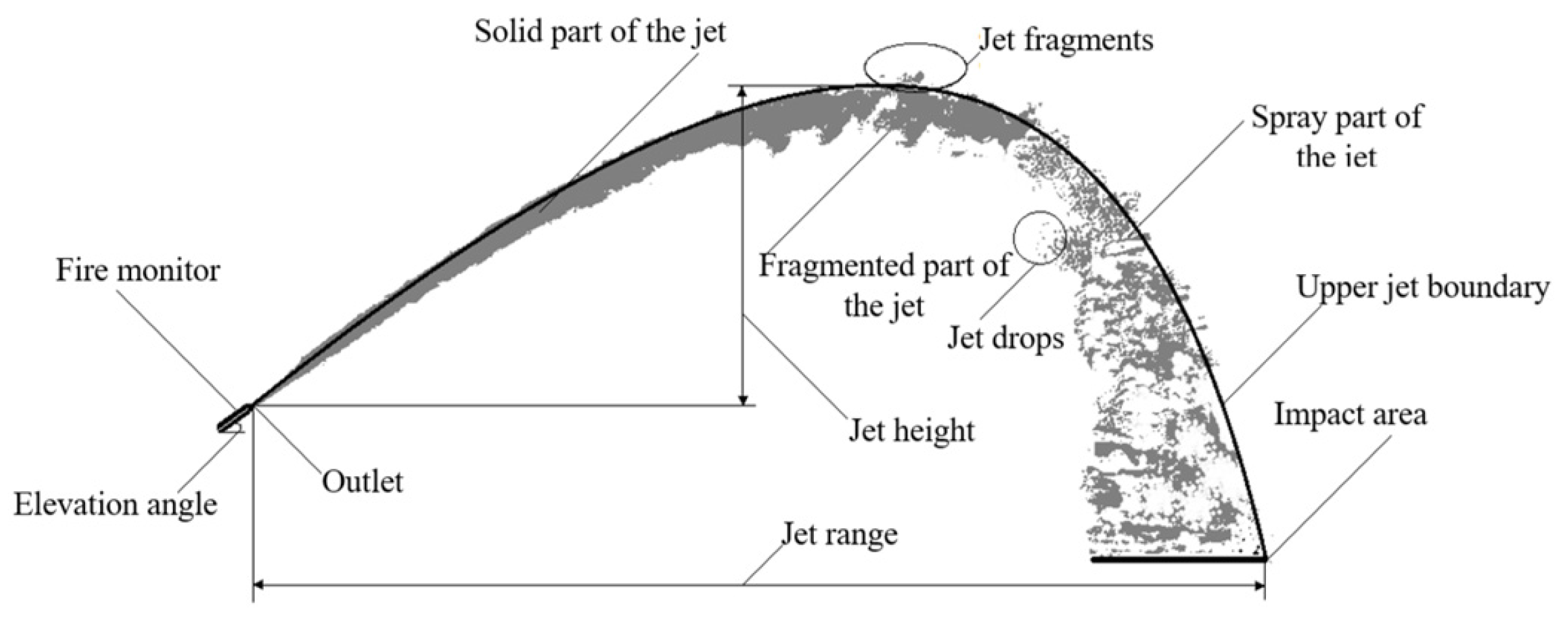
Figure 4, block 2) from field tests. Each such dataset represents a collection of data describing the target parameters of the gas–liquid flows for various values of the main physical parameters. Among the characteristics of greatest interest in this applied field are height, range, upper boundary (trajectory of the leading-edge points) of the fire-extinguishing agent jet, size of the impact area, and displacement of the impact area (
Figure 5).
The results of simulating the fire-extinguishing agent flow using CFD methods constitute a large array of data, consisting of numerous physical parameters (coordinates, velocity vectors, density, volume fraction of the substance, etc.) at various points in three-dimensional space and moments in time [
27]. To form training and verification datasets from these arrays, and to validate the used models, the alignment of target characteristics is applied (
Figure 3, block 1). This alignment ensures that the characteristics describing the dynamics of the investigated flow processes are consistent between the calculation results and the field test results.
Machine learning [
28] of the computational model (
Figure 3, block 2) is performed based on the constructed training dataset. Its verification (
Figure 3, block 3) involves assessing the accuracy of calculating the target characteristics of the fire-extinguishing agent flow against the corresponding parameters obtained from simulations using CFD methods under various scenarios (verification dataset) [
29]. Validation (
Figure 3, block 4) is performed similarly, but using the results of field tests (validation dataset) [
30]. If unsatisfactory quality metrics are obtained (in particular, values of root mean square errors), the model is retrained with different hyperparameters.
2.2. Methodology for Forming Validation Datasets from Field Test Results
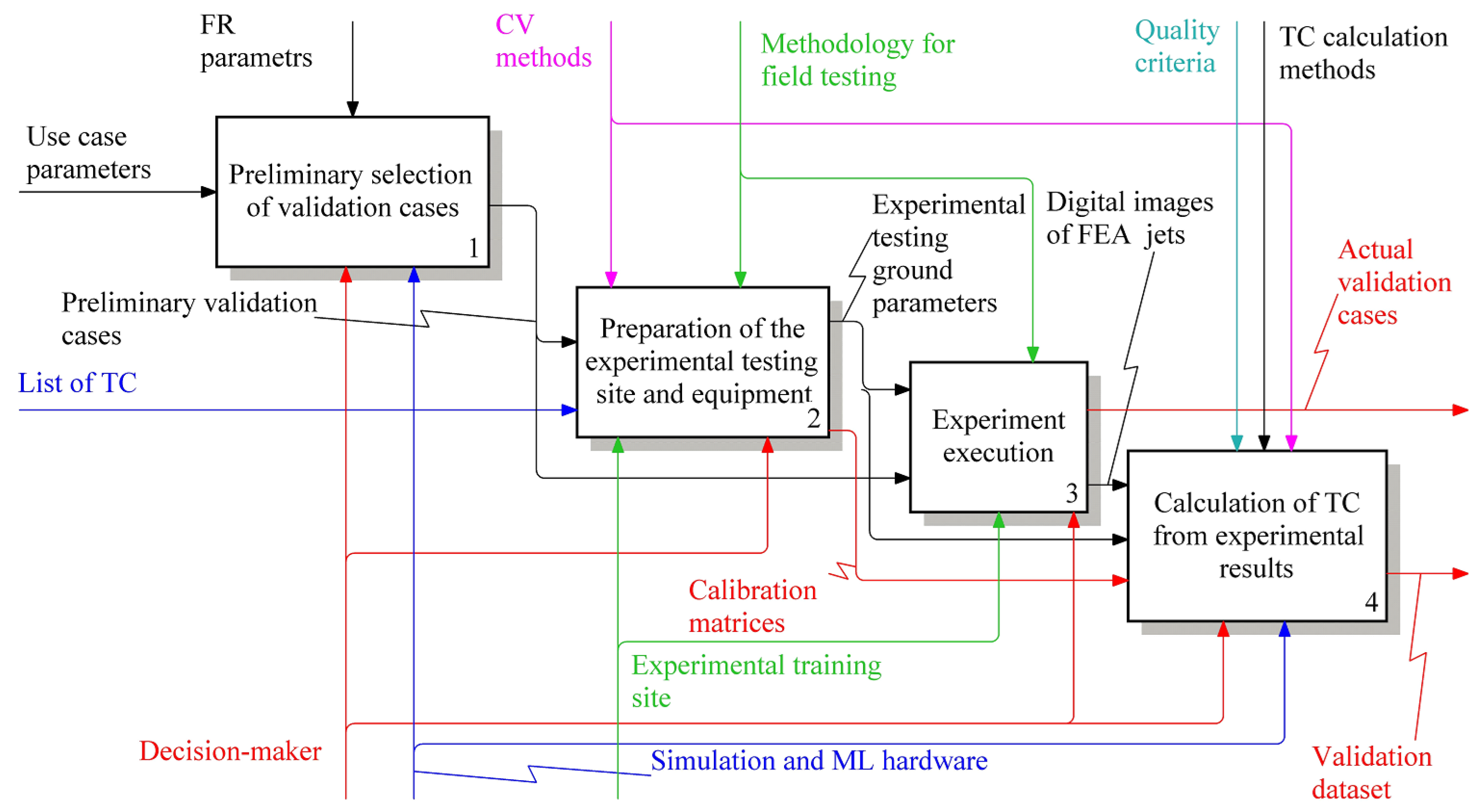
Figure 6 presents the functional diagram of the developed technology.
Preparing the experimental test site and equipment (
Figure 6, block 2) also involves camera calibration [
31]. This procedure consists of determining their intrinsic parameters, which are subsequently used to perform perspective transformations. Based on the calculated target characteristics (
Figure 6, block 4), the accuracy [
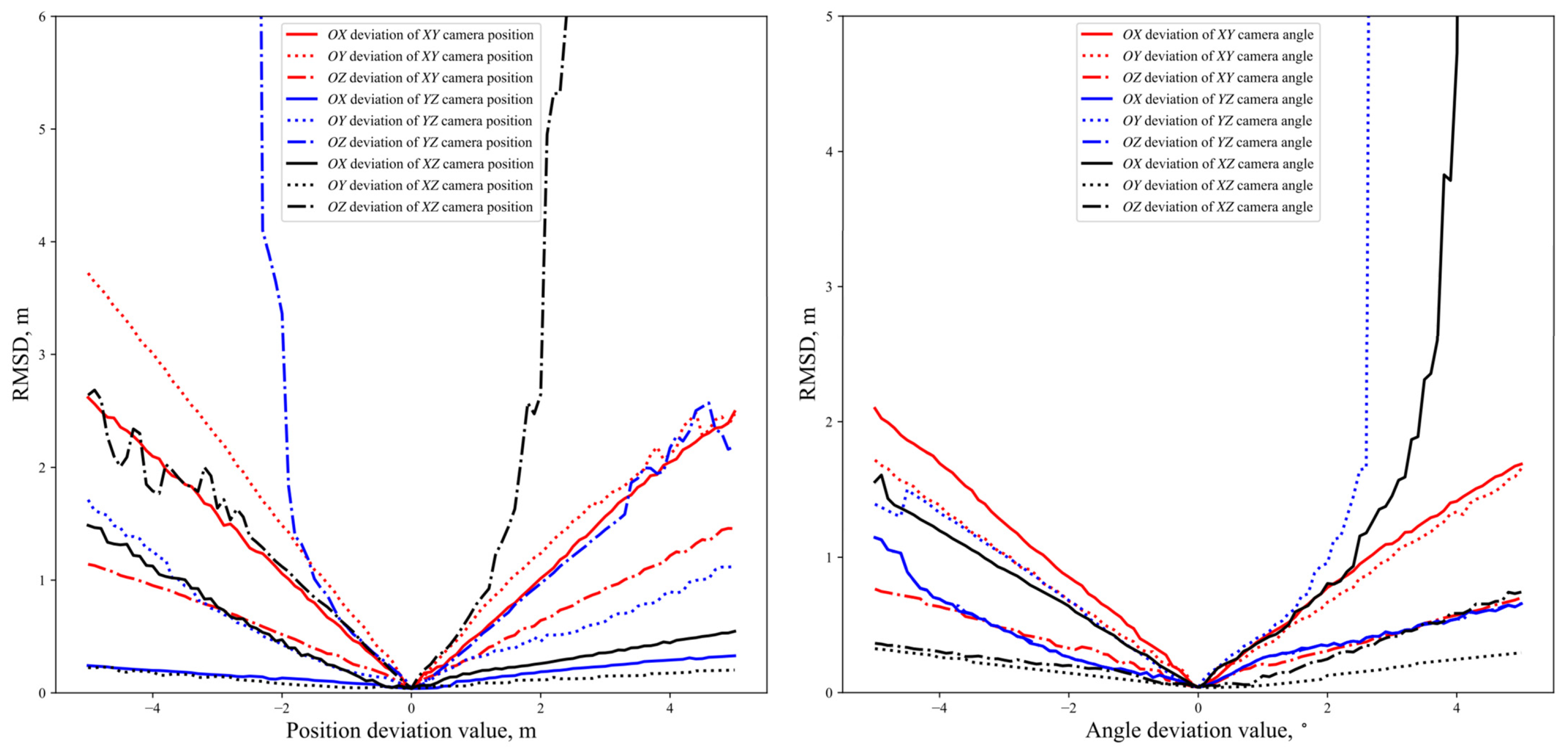
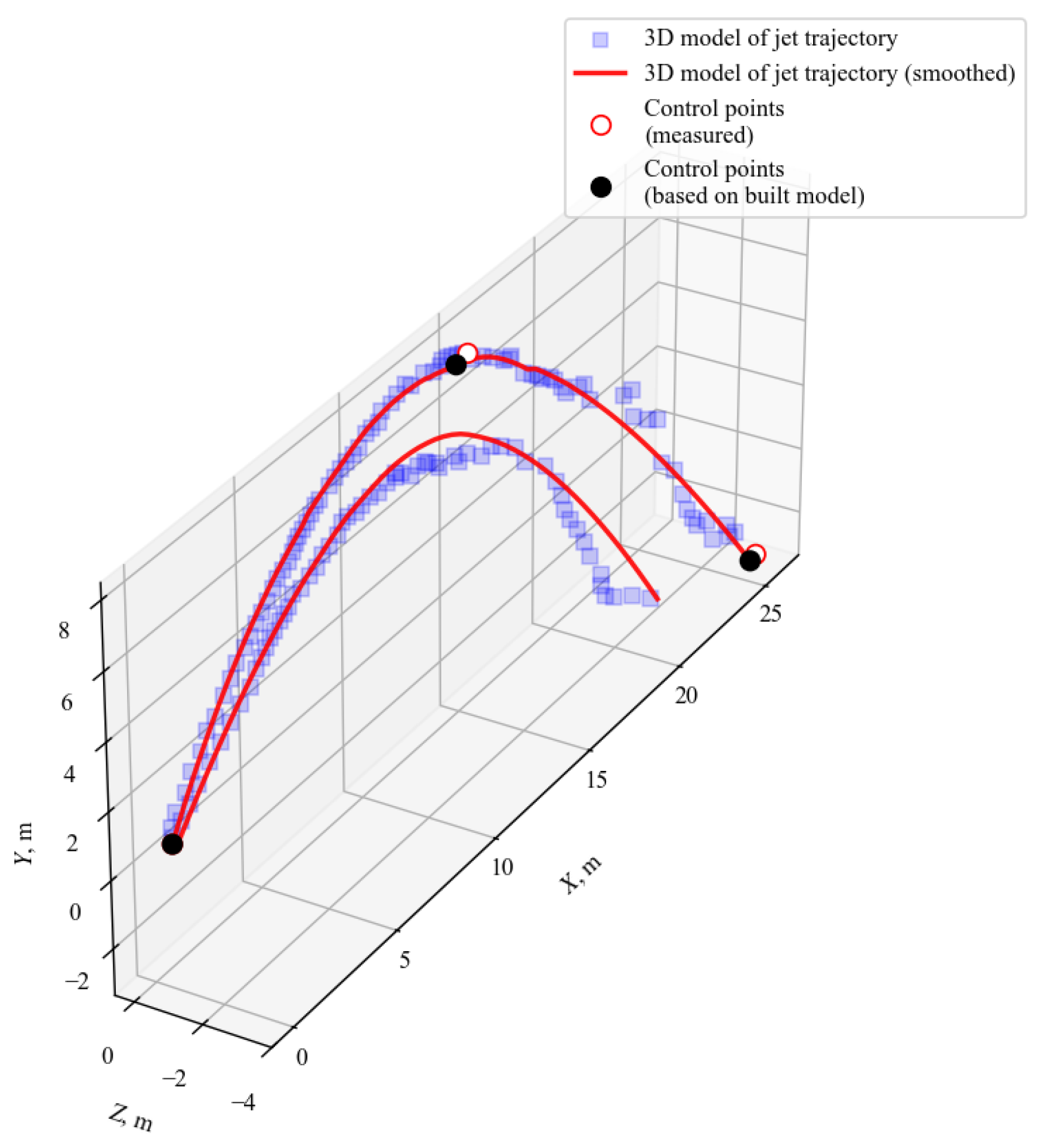
32] of the constructed three-dimensional models is evaluated by comparing the target characteristics derived from them with those measured during full-scale tests. The specific characteristics compared include the position of the FEA discharge origin, the position of the point on the jet furthest from the origin (based on the outermost droplets), and the position of the jet’s highest point.
Preparing the test site (
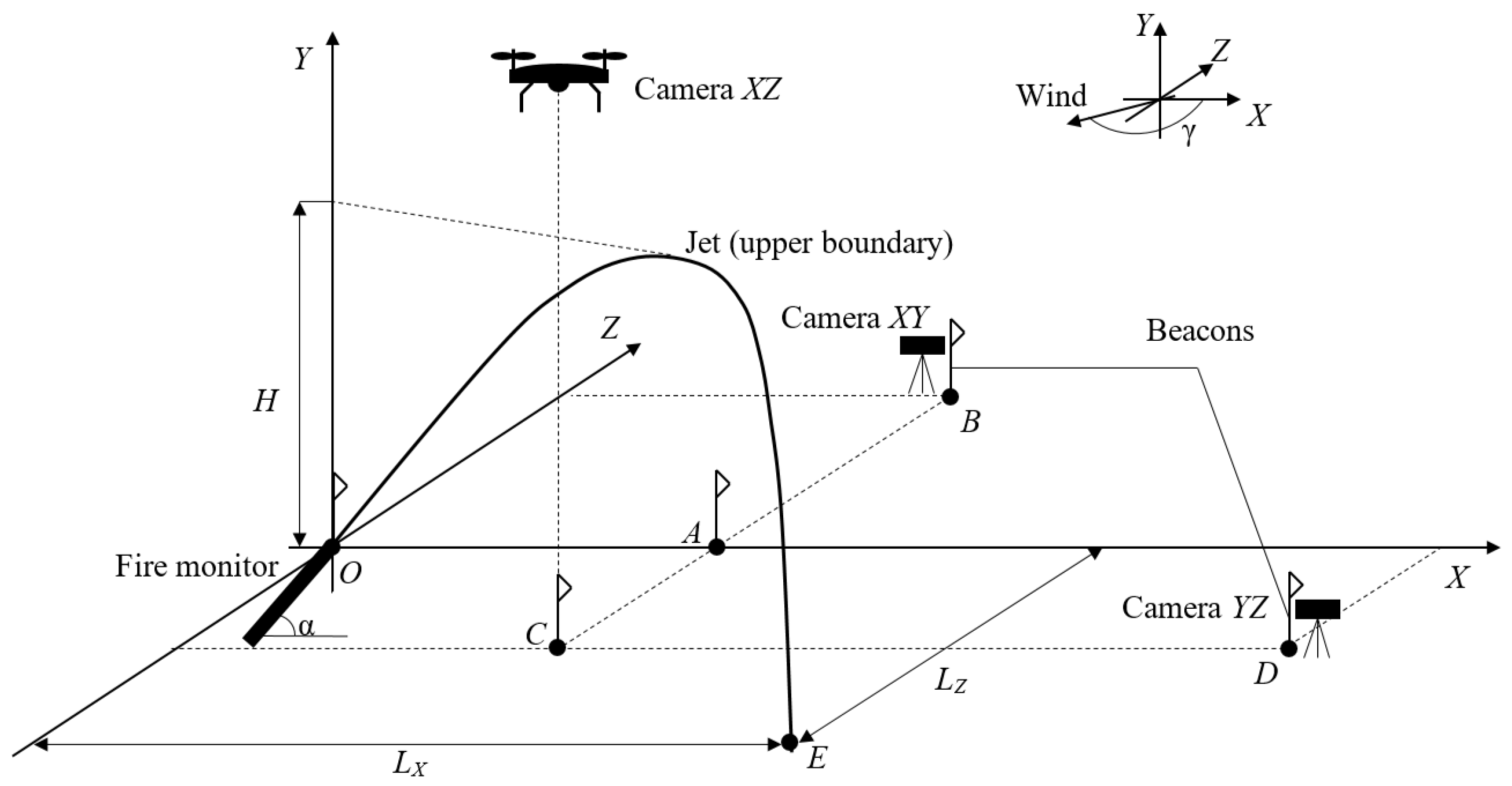
Figure 6, block 2) for investigating fire-extinguishing agent jet trajectories under disturbances involves marking coordinate axes and placing markers at points that serve as reference points for positioning the cameras and the fire monitor under study. The corresponding layout is shown in
Figure 7.
According to the developed technology, preparing the site for conducting field tests to collect empirical data describing the dynamics of the fire-extinguishing agent flow under disturbances involves solving the following tasks:
Preliminary selection of the OX axis location, coordinate origin, and other points, considering the geometric (dimensions, elevation changes) and technical features of the test site, parameters of control (investigated fire monitor elevation angles, fire-extinguishing agent flow rates) and disturbing influences (wind speed and direction, air temperature), characteristics of the digital cameras used, etc.
Site marking (determining the positions of points A, B, C, D) using geodetic equipment. At each point (O, A, B, C, D), markers are installed—highly visible vertical objects of known height (e.g., marker flags). These are used for rapid equipment placement and setup (orientation), as well as for refining the geometric parameters of the experiment (characteristic dimensions, camera rotation angles, etc.) based on the acquired digital images.
Measuring the coordinates (along OX, OY, OZ axes) of points A, B, C, D based on the site marking results.
Conducting the experiment (
Figure 6, block 3) includes three main stages: preparatory work (installation and setup of cameras, the fire monitor under study, etc.), a test jet discharge to verify that the equipment placement corresponds to the parameters of the processes under investigation, and the main phase of field tests. During the main phase, the fire-extinguishing agent jet is recorded in video mode at the maximum possible resolution and frame rate for the equipment used, under various control and disturbance conditions. An audio signal is used for synchronizing the video streams. If necessary, instrumental measurement of various geometric parameters of the jet is performed to assess the accuracy of the results obtained from digital image analysis. The parameters recorded in the test protocol are presented in
Table 1.
For constructing the 3D model and calculating target characteristics (
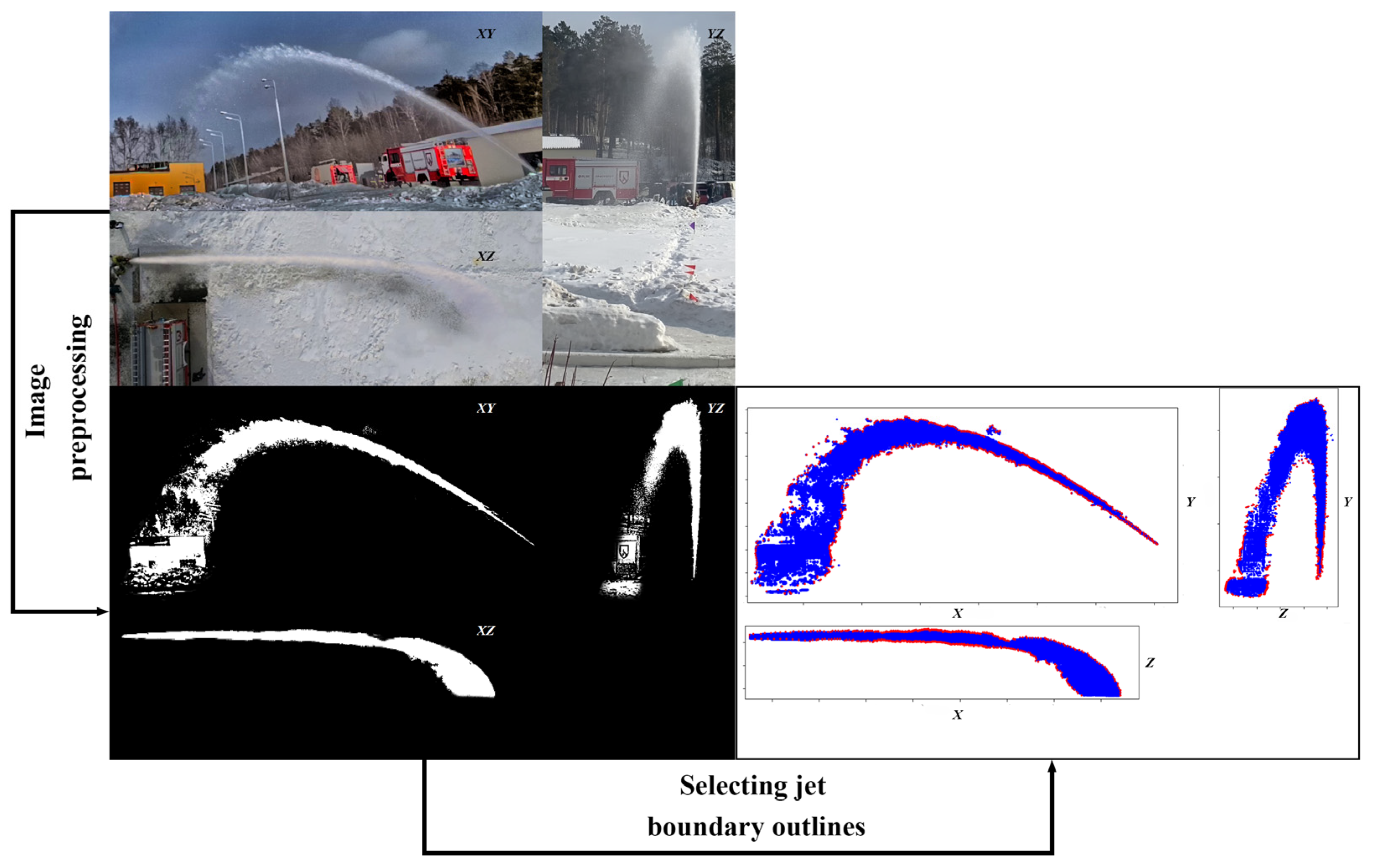
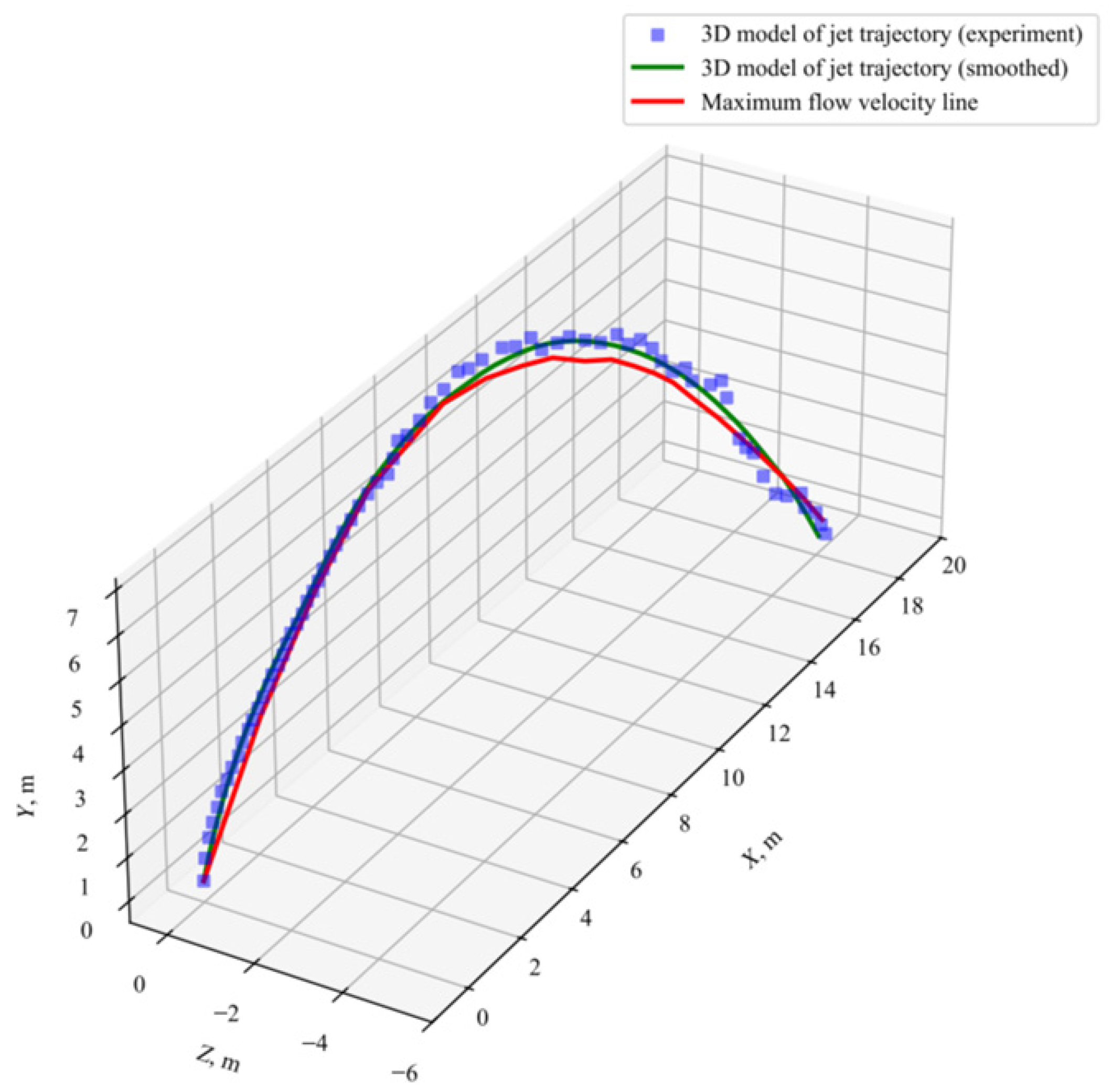
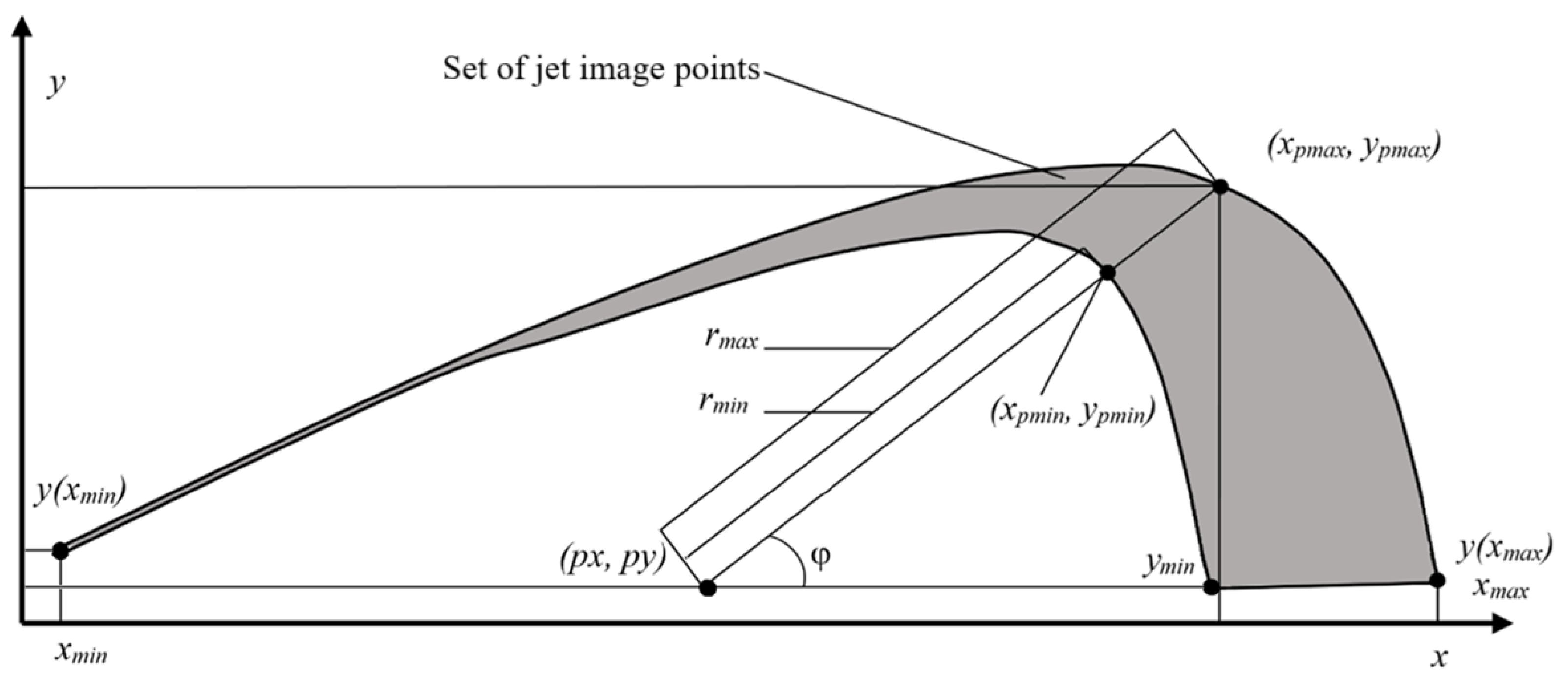
Figure 6, block 4) based on digital images formed from the videos obtained during field tests, jet trajectory recognition is performed. This involves constructing arrays of positions for points lying on the upper boundaries of the investigated fire-extinguishing agent flow, within the coordinate systems of each camera’s matrix. Boundary extraction of the jets in the images is performed using the algorithm presented in
Appendix A. This algorithm is designed to form arrays of coordinates for points on the upper and lower boundaries of the fire-extinguishing agent flow image in the two-dimensional coordinate system of the digital camera’s matrix. The upper boundary is used here and henceforth as the jet trajectory; however, for solving certain tasks, such as estimating the size of the impact area, information about the lower boundary may be required. Therefore, the algorithm for extracting the fire-extinguishing agent flow boundaries provides both curves.
To enhance the effectiveness of this algorithm, image processing is performed to delineate the jet boundaries by creating a significant brightness gradient at these boundaries. This operation comprises the following transformations:
Reduction in brightness in the brightest image regions to prevent loss of detail in subsequent transformations. This is achieved using the methodology presented in [
33].
Local contrast enhancement using the methodology from [
34].
Global contrast enhancement to create a significant brightness gradient between light and dark areas of the image [
34].
Under conditions that are complex from the perspective of fire-extinguishing agent boundary extraction, iterative repetition of the aforementioned transformations is possible. Given the appropriate technical capability, it is advisable to conduct full-scale tests during nighttime with the jet illuminated by spotlights. This approach creates a sharp jet boundary due to a significant brightness contrast between the illuminated extinguishing agent and the unlit surrounding space.
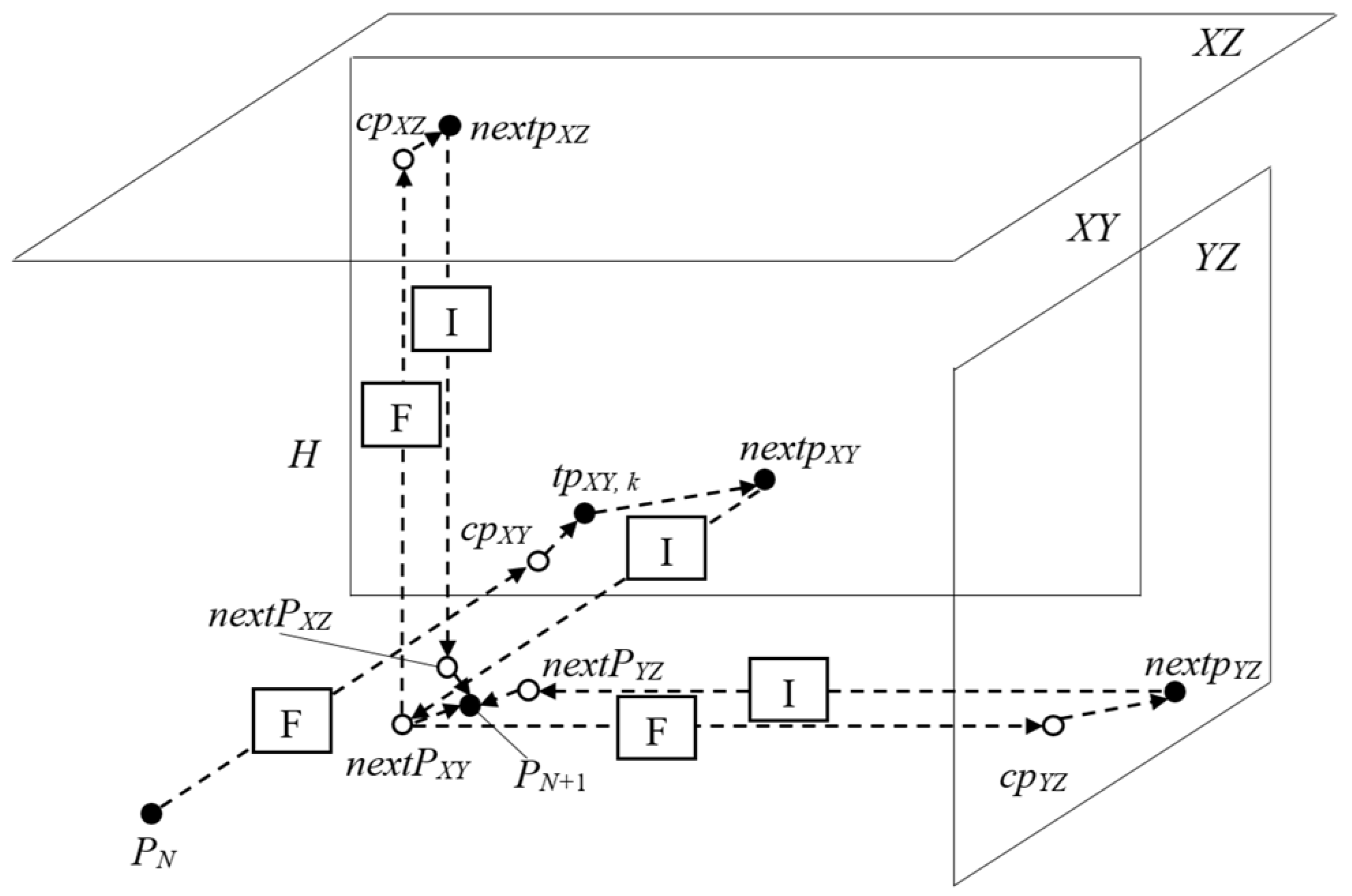
Based on the arrays of points constructed from the results of boundary extraction in jet images from different cameras, 3D reconstruction of its trajectory is performed using perspective transformations [
35,
36]. The corresponding algorithm is presented in
Appendix B.
2.3. Methodology for Constructing a Fire-Extinguishing Agent Trajectory from Numerical Simulation Results Consistent with Experimental Data
The results of numerical simulations using CFD methods for each model time step constitute a large dataset describing the state of the investigated space at various points (coordinates
X,
Y,
Z; velocity vector projections
Vx,
Vy,
Vz; volume fractions
VF, etc.) [
27], typically at the nodes or cells of the computational grid when using grid-based methods for solving the corresponding differential equations [
37]. Estimating target characteristics of flow processes in specific regions (jet range and height, impact area, liquid concentration at specified points and their vicinities) from simulation results is generally straightforward. However, in this applied field, it is necessary to compute jet parameters describing their dynamics throughout the entire volume of space they occupy. Constructing these characteristics can be complicated by the geometric dimensions of the simulated flow processes, which significantly hinders the determination of target parameters with a resolution acceptable for the tasks at hand.
Trajectories and streamlines [
38] are among the most common characteristics used to describe the dynamics of flow processes along their entire length. However, when investigating fire-extinguishing agent jets, these approaches are not always applicable. For instance, the upper boundary of the jet, determined visually by computer vision systems of robotic installations based on its “densest” region in a given section (corresponding to particles moving with maximum velocities), can differ significantly from curves derived from pathlines and streamlines.
Using threshold values for the liquid volume fraction to exclude spray fragments from characteristic calculations is ineffective because a significant portion of the jet downstream, due to breakup, has small VF values, yet these must be accounted for when constructing the flow boundary. It is also worth noting that when using the Volume of Fluid (VOF) method [
39] for motion modeling with relatively large cells to reduce computation time, the resulting streamlines in the spray part of the jet can extend substantially beyond its actual boundaries.
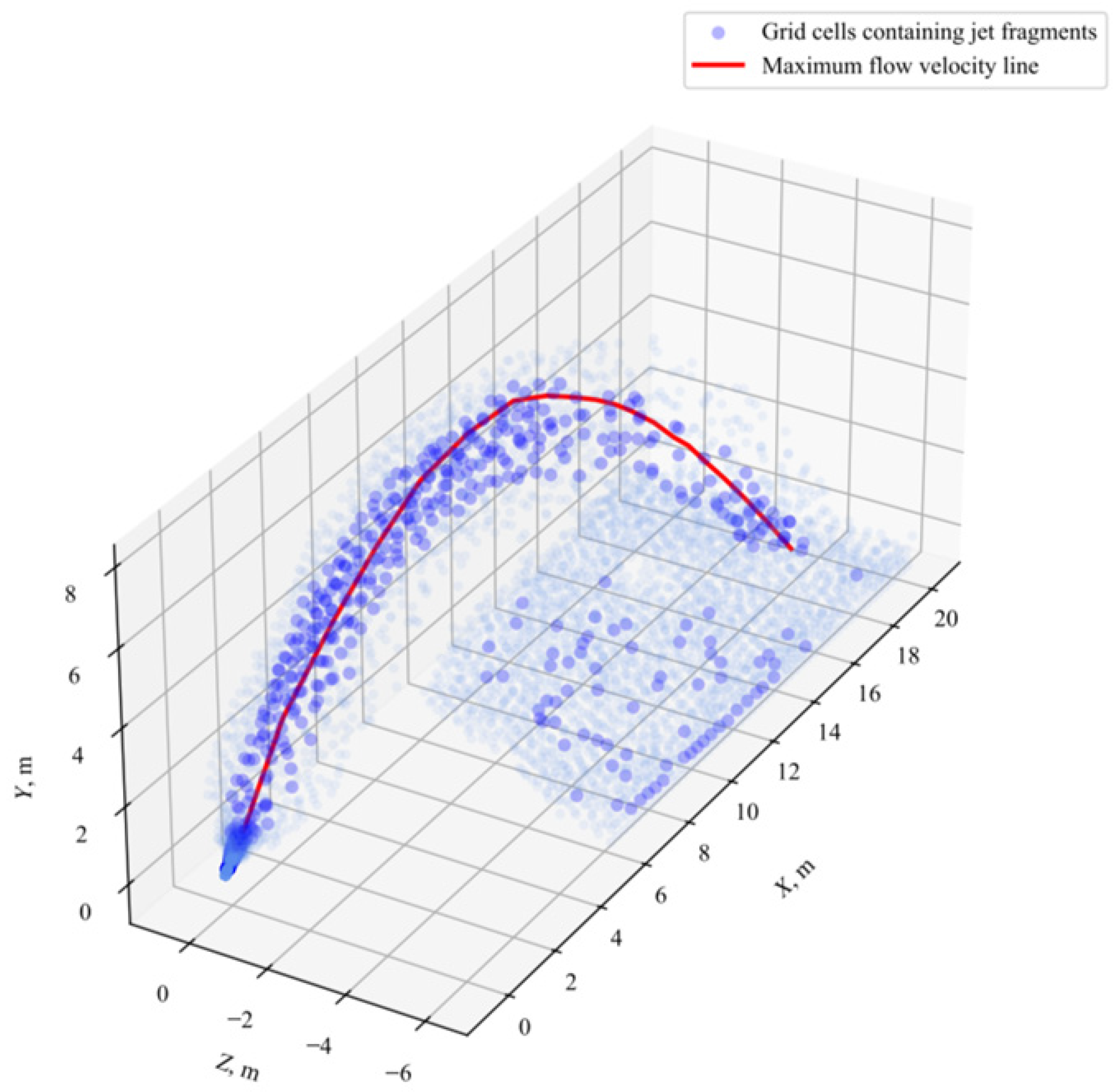
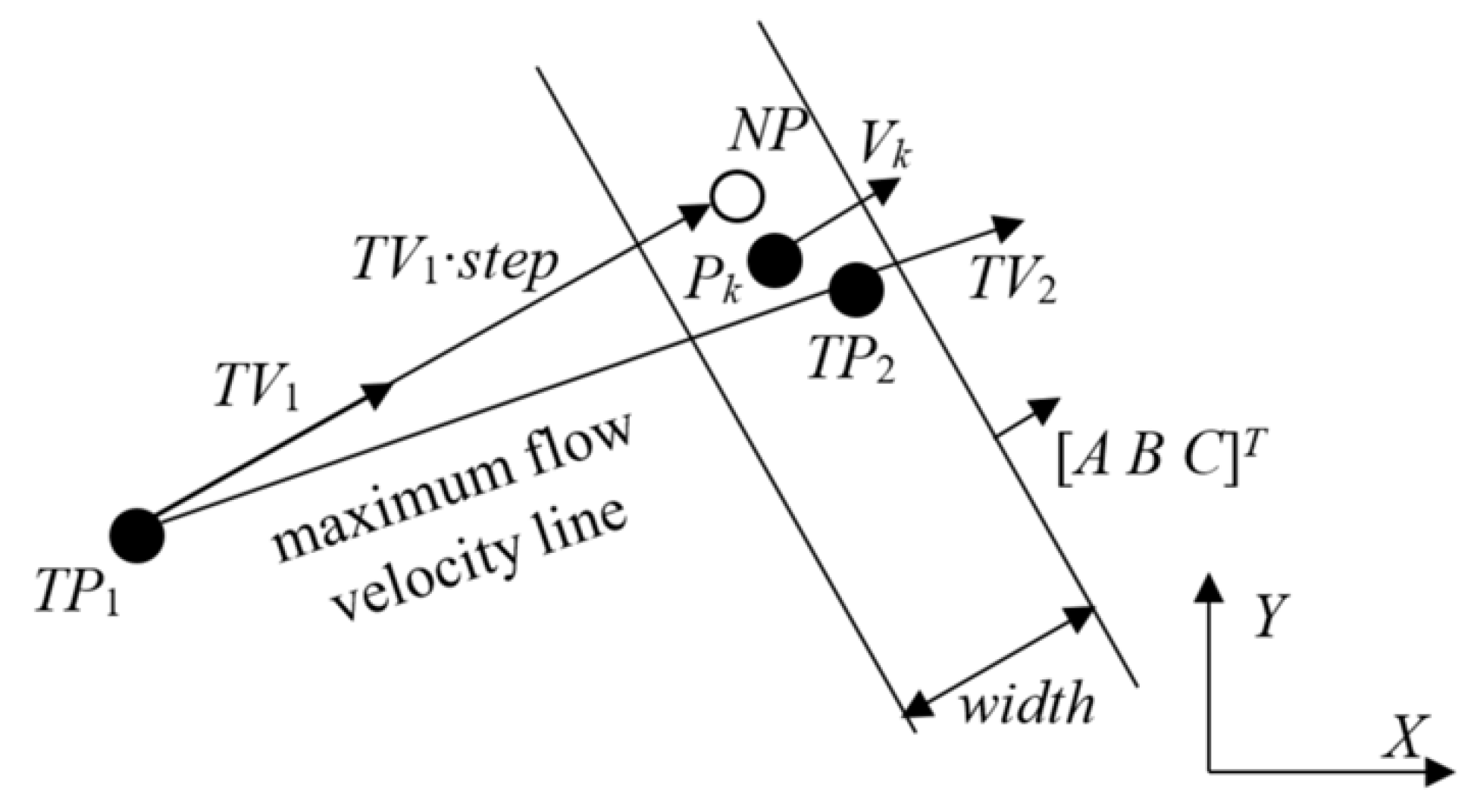
Considering these problems for tasks related to assessing flow characteristics based on visualized data from field tests and observations (machine learning, verification, and validation of used models), a method for constructing the line of maximum flow velocities was developed. This line is defined by fragments of the substance moving with the maximum velocities and corresponds to the visually “densest” part of the jet, upon which its upper boundary is formed. The proposed method for constructing the fire-extinguishing agent jet trajectory based on numerical simulation results is implemented by the algorithm presented in
Appendix C.
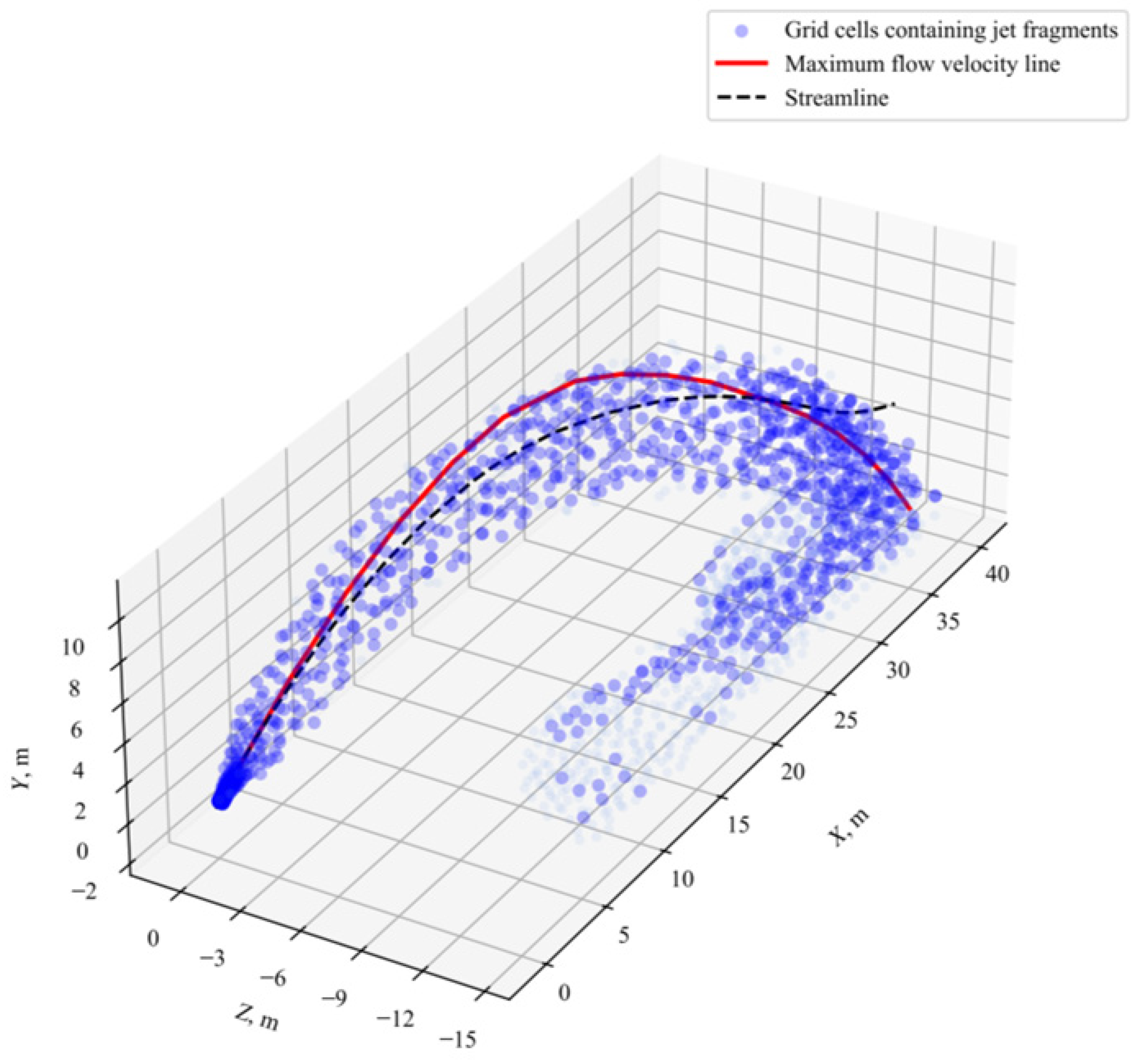
Figure 8 presents the lines of maximum velocities and streamlines constructed from the simulation results of fire-extinguishing agent motion from a fire monitor under crosswind, using the k-ε turbulence model and the Volume of Fluid (VOF) method. The dots in
Figure 8 denote computational grid nodes where the volume fraction of the fire-extinguishing agent exceeds a specified threshold value. Darker dots correspond to moving jet fragments, while lighter ones correspond to stationary fragments settled on the ground. The lines of maximum velocities are depicted by red curves, and the streamlines by black curves.
The line of maximum velocities envelopes the main part of the simulated flow. The volume fraction values in grid nodes located outside this curve are negligible, meaning this line forms the boundary of the free jet. In contrast, the streamline passes closer to its central part and, in the spray region, extends beyond its limits (
Figure 8). This behavior is explained by the fact that when constructing the streamline, cells where the liquid volume fraction is non-zero are considered. However, in the far-field region of the jet, sprayed fragments of the fire-extinguishing substance move almost vertically downward under gravity, while adjacent air regions, accelerated by the main flow and containing insignificant amounts of liquid, continue their predominantly horizontal motion. Therefore, the corresponding curve, constructed considering them, extends beyond the free jet boundary. It is important to note that the proposed method does not have this drawback.
2.4. Selection of Computational Fluid Dynamics Methods for Simulating Fire-Extinguishing Agent Motion Under Wind Influence
The investigated jets are characterized by large geometric trajectory dimensions (tens of meters), high initial velocities (tens of meters per second), breakup and atomization of the continuous flow into separate fragments and droplets of various sizes (
Figure 5), as well as reverse processes like droplet coalescence (e.g., in the impact area), which significantly increases the computational complexity of the simulation task. Specifically, the mathematical description of these phenomena requires the use of appropriate methods and computational grid cell sizes for discretizing the investigated space. Considering the height and range of the studied liquid flows, this demands substantial computational resources.
From a numerical modeling perspective, the investigated free jets represent multiphase flows [
40]: air (primary phase)—fire-extinguishing agent (secondary phase). If the characteristic size of the interface significantly exceeds the corresponding computational grid cell sizes in the region of the continuous jet (
Figure 5), the Volume of Fluid (VOF) method [
39] can be used for its description, which reduces computation time compared to the Eulerian model [
41]. This can be relevant for tasks requiring trajectory construction across a wide range of parameter values influencing the investigated dynamics, particularly for generating datasets for training and verifying neural network models.
However, in cases where liquid breakup and atomization (
Figure 5) significantly influence its trajectory, it is necessary to account for not only its continuous phase but also its dispersed phase [
42], and the corresponding transitions between them. Various approaches are used for this purpose, specifically, hybrid methods jointly using two models, for example, VOF-DPM [
43]: VOF for the continuous phase and DPM (Lagrangian model) for the discrete phase. This technology allows accounting, within the scope of the considered task, only for jet breakup and atomization. In studies where the reverse transition (coalescence of individual droplets, etc.) is a subject of investigation, more complex models based on the Eulerian approach [
44,
45,
46] are applied. These approaches possess significant computational complexity, which can substantially increase calculation time, especially within the geometric scales characteristic of this research’s application field. Furthermore, assessing the degree of influence of phase transitions on the trajectory of the free jet, which is the control object (particularly in tasks of directing the fire-extinguishing agent flow from a robotic firefighting complex monitor to a specified spatial region), presents a rather complex problem. Therefore, the selection of computational models (
Figure 4, block 4) and their parameters for solving the stated task is performed to ensure high accuracy and calculation speed relative to the tasks being solved (
Figure 9).
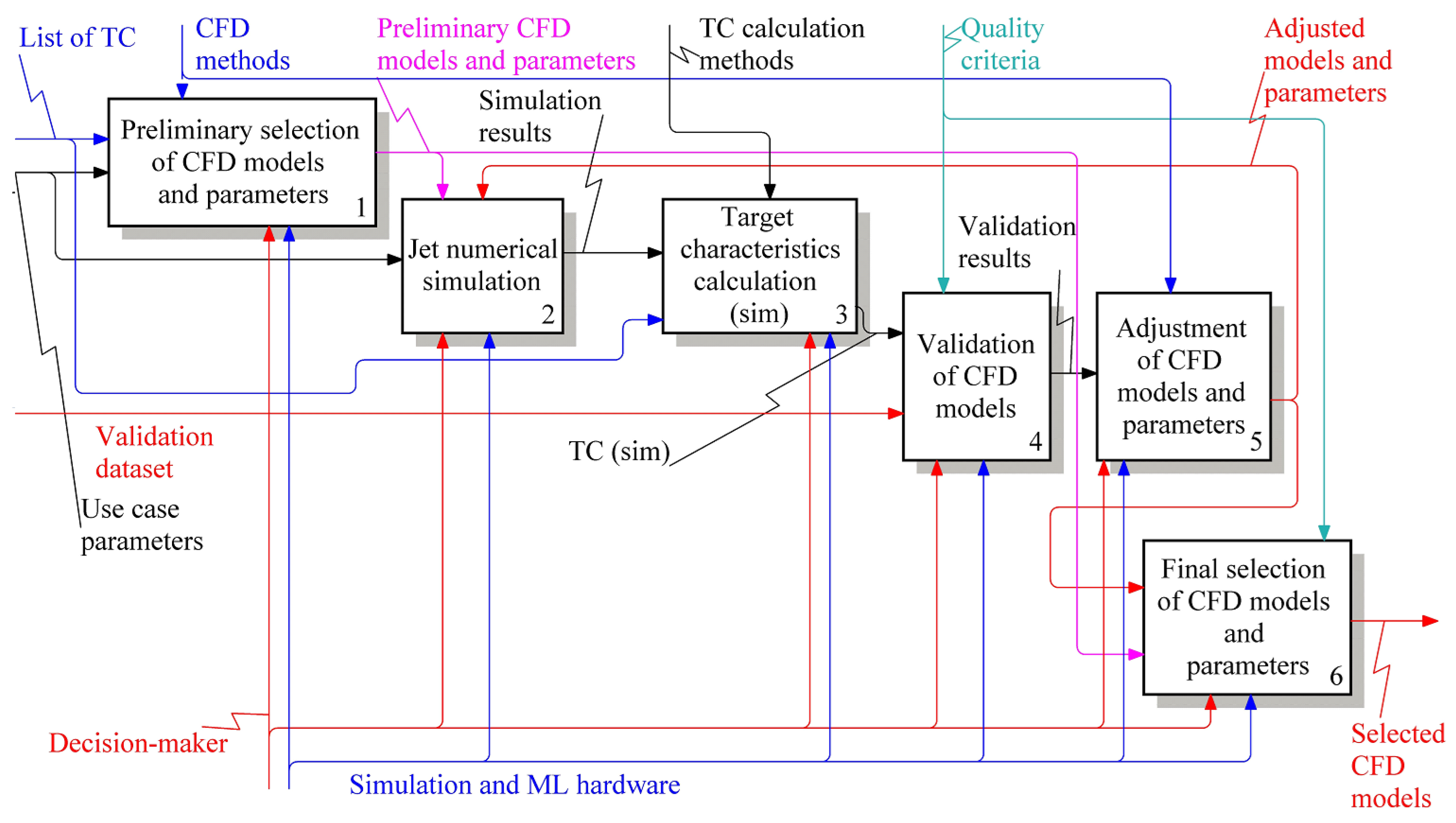
The selection of models and their parameters for describing free fire-extinguishing agent jets, aiming to meet one of the quality criteria (acceptable calculation speed), proceeds from computationally simplest to more complex, i.e., those requiring the solution of a greater number of equations. An important feature of the target flow characteristics identified earlier is the absence of the need to account for transitions from the dispersed phase back to the continuous phase. This allows the use of the simplest preliminary CFD models (
Figure 9, block 1): k-ε [
47], k-ω [
48] for describing turbulence, and VOF [
39] for describing phases. Calculation time is also influenced by factors such as the geometric dimensions of the investigated space, the number of computational grid cells, boundary conditions, and the use of additional functions (e.g., for damping or limiting turbulence).
Validation (
Figure 9, block 4) of the CFD models used in this study was performed by assessing the deviations (accuracy) of the calculation results (
Figure 9 blocks 2, 3) relative to those obtained from field tests with corresponding initial parameter values. For this purpose, the used target characteristics were aligned (
Table 2).
The simulation accuracy, performed in Ansys Fluent [
49], compared to experimentally obtained results, is assessed within the presented framework based on the relative deviation (1) for simple characteristics (jet height, range, impact area displacement) and the root mean square deviation (2) for complex ones (jet upper boundaries).
where
Xe ≠ 0,
Xm are the values of the simple target characteristic obtained from experimental and simulation results, respectively.
where
N is the number of points of the jet upper boundary constructed from experimental results,
Pe,i are the coordinates of the i-th point of the jet upper boundary constructed from experimental results,
Pm,i are the coordinates of the point on the jet upper boundary constructed from simulation results closest to point Pe,i.
The decision to change (complexify) the CFD models or their parameters is made depending on the values of the specified deviations. In this study, the fulfillment of conditions (3)–(4) was used as criteria for achieving acceptable accuracy:
If these conditions are not met, correction (
Figure 9, block 5) of the used models or their parameters is performed, followed by repeated execution of numerical simulation, target characteristic calculation, and validation operations.
The primary selection of CFD models and their parameters (
Figure 9, block 1) was performed for the task of simulating the water jet trajectory from an LS-P20U fire monitor with a high flow rate of fire-extinguishing agent without accounting for wind, to accelerate calculations through model simplification. Validation was based on the jet’s range, height, and upper boundary trajectory. According to the study results, it was established that the computational model based on k-ε (in the RNG modification with turbulence damping) and VOF (without accounting for implicit forces, with a liquid volume fraction limit of 10
−6) satisfies the specified accuracy criteria and also provides the shortest computation time among all investigated configurations. The results of the preliminary model selection are presented in
Table 3 (the computation time is specified for a personal computer with an AMD Ryzen 3 2200U processor).
As follows from the obtained results, the trajectories satisfying conditions (3)–(4) are those constructed based on the combined use of the k-ε and VOF models with various tuning parameters. The minimum computation time is provided by the scheme with a liquid volume fraction limit of 10
−6 and without the inclusion of implicit forces; therefore, this scheme was selected as the baseline for further calculations.
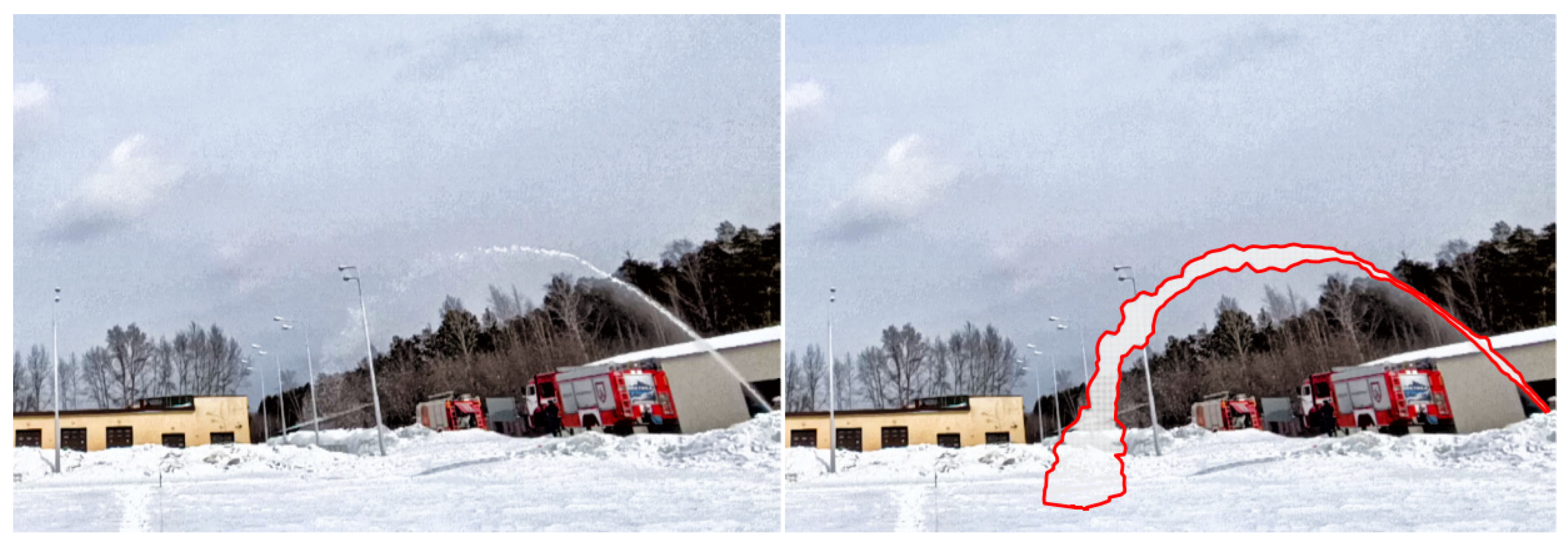
Figure 10 shows fragments of images of the water jet from the LS-P20U, obtained for the following control parameter values: output nozzle elevation angle 57°, fire-extinguishing agent flow rate 10.2 l/s.
The left part of
Figure 10 shows a fragment of a digital photograph of the fire-extinguishing agent flow after preliminary processing, and the right part shows the result after extracting the upper and lower boundaries based on the algorithm described in
Appendix A.
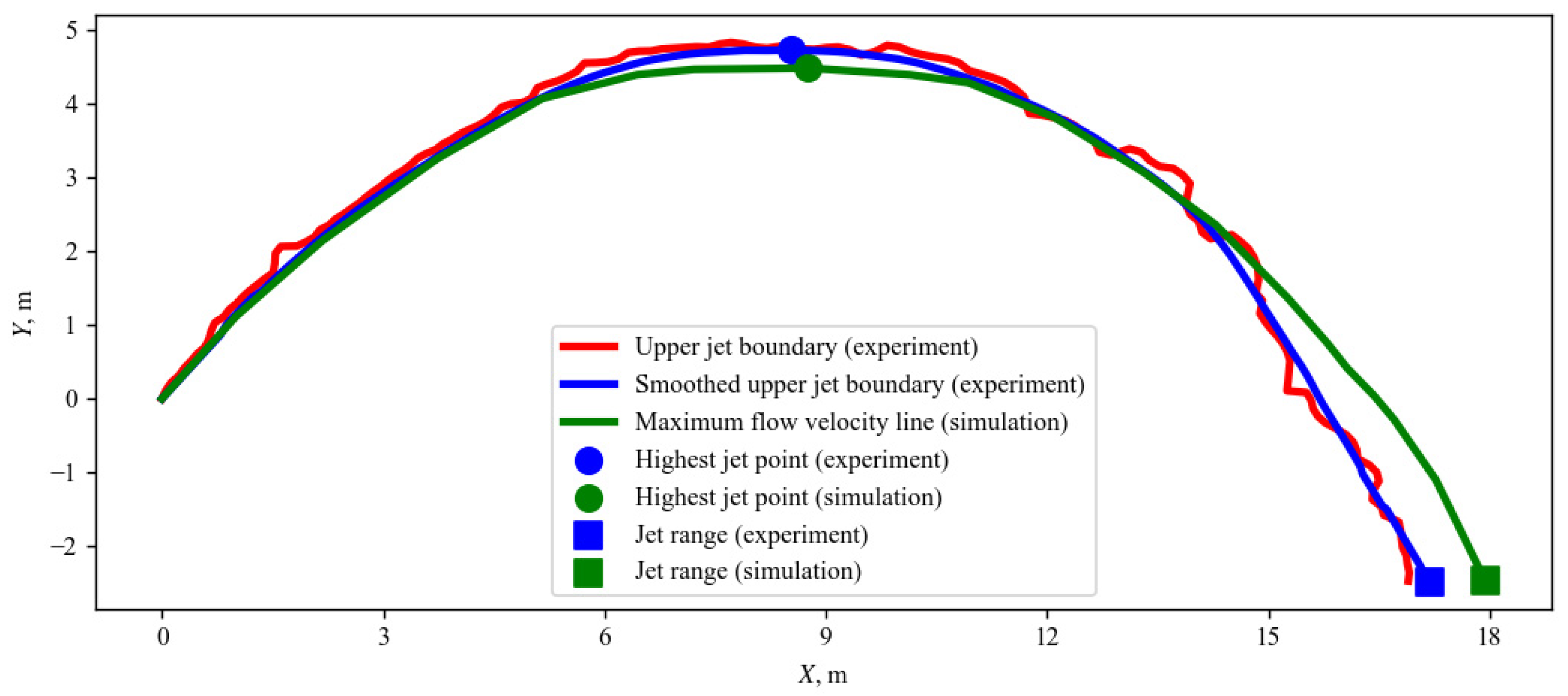
Figure 11 shows superimposed curves corresponding to the jet upper boundaries constructed from experimental and simulation results, and
Table 4 presents the validation results.
As follows from
Table 4, conditions (3)–(4) are met for all presented characteristics, which corresponds to acceptable model accuracy. The calculation time was 10 h (using a personal computer with an AMD Ryzen 3 2200U processor), which also satisfies the specified quality criteria. The validation results of the selected models for calculating the water jet trajectory from the fire monitor accounting for crosswind are presented in
Section 3.2.
2.5. Experimental Evaluation of the Real-Time Water Jet Trajectory Prediction Methodology Effectiveness
The effectiveness of the developed prediction methodology was evaluated using a water jet from the LS-P20U fire monitor, which serves as the actuator for a firefighting robot. For this purpose, field tests were conducted under a limited set of control and disturbance scenarios, described by the following parameter values:
Elevation angles α, °: [30, 44.5, 57]—based on actual measurements during experiments (planned values: [30, 45, 60]). The selection of these values is determined by the limitations of the experimental test site and the coverage of the maximum (α = 30°) and medium range (α = 60°) of the jet.
Fire-extinguishing agent flow rates qfea, l/s: [12.1, 16.1, 17.1, 39.8]—based on actual measurements during experiments (planned values: [12, 16, 18, 40]). The selection is determined by the constraints of the experimental test site, the equipment used, and the coverage of the maximum (qfea = 40 l/s) and short-range (qfea = 12 l/s) jet characteristics.
Wind direction angles γ, °: [65, 76, 96, 104].
Wind speed vw, m/s: [0, 1.4, 2, 2.5, 3.3].
Air temperature T, °C: [−2.2, −1.4, 2.5].
The experimental values of the disturbance parameters are limited by the actual weather conditions at the test site during the full-scale tests. Generating validation samples for a broader range of external conditions, such as high wind speeds, requires conducting corresponding experiments, which could be a subject of further research.
Based on the obtained results, a dataset was generated and used for validating the selected CFD models and the trained neural network model for water jet trajectory prediction (a multilayer perceptron—MLP with error backpropagation using the scikit-learn library [
50]). The MLP was chosen as a preliminary baseline model due to its simpler architecture compared to other neural networks, allowing an assessment of the approach’s effectiveness for the defined task within the limited set of scenarios. The primary advantages of the MLP in this context include simplicity of implementation; training and inference speed; ease of identifying potential issues; and its utility as a starting model for a progressive complexity strategy, potentially evolving into more advanced architectures such as physics-informed neural networks (PINNs) or neural ensembles tailored for different scenarios. The main disadvantage of an MLP for this task is the potential for a critical reduction in prediction accuracy for scenarios significantly different from those in the training set. Therefore, during the training data preparation stage, it is necessary to ensure coverage of potential operational scenarios, which may require a large dataset.
Table 5 presents a comparison of the MLP with other architectures [
51] in terms of the most significant potential limitations and performance differences relevant to the task.
To overcome the mentioned drawbacks of the MLP, promising directions within the progressive complexity strategy include transition to PINNs via hybridization [
51] (adding physics-based constraints through regularization), ensemble methods [
52] (combining multiple MLPs for different scenario groups), and others.
The machine learning and verification of the prediction model were performed using datasets generated from simulation results based on the selected CFD methods. The scenarios used for this purpose are described by the following parameter values:
Elevation angles α, °: [30, 35, …, 60].
Fire-extinguishing agent flow rates qfea, l/s: [12, 14, …, 20, 25, …, 40].
Wind direction angles γ, °: [60, 65, …, 120].
Wind speed vw, m/s: [0, 0.5, …, 4].
Air temperature (fixed) T = 0 °C.
The values within these ranges were selected based on the following principles: coverage of the parameters from the scenarios used to build the validation dataset; and a parameter value increment ensuring a sufficient size for the training and verification datasets while maintaining an acceptable total simulation time. The total number of scenarios generated in this study, based on combinations of the parameter ranges for control (α, qfea) and disturbance (γ, vw) inputs listed above, was 735, with 100 trajectory points per scenario. To reduce the total model preparation and computation time, simulations (run on a computational cluster) for each elevation angle value were executed with varying values of the other parameters. These parameters were changed sequentially only after a stable extinguishing agent trajectory was achieved.
The training (
PLEARN) and verification (
PVER) datasets were generated from simulation results (
Pm) in an 80/20 volume ratio. The corresponding dataset sizes were 588 and 147 scenarios, respectively (with 100 trajectory points per scenario). The loss function used for machine learning of the prediction model was the root mean square deviation (RMSD):
where
N is the number of points in the jet trajectory constructed by the trained model;
PMLP,i are the coordinates of the i-th point of the jet upper boundary constructed by the trained model;
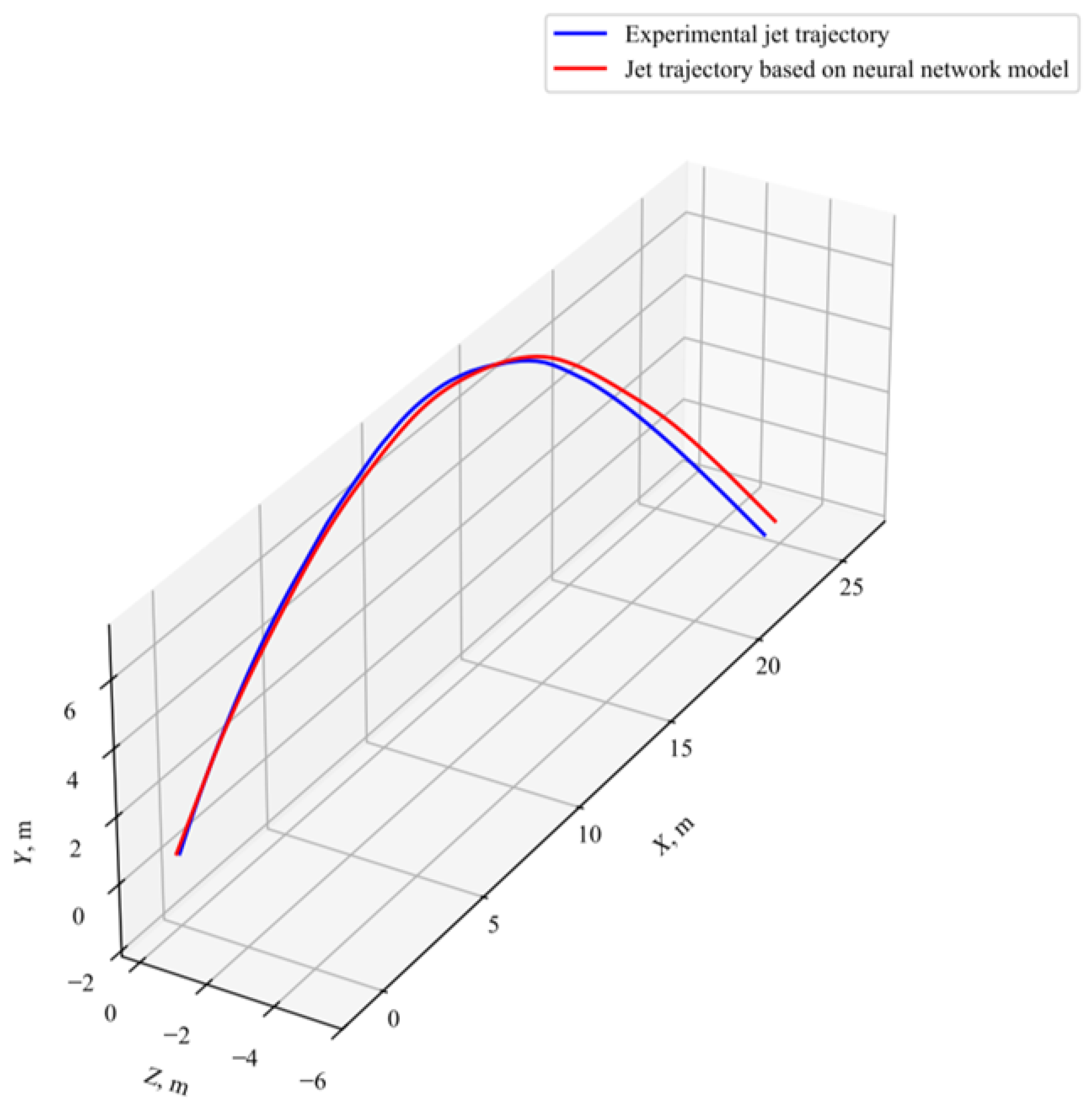
Pi are the coordinates of the point in the jet trajectory (constructed from simulation or experimental results) closest to PMLP,i (P = PLEARN for the training dataset, P = PVER for the verification dataset, P = Pe for the validation dataset).
Hyperparameter tuning [
53,
54] was conducted to ensure the required quality of target parameter calculation, convergence, and protection against overfitting. The criterion for stopping the increase in neural network model complexity was the fulfillment of condition (4) for the RMSD relative to the verification dataset. The final hyperparameters of the trained model are presented in
Table 6.
The results of the trained model’s accuracy assessment are presented in
Section 3.3.
4. Discussion
The presented methodology for the combined use of machine learning and Computational Fluid Dynamics methods for predicting the trajectory of fire-extinguishing agent from a fire monitor allows the stated task to be solved with high accuracy and speed corresponding to real-time operation. This, in turn, enables its application for robotic control of jet targeting towards a specified goal under complex conditions (wind, poor visibility due to smoke).
It should be noted that generating the training and test (verification) datasets based on CFD methods solves the problem associated with the impossibility of conducting field tests across a wide range of disturbances. Thus, after training and verifying the predictive model, its validation based on the experimental dataset is conducted on a limited set of fire robot usage scenarios, which can be formed over an extended period, for instance, as relevant weather conditions (air temperature, wind direction and speed) occur.
The results presented in the article represent a preliminary assessment of the proposed methodology’s effectiveness, and their applicability is limited to the investigated fire monitor nozzle and the specified set of scenarios. Specifically, the development and testing of the neural network model were conducted under fixed values of air temperature, extinguishing agent temperature, jet spray angle, etc. Strong wind conditions (outside the studied scenarios) were also not considered. Increasing the number of parameters and significantly expanding their value ranges will necessitate additional experiments and increased model complexity, which, in turn, may lead to a reduction in prediction accuracy and computational speed. To solve this problem, more efficient architectures can be used: physics-informed neural networks [
51,
55], including those based on Kolmogorov–Arnold networks [
56,
57], neural network ensembles [
58], etc.
A further direction for the development of this research is to evaluate the effectiveness of the developed technology on more complex neural network architectures and an expanded set of scenarios. This expanded set should cover a wide range of elevation angles, including negative values, jet spray angles, wind direction, and speed angles, as well as ambient air temperatures. It is worth noting that including scenarios corresponding to extremely low temperatures (arctic conditions) will require accounting for the influence of phase transitions, leading to increased complexity of the used CFD models. Furthermore, the application of the methodology to other fire-extinguishing agents is of high research interest, specifically for foam of various expansion ratios, whose motion dynamics differ significantly from those of water.