


TSPY-like 2, Beyond the Histone Chaperone Role


Abstract
1. Introduction
2. TSPYL2 Discovery, Structure and Expression
3. TSPYL2 Function in Transcription Regulation
4. TSPYL2 Interplay with TGF-β
5. TSPYL2 and Cell Cycle Control
6. TSPYL2 Involvement in the DNA Damage Response
7. TSPYL2 Role in Human Diseases
8. Contrasting Properties of TSPY and TSPYL2
9. Conclusions and Future Perspectives
Author Contributions
Funding
Institutional Review Board Statement
Informed Consent Statement
Data Availability Statement
Conflicts of Interest
References
- Liu, C.-P.; Xu, R.-M. Structure and Function of Histone Chaperones in Replication-Coupled Chromatin Assembly. Curr. Opin. Struct. Biol. 2025, 92, 103059. [Google Scholar] [CrossRef]
- Felsenfeld, G.; Groudine, M. Controlling the Double Helix. Nature 2003, 421, 448–453. [Google Scholar] [CrossRef]
- Elsässer, S.J.; D’Arcy, S. Towards a Mechanism for Histone Chaperones. Biochim. Biophys. Acta 2013, 1819, 211–221. [Google Scholar] [CrossRef]
- Park, Y.-J.; Luger, K. Structure and Function of Nucleosome Assembly Proteins. Biochem. Cell Biol. 2006, 84, 549–558. [Google Scholar] [CrossRef]
- Vogel, T.; Dittrich, O.; Mehraein, Y.; Dechend, F.; Schnieders, F.; Schmidtke, J. Murine and Human TSPYL Genes: Novel Members of the TSPY-SET-NAP1L1 Family. Cytogenet. Cell Genet. 1998, 81, 265–270. [Google Scholar] [CrossRef]
- Lau, Y.-F.C.; Li, Y.; Kido, T. Battle of the Sexes: Contrasting Roles of Testis-Specific Protein Y-Encoded (TSPY) and TSPX in Human Oncogenesis. Asian J. Androl. 2019, 21, 260–269. [Google Scholar] [CrossRef]
- Tan, H.; Miao, M.X.; Luo, R.X.; So, J.; Peng, L.; Zhu, X.; Leung, E.H.W.; Zhu, L.; Chan, K.M.; Cheung, M.; et al. TSPYL1 as a Critical Regulator of TGFβ Signaling through Repression of TGFBR1 and TSPYL2. Adv. Sci. 2024, 11, e2306486. [Google Scholar] [CrossRef]
- Qin, S.; Liu, D.; Kohli, M.; Wang, L.; Vedell, P.T.; Hillman, D.W.; Niu, N.; Yu, J.; Weinshilboum, R.M.; Wang, L. TSPYL Family Regulates CYP17A1 and CYP3A4 Expression: Potential Mechanism Contributing to Abiraterone Response in Metastatic Castration-Resistant Prostate Cancer. Clin. Pharmacol. Ther. 2018, 104, 201–210. [Google Scholar] [CrossRef]
- Puffenberger, E.G.; Hu-Lince, D.; Parod, J.M.; Craig, D.W.; Dobrin, S.E.; Conway, A.R.; Donarum, E.A.; Strauss, K.A.; Dunckley, T.; Cardenas, J.F.; et al. Mapping of Sudden Infant Death with Dysgenesis of the Testes Syndrome (SIDDT) by a SNP Genome Scan and Identification of TSPYL Loss of Function. Proc. Natl. Acad. Sci. USA 2004, 101, 11689–11694. [Google Scholar] [CrossRef]
- Vinci, G.; Brauner, R.; Tar, A.; Rouba, H.; Sheth, J.; Sheth, F.; Ravel, C.; McElreavey, K.; Bashamboo, A. Mutations in the TSPYL1 Gene Associated with 46,XY Disorder of Sex Development and Male Infertility. Fertil. Steril. 2009, 92, 1347–1350. [Google Scholar] [CrossRef]
- Epping, M.T.; Lunardi, A.; Nachmani, D.; Castillo-Martin, M.; Thin, T.H.; Cordon-Cardo, C.; Pandolfi, P.P. TSPYL2 Is an Essential Component of the REST/NRSF Transcriptional Complex for TGFβ Signaling Activation. Cell Death Differ. 2015, 22, 1353–1362. [Google Scholar] [CrossRef]
- Ozbun, L.L.; You, L.; Kiang, S.; Angdisen, J.; Martinez, A.; Jakowlew, S.B. Identification of Differentially Expressed Nucleolar TGF-Beta1 Target (DENTT) in Human Lung Cancer Cells That Is a New Member of the TSPY/SET/NAP-1 Superfamily. Genomics 2001, 73, 179–193. [Google Scholar] [CrossRef]
- Li, Y.; Lau, Y.-F.C. TSPY and Its X-Encoded Homologue Interact with Cyclin B but Exert Contrasting Functions on Cyclin-Dependent Kinase 1 Activities. Oncogene 2008, 27, 6141–6150. [Google Scholar] [CrossRef]
- Tao, K.P.; Fong, S.W.; Lu, Z.; Ching, Y.P.; Chan, K.W.; Chan, S.Y. TSPYL2 Is Important for G1 Checkpoint Maintenance upon DNA Damage. PLoS ONE 2011, 6, e21602. [Google Scholar] [CrossRef]
- Magni, M.; Buscemi, G.; Maita, L.; Peng, L.; Chan, S.Y.; Montecucco, A.; Delia, D.; Zannini, L. TSPYL2 Is a Novel Regulator of SIRT1 and P300 Activity in Response to DNA Damage. Cell Death Differ. 2019, 26, 918–931. [Google Scholar] [CrossRef]
- Tsang, K.H.; Lai, S.K.; Li, Q.; Yung, W.H.; Liu, H.; Mak, P.H.S.; Ng, C.C.P.; McAlonan, G.; Chan, Y.S.; Chan, S.Y. The Nucleosome Assembly Protein TSPYL2 Regulates the Expression of NMDA Receptor Subunits GluN2A and GluN2B. Sci. Rep. 2014, 4, 3654. [Google Scholar] [CrossRef]
- Episkopou, H.; Diman, A.; Claude, E.; Viceconte, N.; Decottignies, A. TSPYL5 Depletion Induces Specific Death of ALT Cells through USP7-Dependent Proteasomal Degradation of POT1. Mol. Cell 2019, 75, 469–482.e6. [Google Scholar] [CrossRef]
- Liu, M.; Ingle, J.N.; Fridley, B.L.; Buzdar, A.U.; Robson, M.E.; Kubo, M.; Wang, L.; Batzler, A.; Jenkins, G.D.; Pietrzak, T.L.; et al. TSPYL5 SNPs: Association with Plasma Estradiol Concentrations and Aromatase Expression. Mol. Endocrinol. 2013, 27, 657–670. [Google Scholar] [CrossRef]
- Epping, M.T.; Meijer, L.A.T.; Krijgsman, O.; Bos, J.L.; Pandolfi, P.P.; Bernards, R. TSPYL5 Suppresses P53 Levels and Function by Physical Interaction with USP7. Nat. Cell Biol. 2011, 13, 102–108. [Google Scholar] [CrossRef]
- Na, H.-J.; Yeum, C.E.; Kim, H.-S.; Lee, J.; Kim, J.Y.; Cho, Y.S. TSPYL5-Mediated Inhibition of P53 Promotes Human Endothelial Cell Function. Angiogenesis 2019, 22, 281–293. [Google Scholar] [CrossRef]
- Liu, M.; Li, B.; Guo, W.; Zhang, X.; Chen, Z.; Li, J.; Yan, M.; Chen, C.; Jin, T. Association between Single Nucleotide Polymorphisms in the TSPYL6 Gene and Breast Cancer Susceptibility in the Han Chinese Population. Oncotarget 2016, 7, 54771–54781. [Google Scholar] [CrossRef]
- Wang, G.-S.; Hong, C.-J.; Yen, T.-Y.; Huang, H.-Y.; Ou, Y.; Huang, T.-N.; Jung, W.-G.; Kuo, T.-Y.; Sheng, M.; Wang, T.-F.; et al. Transcriptional Modification by a CASK-Interacting Nucleosome Assembly Protein. Neuron 2004, 42, 113–128. [Google Scholar] [CrossRef]
- Chai, Z.; Sarcevic, B.; Mawson, A.; Toh, B.H. SET-Related Cell Division Autoantigen-1 (CDA1) Arrests Cell Growth. J. Biol. Chem. 2001, 276, 33665–33674. [Google Scholar] [CrossRef]
- Delbridge, M.L.; Longepied, G.; Depetris, D.; Mattei, M.-G.; Disteche, C.M.; Marshall Graves, J.A.; Mitchell, M.J. TSPY, the Candidate Gonadoblastoma Gene on the Human Y Chromosome, Has a Widely Expressed Homologue on the X—Implications for Y Chromosome Evolution. Chromosome Res. 2004, 12, 345–356. [Google Scholar] [CrossRef]
- Lin, C.-W.; Huang, T.-N.; Wang, G.-S.; Kuo, T.-Y.; Yen, T.-Y.; Hsueh, Y.-P. Neural Activity- and Development-Dependent Expression and Distribution of CASK Interacting Nucleosome Assembly Protein in Mouse Brain. J. Comp. Neurol. 2006, 494, 606–619. [Google Scholar] [CrossRef]
- Liu, H.; Peng, L.; So, J.; Tsang, K.H.; Chong, C.H.; Mak, P.H.S.; Chan, K.M.; Chan, S.Y. TSPYL2 Regulates the Expression of EZH2 Target Genes in Neurons. Mol. Neurobiol. 2019, 56, 2640–2652. [Google Scholar] [CrossRef]
- Malovannaya, A.; Lanz, R.B.; Jung, S.Y.; Bulynko, Y.; Le, N.T.; Chan, D.W.; Ding, C.; Shi, Y.; Yucer, N.; Krenciute, G.; et al. Analysis of the Human Endogenous Coregulator Complexome. Cell 2011, 145, 787–799. [Google Scholar] [CrossRef]
- Li, Y.; Zhang, D.J.; Qiu, Y.; Kido, T.; Lau, Y.-F.C. The Y-Located Proto-Oncogene TSPY Exacerbates and Its X-Homologue TSPX Inhibits Transactivation Functions of Androgen Receptor and Its Constitutively Active Variants. Hum. Mol. Genet. 2017, 26, 901–912. [Google Scholar] [CrossRef]
- Massagué, J.; Sheppard, D. TGF-β Signaling in Health and Disease. Cell 2023, 186, 4007–4037. [Google Scholar] [CrossRef]
- Ozbun, L.L.; Martínez, A.; Jakowlew, S.B. Differentially Expressed Nucleolar TGF-Beta1 Target (DENTT) Shows Tissue-Specific Nuclear and Cytoplasmic Localization and Increases TGF-Beta1-Responsive Transcription in Primates. Biochim. Biophys. Acta 2005, 1728, 163–180. [Google Scholar] [CrossRef]
- Martínez, A.; Ozbun, L.L.; Angdisen, J.; Jakowlew, S.B. Expression of Differentially Expressed Nucleolar Transforming Growth Factor-Beta1 Target (DENTT) in Adult Mouse Tissues. Dev. Dyn. 2002, 224, 186–199. [Google Scholar] [CrossRef]
- Ozbun, L.L.; Martínez, A.; Angdisen, J.; Umphress, S.; Kang, Y.; Wang, M.; You, M.; Jakowlew, S.B. Differentially Expressed Nucleolar TGF-Beta1 Target (DENTT) in Mouse Development. Dev. Dyn. 2003, 226, 491–511. [Google Scholar] [CrossRef]
- Wang, C.; Song, W.; Zhang, Y.; Deng, H.; Zhou, Z.; Zhu, J.; Wang, X. SKIL Promotes Pancreatic Cancer Metastasis by Inhibiting TSPYL2 to Activate the TGF-β Pathway. Cancer Innov. 2025, 4, e70011. [Google Scholar] [CrossRef]
- Zhang, S.; Tong, X.; Liu, S.; Huang, J.; Zhang, L.; Zhang, T.; Wang, D.; Fan, H. AAV9-Tspyl2 Gene Therapy Retards Bleomycin-Induced Pulmonary Fibrosis by Modulating Downstream TGF-β Signaling in Mice. Cell Death Dis. 2023, 14, 389. [Google Scholar] [CrossRef]
- Lau, Y.-F.C.; Li, Y.; Kido, T. Gonadoblastoma Locus and the TSPY Gene on the Human Y Chromosome. Birth Defects Res. C Embryo Today 2009, 87, 114–122. [Google Scholar] [CrossRef]
- Kandalaft, L.E.; Zudaire, E.; Portal-Núñez, S.; Cuttitta, F.; Jakowlew, S.B. Differentially Expressed Nucleolar Transforming Growth Factor-Beta1 Target (DENTT) Exhibits an Inhibitory Role on Tumorigenesis. Carcinogenesis 2008, 29, 1282–1289. [Google Scholar] [CrossRef]
- Ito, T.; Tsukumo, S.-I.; Suzuki, N.; Motohashi, H.; Yamamoto, M.; Fujii-Kuriyama, Y.; Mimura, J.; Lin, T.-M.; Peterson, R.E.; Tohyama, C.; et al. A Constitutively Active Arylhydrocarbon Receptor Induces Growth Inhibition of Jurkat T Cells through Changes in the Expression of Genes Related to Apoptosis and Cell Cycle Arrest. J. Biol. Chem. 2004, 279, 25204–25210. [Google Scholar] [CrossRef]
- Kido, T.; Li, Y.; Tanaka, Y.; Dahiya, R.; Chris Lau, Y.-F. The X-Linked Tumor Suppressor TSPX Downregulates Cancer-Drivers/Oncogenes in Prostate Cancer in a C-Terminal Acidic Domain Dependent Manner. Oncotarget 2019, 10, 1491–1506. [Google Scholar] [CrossRef]
- Carusillo, A.; Mussolino, C. DNA Damage: From Threat to Treatment. Cells 2020, 9, 1665. [Google Scholar] [CrossRef]
- Tu, Y.; Wu, W.; Wu, T.; Cao, Z.; Wilkins, R.; Toh, B.-H.; Cooper, M.E.; Chai, Z. Antiproliferative Autoantigen CDA1 Transcriptionally Up-Regulates P21(Waf1/Cip1) by Activating P53 and MEK/ERK1/2 MAPK Pathways. J. Biol. Chem. 2007, 282, 11722–11731. [Google Scholar] [CrossRef]
- Cardano, M.; Buscemi, G.; Zannini, L. Sex Disparities in P53 Regulation and Functions: Novel Insights for Personalized Cancer Therapies. Cells 2025, 14, 363. [Google Scholar] [CrossRef]
- Cardano, M.; Magni, M.; Alfieri, R.; Chan, S.Y.; Sabbioneda, S.; Buscemi, G.; Zannini, L. Sex Specific Regulation of TSPY-Like 2 in the DNA Damage Response of Cancer Cells. Cell Death Dis. 2023, 14, 197. [Google Scholar] [CrossRef]
- Le Gallo, M.; O’Hara, A.J.; Rudd, M.L.; Urick, M.E.; Hansen, N.F.; O’Neil, N.J.; Price, J.C.; Zhang, S.; England, B.M.; Godwin, A.K.; et al. Exome Sequencing of Serous Endometrial Tumors Identifies Recurrent Somatic Mutations in Chromatin-Remodeling and Ubiquitin Ligase Complex Genes. Nat. Genet. 2012, 44, 1310–1315. [Google Scholar] [CrossRef]
- Zhang, X.; Wu, X.; Yao, W.; Wang, Y.-H. A Tumor-Suppressing Role of TSPYL2 in Thyroid Cancer: Through Interacting with SIRT1 and Repressing SIRT1/AKT Pathway. Exp. Cell Res. 2023, 432, 113777. [Google Scholar] [CrossRef]
- Shen, X.; Shang, L.; Han, J.; Zhang, Y.; Niu, W.; Liu, H.; Shi, H. Systematic Exploration of the Molecular Characteristics of CD8+ T Cells to Predict the Response to Immunotherapy and the Prognosis of Patients with Colon Adenocarcinoma. Heliyon 2024, 10, e39260. [Google Scholar] [CrossRef]
- Eyler, C.E.; Wu, Q.; Yan, K.; MacSwords, J.M.; Chandler-Militello, D.; Misuraca, K.L.; Lathia, J.D.; Forrester, M.T.; Lee, J.; Stamler, J.S.; et al. Glioma Stem Cell Proliferation and Tumor Growth Are Promoted by Nitric Oxide Synthase-2. Cell 2011, 146, 53–66. [Google Scholar] [CrossRef]
- Kim, T.-Y.; Zhong, S.; Fields, C.R.; Kim, J.H.; Robertson, K.D. Epigenomic Profiling Reveals Novel and Frequent Targets of Aberrant DNA Methylation-Mediated Silencing in Malignant Glioma. Cancer Res. 2006, 66, 7490–7501. [Google Scholar] [CrossRef]
- Kido, T.; Ou, J.-H.J.; Lau, Y.-F.C. The X-Linked Tumor Suppressor TSPX Interacts and Promotes Degradation of the Hepatitis B Viral Protein HBx via the Proteasome Pathway. PLoS ONE 2011, 6, e22979. [Google Scholar] [CrossRef] [PubMed]
- Pan, H.; Yang, L.; Bai, H.; Luo, J.; Deng, Y. Ginsenoside Rg3 Increases Gemcitabine Sensitivity of Pancreatic Adenocarcinoma via Reducing ZFP91 Mediated TSPYL2 Destabilization. J. Ginseng Res. 2022, 46, 636–645. [Google Scholar] [CrossRef] [PubMed]
- Tian, X.; Lin, R.; Bao, J.; Pan, Y.; Liu, J.; Zhou, H.; Qu, H.; Hu, D.; Wang, N. Integrated Single-Cell, Spatial, and Bulk Transcriptomics Reveal a Chromatin Regulator-TME Prognostic Framework Guiding Precision Therapy in Cervical Cancer. J. Transl. Med. 2025, 23, 1235. [Google Scholar] [CrossRef] [PubMed]
- Meyers, S.; Gielen, O.; Cools, J.; Demeyer, S. Single-Cell CRISPR Screening Characterizes Transcriptional Deregulation in T-Cell Acute Lymphoblastic Leukemia. Haematologica 2024, 109, 3167–3181. [Google Scholar] [CrossRef]
- Li, Q.; Chan, S.Y.; Wong, K.K.; Wei, R.; Leung, Y.O.; Ding, A.Y.; Hui, T.C.K.; Cheung, C.; Chua, S.E.; Sham, P.C.; et al. Tspyl2 Loss-of-Function Causes Neurodevelopmental Brain and Behavior Abnormalities in Mice. Behav. Genet. 2016, 46, 529–537. [Google Scholar] [CrossRef] [PubMed]
- Moey, C.; Hinze, S.J.; Brueton, L.; Morton, J.; McMullan, D.J.; Kamien, B.; Barnett, C.P.; Brunetti-Pierri, N.; Nicholl, J.; Gecz, J.; et al. Xp11.2 Microduplications Including IQSEC2, TSPYL2 and KDM5C Genes in Patients with Neurodevelopmental Disorders. Eur. J. Hum. Genet. 2016, 24, 373–380. [Google Scholar] [CrossRef] [PubMed]
- Al-Sarraj, Y.; Taha, R.Z.; Al-Dous, E.; Ahram, D.; Abbasi, S.; Abuazab, E.; Shaath, H.; Habbab, W.; Errafii, K.; Bejaoui, Y.; et al. The Genetic Landscape of Autism Spectrum Disorder in the Middle Eastern Population. Front. Genet. 2024, 15, 1363849. [Google Scholar] [CrossRef] [PubMed]
- Vasli, N.; Ahmed, I.; Mittal, K.; Ohadi, M.; Mikhailov, A.; Rafiq, M.A.; Bhatti, A.; Carter, M.T.; Andrade, D.M.; Ayub, M.; et al. Identification of a Homozygous Missense Mutation in LRP2 and a Hemizygous Missense Mutation in TSPYL2 in a Family with Mild Intellectual Disability. Psychiatr. Genet. 2016, 26, 66–73. [Google Scholar] [CrossRef]
- Cao, J.; Chen, G.; Qiu, L.; Zhang, L.; Jiang, M.; Cheng, Y.; Zhang, Q.; Liu, L.; Li, P.; Shuang, Y.; et al. Efficacy and Safety of Tazemetostat, an EZH2 Inhibitor, in Chinese Patients with Relapsed/Refractory Follicular Lymphoma: A Multicentre, Single-Arm, Phase 2 Study. EClinicalMedicine 2025, 87, 103399. [Google Scholar] [CrossRef]
- Bai, Y.; Niu, Z.; Yang, Z.; Sun, Y.; Yan, W.; Wu, A.; Wei, C. Integrated Bioinformatics and Machine Learning Algorithms Reveal the Unfolded Protein Response Pathways and Immune Infiltration in Acute Myocardial Infarction. J. Thorac. Dis. 2024, 16, 6496–6515. [Google Scholar] [CrossRef]
- Li, Y.; Xu, Y.-F.; Chi, H.-L.; Yu, J.-Y.; Gao, Y.-N.; Li, H.-B.; Kang, Y.-M.; Yu, X.-J. Testis-Specific Protein, Y-Encoded-Like 2 Activates JAK2/STAT3 Pathway in Hypothalamic Paraventricular Nucleus to Sustain Hypertension. Am. J. Hypertens. 2024, 37, 682–691. [Google Scholar] [CrossRef]
- Guang, Z.; Min, Z.; Jun-Tan, L.; Tian-Xu, D.; Xiang, G. Single-Cell Protein Activity Analysis Reveals a Novel Subpopulation of Chondrocytes and the Corresponding Key Master Regulator Proteins Associated with Anti-Senescence and OA Progression. Front. Immunol. 2023, 14, 1077003. [Google Scholar] [CrossRef]
- Kido, T.; Lo, R.C.-L.; Li, Y.; Lee, J.; Tabatabai, Z.L.; Ng, I.O.; Lau, Y.-F.C. The Potential Contributions of a Y-Located Protooncogene and Its X Homologue in Sexual Dimorphisms in Hepatocellular Carcinoma. Hum. Pathol. 2014, 45, 1847–1858. [Google Scholar] [CrossRef]
- Oram, S.W.; Liu, X.X.; Lee, T.-L.; Chan, W.-Y.; Lau, Y.-F.C. TSPY Potentiates Cell Proliferation and Tumorigenesis by Promoting Cell Cycle Progression in HeLa and NIH3T3 Cells. BMC Cancer 2006, 6, 154. [Google Scholar] [CrossRef] [PubMed]
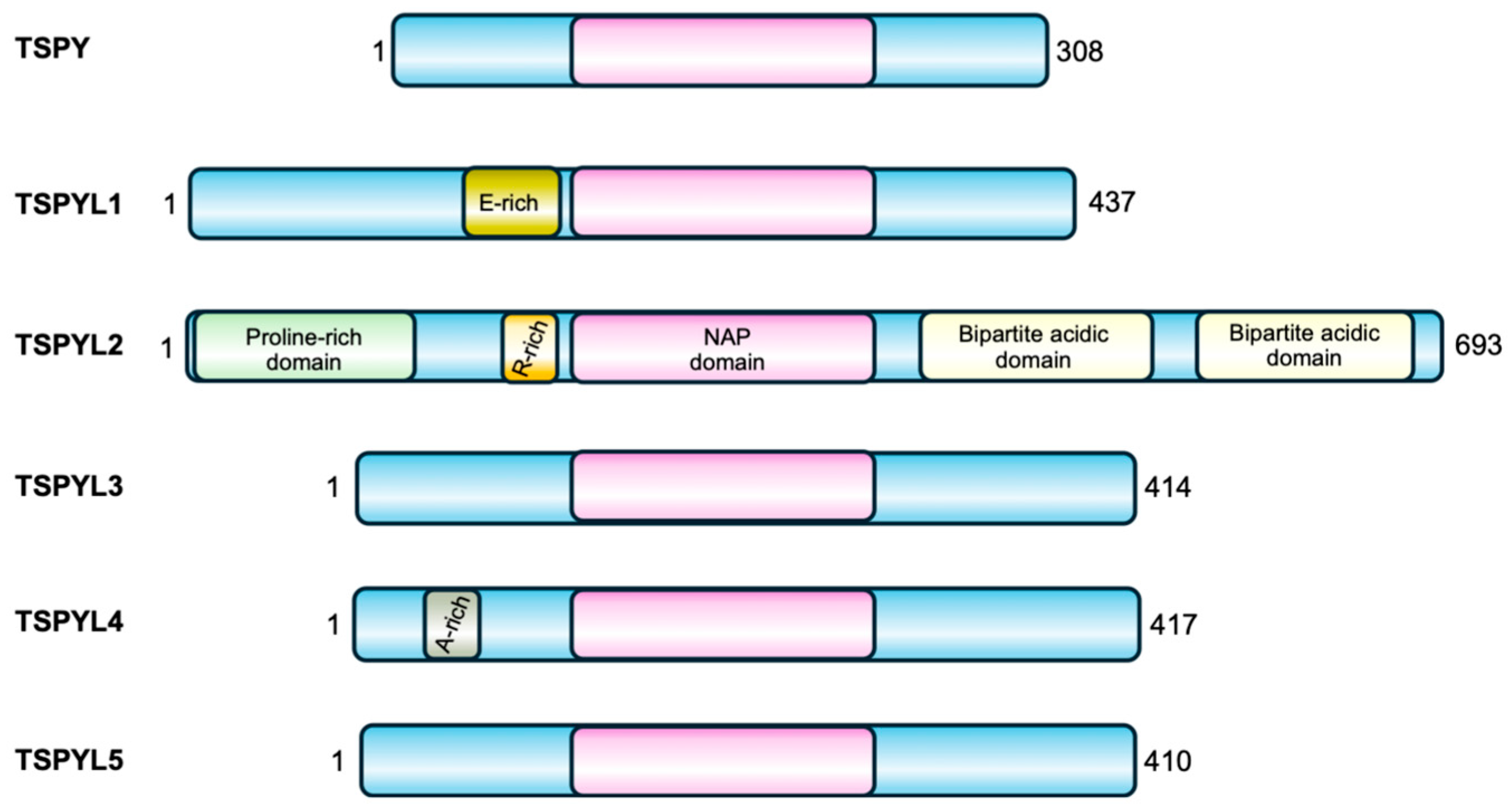
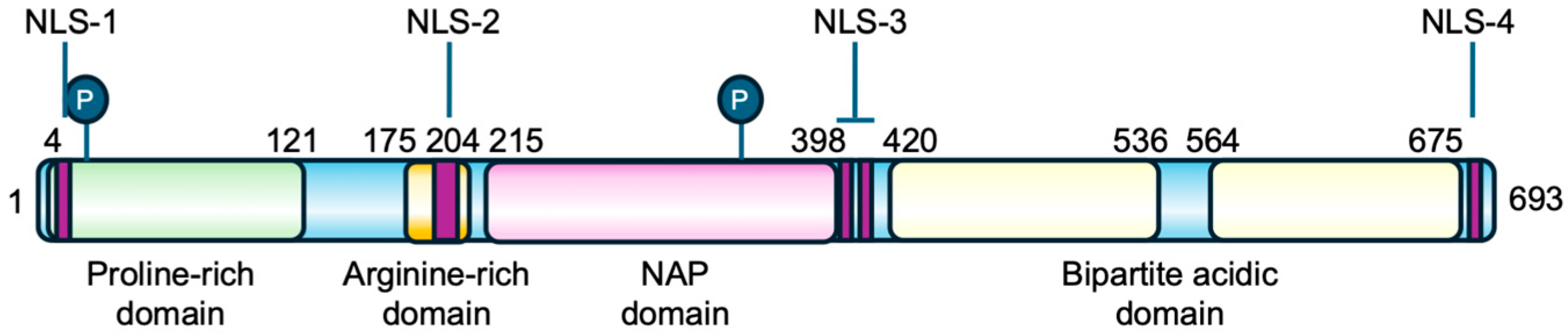
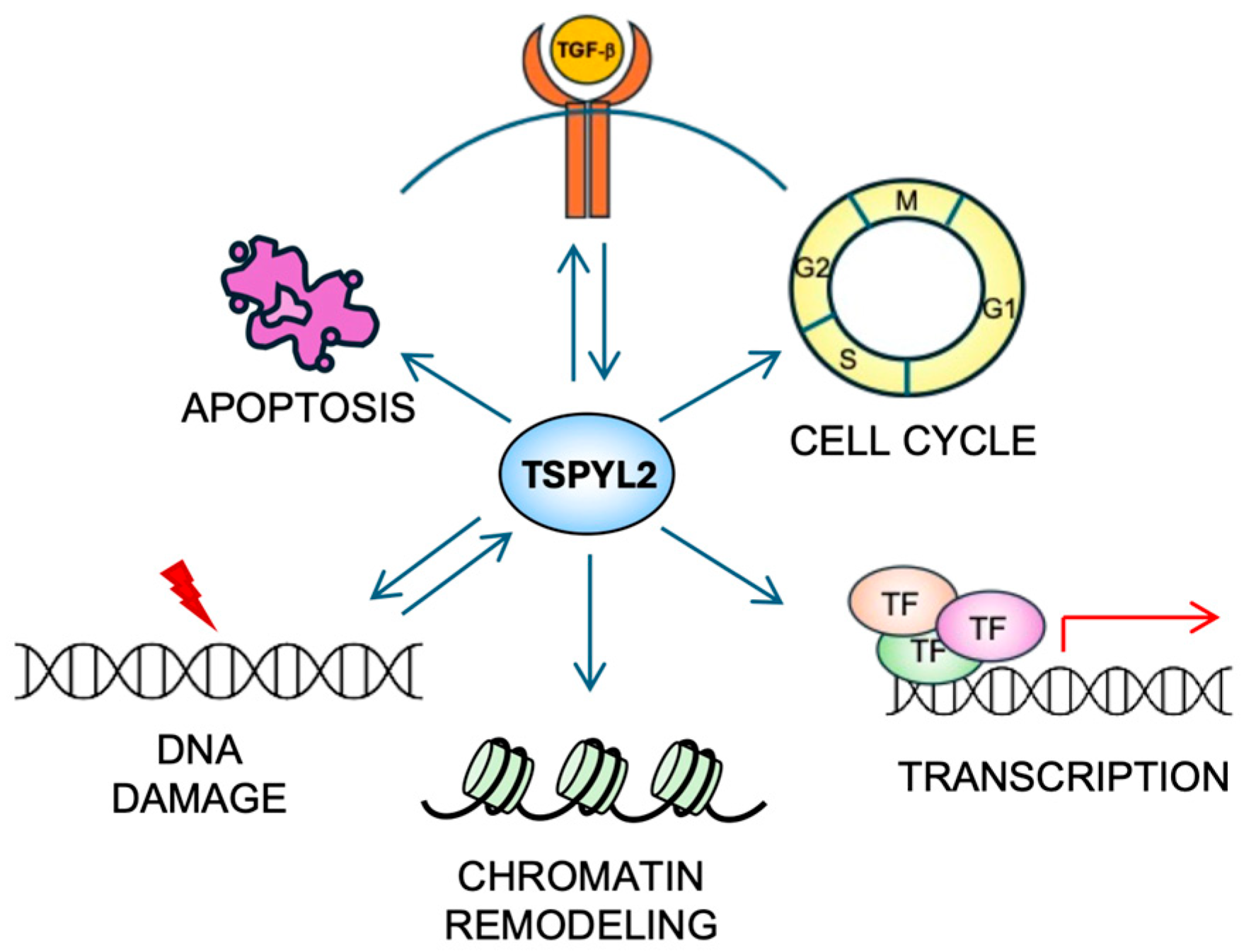
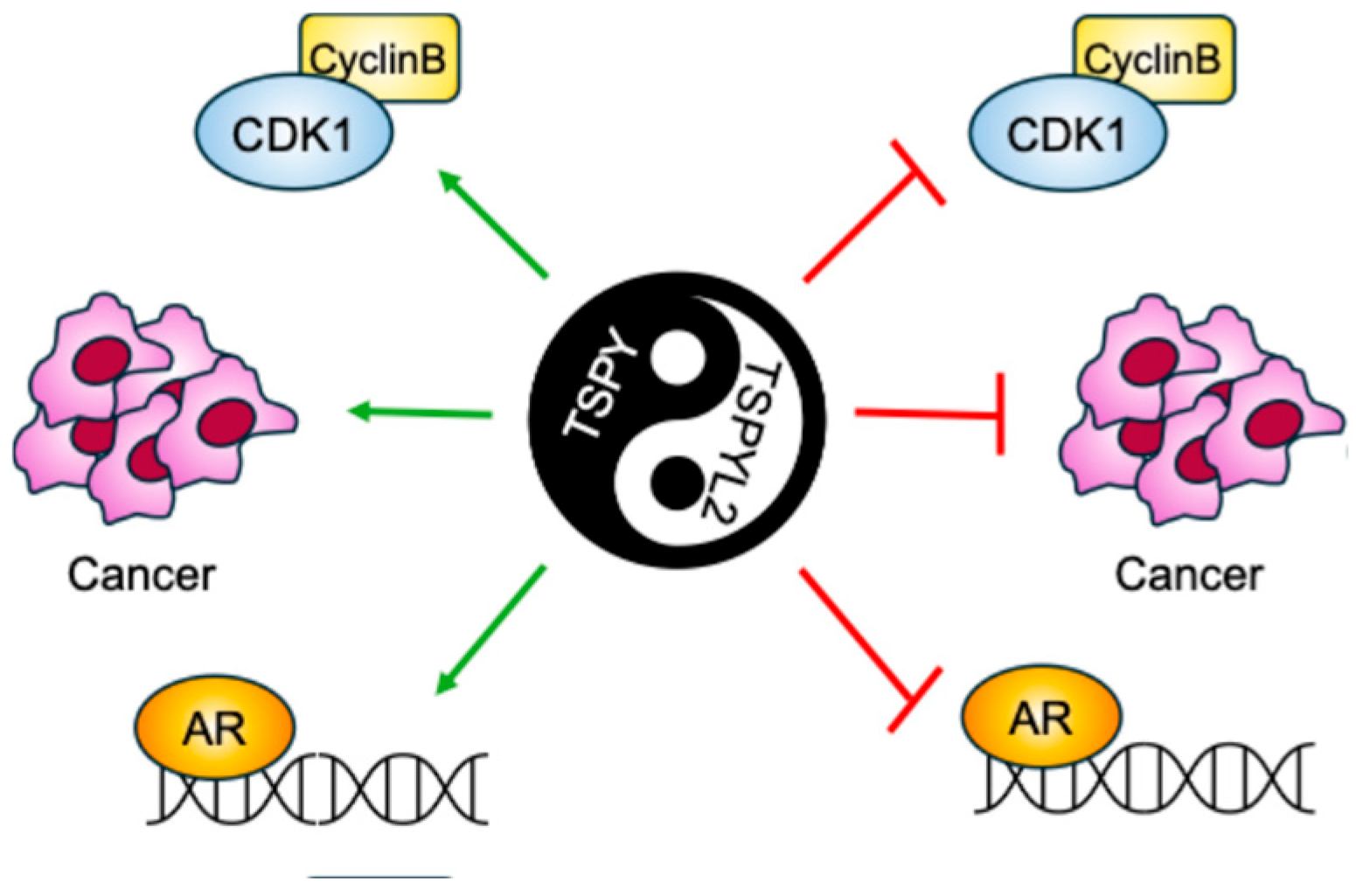

| Name | Function | Reference |
|---|---|---|
| TSPY | -Mainly expressed in testes -Promotes cell proliferation -Establishes a positive feedback loop with androgen receptor -Highly expressed in gonadoblastoma | [6] |
| TSPYL1 | -Ubiquitous expression -Negatively regulates the TGFβ pathway -Regulates the expression of CYP genes -Associated with sudden infant death with dysgenesis of testes -Associated with testicular abnormalities | [7,8,9,10] |
| TSPYL2 | -Ubiquitous expression with high levels in brain -Positively regulates and is regulated by TGFβ pathway -Restricts cell proliferation -Implicated in the DNA damage response -Promotes p53 function -Regulates the expression of CYP genes -Regulates the expression of neuronal genes -Downregulated/mutated in tumors -Associated with neurological disorders | [8,11,12,13,14,15,16] |
| TSPYL3 | -Pseudogene -Nonfunctional | [7] |
| TSPYL4 | -Ubiquitous expression -Regulates expression of CYP genes | [8] |
| TSPYL5 | -Ubiquitous expression -Regulates the expression of CYP genes -Inhibits p53 function -Promotes cell proliferation and angiogenesis -Regulates alternative lengthening of telomeres -Overexpressed in tumors | [17,18,19,20] |
| TSPYL6 | -Expressed in testes -Unknown function -Associated with breast cancer | [21] |
| TSPYL2 protein mutations | Cancer type |
| E503K | Uterus, endometrium, lung, large intestine |
| S127Afs*20 | Stomach, large intestine |
| R289C/R289S | Large intestine, lung |
| E590K | Skin |
| P33del | Large intestine |
| I84Sfs*63 | Large intestine, stomach |
| S363N/S363G | Large and small intestine |
| R331I/R331S/R331H | Large intestine, lung, skin |
| A155V/A155T | Endometrium |
| G356R/G356E/G356W | Skin, cervix, large intestine |
| TSPYL2 protein mutations | Associated neurological disorder |
| Q556H | Autism spectrum disorder |
| I622M | Mild intellectual disability |
Disclaimer/Publisher’s Note: The statements, opinions and data contained in all publications are solely those of the individual author(s) and contributor(s) and not of MDPI and/or the editor(s). MDPI and/or the editor(s) disclaim responsibility for any injury to people or property resulting from any ideas, methods, instructions or products referred to in the content. |
© 2026 by the authors. Licensee MDPI, Basel, Switzerland. This article is an open access article distributed under the terms and conditions of the Creative Commons Attribution (CC BY) license.
Share and Cite
Bonenti, E.; Cardano, M.; Buscemi, G.; Zannini, L. TSPY-like 2, Beyond the Histone Chaperone Role. Biomolecules 2026, 16, 378. https://doi.org/10.3390/biom16030378
Bonenti E, Cardano M, Buscemi G, Zannini L. TSPY-like 2, Beyond the Histone Chaperone Role. Biomolecules. 2026; 16(3):378. https://doi.org/10.3390/biom16030378
Chicago/Turabian StyleBonenti, Emanuele, Miriana Cardano, Giacomo Buscemi, and Laura Zannini. 2026. "TSPY-like 2, Beyond the Histone Chaperone Role" Biomolecules 16, no. 3: 378. https://doi.org/10.3390/biom16030378
APA StyleBonenti, E., Cardano, M., Buscemi, G., & Zannini, L. (2026). TSPY-like 2, Beyond the Histone Chaperone Role. Biomolecules, 16(3), 378. https://doi.org/10.3390/biom16030378

