Targeting Phosphoinositide 3-Kinase to Reduce the Progression of Ovarian Cancer Cells in a 3D Collagen Model




Abstract
1. Introduction
2. Materials and Methods
2.1. Chemicals and Compounds
2.2. Cell Lines and Maintenance
2.3. Activated 3D Collagen Cell Model
2.4. Dose Testing of 2D Cell Cultures
2.5. Dose Testing of 3D Models
2.6. Western Blot Analysis
2.7. Statistics
3. Results
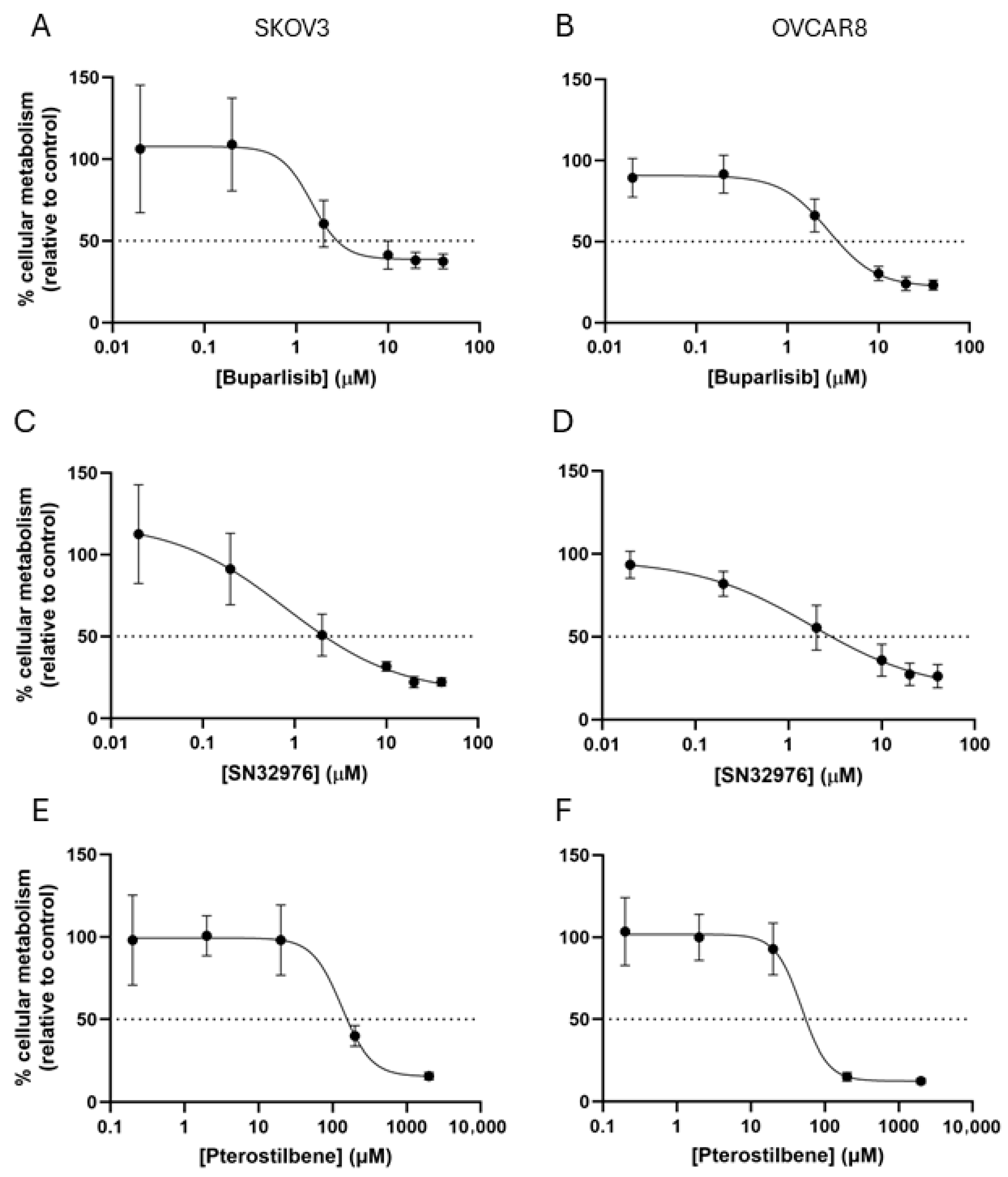
3.1. Dose-Response of Monolayers to Experimental Compounds
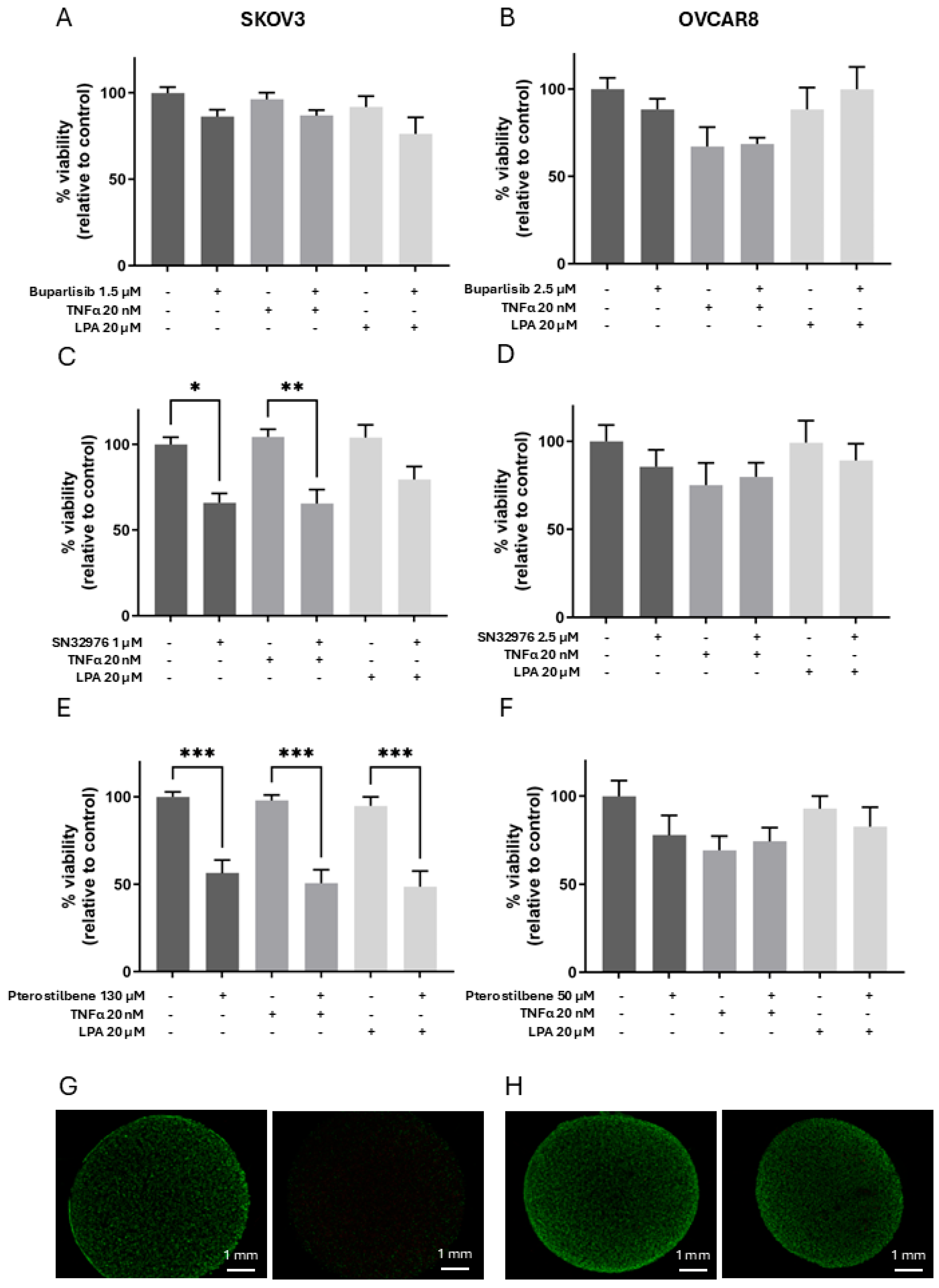
3.2. Effect of Compounds on Cell Viability in Collagen 3D Models
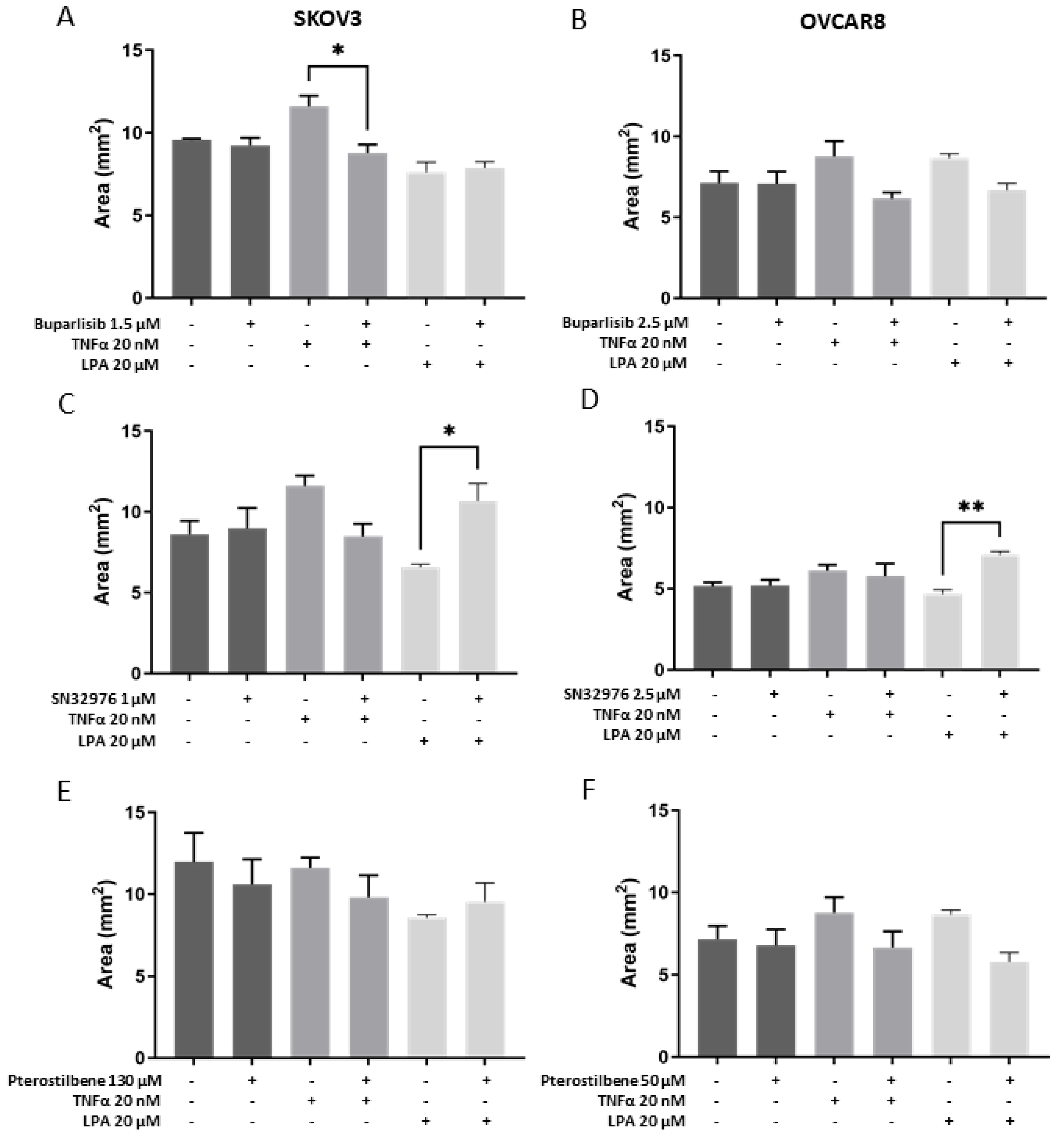
3.3. Effect of Compounds on Collagen Gel Size
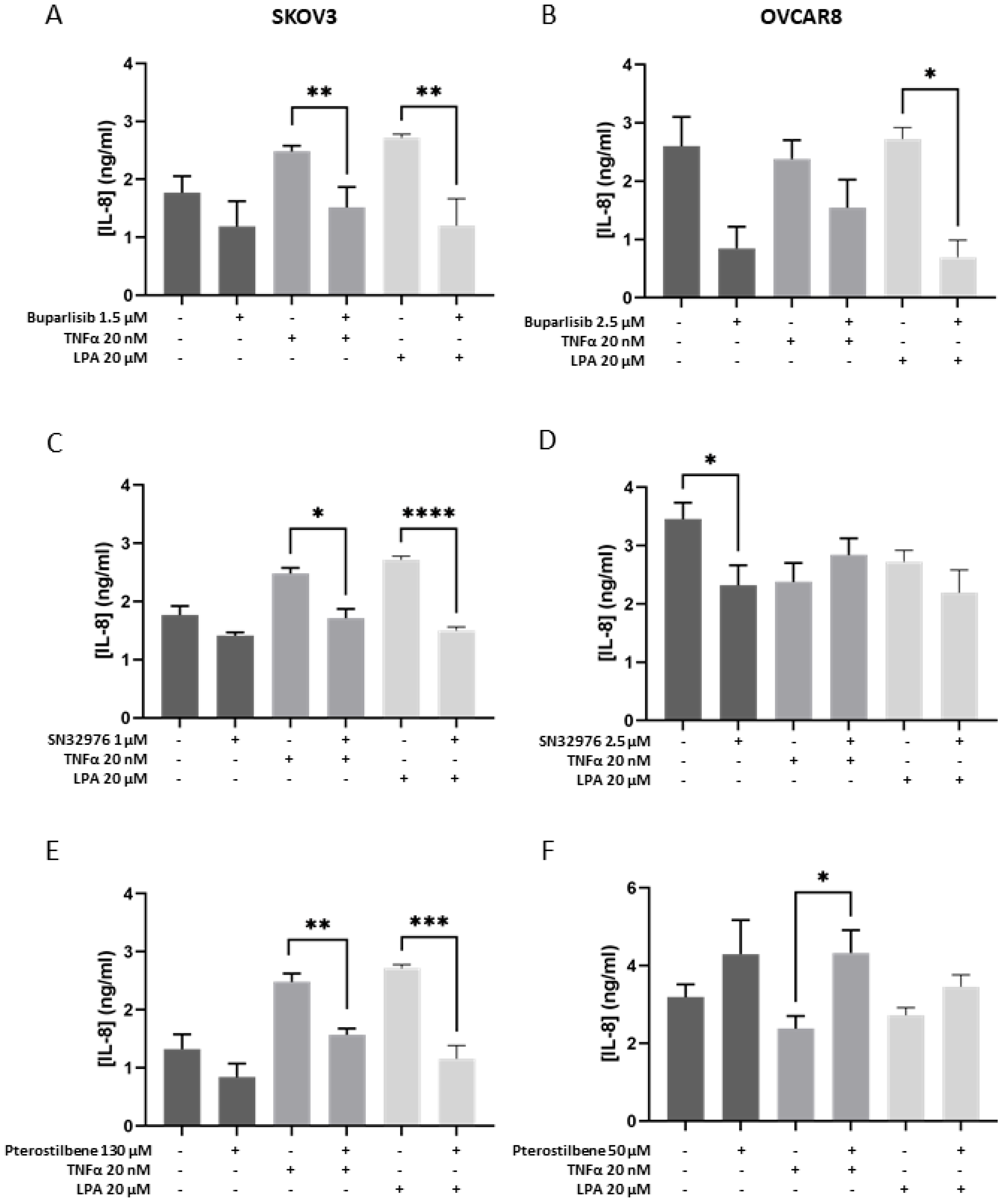
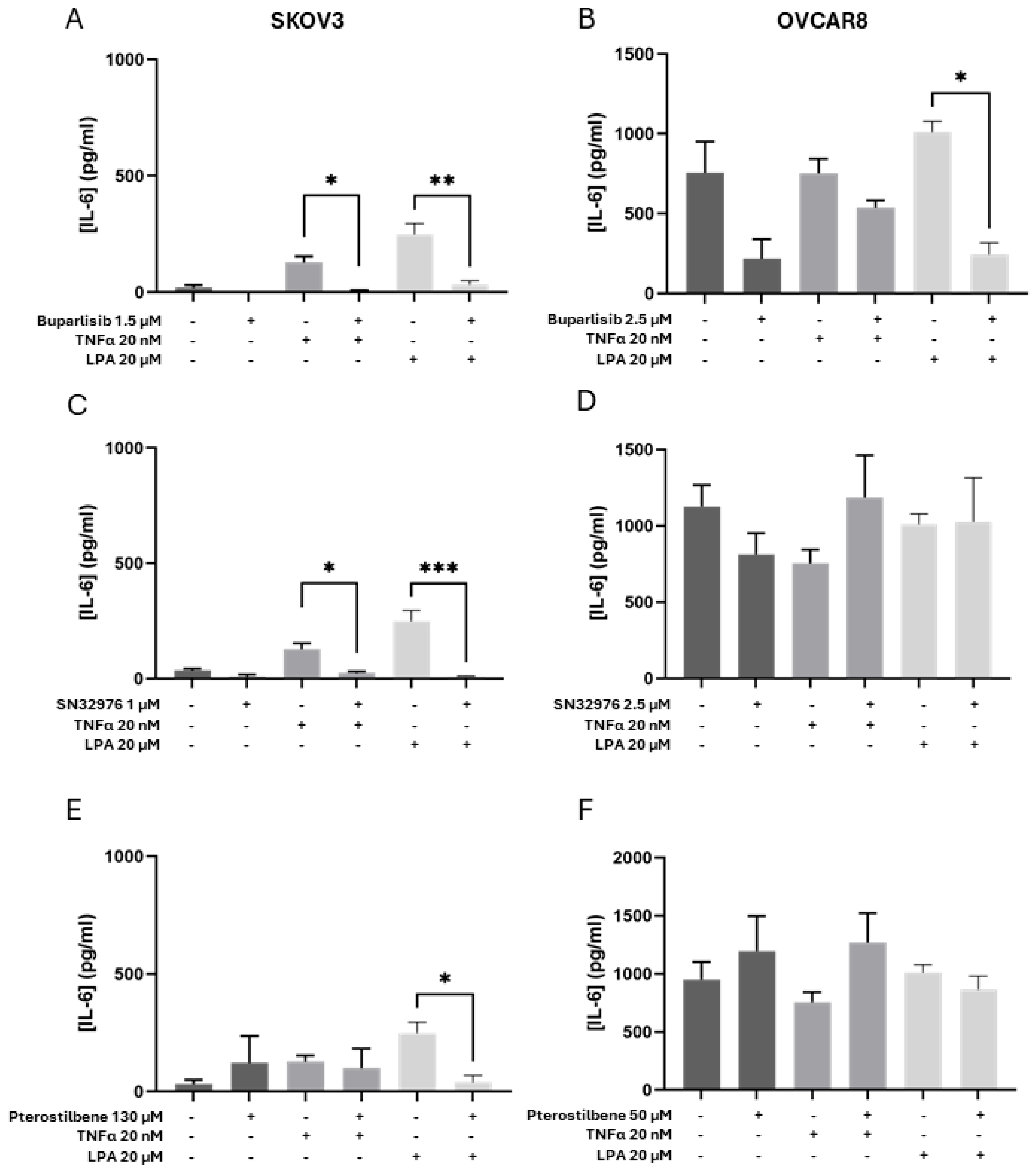
3.4. Effect of Compounds on the Secretome
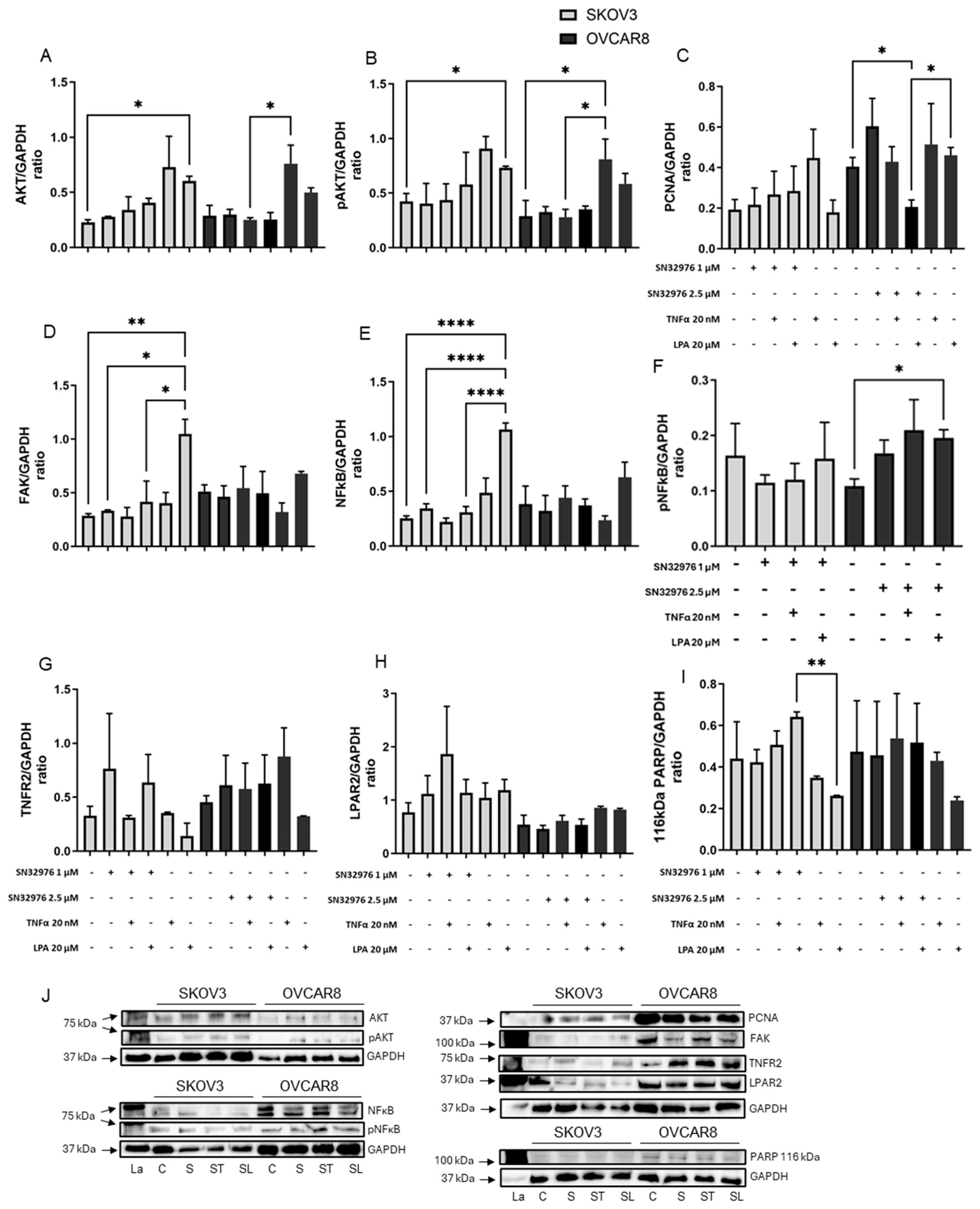
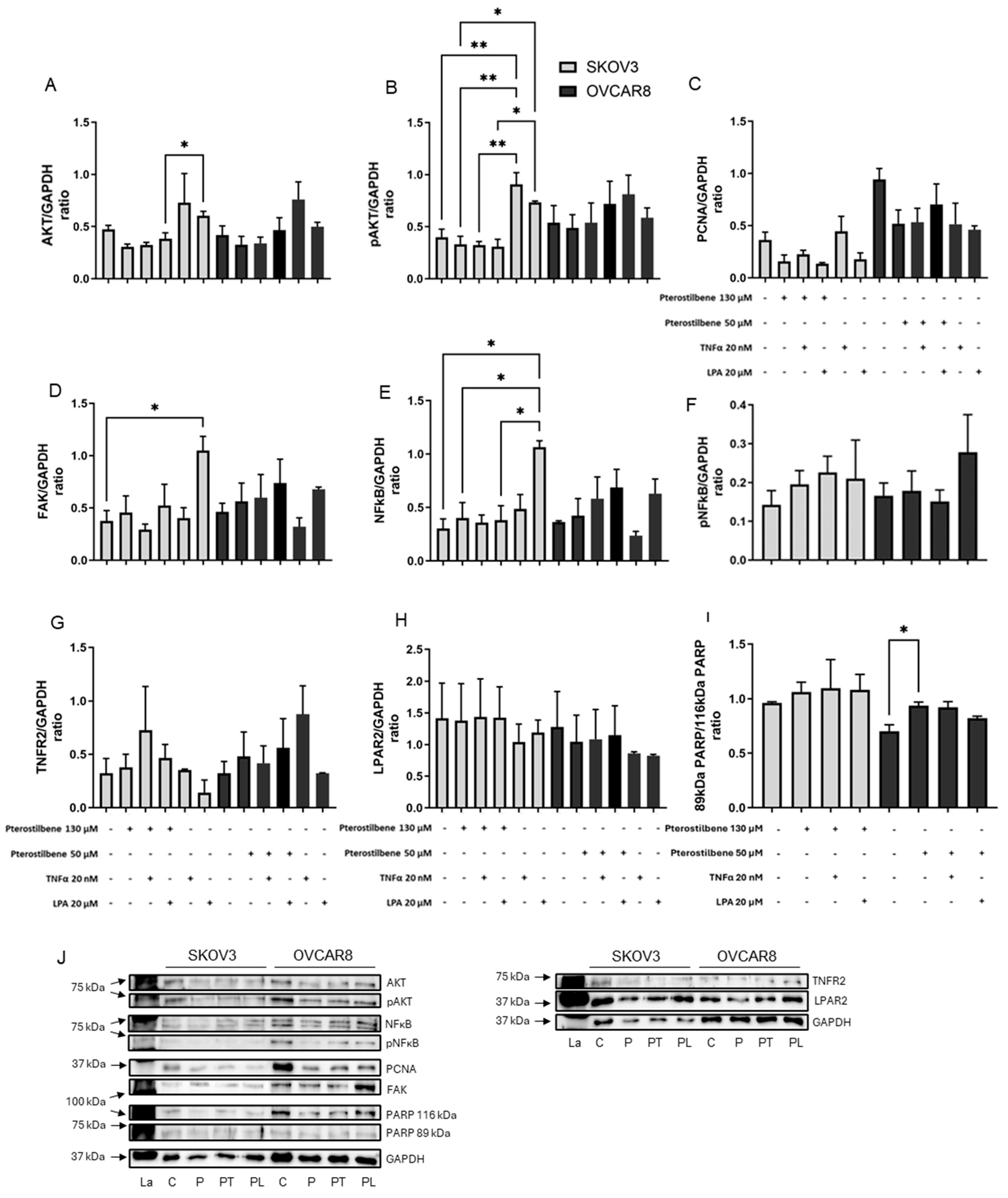
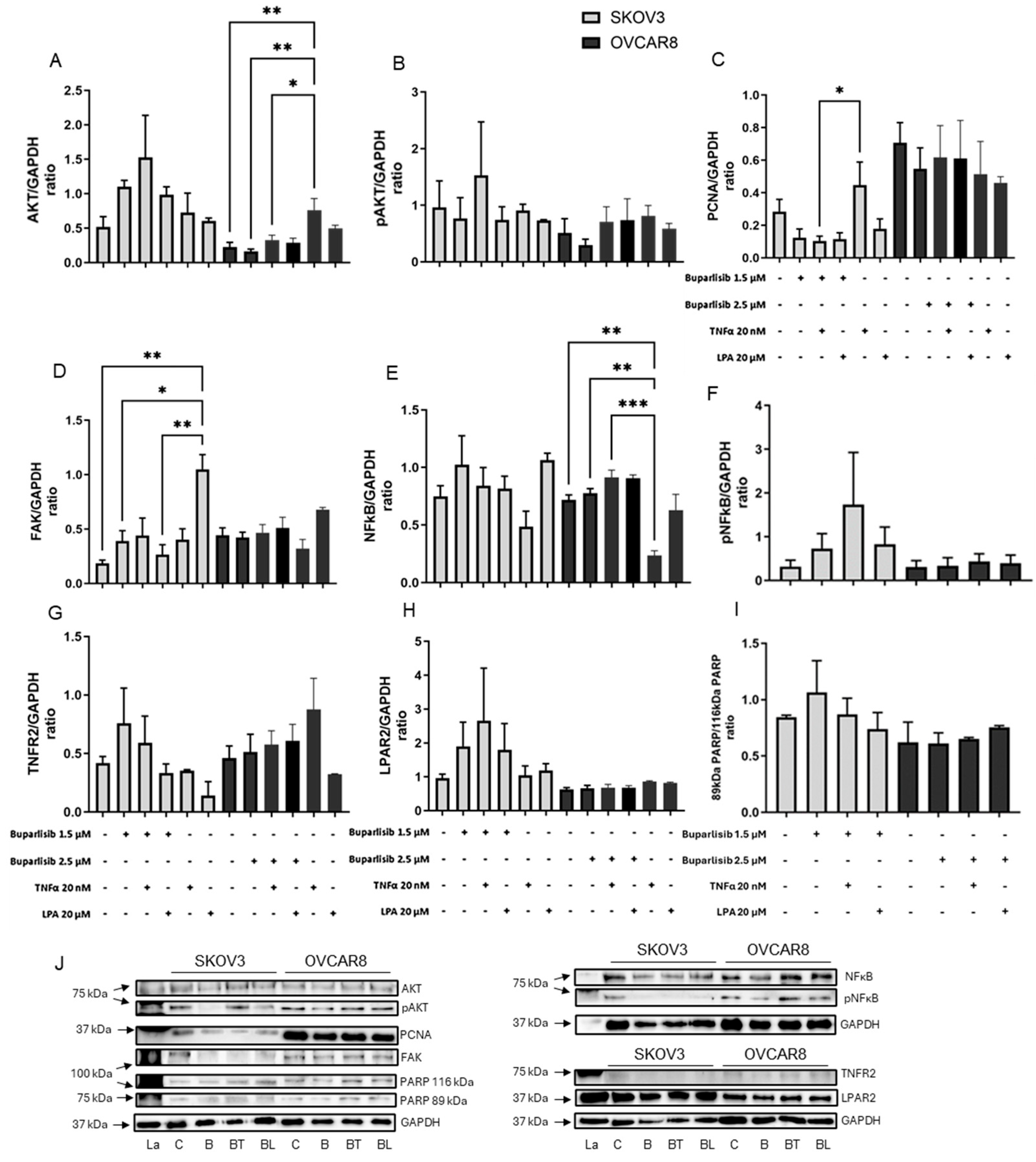
3.5. Cell Signaling Pathways in 3D Ovarian Cancer Models
4. Discussion
5. Conclusions
Supplementary Materials
Author Contributions
Funding
Institutional Review Board Statement
Informed Consent Statement
Data Availability Statement
Acknowledgments
Conflicts of Interest
Abbreviations
| 3D | three dimensional |
| AKT | protein kinase B |
| ELISA | enzyme-linked immunosorbent assay |
| FAK | focal adhesion kinase |
| GAPDH | glyceraldehyde-3-phosphate dehydrogenase |
| IC50 | concentration required to reduce metabolic activity by 50% |
| IL6, IL8 | interleukin 6, 8 |
| LPA | lysophosphatidic acid |
| LPAR2 | LPA receptor 2 |
| mTOR | mammalian target of rapamycin |
| NFκB | nuclear factor kappa-light-chain-enhancer of activated B cells |
| PARP | poly(ADP-ribose) polymerase |
| PCNA | proliferating cell nuclear antigen |
| PI3K | phosphoinositide 3 kinase |
| TNF-α | tumor necrosis factor-alpha |
| TNFR2 | TNF receptor 2 |
References
- Cabasag, C.J.; Arnold, M.; Butler, J.; Inoue, M.; Trabert, B.; Webb, P.M.; Bray, F.; Soerjomataram, I. The influence of birth cohort and calendar period on global trends in ovarian cancer incidence. Int. J. Cancer 2020, 146, 749–758. [Google Scholar] [CrossRef]
- Ferlay, J.; Colombet, M.; Soerjomataram, I.; Parkin, D.M.; Piñeros, M.; Znaor, A.; Bray, F. Cancer statistics for the year 2020: An overview. Int. J. Cancer 2021, 149, 778–789. [Google Scholar] [CrossRef]
- Sung, H.; Ferlay, J.; Siegel, R.L.; Laversanne, M.; Soerjomataram, I.; Jemal, A.; Bray, F. Global Cancer Statistics 2020: GLOBOCAN Estimates of Incidence and Mortality Worldwide for 36 Cancers in 185 Countries. CA Cancer J. Clin. 2021, 71, 209–249. [Google Scholar] [CrossRef]
- Wang, W.; Xi, H.; Ping, Y. Ultrasound-enhanced delivery of pterostilbene-loaded long-circulating solid lipid nanoparticles for the inhibition of IL-6/STAT3 signaling pathway in ovarian cancer. Process Biochem. 2025, 157, 122–135. [Google Scholar] [CrossRef]
- Ediriweera, M.K.; Tennekoon, K.H.; Samarakoon, S.R. Role of the PI3K/AKT/mTOR signaling pathway in ovarian cancer: Biological and therapeutic significance. Semin. Cancer Biol. 2019, 59, 147–160. [Google Scholar] [CrossRef]
- Ghoneum, A.; Said, N. PI3K-AKT-mTOR and NFκB Pathways in Ovarian Cancer: Implications for Targeted Therapeutics. Cancers 2019, 11, 949. [Google Scholar] [CrossRef]
- Murawski, M.; Jagodziński, A.; Bielawska-Pohl, A.; Klimczak, A. Complexity of the genetic background of oncogenesis in ovarian cancer-genetic instability and clinical implications. Cells 2024, 13, 345. [Google Scholar] [CrossRef]
- van der Ploeg, P.; Uittenboogaard, A.; Thijs, A.M.J.; Westgeest, H.M.; Boere, I.A.; Lambrechts, S.; van de Stolpe, A.; Bekkers, R.L.M.; Piek, J.M.J. The effectiveness of monotherapy with PI3K/AKT/mTOR pathway inhibitors in ovarian cancer: A meta-analysis. Gynecol. Oncol. 2021, 163, 433–444. [Google Scholar] [CrossRef]
- Herzog, T.J.; Liao, J.B.; Finkelstein, K.; Willmott, L.; Duan, W.; Moroney, J.W.; Buscema, J.; Campbell-Simms, K.; Yue, Y.; Zweizig, S.; et al. An open-label randomized active-controlled phase II clinical study to assess the efficacy and safety of afuresertib plus paclitaxel versus paclitaxel in patients with platinum-resistant ovarian cancer (PROFECTA-II/GOG-3044). Gynecol. Oncol. 2025, 194, 145–152. [Google Scholar] [CrossRef]
- Subbiah, V.; Coleman, N.; Piha-Paul, S.A.; Tsimberidou, A.M.; Janku, F.; Rodon, J.; Pant, S.; Dumbrava, E.E.I.; Fu, S.; Hong, D.S.; et al. Phase I Study of mTORC1/2 Inhibitor Sapanisertib (CB-228/TAK-228) in Combination with Metformin in Patients with mTOR/AKT/PI3K Pathway Alterations and Advanced Solid Malignancies. Cancer Res. Commun. 2024, 4, 378–387. [Google Scholar] [CrossRef]
- Burger, M.T.; Pecchi, S.; Wagman, A.; Ni, Z.J.; Knapp, M.; Hendrickson, T.; Atallah, G.; Pfister, K.; Zhang, Y.; Bartulis, S.; et al. Identification of NVP-BKM120 as a potent, selective, orally bioavailable class I PI3 kinase inhibitor for treating cancer. ACS Med. Chem. Lett. 2011, 2, 774–779. [Google Scholar] [CrossRef]
- Matulonis, U.A.; Wulf, G.M.; Barry, W.T.; Birrer, M.; Westin, S.N.; Farooq, S.; Bell-McGuinn, K.M.; Obermayer, E.; Whalen, C.; Spagnoletti, T.; et al. Phase I dose escalation study of the PI3kinase pathway inhibitor BKM120 and the oral poly (ADP ribose) polymerase (PARP) inhibitor olaparib for the treatment of high-grade serous ovarian and breast cancer. Ann. Oncol. 2017, 28, 512–518. [Google Scholar] [CrossRef]
- Xing, J.; Yang, J.; Gu, Y.; Yi, J. Research update on the anticancer effects of buparlisib. Oncol. Lett. 2021, 21, 266. [Google Scholar] [CrossRef]
- Rewcastle, G.W.; Kolekar, S.; Buchanan, C.M.; Gamage, S.A.; Giddens, A.C.; Tsang, K.Y.; Kendall, J.D.; Singh, R.; Lee, W.J.; Smith, G.C.; et al. Biological characterization of SN32976, a selective inhibitor of PI3K and mTOR with preferential activity to PI3Kα, in comparison to established pan PI3K inhibitors. Oncotarget 2017, 8, 47725–47740. [Google Scholar] [CrossRef]
- Iida, Y.; Okamoto, A.; Hollis, R.L.; Gourley, C.; Herrington, C.S. Clear cell carcinoma of the ovary: A clinical and molecular perspective. Int. J. Gynecol. Cancer 2021, 31, 605–616. [Google Scholar] [CrossRef]
- Jiang, C.; Lu, Y.; Liu, H.; Cai, G.; Peng, Z.; Feng, W.; Lin, L. Clinical characterization and genomic landscape of gynecological cancers among patients attending a Chinese hospital. Front. Oncol. 2023, 13, 1143876. [Google Scholar] [CrossRef]
- Kim, Y.N.; Chung, Y.S.; Lee, J.H.; Park, E.; Lee, S.T.; Kim, S.; Lee, J.Y. Application of precision medicine based on next-generation sequencing and immunohistochemistry in ovarian cancer: A real-world experience. J. Gynecol. Oncol. 2023, 34, e70. [Google Scholar] [CrossRef]
- Obrador, E.; Salvador-Palmer, R.; Jihad-Jebbar, A.; López-Blanch, R.; Dellinger, T.H.; Dellinger, R.W.; Estrela, J.M. Pterostilbene in Cancer Therapy. Antioxidants 2021, 10, 492. [Google Scholar] [CrossRef]
- Kim, H.; Seo, K.H.; Yokoyama, W. Chemistry of Pterostilbene and Its Metabolic Effects. J. Agric. Food Chem. 2020, 68, 12836–12841. [Google Scholar] [CrossRef]
- Senguttuvan, R.N.; Cho, H.; Wu, X.; Frankel, P.H.; Ruel, N.; Yost, S.E.; Kebria, M.; Han, E.; Song, M.; de Leon, M.; et al. The anti-cancer role of pterostilbene in endometrial cancer: A phase II prospective, randomized, window-of-opportunity clinical trial with megestrol acetate. Antioxidants 2025, 14, 345. [Google Scholar] [CrossRef]
- Chen, R.J.; Tsai, S.J.; Ho, C.T.; Pan, M.H.; Ho, Y.S.; Wu, C.H.; Wang, Y.J. Chemopreventive effects of pterostilbene on urethane-induced lung carcinogenesis in mice via the inhibition of EGFR-mediated pathways and the induction of apoptosis and autophagy. J. Agric. Food Chem. 2012, 60, 11533–11541. [Google Scholar] [CrossRef]
- Yu, D.; Zhang, Y.; Chen, G.; Xie, Y.; Xu, Z.; Chang, S.; Hu, L.; Li, B.; Bu, W.; Wang, Y.; et al. Targeting the PI3K/Akt/mTOR signaling pathway by pterostilbene attenuates mantle cell lymphoma progression. Acta Biochim. Biophys. Sin. 2018, 50, 782–792. [Google Scholar] [CrossRef] [PubMed]
- Lin, W.S.; Leland, J.V.; Ho, C.T.; Pan, M.H. Occurrence, Bioavailability, Anti-inflammatory, and Anticancer Effects of Pterostilbene. J. Agric. Food Chem. 2020, 68, 12788–12799. [Google Scholar] [CrossRef]
- Pei, H.L.; Mu, D.M.; Zhang, B. Anticancer Activity of Pterostilbene in Human Ovarian Cancer Cell Lines. Med. Sci. Monit. 2017, 23, 3192–3199. [Google Scholar] [CrossRef][Green Version]
- Boo, K.H.; Lee, G.; Song, M. Malignant ascites in ovarian cancer: New advances and translational opportunities. Transl. Oncol. 2025, 62, 102568. [Google Scholar] [CrossRef]
- Van Zundert, I.; Fortuni, B.; Rocha, S. From 2D to 3D Cancer Cell Models-The Enigmas of Drug Delivery Research. Nanomaterials 2020, 10, 2236. [Google Scholar] [CrossRef] [PubMed]
- Sharma, K.; Dey, S.; Karmakar, R.; Rengan, A.K. A comprehensive review of 3D cancer models for drug screening and translational research. Cancer Innov. 2023, 3, e102. [Google Scholar] [CrossRef]
- Tino, A.B.; Dachs, G.U.; Sykes, P.H.; Chitcholtan, K. Impact of tumor necrosis factor-alpha and lysophosphatidic acid on the behavior of ovarian cancer cells in a three-dimensional collagen hydrogel. J. Obstet. Gynaecol. Res. 2025, 51, e70026. [Google Scholar] [CrossRef]
- Tino, A.B.; Chitcholtan, K.; Sykes, P.H.; Garrill, A. Resveratrol and acetyl-resveratrol modulate activity of VEGF and IL-8 in ovarian cancer cell aggregates via attenuation of the NF-κB protein. J. Ovarian Res. 2016, 9, 84. [Google Scholar] [CrossRef]
- Kamiloglu, S.; Sari, G.; Ozdal, T.; Capanoglu, E. Guidelines for cell viability assays. Food Front. 2020, 1, 332–349. [Google Scholar] [CrossRef]
- Avnet, S.; Pompo, G.D.; Borciani, G.; Fischetti, T.; Graziani, G.; Baldini, N. Advantages and limitations of using cell viability assays for 3D bioprinted constructs. Biomed. Mater. 2024, 19, 025033. [Google Scholar] [CrossRef] [PubMed]
- Bikmulina, P.; Kosheleva, N.; Efremov, Y.; Antoshin, A.; Heydari, Z.; Kapustina, V.; Royuk, V.; Mikhaylov, V.; Fomin, V.; Vosough, M.; et al. 3D or not 3D: A guide to assess cell viability in 3D cell systems. Soft Matter 2022, 18, 2222–2233. [Google Scholar] [CrossRef]
- de Lima, A.B.; Gonçalves, B.Ô.P.; Moreira, M.P.; Barros, B.A.F.; da Silva Filho, A.L.; Fialho, S.L.; da Conceição Braga, L.; Silva, L.M. Ovarian cancer cell heterogeneity and paclitaxel response in vitro 2D and 3D cancer cell models and xenograft growth in the chicken chorioallantoic membrane (CAM). Biochem. Biophys. Res. Commun. 2025, 777, 152322. [Google Scholar] [CrossRef]
- Yee, C.; Dickson, K.A.; Muntasir, M.N.; Ma, Y.; Marsh, D.J. Three-Dimensional Modelling of Ovarian Cancer: From Cell Lines to Organoids for Discovery and Personalized Medicine. Front. Bioeng. Biotechnol. 2022, 10, 836984. [Google Scholar] [CrossRef]
- Maira, S.M.; Pecchi, S.; Huang, A.; Burger, M.; Knapp, M.; Sterker, D.; Schnell, C.; Guthy, D.; Nagel, T.; Wiesmann, M.; et al. Identification and characterization of NVP-BKM120, an orally available pan-class I PI3-kinase inhibitor. Mol. Cancer Ther. 2012, 11, 317–328. [Google Scholar] [CrossRef]
- Garrido-Castro, A.C.; Saura, C.; Barroso-Sousa, R.; Guo, H.; Ciruelos, E.; Bermejo, B.; Gavilá, J.; Serra, V.; Prat, A.; Paré, L.; et al. Phase 2 study of buparlisib (BKM120), a pan-class I PI3K inhibitor, in patients with metastatic triple-negative breast cancer. Breast Cancer Res. 2020, 22, 120. [Google Scholar] [CrossRef]
- Piha-Paul, S.A.; Taylor, M.H.; Spitz, D.; Schwartzberg, L.; Beck, J.T.; Bauer, T.M.; Meric-Bernstam, F.; Purkayastha, D.; Karpiak, L.; Szpakowski, S.; et al. Efficacy and safety of buparlisib, a PI3K inhibitor, in patients with malignancies harboring a PI3K pathway activation: A phase 2, open-label, single-arm study. Oncotarget 2019, 10, 6526–6535. [Google Scholar] [CrossRef] [PubMed]
- Vansteenkiste, J.F.; Canon, J.L.; De Braud, F.; Grossi, F.; De Pas, T.; Gray, J.E.; Su, W.C.; Felip, E.; Yoshioka, H.; Gridelli, C.; et al. Safety and efficacy of buparlisib (BKM120) in patients with PI3K pathway-activated non-small cell lung cancer: Results from the phase II BASALT-1 study. J. Thorac. Oncol. 2015, 10, 1319–1327. [Google Scholar] [CrossRef]
- Wen, P.Y.; Touat, M.; Alexander, B.M.; Mellinghoff, I.K.; Ramkissoon, S.; McCluskey, C.S.; Pelton, K.; Haidar, S.; Basu, S.S.; Gaffey, S.C.; et al. Buparlisib in patients with recurrent glioblastoma harboring phosphatidylinositol 3-kinase pathway activation: An open-label, multicenter, multi-arm, phase II trial. J. Clin. Oncol. 2019, 37, 741–750. [Google Scholar] [CrossRef] [PubMed]
- Saura, C.; Bendell, J.; Jerusalem, G.; Su, S.; Ru, Q.; De Buck, S.; Mills, D.; Ruquet, S.; Bosch, A.; Urruticoechea, A.; et al. Phase Ib study of Buparlisib plus Trastuzumab in patients with HER2-positive advanced or metastatic breast cancer that has progressed on Trastuzumab-based therapy. Clin. Cancer Res. 2014, 20, 1935–1945. [Google Scholar] [CrossRef]
- Wang, D.; Li, C.; Zhang, Y.; Wang, M.; Jiang, N.; Xiang, L.; Li, T.; Roberts, T.M.; Zhao, J.J.; Cheng, H.; et al. Combined inhibition of PI3K and PARP is effective in the treatment of ovarian cancer cells with wild-type PIK3CA genes. Gynecol. Oncol. 2016, 142, 548–556. [Google Scholar] [CrossRef]
- Blakely, B.; Shin, S.; Jin, K. Overview of the therapeutic strategies for ER positive breast cancer. Biochem. Pharmacol. 2023, 212, 115552. [Google Scholar] [CrossRef]
- Rodrigues, I.S.S.; Martins-Filho, A.; Micheli, D.C.; Lima, C.A.; Tavares-Murta, B.M.; Murta, E.F.C.; Nomelini, R.S. IL-6 and IL-8 as prognostic factors in peritoneal fluid of ovarian cancer. Immunol. Investig. 2020, 49, 510–521. [Google Scholar] [CrossRef]
- Siu, M.K.Y.; Jiang, Y.X.; Wang, J.J.; Leung, T.H.Y.; Ngu, S.F.; Cheung, A.N.Y.; Ngan, H.Y.S.; Chan, K.K.L. PDK1 promotes ovarian cancer metastasis by modulating tumor-mesothelial adhesion, invasion, and angiogenesis via α5β1 integrin and JNK/IL-8 signaling. Oncogenesis 2020, 9, 24. [Google Scholar] [CrossRef]
- Zhang, R.; Siu, M.K.Y.; Ngan, H.Y.S.; Chan, K.K.L. Molecular Biomarkers for the Early Detection of Ovarian Cancer. Int. J. Mol. Sci. 2022, 23, 12041. [Google Scholar] [CrossRef] [PubMed]
- Diaz Osterman, C.J.; Ozmadenci, D.; Kleinschmidt, E.G.; Taylor, K.N.; Barrie, A.M.; Jiang, S.; Bean, L.M.; Sulzmaier, F.J.; Jean, C.; Tancioni, I.; et al. FAK activity sustains intrinsic and acquired ovarian cancer resistance to platinum chemotherapy. Elife 2019, 8, e47327. [Google Scholar] [CrossRef] [PubMed]
- Xu, B.; Lefringhouse, J.; Liu, Z.; West, D.; Baldwin, L.A.; Ou, C.; Chen, L.; Napier, D.; Chaiswing, L.; Brewer, L.D.; et al. Inhibition of the integrin/FAK signaling axis and c-Myc synergistically disrupts ovarian cancer malignancy. Oncogenesis 2017, 6, e295. [Google Scholar] [CrossRef]
- Bago, R.; Sommer, E.; Castel, P.; Crafter, C.; Bailey, F.P.; Shpiro, N.; Baselga, J.; Cross, D.; Eyers, P.A.; Alessi, D.R. The hVps34-SGK3 pathway alleviates sustained PI3K/Akt inhibition by stimulating mTORC1 and tumour growth. EMBO J. 2016, 35, 2263. [Google Scholar] [CrossRef]
- Wang, M.; Liu, J.; Liao, X.; Yi, Y.; Xue, Y.; Yang, L.; Cheng, H.; Liu, P. The SGK3-Catalase antioxidant signaling axis drives cervical cancer growth and therapy resistance. Redox Biol. 2023, 67, 102931. [Google Scholar] [CrossRef] [PubMed]
- Miyazaki, K.; Togo, S.; Okamoto, R.; Idiris, A.; Kumagai, H.; Miyagi, Y. Collective cancer cell invasion in contact with fibroblasts through integrin-α5β1/fibronectin interaction in collagen matrix. Cancer Sci. 2020, 111, 4381–4392. [Google Scholar] [CrossRef]
- Salemi, Z.; Azizi, R.; Fallahian, F.; Aghaei, M. Integrin α2β1 inhibition attenuates prostate cancer cell proliferation by cell cycle arrest, promoting apoptosis and reducing epithelial-mesenchymal transition. J. Cell Physiol. 2021, 236, 4954–4965. [Google Scholar] [CrossRef] [PubMed]
- Campbell, I.G.; Russell, S.E.; Choong, D.Y.; Montgomery, K.G.; Ciavarella, M.L.; Hooi, C.S.; Cristiano, B.E.; Pearson, R.B.; Phillips, W.A. Mutation of the PIK3CA gene in ovarian and breast cancer. Cancer Res. 2004, 64, 7678–7681. [Google Scholar] [CrossRef]
- El-kott, A.; Elbealy, E.; Elsaid, F.; El-mekkawy, H.; Abd-lateif, A.; Taweel, A.; Khalifa, H.; Kandeel, A.; Morsy, K.; Ibrahim, E.; et al. Pterostilbene induces cell apoptosis and inhibits lipogenesis in SKOV3 ovarian cancer cells by activation of AMPK-induced inhibition of Akt/mTOR signaling cascade. Biocell 2021, 45, 89–101. [Google Scholar] [CrossRef]
- Koh, Y.C.; Huang, W.Z.; Nagabhushanam, K.; Ho, C.T.; Pan, M.H. 3′-Hydroxypterostilbene Potently Suppresses Tumor Growth via Inhibiting the Activation of the JAK2/STAT3 Pathway in Ovarian Clear Cell Carcinoma. Mol. Nutr. Food Res. 2024, 68, e2300108. [Google Scholar] [CrossRef]
- Yunianto, I.; Currie, M.; Chitcholtan, K.; Sykes, P. Potential drug repurposing of ruxolitinib to inhibit the JAK/STAT pathway for the treatment of patients with epithelial ovarian cancer. J. Obstet. Gynaecol. Res. 2023, 49, 2563–2574. [Google Scholar] [CrossRef] [PubMed]
- Dunn, E.; Chitcholtan, K.; Sykes, P.; Garrill, A. The Anti-Proliferative Effect of PI3K/mTOR and ERK Inhibition in Monolayer and Three-Dimensional Ovarian Cancer Cell Models. Cancers 2022, 14, 395. [Google Scholar] [CrossRef]
- Köbel, M.; Kang, E.Y. The Evolution of Ovarian Carcinoma Subclassification. Cancers 2022, 14, 416. [Google Scholar] [CrossRef]
- Barnes, B.M.; Nelson, L.; Tighe, A.; Burghel, G.J.; Lin, I.H.; Desai, S.; McGrail, J.C.; Morgan, R.D.; Taylor, S.S. Distinct transcriptional programs stratify ovarian cancer cell lines into the five major histological subtypes. Genome Med. 2021, 13, 140. [Google Scholar] [CrossRef]
- Anglesio, M.S.; Wiegand, K.C.; Melnyk, N.; Chow, C.; Salamanca, C.; Prentice, L.M.; Senz, J.; Yang, W.; Spillman, M.A.; Cochrane, D.R.; et al. Type-specific cell line models for type-specific ovarian cancer research. PLoS ONE 2013, 8, e72162. [Google Scholar] [CrossRef]
- Plesselova, S.; Calar, K.; Axemaker, H.; Sahly, E.; Bhagia, A.; Faragher, J.L.; Fink, D.M.; de la Puente, P. Multicompartmentalized microvascularized tumor-on-a-chip to study tumor-stroma interactions and drug resistance in ovarian cancer. Cell. Mol. Bioeng. 2024, 17, 345–367. [Google Scholar] [CrossRef]
- Yue, X.; Lukowski, J.K.; Weaver, E.M.; Skube, S.B.; Hummon, A.B. Quantitative proteomic and phosphoproteomic comparison of 2D and 3D colon cancer cell culture models. J. Proteome Res. 2016, 15, 4265–4276. [Google Scholar] [CrossRef] [PubMed]




Disclaimer/Publisher’s Note: The statements, opinions and data contained in all publications are solely those of the individual author(s) and contributor(s) and not of MDPI and/or the editor(s). MDPI and/or the editor(s) disclaim responsibility for any injury to people or property resulting from any ideas, methods, instructions or products referred to in the content. |
© 2026 by the authors. Licensee MDPI, Basel, Switzerland. This article is an open access article distributed under the terms and conditions of the Creative Commons Attribution (CC BY) license.
Share and Cite
Tino, A.B.; Sykes, P.H.; Dachs, G.U.; Chitcholtan, K. Targeting Phosphoinositide 3-Kinase to Reduce the Progression of Ovarian Cancer Cells in a 3D Collagen Model. Biomolecules 2026, 16, 377. https://doi.org/10.3390/biom16030377
Tino AB, Sykes PH, Dachs GU, Chitcholtan K. Targeting Phosphoinositide 3-Kinase to Reduce the Progression of Ovarian Cancer Cells in a 3D Collagen Model. Biomolecules. 2026; 16(3):377. https://doi.org/10.3390/biom16030377
Chicago/Turabian StyleTino, Alexandria B., Peter H. Sykes, Gabi U. Dachs, and Kenny Chitcholtan. 2026. "Targeting Phosphoinositide 3-Kinase to Reduce the Progression of Ovarian Cancer Cells in a 3D Collagen Model" Biomolecules 16, no. 3: 377. https://doi.org/10.3390/biom16030377
APA StyleTino, A. B., Sykes, P. H., Dachs, G. U., & Chitcholtan, K. (2026). Targeting Phosphoinositide 3-Kinase to Reduce the Progression of Ovarian Cancer Cells in a 3D Collagen Model. Biomolecules, 16(3), 377. https://doi.org/10.3390/biom16030377