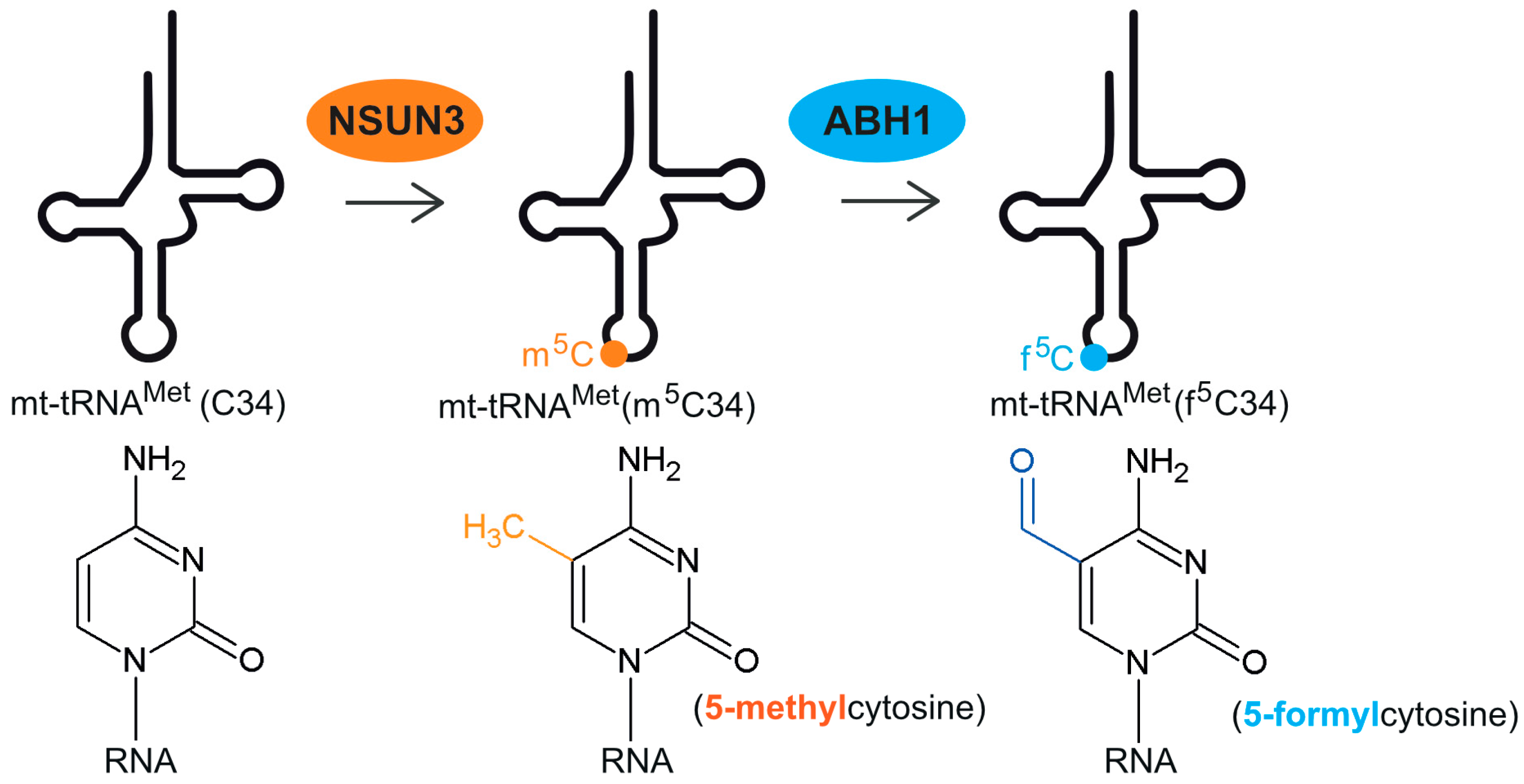
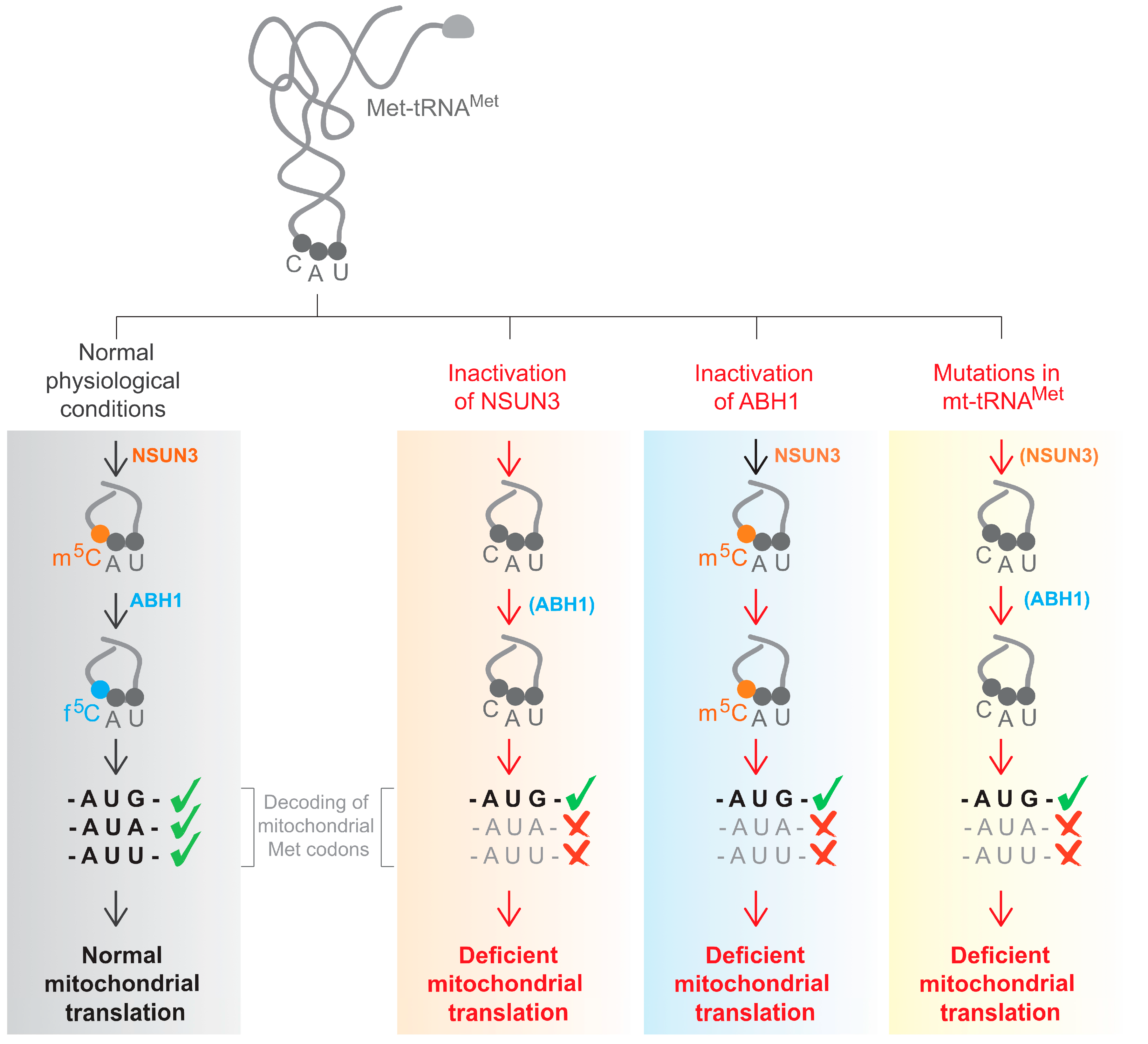
Dealing with an Unconventional Genetic Code in Mitochondria: The Biogenesis and Pathogenic Defects of the 5‐Formylcytosine Modification in Mitochondrial tRNAMet
Abstract
Share and Cite
Van Haute, L.; Powell, C.; Minczuk, M. Dealing with an Unconventional Genetic Code in Mitochondria: The Biogenesis and Pathogenic Defects of the 5‐Formylcytosine Modification in Mitochondrial tRNAMet. Biomolecules 2017, 7, 24. https://doi.org/10.3390/biom7010024
Van Haute L, Powell C, Minczuk M. Dealing with an Unconventional Genetic Code in Mitochondria: The Biogenesis and Pathogenic Defects of the 5‐Formylcytosine Modification in Mitochondrial tRNAMet. Biomolecules. 2017; 7(1):24. https://doi.org/10.3390/biom7010024
Chicago/Turabian StyleVan Haute, Lindsey, Christopher A. Powell, and Michal Minczuk. 2017. "Dealing with an Unconventional Genetic Code in Mitochondria: The Biogenesis and Pathogenic Defects of the 5‐Formylcytosine Modification in Mitochondrial tRNAMet" Biomolecules 7, no. 1: 24. https://doi.org/10.3390/biom7010024
APA StyleVan Haute, L., Powell, C., & Minczuk, M. (2017). Dealing with an Unconventional Genetic Code in Mitochondria: The Biogenesis and Pathogenic Defects of the 5‐Formylcytosine Modification in Mitochondrial tRNAMet. Biomolecules, 7(1), 24. https://doi.org/10.3390/biom7010024