2.1. Medical Metallic Materials: Core Carriers for Mechanical Support
Medical metallic materials refer to metals and alloys that are specifically designed for utilization in healthcare applications. They are chosen due to their outstanding mechanical strength, biocompatibility, and resistance to corrosion within physiological environments. These materials assume crucial roles in orthopedic and dental implants, cardiovascular stents, surgical instruments, and temporary fixation devices, thereby facilitating structural repair, functional restoration, and tissue integration. As fundamental components of advanced medical devices and next-generation biohybrid organs, they integrate engineering precision with biological performance. Commonly used examples encompass austenitic stainless steels (e.g., 316L), commercially pure titanium and Ti-6Al-4V alloy, cobalt–chromium–molybdenum alloys, nickel–titanium shape-memory alloys, biodegradable magnesium alloys, as well as high-purity tantalum and zirconium.
Medical metal materials are of great significance not only for saving and enhancing lives but also for promoting healthcare innovation and socioeconomic development. In the field of orthopedics, stainless steel, which is highly regarded for its corrosion resistance, strength, and cost-effectiveness, has long been a reliable material for fracture fixation devices and surgical instruments. Titanium and its alloys possess superior biocompatibility, low density, corrosion resistance, and an elastic modulus similar to that of natural bone, thereby establishing them as the preferred choice for artificial joints, dental implants, and cardiovascular stents. However, their complex machining requirements lead to relatively higher costs. Cobalt–chromium alloys offer exceptional wear resistance and fatigue strength, making them suitable for load-bearing joint replacements; nickel–titanium shape-memory alloys facilitate minimally invasive device deployment (e.g., self-expanding stents); and biodegradable magnesium alloys hold promise for temporary implants such as bone fixation screws, although their clinical application is still in progress.
2.1.1. Stainless Steel Material
This material is an iron-based stainless steel alloy, which is primarily strengthened by chromium, nickel, and molybdenum. These alloying elements act synergistically to enhance its mechanical strength, thermal stability, and resistance to deformation during both cold and hot working, thereby enabling cost-effective and high-precision manufacturing. Although it exhibits excellent formability and structural robustness for medical devices, its corrosion resistance and in vivo biocompatibility are still inferior to those of titanium and cobalt–chromium alloys. Clinically, it is extensively used in orthopedic implants, including bone plates, intramedullary nails, and fracture fixation systems, as well as reusable surgical instruments. For instance, Datti et al. have demonstrated via clinical research that stainless steel mesh is an effective material for repairing cranial defects and causes few adverse reactions [
4].
In China, research efforts are concentrated on high-nitrogen, nickel-free stainless steels to eliminate nickel-induced sensitization and allergic responses. Simultaneously, surface modification techniques such as gas-phase and plasma nitriding are employed to enhance wear resistance and localized corrosion protection. For example, the stainless-steel material with a copper coating developed by Tripathi et al. can significantly reduce the infection rate of Gram-negative Escherichia coli and 99% of Gram-positive
Staphylococcus epidermidis. This confirms that the performance of stainless-steel materials can be effectively enhanced through surface engineering methods, which can effectively prevent bacterial infections caused by surface contamination without leading to antibiotic resistance [
5].
Internationally, high-entropy stainless steels, engineered with five or more principal metallic elements in near-equiatomic proportions, represent a state-of-the-art advancement. They offer an exceptional balance of strength and ductility, superior pitting resistance, and improved passivation stability. Several such alloys have now entered the clinical trial phases and are being scaled up for industrial translation [
6]. Moreover, certain scholars have verified that silver-doped high-entropy nitride coatings are capable of enhancing the hydrophobicity of medical stainless steel, as well as its resistance against Pseudomonas aeruginosa and the novel coronavirus. However, they exhibit no inhibitory effect on Staphylococcus aureus. This experiment also offers an experimental foundation for the modification research of medical antibacterial protective coatings [
7].
2.1.2. Titanium and Titanium Alloys
Titanium and its alloys, especially α+β types such as Ti-6Al-4V [
8], are extensively utilized in biomedical applications. These applications encompass orthopedic implants (e.g., hip and knee prostheses), dental implants, and cardiovascular stents. The clinical adoption of these materials is attributed to a distinctive combination of properties, including remarkable biocompatibility, excellent corrosion resistance in physiological environments, low density (approximately 4.5 g/cm
3), and an elastic modulus (100–110 GPa) that is closer to that of cortical bone (10–30 GPa) compared to traditional implant metals like stainless steel or cobalt–chromium alloys, thus reducing stress shielding. However, their high strength, low thermal conductivity, and chemical reactivity present substantial challenges for conventional machining and welding. To tackle the issue of mechanical mismatch, recent domestic research has focused on the design of metastable β-type titanium alloys with reduced elastic moduli (e.g., Ti-Nb-Zr and Ti-Mo-Sn systems), with the aim of better mimicking the mechanical behavior of bone. Simultaneously, surface engineering, including micro-arc oxidation (MAO), bioactive calcium phosphate coatings, and antibacterial Ag/TiO
2 nanocomposites, has been demonstrated to be effective in enhancing osseointegration, inhibiting bacterial colonization, and prolonging the service life of implants.
Internationally, 3D printing has brought about a revolutionary change in the development of titanium alloy implants, which enables the creation of patient-specific designs that enhance surgical precision and clinical outcomes. Nevertheless, a crucial limitation persists. Although porous titanium scaffolds fabricated through additive manufacturing can effectively reduce the elastic modulus mismatch and promote initial bone ingrowth, their intrinsic biological inertness results in less-than-optimal osseointegration and weak implant–bone interfacial bonding. To address this challenge, Cheng et al. developed a multifunctional surface modification by applying an atmospheric plasma-sprayed calcium silicate coating co-doped with 2 wt% copper oxide (CuO) and 10 wt% strontium oxide (SrO) on 3D-printed porous titanium scaffolds. In vivo studies using rodent models verified significantly improved bone–implant contact and new bone formation around the modified scaffolds. Complementary in vitro assays further proved potent antibacterial activity against both Gram-positive (
S. aureus) and Gram-negative (
E. coli) pathogens, indicating dual functionality: accelerated osseointegration and infection prevention [
9].
These implants have progressed from prototype development to regular clinical application in craniofacial and spinal reconstruction. To tackle the fatigue and wear issues related to the long-term performance of titanium alloy implants, which are key factors contributing to aseptic loosening and mechanical failure, researchers across the globe are actively customizing microstructures and improving additive manufacturing and thermomechanical processing techniques. Notably, Xu et al. combined fatigue theory with continuum damage mechanics to explore the high-temperature low-cycle fatigue behavior in Ti
2AlNb alloy components. Their study indicated that the Extreme Learning Machine (ELM) model surpasses other data-driven methods in predicting fatigue life, providing a reliable and computationally efficient tool for the pre-clinical reliability assessment of next-generation titanium implants [
10].
Currently, the majority of modification approaches for titanium and titanium alloys, as well as material optimization strategies, are still limited to laboratory research and pre-clinical validation. A significant challenge that impedes clinical translation is the achievement of cost-effective and scalable manufacturing without sacrificing biosafety. Beyond the progress in conventional fabrication methods, nanostructured titanium alloys, which are engineered through severe plastic deformation or rapid solidification, present a compelling solution. They can simultaneously improve mechanical strength, ductility, and in vitro bioactivity, thus making them promising candidates for the next-generation load-bearing orthopedic and dental implants [
11]. Notably, Lv et al. developed a CuO/HA composite doped with Mg, Zn and Ce. The results demonstrated that it exhibited better antibacterial activity against Escherichia coli and Staphylococcus aureus than pure HA. Moreover, CCK-8 assays confirmed that the doped CuO/HA composite had no cytotoxicity and could promote the proliferation of osteosarcoma cells. This study reveals the potential of the material for biomedical applications such as dental implantation and bone regeneration [
12].
2.1.3. Cobalt-Based Alloys
The Co-Cr-Mo alloy, a ternary system predominantly composed of cobalt, chromium, and molybdenum, combines outstanding wear resistance, excellent corrosion resistance in physiological environments, and high mechanical strength, rendering it a fundamental material for load-bearing biomedical implants. However, its clinical application is constrained by a crucial biomechanical limitation: its elastic modulus (200–230 GPa) substantially exceeds that of cortical bone (10–30 GPa), resulting in stress shielding, where the implant bears an excessive load, thus inhibiting bone remodeling and potentially causing peri-implant osteoporosis or loosening. Despite this challenge, Co-Cr-Mo continues to be extensively utilized in three critical applications: (1) hip and knee joint replacements, (2) dental prostheses and frameworks, and (3) cardiovascular stents, which have supported decades of surgical progress [
13]. To address its drawbacks, research has advanced along two complementary directions. Domestically, efforts are concentrated on compositional refinement (e.g., controlled addition of carbon/nitrogen) and advanced processing (e.g., hot isostatic pressing and selective laser melting) to improve fatigue life and reduce the generation of abrasive wear debris.
Other researchers have developed Ti
3CT
2x-UHMWPE nanocomposites to concurrently enhance the mechanical strength, biocompatibility, and biotribological performance of cobalt–chromium alloys. In vitro cytotoxicity assays indicated no adverse impacts on cell viability, which corroborates their biosafety. Notably, compared with unmodified controls, these nanocomposites decreased the coefficient of friction by 19% and the wear rate by 44%, highlighting substantial enhancements in tribomechanical durability [
14]. Beyond material modification, additive manufacturing, particularly laser powder bed fusion (LPBF), has facilitated the fabrication of patient-specific orthopedic implants with lattice architectures and functionally graded porosity. Such designs foster osseointegration without undermining structural integrity; several LPBF-fabricated titanium alloy devices have obtained FDA 510(k) clearance and are now regularly utilized in clinical practice [
15]. For example, early postoperative outcomes after total ankle arthroplasty with LPBF-optimized pure titanium prostheses demonstrate significant pain reduction and functional improvement, further validating 3D printing as a clinically translatable strategy to enhance both the mechanical and biological functionality of titanium-based implants [
16].
2.1.4. Nickel–Titanium Alloy
Nickel–titanium (NiTi), commonly referred to as Nitinol, is a groundbreaking shape-memory alloy that combines the shape-memory effect with superelasticity in a unique manner, allowing for near-complete recovery following significant mechanical deformations. Its remarkable biocompatibility further sets it apart in biomedical applications. It demonstrates negligible cytotoxicity, a minimal immune response, excellent corrosion resistance in physiological environments, and long-term structural stability in vivo. Capitalizing on these advantages, NiTi alloys have become the mainstays in clinical practice, being widely utilized in cardiovascular stents, orthopedic fixation devices for trauma repair, and precision orthodontic archwires [
17]. For example, Zhang et al. independently developed a memory-type nickel–titanium alloy wire double-hook device. Experiments have verified that this device can effectively facilitate lacrimal duct stent intubation in patients with lacrimal canalicular laceration [
18].
Domestically, research focuses on surface engineering, such as thin-film coatings (e.g., TiO
2, diamond-like carbon) and composite modifications, to enhance surface bioactivity, reduce the release of nickel ions, and improve wear resistance. Several such advanced stents and orthopedic implants are now in regular clinical use. Internationally, the research frontier has moved towards nickel-free alternatives, especially titanium-niobium (Ti-Nb)-based alloys. Through well-planned alloy design, including the addition of ternary elements (e.g., Zr, Ta) and thermo-mechanical processing, these alloy systems maintain strong shape-memory behavior while eliminating the risks of sensitization associated with nickel. Several Ti-Nb variants have successfully completed pre-clinical safety and efficacy evaluations in large-animal models and have recently entered Phase I/II human clinical trials, which represents a crucial step towards the development of safer, next-generation metallic biomaterials [
19].
2.1.5. Magnesium Alloys
This material is predominantly composed of biodegradable magnesium-based alloys, which incorporate essential trace elements such as zinc and calcium. These elements not only support crucial physiological functions, including bone mineralization, enzymatic activity, and cellular signaling, but also enhance the alloy’s inherent biocompatibility. A significant advantage is its controllable biodegradation: it gradually decomposes in physiological environments, releasing non-toxic ions that can be safely metabolized or excreted. This process minimizes inflammatory responses and avoids long-term foreign-body complications. However, the relatively rapid corrosion of this material in chloride-rich biological fluids, such as blood and interstitial fluid, remains a challenge. This may potentially lead to premature mechanical failure before tissue healing is completed. To tackle this issue, current research focuses on two synergistic strategies: (1) compositional optimization through targeted alloying (for example, adding rare-earth elements like yttrium or zinc to refine the microstructure and suppress localized corrosion), and (2) functional surface engineering, including bioceramic coatings (such as hydroxyapatite) and polymer-based barriers, to precisely regulate degradation kinetics and improve interfacial tissue integration. Consequently, these advanced magnesium alloys are now being applied in clinical settings: they serve as next-generation absorbable orthopedic implants (such as load-bearing bone plates and compression screws) and are promising candidates for fully bioresorbable cardiovascular stents, providing temporary scaffolding without the need for secondary removal. In China, national research and development (R&D) initiatives have expedited progress in this field. Multiple alloy systems, such as Mg-Zn-Ca and Mg-Y-Zn, have advanced to pre-clinical and early clinical trials, especially for orthopedic and cardiological indications. Internationally, magnesium alloys are increasingly being adopted in clinical applications, particularly in cardiovascular medicine. Several degradable magnesium-alloy stents have progressed to human clinical trials. The early-phase results suggest excellent biocompatibility, predictable and adjustable degradation kinetics, and significant translational potential for real-world patient care [
20].
The medical metal materials industry is confronted with persistent challenges that impede its clinical translation and long-term sustainability. Despite the consistent progress achieved in material innovation, the widespread adoption of medical metal materials remains restricted by three interrelated bottlenecks: (1) a fragmented technological ecosystem, in which fundamental research, process engineering, and regulatory validation function in isolation; (2) slow commercialization, where only a small proportion of promising lab-scale alloys progress to Good Manufacturing Practice (GMP) manufacturing and clinical trials; and (3) processing complexity. High-performance metals such as titanium, nickel–titanium, tantalum, and zirconium require energy-intensive and precision-dependent fabrication methods (e.g., powder metallurgy, additive manufacturing, or severe plastic deformation), which increase the cost and pose barriers to scalability. Beyond the aspect of manufacturability, biological performance is of crucial importance. Conventional implants, such as 316L stainless steel and Co-Cr-Mo alloys, present dual biocompatibility risks. Metal ion leaching can lead to local inflammation, hypersensitivity, or systemic immune activation. Simultaneously, the mismatch in elastic modulus (e.g., stainless steel: ~200 GPa vs. cortical bone: 10–30 GPa) induces stress shielding, which suppresses bone remodeling, delays osseointegration, and elevates the risk of aseptic loosening. Even after successful implantation, the long-term functionality of implants is affected by in vivo degradation mechanisms. Cyclic loading generates wear debris, which fuels chronic peri-implant inflammation and osteolysis. Fatigue accumulation undermines the mechanical integrity of the implants, leading to microfractures, pain, and ultimately, revision surgery, which burdens patients physically, psychologically, and financially. Finally, diagnostic compatibility should not be overlooked: ferromagnetic stainless steels cause distortion of MRI fields, whereas high-Z elements (e.g., Ta, Zr) generate streaking artifacts in CT and radiography, which hinders postoperative monitoring and early complication detection.
In light of the rapid progress in bimetallic and advanced metallic materials, a new generation of biomedical metals, including powder metallurgy alloys, high-entropy alloys, metallic glasses (amorphous alloys), and liquid-phase nanostructured metals, has come into existence. These materials not only surpass the conventional mechanical performance but also possess inherent biological functionalities, such as antimicrobial activity, selective antitumor effects, and immunomodulatory or osteoinductive behavior. To further enhance the biofunctionality without undermining the structural integrity, surface modification, through physical methods (e.g., plasma spraying, laser texturing) or chemical methods (e.g., silanization, peptide grafting), remains the most commonly employed strategy. It precisely modifies the surface topography, chemistry, and energy while maintaining the bulk material’s strength, ductility, and fatigue resistance [
21]. Simultaneously, 3D-printed titanium alloy implants have shifted from laboratory research to the initial stage of clinical application, especially in load-bearing orthopedic and dental reconstructions [
22]. In line with this trend, metal-based functional gradient materials (FGMs) have attracted considerable attention. Recent studies indicate that optimized FGMs can improve surface corrosion resistance by approximately 154% compared to homogeneous counterparts. They can also maintain uniform mechanical integrity across interfaces and significantly enhance biocompatibility, bone-bonding capacity (osseointegration), and stem-cell-driven osteogenic differentiation, which makes them particularly promising for temporary, load-adaptive orthopedic implants [
23].
AI-driven innovations in metallic biomaterials are expeditiously revolutionizing biomedical research and clinical practice. In 2021, a significant study conducted by a prominent international team presented enzyme-powered liquid metal nanorobots that can autonomously navigate along urea gradients, thereby facilitating precise, on-demand drug delivery and synergistic antibacterial therapy in intricate physiological environments. Capitalizing on this advancement, FDA-approved nanometallic therapeutics, such as iron oxide nanoparticles for MRI contrast and gold-based agents for photothermal tumor ablation, have already been put into clinical use [
24]. Most recently, Yang et al. (2023) introduced sub-3 nm minted metal nanoclusters as dual-modal theranostic platforms, systematically resolving critical bottlenecks in biocompatibility, targeting fidelity, and real-time monitoring [
25]. Looking forward, the integration of AI-guided design, high-resolution 3D bioprinting, and dynamic surface engineering not only holds the promise of enhanced functionality but also offers unprecedented control over the safety, specificity, and scalability of next-generation metallic medical devices.
2.2. Medical Polymer Materials: Key Carriers for Functional Diversity
Biomedical polymer materials, which are highly regarded for their biocompatibility, low toxicity, and structural resemblance to native human tissues, play a crucial role in modern medicine. They support critical applications such as tissue engineering, controlled drug and gene delivery, implantable medical devices, point-of-care diagnostics, and antimicrobial (antiviral and antibacterial) therapies. The key material classes encompass nanoparticles, hydrogels, stimulus-responsive polymers, and implantable scaffolds. Propelled by the rapid progress in biotechnology and clinical requirements, research is increasingly centered on improving functionality, biodegradability, spatiotemporal responsiveness, and biological fidelity. The major categories of biomedical polymers cover both synthetic and natural origins, including biodegradable polymers (e.g., PLGA, PCL), hydrogels (natural and synthetic), antimicrobial polymers, tissue-engineered scaffolds, targeted drug delivery carriers, biomimetic polymers, and conductive polymers.
2.2.1. Biodegradable Polymeric Substances
Biodegradable polymers are comprehensively classified into two primary categories: natural and synthetic. Natural biopolymers, such as cellulose derivatives (e.g., carboxymethyl cellulose), collagen, and chitosan, present distinctive biological compatibility and adjustable degradation profiles. For instance, oxidized regenerated cellulose (ORC) is extensively utilized in surgical hemostasis because of its outstanding adhesion to wet tissues and rapid absorption; it completely degrades within 10–14 days without the need for removal. Likewise, the reversible thermosensitivity of collagen, which remains liquid below 25 °C and forms a stable hydrogel at physiological temperature (37 °C), renders it particularly suitable for minimally invasive subcutaneous delivery and soft-tissue reconstruction in plastic surgery [
26].
Natural materials are characterized by their abundance and biocompatibility; however, precisely tailoring their mechanical properties and degradation rates poses significant challenges. In contrast, synthetic biodegradable polymers, such as polylactic acid (PLA), polyhydroxyalkanoates (PHA), and polycaprolactone (PCL), provide enhanced control over performance and degradation behavior. PLA, which is obtained through the polymerization of lactic acid, degrades in soil within a period of 6 months to 1 year and is extensively utilized in compostable packaging and orthopedic fixation devices. PHA, produced naturally via microbial fermentation, is fully biodegradable under a variety of environmental conditions and shows great potential for medical implants and sustainable bioplastics. PCL demonstrates a slower degradation rate (typically 1–2 years), rendering it suitable for long-term drug delivery systems and tissue engineering scaffolds. The degradation of these polymers mainly occurs through three pathways: (1) enzymatic hydrolysis (for example, PLA is cleaved into lactic acid monomers, which are then metabolized to CO2 and H2O); (2) photodegradation (light-induced bond scission); and (3) thermal degradation (bond cleavage triggered by elevated temperatures). Notably, although photodegradation and thermal degradation can facilitate accelerated breakdown, they may undermine the structural integrity or produce unintended by-products. Therefore, controlled enzymatic hydrolysis remains the most physiologically relevant and predictable route for biomedical applications.
The performance of degradable polymer materials is precisely adjusted through three interrelated strategies: controlled degradation, customized mechanical behavior, and improved thermal stability. Firstly, the degradation kinetics can be reasonably regulated via copolymerization (e.g., adjusting the LA:GA ratio in PLGA), surface functionalization, or blending with natural or synthetic polymers, which enables time-matched scaffold resorption and tissue regeneration. This is demonstrated by human dental pulp stem cells showing robust proliferation and multilineage differentiation within PLGA scaffolds [
27]. Secondly, the mechanical properties are engineered to meet the specific requirements of applications. Chemical modification (e.g., etherification or esterification) significantly enhances the tensile strength of cellulose derivatives, while PLA-PCL blends synergistically improve toughness without sacrificing biodegradability. Thirdly, thermal stability is optimized not only by slowing down decomposition but also by strategically incorporating nanofillers (e.g., surface-modified carbon nanotubes) or introducing covalent cross-links. This ensures the processing integrity during melt extrusion or electrospinning while maintaining physiological degradation profiles [
28].
Biodegradable polymer materials can be fabricated through three primary approaches: physical processing, chemical synthesis, and polymer blending. Physical methods, such as solution casting and melt compression, are operationally straightforward and cost-efficient, which makes them suitable for large-scale production of packaging films. Nevertheless, they often result in materials with restricted mechanical strength and thermal stability. In contrast, chemical methods, including ring-opening polymerization (for example, for polylactic acid, PLA) and controlled cross-linking, allow for precise molecular design and the formation of high-purity products, thus improving functional performance. Polymer blending (e.g., PLA/PCL blends) provides a practical strategy to synergistically combine complementary properties. However, thermodynamic immiscibility often causes phase separation, a challenge that is being actively tackled through compatibilizers, nanostructuring, or reactive blending techniques.
Biodegradable polymer materials are assuming an increasingly significant role in orthopedic applications, encompassing absorbable sutures, bioresorbable bone fixation devices, and advanced regenerative scaffolds. In contrast to traditional implants, these materials gradually degrade in vivo into non-toxic byproducts, obviating the necessity for secondary removal surgery and consequently reducing both clinical risks and healthcare costs. Beyond providing structural support, biodegradable polymers like PLGA function as intelligent drug carriers. Their nanoparticles facilitate spatiotemporally controlled, pathogen-targeted delivery, enhancing therapeutic efficacy while minimizing off-target effects and systemic toxicity [
29]. Moreover, the integration of 3D-printed bionic scaffold technology has transformed tissue engineering, enabling the precise replication of native bone and cartilage microarchitectures. This confluence of material design, controlled degradation, and additive manufacturing is now enabling clinical solutions for previously intractable musculoskeletal conditions [
30].
Biodegradable polymer materials present a transformative potential in the domains of environmental sustainability and biomedical innovation. However, realizing their full potential depends on surmounting two persistent bottlenecks: the trade-off between degradation kinetics and mechanical integrity, and the scalability-cost barrier. Take the well-known dichotomy as an example: polycaprolactone (PCL) exhibits excellent tensile strength but degrades at a pace too slow for numerous clinical applications; polylactic acid (PLA), despite its rapid degradability, is characterized by inherent brittleness and poor toughness. These limitations are not insurmountable obstacles but rather design challenges that can be addressed through rational engineering. Recent advancements indicate that strategic copolymerization (e.g., PLA-PCL block copolymers), controlled blending with plasticizers or nanoreinforcements, and stimuli-responsive surface functionalization allow for the precise adjustment of both degradation profiles and mechanical behavior. At the domestic level, research has advanced from simple synthesis to structure–property–function mapping, as evidenced by tunable PLGA scaffolds achieving matched degradation rates and neo-tissue formation in preclinical bone regeneration models. On a global scale, the field is rapidly moving towards translation: fully bioresorbable PLGA-based coronary scaffolds have successfully completed Phase III trials, showing non-inferiority to metallic stents in terms of safety and efficacy, with complete scaffold resorption occurring within 24 months [
31].
Degradable materials function as highly versatile drug carriers for small-molecule drugs, proteins, and nucleic acids. Once implanted or administered, they experience controlled enzymatic or hydrolytic degradation in the in vivo environment, facilitating the sustained and adjustable release of therapeutics. This, in turn, extends the therapeutic exposure period while minimizing systemic toxicity. Significantly, this approach alleviates the risks related to burst release (such as acute toxicity and off-target effects), reduces the frequency of dosing, and enhances patient compliance with treatment regimens. Through the rational design of the monomer composition, molecular weight, crystallinity, and architecture of degradable polymers (for example, PLGA, PCL, and PEG-based copolymers), researchers can accurately customize the degradation kinetics and drug release profiles to meet physiological requirements, enabling spatiotemporally controlled delivery to disease sites. This enhances drug accumulation at the lesion site, minimizes collateral damage to healthy tissues, and increases the therapeutic index. These benefits have promoted their application in oncology (such as localized chemotherapy and immunomodulator delivery) and chronic disease management (such as long-term hormone or biologic therapy). A typical example is the research conducted by Obayemi et al., who fabricated porous, FDA-compliant scaffolds by blending three clinically established polymers: PCL, PEG, and PLGA. Comprehensive physicochemical characterization (including SEM, DSC, GPC, and degradation kinetics assays) revealed the structure–property relationships that govern scaffold stability and drug release. Subsequent in vitro release studies under physiological temperatures (37 °C) and hyperthermic conditions (42 °C), combined with murine orthotopic mammary tumor models, demonstrated not only the sustained release of doxorubicin but also significant tumor growth inhibition and concurrent regeneration of adjacent normal mammary tissue [
32].
Looking forward, the integration with computational polymer design, enzyme-triggered degradation systems, and solvent-free melt-processing technologies will be crucial, not only to enhance performance but also to enable reliable, reproducible, and economically viable manufacturing for regenerative medicine, sustainable packaging, and other related fields.
2.2.2. Hydrogel Materials
Hydrogels have emerged as a fundamental material in biomedical applications, due to their outstanding biocompatibility, high water absorption and retention capabilities, as well as the structural and functional resemblance to the native extracellular matrix (ECM). Their versatility allows for targeted therapeutic functions across multiple clinical fields: (1) Bone regeneration—hydroxyapatite-reinforced hydrogels offer osteoconductive scaffolds that actively facilitate mineral deposition and new bone formation [
33]; (2) Articular cartilage repair—cellulose-based hydrogels mimic the compressive resilience and low-friction biomechanics of native cartilage, supporting chondrocyte proliferation and extracellular matrix synthesis [
34]; (3) Accelerated wound healing—chitosan-based hydrogels integrate high hydration, oxygen permeability, and inherent antibacterial activity to maintain a moist, infection-resistant healing microenvironment; and (4) Spatiotemporally controlled drug delivery—intelligent stimuli-responsive hydrogels (e.g., NIPAM-PMAA copolymers) enable the precise, on-demand release of therapeutics in response to pathological signals such as tumor-specific pH or localized hyperthermia, thereby enhancing treatment efficacy while minimizing off-target toxicity [
35].
Biodegradable hydrogels, which are highly regarded for their flexibility, biocompatibility, and tissue-mimetic mechanical behavior, are emerging as promising candidates for heart valve repair. However, despite their extensive potential in regenerative medicine, drug delivery, and biosensing, the clinical translation of these hydrogels is still impeded by four persistent challenges: (1) Insufficient mechanical robustness, especially under cyclic physiological loads, which results from the low cross-linking density in natural polymer-based systems (e.g., chitosan, cellulose); (2) poorly adjustable degradation kinetics, as in vivo factors such as local pH, enzymatic activity, and inflammatory status lead to unpredictable erosion rates that affect the therapeutic timing; (3) residual immunogenicity or cytotoxicity, particularly associated with certain synthetic monomers or cross-linkers that cannot be completely removed during purification; and (4) scalability bottlenecks, as lab-scale fabrication methods, including UV-initiated photopolymerization and gamma irradiation, lack reproducibility, throughput, and regulatory compatibility for GMP-compliant manufacturing. Recent progress in dual-network design, nanocomposite integration, and reversible dynamic bonds has started to tackle the first challenge. Similarly, enzyme-responsive moieties and microenvironment-sensitive linkers provide new means for degradation control. Nevertheless, to bridge the gap between bench innovation and bedside application, integrated optimization is required, not only of individual material properties but also of manufacturability, sterility assurance, and long-term functional stability in dynamic cardiac environments.
In response to these challenges, researchers across the globe are making consistent progress by driving innovation through three key strategies: (1) rational structural design, (2) advanced fabrication methods, and (3) targeted functionalization. Nationally, studies predominantly concentrate on biocompatible hydrogels, including both natural (e.g., hyaluronic acid, chitosan) and synthetic (e.g., polyethylene glycol, PEG) ones, which have well-established applications in wound dressings, controlled drug delivery, and tissue engineering scaffolds. To enhance mechanical robustness and bioactivity, researchers utilize customized cross-linking chemistries and site-specific functional modifications. Internationally, stimuli-responsive “smart” hydrogels, especially those sensitive to pH, temperature, or enzymatic cues, are emerging as next-generation platforms for spatiotemporally controlled drug release and dynamic tissue regeneration.
The performance of hydrogels can be significantly enhanced through strategic design across multiple scales. At the molecular level, dynamic covalent bonds facilitate reversible cross-linking and self-healing [
36]. At the microstructural level, a controlled pore architecture, which is achieved via directional freezing, Hofmeister-series ion modulation, or co-solvent templating, improves water permeability and drug loading capacity. At the biomimetic level, decellularized extracellular matrix (dECM)-based hydrogels replicate native tissue cues to support cell adhesion and regeneration [
37]. Functionality can also be adjusted through stimuli-responsiveness. For example, poly(N-isopropylacrylamide) (PNIPAM)-based hydrogels experience reversible sol–gel transitions near physiological temperature, which enables their applications in ocular delivery and minimally invasive wound sealing [
38]. Similarly, Yu et al. used thermosensitive hydrogels to prolong the retention of extracellular vesicles derived from human umbilical cord mesenchymal stem cells in the uterine environment, thereby improving the therapeutic efficacy against intrauterine adhesions [
39]. Meanwhile, salt-induced phase separation has been utilized to fabricate chitosan/gelatin/albumin composite dressings with adjustable mechanical integrity and bioactivity [
40].
As materials science and engineering technologies progress, hydrogels, which are highly biocompatible, water-swelling polymers with adjustable 3D network structures, are rapidly extending beyond their traditional biomedical applications. Having already played a crucial role in drug delivery and tissue engineering, they are currently attracting attention in environmental remediation (e.g., heavy-metal adsorption and wastewater filtration), next-generation energy storage (e.g., stretchable supercapacitors), and soft electronics (e.g., wearable biosensors). Their versatility is derived not only from their outstanding water-retention ability but also from their programmable mechanical, electrical, and responsive properties, which makes them a fundamental material for interdisciplinary innovation.
2.2.3. Antibacterial Polymer Materials
Antibacterial polymer materials are functional polymers that are engineered through chemical synthesis or physical modification to provide persistent, stimuli-responsive, or on-demand antibacterial activity. Their mechanisms can be classified into three main categories: (1) direct killing of bacteria through membrane disruption or metabolic interference; (2) suppression of bacterial proliferation by inhibiting biofilm formation or quorum sensing; and (3) sustained release of embedded antimicrobial agents for long-term protection. Based on their origin, these materials are generally classified as natural (e.g., chitosan, lignin) or synthetic (e.g., quaternized polyethylenimine, antimicrobial peptide-polymer conjugates), with each type balancing processability, biocompatibility, and efficacy. However, the practical application of these materials faces significant challenges: unmodified biopolymers such as cellulose often lack inherent activity and require expensive functionalization, while advanced systems, such as metal-or graphene oxide-based nanocomposites, are limited in scalability due to complex, multi-step syntheses and poor batch-to-batch reproducibility.
Domestic research has achieved remarkable progress in the development of antibacterial polymer materials for biomedical applications, especially in medical devices and wound dressings. The key strategies encompass chemical modification (e.g., grafting of quaternary ammonium salts), incorporation of antimicrobial agents at the nanoscale (e.g., silver nanoparticles), and bioinspired design utilizing natural antimicrobial peptides or cationic polymers such as polylysine. These approaches not only augment broad-spectrum antibacterial activity, including against drug-resistant strains, but also enhance biocompatibility and functional stability through controlled surface engineering and hierarchical nanostructure assembly. Significantly, polylysine-antimicrobial peptide conjugates have exhibited synergistic bactericidal effects in pre-clinical studies, which lays the foundation for clinical translation [
41]. In dentistry, enamel-mimicking polymer composites represent another area of exploration: by replicating the hierarchical mineral-polymer architecture of natural teeth through biomimetic mineralization, they substantially improve the durability of restorations and long-term integration with host tissue [
42].
2.2.4. Biomimetic Polymer Materials
Biomimetic polymer materials are functional polymers that draw inspiration from nature. They are designed by emulating the hierarchical structures, dynamic functions, or biosynthetic strategies of living organisms. The primary objective of these materials is to endow them with exceptional mechanical performance, environmental responsiveness, and biocompatibility by accurately replicating biological design principles. These principles range from nanoscale motifs (e.g., collagen triple helices) and microscale architectures (e.g., nacre’s brick-and-mortar layers) to macroscale systems (e.g., vascular networks in bone), as well as adaptive behaviors such as self-healing, stimulus-triggered deformation, and autonomous self-regulation. Specific examples include superhydrophobic coatings inspired by lotus leaves, polyamide fibers mimicking spider silk that exhibit both high tensile strength and reversible hydrogen-bond-mediated self-repair [
43], and composites inspired by nacre that combine ceramic platelets with polymer interlayers to achieve unprecedented toughness [
44]. At their core, these materials are interdisciplinary, bridging polymer chemistry, materials engineering, and systems biology. They have already facilitated advancements in regenerative medicine (e.g., low-immunogenicity collagen hydrogels for tissue scaffolds), sustainable energy (e.g., ion-selective membranes mimicking biological channels), environmental remediation (e.g., enzyme-integrated hydrogels for pollutant degradation), and adaptive electronics (e.g., stretchable, self-healing conductors). However, significant challenges persist, such as achieving atomic-level precision in hierarchical assembly, ensuring long-term structural integrity under physiological or operational stress, and scaling up fabrication without sacrificing biomimetic fidelity. Addressing these challenges demands not only advanced synthesis and characterization tools but also a more profound integration of biological insight with engineering design logic.
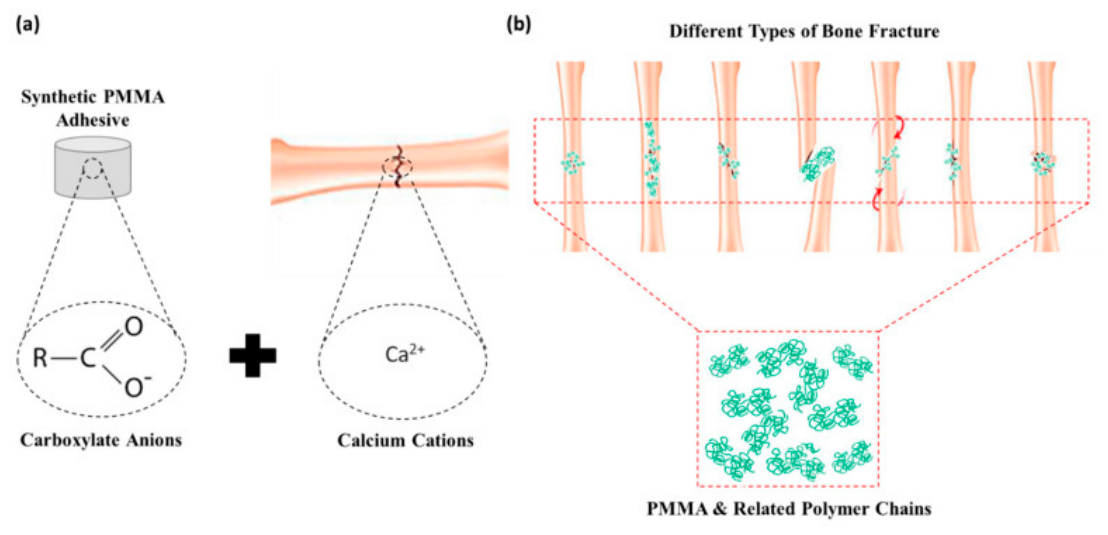
Laboratory-scale fabrication methods, especially 3D-printed bionic scaffolds, encounter challenges in scaling up for industrial applications because of limitations in equipment capacity, process reproducibility, and throughput. Significantly, the hierarchical complexity of native tissues, such as multi-scale porosity, spatially graded mechanics, and dynamically reversible cross-linking, is still difficult to reproduce accurately, thus restricting functional performance and clinical translation. As shown in
Figure 1, Tzagiollari’s group is at the forefront of developing eco-degradable, physiologically compatible surgical adhesives that are specifically engineered for load-bearing bone fixation, accelerated fracture healing, and guided osteo-regeneration [
45]. Meanwhile, Li Haoyi’s team is making progress in key enabling technologies, including polymer melt electrospinning (with novel nozzle designs and real-time fiber morphology control), centrifugal spinning systems for high-throughput microfiber production, micro/nano-filtration membranes with tunable pore architecture, 3D bioprinting platforms for spatially resolved scaffold fabrication, and transdermal microneedle patches for programmable drug release. Globally, researchers are increasingly combining biomimetic hydrogels with multi-material bio-3D printing to fabricate perfusable vascularized tissue constructs, which represents tangible progress towards functional organ surrogates [
46]. In the future, the integration of bionic design principles, adaptive materials chemistry, and intelligent manufacturing will propel next-generation biomaterials towards precision regenerative therapies, sustainable medical devices, and energy-efficient biomedical interfaces.
2.2.5. Conductive Polymer Materials
Conductive polymers represent a distinct category of plastics capable of conducting electricity; some of them even exhibit conductivity comparable to that of metals or semiconductors. In contrast to traditional insulating polymers, the electrical activity of conductive polymers stems from their extended π-conjugated backbones, which facilitate the delocalization of electrons along the polymer chain. Conductivity is not an inherent property but is activated via doping, either chemically (e.g., using FeCl
3 or HCl) or electrochemically, which introduces charge carriers such as polarons or bipolarons. These carriers enable efficient charge transport, thereby converting the material from an insulator into a functional conductor [
47].
Conductive polymer materials present a highly appealing combination of distinctive advantages for next-generation electronic and biomedical applications. Firstly, their extremely low density, which is merely one-fifth to one-tenth of that of conventional metals, renders them suitable for lightweight, portable, and wearable devices. Secondly, they can be highly processed through scalable, low-energy techniques such as solution casting, inkjet printing, and electrochemical deposition, facilitating the easy fabrication of flexible, stretchable, and patterned architectures. Thirdly, their electrical conductivity ranges across an extraordinary 15 orders of magnitude, from 10
−10 to 10
5 S/cm, and can be precisely adjusted through rational doping strategies and molecular engineering of the conjugated backbone [
48]. Fourthly, in contrast to most metals, conductive polymers display remarkable chemical stability in harsh acidic and alkaline environments, providing superior corrosion resistance that is crucial for long-term operation in biosensors and implantable devices. Finally, apart from conductivity, they incorporate multifunctionality: the reversible redox activity of polyaniline enables high-performance supercapacitors; polythiophene derivatives exhibit a strong photoelectric response; certain copolymers offer effective electromagnetic interference (EMI) shielding; and several systems demonstrate promising thermoelectric conversion efficiency. Collectively, these characteristics position conductive polymers not only as alternatives to metals but also as intelligent, designable functional platforms at the intersection of materials science, electronics, and biomedicine. Composite materials: Key advantages and limitations of conductive polymers. Composite conductive polymers, such as carbon black-reinforced silicone rubber, integrate the elasticity and toughness of the polymer matrix with the electrical functionality of conductive fillers [
49]. This combination results in distinct advantages, including a low electrical percolation threshold (frequently below 3 vol%), inherent antistatic performance, and effective electromagnetic interference (EMI) shielding across a wide range of frequencies.
However, traditional intrinsically conductive polymers, including polyaniline (PANI) and polypyrrole (PPy), encounter significant practical limitations [
50]. Firstly, their rigid, conjugated backbones impede processability. They display poor solubility and minimal melt viscosity, making standard thermoplastic processing (e.g., extrusion or injection molding) unfeasible without chemical modification. For example, PANI requires protonic acid doping or surfactant-stabilized emulsion polymerization to achieve dispersibility in common solvents. Secondly, environmental stability remains a crucial challenge. Prolonged exposure to UV light, high temperatures, or mechanical cycling causes irreversible dedoping and chain scission, leading to a rapid decline in conductivity. For instance, PPy’s conductivity can decrease by more than 50% within 72 h in ambient humid air (60% RH, 25 °C). Thirdly, their mechanical integrity is inherently weak. Pure PPy films have tensile strengths below 2 MPa, which is orders of magnitude lower than those of structural polymers. Therefore, reinforcement through blending (e.g., with polyvinyl alcohol) or nanocomposite design is necessary to meet application requirements.
The underlying conduction mechanism remains inadequately understood, especially the interaction among percolation theory, quantum tunneling, and field-induced electron emission. Meanwhile, microcracks inevitably disrupt conductive pathways, necessitating self-healing functionality. Incorporating dynamic covalent or non-covalent bonds (such as Diels-Alder adducts, hydrogen bonds, or metal-ligand coordination) presents a promising strategy. Moreover, scalable manufacturing is hampered by synthetically challenging routes. For example, chiral mesoporous polypyrrole, a representative nanostructured conductive polymer, requires multi-step templating, strict environmental control, and costly reagents, which impedes low-cost, high-yield production.
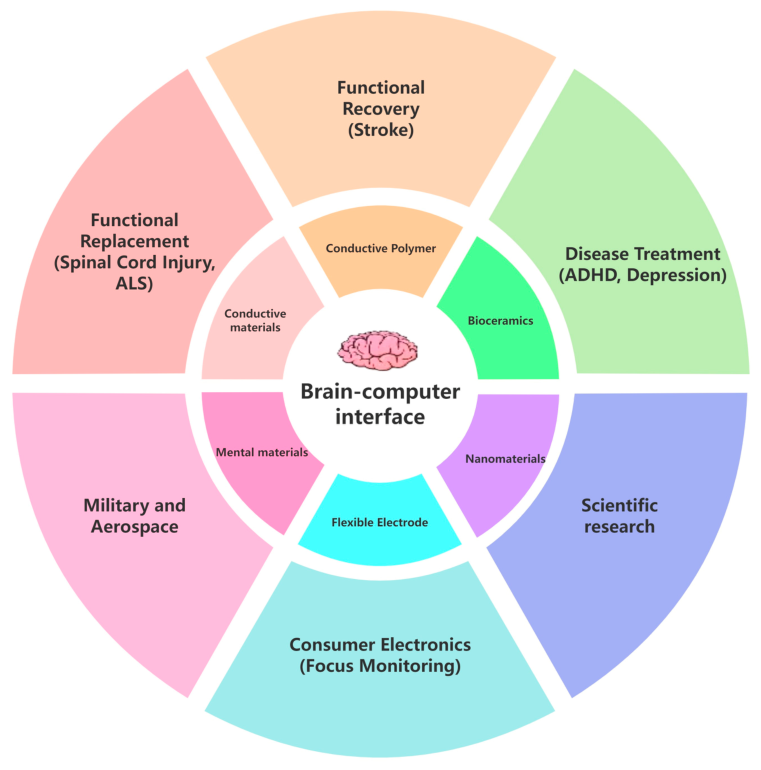
Domestic research has achieved significant progress in the development of conductive polymer materials, such as polyaniline, polypyrrole, and polythiophene, for neural electrodes and biosensors. In order to improve both electrical conductivity and biocompatibility, researchers are increasingly adopting nanotechnology and composite material strategies [
51]. Remarkable advancements have been made in nerve regeneration therapies and next-generation wearable health monitors, with several prototypes currently entering clinical trials. For example, nanostructured polyaniline-based electrodes are being assessed in preclinical brain–computer interface systems (
Figure 2) [
52]; meanwhile, a highly selective electrochemical immunosensor, constructed from conductive carbon black and star-shaped poly(glycidyl methacrylate) (PGMA), enables the sensitive detection of interleukin-8 (IL-8) in human serum and saliva [
53].
Conductive polymer materials are undergoing rapid evolution towards multifunctionality, intelligence, and sustainability. In order to realize this potential, researchers need to surmount fundamental bottlenecks, especially in comprehending charge transport mechanisms, and initiate innovative doping approaches, such as ionic liquid-mediated doping [
54]. Equally crucial is the synergistic integration of nanostructured conductive polymers with flexible electronics. Leveraging international advancements in wearable electronics and green material design, China’s research community should enhance industry-university-research collaboration to expedite scalable fabrication and real-world implementation.
2.2.6. Natural Polymer Materials
Natural polymer materials are macromolecular compounds that are either directly extracted from living organisms or biosynthesized by microorganisms or plants. Owing to their inherent biocompatibility, biodegradability, and bioactivity, they have become essential in biomedicine, food science, agriculture, and environmental remediation. Notable examples include tannic acid, a plant-derived polyphenol featuring multiple phenolic hydroxyl and carboxyl groups, which facilitate strong hydrogen bonding and metal chelation. It is extensively utilized as a natural antioxidant and antimicrobial agent in functional foods and cosmeceuticals. Sodium alginate, an anionic linear polysaccharide obtained from brown algae through alkaline extraction, forms reversible ionotropic gels (e.g., with Ca
2+), rendering it highly valuable for encapsulation, thickening, and wound dressing applications in the food, pharmaceutical, and agricultural sectors [
55]. Chitosan, produced by the partial deacetylation of chitin from crustacean shells or fungal mycelia, demonstrates pH-responsive solubility, mucoadhesiveness, and inherent antimicrobial activity. It is clinically employed in hemostatic sponges, 3D-bioprinted scaffolds for tissue regeneration, and controlled-release nanocarriers for therapeutics [
56]. Despite these benefits, natural polymers encounter persistent challenges, such as inherently low mechanical strength (e.g., tensile modulus often <100 MPa), vulnerability to enzymatic or hydrolytic degradation under physiological conditions, and processing limitations like thermal instability and poor melt processability. These constraints prompt continuous research into physical blending, chemical crosslinking, and nanocomposite reinforcement.
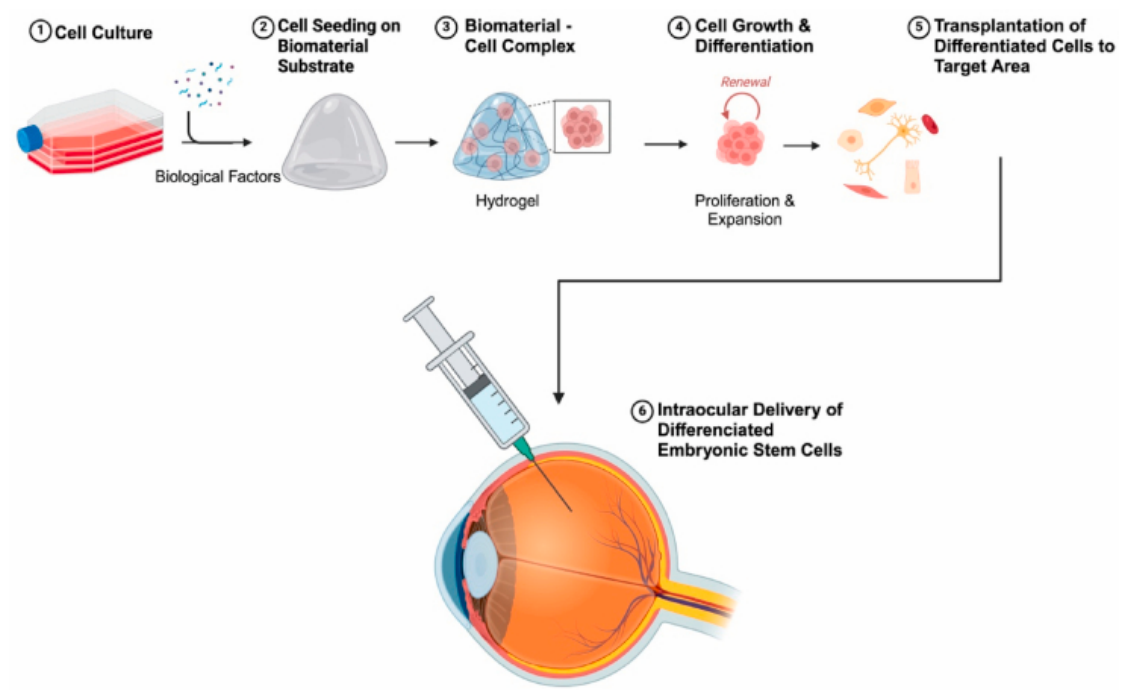
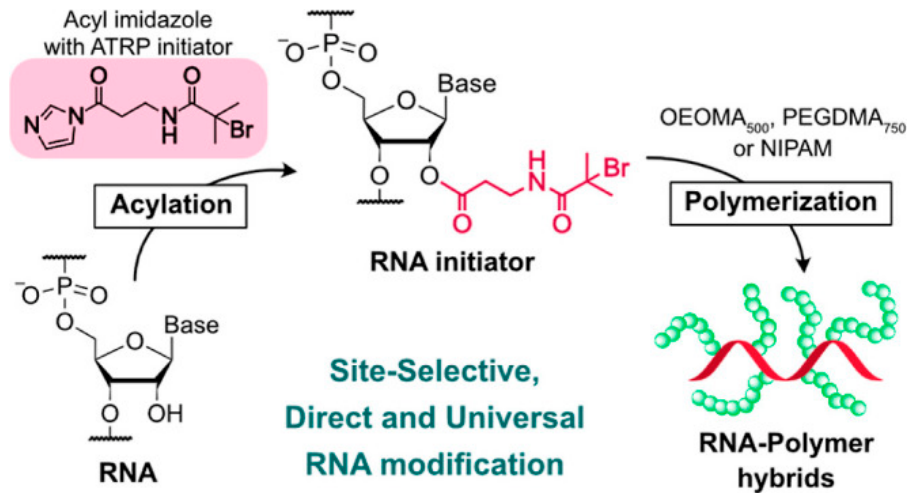
Current research on natural polymers predominantly focuses on chemical modification and composite strategies to enhance their mechanical strength, bioactivity, and functional responsiveness, which are key requirements for advanced biomedical applications. Chitosan, hyaluronic acid, collagen, and cellulose are among the most extensively studied candidates. For instance, sodium alginate-chitosan microspheres notably improve drug bioavailability via controlled encapsulation and pH-responsive release. Meanwhile, smart hydrogels, which are engineered to respond to stimuli such as temperature, pH, or enzymes, enable spatiotemporally precise drug delivery. Beyond drug delivery, these materials contribute to the progress in regenerative medicine. Hydroxyapatite-collagen scaffolds imitate the native bone extracellular matrix to expedite osteogenesis, and gellan gum-based hydrogels offer biomimetic 3D microenvironments that support stem cell adhesion, proliferation, and differentiation (
Figure 3) [
57,
58]. These advanced biomaterials show significant potential for skin regeneration, especially bacterial cellulose-based dressings, which not only accelerate wound healing but also function as smart, targeted drug delivery systems [
59]. Beyond biomedical applications, they are promoting innovation in sustainable manufacturing (e.g., enzyme-or microbe-mediated biosynthesis substituting energy-intensive chemical modifications) and responsive functional design (e.g., 4D-printed materials that dynamically adapt to physiological cues).
Natural polymer materials encompass a diverse array of biomacromolecules. Among them, silk-based proteins, specifically fibroin, sericin, and spider silk spidroins, are notable for their outstanding structural and functional properties. Silk fibroin, which is abundant in glycine and alanine, self-assembles into stable β-sheet nanofibrils, endowing it with remarkable tensile strength and toughness. In contrast, sericin demonstrates strong hydrophilicity, excellent biocompatibility, and controllable biodegradability, rendering it suitable for biomedical coatings and drug carriers. Spider silk proteins, especially major ampullate spidroins (MaSp1 and MaSp2), combine ultra-high strength with extraordinary elasticity, comparable to synthetic high-performance fibers. Owing to advancements in recombinant expression systems, these proteins can now be produced on a large scale without sacrificing their native mechanical integrity or biological functionality. They can be easily processed into various forms, including fibers, thin films, injectable hydrogels, porous 3D scaffolds, and nanocomposites. Their performance can be precisely adjusted by blending with natural or synthetic polymers or functional inorganic nanoparticles (e.g., hydroxyapatite). Consequently, silk-derived materials have emerged as enabling platforms in tissue engineering, controlled drug delivery, flexible bioelectronics, and regenerative medicine. For example, micro-patterned spider silk substrates presenting RGD motifs significantly enhance the adhesion and spontaneous chondrogenic differentiation of human Wharton’s jelly mesenchymal stem cells (hWJ-MSCs), even in the absence of exogenous growth factors, which leads to accelerated bone defect regeneration [
60]. Moreover, spider silk-based electroactive dressings generate endogenous electrical cues that accelerate wound closure, particularly in challenging joint injuries [
61]. These dressings also facilitate skin regeneration and have been effectively applied in high-end cosmetic applications, such as restorative facial masks and bioactive hair care formulations [
62]. Significantly, the integration of genetic engineering and nanotechnology now allows for precise and programmable control over the material’s structure, mechanical properties, and biological functionality, thus introducing a new generation of smart biomaterials for regenerative medicine and environmental remediation [
63].
2.3. Medical Composites: An Innovative Approach for Multi-Performance Synergy
Medical composites are advanced biomaterials that are engineered by integrating two or more distinct constituent materials, such as polymers, metals, and ceramics, via physical or chemical strategies. These composites are designed to synergize the complementary advantages of each phase, thereby meeting the strict functional requirements in clinical settings. Their key characteristics encompass excellent biocompatibility, adjustable mechanical properties (e.g., stiffness, strength, and degradation rate), and multifunctionality, such as inherent antibacterial activity, osteoinductive capacity, or stimuli-responsive behavior. For instance, chitosan/graphene oxide (CS/GO) composites utilize chitosan’s bioactivity and antimicrobial action in conjunction with graphene oxide’s outstanding mechanical reinforcement and electrical conductivity (
Figure 4) [
64]. Likewise, nanocrystalline cellulose-reinforced chitosan hydrogels display shear-thinning rheology, shape fidelity, and cytocompatibility, which makes them highly appropriate for extrusion-based 3D bioprinting of tissue-engineered constructs. Moreover, surface functionalization, such as calcium phosphate coating or RGD peptide grafting, facilitates the integration of scaffolds with native bone tissue, thus enhancing osteointegration and supporting regenerative therapies beyond orthopedics, including wound healing and drug-eluting implants [
65].
Medical composites, which are engineered through the combination of two or more biocompatible materials, play an increasingly crucial role in a wide range of clinical applications. In the field of orthopedics, nano-hydroxyapatite/polyamide 66 (n-HA/PA66) emulates the mechanical properties of natural bone and is clinically utilized in transforaminal lumbar interbody fusion (TLIF) and limb-sparing tumor reconstruction [
66]. For skin repair, electrospun collagen fibers blended with chitosan or polycaprolactone (PCL) offer biomimetic, porous architectures that facilitate cell infiltration, angiogenesis, and controlled wound healing, rendering them suitable for advanced dressings and regenerative scaffolds [
67]. In the area of targeted drug delivery, thermosensitive poly(N-isopropylacrylamide)/Fe
3O
4 magnetic microparticles enable spatiotemporally controlled release under external stimuli (e.g., alternating magnetic fields or mild hyperthermia) [
68]. Cardiovascular tissue engineering benefits from chitosan-L-arginine complexes, the synergistic bioactivity of which enhances endothelial cell adhesion, nitric oxide production, and antithrombogenicity.
Crucially, composite design capitalizes on component complementarity to overcome the inherent limitations of single-material systems. For instance, blending polylactic acid (PLA) with hydroxyapatite (HA) substantially improves tensile strength and fracture toughness while regulating degradation kinetics, thereby enabling sustained protein adsorption and the gradual release of bioactive factors [
69]. Beyond structural reinforcement, modern medical composites possess multiple functions. Polyurethane/montmorillonite nanocomposites loaded with chlorhexidine acetate demonstrate long-lasting, contact-independent antibacterial activity [
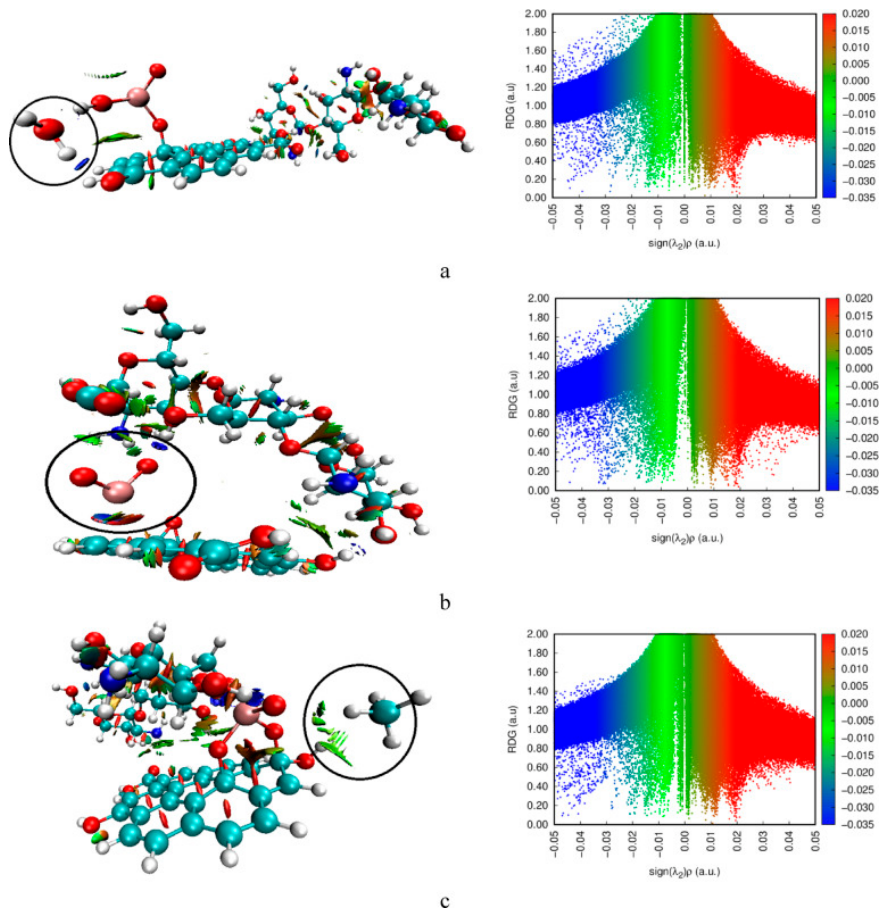
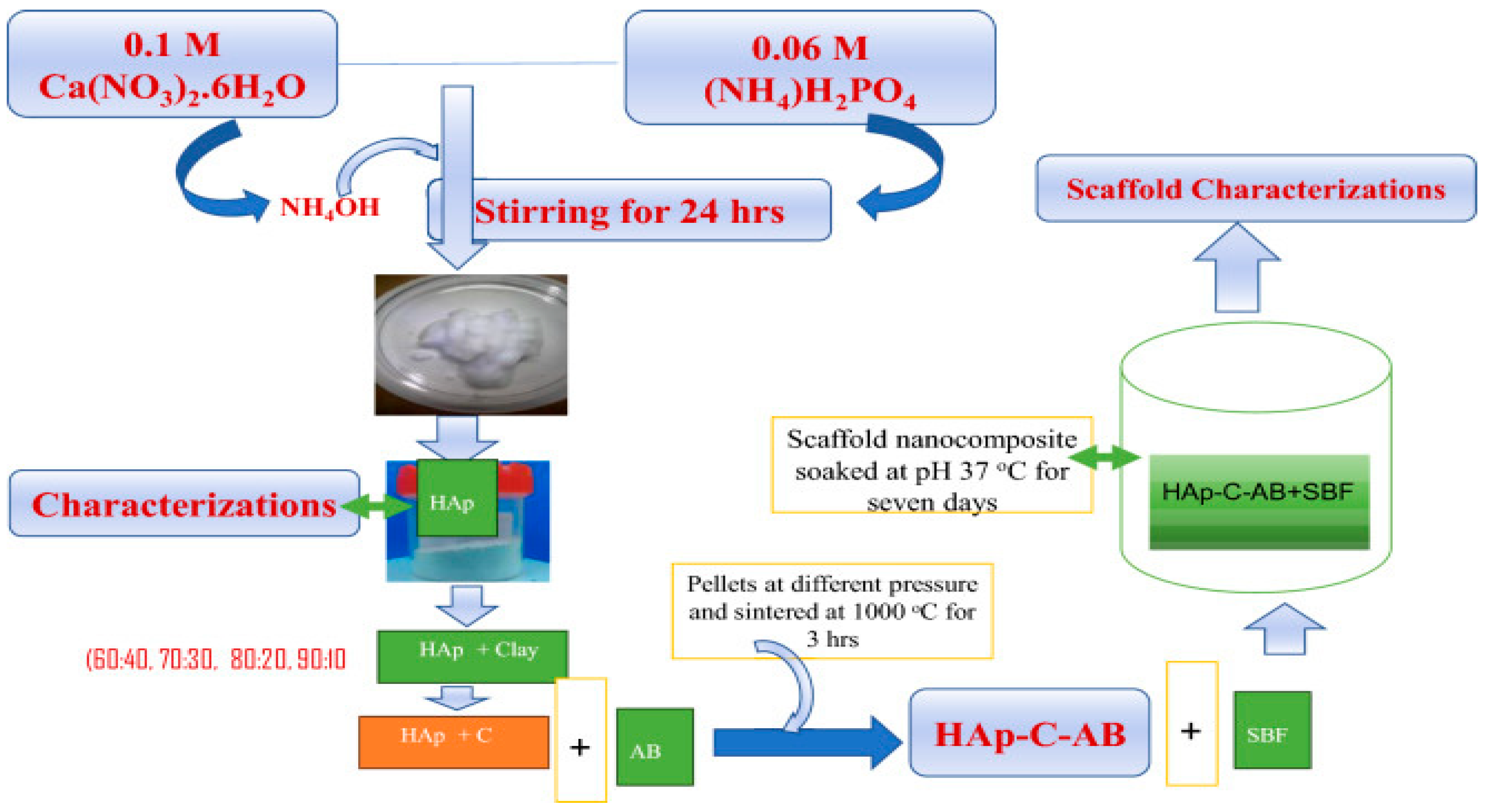
70] and are applicable in bone tissue engineering. Relevant research has developed hydroxyapatite/clay nanocomposites, which can effectively enhance mechanical properties and adjust the pH of body fluids to the physiologically suitable range. These nanocomposites exhibit favorable in vitro mineralization capacity and are well-suited for bone tissue engineering applications (
Figure 5) [
71].
Polylactic acid (PLA) and its composites, which are fabricated into scaffolds, films, and hydrogels through 3D printing and electrospinning, show potential for biomedical applications. Nevertheless, significant challenges impede their clinical translation: (1) The interfacial weakness between PLA and reinforcing components (such as natural fibers or nanoparticles) impairs mechanical integrity, particularly under dynamic physiological loading, as demonstrated by the premature failure in PLA/fiber composites resulting from accelerated interfacial degradation; (2) the poor interfacial controllability undermines the precise adjustment of degradation kinetics and structural performance; (3) the acidic degradation by-products of PLA can reduce the local pH, potentially leading to inflammatory responses; (4) nanoscale or metallic additives raise biosafety concerns. For instance, the agglomeration of alumina nanoparticles may cause cytotoxicity [
72], and the galvanic coupling in Ti-Mg composites accelerates corrosion-driven degradation; and (5) the interspecies differences between preclinical animal models and human physiology restrict the predictive validity of in vivo performance data. Therefore, certain scholars implement multi-material compounding strategies to improve the mechanical strength and morphological stability of materials. For example, pure spider silk hydrogels exhibit satisfactory biocompatibility and high cell viability. However, they face challenges such as weak cell proliferation capacity and poor mechanical properties at low concentrations. In related studies, low-concentration spider silk hydrogels were modified through the layer-by-layer integration of electrospun spider silk fiber networks. While maintaining excellent biocompatibility, this method effectively reconciles cell proliferation ability and mechanical performance, providing a reliable reference for the development of high-performance spider silk hydrogels in the field of soft tissue engineering [
73].
To overcome these limitations, next-generation medical composites are increasingly designed with functionalization (e.g., bioactive signaling), intelligence (e.g., stimuli-responsive degradation), and personalization (e.g., patient-specific geometry and degradation profiles) as core objectives.
2.4. Medical Inert Materials: Assurance of Long-Term Stability
Medical inert materials are biocompatible substances that maintain chemical stability and display minimal interaction with the surrounding tissues or physiological fluids. Historically, first-generation biomaterials, such as ceramics, metals, and alloys, were predominantly inert, characterized primarily by their resistance to chemical degradation and mechanical durability in the biological environment.
These materials attain biocompatibility mainly through surface passivation, such as the spontaneous formation of a stable TiO
2 layer on titanium alloys, or intrinsic structural stability, as demonstrated by the chemical inertness and chain robustness of polypropylene. Nevertheless, their biological inertness presents a double-edged situation: while it minimizes immune activation and reduces fibrous encapsulation, it also prevents active involvement in tissue regeneration or functional integration with the host’s biological system. The key advantages are as follows: (1) Biocompatibility—chemical inertness suppresses inflammatory and allergic responses; for example, polypropylene has well-documented non-toxicity and non-allergenicity in clinical applications. (2) Mechanical performance—titanium alloys and PEEK provide high tensile strength, excellent fatigue resistance, and dimensional stability under cyclic loading [
74]. (3) Corrosion resistance—metals such as 316 L stainless steel preserve their integrity in physiological environments due to protective surface oxide films [
75]. (4) Economic feasibility—raw materials are plentiful, and processing methods (e.g., injection molding of medical-grade silicone rubber) allow for scalable and cost-effective production. (5) Sterilization compatibility—many materials maintain their structural integrity after autoclaving (e.g., PEEK can endure repeated 121 °C, 2-bar steam sterilization) [
76]. The primary limitations of biologically inert biomaterials are as follows: (1) suboptimal osseointegration resulting from their intrinsic chemical inertness. For instance, titanium alloys need surface modifications (such as hydroxyapatite coating or micro/nano-topography) to achieve stable bone bonding. (2) Non-biodegradability, which prevents natural resorption and frequently necessitates secondary removal surgery, as is the case with conventional stainless steel or cobalt–chromium orthopedic implants. (3) Stress shielding, caused by the mismatch in elastic modulus with cortical bone (usually 10–30 GPa), which leads to peri-implant bone resorption. This is particularly prominent in rigid cobalt–chromium alloys (modulus approximately 200 GPa). (4) Imaging interference, especially with radiolucent materials like PEEK, which have low X-ray attenuation characteristics, thereby impeding the postoperative assessment of bone healing or implant positioning [
77]. (5) Substandard surface biofunctionality, such as low hydrophilicity or uncontrolled protein adsorption, as seen in polymers like styrene-based elastomers [
78]. This compromises cell adhesion and early tissue integration. Despite these constraints, inert biomaterials remain clinically essential [
79]. In orthopedics and dentistry, titanium alloys are regarded as the gold-standard materials for joint replacements and dental implants; zirconia ceramics offer esthetic [
80], high-strength solutions for crowns and abutments. In cardiovascular applications, nickel–titanium (Nitinol) stents with diamond-like carbon (DLC) coatings improve corrosion resistance and hemocompatibility [
81], while braided polyester vascular grafts mimic the mechanical compliance and porosity of native arteries [
82]. In soft-tissue reconstruction, silicone-based elastomers utilize their outstanding flexibility, long-term stability, and minimal immunogenicity for breast prostheses and auricular reconstructions [
83].
Inert medical ceramics are typically fabricated through solid-state sintering, isostatic pressing, the sol–gel method, and photocurable 3D printing. These techniques produce dense and mechanically robust implants and bone repair components. Nevertheless, they are subject to several significant limitations, including the requirement for high-temperature sintering, non-uniform shrinkage of the green body, and residual internal porosity. Additionally, the resulting ceramics display intrinsic brittleness, low fracture toughness, and negligible bioactivity, which are key drawbacks that hinder effective osseointegration with the host bone tissue. To address these challenges, strategic surface modification has become an essential measure for enhancing their biological functionality and clinical performance.
However, several crucial challenges persist in the clinical translation of this technique. Firstly, the bioinert characteristic of current implant materials restricts their osteoinductive ability, necessitating surface modifications such as micro-arc oxidation or laser texturing to facilitate bone formation [
84]. Secondly, the degradation behavior remains inadequately controllable. For degradable metals such as magnesium and zinc alloys, attaining an optimal equilibrium between mechanical integrity and predictable degradation kinetics still poses a significant obstacle. Thirdly, the long-term in vivo stability is undermined by the intricate physiological environment, encompassing variable pH, enzymatic activity, and temperature fluctuations. This can induce coating delamination (e.g., diamond-like carbon films) or excessive metal ion release (e.g., from nickel–titanium alloys), thereby raising concerns regarding biocompatibility and safety.
The majority of researchers enhance the performance of biomaterials via surface modification and compositional engineering. For example, coating titanium implants with strontium-doped hydroxyapatite substantially improves osteogenic activity, thereby promoting more rapid bone integration [
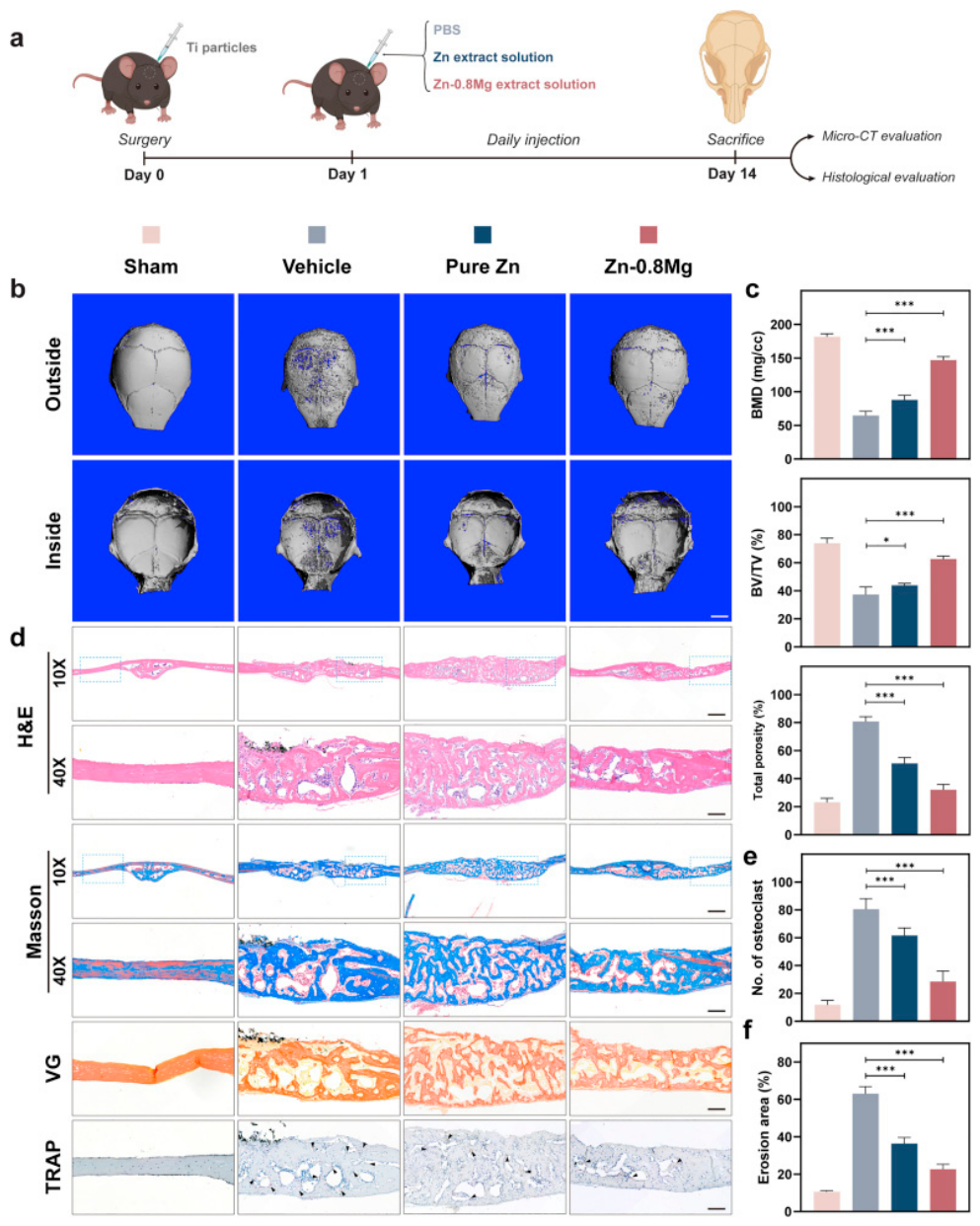
85]. Simultaneously, degradable zinc-based alloys (e.g., Zn-Mg-Ca) have emerged as prospective alternatives in orthopedics, as their corrosion rate aligns closely with the natural bone-healing timeline (
Figure 6) [
86]. Moreover, porous gradient titanium alloys, such as Ti-13Nb-13Zr, reduce the elastic modulus mismatch with native bone and offer interconnected pore architectures that facilitate vascularization and new bone ingrowth [
87]. Wu et al. employed the intrinsic breathing effect of MIL-53 (Fe) to enhance the interaction between titanium alloy scaffolds and vascular endothelial cells, thus improving the angiogenesis-inducing capacity of the scaffolds, particularly during sprouting angiogenesis. Following modification through these strategies, inert ceramics integrate the high strength and high stability of the substrate with the excellent bioactivity of the coatings. They are capable of not only meeting the long-term service requirements of dental restoration and artificial joints but also accelerating osseointegration and shortening the healing period after implantation [
88].
Despite a multitude of pressing clinical challenges, inert biomaterials continue to be the predominant choice for medical implants, which are mainly valued for their well-established stability and favorable mechanical performance. However, their inherent biological passivity and limited bioactivity restrict therapeutic outcomes, propelling innovation towards three strategic directions: (1) dynamic surface engineering to improve host integration; (2) intelligently designed biodegradable systems that align with tissue regeneration timelines; and (3) multifunctional composites that combine structural integrity with biological signaling. Thus, the realization of next-generation implants will require profound interdisciplinary collaboration, not only between materials science and bioengineering but also across immunology, mechanobiology, and clinical translation, to co-design materials that are not only mechanically strong but also biologically informative.
2.5. Medical Active Materials: Actively Regulating Physiological Processes
Medical active materials are a category of advanced biomaterials that are engineered to engage in dynamic interactions with biological systems. They do not merely coexist with tissues; rather, they actively direct physiological responses. In contrast to passive biocompatible materials, these active materials respond to local biochemical or physical signals (such as pH, enzymes, and mechanical stress) to initiate precise functions. These functions include stimulating bone regeneration through osteoinductive surface topographies, releasing therapeutic agents in a spatiotemporally regulated manner, or degrading into pro-angiogenic ions like Mg2+. The design of medical active materials incorporates three fundamental requirements. Firstly, there is basic biocompatibility, which is characterized by non-toxicity, the absence of chronic inflammation, and immune rejection. Secondly, programmable bioactivity is achieved via customized surface chemistry, nanostructured interfaces, or stimuli-responsive compositions. Thirdly, functional accountability demands that each feature of the material be rationally associated with a measurable biological outcome. The crystallographic alignment of hydroxyapatite and the controlled corrosion kinetics of magnesium alloy serve as examples of how deliberate structural and compositional engineering can lead to clinically relevant biological effects.
This category of biomaterials predominantly consists of hydroxyapatite (HA), β-tricalcium phosphate (β-TCP), biphasic calcium phosphate (BCP), calcium silicate, and bioactive glass. Structurally and compositionally similar to the inorganic phase of natural bone, these materials display remarkable biocompatibility, osteoconductivity, and inherent osteogenic potential. Their high compressive strength and elastic modulus allow for the fabrication of porous 3D scaffolds, bioactive coatings, and injectable or granular fillers for bone defect reconstruction. Nevertheless, their intrinsic brittleness and low fracture toughness restrict their use in load-bearing applications. To address this limitation, they are typically hybridized with natural polymers, such as silk fibroin, spider silk protein, or chitin derivatives, to synergistically enhance mechanical resilience, facilitate cell adhesion and proliferation, and more effectively mimic the native extracellular matrix. A notable example is the β-TCP aerogel functionalized with a polyvinyl alcohol/chitin fiber network (BTCP-AE-FMs), developed by Boda et al. This composite not only expedited mineralized tissue formation in vitro but also significantly increased new bone volume and bridging in critical-sized calvarial defects in vivo, demonstrating strong translational potential as a next-generation bone substitute [
89].
Bioactive glass, an inorganic biomaterial, is well-known for its remarkable bioactivity and outstanding biocompatibility. Once implanted, it quickly integrates with the native bone tissue, achieving true osseointegration, and concurrently exerts osteoconductive and osteogenic effects. In addition to providing structural support, it actively regulates cellular behavior (e.g., promoting the proliferation and differentiation of osteoblasts) and alleviates local oxidative stress. Its adjustable particle size allows for the easy fabrication of uniform microspheres, which are suitable for the high-efficiency loading and controlled release of therapeutic agents such as quercetin. Particularly adapted to the moist, dynamic, and microbiologically complex environment of periodontal tissues, bioactive glass is increasingly combined with hydrogels, especially photocurable and injectable formulations, to create localized, sustained-release delivery systems. These hybrid systems not only stably retain drugs at the defect site but also synergistically enhance the osteogenic differentiation of stem cells, rendering them highly promising for the regeneration of periodontal bone defects. For instance, Zhu et al. developed a photocurable, injectable hydrogel embedded with nano-sized bioactive glass microspheres. This system successfully delivered quercetin in situ, maintained the therapeutic concentration under physiological conditions, and significantly accelerated osteogenic regeneration in preclinical models of periodontal bone loss [
90].
The surface chemical properties of bioactive materials, such as hydroxyapatite and bioactive glass, play a crucial role in initiating cellular responses. They facilitate cell adhesion and proliferation, establish direct chemical bonds with the host bone tissue, and substantially reduce foreign-body reactions. For instance, bone-regenerative scaffolds imitate the mineral composition of natural bone, thus enhancing osteoblast differentiation and expediting defect healing. Biodegradable polymers, such as polylactic acid (PLA), degrade in vivo into non-toxic metabolites (e.g., lactic acid), obviating the necessity for surgical removal [
91]. Propelled by bionic design and multifunctional integration, these materials are propelling the advancement of precision regenerative medicine. However, several critical challenges persist: (1) the long-term stability of materials under physiological conditions; (2) scalable and reproducible manufacturing, particularly for high-purity nanoceramics, which demand strict synthesis protocols and expensive infrastructure; (3) comprehensive biosafety assessment, encompassing the risk of chronic inflammation, the metabolic burden caused by acidic degradation byproducts (e.g., the local pH drop induced by PLA impairs cell viability), and the potential bioaccumulation of nanomaterials; and (4) translational fidelity. Many angiogenic or osteoinductive materials demonstrate strong efficacy in murine models but fail to reproduce their function in human clinical settings because of inter-species differences in immune response, vascular complexity, and tissue microenvironment.