IgG Glycosylation Analysis in Patients with Ring14 Syndrome Unveils Novel Pathomechanisms and New Therapy Perspectives

 , , , , , and
Abstract
1. Introduction
2. Materials and Methods
2.1. Patients
2.2. IgG Purification from Whole Serum
2.3. Enzymatic Release of N-Glycans, Labelling and ESI-MS Analysis
2.4. Protein N-Glycosylation Analyses by MALDI-MS
2.5. Statistical Analysis
3. Results and Discussion
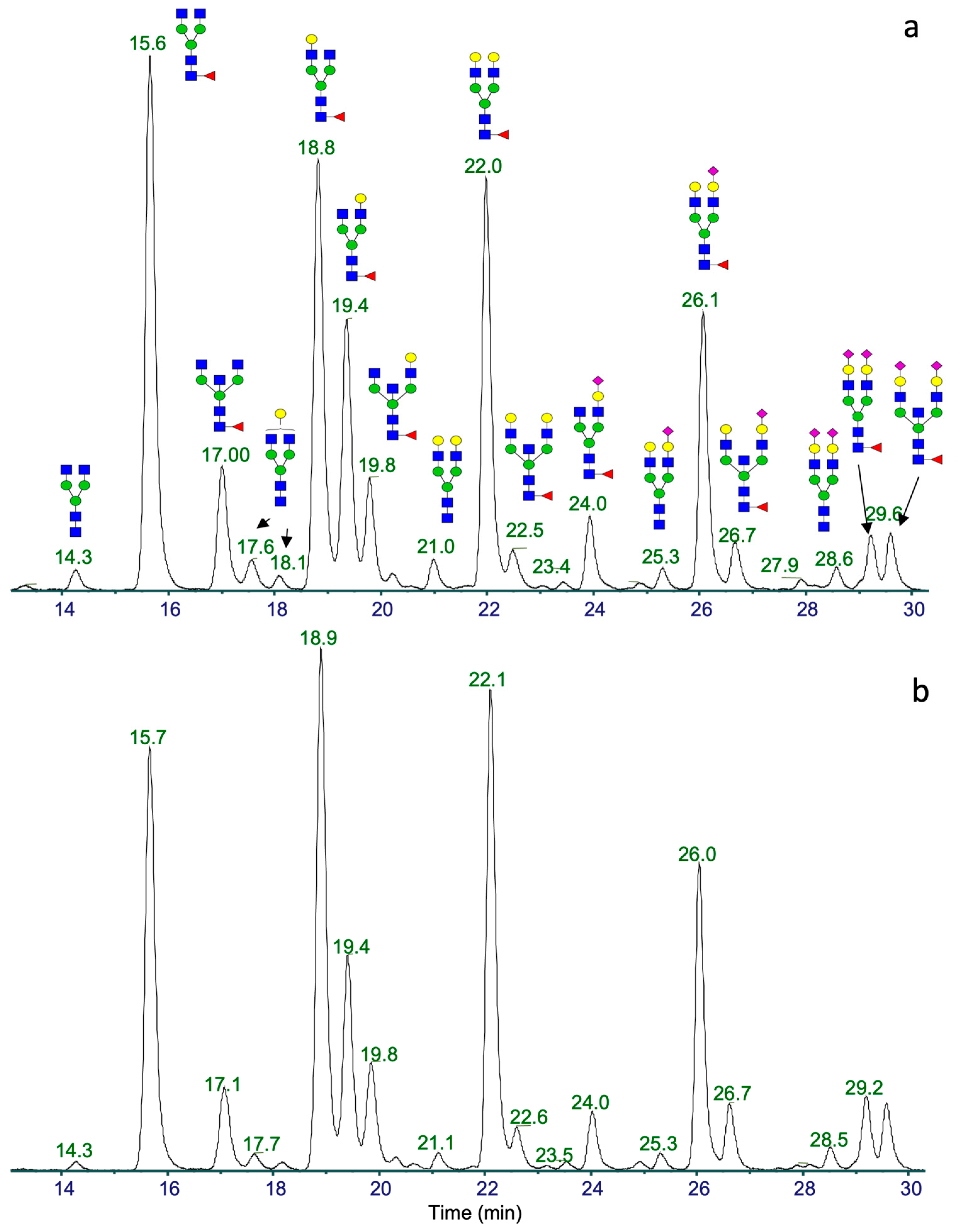
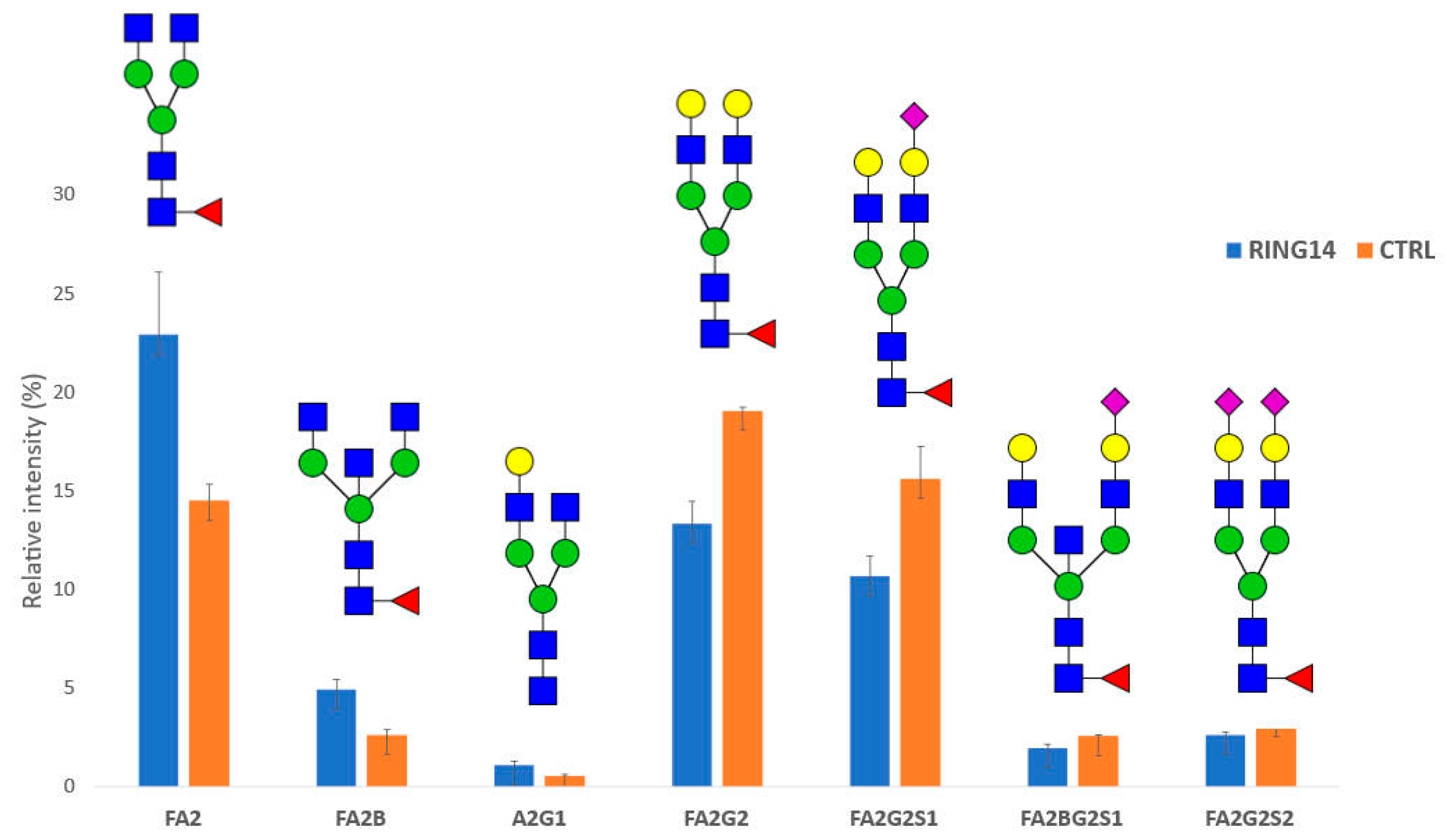
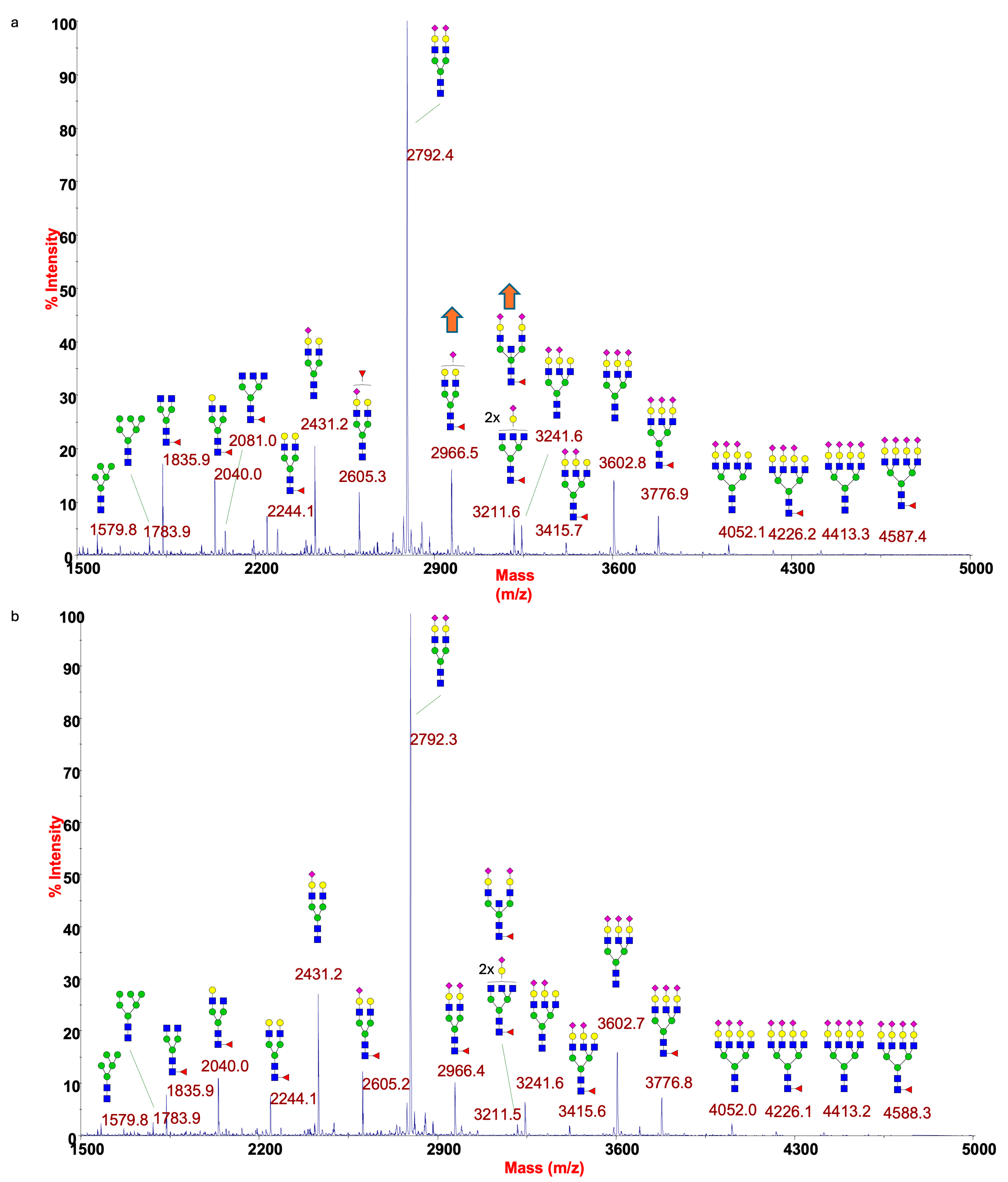
3.1. IgG N-Glycosylation Profiles in RC14 Patients
3.2. Comparison with Other Diseases
3.3. A Preliminary Therapeutic Insight for RC14 Patients?
4. Conclusions
Supplementary Materials
Author Contributions
Funding
Institutional Review Board Statement
Informed Consent Statement
Data Availability Statement
Acknowledgments
Conflicts of Interest
References
- Gilgenkrantz, S.; Cabrol, C.; Lausecker, C.; Hartleyb, M.E.; Bohe, B. The Dr syndrome. Study of a further case (46, XX, 14r). Ann. Génétique 1971, 14, 23–31. [Google Scholar]
- Rinaldi, B.; Vaisfeld, A.; Amarri, S.; Baldo, C.; Gobbi, G.; Magini, P.; Melli, E.; Neri, G.; Novara, F.; Pippucci, T.; et al. Guideline recommendations for diagnosis and clinical management of Ring14 syndrome—First report of an ad hoc task force. Orphanet J. Rare Dis. 2017, 12, 69. [Google Scholar] [CrossRef] [PubMed]
- İncecik, F.; Hergüner, M.O.; Mert, G.; Erdem, S.; Altunbaşak, S. Ring chromosome 14 syndrome presenting with intractable epilepsy: A case report. Turk. J. Pediatr. 2013, 55, 549–551. [Google Scholar] [PubMed]
- Zelante, L.; Torricelli, F.; Calvano, S.; Mingarelli, R.; Dallapiccola, B. Ring chromosome 14 syndrome. Report of two cases, including extended evaluation of a previously reported patient and review. Ann. Genet. 1991, 34, 93–97. [Google Scholar]
- Vaisfeld, A.; Crimi, M.; Rinaldi, B. Ring Chromosome 14. In Human Ring Chromosomes: A Practical Guide for Clinicians and Families; Springer International Publishing: Cham, Switzerland, 2024; pp. 215–220. [Google Scholar] [CrossRef]
- Krawczun, M.; Melink, G.; Cervenka, J.; Opitz, J.M. Ring chromosome 14 and immunoglobulin locus. Am. J. Med. Genet. 1984, 17, 465–469. [Google Scholar] [CrossRef]
- Krištić, J.; Lauc, G. The importance of IgG glycosylation—What did we learn after analyzing over 100,000 individuals. Immunol. Rev. 2024, 328, 143–170. [Google Scholar] [CrossRef]
- Stanley, P.; Moremen, K.W.; Lewis, N.E.; Taniguchi, N.; Aebi, M. N-Glycans. In Essentials of Glycobiology, 4th ed.; Varki, A., Cummings, R.D., Esko, J.D., Stanley, P., Hart, G.W., Aebi, M., Darvill, A.G., Kinoshita, T., Packer, N.H., Prestegard, J.H., et al., Eds.; Cold Spring Harbor Laboratory Press: Long Island, NY, USA, 2022; pp. 103–116. Available online: www.ncbi.nlm.nih.gov/books/NBK579964/ (accessed on 16 March 2026).
- Arnold, J.N.; Wormald, M.R.; Sim, R.B.; Rudd, P.M.; Dwek, R.A. The impact of glycosylation on the biological function and structure of human immunoglobulins. Annu. Rev. Immunol. 2007, 25, 21–50. [Google Scholar] [CrossRef]
- Subedi, G.P.; Barb, A.W. The structural role of antibody N-glycosylation in receptor interactions. Structure 2015, 23, 1573–1583. [Google Scholar] [CrossRef]
- Cobb, B.A. The history of IgG glycosylation and where we are now. Glycobiology 2020, 30, 202–213. [Google Scholar] [CrossRef] [PubMed]
- Okazaki, A.; Shoji-Hosaka, E.; Nakamura, K.; Wakitani, M.; Uchida, K.; Kakita, S.; Tsumoto, K.; Kumagai, I.; Shitara, K. Fucose depletion from human IgG1 oligosaccharide enhances binding enthalpy and association rate between IgG1 and FcγRIIIa. J. Mol. Biol. 2004, 336, 1239–1249. [Google Scholar] [CrossRef]
- Shields, R.L.; Lai, J.; Keck, R.; O’Connell, L.Y.; Hong, K.; Meng, Y.G.; Weikert, S.H.; Presta, L.G. Lack of fucose on human IgG1 N-linked oligosaccharide improves binding to human FcγRIII and antibody-dependent cellular toxicity. J. Biol. Chem. 2002, 277, 26733–26740. [Google Scholar] [CrossRef]
- Bruggeman, C.W.; Dekkers, G.; Bentlage, A.E.; Treffers, L.W.; Nagelkerke, S.Q.; Lissenberg-Thunnissen, S.; Koeleman, C.A.M.; Wuhrer, M.; van den Berg, T.K.; Rispens, T.; et al. Enhanced effector functions due to antibody defucosylation depend on the effector cell Fcγ receptor profile. J. Immunol. 2017, 199, 204–211. [Google Scholar] [CrossRef] [PubMed]
- Pereira, N.A.; Chan, K.F.; Lin, P.C.; Song, Z. The “less-is-more” in therapeutic antibodies: Afucosylated anti-cancer antibodies with enhanced antibody-dependent cellular cytotoxicity. Mabs 2018, 10, 693–711. [Google Scholar] [CrossRef]
- Shinkawa, T.; Nakamura, K.; Yamane, N.; Shoji-Hosaka, E.; Kanda, Y.; Sakurada, M.; Uchida, K.; Anazawa, H.; Satoh, M.; Yamasaki, M.; et al. The absence of fucose but not the presence of galactose or bisecting N-acetylglucosamine of human IgG1 complex-type oligosaccharides shows the critical role of enhancing antibody-dependent cellular cytotoxicity. J. Biol. Chem. 2003, 278, 3466–3473. [Google Scholar] [CrossRef]
- Gudelj, I.; Lauc, G.; Pezer, M. Immunoglobulin G glycosylation in aging and diseases. Cell. Immunol. 2018, 333, 65–79. [Google Scholar] [CrossRef] [PubMed]
- Malhotra, R.; Wormald, M.R.; Rudd, P.M.; Fischer, P.B.; Dwek, R.A.; Sim, R.B. Glycosylation changes of IgG associated with rheumatooid arthritis can activate complement via the mannose-binding protein. Nat. Med. 1995, 1, 237–243. [Google Scholar] [CrossRef]
- Rademacher, T.W.; Williams, P.; Dwek, R.A. Agalactosyl glycoforms of IgG autoantibodies are pathogenic. Proc. Natl. Acad. Sci. USA 1994, 91, 6123–6127. [Google Scholar] [CrossRef]
- Heyl, K.A.; Karsten, C.M.; Slevogt, H. Galectin-3 binds highly galactosylated IgG1 and is crucial for the IgG1 complex mediated inhibition of C5aReceptor induced immune responses. Biochem. Biophys. Res. Commun. 2016, 479, 86–90. [Google Scholar] [CrossRef]
- Albrecht, S.; Unwin, L.; Muniyappa, M.; Rudd, P.M. Glycosylation as a marker for inflammatory arthritis. Cancer Biomark. 2014, 14, 17–28. [Google Scholar] [CrossRef] [PubMed]
- Samuelsson, A.; Towers, T.L.; Ravetch, J.V. Anti-inflammatory activity of IVIG mediated through the inhibitory Fc receptor. Science 2001, 291, 484–486. [Google Scholar] [CrossRef]
- Kaneko, Y.; Nimmerjahn, F.; Ravetch, J.V. Anti-inflammatory activity of immunoglobulin G resulting from Fc sialylation. Science 2006, 313, 670–673. [Google Scholar] [CrossRef] [PubMed]
- Anthony, R.M.; Wermeling, F.; Karlsson, M.C.; Ravetch, J.V. Identification of a receptor required for the anti-inflammatory activity of IVIG. Proc. Natl. Acad. Sci. USA 2008, 105, 19571–19578. [Google Scholar] [CrossRef]
- Anthony, R.M.; Kobayashi, T.; Wermeling, F.; Ravetch, J.V. Intravenous gammaglobulin suppresses inflammation through a novel TH2 pathway. Nature 2011, 475, 110–113. [Google Scholar] [CrossRef]
- Ohmi, Y.; Ise, W.; Harazono, A.; Takakura, D.; Fukuyama, H.; Baba, Y.; Narazaki, M.; Shoda, H.; Takahashi, N.; Ohkawa, Y.; et al. Sialylation converts arthritogenic IgG into inhibitors of collagen-induced arthritis. Nat. Commun. 2016, 7, 11205. [Google Scholar] [CrossRef] [PubMed]
- Schwab, I.; Nimmerjahn, F. Intravenous immunoglobulin therapy: How does IgG modulate the immune system? Nat. Rev. Immunol. 2013, 13, 176–189. [Google Scholar] [CrossRef]
- Pagan, J.D.; Kitaoka, M.; Anthony, R.M. Engineered sialylation of pathogenic antibodies in vivo attenuates autoimmune disease. Cell 2018, 172, 564–577. [Google Scholar] [CrossRef] [PubMed]
- Messina, A.; Palmigiano, A.; Esposito, F.; Fiumara, A.; Bordugo, A.; Barone, R.; Sturiale, L.; Jaeken, J.; Garozzo, D. HILIC-UPLC-MS for high throughput and isomeric N-glycan separation and characterization in congenital disorders glycosylation and human diseases. Glycoconj. J. 2021, 38, 201–211. [Google Scholar] [CrossRef]
- Lauber, M.A.; Yu, Y.Q.; Brousmiche, D.W.; Hua, Z.; Koza, S.M.; Magnelli, P.; Guthrie, E.; Taron, C.H.; Fountain, K.J. Rapid preparation of released N-glycans for HILIC analysis using a labeling reagent that facilitates sensitive fluorescence and ESI-MS detection. Anal. Chem. 2015, 87, 5401–5409. [Google Scholar] [CrossRef]
- Palmigiano, A.; Messina, A.; Sturiale, L.; Garozzo, D. Advanced LC-MS methods for N-glycan characterization. Compr. Anal. Chem. 2018, 79, 147–172. [Google Scholar] [CrossRef]
- Zhou, S.; Veillon, L.; Dong, X.; Huang, Y.; Mechref, Y. Direct comparison of derivatization strategies for LC-MS/MS analysis of N-glycans. Analyst 2017, 142, 4446–4455. [Google Scholar] [CrossRef]
- Messina, A.; Palmigiano, A.; Bua, R.O.; Romeo, D.A.; Barone, R.; Sturiale, L.; Zappia, M.; Garozzo, D. CSF N-glycoproteomics using MALDI MS techniques in neurodegenerative diseases. In Cerebrospinal Fluid (CSF) Proteomics: Methods and Protocols; Springer: New York, NY, USA, 2019; pp. 255–272. [Google Scholar] [CrossRef]
- Ciucanu, I.; Kerek, F. A simple and rapid method for the permethylation of carbohydrates. Carbohydr. Res. 1984, 131, 209–217. [Google Scholar] [CrossRef]
- Sturiale, L.; Nassogne, M.C.; Palmigiano, A.; Messina, A.; Speciale, I.; Artuso, R.; Bertino, G.; Revencu, N.; Stephénne, X.; De Castro, C.; et al. Aberrant sialylation in a patient with a HNF1α variant and liver adenomatosis. iScience 2021, 24, 102323. [Google Scholar] [CrossRef]
- Ceroni, A.; Maass, K.; Geyer, H.; Geyer, R.; Dell, A.; Haslam, S.M. GlycoWorkbench: A tool for the computer-assisted annotation of mass spectra of glycans. J. Proteome Res. 2008, 7, 1650–1659. [Google Scholar] [CrossRef]
- Miyoshi, E.; Taniguchi, N. α6-fucosyltransferase (FUT8). In Handbook of Glycosyltransferases and Related Genes; Springer: Tokyo, Japan, 2002; pp. 259–263. [Google Scholar] [CrossRef]
- Sturiale, L.; Barone, R.; Garozzo, D. The impact of mass spectrometry in the diagnosis of congenital disorders of glycosylation. J. Inherit. Metab. Dis. 2011, 34, 891–899. [Google Scholar] [CrossRef]
- Gińdzieńska-Sieśkiewicz, E.; Radziejewska, I.; Domysławska, I.; Klimiuk, P.A.; Sulik, A.; Rojewska, J.; Gabryel-Porowska, H.; Sierakowski, S. Changes of glycosylation of IgG in rheumatoid arthritis patients treated with methotrexate. Adv. Med. Sci. 2016, 61, 193–197. [Google Scholar] [CrossRef] [PubMed]
- Mayboroda, O.A.; Lageveen-Kammeijer, G.S.; Wuhrer, M.; Dolhain, R.J. An integrated glycosylation signature of rheumatoid arthritis. Biomolecules 2023, 13, 1106. [Google Scholar] [CrossRef] [PubMed]
- Parekh, R.B.; Dwek, R.A.; Sutton, B.J.; Fernandes, D.L.; Leung, A.; Stanworth, D.; Rademacher, T.W.; Mizuochi, T.; Taniguchi, T.; Matsuta, K.; et al. Association of rheumatoid arthritis and primary osteoarthritis with changes in the glycosylation pattern of total serum IgG. Nature 1985, 316, 452–457. [Google Scholar] [CrossRef]
- Sun, D.; Hu, F.; Gao, H.; Song, Z.; Xie, W.; Wang, P.; Shi, L.; Wang, K.; Li, Y.; Huang, C.; et al. Distribution of abnormal IgG glycosylation patterns from rheumatoid arthritis and osteoarthritis patients by MALDI-TOF-MSn. Analyst 2019, 144, 2042–2051. [Google Scholar] [CrossRef]
- Anthony, R.M.; Nimmerjahn, F.; Ashline, D.J.; Reinhold, V.N.; Paulson, J.C.; Ravetch, J.V. Recapitulation of IVIG anti-inflammatory activity with a recombinant IgG Fc. Science 2008, 320, 373–376. [Google Scholar] [CrossRef]
- Katz-Agranov, N.; Khattri, S.; Zandman-Goddard, G. The role of intravenous immunoglobulins in the treatment of rheumatoid arthritis. Autoimmun. Rev. 2015, 14, 651–658. [Google Scholar] [CrossRef]
- Schwab, I.; Lux, A.; Nimmerjahn, F. Reply to—IVIG pluripotency and the concept of Fc-sialylation: Challenges to the scientist. Nat. Rev. Immunol. 2014, 14, 349. [Google Scholar] [CrossRef] [PubMed]
- Bossaller, L.; Rothe, A. Monoclonal antibody treatments for rheumatoid arthritis. Expert Opin. Biol. Ther. 2013, 13, 1257–1272. [Google Scholar] [CrossRef]
- Lundström, S.L.; Hensvold, A.H.; Rutishauser, D.; Klareskog, L.; Ytterberg, A.J.; Zubarev, R.A.; Catrina, A.I. IgG Fc galactosylation predicts response to methotrexate in early rheumatoid arthritis. Arthritis Res. Ther. 2017, 19, 182. [Google Scholar] [CrossRef]
- Pasek, M.; Duk, M.; Podbielska, M.; Sokolik, R.; Szechiński, J.; Lisowska, E.; Krotkiewski, H. Galactosylation of IgG from rheumatoid arthritis (RA) patients–changes during therapy. Glycoconj. J. 2006, 23, 463–471. [Google Scholar] [CrossRef] [PubMed]
- Zhou, X.; Motta, F.; Selmi, C.; Ridgway, W.M.; Gershwin, M.E.; Zhang, W. Antibody glycosylation in autoimmune diseases. Autoimmun. Rev. 2021, 20, 102804. [Google Scholar] [CrossRef]
- Elsayed, W.; Khattab, Y.A.; Khattab, R.A. Immunoglobulin Use in Childhood Epilepsy: Literature Review. Int. J. Health Sci. 2022, 6, 9787–9794. [Google Scholar] [CrossRef]
- Emmi, L.; Chiarini, F. The role of intravenous immunoglobulin therapy in autoimmune and inflammatory disorders. Neurol. Sci. 2002, 23, S1–S8. [Google Scholar] [CrossRef] [PubMed]
- González-Castillo, Z.; Gómez, E.S.; Torres-Gómez, A.; Sobero, J.V.; Moctezuma, J.G. Intravenous immunoglobulin G as adjuvant treatment in drug-resistant childhood epilepsy. Neurología 2020, 35, 395–399. [Google Scholar] [CrossRef]
- Costagliola, G.; Depietri, G.; Michev, A.; Riva, A.; Foiadelli, T.; Savasta, S.; Bonuccelli, A.; Peroni, D.; Consolini, R.; Marseglia, G.L.; et al. Targeting inflammatory mediators in epilepsy: A systematic review of its molecular basis and clinical applications. Front. Neurol. 2022, 13, 741244. [Google Scholar] [CrossRef]
- Husari, K.S.; Dubey, D. Autoimmune epilepsy. Neurotherapeutics 2019, 16, 685–702. [Google Scholar] [CrossRef]
- Silverman, M.; Nagesh, D.; Ho, E.; Santoro, J.D. Immunotherapy for management of refractory and super-refractory status epilepticus. Pract. Neurol. 2025, 24, 16–22. [Google Scholar]
- Jang, Y.; Kim, D.W.; Yang, K.I.; Byun, J.I.; Seo, J.G.; No, Y.J.; Kang, K.W.; Kim, D.; Kim, K.T.; Cho, Y.W.; et al. Drug Committee of Korean Epilepsy Society. Clinical approach to autoimmune epilepsy. J. Clin. Neurol. 2020, 16, 519. [Google Scholar] [CrossRef] [PubMed]



| Patient N° | 1 | 2 | 3 | 4 | 5 | 6 |
|---|---|---|---|---|---|---|
| Code | RING11510M | RING13910M | RING38010F | RING13310F | RING23711M | RING12110M |
| Age (years) at study time | 20 | 30 | 10 | 22 | 14 | 16 |
| 14q deletion size | 2 Mb | 1.5 Mb | 4.95 Mb | 0.5 Mb | 0.35 Mb | 2.5 Mb |
| Monosomic cells on Peripheral blood | 20% | 20% | Not available | 18% | 12% | 19% |
| Age at seizure onset | 15 months | 2 months | 8 months | 9 months | 3 months | 4 months |
| Epileptic phenotype | Generalized clonic | Generalized tonic–clonic | Generalized clonic | Focal to bilateral tonic–clonic seizures | Generalized tonic–clonic | Clonic |
| Main infectious events recorded | Pneumonia, sepsis, otitis, sinusitis | Bronchiolitis, otitis, recurrent upper respiratory infections | Bronchiolitis, pneumonia | Lyme disease, otitis, pneumonia, gastroenteritis | Bronchiolitis, urinary tract infections | Otitis, bronchiolitis, pneumonia |
| Autoimmune disorders | Celiac disease | None | Type 1 diabetes | None | None | None |
| Glycan (Nomenclature) | Structure | [M+2H]+2 Calc. | [M+2H]+2 Meas. | Error (ppm) |
|---|---|---|---|---|
| A2 |  | 814.8378 | 814.8380 | 0.25 |
| FA2 |  | 887.8668 | 887.8679 | 1.24 |
| FA2B |  | 989.4065 | 989.4071 | 0.61 |
| A2G1a |  | 895.8643 | 895.8649 | 0.67 |
| A2G1b |  | 895.8643 | 895.8649 | 0.67 |
| FA2G1a |  | 968.8932 | 968.8932 | 0.00 |
| FA2G1b |  | 968.8932 | 968.8945 | 1.34 |
| FA2BG1a |  | 1070.4329 | 1070.4334 | 0.47 |
| A2G2 |  | 976.8907 | 976.8918 | 1.13 |
| FA2G2 |  | 1049.9196 | 1049.9207 | 1.05 |
| FA2BG2 |  | 1151.4593 | 1151.4619 | 2.26 |
| FA2G1S1 |  | 1114.4409 | 1114.4427 | 1.62 |
| A2G2S1 |  | 1122.4384 | 1122.4396 | 1.06 |
| FA2G2S1 |  | 1195.4673 | 1195.4698 | 2.09 |
| FA2BG2S1 |  | 1297.0070 | 1297.0097 | 2.08 |
| A2G2S2 | 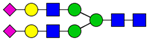 | 1267.9861 | 1267.9880 | 1.49 |
| FA2G2S2 |  | 1341.0150 | 1341.0183 | 2.46 |
| FA2BG2S2 |  | 1442.5547 | 1442.5574 | 1.87 |
Disclaimer/Publisher’s Note: The statements, opinions and data contained in all publications are solely those of the individual author(s) and contributor(s) and not of MDPI and/or the editor(s). MDPI and/or the editor(s) disclaim responsibility for any injury to people or property resulting from any ideas, methods, instructions or products referred to in the content. |
© 2026 by the authors. Licensee MDPI, Basel, Switzerland. This article is an open access article distributed under the terms and conditions of the Creative Commons Attribution (CC BY) license.
Share and Cite
Messina, A.; Palmigiano, A.; Romeo, D.A.; Sturiale, L.; Parano, E.; Crimi, M.; Cirillo, A.C.; Vaisfeld, A.; Barone, R.; Garozzo, D. IgG Glycosylation Analysis in Patients with Ring14 Syndrome Unveils Novel Pathomechanisms and New Therapy Perspectives. Biomolecules 2026, 16, 760. https://doi.org/10.3390/biom16060760
Messina A, Palmigiano A, Romeo DA, Sturiale L, Parano E, Crimi M, Cirillo AC, Vaisfeld A, Barone R, Garozzo D. IgG Glycosylation Analysis in Patients with Ring14 Syndrome Unveils Novel Pathomechanisms and New Therapy Perspectives. Biomolecules. 2026; 16(6):760. https://doi.org/10.3390/biom16060760
Chicago/Turabian StyleMessina, Angela, Angelo Palmigiano, Donata Agata Romeo, Luisa Sturiale, Enrico Parano, Marco Crimi, Annunziata Carrese Cirillo, Alessandro Vaisfeld, Rita Barone, and Domenico Garozzo. 2026. "IgG Glycosylation Analysis in Patients with Ring14 Syndrome Unveils Novel Pathomechanisms and New Therapy Perspectives" Biomolecules 16, no. 6: 760. https://doi.org/10.3390/biom16060760
APA StyleMessina, A., Palmigiano, A., Romeo, D. A., Sturiale, L., Parano, E., Crimi, M., Cirillo, A. C., Vaisfeld, A., Barone, R., & Garozzo, D. (2026). IgG Glycosylation Analysis in Patients with Ring14 Syndrome Unveils Novel Pathomechanisms and New Therapy Perspectives. Biomolecules, 16(6), 760. https://doi.org/10.3390/biom16060760