_Kwok.png)
Activation of the Nrf2/ARE Pathway Attenuates BDE-47-Induced Immunotoxicity in RAW264.7 Macrophages

Abstract
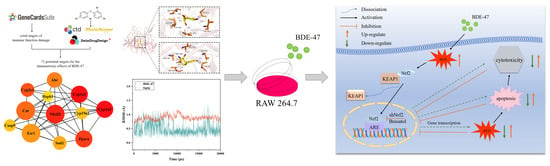
1. Introduction
2. Materials and Methods
2.1. Chemicals and Reagents
2.2. Acquisition of Potential Targets for BDE-47-Induced Immune Dysfunction
2.3. Network Toxicological Analysis of BDE-47-Induced Immunotoxicity
2.4. Molecular Docking and Dynamics Simulation Verified the Binding of Potential Regulatory Gene Nrf2 to BDE-47
2.5. Cell Culture, Construction of Nrf2 Low-Expression Cell Models and Experiment Design
2.6. Western Blot Analysis
2.7. Immunofluorescence Staining
2.8. Quantitative Real-Time PCR (qRT-PCR)
2.9. Transmission Electron Microscopy (TEM)
2.10. Cell Viability Assay
2.11. Reactive Oxygen Species Level Detection
2.12. Flow Cytometric Analysis: Apoptosis, Phagocytosis and iNOS Expression
2.13. Cytokine and Nitric Oxide Detection
2.14. Statistical Analysis
3. Results
3.1. Network Toxicology Predicts Nrf2 as a Key Candidate Gene in BDE-47-Induced Immunotoxicity
3.2. Molecular Docking and Dynamics Simulations Suggest a Potential Interaction Between BDE-47 and the Keap1-Nrf2 Complex
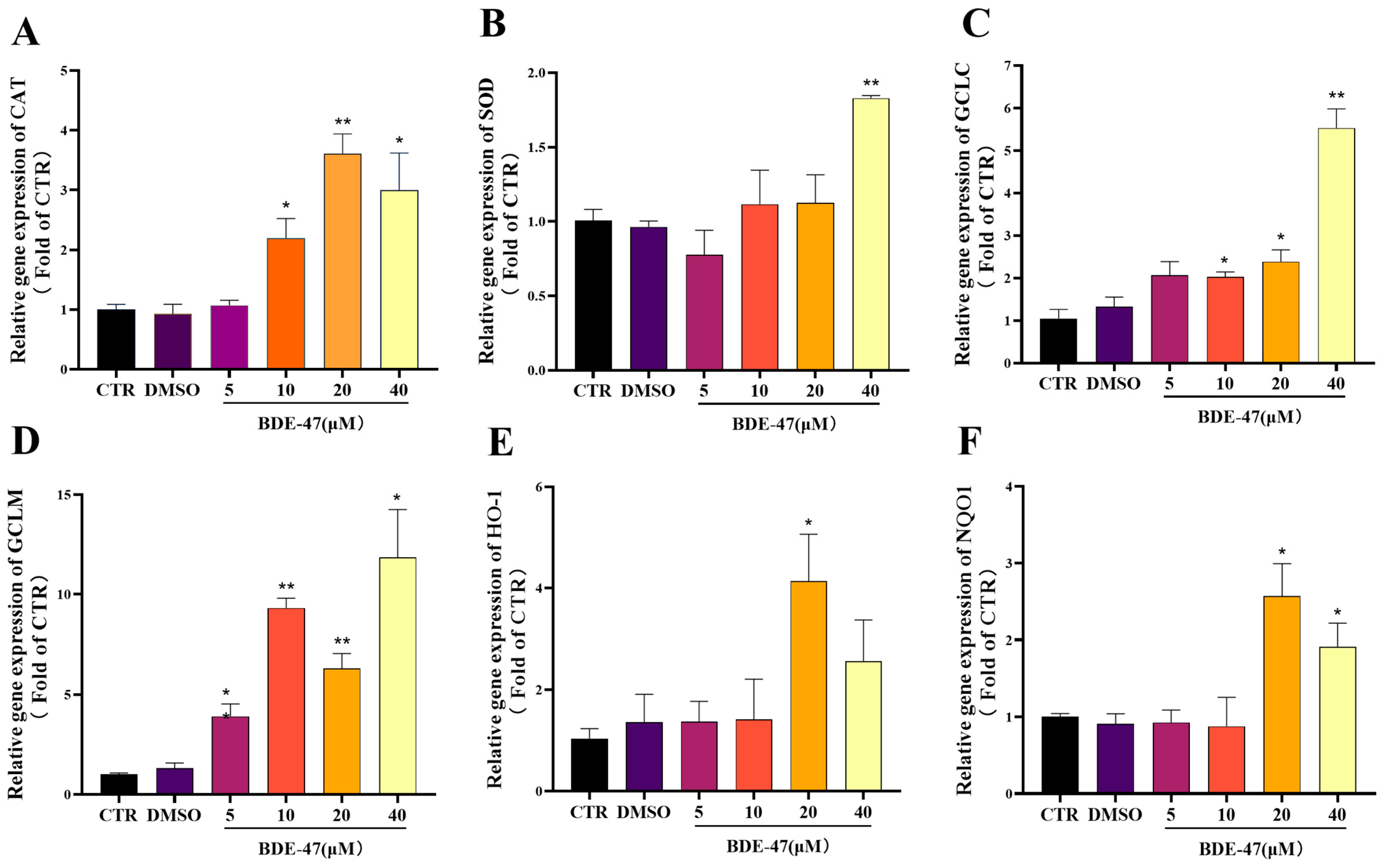
3.3. BDE-47 Activates the Nrf2 Signaling Pathway and Induces Antioxidant Gene Expression in RAW264.7 Cells
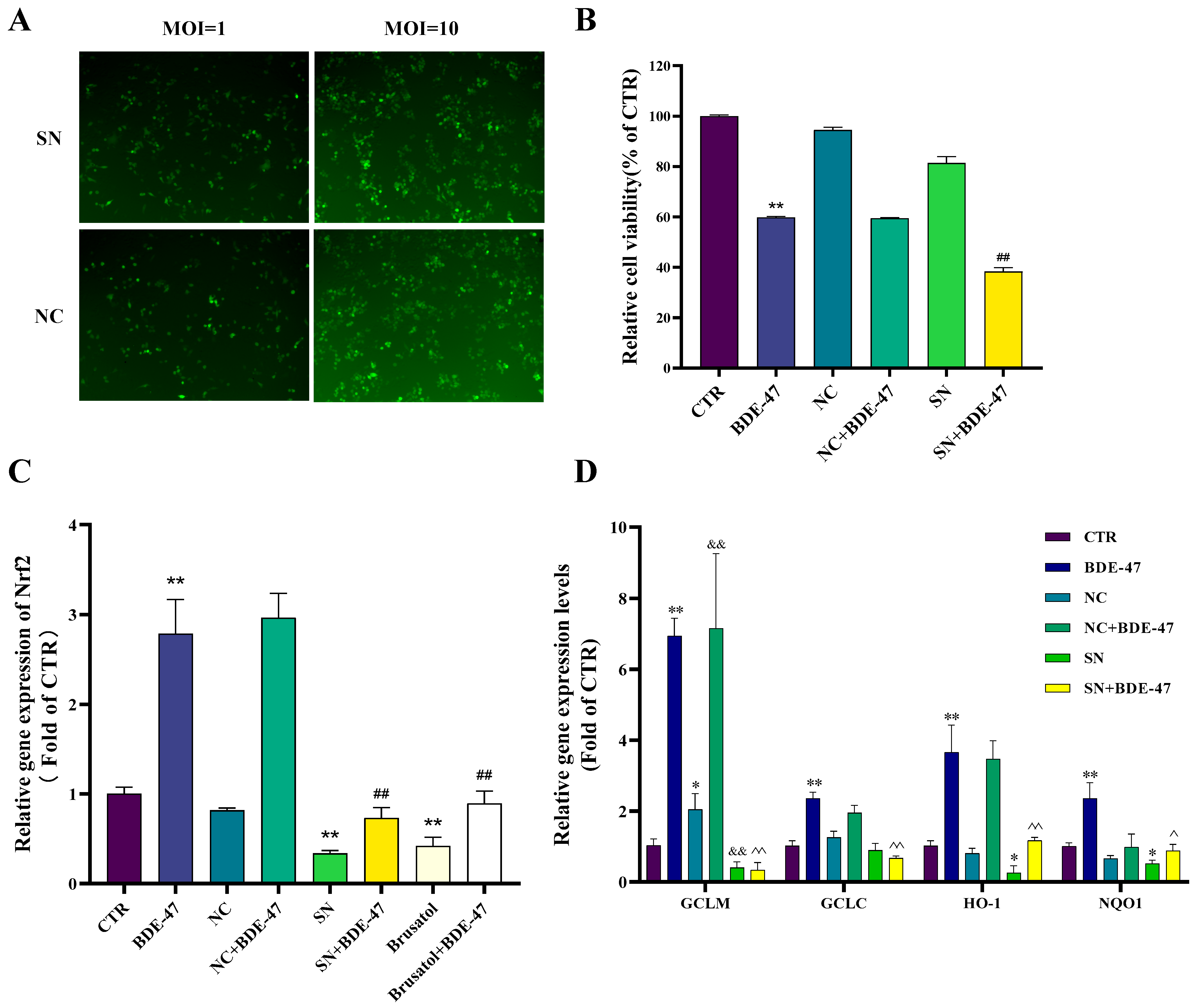
3.4. Nrf2 Suppression Amplifies BDE-47 Cytotoxicity in RAW264.7 Macrophages
3.4.1. Establishment and Validation of Nrf2-Knockdown Macrophage Model
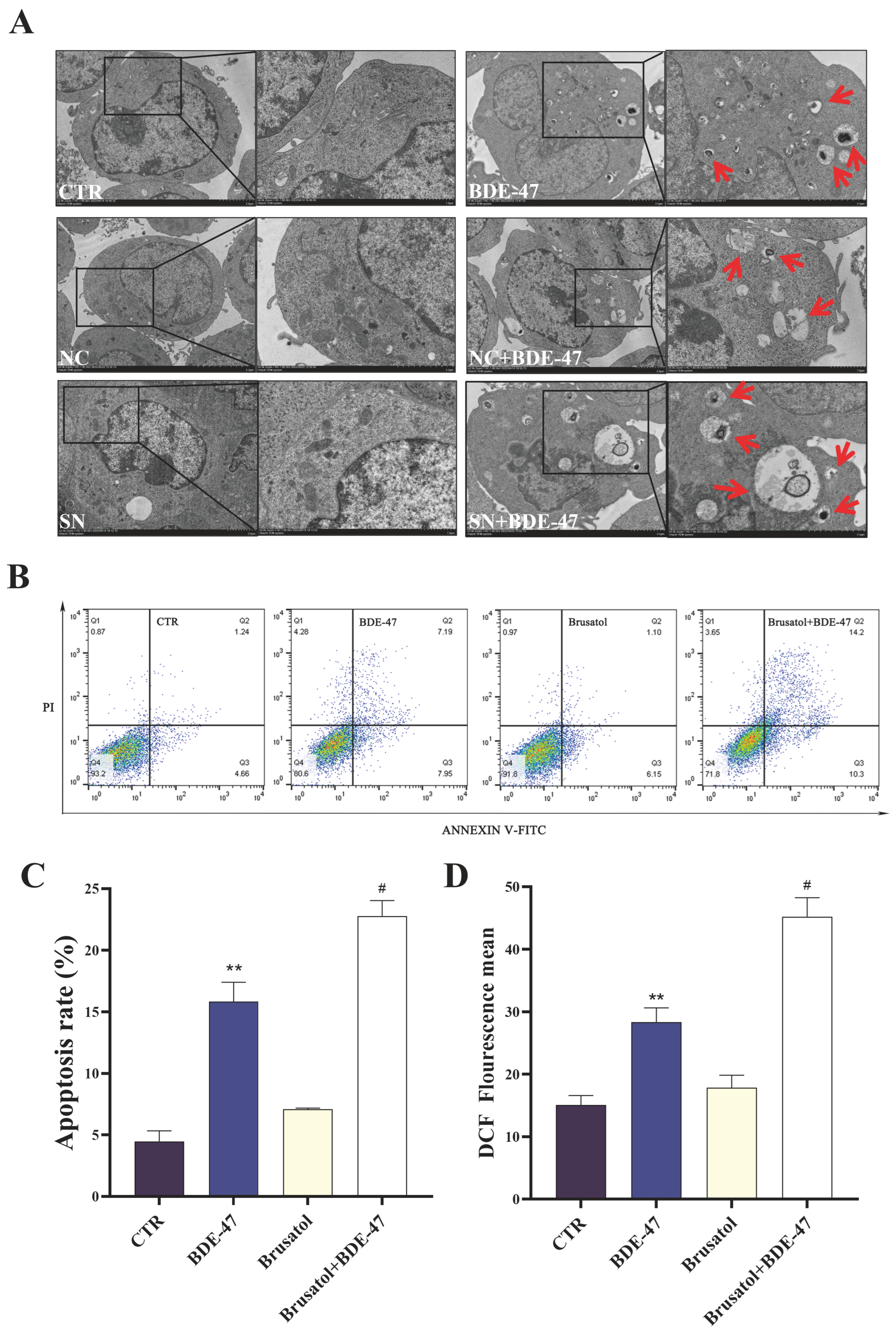
3.4.2. Nrf2 Suppression Exacerbates BDE-47-Induced Ultrastructural Damage, Oxidative Stress, and Apoptosis in RAW264.7 Cells
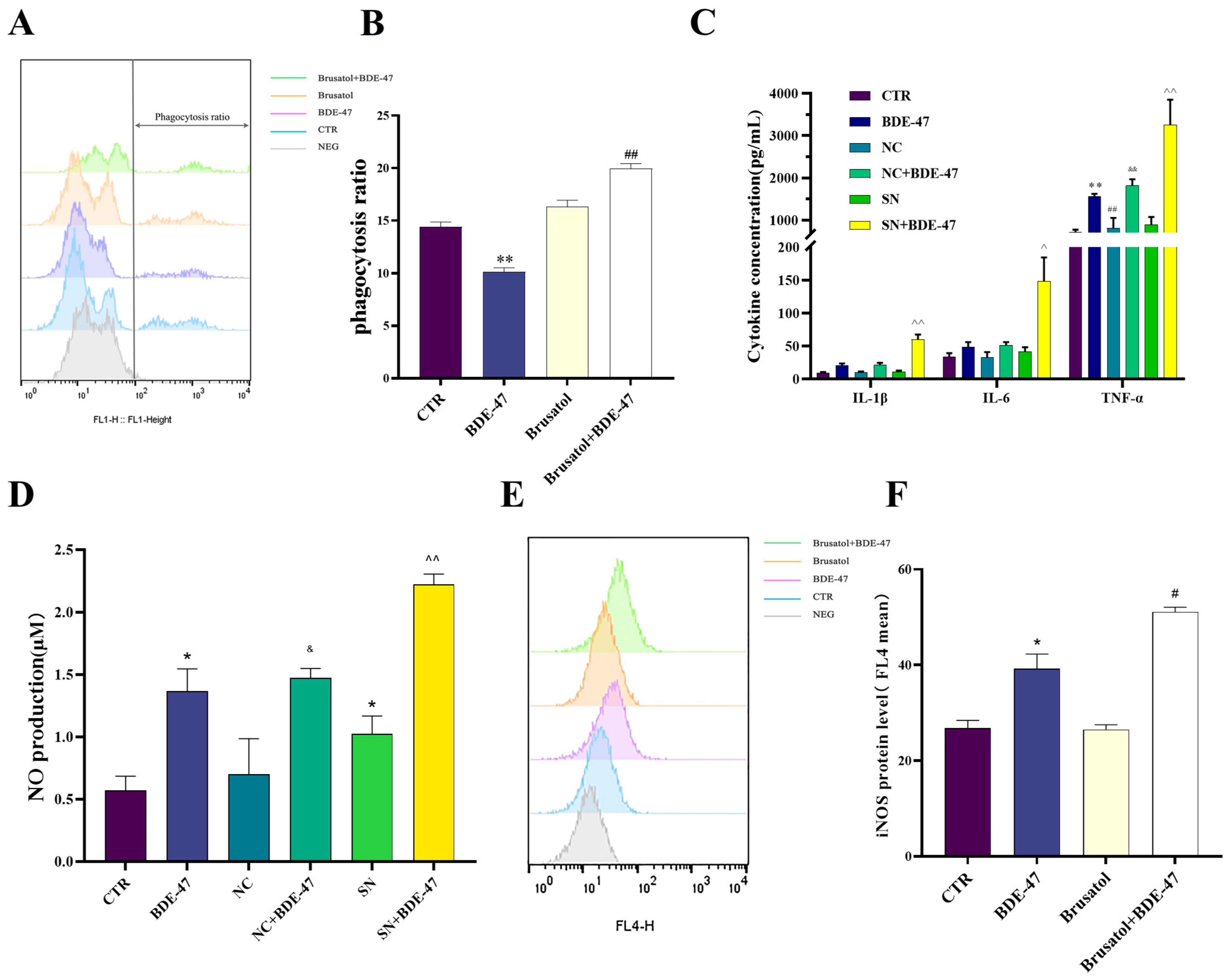
3.5. Nrf2 Inhibition Exacerbates BDE-47-Induced Dysregulation of Macrophage Immune Functions
4. Discussion
4.1. Integrated Network Toxicology and Computational Analyses Identify Nrf2 as a Central Target in BDE-47-Induced Immunotoxicity
4.2. BDE-47-Induced Activation of the Nrf2 Antioxidant Pathway
4.3. Nrf2 Deficiency Exacerbates BDE-47-Induced Cellular Damage and ROS Level
4.4. Nrf2 Regulates Macrophage Immune Function and Limits BDE-47-Induced Inflammatory Dysregulation
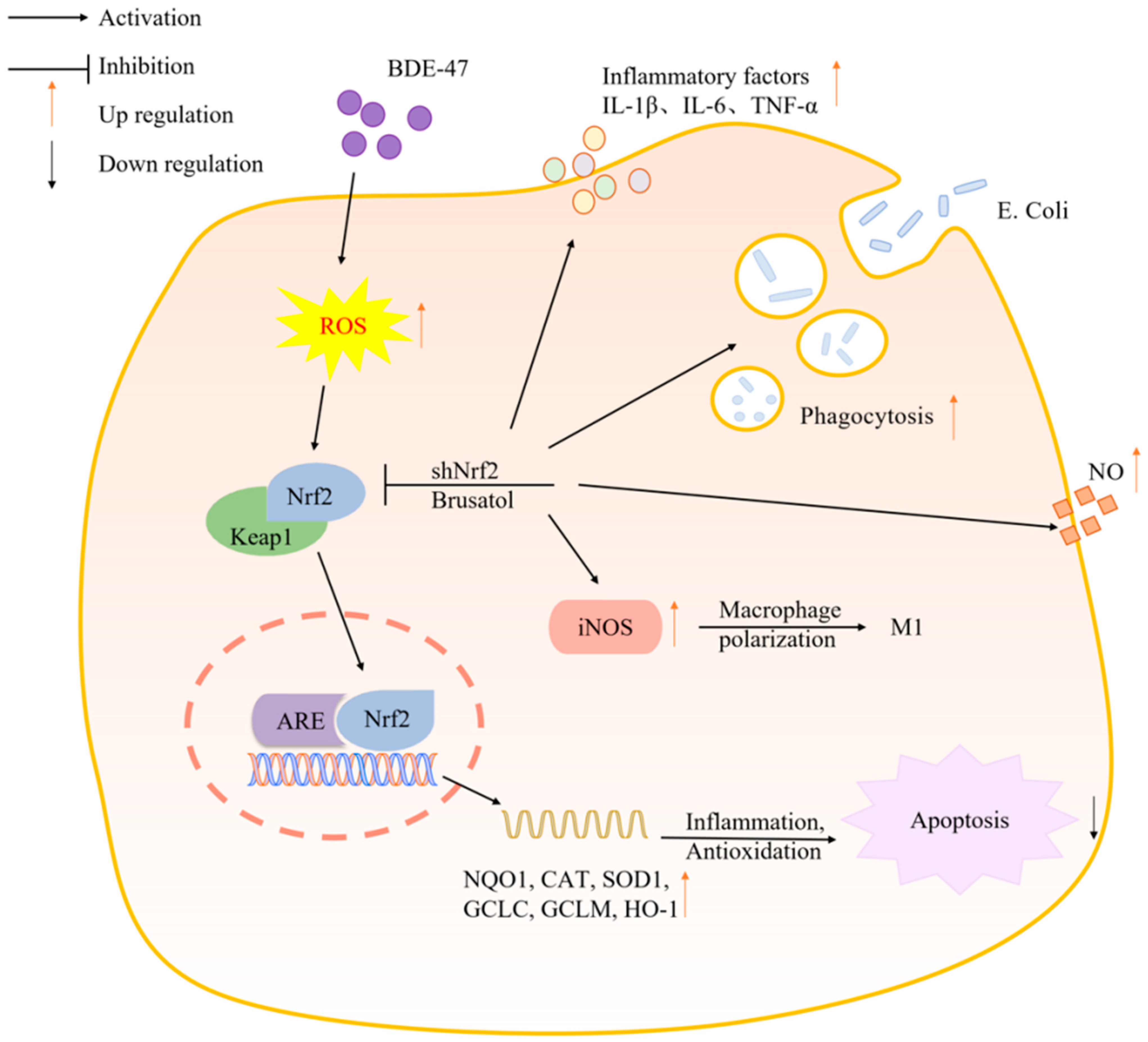
5. Conclusions
Supplementary Materials
Author Contributions
Funding
Institutional Review Board Statement
Informed Consent Statement
Data Availability Statement
Conflicts of Interest
References
- Zhang, Y.; Xi, B.; Tan, W. Release, transformation, and risk factors of polybrominated diphenyl ethers from landfills to the surrounding environments: A review. Environ. Int. 2021, 157, 106780. [Google Scholar] [CrossRef]
- Ohoro, C.R.; Adeniji, A.O.; Okoh, A.I.; Okoh, O.O. Polybrominated diphenyl ethers in the environmental systems: A review. J. Environ. Health Sci. Eng. 2021, 19, 1229–1247. [Google Scholar] [CrossRef] [PubMed]
- Sun, H.; Li, Y.; Hao, Y.; Zhu, Y.; Yang, R.; Wang, P.; Zhang, Q.; Jiang, G. Bioaccumulation and Trophic Transfer of Polybrominated Diphenyl Ethers and Their Hydroxylated and Methoxylated Analogues in Polar Marine Food Webs. Environ. Sci. Technol. 2020, 54, 15086–15096. [Google Scholar] [CrossRef] [PubMed]
- Tokarz, J.A., 3rd; Ahn, M.Y.; Leng, J.; Filley, T.R.; Nies, L. Reductive debromination of polybrominated diphenyl ethers in anaerobic sediment and a biomimetic system. Environ. Sci. Technol. 2008, 42, 1157–1164. [Google Scholar] [CrossRef]
- Suzuki, T.; Hidaka, T.; Kumagai, Y.; Yamamoto, M. Environmental pollutants and the immune response. Nat. Immunol. 2020, 21, 1486–1495. [Google Scholar] [CrossRef] [PubMed]
- Linares, V.; Bellés, M.; Domingo, J.L. Human exposure to PBDE and critical evaluation of health hazards. Arch. Toxicol. 2015, 89, 335–356. [Google Scholar] [CrossRef]
- Barletta, B.; Corinti, S.; Maranghi, F.; Tait, S.; Tassinari, R.; Martinelli, A.; Longo, A.; Longo, V.; Colombo, P.; Di Felice, G.; et al. The environmental pollutant BDE-47 modulates immune responses in in vitro and in vivo murine models. Chemosphere 2024, 349, 140739. [Google Scholar] [CrossRef]
- Zhou, Z.; Jian, X.; Zhou, B.; Lu, K.; Wang, Y. Changes in the immune function of rainbow trout (Oncorhynchus mykiss) provide insights into strategies against BDE-47 stress. J. Hazard. Mater. 2020, 392, 122212. [Google Scholar] [CrossRef]
- Longo, V.; Longo, A.; Di Sano, C.; Cigna, D.; Cibella, F.; Di Felice, G.; Colombo, P. In vitro exposure to 2,2′,4,4′-tetrabromodiphenyl ether (PBDE-47) impairs innate inflammatory response. Chemosphere 2019, 219, 845–854. [Google Scholar] [CrossRef]
- Yang, Y.; Jin, Y.; Zhu, X.; Rao, Q.; Zhao, Z.; Yang, J. Hepatotoxicity evaluation and possible mechanisms of decabrominated diphenyl ethers (BDE-209) in broilers: Oxidative stress, inflammatory, and transcriptomics. Ecotoxicol. Environ. Saf. 2023, 264, 115460. [Google Scholar] [CrossRef]
- Huang, Y.; Rajput, I.R.; Sanganyado, E.; Yajing, S.; Yu, F.; Liang, B.; Liu, W. Immune stimulation effect of PBDEs via prostaglandin pathway in pantropical spotted dolphin: An in vitro study. Chemosphere 2020, 254, 126717. [Google Scholar] [CrossRef]
- Lv, Q.Y.; Wan, B.; Guo, L.H.; Zhao, L.; Yang, Y. In vitro immune toxicity of polybrominated diphenyl ethers on murine peritoneal macrophages: Apoptosis and immune cell dysfunction. Chemosphere 2015, 120, 621–630. [Google Scholar] [CrossRef] [PubMed]
- Ding, Y.; Chen, Y.; Feng, W.; Huang, G.; Dong, M.; Zhao, T.; Chen, N.; Yang, L.; Mao, G.; Wu, X. Persistent immune injury induced by short-term decabromodiphenyl ether (BDE-209) exposure to female middle-aged Balb/c mice. Environ. Sci. Pollut. Res. Int. 2023, 30, 111325–111343. [Google Scholar] [CrossRef] [PubMed]
- Longo, V.; Aloi, N.; Lo Presti, E.; Fiannaca, A.; Longo, A.; Adamo, G.; Urso, A.; Meraviglia, S.; Bongiovanni, A.; Cibella, F.; et al. Impact of the flame retardant 2,2′4,4′-tetrabromodiphenyl ether (PBDE-47) in THP-1 macrophage-like cell function via small extracellular vesicles. Front. Immunol. 2022, 13, 1069207. [Google Scholar] [CrossRef]
- Gao, Z.; Yu, J.; Huang, Y.; Jiang, Y.; Cai, J.; Zhang, Z. Induction of Netosis by 2,2,4,4-Tetrabromodiphenyl Ether (BDE-47) in Cyprinus Carpio. Environ. Toxicol. 2025, 40, 1233–1244. [Google Scholar] [CrossRef]
- Cao, Q.; Zhang, Y.; Cheng, Z.; Zhou, Z.; Wang, B.; Lu, K.; Wang, Y.; Yang, Y. Autophagy modulates oxidative damage in BDE-47-exposed kidney cells of large yellow croaker (Larimichthys crocea). Ecotoxicol. Environ. Saf. 2025, 306, 119323. [Google Scholar] [CrossRef] [PubMed]
- Qi, X.; Liu, Q.; Wei, Z.; Hou, X.; Jiang, Y.; Sun, Y.; Xu, S.; Yang, L.; He, J.; Liu, K. Chronic exposure to BDE-47 aggravates acute pancreatitis and chronic pancreatitis by promoting acinar cell apoptosis and inflammation. Toxicol. Sci. 2024, 199, 120–131. [Google Scholar] [CrossRef]
- Longo, V.; Longo, A.; Adamo, G.; Fiannaca, A.; Picciotto, S.; La Paglia, L.; Romancino, D.; La Rosa, M.; Urso, A.; Cibella, F.; et al. 2,2′4,4′-Tetrabromodiphenyl Ether (PBDE-47) Modulates the Intracellular miRNA Profile, sEV Biogenesis and Their miRNA Cargo Exacerbating the LPS-Induced Pro-Inflammatory Response in THP-1 Macrophages. Front. Immunol. 2021, 12, 664534. [Google Scholar] [CrossRef]
- Li, C.; Yuan, M.; Du, J.; Chen, Z.; Chen, S.; Ji, X.; Tang, N.; Chen, D.; Li, Z.; Zhang, X. New insights on the protection of endangered aquatic species: Embryotoxicity effects of 2,2′,4,4′-tetrabromodiphenyl ether (BDE-47) via integrin-mediated oxidative stress and inflammatory pathways in Siberian sturgeon, Acipenser baerii. Fish. Shellfish. Immunol. 2025, 161, 110307. [Google Scholar] [CrossRef]
- Segal, A.W. The function of the NADPH oxidase of phagocytes and its relationship to other NOXs in plants, invertebrates, and mammals. Int. J. Biochem. Cell Biol. 2008, 40, 604–618. [Google Scholar] [CrossRef]
- Karavitis, J.; Kovacs, E.J. Macrophage phagocytosis: Effects of environmental pollutants, alcohol, cigarette smoke, and other external factors. J. Leukoc. Biol. 2011, 90, 1065–1078. [Google Scholar] [CrossRef] [PubMed]
- Davalli, P.; Mitic, T.; Caporali, A.; Lauriola, A.; D’Arca, D. ROS, Cell Senescence, and Novel Molecular Mechanisms in Aging and Age-Related Diseases. Oxid. Med. Cell. Longev. 2016, 2016, 3565127. [Google Scholar] [CrossRef]
- Gao, Q.; Zhou, Z.Y.; He, Y.N.; Dong, M.H.; Wang, Z.N.; Chen, H.M. BDE-47 Induces Immunotoxicity in RAW264.7 Macrophages through the Reactive Oxygen Species-Mediated Mitochondrial Apoptotic Pathway. Molecules 2023, 28, 2036. [Google Scholar] [CrossRef] [PubMed]
- Zhou, S.; Liu, J. In vitro immunotoxicity and possible mechanisms of 2,2′,4,4′-tetrabromodiphenyl ether (BDE-47) on Ruditapes philippinarum hemocytes. Fish. Shellfish. Immunol. 2022, 127, 386–395. [Google Scholar] [CrossRef]
- Jiang, Y.; Tang, X.; Sun, T.; Wang, Y. BDE-47 exposure changed the immune function of haemocytes in Mytilus edulis: An explanation based on ROS-mediated pathway. Aquat. Toxicol. 2017, 182, 58–66. [Google Scholar] [CrossRef]
- Ye, S.; Li, S.; Ma, Y.; Hu, D.; Xiao, F. Curcumin hinders PBDE-47-induced neutrophil extracellular traps release via Nrf2-associated ROS inhibition. Ecotoxicol. Environ. Saf. 2021, 225, 112779. [Google Scholar] [CrossRef]
- Sun, S.; Zhao, Z.; Rao, Q.; Li, X.; Ruan, Z.; Yang, J. BDE-47 induces nephrotoxicity through ROS-dependent pathways of mitochondrial dynamics in PK15 cells. Ecotoxicol. Environ. Saf. 2021, 222, 112549. [Google Scholar] [CrossRef]
- Ma, Q.; He, X. Molecular basis of electrophilic and oxidative defense: Promises and perils of Nrf2. Pharmacol. Rev. 2012, 64, 1055–1081. [Google Scholar] [CrossRef]
- Ngo, V.; Duennwald, M.L. Nrf2 and Oxidative Stress: A General Overview of Mechanisms and Implications in Human Disease. Antioxidants 2022, 11, 2345. [Google Scholar] [CrossRef] [PubMed]
- Suzuki, T.; Takahashi, J.; Yamamoto, M. Molecular Basis of the KEAP1-NRF2 Signaling Pathway. Mol. Cells 2023, 46, 133–141. [Google Scholar] [CrossRef]
- Ma, Q. Role of nrf2 in oxidative stress and toxicity. Annu. Rev. Pharmacol. Toxicol. 2013, 53, 401–426. [Google Scholar] [CrossRef]
- Buha, A.; Baralić, K.; Djukic-Cosic, D.; Bulat, Z.; Tinkov, A.; Panieri, E.; Saso, L. The Role of Toxic Metals and Metalloids in Nrf2 Signaling. Antioxidants 2021, 10, 630. [Google Scholar] [CrossRef] [PubMed]
- Park, H.R.; Loch-Caruso, R. Protective effect of nuclear factor E2-related factor 2 on inflammatory cytokine response to brominated diphenyl ether-47 in the HTR-8/SVneo human first trimester extravillous trophoblast cell line. Toxicol. Appl. Pharmacol. 2014, 281, 67–77. [Google Scholar] [CrossRef]
- Liu, B.; Lehmler, H.J.; Ye, Z.; Yuan, X.; Yan, Y.; Ruan, Y.; Wang, Y.; Yang, Y.; Chen, S.; Bao, W. Exposure to Polybrominated Diphenyl Ethers and Risk of All-Cause and Cause-Specific Mortality. JAMA Netw. Open 2024, 7, e243127. [Google Scholar] [CrossRef]
- Yuan, Y.; Meeker, J.D.; Ferguson, K.K. Serum polybrominated diphenyl ether (PBDE) concentrations in relation to biomarkers of oxidative stress and inflammation: The National Health and Nutrition Examination Survey 2003-2004. Sci. Total Environ. 2017, 575, 400–405. [Google Scholar] [CrossRef]
- Zota, A.R.; Geller, R.J.; Romano, L.E.; Coleman-Phox, K.; Adler, N.E.; Parry, E.; Wang, M.; Park, J.S.; Elmi, A.F.; Laraia, B.A.; et al. Association between persistent endocrine-disrupting chemicals (PBDEs, OH-PBDEs, PCBs, and PFASs) and biomarkers of inflammation and cellular aging during pregnancy and postpartum. Environ. Int. 2018, 115, 9–20. [Google Scholar] [CrossRef]
- Karakuş, F.; Kuzu, B. Predicting the molecular mechanisms of cardiovascular toxicity induced by per- and polyfluoroalkyl substances: An In Silico network toxicology perspective. Toxicol. Res. 2024, 13, tfae206. [Google Scholar] [CrossRef]
- Naqvi, A.A.T.; Mohammad, T.; Hasan, G.M.; Hassan, M.I. Advancements in Docking and Molecular Dynamics Simulations Towards Ligand-receptor Interactions and Structure-function Relationships. Curr. Top. Med. Chem. 2018, 18, 1755–1768. [Google Scholar] [CrossRef]
- Liu, H.; You, J.; Bai, J.; Khan, D.; Muhammad, S. Multi-Omics Integration Reveals PBDE-47 as an Environmental Risk Factor for Intracranial Aneurysm via F2R-Mediated Metabolic and Epigenetic Pathways. Brain Sci. 2025, 15, 1091. [Google Scholar] [CrossRef] [PubMed]
- Gfeller, D.; Grosdidier, A.; Wirth, M.; Daina, A.; Michielin, O.; Zoete, V. SwissTargetPrediction: A web server for target prediction of bioactive small molecules. Nucleic Acids Res. 2014, 42, W32–W38. [Google Scholar] [CrossRef] [PubMed]
- Wang, X.; Shen, Y.; Wang, S.; Li, S.; Zhang, W.; Liu, X.; Lai, L.; Pei, J.; Li, H. PharmMapper 2017 update: A web server for potential drug target identification with a comprehensive target pharmacophore database. Nucleic Acids Res. 2017, 45, W356–W360. [Google Scholar] [CrossRef]
- Jablonski, K.A.; Amici, S.A.; Webb, L.M.; Ruiz-Rosado Jde, D.; Popovich, P.G.; Partida-Sanchez, S.; Guerau-de-Arellano, M. Novel Markers to Delineate Murine M1 and M2 Macrophages. PLoS ONE 2015, 10, e0145342. [Google Scholar] [CrossRef] [PubMed]
- Luo, Y.; He, Z.; Guo, M.; Wang, X.; Jin, Z.; Sun, M.; Yang, H.; Zeng, W.; Liu, S.; Zhang, Y.; et al. Targeted tilianin lipid nanoparticles for the treatment of atherosclerosis through remodeling lesional macrophage phenotype. Nano Res. 2025, 18, 94907144. [Google Scholar] [CrossRef]
- Domingo, J.L.; Souza, M.C.O.; Nadal, M.; Barbosa, F. A One Health approach to polybrominated diphenyl ethers (PBDEs): Integrating human, animal, and environmental health perspectives. Chemosphere 2025, 386, 144644. [Google Scholar] [CrossRef]
- Gao, J.; Xie, Z.; Wang, Z.; Yu, Y.; Qi, Z.; Yu, X.; Zhong, T.; Wang, L.; Feng, K.; Peng, Y.; et al. Human toxicity of polybrominated diphenyl ethers (PBDEs) and their derivatives: A comprehensive review. Curr. Res. Food Sci. 2024, 9, 100918. [Google Scholar] [CrossRef]
- Ding, K.; Xu, Q.; Zhang, X.; Liu, S. Metabolomic insights into neurological effects of BDE-47 exposure in the sea cucumber Apostichopus japonicus. Ecotoxicol. Environ. Saf. 2023, 266, 115558. [Google Scholar] [CrossRef] [PubMed]
- Shi, X.; Wu, R.; Wang, X.; Huang, W.; Zheng, S.; Zhang, Q.; Peng, J.; Tan, W.; Wu, K. Effects of 2,2′,4,4′-tetrabromodiphenyl ether (BDE-47) on reproductive and endocrine function in female zebrafish (Danio rerio). Ecotoxicol. Environ. Saf. 2022, 248, 114326. [Google Scholar] [CrossRef]
- Henry, R.; Vander Heide, R.; Roy, N.M. Toxicity of 2,2′,4,4′-tetrabromodiphenyl ether (BDE-47) on oligodendrocytes during embryonic zebrafish development. Environ. Toxicol. Pharmacol. 2025, 114, 104627. [Google Scholar] [CrossRef]
- Forman, H.J.; Torres, M. Redox signaling in macrophages. Mol. Asp. Med. 2001, 22, 189–216. [Google Scholar] [CrossRef]
- Xue, D.; Wei, J.; Lu, W.; Xia, B.; Li, S.; Liu, D.; Liu, N.; Wang, X.; Lin, G. BDE-47 disturbs the immune response of lymphocytes to LPS by downregulating NF-κB pathway. Chemosphere 2022, 308, 136562. [Google Scholar] [CrossRef]
- Zhang, D.D.; Lo, S.C.; Cross, J.V.; Templeton, D.J.; Hannink, M. Keap1 is a redox-regulated substrate adaptor protein for a Cul3-dependent ubiquitin ligase complex. Mol. Cell. Biol. 2004, 24, 10941–10953. [Google Scholar] [CrossRef] [PubMed]
- Kobayashi, M.; Yamamoto, M. Molecular mechanisms activating the Nrf2-Keap1 pathway of antioxidant gene regulation. Antioxid. Redox Signal. 2005, 7, 385–394. [Google Scholar] [CrossRef]
- Wu, X.; Huang, J.; Tang, J.; Sun, Y.; Zhao, G.; Yan, C.; Liu, Z.; Yi, W.; Xu, S.; Yu, X. Isoginkgetin, a bioactive constituent from Ginkgo Biloba, protects against obesity-induced cardiomyopathy via enhancing Nrf2/ARE signaling. Redox Biol. 2022, 57, 102485. [Google Scholar] [CrossRef] [PubMed]
- Kumar, A.; Ramanarayanan, S. Redox homeostasis and therapeutic modulation: The central role of oxidative stress and nuclear factor erythroid 2-related factor 2 (Nrf2) activation in systemic diseases and reproductive dysfunction. Can. J. Physiol. Pharmacol. 2026, 104, 1–29. [Google Scholar] [CrossRef]
- Yang, Z.; Ning, X.; Zhang, Y. Forsythiaside Protected H9c2 Cardiomyocytes from H2O2-Induced Oxidative Stress and Apoptosis via Activating Nrf2/HO-1 Signaling Pathway. Int. Heart J. 2022, 63, 904–914. [Google Scholar] [CrossRef]
- Xue, P.; Wang, H.; Yang, L.; Jiang, Z.; Li, H.; Liu, Q.; Zhang, Q.; Andersen, M.E.; Crabbe, M.J.C.; Hao, L.; et al. NRF2-ARE signaling is responsive to haloacetonitrile-induced oxidative stress in human keratinocytes. Toxicol. Appl. Pharmacol. 2022, 450, 116163. [Google Scholar] [CrossRef]
- Yang, B.; Cheng, H.; Wang, L.; Fu, J.; Zhang, G.; Guan, D.; Qi, R.; Gao, X.; Zhao, R. Protective roles of NRF2 signaling pathway in cobalt chloride-induced hypoxic cytotoxicity in human HaCaT keratinocytes. Toxicol. Appl. Pharmacol. 2018, 355, 189–197. [Google Scholar] [CrossRef]
- Abu-Halaka, D.; Shpaizer, A.; Zeigerman, H.; Kanner, J.; Tirosh, O. DMF-Activated Nrf2 Ameliorates Palmitic Acid Toxicity While Potentiates Ferroptosis Mediated Cell Death: Protective Role of the NO-Donor S-Nitroso-N-Acetylcysteine. Antioxidants 2023, 12, 512. [Google Scholar] [CrossRef] [PubMed]
- Kasai, S.; Shimizu, S.; Tatara, Y.; Mimura, J.; Itoh, K. Regulation of Nrf2 by Mitochondrial Reactive Oxygen Species in Physiology and Pathology. Biomolecules 2020, 10, 320. [Google Scholar] [CrossRef]
- van der Horst, D.; Carter-Timofte, M.E.; van Grevenynghe, J.; Laguette, N.; Dinkova-Kostova, A.T.; Olagnier, D. Regulation of innate immunity by Nrf2. Curr. Opin. Immunol. 2022, 78, 102247. [Google Scholar] [CrossRef]
- Saha, S.; Buttari, B.; Panieri, E.; Profumo, E.; Saso, L. An Overview of Nrf2 Signaling Pathway and Its Role in Inflammation. Molecules 2020, 25, 5474. [Google Scholar] [CrossRef] [PubMed]
- Wang, L.; He, C. Nrf2-mediated anti-inflammatory polarization of macrophages as therapeutic targets for osteoarthritis. Front. Immunol. 2022, 13, 967193. [Google Scholar] [CrossRef] [PubMed]





| Target Gene | Forward (5′-3′) | Reverse (5′-3′) |
|---|---|---|
| CAT | GCTCTCACATGGCTGCGAAGG | TCCTCAGGCTCGGCTTCACG |
| SOD | AACCAGTTGTGTTGTCAGGAC | CCACCATGTTTCTTAGAGTGAGG |
| Nrf2 | AAGCACAGCCAGCACATTCTCC | TGACCAGGACTCACGGGAACTTC |
| GCLC | CCATTACCACCTGCTGTCTG | GCCTGTCAATCTGCTCCTG |
| GCLM | CTTCGCCTCCGATTGAAGATG | AAAGGCAGTCAAATCTGGTGG |
| HO-1 | ACCGCCTTCCTGCTCAACATTG | CTCTGACGAAGTGACGCCATCTG |
| NQO1 | GCCGAACACAAGAAGCTGGAAG | GGCAAATCCTGCTACGAGCACT |
| GAPDH | CATCACTGCCACCCAGAAGACTG | ATGCCAGTGAGCTTCCCGTTCAG |
Disclaimer/Publisher’s Note: The statements, opinions and data contained in all publications are solely those of the individual author(s) and contributor(s) and not of MDPI and/or the editor(s). MDPI and/or the editor(s) disclaim responsibility for any injury to people or property resulting from any ideas, methods, instructions or products referred to in the content. |
© 2026 by the authors. Licensee MDPI, Basel, Switzerland. This article is an open access article distributed under the terms and conditions of the Creative Commons Attribution (CC BY) license.
Share and Cite
Gao, Q.; Deng, Q.; Yang, Z.; Wei, L.; Chen, H. Activation of the Nrf2/ARE Pathway Attenuates BDE-47-Induced Immunotoxicity in RAW264.7 Macrophages. Biomolecules 2026, 16, 674. https://doi.org/10.3390/biom16050674
Gao Q, Deng Q, Yang Z, Wei L, Chen H. Activation of the Nrf2/ARE Pathway Attenuates BDE-47-Induced Immunotoxicity in RAW264.7 Macrophages. Biomolecules. 2026; 16(5):674. https://doi.org/10.3390/biom16050674
Chicago/Turabian StyleGao, Qian, Qingyuan Deng, Ziying Yang, Lili Wei, and Hongmei Chen. 2026. "Activation of the Nrf2/ARE Pathway Attenuates BDE-47-Induced Immunotoxicity in RAW264.7 Macrophages" Biomolecules 16, no. 5: 674. https://doi.org/10.3390/biom16050674
APA StyleGao, Q., Deng, Q., Yang, Z., Wei, L., & Chen, H. (2026). Activation of the Nrf2/ARE Pathway Attenuates BDE-47-Induced Immunotoxicity in RAW264.7 Macrophages. Biomolecules, 16(5), 674. https://doi.org/10.3390/biom16050674