Targeted Intracellular Delivery of Amino Acids to Trophoblast Cells Reveals Proteomic Signatures of Cellular Utilisation

 ,
,  , , , , , and
Abstract
1. Introduction
2. Materials and Methods
2.1. DiI Liposomes and SILAC Liposomes Preparation
2.2. Peptide Conjugation
2.3. Transmission Electron Microscopy (TEM)
2.4. Nanoparticle Tracking Analysis (NTA)
2.5. Zeta Potential Measurements
2.6. SILAC Encapsulation Efficiency
2.7. BeWo Cell Culture and Liposome Treatments
2.8. Fluorescent Microscopy
2.9. Protein Extraction and Mass Spectrometry
2.10. Proteomics Data Analysis
2.11. Western Blot Validation
2.12. Functional Enrichment Analysis
3. Results
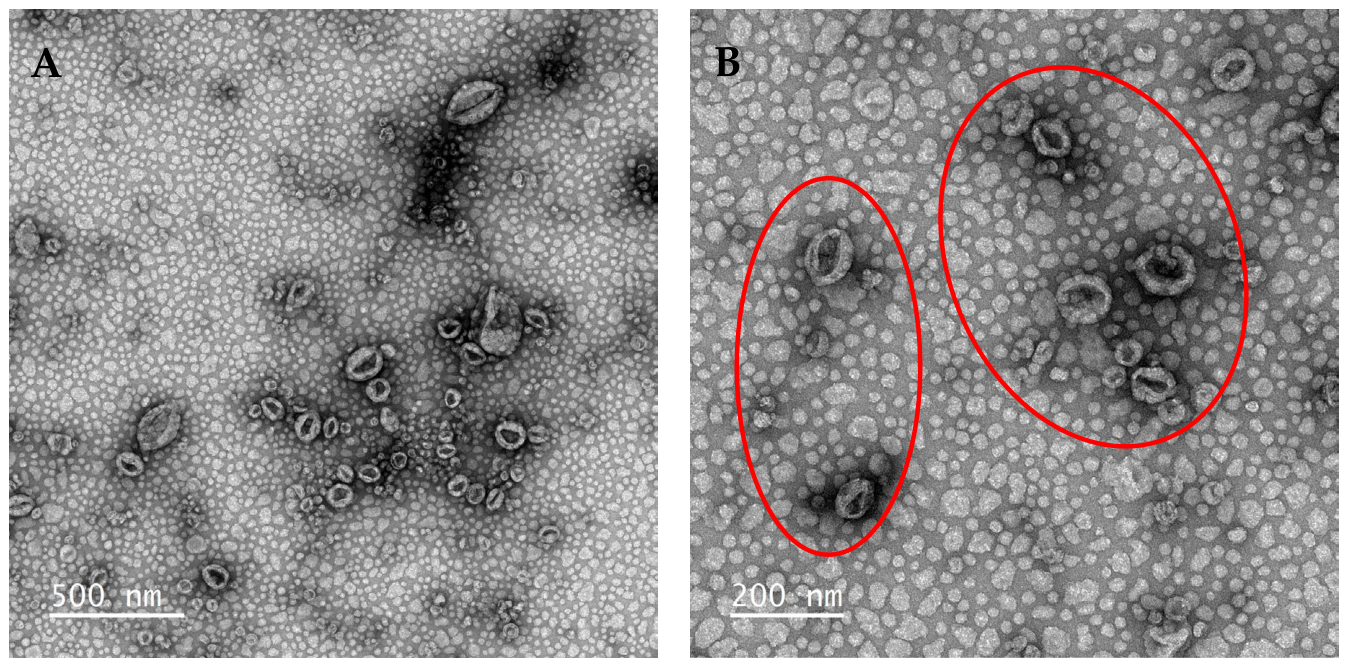
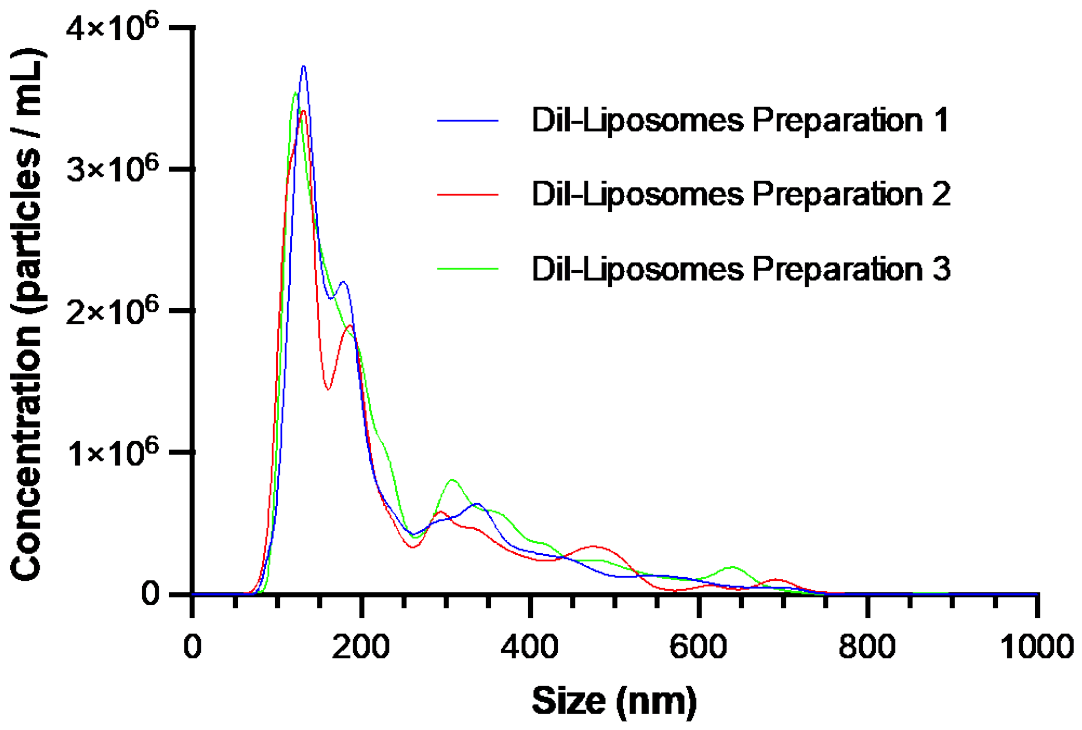
3.1. DiI Liposome Characterisation
3.2. Trophoblast Cell Targeting of EC-Labelled DiI Liposomes
3.3. Encapsulation Efficiency of SILAC Amino Acids
3.4. Proteomics Consequences of Targeted SILAC Amino Acid Delivery
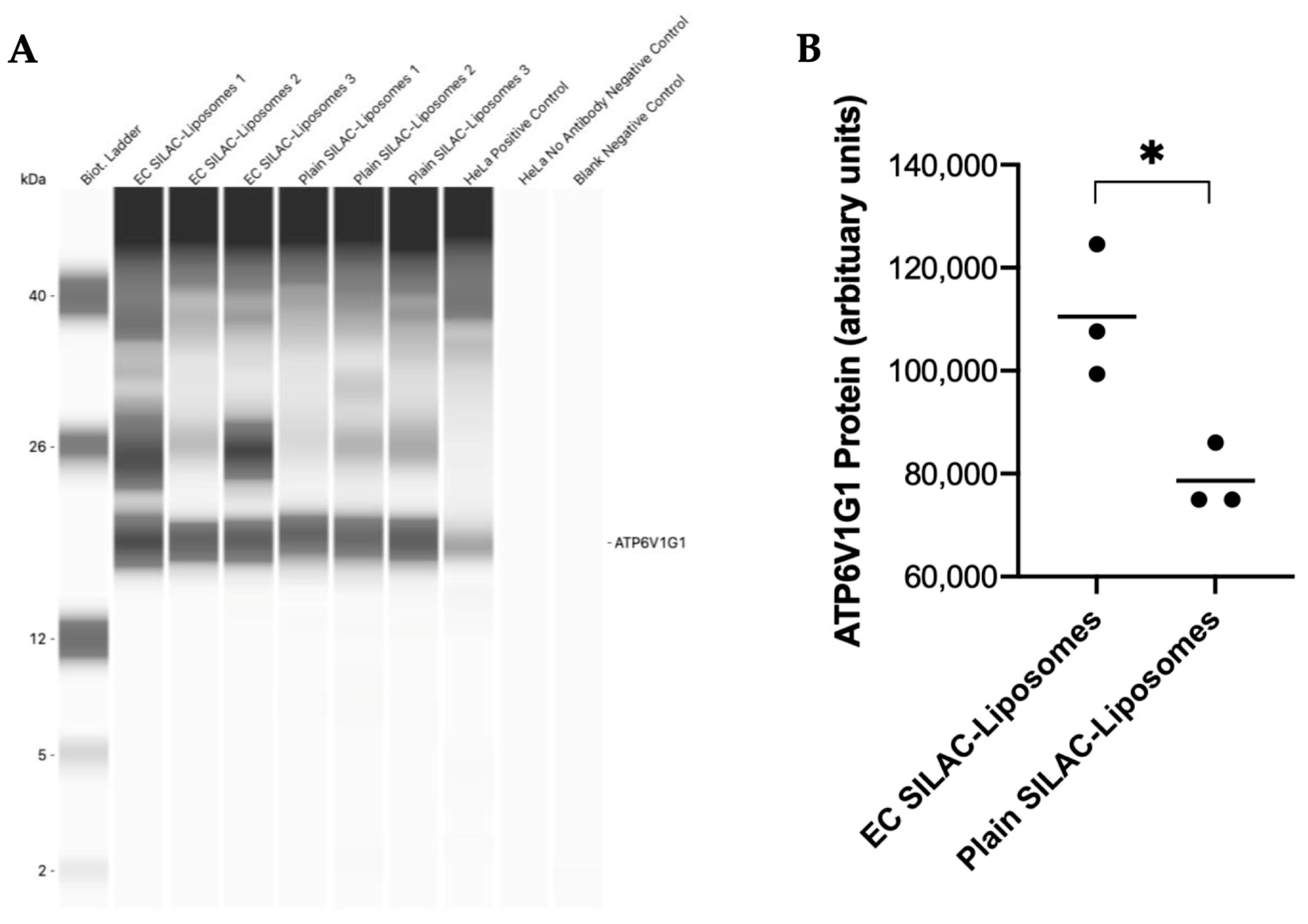
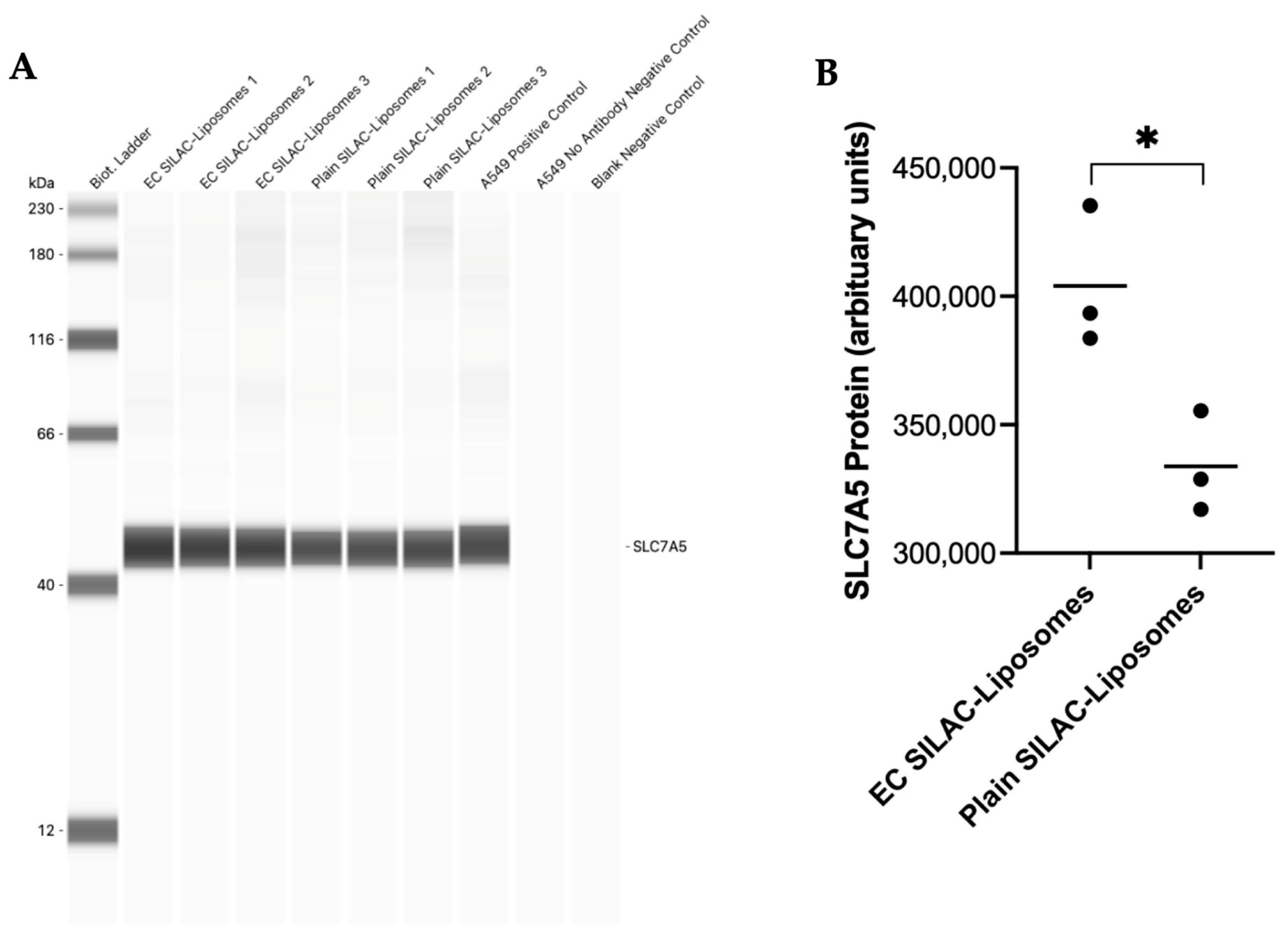
3.5. Western Blot Validation
3.6. Functional Context of Proteomic Changes
4. Discussion
4.1. Liposome Characterisation and Trophoblast Cell Targeting
4.2. SILAC Proteomics Analysis
4.3. Western Blot Validation
4.4. Functional Enrichment Analysis
4.5. Study Limitations and Future Directions
5. Conclusions
Supplementary Materials
Author Contributions
Funding
Institutional Review Board Statement
Informed Consent Statement
Data Availability Statement
Conflicts of Interest
Abbreviations
References
- Bell, A.W.; Hay, W.W.; Ehrhardt, R.A. Placental Transport of Nutrients and Its Implications for Fetal Growth. J. Reprod. Fertil. Suppl. 1999, 54, 401–410. [Google Scholar] [CrossRef] [Scilit]
- Vaughan, O.R.; Rosario, F.J.; Powell, T.L.; Jansson, T. Regulation of Placental Amino Acid Transport and Fetal Growth. Mol. Biol. Transl. Sci. 2017, 145, 217–251. [Google Scholar] [CrossRef] [Scilit]
- Cleal, J.K.; Lofthouse, E.M.; Sengers, B.G.; Lewis, R.M. A Systems Perspective on Placental Amino Acid Transport. J. Physiol. 2018, 596, 5511–5522. [Google Scholar] [CrossRef] [Scilit]
- Glazier, J.D.; Cetin, I.; Perugino, G.; Ronzoni, S.; Grey, A.M.; Mahendran, D.; Marconi, A.M.; Pardi, G.; Sibley, C.P. Association between the Activity of the System A Amino Acid Transporter in the Microvillous Plasma Membrane of the Human Placenta and Severity of Fetal Compromise in Intrauterine Growth Restriction. Pediatr. Res. 1997, 42, 514–519. [Google Scholar] [CrossRef] [Scilit]
- Paolini, C.L.; Marconi, A.M.; Ronzoni, S.; Di Noio, M.; Fennessey, P.V.; Pardi, G.; Battaglia, F.C. Placental Transport of Leucine, Phenylalanine, Glycine, and Proline in Intrauterine Growth-Restricted Pregnancies. J. Clin. Endocrinol. Metab. 2001, 86, 5427–5432. [Google Scholar] [CrossRef] [PubMed]
- Rosario, F.J.; Kramer, A.; Li, C.; Galan, H.L.; Powell, T.L.; Nathanielsz, P.W.; Jansson, T. Reduction of In Vivo Placental Amino Acid Transport Precedes the Development of Intrauterine Growth Restriction in the Non-Human Primate. Nutrients 2021, 13, 2892. [Google Scholar] [CrossRef] [Scilit] [PubMed]
- Shimada, H.; Powell, T.L.; Jansson, T. Regulation of Placental Amino Acid Transport in Health and Disease. Acta Physiol. 2024, 240, e14157. [Google Scholar] [CrossRef] [Scilit] [PubMed]
- Lunell, N.O.; Sarby, B.; Lewander, R.; Nylund, L. Comparison of Uteroplacental Blood Flow in Normal and in Intrauterine Growth-Retarded Pregnancy. Gynecol. Obstet. Investig. 1979, 10, 106–118. [Google Scholar] [CrossRef] [Scilit]
- Khong, T.Y.; Wolf, F.; Robertson, W.B.; Brosens, I. Inadequate Maternal Vascular Response to Placentation in Pregnancies Complicated by Pre-Eclampsia and by Small-for-Gestational Age Infants. BJOG 1986, 93, 1049–1059. [Google Scholar] [CrossRef] [Scilit]
- Laurin, J.; Lingman, G.; Marsál, K.; Persson, P.H. Fetal Blood Flow in Pregnancies Complicated by Intrauterine Growth Retardation. Obstet. Gynecol. 1987, 69, 895–902. [Google Scholar]
- Lang, U.; Baker, R.S.; Braems, G.; Zygmunt, M.; Künzel, W.; Clark, K.E. Uterine Blood Flow—A Determinant of Fetal Growth. Eur. J. Obstet. Gynecol. Reprod. Biol. 2003, 110, S55–S61. [Google Scholar] [CrossRef] [Scilit]
- Singh, S.; Singh, A.; Sharma, D.; Singh, A.; Narula, M.K.; Bhattacharjee, J. Effect of L-Arginine on Nitric Oxide Levels in Intrauterine Growth Restriction and Its Correlation with Fetal Outcome. Indian J. Clin. Biochem. 2015, 30, 298–304. [Google Scholar] [CrossRef] [Scilit] [PubMed]
- Bourdon, A.; Parnet, P.; Nowak, C.; Tran, N.-T.; Winer, N.; Darmaun, D. L-Citrulline Supplementation Enhances Fetal Growth and Protein Synthesis in Rats with Intrauterine Growth Restriction. J. Nutr. 2016, 146, 532–541. [Google Scholar] [CrossRef] [Scilit] [PubMed]
- Zhu, Y.; Li, T.; Huang, S.; Wang, W.; Dai, Z.; Feng, C.; Wu, G.; Wang, J. Maternal L-Glutamine Supplementation during Late Gestation Alleviates Intrauterine Growth Restriction-Induced Intestinal Dysfunction in Piglets. Amino Acids 2018, 50, 1289–1299. [Google Scholar] [CrossRef] [Scilit] [PubMed]
- Liu, N.; Dai, Z.; Zhang, Y.; Chen, J.; Yang, Y.; Wu, G.; Tso, P.; Wu, Z. Maternal L-Proline Supplementation Enhances Fetal Survival, Placental Development, and Nutrient Transport in Mice. Biol. Reprod. 2019, 100, 1073–1081. [Google Scholar] [CrossRef] [Scilit]
- Terstappen, F.; Tol, A.J.C.; Gremmels, H.; Wever, K.E.; Paauw, N.D.; Joles, J.A.; van der Beek, E.M.; Lely, A.T. Prenatal Amino Acid Supplementation to Improve Fetal Growth: A Systematic Review and Meta-Analysis. Nutrients 2020, 12, 2535. [Google Scholar] [CrossRef] [Scilit]
- Bourdon, A.; Hannigsberg, J.; Misbert, E.; Tran, T.N.; Amarger, V.; Ferchaud-Roucher, V.; Winer, N.; Darmaun, D. Maternal Supplementation with Citrulline or Arginine during Gestation Impacts Fetal Amino Acid Availability in a Model of Intrauterine Growth Restriction (IUGR). Clin. Nutr. 2020, 39, 3736–3743. [Google Scholar] [CrossRef] [Scilit]
- Xu, L.; Wang, X.; Wang, C.; Li, W.; Liu, H. L-Arginine Supplementation Improved Neonatal Outcomes in Pregnancies with Hypertensive Disorder or Intrauterine Growth Restriction: A Systematic Review and Meta-Analysis of Randomized Controlled Trials. Clin. Nutr. 2022, 41, 1512–1522. [Google Scholar] [CrossRef] [Scilit]
- Beltrán-Gracia, E.; López-Camacho, A.; Higuera-Ciapara, I.; Velázquez-Fernández, J.B.; Vallejo-Cardona, A.A. Nanomedicine Review: Clinical Developments in Liposomal Applications. Cancer Nanotechnol. 2019, 10, e14157. [Google Scholar] [CrossRef] [Scilit]
- De Jong, W.H.; Borm, P.J. Drug Delivery and Nanoparticles: Applications and Hazards. Int. J. Nanomed. 2008, 3, 133–149. [Google Scholar] [CrossRef] [Scilit]
- Maranhão, R.C.; Vital, C.G.; Tavoni, T.M.; Graziani, S.R. Clinical Experience with Drug Delivery Systems as Tools to Decrease the Toxicity of Anticancer Chemotherapeutic Agents. Expert Opin. Drug Deliv. 2017, 14, 1217–1226. [Google Scholar] [CrossRef] [Scilit]
- Bulbake, U.; Doppalapudi, S.; Kommineni, N.; Khan, W. Liposomal Formulations in Clinical Use: An Updated Review. Pharmaceutics 2017, 9, 12. [Google Scholar] [CrossRef] [Scilit] [PubMed]
- Liu, P.; Chen, G.; Zhang, J. A Review of Liposomes as a Drug Delivery System: Current Status of Approved Products, Regulatory Environments, and Future Perspectives. Molecules 2022, 27, 1372. [Google Scholar] [CrossRef] [Scilit] [PubMed]
- Torchilin, V.P. Recent Advances with Liposomes as Pharmaceutical Carriers. Nat. Rev. Drug Discov. 2005, 4, 145–160. [Google Scholar] [CrossRef] [Scilit]
- Byrne, J.D.; Betancourt, T.; Brannon-Peppas, L. Active Targeting Schemes for Nanoparticle Systems in Cancer Therapeutics. Adv. Drug Deliv. Rev. 2008, 60, 1615–1626. [Google Scholar] [CrossRef] [Scilit]
- Mitchell, M.J.; Billingsley, M.M.; Haley, R.M.; Wechsler, M.E.; Peppas, N.A.; Langer, R. Engineering Precision Nanoparticles for Drug Delivery. Nat. Rev. Drug Discov. 2021, 20, 101–124. [Google Scholar] [CrossRef] [Scilit] [PubMed]
- Resende, M.; Nielsen, M.A.; Dahlbäck, M.; Ditlev, S.B.; Andersen, P.; Sander, A.F.; Ndam, N.T.; Theander, T.G.; Salanti, A. Identification of Glycosaminoglycan Binding Regions in the Plasmodium Falciparum Encoded Placental Sequestration Ligand, VAR2CSA. Malar. J. 2008, 7, 104. [Google Scholar] [CrossRef] [Scilit]
- Fried, M.; Duffy, P.E. Adherence of Plasmodium Falciparum to Chondroitin Sulfate A in the Human Placenta. Science 1996, 272, 1502–1504. [Google Scholar] [CrossRef] [Scilit]
- Fried, M.; Domingo, G.J.; Gowda, C.D.; Mutabingwa, T.K.; Duffy, P.E. Plasmodium Falciparum: Chondroitin Sulfate A Is the Major Receptor for Adhesion of Parasitized Erythrocytes in the Placenta. Exp. Parasitol. 2006, 113, 36–42. [Google Scholar] [CrossRef] [Scilit]
- Zhang, B.; Tan, L.; Yu, Y.; Wang, B.; Chen, Z.; Han, J.; Li, M.; Chen, J.; Xiao, T.; Ambati, B.K.; et al. Placenta-Specific Drug Delivery by Trophoblast-Targeted Nanoparticles in Mice. Theranostics 2018, 8, 2765–2781. [Google Scholar] [CrossRef] [Scilit]
- Pattillo, R.A.; Gey, G.O. The Establishment of a Cell Line of Human Hormone-Synthesizing Trophoblastic Cells in Vitro. Cancer Res. 1968, 28, 1231–1236. [Google Scholar]
- Eaton, B.M.; Sooranna, S.R. Transport of Large Neutral Amino Acids into BeWo Cells. Placenta 2000, 21, 558–564. [Google Scholar] [CrossRef] [Scilit]
- Kim, J.-Y.; Burghardt, R.C.; Wu, G.; Johnson, G.A.; Spencer, T.E.; Bazer, F.W. Select Nutrients in the Ovine Uterine Lumen. VII. Effects of Arginine, Leucine, Glutamine, and Glucose on Trophectoderm Cell Signaling, Proliferation, and Migration. Biol. Reprod. 2011, 84, 62–69. [Google Scholar] [CrossRef] [Scilit]
- Kong, X.; Tan, B.; Yin, Y.; Gao, H.; Li, X.; Jaeger, L.A.; Bazer, F.W.; Wu, G. L-Arginine Stimulates the MTOR Signaling Pathway and Protein Synthesis in Porcine Trophectoderm Cells. J. Nutr. Biochem. 2012, 23, 1178–1183. [Google Scholar] [CrossRef] [Scilit] [PubMed]
- Kim, J.; Song, G.; Wu, G.; Gao, H.; Johnson, G.A.; Bazer, F.W. Arginine, Leucine, and Glutamine Stimulate Proliferation of Porcine Trophectoderm Cells Through the MTOR-RPS6K-RPS6-EIF4EBP1 Signal Transduction Pathway. Biol. Reprod. 2013, 88, 113. [Google Scholar] [CrossRef] [Scilit] [PubMed]
- Krause, B.J.; Hanson, M.A.; Casanello, P. Role of Nitric Oxide in Placental Vascular Development and Function. Placenta 2011, 32, 797–805. [Google Scholar] [CrossRef] [Scilit]
- Casanello, P.; Sobrevia, L. Intrauterine Growth Retardation Is Associated With Reduced Activity and Expression of the Cationic Amino Acid Transport Systems Y+/HCAT-1 and y +/HCAT-2B and Lower Activity of Nitric Oxide Synthase in Human Umbilical Vein Endothelial Cells. Circ. Res. 2002, 91, 127–134. [Google Scholar] [CrossRef] [Scilit] [PubMed]
- Noris, M.; Todeschini, M.; Cassis, P.; Pasta, F.; Cappellini, A.; Bonazzola, S.; Macconi, D.; Maucci, R.; Porrati, F.; Benigni, A.; et al. L-Arginine Depletion in Preeclampsia Orients Nitric Oxide Synthase Toward Oxidant Species. Hypertension 2004, 43, 614–622. [Google Scholar] [CrossRef] [Scilit]
- Cetin, I. Amino Acid Interconversions in the Fetal-Placental Unit: The Animal Model and Human Studies In Vivo. Pediatr. Res. 2001, 49, 148–154. [Google Scholar] [CrossRef] [Scilit]
- Shi, J.-W.; Lai, Z.-Z.; Yang, H.-L.; Yang, S.-L.; Wang, C.-J.; Ao, D.; Ruan, L.-Y.; Shen, H.-H.; Zhou, W.-J.; Mei, J.; et al. Collagen at the Maternal-Fetal Interface in Human Pregnancy. Int. J. Biol. Sci. 2020, 16, 2220–2234. [Google Scholar] [CrossRef] [Scilit]
- Jansson, T.; Scholtbach, V.; Powell, T.L. Placental Transport of Leucine and Lysine Is Reduced in Intrauterine Growth Restriction. Pediatr. Res. 1998, 44, 532–537. [Google Scholar] [CrossRef] [Scilit]
- Olsen, J.V.; Ong, S.-E.; Mann, M. Trypsin Cleaves Exclusively C-Terminal to Arginine and Lysine Residues. Mol. Cell. Proteom. 2004, 3, 608–614. [Google Scholar] [CrossRef] [Scilit]
- Zhang, G.; Annan, R.S.; Carr, S.A.; Neubert, T.A. Overview of Peptide and Protein Analysis by Mass Spectrometry. Curr. Protoc. Protein Sci. 2010, 62, 16.1.1–16.1.30. [Google Scholar] [CrossRef] [Scilit]
- Ong, S.-E.; Blagoev, B.; Kratchmarova, I.; Kristensen, D.B.; Steen, H.; Pandey, A.; Mann, M. Stable Isotope Labeling by Amino Acids in Cell Culture, SILAC, as a Simple and Accurate Approach to Expression Proteomics. Mol. Cell. Proteom. 2002, 1, 376–386. [Google Scholar] [CrossRef] [Scilit]
- Aebersold, R.; Mann, M. Mass-Spectrometric Exploration of Proteome Structure and Function. Nature 2016, 537, 347–355. [Google Scholar] [CrossRef] [Scilit]
- Ong, S.-E.; Mann, M. A Practical Recipe for Stable Isotope Labeling by Amino Acids in Cell Culture (SILAC). Nat. Protoc. 2006, 1, 2650–2660. [Google Scholar] [CrossRef] [Scilit] [PubMed]
- Hibino, M.; Yamada, Y.; Fujishita, N.; Sato, Y.; Maeki, M.; Tokeshi, M.; Harashima, H. The Use of a Microfluidic Device to Encapsulate a Poorly Water-Soluble Drug CoQ10 in Lipid Nanoparticles and an Attempt to Regulate Intracellular Trafficking to Reach Mitochondria. J. Pharm. Sci. 2019, 108, 2668–2676. [Google Scholar] [CrossRef] [Scilit] [PubMed]
- Paget, D.; Checa, A.; Zöhrer, B.; Heilig, R.; Shanmuganathan, M.; Dhaliwal, R.; Johnson, E.; Jørgensen, M.M.; Bæk, R. Oxford Acute Myocardial Infarction Study (OxAMI); et al. Comparative and Integrated Analysis of Plasma Extracellular Vesicle Isolation Methods in Healthy Volunteers and Patients Following Myocardial Infarction. J. Extracell. Biol. 2022, 1, e66. [Google Scholar] [CrossRef] [Scilit] [PubMed]
- Khalil, I.A.; Kogure, K.; Futaki, S.; Harashima, H. High Density of Octaarginine Stimulates Macropinocytosis Leading to Efficient Intracellular Trafficking for Gene Expression. J. Biol. Chem. 2006, 281, 3544–3551. [Google Scholar] [CrossRef] [Scilit]
- von Mering, C. STRING: A Database of Predicted Functional Associations between Proteins. Nucleic Acids Res. 2003, 31, 258–261. [Google Scholar] [CrossRef] [Scilit]
- Ruozi, B.; Belletti, D.; Tombesi, A.; Tosi, G.; Bondioli, L.; Forni, F.; Vandelli, M.A. AFM, ESEM, TEM, and CLSM in Liposomal Characterization: A Comparative Study. Int. J. Nanomed. 2011, 6, 557–563. [Google Scholar] [CrossRef] [Scilit]
- Malenica, M.; Vukomanović, M.; Kurtjak, M.; Masciotti, V.; dal Zilio, S.; Greco, S.; Lazzarino, M.; Krušić, V.; Perčić, M.; Jelovica Badovinac, I.; et al. Perspectives of Microscopy Methods for Morphology Characterisation of Extracellular Vesicles from Human Biofluids. Biomedicines 2021, 9, 603. [Google Scholar] [CrossRef] [Scilit] [PubMed]
- Nsairat, H.; Khater, D.; Sayed, U.; Odeh, F.; Al Bawab, A.; Alshaer, W. Liposomes: Structure, Composition, Types, and Clinical Applications. Heliyon 2022, 8, e09394. [Google Scholar] [CrossRef] [Scilit]
- Skotland, T.; Iversen, T.; Torgersen, M.; Sandvig, K. Cell-Penetrating Peptides: Possibilities and Challenges for Drug Delivery in Vitro and in Vivo. Molecules 2015, 20, 13313–13323. [Google Scholar] [CrossRef] [Scilit] [PubMed]
- Mitchell, D.J.; Steinman, L.; Kim, D.T.; Fathman, C.G.; Rothbard, J.B. Polyarginine Enters Cells More Efficiently than Other Polycationic Homopolymers. J. Pept. Res. 2000, 56, 318–325. [Google Scholar] [CrossRef] [Scilit] [PubMed]
- Andra, V.V.S.N.L.; Pammi, S.V.N.; Bhatraju, L.V.K.P.; Ruddaraju, L.K. A Comprehensive Review on Novel Liposomal Methodologies, Commercial Formulations, Clinical Trials and Patents. Bionanoscience 2022, 12, 274–291. [Google Scholar] [CrossRef] [Scilit]
- Ong, S.; Ming, L.; Lee, K.; Yuen, K. Influence of the Encapsulation Efficiency and Size of Liposome on the Oral Bioavailability of Griseofulvin-Loaded Liposomes. Pharmaceutics 2016, 8, 25. [Google Scholar] [CrossRef] [Scilit]
- Eloy, J.O.; Claro de Souza, M.; Petrilli, R.; Barcellos, J.P.A.; Lee, R.J.; Marchetti, J.M. Liposomes as Carriers of Hydrophilic Small Molecule Drugs: Strategies to Enhance Encapsulation and Delivery. Colloids Surf. B Biointerfaces 2014, 123, 345–363. [Google Scholar] [CrossRef] [Scilit]
- Manojlovic, V.; Winkler, K.; Bunjes, V.; Neub, A.; Schubert, R.; Bugarski, B.; Leneweit, G. Membrane Interactions of Ternary Phospholipid/Cholesterol Bilayers and Encapsulation Efficiencies of a RIP II Protein. Colloids Surf. B Biointerfaces 2008, 64, 284–296. [Google Scholar] [CrossRef] [Scilit]
- Anselmo, A.C.; Mitragotri, S. Nanoparticles in the Clinic. Bioeng. Transl. Med. 2016, 1, 10–29. [Google Scholar] [CrossRef] [Scilit]
- Nishi, T.; Forgac, M. The Vacuolar (H+)-ATPases—Nature’s Most Versatile Proton Pumps. Nat. Rev. Mol. Cell Biol. 2002, 3, 94–103. [Google Scholar] [CrossRef] [Scilit]
- Sennoune, S.R.; Bakunts, K.; Martínez, G.M.; Chua-Tuan, J.L.; Kebir, Y.; Attaya, M.N.; Martínez-Zaguilán, R. Vacuolar H+-ATPase in Human Breast Cancer Cells with Distinct Metastatic Potential: Distribution and Functional Activity. Am. J. Physiol.-Cell Physiol. 2004, 286, C1443–C1452. [Google Scholar] [CrossRef] [Scilit] [PubMed]
- Di Cristofori, A.; Ferrero, S.; Bertolini, I.; Gaudioso, G.; Russo, M.V.; Berno, V.; Vanini, M.; Locatelli, M.; Zavanone, M.; Rampini, P.; et al. The Vacuolar H+ ATPase Is a Novel Therapeutic Target for Glioblastoma. Oncotarget 2015, 6, 17514–17531. [Google Scholar] [CrossRef] [Scilit] [PubMed]
- Singh, N.; Ecker, G. Insights into the Structure, Function, and Ligand Discovery of the Large Neutral Amino Acid Transporter 1, LAT1. Int. J. Mol. Sci. 2018, 19, 1278. [Google Scholar] [CrossRef] [Scilit]
- Li, Y.; Wang, W.; Wu, X.; Ling, S.; Ma, Y.; Huang, P. SLC7A5 Serves as a Prognostic Factor of Breast Cancer and Promotes Cell Proliferation through Activating AKT/MTORC1 Signaling Pathway. Ann. Transl. Med. 2021, 9, 892. [Google Scholar] [CrossRef] [Scilit]
- Liu, Y.; Ma, G.; Liu, J.; Zheng, H.; Huang, G.; Song, Q.; Pang, Z.; Du, J. SLC7A5 Is a Lung Adenocarcinoma-Specific Prognostic Biomarker and Participates in Forming Immunosuppressive Tumor Microenvironment. Heliyon 2022, 8, e10866. [Google Scholar] [CrossRef] [Scilit] [PubMed]
- Nicklin, P.; Bergman, P.; Zhang, B.; Triantafellow, E.; Wang, H.; Nyfeler, B.; Yang, H.; Hild, M.; Kung, C.; Wilson, C.; et al. Bidirectional Transport of Amino Acids Regulates MTOR and Autophagy. Cell 2009, 136, 521–534. [Google Scholar] [CrossRef] [Scilit]
- Andreou, A.Z.; Klostermeier, D. The DEAD-Box Helicase EIF4A. RNA Biol. 2013, 10, 19–32. [Google Scholar] [CrossRef] [Scilit]
- Geuens, T.; Bouhy, D.; Timmerman, V. The HnRNP Family: Insights into Their Role in Health and Disease. Hum. Genet. 2016, 135, 851–867. [Google Scholar] [CrossRef] [Scilit]
- Hoter, A.; El-Sabban, M.; Naim, H. The HSP90 Family: Structure, Regulation, Function, and Implications in Health and Disease. Int. J. Mol. Sci. 2018, 19, 2560. [Google Scholar] [CrossRef] [Scilit]
- Alberts, B.; Johnson, A.; Lewis, J.; Raff, M.; Roberts, K.; Walter, P. How Cells Read the Genome: From DNA to Protein. In Molecular Biology of the Cell; Garland Science: New York, NY, USA, 2008; pp. 329–399. [Google Scholar]
- Yung, H.; Calabrese, S.; Hynx, D.; Hemmings, B.A.; Cetin, I.; Charnock-Jones, D.S.; Burton, G.J. Evidence of Placental Translation Inhibition and Endoplasmic Reticulum Stress in the Etiology of Human Intrauterine Growth Restriction. Am. J. Pathol. 2008, 173, 451–462. [Google Scholar] [CrossRef] [Scilit]
- Rajapakse, N.W.; Mattson, D.L. Role of L-Arginine in Nitric Oxide Production in Health and Hypertension. Clin. Exp. Pharmacol. Physiol. 2009, 36, 249–255. [Google Scholar] [CrossRef] [Scilit]
- Nanaev, A.; Chwalisz, K.; Frank, H.-G.; Kohnen, G.; Hegele-Hartung, C.; Kaufmann, P. Physiological Dilation of Uteroplacental Arteries in the Guinea Pig Depends on Nitric Oxide Synthase Activity of Extravillous Trophoblast. Cell Tissue Res. 1995, 282, 407–421. [Google Scholar] [CrossRef] [PubMed]
- Lopez, M.J.; Mohiuddin, S.S. Biochemistry, Essential Amino Acids; StatPearls: Treasure Island, FL, USA, 2023. [Google Scholar]
- Pain, V.M. Translational Control during Amino Acid Starvation. Biochimie 1994, 76, 718–728. [Google Scholar] [CrossRef] [Scilit] [PubMed]
- Bruhat, A.; Jousse, C.; Fafournoux, P. Amino Acid Limitation Regulates Gene Expression. Proc. Nutr. Soc. 1999, 58, 625–632. [Google Scholar] [CrossRef] [Scilit] [PubMed]
- Ling, Z.-N.; Jiang, Y.-F.; Ru, J.-N.; Lu, J.-H.; Ding, B.; Wu, J. Amino Acid Metabolism in Health and Disease. Signal Transduct. Target. Ther. 2023, 8, 345. [Google Scholar] [CrossRef] [Scilit]





| DiI Liposome Preparation | Zeta Potential (mV) | SD |
|---|---|---|
| Plain | −22.42 | 1.97 |
| EC-labelled | −31.32 | 2.72 |
| scrEC-labelled | −30.42 | 1.49 |
| R8-labelled | +22.05 | 2.10 |
| Encapsulated SILAC Amino Acid Concentration (mM) | Free (Non-Encapsulated) SILAC Amino Acid Concentration (mM) | Encapsulation Efficiency (%) |
|---|---|---|
| 11.7 | 33.0 | 36 |
| Gene Name | Protein Name | Log2 Fold-Change Difference | Linear Fold-Change Equivalent | −Log p-Value | Raw p-Value |
|---|---|---|---|---|---|
| ATP6V1G1 | V-type proton ATPase subunit G 1 | 1.489 | 2.807 | 3.658 | 0.00022 |
| SLC7A5 | Large neutral amino acid transporter small subunit 1 | 0.207 | 1.154 | 2.066 | 0.008602 |
| SFPQ | Splicing factor, proline- and glutamine-rich | 0.140 | 1.102 | 3.732 | 0.000185 |
| HNRNPU | Heterogeneous nuclear ribonucleoprotein U | 0.137 | 1.100 | 1.673 | 0.021197 |
| PFKP | ATP-dependent 6-phosphofructokinase, platelet type | 0.133 | 1.097 | 1.158 | 0.069617 |
| FKBP4 | Peptidyl-prolyl cis-trans isomerase FKBP4 | 0.130 | 1.094 | 1.550 | 0.028183 |
| HSP90AB1 | Heat shock protein HSP 90-beta | 0.113 | 1.081 | 2.280 | 0.005248 |
| ENO1 | Alpha-enolase | 0.112 | 1.081 | 1.953 | 0.011132 |
| NASP | Nuclear autoantigenic sperm protein | 0.108 | 1.078 | 2.113 | 0.007701 |
| PA2G4 | Proliferation-associated protein 2G4 | −0.167 | 0.891 | 1.247 | 0.056477 |
| NACA | Nascent polypeptide-associated complex subunit alpha | −0.336 | 0.792 | 1.137 | 0.072862 |
| RPL18A | 60S ribosomal protein L18a | −0.382 | 0.767 | 1.769 | 0.017027 |
| BCAM | Basal cell adhesion molecule | −1.574 | 0.336 | 3.979 | 0.000105 |
| Gene Name | Protein Name | ANOVA p-Value | ANOVA q-Value |
|---|---|---|---|
| ANXA2; ANXA2P2 | Annexin A2; Putative annexin A2-like protein | 0.0004 | 0.05882 |
| ATP6V1G1 | V-type proton ATPase subunit G 1 | 0.00409 | 0.04167 |
| CANX | Calnexin | 0.00307 | 0.04136 |
| CTNND1 | Catenin delta-1 | 0.00006 | 0.1144 |
| EIF4A1; EIF4A2 | Eukaryotic initiation factor 4A-I; Eukaryotic initiation factor 4A-II | 0.00222 | 0.04562 |
| ENO1 | Alpha-enolase | 0.00133 | 0.04229 |
| FKBP4 | Peptidyl-prolyl cis-trans isomerase FKBP4 | 0.00356 | 0.04112 |
| FSCN1 | Fascin | 0.00006 | 0.143 |
| HNRNPA1; HNRNPA1L2 | Heterogeneous nuclear ribonucleoprotein A1; Heterogeneous nuclear ribonucleoprotein A1-like 2 | 0.0027 | 0.04238 |
| HNRNPK | Heterogeneous nuclear ribonucleoprotein K | 0.0006 | 0.05374 |
| HNRNPU | Heterogeneous nuclear ribonucleoprotein U | 0.0024 | 0.04328 |
| HSP90AA1 | Heat shock protein HSP 90-alpha, family class A, member 1 | 0.00108 | 0.04297 |
| HSP90AB1 | Heat shock protein HSP 90-alpha, family class B, member 1 | 0.00052 | 0.0618 |
| NASP | Nuclear autoantigenic sperm protein | 0.00092 | 0.04483 |
| PTBP1 | Polypyrimidine tract-binding protein 1 | 0.00605 | 0.04702 |
| RPL6 | 60S ribosomal protein L6 | 0.00029 | 0.05013 |
| SFPQ | Splicing factor, proline- and glutamine-rich | 0.0009 | 0.04557 |
| SLC7A5 | Large neutral amino acid transporter small subunit 1 | 0.00366 | 0.04149 |
| TAGLN2 | Transgelin-2 | 0.00121 | 0.0455 |
| TUBA1C | Tubulin alpha-1C chain | 0.00045 | 0.06126 |
Disclaimer/Publisher’s Note: The statements, opinions and data contained in all publications are solely those of the individual author(s) and contributor(s) and not of MDPI and/or the editor(s). MDPI and/or the editor(s) disclaim responsibility for any injury to people or property resulting from any ideas, methods, instructions or products referred to in the content. |
© 2026 by the authors. Licensee MDPI, Basel, Switzerland. This article is an open access article distributed under the terms and conditions of the Creative Commons Attribution (CC BY) license.
Share and Cite
Mazey, E.; Flannery, S.; Fischer, R.; Kandzija, N.; Zhang, W.; Yamada, Y.; Tokeshi, M.; Johnson, E.; Akbar, N.; Bancroft, J.; et al. Targeted Intracellular Delivery of Amino Acids to Trophoblast Cells Reveals Proteomic Signatures of Cellular Utilisation. Biomolecules 2026, 16, 628. https://doi.org/10.3390/biom16050628
Mazey E, Flannery S, Fischer R, Kandzija N, Zhang W, Yamada Y, Tokeshi M, Johnson E, Akbar N, Bancroft J, et al. Targeted Intracellular Delivery of Amino Acids to Trophoblast Cells Reveals Proteomic Signatures of Cellular Utilisation. Biomolecules. 2026; 16(5):628. https://doi.org/10.3390/biom16050628
Chicago/Turabian StyleMazey, Emily, Sarah Flannery, Roman Fischer, Neva Kandzija, Wei Zhang, Yuma Yamada, Manabu Tokeshi, Errin Johnson, Naveed Akbar, James Bancroft, and et al. 2026. "Targeted Intracellular Delivery of Amino Acids to Trophoblast Cells Reveals Proteomic Signatures of Cellular Utilisation" Biomolecules 16, no. 5: 628. https://doi.org/10.3390/biom16050628
APA StyleMazey, E., Flannery, S., Fischer, R., Kandzija, N., Zhang, W., Yamada, Y., Tokeshi, M., Johnson, E., Akbar, N., Bancroft, J., Hannan, F. M., & Vatish, M. (2026). Targeted Intracellular Delivery of Amino Acids to Trophoblast Cells Reveals Proteomic Signatures of Cellular Utilisation. Biomolecules, 16(5), 628. https://doi.org/10.3390/biom16050628