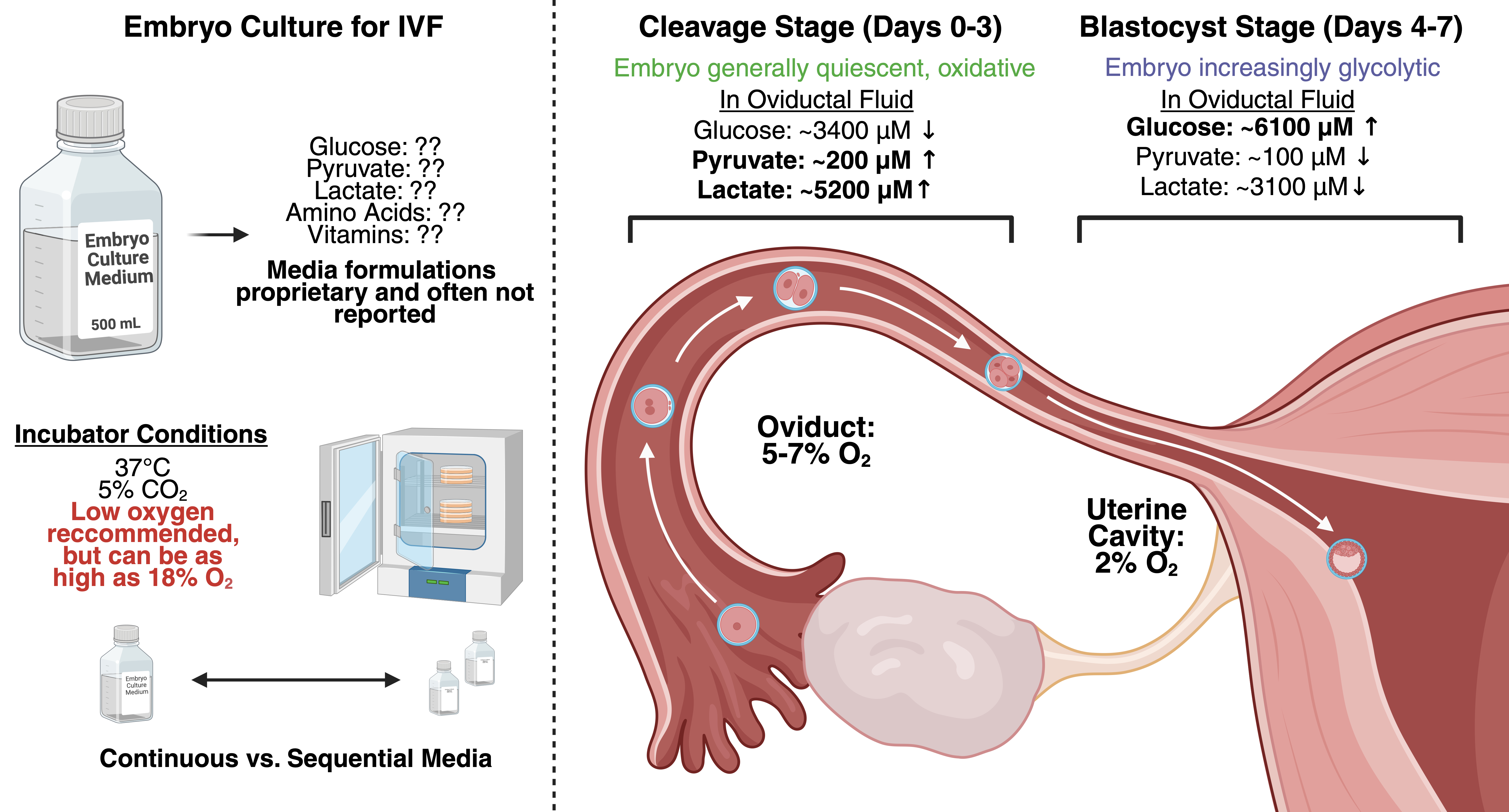
Applying the Lessons of Physiological Cell Culture to Human Embryo Culture for In Vitro Fertilization





Abstract
Share and Cite
Pokorski, A.; Alva, R.; Wiebe, J.E.; Stuart, J.A. Applying the Lessons of Physiological Cell Culture to Human Embryo Culture for In Vitro Fertilization. Biomolecules 2026, 16, 618. https://doi.org/10.3390/biom16050618
Pokorski A, Alva R, Wiebe JE, Stuart JA. Applying the Lessons of Physiological Cell Culture to Human Embryo Culture for In Vitro Fertilization. Biomolecules. 2026; 16(5):618. https://doi.org/10.3390/biom16050618
Chicago/Turabian StylePokorski, Abigail, Ricardo Alva, Jacob E. Wiebe, and Jeffrey A. Stuart. 2026. "Applying the Lessons of Physiological Cell Culture to Human Embryo Culture for In Vitro Fertilization" Biomolecules 16, no. 5: 618. https://doi.org/10.3390/biom16050618
APA StylePokorski, A., Alva, R., Wiebe, J. E., & Stuart, J. A. (2026). Applying the Lessons of Physiological Cell Culture to Human Embryo Culture for In Vitro Fertilization. Biomolecules, 16(5), 618. https://doi.org/10.3390/biom16050618