Structure–Activity Relationships, Molecular Mechanisms, and Ecotoxicological Evaluation Underlying Nucleoside-Mediated Antifouling Activity

 ,
,  ,
,  and
and 
Abstract
1. Introduction
2. Materials and Methods
2.1. General
2.2. Antifouling Activity
2.2.1. Settlement Inhibition of M. galloprovincialis Plantigrades
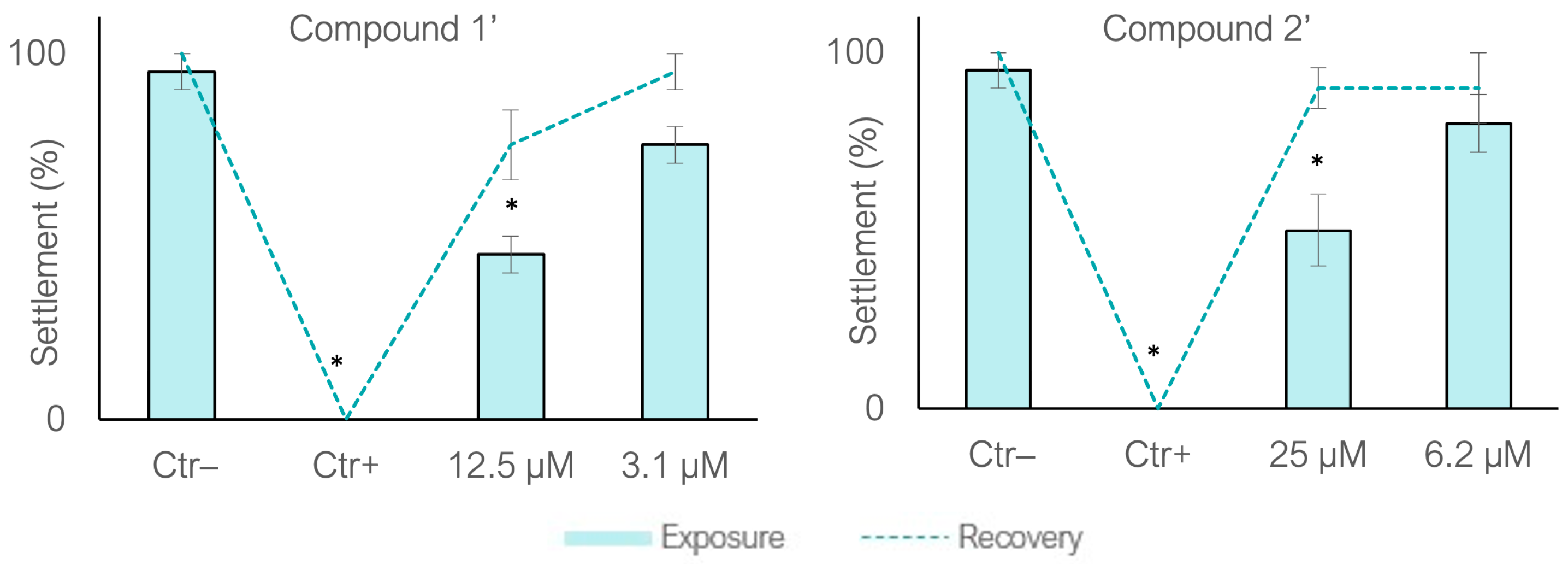
M. galloprovincialis Settlement Recovery
2.2.2. Growth Inhibition of Marine Bacteria and Diatom
2.3. Molecular Targets on M. galloprovincialis
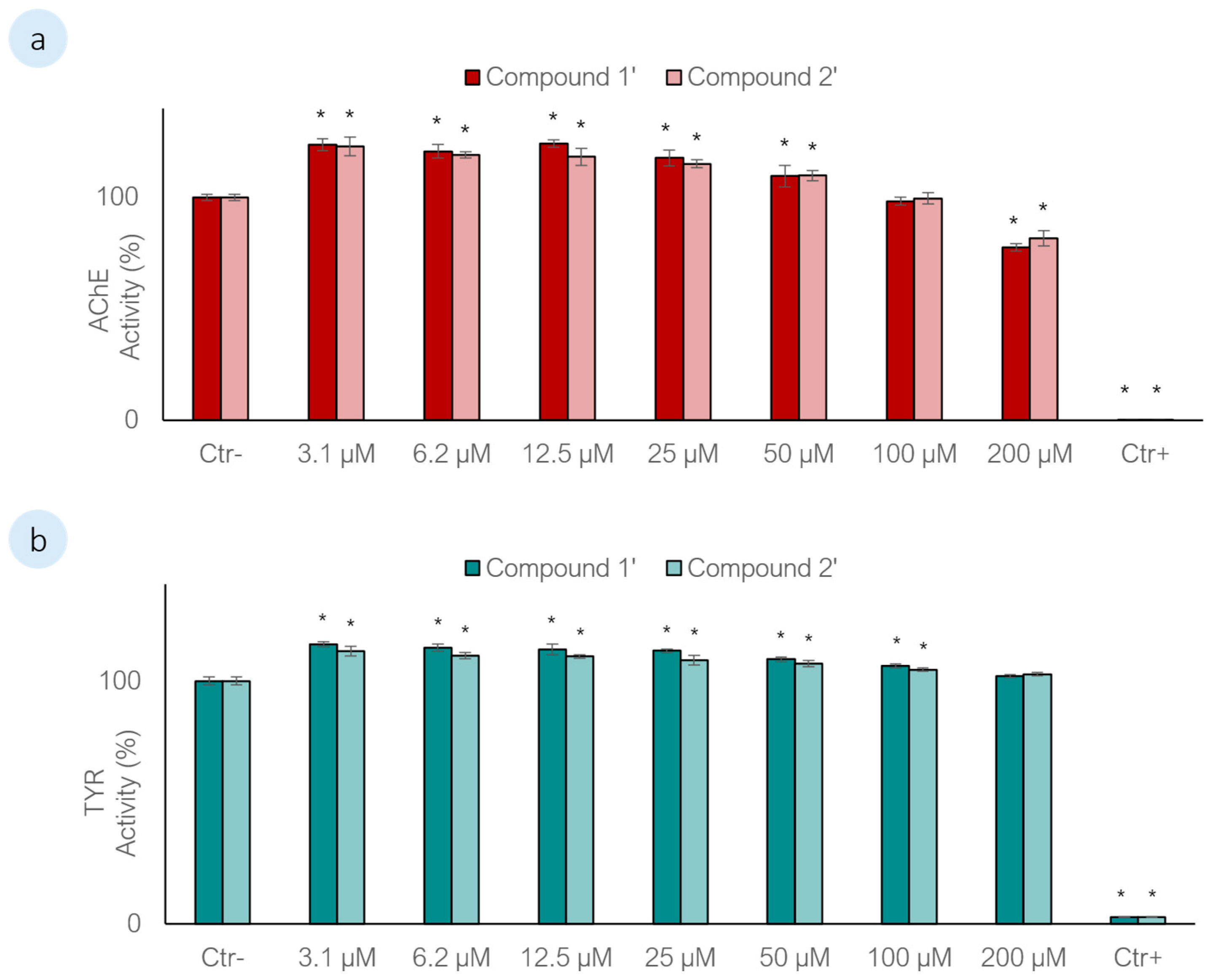
2.3.1. In Vitro TYR Activity
2.3.2. In Vitro AChE Activity
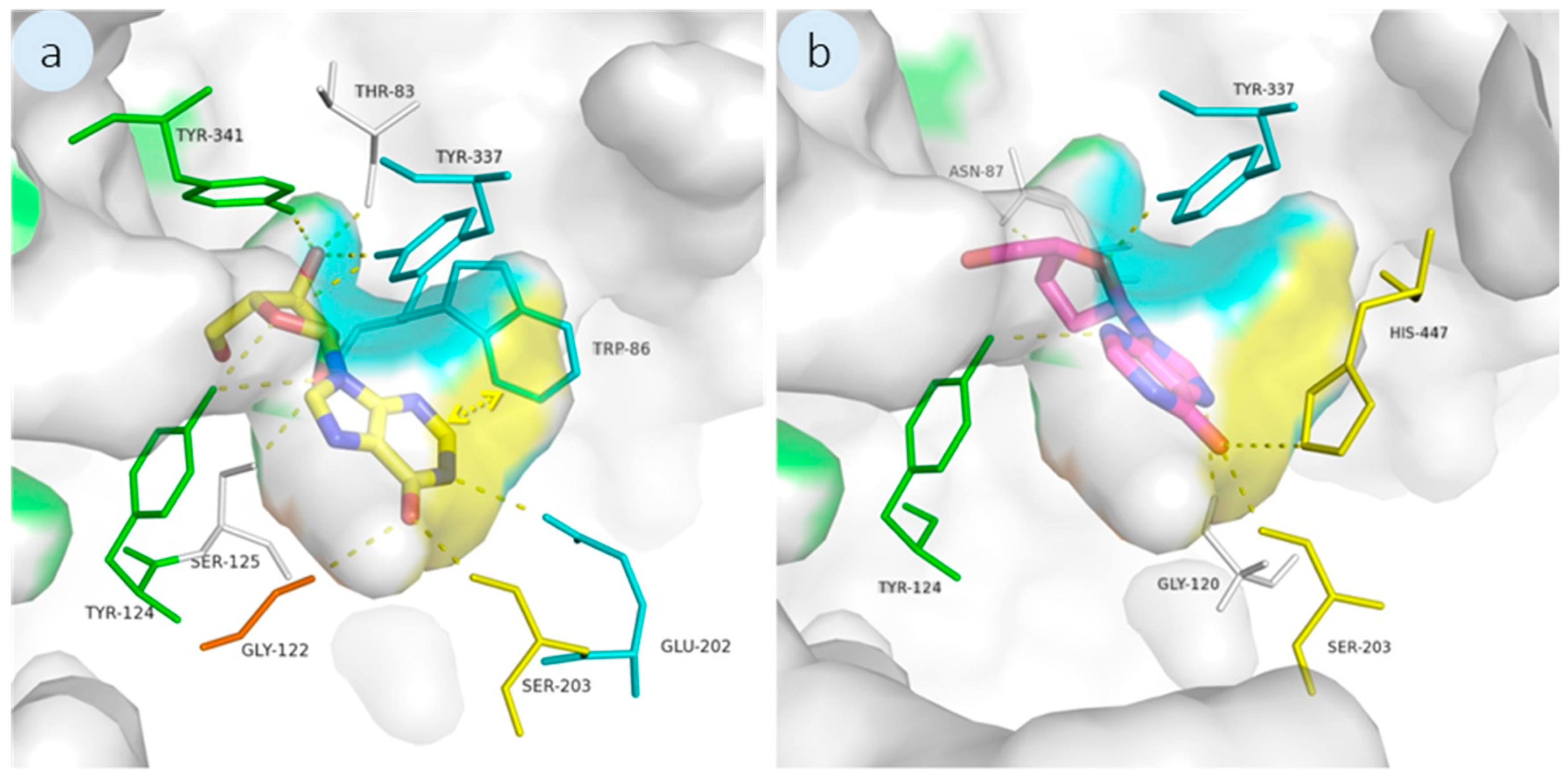
Docking Study of AChE
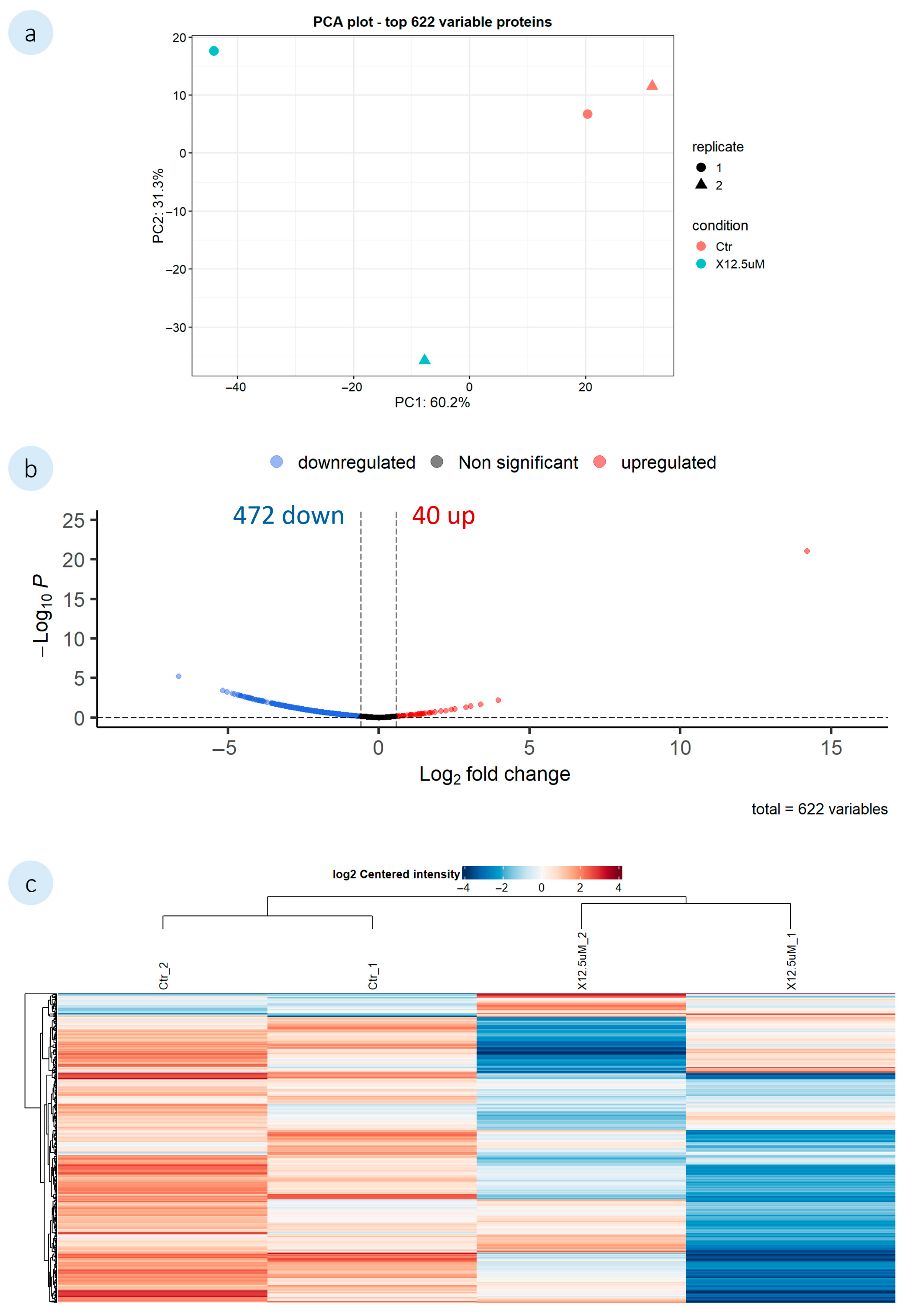
2.3.3. Untargeted Proteomic Analysis and Functional Enrichment of Mussel Plantigrades
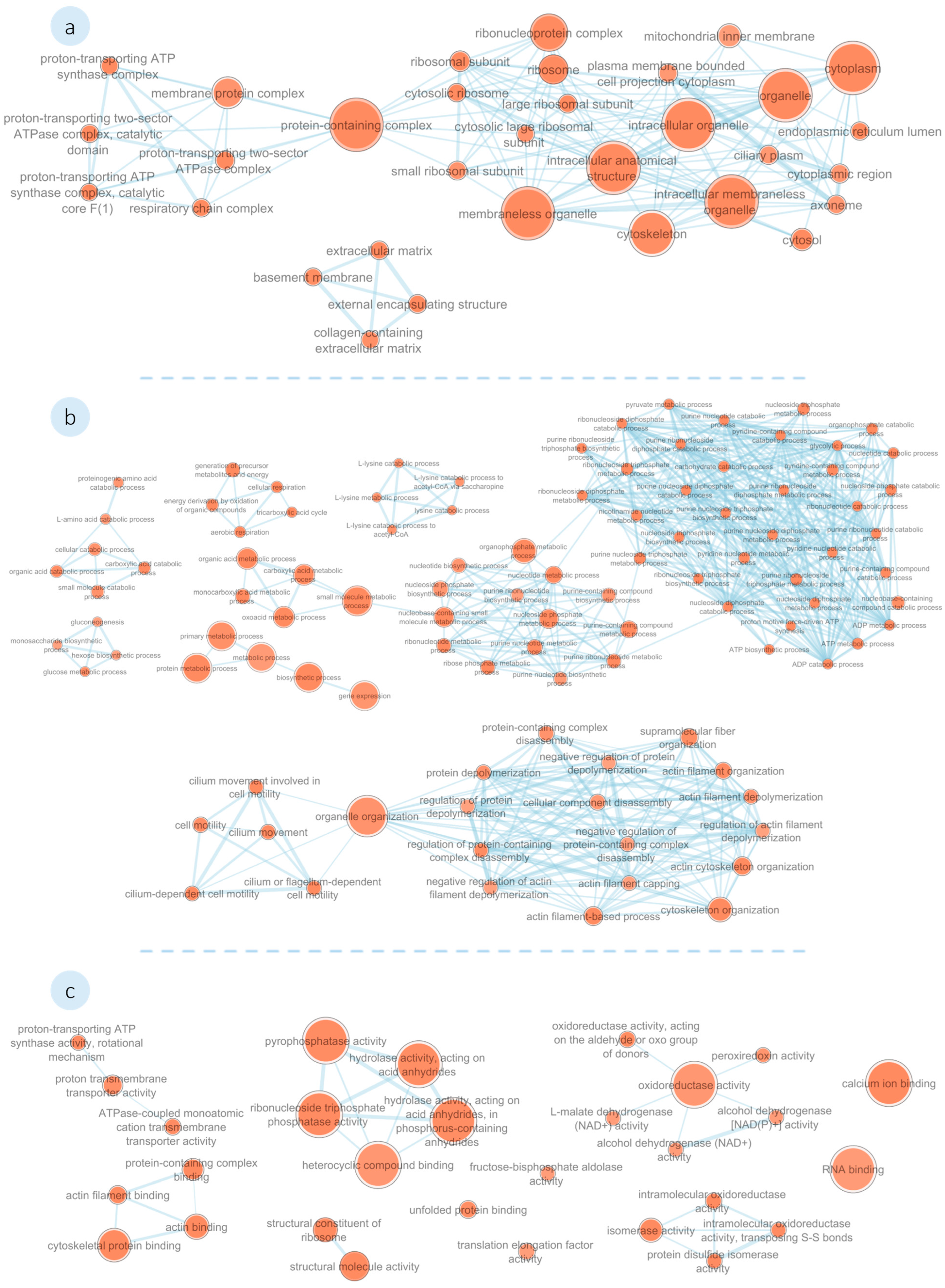
2.3.4. Bioinformatic Analysis
2.4. Environmental Behaviour
2.4.1. Artemia Salina Bioassay
2.4.2. Amphibalanus amphitrite Bioassay
2.4.3. In Silico Environmental Fate Predictions
2.5. Data Analysis
3. Results and Discussion
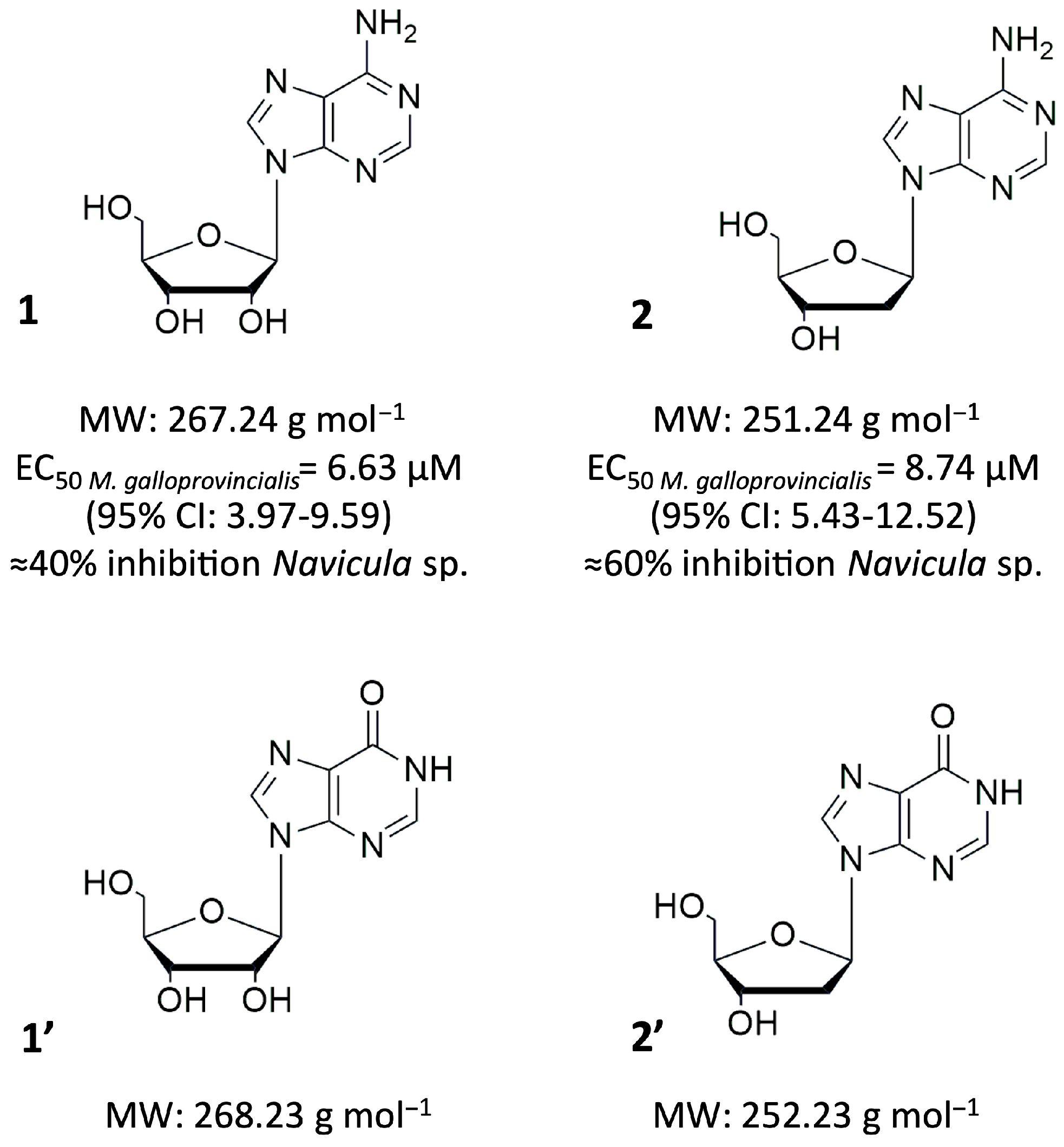
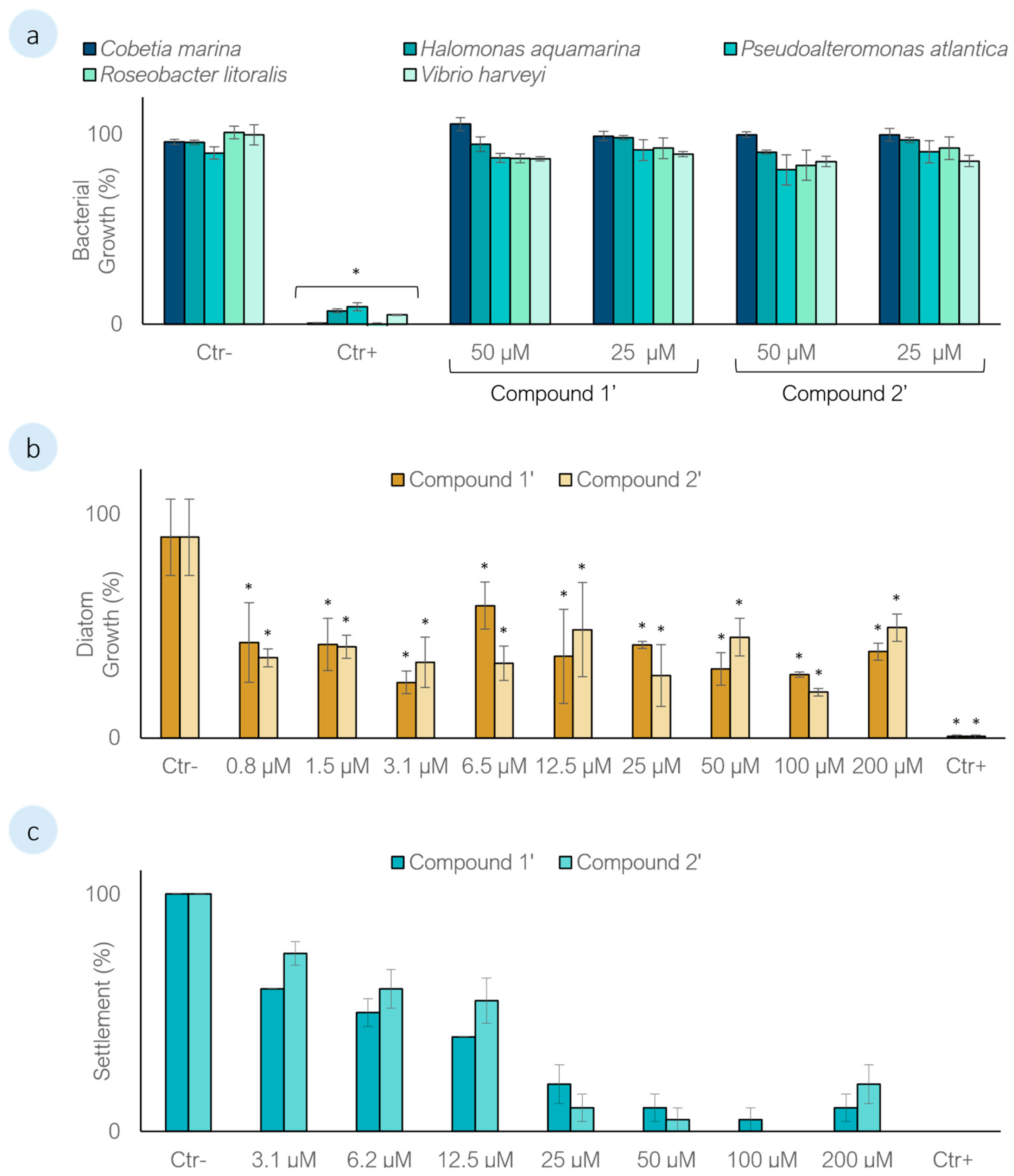
3.1. AF Activity and Toxicity Against Micro and Macrofouling Organisms
3.2. Putative Molecular Targets of the AF Activity on M. galloprovincialis Plantigrades
3.2.1. AChE and TYR Pathways
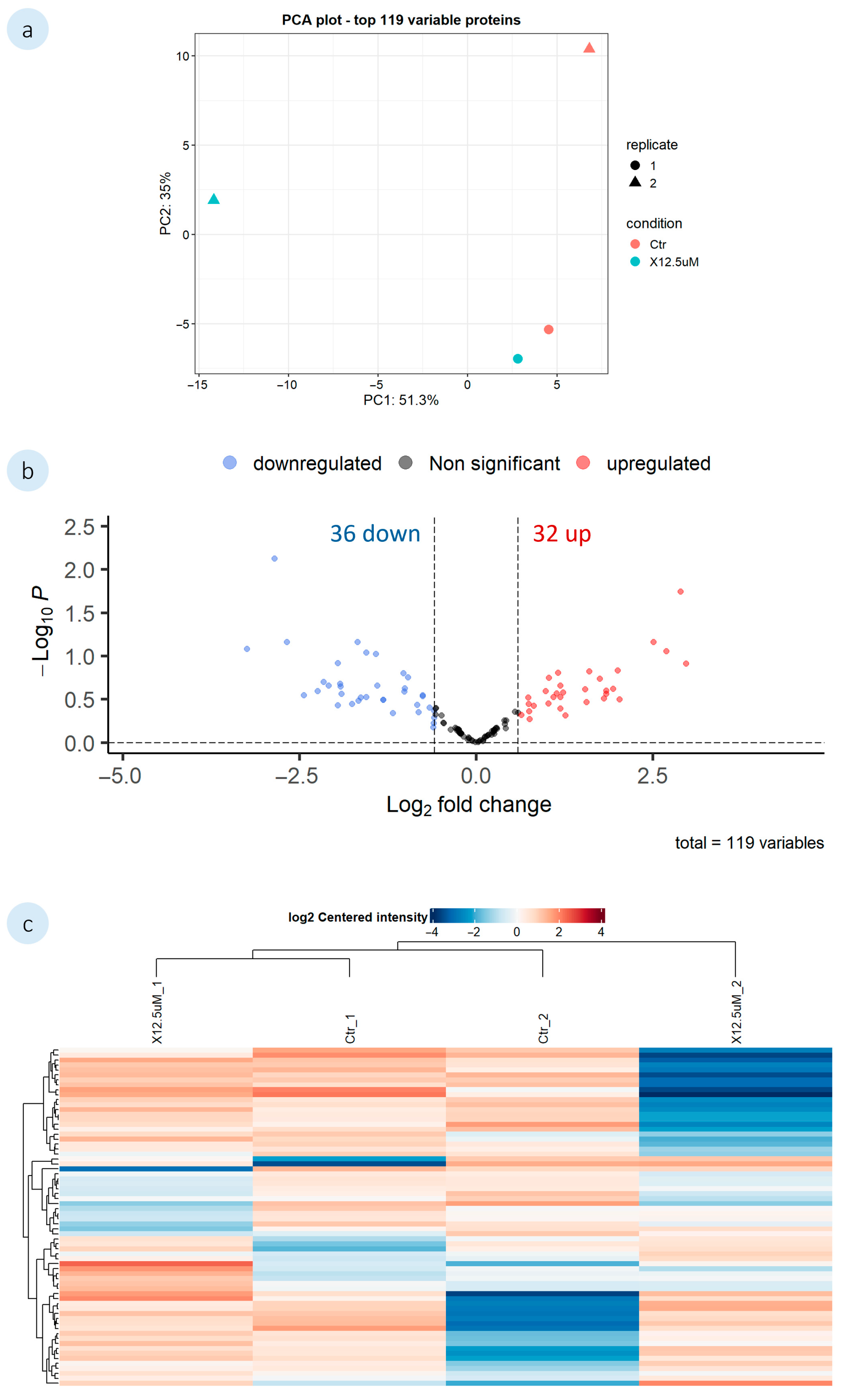
3.2.2. Mussel Plantigrades’ Untargeted Proteome Analysis
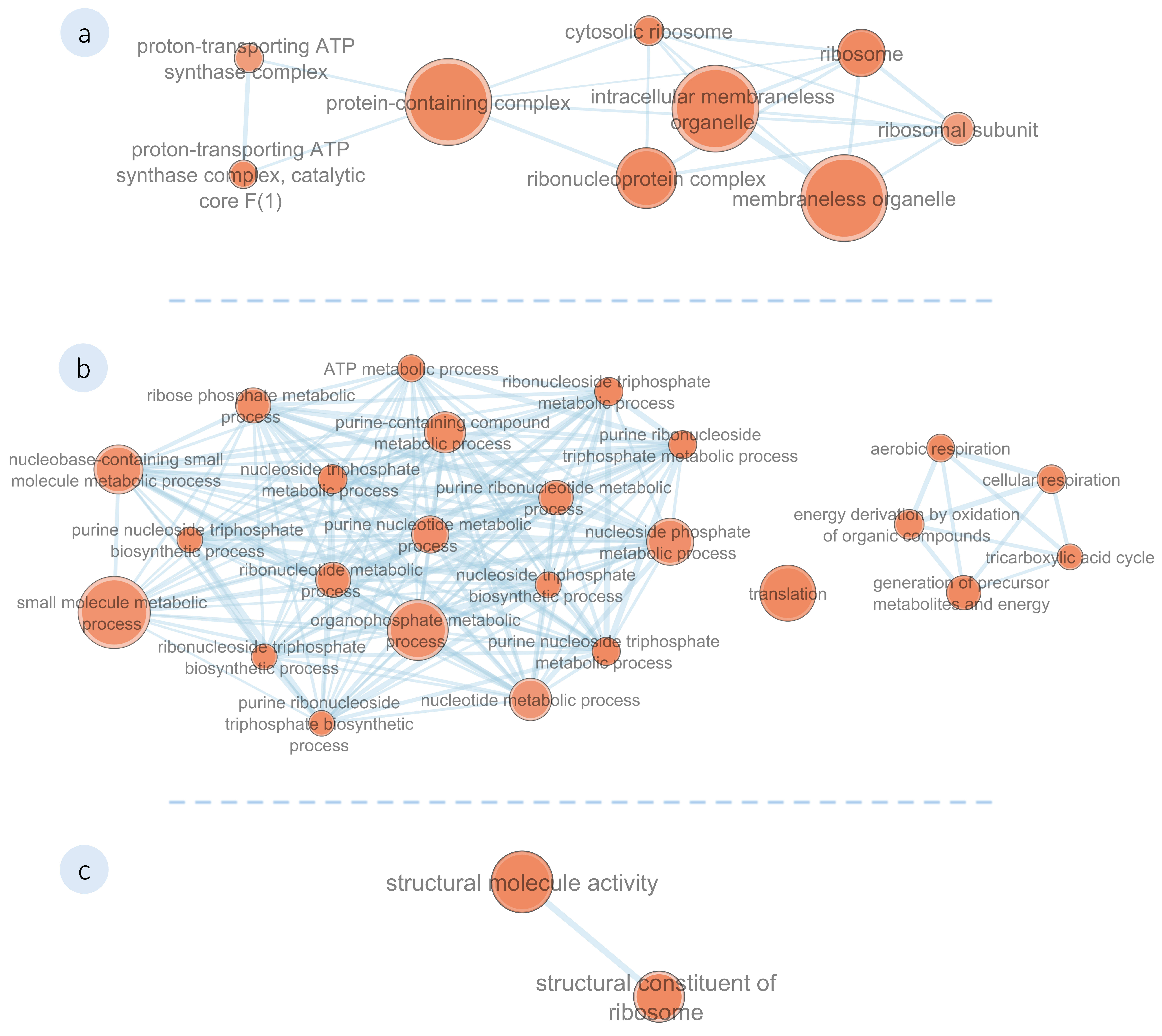
Functional Enrichment Analysis
3.3. Predicted Environmental Behavior of the Compounds
3.3.1. Toxicity Assessment of Target and Non-Target Organisms
3.3.2. Persistence, Bioaccumulation and Adsorption Predictions
4. Conclusions
Supplementary Materials
Author Contributions
Funding
Institutional Review Board Statement
Informed Consent Statement
Data Availability Statement
Conflicts of Interest
References
- Qiu, Q.; Gu, Y.; Ren, Y.; Ding, H.; Hu, C.; Wu, D.; Mou, J.; Wu, Z.; Dai, D. Research progress on eco-friendly natural antifouling agents and their antifouling mechanisms. Chem. Eng. J. 2024, 495, 153638. [Google Scholar] [CrossRef]
- Weber, F.; Esmaeili, N. Marine biofouling and the role of biocidal coatings in balancing environmental impacts. Biofouling 2023, 39, 661–681. [Google Scholar] [CrossRef]
- Paz-Villarraga, C.A.; Castro, Í.B.; Fillmann, G. Biocides in antifouling paint formulations currently registered for use. Environ. Sci. Pollut. Res. 2022, 29, 30090–30101. [Google Scholar] [CrossRef]
- Vilas-Boas, C.; Silva, E.R.; Resende, D.; Pereira, B.; Sousa, G.; Pinto, M.; Almeida, J.R.; Correia-da-Silva, M.; Sousa, E. 3,4-Dioxygenated xanthones as antifouling additives for marine coatings: In silico studies, seawater solubility, degradability, leaching, and antifouling performance. Environ. Sci. Pollut. Res. 2023, 30, 68987–68997. [Google Scholar] [CrossRef]
- European Commission: Deltares, ECORYS, European Climate, Infrastructure and Environment Executive Agency, Pescares Italia. Sustainability Criteria for the Blue Economy: Main Report; Publications Office of the European Union: Luxembourg, 2021; 69p, Available online: https://data.europa.eu/doi/10.2826/399476 (accessed on 30 March 2026).
- Pereira, D.; Almeida, J.R.; Cidade, H.; Correia-da-silva, M. Proof of Concept of Natural and Synthetic Antifouling Agents in Coatings. Mar. Drugs 2024, 22, 291. [Google Scholar] [CrossRef] [PubMed]
- Wang, K.L.; Wu, Z.H.; Wang, Y.; Wang, C.Y.; Xu, Y. Mini-review: Antifouling natural products from marine microorganisms and their synthetic analogs. Mar. Drugs 2017, 15, 1–21. [Google Scholar] [CrossRef] [PubMed]
- Cahill, P.L.; Moodie, L.W.K.; Hertzer, C.; Pinori, E.; Pavia, H.; Hellio, C.; Brimble, M.A.; Svenson, J. Creating New Antifoulants Using the Tools and Tactics of Medicinal Chemistry. Acc. Chem. Res. 2024, 57, 399–412. [Google Scholar] [CrossRef]
- Pereira, S.; Ferreira, L.; Oliveira, I.B.; Gonçalves, C.; Palmeira, A.; Turkina, M.; Vasconcelos, V.; Campos, A.; Reis, M.; Almeida, J.R. Bioassay-guided discovery of antifouling nucleosides from the cyanobacterium Leptothoe sp. LEGE 181152: Efficacy, molecular targets, and ecotoxicological assessment. Ecotoxicol. Environ. Saf. 2025, 305, 119175. [Google Scholar] [CrossRef] [PubMed]
- Wang, C.Y.; Wang, K.L.; Qian, P.Y.; Xu, Y.; Chen, M.; Zheng, J.J.; Liu, M.; Shao, C.L.; Wang, C.Y. Antifouling phenyl ethers and other compounds from the invertebrates and their symbiotic fungi collected from the South China Sea. AMB Express 2016, 6, 102. [Google Scholar] [CrossRef]
- Wu, J.S.; Yao, G.S.; Shi, X.H.; Rehman, S.U.; Xu, Y.; Fu, X.M.; Zhang, X.L.; Liu, Y.; Wang, C.Y. Epigenetic Agents Trigger the Production of Bioactive Nucleoside Derivatives and Bisabolane Sesquiterpenes From the Marine-Derived Fungus Aspergillus versicolor. Front. Microbiol. 2020, 11, 85. [Google Scholar] [CrossRef]
- Sallam, M.A.E.; Salem, D.M.S.A.; Labib, G.M.H.; Youssef, T.N.M.A.; Matsuo, K. Studies on saccharide benzimidazoles: 2-(β-D-gulofuranosyl)benzimidazole and 2-(β-D-glucofuranosyl)benzimidazole C-nucleoside analogs; synthesis, anomeric configuration and antifouling potency. Carbohydr. Res. 2020, 496, 108073. [Google Scholar] [CrossRef]
- Seley-Radtke, K.L.; Yates, M.K. The evolution of nucleoside analogue antivirals: A review for chemists and non-chemists. Part 1: Early structural modifications to the nucleoside scaffold. Antivir. Res. 2018, 154, 66–86. [Google Scholar] [CrossRef]
- Bryson, Y.J.; Connor, J.D. In vitro susceptibility of varicella zoster virus to adenine arabinoside and hypoxanthine arabinoside. Antimicrob. Agents Chemother. 1976, 9, 540–543. [Google Scholar] [CrossRef]
- Bhagavan, N.V.; Ha, C.E. Nucleotide Metabolism. In Essentials of Medical Biochemistry; Elsevier: Amsterdam, The Netherlands, 2011; pp. 333–354. [Google Scholar]
- Zhao, S.H.; Zhang, S.M.; Yang, J.W.; Liu, C.J.; Zeng, X.Q.; Zhang, Y.L.; Chen, S.Q.; Zhao, Z.M.; Xia, Y.X.; Li, X.R.; et al. Preliminary study on the active substances and cellular pathways of lactic acid bacteria for colorectal cancer treatment. J. Cancer 2024, 15, 4902–4921. [Google Scholar] [CrossRef]
- Liu, P.; Tan, X.Y.; Zhang, H.Q.; Su, K.L.; Shang, E.X.; Xiao, Q.L.; Guo, S.; Duan, J.A. Optimal compatibility proportional screening of Trichosanthis Pericarpium-Trichosanthis Radix and its anti-Inflammatory components effect on experimental zebrafish and coughing mice. J. Ethnopharmacol. 2024, 319, 117096. [Google Scholar] [CrossRef] [PubMed]
- Almeida, J.R.; Correia-Da-Silva, M.; Sousa, E.; Antunes, J.; Pinto, M.; Vasconcelos, V.; Cunha, I. Antifouling potential of Nature-inspired sulfated compounds. Sci. Rep. 2017, 7, 42424. [Google Scholar] [CrossRef] [PubMed]
- Antunes, J.; Pereira, S.; Ribeiro, T.; Plowman, J.E.; Thomas, A.; Clerens, S.; Campos, A.; Vasconcelos, V.; Almeida, J.R. A multi-bioassay integrated approach to assess the antifouling potential of the cyanobacterial metabolites portoamides. Mar. Drugs 2019, 17, 111. [Google Scholar] [CrossRef] [PubMed]
- Adhikari, A.; Devkota, H.P.; Takano, A.; Masuda, K.; Nakane, T.; Basnet, P.; Skalko-Basnet, N. Screening of Nepalese crude drugs traditionally used to treat hyperpigmentation: In vitro tyrosinase inhibition. Int. J. Cosmet. Sci. 2008, 30, 353–360. [Google Scholar] [CrossRef]
- Ellman, G.L.; Courtney, K.D.; Andres, V.; Featherstone, R.M. A new and rapid colorimetric determination of acetylcholinesterase activity. Biochem. Pharmacol. 1961, 7 IN1, 88–95. [Google Scholar] [CrossRef]
- Almeida, J.R.; Gravato, C.; Guilhermino, L. Biological parameters towards polycyclic aromatic hydrocarbons pollution: A study with dicentrarchus labrax L. exposed to the model compound benzo(a)pyrene. Water Air Soil Pollut. 2012, 223, 4709–4722. [Google Scholar] [CrossRef]
- Bourne, Y.; Grassi, J.; Bougis, P.E.; Marchot, P. Conformational flexibility of the acetylcholinesterase tetramer suggested by x-ray crystallography. J. Biol. Chem. 1999, 274, 30370–30376. [Google Scholar] [CrossRef]
- Trepos, R.; Cervin, G.; Hellio, C.; Pavia, H.; Stensen, W.; Stensvåg, K.; Svendsen, J.S.; Haug, T.; Svenson, J. Antifouling compounds from the sub-arctic ascidian synoicum pulmonaria: Synoxazolidinones A and C, pulmonarins A and B, and synthetic analogues. J. Nat. Prod. 2014, 77, 2105–2113. [Google Scholar] [CrossRef]
- Froimowitz, M. HyperChem: A software package for computational chemistry and molecular modeling. BioTecniques 1993, 14, 1010–1013. [Google Scholar]
- Trott, O.; Olson, A.J. AutoDock Vina: Improving the speed and accuracy of docking with a new scoring function, efficient optimization, and multithreading. J. Comput. Chem. 2010, 31, 455–461. [Google Scholar] [CrossRef]
- Lill, M.A.; Danielson, M.L. Computer-aided drug design platform using PyMOL. J. Comput. Aided Mol. Des. 2011, 25, 13–19. [Google Scholar] [CrossRef]
- Campos, A.; Danielsson, G.; Farinha, A.P.; Kuruvilla, J.; Warholm, P.; Cristobal, S. Shotgun proteomics to unravel marine mussel (Mytilus edulis) response to long-term exposure to low salinity and propranolol in a Baltic Sea microcosm. J. Proteom. 2016, 137, 97–106. [Google Scholar] [CrossRef]
- Wiśniewski, J.R.; Zougman, A.; Nagaraj, N.; Mann, M. Universal sample preparation method for proteome analysis. Nat. Methods 2009, 6, 359–362. [Google Scholar] [CrossRef]
- The UniProt Consortium. UniProt: The Universal Protein Knowledgebase in 2023. Nucleic Acids Res. 2023, 51, D523–D531. [Google Scholar] [CrossRef]
- Käll, L.; Storey, J.D.; Noble, W.S. Non-parametric estimation of posterior error probabilities associated with peptides identified by tandem mass spectrometry. Bioinformatics 2008, 24, 42–48. [Google Scholar] [CrossRef]
- Nesvizhskii, A.I.; Keller, A.; Kolker, E.; Aebersold, R. A statistical model for identifying proteins by tandem mass spectrometry. Anal. Chem. 2003, 75, 4646–4658. [Google Scholar] [CrossRef]
- Conesa, A.; Götz, S.; García-Gómez, J.M.; Terol, J.; Talón, M.; Robles, M. Blast2GO: A universal tool for annotation, visualization and analysis in functional genomics research. Bioinformatics 2005, 21, 3674–3676. [Google Scholar] [CrossRef]
- Götz, S.; García-Gómez, J.M.; Terol, J.; Williams, T.D.; Nagaraj, S.H.; Nueda, M.J.; Robles, M.; Talón, M.; Dopazo, J.; Conesa, A. High-throughput functional annotation and data mining with the Blast2GO suite. Nucleic Acids Res. 2008, 36, 3420–3435. [Google Scholar] [CrossRef]
- Conesa, A.; Götz, S. Blast2GO: A comprehensive suite for functional analysis in plant genomics. Int. J. Plant Genom. 2008, 2008, 619832. [Google Scholar] [CrossRef]
- Kolberg, L.; Raudvere, U.; Kuzmin, I.; Adler, P.; Vilo, J.; Peterson, H. G:Profiler-interoperable web service for functional enrichment analysis and gene identifier mapping (2023 update). Nucleic Acids Res. 2023, 51, W207–W212. [Google Scholar] [CrossRef]
- Shannon, P.; Markiel, A.; Ozier, O.; Baliga, N.S.; Wang, J.T.; Ramage, D.; Amin, N.; Schwikowski, B.; Ideker, T. Cytoscape: A software Environment for integrated models of biomolecular interaction networks. Genome Res. 2003, 13, 2498–2504. [Google Scholar] [CrossRef]
- Pereira, S.; Oliveira, I.B.; Sousa, M.L.; Gonçalves, C.; Preto, M.; Turkina, M.V.; Vasconcelos, V.; Campos, A.; Almeida, J.R. Antifouling activity and ecotoxicological profile of the cyanobacterial oxadiazine nocuolin A. Chemosphere 2024, 365, 143318. [Google Scholar] [CrossRef]
- US EPA. Estimation Programs Interface SuiteTM for Microsoft® Windows; United States Environmental Protection Agency: Washington, DC, USA, 2024. [Google Scholar]
- Rittschof, D.; Lai, C.H.; Kok, L.M.; Teo, S.L.M. Pharmaceuticals as antifoulants: Concept and principles. Biofouling 2003, 19, 207–212. [Google Scholar] [CrossRef]
- Team, R.C. R: A Language and Environment for Statistical Computing; R Foundation for Statistical Computing: Vienna, Austria, 2021; Available online: https://www.r-project.org/ (accessed on 30 March 2026).
- Zhang, X.; Smits, A.H.; Van Tilburg, G.B.A.; Ovaa, H.; Huber, W.; Vermeulen, M. Proteome-wide identification of ubiquitin interactions using UbIA-MS. Nat. Protoc. 2018, 13, 530–550. [Google Scholar] [CrossRef]
- Novotny, L.; Abdel-Hamid, M.; Hamza, H. Inosine and 2′-deoxyinosine and their synthetic analogues: Lipophilicity in the relation to their retention in reversed-phase liquid chromatography and the stability characteristics. J. Pharm. Biomed. Anal. 2000, 24, 125–132. [Google Scholar] [CrossRef]
- Ferreira, O.; Rijo, P.; Gomes, J.F.; Santos, R.; Monteiro, S.; Vilas-Boas, C.; Correia-da-Silva, M.; Almada, S.; Alves, L.G.; Bordado, J.C.; et al. Biofouling Inhibition with Grafted Econea Biocide: Toward a Nonreleasing Eco-Friendly Multiresistant Antifouling Coating. ACS Sustain. Chem. Eng. 2020, 8, 12–17. [Google Scholar] [CrossRef]
- Vilas-Boas, C.; Neves, A.R.; Carvalhal, F.; Pereira, S.; Calhorda, M.J.; Vasconcelos, V.; Pinto, M.; Sousa, E.; Almeida, J.R.; Silva, E.R.; et al. Multidimensional characterization of a new antifouling xanthone: Structure-activity relationship, environmental compatibility, and immobilization in marine coatings. Ecotoxicol. Environ. Saf. 2021, 228, 112970. [Google Scholar] [CrossRef]
- Neves, A.R.; Vilas Boas, C.; Gonçalves, C.; Vasconcelos, V.; Pinto, M.; Silva, E.R.; Sousa, E.; Almeida, J.R.; Correia-da-Silva, M. Gallic acid derivatives as inhibitors of mussel (Mytilus galloprovincialis) larval settlement: Lead optimization, biological evaluation and use in antifouling coatings. Bioorg. Chem. 2022, 126, 105911. [Google Scholar] [CrossRef]
- Qian, P.Y.; Li, Z.; Xu, Y.; Li, Y.; Fusetani, N. Mini-review: Marine natural products and their synthetic analogs as antifouling compounds: 2009–2014. Biofouling 2015, 31, 101–122. [Google Scholar] [CrossRef]
- Almeida, J.R.; Vasconcelos, V. Natural antifouling compounds: Effectiveness in preventing invertebrate settlement and adhesion. Biotechnol. Adv. 2015, 33, 343–357. [Google Scholar] [CrossRef]
- Wissner, J.L.; Almeida, J.; Grilo, I.R.; Oliveira, J.F.; Brízida, C.; Escobedo-Hinojosa, W.; Pissaridou, P.; Vasquez, M.I.; Cunha, I.; Sobral, R.G.; et al. Novel metabolite madeirone and neomarinone extracted from Streptomyces aculeoletus as marine antibiofilm and antifouling agents. Front. Chem. 2024, 12, 1425953. [Google Scholar] [CrossRef]
- Chen, L.; Qian, P.Y. Review on molecular mechanisms of antifouling compounds: An update since 2012. Mar. Drugs 2017, 15, 264. [Google Scholar] [CrossRef] [PubMed]
- Arabshahi, H.J.; Trobec, T.; Foulon, V.; Hellio, C.; Frangež, R.; Sepčić, K.; Cahill, P.; Svenson, J. Using Virtual AChE Homology Screening to Identify Small Molecules With the Ability to Inhibit Marine Biofouling. Front. Mar. Sci. 2021, 8, 762287. [Google Scholar] [CrossRef]
- Gaudêncio, S.P.; Pereira, F. Predicting Antifouling Activity and Acetylcholinesterase Inhibition of Marine-Derived Compounds Using a Computer-Aided Drug Design Approach. Mar. Drugs 2022, 20, 129. [Google Scholar] [CrossRef]
- Almeida, J.R.; Palmeira, A.; Campos, A.; Cunha, I.; Freitas, M.; Felpeto, A.B.; Turkina, M.V.; Vasconcelos, V.; Pinto, M.; Correia-da-Silva, M.; et al. Structure-antifouling activity relationship and molecular targets of bio-inspired(Thio)xanthones. Biomolecules 2020, 10, 1126. [Google Scholar] [CrossRef]
- Zhou, Y.; Wang, S.; Zhang, Y. Catalytic Reaction Mechanism of Acetylcholinesterase Determined by Born-Oppenheimer ab initio QM/MM Molecular Dynamics Simulations. J. Phys. Chem. B 2010, 114, 8817–8825. [Google Scholar] [CrossRef]
- Silman, I.; Sussman, J.L. Acetylcholinesterase: How is structure related to function? Chem. Biol. Interact. 2008, 175, 3–10. [Google Scholar] [CrossRef]
- Kua, J.; Zhang, Y.; Eslami, A.C.; Butler, J.R.; McCammon, J.A. Studying the roles of W86, E202, and Y337 in binding of acetylcholine to acetylcholinesterase using a combined molecular dynamics and multiple docking approach. Protein Sci. 2003, 12, 2675–2684. [Google Scholar] [CrossRef]
- Johnson, G.; Moore, S. The Peripheral Anionic Site of Acetylcholinesterase: Structure, Functions and Potential Role in Rational Drug Design. Curr. Pharm. Des. 2006, 12, 217–225. [Google Scholar] [CrossRef]
- Colovic, M.B.; Krstic, D.Z.; Lazarevic-Pasti, T.D.; Bondzic, A.M.; Vasic, V.M. Acetylcholinesterase Inhibitors: Pharmacology and Toxicology. Curr. Neuropharmacol. 2013, 11, 315–335. [Google Scholar] [CrossRef]
- Bourne, Y.; Taylor, P.; Radic, Z.; Marchot, P. Structural insights into ligand interactions at the acetylcholinesterase peripheral anionic site. EMBO J. 2003, 22, 1–12. [Google Scholar] [CrossRef]
- Tadesse, M.; Svenson, J.; Sepčić, K.; Trembleau, L.; Engqvist, M.; Andersen, J.H.; Jaspars, M.; Stensvåg, K.; Haug, T. Isolation and synthesis of pulmonarins A and B, acetylcholinesterase inhibitors from the colonial ascidian Synoicum pulmonaria. J. Nat. Prod. 2014, 77, 364–369. [Google Scholar] [CrossRef]
- Ortiz, J.E.; Pigni, N.B.; Andujar, S.A.; Roitman, G.; Suvire, F.D.; Enriz, R.D.; Tapia, A.; Bastida, J.; Feresin, G.E. Alkaloids from Hippeastrum argentinum and Their Cholinesterase-Inhibitory Activities: An in Vitro and in Silico Study. J. Nat. Prod. 2016, 79, 1241–1248. [Google Scholar] [CrossRef]
- Moraga-Nicolás, F.; Jara, C.; Godoy, R.; Iturriaga-Vásquez, P.; Venthur, H.; Quiroz, A.; Becerra, J.; Mutis, A.; Hormazábal, E. Rhodolirium andicola: A new renewable source of alkaloids with acetylcholinesterase inhibitory activity, a study from nature to molecular docking. Rev. Bras. Farmacogn. 2018, 28, 34–43. [Google Scholar] [CrossRef]
- Saxena, A.; Doctor, B.P.; Qian, N.; Kovach, I.M.; Kozikowski, A.P.; Pang, Y.P.; Vellom, D.C.; Radic, Z.; Quinn, D.; Taylor, P. Identification of amino acid residues involved in the binding of Huperzine A to cholinesterases. Protein Sci. 1994, 3, 1770–1778. [Google Scholar] [CrossRef]
- Bourne, Y.; Kolb, H.C.; Radić, Z.; Sharpless, K.B.; Taylor, P.; Marchot, P. Freeze-frame inhibitor captures acetylcholinesterase in a unique conformation. Proc. Natl. Acad. Sci. USA 2004, 101, 1449–1454. [Google Scholar] [CrossRef]
- Ranjan, A.; Chauhan, A.; Jindal, T. In-silico and in-vitro evaluation of human acetylcholinesterase inhibition by organophosphates. Environ. Toxicol. Pharmacol. 2018, 57, 131–140. [Google Scholar] [CrossRef]
- Zhang, Y.; Kua, J.; McCammon, J.A. Role of the catalytic triad and oxyanion hole in acetylcholinesterase catalysis: An ab initio QM/MM study. J. Am. Chem. Soc. 2002, 124, 10572–10577. [Google Scholar] [CrossRef] [PubMed]
- Ordentlich, A.; Barak, D.; Kronman, C.; Ariel, N.; Segall, Y.; Velan, B.; Shafferman, A. Functional characteristics of the oxyanion hole in human acetylcholinesterase. J. Biol. Chem. 1998, 273, 19509–19517. [Google Scholar] [CrossRef]
- Greenblatt, H.M.; Kryger, G.; Lewis, T.; Silman, I.; Sussman, J.L. Structure of acetylcholinesterase complexed with (-)-galanthamine at 2.3 Å resolution. FEBS Lett. 1999, 463, 321–326. [Google Scholar] [CrossRef]
- Loh, Z.H.; Kwong, H.C.; Lam, K.W.; Teh, S.S.; Ee, G.C.L.; Quah, C.K.; Ho, A.S.H.; Mah, S.H. New 3-O-substituted xanthone derivatives as promising acetylcholinesterase inhibitors. J. Enzym. Inhib. Med. Chem. 2021, 36, 627–639. [Google Scholar] [CrossRef]
- Gul, N.; Ahmad, S.; Ahmad, H.; Aziz, A.; Almehmadi, M.; Alsaiari, A.A.; Allahyani, M.; Shah, S.A.A.; Rahman, N.U.; Ahmad, M. New acetylcholinesterase inhibitors isolated from Delphinium uncinatum. Arab. J. Chem. 2023, 16, 104408. [Google Scholar] [CrossRef]
- Zhang, Z.; Lv, J.; Wang, Y.; Yu, H.; Guo, B.; Zhai, J.; Wang, C.; Zhao, Y.; Fan, F.; Luo, W. Static Binding and Dynamic Transporting-Based Design of Specific Ring-Chain-Ring Acetylcholinesterase Inhibitor: From Galantamine to Natural Product. Chem.—A Eur. J. 2023, 29, e202203363. [Google Scholar] [CrossRef]
- Karunakaran, K.B.; Thiyagaraj, A.; Santhakumar, K. Novel insights on acetylcholinesterase inhibition by Convolvulus pluricaulis, scopolamine and their combination in zebrafish. Nat. Prod. Bioprospect 2022, 12, 6. [Google Scholar] [CrossRef]
- Merzoug, A.; Boucherit, H.; Khaled, R.; Chefiri, A.; Chikhi, A.; Bensegueni, A. Molecular docking study of the acetylcholinesterase inhibition. Curr. Issues Pharm. Med. Sci. 2021, 34, 20–27. [Google Scholar] [CrossRef]
- Agathokleous, E.; Calabrese, E.J.; Barceló, D. Environmental hormesis: New developments. Sci. Total Environ. 2024, 906, 167450. [Google Scholar] [CrossRef] [PubMed]
- Pereira, D.; Palmeira, A.; Lima, É.; Vasconcelos, V.; Pinto, M.; Correia-da-Silva, M.; Almeida, J.R.; Cidade, H. Chalcone derivatives as promising antifoulants: Molecular optimization, bioactivity evaluation and performance in coatings. Ecotoxicol. Environ. Saf. 2024, 280, 116560. [Google Scholar] [CrossRef]
- Silverman, H.G.; Roberto, F.F. Understanding marine mussel adhesion. Mar. Biotechnol. 2007, 9, 661–681. [Google Scholar] [CrossRef] [PubMed]
- Miglioli, A.; Dumollard, R.; Balbi, T.; Besnardeau, L.; Canesi, L. Characterization of the main steps in first shell formation in Mytilus galloprovincialis: Possible role of tyrosinase. Proc. R. Soc. B Biol. Sci. 2019, 286, 20192043. [Google Scholar] [CrossRef]
- Cruz, M.A.; Yuan, H.; Lee, J.R.; Wise, R.J.; Handin, R.I. Interaction of the von Willebrand factor (vWF) with collagen: Localization of the primary collagen-binding site by analysis of recombinant vWF a domain polypeptides. J. Biol. Chem. 1995, 270, 10822–10827. [Google Scholar] [CrossRef]
- Sun, C.; Lucas, J.M.; Waite, J.H. Collagen-binding matrix proteins from elastomeric extraorganismic byssal fibers. Biomacromolecules 2002, 3, 1240–1248. [Google Scholar] [CrossRef]
- Yoo, H.Y.; Song, Y.H.; Foo, M.; Seo, E.; Hwang, D.S.; Seo, J.H. Recombinant mussel proximal thread matrix protein promotes osteoblast cell adhesion and proliferation. BMC Biotechnol. 2016, 16, 16. [Google Scholar] [CrossRef] [PubMed]
- Waite, J.H. Mussel adhesion—Essential footwork. J. Exp. Biol. 2017, 220, 517–530. [Google Scholar] [CrossRef]
- Shimizu, K.; Negishi, L.; Kurumizaka, H.; Suzuki, M. Diversification of von Willebrand Factor A and Chitin-Binding Domains in Pif/BMSPs Among Mollusks. J. Mol. Evol. 2024, 92, 415–431. [Google Scholar] [CrossRef]
- Suhre, M.H.; Gertz, M.; Steegborn, C.; Scheibel, T. Structural and functional features of a collagen-binding matrix protein from the mussel byssus. Nat. Commun. 2014, 5, 3392. [Google Scholar] [CrossRef]
- Li, S.; Xia, Z.; Chen, Y.; Gao, Y.; Zhan, A. Byssus structure and protein composition in the highly invasive Fouling Mussel Limnoperna fortunei. Front. Physiol. 2018, 9, 418. [Google Scholar] [CrossRef]
- Hwang, D.S.; Waite, J.H. Three intrinsically unstructured mussel adhesive proteins, mfp-1, mfp-2, and mfp-3: Analysis by circular dichroism. Protein Sci. 2012, 21, 1689–1695. [Google Scholar] [CrossRef]
- Inoue, K.; Waite, J.H.; Matsuoka, M.; Odo, S.; Harayama, S. Interspecific Variations in Adhesive Protein Sequences of Mytilus edulis, M. galloprovincialis, and M. trossulus. Biol. Bull. 1995, 189, 370–375. [Google Scholar] [CrossRef]
- Hwang, D.S.; Zeng, H.; Masic, A.; Harrington, M.J.; Israelachvili, J.N.; Waite, J.H. Protein- and metal-dependent interactions of a prominent protein in mussel adhesive plaques. J. Biol. Chem. 2010, 285, 25850–25858. [Google Scholar] [CrossRef]
- Osellame, L.D.; Blacker, T.S.; Duchen, M.R. Cellular and molecular mechanisms of mitochondrial function. Best. Pract. Res. Clin. Endocrinol. Metab. 2012, 26, 711–723. [Google Scholar] [CrossRef]
- Grossman-haham, I.; Coudray, N.; Yu, Z.; Wang, F.; Zhang, N.; Vale, R.D. Structure of the radial spoke head and inshight into its role in mechanoregulation of ciliary beating. Nat. Struct. Mol. Biol. 2021, 28, 20–28. [Google Scholar] [CrossRef] [PubMed]
- Dral, A.D.G. Movements and co-ordination of the latero-frontal cilia of the gill filaments of Mytilus. Nature 1966, 210, 1170–1171. [Google Scholar] [CrossRef]
- Cannuel, R.; Beninger, P.G.; McCombie, H.; Boudry, P. Gill Development and Its Functional and Evolutionary Implications in the Blue Mussel Mytilus edulis (Bivalvia: Mytilidae). Biol. Bull. 2009, 217, 173–188. [Google Scholar] [CrossRef] [PubMed]
- Sivasundarampillai, J.; Youssef, L.; Priemel, T.; Mikulin, S.; Eren, E.D.; Zaslansky, P.; Jehle, F.; Harrington, M.J. A strong quick-release biointerface in mussels mediated by serotonergic cilia-based adhesion. Science 2023, 382, 829–834. [Google Scholar] [CrossRef]
- Andrade, G.; Araújo, J.; Nakamura, A.; Guañabens, A.; Carvalho, M.; Cardoso, A. Functional Surface of the golden mussel’ s foot: Morphology, structures and the role of cilia on underwater adhesion. Mater. Sci. Eng. C 2015, 54, 32–42. [Google Scholar] [CrossRef]
- ECHA. Part C: PBT/vPvB Assessment. Guidance on Information Requirements and Chemical Safety Assessment; ECHA: Helsinki, Finland, 2017. [Google Scholar]





| Target Species | EC50 (µM; µg mL−1) | LC50 (µM; µg mL−1) | LC50/EC50 | |
|---|---|---|---|---|
| 1′ | M. galloprovincialis | 5.50 (95% CI: 2.85—8.50); 1.47 | >200; >53.60 | >36.38 |
| Navicula sp. | n.a. | n.a. | ||
| 2′ | M. galloprovincialis | 8.54 (95% CI: 3.54–14.95); 2.15 | >200; >50.40 | >23.41 |
| Navicula sp. | n.a. | n.a. |
| Compounds | LC50 (µM; µg mL−1) | ||||
|---|---|---|---|---|---|
| Target Species | Non-Target Species | ||||
| Marine biolfilm-forming bacteria | Navicula sp. | M. galloprovincialis | A. salina | A. amphithrite | |
| 1′ | >50; 13.40 | >200; >53.60 | >200; >53.60 | >50; 13.40 | >32; >8 |
| 2′ | >50; 12.60 | >200; >50.40 | >200; >50.40 | >50; 12.60 | >32; >8 |
| 1 [9] | >50; 13.36 | >200; 53.45 | >200; 53.45 | >50; 13.36 | >32; >8 |
| 2 [9] | >50; 12.56 | >200; 50.25 | >200; 50.25 | >50; 12.56 | >32; >8 |
| BIOWIN™ | KOCWIN™ | KOWWIN™ | BCFBAF™ | ||||
|---|---|---|---|---|---|---|---|
| Compound | Ultimate Biodegradation (3) | Aerobic Conditions (4) | MITI Linear Model (5) | Anaerobic Conditions (7) | Log Koc | Log Kow | BCF (LKg/Wet-Wt) |
| 1′ | Weeks (3.02) | Days (4.04) | RB a (0.64) | BF b (0.54) | −1.00 | −1.84 | 3.16 |
| 2′ | Weeks (2.90) | Days (3.94) | RB a (0.54) | DNBF c (0.24) | −0.79 | −1.18 | 3.16 |
Disclaimer/Publisher’s Note: The statements, opinions and data contained in all publications are solely those of the individual author(s) and contributor(s) and not of MDPI and/or the editor(s). MDPI and/or the editor(s) disclaim responsibility for any injury to people or property resulting from any ideas, methods, instructions or products referred to in the content. |
© 2026 by the authors. Licensee MDPI, Basel, Switzerland. This article is an open access article distributed under the terms and conditions of the Creative Commons Attribution (CC BY) license.
Share and Cite
Pereira, S.; Oliveira, I.B.; Palmeira, A.; Turkina, M.V.; Vasconcelos, V.; Campos, A.; Almeida, J.R. Structure–Activity Relationships, Molecular Mechanisms, and Ecotoxicological Evaluation Underlying Nucleoside-Mediated Antifouling Activity. Biomolecules 2026, 16, 584. https://doi.org/10.3390/biom16040584
Pereira S, Oliveira IB, Palmeira A, Turkina MV, Vasconcelos V, Campos A, Almeida JR. Structure–Activity Relationships, Molecular Mechanisms, and Ecotoxicological Evaluation Underlying Nucleoside-Mediated Antifouling Activity. Biomolecules. 2026; 16(4):584. https://doi.org/10.3390/biom16040584
Chicago/Turabian StylePereira, Sandra, Isabel B. Oliveira, Andreia Palmeira, Maria V. Turkina, Vitor Vasconcelos, Alexandre Campos, and Joana R. Almeida. 2026. "Structure–Activity Relationships, Molecular Mechanisms, and Ecotoxicological Evaluation Underlying Nucleoside-Mediated Antifouling Activity" Biomolecules 16, no. 4: 584. https://doi.org/10.3390/biom16040584
APA StylePereira, S., Oliveira, I. B., Palmeira, A., Turkina, M. V., Vasconcelos, V., Campos, A., & Almeida, J. R. (2026). Structure–Activity Relationships, Molecular Mechanisms, and Ecotoxicological Evaluation Underlying Nucleoside-Mediated Antifouling Activity. Biomolecules, 16(4), 584. https://doi.org/10.3390/biom16040584