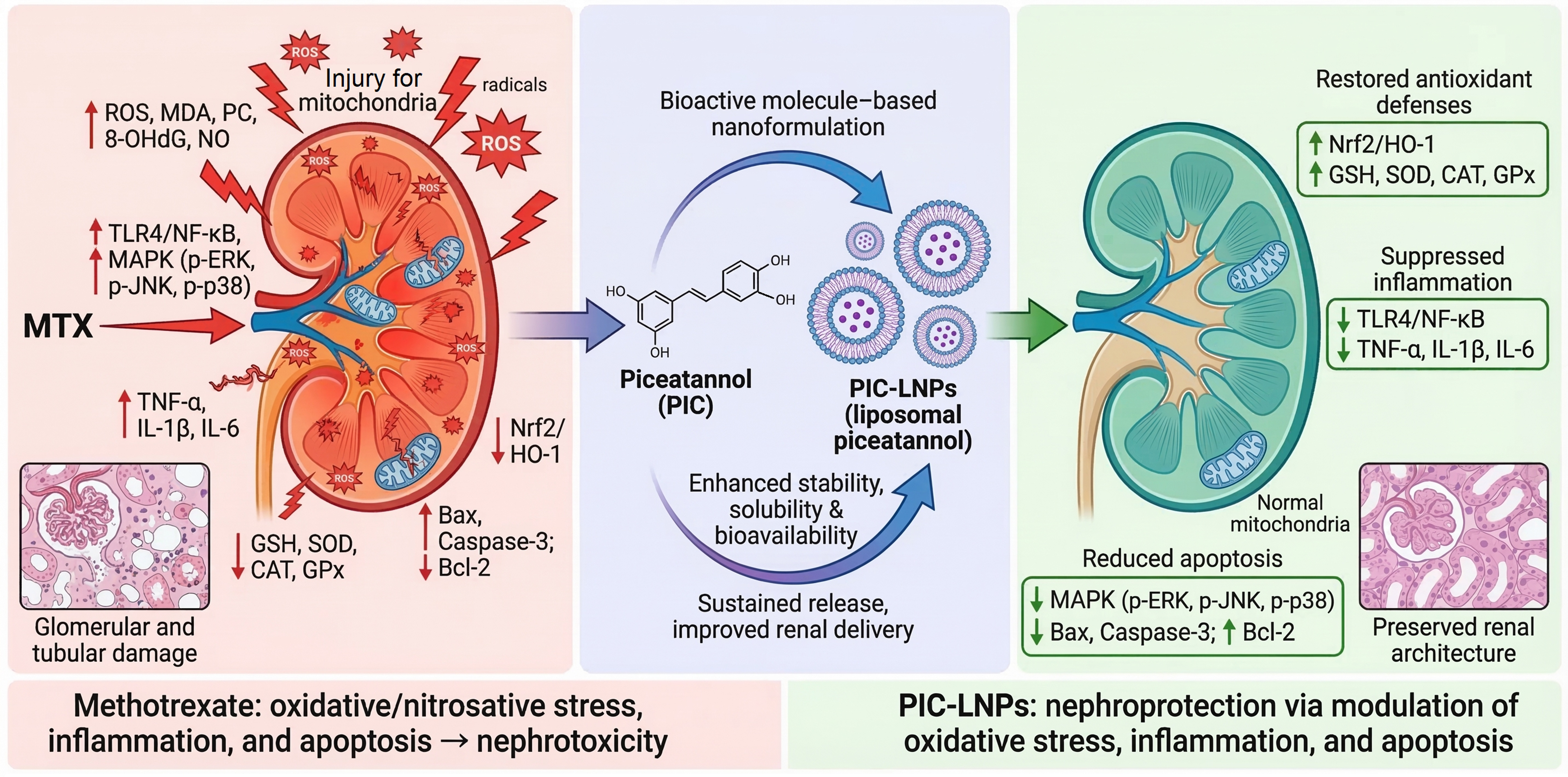
Liposomal Piceatannol Mitigates Methotrexate-Induced Oxidative Renal Injury via Modulation of Nrf2/HO-1, TLR4/NF-κB, MAPK, and Apoptotic Pathways in Rats
 , , , ,
  ,
,  and
and
Abstract
1. Introduction
2. Materials and Methods
2.1. Drugs
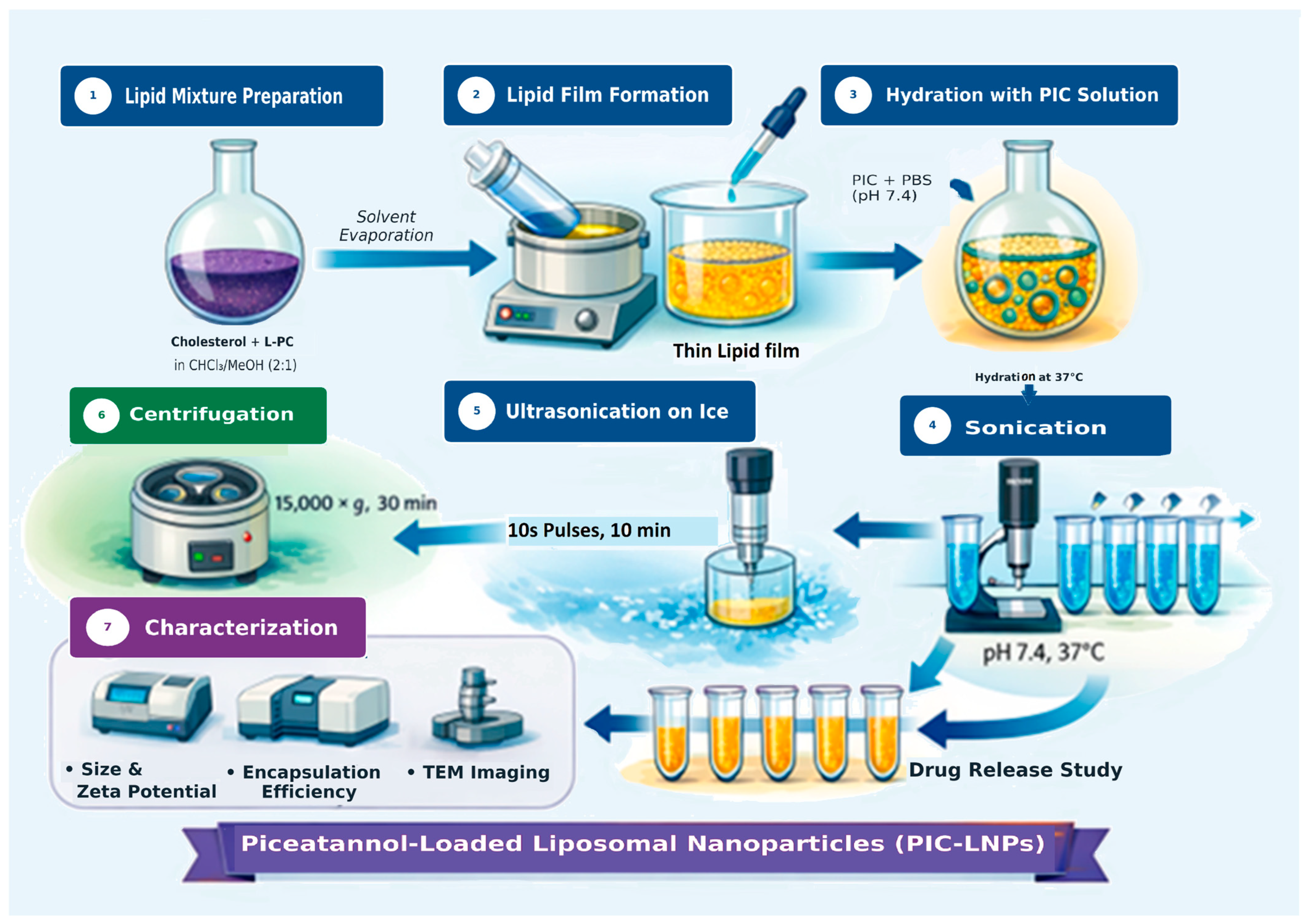
2.2. Preparation of Piceatannol-Loaded Liposomal Nanoparticles (PIC-LNPs)
2.3. Encapsulation Efficiency and Drug Loading
2.4. Fourier Transform Infrared Spectroscopy (FTIR)
2.5. In Vitro Drug Release
2.6. Experimental Animals
2.7. Study Design and Treatments
- (1)
- Control: received vehicle only.
- (2)
- PIC: intraperitoneal (i.p.) PIC (20 mg/kg) once daily for 7 days.
- (3)
- PIC-LNPs: i.p. PIC-LNPs (20 mg/kg equivalent PIC) once daily for 7 days.
- (4)
- MTX: single i.p. MTX dose (20 mg/kg) on day 1.
- (5)
- PIC + MTX: MTX as above, followed by i.p. PIC (20 mg/kg) once daily for 5 days.
- (6)
- PIC-LNPs + MTX: MTX as above, followed by i.p. PIC-LNPs (20 mg/kg equivalent PIC) once daily for 5 days.
2.8. Tissue Collection and Processing
2.9. Assessment of Kidney Function
2.10. Antioxidant Defenses and Oxidative Stress Markers
2.11. Inflammatory Mediators and Nitrosative Stress
2.12. Apoptotic Markers
2.13. Phosphorylated MAPK Proteins
2.14. RNA Extraction and RT-qPCR
2.15. Histopathology
2.16. Transmission Electron Microscope
2.17. NRF2 and NF-κB Immunohistochemical Analysis
2.18. Blinding and Statistical Analysis
3. Results
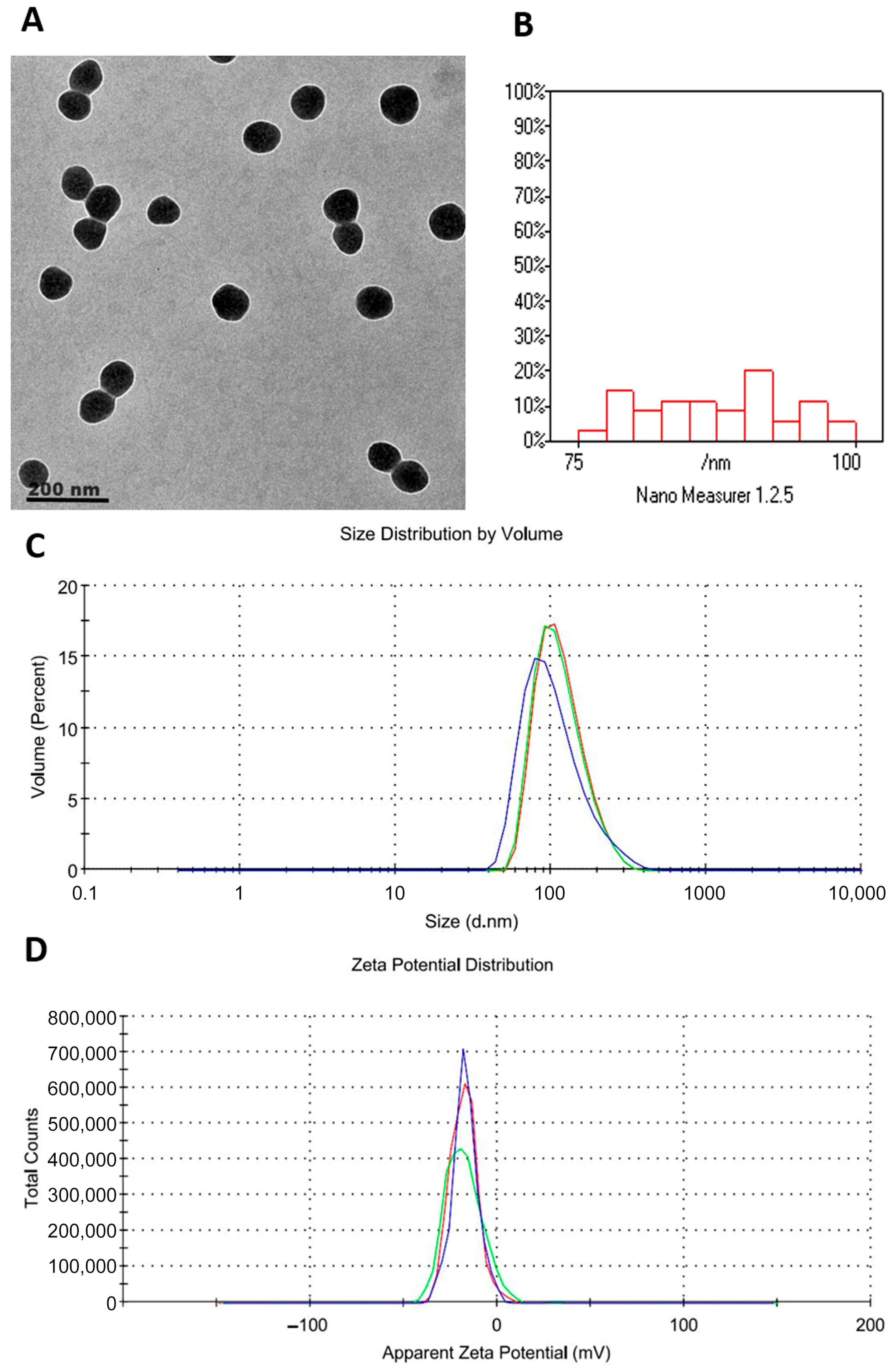
3.1. Physicochemical Characterization of PIC-LNPs
3.2. Encapsulation Efficiency and Drug Loading Results
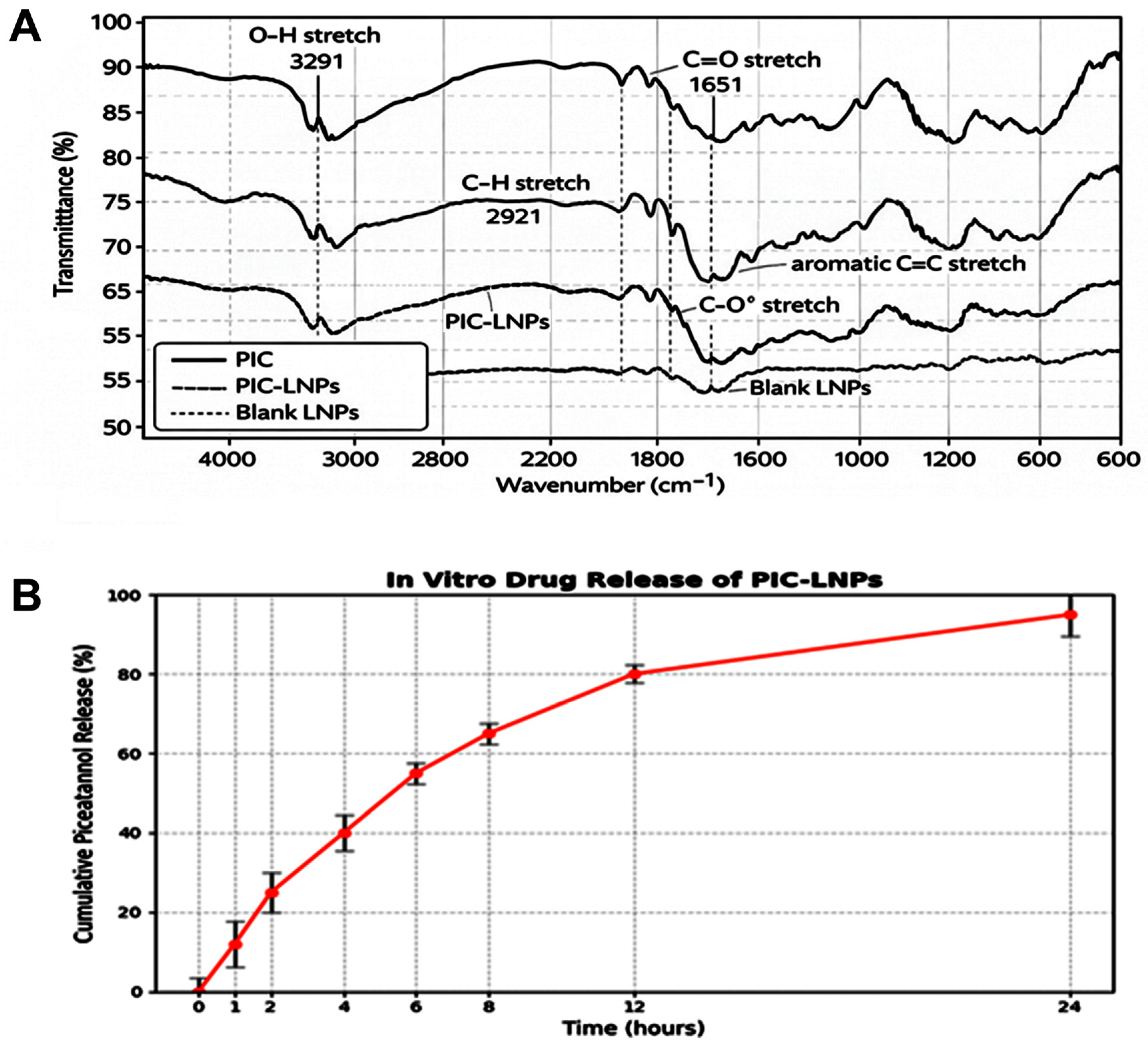
3.3. Fourier Transform Infrared Spectroscopy (FTIR) Analysis
3.4. In Vitro Drug Release Results
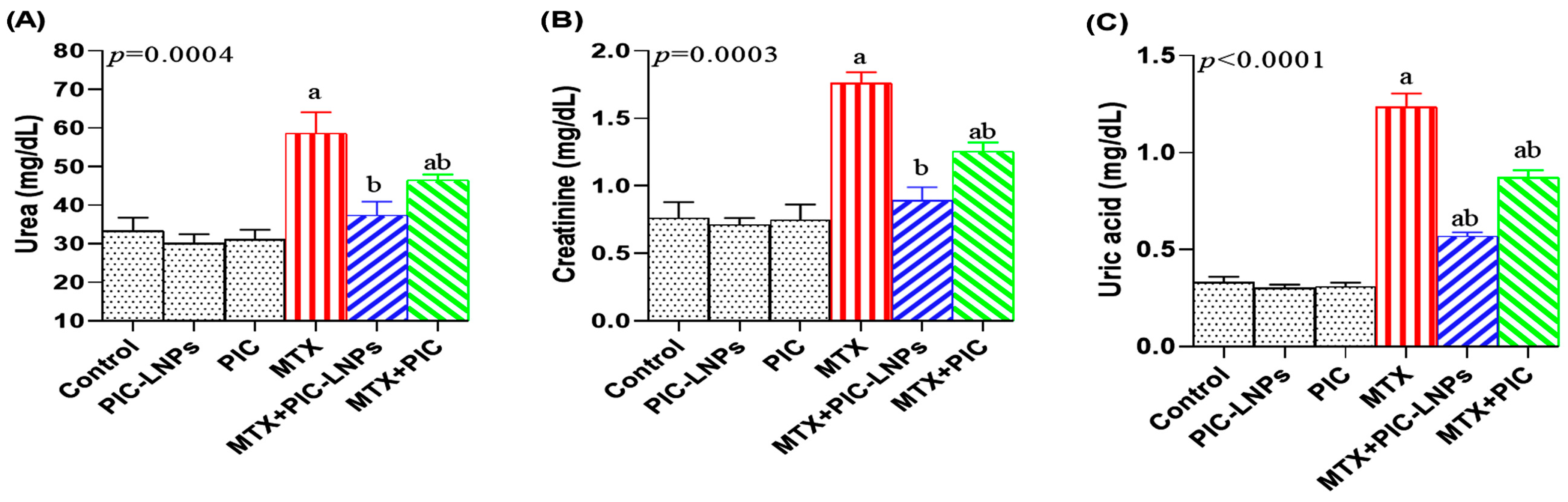
3.5. Effect of PIC Formulations on Renal Function Biomarkers
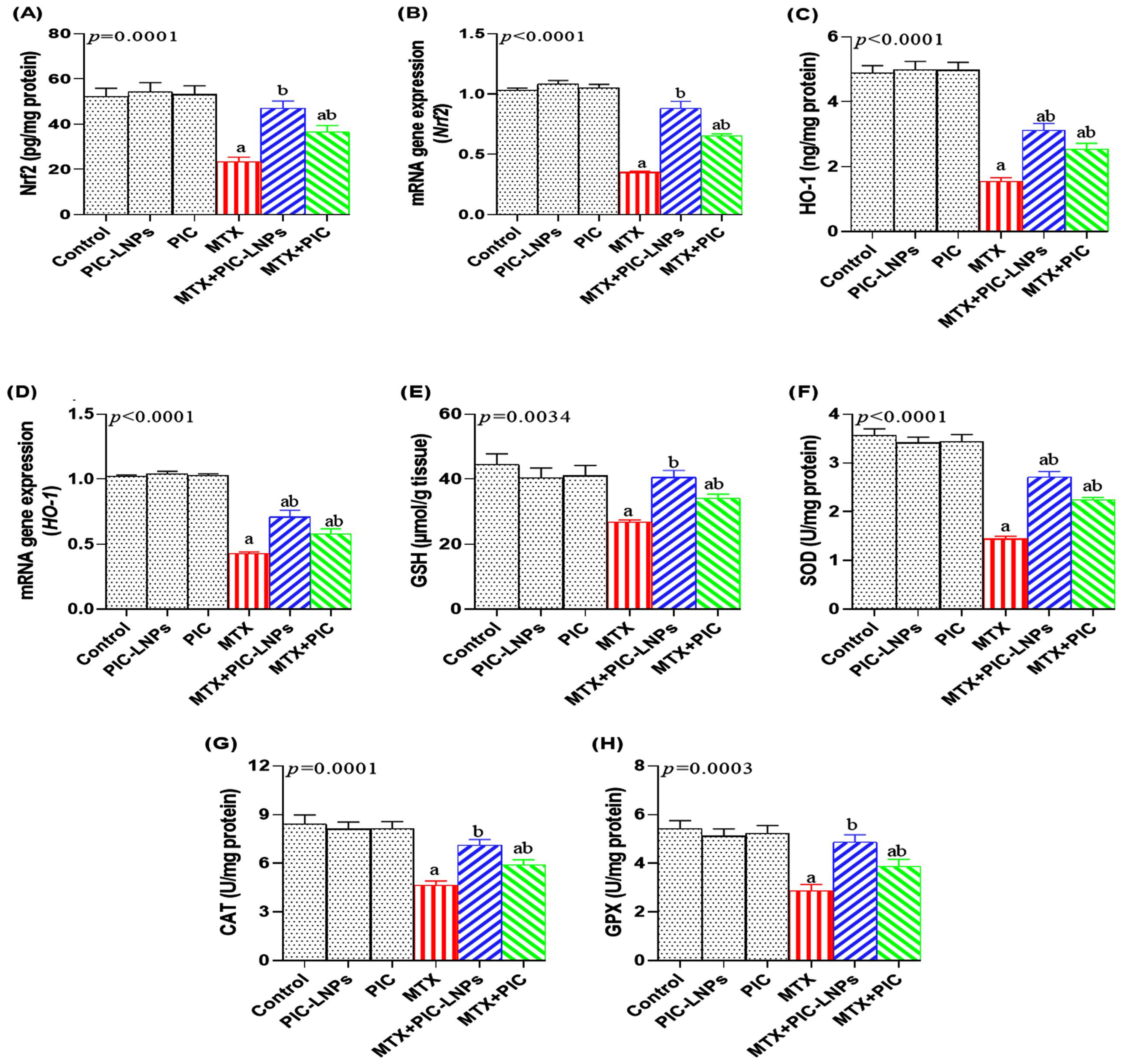
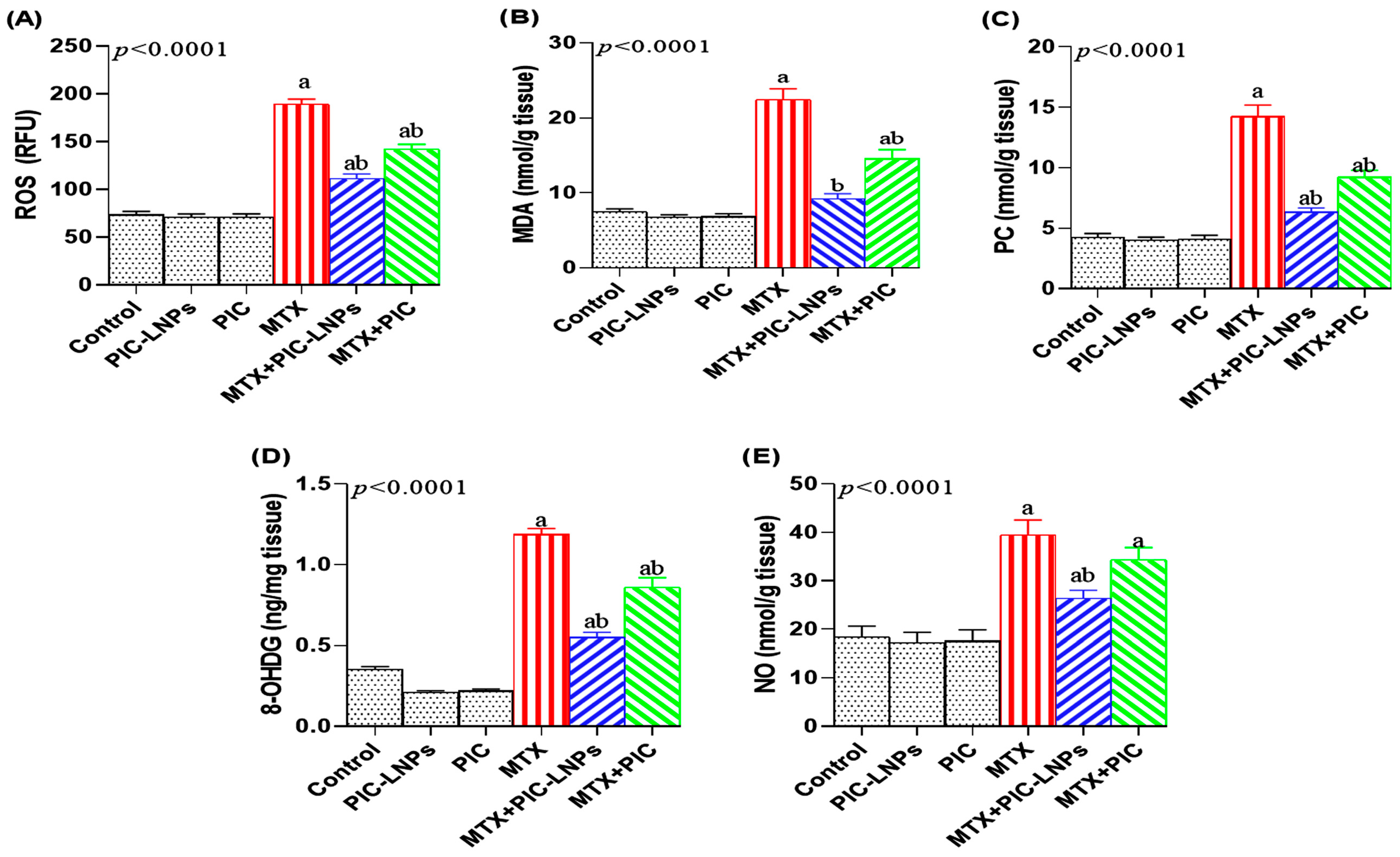
3.6. Effect of PIC Formulations on Renal Nrf2/HO-1 Signaling, Antioxidant Defenses, and Oxidative/Nitrosative Stress
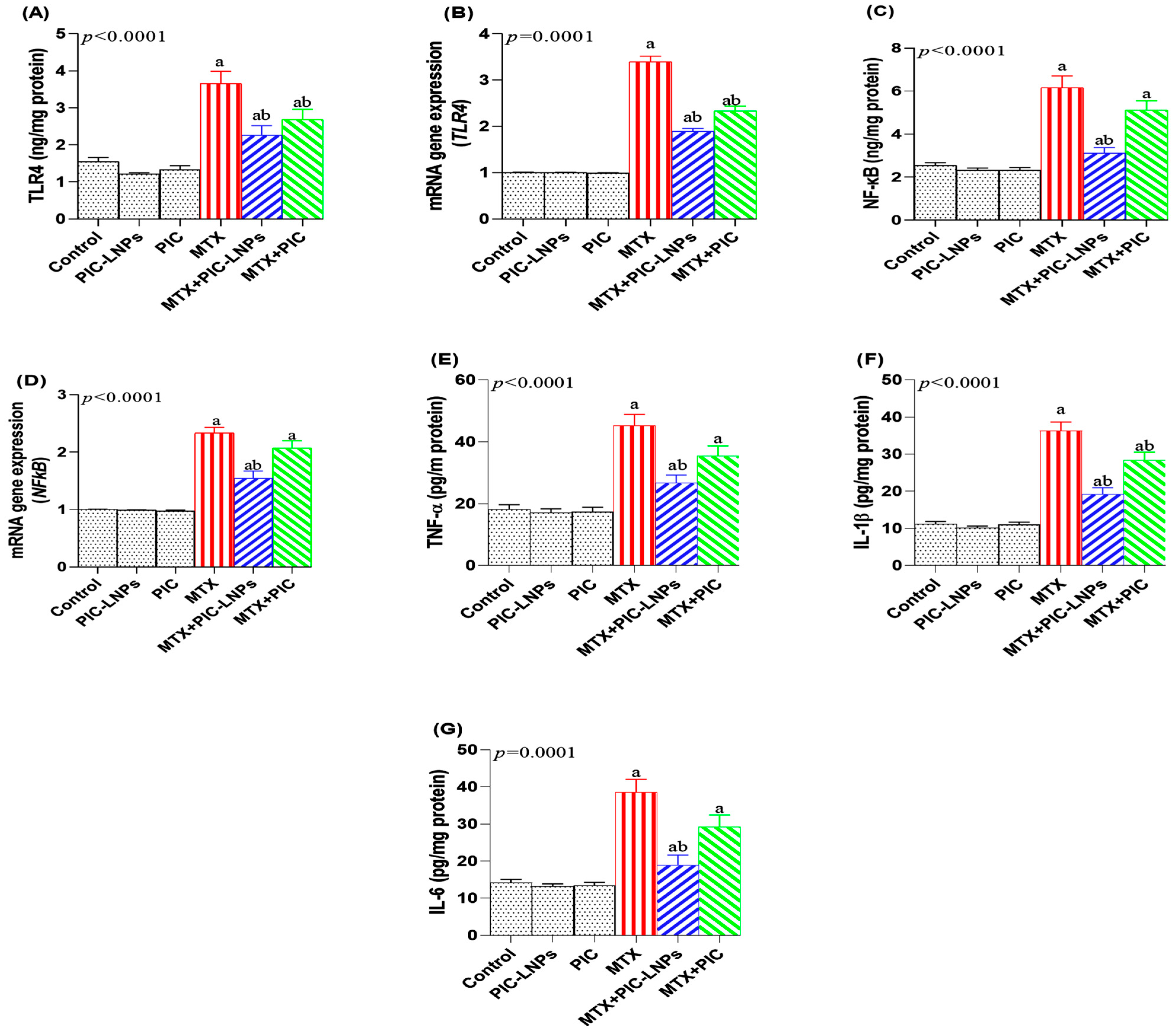
3.7. Effect of PIC Formulations on Renal TLR4/NF-κB Signaling and Pro-Inflammatory Cytokines
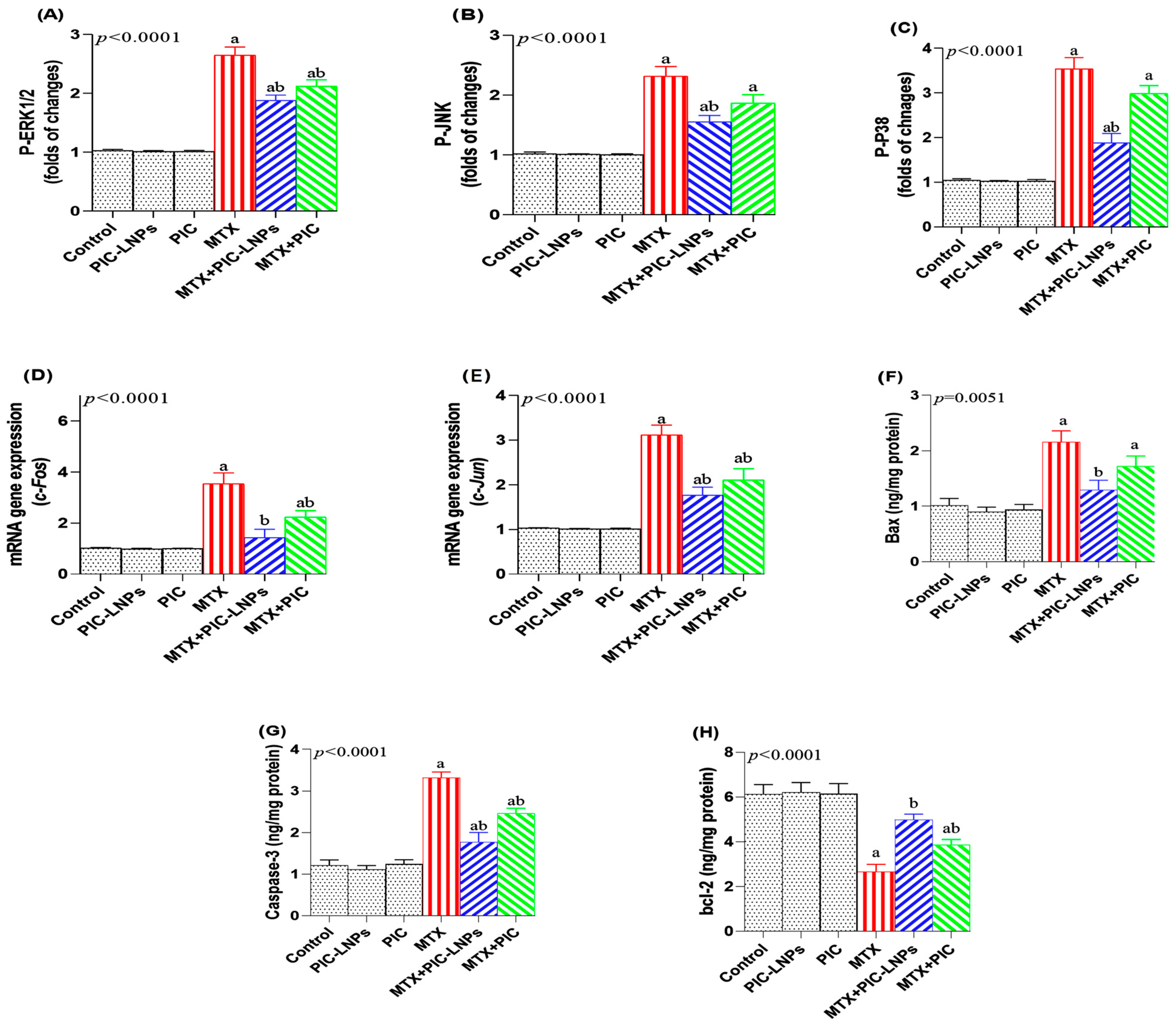
3.8. Effect of PIC Formulations on Renal MAPK Signaling
3.9. Effect of PIC Formulations on Apoptotic Markers
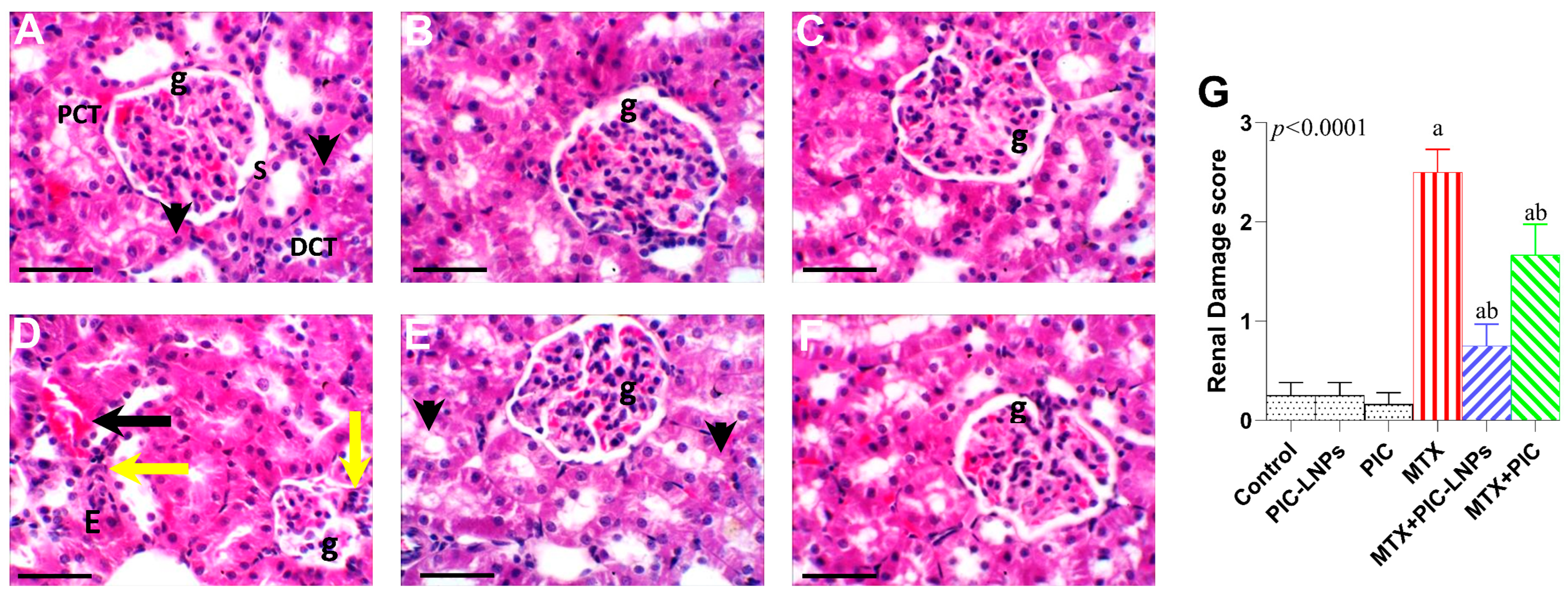
3.10. Histopathological Findings
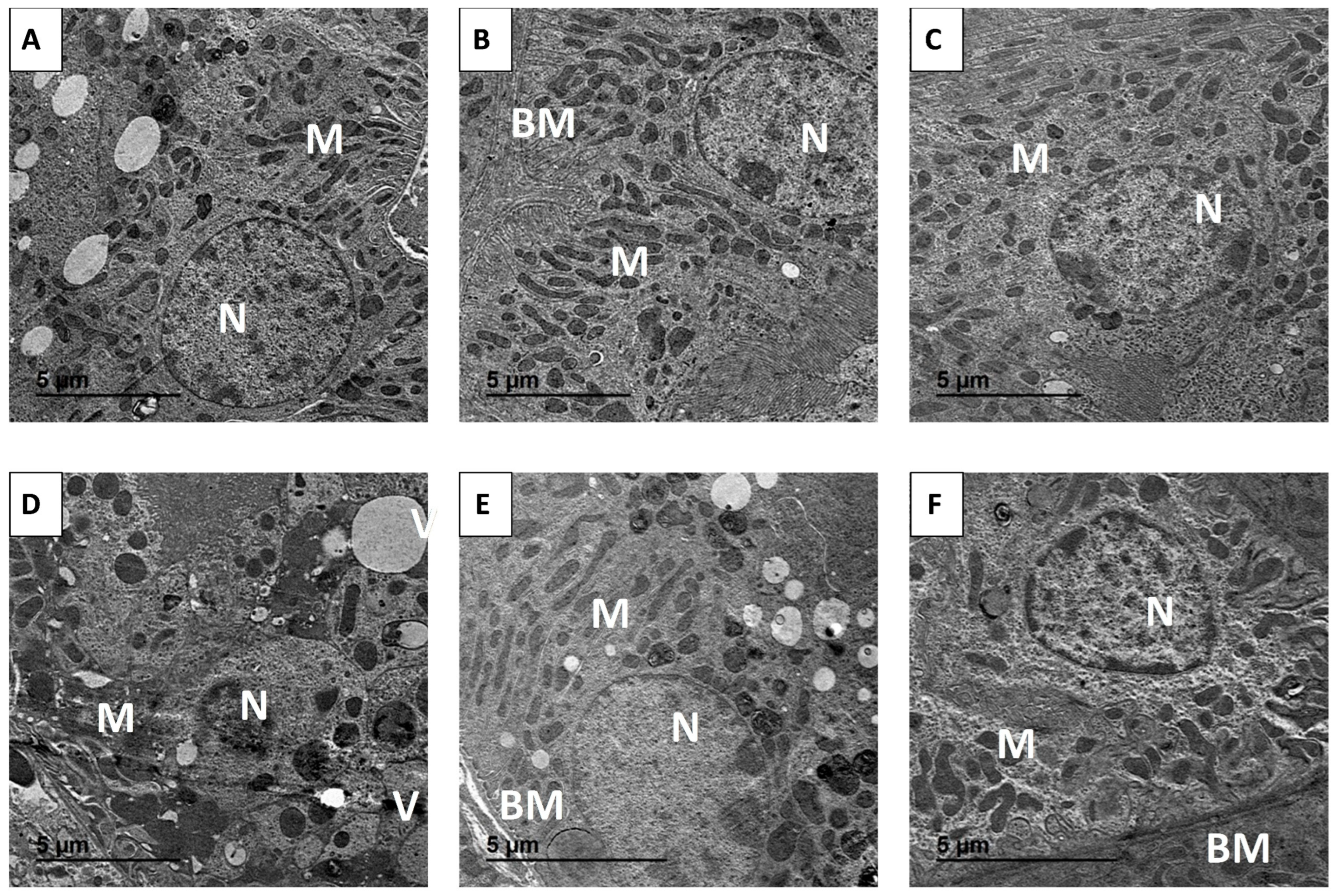
3.11. Ultrastructural Findings
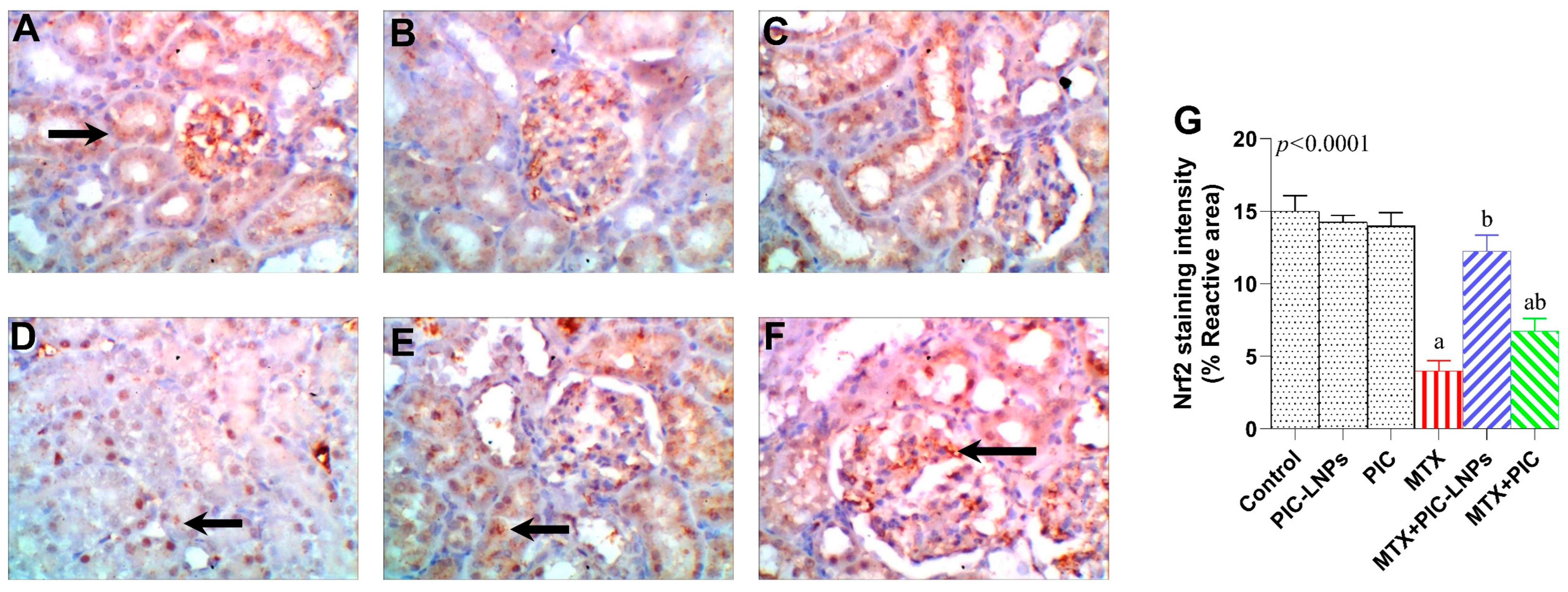
3.12. Immuno-Histochemistry Findings
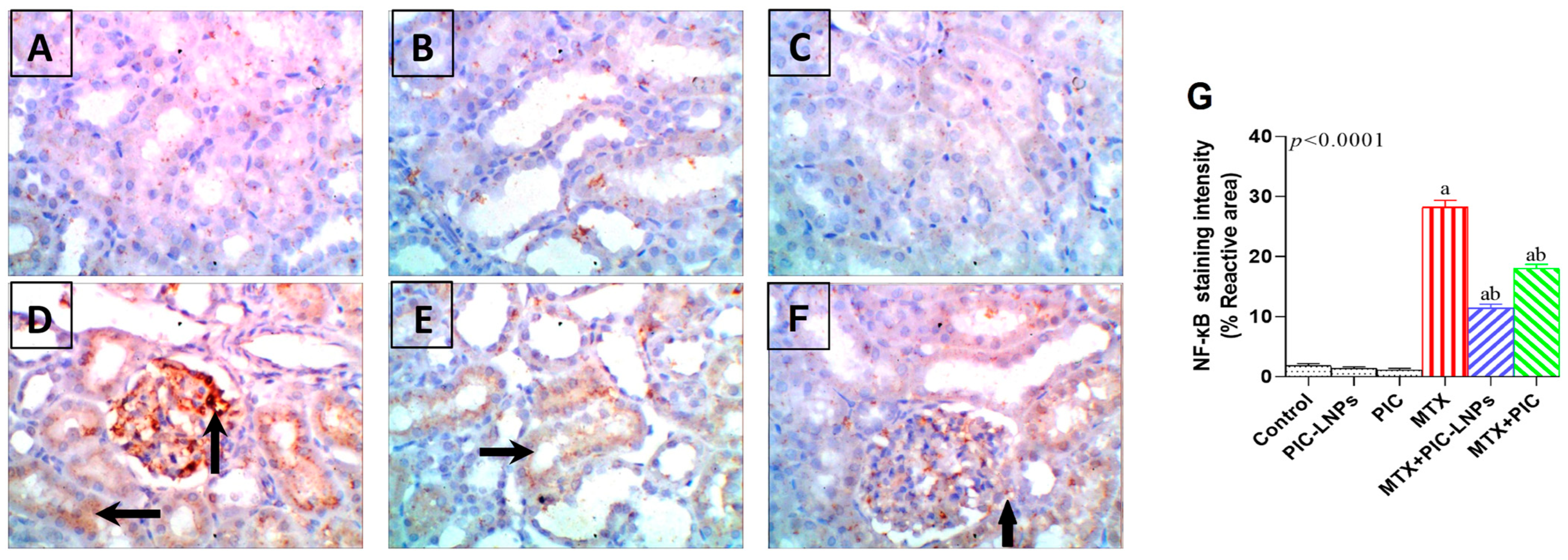
3.13. NF-κB Immunohistochemistry
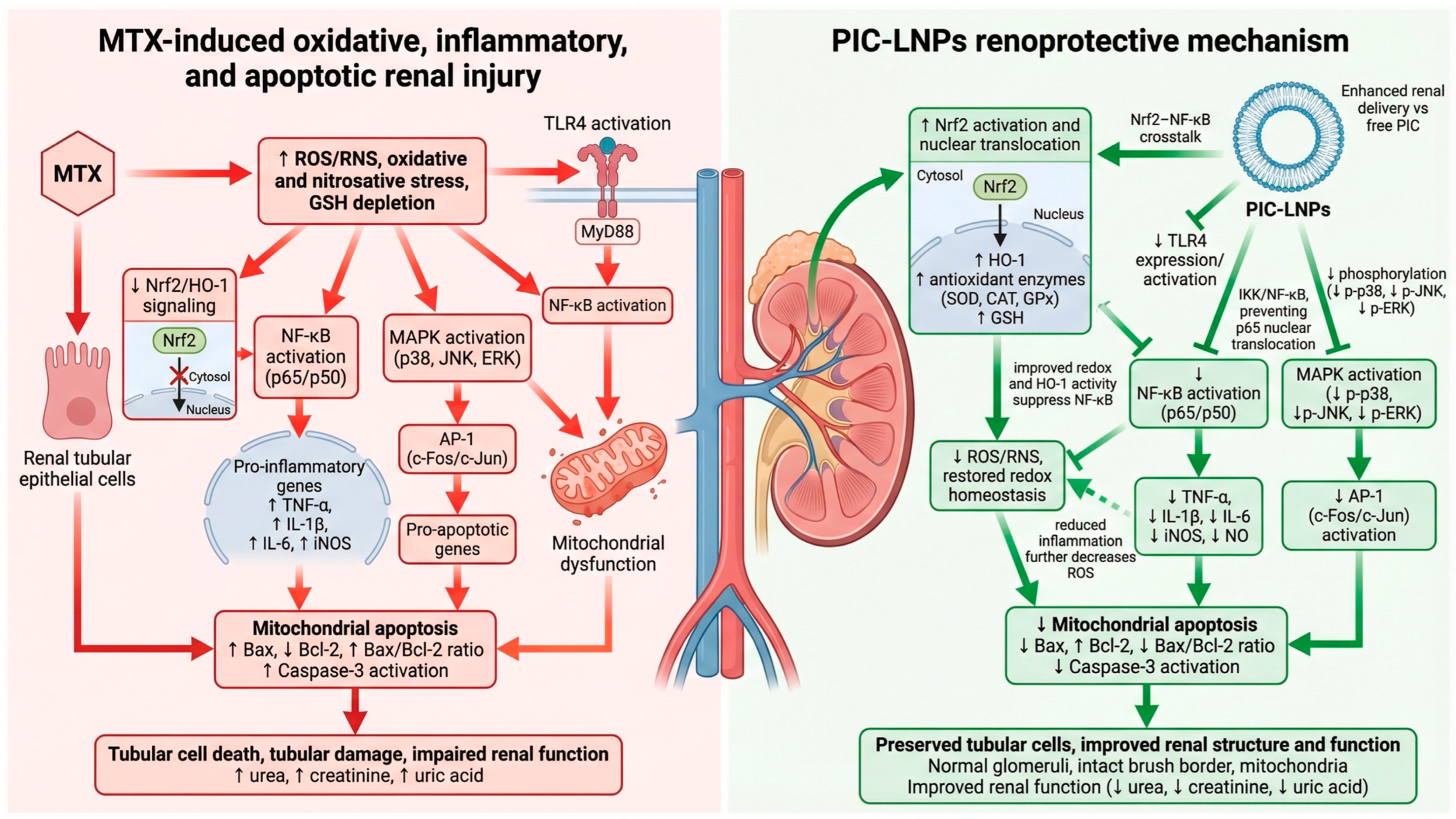
4. Discussion
5. Conclusions
Supplementary Materials
Author Contributions
Funding
Institutional Review Board Statement
Informed Consent Statement
Data Availability Statement
Acknowledgments
Conflicts of Interest
Abbreviations
| 8-OHdG | 8-Hydroxy-2′-deoxyguanosine |
| ANOVA | Analysis of variance |
| AASLD | American Association for the Study of Liver Diseases |
| Bax | Bcl-2-associated X protein |
| Bcl-2 | B-cell lymphoma-2 |
| BM | Basement membrane |
| CAT | Catalase |
| cDNA | Complementary DNA |
| DAB | 3,3′-Diaminobenzidine |
| DCFH-DA | 2′,7′-Dichlorodihydrofluorescein diacetate |
| DCT | Distal convoluted tubule |
| DMSO | Dimethyl sulfoxide |
| DTNB | 5,5′-Dithiobis(2-nitrobenzoic acid) |
| ELISA | Enzyme-linked immunosorbent assay |
| ERK | Extracellular signal-regulated kinase |
| FTIR | Fourier-transform infrared spectroscopy. |
| GPx | Glutathione peroxidase |
| GSH | Reduced glutathione |
| H&E | Hematoxylin and eosin |
| HO-1 | Heme oxygenase-1 |
| HRP | Horseradish peroxidase |
| i.p. | Intraperitoneal |
| IL-1β | Interleukin-1 beta |
| IL-6 | Interleukin-6 |
| iNOS | Inducible nitric oxide synthase |
| JNK | c-Jun N-terminal kinase |
| L-PC | L-α-phosphatidylcholine |
| MAPK | Mitogen-activated protein kinase |
| MDA | Malondialdehyde |
| MERC | Medical Experimental Research Center |
| mRNA | Messenger RNA |
| MTX | Methotrexate |
| MyD88 | Myeloid differentiation primary response protein 88 |
| NF-κB | Nuclear factor kappa-light-chain-enhancer of activated B cells |
| NO | Nitric oxide |
| Nrf2 | Nuclear factor erythroid 2-related factor 2 |
| PC | Protein carbonyl |
| PCT | Proximal convoluted tubule |
| PBS | Phosphate-buffered saline |
| PIC | Piceatannol |
| PIC-LNPs | Piceatannol-loaded liposomal nanoparticles |
| PDI | Polydispersity index |
| RFU | Relative fluorescence units |
| ROS | Reactive oxygen species |
| SOD | Superoxide dismutase |
| TBARS | Thiobarbituric acid reactive substances |
| TEM | Transmission electron microscopy |
| TLR4 | Toll-like receptor 4 |
| TNF-α | Tumor necrosis factor-alpha |
References
- Nedelcu, R.I.; Balaban, M.; Turcu, G.; Brinzea, A.; Ion, D.A.; Antohe, M.; Hodorogea, A.; Calinescu, A.; Badarau, A.I.; Popp, C.G.; et al. Efficacy of methotrexate as anti-inflammatory and anti-proliferative drug in dermatology: Three case reports. Exp. Ther. Med. 2019, 18, 905–910. [Google Scholar] [CrossRef]
- Zhao, Z.; Hua, Z.; Luo, X.; Li, Y.; Yu, L.; Li, M.; Lu, C.; Zhao, T.; Liu, Y. Application and pharmacological mechanism of methotrexate in rheumatoid arthritis. Biomed. Pharmacother. 2022, 150, 113074. [Google Scholar] [CrossRef] [PubMed]
- Elsawy, H.; Alzahrani, A.M.; Alfwuaires, M.; Abdel-Moneim, A.M.; Khalil, M. Nephroprotective effect of naringin in methotrexate induced renal toxicity in male rats. Biomed. Pharmacother. 2021, 143, 112180. [Google Scholar] [CrossRef] [PubMed]
- Markova, P.; Spasova, M.; Spasov, N.; Markov, S. Acute kidney injury after high-dose methotrexate application—case report. Folia Medica 2025, 67, e143221. [Google Scholar] [CrossRef]
- Abdulwahhab, R.Q.; Ali Alabdali, S.M. Study of the protective effects of cyanocobalamin on methotrexate induced nephrotoxicity in rats. F1000Research 2022, 11, 1012. [Google Scholar] [CrossRef]
- Al-Abkal, F.; Abdel-Wahab, B.A.; El-Kareem, H.F.A.; Moustafa, Y.M.; Khodeer, D.M. Protective Effect of Pycnogenol against Methotrexate-Induced Hepatic, Renal, and Cardiac Toxicity: An In Vivo Study. Pharmaceuticals 2022, 15, 674. [Google Scholar] [CrossRef]
- Su, L.J.; Zhang, J.H.; Gomez, H.; Murugan, R.; Hong, X.; Xu, D.; Jiang, F.; Peng, Z.Y. Reactive Oxygen Species-Induced Lipid Peroxidation in Apoptosis, Autophagy, and Ferroptosis. Oxid. Med. Cell. Longev. 2019, 2019, 5080843. [Google Scholar] [CrossRef] [PubMed]
- Jomova, K.; Alomar, S.Y.; Alwasel, S.H.; Nepovimova, E.; Kuca, K.; Valko, M. Several lines of antioxidant defense against oxidative stress: Antioxidant enzymes, nanomaterials with multiple enzyme-mimicking activities, and low-molecular-weight antioxidants. Arch. Toxicol. 2024, 98, 1323–1367. [Google Scholar] [CrossRef]
- Zong, Y.; Li, H.; Liao, P.; Chen, L.; Pan, Y.; Zheng, Y.; Zhang, C.; Liu, D.; Zheng, M.; Gao, J. Mitochondrial dysfunction: Mechanisms and advances in therapy. Signal Transduct. Target. Ther. 2024, 9, 124. [Google Scholar] [CrossRef]
- Sui, X.; Kong, N.; Ye, L.; Han, W.; Zhou, J.; Zhang, Q.; He, C.; Pan, H. p38 and JNK MAPK pathways control the balance of apoptosis and autophagy in response to chemotherapeutic agents. Cancer Lett. 2014, 344, 174–179. [Google Scholar] [CrossRef]
- Yue, J.; Lopez, J.M. Understanding MAPK Signaling Pathways in Apoptosis. Int. J. Mol. Sci. 2020, 21, 2346. [Google Scholar] [CrossRef]
- Zheng, Y.Z.; Chen, D.F.; Deng, G.; Guo, R.; Fu, Z.M. The antioxidative activity of piceatannol and its different derivatives: Antioxidative mechanism analysis. Phytochemistry 2018, 156, 184–192. [Google Scholar] [CrossRef]
- Banik, K.; Ranaware, A.M.; Harsha, C.; Nitesh, T.; Girisa, S.; Deshpande, V.; Fan, L.; Nalawade, S.P.; Sethi, G.; Kunnumakkara, A.B. Piceatannol: A natural stilbene for the prevention and treatment of cancer. Pharmacol. Res. 2020, 153, 104635. [Google Scholar] [CrossRef] [PubMed]
- Costa, F.P.D.; Puty, B.; Nogueira, L.S.; Mitre, G.P.; Santos, S.M.D.; Teixeira, B.J.B.; Kataoka, M.; Martins, M.D.; Barboza, C.A.G.; Monteiro, M.C.; et al. Piceatannol Increases Antioxidant Defense and Reduces Cell Death in Human Periodontal Ligament Fibroblast under Oxidative Stress. Antioxidants 2019, 9, 16. [Google Scholar] [CrossRef]
- Alhakamy, N.A.; Badr-Eldin, S.M.; Ahmed, O.A.A.; Asfour, H.Z.; Aldawsari, H.M.; Algandaby, M.M.; Eid, B.G.; Abdel-Naim, A.B.; Awan, Z.A.; Alghaith, A.F.; et al. Piceatannol-Loaded Emulsomes Exhibit Enhanced Cytostatic and Apoptotic Activities in Colon Cancer Cells. Antioxidants 2020, 9, 419. [Google Scholar] [CrossRef]
- Akbarzadeh, A.; Rezaei-Sadabady, R.; Davaran, S.; Joo, S.W.; Zarghami, N.; Hanifehpour Samiei, M.; Kouhi, M.; Nejati-Koshki, K. Liposome: Classification, preparation, and applications. Nanoscale Res. Lett. 2013, 8, 102. [Google Scholar] [CrossRef] [PubMed]
- Alhakamy, N.A.; Caruso, G.; Al-Rabia, M.W.; Badr-Eldin, S.M.; Aldawsari, H.M.; Asfour, H.Z.; Alshehri, S.; Alzaharani, S.H.; Alhamdan, M.M.; Rizg, W.Y.; et al. Piceatannol-Loaded Bilosome-Stabilized Zein Protein Exhibits Enhanced Cytostatic and Apoptotic Activities in Lung Cancer Cells. Pharmaceutics 2021, 13, 638. [Google Scholar] [CrossRef]
- Izadiyan, Z.; Misran, M.; Kalantari, K.; Webster, T.J.; Kia, P.; Basrowi, N.A.; Rasouli, E.; Shameli, K. Advancements in Liposomal Nanomedicines: Innovative Formulations, Therapeutic Applications, and Future Directions in Precision Medicine. Int. J. Nanomed. 2025, 20, 1213–1262. [Google Scholar] [CrossRef] [PubMed]
- Chelliah, R.; Rubab, M.; Vijayalakshmi, S.; Karuvelan, M.; Barathikannan, K.; Oh, D.-H. Liposomes for drug delivery: Classification, therapeutic applications, and limitations. Next Nanotechnol. 2025, 8, 100209. [Google Scholar] [CrossRef]
- Eki Nci-Akdemi, R.F.; Yildirim, S.; Kandemi, R.F.; Gülçi, N.İ.; Küçükler, S.; Sağlam, Y.S.; Yakan, S. The effects of casticin and myricetin on liver damage induced by methotrexate in rats. Iran. J. Basic Med. Sci. 2018, 21, 1281–1288. [Google Scholar] [CrossRef]
- Wahdan, S.A.; Azab, S.S.; Elsherbiny, D.A.; El-demerdash, E. Piceatannol ameliorates cisplatin-induced histological and biochemical alterations in rats kidney. Int. J. Pharm. Pharm. Sci. 2017, 9, 305–311. [Google Scholar] [CrossRef][Green Version]
- OECD. OECD Guideline for Testing of Chemicals; The Organisation for Economic Co-Operation and Development: Paris, France, 2005; pp. 1–13. [Google Scholar]
- Percie du Sert, N.; Hurst, V.; Ahluwalia, A.; Alam, S.; Avey, M.T.; Baker, M.; Browne, W.J.; Clark, A.; Cuthill, I.C.; Dirnagl, U. The ARRIVE guidelines 2.0: Updated guidelines for reporting animal research. J. Cereb. Blood Flow Metab. 2020, 40, 1769–1777. [Google Scholar] [CrossRef]
- Cheville, N.; Stasko, J. Techniques in electron microscopy of animal tissue. Vet. Pathol. 2014, 51, 28–41. [Google Scholar]
- Fahmy, M.M.; Habib, H.A.; Zeidan, E.M.; Jardan, Y.A.B.; Heeba, G.H. Alogliptin Mitigates Methotrexate-Induced Nephrotoxicity in a Rat Model: Antagonizing Oxidative Stress, Inflammation and Apoptosis. Int. J. Mol. Sci. 2025, 26, 9608. [Google Scholar] [CrossRef]
- Kavsak, P. Tietz Textbook of Clinical Chemistry and Molecular Diagnostics, sixth edition, edited by Nader Rifai, Andrea Rita Horvath and Carl T. Wittwer, published by Elsevier, St. Louis, Missouri, USA (ISBN 978-0-323-35921-4, 1888 pages, copyright 2018). Clin. Biochem. 2017, 50, 737. [Google Scholar] [CrossRef]
- Alfawaz, M.; Elmorsy, E.M.; Alshammari, A.N.; Emam, M.N.; Hegab, I.I.; Shaalan, A.A.M.; Fawzy, M.S.; Mohammed, L.A. Nanoparticle-Based Delivery of Resveratrol Suppresses Ehrlich Ascites Carcinoma and Protects Testicular Function via Antioxidant, Anti-Angiogenic, Anti-Inflammatory, and Pro-Apoptotic Mechanisms. Biomolecules 2025, 15, 1605. [Google Scholar] [PubMed]
- Shaalan, A.A.M.; Elmorsy, E.M.; Embaby, E.M.; Alfawaz, M.; Aly, N.M.; Shams, A.S.; Fawzy, M.S.; Hosny, N. Antitumor, Antioxidant, and Hepatoprotective Effects of Grape Seed Oil Nanoemulsion as a Dietary Phytochemical Intervention in Ehrlich Solid Tumors. Nutrients 2025, 17, 3450. [Google Scholar] [CrossRef]
- Alfawaz, M.; Elmorsy, E.M.; Samy, A.; Shams, A.S.; Salem, M.A.; Shaalan, A.A.M.; Fawzy, M.S.; Hosny, N. Therapeutic Potential of Food-Derived Rutin Phytosome Nanoparticles: Anti-Tumor, Antioxidant, and Anti-Inflammatory Activity in Ehrlich Ascites Carcinoma. Pharmaceuticals 2025, 18, 1410. [Google Scholar] [CrossRef]
- Obaid, A.A.; Ghaith, M.M.; Alshammari, A.N.; Elmorsy, E.M.; Fawzy, M.S.; Ebrahim, N.A.; Salem, H.S.; Hussein, N.M. Astaxanthin-loaded chitosan nanoparticles attenuate chlorpyrifos-induced nephrotoxicity via activation of the Nrf2/HO-1 axis and suppression of oxidative, inflammatory, and apoptotic pathways. Tissue Cell 2026, 100, 103332. [Google Scholar] [CrossRef]
- Livak, K.J.; Schmittgen, T.D. Analysis of relative gene expression data using real-time quantitative PCR and the 2(-Delta Delta C(T)) Method. Methods 2001, 25, 402–408. [Google Scholar] [CrossRef] [PubMed]
- Brookes, E.M.; Power, D.A. Elevated serum urea-to-creatinine ratio is associated with adverse inpatient clinical outcomes in non-end stage chronic kidney disease. Sci. Rep. 2022, 12, 20827. [Google Scholar] [CrossRef]
- Balikci Cicek, I.; Colak, C.; Yologlu, S.; Kucukakcali, Z.; Ozhan, O.; Taslidere, E.; Danis, N.; Koc, A.; Parlakpinar, H.; Akbulut, S. Nephrotoxicity Development of a Clinical Decision Support System Based on Tree-Based Machine Learning Methods to Detect Diagnostic Biomarkers from Genomic Data in Methotrexate-Induced Rats. Appl. Sci. 2023, 13, 8870. [Google Scholar] [CrossRef]
- El-Agawy, M.S.E.; Badawy, A.M.M.; Rabei, M.R.; Elshaer, M.M.A.; El Nashar, E.M.; Alghamdi, M.A.; Alshehri, M.A.; Elsayed, H.R.H. Methotrexate-Induced Alteration of Renal Aquaporins 1 and 2, Oxidative Stress and Tubular Apoptosis Can Be Attenuated by Omega-3 Fatty Acids Supplementation. Int. J. Mol. Sci. 2022, 23, 2794. [Google Scholar] [CrossRef]
- Du, L.; Zong, Y.; Li, H.; Wang, Q.; Xie, L.; Yang, B.; Pang, Y.; Zhang, C.; Zhong, Z.; Gao, J. Hyperuricemia and its related diseases: Mechanisms and advances in therapy. Signal Transduct. Target. Ther. 2024, 9, 212. [Google Scholar] [CrossRef] [PubMed]
- Yang, S.L.; Zhao, F.Y.; Song, H.; Shen, D.Y.; Xu, X.J. Methotrexate Associated Renal Impairment Is Related to Delayed Elimination of High-Dose Methotrexate. Sci. World J. 2015, 2015, 751703. [Google Scholar] [CrossRef]
- Senjab, R.M.; AlSawaftah, N.; Abuwatfa, W.H.; Husseini, G.A. Advances in liposomal nanotechnology: From concept to clinics. RSC Pharm. 2024, 1, 928–948. [Google Scholar] [CrossRef]
- Yeşilot, Ş.; Özgöçmen, M. Nephroprotective effect of Resveratrol against Methotrexate-induced renal toxicity in female rats. Mehmet Akif Ersoy Univ. J. Health Sci. Inst. 2022, 10, 123–133. [Google Scholar] [CrossRef]
- El-Saed, M.; El-Sherbini, E.-S.; El-Adl, M. Epigallocatechin Gallate Alleviated Methotrexate-Induced Nephrotoxicity in Rats. Egypt. J. Vet. Sci. 2026, 57, 39–47. [Google Scholar] [CrossRef]
- Takano, Y.; Hirano, M.; Machida, T.; Obara, Y.; Hamaue, N.; Fujita, K.; Taniguchi, M.; Endo, T.; Shiga, S.; Machida, M.; et al. Nitric oxide plays a critical role in methotrexate-induced hyperplasia of enterochromaffin cells containing 5-hydroxytryptamine in rat small intestine. J. Pharmacol. Sci. 2019, 141, 32–40. [Google Scholar] [CrossRef] [PubMed]
- Heidari, R.; Ahmadi, A.; Mohammadi, H.; Ommati, M.M.; Azarpira, N.; Niknahad, H. Mitochondrial dysfunction and oxidative stress are involved in the mechanism of methotrexate-induced renal injury and electrolytes imbalance. Biomed. Pharmacother. 2018, 107, 834–840. [Google Scholar] [CrossRef]
- Marechal, A.; Mattioli, T.A.; Stuehr, D.J.; Santolini, J. Activation of peroxynitrite by inducible nitric-oxide synthase: A direct source of nitrative stress. J. Biol. Chem. 2007, 282, 14101–14112. [Google Scholar] [CrossRef]
- Aladaileh, S.H.; Hussein, O.E.; Abukhalil, M.H.; Saghir, S.A.M.; Bin-Jumah, M.; Alfwuaires, M.A.; Germoush, M.O.; Almaiman, A.A.; Mahmoud, A.M. Formononetin Upregulates Nrf2/HO-1 Signaling and Prevents Oxidative Stress, Inflammation, and Kidney Injury in Methotrexate-Induced Rats. Antioxidants 2019, 8, 430. [Google Scholar] [CrossRef]
- Hou, J.; Shi, Z.; Yin, G.; Zhao, H.; Lan, M. Real-time tracking of glutathione and superoxide anion dynamics in living cells during oxidative stress using electrochemical sensors. Sens. Actuators B Chem. 2026, 448, 139045. [Google Scholar] [CrossRef]
- Mohyeldin, R.H.; Sharata, E.E.; Abdelnaser, M.; Attya, M.E.; Kotb, A.S.M.; Rofaeil, R.R. Apremilast ameliorates methotrexate-induced renal injury in rats: Role of TLR4/NF-κB/P38 MAPK/caspase-3 and Nrf2/HO-1 signaling pathways. Naunyn-Schmiedeberg’s Arch. Pharmacol. 2025; Online ahead of print. [CrossRef]
- Warias, P.; Plewa, P.; Poniewierska-Baran, A. Resveratrol, Piceatannol, Curcumin, and Quercetin as Therapeutic Targets in Gastric Cancer-Mechanisms and Clinical Implications for Natural Products. Molecules 2024, 30, 3. [Google Scholar] [CrossRef] [PubMed]
- Hassanein, E.H.M.; Sayed, A.M.; El-Ghafar, O.; Omar, Z.M.M.; Rashwan, E.K.; Mohammedsaleh, Z.M.; Kyung, S.Y.; Park, J.H.; Kim, H.S.; Ali, F.E.M. Apocynin abrogates methotrexate-induced nephrotoxicity: Role of TLR4/NF-kappaB-p65/p38-MAPK, IL-6/STAT-3, PPAR-gamma, and SIRT1/FOXO3 signaling pathways. Arch. Pharmacal Res. 2023, 46, 339–359. [Google Scholar] [CrossRef]
- Roh, J.S.; Sohn, D.H. Damage-Associated Molecular Patterns in Inflammatory Diseases. Immune Netw. 2018, 18, e27. [Google Scholar] [CrossRef]
- Wei, J.; Zhang, Y.; Li, H.; Wang, F.; Yao, S. Toll-like receptor 4: A potential therapeutic target for multiple human diseases. Biomed. Pharmacother. 2023, 166, 115338. [Google Scholar] [CrossRef]
- Guo, Q.; Jin, Y.; Chen, X.; Ye, X.; Shen, X.; Lin, M.; Zeng, C.; Zhou, T.; Zhang, J. NF-κB in biology and targeted therapy: New insights and translational implications. Signal Transduct. Target. Ther. 2024, 9, 53. [Google Scholar] [CrossRef]
- Cromer, W.E.; Zawieja, S.D.; Tharakan, B.; Childs, E.W.; Newell, M.K.; Zawieja, D.C. The effects of inflammatory cytokines on lymphatic endothelial barrier function. Angiogenesis 2014, 17, 395–406. [Google Scholar] [CrossRef]
- Lee, H.; Yang, S.J. In Vitro and In Vivo Effects of Piceatannol and Resveratrol on Glucose Control and TLR4-NF-κB Pathway. J. Korean Soc. Food Sci. Nutr. 2017, 46, 267–272. [Google Scholar] [CrossRef]
- Du, S.H.; Yang, M.Y.; Gan, H.L.; Song, Z.Y.; Wang, M.Y.; Li, Z.Y.; Liu, K.; Qi, D.; Fan, H.Y. Piceatannol-3′-O-β-d-glucopyranoside alleviates nephropathy via regulation of High mobility group B-1 (HMGB1)/Toll-like receptor 4 (TLR4)/Nuclear factor kappa B (NF-κB) signalling pathway. J. Pharm. Pharmacol. 2023, 75, 693–702. [Google Scholar] [CrossRef] [PubMed]
- Morsy, M.A.; El-Sheikh, A.A.K.; Abdel-Hafez, S.M.N.; Kandeel, M.; Abdel-Gaber, S.A. Paeonol Protects Against Methotrexate-Induced Nephrotoxicity via Upregulation of P-gp Expression and Inhibition of TLR4/NF-κB Pathway. Front. Pharmacol. 2022, 13, 774387. [Google Scholar] [CrossRef] [PubMed]
- Qian, S.; Wei, Z.; Yang, W.; Huang, J.; Yang, Y.; Wang, J. The role of BCL-2 family proteins in regulating apoptosis and cancer therapy. Front. Oncol. 2022, 12, 985363. [Google Scholar] [CrossRef]
- Lee, E.; Ozigbo, A.A.; Varon, J.; Halma, M.; Laezzo, M.; Ang, S.P.; Iglesias, J. Mitochondrial Reactive Oxygen Species: A Unifying Mechanism in Long COVID and Spike Protein-Associated Injury: A Narrative Review. Biomolecules 2025, 15, 1339. [Google Scholar] [CrossRef] [PubMed]
- Srivastava, A.; Tomar, B.; Sharma, D.; Rath, S.K. Mitochondrial dysfunction and oxidative stress: Role in chronic kidney disease. Life Sci. 2023, 319, 121432. [Google Scholar] [CrossRef]
- Al-Jaber, H.; Shakya, A.; Al-Qudah, M.; Barhoumi, L.; Abu-Sal, H.; Hasan, H.; Al-Bataineh, N.; Orabi, S.; Mubarak, M. Piceatannol, a comprehensive review of health perspectives and pharmacological aspects. Arab. J. Chem. 2024, 17, 105939. [Google Scholar] [CrossRef]
- Desideri, E.; Castelli, S.; Ciriolo, M.R. MAPK Signaling in the Interplay Between Oxidative Stress and Autophagy. Antioxidants 2025, 14, 662. [Google Scholar] [CrossRef]
- Molaei, E.; Molaei, A.; Abedi, F.; Hayes, A.W.; Karimi, G. Nephroprotective activity of natural products against chemical toxicants: The role of Nrf2/ARE signaling pathway. Food Sci. Nutr. 2021, 9, 3362–3384. [Google Scholar] [CrossRef]
- Mahmoud Moustafa, E.; Rashed, E.R.; Rashed, R.R.; Omar, N.N. Piceatannol promotes hepatic and renal AMPK/SIRT1/PGC-1α mitochondrial pathway in rats exposed to reserpine or gamma-radiation. Int. J. Immunopathol. Pharmacol. 2021, 35, 20587384211016194. [Google Scholar] [CrossRef]
- Gao, W.; Guo, L.; Yang, Y.; Wang, Y.; Xia, S.; Gong, H.; Zhang, B.K.; Yan, M. Dissecting the Crosstalk Between Nrf2 and NF-κB Response Pathways in Drug-Induced Toxicity. Front. Cell Dev. Biol. 2021, 9, 809952. [Google Scholar] [CrossRef] [PubMed]
- Aranda-Rivera, A.K.; Cruz-Gregorio, A.; Pedraza-Chaverri, J.; Scholze, A. Nrf2 Activation in Chronic Kidney Disease: Promises and Pitfalls. Antioxidants 2022, 11, 1112. [Google Scholar] [CrossRef]
- Wu, S.; Liao, X.; Zhu, Z.; Huang, R.; Chen, M.; Huang, A.; Zhang, J.; Wu, Q.; Wang, J.; Ding, Y. Antioxidant and anti-inflammation effects of dietary phytochemicals: The Nrf2/NF-κB signalling pathway and upstream factors of Nrf2. Phytochemistry 2022, 204, 113429. [Google Scholar] [CrossRef]
- Kobayashi, A.; Kang, M.I.; Watai, Y.; Tong, K.I.; Shibata, T.; Uchida, K.; Yamamoto, M. Oxidative and electrophilic stresses activate Nrf2 through inhibition of ubiquitination activity of Keap1. Mol. Cell. Biol. 2006, 26, 221–229. [Google Scholar] [CrossRef]
- Li, W.; Kong, A.N. Molecular mechanisms of Nrf2-mediated antioxidant response. Mol. Carcinog. 2009, 48, 91–104. [Google Scholar] [CrossRef] [PubMed]
- Wang, L.; Guo, Y.; Ye, J.; Pan, Z.; Hu, P.; Zhong, X.; Qiu, F.; Zhang, D.; Huang, Z. Protective Effect of Piceatannol Against Cerebral Ischaemia-Reperfusion Injury Via Regulating Nrf2/HO-1 Pathway In Vivo and Vitro. Neurochem. Res. 2021, 46, 1869–1880. [Google Scholar] [CrossRef]
- Perez-Leal, O.; Barrero, C.A.; Merali, S. Pharmacological stimulation of nuclear factor (erythroid-derived 2)-like 2 translation activates antioxidant responses. J. Biol. Chem. 2017, 292, 14108–14121. [Google Scholar] [CrossRef] [PubMed]
- Reinisalo, M.; Karlund, A.; Koskela, A.; Kaarniranta, K.; Karjalainen, R.O. Polyphenol Stilbenes: Molecular Mechanisms of Defence against Oxidative Stress and Aging-Related Diseases. Oxidative Med. Cell. Longev. 2015, 2015, 340520. [Google Scholar] [CrossRef] [PubMed]
- Auberval, N.; Dal, S.; Bietiger, W.; Seyfritz, E.; Peluso, J.; Muller, C.; Zhao, M.; Marchioni, E.; Pinget, M.; Jeandidier, N.; et al. Oxidative Stress Type Influences the Properties of Antioxidants Containing Polyphenols in RINm5F Beta Cells. Evid.-Based Complement. Altern. Med. Ecam 2015, 2015, 859048. [Google Scholar] [CrossRef]



| Gene | Sense (5′–3′) | Antisense (5′–3′) |
|---|---|---|
| Nrf2 | F: TTTGTAGATGACCATGAGTCG | R: TCCTGCCAAACTTGCTCCAT |
| HO-1 | F: ATGTCCCAGGATTTGTCCGA | R: ATGGTACAAGGAGGCCATCA |
| NFκB | F: AGTCCCGCCCCTTCTAAAAC | R: CAATGGCCTCTGTGTAGCCC |
| TLR4 | F: ATCATCCAGGAAGGCTTCCA | R: GCTGCCTCAGCAAGGACTTC |
| c-Fos | F: CCCGTAGACCTAGGGAGGAC | R: CAATACACTCCATGCGGTTG |
| c-Jun | F: CCAACCAACGTGAGTGCAAG | R: CGTCCCCGCTTCAGTAACAA |
| β-Actin | F: CAGCCTTCCTTCTTGGGTATG | R: AGCTCAGTAACAGTCCGCCT |
| Score | Tubular Damage and Necrosis in Kidney Sections | Structural Alterations of Glomeruli | Inflammation | Hemorrhage |
|---|---|---|---|---|
| 0 | None | None | None | None |
| 1 | Focal degenerative changes were detected in 1–2 of the 12 kidney fields analyzed. | Focal mild atrophy of glomeruli was detected in 1–2 of the evaluated kidney sections. | Only 1–2 out of 12 renal fields showed slight inflammatory cell infiltration. | Focal mild congestion and occasional hemorrhagic spots were detected in 1–2 of the analyzed kidney sections. |
| 2 | Multiple kidney fields (3–6 of 12) displayed degenerative changes characterized by focal epithelial sloughing. | Mild to moderate glomerular shrinkage was observed in 3–4 of the 12 examined kidney fields. | Focal moderate inflammatory infiltration was detected in 3–4 of the analyzed kidney sections. | Focal hemorrhage with mild interstitial congestion was detected in 3–4 of the analyzed kidney sections. |
| 3 | Severe tubular necrosis was evident in 7–9 out of 12 kidney fields analyzed. | Lamellar fusion was observed in 5–6 of the 12 kidney fields examined. | Significant inflammation was evident in 5–7 of the 12 kidney fields examined. | In 5–6 out of 12 renal fields, the interstitium exhibited pronounced congestion with focal hemorrhage. |
Disclaimer/Publisher’s Note: The statements, opinions and data contained in all publications are solely those of the individual author(s) and contributor(s) and not of MDPI and/or the editor(s). MDPI and/or the editor(s) disclaim responsibility for any injury to people or property resulting from any ideas, methods, instructions or products referred to in the content. |
© 2026 by the authors. Licensee MDPI, Basel, Switzerland. This article is an open access article distributed under the terms and conditions of the Creative Commons Attribution (CC BY) license.
Share and Cite
Alshammari, F.; Elmorsy, E.M.; Aldaghmi, A.S.; Alaajam, F.; Shams, A.S.; Elshopakey, G.E.; Fawzy, M.S.; Hosny, N. Liposomal Piceatannol Mitigates Methotrexate-Induced Oxidative Renal Injury via Modulation of Nrf2/HO-1, TLR4/NF-κB, MAPK, and Apoptotic Pathways in Rats. Biomolecules 2026, 16, 517. https://doi.org/10.3390/biom16040517
Alshammari F, Elmorsy EM, Aldaghmi AS, Alaajam F, Shams AS, Elshopakey GE, Fawzy MS, Hosny N. Liposomal Piceatannol Mitigates Methotrexate-Induced Oxidative Renal Injury via Modulation of Nrf2/HO-1, TLR4/NF-κB, MAPK, and Apoptotic Pathways in Rats. Biomolecules. 2026; 16(4):517. https://doi.org/10.3390/biom16040517
Chicago/Turabian StyleAlshammari, Fahad, Ekramy M. Elmorsy, Abdulrahman S. Aldaghmi, Fahd Alaajam, Ahmed S. Shams, Gehad E. Elshopakey, Manal S. Fawzy, and Nora Hosny. 2026. "Liposomal Piceatannol Mitigates Methotrexate-Induced Oxidative Renal Injury via Modulation of Nrf2/HO-1, TLR4/NF-κB, MAPK, and Apoptotic Pathways in Rats" Biomolecules 16, no. 4: 517. https://doi.org/10.3390/biom16040517
APA StyleAlshammari, F., Elmorsy, E. M., Aldaghmi, A. S., Alaajam, F., Shams, A. S., Elshopakey, G. E., Fawzy, M. S., & Hosny, N. (2026). Liposomal Piceatannol Mitigates Methotrexate-Induced Oxidative Renal Injury via Modulation of Nrf2/HO-1, TLR4/NF-κB, MAPK, and Apoptotic Pathways in Rats. Biomolecules, 16(4), 517. https://doi.org/10.3390/biom16040517