Identification of Ellagic Acid as a Natural GPR35 Agonist for Ulcerative Colitis Therapy

Abstract
1. Introduction
2. Materials and Methods
2.1. Materials
2.2. NanoBiT Assay
2.3. Bret Assay
2.4. Molecular Docking
2.5. Molecular Dynamics Stimulation
2.6. Animals Experiment
2.7. H&E Staining and Immunofluorescence Analysis
2.8. Wound Healing Assay
2.9. SRB Assay
2.10. Statistical Analysis
3. Results
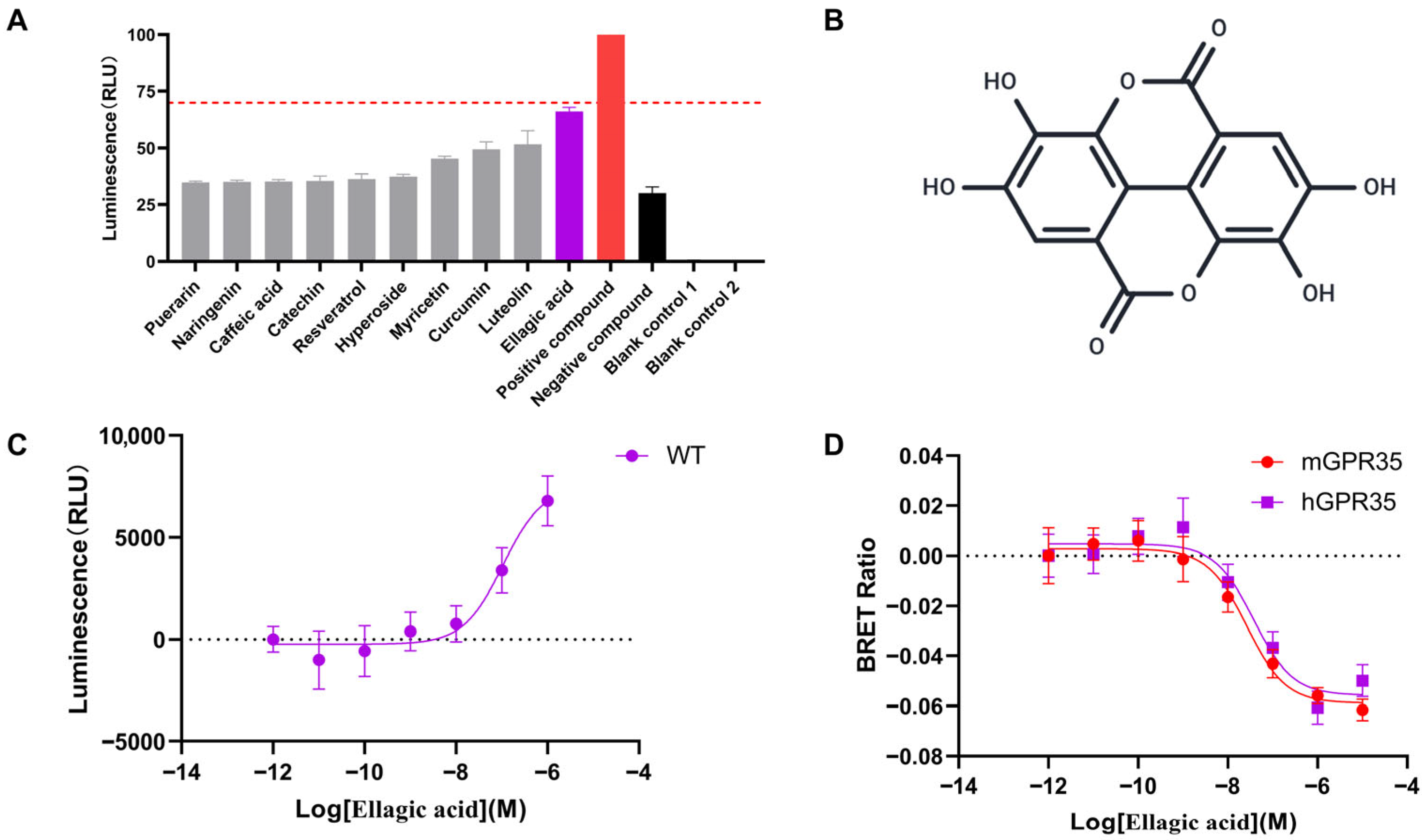
3.1. Agonist Screening of GPR35 Among Dietary Polyphenols Using the NanoBiT Assay
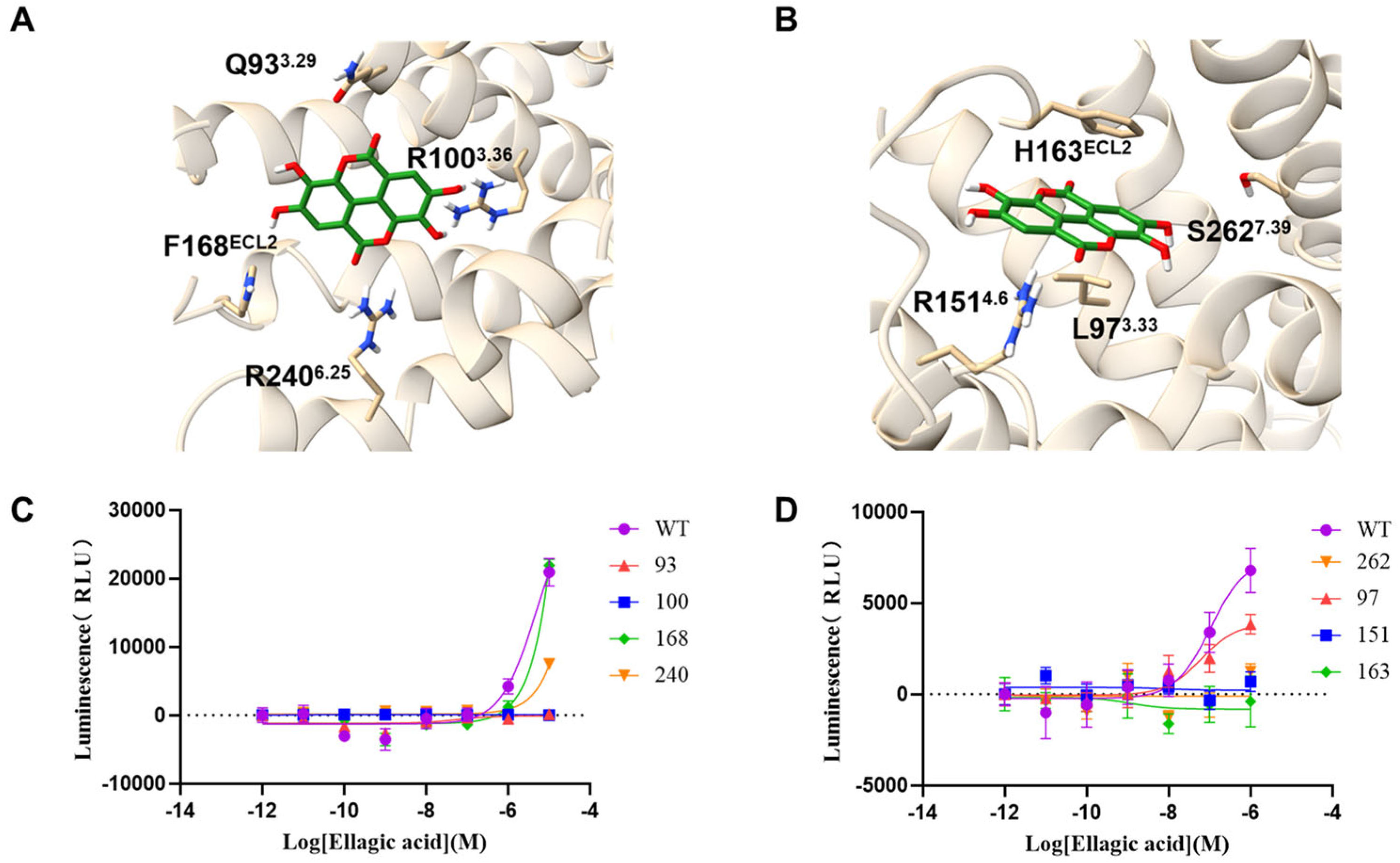
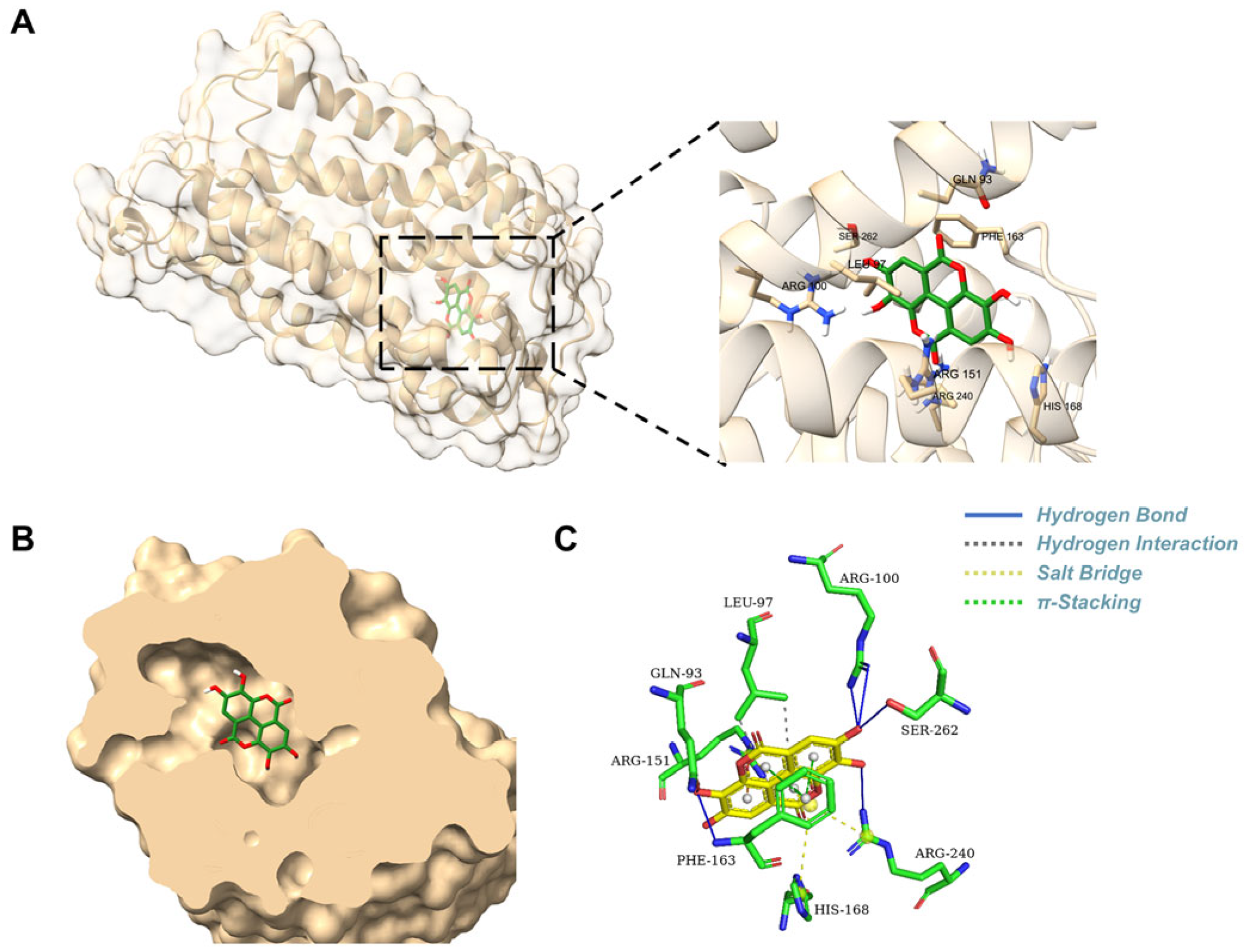
3.2. Binding Mode and Key Interactions of EA with GPR35
3.3. Functional Analysis of Wild-Type and Mutant Receptors
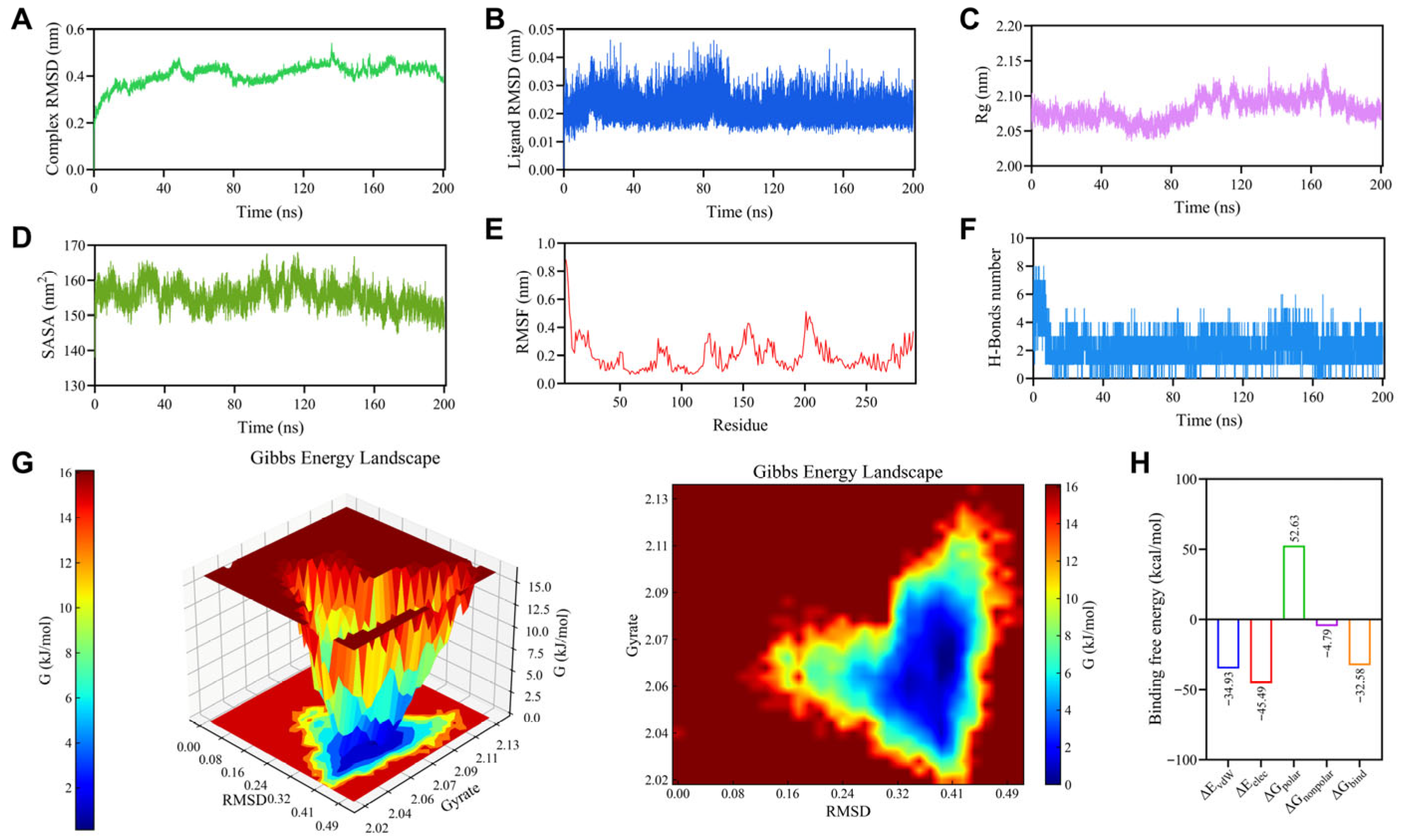
3.4. Molecular Dynamics Simulation of GPR35 and EA
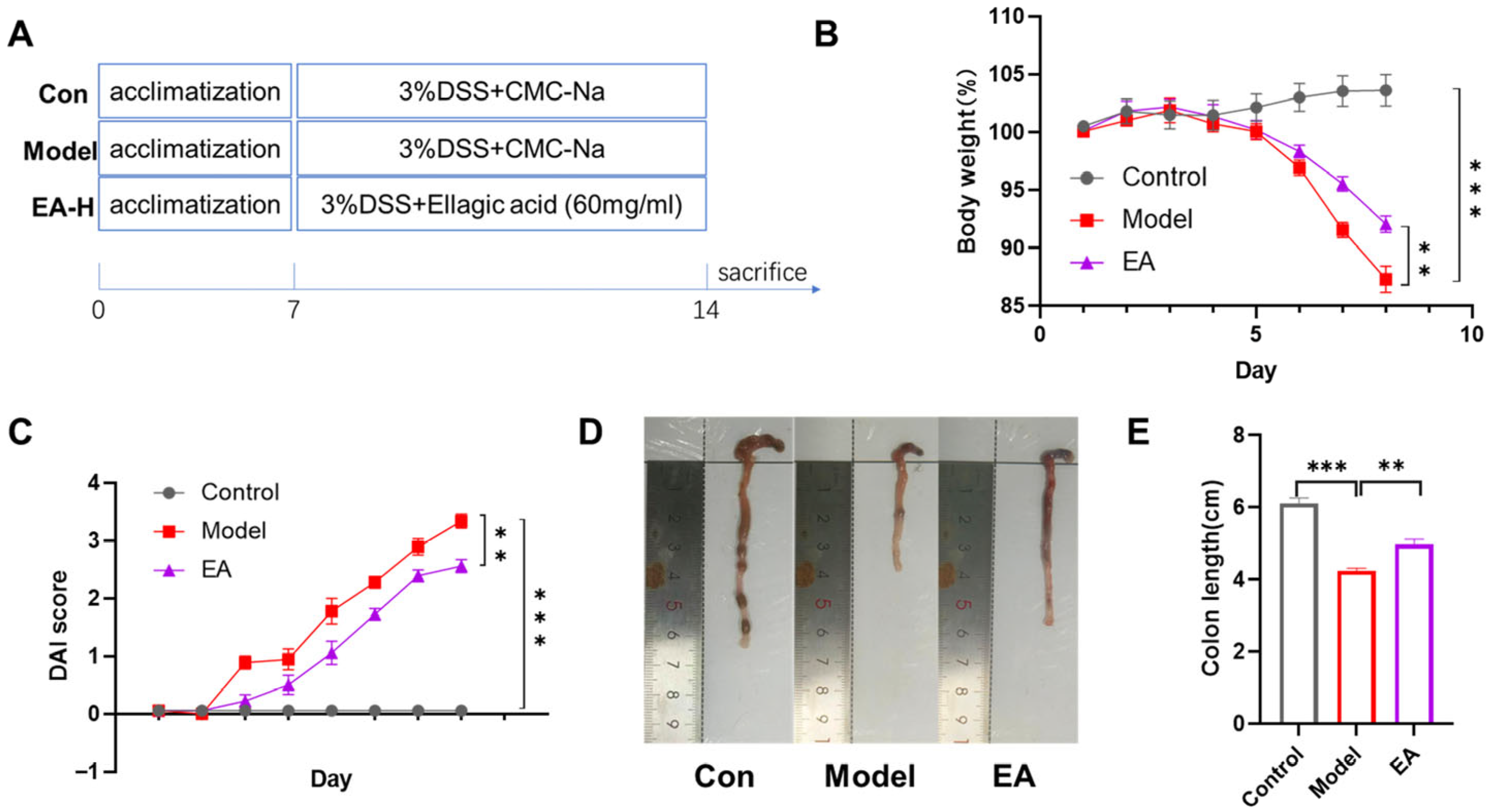
3.5. EA Administration Ameliorates DSS-Induced Colitis in Mice
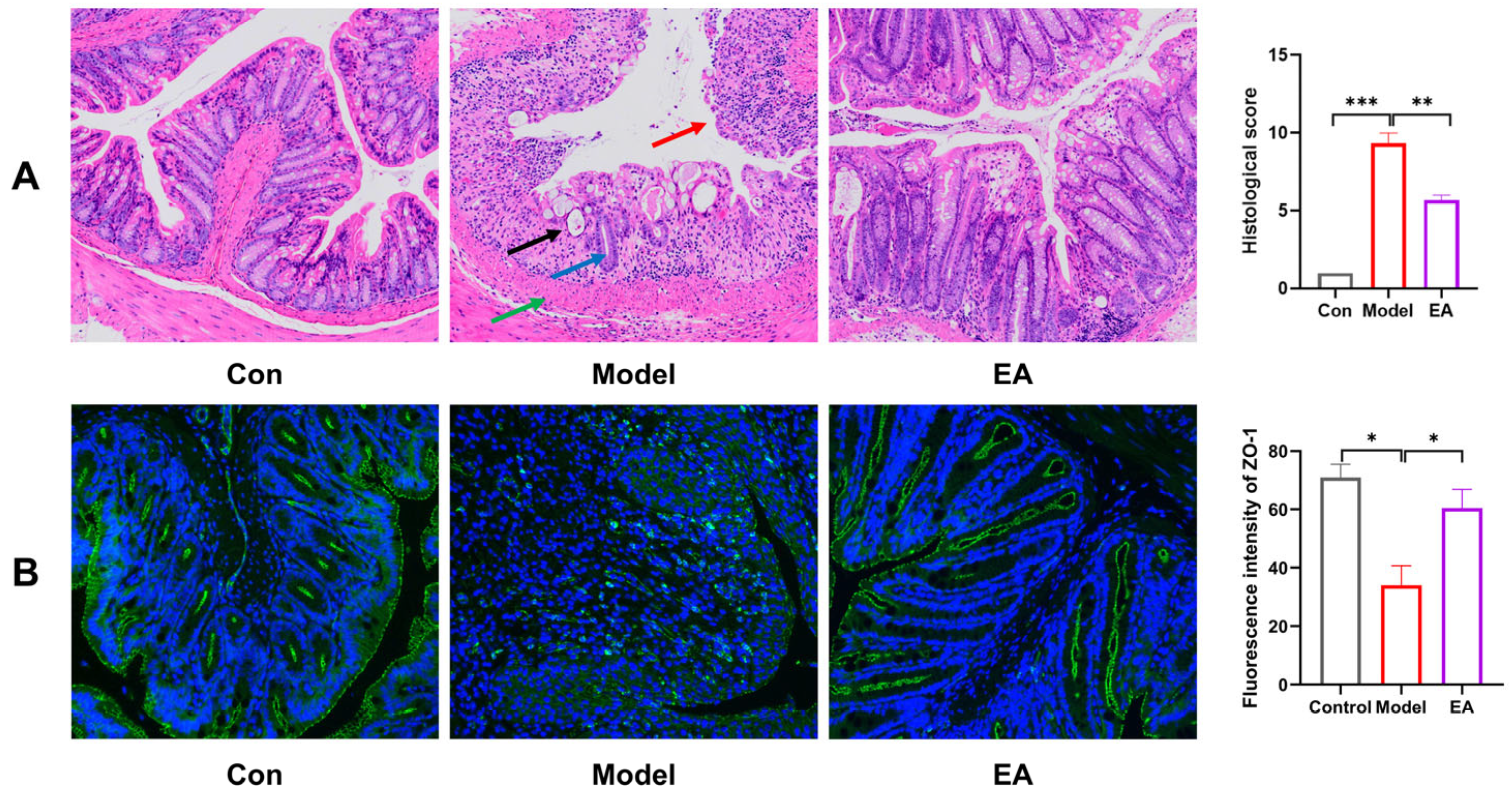
3.6. EA Preserves Colonic Structure and Barrier Function
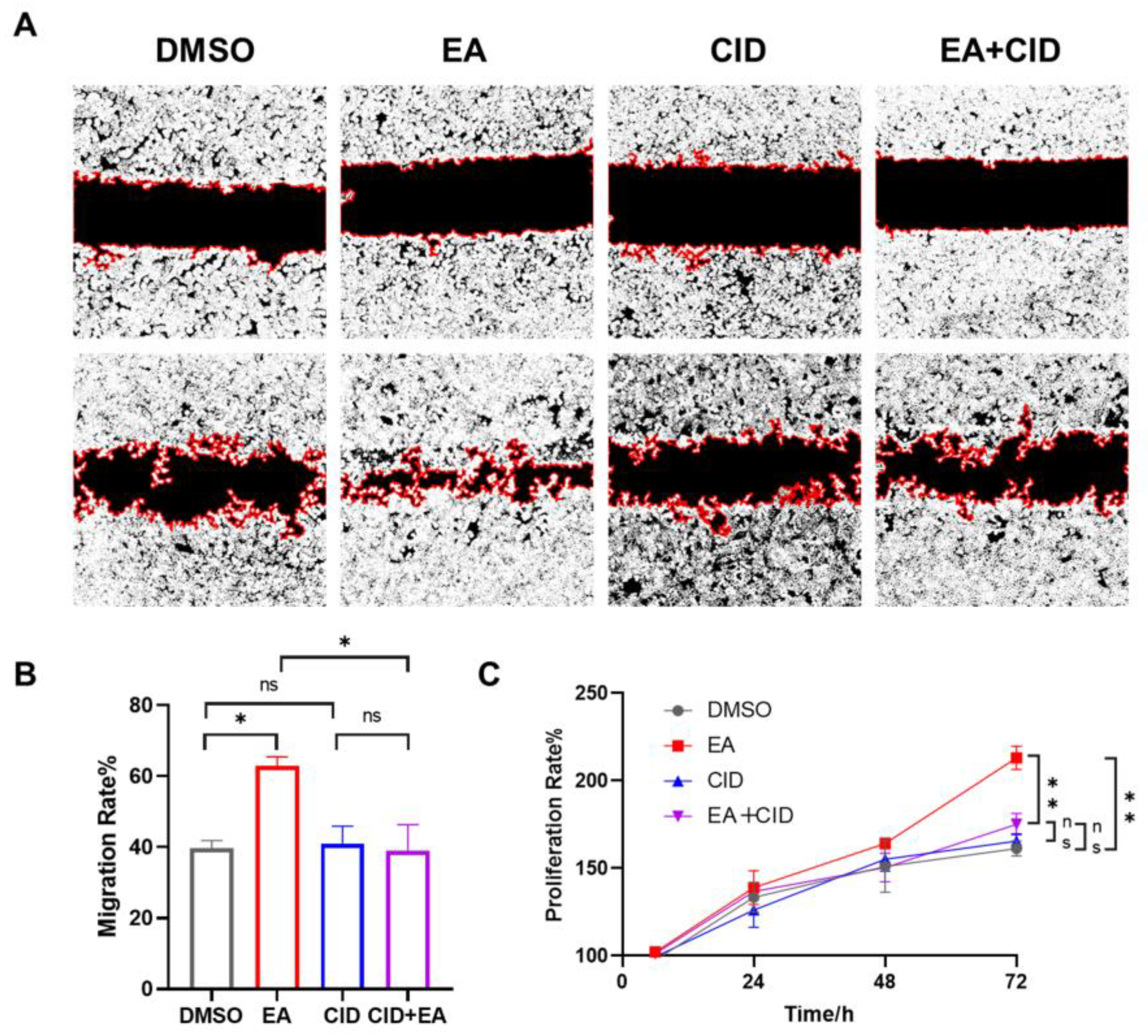
3.7. EA Promotes the Repair of the Intestinal Epithelium via Activating GPR35
4. Discussion
5. Conclusions
Supplementary Materials
Author Contributions
Funding
Institutional Review Board Statement
Informed Consent Statement
Data Availability Statement
Conflicts of Interest
Abbreviations
| UC | Ulcerative Colitis |
| EA | Ellagic Acid |
| GPR35 | G Protein-Coupled Receptor 35 |
| ZO-1 | Zonula Occludens-1 |
| GPCRs | G Protein-Coupled Receptors |
| IECs | Intestinal Epithelial Cells |
References
- Hashash, J.G.; Limdi, J.K.; Shapiro, J.M.; Shah, S.A. Medical management of inflammatory bowel diseases. BMJ 2025, 391, e079050. [Google Scholar] [CrossRef]
- Tao, C.; Luo, F.; Wang, Y.; Gao, X.; Cao, Y.; Wang, K.; Xie, Y. Mannose-modified Prunus persica kernel protein nanoparticles loading baicalin coated with Lycium barbarum polysaccharide for ulcerative colitis treatment. Carbohydr. Polym. 2026, 371, 124489. [Google Scholar] [CrossRef]
- Huang, J.; Liu, Z.; Liu, Y.; Liu, X.; Tian, Z.; Yao, M.; Wang, W.; Liu, Z. Butylchlorogenate from Chaenomeles speciosa alleviates ulcerative colitis via suppressing NLRP3 inflammasome activation and remodeling intestinal homeostasis. Phytomedicine 2025, 148, 157282. [Google Scholar] [CrossRef]
- Fudman, D.I.; McConnell, R.A.; Ha, C.; Singh, S. Modern Advanced Therapies for Inflammatory Bowel Diseases: Practical Considerations and Positioning. Clin. Gastroenterol. Hepatol. 2025, 23, 454–468. [Google Scholar] [CrossRef]
- Liang, Y.; Li, Y.; Lee, C.; Yu, Z.; Chen, C.; Liang, C. Ulcerative colitis: Molecular insights and intervention therapy. Mol. Biomed. 2024, 5, 42. [Google Scholar] [CrossRef]
- Xu, Q.; Huang, K.; Shi, Y.; Song, Y.; Ying, T.; Yang, Z. Therapeutic antibodies targeting G protein-coupled receptors. Trends Pharmacol. Sci. 2026. [Google Scholar] [CrossRef]
- Essa, K.; Ortiz, Z.N.; Roth, S.; Xin, B.T.; de Winter, S.; van der Horst, C.; Bleijs, B.; de Heiden, R.A.; Voulgaraki, R.; Neubert, E.; et al. Leveraging Targeted Protein Degradation for G Protein-Coupled Receptors: The Development of CCR2 Molecular Degraders. J. Med. Chem. 2025, 68, 26525–26546. [Google Scholar] [CrossRef] [PubMed]
- Otkur, W.; Wang, J.; Hou, T.; Liu, F.; Yang, R.; Li, Y.; Xiang, K.; Pei, S.; Qi, H.; Lin, H.; et al. Aminosalicylates target GPR35, partly contributing to the prevention of DSS-induced colitis. Eur. J. Pharmacol. 2023, 949, 175719. [Google Scholar] [CrossRef] [PubMed]
- Elias, J.E.; Debela, M.; Sewell, G.W.; Stopforth, R.J.; Partl, H.; Heissbauer, S.; Holland, L.M.; Karlsen, T.H.; Kaser, A.; Kaneider, N.C. GPR35 prevents osmotic stress induced cell damage. Commun. Biol. 2025, 8, 478. [Google Scholar] [CrossRef]
- Wu, Y.; Zhang, P.; Fan, H.; Zhang, C.; Yu, P.; Liang, X.; Chen, Y. GPR35 acts a dual role and therapeutic target in inflammation. Front. Immunol. 2023, 14, 1254446. [Google Scholar] [CrossRef]
- Bi, Z.; Li, H.; Liang, Y.; Sun, D.; Liu, S.; Chen, W.; Leng, L.; Song, C.; Zhang, S.; Cong, Z.; et al. Emerging paradigms for target discovery of traditional medicines: A genome-wide pan-GPCR perspective. Innovation 2025, 6, 100774. [Google Scholar] [CrossRef]
- Guo, S.; Zhao, T.; Yun, Y.; Xie, X. Recent progress in assays for GPCR drug discovery. Am. J. Physiol. Cell Physiol. 2022, 323, C583–C594. [Google Scholar] [CrossRef]
- Duan, J.; Liu, Q.; Yuan, Q.; Ji, Y.; Zhu, S.; Tan, Y.; He, X.; Xu, Y.; Shi, J.; Cheng, X.; et al. Insights into divalent cation regulation and G(13)-coupling of orphan receptor GPR35. Cell Discov. 2022, 8, 135. [Google Scholar] [CrossRef] [PubMed]
- de Angelo, R.M.; Nascimento, L.A.; Encide, J.; Barbosa, H.; Ghilardi, L.J.; Da, S.E.F.; Honorio, K.M. Advances and Challenges in Molecular Docking Applied to Neglected Tropical Diseases. Curr. Med. Chem. 2025, 32, 5939–5959. [Google Scholar] [CrossRef]
- Dewaker, V.; Prabhakar, Y.S. Molecular Dynamics Simulations of HDAC-ligand Complexes Towards the Design of New Anticancer Compounds. Curr. Top. Med. Chem. 2023, 23, 2743–2764. [Google Scholar] [CrossRef] [PubMed]
- Aguiar, C.; Camps, I. Molecular Docking in Drug Discovery: Techniques, Applications, and Advancements. Curr. Med. Chem. 2025, 32, 5924–5938. [Google Scholar] [CrossRef]
- Wang, Y.; Ma, Z.; Li, G.; Meng, X.; Duan, S.; Liu, Z.; Zhao, M.; Guo, X.; Zhang, H. The Structural Deciphering of the α3 Helix Within ZmHsfA2′S DNA-Binding Domain for the Recognition of Heat Shock Elements in Maize. Plants 2025, 14, 1950. [Google Scholar] [CrossRef] [PubMed]
- Ning, Q.; Yang, P.; Guan, Y.; Cai, Y.; Chen, D.; Gao, Y. Deoxycholic Acid Promotes Persistent Low-Level Viremia in Chronic Hepatitis B via Enhancing HBV Particle Formation. J. Gastroenterol. Hepatol. 2025, 40, 2997–3008. [Google Scholar] [CrossRef]
- Wu, X.; Xu, L.Y.; Li, E.M.; Dong, G. Application of molecular dynamics simulation in biomedicine. Chem. Biol. Drug Des. 2022, 99, 789–800. [Google Scholar] [CrossRef]
- Wang, Y.; Li, Y.; Chen, J.; Lai, L. Modeling protein-ligand interactions for drug discovery in the era of deep learning. Chem. Soc. Rev. 2025, 54, 11141–11183. [Google Scholar] [CrossRef]
- Kong, C.; Yan, X.; Liu, Y.; Huang, L.; Zhu, Y.; He, J.; Gao, R.; Kalady, M.F.; Goe, A.; Qin, H.; et al. Ketogenic diet alleviates colitis by reduction of colonic group 3 innate lymphoid cells through altering gut microbiome. Signal Transduct. Target. Ther. 2021, 6, 154. [Google Scholar] [CrossRef]
- Yi, L.; Han, Y.; Shen, P.; Du, H.; Guo, X.; Zhou, Z.; Xiao, H. Dietary Porphyra tenera ameliorated dextran sodium sulfate-induced colitis in mice via modulating gut microbiota dysbiosis. Food Chem. 2024, 461, 140832. [Google Scholar] [CrossRef]
- Miyake, Y.; Tanaka, K.; Nagata, C.; Furukawa, S.; Andoh, A.; Yokoyama, T.; Yoshimura, N.; Mori, K.; Ninomiya, T.; Yamamoto, Y.; et al. Dietary intake of vegetables, fruit, and antioxidants and risk of ulcerative colitis: A case-control study in Japan. Nutrition 2021, 91–92, 111378. [Google Scholar] [CrossRef]
- Zhong, X.; Dai, Q.; Li, J.; Yang, J.; Zheng, X. Research progress on the use of polyphenols in the treatment of Crohn’s disease. Front. Pharmacol. 2025, 16, 1704901. [Google Scholar] [CrossRef] [PubMed]
- Wen, X.; Tang, S.; Wan, F.; Zhong, R.; Chen, L.; Zhang, H. The PI3K/Akt-Nrf2 Signaling Pathway and Mitophagy Synergistically Mediate Hydroxytyrosol to Alleviate Intestinal Oxidative Damage. Int. J. Biol. Sci. 2024, 20, 4258–4276. [Google Scholar] [CrossRef]
- Lv, W.; Jin, W.; Lin, J.; Wang, Z.; Ma, Y.; Zhang, W.; Zhu, Y.; Hu, Y.; Qu, Q.; Guo, S. Forsythia suspensa polyphenols regulate macrophage M1 polarization to alleviate intestinal inflammation in mice. Phytomedicine 2024, 125, 155336. [Google Scholar] [CrossRef] [PubMed]
- Zhong, K.; Yao, Y.; Shi, B.; Li, S.; Zhao, Y.; Wang, X.; Zhou, C.; Wang, B.; Shao, X.; Zhu, X. EGCG alleviates colitis in inflammatory bowel disease via gut microbiota-derived LCA and inhibition of NLRP3 inflammasome. Int. Immunopharmacol. 2026, 168, 115962. [Google Scholar] [CrossRef]
- Otkur, W.; Liu, X.; Chen, H.; Li, S.; Ling, T.; Lin, H.; Yang, R.; Xia, T.; Qi, H.; Piao, H. GPR35 antagonist CID-2745687 attenuates anchorage-independent cell growth by inhibiting YAP/TAZ activity in colorectal cancer cells. Front. Pharmacol. 2023, 14, 1126119. [Google Scholar] [CrossRef] [PubMed]
- Wirtz, S.; Popp, V.; Kindermann, M.; Gerlach, K.; Weigmann, B.; Fichtner-Feigl, S.; Neurath, M.F. Chemically induced mouse models of acute and chronic intestinal inflammation. Nat. Protoc. 2017, 12, 1295–1309. [Google Scholar] [CrossRef]
- Chassaing, B.; Aitken, J.D.; Malleshappa, M.; Vijay-Kumar, M. Dextran sulfate sodium (DSS)-induced colitis in mice. Curr. Protoc. Immunol. 2014, 104, 15–25. [Google Scholar] [CrossRef]
- Yue, M.; Huang, J.; Ma, X.; Huang, P.; Liu, Y.; Zeng, J. Protopine Alleviates Dextran Sodium Sulfate-Induced Ulcerative Colitis by Improving Intestinal Barrier Function and Regulating Intestinal Microbiota. Molecules 2023, 28, 5277. [Google Scholar] [CrossRef]
- Ruan, Y.; Zhu, X.; Shen, J.; Chen, H.; Zhou, G. Mechanism of Nicotiflorin in San-Ye-Qing rhizome for anti-inflammatory effect in ulcerative colitis. Phytomedicine 2024, 129, 155564. [Google Scholar] [CrossRef]
- Li, Z.; Wen, Q.; Pi, J.; Zhang, D.; Nie, J.; Wei, W.; Li, W.; Guo, D. An inulin-type fructan isolated from Serratula chinensis alleviated the dextran sulfate sodium-induced colitis in mice through regulation of intestinal barrier and gut microbiota. Carbohydr. Polym. 2023, 320, 121206. [Google Scholar] [CrossRef]
- Zhang, M.; Yang, D.; Yu, H.; Li, Q. MicroRNA-497 inhibits inflammation in DSS-induced IBD model mice and lipopolysaccharide-induced RAW264.7 cells via Wnt/β-catenin pathway. Int. Immunopharmacol. 2021, 101, 108318. [Google Scholar] [CrossRef]
- Yang, C.; Merlin, D. Unveiling Colitis: A Journey through the Dextran Sodium Sulfate-induced Model. Inflamm. Bowel Dis. 2024, 30, 844–853. [Google Scholar] [CrossRef]
- Yu, Z.; Ruan, G.; Bai, X.; Sun, Y.; Yang, H.; Qian, J. Growing burden of inflammatory bowel disease in China: Findings from the Global Burden of Disease Study 2021 and predictions to 2035. Chin. Med. J. 2024, 137, 2851–2859. [Google Scholar] [CrossRef]
- Yang, X.; Guo, H.; Zou, M. Inflammatory bowel diseases: Pathological mechanisms and therapeutic perspectives. Mol. Biomed. 2026, 7, 2. [Google Scholar] [CrossRef] [PubMed]
- Mansouri, P.; Mansouri, P.; Behmard, E.; Najafipour, S.; Kouhpayeh, A.; Farjadfar, A. Novel targets for mucosal healing in inflammatory bowel disease therapy. Int. Immunopharmacol. 2025, 144, 113544. [Google Scholar] [CrossRef] [PubMed]
- Christensen, C.; Knudsen, A.; Arnesen, E.K.; Hatlebakk, J.G.; Sletten, I.S.; Fadnes, L.T. Diet, Food, and Nutritional Exposures and Inflammatory Bowel Disease or Progression of Disease: An Umbrella Review. Adv. Nutr. 2024, 15, 100219. [Google Scholar] [CrossRef] [PubMed]
- Fraga, C.G.; Croft, K.D.; Kennedy, D.O.; Tomás-Barberán, F.A. The effects of polyphenols and other bioactives on human health. Food Funct. 2019, 10, 514–528. [Google Scholar] [CrossRef]
- Foata, F.; Sprenger, N.; Rochat, F.; Damak, S. Activation of the G-protein coupled receptor GPR35 by human milk oligosaccharides through different pathways. Sci. Rep. 2020, 10, 16117. [Google Scholar] [CrossRef]
- Xie, B.; Wang, M.; Xiao, Y.; Zhang, X.; Liu, M.; Miao, J.; Mo, Y.; Liu, H.; Wang, J.; Xu, F.; et al. Tryptophan metabolic gatekeeping in epithelial repair: GPR35-KLF5 circuitry decodes mucosal damage signals for repair programming. Cell Death Dis. 2026, 17, 25. [Google Scholar] [CrossRef]
- Kozielewicz, P.; Schulte, G. NanoBRET and NanoBiT/BRET-Based Ligand Binding Assays Permit Quantitative Assessment of Small Molecule Ligand Binding to Smoothened. Methods Mol. Biol. 2022, 2374, 195–204. [Google Scholar] [CrossRef]
- Tekin, G.G.; Deveci, B.; Deveci, E. Ellagic acid protected the gingival tissue via fibroblast and epidermal growth factors in rats. ACTA Cirúrgica Bras. 2024, 39, e391224. [Google Scholar] [CrossRef]
- Tian, L.; Wang, Z.; Chen, S.; Guo, K.; Hao, Y.; Ma, L.; Ma, K.; Chen, J.; Liu, X.; Li, L.; et al. Ellagic Acid-Loaded sEVs Encapsulated in GelMA Hydrogel Accelerate Diabetic Wound Healing by Activating EGFR on Skin Repair Cells. Cell Prolif. 2025, 58, e70064. [Google Scholar] [CrossRef]
- Zhang, M.; Cui, S.; Mao, B.; Zhang, Q.; Zhao, J.; Zhang, H.; Tang, X.; Chen, W. Ellagic acid and intestinal microflora metabolite urolithin A: A review on its sources, metabolic distribution, health benefits, and biotransformation. Crit. Rev. Food Sci. Nutr. 2023, 63, 6900–6922. [Google Scholar] [CrossRef]
- Li, X.; Xu, L.; Peng, X.; Zhang, H.; Kang, M.; Jiang, Y.; Shi, H.; Chen, H.; Zhao, C.; Yu, Y.; et al. The alleviating effect of ellagic acid on DSS-induced colitis via regulating gut microbiomes and gene expression of colonic epithelial cells. Food Funct. 2023, 14, 7550–7561. [Google Scholar] [CrossRef]
- Xiong, Y.; Cheng, Z.; Zhang, Y.; Liu, T.; Wan, Z.; Xia, C.; Zhou, B.; Shan, C.; Song, D.; Miao, F. Ellagic acid alleviates DSS-induced ulcerative colitis by inhibiting ROS/NLRP3 pathway activation and modulating gut microbiota in mice. Eur. J. Nutr. 2025, 64, 64. [Google Scholar] [CrossRef] [PubMed]
- Ye, X.; Chen, T.; Chen, L.; Wu, D.; Du, Y.; Hu, J. Hydrogel-Shielded Ellagic Acid Nanoparticles Prolong Colonic Retention and Mitigate DSS-Induced Colitis via Reactive Oxygen Species Scavenging. Foods 2025, 14, 2559. [Google Scholar] [CrossRef] [PubMed]
- Jin, H.; Che, S.; Wu, K.; Wu, M. Ellagic acid prevents gut damage via ameliorating microbe-associated intestinal lymphocyte imbalance. Food Funct. 2022, 13, 9822–9831. [Google Scholar] [CrossRef]
- Kim, D.H.; Kim, J.S.; Kwon, J.H.; Kwun, I.S.; Baek, M.C.; Kwon, G.S.; Rungratanawanich, W.; Song, B.J.; Kim, D.K.; Kwon, H.J.; et al. Ellagic Acid Prevented Dextran-Sodium-Sulfate-Induced Colitis, Liver, and Brain Injury through Gut Microbiome Changes. Antioxidants 2023, 12, 1886. [Google Scholar] [CrossRef]
- Tsukahara, T.; Hamouda, N.; Utsumi, D.; Matsumoto, K.; Amagase, K.; Kato, S. G protein-coupled receptor 35 contributes to mucosal repair in mice via migration of colonic epithelial cells. Pharmacol. Res. 2017, 123, 27–39. [Google Scholar] [CrossRef]
- Lan, A.; Blachier, F.; Benamouzig, R.; Beaumont, M.; Barrat, C.; Coelho, D.; Lancha, A.; Kong, X.; Yin, Y.; Marie, J.C.; et al. Mucosal healing in inflammatory bowel diseases: Is there a place for nutritional supplementation? Inflamm. Bowel Dis. 2015, 21, 198–207. [Google Scholar] [CrossRef] [PubMed]
- Kong, C.; Yang, M.; Yue, N.; Zhang, Y.; Tian, C.; Wei, D.; Shi, R.; Yao, J.; Wang, L.; Li, D. Restore Intestinal Barrier Integrity: An Approach for Inflammatory Bowel Disease Therapy. J. Inflamm. Res. 2024, 17, 5389–5413. [Google Scholar] [CrossRef]
- Han, D.; Wu, Y.; Lu, D.; Pang, J.; Hu, J.; Zhang, X.; Wang, Z.; Zhang, G.; Wang, J. Polyphenol-rich diet mediates interplay between macrophage-neutrophil and gut microbiota to alleviate intestinal inflammation. Cell Death Dis. 2023, 14, 656. [Google Scholar] [CrossRef]
- Yang, J.; Guo, Y.; Lee, R.; Henning, S.M.; Wang, J.; Pan, Y.; Qing, T.; Hsu, M.; Nguyen, A.; Prabha, S.; et al. Pomegranate Metabolites Impact Tryptophan Metabolism in Humans and Mice. Curr. Dev. Nutr. 2020, 4, nzaa165. [Google Scholar] [CrossRef]
- Ma, M.; Wang, Y.; Fan, S.; Huang, Y.; Su, X.; Lu, C. Urolithin A Alleviates Colitis in Mice by Improving Gut Microbiota Dysbiosis, Modulating Microbial Tryptophan Metabolism, and Triggering AhR Activation. J. Agric. Food Chem. 2023, 71, 7710–7722. [Google Scholar] [CrossRef]
- Miyamoto, K.; Sujino, T.; Harada, Y.; Ashida, H.; Yoshimatsu, Y.; Yonemoto, Y.; Nemoto, Y.; Tomura, M.; Melhem, H.; Niess, J.H.; et al. The gut microbiota-induced kynurenic acid recruits GPR35-positive macrophages to promote experimental encephalitis. Cell Rep. 2023, 42, 113005. [Google Scholar] [CrossRef] [PubMed]
- De Giovanni, M.; Dang, E.V.; Chen, K.Y.; An, J.; Madhani, H.D.; Cyster, J.G. Platelets and mast cells promote pathogenic eosinophil recruitment during invasive fungal infection via the 5-HIAA-GPR35 ligand-receptor system. Immunity 2023, 56, 1548–1560. [Google Scholar] [CrossRef] [PubMed]



Disclaimer/Publisher’s Note: The statements, opinions and data contained in all publications are solely those of the individual author(s) and contributor(s) and not of MDPI and/or the editor(s). MDPI and/or the editor(s) disclaim responsibility for any injury to people or property resulting from any ideas, methods, instructions or products referred to in the content. |
© 2026 by the authors. Licensee MDPI, Basel, Switzerland. This article is an open access article distributed under the terms and conditions of the Creative Commons Attribution (CC BY) license.
Share and Cite
Liu, H.; Yang, L.; Ma, X.; Wang, G.; Wang, D.; Liu, X.; Li, Z.; Guo, D. Identification of Ellagic Acid as a Natural GPR35 Agonist for Ulcerative Colitis Therapy. Biomolecules 2026, 16, 434. https://doi.org/10.3390/biom16030434
Liu H, Yang L, Ma X, Wang G, Wang D, Liu X, Li Z, Guo D. Identification of Ellagic Acid as a Natural GPR35 Agonist for Ulcerative Colitis Therapy. Biomolecules. 2026; 16(3):434. https://doi.org/10.3390/biom16030434
Chicago/Turabian StyleLiu, Haichao, Le Yang, Xiaoxu Ma, Guanying Wang, Dongxue Wang, Xiaokang Liu, Zhenwei Li, and Dean Guo. 2026. "Identification of Ellagic Acid as a Natural GPR35 Agonist for Ulcerative Colitis Therapy" Biomolecules 16, no. 3: 434. https://doi.org/10.3390/biom16030434
APA StyleLiu, H., Yang, L., Ma, X., Wang, G., Wang, D., Liu, X., Li, Z., & Guo, D. (2026). Identification of Ellagic Acid as a Natural GPR35 Agonist for Ulcerative Colitis Therapy. Biomolecules, 16(3), 434. https://doi.org/10.3390/biom16030434