

Alteration of Lipid Bilayer Electrical Potential by Phytochemicals and Synthetic Analogs: Implications for Cellular Function

 ,
,  ,
,
Abstract
1. Introduction
1.1. Origin of Membrane Dipole Potential
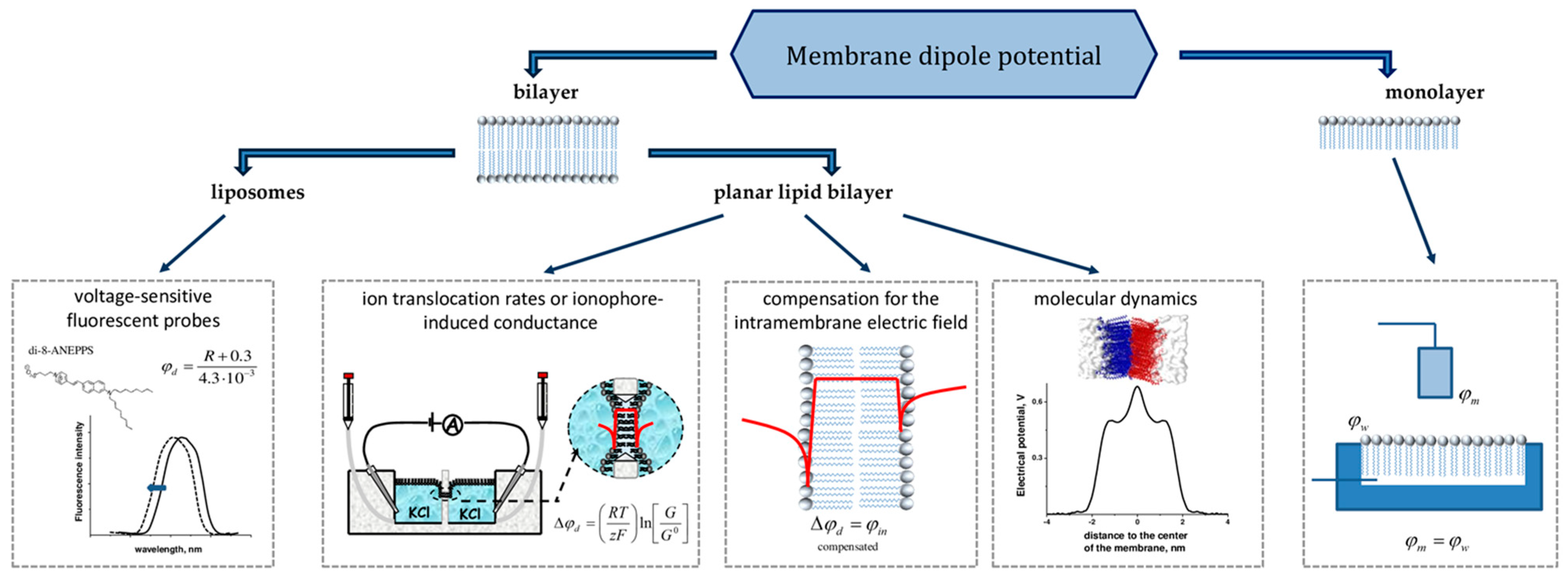
1.2. Methods for Assessing the Membrane Dipole Potential
2. Membrane Dipole Potential Significance
3. Small Molecules to Disturb Membrane Dipole Potential
3.1. Polyphenolic Compounds
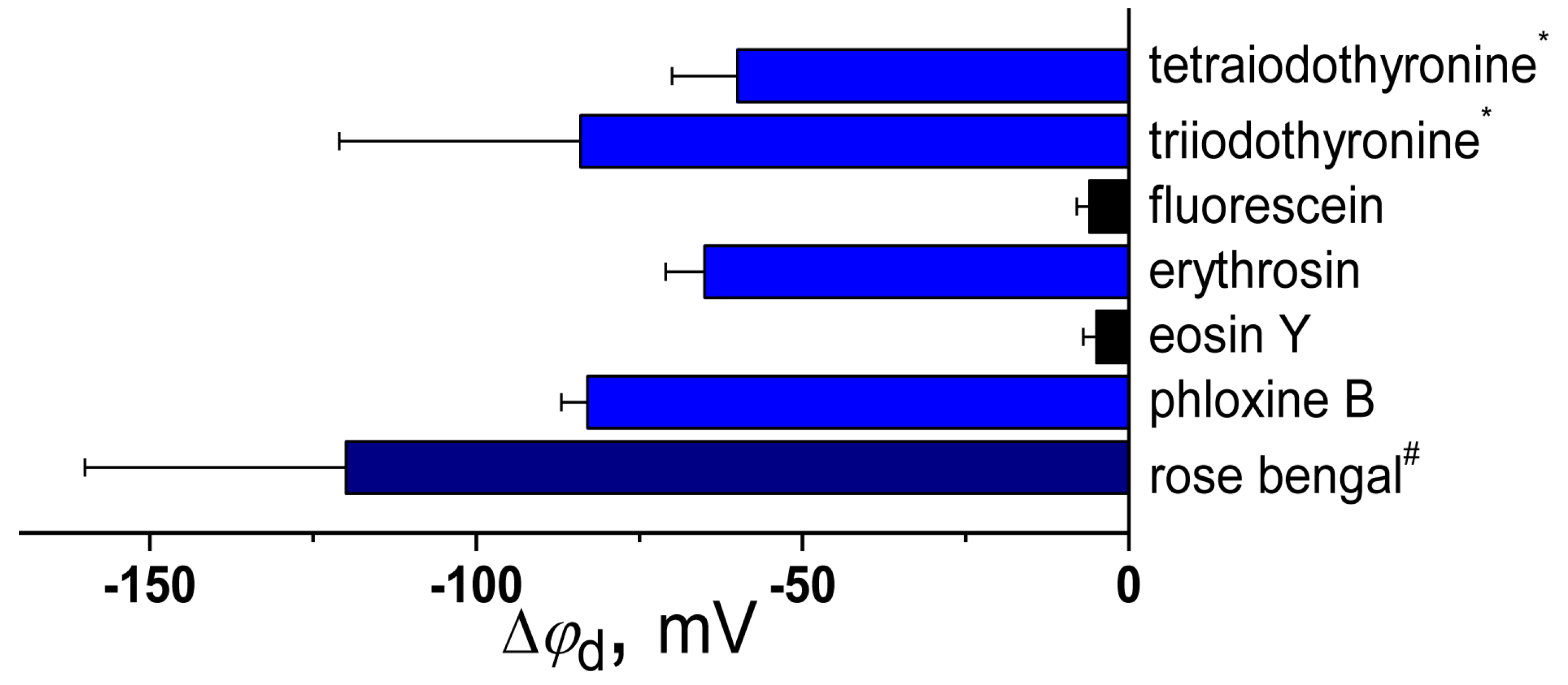
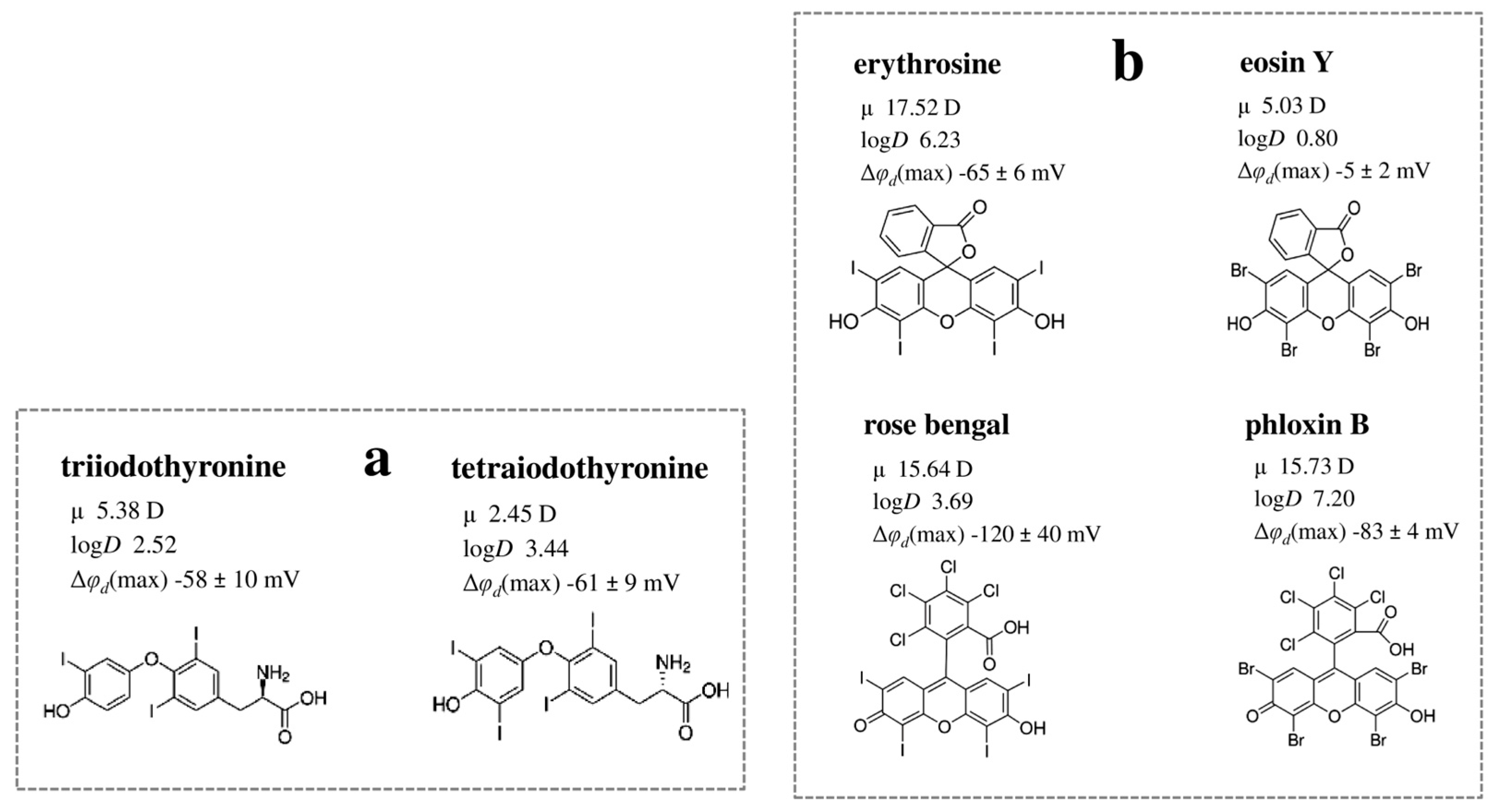
3.2. Thyroid Hormones and Xanthene Dyes
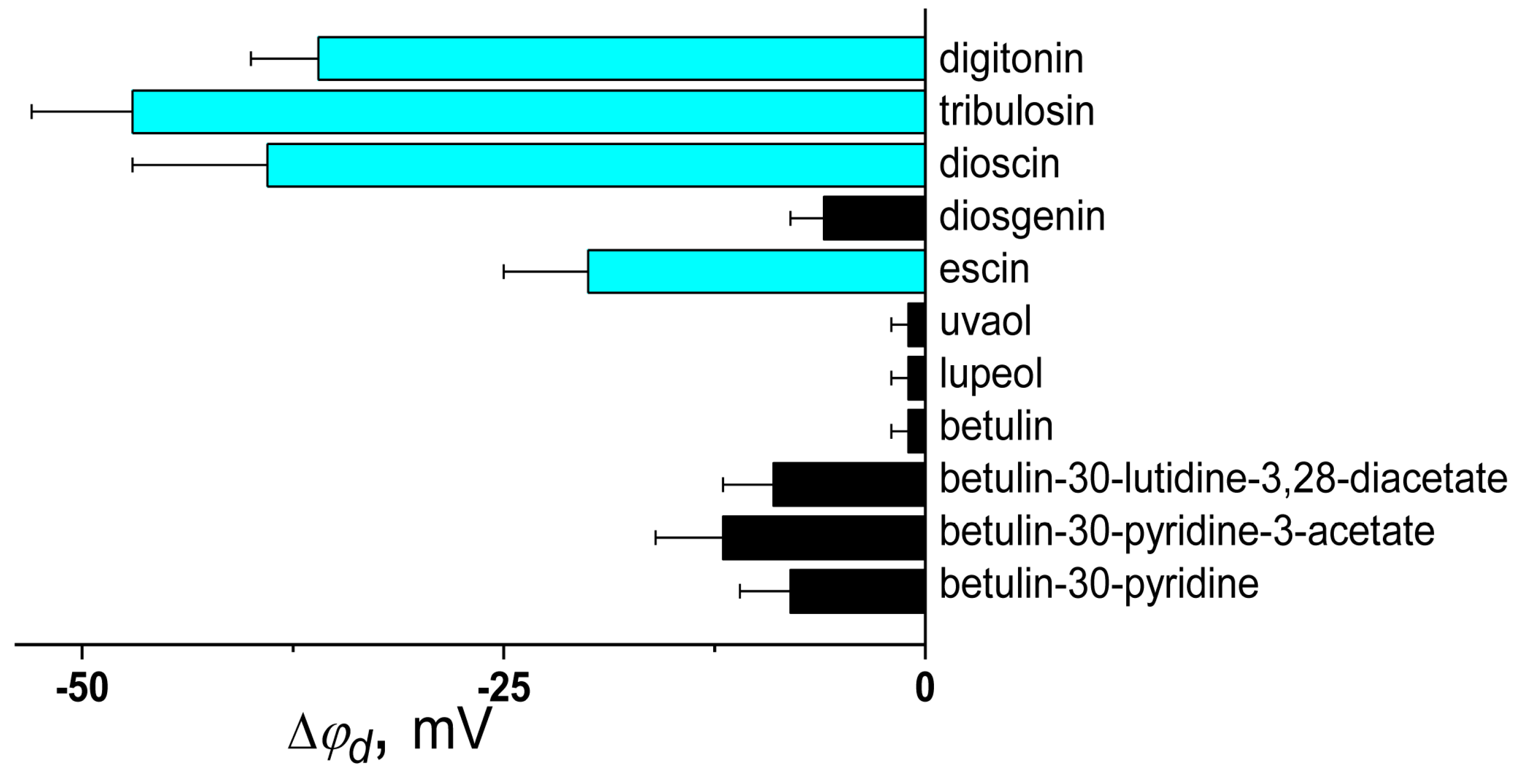
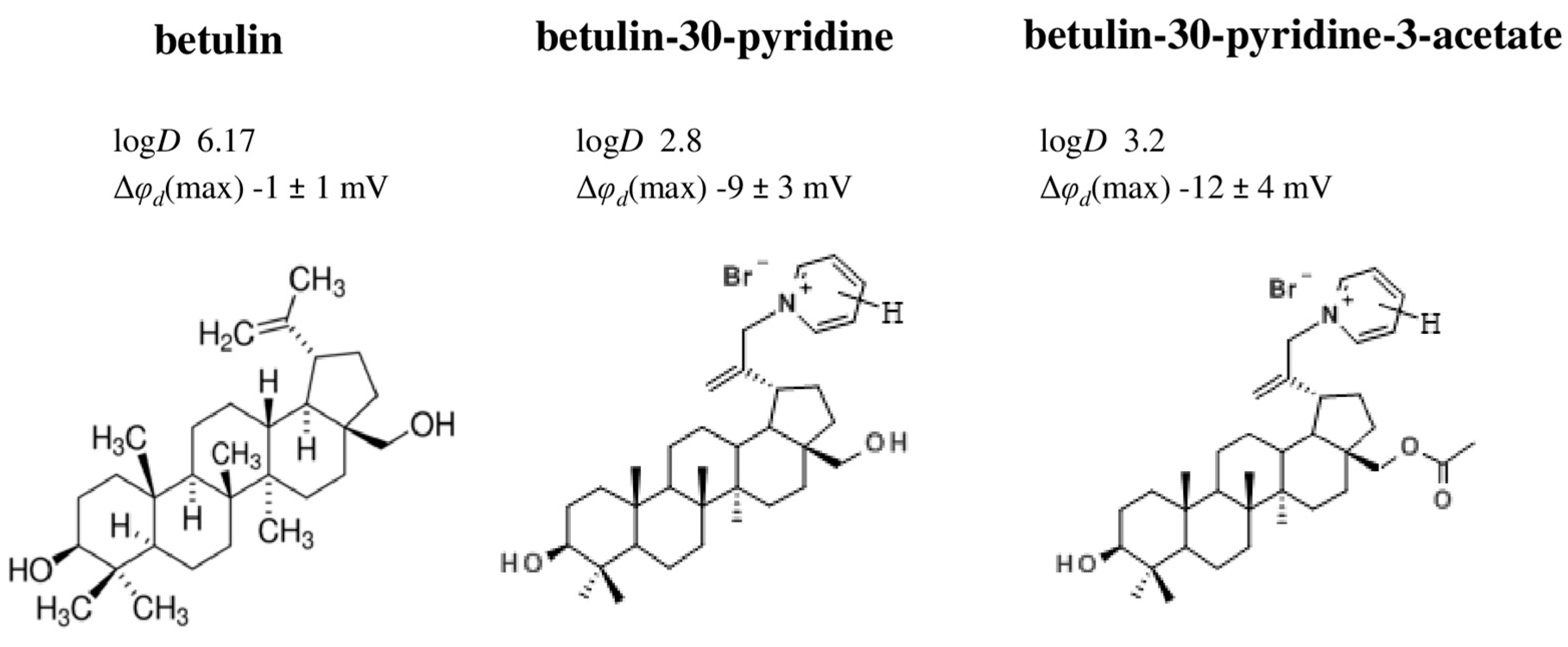
3.3. Saponins and Sapogenins
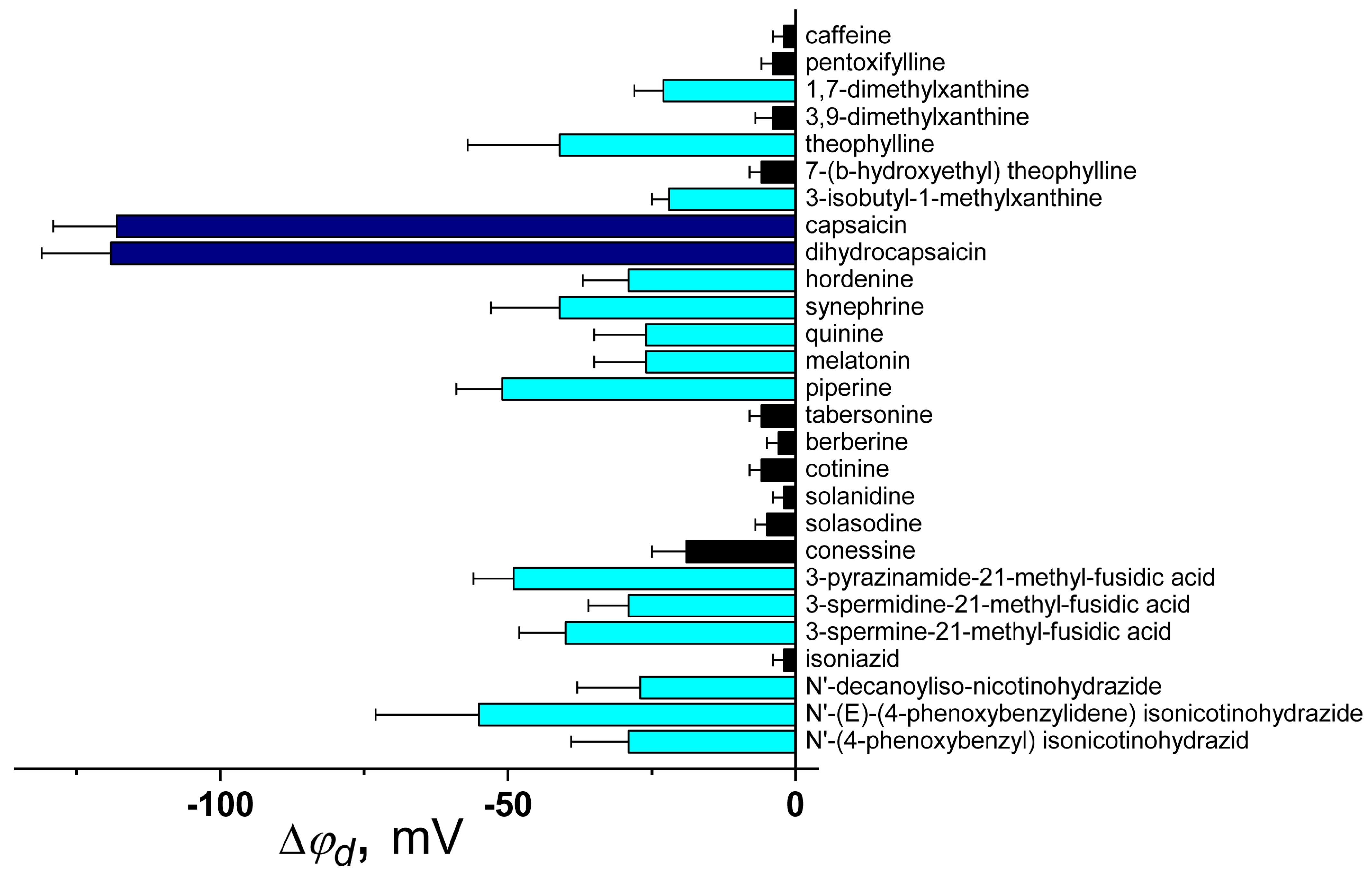
3.4. Alkaloids and Related Antibacterial Compounds
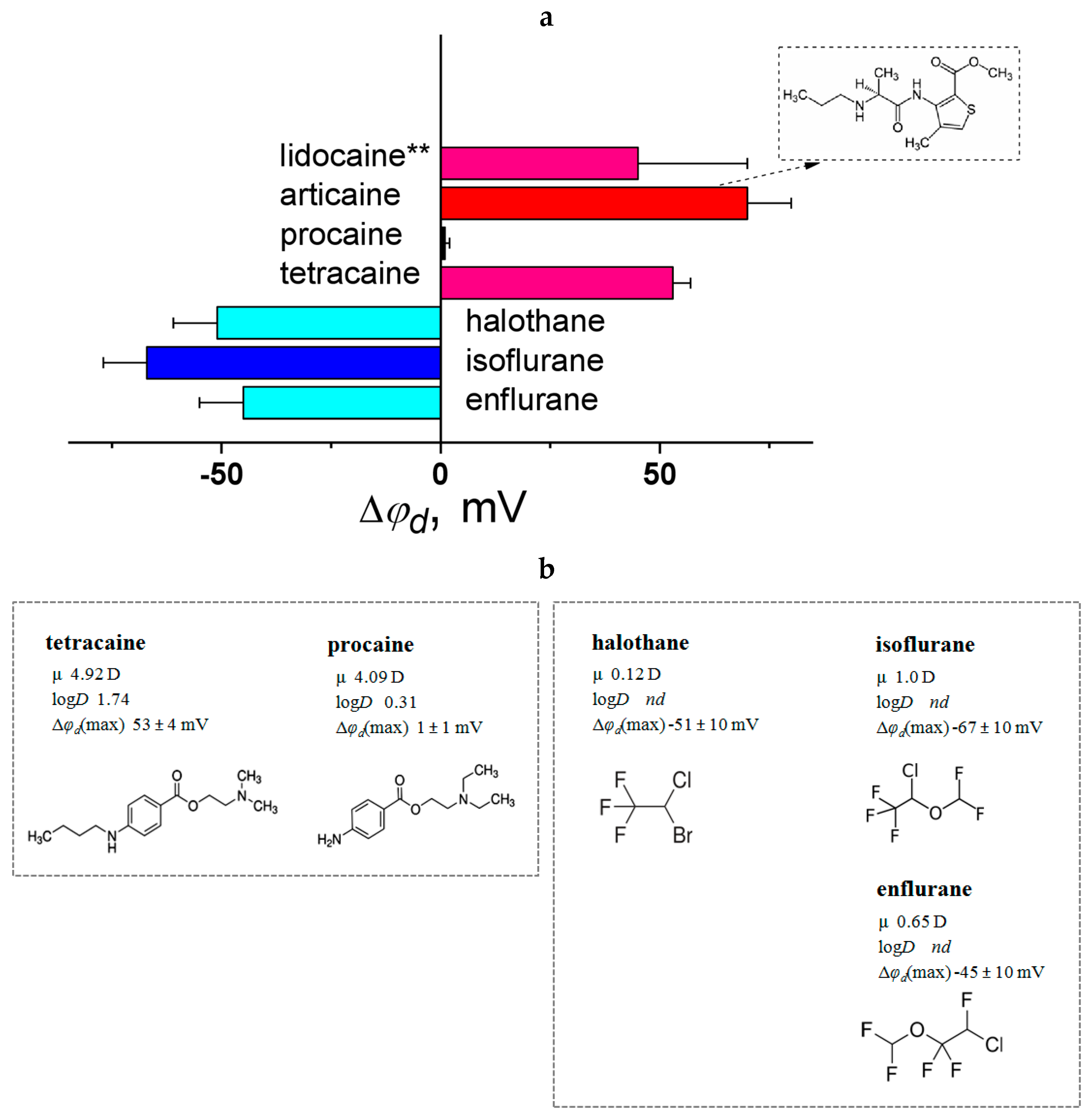
3.5. Anesthetics
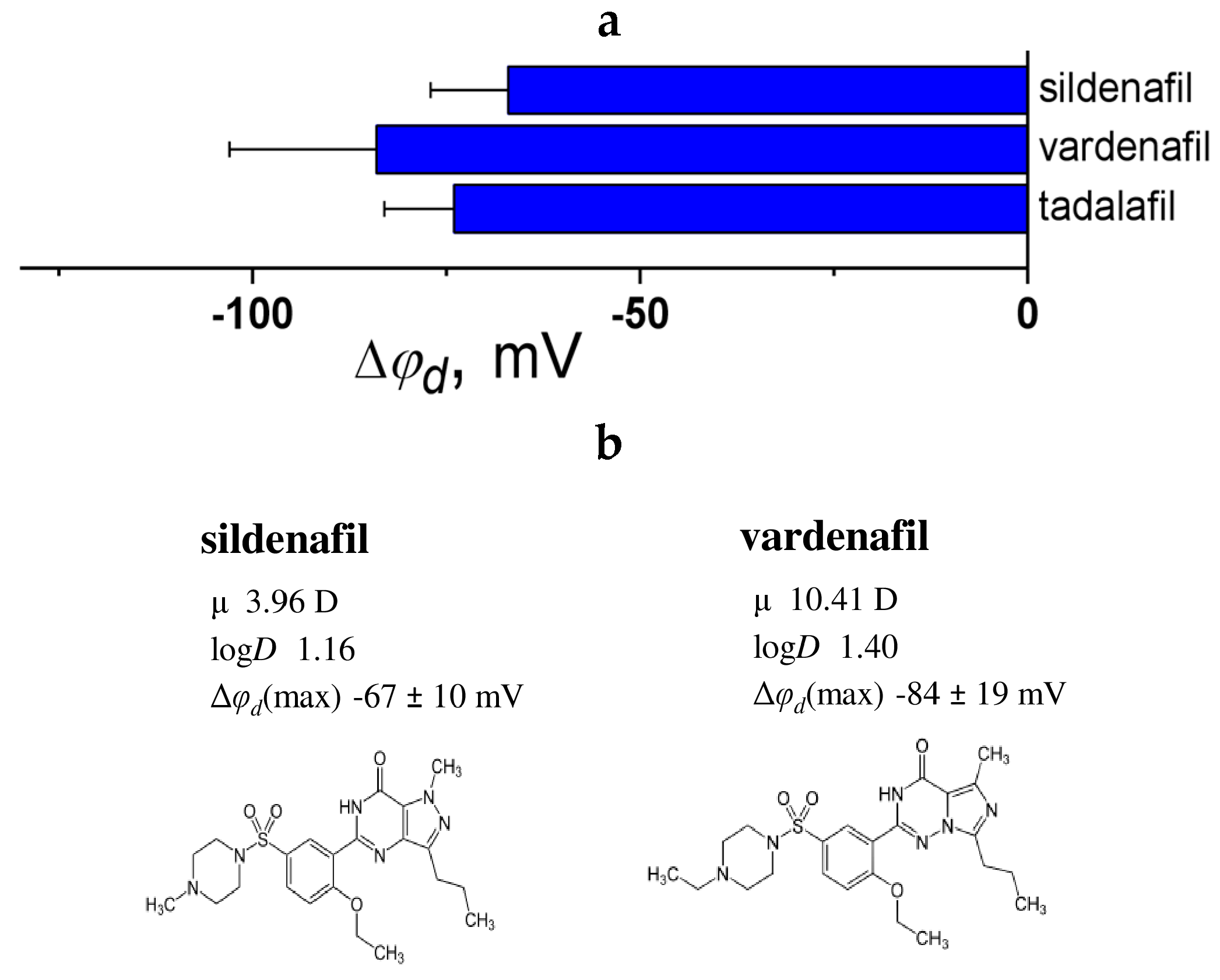
3.6. Phosphodiesterase Type 5 Inhibitors
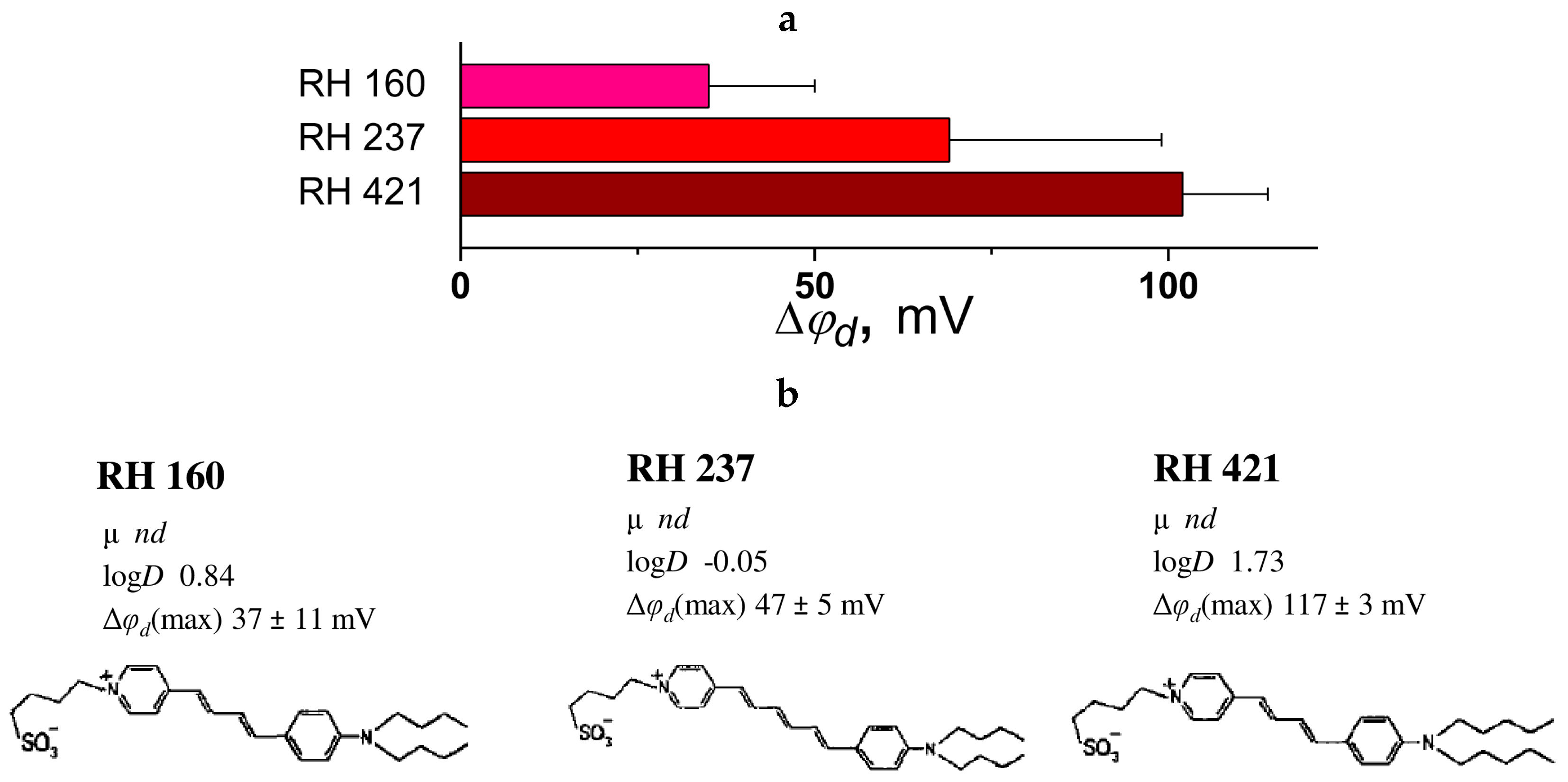
3.7. Styryl Dyes
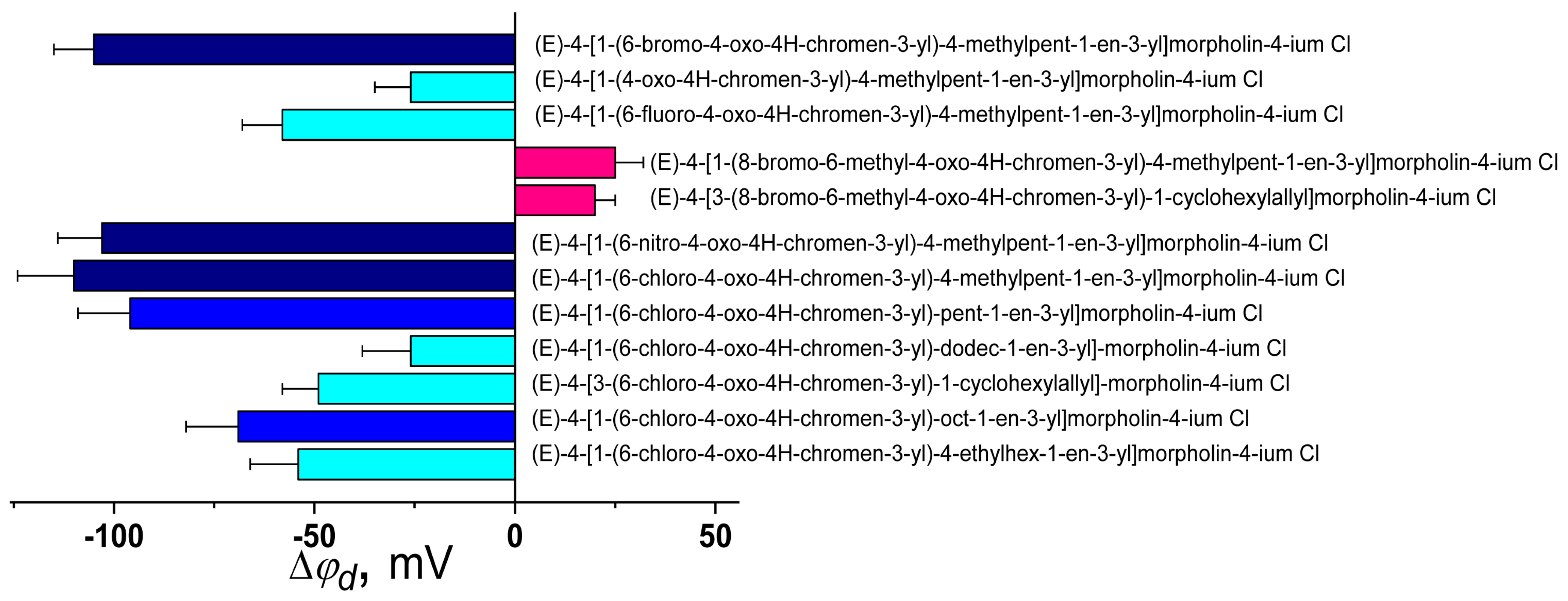
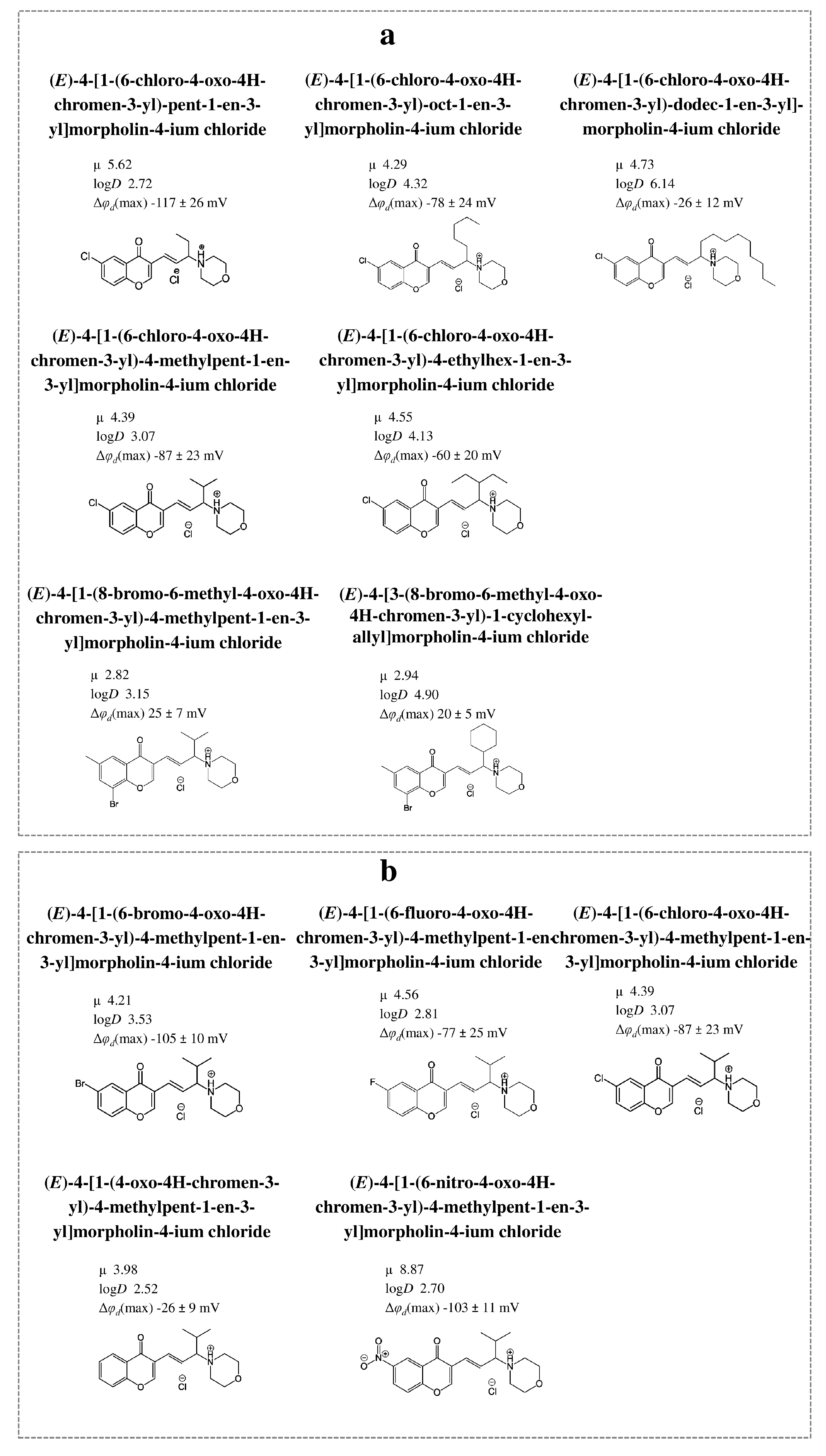
3.8. Chromonylallylmorpholine Derivatives
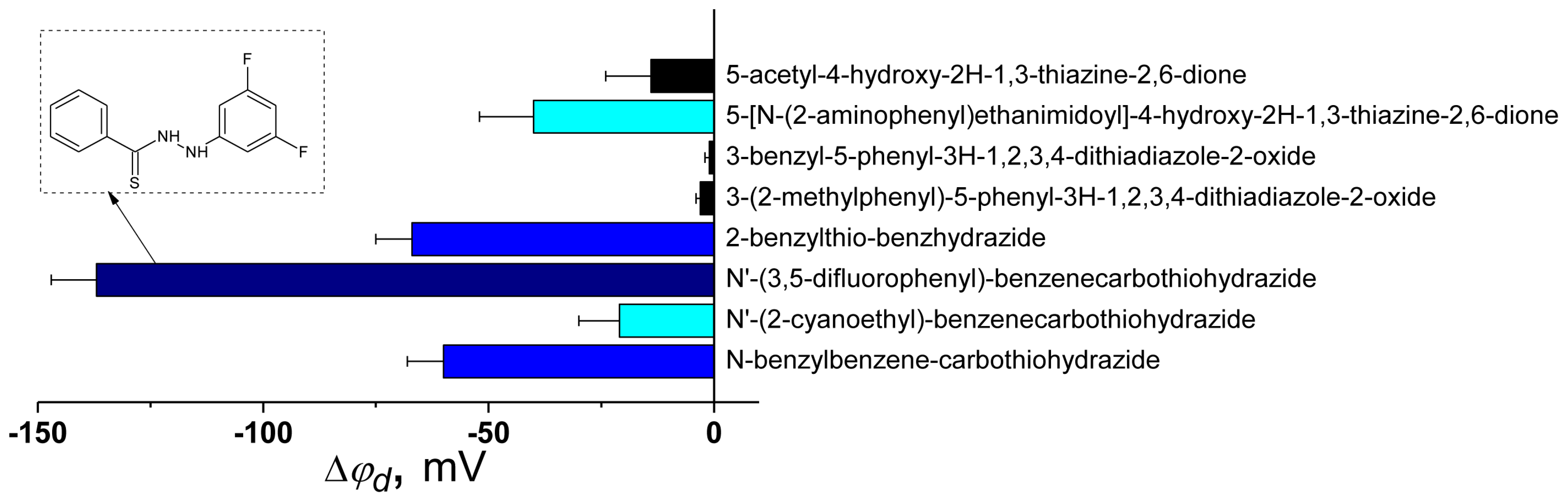
3.9. 1,3-Thiazine, 1,2,3,4-Dithiadiazole, and Thiohydrazide Derivatives
4. Summary
5. Outlooks
6. Conclusions
Author Contributions
Funding
Institutional Review Board Statement
Informed Consent Statement
Data Availability Statement
Conflicts of Interest
References
- Honig, B.H.; Hubbell, W.L.; Flewelling, R.F. Electrostatic interactions in membranes and proteins. Annu. Rev. Biophys. Biophys. Chem. 1986, 15, 163–193. [Google Scholar] [CrossRef] [PubMed]
- Hille, B. Ion Channels of Excitable Membranes, 3rd ed.; Sinauer: Sunderland, MA, USA, 2001; p. 814. [Google Scholar]
- Fraser, J.A.; Huang, C.L. Quantitative techniques for steady-state calculation and dynamic integrated modelling of membrane potential and intracellular ion concentrations. Prog. Biophys. Mol. Biol. 2007, 94, 336–372. [Google Scholar] [CrossRef] [PubMed]
- Poignard, C.; Silve, A.; Campion, F.; Mir, L.M.; Saut, O.; Schwartz, L. Ion fluxes, transmembrane potential, and osmotic stabilization: A new dynamic electrophysiological model for eukaryotic cells. Eur. Biophys. J. 2011, 40, 235–246. [Google Scholar] [CrossRef] [PubMed]
- Kuge, O.; Nishijima, M. Biosynthetic regulation and intracellular transport of phosphatidylserine in mammalian cells. J. Biochem. 2003, 133, 397–403. [Google Scholar] [CrossRef]
- Leventis, P.A.; Grinstein, S. The distribution and function of phosphatidylserine in cellular membranes. Annu. Rev. Biophys. 2010, 39, 407–427. [Google Scholar] [CrossRef]
- Glade, M.J.; Smith, K. Phosphatidylserine and the human brain. Nutrition 2015, 31, 781–786. [Google Scholar] [CrossRef]
- Oliveira, D.L.; Nimrichter, L.; Miranda, K.; Frases, S.; Faull, K.F.; Casadevall, A.; Rodrigues, M.L. Cryptococcus neoformans cryoultramicrotomy and vesicle fractionation reveals an intimate association between membrane lipids and glucuronoxylomannan. Fungal Genet. Biol. 2009, 46, 956–963. [Google Scholar] [CrossRef]
- Parsons, J.B.; Rock, C.O. Bacterial lipids: Metabolism and membrane homeostasis. Prog. Lipid. Res. 2013, 52, 249–276. [Google Scholar] [CrossRef]
- Sohlenkamp, C.; Geiger, O. Bacterial membrane lipids: Diversity in structures and pathways. FEMS Microbiol. Rev. 2016, 40, 133–159. [Google Scholar] [CrossRef]
- Mitchison-Field, L.M.; Belin, B.J. Bacterial lipid biophysics and membrane organization. Curr. Opin. Microbiol. 2023, 74, 102315. [Google Scholar] [CrossRef]
- Smit, J.M.; Moesker, B.; Rodenhuis-Zybert, I.; Wilschut, J. Flavivirus cell entry and membrane fusion. Viruses 2011, 3, 160–171. [Google Scholar] [CrossRef]
- Mårtensson, C.U.; Doan, K.N.; Becker, T. Effects of lipids on mitochondrial functions. Biochim. Biophys. Acta. Mol. Cell Biol. Lipids. 2017, 1862, 102–113. [Google Scholar] [CrossRef] [PubMed]
- Franklin, J.C.; Cafiso, D.S. Internal electrostatic potentials in bilayers: Measuring and controlling dipole potentials in lipid vesicles. Biophys. J. 1993, 65, 289–299. [Google Scholar] [CrossRef] [PubMed]
- Wang, P.; Zhou, D.; Kinraide, T.B.; Luo, X.; Li, L.; Li, D.; Zhang, H. Cell membrane surface potential (psi0) plays a dominant role in the phytotoxicity of copper and arsenate. Plant Physiol. 2008, 148, 2134–2143. [Google Scholar] [CrossRef]
- Gouy, G.M. Sur la constitution de la charge electrique a la surface d’un electrolyte. Compt. Rend. 1910, 149, 654. [Google Scholar] [CrossRef]
- Stern, O. The theory of the electrolytic double-layer. Z. Elektrochem. Angew. Phys. Chem. 1924, 30, 508–516. [Google Scholar]
- Kinraide, T.B.; Yermiyahu, U.; Rytwo, G. Computation of surface electrical potentials of plant cell membranes. Correspondence To published zeta potentials from diverse plant sources. Plant Physiol. 1998, 118, 505–512. [Google Scholar] [CrossRef] [PubMed]
- Delgado, A.V.; González-Caballero, F.; Hunter, R.J.; Koopal, L.K.; Lyklema, J. International union of pure and applied chemistry, physical and biophysical chemistry division IUPAC technical report. Measurement and interpretation of electrokinetic phenomena. J. Colloid Interface Sci. 2007, 309, 194–224. [Google Scholar] [CrossRef]
- Mohammadi-Jam, S.; Waters, K.E.; Greenwood, R.W. A review of zeta potential measurements using electroacoustics. Adv. Colloid Interface Sci. 2022, 309, 102778. [Google Scholar] [CrossRef]
- Kaszuba, M.; Corbett, J.; Watson, F.M.; Jones, A. High-concentration zeta potential measurements using light-scattering techniques. Philos. Trans A Math. Phys. Eng. Sci. 2010, 368, 4439–4451. [Google Scholar] [CrossRef]
- Ermakov, Y.A. Electric fields at the lipid membrane interface. Membranes 2023, 13, 883. [Google Scholar] [CrossRef]
- Flewelling, R.F.; Hubbell, W.L. Hydrophobic ion interactions with membranes. Thermodynamic analysis of tetraphenylphosphonium binding to vesicles. Biophys. J. 1986, 49, 531–540. [Google Scholar] [CrossRef]
- Flewelling, R.F.; Hubbell, W.L. The membrane dipole potential in a total membrane potential model. Applications to hydrophobic ion interactions with membranes. Biophys. J. 1986, 49, 541–552. [Google Scholar] [CrossRef]
- Cseh, R.; Benz, R. The adsorption of phloretin to lipid monolayers and bilayers cannot be explained by langmuir adsorption isotherms alone. Biophys. J. 1998, 74, 1399–1408. [Google Scholar] [CrossRef][Green Version]
- Peterson, U.; Mannock, D.A.; Lewis, R.N.; Pohl, P.; McElhaney, R.N.; Pohl, E.E. Origin of membrane dipole potential: Contribution of the phospholipid fatty acid chains. Chem. Phys. Lipids. 2002, 117, 19–27. [Google Scholar] [CrossRef] [PubMed]
- Brockman, H.L.; Momsen, M.M.; Brown, R.E.; He, L.; Chun, J.; Byun, H.S.; Bittman, R. The 4,5-double bond of ceramide regulates its dipole potential, elastic properties, and packing behavior. Biophys. J. 2004, 87, 1722–1731. [Google Scholar] [CrossRef] [PubMed]
- Gawrisch, K.; Ruston, D.; Zimmerberg, J.; Parsegian, V.A.; Rand, R.P.; Fuller, N. Membrane dipole potentials, hydration forces, and the ordering of water at membrane surfaces. Biophys. J. 1992, 61, 1213–1223. [Google Scholar] [CrossRef] [PubMed]
- Liberman, E.A.; Topaly, V.P. Permeability of bimolecular phospholipid membranes for fat-soluble ions. Biofizika 1969, 14, 452–461. [Google Scholar]
- Hladky, S.B.; Haydon, D.A. Ion transfer across lipid membranes in the presence of gramicidin A. I. Studies of the unit conductance channel. Biochim. Biophys. Acta 1972, 274, 294–312. [Google Scholar] [CrossRef]
- Ketterer, B.; Neumcke, B.; Läuger, P. Transport mechanism of hydrophobic ions through lipid bilayer membranes. J. Membr. Biol. 1971, 5, 225–245. [Google Scholar] [CrossRef]
- Benz, R.; Cros, D. Influence of sterols on ion transport through lipid bilayer membranes. Biochim. Biophys. Acta 1978, 506, 265–280. [Google Scholar] [CrossRef]
- Clarke, R.J. Effect of lipid structure on the dipole potential of phosphatidylcholine bilayers. Biochim. Biophys. Acta 1997, 1327, 269–278. [Google Scholar] [CrossRef]
- Clarke, R.J. Effect of Cholesterol on the Dipole Potential of Lipid Membranes. Adv. Exp. Med. Biol. 2019, 1115, 135–154. [Google Scholar] [CrossRef]
- Shen, H.; Zhao, K.; Wu, Z. Effects of Ether Linkage on Membrane Dipole Potential and Cholesterol Flip-Flop Motion in Lipid Bilayer Membranes. J. Phys. Chem. B 2019, 123, 7818–7828. [Google Scholar] [CrossRef]
- Starke-Peterkovic, T.; Clarke, R.J. Effect of headgroup on the dipole potential of phospholipid vesicles. Eur. Biophys. J. 2009, 39, 103–110. [Google Scholar] [CrossRef]
- Shinoda, K.; Shinoda, W.; Baba, T.; Mikami, M. Comparative molecular dynamics study of ether- and ester-linked phospholipid bilayers. J. Chem. Phys. 2004, 121, 9648–9654. [Google Scholar] [CrossRef] [PubMed]
- Brockman, H. Dipole potential of lipid membranes. Chem. Phys. Lipids 1994, 73, 57–79. [Google Scholar] [CrossRef]
- Cardoso, R.M.S.; Lairion, F.; Disalvo, E.A.; Loura, L.M.S.; Moreno, M.J. Dipole Potential of Monolayers with Biologically Relevant Lipid Compositions. Molecules 2024, 29, 5843. [Google Scholar] [CrossRef] [PubMed]
- Clarke, R.J. The dipole potential of phospholipid membranes and methods for its detection. Adv. Colloid Interface Sci. 2001, 89–90, 263–281. [Google Scholar] [CrossRef] [PubMed]
- Sarkar, P.; Chattopadhyay, A. Membrane Dipole Potential: An Emerging Approach to Explore Membrane Organization and Function. J. Phys. Chem. B 2022, 126, 4415–4430. [Google Scholar] [CrossRef]
- Montana, V.; Farkas, D.L.; Loew, L.M. Dual-wavelength ratiometric fluorescence measurements of membrane potential. Biochem. 1989, 28, 4536–4539. [Google Scholar] [CrossRef]
- Demchenko, A.P.; Yesylevskyy, S.O. Nanoscopic description of biomembrane electrostatics: Results of molecular dynamics simulations and fluorescence probing. Chem. Phys. Lipids 2009, 160, 63–84. [Google Scholar] [CrossRef]
- Klymchenko, A.S.; Duportail, G.; Mély, Y.; Demchenko, A.P. Ultrasensitive two-color fluorescence probes for dipole potential in phospholipid membranes. Proc. Natl. Acad. Sci. USA 2003, 100, 11219–11224. [Google Scholar] [CrossRef]
- Shynkar, V.V.; Klymchenko, A.S.; Duportail, G.; Demchenko, A.P.; Mély, Y. Two-color fluorescent probes for imaging the dipole potential of cell plasma membranes. Biochim. Biophys. Acta 2005, 1712, 128–136. [Google Scholar] [CrossRef] [PubMed]
- Robinson, D.; Besley, N.A.; O’Shea, P.; Hirst, J.D. Di-8-ANEPPS emission spectra in phospholipid/cholesterol membranes: A theoretical study. J. Phys. Chem. B 2011, 115, 4160–4167. [Google Scholar] [CrossRef]
- Zhang, J.; Davidson, R.M.; Wei, M.D.; Loew, L.M. Membrane electric properties by combined patch clamp and fluorescence ratio imaging in single neurons. Biophys. J. 1998, 74, 48–53. [Google Scholar] [CrossRef] [PubMed]
- Jewell, S.A.; Petrov, P.G.; Winlove, C.P. The effect of oxidative stress on the membrane dipole potential of human red blood cells. Biochim. Biophys. Acta 2013, 1828, 1250–1258. [Google Scholar] [CrossRef] [PubMed]
- Singh, P.; Haldar, S.; Chattopadhyay, A. Differential effect of sterols on dipole potential in hippocampal membranes: Implications for receptor function. Biochim. Biophys. Acta 2013, 1828, 917–923. [Google Scholar] [CrossRef]
- Sarkar, P.; Rao, B.D.; Chattopadhyay, A. Cell cycle dependent modulation of membrane dipole potential and neurotransmitter receptor activity: Role of membrane cholesterol. ACS Chem. Neurosci. 2020, 11, 2890–2899. [Google Scholar] [CrossRef]
- Andersen, O.S.; Finkelstein, A.; Katz, I.; Cass, A. Effect of phloretin on the permeability of thin lipid membranes. J. Gen. Physiol. 1976, 67, 749–771. [Google Scholar] [CrossRef]
- Sokolov, V.S.; Cherny, V.V.; Markin, V.S. Measurement of potential jumps during the adsorption of phloretin and phloricin on the surface of lipid membranes using the intramembrane field compensation method. Biophysics 1984, 29, 424–429. [Google Scholar]
- Simonova, M.V.; Cherny, V.V.; Donat, E.; Sokolov, V.S.; Markin, V.S. Boundary potentials on a bilayer membrane in the presence of rimantadine. Analysis of three measurement methods. Biochem. Moscow Suppl. Ser. A 1986, 3, 846–857. [Google Scholar]
- Shen, H.; Wu, Z.; Deng, M.; Wen, S.; Gao, C.; Li, S.; Wu, X. Molecular Dynamics Simulations of Ether- and Ester-Linked Phospholipid Bilayers: A Comparative Study of Water Models. J Phys Chem B 2018, 122, 9399–9408. [Google Scholar] [CrossRef]
- Falkovich, S.G.; Martinez-Seara, H.; Nesterenko, A.M.; Vattulainen, I.; Gurtovenko, A.A. What Can We Learn about Cholesterol’s Transmembrane Distribution Based on Cholesterol-Induced Changes in Membrane Dipole Potential? J. Phys. Chem. Lett. 2016, 7, 4585–4590. [Google Scholar] [CrossRef]
- Högberg, C.J.; Lyubartsev, A.P. Effect of local anesthetic lidocaine on electrostatic properties of a lipid bilayer. Biophys. J. 2008, 94, 525–531. [Google Scholar] [CrossRef]
- Shen, H.; Wu, Z.; Lu, C. Extension of the CAVS model to the simulation of helical peptides in a membrane environment. Phys. Chem. Chem. Phys. 2021, 23, 12850–12863. [Google Scholar] [CrossRef] [PubMed]
- Shen, H.; Wu, Z.; Zou, X. Interfacial Water Structure at Zwitterionic Membrane/Water Interface: The Importance of Interactions between Water and Lipid Carbonyl Groups. ACS Omega 2020, 5, 18080–18090. [Google Scholar] [CrossRef] [PubMed]
- Zhan, H.; Lazaridis, T. Influence of the membrane dipole potential on peptide binding to lipid bilayers. Biophys. Chem. 2012, 161, 1–7. [Google Scholar] [CrossRef][Green Version]
- Rasouli, A.; Jamali, Y.; Tajkhorshid, E.; Bavi, O.; Pishkenari, H.N. Mechanical properties of ester- and ether-DPhPC bilayers: A molecular dynamics study. J. Mech. Behav. Biomed. Mater. 2021, 117, 104386. [Google Scholar] [CrossRef]
- Baumgart, A.; Le, D.T.; Cranfield, C.G.; Bridge, S.; Zerlotti, R.; Palchetti, I.; Tadini-Buoninsegni, F.; Clarke, R.J. Membrane Binding of Hydrophobic Ions: Application of New Kinetic Techniques. Langmuir 2025, 41, 8081–8091. [Google Scholar] [CrossRef] [PubMed]
- Finkelstein, A.; Andersen, O.S. The gramicidin A channel: A review of its permeability characteristics with special reference to the single-file aspect of transport. J. Membr. Biol. 1981, 59, 155–171. [Google Scholar] [CrossRef] [PubMed]
- Hidaka, Y.; Asami, K. Measurement of dipole potential in bilayer lipid membranes by dielectric spectroscopy. J. Membr. Biol. 2014, 247, 721–727. [Google Scholar] [CrossRef]
- Wang, L.; Bose, P.S.; Sigworth, F.J. Using cryo-EM to measure the dipole potential of a lipid mem brane. Proc. Natl. Acad. Sci. USA 2006, 103, 18528–18533. [Google Scholar] [CrossRef]
- Heberle, F.A.; Welsch, D.; Scott, H.L.; Waxham, M.N. Optimization of cryo-electron microscopy for quantitative analysis of lipid bilayers. Biophys. Rep. 2022, 3, 100090. [Google Scholar] [CrossRef]
- Yang, Y.; Mayer, K.M.; Wickremasinghe, N.S.; Hafner, J.H. Probing the lipid membrane dipole potential by atomic force microscopy. Biophys. J. 2008, 95, 5193–5199. [Google Scholar] [CrossRef]
- Szabo, M.; Cs Szabo, B.; Kurtan, K.; Varga, Z.; Panyi, G.; Nagy, P.; Zakany, F.; Kovacs, T. Look Beyond Plasma Membrane Biophysics: Revealing Considerable Variability of the Dipole Potential Between Plasma and Organelle Membranes of Living Cells. Int. J. Mol. Sci. 2025, 26, 889. [Google Scholar] [CrossRef] [PubMed]
- Haldar, S.; Kanaparthi, R.K.; Samanta, A.; Chattopadhyay, A. Differential effect of cholesterol and its biosynthetic precursors on membrane dipole potential. Biophys. J. 2012, 102, 1561–1569. [Google Scholar] [CrossRef] [PubMed]
- Strichartz, G.R.; Oxford, G.S.; Ramon, F. Effects of the dipolar form of phloretin on potassium conductance in squid giant axons. Biophys. J. 1980, 31, 229–246. [Google Scholar] [CrossRef]
- Vandenberg, J.I.; Perry, M.D.; Perrin, M.J.; Mann, S.A.; Ke, Y.; Hill, A.P. hERG K+ Channels: Structure, Function, and Clinical Significance. Physiol. Rev. 2012, 92, 1393–1478. [Google Scholar] [CrossRef]
- Pearlstein, R.A.; Dickson, C.J.; Hornak, V. Contributions of the membrane dipole potential to the function of voltage-gated cation channels and modulation by small molecule potentiators. Biochim. Biophys. Acta Biomembr. 2017, 1859, 177–194. [Google Scholar] [CrossRef]
- Asandei, A.; Mereuta, L.; Luchian, T. Influence of membrane potentials upon reversible protonation of acidic residues from the OmpF eyelet. Biophys. Chem. 2008, 135, 32–40. [Google Scholar] [CrossRef] [PubMed][Green Version]
- Summhammer, J.; Salari, V.; Bernroider, G. A quantum-mechanical description of ion motion within the confining potentials of voltage-gated ion channels. J. Integr. Neurosci. 2012, 11, 123–135. [Google Scholar] [CrossRef] [PubMed]
- Adhya, L.; Mapder, T.; Adhya, S. Role of terminal dipole charges in aggregation of α-helix pair in the voltage gated K(+) channel. Biochim. Biophys. Acta 2013, 1828, 2795. [Google Scholar] [CrossRef]
- Sobolevsky, A.I.; Yelshansky, M.V.; Wollmuth, L.P. State-dependent changes in the electrostatic potential in the pore of a GluR channel. Biophys. J. 2005, 88, 235–242. [Google Scholar] [CrossRef]
- Oh, S.; Rivkin, S.; Tang, Q.; Verselis, V.K.; Bargiello, T.A. Determinants of gating polarity of a connexin 32 hemichannel. Biophys. J. 2004, 87, 912–928. [Google Scholar] [CrossRef]
- Mehnert, T.; Lam, Y.H.; Judge, P.J.; Routh, A.; Fischer, D.; Watts, A.; Fischer, W.B. Towards a mechanism of function of the viral ion channel Vpu from HIV-1. J. Biomol. Struct. Dyn. 2007, 24, 589–596. [Google Scholar] [CrossRef]
- Knyazev, D.G.; Kuttner, R.; Bondar, A.N.; Zimmerman, M.; Siligan, C.; Pohl, P. Voltage Sensing in Bacterial Protein Translocation. Biomolecules 2020, 10, 78. [Google Scholar] [CrossRef]
- Qu, W.; Moorhouse, A.J.; Chandra, M.; Pierce, K.D.; Lewis, T.M.; Barry, P.H. A single P-loop glutamate point mutation to either lysine or arginine switches the cation-anion selectivity of the CNGA2 channel. J. Gen. Physiol. 2006, 127, 375–389. [Google Scholar] [CrossRef]
- Chakrabarti, N.; Roux, B.; Pomès, R. Structural determinants of proton blockage in aquaporins. J. Mol. Biol. 2004, 343, 493–510. [Google Scholar] [CrossRef]
- Rokitskaya, T.I.; Antonenko, Y.N.; Kotova, E.A. Effect of the dipole potential of a bilayer lipid membrane on gramicidin channel dissociation kinetics. Biophys. J. 1997, 73, 850–854. [Google Scholar] [CrossRef]
- Busath, D.D.; Thulin, C.D.; Hendershot, R.W.; Phillips, L.R.; Maughan, P.; Cole, C.D.; Bingham, N.C.; Morrison, S.; Baird, L.C.; Hendershot, R.J.; et al. Noncontact dipole effects on channel permeation. I. Experiments with (5F-indole)Trp13 gramicidin A channels. Biophys. J. 1998, 75, 2830–2844. [Google Scholar] [CrossRef]
- Ostroumova, O.S.; Malev, V.V.; Bessonov, A.N.; Takemoto, J.Y.; Schagina, L.V. Altering the activity of syringomycin E via the membrane dipole potential. Langmuir 2008, 24, 2987–2991. [Google Scholar] [CrossRef]
- Rokitskaya, T.I.; Kotova, E.A.; Antonenko, Y.N. Membrane dipole potential modulates proton conductance through gramicidin channel: Movement of negative ionic defects inside the channel. Biophys. J. 2002, 82, 865–873. [Google Scholar] [CrossRef]
- Schagina, L.V.; Gurnev, P.A.; Takemoto, J.Y.; Malev, V.V. Effective gating charge of ion channels induced by toxin syringomycin E in lipid bilayers. Bioelectrochemistry 2003, 60, 21–27. [Google Scholar] [CrossRef] [PubMed]
- Luchian, T.; Mereuta, L. Phlorizin- and 6-ketocholestanol-mediated antagonistic modulation of alamethicin activity in phospholipid planar membranes. Langmuir 2006, 22, 8452–8457. [Google Scholar] [CrossRef] [PubMed]
- Asandei, A.; Luchian, T. Ion selectivity, transport properties and dynamics of amphotericin B channels studied over a wide range of acidity changes. Colloids Surf. B Biointerfaces 2008, 67, 99–106. [Google Scholar] [CrossRef]
- Apetrei, A.; Mereuta, L.; Luchian, T. The RH 421 styryl dye induced, pore model-dependent modulation of antimicrobial peptides activity in reconstituted planar membranes. Biochim. Biophys. Acta 2009, 1790, 809–816. [Google Scholar] [CrossRef]
- Ostroumova, O.S.; Malev, V.V.; Ilin, M.G.; Schagina, L.V. Surfactin activity depends on the membrane dipole potential. Langmuir 2010, 26, 15092–15097. [Google Scholar] [CrossRef] [PubMed]
- Mereuta, L.; Asandei, A.; Luchian, T. Meet me on the other side: Trans-bilayer modulation of a model voltage-gated ion channel activity by membrane electrostatics asymmetry. PLoS ONE 2011, 6, e25276. [Google Scholar] [CrossRef][Green Version]
- Efimova, S.S.; Schagina, L.V.; Ostroumova, O.S. Channel-forming activity of cecropins in lipid bilayers: Effect of agents modifying the membrane dipole potential. Langmuir 2014, 30, 7884–7892. [Google Scholar] [CrossRef]
- Efimova, S.S.; Zakharova, A.A.; Schagina, L.V.; Ostroumova, O.S. Local Anesthetics Affect Gramicidin A Channels via Membrane Electrostatic Potentials. J. Membr. Biol. 2016, 249, 781–787. [Google Scholar] [CrossRef]
- Efimova, S.S.; Zakharova, A.A.; Medvedev, R.Y.; Ostroumova, O.S. Ion channels induced by antimicrobial agents in model lipid membranes are modulated by plant polyphenols through surrounding lipid media. J. Membr. Biol. 2018, 251, 551–562. [Google Scholar] [CrossRef] [PubMed]
- Efimova, S.S.; Zakharova, A.A.; Ismagilov, A.A.; Schagina, L.V.; Malev, V.V.; Bashkirov, P.V.; Ostroumova, O.S. Lipid-mediated regulation of pore-forming activity of syringomycin E by thyroid hormones and xanthene dyes. Biochim. Biophys. Acta Biomembr. 2018, 1860, 691–699. [Google Scholar] [CrossRef] [PubMed]
- Zakharova, A.A.; Efimova, S.S.; Ostroumova, O.S. Lipid Microenvironment Modulates the Pore-Forming Ability of Polymyxin B. Antibiotics 2022, 11, 1445. [Google Scholar] [CrossRef] [PubMed]
- Chernyshova, D.N.; Tyulin, A.A.; Ostroumova, O.S.; Efimova, S.S. Discovery of the Potentiator of the Pore-Forming Ability of Lantibiotic Nisin: Perspectives for Anticancer Therapy. Membranes 2022, 12, 1166. [Google Scholar] [CrossRef]
- Kovács, T.; Batta, G.; Hajdu, T.; Szabó, Á.; Váradi, T.; Zákány, F.; Csomós, I.; Szöllősi, J.; Nagy, P. The Dipole Potential Modifies the Clustering and Ligand Binding Affinity of ErbB Proteins and Their Signaling Efficiency. Sci. Rep. 2016, 6, 35850. [Google Scholar] [CrossRef]
- Starke-Peterkovic, T.; Turner, N.; Else, P.L.; Clarke, R.J. Electric field strength of membrane lipids from vertebrate species: Membrane lipid composition and Na+-K+-ATPase molecular activity. Am. J. Physiol. Regul. Integr. Comp. Physiol. 2005, 288, R663–R670. [Google Scholar] [CrossRef]
- Mares, L.J.; Garcia, A.; Rasmussen, H.H.; Cornelius, F.; Mahmmoud, Y.A.; Berlin, J.R.; Lev, B.; Allen, T.W.; Clarke, R.J. Identification of electric-field-dependent steps in the Na(+), K(+)-pump cycle. Biophys. J. 2014, 107, 1352–1363. [Google Scholar] [CrossRef]
- Karlovská, J.; Uhríková, D.; Kucerka, N.; Teixeira, J.; Devínsky, F.; Lacko, I.; Balgavý, P. Influence of N-dodecyl-N,N-dimethylamine N-oxide on the activity of sarcoplasmic reticulum Ca(2+)-transporting ATPase reconstituted into diacylphosphatidylcholine vesicles: Efects of bilayer physical parameters. Biophys. Chem. 2006, 119, 69–77. [Google Scholar] [CrossRef]
- Tadini-Buoninsegni, F.; Moncelli, M.R.; Peruzzi, N.; Ninham, B.W.; Dei, L.; Nostro, P.L. Hofmeister effect of anions on calcium translocation by sarcoplasmic reticulum Ca(2+)-ATPase. Sci. Rep. 2015, 5, 14282. [Google Scholar] [CrossRef]
- Clarke, R.J. Dipole-Potential-Mediated Effects on Ion Pump Kinetics. Biophys. J. 2015, 109, 1513–1520. [Google Scholar] [CrossRef]
- Maggio, B. Modulation of phospholipase A2 by electrostatic fields and dipole potential of glycosphingolipids in monolayers. J. Lipid Res. 1999, 40, 930−939. [Google Scholar] [CrossRef]
- Xu, C.; Loew, L.M. Activation of phospholipase C increases intramembrane electric fields in N1E-115 neuroblastoma cells. Biophys. J. 2003, 84, 4144–4156. [Google Scholar] [CrossRef]
- Cladera, J.; O’Shea, P. Intramembrane molecular dipoles affect the membrane insertion and folding of a model amphiphilic peptide. Biophys. J. 1998, 74, 2434–2442. [Google Scholar] [CrossRef]
- Oishi, K.; Zheng, B.; White, J.F.; Vogler, W.R.; Kuo, J.F. Inhibition of Na,K-ATPase and sodium pump by anticancer ether lipids and protein kinase C inhibitors ET-18-OCH3 and BM 41.440. Biochem. Biophys. Res. Commun. 1988, 157, 1000–1006. [Google Scholar] [CrossRef] [PubMed]
- Jewell, S.A.; Titball, R.W.; Huyet, J.; Naylor, C.E.; Basak, A.K.; Gologan, P.; Winlove, C.P.; Petrov, P.G. Clostridium perfringensα-toxin interaction with red cells and model membranes. Soft. Matter. 2015, 11, 7748–7761. [Google Scholar] [CrossRef]
- Kovács, T.; Batta, G.; Zákány, F.; Szöllősi, J.; Nagy, P. The dipole potential correlates with lipid raft markers in the plasma membrane of living cells. J. Lipid Res. 2017, 58, 1681–1691. [Google Scholar] [CrossRef] [PubMed]
- Efimova, S.S.; Zakharova, A.A.; Schagina, L.V.; Ostroumova, O.S. Two types of syringomycin E channels in sphingomyelin-containing bilayers. Eur. Biophys. J. 2016, 45, 91–98. [Google Scholar] [CrossRef]
- Batta, G.; Hajdu, T.; Nagy, P. Characterization of the Effect of Sphingolipid Accumulation on Membrane Compactness, Dipole Potential, and Mobility of Membrane Components. Methods Mol. Biol. 2021, 2187, 283–301. [Google Scholar] [CrossRef] [PubMed]
- Davis, S.; Davis, B.M.; Richens, J.L.; Vere, K.A.; Petrov, P.G.; Winlove, C.P.; O’Shea, P. α-Tocopherols modify the membrane dipole potential leading to modulation of ligand binding by P-glycoprotein. J. Lipid Res. 2015, 56, 1543–1550. [Google Scholar] [CrossRef]
- Mai, T.L.; Nguyen, H.T.; Derreumaux, P.; Nguyen, P.H. Structure and elasticity of healthy and Alzheimer’s disease cell membranes revealed by molecular dynamics simulations. Proteins 2025, 93, 1349–1360. [Google Scholar] [CrossRef]
- Sarkar, P.; Chattopadhyay, A. Solubilization of the serotonin1A receptor monitored utilizing membrane dipole potential. Chem. Phys. Lipids 2017, 209, 54–60. [Google Scholar] [CrossRef] [PubMed]
- Cladera, J.; Martin, I.; Ruysschaert, J.M.; O’Shea, P. Characterization of the sequence of interactions of the fusion domain of the simian immunodeficiency virus with membranes. Role of the membrane dipole potential. J. Biol. Chem. 1999, 274, 29951–29959. [Google Scholar] [CrossRef] [PubMed]
- Buzón, V.; Cladera, J. Effect of cholesterol on the interaction of the HIV GP41 fusion peptide with model membranes. Importance of the membrane dipole potential. Biochemistry 2006, 45, 15768–15775. [Google Scholar] [CrossRef]
- Gomes, B.; Gonçalves, S.; Disalvo, A.; Hollmann, A.; Santos, N.C. Effect of 25-hydroxycholesterol in viral membrane fusion: Insights on HIV inhibition. Biochim. Biophys. Acta Biomembr. 2018, 1860, 1171–1178. [Google Scholar] [CrossRef]
- Asawakarn, T.; Cladera, J.; O’Shea, P. Effects of the membrane dipole potential on the interaction of saquinavir with phospholipid membranes and plasma membrane receptors of Caco-2 cells. J. Biol. Chem. 2001, 276, 38457–38463. [Google Scholar] [CrossRef] [PubMed]
- Matos, P.M.; Freitas, T.; Castanho, M.A.; Santos, N.C. The role of blood cell membrane lipids on the mode of action of HIV-1 fusion inhibitor sifuvirtide. Biochem. Biophys. Res. Commun. 2010, 403, 270–274. [Google Scholar] [CrossRef]
- Matos, P.M.; Castanho, M.A.; Santos, N.C. HIV-1 fusion inhibitor peptides enfuvirtide and T-1249 interact with erythrocyte and lymphocyte membranes. PLoS ONE 2010, 5, e9830. [Google Scholar] [CrossRef]
- Hollmann, A.; Matos, P.M.; Augusto, M.T.; Castanho, M.A.; Santos, N.C. Conjugation of cholesterol to HIV-1 fusion inhibitor C34 increases peptide-membrane interactions potentiating its action. PLoS ONE 2013, 8, e60302. [Google Scholar] [CrossRef]
- Guillén, J.; Kinnunen, P.K.; Villalaín, J. Membrane insertion of the three main membranotropic sequences from SARS-CoV S2 glycoprotein. Biochim. Biophys. Acta 2008, 1778, 2765–2774. [Google Scholar] [CrossRef]
- Shen, H.; Wu, Q.; Chen, L. Binding of SARS-CoV-2 fusion peptides to hybrid phospholipid bilayers: Exploring the influence of ether-linked phospholipids. Phys. Chem. Chem. Phys. 2025, 27, 16962–16971. [Google Scholar] [CrossRef]
- Alakoskela, J.M.; Söderlund, T.; Holopainen, J.M.; Kinnunen, P.K. Dipole potential and head-group spacing are determinants for the membrane partitioning of pregnanolone. Mol. Pharmacol. 2004, 66, 161–168. [Google Scholar] [CrossRef]
- Via, M.A.; Klug, J.; Wilke, N.; Mayorga, L.S.; Del Pópolo, M.G. The interfacial electrostatic potential modulates the insertion of cell-penetrating peptides into lipid bilayers. Phys. Chem. Chem. Phys. 2018, 20, 5180–5189. [Google Scholar] [CrossRef]
- Batta, G.; Kárpáti, L.; Henrique, G.F.; Tóth, G.; Tarapcsák, S.; Kovacs, T.; Zakany, F.; Mándity, I.M.; Nagy, P. Statin-boosted cellular uptake and endosomal escape of penetratin due to reduced membrane dipole potential. Br. J. Pharmacol. 2021, 178, 3667–3681. [Google Scholar] [CrossRef] [PubMed]
- Via, M.A.; Del Pópolo, M.G.; Wilke, N. Negative Dipole Potentials and Carboxylic Polar Head Groups Foster the Insertion of Cell-Penetrating Peptides into Lipid Monolayers. Langmuir 2018, 34, 3102–3111. [Google Scholar] [CrossRef]
- Cladera, J.; O’Shea, P.; Hadgraft, J.; Valenta, C. Influence of molecular dipoles on human skin permeability: Use of 6-ketocholestanol to enhance the transdermal delivery of bacitracin. J. Pharm. Sci. 2003, 92, 1018–1027. [Google Scholar] [CrossRef]
- Prince, A.; Sandhu, P.; Ror, P.; Dash, E.; Sharma, S.; Arakha, M.; Jha, S.; Akhter, Y.; Saleem, M. Lipid-II Independent Antimicrobial Mechanism of Nisin Depends On Its Crowding And Degree Of Oligomerization. Sci. Rep. 2017, 7, 41346. [Google Scholar] [CrossRef] [PubMed]
- Felício, M.R.; Silveira, G.G.O.S.; Oshiro, K.G.N.; Meneguetti, B.T.; Franco, O.L.; Santos, N.C.; Gonçalves, S. Polyalanine peptide variations may have different mechanisms of action against multidrug-resistant bacterial pathogens. J. Antimicrob. Chemother. 2021, 76, 1174–1186. [Google Scholar] [CrossRef]
- Silvestroni, L.; Fiorini, R.; Palleschi, S. Partition of the organochlorine insecticide lindane into the human sperm surface induces membrane depolarization and Ca2+ influx. Biochem. J. 1997, 321, 691–698. [Google Scholar] [CrossRef] [PubMed]
- Reyes, J.; Latorre, R. Effect of the anesthetics benzyl alcohol and chloroform on bilayers made from monolayers. Biophys. J. 1979, 28, 259–279. [Google Scholar] [CrossRef]
- Cafiso, D.S. Dipole potentials and spontaneous curvature: Membrane properties that could mediate anesthesia. Toxicol. Lett. 1998, 100–101, 431–439. [Google Scholar] [CrossRef] [PubMed]
- Davis, B.M.; Brenton, J.; Davis, S.; Shamsher, E.; Sisa, C.; Grgic, L.; Cordeiro, M.F. Assessing anesthetic activity through modulation of the membrane dipole potential. J. Lipid Res. 2017, 58, 1962–1976. [Google Scholar] [CrossRef]
- Jalili, S.; Saeedi, M. Study of procaine and tetracaine in the lipid bilayer using molecular dynamics simulation. Eur. Biophys. J. 2017, 46, 265–282. [Google Scholar] [CrossRef]
- Qin, Z.; Szabo, G.; Cafiso, D.S. Anesthetics reduce the magnitude of the membrane dipole potential. Measurements in lipid vesicles using voltage-sensitive spin probes. Biochemistry 1995, 34, 5536–5543. [Google Scholar] [CrossRef]
- Shrivastava, S.; Ror, P.; Chattopadhyay, A. Effect of Local Anesthetics on Dipole Potential of Different Phase Membranes: A Fluorescence Study. J. Membr. Biol. 2022, 255, 363–369. [Google Scholar] [CrossRef] [PubMed]
- Esteruelas, G.; Ortiz, A.; Prat, J.; Vega, E.; Muñoz-Juncosa, M.; López, M.L.G.; Ettcheto, M.; Camins, A.; Sánchez-López, E.; Pujol, M. Novel customized age-dependent corneal membranes and interactions with biodegradable nanoparticles loaded with dexibuprofen. Colloids Surf. B Biointerfaces 2023, 228, 113394. [Google Scholar] [CrossRef] [PubMed]
- Terreiro, J.F.P.R.; Marquês, J.T.; Antunes, I.; de Faria, C.F.; Santos, S.; Martins, F.; de Almeida, R.F.M. Membrane interaction studies of isoniazid derivatives active against drug-resistant tuberculosis. Eur. J. Pharm. Sci. 2025, 205, 106986. [Google Scholar] [CrossRef]
- Szomek, M.; Akkerman, V.; Lauritsen, L.; Walther, H.L.; Juhl, A.D.; Thaysen, K.; Egebjerg, J.M.; Covey, D.F.; Lehmann, M.; Wessig, P.; et al. Ergosterol promotes aggregation of natamycin in the yeast plasma membrane. Biochim. Biophys. Acta Biomembr. 2024, 1866, 184350. [Google Scholar] [CrossRef]
- Starosta, R.; Santos, T.C.; Dinis de Sousa, A.F.; Santos, M.S.; Corvo, M.L.; Tomaz, A.I.; de Almeida, R.F.M. Assessing the role of membrane lipids in the action of ruthenium(III) anticancer compounds. Front. Mol. Biosci. 2023, 9, 1059116. [Google Scholar] [CrossRef]
- Cyboran-Mikołajczyk, S.; Żyłka, R.; Jurkiewicz, P.; Pruchnik, H.; Oszmiański, J.; Hof, M.; Kleszczyńska, H. Interaction of procyanidin B3 with membrane lipids - Fluorescence, DSC and FTIR studies. Biochim. Biophys. Acta Biomembr. 2017, 1859, 1362–1371. [Google Scholar] [CrossRef]
- Borba, A.; Lairion, F.; Disalvo, A.; Fausto, R. Interaction of nicotinamide and picolinamide with phosphatidylcholine and phosphatidylethanolamine membranes: A combined approach using dipole potential measurements and quantum chemical calculations. Biochim. Biophys. Acta 2009, 1788, 2553–2562. [Google Scholar] [CrossRef][Green Version]
- Pohl, E.E.; Krylov, A.V.; Block, M.; Pohl, P. Changes of the membrane potential profile induced by verapamil and propranolol. Biochim. Biophys. Acta 1998, 1373, 170–178. [Google Scholar] [CrossRef]
- Lairion, F.; Disalvo, E.A. Effect of arbutin on the dipole potential and area per lipid of ester and ether phosphatidylcholine and phosphatidyl ethanolamine monolayers. Biochim. Biophys. Acta 2007, 1768, 450–456. [Google Scholar] [CrossRef][Green Version]
- Sethy, D.; Chakraborty, H. Micellar dipolar rearrangement is sensitive to hydrophobic chain length: Implication for structural switchover of piroxicam. Chem. Phys. Lipids 2016, 200, 120–125. [Google Scholar] [CrossRef]
- Mazurkiewicz, E.; Obłak, E.; Paściak, M.; Gamian, A.; Ciesielska, M.; Lamch, Ł.; Wilk, K.A. The structure-dependent effects of newly synthesised cationic gemini surfactants against yeast cells. Sci. Rep. 2025, 9, 604. [Google Scholar] [CrossRef]
- Matti, V.; Säily, J.; Ryhänen, S.J.; Holopainen, J.M.; Borocci, S.; Mancini, G.; Kinnunen, P.K. Characterization of mixed monolayers of phosphatidylcholine and a dicationic gemini surfactant SS-1 with a langmuir balance: Effects of DNA. Biophys. J. 2001, 89, 753. [Google Scholar] [CrossRef] [PubMed][Green Version]
- Conde-Torres, D.; Calvelo, M.; Rovira, C.; Piñeiro, Á.; Garcia-Fandino, R. Unlocking the specificity of antimicrobial peptide interactions for membrane-targeted therapies. Comput. Struct. Biotechnol. J. 2024, 25, 61–74. [Google Scholar] [CrossRef] [PubMed]
- Efimova, S.S.; Ostroumova, O.S. Effect of dipole modifiers on the magnitude of the dipole potential of sterol-containing bilayers. Langmuir 2012, 28, 9908–9914. [Google Scholar] [CrossRef]
- Pohl, P.; Rokitskaya, T.I.; Pohl, E.E.; Saparov, S.M. Permeation of phloretin across bilayer lipid membranes monitored by dipole potential and microelectrode measurements. Biochim. Biophys. Acta 1997, 1323, 163–172. [Google Scholar] [CrossRef]
- Efimova, S.S.; Zakharova, A.A.; Ostroumova, O.S. Alkaloids Modulate the Functioning of Ion Channels Produced by Antimicrobial Agents via an Influence on the Lipid Host. Front. Cell Dev. Biol. 2020, 8, 537. [Google Scholar] [CrossRef] [PubMed]
- Efimova, S.S.; Ostroumova, O.S. Is the Membrane Lipid Matrix a Key Target for Action of Pharmacologically Active Plant Saponins? Int. J. Mol. Sci. 2021, 22, 3167. [Google Scholar] [CrossRef]
- Martynyuk, V.A.; Efimova, S.S.; Malykhina, A.I.; Ostroumova, O.S. The effects of plant flavones on the membrane boundary potential and lipid packing stress. Colloids Surf. B Biointerfaces 2025, 245, 114269. [Google Scholar] [CrossRef]
- Lev, B.; Vorobyov, I.; Clarke, R.J.; Allen, T.W. The Membrane Dipole Potential and the Roles of Interfacial Water and Lipid Hydrocarbon Chains. J. Phys. Chem. B 2024, 128, 9482–9499. [Google Scholar] [CrossRef]
- Galassi, V.V.; Wilke, N. On the Coupling between Mechanical Properties and Electrostatics in Biological Membranes. Membranes 2021, 11, 478. [Google Scholar] [CrossRef] [PubMed]
- Warshaviak, D.T.; Muellner, M.J.; Chachisvilis, M. Effect of membrane tension on the electric field and dipole potential of lipid bilayer membrane. Biochim. Biophys. Acta 2011, 1808, 2608–2617. [Google Scholar] [CrossRef]
- Levental, K.R.; Lorent, J.H.; Lin, X.; Skinkle, A.D.; Surma, M.A.; Stockenbojer, E.A.; Gorfe, A.A.; Levental, I. Polyunsaturated lipids regulate membrane domain stability by tuning membrane order. Biophys. J. 2016, 110, 1800–1810. [Google Scholar] [CrossRef]
- Shahi, G.; Kumar, M.; Kumari, S.; Rudramurthy, S.M.; Chakrabarti, A.; Gaur, N.A.; Singh, A.; Prasad, R. A detailed lipidomic study of human pathogenic fungi Candida auris. FEMS Yeast Res. 2020, 20, foaa045. [Google Scholar] [CrossRef]
- Alara, O.R.; Abdurahman, N.H.; Ukaegbu, C.I. Extraction of phenolic compounds: A review. Curr. Res. Food Sci. 2021, 4, 200–214. [Google Scholar] [CrossRef] [PubMed]
- Tsao, R. Chemistry and biochemistry of dietary polyphenols. Nutrients 2010, 2, 1231–1246. [Google Scholar] [CrossRef] [PubMed]
- Chaachouay, N.; Zidane, L. Plant-Derived Natural Products: A Source for Drug Discovery and Development. Drugs Drug Candidates 2024, 3, 184–207. [Google Scholar] [CrossRef]
- Thomford, N.E.; Senthebane, D.A.; Rowe, A.; Munro, D.; Seele, P.; Maroyi, A.; Dzobo, K. Natural Products for Drug Discovery in the 21st Century: Innovations for Novel Drug Discovery. Int. J. Mol. Sci. 2018, 19, 1578. [Google Scholar] [CrossRef]
- Atanasov, A.G.; Zotchev, S.B.; Dirsch, V.M. International Natural Product Sciences Taskforce; Supuran CT. Natural products in drug discovery: Advances and opportunities. Nat. Rev. Drug Discov. 2021, 20, 200–216. [Google Scholar] [CrossRef] [PubMed]
- Kanlayavattanakul, M.; Khongkow, M.; Klinngam, W.; Chaikul, P.; Lourith, N.; Chueamchaitrakun, P. Recent insights into catechins-rich Assam tea extract for photoaging and senescent ageing. Sci. Rep. 2024, 14, 2253. [Google Scholar] [CrossRef]
- Wu, J.; Bai, Q.; Chen, J.; Yang, Z.; Zhu, X. Systemic Analyses of Anti-Cell-Senescence Active Compounds in Camellia Sect. Chrysantha Chang and Their Mechanisms. Plants 2024, 13, 2139. [Google Scholar] [CrossRef] [PubMed]
- Chiva-Blanch, G.; Badimon, L. Effects of Polyphenol Intake on Metabolic Syndrome: Current Evidences from Human Trials. Oxid. Med. Cell Longev. 2017, 2017, 5812401. [Google Scholar] [CrossRef] [PubMed]
- West, T.; Atzeva, M.; Holtzman, D.M. Pomegranate polyphenols and resveratrol protect the neonatal brain against hypoxic-ischemic injury. Dev. Neurosci. 2007, 29, 363–372. [Google Scholar] [CrossRef]
- Kampa, M.; Nifli, A.P.; Notas, G.; Castanas, E. Polyphenols and cancer cell growth. Rev. Physiol. Biochem. Pharmacol. 2007, 159, 79–113. [Google Scholar] [CrossRef]
- Cyboran-Mikołajczyk, S.; Matczak, K.; Olchowik-Grabarek, E.; Sękowski, S.; Nowicka, P.; Krawczyk-Łebek, A.; Kostrzewa-Susłow, E. The influence of the chlorine atom on the biological activity of 2′-hydroxychalcone in relation to the lipid phase of biological membranes—Anticancer and antimicrobial activity. Chem. Biol. Interact. 2024, 398, 111082. [Google Scholar] [CrossRef]
- Filipe, H.A.L.; Sousa, C.; Marquês, J.T.; Vila-Viçosa, D.; de Granada-Flor, A.; Viana, A.S.; Santos, M.S.C.S.; Machuqueiro, M.; de Almeida, R.F.M. Differential targeting of membrane lipid domains by caffeic acid and its ester derivatives. Free Radic. Biol. Med. 2018, 115, 232–245. [Google Scholar] [CrossRef]
- Efimova, S.S.; Martynyuk, V.A.; Kozina, N.D.; Kirila, T.Y.; Filippov, A.P.; Ostroumova, O.S. Complexes of star-shaped block copolymers of poly(2-alkyl-2-oxazine)s and curcumin can affect lipid bilayers mimicking biomembranes. Biochim. Biophys. Acta Biomembr. 2025, 1867, 184443. [Google Scholar] [CrossRef]
- Estronca, L.M.; Moreno, M.J.; Abreu, M.S.; Melo, E.; Vaz, W.L. Solubility of amphiphiles in membranes: Influence of phase properties and amphiphile head group. Biochem. Biophys. Res. Commun. 2002, 296, 596–603. [Google Scholar] [CrossRef][Green Version]
- Efimova, S.S.; Ostroumova, O.S. Membrane dipole potential: Modification methods and consequences for ion channels incorporation in the membrane. Cell Tissue Biol. 2024, 18, 602–631. [Google Scholar] [CrossRef]
- Redford, K.E.; Abbott, G.W. The ubiquitous flavonoid quercetin is an atypical KCNQ potassium channel activator. Commun. Biol. 2020, 3, 356. [Google Scholar] [CrossRef] [PubMed]
- Saponara, S.; Fusi, F.; Iovinelli, D.; Ahmed, A.; Trezza, A.; Spiga, O.; Sgaragli, G.; Valoti, M. Flavonoids and hERG channels: Friends or foes? Eur. J. Pharmacol. 2021, 899, 174030. [Google Scholar] [CrossRef] [PubMed]
- Marunaka, Y. Actions of quercetin, a flavonoid, on ion transporters: Its physiological roles. Ann. N Y Acad Sci. 2017, 1398, 142–151. [Google Scholar] [CrossRef]
- Richter-Laskowska, M.; Trybek, P.; Delfino, D.V.; Wawrzkiewicz-Jałowiecka, A. Flavonoids as Modulators of Potassium Channels. Int. J. Mol. Sci. 2023, 24, 1311. [Google Scholar] [CrossRef]
- Kicinska, A.; Kampa, R.P.; Daniluk, J.; Sek, A.; Jarmuszkiewicz, W.; Szewczyk, A.; Bednarczyk, P. Regulation of the Mitochondrial BKCa Channel by the Citrus Flavonoid Naringenin as a Potential Means of Preventing Cell Damage. Molecules 2020, 25, 3010. [Google Scholar] [CrossRef]
- Koh, D.S.; Reid, G.; Vogel, W. Activating effect of the flavonoid phloretin on Ca(2+)-activated K+ channels in myelinated nerve fibers of Xenopus laevis [corrected]. Neurosci. Lett. 1994, 165, 167–170. [Google Scholar] [CrossRef] [PubMed]
- Scholz, E.P.; Zitron, E.; Katus, H.A.; Karle, C.A. Cardiovascular ion channels as a molecular target of flavonoids. Cardiovasc. Ther. 2010, 28, e46–e52. [Google Scholar] [CrossRef]
- Wallace, C.H.; Baczkó, I.; Jones, L.; Fercho, M.; Light, P.E. Inhibition of cardiac voltage-gated sodium channels by grape polyphenols. Br. J. Pharmacol. 2006, 149, 657–665. [Google Scholar] [CrossRef]
- Pyle, L.C.; Fulton, J.C.; Sloane, P.A.; Backer, K.; Mazur, M.; Prasain, J.; Barnes, S.; Clancy, J.P.; Rowe, S.M. Activation of the cystic fibrosis transmembrane conductance regulator by the flavonoid quercetin: Potential use as a biomarker of ΔF508 cystic fibrosis transmembrane conductance regulator rescue. Am. J. Respir. Cell Mol. Biol. 2010, 43, 607–616. [Google Scholar] [CrossRef]
- Goutman, J.D.; Waxemberg, M.D.; Doñate-Oliver, F.; Pomata, P.E.; Calvo, D.J. Flavonoid modulation of ionic currents mediated by GABA(A) and GABA(C) receptors. Eur. J. Pharmacol. 2003, 461, 79–87. [Google Scholar] [CrossRef]
- Zahra, M.; Abrahamse, H.; George, B.P. Flavonoids: Antioxidant Powerhouses and Their Role in Nanomedicine. Antioxidants 2024, 13, 922. [Google Scholar] [CrossRef]
- Hendrich, A.B. Flavonoid-membrane interactions: Possible consequences for biological effects of some polyphenolic compounds. Acta Pharmacol. Sin. 2006, 27, 27–40. [Google Scholar] [CrossRef]
- Męczarska, K.; Cyboran-Mikołajczyk, S.; Solarska-Ściuk, K.; Oszmiański, J.; Siejak, K.; Bonarska-Kujawa, D. Protective Effect of Field Horsetail Polyphenolic Extract on Erythrocytes and Their Membranes. Int. J. Mol. Sci. 2025, 26, 3213. [Google Scholar] [CrossRef] [PubMed]
- Kaźmierczak, T.; Cyboran-Mikołajczyk, S.; Trochanowska-Pauk, N.; Walski, T.; Nowicka, P.; Bonarska-Kujawa, D. Insights on the Mechanisms of the Protective Action of Naringenin, Naringin and Naringin Dihydrochalcone on Blood Cells in Terms of Their Potential Anti-Atherosclerotic Activity. Molecules 2025, 30, 547. [Google Scholar] [CrossRef] [PubMed]
- Kim, K.Y.; Blatt, L.; Taylor, M.W. The effects of interferon on the expression of human papillomavirus oncogenes. J. Gen. Virol. 2000, 81, 695–700. [Google Scholar] [CrossRef]
- Stenberg, T. Studies of the liver function in experimental burns. Iv. The radioiodine rose bengal (rirb) test in the burned rabbit. Acta Chir. Scand. 1964, 127, 367–378. [Google Scholar]
- Tsymbulskaya, M.V.; Antonenko, Y.N.; Tropsha, A.E.; Yaguzhinsky, L.S. Iodine-containing hormones—Dipole modifiers of phospholipid membranes. Biophysics 1984, 29, 801–805. [Google Scholar]
- Davis, P.J.; Goglia, F.; Leonard, J.L. Nongenomic actions of thyroid hormone. Nat. Rev. Endocrinol. 2016, 12, 111–121. [Google Scholar] [CrossRef]
- Sakaguchi, Y.; Cui, G.; Sen, L. Acute effects of thyroid hormone on inward rectifier potassium channel currents in guinea pig ventricular myocytes. Endocrinology 1996, 137, 4744–4751. [Google Scholar] [CrossRef][Green Version]
- Lin, H.Y.; Davis, F.B.; Luidens, M.K.; Mousa, S.A.; Cao, J.H.; Zhou, M.; Davis, P.J. Molecular basis for certain neuroprotective effects of thyroid hormone. Front. Mol. Neurosci. 2011, 4, 29. [Google Scholar] [CrossRef]
- Isse, B.; Fidelio, G.; Farías, R.N. Thyroid hormones affect the membrane dipolar organization. Is it a general event in their non-genomic action? J. Membr. Biol. 2003, 191, 209–213. [Google Scholar] [CrossRef] [PubMed]
- Kato, H.; Komagoe, K.; Nakanishi, Y.; Inoue, T.; Katsu, T. Xanthene dyes induce membrane permeabilization of bacteria and erythrocytes by photoinactivation. Photochem. Photobiol. 2012, 88, 423–431. [Google Scholar] [CrossRef] [PubMed]
- Netala, V.R.; Ghosh, S.B.; Bobbu, P.; Anitha, D.; Tartte, V. Triterpenoid saponins: A review on biosynthesis, applications and mechanism of their action. Int. J. Pharm. Pharm. Sci. 2015, 7, 24–28. [Google Scholar]
- Yan, L.L.; Zhang, Y.J.; Gao, W.Y.; Man, S.L.; Wang, Y. In vitro and in vivo anticancer activity of steroid saponins of paris polyphylla var. Yunnanensis Exp. Oncol. 2009, 31, 27–32. [Google Scholar] [CrossRef] [PubMed]
- Gestetner, B.; Assa, Y.; Henis, Y.; Tencer, Y.; Rotman, M.; Birk, Y.; Bondi, A. Interaction of leucerne saponins with steroids. Biochim. Biophys. Acta 1972, 270, 181–187. [Google Scholar] [CrossRef]
- Reed, J.; Orme, A.; El-Demerdash, A.; Owen, C.; Martin, L.B.B.; Misra, R.C.; Kikuchi, S.; Rejzek, M.; Martin, A.C.; Harkess, A.; et al. Elucidation of the pathway for biosynthesis of saponin adjuvants from the soapbark tree. Science 2023, 379, 1252–1264. [Google Scholar] [CrossRef]
- Ou, B.S.; Baillet, J.; Filsinger Interrante, M.V.; Adamska, J.Z.; Zhou, X.; Saouaf, O.M.; Yan, J.; Klich, J.H.; Jons, C.K.; Meany, E.L.; et al. Saponin nanoparticle adjuvants incorporating Toll-like receptor agonists drive distinct immune signatures and potent vaccine responses. Sci. Adv. 2024, 10, eadn7187. [Google Scholar] [CrossRef]
- Stertman, L.; Palm, A.E.; Zarnegar, B.; Carow, B.; Lunderius Andersson, C.; Magnusson, S.E.; Carnrot, C.; Shinde, V.; Smith, G.; Glenn, G.; et al. The Matrix-M™ adjuvant: A critical component of vaccines for the 21st century. Hum. Vaccin. Immunother. 2023, 19, 2189885. [Google Scholar] [CrossRef]
- Han, Y.; Sheng, W.; Liu, X.; Liu, H.; Jia, X.; Li, H.; Wang, C.; Wang, B.; Hu, T.; Ma, Y. Glycyrrhizin ameliorates colorectal cancer progression by regulating NHEJ pathway through inhibiting HMGB1-induced DNA damage response. Sci. Rep. 2024, 14, 24948. [Google Scholar] [CrossRef]
- Xiao, X.; Gao, C. Saikosaponins Targeting Programmed Cell Death as Anticancer Agents: Mechanisms and Future Perspectives. Drug Des. Devel. Ther. 2024, 18, 3697–3714. [Google Scholar] [PubMed]
- Yang, Y.; Nan, Y.; Du, Y.; Liu, W.; Ning, N.; Chen, G.; Gu, Q.; Yuan, L. Ginsenosides in cancer: Proliferation, metastasis, and drug resistance. Biomed. Pharmacother. 2024, 177, 117049. [Google Scholar] [CrossRef] [PubMed]
- Zhou, Y.; Farooqi, A.A.; Xu, B. Comprehensive review on signaling pathways of dietary saponins in cancer cells suppression. Crit. Rev. Food Sci. Nutr. 2023, 63, 4325–4350. [Google Scholar] [CrossRef] [PubMed]
- Man, S.; Gao, W.; Zhang, Y.; Huang, L.; Liu, C. Chemical study and medical application of saponins as anti-cancer agents. Fitoterapia 2010, 81, 703–714. [Google Scholar] [CrossRef]
- Shakurova, E.; Efimova, S.; Ostroumova, O.; Parfenova, L. One-pot synthesis of quaternary pyridinium salts of lupane triterpenoids and their antimicrobial properties. New J. Chem. 2023, 47, 3347–3355. [Google Scholar] [CrossRef]
- Chun, Y.S.; Shin, S.; Kim, Y.; Cho, H.; Park, M.K.; Kim, T.W.; Voronov, S.V.; Di Paolo, G.; Suh, B.C.; Chung, S. Cholesterol modulates ion channels via down-regulation of phosphatidylinositol 4,5-bisphosphate. J. Neurochem. 2010, 112, 1286–1294. [Google Scholar] [CrossRef]
- Vaithianathan, T.; Schneider, E.H.; Bukiya, A.N.; Dopico, A.M. Cholesterol and PIP2 Modulation of BKCa Channels. Adv. Exp. Med. Biol. 2023, 1422, 217–243. [Google Scholar] [CrossRef]
- Li, J.; Xie, Z.Z.; Tang, Y.B.; Zhou, J.G.; Guan, Y.Y. Ginsenoside-Rd, a purified component from panax notoginseng saponins, prevents atherosclerosis in apoE knockout mice. Eur. J. Pharmacol. 2011, 652, 104–110. [Google Scholar] [CrossRef]
- Kanmani Bharathi, J.; Prakash, M.A.S. Estimation of total flavonoids, phenols, alkaloids, tannins and in vitro antioxidant activity of Costus pictus D. Don. ex. Lindl. and Dodonaea viscosa (L.) Jacq. leaf extracts. Chem. Pap. 2025, 79, 545–559. [Google Scholar] [CrossRef]
- Tsuchiya, H. Anesthetic Agents of Plant Origin: A Review of Phytochemicals with Anesthetic Activity. Molecules 2017, 22, 1369. [Google Scholar] [CrossRef] [PubMed]
- Qiu, S.; Sun, H.; Zhang, A.H.; Xu, H.Y.; Yan, G.L.; Han, Y.; Wang, X.J. Natural alkaloids: Basic aspects, biological roles, and future perspectives. Chin. J. Nat. Med. 2014, 12, 401–406. [Google Scholar] [CrossRef] [PubMed]
- Salimova, E.V.; Mozgovoj, O.S.; Efimova, S.S.; Ostroumova, O.S.; Parfenova, L.V. 3-Amino-substituted analogues of fusidic acid as membrane-active antibacterial compounds. Membranes 2023, 13, 309. [Google Scholar] [CrossRef]
- Lundbaek, J.A.; Birn, P.; Tape, S.E.; Toombes, G.E.; Søgaard, R.; Koeppe, R.E., II; Gruner, S.M.; Hansen, A.J.; Andersen, O.S. Capsaicin regulates voltage-dependent sodium channels by altering lipid bilayer elasticity. Mol. Pharmacol. 2005, 68, 680–689. [Google Scholar] [CrossRef]
- Ingólfsson, H.I.; Thakur, P.; Herold, K.F.; Hobart, E.A.; Ramsey, N.B.; Periole, X.; de Jong, D.H.; Zwama, M.; Yilmaz, D.; Hall, K.; et al. Phytochemicals perturb membranes and promiscuously alter protein function. ACS Chem. Biol. 2014, 9, 1788–1798. [Google Scholar] [CrossRef] [PubMed]
- Schmidt, A.; Alsop, R.J.; Rimal, R.; Lenzig, P.; Joussen, S.; Gervasi, N.N.; Khondker, A.; Gründer, S.; Rheinstädter, M.C.; Wiemuth, D. Modulation of DEG/ENaCs by Amphiphiles Suggests Sensitivity to Membrane Alterations. Biophys. J. 2018, 114, 1321–1335. [Google Scholar] [CrossRef]
- Søgaard, R.; Werge, T.M.; Bertelsen, C.; Lundbye, C.; Madsen, K.L.; Nielsen, C.H.; Lundbaek, J.A. GABA(A) receptor function is regulated by lipid bilayer elasticity. Biochemistry 2006, 45, 13118–13129. [Google Scholar] [CrossRef]
- Aréchiga-Figueroa, I.A.; Morán-Zendejas, R.; Delgado-Ramírez, M.; Rodríguez-Menchaca, A.A. Phytochemicals genistein and capsaicin modulate Kv2.1 channel gating. Pharmacol. Rep. 2017, 69, 1145–1153. [Google Scholar] [CrossRef]
- Hille, B. Local anesthetics: Hydrophilic and hydrophobic pathways for the drug-receptor reaction. J. Gen. Physiol. 1977, 69, 497–515. [Google Scholar] [CrossRef]
- Ragsdale, D.S.; McPhee, J.C.; Scheuer, T.; Catterall, W.A. Molecular determinants of state-dependent block of Na+ channels by local anesthetics. Science 1994, 265, 1724–1728. [Google Scholar] [CrossRef]
- Wright, S.N.; Wang, S.Y.; Xiao, Y.F.; Wang, G.K. State-dependent cocaine block of sodium channel isoforms, chimeras, and channels coexpressed with the beta1 subunit. Biophys. J. 1999, 76, 233–245. [Google Scholar] [CrossRef] [PubMed]
- Yarov-Yarovoy, V.; Brown, J.; Sharp, E.M.; Clare, J.J.; Scheuer, T.; Catterall, W.A. Molecular determinants of voltage-dependent gating and binding of pore-blocking drugs in transmembrane segment IIIS6 of the Na(+) channel alpha subunit. J. Biol. Chem. 2001, 276, 20–27. [Google Scholar] [CrossRef] [PubMed]
- Janoff, A.S.; Pringle, M.J.; Miller, K.W. Correlation of general anesthetic potency with solubility in membranes. Biochim. Biophys. Acta 1981, 649, 125–128. [Google Scholar] [CrossRef] [PubMed]
- Li, Y.; Xu, J.; Xu, Y.; Zhao, X.Y.; Liu, Y.; Wang, J.; Wang, G.M.; Lv, Y.T.; Tang, Q.Y.; Zhang, Z. Regulatory Effect of General Anesthetics on Activity of Potassium Channels. Neurosci. Bull. 2018, 34, 887–900. [Google Scholar] [CrossRef] [PubMed]
- Zapata-Morin, P.A.; Sierra-Valdez, F.J.; Ruiz-Suárez, J.C. The interaction of local anesthetics with lipid membranes. J. Mol. Graph. Model. 2014, 53, 200–205. [Google Scholar] [CrossRef] [PubMed]
- Limoncella, S.; Lazzaretti, C.; Paradiso, E.; D’Alessandro, S.; Barbagallo, F.; Pacifico, S.; Guerrini, R.; Tagliavini, S.; Trenti, T.; Santi, D.; et al. Phosphodiesterase (PDE) 5 inhibitors sildenafil, tadalafil and vardenafil impact cAMP-specific PDE8 isoforms-linked second messengers and steroid production in a mouse Leydig tumor cell line. Mol. Cell Endocrinol. 2022, 542, 111527. [Google Scholar] [CrossRef] [PubMed]
- Kukreja, R.C.; Salloum, F.N.; Das, A. Role of cGMP Signaling and Phosphodiesterase-5 inhibitors in Cardioprotection. J. Am. Coll. Cardiol. 2012, 59, 1921–1927. [Google Scholar] [CrossRef]
- Zakharova, A.A.; Efimova, S.S.; Ostroumova, O.S. Phosphodiesterase Type 5 Inhibitors Greatly Affect Physicochemical Properties of Model Lipid Membranes. Membranes 2021, 11, 893. [Google Scholar] [CrossRef]
- Pușcașu, C.; Zanfirescu, A.; Negreș, S.; Șeremet, O.C. Exploring the Multifaceted Potential of Sildenafil in Medicine. Medicina 2023, 59, 2190. [Google Scholar] [CrossRef]
- Malykhina, A.I.; Efimova, S.S.; Ostroumova, O.S. Membrane-Mediated Action of Phosphodiesterase 5 Inhibitors. Pharmaceutics 2025, 17, 563. [Google Scholar] [CrossRef]
- Benza, R.L.; Grünig, E.; Sandner, P.; Stasch, J.P.; Simonneau, G. The nitric oxide-soluble guanylate cyclase-cGMP pathway in pulmonary hypertension: From PDE5 to soluble guanylate cyclase. Eur. Respir. Rev. 2024, 33, 230183. [Google Scholar] [CrossRef] [PubMed]
- Gregory, P. Classification of dyes by chemical structure. In The Chemistry and Application of Dyes; Waring, D.H., Hallas, G., Eds.; Plenum Press: New York, NY, USA, 1990; pp. 17–47. [Google Scholar]
- Fluhler, E.; Burnham, V.G.; Loew, L.M. Spectra, membrane binding, and potentiometric responses of new charge shift probes. Biochemistry 1985, 24, 5749–5755. [Google Scholar] [CrossRef] [PubMed]
- Grinvald, A.; Hildesheim, R.; Farber, I.C.; Anglister, L. Improved fluorescent probes for the measurement of rapid changes in membrane potential. Biophys. J. 1982, 39, 301–308. [Google Scholar] [CrossRef]
- Loew, L.M.; Simpson, L.L. Charge-shift probes of membrane potential: A probable electrochromic mechanism for p-aminostyrylpyridinium probes on a hemispherical lipid bilayer. Biophys. J. 1981, 34, 353–365. [Google Scholar] [CrossRef]
- Waggoner, A.S. Dye indicators of membrane potential. Annu. Rev. Biophys. Bioeng. 1979, 8, 47–68. [Google Scholar] [CrossRef] [PubMed]
- O’Connor, N.; Silver, R.B. Ratio imaging: Practical considerations for measuring intracellular Ca2+ and pH in living cells. Methods Cell Biol. 2013, 114, 387–406. [Google Scholar] [CrossRef]
- Malkov, D.Y.; Sokolov, V.S. Fluorescent styryl dyes of the RH series affect a potential drop on the membrane/solution boundary. Biochim. Biophys. Acta 1996, 1278, 197–204. [Google Scholar]
- Passechnik, V.I.; Sokolov, V.S. Estimation of electrochrome dyes position in the bilayer through the 2nd harmonic of capacitive current. Bioelectrochemistry 2002, 55, 47–51. [Google Scholar] [CrossRef]
- Fedosova, N.U.; Cornelius, F.; Klodos, I. Fluorescent styryl dyes as probes for Na,K-ATPase reaction mechanism: Significance of the charge of the hydrophilic moiety of RH dyes. Biochemistry 1995, 34, 16806–16814. [Google Scholar] [CrossRef]
- Chernov, N.; Shutov, R.; Barygin, O.; Dron, M.; Starova, G.; Kuz’mich, N.; Yakovlev, I. Synthesis of chromone-containing allylmorpholines through a Morita-Baylis-Hillman-type reaction. Eur. J. Org. Chem. 2018, 2018, 6304–6313. [Google Scholar] [CrossRef]
- Degorce, S.L.; Bodnarchuk, M.S.; Cumming, I.A.; Scott, J.S. Lowering lipophilicity by adding carbon: One-carbon bridges of morpholines and piperazines. J. Med. Chem. 2018, 61, 8934–8943. [Google Scholar] [CrossRef]
- Efimova, S.S.; Martynyuk, V.A.; Zakharova, A.A.; Yudintceva, N.M.; Chernov, N.M.; Yakovlev, I.P.; Ostroumova, O.S. Chromone-Containing Allylmorpholines Influence Ion Channels in Lipid Membranes via Dipole Potential and Packing Stress. Int. J. Mol. Sci. 2022, 23, 11554. [Google Scholar] [CrossRef]
- Ahmad, S.; Alam, M.Z.; Salma, U.; Mohasin, M.; Rahaman, P.F.; Parveen, H.; Khan, S.A. A review on recent progress in synthesis and biological activities of thiadiazole and its derivatives. J. Mol. Struct. 2024, 1312, 138438. [Google Scholar] [CrossRef]
- Atmaram, U.A.; Roopan, S.M. Biological activity of oxadiazole and thiadiazole derivatives. Appl. Microbiol. Biotechnol. 2022, 106, 3489–3505. [Google Scholar] [CrossRef] [PubMed]
- Kalogirou, A.S.; Oh, H.J.; Asquith, C.R.M. The Synthesis and Biological Applications of the 1,2,3-Dithiazole Scaffold. Molecules 2023, 28, 3193. [Google Scholar] [CrossRef]
- Zumla, A.I.; Gillespie, S.H.; Hoelscher, M.; Philips, P.P.; Cole, S.T.; Abubakar, I.; McHugh, T.D.; Schito, M.; Maeurer, M.; Nunn, A.J. New antituberculosis drugs, regimens, and adjunct therapies: Needs, advances, and future prospects. Lancet Infect Dis. 2014, 14, 327–340. [Google Scholar] [CrossRef] [PubMed]
- Grekhnev, D.A.; Novikova, I.V.; Krisanova, A.V.; Yuskovets, V.N.; Chernov, N.M.; Yakovlev, I.P.; Kaznacheyeva, E.V.; Vigont, V.A. Dithiadiazole derivative 3-(4-nitrophenyl)-5-phenyl-3H-1,2,3,4-dithiadiazole-2-oxide—Novel modulator of store-operated calcium entry. Biochem. Biophys. Res. Commun. 2022, 626, 38–43. [Google Scholar] [CrossRef] [PubMed]
- Novikova, I.V.; Grekhnev, D.A.; Oshkolova, A.; Nomerovskaya, M.A.; Kolesnikov, D.O.; Krisanova, A.V.; Yuskovets, V.N.; Chernov, N.M.; Yakovlev, I.P.; Kaznacheyeva, E.V.; et al. 1,2,3,4-dithiadiazole derivatives as a novel class of calcium signaling modulators. Biochem. Biophys. Res. Commun. 2024, 691, 149333. [Google Scholar] [CrossRef]
- Zakharova, A.A.; Efimova, S.S.; Yuskovets, V.N.; Yakovlev, I.P.; Sarkisyan, Z.M.; Ostroumova, O.S. 1,3-Thiazine, 1,2,3,4-Dithiadiazole, and Thiohydrazide Derivatives Affect Lipid Bilayer Properties and Ion-Permeable Pores Induced by Antifungals. Front. Cell Dev. Biol. 2020, 8, 535. [Google Scholar] [CrossRef]
- Grekhnev, D.A.; Novikova, I.V.; Yuskovets, V.N.; Chernov, N.M.; Yakovlev, I.P.; Skopin, A.Y.; Kaznacheyeva, E.V.; Vigont, V.A. 1,2,3,4-Dithiadiazole Derivative 3-(4-Nitrophenyl)-5-Phenyl-3H-1,2,3,4-Dithiadiazole-2-Oxide Affects Both STIM1- and STIM2-Dependent Store-Operated Calcium Channels. Bull. Exp. Biol. Med. 2025, 179, 287–291. [Google Scholar] [CrossRef]
- Zlodeeva, P.D.; Shekunov, E.V.; Ostroumova, O.S.; Efimova, S.S. The degree of hydroxylation of phenolic rings determines the ability of flavonoids and stilbenes to inhibit calcium-mediated membrane fusion. Nutrients 2023, 15, 1121. [Google Scholar] [CrossRef] [PubMed]
- Efimova, S.S.; Zakharova, A.A.; Chernyshova, D.N.; Ostroumova, O.S. The specific effect of grapefruit seeds, sea buckthorn leaves and chaga extracts on the properties of model lipid membranes. Cell Tissue Biol. 2023, 17, 96–104. [Google Scholar] [CrossRef]
- Efimova, S.S.; Malykhina, A.I.; Ostroumova, O.S. Triggering the amphotericin B pore-forming activity by phytochemicals. Membranes 2023, 13, 670. [Google Scholar] [CrossRef]
- Jain, M.K.; Wu, N.M. Effect of small molecules on the dipalmitoyl lecithin liposomal bilayer: III. Phase transition in lipid bilayer. J. Membr. Biol. 1977, 34, 157–201. [Google Scholar] [CrossRef]
- Malykhina, A.I.; Ostroumova, O.S.; Efimova, S.S. Assessing the Influence of Xanthene Dyes on the Physical Properties of Lipid Membranes Using a Molecular Dynamics Simulation. Cell Tissue Biol. 2025, 19, 374–379. [Google Scholar] [CrossRef]
- Duong, M.T.T.; Long, N.N.; Son, P.H.; Van, T.T.H.; Bach, L.G.; Long, P.Q.; Long, P.Q.; Hai, H.V.; Lam, D.T.; Minh, P.T.H.; et al. Potential inhibitory activities of phytoconstituents in Salvia miltiorrhiza against coronary heart disease drug targets using docking and ADMET studies. Vietnam. J. Sci. Technol. 2024, 62, 648–659. [Google Scholar] [CrossRef]
- Mohan, S.; Hobani, Y.H.; Shaheen, E.; Abou-Elhamd, A.S.; Abdelhaleem, A.; Alhazmi, H.A.; Abdelwahab, S.I. Ameliorative effect of Boesenbergin A, a chalcone isolated from Boesenbergia rotunda (Fingerroot) on oxidative stress and inflammation in ethanol-induced gastric ulcer in vivo. J. Ethnopharmacol. 2020, 261, 113104. [Google Scholar] [CrossRef]
- Lu, Y.; Zhang, Y.Y.; Hu, Y.C.; Lu, Y.H. Protective effects of 2′,4′-dihydroxy-6′-methoxy-3′,5′-dimethylchalcone against hydrogen peroxide-induced oxidative stress in hepatic L02 cell. Arch. Pharm. Res. 2014, 37, 1211–1218. [Google Scholar] [CrossRef]
- Ha, L.M.; Que, D.T.N.; Huyen, D.T.T.; Long, P.Q.; Dat, N.T. Toxicity, analgesic and anti-inflammatory activities of tectorigenin. Immunopharmacol. Immunotoxicol. 2013, 35, 336–340. [Google Scholar] [CrossRef] [PubMed]
- Cuong, N.M.; Khanh, P.N.; Nhung, L.T.H.; Ha, N.X.; Huong, T.T.; Bauerova, K.; Kim, Y.H.; Tung, D.D.; Thuy, T.T.; Anh, N.T.H. Acetylcholinesterase inhibitory activities of some flavonoids from the root bark of Pinus krempfii Lecomte: In vitro and in silico study. J. Biomol. Struct. Dyn. 2024, 42, 4888–4901. [Google Scholar] [CrossRef] [PubMed]
- Nguyen, A.-T.; Pham, M.Q.; Nguyen, P.-H.; To, D.C.; Dang, N.Q.; Nguyen, T.-H.; Nguyen, H.-T.; Nguyen, T.-D.; Pham, K.-H.T.; Tran, M.-H. Identification of natural curcumins as potential dual inhibitors of PTP1B and α-glucosidase through experimental and computational study. Kuwait J. Sci. 2025, 52, 100312. [Google Scholar] [CrossRef]
- Van, N.T.H.; Bach, P.C.; Ich, C.T.; Phuong, D.L.; Thanh, L.T.; Toan, T.Q.; Long, P.Q. Flavonoids isolated from the flowers of Camellia chrysantha. Vietnam. J. Sci. Technol. 2019, 57, 287–293. [Google Scholar] [CrossRef]
- Cuong, N.M.; Khanh, P.N.; Duc, H.V.; Huong, T.T.; Kim, Y.C.; Long, P.Q.; Kim, Y.H. Flavonoids and triterpenoids from Callistemon citrinus and their inhibitory effect on no production in LPS-stimulated RAW264. 7 macrophages. Vietnam. J. Sci. Technol. 2016, 54, 214–223. [Google Scholar] [CrossRef]
- Pham, M.Q.; Le, T.T.H.; Do, T.L.; Pham, T.H.M.; Pham, Q.L.; Nguyen, P.H.; To, D.C. Identification of Cytotoxic Constituents from the Whole Plant of Isodon ternifolius. Nat. Prod. Commun. 2020, 15, 1934578X2095324. [Google Scholar] [CrossRef]
- Phuong, N.T.; Ngoc, D.B.; Viet, N.M.; Anh, N.T.; Dat, N.T.; Long, P.Q. Acontribution to study chemical constituents of Desmodium gangeticum of Viet Nam. Vietnam. J. Sci. Technol. 2019, 57, 1–6. [Google Scholar] [CrossRef]
- Hung, N.P.; Thuan, H.D.; Trung, V.Q.; Long, P.Q. PTP1B inhibitory flavonols from Orthosiphon stamineus Benth. Vietnam. J. Chem. 2017, 55, 652. [Google Scholar]
- Ha, L.M.; Luyen, N.T.; Phuong, N.T.; Huyen, D.T.T.; Huong, L.M.; Quan, P.M.; Hiep, N.T.; Dat, N.T. Isoflavonoids from Desmodium heterophyllum Aerial Parts. Nat. Prod. Commun. 2018, 13, 699–700. [Google Scholar] [CrossRef]
- Duyen, N.T.; Vinh, L.B.; Phong, N.V.; Khoi, N.M.; Ha, D.T.; Long, P.Q.; Dung, L.V.; Hien, T.T.; Dat, N.T.; Lee, K.Y. Steroid glycosides isolated from Paris polyphylla var. chinensis aerial parts and paris saponin II induces G1/S-phase MCF-7 cell cycle arrest. Carbohydr. Res. 2022, 519, 108613. [Google Scholar] [CrossRef]
- Nguyen, H.T.; Tran, H.Q.; Nguyen, T.T.; Chau, V.M.; Bui, K.A.; Pham, Q.L.; Nguyen, M.C.; Kim, Y.H. Oleanolic triterpene saponins from the roots of Panax bipinnatifidus. Chem. Pharm. Bull. 2011, 59, 1417–1420. [Google Scholar] [CrossRef][Green Version]
- Van, N.T.; Vien, T.A.; Van Kiem, P.; Van Minh, C.; Nhiem, N.X.; Long, P.Q.; Anh, L.T.; Kim, N.; Park, S.; Kim, S.H. Chemical components from the leaves of Ardisia insularis and their cytotoxic activity. Arch. Pharm. Res. 2015, 38, 1926–1931. [Google Scholar] [CrossRef]
- Anh, L.T.T.; Son, N.T.; Van Tuyen, N.; Thuy, P.T.; Quan, P.M.; Ha, N.T.T.; Tra, N.T. Antioxidative and α-glucosidase inhibitory constituents of Polyscias guilfoylei: Experimental and computational assessments. Mol. Divers. 2022, 26, 229–243. [Google Scholar] [CrossRef] [PubMed]
- Chu, T.; Wang, Y.; Wang, S.; Li, J.; Li, Z.; Wei, Z.; Li, J.; Bian, Y. Kaempferol regulating macrophage foaming and atherosclerosis through Piezo1-mediated MAPK/NF-κB and Nrf2/HO-1 signaling pathway. J. Adv. Res. 2025, 75, 635–650. [Google Scholar] [CrossRef] [PubMed]
- Sinha, B.A.; Smejtek, P. Effect of 3-phenylindole on lipophilic ion and carrier-mediated ion transport across bilayer lipid membranes. J. Membr. Biol. 1983, 71, 119–130. [Google Scholar] [CrossRef]
- Reyes, J.; Benos, D.J. Changes in interfacial potentials induced by carbonylcyanide phenylhydrazone uncouplers: Possible role in inhibition of mitochondrial oxygen consumption and other transport processes. Membr. Biochem. 1984, 5, 243–268. [Google Scholar] [CrossRef]
- Luzardo, M.C.; Amalfa, F.; Nuñez, A.M.; Díaz, S.; Biondi De Lopez, A.C.; Disalvo, E.A. Effect of trehalose and sucrose on the hydration and dipole potential of lipid bilayers. Biophys. J. 2000, 78, 2452–2458. [Google Scholar] [CrossRef]
- Fonseca, A.C.; Frías, M.A.; Bouchet, A.M.; Jarmelo, S.; Simões, P.N.; Fausto, R.; Gil, M.H.; Lairion, F.; Disalvo, E.A. Role of guanidyl moiety in the insertion of arginine and Nalpha-benzoyl-L-argininate ethyl ester chloride in lipid membranes. J. Phys. Chem. B 2010, 114, 5946–5952. [Google Scholar] [CrossRef] [PubMed]
- Bordón, A.; Rodríguez, S.A.; Chaves, D.S.A.; Cutró, A.C.; Hollmann, A. Antimicrobial Action of Essential Oil of Tagetes minuta: Role of the Bacterial Membrane in the Mechanism of Action. Antibiotics 2025, 14, 632. [Google Scholar] [CrossRef]
- Salcedo, C.L.; Frías, M.A.; Cutro, A.C.; Nazareno, M.A.; Disalvo, E.A. Antiradical activity of gallic acid included in lipid interphases. Biochim. Biophys. Acta 2014, 1838, 2656–2661. [Google Scholar] [CrossRef]
- Sarkar, A.; Mitra, J.B.; Sharma, V.K.; Namboodiri, V.; Kumbhakar, M. Spectrally resolved single-molecule orientation imaging reveals a direct correspondence between the polarity and microviscosity experienced by nile red in supported lipid bilayer membranes. J. Phys. Chem. B 2025, 129, 2380–2391. [Google Scholar] [CrossRef]
- Bruhn, D.S.; Lomholt, M.A.; Khandelia, H. Quantifying the relationship between curvature and electric potential in lipid bilayers. J. Phys. Chem. B 2016, 120, 4812–4817. [Google Scholar] [CrossRef]


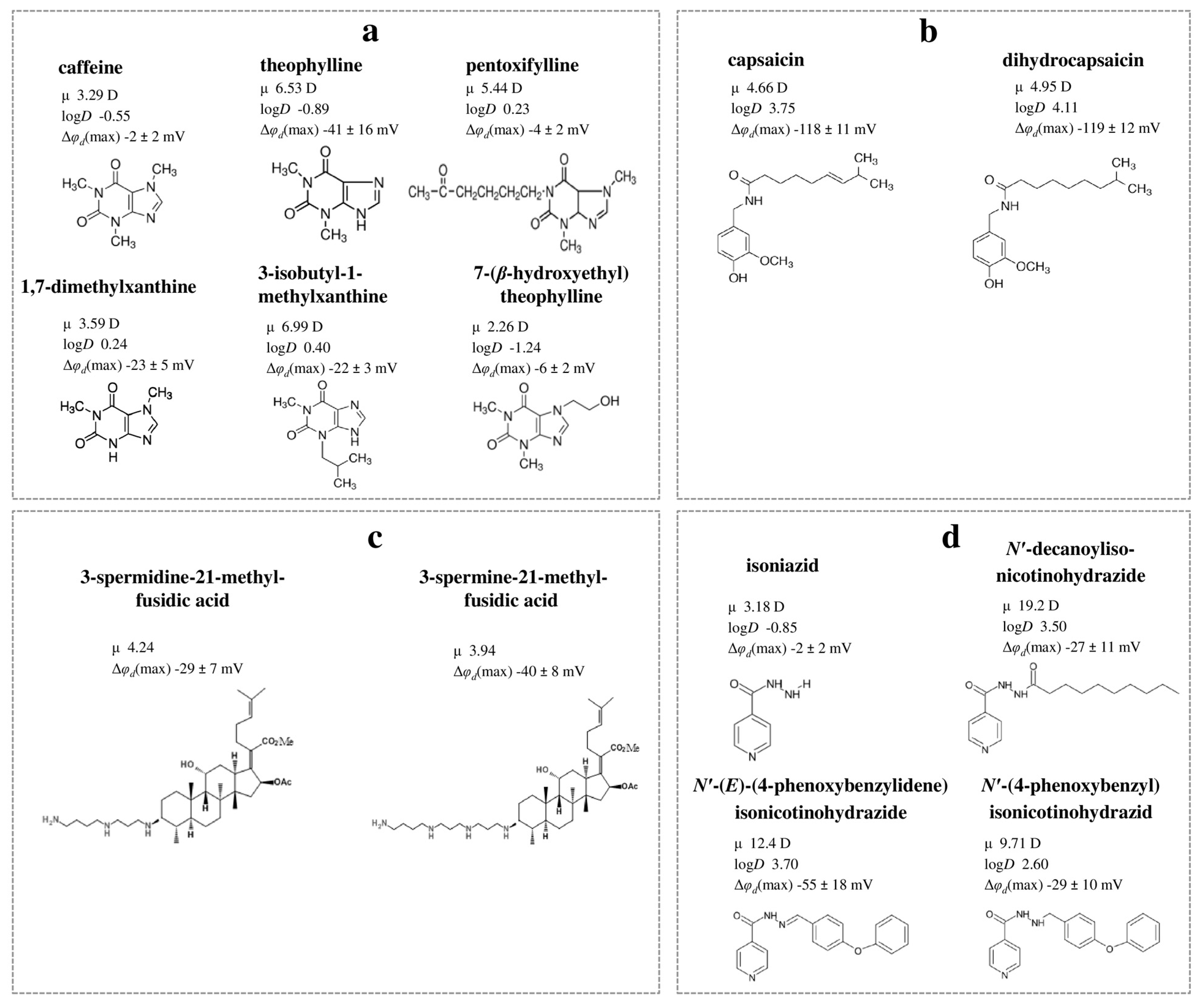


Disclaimer/Publisher’s Note: The statements, opinions and data contained in all publications are solely those of the individual author(s) and contributor(s) and not of MDPI and/or the editor(s). MDPI and/or the editor(s) disclaim responsibility for any injury to people or property resulting from any ideas, methods, instructions or products referred to in the content. |
© 2026 by the authors. Licensee MDPI, Basel, Switzerland. This article is an open access article distributed under the terms and conditions of the Creative Commons Attribution (CC BY) license.
Share and Cite
Efimova, S.S.; Pham, Q.M.; Trinh, H.T.T.; Pham, L.Q.; Ostroumova, O.S. Alteration of Lipid Bilayer Electrical Potential by Phytochemicals and Synthetic Analogs: Implications for Cellular Function. Biomolecules 2026, 16, 342. https://doi.org/10.3390/biom16030342
Efimova SS, Pham QM, Trinh HTT, Pham LQ, Ostroumova OS. Alteration of Lipid Bilayer Electrical Potential by Phytochemicals and Synthetic Analogs: Implications for Cellular Function. Biomolecules. 2026; 16(3):342. https://doi.org/10.3390/biom16030342
Chicago/Turabian StyleEfimova, Svetlana S., Quan Minh Pham, Huong Thi Thu Trinh, Long Quoc Pham, and Olga S. Ostroumova. 2026. "Alteration of Lipid Bilayer Electrical Potential by Phytochemicals and Synthetic Analogs: Implications for Cellular Function" Biomolecules 16, no. 3: 342. https://doi.org/10.3390/biom16030342
APA StyleEfimova, S. S., Pham, Q. M., Trinh, H. T. T., Pham, L. Q., & Ostroumova, O. S. (2026). Alteration of Lipid Bilayer Electrical Potential by Phytochemicals and Synthetic Analogs: Implications for Cellular Function. Biomolecules, 16(3), 342. https://doi.org/10.3390/biom16030342