The Scent of a Therapy for Spinal Cord Injury: Growth Factors and Their Potential to Modulate Olfactory Ensheathing Cells

 ,
,  and
and
Abstract
1. Introduction
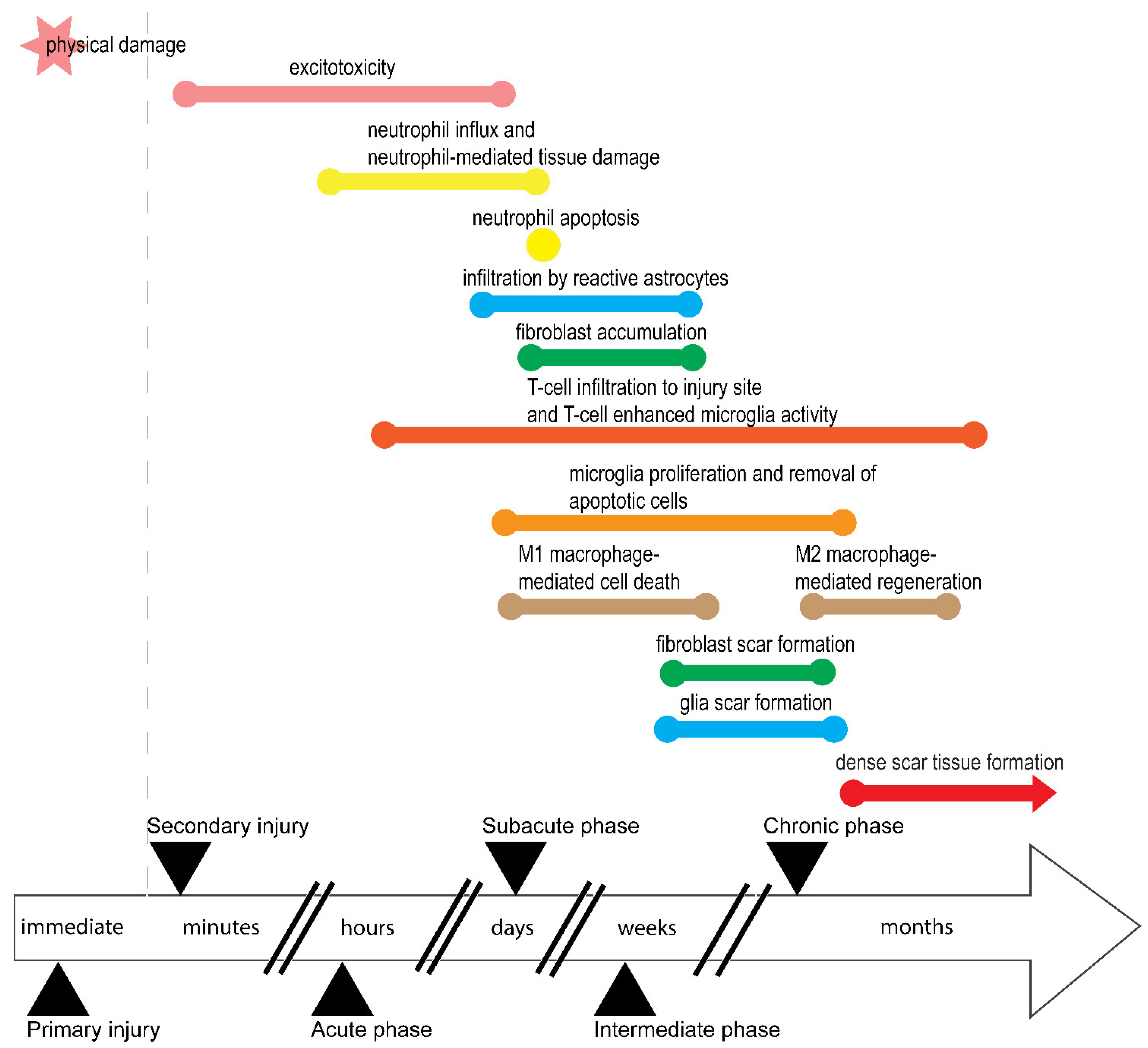
- Scar Formation: Healing or Hindrance?
- Cell- and Biomaterial-Based Experimental Therapeutic Approaches
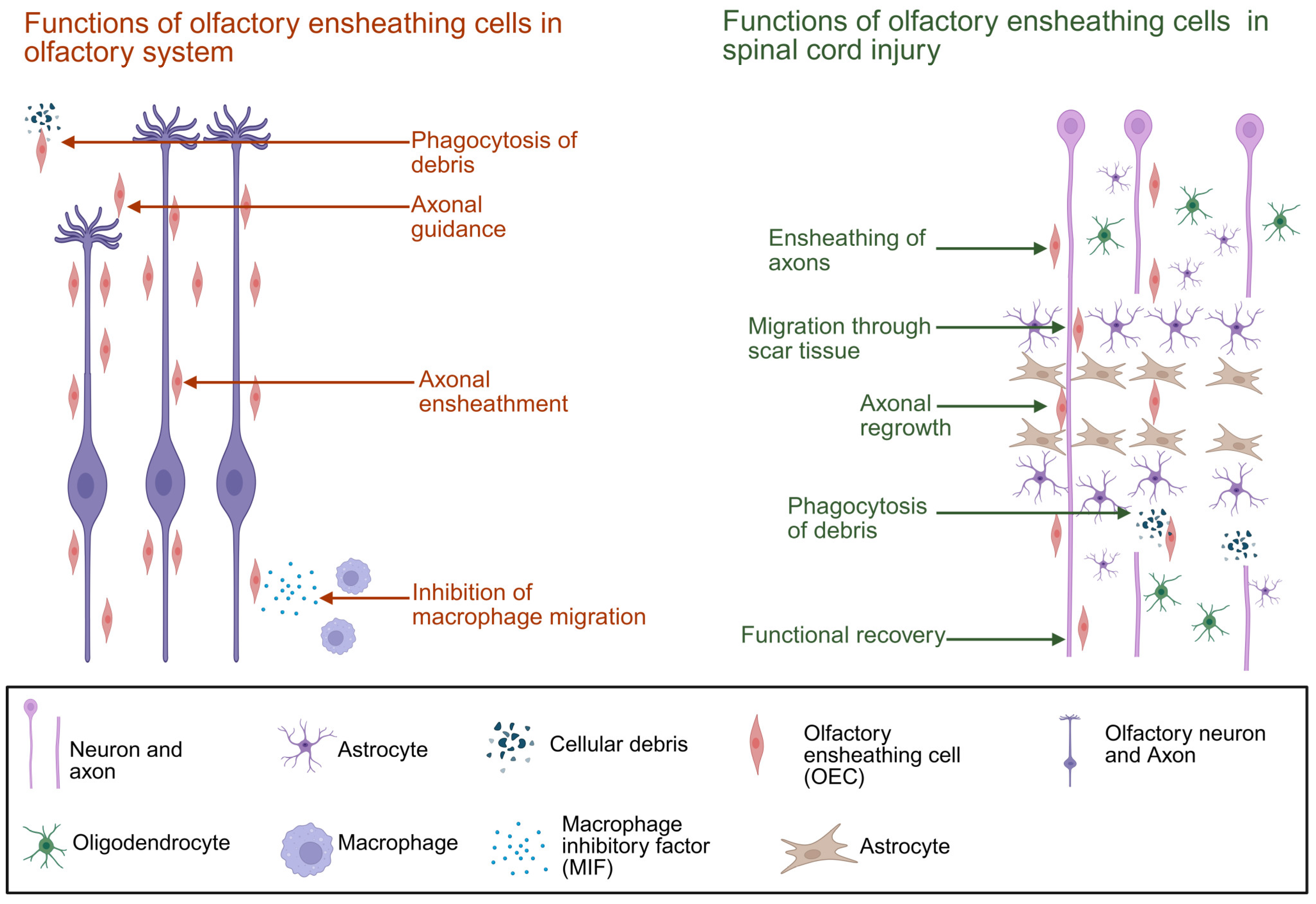
2. Therapeutic Potential of OECs
3. Growth Factors Stimulating OECs
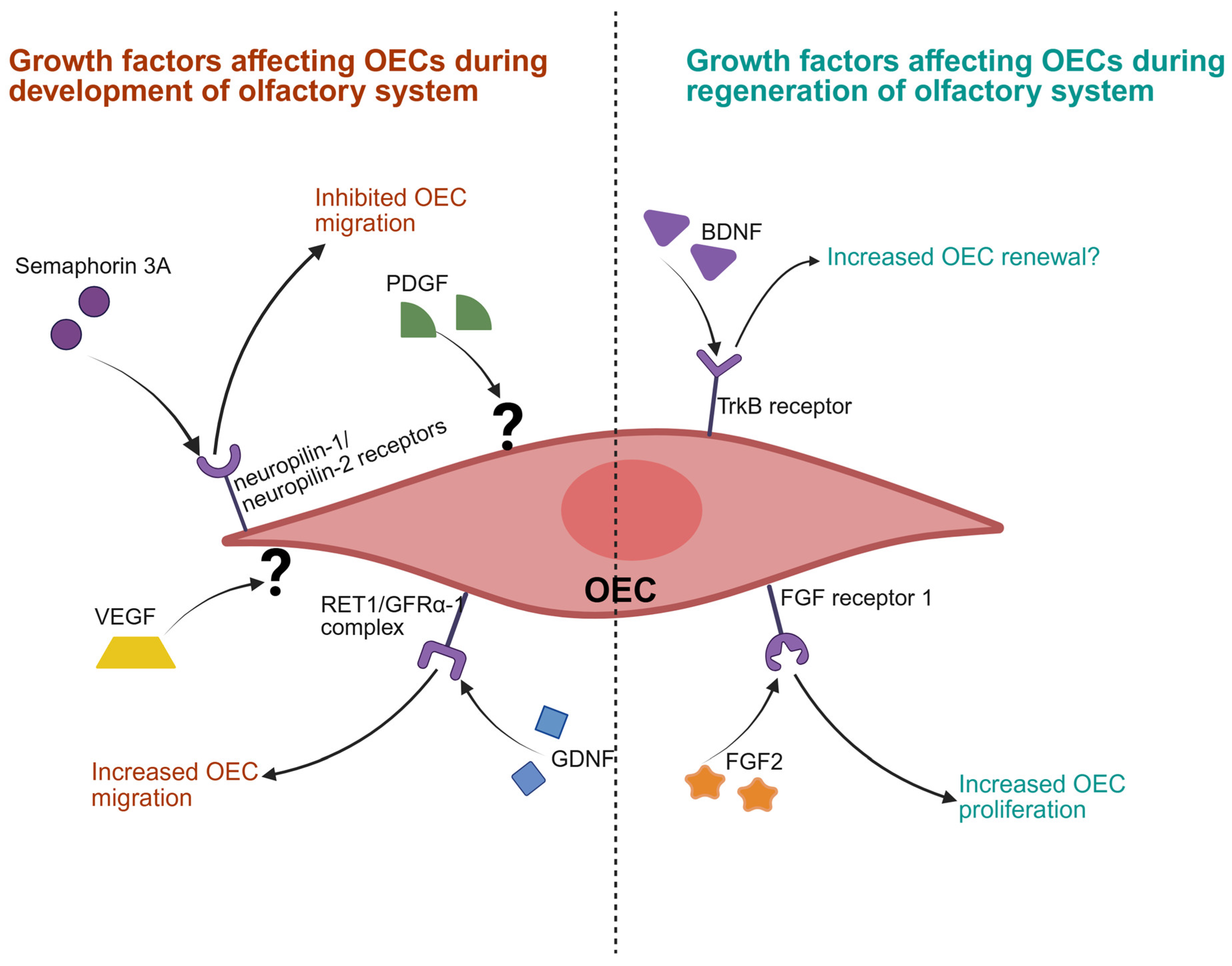
3.1. Growth Factors Involved in Development of Olfactory System
3.2. Growth Factors Involved in Regeneration of Olfactory System
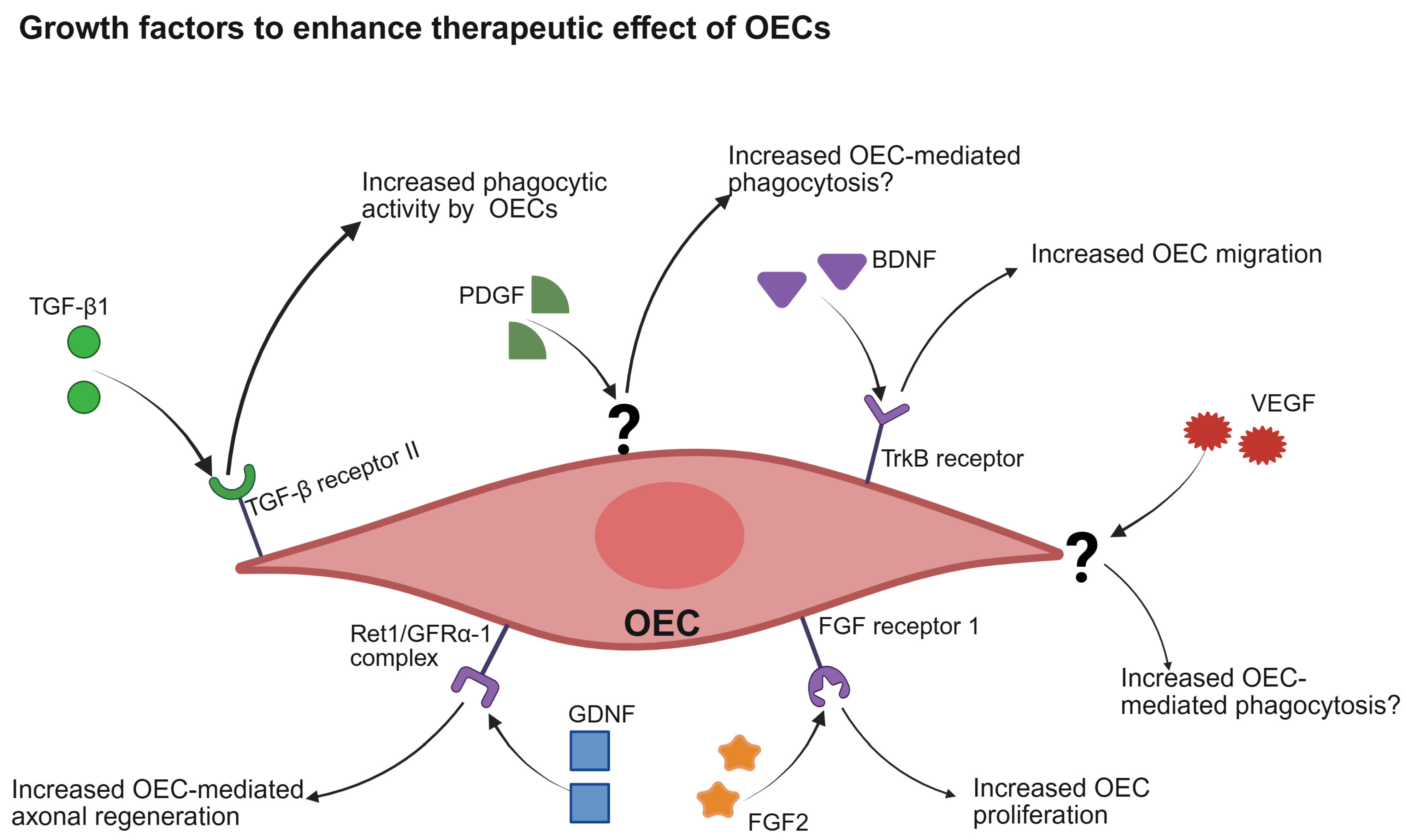
3.3. Application of Growth Factors for Enhancing OECs’ Neurotherapeutic Potential
3.4. Combining Growth Factors and OECs for Treating Spinal Cord Injury
4. Conclusions
Author Contributions
Funding
Institutional Review Board Statement
Informed Consent Statement
Data Availability Statement
Conflicts of Interest
References
- SpinalCure Australia. Spinal Cord Injury in Australia: The Case for Investing in New Treatments; SpinalCure Australia: Sydney, Australia, 2020. [Google Scholar]
- Sloan, T.B. Chapter 183—Spinal Cord Injury. In Complications in Anesthesia, 2nd ed.; Atlee, J.L., Ed.; W.B. Saunders: Philadelphia, PA, USA, 2007; pp. 737–740. [Google Scholar]
- Karsy, M.; Hawryluk, G. Modern Medical Management of Spinal Cord Injury. Curr. Neurol. Neurosci. Rep. 2019, 19, 65. [Google Scholar] [CrossRef] [Scilit] [PubMed]
- Burns, A.S.; Marino, R.J.; Flanders, A.E.; Flett, H. Chapter 3—Clinical diagnosis and prognosis following spinal cord injury. In Handbook of Clinical Neurology; Verhaagen, J., McDonald, J.W., Eds.; Elsevier: Amsterdam, The Netherlands, 2012; Volume 109, pp. 47–62. [Google Scholar]
- Burns, A.S.; Marino, R.J.; Kalsi-Ryan, S.; Middleton, J.W.; Tetreault, L.A.; Dettori, J.R.; Mihalovich, K.E.; Fehlings, M.G. Type and Timing of Rehabilitation Following Acute and Subacute Spinal Cord Injury: A Systematic Review. Glob. Spine J. 2017, 7, 175S–194S. [Google Scholar] [CrossRef] [Scilit]
- van den Berg-Emons, R.J.; Bussmann, J.B.; Haisma, J.A.; Sluis, T.A.; van der Woude, L.H.; Bergen, M.P.; Stam, H.J. A Prospective Study on Physical Activity Levels After Spinal Cord Injury During Inpatient Rehabilitation and the Year After Discharge. Arch. Phys. Med. Rehabil. 2008, 89, 2094–2101. [Google Scholar] [CrossRef] [Scilit] [PubMed]
- Ackery, A.; Tator, C.; Krassioukov, A. A Global Perspective on Spinal Cord Injury Epidemiology. J. Neurotrauma 2004, 21, 1355–1370. [Google Scholar] [CrossRef] [Scilit] [PubMed]
- Yip, P.K.; Malaspina, A. Spinal cord trauma and the molecular point of no return. Mol. Neurodegener. 2012, 7, 6. [Google Scholar] [CrossRef] [Scilit]
- Hassannejad, Z.; Zadegan, S.A.; Shakouri-Motlagh, A.; Mokhatab, M.; Rezvan, M.; Sharif-Alhoseini, M.; Shokraneh, F.; Moshayedi, P.; Rahimi-Movaghar, V. The fate of neurons after traumatic spinal cord injury in rats: A systematic review. Iran. J. Basic Med. Sci. 2018, 21, 546–557. [Google Scholar] [CrossRef] [Scilit]
- Hellenbrand, D.J.; Quinn, C.M.; Piper, Z.J.; Morehouse, C.N.; Fixel, J.A.; Hanna, A.S. Inflammation after spinal cord injury: A review of the critical timeline of signaling cues and cellular infiltration. J. Neuroinflammation 2021, 18, 284. [Google Scholar] [CrossRef] [Scilit]
- Liu, D.; Xu, G.Y.; Pan, E.; McAdoo, D.J. Neurotoxicity of glutamate at the concentration released upon spinal cord injury. Neuroscience 1999, 93, 1383–1389. [Google Scholar] [CrossRef] [Scilit]
- Panter, S.S.; Yum, S.W.; Faden, A.I. Alteration in extracellular amino acids after traumatic spinal cord injury. Ann. Neurol. 1990, 27, 96–99. [Google Scholar] [CrossRef] [Scilit]
- Xu, G.-Y.; Hughes, M.G.; Ye, Z.; Hulsebosch, C.E.; McAdoo, D.J. Concentrations of glutamate released following spinal cord injury kill oligodendrocytes in the spinal cord. Exp. Neurol. 2004, 187, 329–336. [Google Scholar] [CrossRef] [Scilit]
- Xu, G.-Y.; Hughes, M.G.; Zhang, L.; Cain, L.; McAdoo, D.J. Administration of glutamate into the spinal cord at extracellular concentrations reached post-injury causes functional impairments. Neurosci. Lett. 2005, 384, 271–276. [Google Scholar] [CrossRef] [Scilit] [PubMed]
- Belov Kirdajova, D.; Kriska, J.; Tureckova, J.; Anderova, M. Ischemia-Triggered Glutamate Excitotoxicity From the Perspective of Glial Cells. Front. Cell. Neurosci. 2020, 14, 51. [Google Scholar] [CrossRef] [Scilit] [PubMed]
- Rossi, D.J.; Oshima, T.; Attwell, D. Glutamate release in severe brain ischaemia is mainly by reversed uptake. Nature 2000, 403, 316–321. [Google Scholar] [CrossRef] [Scilit] [PubMed]
- Gruenbaum, B.F.; Zlotnik, A.; Fleidervish, I.; Frenkel, A.; Boyko, M. Glutamate Neurotoxicity and Destruction of the Blood–Brain Barrier: Key Pathways for the Development of Neuropsychiatric Consequences of TBI and Their Potential Treatment Strategies. Int. J. Mol. Sci. 2022, 23, 9628. [Google Scholar] [CrossRef] [Scilit]
- Jin, L.-Y.; Li, J.; Wang, K.-F.; Xia, W.-W.; Zhu, Z.-Q.; Wang, C.-R.; Li, X.-F.; Liu, H.-Y. Blood–Spinal Cord Barrier in Spinal Cord Injury: A Review. J. Neurotrauma 2020, 38, 1203–1224. [Google Scholar] [CrossRef] [Scilit]
- Popovich, P.G.; Wei, P.; Stokes, B.T. Cellular inflammatory response after spinal cord injury in sprague-dawley and lewis rats. J. Comp. Neurol. 1997, 377, 443–464. [Google Scholar] [CrossRef] [Scilit]
- Fleming, J.C.; Norenberg, M.D.; Ramsay, D.A.; Dekaban, G.A.; Marcillo, A.E.; Saenz, A.D.; Pasquale-Styles, M.; Dietrich, W.D.; Weaver, L.C. The cellular inflammatory response in human spinal cords after injury. Brain 2006, 129, 3249–3269. [Google Scholar] [CrossRef] [Scilit]
- Prüss, H.; Kopp, M.A.; Brommer, B.; Gatzemeier, N.; Laginha, I.; Dirnagl, U.; Schwab, J.M. Non-Resolving Aspects of Acute Inflammation after Spinal Cord Injury (SCI): Indices and Resolution Plateau. Brain Pathol. 2011, 21, 652–660. [Google Scholar] [CrossRef] [Scilit]
- Feng, Z.; Min, L.; Liang, L.; Chen, B.; Chen, H.; Zhou, Y.; Deng, W.; Liu, H.; Hou, J. Neutrophil Extracellular Traps Exacerbate Secondary Injury via Promoting Neuroinflammation and Blood–Spinal Cord Barrier Disruption in Spinal Cord Injury. Front. Immunol. 2021, 12, 698249. [Google Scholar] [CrossRef] [Scilit]
- Sterner, R.C.; Sterner, R.M. Immune response following traumatic spinal cord injury: Pathophysiology and therapies. Front. Immunol. 2023, 13, 1084101. [Google Scholar] [CrossRef] [Scilit]
- Tsarouchas, T.M.; Wehner, D.; Cavone, L.; Munir, T.; Keatinge, M.; Lambertus, M.; Underhill, A.; Barrett, T.; Kassapis, E.; Ogryzko, N.; et al. Dynamic control of proinflammatory cytokines Il-1β and Tnf-α by macrophages in zebrafish spinal cord regeneration. Nat. Commun. 2018, 9, 4670. [Google Scholar] [CrossRef] [Scilit] [PubMed]
- Sica, A.; Erreni, M.; Allavena, P.; Porta, C. Macrophage polarization in pathology. Cell. Mol. Life Sci. 2015, 72, 4111–4126. [Google Scholar] [CrossRef] [Scilit] [PubMed]
- Italiani, P.; Boraschi, D. From Monocytes to M1/M2 Macrophages: Phenotypical vs. Functional Differentiation. Front. Immunol. 2014, 5, 514. [Google Scholar] [CrossRef] [Scilit]
- Takeuchi, O.; Akira, S. Pattern Recognition Receptors and Inflammation. Cell 2010, 140, 805–820. [Google Scholar] [CrossRef] [Scilit] [PubMed]
- Gordon, S.; Martinez, F.O. Alternative Activation of Macrophages: Mechanism and Functions. Immunity 2010, 32, 593–604. [Google Scholar] [CrossRef] [Scilit] [PubMed]
- Song, G.; Yang, R.; Zhang, Q.; Chen, L.; Huang, D.; Zeng, J.; Yang, C.; Zhang, T. TGF-β Secretion by M2 Macrophages Induces Glial Scar Formation by Activating Astrocytes In Vitro. J. Mol. Neurosci. 2019, 69, 324–332. [Google Scholar] [CrossRef] [Scilit]
- Sonn, I.; Nakamura, M.; Renault-Mihara, F.; Okano, H. Polarization of Reactive Astrocytes in Response to Spinal Cord Injury is Enhanced by M2 Macrophage–Mediated Activation of Wnt/β-Catenin Pathway. Mol. Neurobiol. 2020, 57, 1847–1862. [Google Scholar] [CrossRef] [Scilit]
- Zhou, X.; He, X.; Ren, Y. Function of microglia and macrophages in secondary damage after spinal cord injury. Neural Regen. Res. 2014, 9, 1787–1795. [Google Scholar] [CrossRef] [Scilit]
- Beck, K.D.; Nguyen, H.X.; Galvan, M.D.; Salazar, D.L.; Woodruff, T.M.; Anderson, A.J. Quantitative analysis of cellular inflammation after traumatic spinal cord injury: Evidence for a multiphasic inflammatory response in the acute to chronic environment. Brain 2010, 133, 433–447. [Google Scholar] [CrossRef] [Scilit]
- Kigerl, K.A.; Gensel, J.C.; Ankeny, D.P.; Alexander, J.K.; Donnelly, D.J.; Popovich, P.G. Identification of Two Distinct Macrophage Subsets with Divergent Effects Causing either Neurotoxicity or Regeneration in the Injured Mouse Spinal Cord. J. Neurosci. 2009, 29, 13435–13444. [Google Scholar] [CrossRef] [Scilit]
- Shechter, R.; Raposo, C.; London, A.; Sagi, I.; Schwartz, M. The Glial Scar-Monocyte Interplay: A Pivotal Resolution Phase in Spinal Cord Repair. PLoS ONE 2011, 6, e27969. [Google Scholar] [CrossRef] [Scilit] [PubMed]
- Strizova, Z.; Benesova, I.; Bartolini, R.; Novysedlak, R.; Cecrdlova, E.; Lily, K.F.; Striz, I. M1/M2 macrophages and their overlaps—Myth or reality? Clin. Sci. 2023, 137, 1067–1093. [Google Scholar] [CrossRef] [Scilit] [PubMed]
- Herndon, J.M.; Tome, M.E.; Davis, T.P. Chapter 9—Development and Maintenance of the Blood–Brain Barrier. In Primer on Cerebrovascular Diseases, 2nd ed.; Caplan, L.R., Biller, J., Leary, M.C., Lo, E.H., Thomas, A.J., Yenari, M., Zhang, J.H., Eds.; Academic Press: San Diego, CA, USA, 2017; pp. 51–56. [Google Scholar]
- Colonna, M.; Butovsky, O. Microglia Function in the Central Nervous System During Health and Neurodegeneration. Annu. Rev. Immunol. 2017, 35, 441–468. [Google Scholar] [CrossRef] [Scilit] [PubMed]
- Gattlen, C.; Clarke, C.B.; Piller, N.; Kirschmann, G.; Pertin, M.; Decosterd, I.; Gosselin, R.-D.; Suter, M.R. Spinal Cord T-Cell Infiltration in the Rat Spared Nerve Injury Model: A Time Course Study. Int. J. Mol. Sci. 2016, 17, 352. [Google Scholar] [CrossRef] [Scilit]
- Bonilla, F.A.; Oettgen, H.C. Adaptive immunity. J. Allergy Clin. Immunol. 2010, 125, S33–S40. [Google Scholar] [CrossRef] [Scilit]
- Marshall, J.S.; Warrington, R.; Watson, W.; Kim, H.L. An introduction to immunology and immunopathology. Allergy Asthma Clin. Immunol. 2018, 14, 49. [Google Scholar] [CrossRef] [Scilit]
- Cope, A.P. Studies of T-cell activation in chronic inflammation. Arthritis Res. Ther. 2002, 4, S197. [Google Scholar] [CrossRef] [Scilit]
- Nielsen, H.H.; Ladeby, R.; Fenger, C.; Toft-Hansen, H.; Babcock, A.A.; Owens, T.; Finsen, B. Enhanced Microglial Clearance of Myelin Debris in T Cell-Infiltrated Central Nervous System. J. Neuropathol. Exp. Neurol. 2009, 68, 845–856. [Google Scholar] [CrossRef] [Scilit]
- Wang, J.; He, W.; Zhang, J. A richer and more diverse future for microglia phenotypes. Heliyon 2023, 9, e14713. [Google Scholar] [CrossRef] [Scilit]
- Herrmann, J.E.; Imura, T.; Song, B.; Qi, J.; Ao, Y.; Nguyen, T.K.; Korsak, R.A.; Takeda, K.; Akira, S.; Sofroniew, M.V. STAT3 is a Critical Regulator of Astrogliosis and Scar Formation after Spinal Cord Injury. J. Neurosci. 2008, 28, 7231–7243. [Google Scholar] [CrossRef] [Scilit]
- Sun, D.; Jakobs, T.C. Structural Remodeling of Astrocytes in the Injured CNS. Neuroscientist 2011, 18, 567–588. [Google Scholar] [CrossRef] [Scilit] [PubMed]
- Perez, J.-C.; Gerber, Y.N.; Perrin, F.E. Dynamic Diversity of Glial Response Among Species in Spinal Cord Injury. Front. Aging Neurosci. 2021, 13, 769548. [Google Scholar] [CrossRef] [Scilit] [PubMed]
- Wanner, I.B.; Anderson, M.A.; Song, B.; Levine, J.; Fernandez, A.; Gray-Thompson, Z.; Ao, Y.; Sofroniew, M.V. Glial scar borders are formed by newly proliferated, elongated astrocytes that interact to corral inflammatory and fibrotic cells via STAT3-dependent mechanisms after spinal cord injury. J. Neurosci. 2013, 33, 12870–12886. [Google Scholar] [CrossRef] [Scilit] [PubMed]
- Zhu, Y.; Soderblom, C.; Trojanowsky, M.; Lee, D.-H.; Lee, J.K. Fibronectin Matrix Assembly after Spinal Cord Injury. J. Neurotrauma 2014, 32, 1158–1167. [Google Scholar] [CrossRef] [Scilit]
- Reshamwala, R.; Murtaza, M.; Chen, M.; Shah, M.; Ekberg, J.; Palipana, D.; Vial, M.-L.; McMonagle, B.; St John, J. Designing a Clinical Trial with Olfactory Ensheathing Cell Transplantation-Based Therapy for Spinal Cord Injury: A Position Paper. Biomedicines 2022, 10, 3153. [Google Scholar] [CrossRef] [Scilit]
- Cofano, F.; Boido, M.; Monticelli, M.; Zenga, F.; Ducati, A.; Vercelli, A.; Garbossa, D. Mesenchymal Stem Cells for Spinal Cord Injury: Current Options, Limitations, and Future of Cell Therapy. Int. J. Mol. Sci. 2019, 20, 2698. [Google Scholar] [CrossRef] [Scilit]
- Maeda, Y.; Otsuka, T.; Takeda, M.; Okazaki, T.; Shimizu, K.; Kuwabara, M.; Hosogai, M.; Yuge, L.; Mitsuhara, T. Transplantation of rat cranial bone-derived mesenchymal stem cells promotes functional recovery in rats with spinal cord injury. Sci. Rep. 2021, 11, 21907. [Google Scholar] [CrossRef] [Scilit]
- Wu, B.; Sun, L.; Li, P.; Tian, M.; Luo, Y.; Ren, X. Transplantation of oligodendrocyte precursor cells improves myelination and promotes functional recovery after spinal cord injury. Injury 2012, 43, 794–801. [Google Scholar] [CrossRef] [Scilit]
- Fu, H.; Hu, D.; Zhang, L.; Shen, X.; Tang, P. Efficacy of Oligodendrocyte Progenitor Cell Transplantation in Rat Models with Traumatic Thoracic Spinal Cord Injury: A Systematic Review and Meta-Analysis. J. Neurotrauma 2018, 35, 2507–2518. [Google Scholar] [CrossRef] [Scilit]
- Ahuja, C.S.; Mothe, A.; Khazaei, M.; Badhiwala, J.H.; Gilbert, E.A.; Kooy, D.; Morshead, C.M.; Tator, C.; Fehlings, M.G. The leading edge: Emerging neuroprotective and neuroregenerative cell-based therapies for spinal cord injury. Stem Cells Transl. Med. 2020, 9, 1509–1530. [Google Scholar] [CrossRef] [Scilit]
- Khankan, R.R.; Griffis, K.G.; Haggerty-Skeans, J.R.; Zhong, H.; Roy, R.R.; Edgerton, V.R.; Phelps, P.E. Olfactory Ensheathing Cell Transplantation after a Complete Spinal Cord Transection Mediates Neuroprotective and Immunomodulatory Mechanisms to Facilitate Regeneration. J. Neurosci. 2016, 36, 6269–6286. [Google Scholar] [CrossRef] [Scilit]
- Reshamwala, R.; Shah, M.; St John, J.; Ekberg, J. Survival and Integration of Transplanted Olfactory Ensheathing Cells are Crucial for Spinal Cord Injury Repair: Insights from the Last 10 Years of Animal Model Studies. Cell Transplant. 2019, 28, 132S–159S. [Google Scholar] [CrossRef] [Scilit] [PubMed]
- Ye, L.-X.; An, N.-C.; Huang, P.; Li, D.-H.; Zheng, Z.-L.; Ji, H.; Li, H.; Chen, D.-Q.; Wu, Y.-Q.; Xiao, J.; et al. Exogenous platelet-derived growth factor improves neurovascular unit recovery after spinal cord injury. Neural Regen. Res. 2021, 16, 765–771. [Google Scholar] [CrossRef] [Scilit] [PubMed]
- Zhou, Y.; Wang, Z.; Li, J.; Li, X.; Xiao, J. Fibroblast growth factors in the management of spinal cord injury. J. Cell. Mol. Med. 2018, 22, 25–37. [Google Scholar] [CrossRef] [Scilit] [PubMed]
- Fehlings, M.G.; Pedro, K.; Hejrati, N. Management of Acute Spinal Cord Injury: Where Have We Been? Where Are We Now? Where Are We Going? J. Neurotrauma 2022, 39, 1591–1602. [Google Scholar] [CrossRef] [Scilit] [PubMed]
- Gilmour, A.D.; Reshamwala, R.; Wright, A.A.; Ekberg, J.A.K.; St John, J.A. Optimizing Olfactory Ensheathing Cell Transplantation for Spinal Cord Injury Repair. J. Neurotrauma 2020, 37, 817–829. [Google Scholar] [CrossRef] [Scilit]
- Yadav, S.; Mukherjee, S. Pathophysiology of spinal cord injury and advanced therapeutic approaches. Mol. Biol. Rep. 2025, 52, 669. [Google Scholar] [CrossRef] [Scilit]
- Mackay-Sim, A.; Féron, F.; Cochrane, J.; Bassingthwaighte, L.; Bayliss, C.; Davies, W.; Fronek, P.; Gray, C.; Kerr, G.; Licina, P.; et al. Autologous olfactory ensheathing cell transplantation in human paraplegia: A 3-year clinical trial. Brain 2008, 131, 2376–2386. [Google Scholar] [CrossRef] [Scilit]
- Tabakow, P.; Jarmundowicz, W.; Czapiga, B.; Fortuna, W.; Miedzybrodzki, R.; Czyz, M.; Huber, J.; Szarek, D.; Okurowski, S.; Szewczyk, P.; et al. Transplantation of Autologous Olfactory Ensheathing Cells in Complete Human Spinal Cord Injury. Cell Transplant. 2013, 22, 1591–1612. [Google Scholar] [CrossRef] [Scilit]
- Reshamwala, R.; Shah, M.; Belt, L.; Ekberg, J.A.K.; St John, J.A. Reliable cell purification and determination of cell purity: Crucial aspects of olfactory ensheathing cell transplantation for spinal cord repair. Neural Regen. Res. 2020, 15, 2016–2026. [Google Scholar] [CrossRef] [Scilit]
- Chen, M.; Vial, M.L.; Gee, L.; Davis, R.A.; St John, J.A.; Ekberg, J.A.K. The plant natural product 2-methoxy-1,4-naphthoquinone stimulates therapeutic neural repair properties of olfactory ensheathing cells. Sci. Rep. 2020, 10, 951. [Google Scholar] [CrossRef] [Scilit] [PubMed]
- Chen, M.; Vial, M.-L.; Tello Velasquez, J.; Ekberg, J.A.K.; Davis, R.A.; St John, J.A. The serrulatane diterpenoid natural products RAD288 and RAD289 stimulate properties of olfactory ensheathing cells useful for neural repair therapies. Sci. Rep. 2018, 8, 10240. [Google Scholar] [CrossRef] [Scilit] [PubMed]
- Collins, A.; Li, D.; Olushanu, M.; Tabakow, P.; Fortuna, W.; Raisman, G.; Li, Y. Partial Recovery of Proprioception in Rats with Dorsal Root Injury after Human Olfactory Bulb Cell Transplantation. J. Neurotrauma 2017, 35, 1367–1378. [Google Scholar] [CrossRef] [Scilit] [PubMed]
- Wang, C.; Sun, C.; Hu, Z.; Huo, X.; Yang, Y.; Liu, X.; Botchway, B.O.A.; Davies, H.; Fang, M. Improved Neural Regeneration with Olfactory Ensheathing Cell Inoculated PLGA Scaffolds in Spinal Cord Injury Adult Rats. Neurosignals 2017, 25, 1–14. [Google Scholar] [CrossRef] [Scilit]
- Tseng, Y.-T.; Chen, M.; Lai, R.; Oieni, F.; Smyth, G.; Anoopkumar-Dukie, S.; St John, J.; Ekberg, J. Liraglutide modulates olfactory ensheathing cell migration with activation of ERK and alteration of the extracellular matrix. Biomed. Pharmacother. 2021, 141, 111819. [Google Scholar] [CrossRef] [Scilit]
- Basu, S.; Choudhury, I.N.; Lee, J.Y.P.; Chacko, A.; Ekberg, J.A.K.; St John, J.A. Macrophages Treated with VEGF and PDGF Exert Paracrine Effects on Olfactory Ensheathing Cell Function. Cells 2022, 11, 2408. [Google Scholar] [CrossRef] [Scilit]
- Pastrana, E.; Moreno-Flores, M.T.; Avila, J.; Wandosell, F.; Minichiello, L.; Diaz-Nido, J. BDNF production by olfactory ensheathing cells contributes to axonal regeneration of cultured adult CNS neurons. Neurochem. Int. 2007, 50, 491–498. [Google Scholar] [CrossRef] [Scilit]
- Harvey, J.D.; Heinbockel, T. Neuromodulation of Synaptic Transmission in the Main Olfactory Bulb. Int. J. Environ. Res. Public Health 2018, 15, 2194. [Google Scholar] [CrossRef] [Scilit]
- Lankford, C.K.; Laird, J.G.; Inamdar, S.M.; Baker, S.A. A Comparison of the Primary Sensory Neurons Used in Olfaction and Vision. Front. Cell. Neurosci. 2020, 14, 595523. [Google Scholar] [CrossRef] [Scilit]
- Brann, D.H.; Tsukahara, T.; Weinreb, C.; Lipovsek, M.; Van den Berge, K.; Gong, B.; Chance, R.; Macaulay, I.C.; Chou, H.-J.; Fletcher, R.B.; et al. Non-neuronal expression of SARS-CoV-2 entry genes in the olfactory system suggests mechanisms underlying COVID-19-associated anosmia. Sci. Adv. 2020, 6, eabc5801. [Google Scholar] [CrossRef] [Scilit]
- Mori, I.; Goshima, F.; Imai, Y.; Kohsaka, S.; Sugiyama, T.; Yoshida, T.; Yokochi, T.; Nishiyama, Y.; Kimura, Y. Olfactory receptor neurons prevent dissemination of neurovirulent influenza A virus into the brain by undergoing virus-induced apoptosis. J. Gen. Virol. 2002, 83, 2109–2116. [Google Scholar] [CrossRef] [Scilit] [PubMed]
- Sepahi, A.; Kraus, A.; Casadei, E.; Johnston, C.A.; Galindo-Villegas, J.; Kelly, C.; García-Moreno, D.; Muñoz, P.; Mulero, V.; Huertas, M.; et al. Olfactory sensory neurons mediate ultrarapid antiviral immune responses in a TrkA-dependent manner. Proc. Natl. Acad. Sci. USA 2019, 116, 12428–12436. [Google Scholar] [CrossRef] [Scilit] [PubMed]
- Mackay-Sim, A.; Kittel, P. Cell dynamics in the adult mouse olfactory epithelium: A quantitative autoradiographic study. J. Neurosci. 1991, 11, 979–984. [Google Scholar] [CrossRef] [Scilit] [PubMed]
- Doty, R.L. Chapter 17—Neurotoxic exposure and impairment of the chemical senses of taste and smell. In Handbook of Clinical Neurology; Lotti, M., Bleecker, M.L., Eds.; Elsevier: Amsterdam, The Netherlands, 2015; Volume 131, pp. 299–324. [Google Scholar]
- Brann, J.H.; Firestein, S. Regeneration of New Neurons Is Preserved in Aged Vomeronasal Epithelia. J. Neurosci. 2010, 30, 15686–15694. [Google Scholar] [CrossRef] [Scilit]
- Kondo, K.; Suzukawa, K.; Sakamoto, T.; Watanabe, K.; Kanaya, K.; Ushio, M.; Yamaguchi, T.; Nibu, K.-I.; Kaga, K.; Yamasoba, T. Age-related changes in cell dynamics of the postnatal mouse olfactory neuroepithelium: Cell proliferation, neuronal differentiation, and cell death. J. Comp. Neurol. 2010, 518, 1962–1975. [Google Scholar] [CrossRef] [Scilit]
- Tennent, R.; Chuah, M.I. Ultrastructural study of ensheathing cells in early development of olfactory axons. Dev. Brain Res. 1996, 95, 135–139. [Google Scholar] [CrossRef] [Scilit]
- Chehrehasa, F.; Windus, L.C.E.; Ekberg, J.A.K.; Scott, S.E.; Amaya, D.; Mackay-Sim, A.; St John, J.A. Olfactory glia enhance neonatal axon regeneration. Mol. Cell. Neurosci. 2010, 45, 277–288. [Google Scholar] [CrossRef] [Scilit]
- Field, P.; Li, Y.; Raisman, G. Ensheathment of the olfactory nerves in the adult rat. J. Neurocytol. 2003, 32, 317–324. [Google Scholar] [CrossRef] [Scilit]
- Lipson, A.C.; Widenfalk, J.; Lindqvist, E.; Ebendal, T.; Olson, L. Neurotrophic properties of olfactory ensheathing glia. Exp. Neurol. 2003, 180, 167–171. [Google Scholar] [CrossRef] [Scilit]
- Nazareth, L.; Tello Velasquez, J.; Lineburg, K.E.; Chehrehasa, F.; St John, J.A.; Ekberg, J.A.K. Differing phagocytic capacities of accessory and main olfactory ensheathing cells and the implication for olfactory glia transplantation therapies. Mol. Cell. Neurosci. 2015, 65, 92–101. [Google Scholar] [CrossRef] [Scilit]
- Nazareth, L.; Lineburg, K.E.; Chuah, M.I.; Tello Velasquez, J.; Chehrehasa, F.; St John, J.A.; Ekberg, J.A.K. Olfactory ensheathing cells are the main phagocytic cells that remove axon debris during early development of the olfactory system. J. Comp. Neurol. 2015, 523, 479–494. [Google Scholar] [CrossRef] [Scilit] [PubMed]
- Wright, A.A.; Todorovic, M.; Murtaza, M.; St John, J.A.; Ekberg, J.A. Macrophage migration inhibitory factor and its binding partner HTRA1 are expressed by olfactory ensheathing cells. Mol. Cell. Neurosci. 2020, 102, 103450. [Google Scholar] [CrossRef] [Scilit] [PubMed]
- Higginson, J.R.; Barnett, S.C. The culture of olfactory ensheathing cells (OECs)—A distinct glial cell type. Exp. Neurol. 2011, 229, 2–9. [Google Scholar] [CrossRef] [Scilit] [PubMed]
- Li, Y.; Field, P.M.; Raisman, G. Regeneration of Adult Rat Corticospinal Axons Induced by Transplanted Olfactory Ensheathing Cells. J. Neurosci. 1998, 18, 10514. [Google Scholar] [CrossRef] [Scilit]
- Raisman, G.; Li, Y. Repair of neural pathways by olfactory ensheathing cells. Nat. Rev. Neurosci. 2007, 8, 312–319. [Google Scholar] [CrossRef] [Scilit]
- Deumens, R.; Koopmans, G.C.; Lemmens, M.; Möllers, S.; Honig, W.M.; Steinbusch, H.W.; Brook, G.; Joosten, E.A. Neurite outgrowth promoting effects of enriched and mixed OEC/ONF cultures. Neurosci. Lett. 2006, 397, 20–24. [Google Scholar] [CrossRef] [Scilit]
- Nazareth, L.; Shelper, T.B.; Chacko, A.; Basu, S.; Delbaz, A.; Lee, J.Y.P.; Chen, M.; St John, J.A.; Ekberg, J.A.K. Key differences between olfactory ensheathing cells and Schwann cells regarding phagocytosis of necrotic cells: Implications for transplantation therapies. Sci. Rep. 2020, 10, 18936. [Google Scholar] [CrossRef] [Scilit]
- Tabakow, P.; Raisman, G.; Fortuna, W.; Czyz, M.; Huber, J.; Li, D.; Szewczyk, P.; Okurowski, S.; Miedzybrodzki, R.; Czapiga, B.; et al. Functional Regeneration of Supraspinal Connections in a Patient with Transected Spinal Cord following Transplantation of Bulbar Olfactory Ensheathing Cells with Peripheral Nerve Bridging. Cell Transplant. 2014, 23, 1631–1655. [Google Scholar] [CrossRef] [Scilit]
- Liu, Z.; Martin, L.J. Olfactory bulb core is a rich source of neural progenitor and stem cells in adult rodent and human. J. Comp. Neurol. 2003, 459, 368–391. [Google Scholar] [CrossRef] [Scilit]
- Defteralı, Ç.; Moreno-Estellés, M.; Crespo, C.; Díaz-Guerra, E.; Díaz-Moreno, M.; Vergaño-Vera, E.; Nieto-Estévez, V.; Hurtado-Chong, A.; Consiglio, A.; Mira, H.; et al. Neural stem cells in the adult olfactory bulb core generate mature neurons in vivo. Stem Cells 2021, 39, 1253–1269. [Google Scholar] [CrossRef] [Scilit]
- Sipione, R.; Liaudet, N.; Rousset, F.; Landis, B.N.; Hsieh, J.W.; Senn, P. Axonal Regrowth of Olfactory Sensory Neurons In Vitro. Int. J. Mol. Sci. 2023, 24, 12863. [Google Scholar] [CrossRef] [Scilit] [PubMed]
- Holbrook, E.H.; Rebeiz, L.; Schwob, J.E. Office-based olfactory mucosa biopsies. Int. Forum Allergy Rhinol. 2016, 6, 646–653. [Google Scholar] [CrossRef] [Scilit] [PubMed]
- Nakhjavan-Shahraki, B.; Yousefifard, M.; Rahimi-Movaghar, V.; Baikpour, M.; Nasirinezhad, F.; Safari, S.; Yaseri, M.; Moghadas Jafari, A.; Ghelichkhani, P.; Tafakhori, A.; et al. Transplantation of olfactory ensheathing cells on functional recovery and neuropathic pain after spinal cord injury; systematic review and meta-analysis. Sci. Rep. 2018, 8, 325. [Google Scholar] [CrossRef] [Scilit] [PubMed]
- Reshamwala, R.; Shah, M.; St John, J.; Ekberg, J. The link between olfactory ensheathing cell survival and spinal cord injury repair: A commentary on common limitations of contemporary research. Neural Regen. Res. 2020, 15, 1848–1849. [Google Scholar] [CrossRef] [Scilit]
- Phelps, P.E.; Ha, S.M.; Khankan, R.R.; Mekonnen, M.A.; Juarez, G.; Ingraham Dixie, K.L.; Chen, Y.-W.; Yang, X. Olfactory ensheathing cells from adult female rats are hybrid glia that promote neural repair. eLife 2024, 13, RP95629. [Google Scholar] [CrossRef] [Scilit]
- Windus, L.C.; Lineburg, K.E.; Scott, S.E.; Claxton, C.; Mackay-Sim, A.; Key, B.; St John, J.A. Lamellipodia mediate the heterogeneity of central olfactory ensheathing cell interactions. Cell. Mol. Life Sci. 2010, 67, 1735–1750. [Google Scholar] [CrossRef] [Scilit]
- Kuang, N.; Wang, X.; Chen, Y.; Liu, G.; Kong, F.e.; Wang, N.; Feng, R.; Wang, Y.; Du, X.; Zheng, Z. Olfactory ensheathing cell transplantation for chronic spinal cord injury: A long-term follow-up study. J. Neurorestoratology 2021, 9, 94–105. [Google Scholar] [CrossRef] [Scilit]
- Woodhall, E.; West, A.K.; Chuah, M.I. Cultured olfactory ensheathing cells express nerve growth factor, brain-derived neurotrophic factor, glia cell line-derived neurotrophic factor and their receptors. Mol. Brain Res. 2001, 88, 203–213. [Google Scholar] [CrossRef] [Scilit]
- Marks, C.; Belluscio, L.; Ibáñez, C.F. Critical role of GFRα1 in the development and function of the main olfactory system. J. Neurosci. 2012, 32, 17306–17320. [Google Scholar] [CrossRef] [Scilit]
- Denaro, S.; D’Aprile, S.; Alberghina, C.; Pavone, A.M.; Torrisi, F.; Giallongo, S.; Longhitano, L.; Mannino, G.; Lo Furno, D.; Zappalà, A.; et al. Neurotrophic and immunomodulatory effects of olfactory ensheathing cells as a strategy for neuroprotection and regeneration. Front. Immunol. 2022, 13, 1098212. [Google Scholar] [CrossRef] [Scilit]
- Wright, A.A.; Todorovic, M.; Tello-Velasquez, J.; Rayfield, A.J.; St John, J.A.; Ekberg, J.A. Enhancing the Therapeutic Potential of Olfactory Ensheathing Cells in Spinal Cord Repair Using Neurotrophins. Cell Transplant. 2018, 27, 867–878. [Google Scholar] [CrossRef] [Scilit] [PubMed]
- Alexander, C.L.; Fitzgerald, U.F.; Barnett, S.C. Identification of growth factors that promote long-term proliferation of olfactory ensheathing cells and modulate their antigenic phenotype. Glia 2002, 37, 349–364. [Google Scholar] [CrossRef] [PubMed]
- Cao, L.; Zhu, Y.-L.; Su, Z.; Lv, B.; Huang, Z.; Mu, L.; He, C. Olfactory ensheathing cells promote migration of Schwann cells by secreted nerve growth factor. Glia 2007, 55, 897–904. [Google Scholar] [CrossRef] [Scilit] [PubMed]
- Chung, R.S.; Woodhouse, A.; Fung, S.; Dickson, T.C.; West, A.K.; Vickers, J.C.; Chuah, M.I. Olfactory ensheathing cells promote neurite sprouting of injured axons in vitro by direct cellular contact and secretion of soluble factors. Cell. Mol. Life Sci. 2004, 61, 1238–1245. [Google Scholar] [CrossRef] [Scilit] [PubMed]
- Doucette, R. Glial influences on axonal growth in the primary olfactory system. Glia 1990, 3, 433–449. [Google Scholar] [CrossRef] [Scilit]
- Khankan, R.R.; Wanner, I.B.; Phelps, P.E. Olfactory ensheathing cell–neurite alignment enhances neurite outgrowth in scar-like cultures. Exp. Neurol. 2015, 269, 93–101. [Google Scholar] [CrossRef] [Scilit]
- Cao, L.; Su, Z.; Zhou, Q.; Lv, B.; Liu, X.; Jiao, L.; Li, Z.; Zhu, Y.; Huang, Z.; Huang, A.; et al. Glial cell line-derived neurotrophic factor promotes olfactory ensheathing cells migration. Glia 2006, 54, 536–544. [Google Scholar] [CrossRef] [Scilit]
- Gong, Q.; Bailey, M.S.; Pixley, S.K.; Ennis, M.; Liu, W.; Shipley, M.T. Localization and regulation of low affinity nerve growth factor receptor expression in the rat olfactory system during development and regeneration. J. Comp. Neurol. 1994, 344, 336–348. [Google Scholar] [CrossRef] [Scilit]
- Raucci, F.; Tiong, J.D.; Wray, S. P75 nerve growth factor receptors modulate development of GnRH neurons and olfactory ensheating cells. Front. Neurosci. 2013, 7, 262. [Google Scholar] [CrossRef] [Scilit]
- Wang, Y.; Bao, X.; Wu, S.; Shen, X.; Zhang, F.; Lv, Z.; Wu, Q.; Xie, C.; Liu, H.; Lin, J.; et al. Semaphorin 3A as an inhibitive factor for migration of olfactory ensheathing cells through cofilin activation is involved in formation of olfactory nerve layer. Mol. Cell. Neurosci. 2018, 92, 27–39. [Google Scholar] [CrossRef] [Scilit]
- Geller, S.; Kolasa, E.; Tillet, Y.; Duittoz, A.; Vaudin, P. Olfactory ensheathing cells form the microenvironment of migrating GnRH-1 neurons during mouse development. Glia 2013, 61, 550–566. [Google Scholar] [CrossRef] [Scilit] [PubMed]
- Funa, K.; Sasahara, M. The roles of PDGF in development and during neurogenesis in the normal and diseased nervous system. J. Neuroimmune Pharmacol. 2014, 9, 168–181. [Google Scholar] [CrossRef] [Scilit] [PubMed]
- Krupinski, J.; Issa, R.; Bujny, T.; Slevin, M.; Kumar, P.; Kumar, S.; Kaluza, J. A Putative Role for Platelet-Derived Growth Factor in Angiogenesis and Neuroprotection After Ischemic Stroke in Humans. Stroke 1997, 28, 564–573. [Google Scholar] [CrossRef] [Scilit] [PubMed]
- Zheng, L.; Ishii, Y.; Tokunaga, A.; Hamashima, T.; Shen, J.; Zhao, Q.-L.; Ishizawa, S.; Fujimori, T.; Nabeshima, Y.-i.; Mori, H.; et al. Neuroprotective effects of PDGF against oxidative stress and the signaling pathway involved. J. Neurosci. Res. 2010, 88, 1273–1284. [Google Scholar] [CrossRef] [Scilit]
- Hardy, M.; Reddy, U.R.; Pleasure, D. Platelet-derived growth factor and regulation of schwann cell proliferation in vivo. J. Neurosci. Res. 1992, 31, 254–262. [Google Scholar] [CrossRef] [Scilit]
- Sasahara, A.; Kott, J.N.; Sasahara, M.; Raines, E.W.; Ross, R.; Westrum, L.E. Platelet-derived growth factor B-chain-like immunoreactivity in the developing and adult rat brain. Dev. Brain Res. 1992, 68, 41–53. [Google Scholar] [CrossRef] [Scilit]
- Doucette, R. Development of the nerve fiber layer in the olfactory bulb of mouse embryos. J. Comp. Neurol. 1989, 285, 514–527. [Google Scholar] [CrossRef] [Scilit]
- Kott, J.N.; Westrum, L.E.; Raines, E.W.; Sasahara, M.; Ross, R. Olfactory ensheathing glia and platelet-derived growth factor B-chain reactivity in the transplanted rat olfactory bulb. Int. J. Dev. Neurosci. 1994, 12, 315–323. [Google Scholar] [CrossRef] [Scilit]
- Yan, H.; Bunge, M.B.; Wood, P.M.; Plant, G.W. Mitogenic response of adult rat olfactory ensheathing glia to four growth factors. Glia 2001, 33, 334–342. [Google Scholar] [CrossRef] [Scilit]
- Windus, L.C.E.; Chehrehasa, F.; Lineburg, K.E.; Claxton, C.; Mackay-Sim, A.; Key, B.; St John, J.A. Stimulation of olfactory ensheathing cell motility enhances olfactory axon growth. Cell. Mol. Life Sci. 2011, 68, 3233–3247. [Google Scholar] [CrossRef] [Scilit]
- Windus, L.C.E.; Claxton, C.; Allen, C.L.; Key, B.; St John, J.A. Motile membrane protrusions regulate cell–cell adhesion and migration of olfactory ensheathing glia. Glia 2007, 55, 1708–1719. [Google Scholar] [CrossRef] [Scilit] [PubMed]
- Frontera, J.L.; Cervino, A.S.; Jungblut, L.D.; Paz, D.A. Brain-derived neurotrophic factor (BDNF) expression in normal and regenerating olfactory epithelium of Xenopus laevis. Ann. Anat.—Anat. Anz. 2015, 198, 41–48. [Google Scholar] [CrossRef] [Scilit] [PubMed]
- Hsu, P.-e.; Yu, F.; Féron, F.; Pickles, J.O.; Sneesby, K.; Mackay-Sim, A. Basic fibroblast growth factor and fibroblast growth factor receptors in adult olfactory epithelium. Brain Res. 2001, 896, 188–197. [Google Scholar] [CrossRef] [Scilit] [PubMed]
- Fukuda, Y.; Katsunuma, S.; Uranagase, A.; Nota, J.; Nibu, K.-I. Effect of intranasal administration of neurotrophic factors on regeneration of chemically degenerated olfactory epithelium in aging mice. Neuroreport 2018, 29, 1400–1404. [Google Scholar] [CrossRef] [Scilit]
- Hjazi, A. Bioactive and degradable collagen-based hydrogel encapsulated with microspheres containing basic fibroblast growth factor (bFGF) and interleukin (IL)-10 promotes recovery following traumatic spinal cord injury in rats. Histochem. Cell Biol. 2025, 163, 65. [Google Scholar] [CrossRef] [Scilit]
- Barraud, P.; He, X.; Zhao, C.; Ibanez, C.; Raha-Chowdhury, R.; Caldwell, M.A.; Franklin, R.J.M. Contrasting effects of basic fibroblast growth factor and epidermal growth factor on mouse neonatal olfactory mucosa cells. Eur. J. Neurosci. 2007, 26, 3345–3357. [Google Scholar] [CrossRef] [Scilit]
- Chuah, M.I.; Teague, R. Basic fibroblast growth factor in the primary olfactory pathway: Mitogenic effect on ensheathing cells. Neuroscience 1999, 88, 1043–1050. [Google Scholar] [CrossRef] [Scilit]
- Zheng, J.; Sun, J.; Lu, X.; Zhao, P.; Li, K.; Li, L. BDNF promotes the axonal regrowth after sciatic nerve crush through intrinsic neuronal capability upregulation and distal portion protection. Neurosci. Lett. 2016, 621, 1–8. [Google Scholar] [CrossRef] [Scilit]
- Wang, Y.; Teng, H.-L.; Gao, Y.; Zhang, F.; Ding, Y.-Q.; Huang, Z.-H. Brain-derived Neurotrophic Factor Promotes the Migration of Olfactory Ensheathing Cells Through TRPC Channels. Glia 2016, 64, 2154–2165. [Google Scholar] [CrossRef] [Scilit]
- Lang, B.-C.; Zhang, Z.; Lv, L.-Y.; Liu, J.; Wang, T.-Y.; Yang, L.-H.; Liao, D.-Q.; Zhang, W.-S.; Wang, T.-H. OECs transplantation results in neuropathic pain associated with BDNF regulating ERK activity in rats following cord hemisection. BMC Neurosci. 2013, 14, 80. [Google Scholar] [CrossRef] [Scilit]
- Li, Y.; Zou, T.; Xue, L.; Yin, Z.Q.; Huo, S.; Xu, H. TGF-β1 enhances phagocytic removal of neuron debris and neuronal survival by olfactory ensheathing cells via integrin/MFG-E8 signaling pathway. Mol. Cell. Neurosci. 2017, 85, 45–56. [Google Scholar] [CrossRef] [Scilit] [PubMed]
- Au, E.; Richter, M.W.; Vincent, A.J.; Tetzlaff, W.; Aebersold, R.; Sage, E.H.; Roskams, A.J. SPARC from Olfactory Ensheathing Cells Stimulates Schwann Cells to Promote Neurite Outgrowth and Enhances Spinal Cord Repair. J. Neurosci. 2007, 27, 7208–7221. [Google Scholar] [CrossRef] [Scilit] [PubMed]
- Knöferle, J.; Ramljak, S.; Koch, J.C.; Tönges, L.; Asif, A.R.; Michel, U.; Wouters, F.S.; Heermann, S.; Krieglstein, K.; Zerr, I.; et al. TGF-β 1 enhances neurite outgrowth via regulation of proteasome function and EFABP. Neurobiol. Dis. 2010, 38, 395–404. [Google Scholar] [CrossRef] [Scilit] [PubMed]
- Echeverry, S.; Shi, X.Q.; Haw, A.; Liu, G.; Zhang, Z.; Zhang, J. Transforming Growth Factor-β1 Impairs Neuropathic Pain through Pleiotropic Effects. Mol. Pain 2009, 5, 16. [Google Scholar] [CrossRef] [Scilit]
- Jaskova, K.; Pavlovicova, M.; Cagalinec, M.; Lacinova, L.; Jurkovicova, D. TGFβ1 downregulates neurite outgrowth, expression of Ca2+ transporters, and mitochondrial dynamics of in vitro cerebellar granule cells. Neuroreport 2014, 25, 340–346. [Google Scholar] [CrossRef] [Scilit]
- Jiang, M.; Ding, Z.; Huang, Y.; Jiang, T.; Xia, Y.; Gu, D.; Gu, X.; Bai, H.; Yao, D. TGF-β1 Improves Nerve Regeneration and Functional Recovery After Sciatic Nerve Injury by Alleviating Inflammation. Biomedicines 2025, 13, 872. [Google Scholar] [CrossRef] [Scilit]
- Ho, T.W.; Bristol, L.A.; Coccia, C.; Li, Y.; Milbrandt, J.; Johnson, E.; Jin, L.; Bar-Peled, O.; Griffin, J.W.; Rothstein, J.D. TGFβ Trophic Factors Differentially Modulate Motor Axon Outgrowth and Protection from Excitotoxicity. Exp. Neurol. 2000, 161, 664–675. [Google Scholar] [CrossRef] [Scilit]
- Jiang, Y.; Liang, J.; Li, R.; Peng, Y.; Huang, J.; Huang, L. Basic fibroblast growth factor accelerates myelin debris clearance through activating autophagy to facilitate early peripheral nerve regeneration. J. Cell. Mol. Med. 2021, 25, 2596–2608. [Google Scholar] [CrossRef] [Scilit]
- Jungnickel, J.; Claus, P.; Gransalke, K.; Timmer, M.; Grothe, C. Targeted disruption of the FGF-2 gene affects the response to peripheral nerve injury. Mol. Cell. Neurosci. 2004, 25, 444–452. [Google Scholar] [CrossRef] [Scilit]
- Schöllmann, C.; Grugel, R.; Tatje, D.; Hoppe, J.; Folkman, J.; Marmé, D.; Weich, H.A. Basic fibroblast growth factor modulates the mitogenic potency of the platelet-derived growth factor (PDGF) isoforms by specific upregulation of the PDGF alpha receptor in vascular smooth muscle cells. J. Biol. Chem. 1992, 267, 18032–18039. [Google Scholar] [CrossRef] [Scilit]
- Nieves, B.J.; D’Amore, P.A.; Bryan, B.A. The function of vascular endothelial growth factor. BioFactors 2009, 35, 332–337. [Google Scholar] [CrossRef] [Scilit] [PubMed]
- Beecher, K.; Hafner, L.; Ekberg, J.; St John, J.; Chehrehasa, F. Combined VEGF/PDGF improves olfactory regeneration after unilateral bulbectomy in mice. Neural Regen. Res. 2018, 13, 1820–1826. [Google Scholar] [CrossRef] [Scilit] [PubMed]
- Lutton, C.; Young, Y.W.; Williams, R.; Meedeniya, A.C.B.; Mackay-Sim, A.; Goss, B. Combined VEGF and PDGF Treatment Reduces Secondary Degeneration after Spinal Cord Injury. J. Neurotrauma 2011, 29, 957–970. [Google Scholar] [CrossRef] [Scilit] [PubMed]
- Lin, L.F.H.; Doherty, D.H.; Lile, J.D.; Bektesh, S.; Collins, F. GDNF: A glial cell line-derived neurotrophic factor for midbrain dopaminergic neurons. Science 1993, 260, 1130–1132. [Google Scholar] [CrossRef] [Scilit]
- Henderson, C.E.; Phillips, H.S.; Pollock, R.A.; Davies, A.M.; Lemeulle, C.; Armanini, M.; Simpson, L.C.; Moffet, B.; Vandlen, R.A.; Koliatsos, V.E.; et al. GDNF: A potent survival factor for motoneurons present in peripheral nerve and muscle. Science 1994, 266, 1062–1064. [Google Scholar] [CrossRef] [Scilit]
- Liu, Y.; Gong, Z.; Liu, L.; Sun, H. Combined effect of olfactory ensheathing cell (OEC) transplantation and glial cell line-derived neurotrophic factor (GDNF) intravitreal injection on optic nerve injury in rats. Mol. Vis. 2010, 16, 2903–2910. [Google Scholar]
- Rosich, K.; Hanna, B.F.; Ibrahim, R.K.; Hellenbrand, D.J.; Hanna, A. The Effects of Glial Cell Line-Derived Neurotrophic Factor after Spinal Cord Injury. J. Neurotrauma 2017, 34, 3311–3325. [Google Scholar] [CrossRef] [Scilit]
- Muheremu, A.; Shu, L.; Liang, J.; Aili, A.; Jiang, K. Sustained delivery of neurotrophic factors to treat spinal cord injury. Transl. Neurosci. 2021, 12, 494–511. [Google Scholar] [CrossRef] [Scilit]
- Ikeda, O.; Murakami, M.; Ino, H.; Yamazaki, M.; Nemoto, T.; Koda, M.; Nakayama, C.; Moriya, H. Acute up-regulation of brain-derived neurotrophic factor expression resulting from experimentally induced injury in the rat spinal cord. Acta Neuropathol. 2001, 102, 239–245. [Google Scholar] [CrossRef] [Scilit]
- Weishaupt, N.; Blesch, A.; Fouad, K. BDNF: The career of a multifaceted neurotrophin in spinal cord injury. Exp. Neurol. 2012, 238, 254–264. [Google Scholar] [CrossRef] [Scilit]
- Song, X.-Y.; Li, F.; Zhang, F.-H.; Zhong, J.-H.; Zhou, X.-F. Peripherally-Derived BDNF Promotes Regeneration of Ascending Sensory Neurons after Spinal Cord Injury. PLoS ONE 2008, 3, e1707. [Google Scholar] [CrossRef] [Scilit]
- Kundi, S.; Bicknell, R.; Ahmed, Z. The role of angiogenic and wound-healing factors after spinal cord injury in mammals. Neurosci. Res. 2013, 76, 1–9. [Google Scholar] [CrossRef] [Scilit] [PubMed]
- Li, S.; Gu, X.; Yi, S. The Regulatory Effects of Transforming Growth Factor-β on Nerve Regeneration. Cell Transplant. 2017, 26, 381–394. [Google Scholar] [CrossRef] [Scilit] [PubMed]
- McTigue, D.M.; Popovich, P.G.; Morgan, T.E.; Stokes, B.T. Localization of Transforming Growth Factor-β1 and Receptor mRNA after Experimental Spinal Cord Injury. Exp. Neurol. 2000, 163, 220–230. [Google Scholar] [CrossRef] [Scilit] [PubMed]
- Mocchetti, I.; Rabin, S.J.; Colangelo, A.M.; Whittemore, S.R.; Wrathall, J.R. Increased Basic Fibroblast Growth Factor Expression Following Contusive Spinal Cord Injury. Exp. Neurol. 1996, 141, 154–164. [Google Scholar] [CrossRef] [Scilit]
- Fahmy, G.H.; Moftah, M.Z. FGF-2 in Astroglial Cells During Vertebrate Spinal Cord Recovery. Front. Cell. Neurosci. 2010, 4, 129. [Google Scholar] [CrossRef] [Scilit]
- Tassi, E.; Walter, S.; Aigner, A.; Cabal-Manzano, R.H.; Ray, R.; Reier, P.J.; Wellstein, A. Effects on neurite outgrowth and cell survival of a secreted fibroblast growth factor binding protein upregulated during spinal cord injury. Am. J. Physiol.—Regul. Integr. Comp. Physiol. 2007, 293, R775–R783. [Google Scholar] [CrossRef] [Scilit]
- Puig, S.; Gutstein, H.B. Chronic Morphine Modulates PDGFR-β and PDGF-B Expression and Distribution in Dorsal Root Ganglia and Spinal Cord in Male Rats. Neuroscience 2023, 519, 147–161. [Google Scholar] [CrossRef] [Scilit]
- Maryam, V.; Michael, A.B. Neuroprotective effects of direct activation and transactivation of PDGFβ receptors. Vessel Plus 2020, 4, 24. [Google Scholar] [CrossRef] [Scilit]
- Konya, D.; Arzu, G.; Akin, A.; Dilek, A.; Selin, T.; Sule, C.; Serdar, O.; Pamir, M.N. The effects of inflammatory response associated with traumatic spinal cord injury in cutaneous wound healing and on expression of transforming growth factor-beta1 (TGF-β1) and platelet-derived growth factor (PDGF)-A at the wound site in rats. Growth Factors 2008, 26, 74–79. [Google Scholar] [CrossRef] [Scilit]
- Hara, T.; Fukumitsu, H.; Soumiya, H.; Furukawa, Y.; Furukawa, S. Injury-Induced Accumulation of Glial Cell Line-Derived Neurotrophic Factor in the Rostral Part of the Injured Rat Spinal Cord. Int. J. Mol. Sci. 2012, 13, 13484–13500. [Google Scholar] [CrossRef] [Scilit] [PubMed]
- Storkebaum, E.; Carmeliet, P. VEGF: A critical player in neurodegeneration. J. Clin. Investig. 2004, 113, 14–18. [Google Scholar] [CrossRef] [Scilit] [PubMed]
- Josephson, A.; Widenfalk, J.; Trifunovski, A.; Widmer, H.-R.; Olson, L.; Spenger, C. GDNF and NGF family members and receptors in human fetal and adult spinal cord and dorsal root ganglia. J. Comp. Neurol. 2001, 440, 204–217. [Google Scholar] [CrossRef] [Scilit] [PubMed]
- Satake, K.; Matsuyama, Y.; Kamiya, M.; Kawakami, H.; Iwata, H.; Adachi, K.; Kiuchi, K. Up-regulation of glial cell line-derived neurotrophic factor (GDNF) following traumatic spinal cord injury. Neuroreport 2000, 11, 3877–3881. [Google Scholar] [CrossRef] [Scilit]
- Zhang, L.; Ma, Z.; Smith, G.M.; Wen, X.; Pressman, Y.; Wood, P.M.; Xu, X.-M. GDNF-enhanced axonal regeneration and myelination following spinal cord injury is mediated by primary effects on neurons. Glia 2009, 57, 1178–1191. [Google Scholar] [CrossRef] [Scilit]
- Bakhit, C.; Armanini, M.; Wong, W.L.T.; Bennett, G.L.; Wrathall, J.R. Increase in nerve growth factor-like immunoreactivity and decrease in choline acetyltransferase following contusive spinal cord injury. Brain Res. 1991, 554, 264–271. [Google Scholar] [CrossRef] [Scilit]
- Murakami, Y.; Furukawa, S.; Nitta, A.; Furukawa, Y. Accumulation of nerve growth factor protein at both rostral and caudal stumps in the transected rat spinal cord. J. Neurol. Sci. 2002, 198, 63–69. [Google Scholar] [CrossRef] [Scilit]
- Zhang, H.; Wu, F.; Kong, X.; Yang, J.; Chen, H.; Deng, L.; Cheng, Y.; Ye, L.; Zhu, S.; Zhang, X.; et al. Nerve growth factor improves functional recovery by inhibiting endoplasmic reticulum stress-induced neuronal apoptosis in rats with spinal cord injury. J. Transl. Med. 2014, 12, 130. [Google Scholar] [CrossRef] [Scilit]
- Cong, Y.; Wang, C.; Wang, J.; Li, H.; Li, Q. NT-3 Promotes Oligodendrocyte Proliferation and Nerve Function Recovery After Spinal Cord Injury by Inhibiting Autophagy Pathway. J. Surg. Res. 2020, 247, 128–135. [Google Scholar] [CrossRef] [Scilit]
- Hsu, R.-S.; Chen, P.-Y.; Fang, J.-H.; Chen, Y.-Y.; Chang, C.-W.; Lu, Y.-J.; Hu, S.-H. Adaptable Microporous Hydrogels of Propagating NGF-Gradient by Injectable Building Blocks for Accelerated Axonal Outgrowth. Adv. Sci. 2019, 6, 1900520. [Google Scholar] [CrossRef] [Scilit]
- Patterson, J.; Siew, R.; Herring, S.W.; Lin, A.S.P.; Guldberg, R.; Stayton, P.S. Hyaluronic acid hydrogels with controlled degradation properties for oriented bone regeneration. Biomaterials 2010, 31, 6772–6781. [Google Scholar] [CrossRef] [Scilit]
- Jeon, O.; Powell, C.; Solorio, L.D.; Krebs, M.D.; Alsberg, E. Affinity-based growth factor delivery using biodegradable, photocrosslinked heparin-alginate hydrogels. J. Control. Release 2011, 154, 258–266. [Google Scholar] [CrossRef] [Scilit] [PubMed]
- Bruno, M.C.; Cristiano, M.C.; Celia, C.; d’Avanzo, N.; Mancuso, A.; Paolino, D.; Wolfram, J.; Fresta, M. Injectable Drug Delivery Systems for Osteoarthritis and Rheumatoid Arthritis. ACS Nano 2022, 16, 19665–19690. [Google Scholar] [CrossRef] [Scilit] [PubMed]
- Large, D.E.; Abdelmessih, R.G.; Fink, E.A.; Auguste, D.T. Liposome composition in drug delivery design, synthesis, characterization, and clinical application. Adv. Drug Deliv. Rev. 2021, 176, 113851. [Google Scholar] [CrossRef] [Scilit]
- Wu, F.; Wang, P.; Wei, X.; Yang, Y.; Al Mamun, A.; Zhang, X.; Zhu, Y.; Mo, T.; Zhang, H.; Jiang, C.; et al. Barrier-penetrating liposome targeted delivery of basic fibroblast growth factor for spinal cord injury repair. Mater. Today Bio 2023, 18, 100546. [Google Scholar] [CrossRef] [Scilit] [PubMed]
- Guimarães, D.; Cavaco-Paulo, A.; Nogueira, E. Design of liposomes as drug delivery system for therapeutic applications. Int. J. Pharm. 2021, 601, 120571. [Google Scholar] [CrossRef] [Scilit]
- Velot, É.; Elkhoury, K.; Kahn, C.; Kempf, H.; Linder, M.; Arab-Tehrany, E.; Bianchi, A. Efficient TGF-β1 Delivery to Articular Chondrocytes In Vitro Using Agro-Based Liposomes. Int. J. Mol. Sci. 2022, 23, 2864. [Google Scholar] [CrossRef] [Scilit]
- Alemdaroğlu, C.; Degim, Z.; Celebi, N.; Şengezer, M.; Alömeroglu, M.; Nacar, A. Investigation of epidermal growth factor containing liposome formulation effects on burn wound healing. J. Biomed. Mater. Res. Part A 2008, 85A, 271–283. [Google Scholar] [CrossRef] [Scilit]
- Dirzu, N.; Lucaciu, O.; Dirzu, D.S.; Soritau, O.; Cenariu, D.; Crisan, B.; Tefas, L.; Campian, R.S. BMP-2 Delivery through Liposomes in Bone Regeneration. Appl. Sci. 2022, 12, 1373. [Google Scholar] [CrossRef] [Scilit]
- Doustvaghe, Y.K.; Haeri, A.; Sisakht, M.M.; Amirkhani, M.A.; Vatanpour, H. Recombinant human epidermal growth factor-loaded liposomes and transferosomes for dermal delivery: Development, characterization, and cytotoxicity evaluation. Drug Dev. Res. 2024, 85, e22234. [Google Scholar] [CrossRef] [Scilit]



| Growth Factor | Pre-Injury | Post-Injury | Secreted by | Target Cells | Biological Function |
|---|---|---|---|---|---|
| BDNF [154,155,156] | Low | Elevated | Astrocytes, neurons, macrophage, microglia | Neurons | Axonal growth, synaptic plasticity |
| TGF-β1 [157,158,159] | Present | Elevated | Microglia, macrophages | Astrocytes, microglia, macrophages | Glia scar formation, neuronal survival |
| FGF2 [160,161,162] | Low | Elevated | Astrocytes, neurons | Reactive astrocytes, astrocytes, neurons | Proliferation, differentiation, neurite outgrowth |
| PDGF [57,163,164,165] | Present | Elevated | Neurons, glial cells | Neurons, glia cells | Preventing neuronal apoptosis, reduced astrocyte proliferation, reduced permeability of blood–spinal cord barrier |
| VEGF [157,166,167] | Present | Low to elevated | Neurons, glia cells | Endothelial cells, neurons | Vascular permeability, neuroprotective, angiogenesis |
| GDNF [152,166,168,169,170] | Low | Elevated | Astrocytes | Neurons, macrophage, microglia | Axonal regeneration, Remyelination, neuroprotection |
| NGF [168,171,172,173] | Low | Elevated | Schwann cells, neurons, glial cells | Neurons | Neuroprotection |
| NT-3 [174] | Low | Unknown | Unknown | Oligodendrocyte, neurons | Proliferation, survival |
Disclaimer/Publisher’s Note: The statements, opinions and data contained in all publications are solely those of the individual author(s) and contributor(s) and not of MDPI and/or the editor(s). MDPI and/or the editor(s) disclaim responsibility for any injury to people or property resulting from any ideas, methods, instructions or products referred to in the content. |
© 2026 by the authors. Licensee MDPI, Basel, Switzerland. This article is an open access article distributed under the terms and conditions of the Creative Commons Attribution (CC BY) license.
Share and Cite
Seeberger, T.S.G.; Murtaza, M.; Rayfield, A.J.; St John, J.A.; Reshamwala, R. The Scent of a Therapy for Spinal Cord Injury: Growth Factors and Their Potential to Modulate Olfactory Ensheathing Cells. Biomolecules 2026, 16, 86. https://doi.org/10.3390/biom16010086
Seeberger TSG, Murtaza M, Rayfield AJ, St John JA, Reshamwala R. The Scent of a Therapy for Spinal Cord Injury: Growth Factors and Their Potential to Modulate Olfactory Ensheathing Cells. Biomolecules. 2026; 16(1):86. https://doi.org/10.3390/biom16010086
Chicago/Turabian StyleSeeberger, Tobias S. G., Mariyam Murtaza, Andrew J. Rayfield, James A. St John, and Ronak Reshamwala. 2026. "The Scent of a Therapy for Spinal Cord Injury: Growth Factors and Their Potential to Modulate Olfactory Ensheathing Cells" Biomolecules 16, no. 1: 86. https://doi.org/10.3390/biom16010086
APA StyleSeeberger, T. S. G., Murtaza, M., Rayfield, A. J., St John, J. A., & Reshamwala, R. (2026). The Scent of a Therapy for Spinal Cord Injury: Growth Factors and Their Potential to Modulate Olfactory Ensheathing Cells. Biomolecules, 16(1), 86. https://doi.org/10.3390/biom16010086