Review

Antioxidative Function of Zinc and Its Protection Against the Onset and Progression of Kidney Disease Due to Cadmium

by
Soisungwan Satarug
Centre for Kidney Disease Research, Translational Research Institute, Woolloongabba, Brisbane, QLD 4102, Australia
Biomolecules 2025, 15(2), 183; https://doi.org/10.3390/biom15020183
Submission received: 25 December 2024 / Revised: 22 January 2025 / Accepted: 25 January 2025 / Published: 27 January 2025
(This article belongs to the Special Issue Mitochondrial ROS in Health and Disease)

Abstract

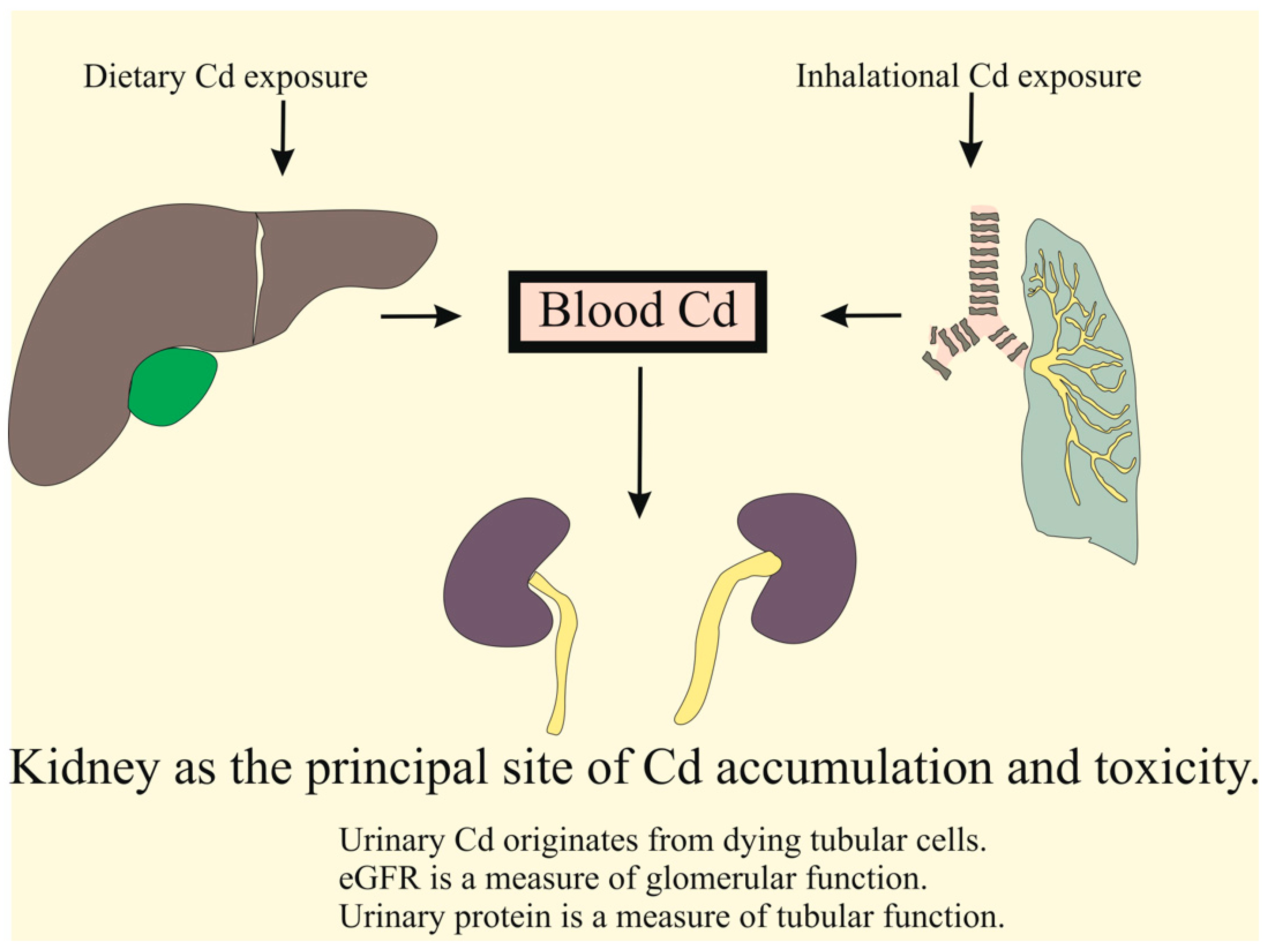
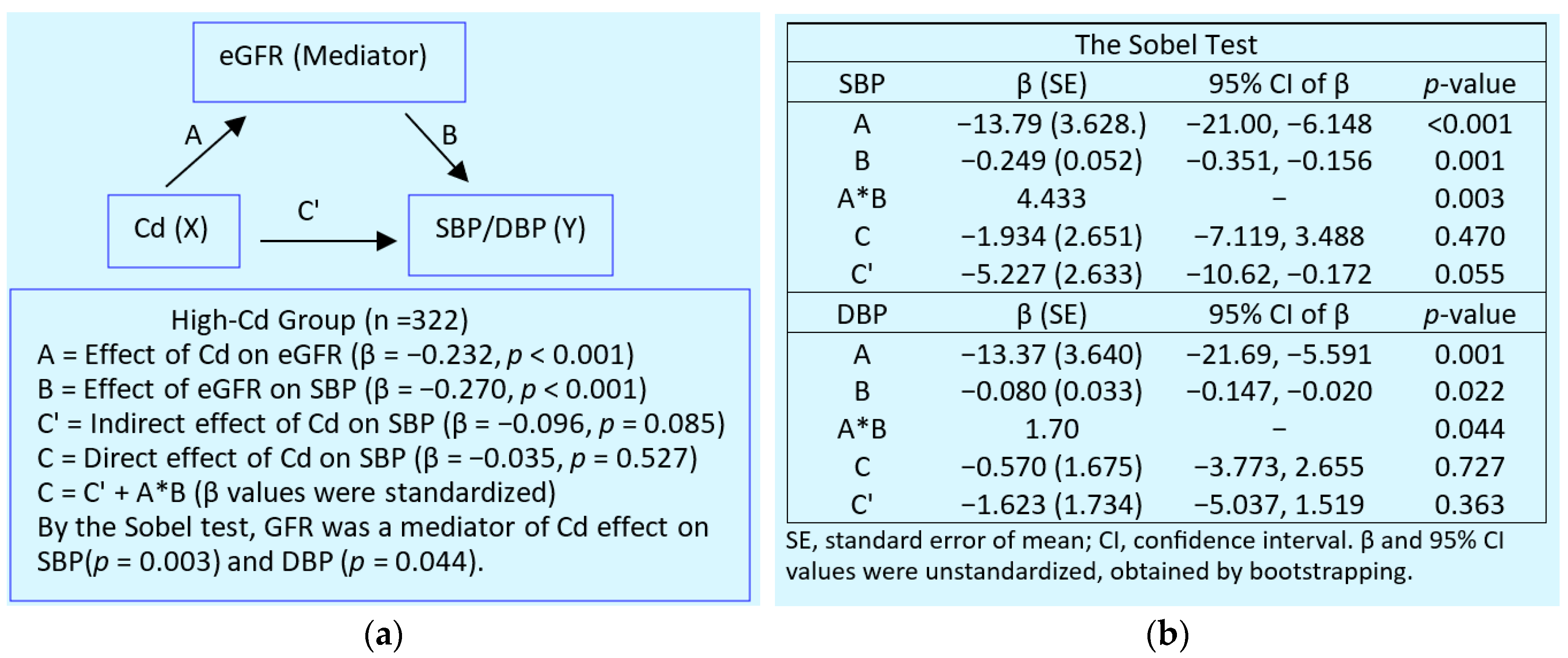
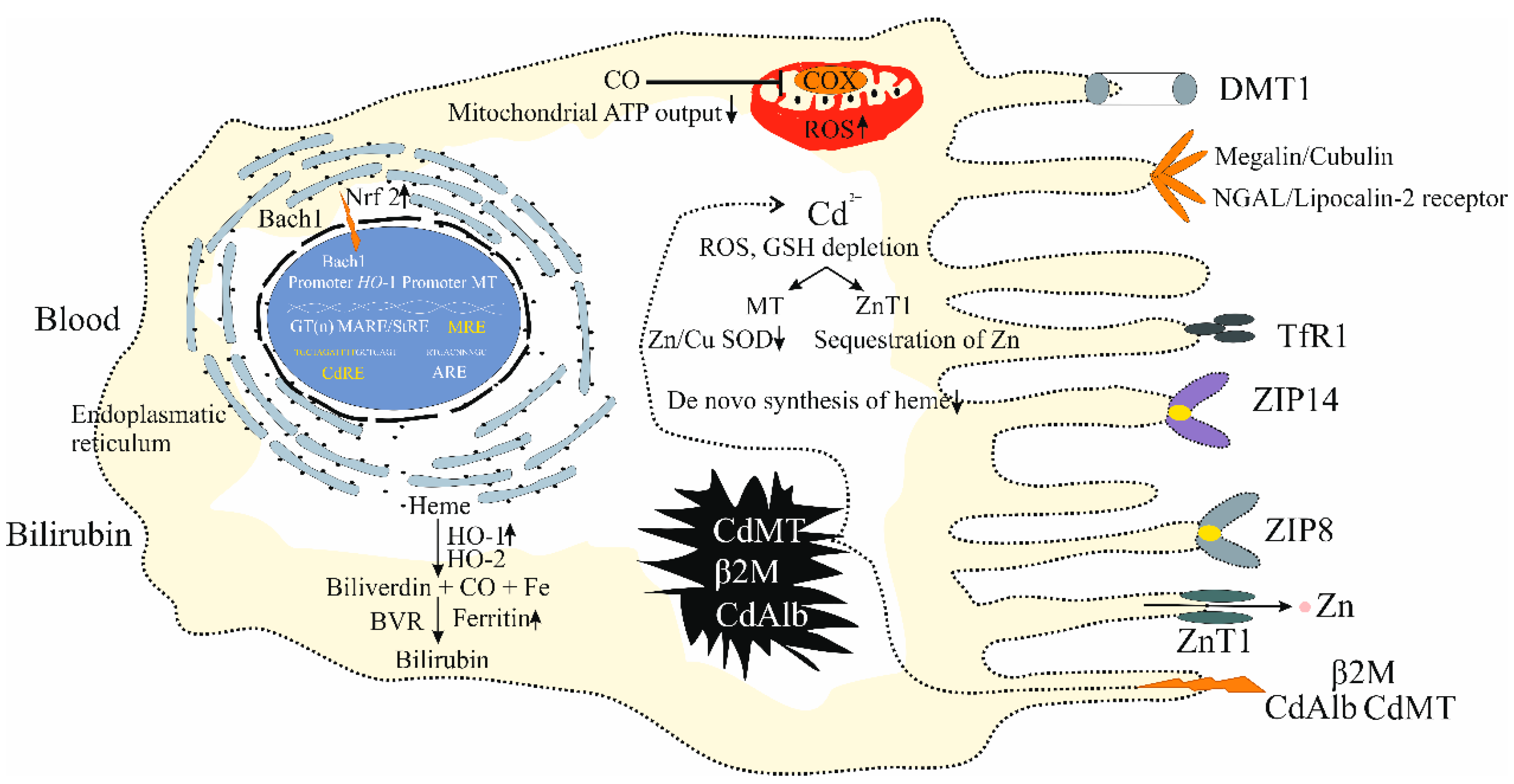
Chronic kidney disease (CKD) is now the world’s top seventh cause of death from a non-communicable disease, and its incidence is projected to increase further as its major risk factors, including obesity, diabetes, hypertension, and non-alcoholic fatty liver disease (NAFLD), continue to rise. Current evidence has linked the increased prevalence of CKD, diabetes, hypertension, and NAFLD to chronic exposure to the metal pollutant cadmium (Cd). Exposure to Cd is widespread because diet is the main exposure route for most people. Notably, however, the health risk of dietary Cd exposure is underappreciated, and the existing tolerable exposure guidelines for Cd do not afford health protection. New health-protective exposure guidelines are needed. From one’s diet, Cd is absorbed by the intestinal epithelium from where it passes through the liver and accumulates within the kidney tubular epithelial cells. Here, it is bound to metallothionine (MT), and as it is gradually released, it induces tubular damage, tubulointerstitial inflammation and fibrosis, and nephron destruction. The present review provides an update on our knowledge of the exposure levels of Cd that are found to be associated with CKD, NAFLD, and mortality from cardiovascular disease. It discusses the co-existence of hypertension and CKD in people environmentally exposed to Cd. It highlights nuclear and mitochondrial targeting and zinc deficiency as the universal cytotoxic mechanisms of Cd. Special emphasis is placed on the novel antioxidative function of zinc involving de novo heme biosynthesis and the induced expression of heme oxygenase-1 (HO-1). Other exogenous biomolecules with promising anti-Cd toxicity are highlighted.
Keywords: antioxidant defense; bilirubin; cadmium; heme oxygenase-1; hypertension; kidney disease; zinc deficiency antioxidant defense; bilirubin; cadmium; heme oxygenase-1; hypertension; kidney disease; zinc deficiency