Mechanistic and Kinetic Insights into the Acylation Reaction of Hepatitis C Virus NS3/NS4A Serine Protease with NS4B/5A Substrate

 , , and
Abstract
1. Introduction
2. Computational Methods
2.1. Initial Setup
2.2. QM/MM and Rate Constant Calculations
3. Results and Discussion
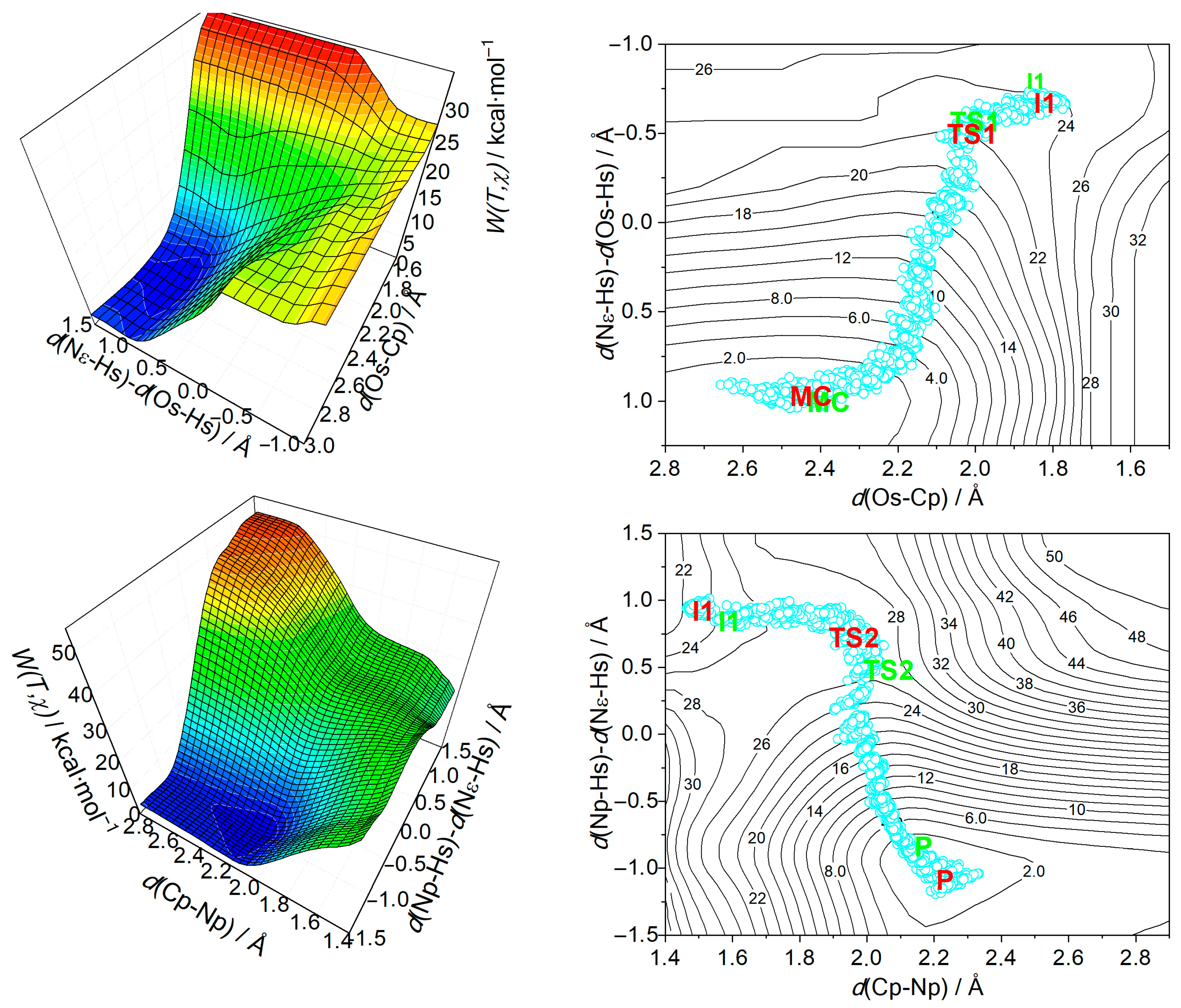
3.1. SCC-DFTB/MM Classical Free Energy Summary
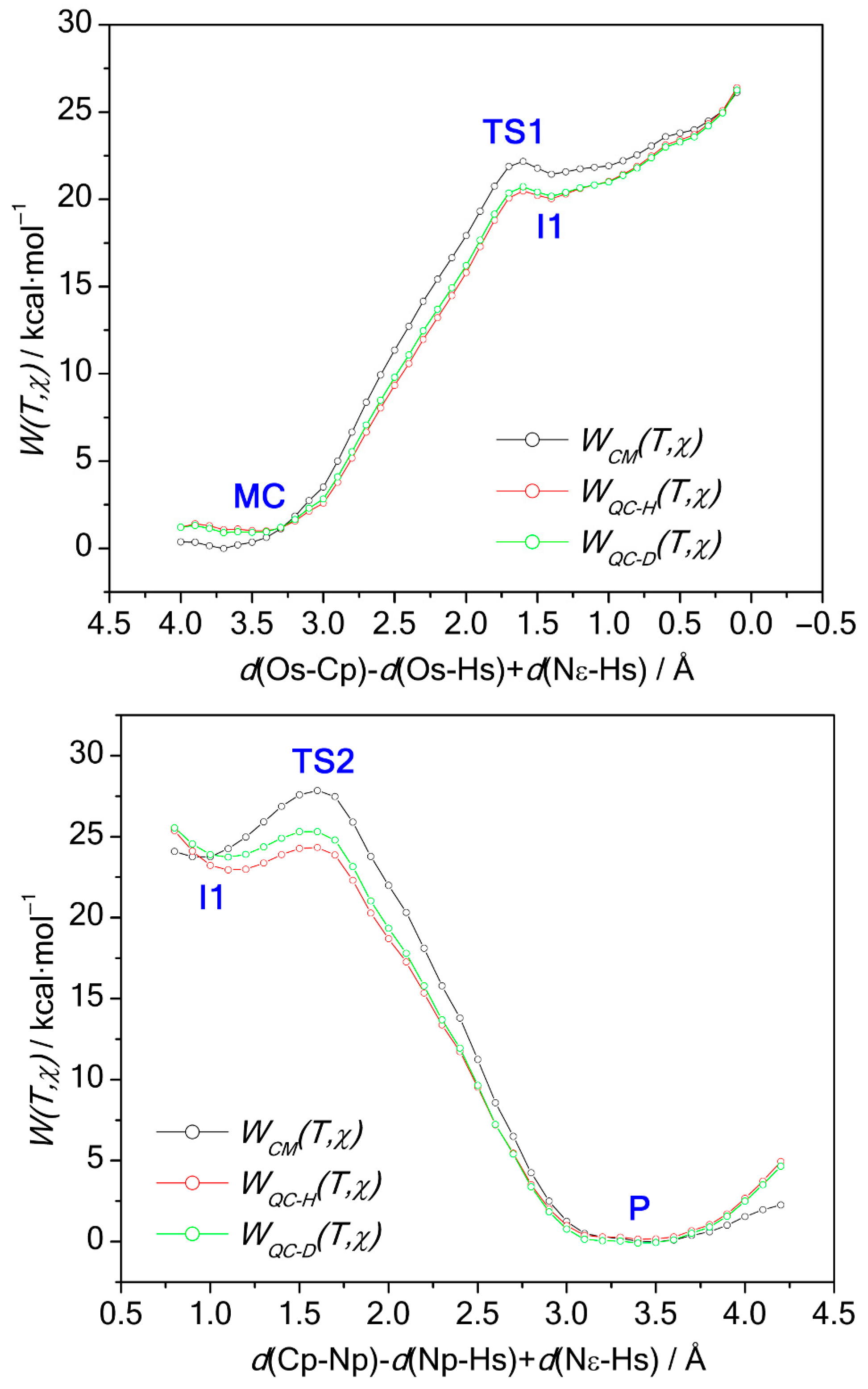
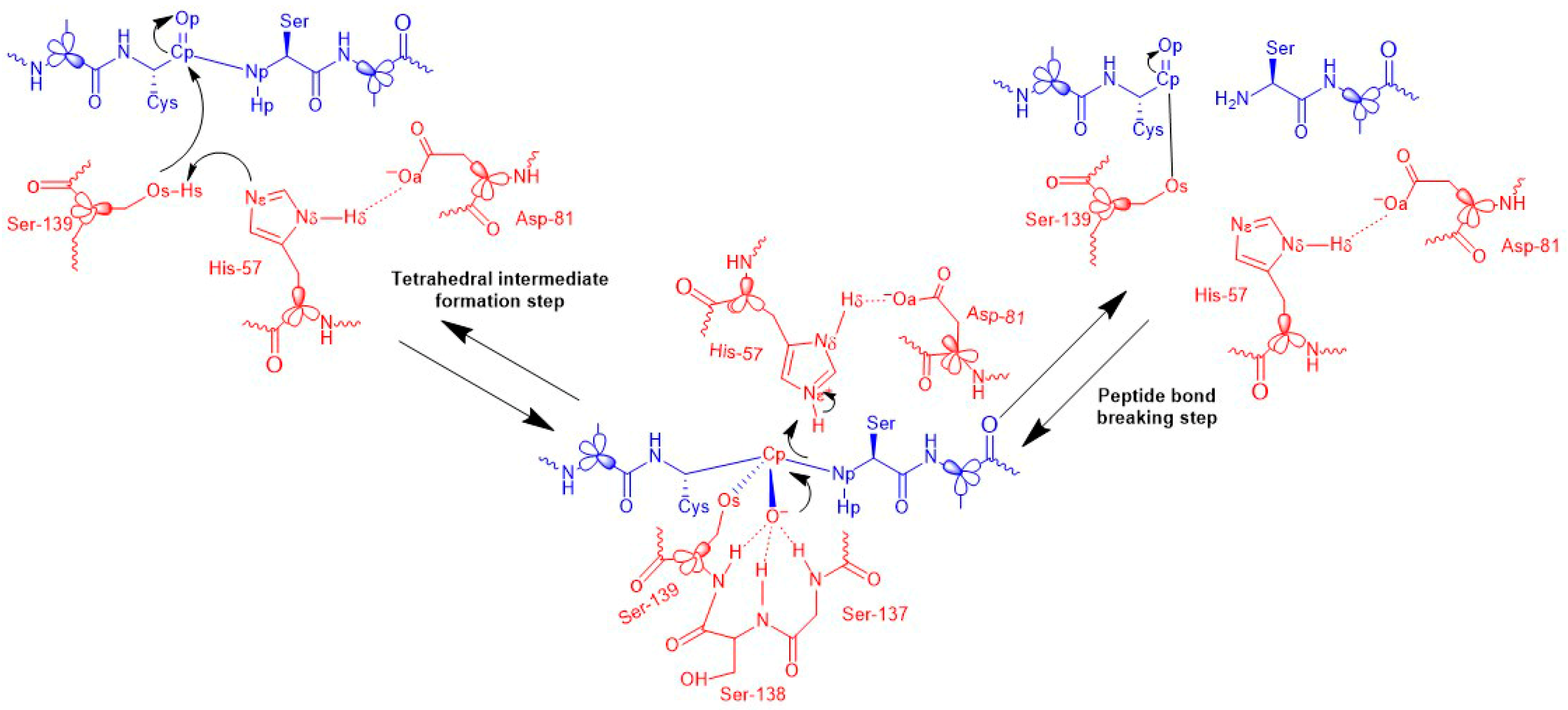
3.2. Quasiclassical Free Energy Profiles and Reaction Mechanism
3.3. Rate Constant Calculations and Kinetic Analysis
4. Conclusions
Supplementary Materials
Author Contributions
Funding
Institutional Review Board Statement
Informed Consent Statement
Data Availability Statement
Acknowledgments
Conflicts of Interest
References
- Tariq, M.; Shoukat, A.B.; Akbar, S.; Hameed, S.; Naqvi, M.Z.; Azher, A.; Saad, M.; Rizwan, M.; Nadeem, M.; Javed, A.; et al. Epidemiology, risk factors, and pathogenesis associated with a superbug: A comprehensive literature review on hepatitis C virus infection. Sage Open Med. 2022, 10, 1–14. [Google Scholar] [CrossRef]
- Seifert, L.L.; Perumpail, R.B.; Ahmed, A. Update on hepatitis C: Direct-acting antivirals. World J. Hepatol. 2015, 7, 2829–2833. [Google Scholar] [CrossRef] [PubMed]
- Martinello, M.; Solomon, S.S.; Terrault, N.A.; Dore, G.J. Hepatitis C. Lancet 2023, 402, 1085–1096. [Google Scholar] [CrossRef] [PubMed]
- Di Marco, L.; La Mantia, C.; Di Marco, V. Hepatitis C: Standard of Treatment and What to Do for Global Elimination. Viruses 2022, 14, 505. [Google Scholar] [CrossRef]
- Usuda, D.; Kaneoka, Y.; Ono, R.; Kato, M.; Sugawara, Y.; Shimizu, R.; Inami, T.; Nakajima, E.; Tsuge, S.; Sakurai, R.; et al. Current perspectives of viral hepatitis. World J. Gastroenterol. 2024, 30, 2402–2417. [Google Scholar] [CrossRef]
- Naggie, S. Treating HCV infection: It doesn’t get much better than this. Top. Antivir. Med. 2018, 26, 104–108. Available online: https://pubmed.ncbi.nlm.nih.gov/30641483/ (accessed on 14 July 2025).
- Manns, M.P.; Maasoumy, B. Breakthroughs in hepatitis C research: From discovery to cure. Nat. Rev. Gastroenterol. Hepatol. 2022, 19, 533–550. [Google Scholar] [CrossRef]
- Zhuang, L.; Li, J.; Zhang, Y.; Ji, S.; Xing, H. Real-world effectiveness of sofosbuvir/velpatasvir, glecaprevir/pibrentasvir, and sofosbuvir/velpatasvir/voxilaprevir against genotype 3 hepatitis C virus infection: A systematic review and meta-analysis. Front. Gastroenterol. 2025, 4, 1511150. [Google Scholar] [CrossRef]
- AEMPS; CIMA. Ficha Tecnica Maviret 100 mg/40 mg Comprimidos Recubiertos con Pelicula. Available online: https://cima.aemps.es/cima/dochtml/ft/1171213001/FT_1171213001.html (accessed on 1 June 2025).
- Mensa, F.J.; Lovell, S.; Pilot-Matias, T.; Liu, W. Glecaprevir/pibrentasvir for the treatment of chronic hepatitis C virus infection. Futur. Microbiol. 2018, 14, 89–110. [Google Scholar] [CrossRef]
- Everson, G.T.; Towner, W.J.; Davis, M.N.; Wyles, D.L.; Nahass, R.G.; Thuluvath, P.J.; Etzkorn, K.; Hinestrosa, F.; Tong, M.; Rabinovitz, M.; et al. Sofosbuvir with Velpatasvir in treatment—Naïve Non cirrhotic patients with genotype 1 to 6 hepatitis C virus infection. A randomized trial. Ann. Intern. Med. 2015, 163, 818–826. [Google Scholar] [CrossRef]
- Di Stefano, M.; Faleo, G.; Mohamed, A.M.F.; Morella, S.; Bruno, S.R.; Tundo, P.; Fiore, J.R.; Santantonio, T.A. Resistance Associated mutations in HCV patients failing DAA treatment. New Microbiol. 2021, 44, 12–18. Available online: https://pubmed.ncbi.nlm.nih.gov/33453702/ (accessed on 14 July 2025). [PubMed]
- Bourlière, M.; Pietri, O.; Castellani, P.; Oules, V.; Adhoute, X. Sofosbuvir, velpatasvir and voxilaprevir: A new triple combination for hepatitis C virus treatment. One pill fits all? Is it the end of the road? Ther. Adv. Gastroenterol. 2018, 11, 1–15. [Google Scholar] [CrossRef]
- EASL (European Association for the Study of the Liver). EASL recommendations on treatment of hepatitis C: Final update of the series. J. Hepatol. 2020, 73, 1170–1218. [Google Scholar] [CrossRef] [PubMed]
- Kerkar, N.; Hatjes, K. Hepatitis C Virus pediatric and adult perspectives in the current decade. Pathogens 2025, 14, 11. [Google Scholar] [CrossRef]
- Barbato, G.; Cicero, D.O.; Cordier, F.; Narjes, F.; Gerlach, B.; Sambucini, S.; Grzesiek, S.; Matassa, V.G.; De Francesco, R.; Bazzo, R. Inhibitor binding induces active site stabilization of the HCV NS3 protein serine protease domain. EMBO J. 2000, 19, 1195–1206. [Google Scholar] [CrossRef]
- Tan, S.-L. Hepatitis C Viruses: Genomes and Molecular Biology; Horizon Bioscience: Norfolk, UK, 2006. [Google Scholar]
- Liang, T.J.; Ghany, M.G.N. Current and Future Therapies for Hepatitis C Virus Infection. N. Engl. J. Med. 2013, 368, 1907–1917. [Google Scholar] [CrossRef]
- Kwong, A.D.; Kim, J.L.; Rao, G.; Lipovsek, D.; Raybuck, S.A. Hepatitis C virus NS3/4A protease. Antivir. Res. 1998, 40, 1–18. [Google Scholar] [CrossRef]
- Colarusso, S.; Koch, U.; Gerlach, B.; Steinkühler, C.; De Francesco, R.; Altamura, S.; Matassa, V.G.; Narjes, F.J. Phenethyl amides as novel noncovalent inhibitors of hepatitis C virus NS3/4A protease: Discovery, initial SAR, and molecular modeling. Med. Chem. 2003, 46, 345–348. [Google Scholar] [CrossRef]
- Han, W.; Hu, Z.; Jiang, X.; Wasserman, Z.R.; Decicco, C.P. Glycine α-Ketoamides as HCV NS3 Protease Inhibitors. Bioorg. Med. Chem. Lett. 2003, 13, 1111–1114. [Google Scholar] [CrossRef] [PubMed]
- Oliva, C.; Rodríguez, A.; González, M.; Yang, Y. A quantum mechanics/molecular mechanics study of the reaction mechanism of the hepatitis C virus NS3 protease with the NS5A/5B substrate. Proteins Struct. Funct. Bioinf. 2007, 66, 444–455. [Google Scholar] [CrossRef]
- Rodríguez, A.; Oliva, C.; González, M.; van der Kamp, M.; Mulholland, A.J. Comparison of different quantum mechanical/molecular mechanics boundary treatments in the reaction of the hepatitis C virus NS3 protease with the NS5A/5B substrate. J. Phys. Chem. B 2007, 111, 12909–12915. [Google Scholar] [CrossRef]
- Rodríguez, A.; Oliva, C.; González, M. A comparative QM/MM study of the reaction mechanism of the Hepatitis C virus NS3/NS4A protease with the three main natural substrates NS5A/5B, NS4B/5A and NS4A/4B. Phys. Chem. Chem. Phys. 2010, 12, 8001–8015. [Google Scholar] [CrossRef] [PubMed]
- Martínez-González, J.A.; Rodriguez, A.; Puyuelo, M.P.; González, M.; Martínez, R. Further theoretical insight into the reaction mechanism of the hepatitis C NS3/NS4A serine protease. Chem. Phys. Lett. 2015, 619, 97–102. [Google Scholar] [CrossRef]
- Martínez-González, J.A.; González, M.; Masgrau, L.; Martínez, R. Theoretical Study of the Free Energy Surface and Kinetics of the Hepatitis C Virus NS3/NS4A Serine Protease Reaction with the NS5A/5B Substrate. Does the Generally Accepted Tetrahedral Intermediate Really Exist? ACS Catal. 2015, 5, 246–255. [Google Scholar] [CrossRef]
- Fersht, A.R.; Sperling, J.J. The charge relay system in chymotrypsin and chymotrypsinogen. Mol. Biol. 1973, 74, 137–149. [Google Scholar] [CrossRef] [PubMed]
- Hedstrom, L. Serine Protease Mechanism and Specificity. Chem. Rev. 2002, 102, 4501–4523. [Google Scholar] [CrossRef]
- Zhang, R.; Durkin, J.; Windsor, W.T.; McNemar, C.; Ramanathan, L.; Le, H.V. Probing the substrate specificity of hepatitis C virus NS3 serine protease by using synthetic peptides. J. Virol. 1997, 71, 6208–6213. [Google Scholar] [CrossRef]
- Grakoui, A.; McCourt, D.W.; Wychowski, C.; Feinstone, S.M.; Rice, C.M. Characterization of the Hepatitis C Virus-Encoded Serine P roteinase: Determination of Proteinase-Dependent Polyprotein Cleavage Sites. J. Virol. 1993, 67, 2832–2843. [Google Scholar] [CrossRef]
- Urbani, A.; Bianchi, E.; Narjes, F.; Tramontano, A.; De Francesco, R.; Steinkühler, C.; Pessi, A. Substrate specificity of the hepatitis C virus serine protease NS3. J. Biol. Chem. 1997, 272, 9204–9209. [Google Scholar] [CrossRef]
- Dimasi, N.; Pasquo, A.; Martin, F.; Di Marco, S.; Steinkühler, C.; Cortese, R.; Sollazzo, M. Engineering, characterization and phage display of hepatitis C virus NS3 protease and NS4A cofactor peptide as a single-chain protein. Protein Eng. 1998, 11, 1257–1265. [Google Scholar] [CrossRef][Green Version]
- Steinkühler, C.; Biasiol, G.; Brunetti, M.; Urbani, A.; Koch, U.; Cortese, R.; Pessi, A.; De Francesco, R. Product Inhibition of the Hepatitis C Virus NS3 Protease. Biochemistry 1998, 37, 8899–8905. [Google Scholar] [CrossRef]
- Koch, U.; Biasiol, G.; Brunetti, M.; Fattori, D.; Pallaoro, M.; Steinkühler, C. Role of Charged Residues in the Catalytic Mechanism of Hepatitis C Virus NS3 Protease: Electrostatic Precollision Guidance and Transition-State Stabilization. Biochemistry 2001, 40, 631–640. [Google Scholar] [CrossRef]
- Beyer, B.M.; Zhang, R.; Hong, Z.; Madison, V.; Malcolm, B.A. Effect of naturally occurring active site mutations on hepatitis C virus NS3 protease specificity. Proteins Struct. Funct. Bioinf. 2001, 43, 82–88. [Google Scholar] [CrossRef]
- Thibeault, D.; Bousquet, C.; Gingras, R.; Lagacé, L.; Maurice, R.; White, R.W.; Lamarre, D.J. Sensitivity of NS3 Serine Proteases from Hepatitis C Virus Genotypes 2 and 3 to the Inhibitor BILN 2061. J. Virol. 2004, 78, 7352–7359. [Google Scholar] [CrossRef]
- Geitmann, M.; Dahl, G.; Danielson, U.H. Mechanistic and kinetic characterization of hepatitis C virus NS3 protein interactions with NS4A and protease inhibitors. J. Mol. Recognit. 2011, 24, 60–70. [Google Scholar] [CrossRef] [PubMed]
- Lemke, C.T.; Goudreau, N.; Zhaho, S.P.; Hucke, O.; Thiveault, D.; Llinas-Brunet, M.; White, P.W. Combined X-ray, NMR, and Kinetic Analyses Reveal Uncommon Binding Characteristics of the Hepatitis C Virus NS3-NS4A Protease Inhibitor BI 201335. J. Biol. Chem. 2011, 286, 11433–11443. [Google Scholar] [CrossRef] [PubMed]
- Cui, Q.; Elstner, M.; Kaxiras, E.; Frauenheim, T.; Karplus, M. A QM/MM Implementation of the Self-Consistent Charge Density Functional Tight Binding (SCC-DFTB) Method. J. Phys. Chem. B 2001, 105, 569–585. [Google Scholar] [CrossRef]
- Elstner, M.; Porezag, D.; Jungnickel, G.; Elsner, J.; Haugk, M.; Frauenheim, T.; Suhai, S.; Seifert, G. Self-consistent-charge density-functional tight-binding method for simulations of complex materials properties. Phys. Rev. B 1998, 58, 7260–7268. [Google Scholar] [CrossRef]
- Elstner, M. The SCC-DFTB method and its application to biological systems. Theor. Chem. Acc. 2006, 116, 316–325. [Google Scholar] [CrossRef]
- Gaus, M.; Cui, Q.; Elstner, M. Density functional tight binding: Application to organic and biological molecules. WIREs Comput. Mol. Sci. 2014, 4, 49–61. [Google Scholar] [CrossRef]
- Cui, Q.; Elstner, M. Density functional tight binding: Values of semi-empirical methods in an ab initio era. Phys. Chem. Chem. Phys. 2014, 16, 14368. [Google Scholar] [CrossRef] [PubMed]
- MacKerell, A.D., Jr.; Bashford, D.; Bellott, M.; Dunbrack, R.L., Jr.; Evanseck, J.D.; Field, M.J.; Fischer, S.; Gao, J.; Guo, H.; Ha, S.; et al. All-Atom Empirical Potential for Molecular Modeling and Dynamics Studies of Proteins. J. Phys. Chem. B 1998, 102, 3586–3616. [Google Scholar] [CrossRef]
- Gao, J.; Amara, P.; Alhambra, C.; Field, M.J. A Generalized Hybrid Orbital (GHO) Method for the Treatment of Boundary Atoms in Combined QM/MM Calculations. J. Phys. Chem. A 1998, 102, 4714–47214. [Google Scholar] [CrossRef]
- Pu, J.; Gao, J.; Truhlar, D.G. Generalized Hybrid Orbital (GHO) Method for Combining Ab Initio Hartree−Fock Wave Functions with Molecular Mechanics. J. Phys. Chem. A 2004, 108, 5454–5463. [Google Scholar] [CrossRef]
- Chu, J.W.; Trout, B.L.; Brooks, B.R. A super-linear minimization scheme for the nudged elastic band method. J. Chem. Phys. 2003, 119, 12708–12717. [Google Scholar] [CrossRef]
- Brooks, C.L., III; Karplus, M.J. Deformable stochastic boundaries in molecular dynamics. Chem. Phys. 1983, 79, 6312–6325. [Google Scholar] [CrossRef]
- Ryckaert, J.P.; Ciccotti, G.; Berendsen, H.J.C. Numerical integration of the cartesian equations of motion of a system with constraints: Molecular dynamics of n-alkanes. J. Comput. Phys. 1977, 23, 327–341. [Google Scholar] [CrossRef]
- Kumar, S.; Bouzida, D.; Swendsen, R.H.; Kollman, P.A.; Rosenberg, J.M. The Weighted Histogram Analysis Method for Free-Energy Calculations on Biomolecules. I. The Method. J. Comp. Chem. 1992, 13, 1011–1021. [Google Scholar] [CrossRef]
- Grossfield, A. WHAM: An Implementation of the Weighted Histogram Analysis Method v 2.06. Available online: http://membrane.urmc.rochester.edu/content/wham/ (accessed on 28 July 2021).
- Alhambra, C.; Corchado, J.; Sánchez, M.L.; García-Viloca, M.; Gao, J.; Truhlar, D.G. Canonical Variational Theory for Enzyme Kinetics with the Protein Mean Force and Multidimensional Quantum Mechanical Tunneling Dynamics. Theory and Application to Liver Alcohol Dehydrogenase. J. Chem. Phys. B 2001, 105, 11326–11340. [Google Scholar] [CrossRef]
- Truhlar, D.G.; Gao, J.; García-Viloca, M.; Alhambra, C.; Corchado, J.; Sánchez, M.L.; Poulsen, T.D. Ensemble-averaged variational transition state theory with optimized multidimensional tunneling for enzyme kinetics and other condensed-phase reactions. Int. J. Quantum Chem. 2004, 100, 1136–1152. [Google Scholar] [CrossRef]
- Masgrau, L.; Truhlar, D.G. The Importance of Ensemble Averaging in Enzyme Kinetics. Acc. Chem. Res. 2014, 48, 431–438. [Google Scholar] [CrossRef]
- Liu, Y.-P.; Lu, D.-H.; González-Lafont, A.; Truhlar, D.G.; Garret, B.C. Direct dynamics calculation of the kinetic isotope effect for an organic hydrogen-transfer reaction, including corner-cutting tunneling in 21 dimensions. J. Am. Chem. Soc. 1993, 115, 7806–7817. [Google Scholar] [CrossRef]
- Truhlar, D.G.; Isaacson, A.D.; Garret, B.C. Generalized Transition State Theory. In Theory of Chemical Reaction Dynamics; Baer, M., Ed.; CRC Press: Boca Raton, FL, USA, 1985; Volume 4, p. 65. [Google Scholar]
- Garcia-Viloca, M.; Alhambra, C.; Corchado, J.C.; Sanchez, M.L.; Villa, J.; Gao, J.; Truhlar, D.G. CHARMMRATE-Version 2.0; University of Minnesota: Minneapolis, MN, USA, 2002. [Google Scholar]
- Garcia-Viloca, M.; Alhambra, C.; Truhlar, D.G.; Gao, J.J. Inclusion of quantum-mechanical vibrational energy in reactive potentials of mean force. Chem. Phys. 2001, 114, 9953–9958. [Google Scholar] [CrossRef]
- Lin, C.; Wu, J.W.; Hsiao, K.; Su, M.S. The hepatitis C virus NS4A protein: Interactions with the NS4B and NS5A proteins. J. Virol. 1997, 71, 6465–6471. [Google Scholar] [CrossRef] [PubMed]
- Lin, C.; Rice, C.M. The hepatitis C virus NS3 serine proteinase and NS4A cofactor: Establishment of a cell-free trans-processing assay. Proc. Natl. Acad. Sci. USA 1995, 92, 7622–7626. [Google Scholar] [CrossRef]
- Beran, R.K.F.; Lindenbach, B.D.; Pyle, A.M. The NS4A Protein of Hepatitis C Virus Promotes RNA-Coupled ATP Hydrolysis by the NS3 Helicase. J. Virol. 2009, 83, 3268–3275. [Google Scholar] [CrossRef][Green Version]
- Warshel, A. Computer Modeling of Chemical Reactions in Enzymes and Solutions; Wiley: New York, NY, USA, 1991. [Google Scholar]
- Uritsky, N.; Shokhen, M.; Albeck, A. Stepwise Versus Concerted Mechanisms in General-Base Catalysis by Serine Proteases. Angew. Chem. Int. Ed. 2016, 55, 1680–1684. [Google Scholar] [CrossRef] [PubMed]
- Yennawar, N.H.; Yennawar, H.P.; Farber, G.K. X-ray Crystal Structure of γ-Chymotrypsin in Hexane. Biochemistry 1994, 33, 7326. [Google Scholar] [CrossRef]
- Liu, B.; Schofield, C.J.; Wilmouth, R.C. Structural analyses on intermediates in serine protease catalysis. J. Biol. Chem. 2006, 281, 24024–24035. [Google Scholar] [CrossRef]
- Romano, K.P.; Ali, A.; Aydin, C.; Soumana, D.; Ozen, A.; Deveau, L.M.; Silver, C.; Cao, H.; Newton, A.; Petropoulos, C.J.; et al. The Molecular Basis of Drug Resistance against Hepatitis C Virus NS3/4A Protease Inhibitors. PLoS Pathog. 2012, 8, e1002832. [Google Scholar] [CrossRef]
- Di Marco, S.; Rizzi, M.; Volpari, C.; Walsh, M.A.; Narjes, F.; Colarusso, S.; De Francesco, R.; Matassa, V.G.; Sollazzo, M.J. Inhibition of the Hepatitis C Virus NS3/4A Protease: The Crystal Structures of Two Protease-Inhibitor Complexes. Biol. Chem. 2000, 275, 7152–7157. [Google Scholar] [CrossRef] [PubMed]
- Mulholland, A.J. Chemical accuracy in QM/MM calculations on enzyme-catalysed reactions. Chem. Cent. J. 2007, 1, 19. [Google Scholar] [CrossRef] [PubMed]
- Frushicheva, M.-P.; Warshel, A. Towards Quantitative Computer-Aided Studies of Enzymatic Enantioselectivity: The Case of Candida antarctica Lipase A. ChemBioChem 2012, 13, 215–223. [Google Scholar] [CrossRef] [PubMed]
- Itakura, J.; Kurosaki, M.; Kakizaki, S.; Amano, K.; Nakayama, N.; Inoue, J.; Endo, T.; Marusawa, H.; Hasebe, C.; Joko, K.; et al. Features of resistance-associated substitutions after failure of multiple direct-acting antiviral regimens for hepatitis C. JHEP Rep. 2020, 2, 100138. [Google Scholar] [CrossRef]
- Nakamoto, S.; Kanda, T.; Wu, S.; Shirasawa, H.; Yokosuka, O. Hepatitis C virus NS5A inhibitors and drug resistance mutations. World J. Gastroenterol. 2014, 20, 2902–2912. [Google Scholar] [CrossRef]
- Wu, S. Hepatitis C virus protease inhibitor-resistance mutations: Our experience and review. World J. Gastroenterol. 2013, 19, 8940–8948. [Google Scholar] [CrossRef] [PubMed]



| ΔGCM/kcal·mol−1 | ||
|---|---|---|
| NS4B/5A | NS5A/5B [26] | |
| MC | 0.0 | 0.0 |
| TS1 | 21.3 | 20.6 |
| I1 | 21.2 | 20.5 |
| TS2 | 24.5 | 25.2 |
| P | −2.3 | 1.8 |
| Proton | Deuteron | Exp. [29] | |
|---|---|---|---|
| <κ> | 2.02 ± 1.23 | 1.59 ± 0.84 | - |
| <Γ> | 0.56 ± 0.39 | 0.64 ± 0.37 | - |
| <κ>·<Γ> | 1.13 ± 1.05 | 1.02 ± 0.79 | - |
| ΔG‡QC/kcal·mol−1 | 20.2 | 20.4 | |
| ΔG‡phen/kcal·mol−1 | 20.2 | 20.4 | 18.6 * |
| kCVT/min−1 | 0.77 | 0.48 | 11.00 |
| kCVT(H+)/kCVT(D+) | 1.60 | ||
Disclaimer/Publisher’s Note: The statements, opinions and data contained in all publications are solely those of the individual author(s) and contributor(s) and not of MDPI and/or the editor(s). MDPI and/or the editor(s) disclaim responsibility for any injury to people or property resulting from any ideas, methods, instructions or products referred to in the content. |
© 2025 by the authors. Licensee MDPI, Basel, Switzerland. This article is an open access article distributed under the terms and conditions of the Creative Commons Attribution (CC BY) license (https://creativecommons.org/licenses/by/4.0/).
Share and Cite
Martínez-González, J.Á.; Salazar-Sanchez, N.; Larriva-Hormigos, M.; Martínez, R.; González, M. Mechanistic and Kinetic Insights into the Acylation Reaction of Hepatitis C Virus NS3/NS4A Serine Protease with NS4B/5A Substrate. Biomolecules 2025, 15, 1619. https://doi.org/10.3390/biom15111619
Martínez-González JÁ, Salazar-Sanchez N, Larriva-Hormigos M, Martínez R, González M. Mechanistic and Kinetic Insights into the Acylation Reaction of Hepatitis C Virus NS3/NS4A Serine Protease with NS4B/5A Substrate. Biomolecules. 2025; 15(11):1619. https://doi.org/10.3390/biom15111619
Chicago/Turabian StyleMartínez-González, José Ángel, Nuria Salazar-Sanchez, María Larriva-Hormigos, Rodrigo Martínez, and Miguel González. 2025. "Mechanistic and Kinetic Insights into the Acylation Reaction of Hepatitis C Virus NS3/NS4A Serine Protease with NS4B/5A Substrate" Biomolecules 15, no. 11: 1619. https://doi.org/10.3390/biom15111619
APA StyleMartínez-González, J. Á., Salazar-Sanchez, N., Larriva-Hormigos, M., Martínez, R., & González, M. (2025). Mechanistic and Kinetic Insights into the Acylation Reaction of Hepatitis C Virus NS3/NS4A Serine Protease with NS4B/5A Substrate. Biomolecules, 15(11), 1619. https://doi.org/10.3390/biom15111619