
Engineering a Thermostable Reverse Transcriptase for RT-PCR Through Rational Design of Pyrococcus furiosus DNA Polymerase

 ,
, 
Abstract
1. Introduction
2. Materials and Methods
2.1. Construction of Mutated Pfu DNA Polymerase Genes
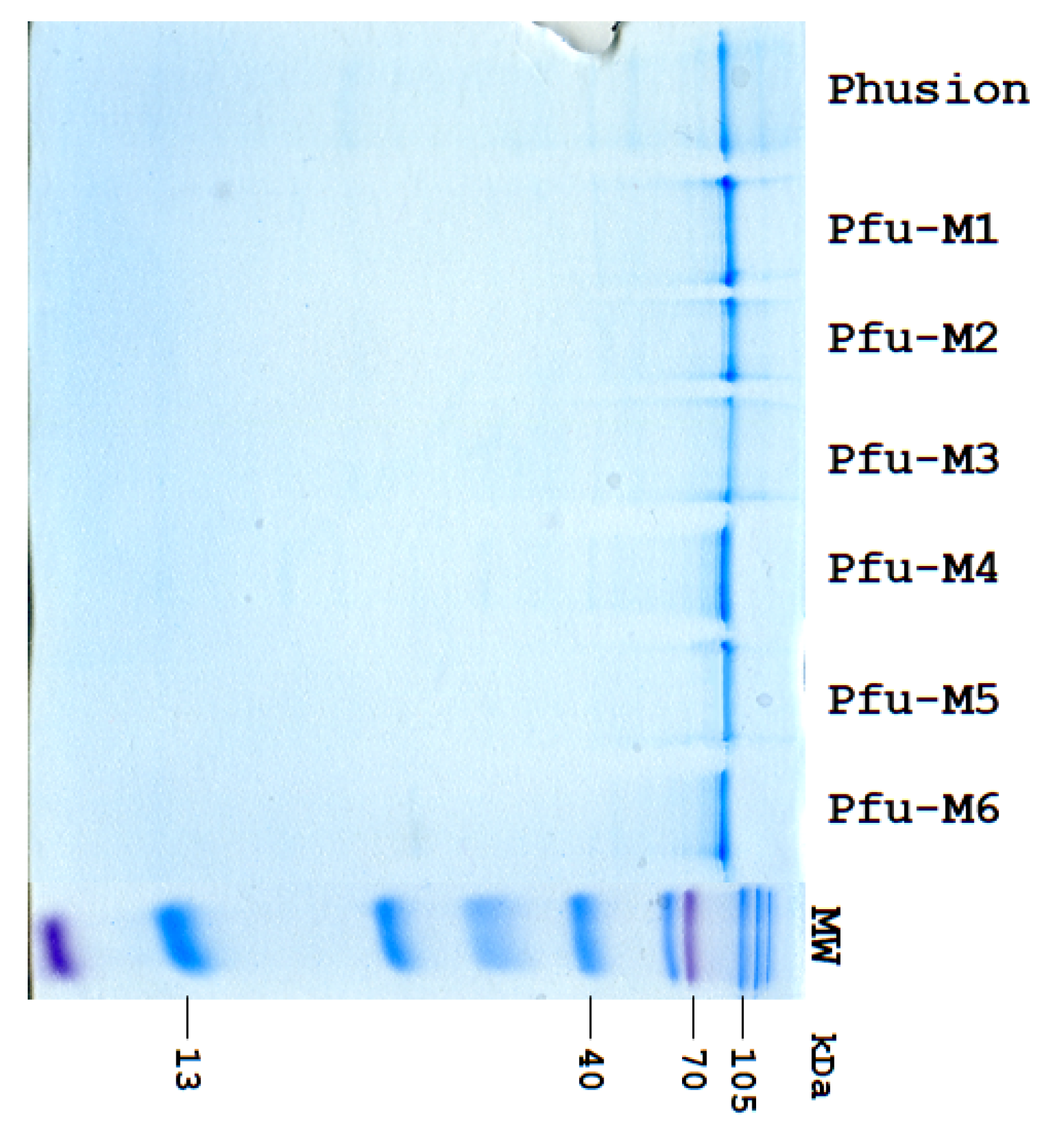
2.2. Expression and Purification of Pfu Mutant Forms
2.3. DNA/RNA Substrates
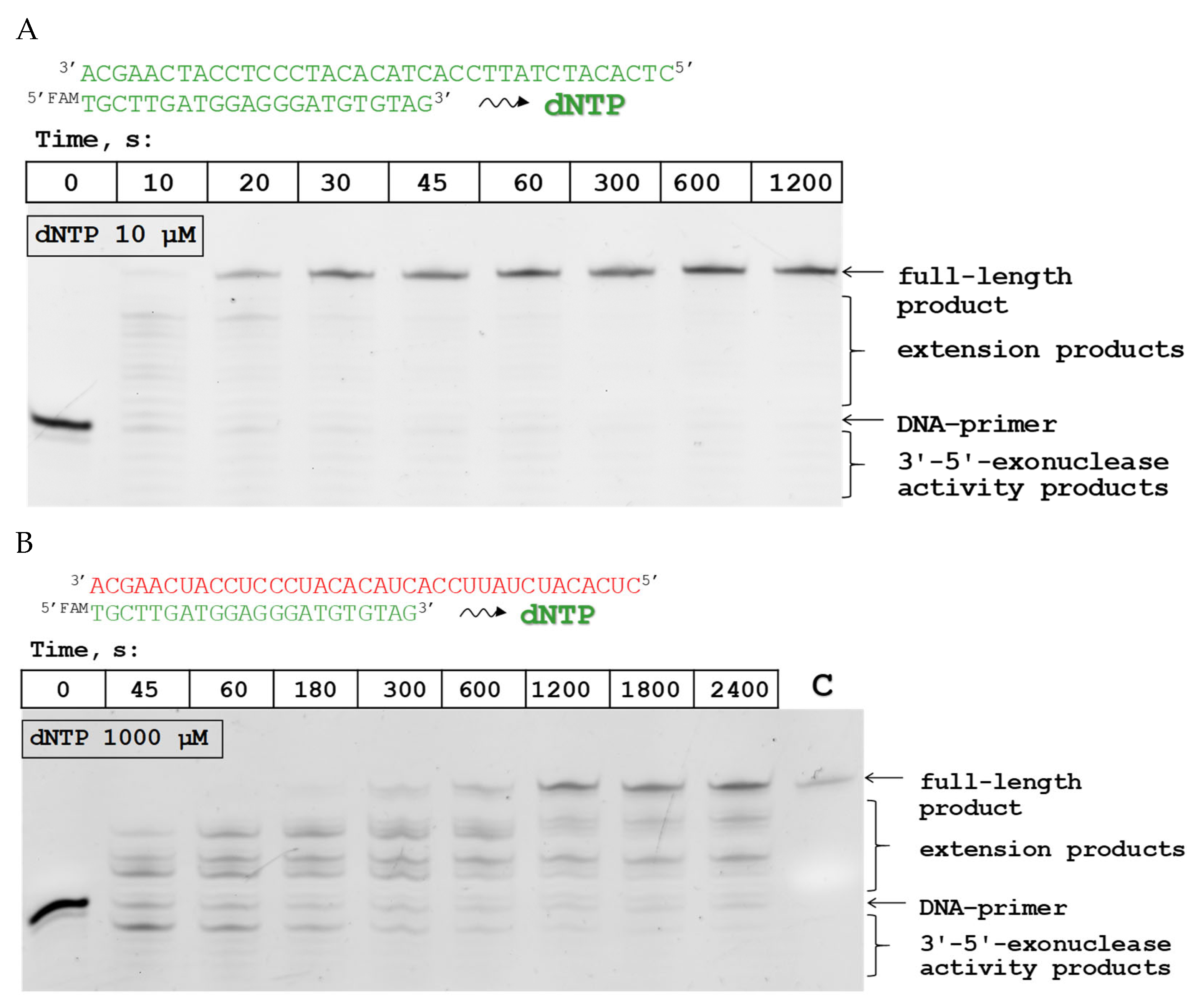
2.4. Catalytic Activity of Mutant Forms of Pfu-Mi
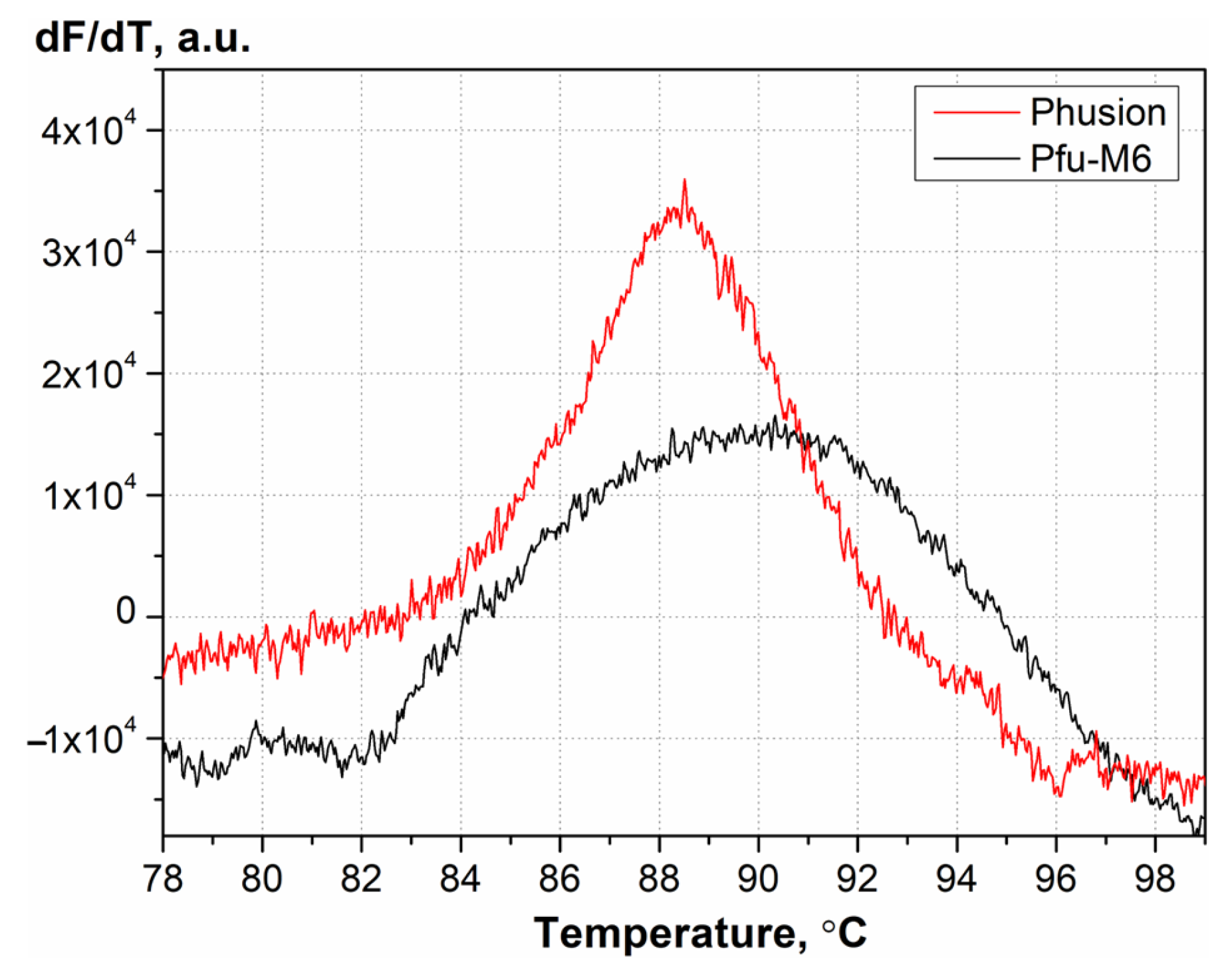
2.5. Melting Temperature of the Mutant Form Pfu-M6
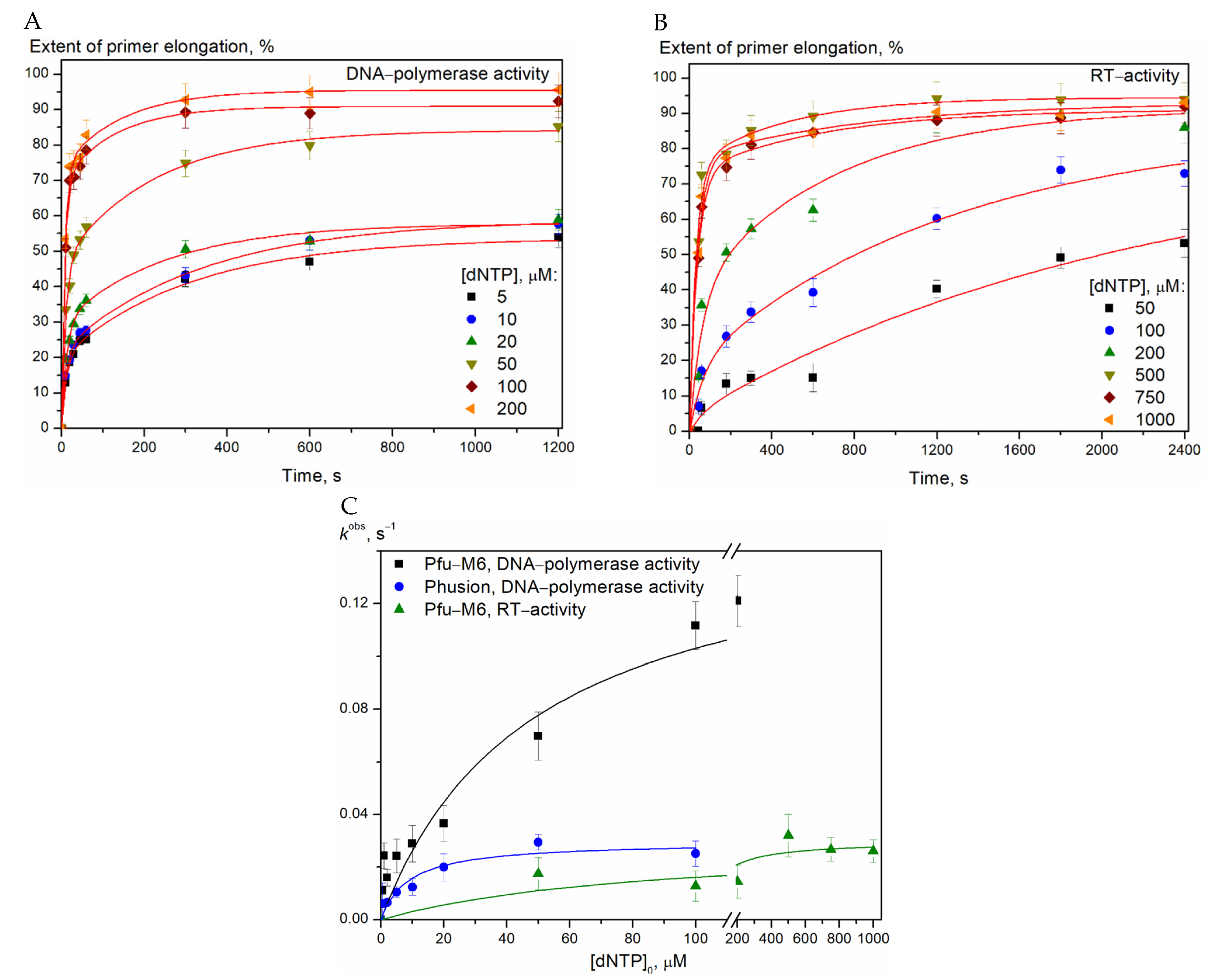
2.6. Kinetic Parameters of the Polymerase Reaction
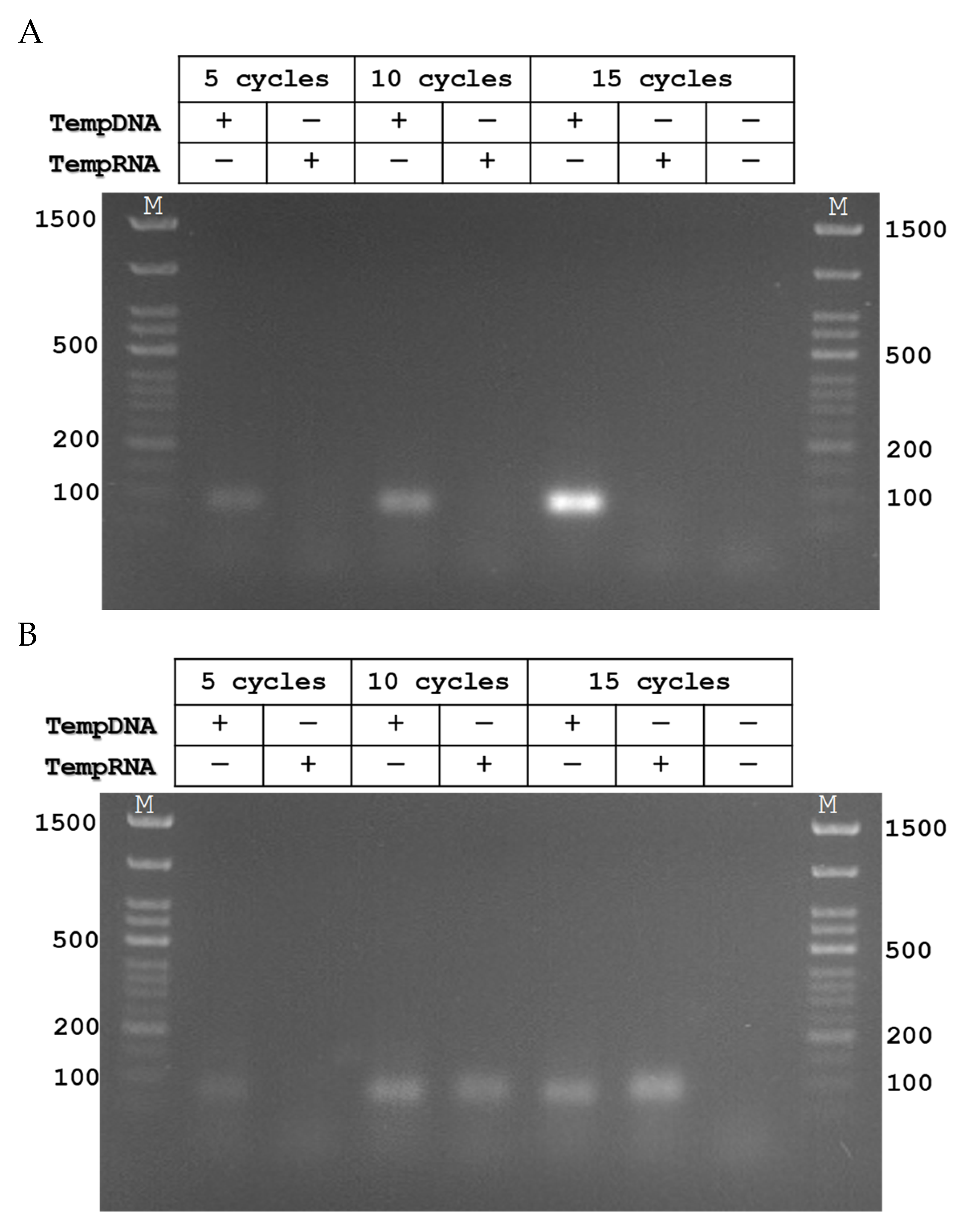
2.7. Testing of PCR Activity
3. Results and Discussion
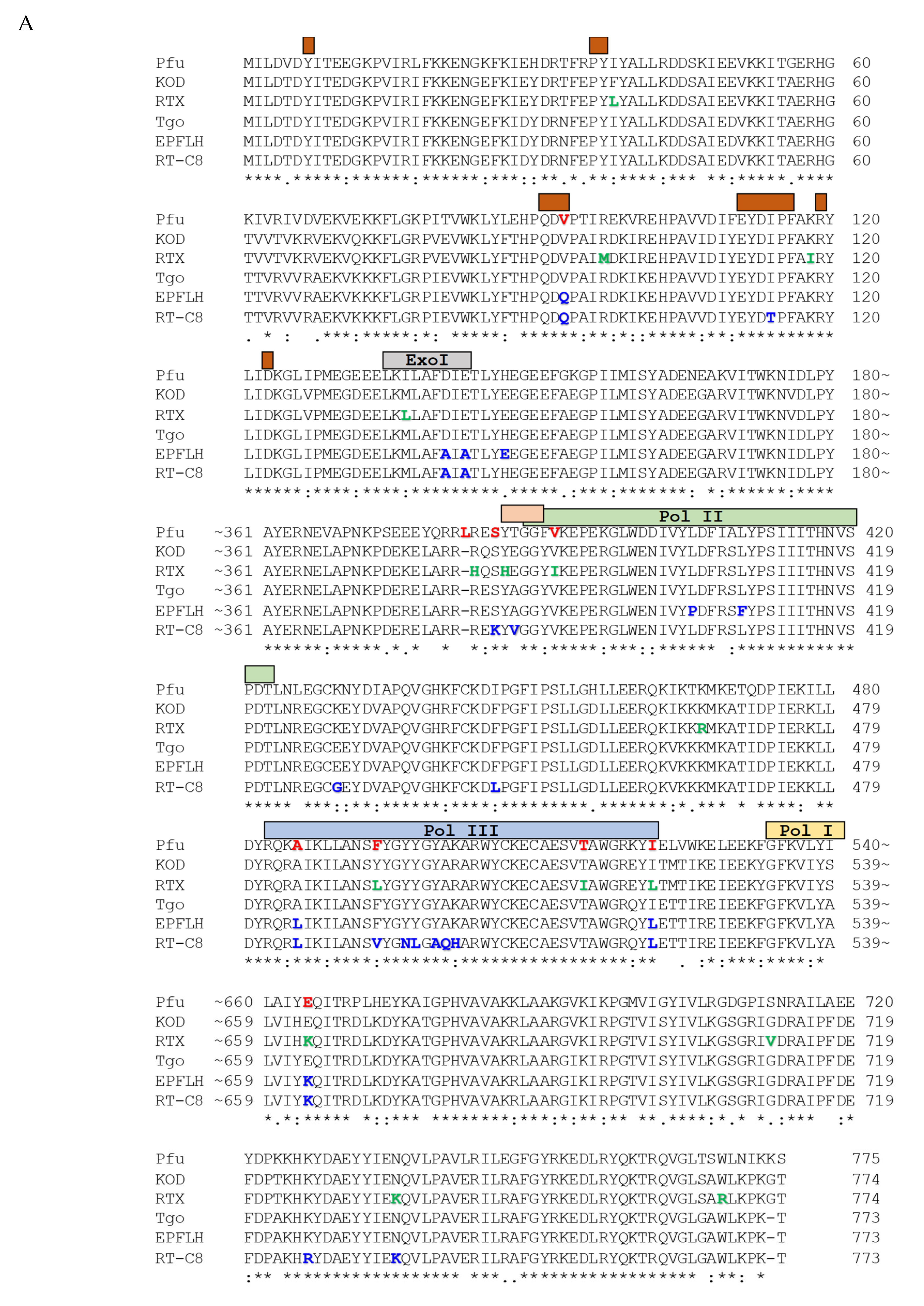
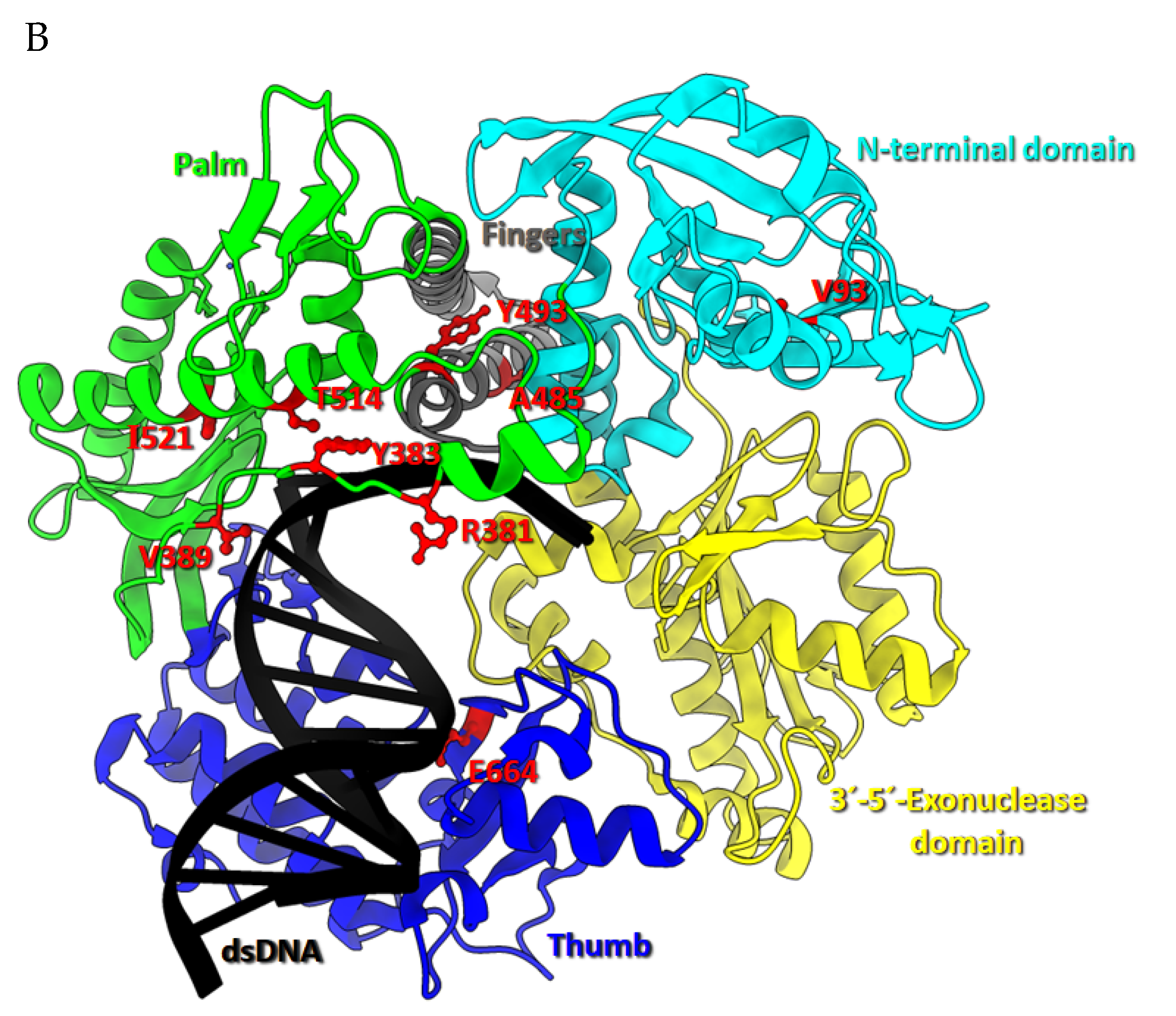
3.1. Selection of Amino Acid Residues Potentially Influencing the Emergence of RT Activity
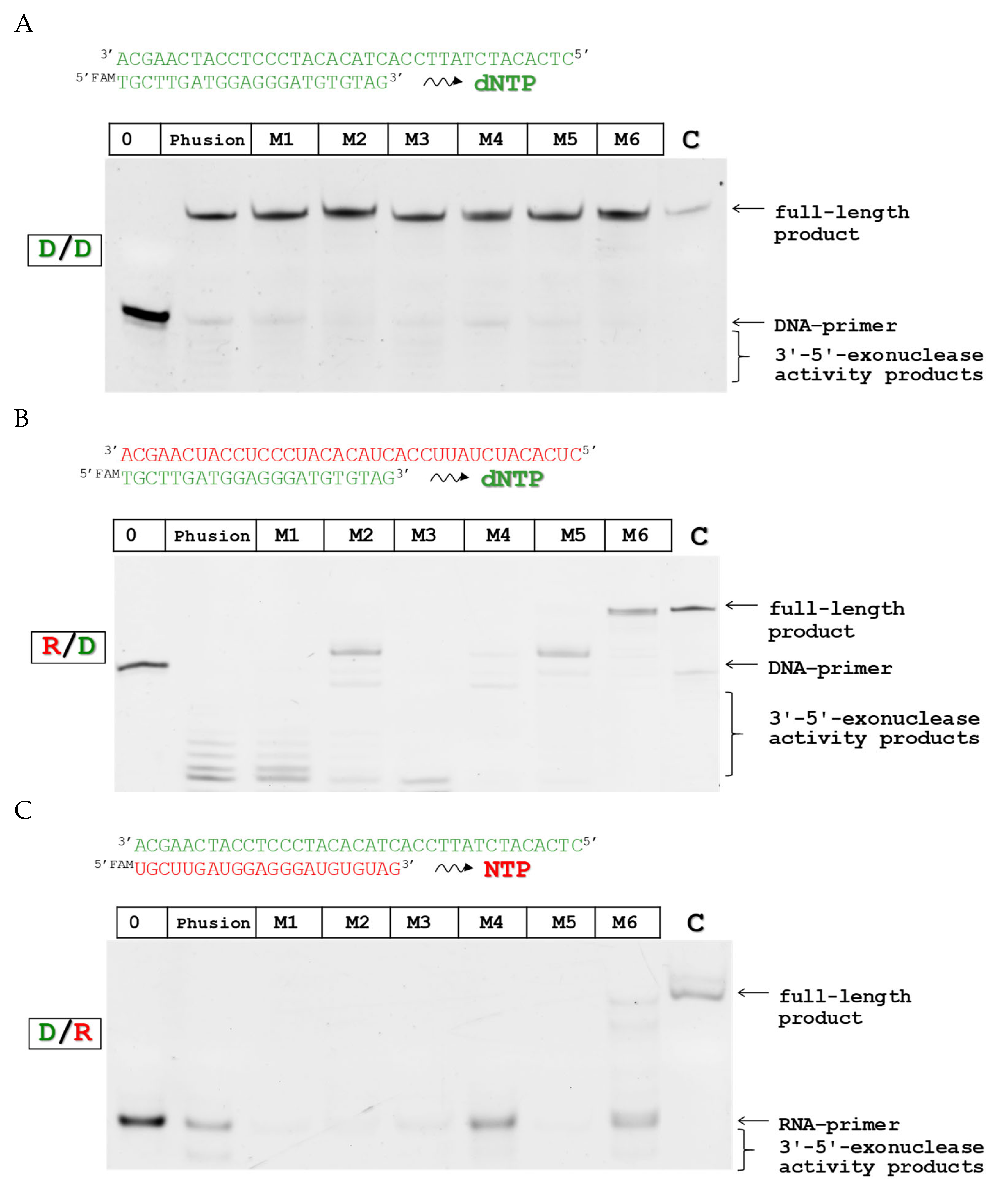
3.2. Evaluation of the Enzymatic Activity of Mutant Forms of Pfu-Mi
3.3. Melting Temperature
3.4. Kinetic Parameters of Substrate Extension
3.5. Pfu-M6 Activity Under PCR Conditions
4. Conclusions
Supplementary Materials
Author Contributions
Funding
Institutional Review Board Statement
Informed Consent Statement
Data Availability Statement
Conflicts of Interest
References
- Aschenbrenner, J.; Marx, A. DNA polymerases and biotechnological applications. Curr. Opin. Biotechnol. 2017, 48, 187–195. [Google Scholar] [CrossRef] [PubMed]
- Ishino, S.; Ishino, Y. DNA polymerases as useful reagents for biotechnology—The history of developmental research in the field. Front. Microbiol. 2014, 5, 465. [Google Scholar] [CrossRef]
- Terpe, K. Overview of thermostable DNA polymerases for classical PCR applications: From molecular and biochemical fundamentals to commercial systems. Appl. Microbiol. Biotechnol. 2013, 97, 10243–10254. [Google Scholar] [CrossRef] [PubMed]
- Zhu, H.; Zhang, H.; Xu, Y.; Laššáková, S.; Korabečná, M.; Neužil, P. PCR Past, Present and Future. Biotechniques 2020, 69, 317–325. [Google Scholar] [CrossRef]
- Choi, W.S.; He, P.; Pothukuchy, A.; Gollihar, J.; Ellington, A.D.; Yang, W. How a B family DNA polymerase has been evolved to copy RNA. Proc. Natl. Acad. Sci. USA 2020, 117, 21274–21280. [Google Scholar] [CrossRef]
- Zhang, L.; Kang, M.; Xu, J.; Huang, Y. Archaeal DNA polymerases in biotechnology. Appl. Microbiol. Biotechnol. 2015, 99, 6585–6597. [Google Scholar] [CrossRef]
- Kuznetsova, A.A.; Kuznetsov, N.A. Direct Enzyme Engineering of B Family DNA Polymerases for Biotechnological Approaches. Bioengineering 2023, 10, 1150. [Google Scholar] [CrossRef]
- Coulther, T.A.; Stern, H.R.; Beuning, P.J. Engineering Polymerases for New Functions. Trends Biotechnol. 2019, 37, 1091–1103. [Google Scholar] [CrossRef]
- Houlihan, G.; Arangundy-Franklin, S.; Porebski, B.T.; Subramanian, N.; Taylor, A.I.; Holliger, P. Discovery and evolution of RNA and XNA reverse transcriptase function and fidelity. Nat. Chem. 2020, 12, 683–690. [Google Scholar] [CrossRef]
- Ellefson, J.W.; Gollihar, J.; Shroff, R.; Shivram, H.; Iyer, V.R.; Ellington, A.D. Synthetic evolutionary origin of a proofreading reverse transcriptase. Science 2016, 352, 1590–1593. [Google Scholar] [CrossRef]
- Arangundy-Franklin, S.; Taylor, A.I.; Porebski, B.T.; Genna, V.; Peak-Chew, S.; Vaisman, A.; Woodgate, R.; Orozco, M.; Holliger, P. A synthetic genetic polymer with an uncharged backbone chemistry based on alkyl phosphonate nucleic acids. Nat. Chem. 2019, 11, 533–542. [Google Scholar] [CrossRef] [PubMed]
- Pinheiro, V.B.; Taylor, A.I.; Cozens, C.; Abramov, M.; Renders, M.; Zhang, S.; Chaput, J.C.; Wengel, J.; Peak-Chew, S.-Y.; McLaughlin, S.H.; et al. Synthetic Genetic Polymers Capable of Heredity and Evolution. Science 2012, 336, 341–344. [Google Scholar] [CrossRef] [PubMed]
- Dunn, M.R.; Otto, C.; Fenton, K.E.; Chaput, J.C. Improving Polymerase Activity with Unnatural Substrates by Sampling Mutations in Homologous Protein Architectures. ACS Chem. Biol. 2016, 11, 1210–1219. [Google Scholar] [CrossRef] [PubMed]
- Lundberg, K.S.; Shoemaker, D.D.; Adams, M.W.W.; Short, J.M.; Sorge, J.A.; Mathur, E.J. High-fidelity amplification using a thermostable DNA polymerase isolated from Pyrococcus furiosus. Gene 1991, 108, 1–6. [Google Scholar] [CrossRef]
- Kim, S.W.; Kim, D.-U.; Kim, J.K.; Kang, L.-W.; Cho, H.-S. Crystal structure of Pfu, the high fidelity DNA polymerase from Pyrococcus furiosus. Int. J. Biol. Macromol. 2008, 42, 356–361. [Google Scholar] [CrossRef]
- Kuroita, T.; Matsumura, H.; Yokota, N.; Kitabayashi, M.; Hashimoto, H.; Inoue, T.; Imanaka, T.; Kai, Y. Structural Mechanism for Coordination of Proofreading and Polymerase Activities in Archaeal DNA Polymerases. J. Mol. Biol. 2005, 351, 291–298. [Google Scholar] [CrossRef]
- Houlihan, G.; Arangundy-Franklin, S.; Holliger, P. Engineering and application of polymerases for synthetic genetics. Curr. Opin. Biotechnol. 2017, 48, 168–179. [Google Scholar] [CrossRef]
- Śpibida, M.; Krawczyk, B.; Olszewski, M.; Kur, J. Modified DNA polymerases for PCR troubleshooting. J. Appl. Genet. 2017, 58, 133–142. [Google Scholar] [CrossRef]
- Kranaster, R.; Marx, A. Engineered DNA polymerases in biotechnology. ChemBioChem 2010, 11, 2077–2084. [Google Scholar] [CrossRef]
- Fogg, M.J.; Pearl, L.H.; Connolly, B.A. Structural basis for uracil recognition by archaeal family B DNA polymerases. Nat. Struct. Biol. 2002, 9, 922–927. [Google Scholar] [CrossRef]
- Firbank, S.J.; Wardle, J.; Heslop, P.; Lewis, R.J.; Connolly, B.A. Uracil Recognition in Archaeal DNA Polymerases Captured by X-ray Crystallography. J. Mol. Biol. 2008, 381, 529–539. [Google Scholar] [CrossRef]
- Tubeleviciute, A.; Skirgaila, R. Compartmentalized self-replication (CSR) selection of Thermococcus litoralis Sh1B DNA polymerase for diminished uracil binding. Protein Eng. Des. Sel. 2010, 23, 589–597. [Google Scholar] [CrossRef][Green Version]
- Wang, Y. A novel strategy to engineer DNA polymerases for enhanced processivity and improved performance in vitro. Nucleic Acids Res. 2004, 32, 1197–1207. [Google Scholar] [CrossRef]
- Oscorbin, I.P.; Wong, P.F.; Boyarskikh, U.A.; Khrapov, E.A.; Filipenko, M.L. The attachment of a DNA-binding Sso7d-like protein improves processivity and resistance to inhibitors of M-MuLV reverse transcriptase. FEBS Lett. 2020, 594, 4338–4356. [Google Scholar] [CrossRef]
- Liu, C.; Cozens, C.; Jaziri, F.; Rozenski, J.; Maréchal, A.; Dumbre, S.; Pezo, V.; Marlière, P.; Pinheiro, V.B.; Groaz, E.; et al. Phosphonomethyl Oligonucleotides as Backbone-Modified Artificial Genetic Polymers. J. Am. Chem. Soc. 2018, 140, 6690–6699. [Google Scholar] [CrossRef] [PubMed]
- Kuznetsova, A.A.; Fedorova, O.S.; Kuznetsov, N.A. Structural and Molecular Kinetic Features of Activities of DNA Polymerases. Int. J. Mol. Sci. 2022, 23, 6373. [Google Scholar] [CrossRef] [PubMed]
- Bonch-Osmolovskaya, E.; Svetlichny, V.; Ankenbauer, W.; SchmitzAgheguian, G.; Angerer, B.; Ebenbichler, C.; Laue, F. Thermostable Nucleic Acid Polymerase from Thermococcus gorgonarius. US Patent EP0834570A1, 16 September 2008. [Google Scholar]
- Takagi, M.; Nishioka, M.; Kakihara, H.; Kitabayashi, M.; Inoue, H.; Kawakami, B.; Oka, M.; Imanaka, T. Characterization of DNA polymerase from Pyrococcus sp. strain KOD1 and its application to PCR. Appl. Environ. Microbiol. 1997, 63, 4504–4510. [Google Scholar] [CrossRef] [PubMed]
- Cozens, C.; Mutschler, H.; Nelson, G.M.; Houlihan, G.; Taylor, A.I.; Holliger, P. Enzymatic Synthesis of Nucleic Acids with Defined Regioisomeric 2′-5′ Linkages. Angew. Chem. Int. Ed. 2015, 54, 15570–15573. [Google Scholar] [CrossRef]
- Cozens, C.; Pinheiro, V.B.; Vaisman, A.; Woodgate, R.; Holliger, P. A short adaptive path from DNA to RNA polymerases. Proc. Natl. Acad. Sci. USA 2012, 109, 8067–8072. [Google Scholar] [CrossRef]
- Staiger, N.; Marx, A. A DNA Polymerase with Increased Reactivity for Ribonucleotides and C5-Modified Deoxyribonucleotides. ChemBioChem 2010, 11, 1963–1966. [Google Scholar] [CrossRef]
- Elshawadfy, A.M.; Keith, B.J.; Ee Ooi, H.; Kinsman, T.; Heslop, P.; Connolly, B.A. DNA polymerase hybrids derived from the family-B enzymes of Pyrococcus furiosus and Thermococcus kodakarensis: Improving performance in the polymerase chain reaction. Front. Microbiol. 2014, 5, 224. [Google Scholar] [CrossRef] [PubMed]
- Oscorbin, I.P.; Belousova, E.A.; Boyarskikh, U.A.; Zakabunin, A.I.; Khrapov, E.A.; Filipenko, M.L. Derivatives of Bst-like Gss-polymerase with improved processivity and inhibitor tolerance. Nucleic Acids Res. 2017, 45, 9595–9610. [Google Scholar] [CrossRef]
- Park, C. Visual Interpretation of the Meaning of kcat/KM in Enzyme Kinetics. J. Chem. Educ. 2022, 99, 2556–2562. [Google Scholar] [CrossRef]
- Eisenthal, R.; Danson, M.J.; Hough, D.W. Catalytic efficiency and kcat/KM: A useful comparator? Trends Biotechnol. 2007, 25, 247–249. [Google Scholar] [CrossRef] [PubMed]
- Okano, H.; Baba, M.; Hidese, R.; Iida, K.; Li, T.; Kojima, K.; Takita, T.; Yanagihara, I.; Fujiwara, S.; Yasukawa, K. Accurate fidelity analysis of the reverse transcriptase by a modified next-generation sequencing. Enzym. Microb. Technol. 2018, 115, 81–85. [Google Scholar] [CrossRef]
- Yasukawa, K.; Iida, K.; Okano, H.; Hidese, R.; Baba, M.; Yanagihara, I.; Kojima, K.; Takita, T.; Fujiwara, S. Next-generation sequencing-based analysis of reverse transcriptase fidelity. Biochem. Biophys. Res. Commun. 2017, 492, 147–153. [Google Scholar] [CrossRef]
- Okano, H.; Baba, M.; Kawato, K.; Hidese, R.; Yanagihara, I.; Kojima, K.; Takita, T.; Fujiwara, S.; Yasukawa, K. High sensitive RNA detection by one-step RT-PCR using the genetically engineered variant of DNA polymerase with reverse transcriptase activity from hyperthermophilies. J. Biosci. Bioeng. 2018, 125, 275–281. [Google Scholar] [CrossRef]
- Konishi, A.; Shinomura, M.; Yasukawa, K. Enzymatic Characterization of Human Immunodeficiency Virus Type 1 Reverse Transcriptase for Use in cDNA Synthesis. Appl. Biochem. Biotechnol. 2013, 169, 77–87. [Google Scholar] [CrossRef]
- Yasukawa, K.; Mizuno, M.; Konishi, A.; Inouye, K. Increase in thermal stability of Moloney murine leukaemia virus reverse transcriptase by site-directed mutagenesis. J. Biotechnol. 2010, 150, 299–306. [Google Scholar] [CrossRef]
- Sano, S.; Yamada, Y.; Shinkawa, T.; Kato, S.; Okada, T.; Higashibata, H.; Fujiwara, S. Mutations to create thermostable reverse transcriptase with bacterial family A DNA polymerase from Thermotoga petrophila K4. J. Biosci. Bioeng. 2012, 113, 315–321. [Google Scholar] [CrossRef]



| Shorthand * | Sequence |
|---|---|
| D/D-substrate | 3′-d(ACGAACTACCTCCCTACACATCACCTTATCTACACTC)-5′ 5′-FAM-d(TGCTTGATGGAGGGATGTGTAG)-3′ |
| R/D-substrate | 3′-ACGAACUACCUCCCUACACAUCACCUUAUCUACACUC-5′ 5′-FAM-d(TGCTTGATGGAGGGATGTGTAG)-3′ |
| D/R-substrate | 3′-d(ACGAACTACCTCCCTACACATCACCTTATCTACACTC)-5′ 5′FAM-UGCUUGAUGGAGGGAUGUGUAG-3′ |
| TempDNA | d(AGCCAATTTGGTATTCTTAACTGCTATAAGTGTGTTTAAGGCTAGTCCGTTATCAACTTGAAAAAGTGGCACCGAGTCGGTGCTTTTTTT) |
| TempRNA | r(AGCCAAUUUGGUAUUCUUAACUGCUAUAAGUGTGUUUAAGGCUAGUCCGUUAUCAACUUGAAAAAGUGGCACCGAGUCGGUGCUUUUUUU) |
| PrForw | d(AGCCAATTTGGTATTCTTAA) |
| PrRev | d(AAGCACCGACTCGGTGCCAC) |
| Substitution | Location | Expected Effect |
|---|---|---|
| V93Q | N-terminal domain | The Val93 residue is located in a hydrophobic α-helix (amino acid residues 90–97) that forms a side of the U-binding pocket. The V93Q substitution reduces the enzyme’s affinity for uracil-containing DNA and dUTP [20,22]. |
| L381H | Junction of Palm and 3′-5′ exonuclease domains | Both residues are located near the template chain and presumably lead to weakening of the binding to the template. |
| S384H | ||
| V390I | Junction of Palm and 3′-5′ exonuclease domains | Located near the template strand, presumably results in steric repulsion of the template strand. |
| A486L | Fingers | Presumably results in steric repulsion between the finger domain and the N-terminal domain, increasing plasticity. |
| F494L | Fingers | Presumably reduces steric contacts in the finger domain, increasing plasticity. |
| T515I | Palm | Located near the active site, presumably reduces steric contacts, increasing plasticity. |
| I522L | ||
| E665K | Thumb | Presumably increases the efficiency of binding to the newly synthesized DNA strand. |
| Enzyme | Substitutions |
|---|---|
| Pfu-M1 | V93Q, T515I, I522L, E665K |
| Pfu-M2 | V93Q, F494L, I522L, E665K |
| Pfu-M3 | V93Q, L381H, S384H, V390I, T515I, I522L, E665K |
| Pfu-M4 | V93Q, L381H, S384H, V390I, F494L, I522L, E665K |
| Pfu-M5 | V93Q, L381H, S384H, V390I, A486L, T515I, I522L, E665K |
| Pfu-M6 | V93Q, L381H, S384H, V390I, A486L, F494L, I522L, E665K |
| Enzyme | DNA-Dependent DNA Polymerase Activity | RNA-Dependent DNA Polymerase (RT) Activity | ||||
|---|---|---|---|---|---|---|
| kcat, s−1 | Km, µM | kcat/Km (µM−1 × s−1) | kcat, s−1 | Km, µM | kcat/Km (µM−1 × s−1) | |
| Phusion | 0.03 ± 0.003 | 8.8 ± 1.7 | 0.0034 | NA * | ||
| Pfu-M6 | 0.15 ± 0.02 | 48 ± 17 | 0.0031 | 0.03 ± 0.003 | 86 ± 26 | 0.00035 |
Disclaimer/Publisher’s Note: The statements, opinions and data contained in all publications are solely those of the individual author(s) and contributor(s) and not of MDPI and/or the editor(s). MDPI and/or the editor(s) disclaim responsibility for any injury to people or property resulting from any ideas, methods, instructions or products referred to in the content. |
© 2025 by the authors. Licensee MDPI, Basel, Switzerland. This article is an open access article distributed under the terms and conditions of the Creative Commons Attribution (CC BY) license (https://creativecommons.org/licenses/by/4.0/).
Share and Cite
Kuznetsova, A.A.; Grishina, I.A.; Mikushina, E.S.; Kuznetsov, N.A. Engineering a Thermostable Reverse Transcriptase for RT-PCR Through Rational Design of Pyrococcus furiosus DNA Polymerase. Biomolecules 2025, 15, 1507. https://doi.org/10.3390/biom15111507
Kuznetsova AA, Grishina IA, Mikushina ES, Kuznetsov NA. Engineering a Thermostable Reverse Transcriptase for RT-PCR Through Rational Design of Pyrococcus furiosus DNA Polymerase. Biomolecules. 2025; 15(11):1507. https://doi.org/10.3390/biom15111507
Chicago/Turabian StyleKuznetsova, Aleksandra A., Irina A. Grishina, Elena S. Mikushina, and Nikita A. Kuznetsov. 2025. "Engineering a Thermostable Reverse Transcriptase for RT-PCR Through Rational Design of Pyrococcus furiosus DNA Polymerase" Biomolecules 15, no. 11: 1507. https://doi.org/10.3390/biom15111507
APA StyleKuznetsova, A. A., Grishina, I. A., Mikushina, E. S., & Kuznetsov, N. A. (2025). Engineering a Thermostable Reverse Transcriptase for RT-PCR Through Rational Design of Pyrococcus furiosus DNA Polymerase. Biomolecules, 15(11), 1507. https://doi.org/10.3390/biom15111507