Review

VDAC1: A Key Player in the Mitochondrial Landscape of Neurodegeneration

by
Shirel Argueti-Ostrovsky
1,2,†,
Shir Barel
1,2,†,
Joy Kahn
1,2 and
Adrian Israelson
1,2,*
1
Department of Physiology and Cell Biology, Faculty of Health Sciences, Ben-Gurion University of the Negev, P.O. Box 653, Beer Sheva 84105, Israel
2
The School of Brain Sciences and Cognition, Ben-Gurion University of the Negev, P.O. Box 653, Beer Sheva 84105, Israel
*
Author to whom correspondence should be addressed.
These authors contributed equally to this work.
Biomolecules 2025, 15(1), 33; https://doi.org/10.3390/biom15010033
Submission received: 10 November 2024 / Revised: 19 December 2024 / Accepted: 27 December 2024 / Published: 30 December 2024

Abstract

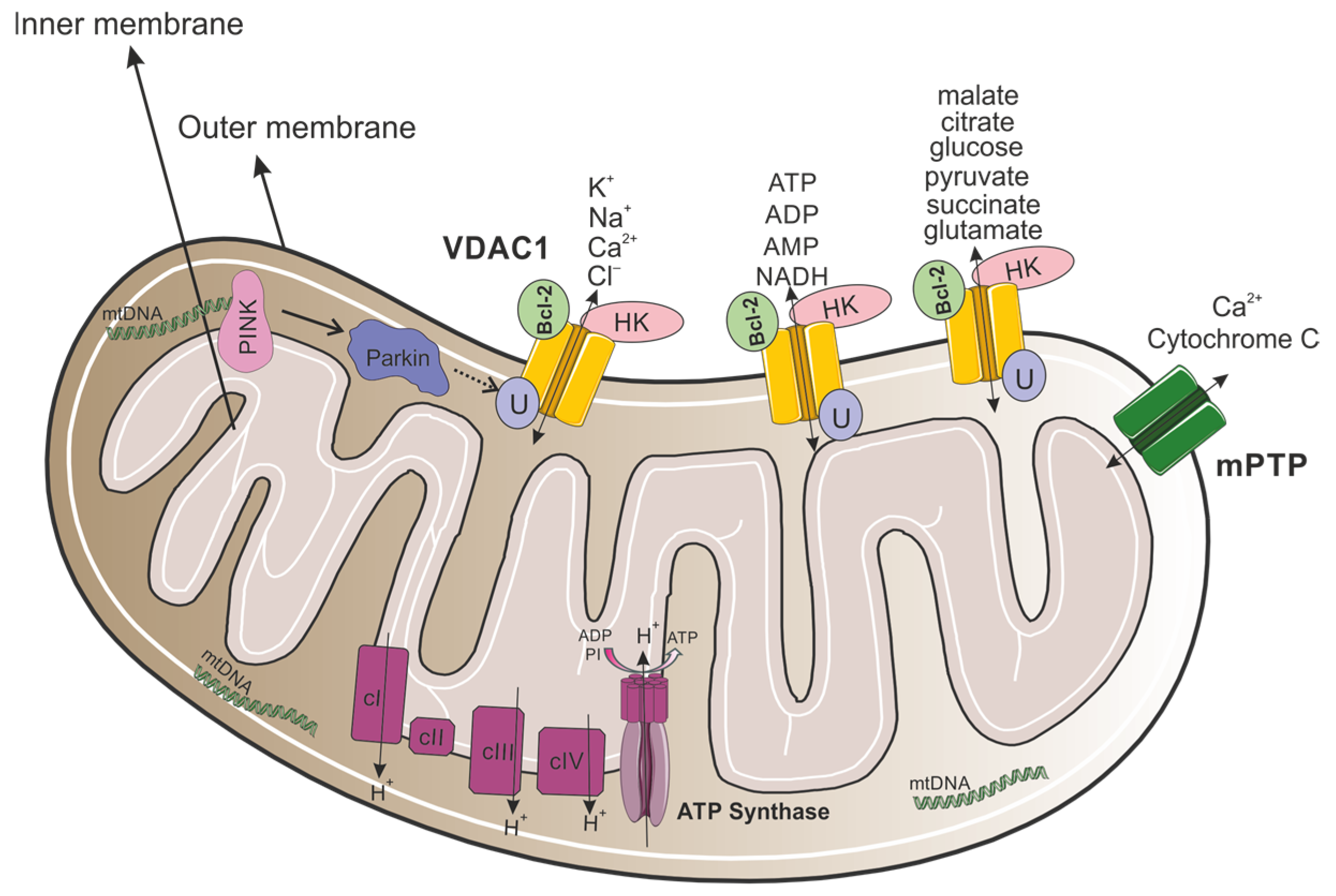
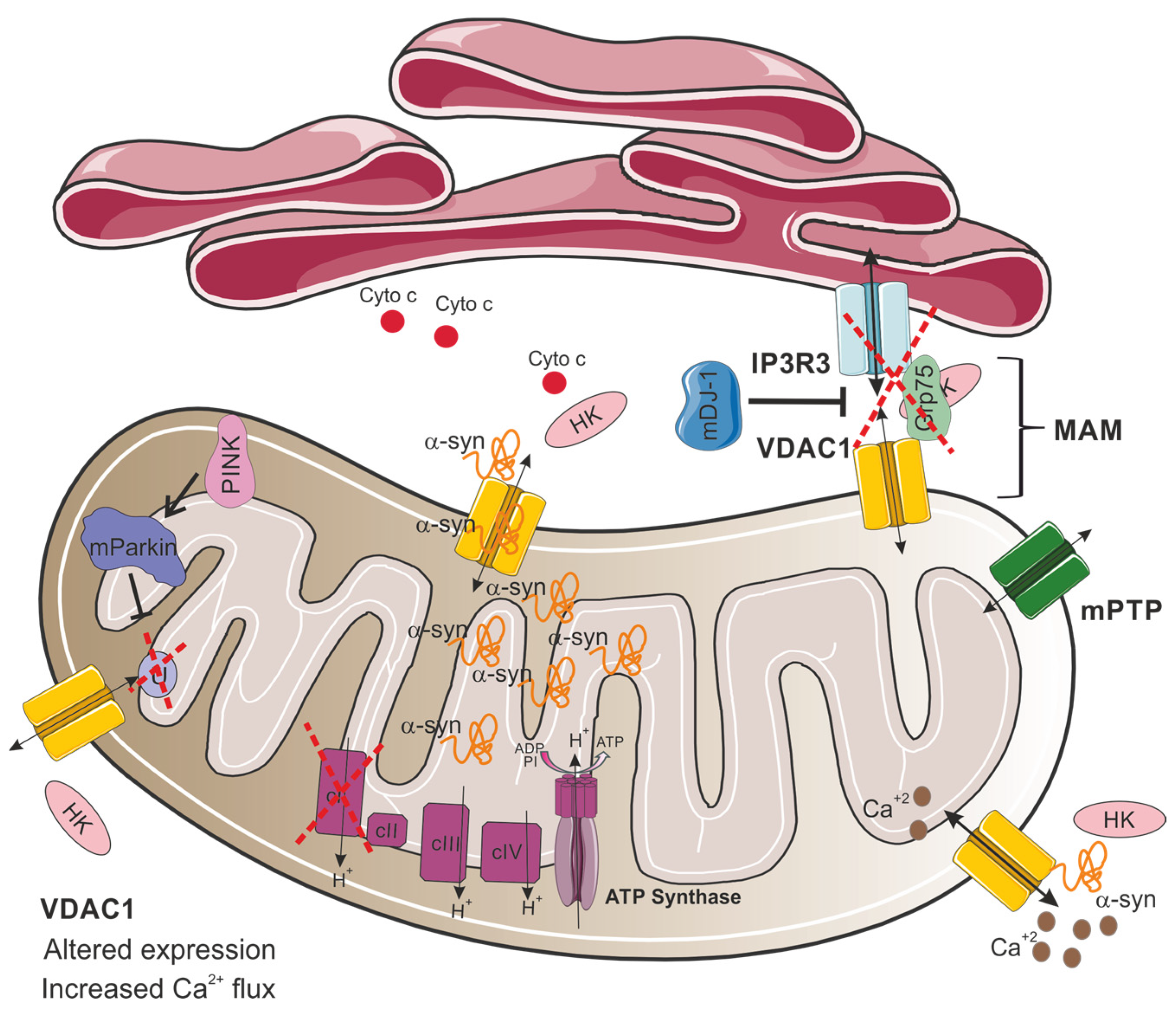
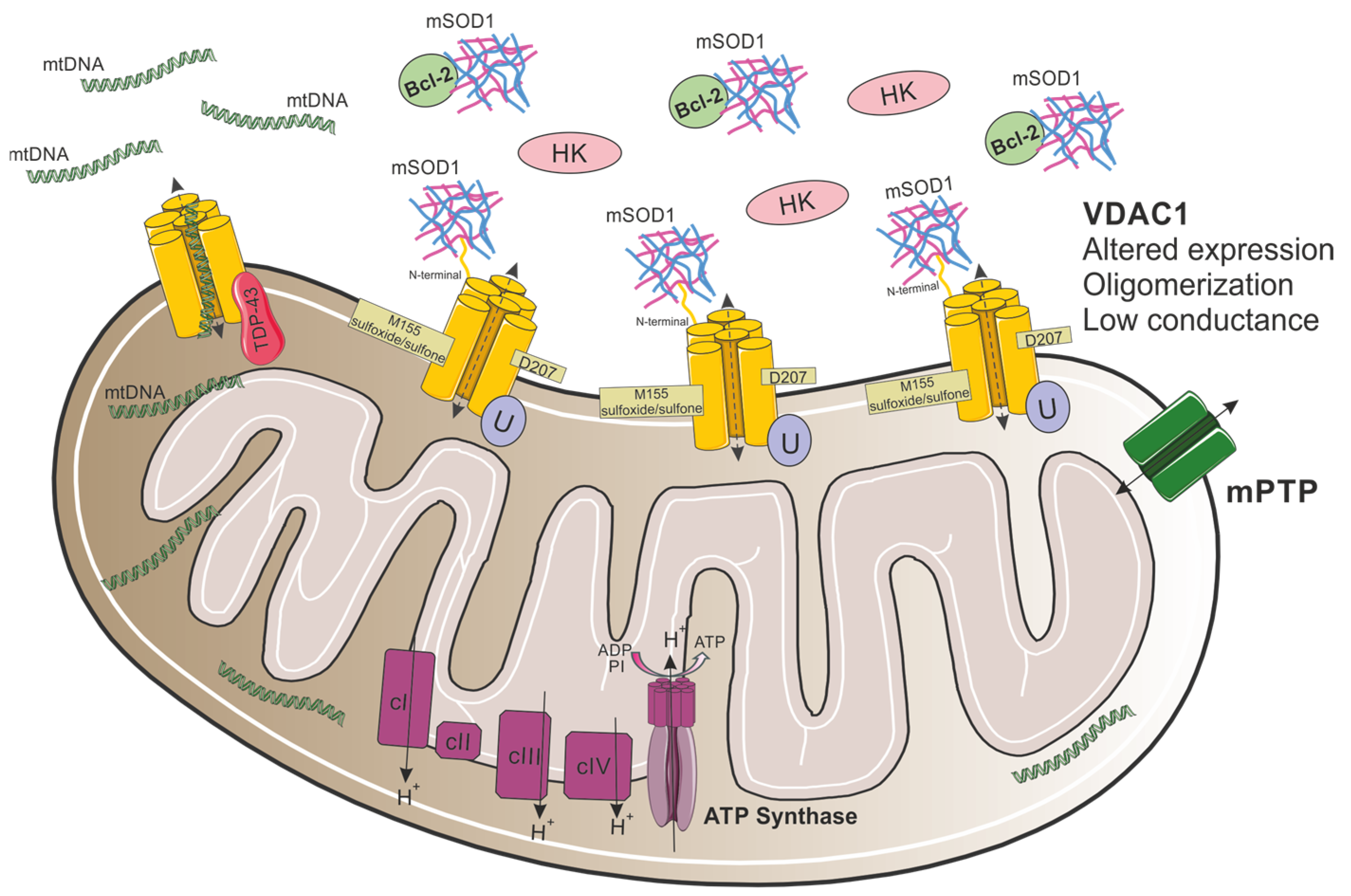
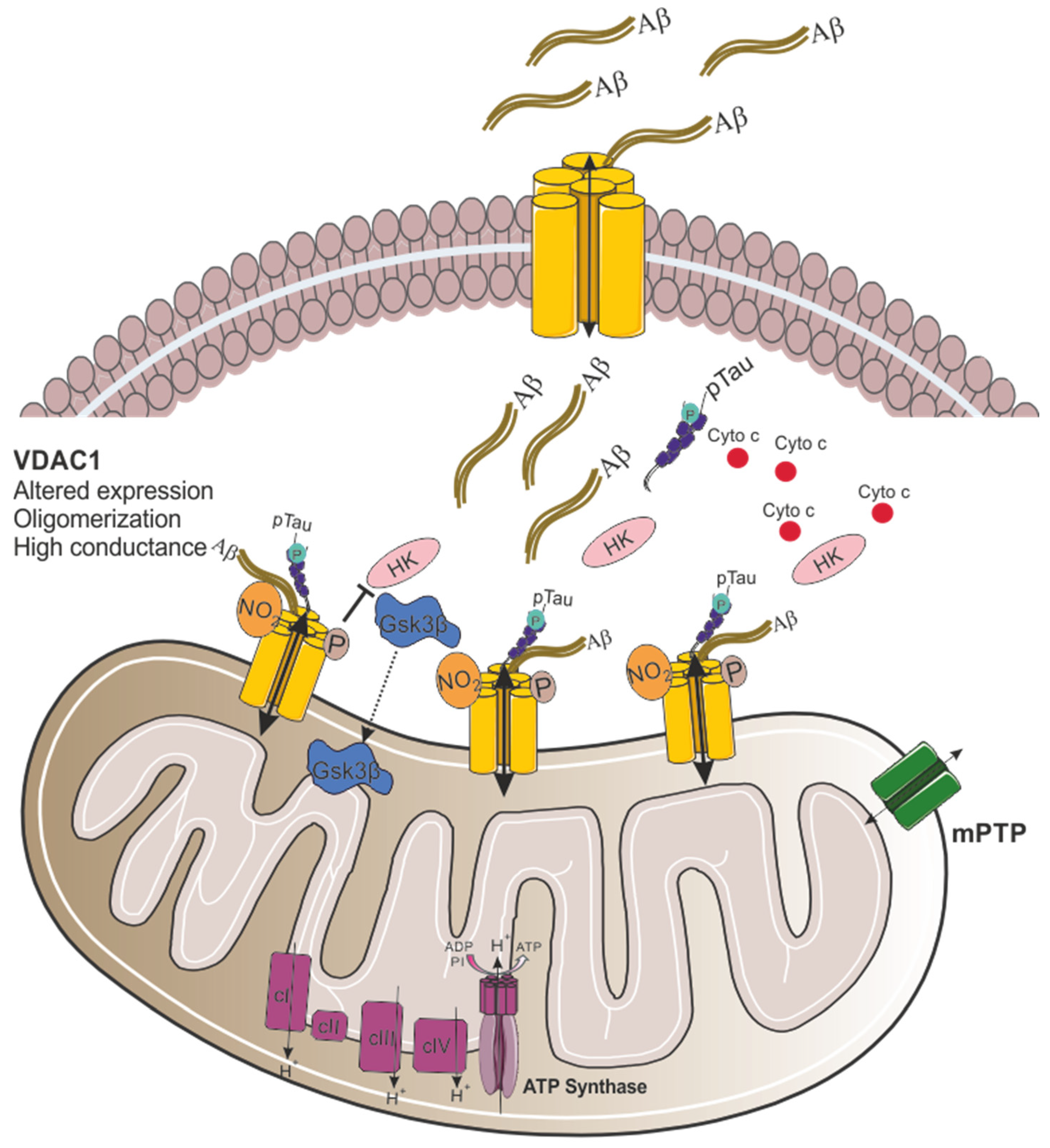
Voltage-Dependent Anion Channel 1 (VDAC1) is a mitochondrial outer membrane protein that plays a crucial role in regulating cellular energy metabolism and apoptosis by mediating the exchange of ions and metabolites between mitochondria and the cytosol. Mitochondrial dysfunction and oxidative stress are central features of neurodegenerative diseases. The pivotal functions of VDAC1 in controlling mitochondrial membrane permeability, regulating calcium balance, and facilitating programmed cell death pathways, position it as a key determinant in the delicate balance between neuronal viability and degeneration. Accordingly, increasing evidence suggests that VDAC1 is implicated in the pathophysiology of neurodegenerative diseases, including Alzheimer’s disease (AD), Parkinson’s disease (PD), amyotrophic lateral sclerosis (ALS), and others. This review summarizes the current findings on the contribution of VDAC1 to neurodegeneration, focusing on its interactions with disease-specific proteins, such as amyloid-β, α-synuclein, and mutant SOD1. By unraveling the complex involvement of VDAC1 in neurodegenerative processes, this review highlights potential avenues for future research and drug development aimed at alleviating mitochondrial-related neurodegeneration.
Keywords: VDAC1; neurodegenerative diseases; ALS; Parkinson’s disease; Alzheimer’s disease VDAC1; neurodegenerative diseases; ALS; Parkinson’s disease; Alzheimer’s disease