
Review

Smart Bioinks for the Printing of Human Tissue Models

by
Zeina Maan
1,
Nadia Z. Masri
2 and
Stephanie M. Willerth
2,3,4,5,*
1
Department of Mechanical Engineering, University of Ottawa, Ottawa, ON K1S 5J6, Canada
2
Division of Medical Sciences, University of Victoria, Victoria, BC V8W 2Y2, Canada
3
Department of Mechanical Engineering, University of Victoria, Victoria, BC V8W 2Y2, Canada
4
Centre for Advanced Materials and Technology, University of Victoria, Victoria, BC V8W 2Y2, Canada
5
School of Biomedical Engineering, University of British Columbia, Victoria, BC V6T 1Z4, Canada
*
Author to whom correspondence should be addressed.
Biomolecules 2022, 12(1), 141; https://doi.org/10.3390/biom12010141
Submission received: 14 December 2021 / Revised: 5 January 2022 / Accepted: 13 January 2022 / Published: 15 January 2022
(This article belongs to the Special Issue State-of-the-Art Biochemistry and Molecular Biology in USA 2021-2022)

Abstract

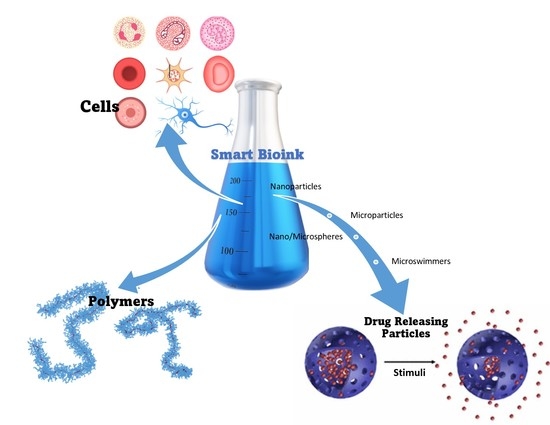
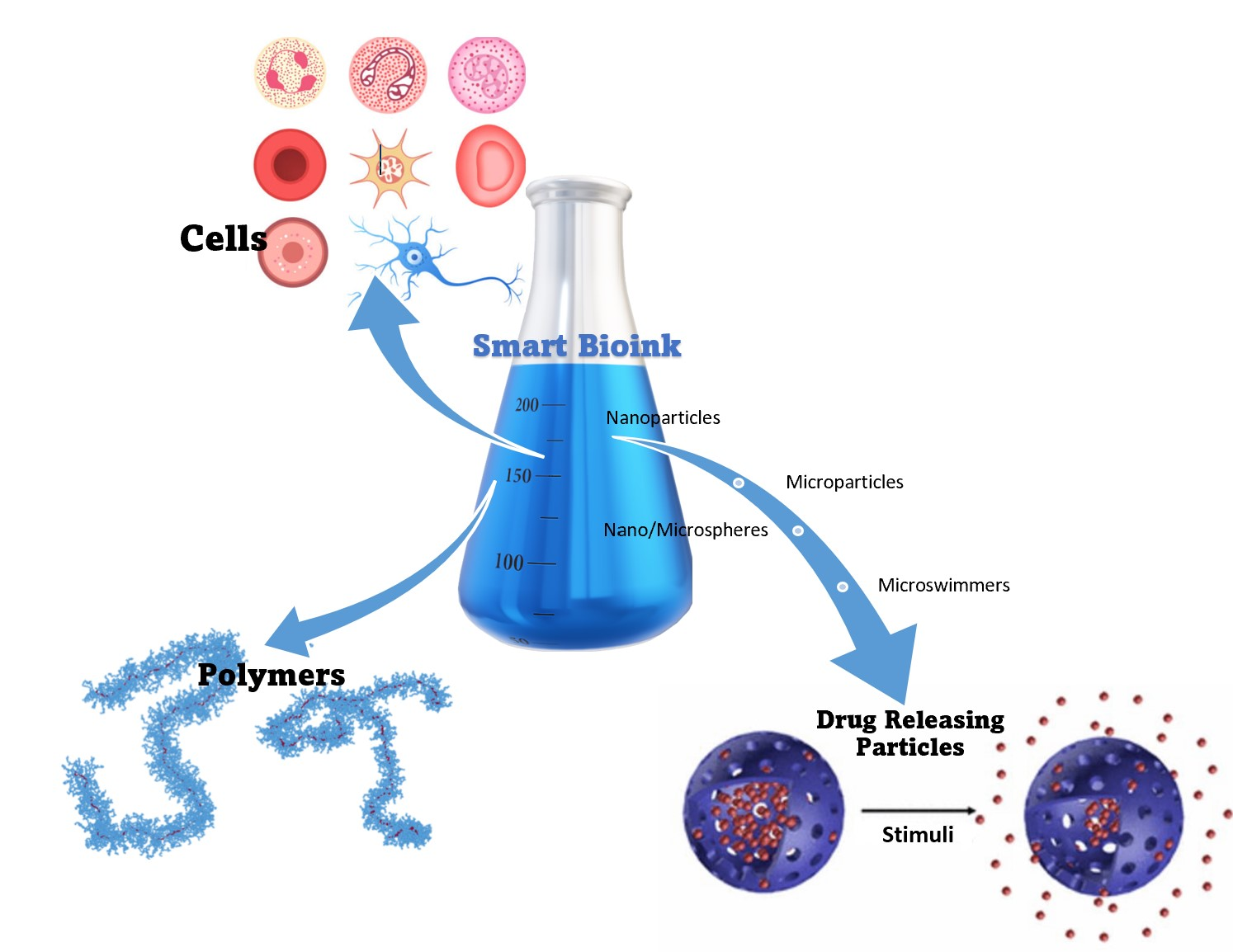
3D bioprinting has tremendous potential to revolutionize the field of regenerative medicine by automating the process of tissue engineering. A significant number of new and advanced bioprinting technologies have been developed in recent years, enabling the generation of increasingly accurate models of human tissues both in the healthy and diseased state. Accordingly, this technology has generated a demand for smart bioinks that can enable the rapid and efficient generation of human bioprinted tissues that accurately recapitulate the properties of the same tissue found in vivo. Here, we define smart bioinks as those that provide controlled release of factors in response to stimuli or combine multiple materials to yield novel properties for the bioprinting of human tissues. This perspective piece reviews the existing literature and examines the potential for the incorporation of micro and nanotechnologies into bioinks to enhance their properties. It also discusses avenues for future work in this cutting-edge field.
Keywords: 3D bioprinting; biomaterials; small molecules; controlled release; drug delivery; stem cells 3D bioprinting; biomaterials; small molecules; controlled release; drug delivery; stem cells
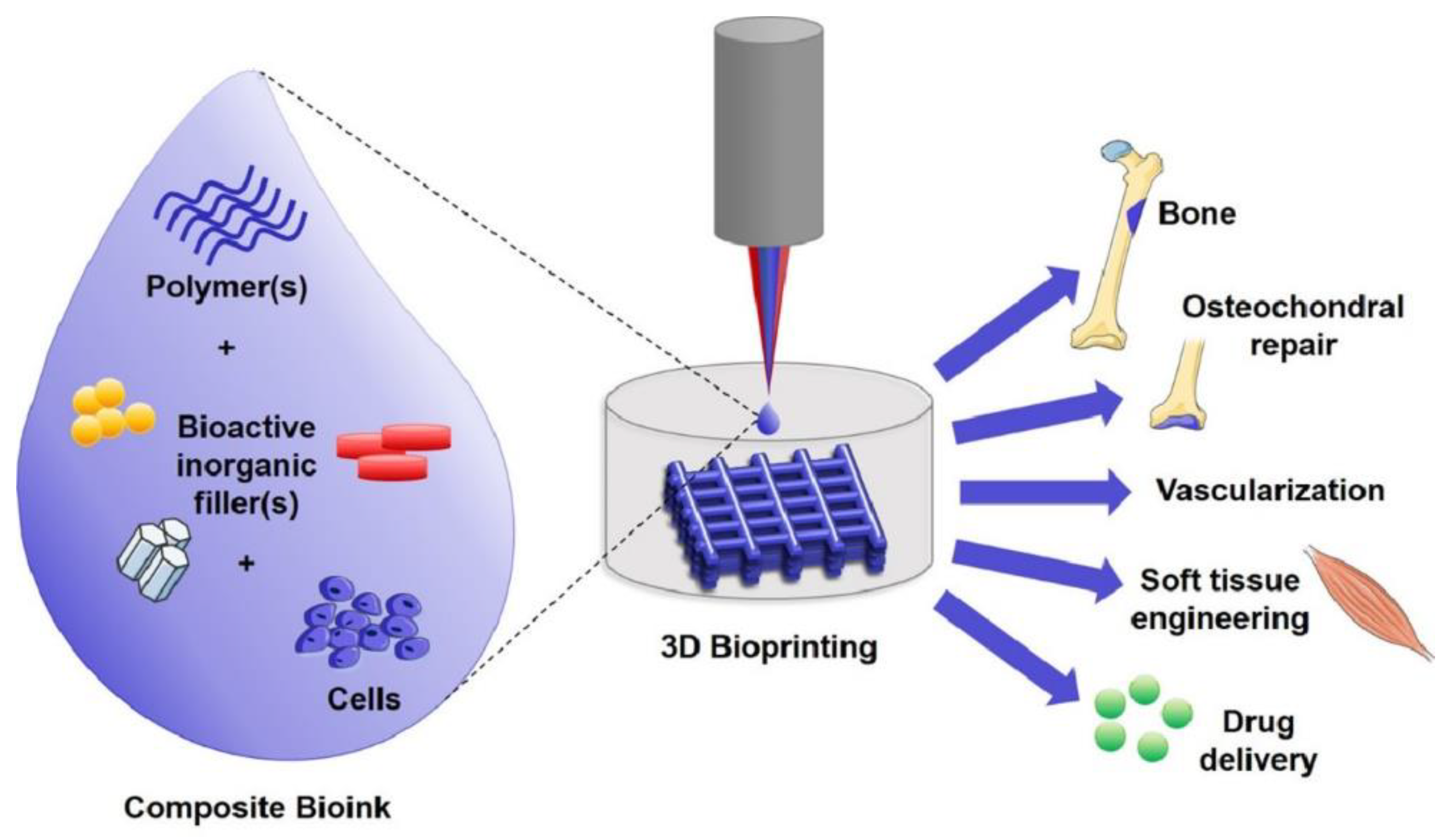
Graphical Abstract