Article

Solar Energetic Particles Propagation under 3D Corotating Interaction Regions with Different Characteristic Parameters

1
State Key Laboratory of Space Weather, National Space Science Center, Chinese Academy of Sciences, Beijing 100190, China
2
College of Earth and Planetary Sciences, University of Chinese Academy of Sciences, Beijing 100049, China
*
Author to whom correspondence should be addressed.
Universe 2024, 10(8), 315; https://doi.org/10.3390/universe10080315

Submission received: 15 April 2024 / Revised: 21 June 2024 / Accepted: 23 July 2024 / Published: 2 August 2024
(This article belongs to the Section Space Science)

Abstract

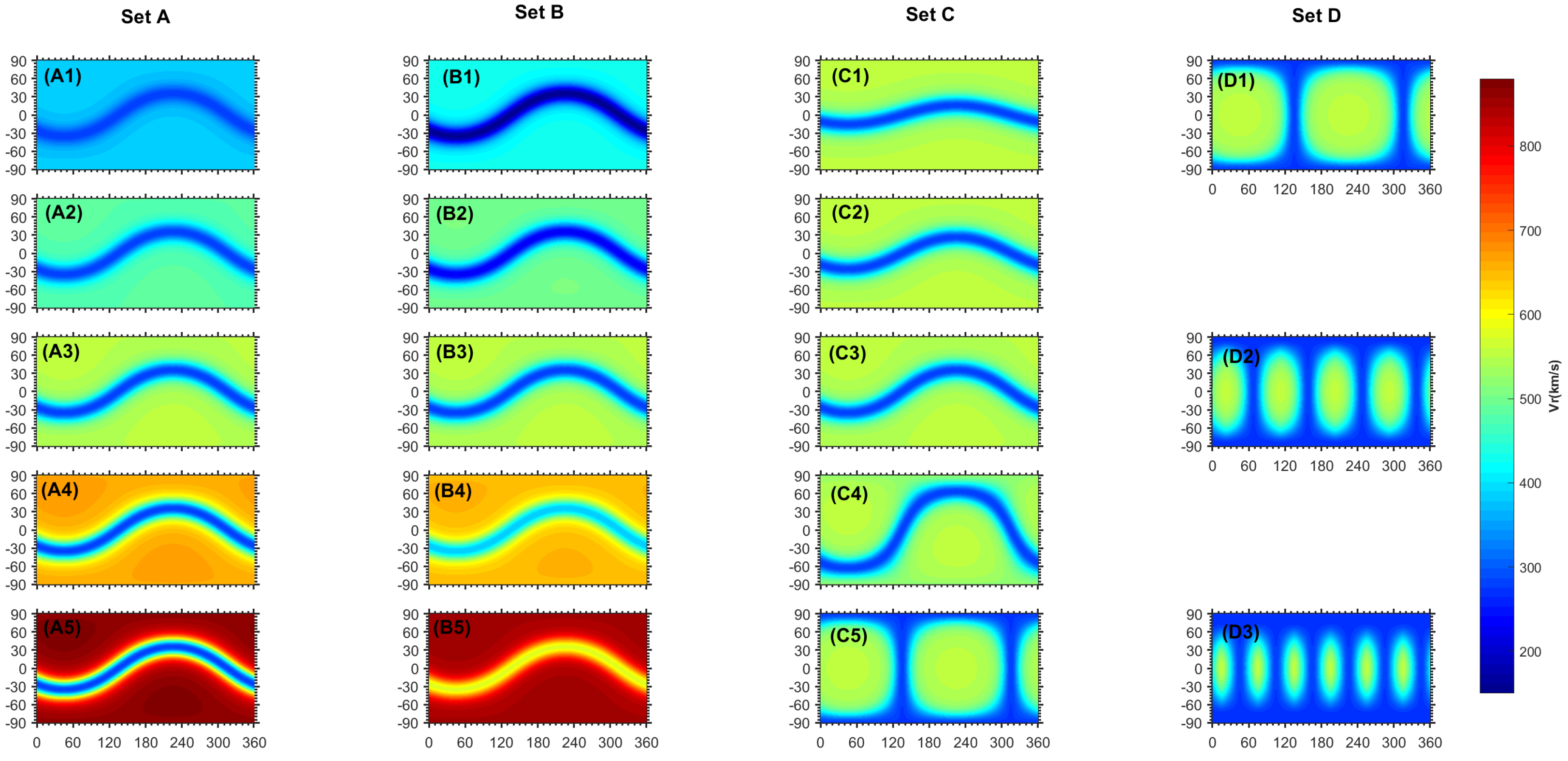
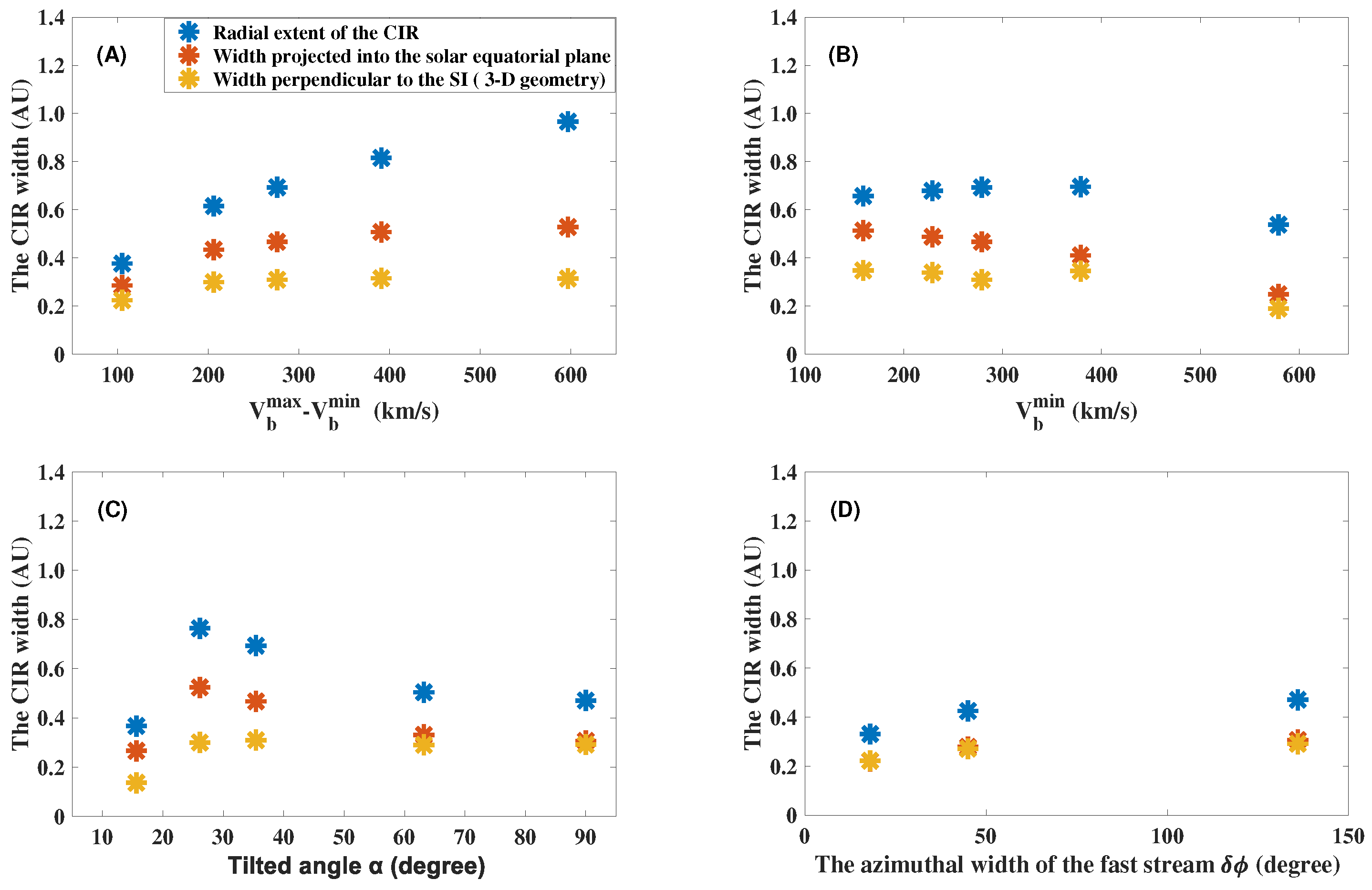
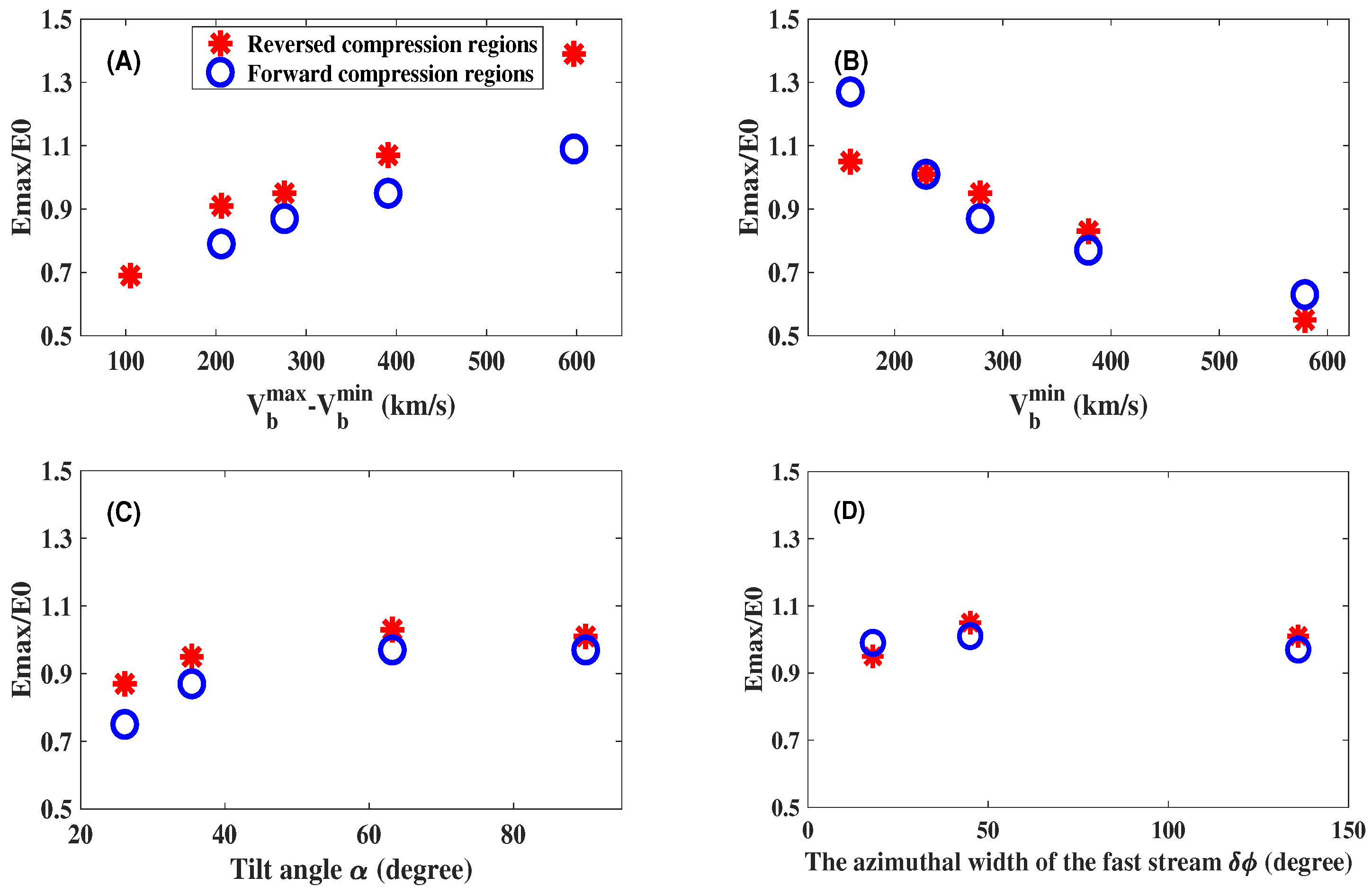
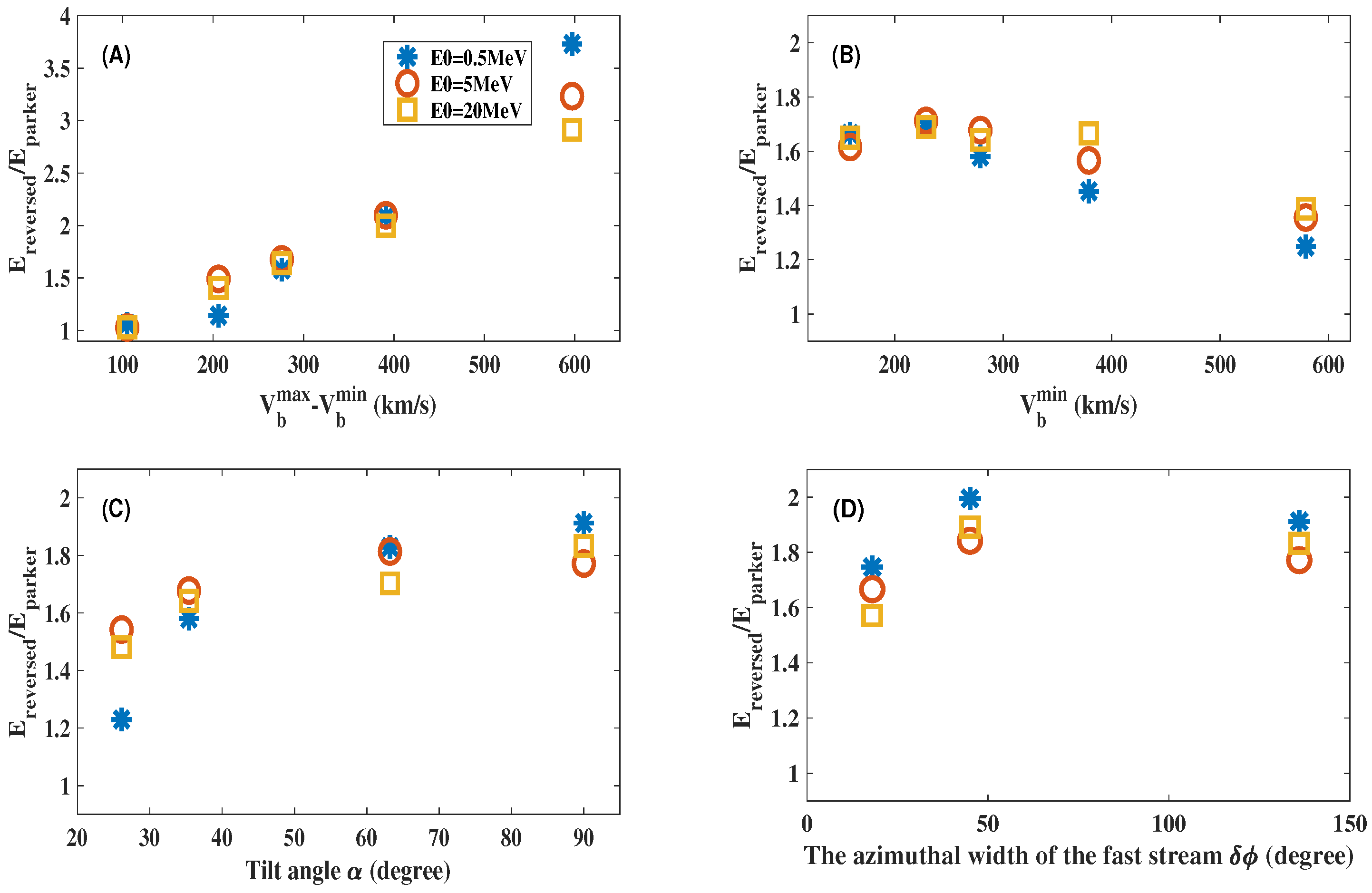
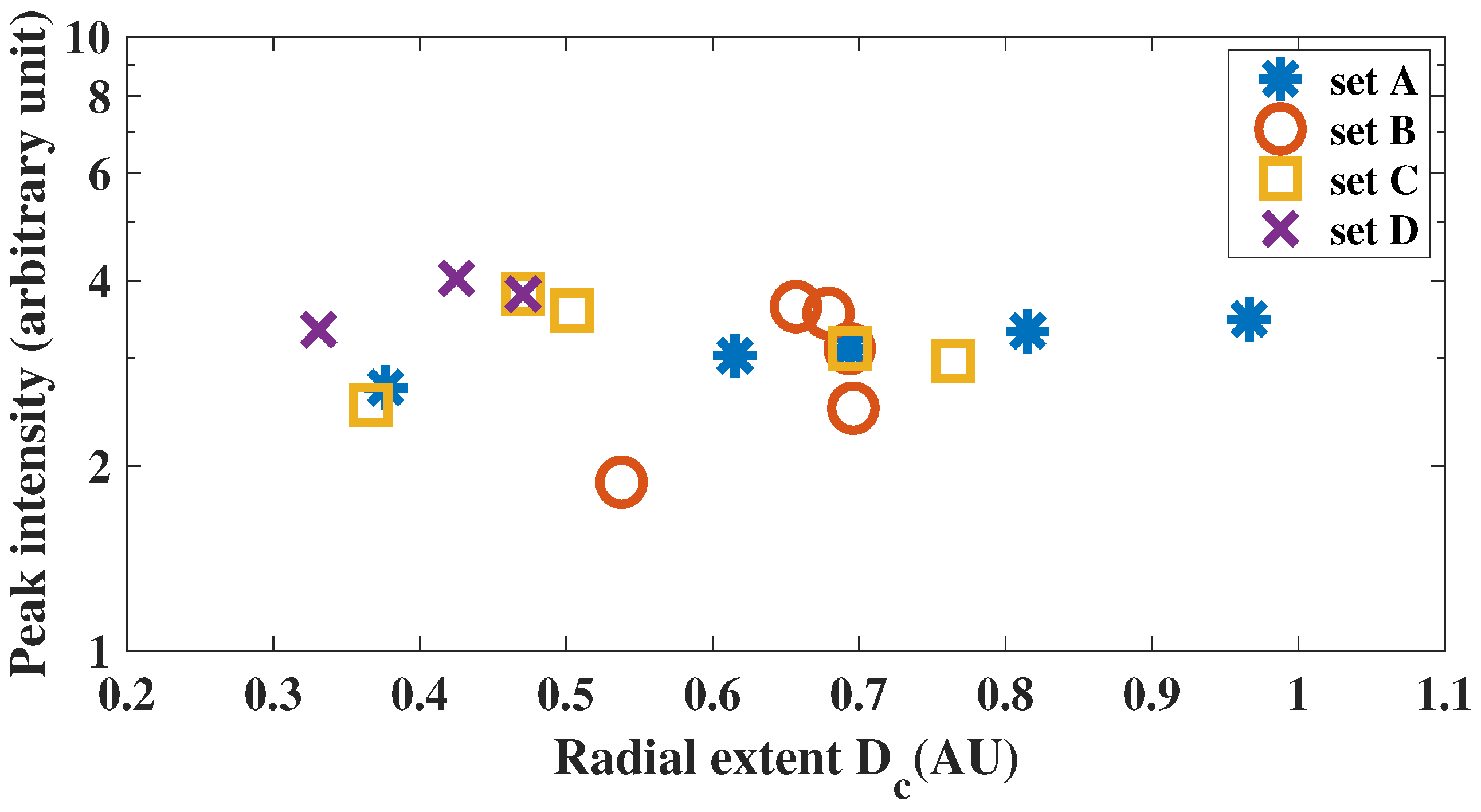
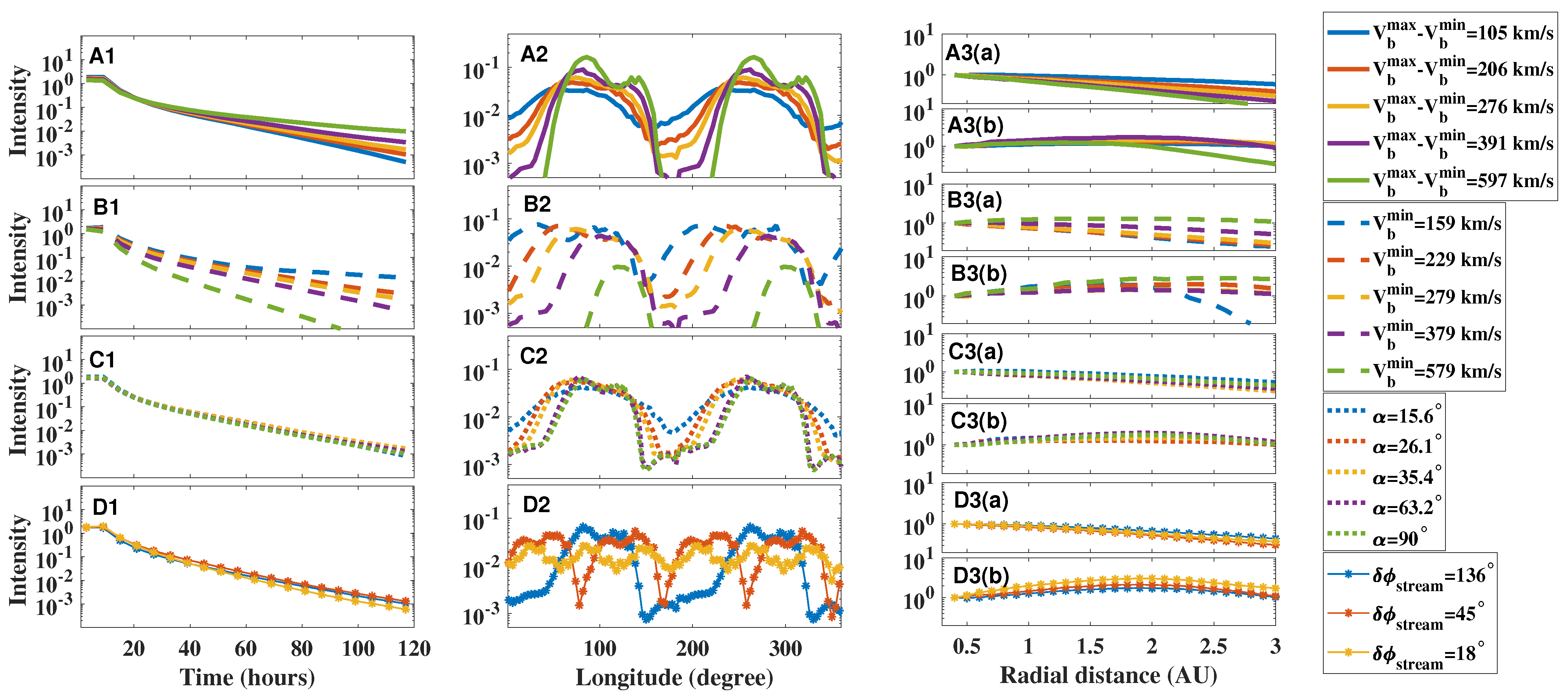
Solar energetic particles (SEPs) are bursts of high-energy particles that originate from the Sun and can last for hours or even days. The aim of this study is to understand how the characteristics of energetic particles ware affected by the characteristic parameters of corotating interaction regions (CIRs). In particular, the particle intensity distribution with time and space in CIRs with different characteristics were studied. The propagation and acceleration of particles were described by the focused transport equation (FTE). We used a three-dimensional magnetohydrodynamic (MHD) model to simulate the background solar wind with CIRs. By changing the inner boundary conditions, we constructed CIRs with different solar wind speeds, angles between the polar axis and rotation axis, and the azimuthal widths of the fast streams. Particles were impulsively injected at the inner boundary of the MHD model. We then studied the particle propagation and compression acceleration in different background solar wind. The results showed that the CIR widths are related to the solar wind speed, tilt angles, and the azimuthal widths of the fast stream. The acceleration of particles in the reverse and forward compression regions are mainly influenced by the solar wind speed difference and the slow solar wind speed, respectively. Particles with lower energy (sub-MeV) are more sensitive to the solar wind speed difference and the tilt angle. The particle intensity variation with time and the radial distance is mainly influenced by the solar wind speed. The longitudinal distribution of particle intensity is affected by the solar wind speed, tilt angles, and the azimuthal widths of the fast stream.
Keywords: solar energetic particles (SEP); corotating interaction regions (CIR); magnetohydrodynamic (MHD) solar energetic particles (SEP); corotating interaction regions (CIR); magnetohydrodynamic (MHD)