

Ferroptosis and Ferro-Aging in Obesity: Bibliometric Mapping, Shared Mechanisms, and Translational Perspectives

 ,
,
Highlights
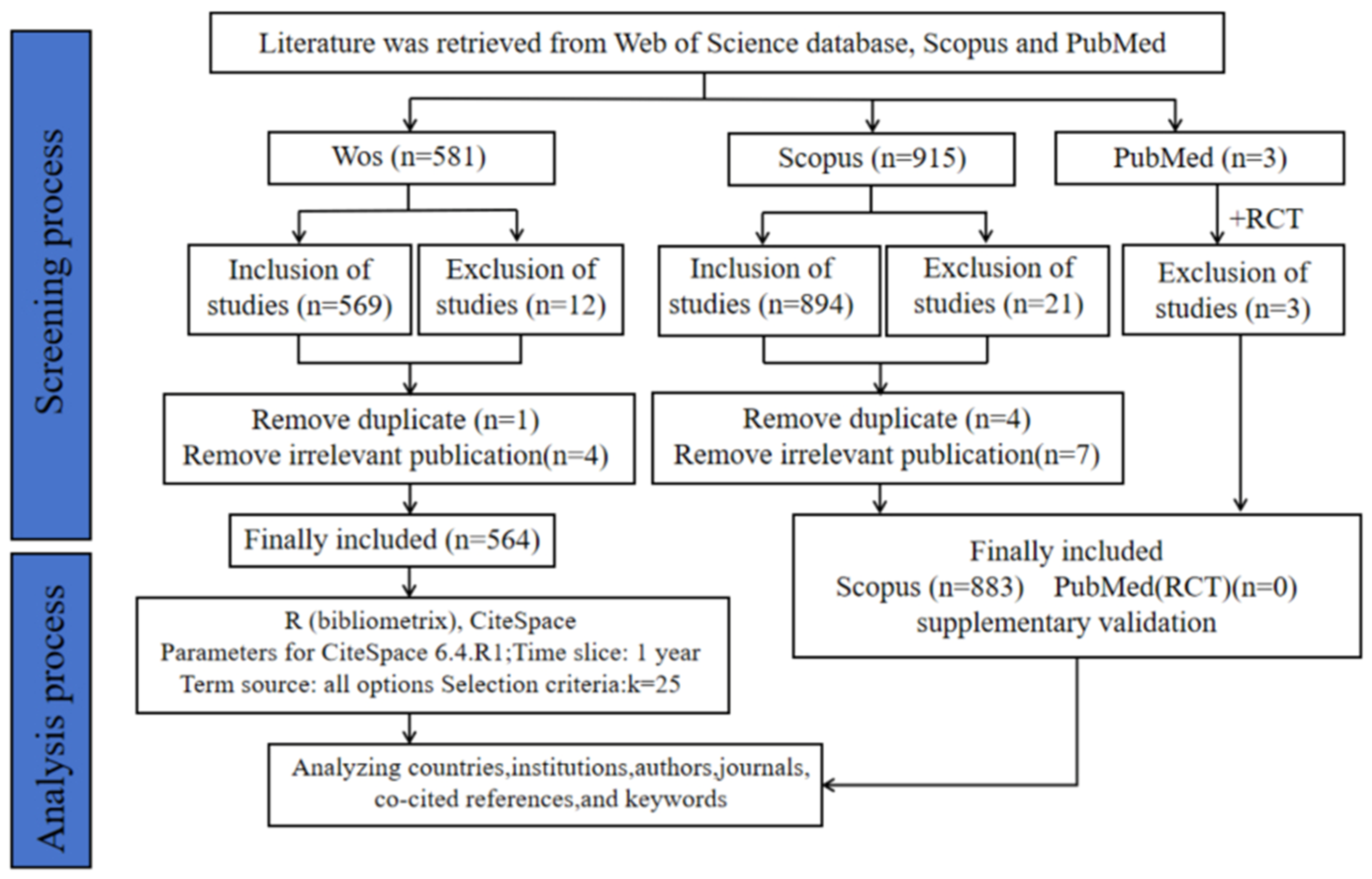
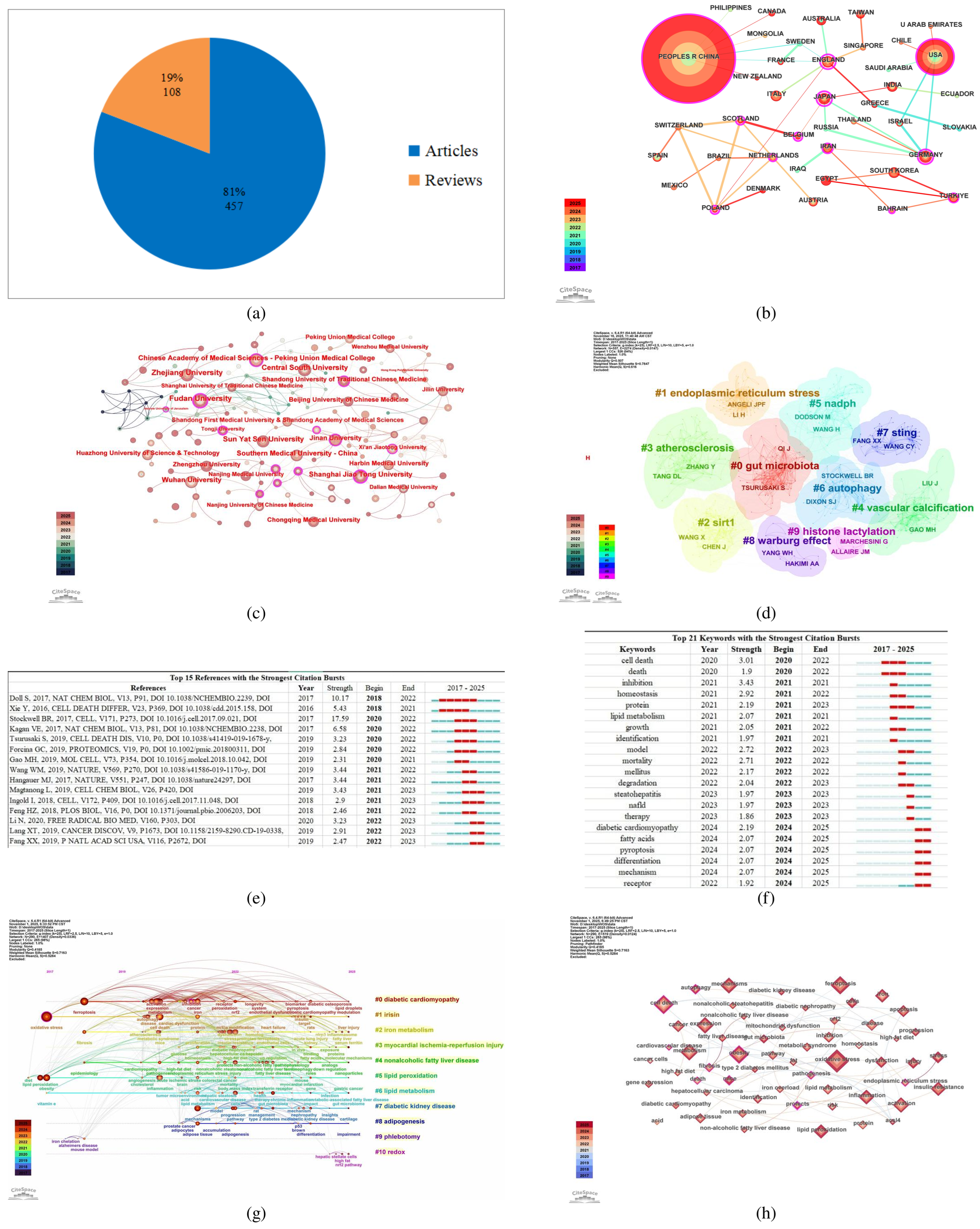
- Bibliometric mapping of 564 publications identifies oxidative stress, lipid peroxidation, iron metabolism, and antioxidant defense as central themes in obesity-related ferroptosis research.
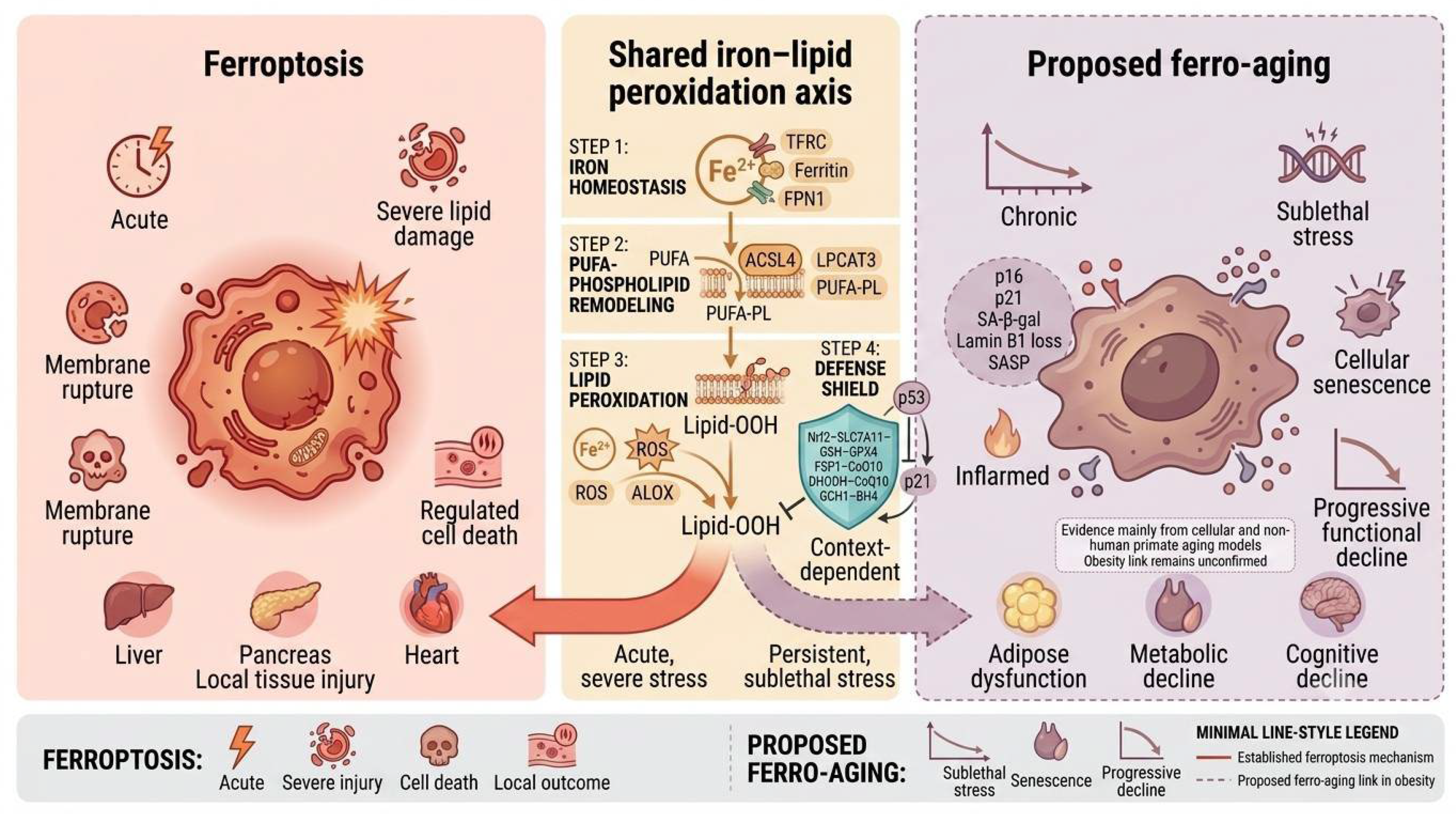
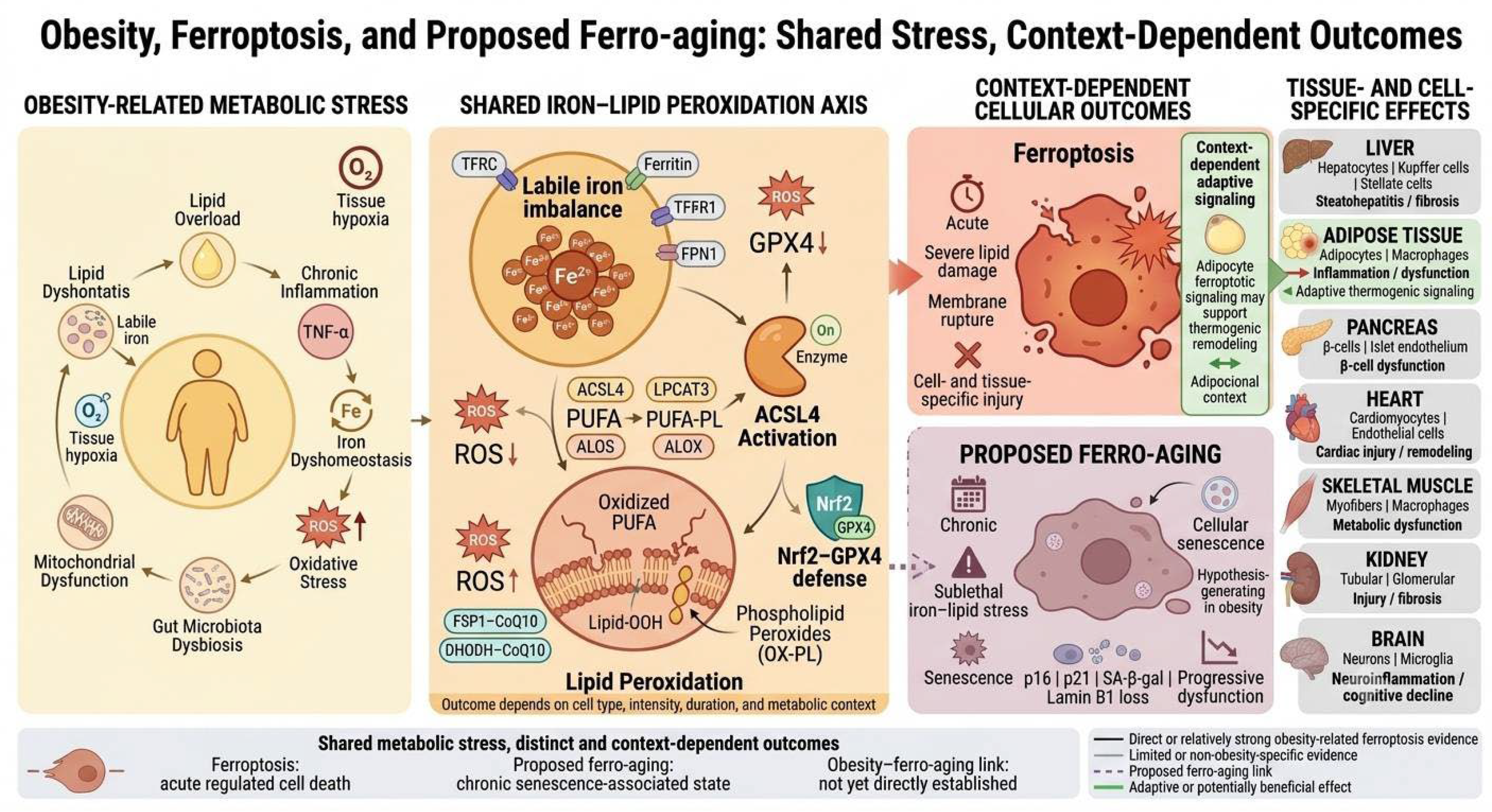
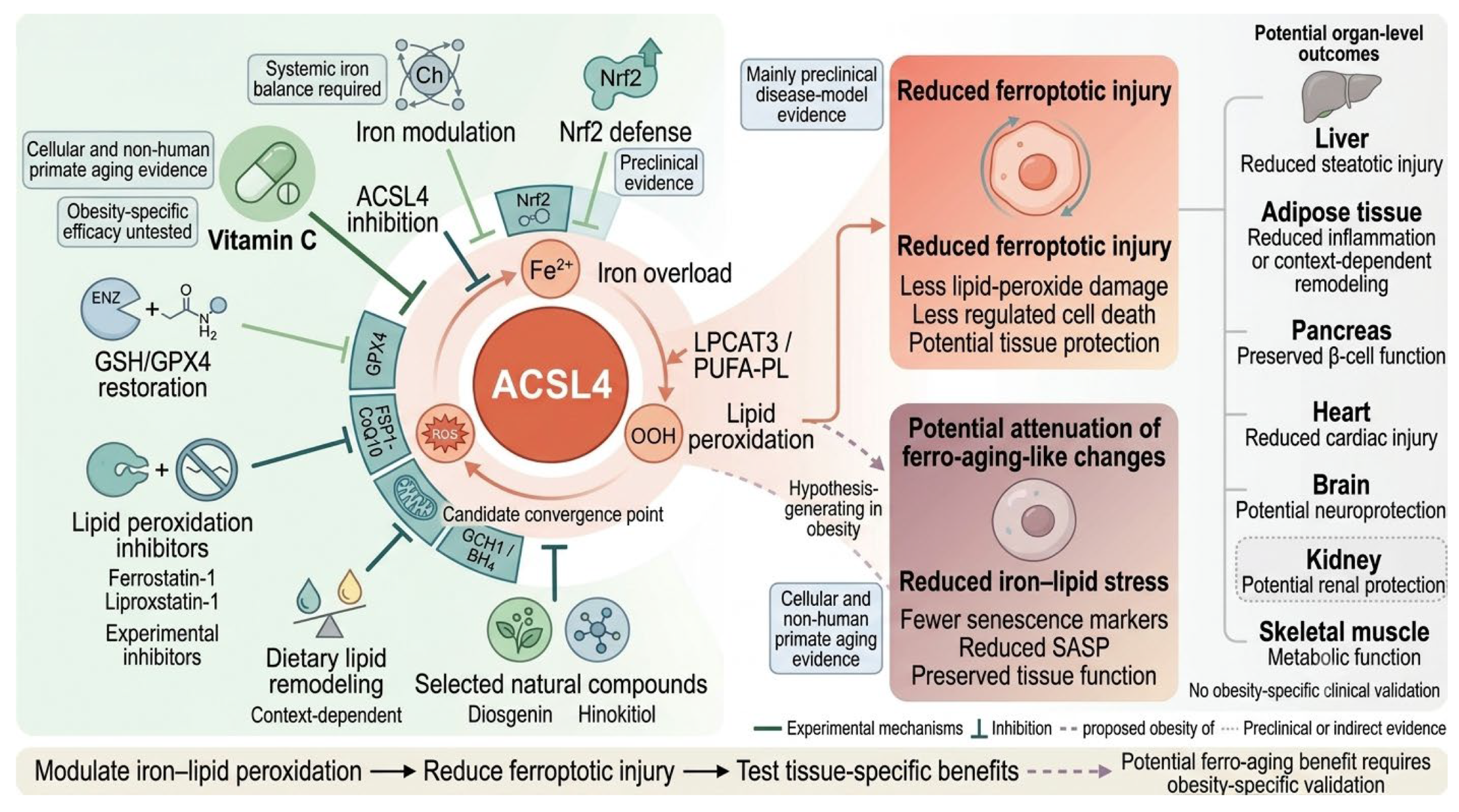
- Obesity may produce two distinct outcomes of iron–lipid peroxidation stress: acute ferroptotic cell death and proposed ferro-aging-like senescence under persistent sublethal stress.
- The proposed ferro-aging framework may help connect acute ferroptotic injury with chronic senescence-like metabolic tissue dysfunction, but it requires direct validation in obesity models.
- The broader ACSL4–iron–lipid peroxidation network and its parallel antioxidant defenses represent candidate intervention points requiring tissue-specific and clinical evaluation.
Abstract
1. Introduction
1.1. Obesity and Ferroptosis
1.2. Ferro-Aging: An Emerging Concept
1.3. Scope and Objectives of This Review
2. Bibliometric Landscape of Ferroptosis Research in Obesity
2.1. Data Sources and Analysis Strategies
2.2. Publication Trend and Global Contribution
2.3. Authors, Journals and Knowledge Foundation
2.4. Keyword Bursts and Thematic Evolution
2.5. Summary of Bibliometrics
3. Ferroptosis and Ferro-Aging: Mechanistic Overlap and Distinct Evidence Bases
3.1. Ferroptosis: Acute Cell Death Driven by Iron-Dependent Lipid Peroxidation
3.2. Ferro-Aging: Definition, Experimental Basis, and Current Evidence Boundaries
4. Obesity: A Metabolic Context for Ferroptosis and Potential Ferro-Aging
4.1. Obesity Creates a Pro-Ferroptotic Metabolic Microenvironment
4.2. Tissue- and Cell-Specific Outcomes in Obesity
4.3. Context-Dependent Effects of Ferroptotic Signaling in Obesity
5. ACSL4 as a Candidate Convergence Point Within a Broader Iron–Lipid Peroxidation Network
5.1. ACSL4-Mediated PUFA Remodeling and Lipid Peroxidation
5.2. Other Regulatory Pathways of Ferroptosis and Lipid Peroxidation
6. The Nrf2–GPX4 Axis and Related Antioxidant Defense Networks
7. Therapeutic Implications and Translational Prospects
7.1. Biomarker Development
7.2. Vitamin C as as a Preclinical Proof-of-Concept
7.3. Restoring Nrf2-GPX4 Defense
7.4. Opportunities with Natural Products and Traditional Chinese Medicine
8. Challenges and Future Directions
8.1. Conceptual Boundaries
8.2. Gaps in Clinical Translation
8.3. Priority Directions for Future Research
9. Conclusions
Supplementary Materials
Author Contributions
Funding
Institutional Review Board Statement
Informed Consent Statement
Data Availability Statement
Conflicts of Interest
References
- de Andrade Silva, S.C.; de Lemos, M.D.T.; dos Santos Junior, O.H.; Rodrigues, T.O.; Silva, T.L.; da Silva, A.I.; Fiamoncini, J.; Lagranha, C.J. Overweight during Development Dysregulates Cellular Metabolism and Critical Genes That Control Food Intake in the Prefrontal Cortex. Physiol. Behav. 2024, 276, 114453. [Google Scholar] [CrossRef] [Scilit] [PubMed]
- Saadati, S.; Godini, R.; Reddy, A.; Teede, H.; Mousa, A. Metabolic Crossroads in Insulin Resistance: Exploring Lipid Dysregulation and Inflammation. Front. Immunol. 2025, 16, 1692742. [Google Scholar] [CrossRef] [Scilit] [PubMed]
- Yao, K.; Duan, Y.; Li, F.; Tan, B.; Hou, Y.; Wu, G.; Yin, Y. Leucine in Obesity: Therapeutic Prospects. Trends Pharmacol. Sci. 2016, 37, 714–727. [Google Scholar] [CrossRef] [Scilit] [PubMed]
- Dixon, S.J.; Lemberg, K.M.; Lamprecht, M.R.; Skouta, R.; Zaitsev, E.M.; Gleason, C.E.; Patel, D.N.; Bauer, A.J.; Cantley, A.M.; Yang, W.S.; et al. Ferroptosis: An Iron-Dependent Form of Nonapoptotic Cell Death. Cell 2012, 149, 1060–1072. [Google Scholar] [CrossRef] [Scilit] [PubMed]
- Huang, C.-D.; Luo, T.; Zhang, H.; Cheng, L.-H.; Peng, S.-H.; Zhou, X.-W.; Cao, L.; Chen, F.-Y.; He, J.-W.; Chen, C.; et al. Ferroptosis as a Potential Therapeutic Target for Obesity-Related Metabolic Diseases. Front. Pharmacol. 2025, 16, 1581632. [Google Scholar] [CrossRef] [Scilit] [PubMed]
- Gong, Y.; Liu, Z.; Zhang, Y.; Zhang, J.; Zheng, Y.; Wu, Z. AGER1 Deficiency-Triggered Ferroptosis Drives Fibrosis Progression in Nonalcoholic Steatohepatitis with Type 2 Diabetes Mellitus. Cell Death Discov. 2023, 9, 178. [Google Scholar] [CrossRef] [Scilit] [PubMed]
- Fan, B.; Yin, L.; Wang, A.; Li, F.; Han, S. PIM1 Enhances Insulin Secretion and Inhibits Ferroptosis of High Glucose-Induced Pancreatic β-Cells through Strengthening PINK1/Parkin-Mediated Mitophagy via Inactivating JNK/P38 Signaling Pathway. Tissue Cell 2025, 93, 102722. [Google Scholar] [CrossRef] [Scilit] [PubMed]
- Chen, D.; Shi, J.; Wu, Y.; Miao, L.; Wang, Z.; Wang, Y.; Xu, S.; Lou, Y. Dapagliflozin Alleviates High-Fat-Induced Obesity Cardiomyopathy by Inhibiting Ferroptosis. ESC Heart Fail. 2025, 12, 1358–1373. [Google Scholar] [CrossRef] [Scilit] [PubMed]
- Liu, L.; Zheng, Z.; You, W.; Yang, P.; Wen, Y.; Qiao, Y.; Ma, S.; Zhang, H.; Zhang, S.; Xu, G.; et al. Vitamin C Inhibits ACSL4 to Alleviate Ferro-Aging in Primates. Cell Metab. 2026, 38, 673–693.e17. [Google Scholar] [CrossRef] [Scilit] [PubMed]
- Chen, H.; Chen, L.; Wang, W. Mechanisms and Active Substances of Targeting Lipid Peroxidation in Ferroptosis Regulation. Food Sci. Hum. Wellness 2024, 13, 2502–2518. [Google Scholar] [CrossRef] [Scilit]
- Doll, S.; Proneth, B.; Tyurina, Y.Y.; Panzilius, E.; Kobayashi, S.; Ingold, I.; Irmler, M.; Beckers, J.; Aichler, M.; Walch, A.; et al. ACSL4 Dictates Ferroptosis Sensitivity by Shaping Cellular Lipid Composition. Nat. Chem. Biol. 2017, 13, 91–98. [Google Scholar] [CrossRef] [Scilit] [PubMed]
- Kagan, V.E.; Mao, G.; Qu, F.; Angeli, J.P.F.; Doll, S.; Croix, C.S.; Dar, H.H.; Liu, B.; Tyurin, V.A.; Ritov, V.B.; et al. Oxidized Arachidonic and Adrenic PEs Navigate Cells to Ferroptosis. Nat. Chem. Biol. 2017, 13, 81–90. [Google Scholar] [CrossRef] [Scilit] [PubMed]
- Tsurusaki, S.; Tsuchiya, Y.; Koumura, T.; Nakasone, M.; Sakamoto, T.; Matsuoka, M.; Imai, H.; Yuet-Yin Kok, C.; Okochi, H.; Nakano, H.; et al. Hepatic Ferroptosis Plays an Important Role as the Trigger for Initiating Inflammation in Nonalcoholic Steatohepatitis. Cell Death Dis. 2019, 10, 449. [Google Scholar] [CrossRef] [Scilit] [PubMed]
- Sun, Y.; Guo, L.-Q.; Wang, D.-G.; Xing, Y.-J.; Bai, Y.-P.; Zhang, T.; Wang, W.; Zhou, S.-M.; Yao, X.-M.; Cheng, J.-H.; et al. Metformin Alleviates Glucolipotoxicity-Induced Pancreatic β Cell Ferroptosis through Regulation of the GPX4/ACSL4 Axis. Eur. J. Pharmacol. 2023, 956, 175967. [Google Scholar] [CrossRef] [Scilit] [PubMed]
- Hu, R.; Chen, Z.; Bian, W.; Zhang, J.; Xu, X.; Xiong, H.; Xiang, S.; Ding, Y.; Qi, H.; Yang, H. The SIRT1–P53 Axis Drives a Ferro-Aging-like Program and Aggravates Trophoblast Dysfunction in Preeclampsia. Front. Aging 2026, 7, 1838730. [Google Scholar] [CrossRef] [Scilit] [PubMed]
- Pu, F.; Chen, F.; Zhang, Z.; Shi, D.; Zhong, B.; Lv, X.; Tucker, A.B.; Fan, J.; Li, A.J.; Qin, K.; et al. Ferroptosis as a Novel Form of Regulated Cell Death: Implications in the Pathogenesis, Oncometabolism and Treatment of Human Cancer. Genes Dis. 2022, 9, 347–357. [Google Scholar] [CrossRef] [Scilit] [PubMed]
- Loo, T.M.; Zhou, X.; Tanaka, Y.; Sugawara, S.; Yamauchi, S.; Kawasaki, H.; Matsuoka, Y.; Sugiura, Y.; Sakuma, S.; Yamanishi, Y.; et al. Senescence-Associated Lysosomal Dysfunction Impairs Cystine Deprivation-Induced Lipid Peroxidation and Ferroptosis. Nat. Commun. 2025, 16, 6617. [Google Scholar] [CrossRef] [Scilit] [PubMed]
- Danielli, M.; Perne, L.; Jarc Jovičić, E.; Petan, T. Lipid Droplets and Polyunsaturated Fatty Acid Trafficking: Balancing Life and Death. Front. Cell Dev. Biol. 2023, 11, 1104725. [Google Scholar] [CrossRef] [Scilit] [PubMed]
- Mandl, M.; Heuboeck, E.; Benedikt, P.; Huber, F.; Mamunchak, O.; Grossmann, S.; Kotnik, M.; Hamzic-Jahic, E.; Bhogal, C.S.; Lipp, A.-M.; et al. The Capability to Undergo ACSL4-Mediated Ferroptosis Is Acquired during Brown-like Adipogenesis and Affected by Hypoxia. Cells 2025, 14, 1247. [Google Scholar] [CrossRef] [Scilit] [PubMed]
- Bekri, S.; Gual, P.; Anty, R.; Luciani, N.; Dahman, M.; Ramesh, B.; Iannelli, A.; Staccini-Myx, A.; Casanova, D.; Ben Amor, I.; et al. Increased Adipose Tissue Expression of Hepcidin in Severe Obesity Is Independent from Diabetes and NASH. Gastroenterology 2006, 131, 788–796. [Google Scholar] [CrossRef] [Scilit] [PubMed]
- Maus, M.; López-Polo, V.; Mateo, L.; Lafarga, M.; Aguilera, M.; De Lama, E.; Meyer, K.; Sola, A.; Lopez-Martinez, C.; López-Alonso, I.; et al. Iron Accumulation Drives Fibrosis, Senescence and the Senescence-Associated Secretory Phenotype. Nat. Metab. 2023, 5, 2111–2130. [Google Scholar] [CrossRef] [Scilit] [PubMed]
- Amengual, J.; Alay, A.; Vaquero, J.; Gonzalez-Sanchez, E.; Bertran, E.; Sánchez, A.; Herrera, B.; Meyer, K.; Maus, M.; Serrano, M.; et al. Iron Chelation as a New Therapeutic Approach to Prevent Senescence and Liver Fibrosis Progression. Cell Death Dis. 2024, 15, 680. [Google Scholar] [CrossRef] [Scilit] [PubMed]
- Schwärzler, J.; Mayr, L.; Radlinger, B.; Grabherr, F.; Philipp, M.; Texler, B.; Grander, C.; Ritsch, A.; Hunjadi, M.; Enrich, B.; et al. Adipocyte GPX4 Protects against Inflammation, Hepatic Insulin Resistance and Metabolic Dysregulation. Int. J. Obes. 2022, 46, 951–959. [Google Scholar] [CrossRef] [Scilit] [PubMed]
- Wang, X.; Wu, Q.; Zhong, M.; Chen, Y.; Wang, Y.; Li, X.; Zhao, W.; Ge, C.; Wang, X.; Yu, Y.; et al. Adipocyte-Derived Ferroptotic Signaling Mitigates Obesity. Cell Metab. 2025, 37, 673–691.e7. [Google Scholar] [CrossRef] [Scilit] [PubMed]
- Yu, Q.; Song, L. Unveiling the Role of Ferroptosis in the Progression from NAFLD to NASH: Recent Advances in Mechanistic Understanding. Front. Endocrinol. 2024, 15, 1431652. [Google Scholar] [CrossRef] [Scilit] [PubMed]
- Wu, S.; Guo, N.; Xu, H.; Li, Y.; Sun, T.; Jiang, X.; Fu, D.; You, T.; Diao, S.; Huang, Y.; et al. Caveolin-1 Ameliorates Hepatic Injury in Non-Alcoholic Fatty Liver Disease by Inhibiting Ferroptosis via the NOX4/ROS/GPX4 Pathway. Biochem. Pharmacol. 2024, 230, 116594. [Google Scholar] [CrossRef] [Scilit] [PubMed]
- Wang, L.; Yu, H.; Wang, D.; Yin, G.; Chen, S.; Zhang, X.; Yu, W.; Meng, D.; Liu, H.; Jiang, W.; et al. Diosgenin Alleviates Lipid Accumulation in NAFLD through the Pathways of Ferroptosis Defensive and Executive System. J. Nutr. Biochem. 2025, 140, 109886. [Google Scholar] [CrossRef] [Scilit] [PubMed]
- Bruni, A.; Pepper, A.R.; Pawlick, R.L.; Gala-Lopez, B.; Gamble, A.F.; Kin, T.; Seeberger, K.; Korbutt, G.S.; Bornstein, S.R.; Linkermann, A.; et al. Ferroptosis-Inducing Agents Compromise in Vitro Human Islet Viability and Function. Cell Death Dis. 2018, 9, 595. [Google Scholar] [CrossRef] [Scilit] [PubMed]
- Luo, C.; Fang, C.; Zou, R.; Jiang, J.; Zhang, M.; Ge, T.; Zhou, H.; Fan, X.; Zheng, B.; Zeng, Z. Hyperglycemia-Induced DNA Damage Response Activates DNA-PK Complex to Promote Endothelial Ferroptosis in Type 2 Diabetic Cardiomyopathy. Theranostics 2025, 15, 4507–4525. [Google Scholar] [CrossRef] [Scilit] [PubMed]
- Lu, J.; Tang, Z.; Xu, M.; Lu, J.; Wang, F.; Ni, X.; Wang, C.; Yu, B. Skeletal Muscle Cystathionine γ-Lyase Deficiency Promotes Obesity and Insulin Resistance and Results in Hyperglycemia and Skeletal Muscle Injury upon HFD in Mice. Redox Rep. Commun. Free Radic. Res. 2024, 29, 2347139. [Google Scholar] [CrossRef] [Scilit] [PubMed]
- Ji, F.; Lee, H.; Rheem, H.; Liu, J.; Kim, J.-H. Differential Ferroptosis Regulation in Red and White Gastrocnemius under Obesity and Its Attenuation by Exercise and Dietary Restriction. Sci. Rep. 2025, 15, 23821. [Google Scholar] [CrossRef] [Scilit] [PubMed]
- Luo, Y.; Chen, H.; Liu, H.; Jia, W.; Yan, J.; Ding, W.; Zhang, Y.; Xiao, Z.; Zhu, Z. Protective Effects of Ferroptosis Inhibition on High Fat Diet-Induced Liver and Renal Injury in Mice. Int. J. Clin. Exp. Path. 2020, 13, 2041–2049. [Google Scholar]
- Ye, H.; Guo, J.; Wang, X.; Chen, B.; Hu, L.; Liu, B.; Song, R.; Feng, Y.; Zhang, X. Irisin Protects against Diabetic Cardiomyopathy by Suppressing Ferroptosis. Drug Dev. Res. 2025, 86, e70077. [Google Scholar] [CrossRef] [Scilit] [PubMed]
- Jin, E.-J.; Jo, Y.; Wei, S.; Rizzo, M.; Ryu, D.; Gariani, K. Ferroptosis and Iron Metabolism in Diabetes: Pathogenesis, Associated Complications, and Therapeutic Implications. Front. Endocrinol. 2024, 15, 1447148. [Google Scholar] [CrossRef] [Scilit] [PubMed]
- Ding, K.; Liu, C.; Li, L.; Yang, M.; Jiang, N.; Luo, S.; Sun, L. Acyl-CoA Synthase ACSL4: An Essential Target in Ferroptosis and Fatty Acid Metabolism. Chin. Med. J. 2023, 136, 2521–2537. [Google Scholar] [CrossRef] [Scilit] [PubMed]
- Jiang, Y.; Zhang, M.; Sun, M. ACSL4 at the Helm of the Lipid Peroxidation Ship: A Deep-Sea Exploration towards Ferroptosis. Front. Pharmacol. 2025, 16, 1594419. [Google Scholar] [CrossRef] [Scilit] [PubMed]
- Dai, Y.; Chen, Y.; Mo, D.; Jin, R.; Huang, Y.; Zhang, L.; Zhang, C.; Gao, H.; Yan, Q. Inhibition of ACSL4 Ameliorates Tubular Ferroptotic Cell Death and Protects against Fibrotic Kidney Disease. Commun. Biol. 2023, 6, 907. [Google Scholar] [CrossRef] [Scilit] [PubMed]
- Hou, P.; Zheng, C.; Wu, S.; Liu, X.; Xiang, G.; Cai, W.; Chen, G.; Lou, Y. Extracellular Vesicle–Packaged ACSL4 Induces Hepatocyte Senescence to Promote Hepatocellular Carcinoma Progression. Cancer Res. 2024, 84, 3953–3966. [Google Scholar] [CrossRef] [Scilit] [PubMed]
- Imai, H.; Nakagawa, Y. Biological Significance of Phospholipid Hydroperoxide Glutathione Peroxidase (PHGPx, GPx4) in Mammalian Cells. Free Radic. Biol. Med. 2003, 34, 145–169. [Google Scholar] [CrossRef] [Scilit] [PubMed]
- Doll, S.; Freitas, F.P.; Shah, R.; Aldrovandi, M.; da Silva, M.C.; Ingold, I.; Goya Grocin, A.; Xavier da Silva, T.N.; Panzilius, E.; Scheel, C.H.; et al. FSP1 Is a Glutathione-Independent Ferroptosis Suppressor. Nature 2019, 575, 693–698. [Google Scholar] [CrossRef] [Scilit] [PubMed]
- Bersuker, K.; Hendricks, J.M.; Li, Z.; Magtanong, L.; Ford, B.; Tang, P.H.; Roberts, M.A.; Tong, B.; Maimone, T.J.; Zoncu, R.; et al. The CoQ Oxidoreductase FSP1 Acts Parallel to GPX4 to Inhibit Ferroptosis. Nature 2019, 575, 688–692. [Google Scholar] [CrossRef] [Scilit] [PubMed]
- Mao, C.; Liu, X.; Zhang, Y.; Lei, G.; Yan, Y.; Lee, H.; Koppula, P.; Wu, S.; Zhuang, L.; Fang, B.; et al. DHODH-Mediated Ferroptosis Defence Is a Targetable Vulnerability in Cancer. Nature 2021, 593, 586–590. [Google Scholar] [CrossRef] [Scilit] [PubMed]
- Kraft, V.A.N.; Bezjian, C.T.; Pfeiffer, S.; Ringelstetter, L.; Müller, C.; Zandkarimi, F.; Merl-Pham, J.; Bao, X.; Anastasov, N.; Kössl, J.; et al. GTP Cyclohydrolase 1/Tetrahydrobiopterin Counteract Ferroptosis through Lipid Remodeling. ACS Cent. Sci. 2020, 6, 41–53. [Google Scholar] [CrossRef] [Scilit] [PubMed]
- Yuan, Y.; Zhai, Y.; Chen, J.; Xu, X.; Wang, H. Kaempferol Ameliorates Oxygen-Glucose Deprivation/Reoxygenation-Induced Neuronal Ferroptosis by Activating Nrf2/SLC7A11/GPX4 Axis. Biomolecules 2021, 11, 923. [Google Scholar] [CrossRef] [Scilit] [PubMed]
- Dixon, S.J.; Olzmann, J.A. The Cell Biology of Ferroptosis. Nat. Rev. Mol. Cell Biol. 2024, 25, 424–442. [Google Scholar] [CrossRef] [Scilit] [PubMed]
- Dixon, S.J.; Pratt, D.A. Ferroptosis: A Flexible Constellation of Related Biochemical Mechanisms. Mol. Cell 2023, 83, 1030–1042. [Google Scholar] [CrossRef] [Scilit] [PubMed]
- Yin, X.; Liu, Z.; Li, C.; Wang, J. Hinokitiol Ameliorates MASH in Mice by Therapeutic Targeting of Hepatic Nrf2 and Inhibiting Hepatocyte Ferroptosis. Phytomedicine 2025, 139, 156472. [Google Scholar] [CrossRef] [Scilit] [PubMed]
- Zhang, X.; Yin, G.; Chen, S.; Meng, D.; Yu, W.; Liu, H.; Wang, L.; Zhang, F. Diosgenin Ameliorating Non-Alcoholic Fatty Liver Disease via Nrf2-Mediated Regulation of Oxidative Stress and Ferroptosis. Diabetes Obes. Metab. 2024, 26, 5745–5756. [Google Scholar] [CrossRef] [Scilit] [PubMed]
- Cozza, G.; Rossetto, M.; Bosello-Travain, V.; Maiorino, M.; Roveri, A.; Toppo, S.; Zaccarin, M.; Zennaro, L.; Ursini, F. Glutathione Peroxidase 4-Catalyzed Reduction of Lipid Hydroperoxides in Membranes: The Polar Head of Membrane Phospholipids Binds the Enzyme and Addresses the Fatty Acid Hydroperoxide Group toward the Redox Center. Free Radic. Biol. Med. 2017, 112, 1–11. [Google Scholar] [CrossRef] [Scilit] [PubMed]
- Franci, L.; Vallini, G.; Bertolino, F.M.; Cicaloni, V.; Inzalaco, G.; Cicogni, M.; Tinti, L.; Calabrese, L.; Barone, V.; Salvini, L.; et al. MAPK15 Controls Cellular Responses to Oxidative Stress by Regulating NRF2 Activity and Expression of Its Downstream Target Genes. Redox Biol. 2024, 72, 103131. [Google Scholar] [CrossRef] [Scilit] [PubMed]
- Malaviya, P.; Kumar, J.; Kowluru, R.A. Role of Ferroptosis in Mitochondrial Damage in Diabetic Retinopathy. Free Radic. Biol. Med. 2024, 225, 821–832. [Google Scholar] [CrossRef] [Scilit] [PubMed]
- Hernandez-Segura, A.; Nehme, J.; Demaria, M. Hallmarks of Cellular Senescence. Trends Cell Biol. 2018, 28, 436–453. [Google Scholar] [CrossRef] [Scilit] [PubMed]
- Wang, B.; Han, J.; Elisseeff, J.H.; Demaria, M. The Senescence-Associated Secretory Phenotype and Its Physiological and Pathological Implications. Nat. Rev. Mol. Cell Biol. 2024, 25, 958–978. [Google Scholar] [CrossRef] [Scilit] [PubMed]
- Lu, Q.; Shao, N.; Fang, Z.; Ouyang, Z.; Shen, Y.; Yang, R.; Liu, H.; Cai, B.; Wei, T. The Anti-Alzheimer’s Disease Effects of Ganoderic Acid A by Inhibiting Ferroptosis-Lipid Peroxidation via Activation of the NRF2/SLC7A11/GPX4 Signaling Pathway. Chem.-Biol. Interact. 2025, 412, 111459. [Google Scholar] [CrossRef] [Scilit] [PubMed]
- Mishima, E.; Nakamura, T.; Doll, S.; Proneth, B.; Fedorova, M.; Pratt, D.A.; Friedmann Angeli, J.P.; Dixon, S.J.; Wahida, A.; Conrad, M. Recommendations for Robust and Reproducible Research on Ferroptosis. Nat. Rev. Mol. Cell Biol. 2025, 26, 615–630. [Google Scholar] [CrossRef] [Scilit] [PubMed]



| Feature | Ferroptosis | Ferro-Aging |
|---|---|---|
| Definition | Iron-dependent regulated cell death driven by lipid peroxide overload | Proposed chronic iron-lipid peroxidation program leading to cellular senescence |
| Time scale | Acute or subacute | Chronic and progressive |
| Core mechanism | Fe2+-ACSL4-PUFA-PL peroxidation; GPX4-GSH failure | Persistent ACSL4-mediated lipid peroxidation |
| Cellular outcome | Membrane damage and cell death | Senescence, SASP *, and functional decline * |
| Representative markers | ACSL4, GPX4 ↓, SLC7A11 ↓, lipid ROS, MDA, 4-HNE | ACSL4, MDA, ROS ↑, 4-HNE *, p16 *, p21 *, SA-β-gal *, Lamin B1 ↓ * |
| Relevance to obesity | Local organ injury in liver, β-cells *, and heart * | Systemic metabolic aging **, fibrosis *, and tissue dysfunction ** |
| Therapeutic focus | Ferroptosis inhibitors, GPX4-GSH restoration, Nrf2 activation | ACSL4 modulation, vitamin C, antioxidant defense, senescence control * |
| Tissue/Organ | Principal Cells | Main Ferroptosis-Related Evidence | Ferro-Aging Evidence | Interpretation |
|---|---|---|---|---|
| Adipose tissue | Adipocytes; macrophages; stromal cells | GPX4 loss promotes metabolic inflammation without overt adipocyte death [23]; ACSL4-associated signaling may enhance thermogenesis and mitigate obesity [19,24]. | No direct evidence | Context-dependent; death and sublethal signaling should be distinguished |
| Liver | Hepatocytes; Kupffer cells; stellate cells | Hepatocyte ferroptosis contributes to steatohepatitis and metabolic liver injury [6,13,25,26,27,32]. | Iron-associated senescence and fibrosis are supported mainly by non-obesity models [21,22]. | Relatively strong preclinical ferroptosis evidence; ferro-aging remains indirect |
| Pancreatic islets | β-cells; endothelial and immune cells | Human islets and β-cell models are susceptible to ferroptotic injury [7,28]. | No direct evidence | Direct susceptibility evidence, but limited obesity-specific causality |
| Heart | Cardiomyocytes; endothelial cells; fibroblasts | Cardiomyocyte and endothelial ferroptosis occurs in diabetic cardiomyopathy models [29,33]. | No direct evidence | Diabetes-related evidence should not be equated with obesity cardiomyopathy |
| Skeletal muscle | Oxidative and glycolytic myofibers | Obesity produces muscle type-specific changes in iron, GPX4, NCOA4, and lipid peroxidation [30,31]. | No direct evidence | Emerging tissue-specific evidence |
| Kidney and brain | Renal and neural cell populations | Fer-1 attenuates high-fat diet-associated renal injury [32]; obesity-specific brain evidence remains limited. | No direct evidence | Renal evidence is preliminary; brain ferro-aging remains speculative |
| Target | Representative Strategy | Main Action | Evidence Level | Key Limitation |
|---|---|---|---|---|
| ACSL4 | Vitamin C; ACSL4 inhibitors | Reduces PUFA-CoA formation and lipid peroxidation substrate supply | Mechanistic/preclinical/non-human primate | No obesity-specific clinical evidence |
| Vitamin C | Long-term supplementation or derivative development | Direct ACSL4 inhibition and Nrf2 activation | Non-human primate aging evidence | No obesity-specific efficacy evidence |
| GPX4-GSH axis | GSH support; GPX4-preserving strategies | Enhances lipid peroxide detoxification | In vitro/animal | No obesity-specific clinical evidence |
| Nrf2 pathway | Nrf2 activators; natural compounds | Upregulates antioxidant and iron-handling genes | In vitro/animal | Context-dependent effects; risk of nonspecific activation |
| Iron homeostasis | Iron chelation or hepcidin-ferroportin modulation | Lowers labile iron and Fenton-driven ROS | Mechanistic/preclinical | Excessive iron reduction may impair normal physiology |
| Lipid peroxidation | Ferrostatin-1, liproxstatin-1, vitamin E-like agents | Interrupts lipid radical chain reactions | Preclinical | Delivery, pharmacokinetics, and long-term safety remain unclear |
| Natural products/TCM | Diosgenin, hinokitiol, compound formulas | Multi-target regulation of Nrf2, GPX4, ACSL4, inflammation, and microbiota | In vitro/animal | Complex composition, quality control, and target validation challenges |
Disclaimer/Publisher’s Note: The statements, opinions and data contained in all publications are solely those of the individual author(s) and contributor(s) and not of MDPI and/or the editor(s). MDPI and/or the editor(s) disclaim responsibility for any injury to people or property resulting from any ideas, methods, instructions or products referred to in the content. |
© 2026 by the authors. Licensee MDPI, Basel, Switzerland. This article is an open access article distributed under the terms and conditions of the Creative Commons Attribution (CC BY) license.
Share and Cite
Liu, J.; Zheng, L.; Cong, Z.; Liu, Z.; Hu, C.; Liu, Y.; Zhang, C.; Liu, M. Ferroptosis and Ferro-Aging in Obesity: Bibliometric Mapping, Shared Mechanisms, and Translational Perspectives. Metabolites 2026, 16, 691. https://doi.org/10.3390/metabo16090691
Liu J, Zheng L, Cong Z, Liu Z, Hu C, Liu Y, Zhang C, Liu M. Ferroptosis and Ferro-Aging in Obesity: Bibliometric Mapping, Shared Mechanisms, and Translational Perspectives. Metabolites. 2026; 16(9):691. https://doi.org/10.3390/metabo16090691
Chicago/Turabian StyleLiu, Jiaxin, Likun Zheng, Zhengri Cong, Zehao Liu, Chen Hu, Yuxin Liu, Chong Zhang, and Mingjun Liu. 2026. "Ferroptosis and Ferro-Aging in Obesity: Bibliometric Mapping, Shared Mechanisms, and Translational Perspectives" Metabolites 16, no. 9: 691. https://doi.org/10.3390/metabo16090691
APA StyleLiu, J., Zheng, L., Cong, Z., Liu, Z., Hu, C., Liu, Y., Zhang, C., & Liu, M. (2026). Ferroptosis and Ferro-Aging in Obesity: Bibliometric Mapping, Shared Mechanisms, and Translational Perspectives. Metabolites, 16(9), 691. https://doi.org/10.3390/metabo16090691