Article

Effects of Dietary Metabolizable Energy and Crude Protein on Postprandial Metabolite Dynamics and Lactation Performance in Dairy Goats


College of Animal Science and Technology, Shandong Agricultural University, Tai’an 271018, China
*
Authors to whom correspondence should be addressed.
These authors contributed equally to this work.
Metabolites 2026, 16(7), 515; https://doi.org/10.3390/metabo16070515

Submission received: 1 June 2026 / Revised: 11 July 2026 / Accepted: 20 July 2026 / Published: 22 July 2026
(This article belongs to the Special Issue Metabolic Responses to Feed and Nutrition in Livestock)

Abstract

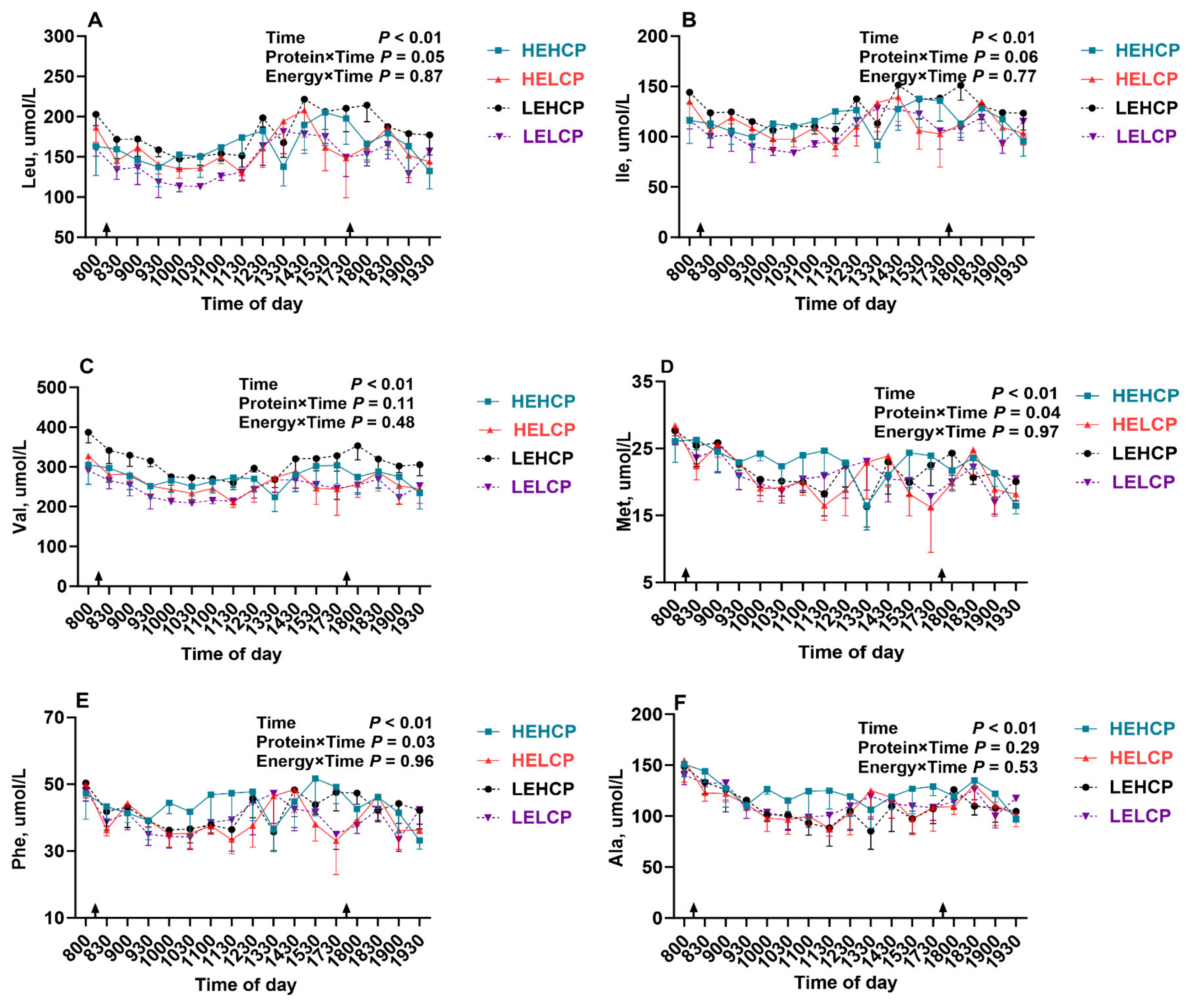
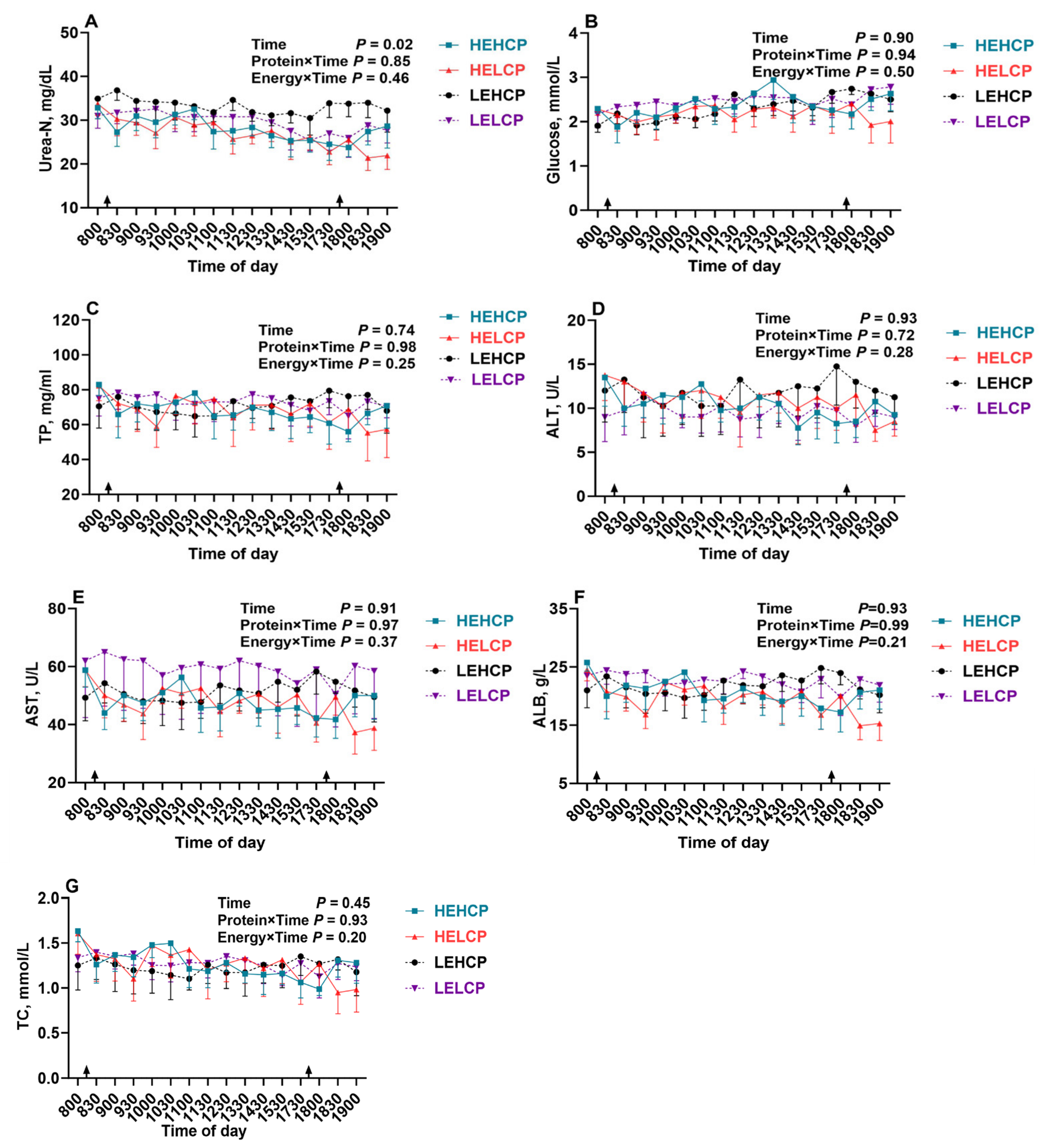
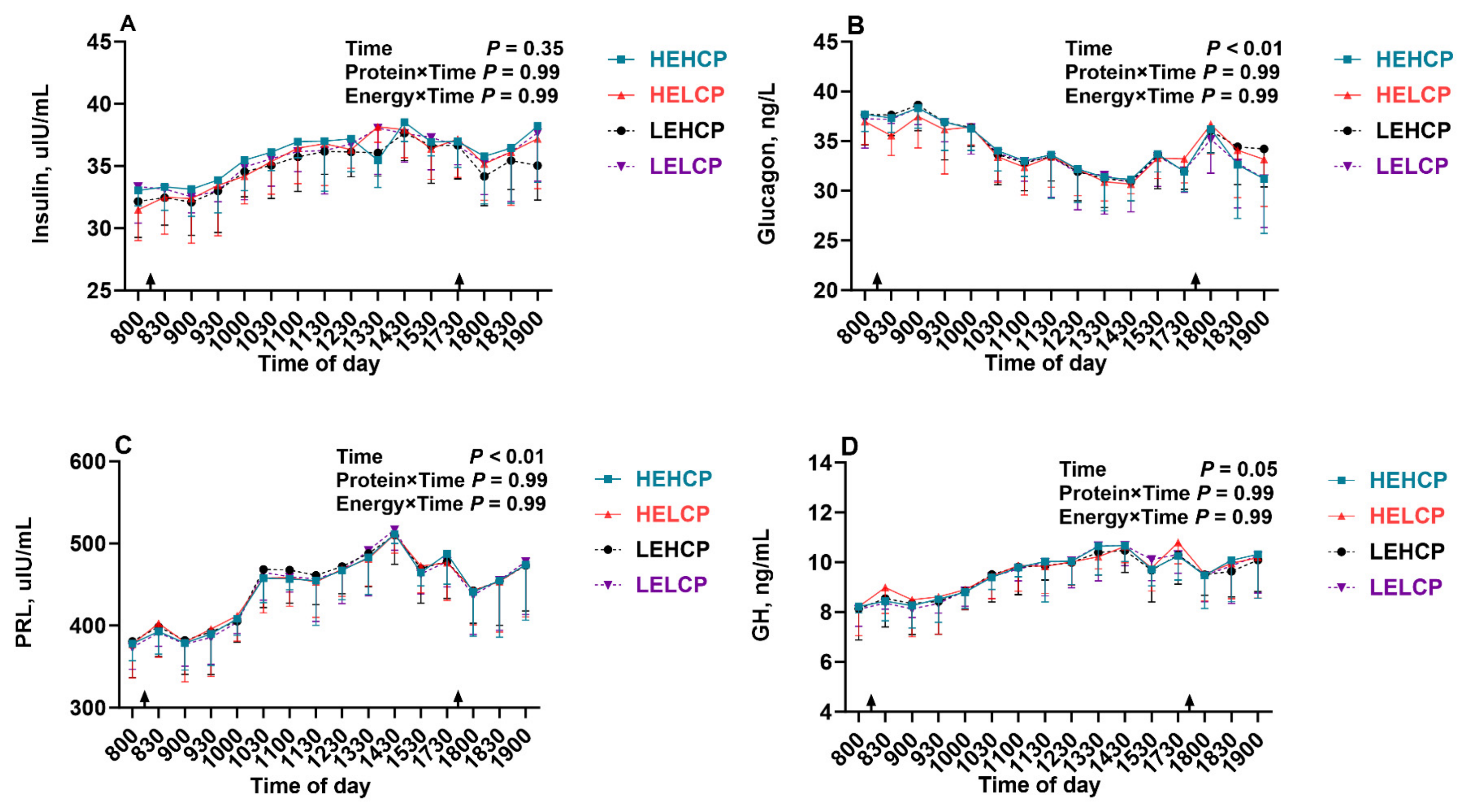
Background: Dietary metabolizable energy (ME) and crude protein (CP) levels are important for lactation performance and metabolic responses in dairy ruminants. This study aimed to evaluate the effects of dietary ME and CP levels on lactation performance and postprandial metabolic responses in lactating dairy goats. Methods: Goats were randomly assigned to a 4 × 4 two-factor Latin square experiment consisting of four 14 d periods. The dietary treatments were high energy, high protein (HEHCP); high energy, low protein (HELCP); low energy, high protein (LEHCP); and low energy, low protein (LELCP). Serial postprandial arterial blood samples were collected at 17 daytime time points to characterize temporal changes in plasma amino acids, biochemical parameters and hormones. Results: Increasing CP supply elevated milk yield (+6%) and lactose yield (+5%) but decreased milk fat yield (−8%; p ≤ 0.04). Increasing ME supply tended to enhance milk yield and milk fat yield and increased milk lactose content only under the high CP condition (ME × CP interaction: p = 0.04), suggesting that the response to ME supply depended partly on dietary CP level. High CP increased plasma branched chain amino acid concentrations, whereas high ME reduced Leu and Val under the high CP condition. Most plasma amino acids exhibited marked postprandial dynamics, decreasing initially and then stabilizing, with CP × time interactions observed for Leu, Met, and Phe (p ≤ 0.05). High ME decreased plasma AST activity and tended to reduce urea N concentration and also reduced ALT activity and increased glucose concentration under the high CP diet. Following morning feeding, plasma urea N showed a progressive postprandial decline (p = 0.02), with glucagon decreasing and both prolactin and growth hormone increasing, despite no dietary effects on mean plasma hormone concentrations. Conclusions: Overall, dietary ME and CP levels affected lactation performance and selected plasma metabolic indicators in lactating dairy goats. Coordinated energy and protein supply should be considered when formulating diets for lactating dairy goats. Serial postprandial sampling further revealed temporal changes in plasma metabolites and hormones, providing useful information for refining precision nutrition strategies during lactation.
Keywords: Laoshan dairy goat; nitrogen utilization; amino acid profile; arterial plasma; milk composition Laoshan dairy goat; nitrogen utilization; amino acid profile; arterial plasma; milk composition