
Impact of Oil Spill Stress on Amino Acid Abundance in Heterosigma akashiwo

Abstract
1. Introduction
2. Materials and Methods
2.1. Microalgae Culture
2.2. Preparation of Fuel Oil
2.3. The WAF of Fuel Oil Treatments
2.4. Extraction and Derivatization of Amino Acids
2.5. Analysis of Amino Acids
2.6. Detection of Polycyclic Aromatic Hydrocarbons in Seawater
2.7. Statistical Analyses
3. Results
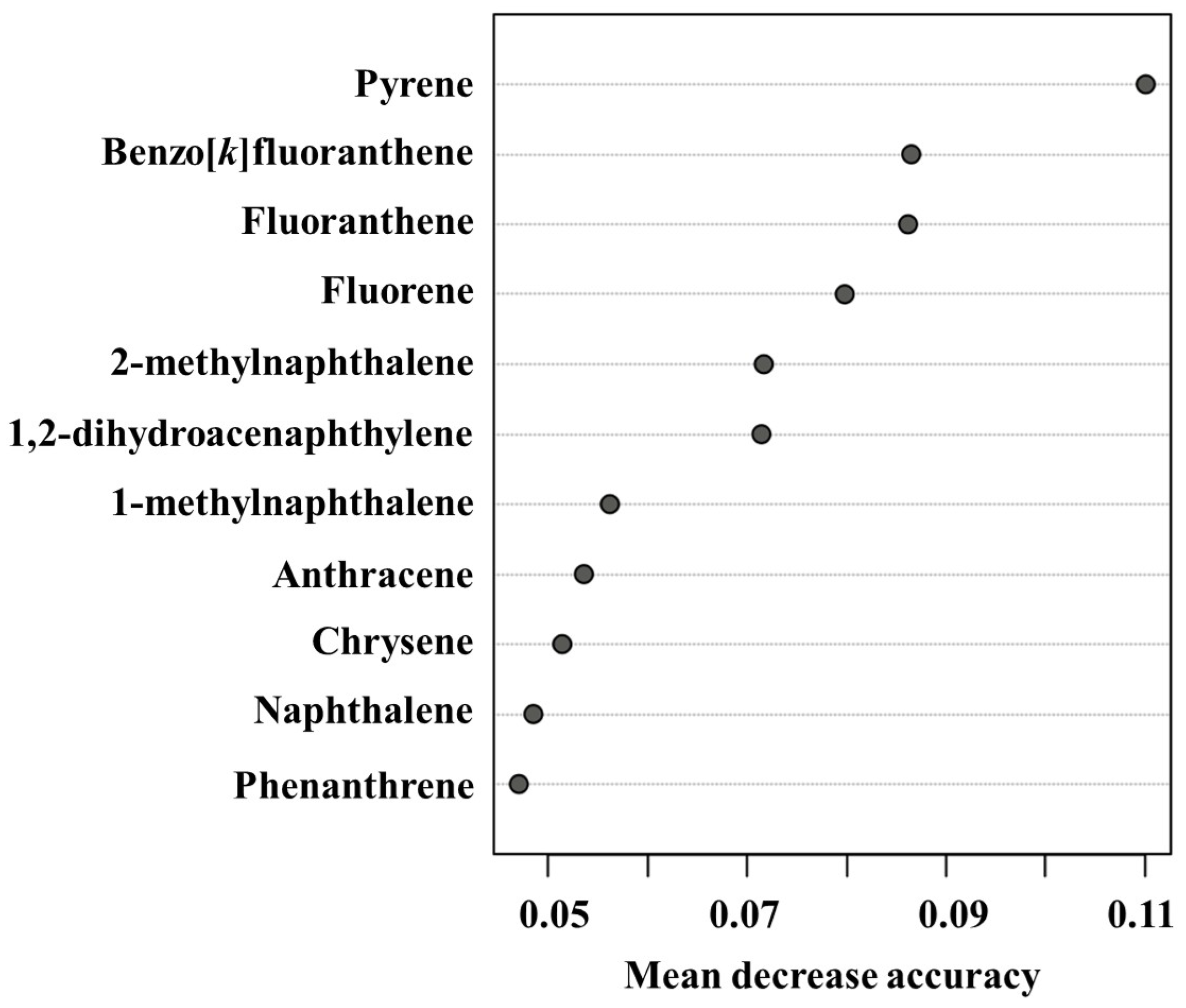
3.1. The Petroleum Hydrocarbon Components in Water Samples
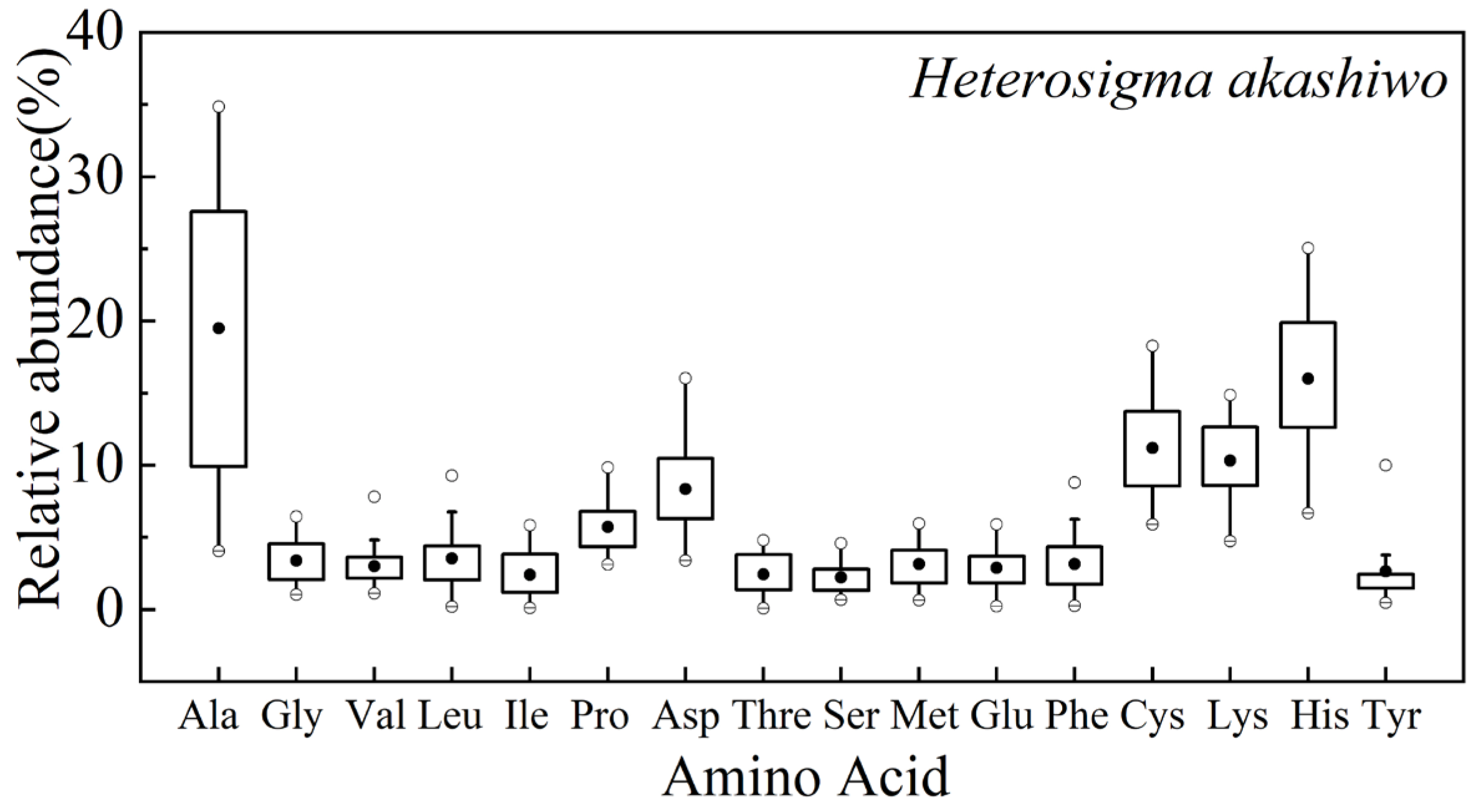
3.2. AA Composition of Heterosigma akashiwo
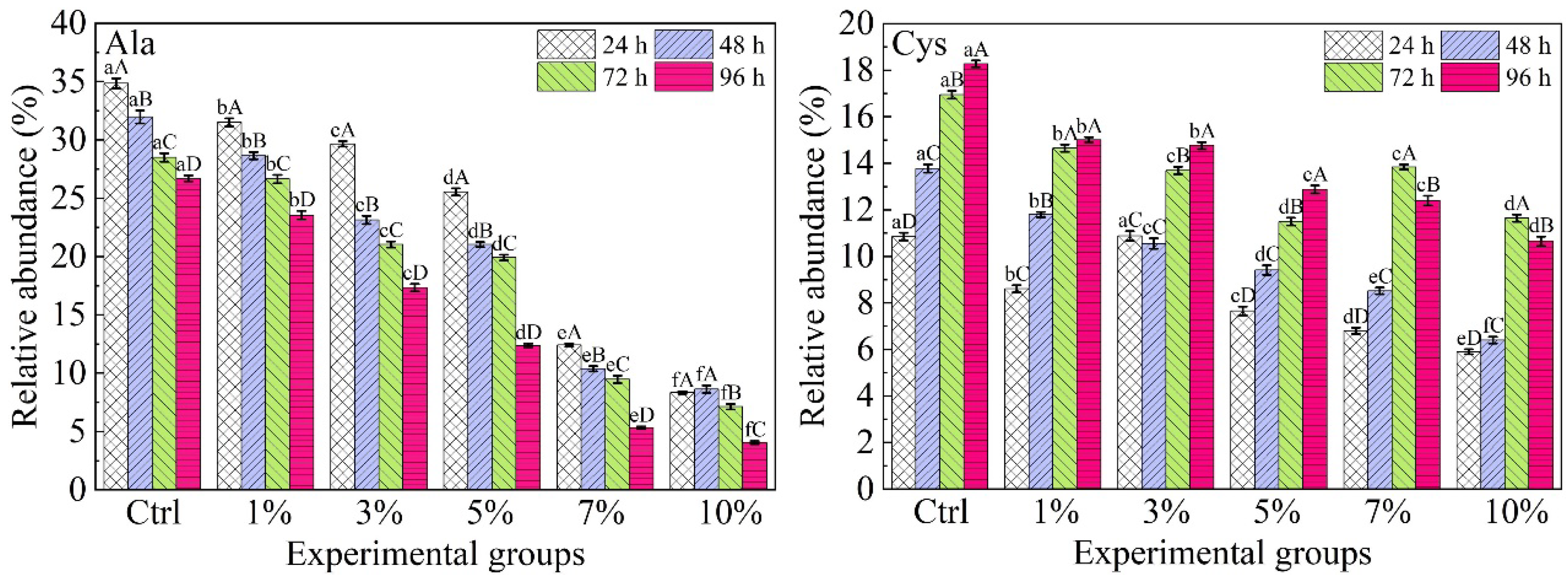
3.3. Toxic Effects of WAF on Ala and Cys in Microalgae
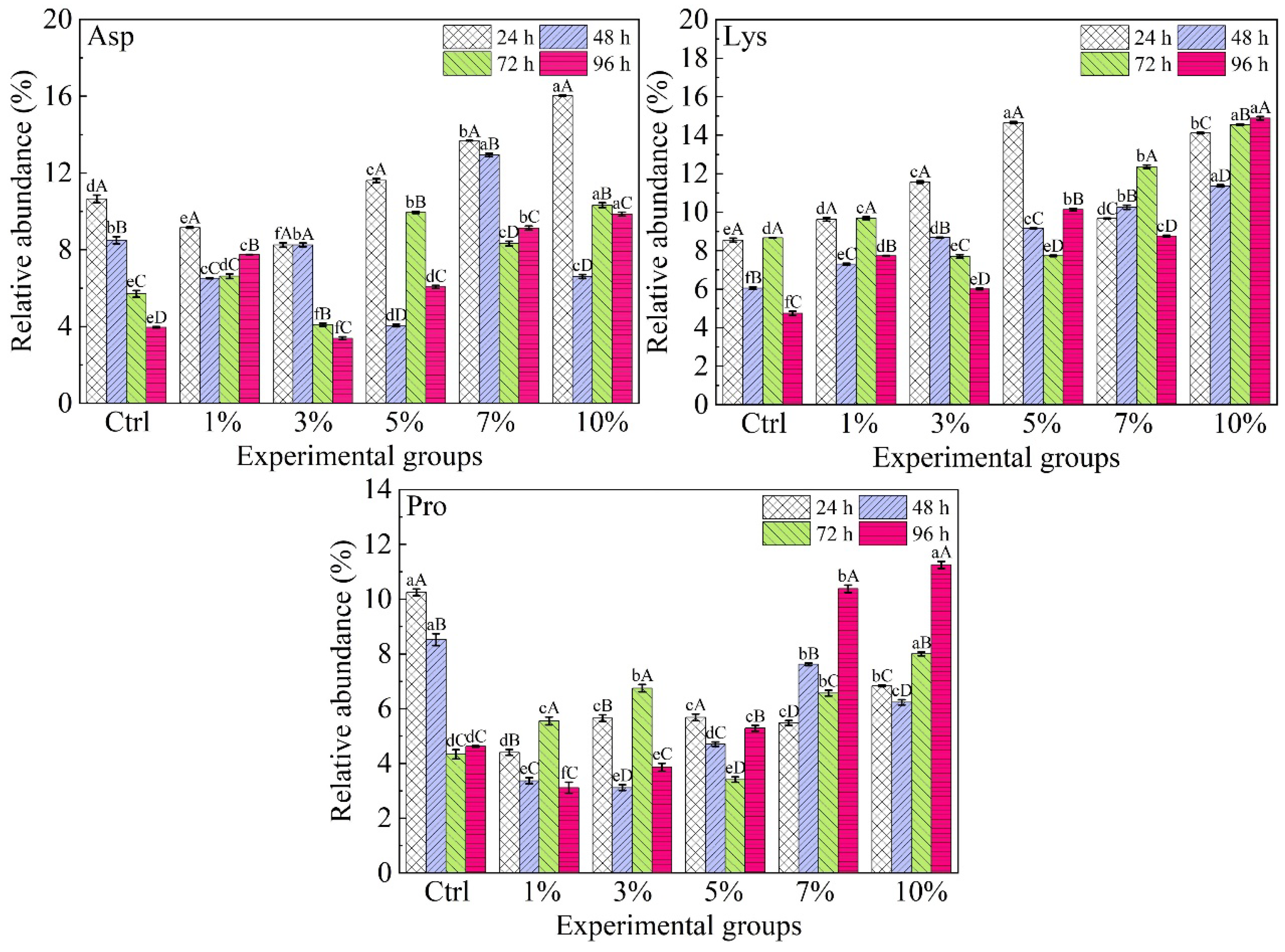
3.4. Toxic Effects of WAF on Asp, Lys, and Pro in Microalgae
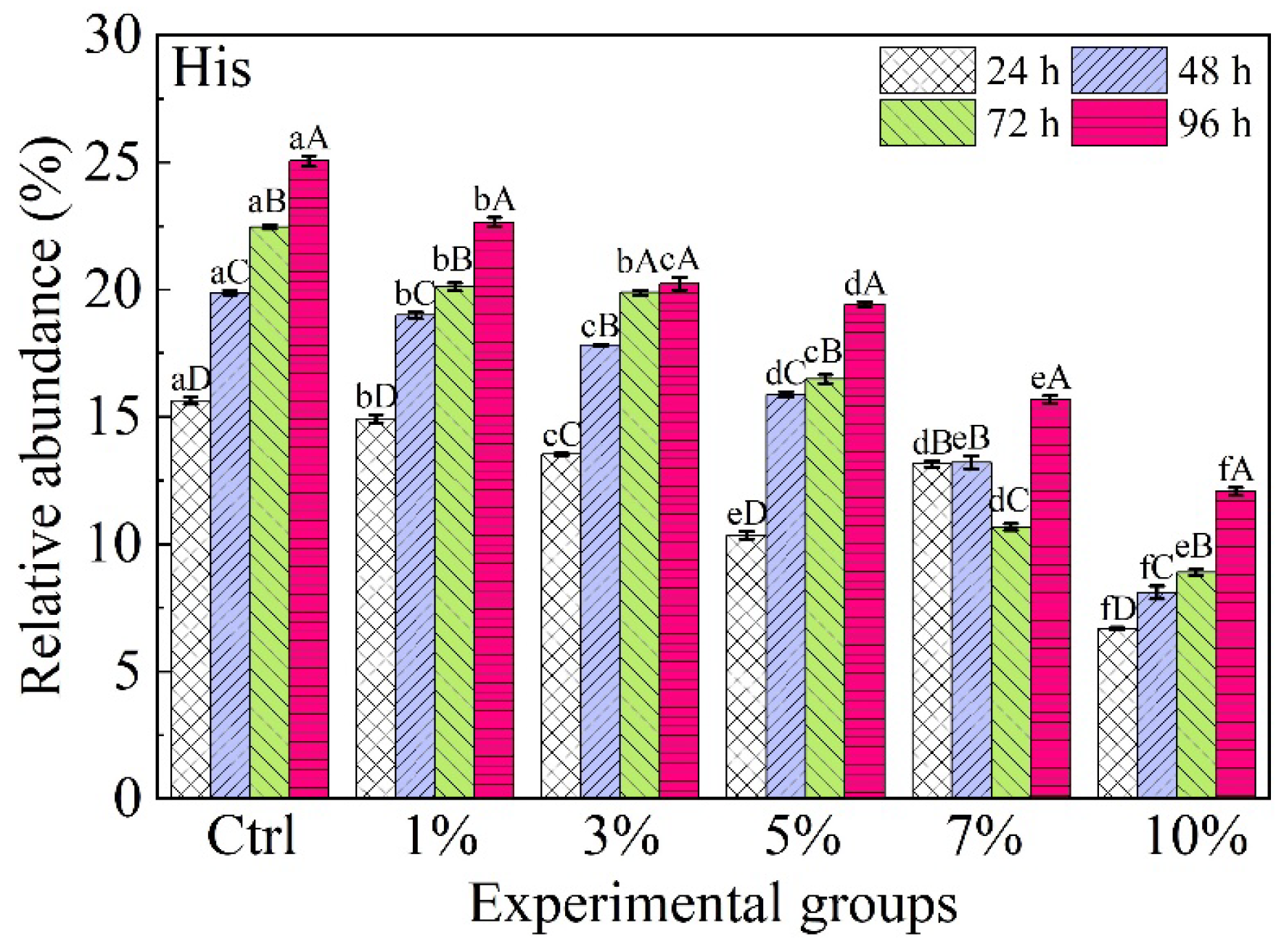
3.5. Toxic Effects of WAF on His in Microalgae
4. Discussion
4.1. The Amino Acid Composition of Microalgae
4.2. Toxic Effects of WAF on AAs in Microalgae
4.2.1. Alanine and Cysteine
4.2.2. Aspartic Acid, Lysine, and Proline
4.2.3. Histidine
5. Conclusions
Author Contributions
Funding
Institutional Review Board Statement
Informed Consent Statement
Data Availability Statement
Acknowledgments
Conflicts of Interest
Abbreviations
| WAF | Water accommodated fraction |
| PAHs | Polycyclic aromatic hydrocarbons |
| HABs | Harmful algae blooms |
| OUT | Operational taxonomic unit |
| AAs | Amino acids |
| TPH | Total petroleum hydrocarbon |
| NPP | N-pivaloyl-isopropyl |
| GC-MS | Gas chromatography–mass spectrometry |
| NIST | National Institute of Standards and Technology |
| TCA | Tricarboxylic acid |
| Rubisco | Ribulose-1,5-bisphosphate carboxylase/oxygenase |
| DAP | Diaminopimelic acid |
| ROS | Reactive oxygen species |
| PPP | Pentose phosphate pathway |
| PRPP | Phosphoribosyl pyrophosphate |
References
- ITOPF. Oil Tanker Spill Statistics 2025. Available online: https://www.itopf.org/knowledge-resources/data-statistics/oil-tanker-spill-statistics-2025/ (accessed on 2 May 2026).
- Barron, M.G.; Vivian, D.N.; Heintz, R.A.; Yim, U.H. Long-Term Ecological Impacts from Oil Spills: Comparison of Exxon Valdez, Hebei Spirit, and Deepwater Horizon. Environ. Sci. Technol. 2020, 54, 6456–6467. [Google Scholar] [CrossRef]
- Huang, D.; Zhang, H.; Wang, H.; Huang, H.; Liu, S.; Qiu, C.; Cheng, C.; Huang, Y.; Luo, Z.; Yang, W.; et al. Physiological responses and adaptive mechanisms of the harmful algal bloom species Heterosigma akashiwo to naphthalene exposure. J. Hazard. Mater. 2025, 490, 137846. [Google Scholar] [CrossRef]
- Tang, D.; Sun, J.; Zhou, L.; Wang, S.; Singh, R.P.; Pan, G. Ecological response of phytoplankton to the oil spills in the oceans. Geomat. Nat. Haz. Risk. 2019, 10, 853–872. [Google Scholar] [CrossRef]
- Almeda, R.; Connelly, T.L.; Buskey, E.J. Novel insight into the role of heterotrophic dinoflagellates in the fate of crude oil in the sea. Sci. Rep. 2014, 4, 7560. [Google Scholar] [CrossRef] [PubMed]
- Kang, H.E.; Yoon, T.H.; Yoon, S.; Kim, H.J.; Park, H.; Kang, C.K.; Kim, H.W. Genomic analysis of red-tide water bloomed with Heterosigma akashiwo in Geoje. PeerJ 2018, 6, e4854. [Google Scholar] [CrossRef]
- Allaf, M.M. Heterosigma akashiwo, a Fish-Killing Flagellate. Microbiol. Res. 2023, 14, 132–147. [Google Scholar] [CrossRef]
- Kianfar, E. Current situation and future outlook petroleum hydrocarbons in marine systems: A review. Environ. Technol. Inno. 2025, 40, 104572. [Google Scholar] [CrossRef]
- Anyahara, J.N. Effects of Polycyclic Aromatic Hydrocarbons (PAHs) on the Environment: A Systematic Review. Int. J. Adv. Acad. Res. 2021, 7, 12–26. [Google Scholar] [CrossRef]
- Wang, M.; Zhang, W.; He, T.; Rong, L.; Yang, Q. Degradation of polycyclic aromatic hydrocarbons in aquatic environments by a symbiotic system consisting of algae and bacteria: Green and sustainable technology. Arch. Microbiol. 2023, 206, 10. [Google Scholar] [CrossRef]
- Kim, D.; Jung, J.; Ha, S.Y.; An, J.G.; Shankar, R.; Kwon, J.; Yim, U.H.; Kim, S.H. Molecular level determination of water accommodated fraction with embryonic developmental toxicity generated by photooxidation of spilled oil. Chemosphere 2019, 237, 124346. [Google Scholar] [CrossRef] [PubMed]
- Jiang, Z.; Huang, Y.; Xu, X.; Liao, Y.; Shou, J.; Chen, Q.; Zeng, J. Advance in the toxic effects of petroleum water accommodated fraction on marine plankton. Acta Ecol. Sin. 2010, 30, 8–15. [Google Scholar] [CrossRef]
- Niraula, A.; Danesh, A.; Merindol, N.; Meddeb-Mouelhi, F.; Desgagné-Penix, I. Aromatic Amino Acids: Exploring Microalgae as a Potential Biofactory. BioTech 2025, 14, 6. [Google Scholar] [CrossRef]
- Han, Q.; Phillips, R.S.; Li, J. Editorial: Aromatic Amino Acid Metabolism. Front. Mol. Biosci. 2019, 6, 22. [Google Scholar] [CrossRef] [PubMed]
- Lou, Y.; Liu, Y.; Wang, H.; Li, N.; Liu, Q.; Liu, Y.; Zhao, X. Effects of CO2 restriction on growth of Nitzschia closterium: Evidence from stable isotopes and fatty acids. Ecotox. Environ. Saf. 2019, 177, 7–17. [Google Scholar] [CrossRef]
- Jiang, Z.; Huang, Y.; Chen, Q.; Zeng, J.; Xu, X. Acute toxicity of crude oil water accommodated fraction on marine copepods: The relative importance of acclimatization temperature and body size. Mar. Environ. Res. 2012, 81, 12–17. [Google Scholar] [CrossRef] [PubMed]
- Previero, A.; Signor, A.; Bezzi, S. Tryptophan Modification in Polypeptide Chains. Nature 1964, 204, 687–688. [Google Scholar] [CrossRef]
- Metges, C.C.; Petzke, K.J.; Hennig, U. Gas chromatography/combustion/isotope ratio mass spectrometric comparison of N-acetyl- and N-pivaloyl amino acid esters to measure 15N isotopic abundances in physiological samples: A pilot study on amino acid synthesis in the upper gastro-intestinal tract of minipigs. J. Mass Spectrom. 1996, 31, 367–376. [Google Scholar]
- Li, N.; Liu, Y.; Liu, Y.; Lou, Y.; Zhao, X. Effect of oil spill on compound-specific stable carbon isotope composition of amino acid in Nitzschia closterium and Heterosigma akashiwo. Sci. Total Environ. 2019, 653, 1095–1104. [Google Scholar] [CrossRef]
- Wang, X.; Sun, J. Exogenous factors impact on bacterial-microalgal growth and chromophoric dissolved organic matter: A case study of Chrysotila dentata and Marinobacter hydrocarbonoclasticus. Front. Mar. Sci. 2024, 11, 2024. [Google Scholar] [CrossRef]
- Lim, A.S.; Jeong, H.J.; Kim, S.J.; Ok, J.H. Amino acids profiles of six dinoflagellate species belonging to diverse families: Possible use as animal feeds in aquaculture. Algae 2018, 33, 279–290. [Google Scholar] [CrossRef]
- León-Vaz, A.; Giráldez, I.; Moreno-Garrido, I.; Varela, J.; Vigara, A.; León, R.; Canavate, J.P. Amino acids profile of 56 species of microalgae reveals that free amino acids allow to distinguish between phylogenetic groups. Algal Res. 2023, 74, 103181. [Google Scholar] [CrossRef]
- Khavari, F.; Saidijam, M.; Taheri, M.; Nouri, F. Microalgae: Therapeutic potentials and applications. Mol. Biol. Rep. 2021, 48, 4757–4765. [Google Scholar] [CrossRef]
- Guerra, L.T.; Levitan, O.; Frada, M.J.; Sun, J.S.; Falkowski, P.G.; Dismukes, G.C. Regulatory branch points affecting protein and lipid biosynthesis in the diatom Phaeodactylum tricornutum. Biomass Bioenergy 2013, 59, 306–315. [Google Scholar] [CrossRef]
- Giordano, M.; Norici, A.; Hell, R. Sulfur and phytoplankton: Acquisition, metabolism and impact on the environment. New Phytol. 2005, 166, 371–382. [Google Scholar] [CrossRef] [PubMed]
- Othman, H.; Pick, F.; Hlaili, A.; Leboulanger, C. Effects of polycyclic aromatic hydrocarbons on marine and freshwater microalgae—A review. J. Hazard. Mater. 2023, 441, 129869. [Google Scholar] [CrossRef] [PubMed]
- Wei, L.; Wang, Q.; Xin, Y.; Lu, Y.; Xu, J. Enhancing photosynthetic biomass productivity of industrial oleaginous microalgae by overexpression of RuBisCO activase. Algal Res. 2017, 27, 366–375. [Google Scholar] [CrossRef]
- Wang, H.; Yan, X.; Aigner, H.; Bracher, A.; Nguyen, N.D.; Hee, W.Y.; Long, B.M.; Price, G.D.; Hartl, F.U.; Hayer-Hartl, M. Rubisco condensate formation by CcmM in β-carboxysome biogenesis. Nature 2019, 566, 131–135. [Google Scholar] [CrossRef]
- Wang, W.; Xu, M.; Wang, G.; Galili, G. New insights into the metabolism of aspartate-family amino acids in plant seeds. Plant Reprod. 2018, 31, 203–211. [Google Scholar] [CrossRef]
- He, J.; Liu, C.; Du, M.; Zhou, X.; Hu, Z.; Lei, A.; Wang, J. Metabolic Responses of a Model Green Microalga Euglena gracilis to Different Environmental Stresses. Front. Bioeng. Biotechnol. 2021, 9, 662655. [Google Scholar] [CrossRef]
- Wang, J.; Sun, H.; Mou, H.; Yang, S. Protein and lysine improvement harnessed by a signal chain of red light-emitting diode light in Chlorella pyrenoidosa. Bioresour. Technol. 2024, 414, 131620. [Google Scholar] [CrossRef]
- Burg, M.B.; Ferraris, J.D. Intracellular Organic Osmolytes: Function and Regulation. J. Biol. Chem. 2008, 283, 7309–7313. [Google Scholar] [CrossRef] [PubMed]
- Wang, L.; Huang, X.; Lim, D.J.; Laserna, A.K.C.; Li, S.F.Y. Uptake and toxic effects of triphenyl phosphate on freshwater microalgae Chlorella vulgaris and Scenedesmus obliquus: Insights from untargeted metabolomics. Sci. Total Environ. 2019, 650, 1239–1249. [Google Scholar] [CrossRef]
- Siripornadulsil, S.; Traina, S.; Verma, D.P.S.; Sayre, R.T. Molecular Mechanisms of Proline-Mediated Tolerance to Toxic Heavy Metals in Transgenic Microalgae. Plant Cell. 2002, 14, 2837–2847. [Google Scholar] [CrossRef]
- Hossain, M.A.; Hoque, M.A.; Burritt, D.J.; Fujita, M. Chapter 16—Proline Protects Plants Against Abiotic Oxidative Stress: Biochemical and Molecular Mechanisms. In Oxidative Damage to Plants; Parvaiz, A., Ed.; Academic Press: San Diego, CA, USA, 2014; pp. 477–522. [Google Scholar]
- Szabados, L.; Savouré, A. Proline: A multifunctional amino acid. Trends Plant Sci. 2010, 15, 89–97. [Google Scholar] [CrossRef]
- Gou, W.; Duan, X.; Xiao, C.; Fu, S.; Shen, L. Identification and characterization of alternative homologs of histidinol-phosphate phosphatase in Pseudomonas aeruginosa. BMC Microbiol. 2025, 25, 377. [Google Scholar] [CrossRef] [PubMed]
- Wang, J.; Tian, Q.; Kang, J.; Zhou, H.; Yu, X.; Qiu, G.; Shen, L. Mechanistic insight of fungal–microalgal pellets in photobioreactor for heavy-metal wastewater bioremediation. Bioresour. Technol. 2025, 416, 131794. [Google Scholar] [CrossRef]
- Shen, L.; Kang, J.; Wang, J.; Shao, S.; Zhou, H.; Yu, X.; Huang, M.; Zeng, W. Dissecting the mechanism of synergistic interactions between Aspergillus fumigatus and the microalgae Synechocystis sp. PCC6803 under Cd(II) exposure: Insights from untargeted metabolomics. J. Hazard. Mater. 2024, 478, 135354. [Google Scholar] [CrossRef] [PubMed]



| Conway Nutrient | Chemical Additive | Dosage (g) |
|---|---|---|
| A | FeCl3·6H2O | 5.2 |
| MnCl2·4H2O | 1.44 | |
| H3BO3 | 134.4 | |
| EDTA | 180 | |
| NaH2PO4·2H2O | 80 | |
| NaNO3 | 400 | |
| B | ZnCl2 | 2.1 |
| CoCl2·6H2O | 2.0 | |
| (NH4)6Mo7O24·4H2O | 0.9 | |
| CuSO4·5H2O | 2.0 | |
| Vitamin B12 | 0.4 mg | |
| Vitamins | Vitamin H | 0.5 mg |
| Vitamin B1 | 100 mg |
| WAF | Regression Equation | Pearson Correlation Coefficient | Regression Equation | Pearson Correlation Coefficient |
|---|---|---|---|---|
| Ala | Cys | |||
| ctrl | y = −0.117x + 37.485 | R = −0.993 ** | y = 0.106x + 8.598 | R = 0.987 * |
| 1% | y = −0.108x + 34.042 | R = −0.997 ** | y = 0.0919x + 6.999 | R = 0.957 * |
| 3% | y = −0.163x + 32.552 | R = −0.976 * | y = 0.0616x + 8.775 | R = 0.919 |
| 5% | y = −0.169x + 29.870 | R = −0.960 * | y = 0.0740x + 5.918 | R = 0.997 ** |
| 7% | y = −0.0923x + 14.925 | R = −0.960 * | y = 0.092x + 4.858 | R = 0.870 |
| 10% | y = −0.0560x + 10.624 | R = −0.886 | y = 0.0812x + 3.774 | R = 0.862 |
| Asp | Pro | |||
| ctrl | y = −0.0952x + 12.916 | R = −0.996 ** | y = −0.0878x + 12.199 | R = −0.931 |
| 1% | y = −0.0171x + 8.539 | R = −0.431 | y = −0.0070x + 4.529 | R = −0.196 |
| 3% | y = −0.0780x + 10.679 | R = −0.924 | y = −0.0072x + 5.277 | R = −0.135 |
| 5% | y = −0.0447x + 10.602 | R = −0.399 | y = −0.0104x + 5.390 | R = −0.324 |
| 7% | y = −0.0761x + 15.583 | R = −0.879 | y = 0.0569x + 4.099 | R = 0.838 |
| 10% | y = −0.0616x + 14.402 | R = −0.487 | y = 0.0626x + 4.324 | R = 0.867 |
| Lys | His | |||
| ctrl | y = −0.0367x + 9.2031 | R = −0.588 | y = 0.128x + 13.061 | R = 0.991 ** |
| 1% | y = −0.0137x + 9.4093 | R = −0.339 | y = 0.101x + 13.096 | R = 0.975 * |
| 3% | y = −0.0736x + 12.905 | R = −0.978 * | y = 0.0923x + 12.336 | R = 0.929 |
| 5% | y = −0.0624x + 14.166 | R = −0.647 | y = 0.116x + 8.580 | R = 0.948 |
| 7% | y = −0.00270x + 10.430 | R = −0.056 | y = 0.0212x + 11.910 | R = 0.320 |
| 10% | y = 0.0229x + 12.3530 | R = 0.441 | y = 0.0707x + 4.687 | R = 0.960 * |
Disclaimer/Publisher’s Note: The statements, opinions and data contained in all publications are solely those of the individual author(s) and contributor(s) and not of MDPI and/or the editor(s). MDPI and/or the editor(s) disclaim responsibility for any injury to people or property resulting from any ideas, methods, instructions or products referred to in the content. |
© 2026 by the authors. Licensee MDPI, Basel, Switzerland. This article is an open access article distributed under the terms and conditions of the Creative Commons Attribution (CC BY) license.
Share and Cite
Xue, D.; Su, H.; Yu, J.; Yang, X.; Li, N.; Chen, S. Impact of Oil Spill Stress on Amino Acid Abundance in Heterosigma akashiwo. Metabolites 2026, 16, 361. https://doi.org/10.3390/metabo16060361
Xue D, Su H, Yu J, Yang X, Li N, Chen S. Impact of Oil Spill Stress on Amino Acid Abundance in Heterosigma akashiwo. Metabolites. 2026; 16(6):361. https://doi.org/10.3390/metabo16060361
Chicago/Turabian StyleXue, Dan, Haohan Su, Jie Yu, Xiaowen Yang, Na Li, and Shimeng Chen. 2026. "Impact of Oil Spill Stress on Amino Acid Abundance in Heterosigma akashiwo" Metabolites 16, no. 6: 361. https://doi.org/10.3390/metabo16060361
APA StyleXue, D., Su, H., Yu, J., Yang, X., Li, N., & Chen, S. (2026). Impact of Oil Spill Stress on Amino Acid Abundance in Heterosigma akashiwo. Metabolites, 16(6), 361. https://doi.org/10.3390/metabo16060361