
Review

Altered Lipid Metabolism in Psoriatic Arthritis: A Comprehensive Review
by
Stanislava Popova-Belova
1,
Mariela Geneva-Popova
1,*,
Stefka Stoilova
2,
Velichka Popova
3,
Georgi Nikolov
4 and
Dimitar Nikolov
4
1
Department of Propedeutics of Internal Diseases, Faculty of Medicine, Clinic of Rheumatology, University Hospital “Sv. George”, Medical University—Plovdiv, 4002 Plovdiv, Bulgaria
2
University Hospital “Sv. George”, Medical University—Plovdiv, 4002 Plovdiv, Bulgaria
3
Department of Propedeutics of Internal Diseases “Prof. Anton Mitov”, Faculty of Medicine, Clinic of Rheumatology, University Hospital “Kaspela”, Medical University—Plovdiv, 4002 Plovdiv, Bulgaria
4
Second Department of Internal Diseases, Faculty of Medicine, Clinic of Nephrology, University Hospital “Sv. George”, Medical University—Plovdiv, 4002 Plovdiv, Bulgaria
*
Author to whom correspondence should be addressed.
Metabolites 2026, 16(5), 287; https://doi.org/10.3390/metabo16050287
Submission received: 1 March 2026 / Revised: 2 April 2026 / Accepted: 8 April 2026 / Published: 22 April 2026
(This article belongs to the Special Issue Psoriasis and Metabolic Syndrome)

Abstract

Psoriatic arthritis (PsA) is a chronic inflammatory disorder affecting both the joints and skin. Beyond musculoskeletal manifestations, patients with PsA frequently exhibit alterations in lipid metabolism, contributing to an increased risk of cardiovascular disease. Dyslipidemia in PsA arises from multiple mechanisms, including systemic inflammation, insulin resistance, and imbalances in adipokines such as leptin, adiponectin, and resistin. A structured literature search was conducted in PubMed, Scopus, and Web of Science to identify relevant studies on lipid metabolism in psoriatic arthritis, and the evidence was synthesized narratively. PsA is also commonly associated with obesity and metabolic syndrome, further exacerbating dyslipidemia and cardiovascular risk. Interventions including weight loss, lifestyle modification, and anti-inflammatory treatments have been shown to improve lipid profiles and clinical outcomes. This review provides a comprehensive overview of current knowledge on altered lipid metabolism in PsA, highlighting underlying mechanisms, clinical implications, and therapeutic strategies to reduce cardiovascular risk.

1. Introduction

Psoriatic arthritis (PsA) is a chronic immune-mediated inflammatory disorder characterized by a heterogeneous spectrum of musculoskeletal and dermatologic manifestations, including peripheral arthritis, enthesitis, dactylitis, axial involvement, and psoriatic skin lesions [1,2]. Approximately 20–30% of patients with psoriasis develop PsA during the course of their disease, highlighting the close pathogenetic relationship between cutaneous and joint inflammation. Beyond its classical clinical features, PsA is increasingly recognized as a systemic disease with metabolic consequences, particularly in lipid metabolism and cardiovascular risk [3].
Dyslipidemia in PsA is multifactorial, resulting from the interplay between chronic systemic inflammation, adipokine dysregulation, insulin resistance, and genetic susceptibility [4,5,6,7].
Pietrzak et al. [1] and Wang et al. [2] reported significant alterations in serum lipid profiles of PsA patients compared to healthy controls and psoriasis patients without arthritis, including reduced high-density lipoprotein (HDL), elevated low-density lipoprotein (LDL), triglycerides, and a higher apolipoprotein A1/apolipoprotein B (ApoB/ApoA1) ratio. Ishchenko et al. [4] demonstrated that even treatment-naïve early PsA patients exhibit low ApoA1 and high ApoB levels, emphasizing the primary role of the disease itself in driving lipid disturbances. Wójcik et al. [8] found differential changes in lipid metabolism in peripheral blood mononuclear cells of PsA patients, indicating that cellular lipid handling is also affected.
Adipokines play a critical role in linking adiposity, inflammation, and lipid metabolism in PsA. Leptin and resistin, generally elevated in PsA, promote pro-inflammatory pathways and are associated with disease activity, whereas adiponectin, which exerts anti-inflammatory and insulin-sensitizing effects, is often reduced [5,6,7,9,10,11,12,13,14,15,16,17,18]. These adipokine alterations are not merely markers but active modulators of lipid homeostasis, insulin sensitivity, and endothelial function, contributing to an atherogenic profile [6,14,18,19,20]. Caso et al. [5] highlighted the pro-inflammatory adipokine profile in PsA, particularly in patients with pronounced skin involvement, while Landgren et al. [18] further linked adipokine levels to both metabolic syndrome components and disease activity scores.
However, most of these studies are cross-sectional and cannot establish causality between adipokine alterations and disease activity. In addition, the reported associations are not entirely consistent across different patient populations, suggesting that adipokine profiles may be influenced by confounding factors such as obesity, treatment status, and disease duration [21,22,23].
Metabolic syndrome, obesity, and insulin resistance are highly prevalent in PsA, more so than in psoriasis without arthritis and the general population [15,22,23,24,25,26,27]. Leite et al. [9] observed that higher body adiposity, fat intake, and cholesterol serum levels correlate with increased disease activity, suggesting a bidirectional relationship between metabolic dysfunction and PsA severity. Haroon et al. [28] reported that metabolic syndrome is associated with more severe disease phenotypes, emphasizing the clinical relevance of identifying and managing metabolic comorbidities [3,28,29,30,31,32,33,34]. Nevertheless, it remains challenging to determine whether metabolic syndrome is a driver of disease severity or a consequence of chronic inflammation and reduced physical activity. The bidirectional nature of this relationship is still debated [28,35,36,37,38,39,40,41,42,43].
Cardiovascular disease represents a major long-term risk in PsA patients [28,35,36,37,38,39,40,41,42,43]. Subclinical atherosclerosis, detected through carotid ultrasound or coronary imaging, is frequently present even in early or minimally symptomatic patients, independent of traditional cardiovascular risk factors [21,31,44,45,46,47,48,49,50,51,52,53]. Szentpetery et al. [53] demonstrated that higher coronary plaque burden in PsA patients is associated with disease severity, independent of metabolic syndrome, highlighting the impact of chronic systemic inflammation. Eder et al. [37] confirmed that increased inflammatory burden correlates with the extent of atherosclerotic plaques, reinforcing the concept that PsA-driven dyslipidemia contributes to accelerated atherogenesis.
Therapeutic interventions targeting both inflammation and metabolic dysfunction can favorably influence lipid metabolism and clinical outcomes. Weight loss through lifestyle modification or bariatric interventions improves response to Tumor Necrosis Factor (TNF) inhibitors and increases the likelihood of achieving minimal disease activity [32,33,34,54,55,56,57,58]. Biologic and conventional Disease-modifying antirheumatic drugs (DMARDs) therapies, including methotrexate and TNF inhibitors, may modulate lipid profiles, though the effects are heterogeneous and partially dependent on baseline metabolic status [2,52]. These findings underscore the importance of a comprehensive, multidisciplinary approach in managing PsA, addressing both musculoskeletal and metabolic components [59,60,61,62,63,64,65,66,67,68,69,70,71,72].
Across individual studies, PsA has generally been associated with lower HDL levels and higher LDL, triglyceride, ApoB, and ApoB/ApoA1 ratios compared with healthy controls and, in some studies, compared with psoriasis without arthritis [1,2,4,8,9]. However, these findings should be interpreted with caution because the available studies differ substantially in sample size, patient characteristics, treatment exposure, and laboratory methodology. Similarly, most studies report increased leptin and resistin levels and reduced adiponectin in PsA, but the magnitude of these alterations and their associations with disease activity vary across cohorts [5,17,18,20]. Therefore, the available evidence is more appropriately summarized narratively than as directly comparable pooled values.
Despite growing evidence, gaps remain in our understanding of the precise mechanisms linking inflammation, adipokine dysregulation, insulin resistance, and lipid abnormalities in PsA. Moreover, the interplay between genetic predisposition and environmental factors, including diet and physical activity, requires further elucidation [29,30,43].
This review aims to integrate current knowledge on altered lipid metabolism in PsA, providing a framework for mechanistic understanding, clinical implications, and therapeutic strategies to mitigate cardiovascular risk.

2. Methods

A literature search was performed in PubMed, Scopus, and Web of Science to identify relevant publications on altered lipid metabolism in psoriatic arthritis. The search included articles published up to January 2026 using combinations of the terms “psoriatic arthritis”, “lipid metabolism”, “dyslipidemia”, “apolipoproteins”, “adipokines”, “metabolic syndrome”, “insulin resistance”, and “cardiovascular risk”. Only English-language publications were considered. Original articles, observational studies, mechanistic studies, systematic reviews, and narrative reviews relevant to the topic were included. Reference lists of selected papers were also manually screened for additional eligible studies. Because of substantial heterogeneity among study designs, populations, and reported outcomes, the evidence was synthesized narratively and no formal meta-analysis was undertaken.

2.1. Clinical Implications and Cardiovascular Risk in Psoriatic Arthritis

2.1.1. Elevated Cardiovascular Risk in PsA

PsA patients exhibit a markedly increased risk of cardiovascular (CV) morbidity and mortality compared to the general population and even compared to patients with psoriasis alone [10,16,50]. Epidemiological studies have demonstrated higher rates of myocardial infarction, stroke, and coronary artery disease in PsA, which are not fully explained by traditional risk factors alone [38,39,50]. Although these associations are well documented, most available data are derived from observational studies, and residual confounding by traditional cardiovascular risk factors cannot be fully excluded. Therefore, the independent contribution of PsA-related inflammation to cardiovascular risk remains an area of ongoing investigation.
Eder et al. [10] emphasized that chronic systemic inflammation, metabolic disturbances, and dyslipidemia synergistically elevate cardiovascular risk in PsA patients.
Subclinical atherosclerosis is common in PsA, even among patients with minimal joint symptoms or early disease. Carotid ultrasound studies reveal increased intima-media thickness (IMT) and higher prevalence of carotid plaques, correlating with systemic inflammation markers and disease activity [21,31,38,62]. Szentpetery et al. [53] reported that PsA patients exhibit higher coronary plaque burden than matched controls, independent of metabolic syndrome, highlighting the critical role of inflammation-driven atherogenesis. Cooksey et al. [41] confirmed that both carotid and coronary vascular changes are present in PsA, linking lipid dysregulation with structural vascular alterations.
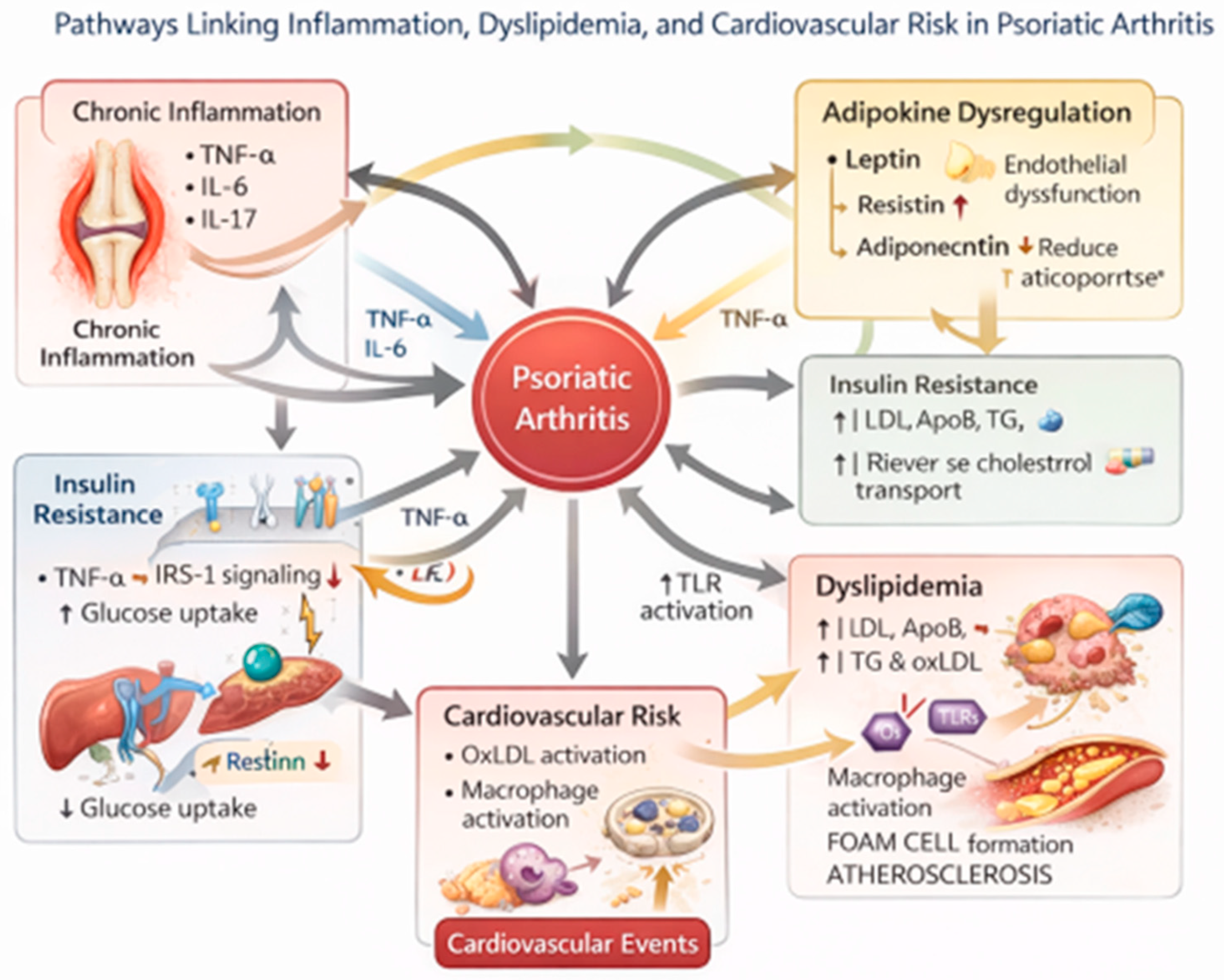
Figure 1 illustrates the proposed pathway linking PsA and dyslipidemia, as well as the main therapeutic strategies in PsA.

2.1.2. Metabolic Syndrome and Insulin Resistance

Metabolic syndrome is highly prevalent in PsA and significantly contributes to cardiovascular risk. Maharaj et al. [22] found that the risk of metabolic syndrome in PsA is higher than in psoriasis alone and the general population. Haroon et al. [28] and Wu et al. [35] demonstrated that metabolic syndrome is associated with more severe joint and skin disease, suggesting a bidirectional relationship between metabolic dysfunction and PsA activity. Components of metabolic syndrome, including central obesity, hypertriglyceridemia, low HDL cholesterol, and insulin resistance, exacerbate the pro-atherogenic lipid profile in PsA [9,46,55,57].
Insulin resistance impairs lipid handling and promotes endothelial dysfunction. Reduced lipoprotein lipase activity, impaired reverse cholesterol transport, and elevated circulating free fatty acids increase triglyceride-rich lipoproteins and oxidized LDL, which drive foam cell formation and early atherogenesis [3,29,36]. Yuliasih et al. [46] demonstrated that PsA patients exhibit elevated HOMA-IR scores and impaired beta-cell function, confirming insulin resistance as a central mediator linking inflammation, dyslipidemia, and CV risk.

2.1.3. Role of Adipokines in Cardiovascular Risk

Adipokine dysregulation in PsA contributes to systemic inflammation, insulin resistance, and vascular pathology. Elevated leptin and resistin levels, along with reduced adiponectin, are associated with endothelial activation, pro-thrombotic states, and adverse lipid profiles [5,17,18,20]. Eder et al. [17] demonstrated that serum leptin correlates with both disease activity and subclinical atherosclerosis, whereas low adiponectin levels are associated with higher carotid IMT and plaque burden. Su X, Peng [3] highlighted that adipokines function as both biomarkers and mediators of cardiovascular risk, emphasizing the need for targeted metabolic interventions.

2.1.4. Clinical Studies Linking Lipid Alterations and CV Events

Several cohort and case–control studies have confirmed the association between dyslipidemia in PsA and cardiovascular outcomes. Leung et al. [12] observed that low HDL and high LDL, triglycerides, and ApoB levels correlate with increased incidence of cardiovascular events. Di Minno et al. [19] performed a systematic review and meta-analysis confirming that markers of dyslipidemia, such as elevated ApoB/ApoA1 ratios and triglycerides, are predictive of cardiovascular events in PsA.
Prediabetic metabolic profiles, including insulin resistance and hypertriglyceridemia, have been linked to higher CV morbidity [13,54]. Agca et al. [15] reported that prediabetic PsA patients exhibited increased rates of myocardial infarction and stroke over longitudinal follow-up, emphasizing the clinical relevance of early metabolic screening.

2.1.5. Therapeutic Interventions and CV Risk Modulation

Therapies targeting both inflammation and metabolic dysfunction can reduce cardiovascular risk in PsA. Weight loss and lifestyle interventions improve lipid profiles, insulin sensitivity, and disease activity. Landgren et al., Klingberg et al. [32,56] demonstrated that intentional weight loss in obese PsA patients improves disease activity scores and decreases pro-atherogenic lipid markers. Di Minno et al. [19] further showed that weight reduction enhances the efficacy of TNF inhibitors and increases rates of minimal disease activity achievement (Table 1).
However, heterogeneity among included studies, including differences in study design, patient populations, and lipid measurements, limits the generalizability of these findings. Standardized prospective studies are needed to better define the predictive value of lipid alterations in PsA.
DMARDs and biologics modulate systemic inflammation and partially normalize lipid metabolism. Methotrexate has been associated with improved ApoB/ApoA1 ratios and reduced cardiovascular risk [2]. TNF inhibitors reduce systemic inflammation, improve endothelial function, and may favorably alter lipid profiles [33,34,52,57,63]. Nevertheless, the effects are heterogeneous and influenced by baseline metabolic status and coexisting obesity [25,40,52,70].
Statin therapy, as an adjunct to anti-inflammatory treatment, further mitigates cardiovascular risk by lowering LDL and stabilizing atherosclerotic plaques. Eder et al. [37] suggested that a combination of anti-inflammatory therapy, lipid-lowering agents, and lifestyle modification is optimal for reducing long-term cardiovascular morbidity in PsA
Integrated Management and Clinical Recommendations
Given the multifactorial pathogenesis of cardiovascular risk in PsA, a comprehensive management strategy is essential:
Routine cardiovascular risk assessment includes lipid profiles, blood pressure, BMI, and metabolic syndrome screening [10,23,50].
To reduce cardiovascular risk, it is additionally necessary to implement:
A.
Inflammation control: The use of disease-modifying antirheumatic drugs (DMARDs) and biologic agents is aimed at reducing systemic inflammation and the associated disturbances in lipid metabolism [2,33,52].
B.
Lifestyle modification: Weight reduction, increased physical activity, and dietary optimization are recommended to improve insulin sensitivity and lipid profile [32,34,56].
C.
Adjunctive pharmacotherapy: The use of statins and antihypertensive agents should be considered based on the individual cardiovascular risk profile of the patient [10,23,50].
D.
Monitoring of subclinical atherosclerosis: Carotid ultrasound or coronary imaging may be useful in high-risk patients to guide early therapeutic intervention [21,31,53].
Available studies emphasize that early identification and appropriate management of dyslipidemia and metabolic syndrome in patients with PsA not only reduce cardiovascular risk but may also contribute to improved clinical outcomes [9,32,34,40].
Summary
Psoriatic arthritis is associated with significant cardiovascular risk driven by chronic systemic inflammation, adipokine dysregulation, insulin resistance, and pro-atherogenic lipid profilesDyslipidemia in PsA is characterized by low HDL, high LDL and triglycerides, and an elevated ApoB/ApoA1 ratio, which contributes to accelerated atherogenesis. Subclinical atherosclerosis is prevalent even in early disease, underscoring the need for proactive cardiovascular assessment. Integrative management combining anti-inflammatory therapy, metabolic optimization, weight loss, and pharmacologic lipid-lowering interventions is essential for reducing long-term cardiovascular morbidity and improving overall patient outcomes [10,21,53,56,58,67].

2.2. Therapeutic Strategies and Lipid Modulation in Psoriatic Arthritis

2.2.1. Conventional DMARDs and Lipid Profiles

Conventional disease-modifying antirheumatic drugs (cDMARDs), such as methotrexate, leflunomide, and sulfasalazine, remain cornerstone therapies in PsA management [59]. Beyond their anti-inflammatory effects, these agents can influence lipid metabolism. Wang et al. [2] demonstrated that methotrexate treatment in PsA patients reduced the ApoB/ApoA1 ratio, indicating a shift toward a less atherogenic lipid profile, particularly in male patients. Methotrexate may exert these effects by decreasing systemic inflammation, which in turn reduces hepatic VLDL synthesis and improves HDL functionality [24].
However, the impact of cDMARDs on lipids is variable. While some studies report modest improvements in HDL and reductions in inflammatory lipoproteins, others show minimal effect, suggesting that lipid modulation is partially dependent on baseline metabolic status and disease activity [4,12,26,36].

2.2.2. Biologic DMARDs and Lipid Modulation

Biologic therapies targeting specific inflammatory pathways have demonstrated profound effects on both PsA disease activity and lipid metabolism [60].
TNF-α Inhibitors
TNF inhibitors (e.g., etanercept, adalimumab, infliximab) reduce systemic inflammation and improve vascular endothelial function. Multiple studies show that TNF blockade is associated with:
Increased HDL cholesterol levels
Stabilization or modest reduction in LDL and triglycerides
Decreased ApoB/ApoA1 ratios
Reduction in subclinical atherosclerosis progression [33,34,52,57].
Despite these findings, the effects of TNF inhibitors on lipid profiles are heterogeneous, and improvements in lipid parameters do not always translate into reduced cardiovascular events. This suggests that inflammation reduction alone may not fully normalize cardiovascular risk.
Di Minno et al. [19] highlighted that weight loss combined with TNF inhibitor therapy significantly enhances minimal disease activity achievement and further improves lipid parameters. Leung et al. [12] corroborated these findings, showing that TNF inhibitors reduce inflammation-driven dyslipidemia, particularly in patients with baseline metabolic syndrome.
IL-17 and IL-23 Blockers
Emerging evidence suggests that IL-17 and IL-23 inhibitors may influence cardiovascular risk through reduction in systemic inflammation. However, direct evidence demonstrating their effects on lipid profiles or HDL functionality remains limited. Most available studies focus on inflammatory and adipokine pathways rather than direct lipid modulation. Therefore, any potential beneficial effects on lipid metabolism and subclinical atherosclerosis should be interpreted with caution and require further investigation in dedicated clinical studies.
Lifestyle Interventions
Lifestyle modification, including weight reduction, physical activity, and dietary optimization, is a critical component of PsA management with dual benefits for disease activity and lipid metabolism [69].
Weight Loss
Obesity is strongly associated with more severe PsA, higher disease activity, reduced treatment response, and pro-atherogenic lipid profiles [25,32,40,52,56,72]. Klingberg et al. [32] demonstrated that intentional weight loss improves disease activity scores, reduces leptin levels, increases adiponectin, and improves HDL cholesterol. Di Minno et al. [34] confirmed that weight reduction enhances the efficacy of TNF inhibitors and improves cardiovascular risk markers.
Physical Activity and Diet
Regular exercise improves insulin sensitivity, reduces triglycerides, and enhances HDL levels, while dietary interventions—such as reduced saturated fat and increased omega-3 fatty acids—can attenuate systemic inflammation and improve lipid profiles [9,43]. Leite et al. [9] found that higher fat intake correlated with increased PsA activity, suggesting that nutritional counseling is a valuable adjunct to pharmacologic therapy.
Pharmacologic Lipid-Lowering Therapies
Statins are the mainstay for pharmacologic management of dyslipidemia in PsA. They are:
Lower LDL and total cholesterol
Stabilize atherosclerotic plaques
Exhibit anti-inflammatory properties that may complement DMARD therapy [10,23,50].
Early initiation of statins in patients with PsA and elevated CV risk markers, particularly in combination with DMARDs and lifestyle interventions, provides additive cardiovascular protection [21,53,71,72].
Integrative Therapeutic Approach
Optimal management of PsA requires a multifactorial, personalized approach targeting inflammation, metabolic dysfunction, and cardiovascular risk simultaneously:
Anti-inflammatory therapy: DMARDs and biologics to control disease activity and reduce cytokine-mediated lipid alterations [2,33,52,57].
Lifestyle modification: Weight loss, exercise, and dietary interventions to improve insulin sensitivity, adipokine balance, and lipid profile [9,24,32,56].
Lipid-lowering pharmacotherapy: Statins for patients with persistent dyslipidemia or high cardiovascular risk [10,23,50].
Monitoring: Regular assessment of lipid profiles, metabolic syndrome components, and subclinical atherosclerosis [21,31,53].
Evidence suggests that combination strategies not only reduce cardiovascular risk but also enhance disease outcomes, including rates of minimal disease activity, remission, and treatment response [32,34]. Personalized therapeutic plans should consider baseline metabolic status, disease phenotype, and comorbidities to maximize both rheumatologic and cardiometabolic benefits (Table 2).
Summary
Therapeutic strategies in PsA extend beyond joint and skin inflammation control to encompass metabolic and cardiovascular protection. Conventional DMARDs, biologic therapies, weight reduction, lifestyle modification, and statins collectively influence lipid metabolism, insulin sensitivity, and adipokine balance. Evidence from interventional and observational studies demonstrates that integrating pharmacologic and lifestyle approaches improves both disease activity and long-term cardiovascular outcomes [2,9,32,33,34,52,56,58].
Future Perspectives and Research Directions in Psoriatic Arthritis and Lipid Metabolism
Emerging Biologic and Small Molecule Therapies
Recent advances in the understanding of PsA pathogenesis have led to the development of targeted biologics and small molecule inhibitors that may influence both inflammation and lipid metabolism [41,47].
JAK Inhibitors and Intracellular Signaling Modulators
Janus kinase (JAK) inhibitors, including tofacitinib and upadacitinib, modulate multiple pro-inflammatory cytokine pathways. By reducing IL-6, TNF-α, and interferon-mediated signaling, JAK inhibitors may indirectly improve lipid profiles and vascular endothelial function [10,20,23]. Early studies in inflammatory arthritis indicate increases in HDL and favorable ApoB/ApoA1 ratios post-treatment, although the long-term cardiovascular benefits require further evaluation [24,26,36].
Importantly, JAK inhibitors have also been associated with increases in LDL cholesterol, and their overall cardiovascular safety profile remains under debate. Data from large clinical trials in inflammatory arthritis have raised concerns regarding major adverse cardiovascular events, underscoring the need for cautious interpretation.
Novel Biologics
Newer biologics targeting IL-17A/F, IL-23p19, and GM-CSF may offer dual benefits: suppression of joint and skin inflammation and modulation of lipid and metabolic pathways. IL-17 blockade has shown promise in improving HDL functionality and reducing vascular inflammation, while IL-23 inhibitors may attenuate adipokine-mediated dyslipidemia [5,17,20,23].
Potential Direct Lipid-Modifying Agents
Experimental approaches aiming to directly normalize lipid metabolism, including ApoA1 mimetics, CETP inhibitors, and PCSK9 inhibitors, represent promising adjuncts in PsA. While primarily studied in general cardiovascular populations, these agents could complement anti-inflammatory therapy to reduce atherosclerotic risk in PsA [10,50,53].
Integrative Biomarker and Imaging Strategies
The future of PsA management lies in personalized medicine guided by precise biomarker and imaging assessments.
Lipidomics and metabolomics: Detailed profiling of circulating lipids and metabolites may identify patient-specific dyslipidemic patterns linked to inflammation, enabling tailored therapy [4,8,29,36].
Adipokine profiling: Measuring leptin, adiponectin, resistin, and visfatin levels could refine cardiovascular risk stratification and guide therapeutic interventions [5,17,18,20].
Advanced imaging: Coronary CT, carotid ultrasound, and PET-CT imaging can detect subclinical atherosclerosis and monitor response to therapy [21,31,53].
These strategies will allow clinicians to identify high-risk patients early and intervene with combined anti-inflammatory, lifestyle, and lipid-targeted therapies [54].
Personalized and Integrated Treatment Approaches
Future research should focus on multimodal interventions combining:
Targeted biologics or small molecules to reduce systemic inflammation [2,33,52,57].
Lifestyle interventions to correct obesity, insulin resistance, and diet-related dyslipidemia [9,32,34,56].
Pharmacologic lipid-lowering therapies for residual atherogenic risk [10,23,50].
Precision medicine approaches guided by lipidomics, adipokine profiles, and imaging biomarkers [4,5,8,17,21].
Integrating these approaches may improve long-term cardiovascular outcomes while enhancing joint and skin disease control.
Research Gaps and Future Directions
Despite advances, several key questions remain:
Mechanistic links between inflammation and lipid dysregulation: Although chronic inflammation is known to induce pro-atherogenic lipid changes, the precise molecular pathways—particularly involving adipokines and mononuclear cell lipid metabolism—require further elucidation [8,13,14,29,36,51].
Long-term cardiovascular outcomes of newer therapies: While biologics and JAK inhibitors modulate lipid profiles, prospective studies are needed to confirm reductions in myocardial infarction, stroke, and atherosclerotic plaque progression [10,23,53].
Optimal integration of lifestyle and pharmacologic interventions: Evidence suggests synergistic benefits, but randomized controlled trials quantifying impact on lipid metabolism and CV events are limited [32,34,56].
Personalized risk stratification: Advanced lipidomics, metabolomics, and imaging tools must be validated in large PsA cohorts to guide therapy selection and optimize outcomes [4,8,21,53].
Potential Study Designs
To address these gaps, future studies should include:
Prospective cohorts assessing lipid profile evolution and cardiovascular events in PsA patients initiating biologics or JAK inhibitors [2,33,52,57].
Randomized trials combining weight loss interventions with DMARD therapy to evaluate additive effects on lipid metabolism and disease activity [32,34,59].
Integrative biomarker studies using adipokine profiling, lipidomics, and imaging to develop predictive models for personalized therapy [4,5,8,17,21].
Pharmacologic adjunct trials of statins, PCSK9 inhibitors, or ApoA1 mimetics in PsA populations at high CV risk [10,50,53].
Translational and Clinical Implications
Advances in understanding PsA-associated dyslipidemia will allow:
Identification of high-risk patients before overt cardiovascular disease develops
Early intervention with combined anti-inflammatory, lipid-modifying, and lifestyle strategies
Optimization of therapeutic sequencing to maximize both joint/skin disease control and cardiometabolic protection [9,32,34,56]
Ultimately, integrating metabolic, inflammatory, and cardiovascular management represents a paradigm shift from symptom control to holistic disease modification in PsA (Table 3).

3. Summary

In conclusion, psoriatic arthritis represents a systemic inflammatory condition in which immune-mediated mechanisms, adipokine imbalance, and metabolic dysfunction converge to promote a pro-atherogenic lipid profile and increased cardiovascular risk. The available evidence consistently demonstrates alterations in lipid parameters and adipokine levels; however, their causal relationships with disease activity remain incompletely understood due to heterogeneity across studies.
Importantly, these metabolic disturbances are not merely comorbid findings but appear to be integral components of disease pathophysiology, contributing to both inflammation and long-term cardiovascular outcomes. This highlights the need for early identification and comprehensive management of cardiometabolic risk factors in patients with PsA.
Future research should focus on longitudinal and mechanistic studies to clarify causal pathways and to determine whether targeted metabolic interventions can modify disease progression and cardiovascular risk. A multidisciplinary approach integrating rheumatologic, metabolic, and cardiovascular care remains essential for optimizing patient outcomes.

Author Contributions

Conceptualization, M.G.-P. and S.P.-B.; methodology S.P.-B.; V.P., G.N. and D.N.; software, S.S.; validation, M.G.-P. formal analysis, S.S.; investigation, M.G.-P., S.P.-B. and S.S. resources, M.G.-P., S.P.-B. and S.S.; data curation, M.G.-P., S.P.-B. and S.S.; writing—original draft preparation, M.G.-P., S.P.-B. and S.S.; writing—review and editing, M.G.-P., S.P.-B. and S.S.; visualization, M.G.-P.; supervision S.P.-B. and S.S. project administration, M.G.-P. and S.P.-B. All authors have read and agreed to the published version of the manuscript.

Funding

This research received no external funding.

Institutional Review Board Statement

Not applicable.

Informed Consent Statement

Not applicable.

Data Availability Statement

No new data were created or analyzed in this study.

Acknowledgments

Artificial intelligence tools were used solely to assist with English language editing and stylistic refinement; all scientific content, data interpretation, and conclusions are entirely the authors’ own work.

Conflicts of Interest

The authors declare no conflicts of interest.

Abbreviations

The following abbreviations are used in this manuscript:
PsAPsoriatic arthritis
ApoA1apolipoprotein A1
ApoBapolipoprotein B
HDLhigh-density lipoprotein
LDLlow-density lipoprotein
VLDLvery low-density lipoprotein
TNF inhibitorsTumor necrosis factor inhibitors
DMARDsDisease-modifying antirheumatic drugs
cDMARDsconventional Disease-modifying antirheumatic drugs
TGtriglycerides
CVcardiovascular
IMTintima-media thickness
BMIBody mass index
JAKJanus kinase

References

  1. Pietrzak, A.; Chabros, P.; Grywalska, E.; Kiciński, P.; Pietrzak-Franciszkiewicz, K.; Krasowska, D.; Kandzierski, G. Serum lipid metabolism in psoriasis and psoriatic arthritis—An update. Arch. Med. Sci. 2019, 15, 369–375. [Google Scholar] [CrossRef]
  2. Wang, B.; Deng, H.; Hu, Y.; Han, L.; Huang, Q.; Fang, X.; Yang, K.; Wu, S.; Zheng, Z.; Yawalkar, N.; et al. The difference of lipid profiles between psoriasis with arthritis and psoriasis without arthritis and sex-specific downregulation of methotrexate on the apolipoprotein B/apolipoprotein A-1 ratio. Arthritis Res. Ther. 2022, 24, 17. [Google Scholar] [CrossRef] [PubMed]
  3. Su, X.; Peng, D. Adipokines as novel biomarkers of cardio-metabolic disorders. Clin. Chim. Acta 2020, 507, 31–38. [Google Scholar] [CrossRef]
  4. Ishchenko, A.; Van Mechelen, M.; Storms, L.; de Vlam, K.; Pazmino, S.; Neerinckx, B.; Verschueren, P.; Lories, R. Low apolipoprotein A1 and high apolipoprotein B levels indicate specific lipid changes in treatment-naïve early psoriatic arthritis. RMD Open 2025, 11, e005174. [Google Scholar] [CrossRef] [PubMed]
  5. Caso, F.; Postiglione, L.; Covelli, B.; Ricciardone, M.; Di Spigna, G.; Formisano, P.; D’Esposito, V.; Girolimetto, N.; Tasso, M.; Peluso, R.; et al. Pro-inflammatory adipokine profile in psoriatic arthritis: Results from a cross-sectional study comparing PsA subset with evident cutaneous involvement and subset “sine psoriasis”. Clin. Rheumatol. 2019, 38, 2547–2552. [Google Scholar] [CrossRef]
  6. Haberman, R.H.; Ogdie, A.; Merola, J.F.; Scher, J.U.; Eder, L. The obesity-inflammation axis in psoriatic disease: Mechanisms and therapeutic strategies. Nat. Rev. Rheumatol. 2026, 22, 151–164. [Google Scholar] [CrossRef]
  7. Ramonda, R.; Ometto, F.; Striani, G.; Cozzi, G.; Basso, D.; Evangelista, F.; Lorenzin, M.; Scagnellato, L.; Aita, A.; Favero, M.; et al. Ketogenic diet improves disease activity and cardiovascular risk in psoriatic arthritis: A proof-of-concept study. PLoS ONE 2025, 20, e0321140. [Google Scholar] [CrossRef]
  8. Wójcik, P.; Biernacki, M.; Wroński, A.; Łuczaj, W.; Waeg, G.; Žarković, N.; Skrzydlewska, E. Altered lipid metabolism in blood mononuclear cells of psoriatic patients indicates differential changes in psoriasis vulgaris and psoriatic arthritis. Int. J. Mol. Sci. 2019, 20, 4249. [Google Scholar] [CrossRef]
  9. Leite, B.F.; Morimoto, M.A.; Gomes, C.; Klemz, B.N.C.; Genaro, P.S.; Damasceno, N.R.T.; Szejnfeld, V.L.; Pinheiro, M.M. Higher bodily adiposity, fat intake, and cholesterol serum levels are associated with higher disease activity in psoriatic arthritis patients: Is there a link among fat and skin and joint involvement? Lipids Health Dis. 2020, 19, 21. [Google Scholar] [CrossRef]
  10. Wan, Y.W.; Duan, X.; Jin, Z.; Chen, H. The research potential of A20 in psoriatic arthritis. Front. Immunol. 2026, 16, 1630198. [Google Scholar] [CrossRef] [PubMed]
  11. Voulgari, P.V.; Drosos, A.A. Cardiovascular comorbidities in psoriatic arthritis: Real-life data. Pol. Arch. Intern. Med. 2025, 135, 16965. [Google Scholar] [CrossRef] [PubMed]
  12. Leung, Y.Y.; Bird, P.; Haroon, M.; Kishimoto, M.; Shin, K.; Mathew, A.J.; Reyes, H.; Chau, J.; Neuen, D.; Chiowchanwisawakit, P.; et al. The APLAR recommendations for the management of psoriatic arthritis. Int. J. Rheum. Dis. 2025, 28, e70372. [Google Scholar] [CrossRef]
  13. Di Caprio, R.; Nigro, E.; Di Brizzi, E.V.; Buononato, D.; Mallardo, M.; Tancredi, V.; Daniele, A.; Balato, A. Exploring the link between psoriasis and adipose tissue: One amplifies the other. Int. J. Mol. Sci. 2024, 25, 13435. [Google Scholar] [CrossRef]
  14. Williams, J.C.; Hum, R.M.; Rogers, K.; Maglio, C.; Alam, U.; Zhao, S.S. Metabolic syndrome and psoriatic arthritis: The role of weight loss as a disease-modifying therapy. Ther. Adv. Musculoskelet. Dis. 2024, 16, 1759720X241271886. [Google Scholar] [CrossRef]
  15. Agca, R.; Heslinga, S.C.; Rollefstad, S.; Heslinga, M.; McInnes, I.B.; Peters, M.J.; Kvien, T.K.; Dougados, M.; Radner, H.; Atzeni, F.; et al. EULAR recommendations for cardiovascular disease risk management in patients with rheumatoid arthritis and other forms of inflammatory joint disorders: 2015/2016 update. Ann. Rheum. Dis. 2017, 76, 17–28. [Google Scholar] [CrossRef] [PubMed]
  16. Guła, Z.; Łosińska, K.; Kuszmiersz, P.; Strach, M.; Nowakowski, J.; Biedroń, G.; Zimba, O.; Dyczek, Ł.; Haugeberg, G.; Korkosz, M. A comparison of comorbidities and their risk factors prevalence across rheumatoid arthritis, psoriatic arthritis and axial spondyloarthritis with focus on cardiovascular diseases: Data from a single-center real-world cohort. Rheumatol. Int. 2024, 44, 2817–2828. [Google Scholar] [CrossRef]
  17. Eder, L.; Jayakar, J.; Pollock, R.; Pellett, F.; Thavaneswaran, A.; Chandran, V.; Rosen, C.F.; Gladman, D.D. Serum adipokines in patients with psoriatic arthritis and psoriasis alone and their correlation with disease activity. Ann. Rheum. Dis. 2013, 72, 1956–1961. [Google Scholar] [CrossRef]
  18. Landgren, A.J.; Jonsson, C.A.; Bilberg, A.; Eliasson, B.; Torres, L.; Dehlin, M.; Jacobsson, L.; Gjertsson, I.; Larsson, I.; Klingberg, E. Sex differences in cytokines and adipokines in obese patients with PsA and controls undergoing a weight loss intervention. RMD Open 2024, 10, e003821. [Google Scholar] [CrossRef]
  19. Di Minno, M.N.; Ambrosino, P.; Lupoli, R.; Di Minno, A.; Tasso, M.; Peluso, R.; Tremoli, E. Cardiovascular risk markers in patients with psoriatic arthritis: A meta-analysis of literature studies. Ann. Med. 2015, 47, 346–353. [Google Scholar] [CrossRef]
  20. Gaumond, S.I.; Mufarrej, S.; Angioli, A.M.; Abdin, R.; Billero, V.; Rongioletti, F.; Levy, C.; De Marchena, E.; Romanelli, P. Comorbidity Burden and Biologic Access in an Uninsured Psoriasis Population: A 20-Year Descriptive Study. Int. J. Dermatol. 2026. Epub ahead of printing. [Google Scholar] [CrossRef] [PubMed]
  21. Llorca, J.; Ferraz-Amaro, I.; Moreno-Martínez, M.J.; Plaza, Z.; Sánchez-Alonso, F.; Moreno-Ramos, M.J.; García-Gómez, C.; Castañeda, S.; González-Juanatey, C.; González-Gay, M.Á.; et al. Disease activity and hyperuricemia predict the development of cardiovascular events in patients with Psoriatic Arthritis: Results of the 10-year prospective evaluation in the CARMA cohort. Semin. Arthritis Rheum. 2026, 77, 152923. [Google Scholar] [CrossRef]
  22. Maharaj, A.B.; Eder, L.; Ogdie, A. Obesity and comorbidity management in psoriatic arthritis. Rheum. Dis. Clin. N. Am. 2025, 51, e1–e18. [Google Scholar] [CrossRef] [PubMed]
  23. Woo, Y.R.; Park, C.J.; Kang, H.; Kim, J.E. The risk of systemic diseases in those with psoriasis and psoriatic arthritis: From mechanisms to clinic. Int. J. Mol. Sci. 2020, 21, 7041. [Google Scholar] [CrossRef]
  24. Barbarroja, N.; López-Medina, C.; Escudero-Contreras, A.; Arias-de la Rosa, I. Clinical and molecular insights into cardiovascular disease in psoriatic patients and the potential protective role of apremilast. Front. Immunol. 2024, 15, 1459185. [Google Scholar] [CrossRef]
  25. Fatica, M.; Ferrigno, S.; Çela, E.; D’Antonio, A.; Conigliaro, P.; Cardellini, M.; Longo, S.; Federici, M.; Chimenti, M.S. Metabolic challenges of glucose and lipid dysregulation in psoriatic arthritis: A narrative review from pathogenesis to clinical practice. Acta Diabetol. 2025, 62, 1831–1841. [Google Scholar] [CrossRef] [PubMed]
  26. Piya, M.K. Metabolic syndrome, rheumatoid and psoriatic arthritis: Managing cardiovascular risk. Int. J. Rheum. Dis. 2021, 24, 1103–1105. [Google Scholar] [CrossRef] [PubMed]
  27. Ritchlin, C.T.; Colbert, R.A.; Gladman, D.D. Psoriatic arthritis. N. Engl. J. Med. 2017, 376, 957–970. [Google Scholar] [CrossRef]
  28. Haroon, M.; Gallagher, P.; Heffernan, E.; FitzGerald, O. High prevalence of metabolic syndrome and of insulin resistance in psoriatic arthritis is associated with the severity of underlying disease. J. Rheumatol. 2014, 41, 1357–1365. [Google Scholar] [CrossRef]
  29. Kyriazi, N.; Vassilakis, K.D.; Bakiri, A.; Iliopoulos, A.; Fragoulis, G.E. Antiobesity medications in rheumatology. Quo vadis? Ann. Rheum. Dis. 2026, 85, 412–416. [Google Scholar] [CrossRef]
  30. Alunno, A.; Carubbi, F.; Rodríguez-Carrio, J.; Gossec, L.; Donohoe, S.; Ferri, C. The management of cardiovascular risk in psoriatic disease: A bridge over troubled water. Semin. Arthritis Rheum. 2024, 65, 152389. [Google Scholar] [CrossRef]
  31. Adeodato Ramos, L.M.; Gomes, K.W.P.; de Saboia Mont’Alverne, A.R.; Braga, M.V.; Costa Vasconcelos, A.H.; Rodrigues, C.E.M. High prevalence of metabolic syndrome in patients with psoriatic arthritis from northeastern Brazil: Association with traditional cardiovascular risk factors and biologic disease-modifying antirheumatic drugs. J. Clin. Rheumatol. 2021, 27, S186–S192. [Google Scholar] [CrossRef]
  32. Spanopoulou, C.; Katsimbri, P. Psoriatic Arthritis: Developments in 2025. Mediterr. J. Rheumatol. 2026, 37, 12–20. [Google Scholar] [CrossRef] [PubMed]
  33. Klingberg, E.; Bilberg, A.; Björkman, S.; Hedberg, M.; Jacobsson, L.; Forsblad-d’Elia, H.; Carlsten, H.; Eliasson, B.; Larsson, I. Weight loss improves disease activity in patients with psoriatic arthritis and obesity: An interventional study. Arthritis Res. Ther. 2019, 21, 17. [Google Scholar] [CrossRef]
  34. Sharma, A.; Gopalakrishnan, D.; Kumar, R.; Vijayvergiya, R.; Dogra, S. Metabolic syndrome in psoriatic arthritis patients: A cross-sectional study. Int. J. Rheum. Dis. 2013, 16, 667–673. [Google Scholar] [CrossRef]
  35. Wu, J.J.; Kavanaugh, A.; Lebwohl, M.G.; Gniadecki, R.; Merola, J.F. Psoriasis and metabolic syndrome: Implications for the management and treatment of psoriasis. J. Eur. Acad. Dermatol. Venereol. 2022, 36, 797–806. [Google Scholar] [CrossRef]
  36. Gelfand, J.M.; Neimann, A.L.; Shin, D.B.; Wang, X.; Margolis, D.J.; Troxel, A.B. Risk of myocardial infarction in patients with psoriasis. JAMA 2006, 296, 1735–1741. [Google Scholar] [CrossRef]
  37. Eder, L.; Thavaneswaran, A.; Chandran, V.; Cook, R.; Gladman, D.D. Increased burden of inflammation over time is associated with the extent of atherosclerotic plaques in patients with psoriatic arthritis. Ann. Rheum. Dis. 2015, 74, 1830–1835. [Google Scholar] [CrossRef] [PubMed]
  38. Takeshita, J.; Grewal, S.; Langan, S.M.; Mehta, N.N.; Ogdie, A.; Van Voorhees, A.S.; Gelfand, J.M. Psoriasis and comorbid diseases: Epidemiology. J. Am. Acad. Dermatol. 2017, 76, 377–390. [Google Scholar] [CrossRef]
  39. Russolillo, A.; Iervolino, S.; Peluso, R.; Lupoli, R.; Di Minno, A.; Pappone, N.; Di Minno, M.N. Obesity and psoriatic arthritis: From pathogenesis to clinical outcome and management. Rheumatology 2013, 52, 62–67. [Google Scholar] [CrossRef]
  40. Andreasson, S.; Södergren, A. Prevalence of metabolic syndrome and its components in psoriatic arthritis compared with general population, cutaneous psoriasis, and other inflammatory arthropathies: A meta-analysis. Clin. Rheumatol. 2025, 44, 3787–3799. [Google Scholar] [CrossRef] [PubMed]
  41. Cooksey, R.; Brophy, S.; Kennedy, J.; Gutierrez, F.F.; Pickles, T.; Davies, R.; Piguet, V.; Choy, E. Cardiovascular risk factors predicting cardiac events are different in patients with rheumatoid arthritis, psoriatic arthritis, and psoriasis. Semin. Arthritis Rheum. 2018, 48, 367–373. [Google Scholar] [CrossRef]
  42. Okuyama, R.; Okubo, Y.; Imafuku, S.; Tada, Y.; Yamanaka, K.; Sugiura, K.; Yamaguchi, Y.; Yasuda, M.; Sakamoto, W.; Saitoh, M.; et al. Complications and Laboratory Test Findings Among Patients with Generalized Pustular Psoriasis: A Retrospective Chart Review Study. Exp. Dermatol. 2026, 35, e70227. [Google Scholar] [CrossRef]
  43. Radić, M.; Belančić, A.; Đogaš, H.; Vučković, M.; Sener, Y.Z.; Sener, S.; Fajkić, A.; Radić, J. Cardiometabolic risk in psoriatic arthritis: A hidden burden of inflammation and metabolic dysregulation. Metabolites 2025, 15, 206. [Google Scholar] [CrossRef]
  44. Tyczyńska, K.; Krajewski, P.K.; Złotowska, A.; Szepietowski, J.C.; Świerkot, J. Excess cardiovascular morbidity in psoriatic arthritis and cardioprotective effects of biologic DMARDs: A propensity-matched analysis. Sci. Rep. 2026, 16, 9688. [Google Scholar] [CrossRef] [PubMed] [PubMed Central]
  45. Feld, J.; Nissan, S.; Eder, L.; Rahat, M.A.; Elias, M.; Rimar, D.; Laor, A.; Bitterman, H.; Zisman, D. Increased prevalence of metabolic syndrome and adipocytokine levels in a psoriatic arthritis cohort. J. Clin. Rheumatol. 2018, 24, 302–307. [Google Scholar] [CrossRef] [PubMed]
  46. Yuliasih, Y.; Handoyo, M.; Rahmawati, L.D.; Wibisono, S.; Nisa, N. Correlation between insulin resistance and psoriatic arthritis disease activity: A cross-sectional study. J. Psoriasis Psoriatic Arthritis 2023, 8, 129–133. [Google Scholar] [CrossRef] [PubMed]
  47. Gonzalez-Gay, M.A.; Ferraz-Amaro, I.; Castañeda, S.; Pinto Tasende, J.A.; Uriarte-Ecenarro, M.; Plaza, Z.; Sánchez-Alonso, F.; García Gómez, C.; González-Juanatey, C.; Llorca, J.; et al. The metabolic score for insulin resistance predicts the risk of cardiovascular disease in patients with psoriatic arthritis: Results from the 10-year prospective CARMA cohort. RMD Open 2025, 11, e005352. [Google Scholar] [CrossRef] [PubMed]
  48. Moll, J.M.; Wright, V. Psoriatic arthritis. Semin. Arthritis Rheum. 1973, 3, 55–78. [Google Scholar] [CrossRef]
  49. Xie, W.; Bian, W.; Song, Z.; Deng, X.; Qu, J.; Zhang, Z. Association between triglyceride-glucose index and carotid atherosclerosis in patients with psoriatic arthritis. Rheumatology 2023, 62, 3584–3591. [Google Scholar] [CrossRef]
  50. Khaldi, Y.; Skov, L.; Zachariae, C.; Haulrig, M.B.; Astrup, F.; Schwarz, C.W.; Loft, N. Screening practice of cardiovascular risk and psoriatic arthritis among patients with psoriasis in primary care. Dermatology 2026, 1–8. [Google Scholar] [CrossRef]
  51. Apraş Bilgen, Ş.; Kalyoncu, U.; Erden, A.; Canpolat, U.; Kılıç, L.; Karadağ, Ö.; Aytemir, K.; Kiraz, S.; Akdoğan, A.; Ertenli, İ. Assessment of subclinical atherosclerosis in psoriatic arthritis patients without clinically overt cardiovascular disease or traditional atherosclerosis risk factors. Türk Kardiyol. Derneği Arşivi 2018, 46, 358–365. [Google Scholar] [CrossRef]
  52. Langan, S.M.; Seminara, N.M.; Shin, D.B.; Troxel, A.B.; Kimmel, S.E.; Mehta, N.N.; Margolis, D.J.; Gelfand, J.M. Prevalence of metabolic syndrome in patients with psoriasis: A population-based study in the United Kingdom. J. Investig. Dermatol. 2012, 132, 556–562. [Google Scholar] [CrossRef]
  53. Szentpetery, A.; Healy, G.M.; Brady, D.; Haroon, M.; Gallagher, P.; Redmond, C.E.; Fleming, H.; Duignan, J.; Dodd, J.D.; FitzGerald, O. Higher coronary plaque burden in psoriatic arthritis is independent of metabolic syndrome and associated with underlying disease severity. Arthritis Rheumatol. 2018, 70, 396–407. [Google Scholar] [CrossRef]
  54. Kerschbaumer, A.; Smolen, J.S.; Dougados, M.; de Wit, M.; Primdahl, J.; McInnes, I.; van der Heijde, D.; Baraliakos, X.; Falzon, L.; Gossec, L. Pharmacological treatment of psoriatic arthritis: A systematic literature research for the 2019 update of the EULAR recommendations for the management of psoriatic arthritis. Ann. Rheum. Dis. 2020, 79, 778–786. [Google Scholar] [CrossRef]
  55. Gouze, H.; Aegerter, P.; Gouyette, Y.; Breban, M.; D’Agostino, M.A. Risk of cardiovascular disease decreases over time in psoriatic arthritis but not in spondylarthritis: Meta-analysis of longitudinal studies. Rheumatology 2024, 63, 2638–2647. [Google Scholar] [CrossRef]
  56. Yu, Y.; Wang, J.; Sun, X.; Liu, L.; Wang, Q.; Gao, P.; Wang, C.; Li, F.; Li, X. Global prevalence of obesity in patients with psoriatic arthritis in the past four decades: An analysis of trends from 1984 to 2024. Obes. Rev. 2026, e70088. [Google Scholar] [CrossRef]
  57. Haddad, A.; Stein, N.; Feldhamer, I.; Cohen, A.D.; Saliba, W.; Zisman, D. Biologic switching in psoriatic arthritis: Insights from real-world data and key risk factors. Semin. Arthritis Rheum. 2025, 73, 152737. [Google Scholar] [CrossRef] [PubMed]
  58. Childs, B.A.; Merola, J.F. Novel therapeutic targets in the management of psoriatic disease. Rheum. Dis. Clin. N. Am. 2025, 51, 447–468. [Google Scholar] [CrossRef] [PubMed]
  59. Arraf, A.; Kharouf, F.; Gladman, D.D. Novel pharmacotherapies and breakthroughs in psoriatic arthritis treatment. Expert Opin. Pharmacother. 2025, 26, 1817–1830. [Google Scholar] [CrossRef] [PubMed]
  60. Firdous, S.; Amjad, H.; Choudhary, M.U.; Afzal, M.W.; Tayyab, R.H.; Parveen, A. Emerging biological therapies for psoriatic arthritis: A systematic review. Medicine 2025, 104, e45259. [Google Scholar] [CrossRef]
  61. Kamata, M.; Tada, Y. Efficacy and safety of biologics for psoriasis and psoriatic arthritis and their impact on comorbidities: A literature review. Int. J. Mol. Sci. 2020, 21, 1690. [Google Scholar] [CrossRef]
  62. Castañeda, S.; Vicente-Rabaneda, E.F.; García-Castañeda, N.; Prieto-Peña, D.; Dessein, P.H.; González-Gay, M.A. Unmet needs in the management of cardiovascular risk in inflammatory joint diseases. Expert Rev. Clin. Immunol. 2020, 16, 23–36. [Google Scholar] [CrossRef]
  63. Akhlaq, A.; Ali, H.F.; Sheikh, A.B.; Muhammad, H.; Ijaz, S.H.; Sattar, M.H.; Nazir, S.; Ud Din, M.T.; Nasir, U.; Khan, M.Z.; et al. Cardiovascular diseases in the patients with psoriatic arthritis. Curr. Probl. Cardiol. 2023, 48, 101131. [Google Scholar] [CrossRef]
  64. Armstrong, A.W.; Brezinski, E.A.; Follansbee, M.R.; Armstrong, E.J. Effects of biologic agents and other disease-modifying antirheumatic drugs on cardiovascular outcomes in psoriasis and psoriatic arthritis: A systematic review. Curr. Pharm. Des. 2014, 20, 500–512. [Google Scholar] [CrossRef] [PubMed]
  65. Dey, M.; Nikiphorou, E. Cardiovascular comorbidities in psoriatic arthritis: State of the art. Ther. Adv. Musculoskelet. Dis. 2024, 16, 1759720X241274537. [Google Scholar] [CrossRef] [PubMed]
  66. Panagiotopoulos, A.; Fragoulis, G.E. Comorbidities in psoriatic arthritis: A narrative review. Clin. Ther. 2023, 45, 177–189. [Google Scholar] [CrossRef] [PubMed]
  67. Ahmed, N.; Prior, J.A.; Chen, Y.; Hayward, R.; Mallen, C.D.; Hider, S.L. Prevalence of cardiovascular-related comorbidity in ankylosing spondylitis, psoriatic arthritis and psoriasis in primary care: A matched retrospective cohort study. Clin. Rheumatol. 2016, 35, 3069–3073. [Google Scholar] [CrossRef]
  68. Hughes, D.M.; Coronado, J.I.C.; Schofield, P.; Yiu, Z.Z.N.; Zhao, S.S. The predictive accuracy of cardiovascular disease risk prediction tools in inflammatory arthritis and psoriasis: An observational validation study using the Clinical Practice Research Datalink. Rheumatology 2024, 63, 3432–3441. [Google Scholar] [CrossRef]
  69. Hughes, D.M.; Yiu, Z.Z.N.; Zhao, S.S. External validation of the accuracy of cardiovascular risk prediction tools in psoriatic disease: A UK Biobank study. Clin. Rheumatol. 2025, 44, 1151–1161. [Google Scholar] [CrossRef]
  70. Loganathan, A.; Kamalaraj, N.; El-Haddad, C.; Pile, K. Systematic review and meta-analysis on prevalence of metabolic syndrome in psoriatic arthritis, rheumatoid arthritis and psoriasis. Int. J. Rheum. Dis. 2021, 24, 1112–1120. [Google Scholar] [CrossRef]
  71. Rivera-Diaz, R.; Joven, B.; Hernandez-Ibarburu, G.; García-Donoso, C.; Pablos, J.L.; Ortiz-Romero, P.L. Evaluation of the risk of psoriatic arthritis in patients with psoriasis undergoing biological treatment: Global Population Study (TRINETX). Actas Dermosifiliogr. 2026, 117, 104488. [Google Scholar] [CrossRef] [PubMed]
  72. Mahil, S.K.; McSweeney, S.M.; Kloczko, E.; McGowan, B.; Barker, J.N.; Smith, C.H. Does weight loss reduce the severity and incidence of psoriasis or psoriatic arthritis? A critically appraised topic. Br. J. Dermatol. 2019, 181, 946–953. [Google Scholar] [CrossRef] [PubMed]
Figure 1. Mechanistic pathways linking inflammation, adipokine dysregulation, insulin resistance, and dyslipidemia in psoriatic arthritis and their contribution to cardiovascular risk. Pro-inflammatory cytokines such as TNF-α, IL-6, and IL-17 suppress lipoprotein lipase activity, enhance hepatic VLDL production, and impair insulin signaling via IRS-1 pathways. Adipokines, including increased leptin and resistin and decreased adiponectin, further promote insulin resistance and endothelial dysfunction. Dyslipidemia, characterized by elevated LDL, triglycerides, and oxidized LDL, activates macrophages through Toll-like receptor pathways, leading to foam cell formation, atherosclerosis, and cardiovascular events. Bidirectional interactions between inflammation, metabolic dysfunction, and lipid abnormalities are illustrated.
Metabolites 16 00287 g001
Table 1. Cardiovascular risk markers and interventions in PsA.
ParameterFinding in PsAClinical ImplicationReference
HDL↑CV risk[1,2,24]
LDL↑CV risk[2,26]
ApoB/ApoA1 ratioPredictor of atherosclerosis[2,4,26]
Triglycerides↑CV risk[3,9]
Weight loss↓Disease activity, ↑HDLTherapeutic strategy[32,34,56]
TNF inhibitorsModulate inflammation, improve lipidsTherapeutic strategy[33,34,52,57]
Statins↓LDL, stabilize plaquesAdjunctive therapy[10,23,50]
Table 2. Effects of PsA therapies on lipid metabolism and CV risk.
TherapyEffect on Lipid ProfileEffect on CV RiskReference
Methotrexate↓ApoB/ApoA1, ↑HDL↓CV risk[2,24]
TNF inhibitors↑HDL, ↓LDL/ApoB↓CV events[33,34,52,57,66,68]
IL-17/IL-23 inhibitors↑HDL functionality, ↓CRPPotential ↓atherosclerosis[5,10,17,20,23]
Weight loss↑HDL, ↓leptin, ↓TG↓CV risk, ↓disease activity[32,34,56]
Physical activity & diet↓TG, ↑HDL, improved insulin sensitivity↓CV risk[9,43,68]
Statins↓LDL, plaque stabilization↓CV events[10,23,50]
Table 3. Future therapeutic strategies and research directions in PsA.
StrategyPotential BenefitCurrent EvidenceReference
JAK inhibitors↓Inflammation, ↑HDL, ↓ApoB/ApoA1Early studies; long-term CV data pending[10,20,24,26,36]
IL-17/IL-23 inhibitors↓Vascular inflammation, ↑HDL functionalityPreliminary clinical data[5,17,20,23]
Lipid-targeted agents (statins, PCSK9, ApoA1 mimetics)↓LDL, plaque stabilizationExtrapolated from CV studies[10,50,53]
Weight loss & lifestyle↑HDL, ↓leptin, ↓TG, improved insulin sensitivityInterventional studies[9,32,34,56]
Biomarker-guided therapyPersonalized intervention, improved CV risk stratificationEarly validation[4,5,8,17,21,53]
Integrated multimodal therapySynergistic CV and disease activity benefitsConceptual & pilot studies[2,32,34,52,56,58]
Disclaimer/Publisher’s Note: The statements, opinions and data contained in all publications are solely those of the individual author(s) and contributor(s) and not of MDPI and/or the editor(s). MDPI and/or the editor(s) disclaim responsibility for any injury to people or property resulting from any ideas, methods, instructions or products referred to in the content.