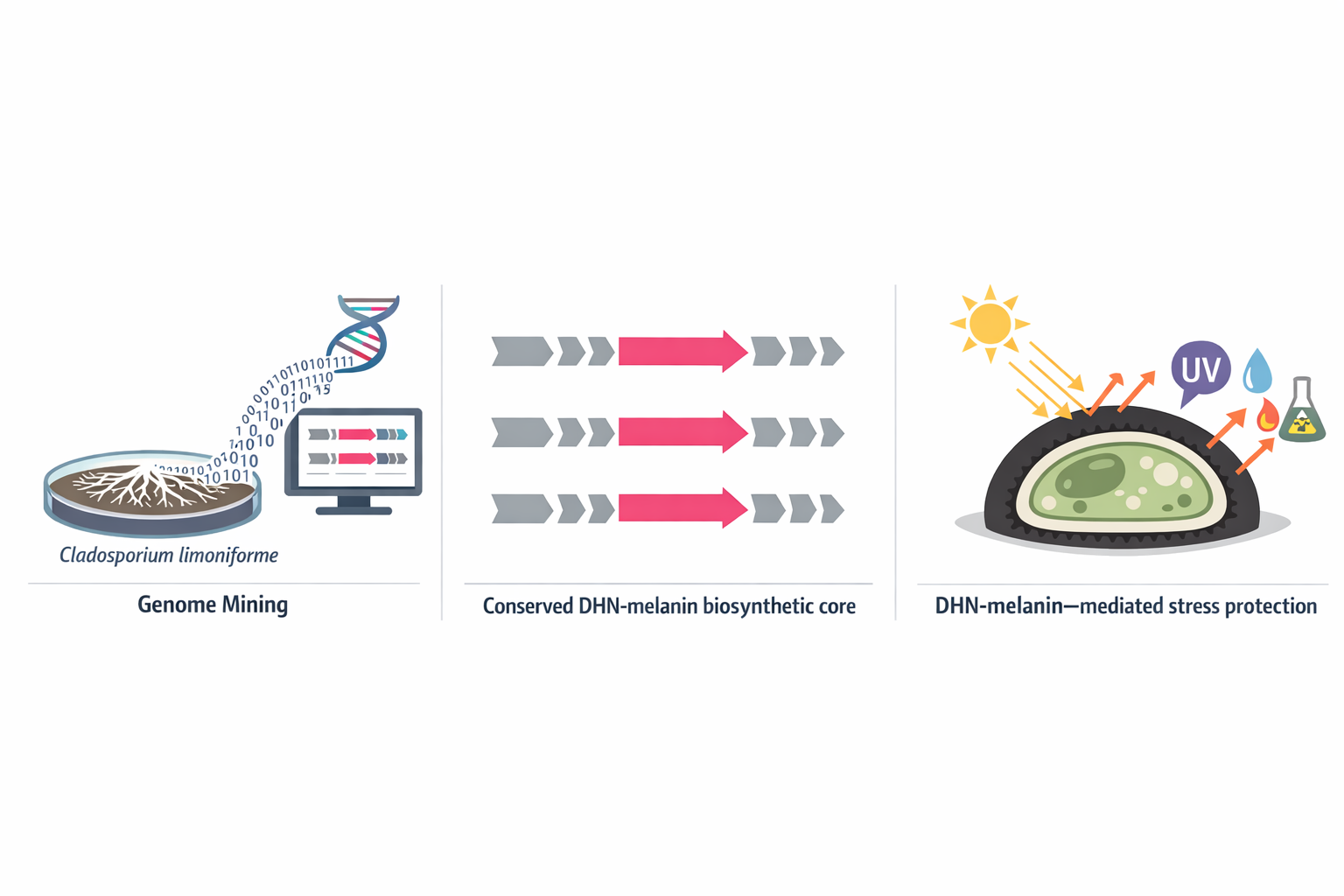

Genomic-Driven Identification of Conserved Biosynthetic Gene Clusters in Cladosporium limoniforme: The Case of the DHN-Melanin Pathway

 and
and
Abstract
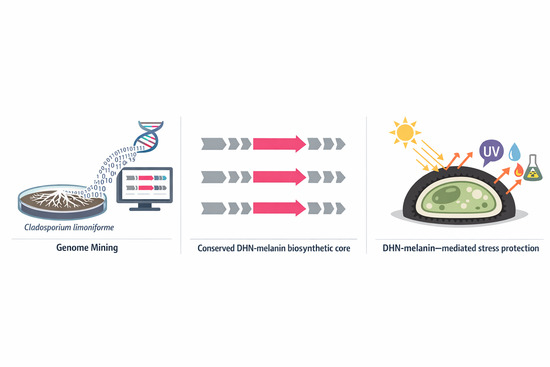
1. Introduction
2. Materials and Methods
2.1. Fungal Strain and Culture Conditions
2.2. DNA Extraction
2.3. Full Genome Sequencing and Genome Assembly
2.4. De Novo Assembly and Quality Assessment
2.5. Structural and Functional Annotation
2.6. Analysis of BGCs of Secondary Metabolites from C. limoniforme
2.7. Selection of Comparative Species
2.8. Prediction of BGCs in Comparative Genomes
2.9. Comparative Profiling and Visualization of BGCs
2.10. Structural Comparison of BGCs
2.11. Phylogenetic Analysis of the Core Synthase
3. Results
3.1. General Features of the Cladosporium limoniforme Genome
3.2. Prediction of Biosynthetic Gene Regions in C. limoniforme
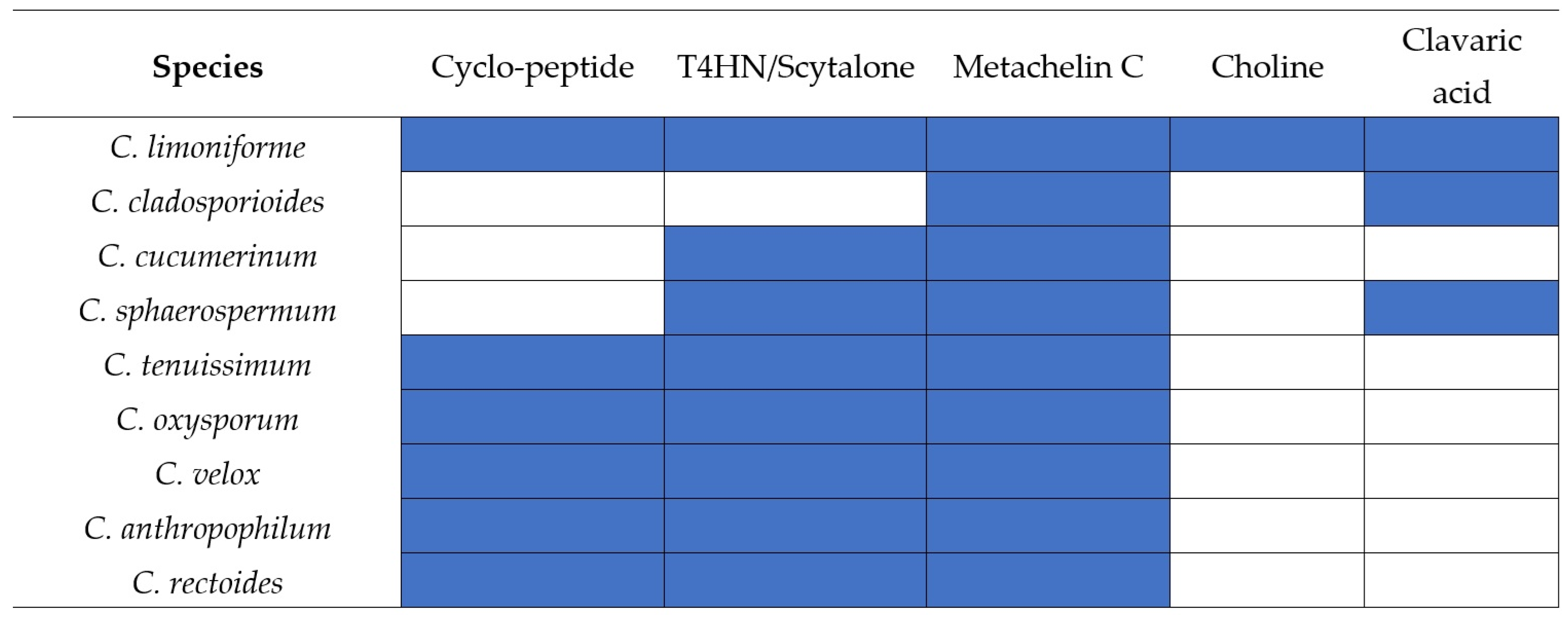
3.3. Overview of BGCs in Cladosporium Species
3.4. Comparison of BGC Patterns in the Genus Cladosporium
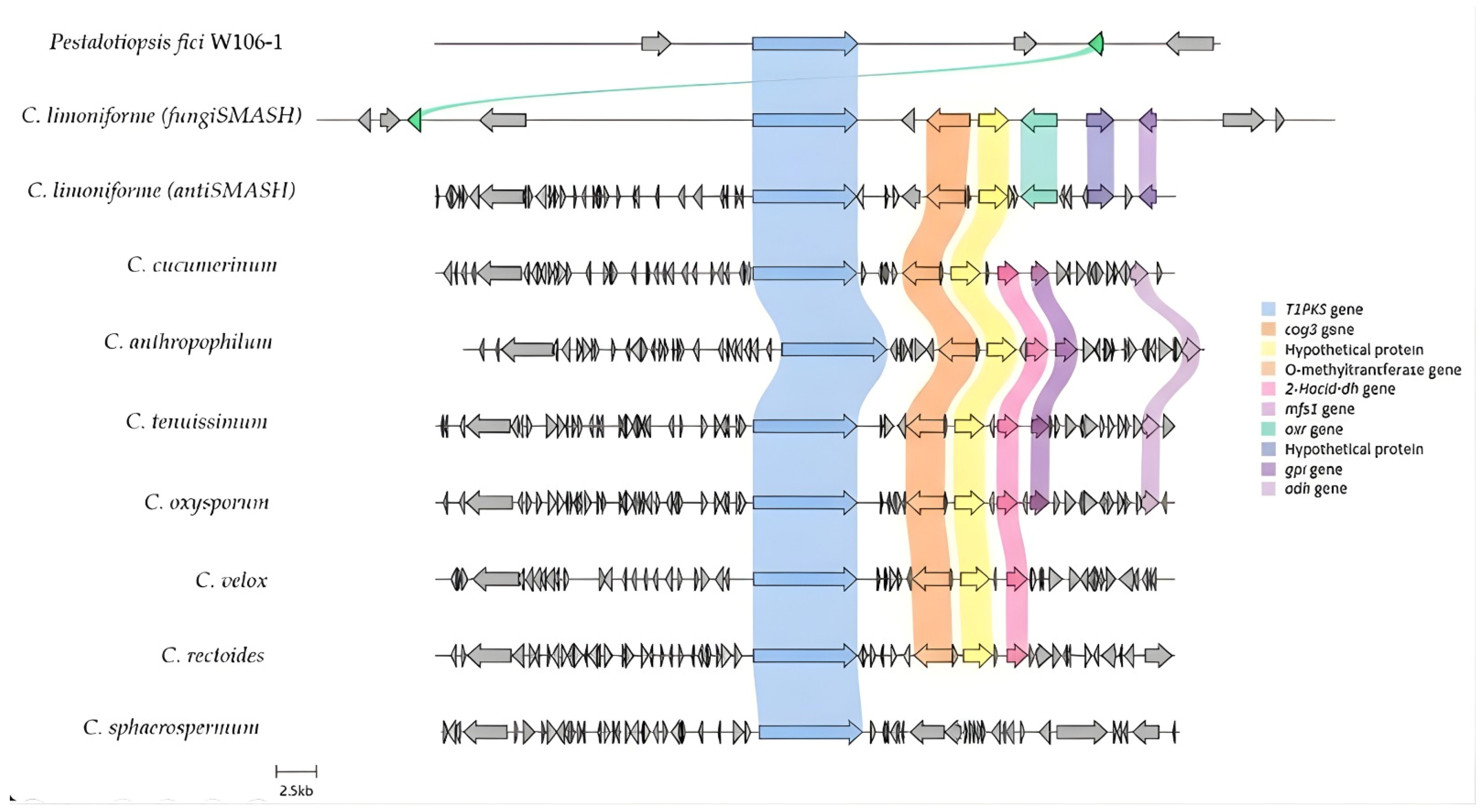
3.5. Structural Conservation of the Analyzed BGC
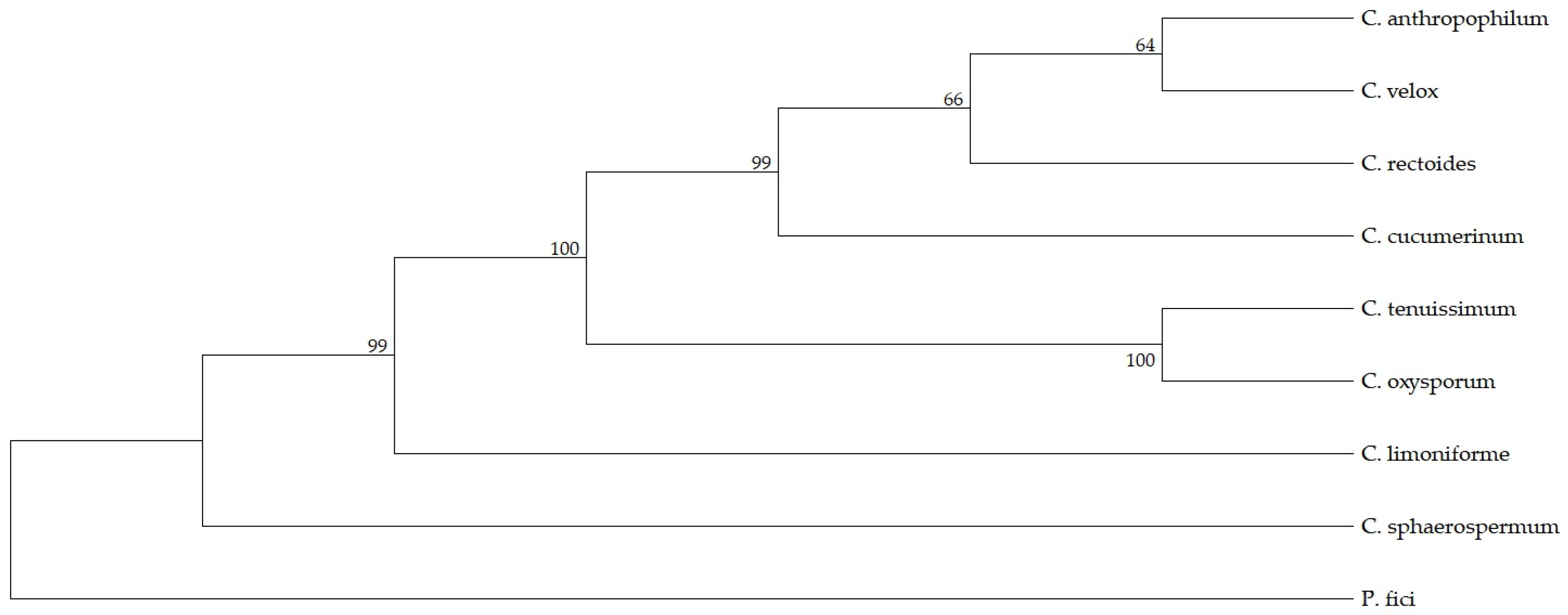
3.6. Evolutionary Relationship of the T1PKS Among Species of the Genus Cladosporium
4. Discussion
5. Conclusions
Supplementary Materials
Author Contributions
Funding
Institutional Review Board Statement
Informed Consent Statement
Data Availability Statement
Acknowledgments
Conflicts of Interest
References
- Paguirigan, J.A.G.; Jeong, E.; Kang, K.B.; Hur, J.; Kim, W. Investigation of Antimicrobial Compounds Produced by Endolichenic Fungi in Various Culture Media. Plant Pathol. J. 2024, 40, 559–567. [Google Scholar] [CrossRef] [Scilit] [PubMed]
- Gao, H.; Zou, J.; Li, J.; Zhao, H. Endolichenic Fungi: A Potential Treasure Trove for Discovery of Special Structures and Bioactive Compounds. Stud. Nat. Prod. Chem. 2016, 48, 347–397. [Google Scholar]
- Wethalawe, A.N.; Alwis, Y.V.; Udukala, D.N.; Paranagama, P.A. Antimicrobial Compounds Isolated from Endolichenic Fungi: A Review. Molecules 2021, 26, 3901. [Google Scholar] [CrossRef] [Scilit]
- Jacobs, J.; Malinowska, A. Microbium: The Neglected Lives of Micro-Matter; Punctum Books: Goleta, CA, USA, 2023; pp. 81–98. [Google Scholar] [CrossRef] [Scilit]
- Ishikawa, Y.; Kimura, M.T.; Toda, M.J. Biology and ecology of the Oriental flower-breeding Drosophila elegans and related species. Fly 2022, 16, 201–220. [Google Scholar] [CrossRef] [Scilit]
- Shah, A.A.; Badshah, L.; Muhammad, M.; Basit, A.; Ullah, I.; Mohamed, H.I.; Khan, A. Secondary metabolites of lichens and their application. In Fungal Secondary Metabolites: Synthesis and Applications in Agroecosystems; Abd-elsalam, K.A., Mohamed, H.I., Eds.; Elsevier: Amsterdam, The Netherlands, 2023; pp. 91–115. [Google Scholar] [CrossRef] [Scilit]
- Deoli, S.; Prakash, O.; Kumar, R.; Mishra, G.K.; Kumar, V. A Comprehensive Review on Lichen-Derived Bioactive Compounds: Integrating Synthesis, Applications, and Nanotechnology. ChemistrySelect 2025, 10, e04515. [Google Scholar] [CrossRef] [Scilit]
- Bhagarathi, N.L.K.; DaSilva, N.P.N.B.; Subramanian, N.G.; Maharaj, N.G.; Kalika-Singh, N.S.; Pestano, N.F.; Phillips-Henry, N.Z.; Cossiah, N.C. An Integrative Review of the Biology and Chemistry of Lichens and Their Ecological, Ethnopharmacological, Pharmaceutical and Therapeutic Potential. GSC Biol. Pharm. Sci. 2023, 23, 92–119. [Google Scholar] [CrossRef] [Scilit]
- Rondilla, R.R.; Edrada-Ebel, R. Recent biotechnological advances in bioprospecting secondary metabolites from endolichenic fungi for drug discovery applications. Crit. Rev. Microbiol. 2025, 51, 1–16. [Google Scholar] [CrossRef] [Scilit]
- Kellogg, J.J.; Raja, H.A. Endolichenic Fungi: A New Source of Rich Bioactive Secondary Metabolites on the Horizon. Phytochem. Rev. 2016, 16, 271–293. [Google Scholar] [CrossRef] [Scilit]
- Paranagama, P.A.; Wijeratne, E.M.K.; Burns, A.M.; Marron, M.T.; Gunatilaka, M.K.; Arnold, A.E.; Gunatilaka, A.A.L. Heptaketides from Corynespora sp. inhabiting the cavern beard lichen, Usnea cavernosa: First report of metabolites of an endolichenic fungus. J. Nat. Prod. 2007, 70, 1700–1705. [Google Scholar] [CrossRef] [Scilit]
- Zhang, W.; Ran, Q.; Li, H.; Lou, H. Endolichenic fungi: A promising medicinal microbial resource to discover bioactive natural molecules—An update. J. Fungi 2024, 10, 99. [Google Scholar] [CrossRef] [Scilit]
- Agrawal, S.; Deshmukh, S.K.; Reddy, M.S.; Prasad, R.; Goel, M. Endolichenic fungi: A hidden source of bioactive metabolites. S. Afr. J. Bot. 2020, 134, 163–186. [Google Scholar] [CrossRef] [Scilit]
- Liu, Y.; Xu, M.; Tang, Y.; Shao, Y.; Wang, H.; Zhang, H. Genome Features and AntiSMASH Analysis of an Endophytic Strain Fusarium sp. R1. Metabolites 2022, 12, 521. [Google Scholar] [CrossRef] [Scilit]
- Shuikan, A.M.; Hozzein, W.N.; Alshuwaykan, R.M.; Arif, I.A. Metabolomics and Genetic Engineering for Secondary Metabolites Discovery. In Secondary Metabolites—Trends and Reviews; IntechOpen: London, UK, 2022. [Google Scholar] [CrossRef] [Scilit]
- Scherlach, K.; Hertweck, C. Mining and unearthing hidden biosynthetic potential. Nat. Commun. 2021, 12, 3864. [Google Scholar] [CrossRef] [Scilit]
- Li, Y.; Yang, J.; Zhang, X.; Jiang, L.; Chen, S.; Miao, M.; Liang, Y.; Liu, X. Integrative Multi-Omics Identify Key Secondary Metabolites Linked to Acid Tolerance in Leptospirillum ferriphilum. Microorganisms 2025, 13, 2493. [Google Scholar] [CrossRef] [Scilit]
- Nickles, G.R.; Oestereicher, B.; Keller, N.P.; Drott, M.T. Mining for a new class of fungal natural products: The evolution, diversity, and distribution of isocyanide synthase biosynthetic gene clusters. Nucleic Acids Res. 2023, 51, 7220–7235. [Google Scholar] [CrossRef] [Scilit]
- Moran, M.; Turner, H.; Yanchar, J.; Preece, J.; Ahlborn, G.; Robison, R. Various Bacillus and Paenibacillus spp. Isolated from Soil Produce Compounds with Potent Antimicrobial Activity Against Clinically Relevant Pathogens. MicrobiologyOpen 2025, 14, e70179. [Google Scholar] [CrossRef] [Scilit] [PubMed]
- Fadipe, E.O.; Hölzle, L.E. Phylogenetic Analysis and Public Health Implications of Salmonella Strains in Southwestern States of Nigeria Using InvA Gene Sequences. Animals 2025, 15, 3399. [Google Scholar] [CrossRef] [Scilit]
- Cho, S.E.; Oh, J.Y.; Lee, D.H. The complete mitochondrial genome of Cladosporium anthropophilum (Cladosporiaceae, Dothideomycetes). Mitochondrial DNA Part B Resour. 2023, 8, 164–166. [Google Scholar] [CrossRef] [Scilit] [PubMed]
- Bensch, K.; Braun, U.; Groenewald, J.Z.; Crous, P.W. The genus Cladosporium. Stud. Mycol. 2012, 72, 1–401. [Google Scholar] [CrossRef] [Scilit] [PubMed]
- Pereira, C.M.; Sarmiento, S.S.; Colmán, A.A.; Belachew-Bekele, K.; Evans, H.C.; Barreto, R.W. Mycodiversity in a micro-habitat: Twelve Cladosporium species, including four new taxa, isolated from uredinia of coffee leaf rust, Hemileia vastatrix. Fungal Syst. Evol. 2024, 14, 9–33. [Google Scholar] [CrossRef] [Scilit]
- Nabor-Romero, O.; Silva-Valenzuela, M.; Rojas-Martínez, R.I.; Garza-García, R. Primer reporte de Cladosporium cladosporioides causando pudriciones en frutos de zapote mante en México. Rev. Mex. Fitopatol. 2018, 36, 356–362. [Google Scholar] [CrossRef] [Scilit]
- Temperini, C.V.; Alonso, J.N.; Colodner, A.D.; Pose, G.N. Cladosporium species causing “Cladosporium rot” on “Bosc” pear fruit in Argentina. Rev. Argent. De Microbiol. 2021, 53, 75–77. [Google Scholar]
- Iturrieta-González, I.; García, D.; Gené, J. Novel species of Cladosporium from environmental sources in Spain. MycoKeys 2021, 77, 1–25. [Google Scholar] [CrossRef] [Scilit] [PubMed]
- Favero-Longo, S.E.; Sandrone, S.; Matteucci, E.; Appolonia, L.; Piervittori, R. Spores of lichen-forming fungi in the mycoaerosol and their relationships with climate factors. Sci. Total Environ. 2014, 466–467, 26–33. [Google Scholar] [CrossRef] [Scilit]
- Li, Y.; Wang, Y.; Wang, H.; Shi, T.; Wang, B. The genus Cladosporium: A prospective producer of natural products. Int. J. Mol. Sci. 2024, 25, 1652. [Google Scholar] [CrossRef] [Scilit] [PubMed]
- Bensch, K.; Groenewald, J.Z.; Braun, U.; Dijksterhuis, J.; De Jesús Yáñez-Morales, M.; Crous, P.W. Common but Different: The Expanding Realm of Cladosporium. Stud. Mycol. 2015, 82, 23–74. [Google Scholar] [CrossRef] [Scilit] [PubMed]
- antiSMASH. Available online: https://antismash.secondarymetabolites.org/ (accessed on 20 September 2025).
- fungiSMASH. Available online: https://fungismash.secondarymetabolites.org/ (accessed on 15 October 2025).
- National Center for Biotechnology Information. Available online: https://www.ncbi.nlm.nih.gov/ (accessed on 5 November 2025).
- Cagecat. Available online: https://cagecat.bioinformatics.nl/tools/clinker (accessed on 12 November 2025).
- Molecular Evolutionary Genetics Analysis (MEGA). Available online: https://www.megasoftware.net (accessed on 30 November 2025).
- Eliahu, N.; Igbaria, A.; Rose, M.S.; Horwitz, B.A.; Lev, S. Melanin biosynthesis in the maize pathogen Cochliobolus heterostrophus depends on two mitogen-activated protein kinases, Chk1 and Mps1, and the transcription factor Cmr1. Eukaryot. Cell 2007, 6, 421–429. [Google Scholar] [CrossRef] [Scilit]
- Sone, Y.; Nakamura, S.; Sasaki, M.; Hasebe, F.; Kim, S.Y.; Funa, N. Bacterial Enzymes Catalyzing the Synthesis of 1,8-Dihydroxynaphthalene, a Key Precursor of Dihydroxynaphthalene Melanin, from Sorangium cellulosum. Appl. Environ. Microbiol. 2018, 84, e00258-18. [Google Scholar] [CrossRef] [Scilit]
- Kai Blin, K.; Kim, H.U.; Medema, M.H.; Weber, T. Recent development of antiSMASH and other computational approaches to mine secondary metabolite biosynthetic gene clusters. Brief. Bioinform. 2019, 20, 1103–1113. [Google Scholar] [CrossRef] [Scilit]
- antiSMASH Documentation. Submitting Jobs on the Website. Available online: https://docs.antismash.secondarymetabolites.org/website_submission/ (accessed on 10 November 2025).
- Nègre, D.; Larhlimi, A.; Bertrand, S. Reconciliation and evolution of Penicillium rubens genome-scale metabolic networks–What about specialised metabolism? PLoS ONE 2023, 18, e0289757. [Google Scholar] [CrossRef] [Scilit]
- O’Neill, E.C. Mining Natural Product Biosynthesis in Eukaryotic Algae. Mar. Drugs 2020, 18, 90. [Google Scholar] [CrossRef] [Scilit]
- Zhang, J.; Zhang, P.; Zeng, G.; Wu, G.; Qi, L.; Chen, G.; Fang, W.; Yin, W.B. Transcriptional Differences Guided Discovery and Genetic Identification of Coprogen and Dimerumic Acid Siderophores in Metarhizium robertsii. Front. Microbiol. 2021, 12, 783609. [Google Scholar] [CrossRef] [Scilit]
- De Serrano, L. Biotechnology of siderophores in high-impact scientific fields. Biomol. Concepts 2017, 8, 169–178. [Google Scholar] [CrossRef] [Scilit] [PubMed]
- Hennessa, T.M.; Irie, L.M.; Dong, H.; VanArsdale, E.S.; Glaser, E.R.; Carr, E.C.; Harris, S.D.; Gianneschi, N.C.; Wang, Z. Genetic, structural, and functional characterization of allomelanin from black yeast Exophiala viscosa, a chassis for fungal melanin production. Appl. Microbiol. Biotechnol. 2025, 109, 216. [Google Scholar] [CrossRef] [Scilit]
- Mattoon, E.R.; Cordero, R.J.B.; Casadevall, A. Fungal melanins and applications in healthcare, bioremediation and industry. J. Fungi 2021, 7, 488. [Google Scholar] [CrossRef] [Scilit]
- Chhoker, K.; Hausner, G.; Harris, S.D. Regulation of melanin production in fungi. Front. Fungal Biol. 2025, 6, 1621764. [Google Scholar] [CrossRef] [Scilit]
- Eisenman, H.C.; Mcgrail, C.W.; Greer, E.M. The role of melanins in melanotic fungi for pathogenesis and environmental survival. Appl. Microbiol. Biotechnol. 2020, 104, 4247–4257. [Google Scholar] [CrossRef] [Scilit] [PubMed]
- Liu, R.; Meng, X.; Mo, C.; Ma, A.; Wei, X. Melanin of fungi: From classification to application. World J. Microbiol. Biotechnol. 2022, 38, 228. [Google Scholar] [CrossRef] [Scilit]
- Rokas, A.; Mead, M.E.; Steenwyk, J.L.; Raja, H.A.; Oberlies, N.H. Biosynthetic gene clusters and the evolution of fungal chemodiversity. Nat. Prod. Rep. 2020, 37, 868–878. [Google Scholar] [CrossRef] [Scilit] [PubMed]
- Almeida-Silva, F.; Zhao, T.; Ullrich, K.K.; Schranz, M.E.; Van De Peer, Y. syntenet: An R/Bioconductor package for the inference and analysis of synteny networks. Bioinformatics 2022, 39, btac806. [Google Scholar] [CrossRef] [Scilit]
- Botas, J.; Rodríguez Del Río, Á.; Giner-Lamia, J.; Huerta-Cepas, J. GeCoViz: Genomic context visualisation of prokaryotic genes from a functional and evolutionary perspective. Nucleic Acids Res. 2022, 50, W352–W357. [Google Scholar] [CrossRef] [Scilit]
- Wu, F.; Mai, Y.; Chen, C.; Xia, R. SynGAP: A synteny-based toolkit for gene structure annotation polishing. Genome Biol. 2024, 25, 218. [Google Scholar] [CrossRef] [Scilit]
- Walden, N.; Schranz, M.E. Synteny Identifies Reliable Orthologs for Phylogenomics and Comparative Genomics of the Brassicaceae. Genome Biol. Evol. 2023, 15, evad034. [Google Scholar] [CrossRef] [Scilit] [PubMed]
- Drillon, G.; Champeimont, R.; Oteri, F.; Fischer, G.; Carbone, A. Phylogenetic Reconstruction Based on Synteny Block and Gene Adjacencies. Mol. Biol. Evol. 2020, 37, 2747–2762. [Google Scholar] [CrossRef] [Scilit]
- Duplessis, S.; Aime, M.C.; Figueroa, M.; Petre, B.; Dodds, P.N.; Lorrain, C. Host Adaptation and Virulence in Heteroecious Rust Fungi. Annu. Rev. Phytopathol. 2021, 59, 403–422. [Google Scholar] [CrossRef] [Scilit] [PubMed]
- Padilla-Roji, I.; Fernández-Ortuño, D.; Bakhat, N.; Vielba-Fernández, A.; Pérez-García, A.; Ruiz-Jiménez, L. RNAi Technology: A New Path for the Research and Management of Obligate Biotrophic Phytopathogenic Fungi. Int. J. Mol. Sci. 2023, 24, 9082. [Google Scholar] [CrossRef] [Scilit]
- Liu, F.; Wang, S.-H.; Cheewangkoon, R.; Zhao, R.-L. Uneven distribution of prokaryote-derived horizontal gene transfer in fungi: A lifestyle-dependent phenomenon. mBio 2025, 16, e0285524. [Google Scholar] [CrossRef] [Scilit]
- Pahirulzaman, K.A.; Williams, K.; Lazarus, C.M. A toolkit for heterologous expression of metabolic pathways in Aspergillus oryzae. Methods Enzymol. 2012, 517, 241–260. [Google Scholar] [PubMed]
- Alberti, F.; Khairudin, K.; Davies, J.A.; Sangmalee, S.; Willis, C.L.; Foster, G.D.; Bailey, A.M. Biosynthesis of pleuromutilin congeners using an Aspergillus oryzae expression platform. Chem. Sci. 2023, 14, 3826–3833. [Google Scholar] [CrossRef] [Scilit]



| Species | GenBank | Genome Size | Number of Contigs | Contig N50 | GC Percent | Genome Depth | Host/Isolation Source |
|---|---|---|---|---|---|---|---|
| C. cladosporioides | GCA_002901145.1 | 33.2 Mb | 67 | 2 Mb | 52.2 | 374.29× | Taxus cuspidata (seeds) |
| C. cucumerinum | GCA_023634325.1 | 33.8 Mb | 29 | 2.1 Mb | 51.5 | 247.27× | Cucumis sativus |
| C. sphaerospermum | GCA_023621355.1 | 28.1 Mb | 436 | 691.5 kb | 55.5 | 100× | Homo sapiens (feces) |
| C. tenuissimum | GCA_046128905.1 | 32.7 Mb | 33 | 2.1 Mb | 53 | 170× | Luffa aegyptiaca (leaf) |
| C. oxysporum | GCA_035771495.1 | 34.5 Mb | 52 | 1.9 Mb | 53 | 300× | Solanum lycopersicum |
| C. velox | GCA_024604135.1 | 32 Mb | 21 | 1.7 Mb | 53 | 154× | Gossypium sp. (cotton field) |
| C. anthropophilum | GCA_052324185.1 | 30.8 Mb | 83 | 1.2 Mb | 53 | 270× | Citrus x limon |
| C. rectoides | GCA_046128805.1 | 31.4 Mb | 19 | 2.1 Mb | 52.5 | 180× | Soil at roots of Citrus reticulata |
| Metric | Value |
|---|---|
| Genome size (Mb) | 28.3 |
| Number of contigs | 20 |
| Genome depth | 28.9× |
| N50 (Mb) | 1.66 |
| GC content (%) | 53.5 |
| BUSCO completeness (%) | 98.6 |
| BUSCO single-copy (%) | 98.5 |
| BUSCO duplicated (%) | 0.1 |
| BUSCO fragmented (%) | 0.1 |
| BUSCO missing (%) | 1.2 |
| Tool | Total BGCs | Known BGCs | Unknown BGCs |
|---|---|---|---|
| antiSMASH | 26 | 3 | 23 |
| fungiSMASH | 21 | 4 | 17 |
| Tool | Region | Cluster Type | Similar Product (MiBiG) |
|---|---|---|---|
| antiSMASH | 9.3 | NRPS | Cyclo-(D-Phe-L-Phe-D-Val-L-Val) |
| antiSMASH | 16.2 | T1PKS | 1,3,6,8-tetrahydroxynaphthalene |
| antiSMASH | 17.2 | NRPS | metachelin C |
| fungiSMASH | 9.1 | NRPS-like | choline |
| fungiSMASH | 9.2 | Terpene | clavaric acid |
| fungiSMASH | 16.2 | T1PKS | scytalone/T3HN |
| fungiSMASH | 17.2 | NRPS | metachelin C |
| Species | Total BGCs | Known BGCs | Unknown BGCs |
|---|---|---|---|
| C. cladosporioides | 22 | 3 | 19 |
| C. cucumerinum | 27 | 4 | 23 |
| C. sphaerospermum | 29 | 7 | 22 |
| C. tenuissimum | 36 | 6 | 30 |
| C. oxysporum | 40 | 9 | 31 |
| C. velox | 31 | 5 | 26 |
| C. anthropophilum | 34 | 6 | 28 |
| C. rectoides | 34 | 6 | 28 |
Disclaimer/Publisher’s Note: The statements, opinions and data contained in all publications are solely those of the individual author(s) and contributor(s) and not of MDPI and/or the editor(s). MDPI and/or the editor(s) disclaim responsibility for any injury to people or property resulting from any ideas, methods, instructions or products referred to in the content. |
© 2026 by the authors. Licensee MDPI, Basel, Switzerland. This article is an open access article distributed under the terms and conditions of the Creative Commons Attribution (CC BY) license.
Share and Cite
Rojas-Coll, A.; Valencia, J.-I.; Tognarelli, J.; Fernández-Bunster, G. Genomic-Driven Identification of Conserved Biosynthetic Gene Clusters in Cladosporium limoniforme: The Case of the DHN-Melanin Pathway. Metabolites 2026, 16, 77. https://doi.org/10.3390/metabo16010077
Rojas-Coll A, Valencia J-I, Tognarelli J, Fernández-Bunster G. Genomic-Driven Identification of Conserved Biosynthetic Gene Clusters in Cladosporium limoniforme: The Case of the DHN-Melanin Pathway. Metabolites. 2026; 16(1):77. https://doi.org/10.3390/metabo16010077
Chicago/Turabian StyleRojas-Coll, Angela, José-Ignacio Valencia, Javier Tognarelli, and Guillermo Fernández-Bunster. 2026. "Genomic-Driven Identification of Conserved Biosynthetic Gene Clusters in Cladosporium limoniforme: The Case of the DHN-Melanin Pathway" Metabolites 16, no. 1: 77. https://doi.org/10.3390/metabo16010077
APA StyleRojas-Coll, A., Valencia, J.-I., Tognarelli, J., & Fernández-Bunster, G. (2026). Genomic-Driven Identification of Conserved Biosynthetic Gene Clusters in Cladosporium limoniforme: The Case of the DHN-Melanin Pathway. Metabolites, 16(1), 77. https://doi.org/10.3390/metabo16010077