
Enhancing Caffeic Acid Production in Escherichia coli Through Heterologous Enzyme Combinations and Semi-Rational Design


Abstract
1. Introduction
2. Materials and Methods
2.1. Strains, Plasmids, Medium and Chemicals
2.2. Culture Medium and Conditions
2.3. Homology Modeling and Molecular Docking
2.4. Site-Directed Saturation Mutagenesis
2.5. Fermentation of Caffeic Acid in a 5 L Bioreactor
2.6. Statistics
3. Results
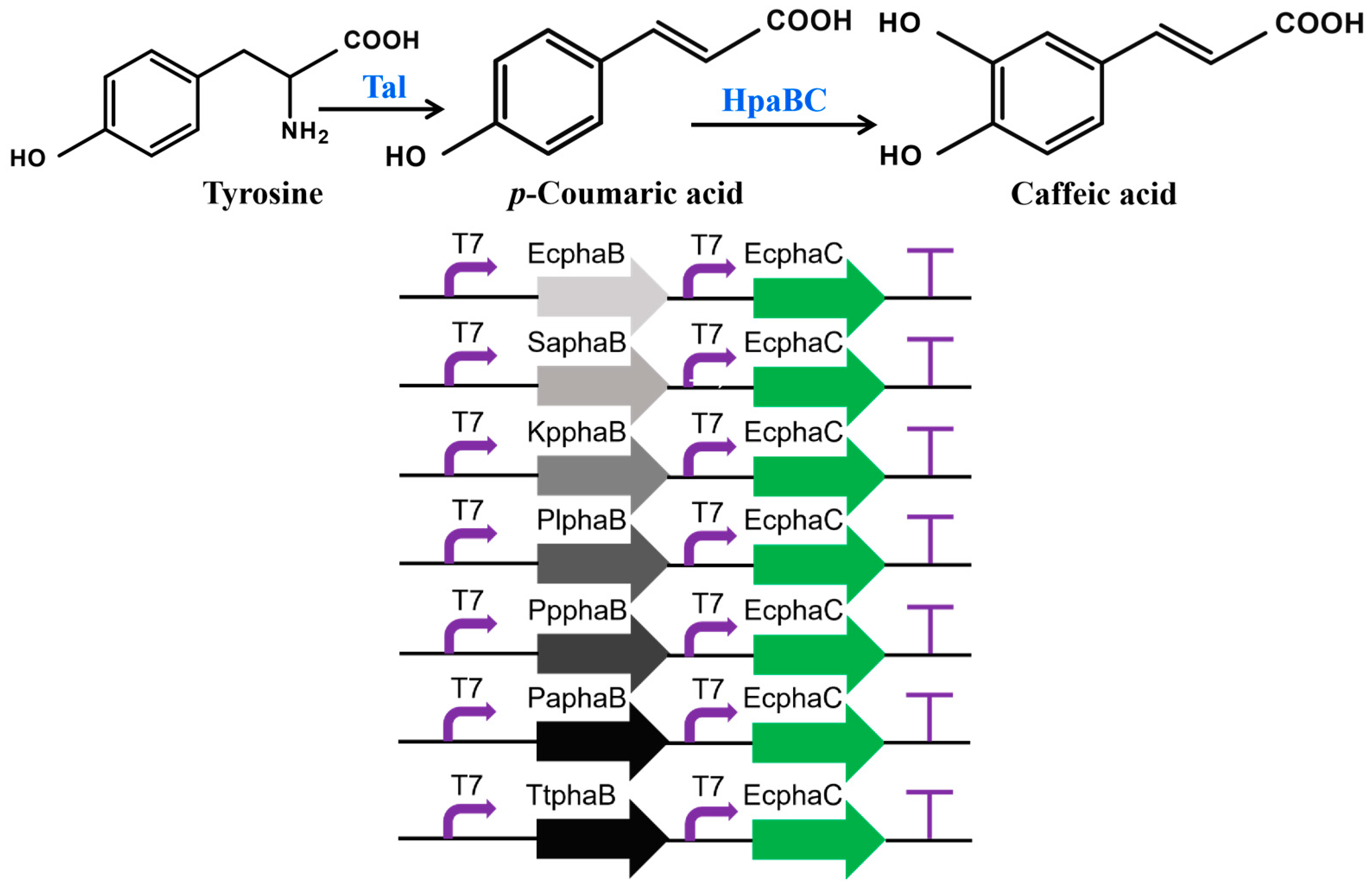
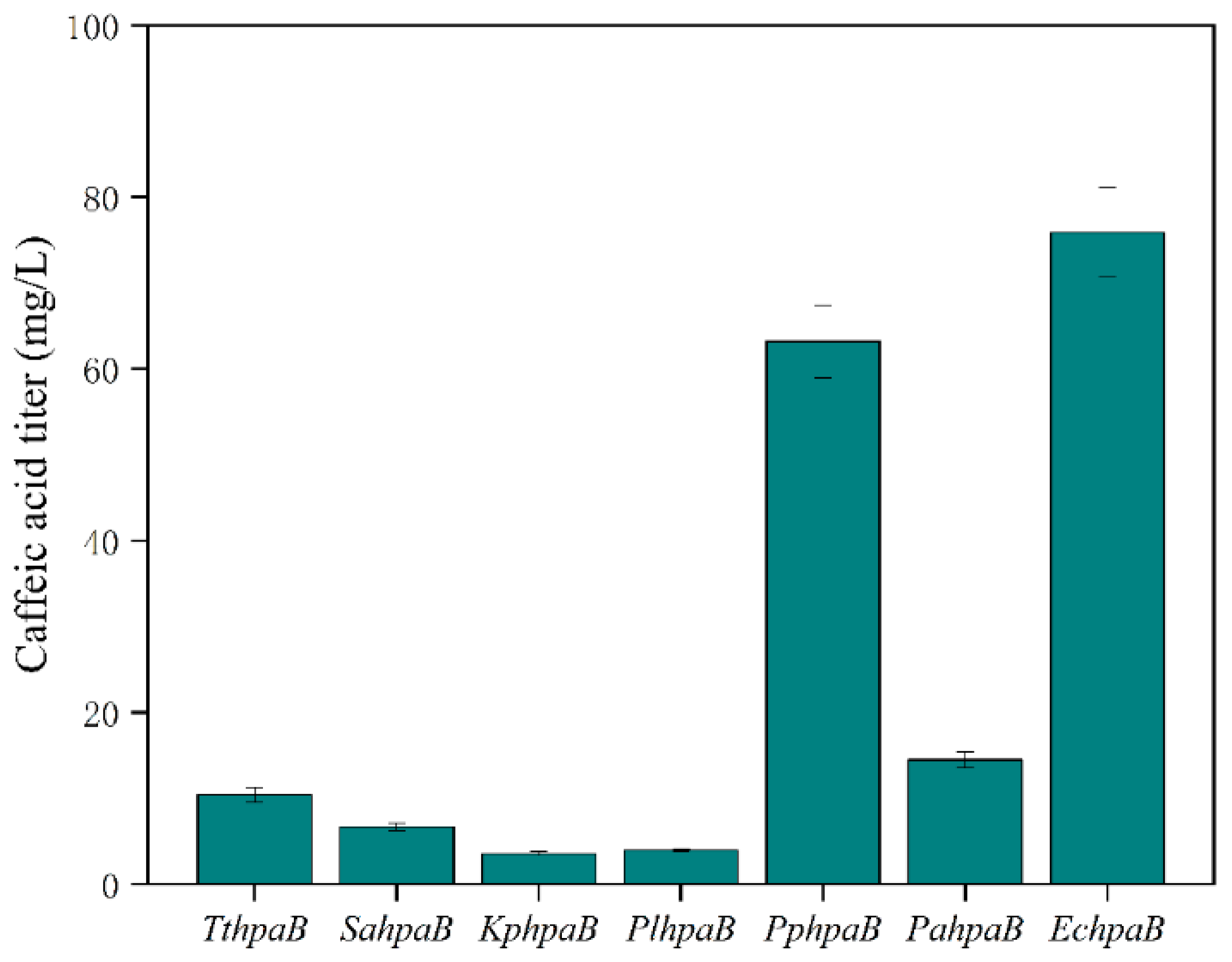
3.1. Construction of a Heterogeneous Pathway for Caffeic Acid Production in E. coli
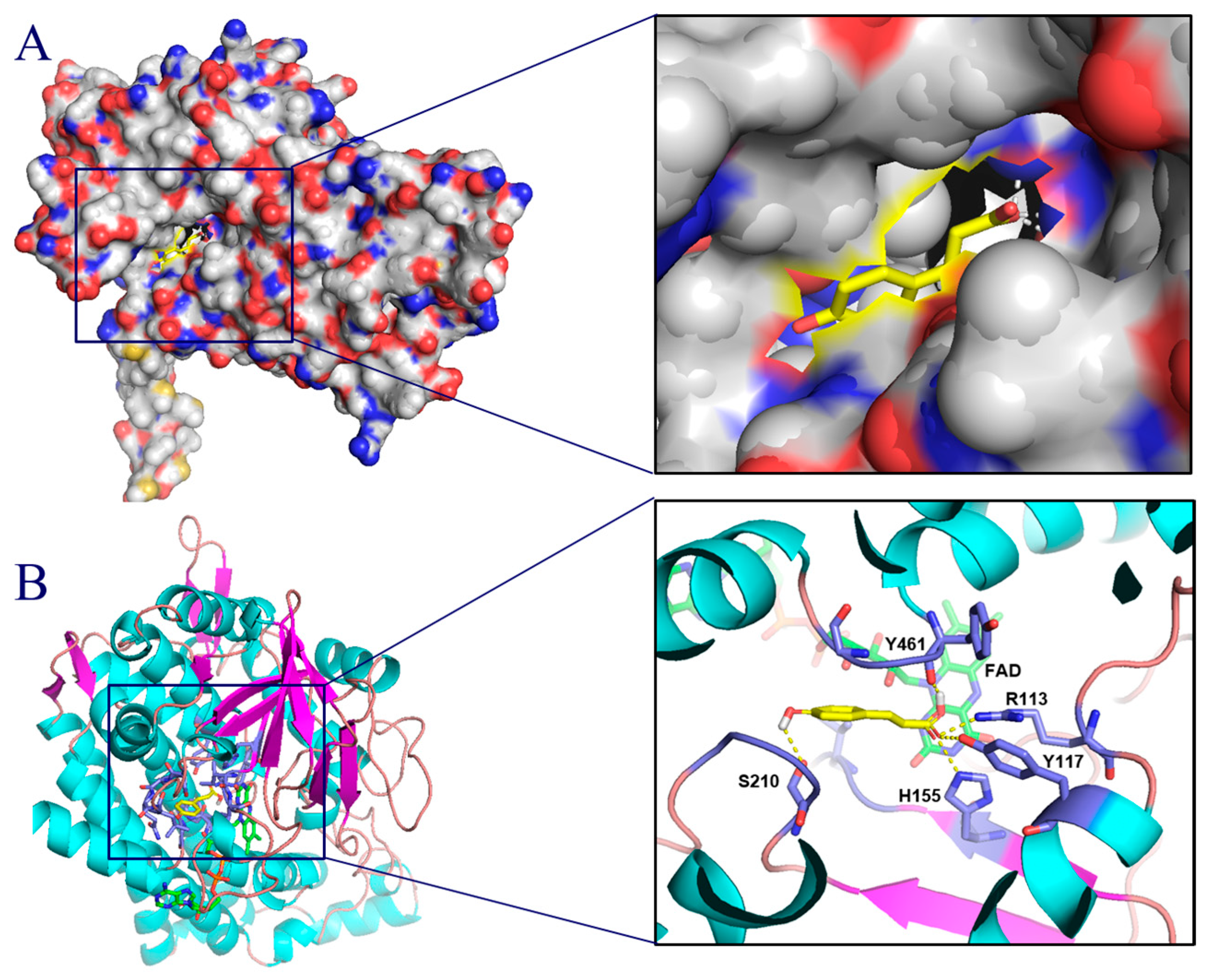
3.2. Molecular Docking Studies
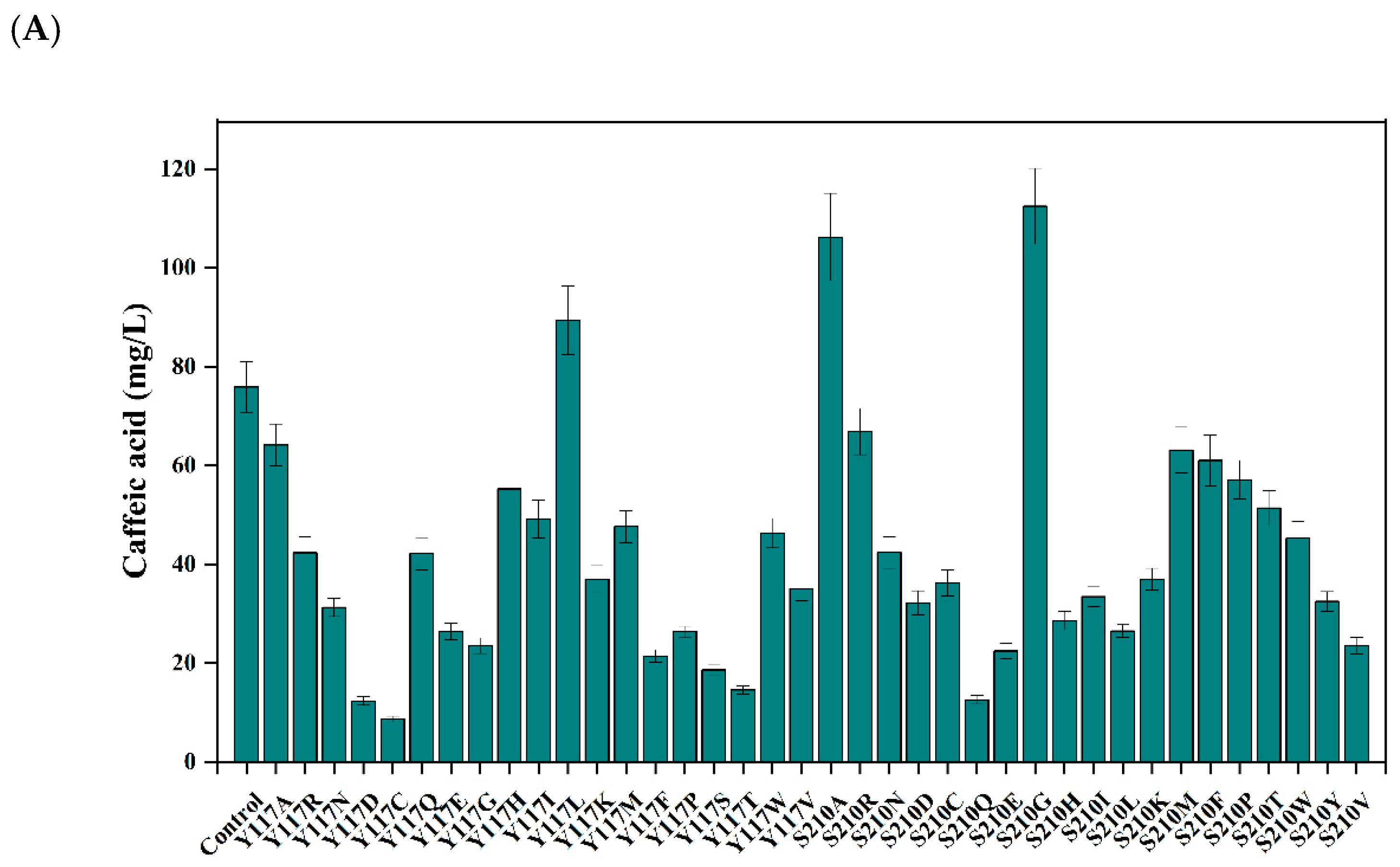
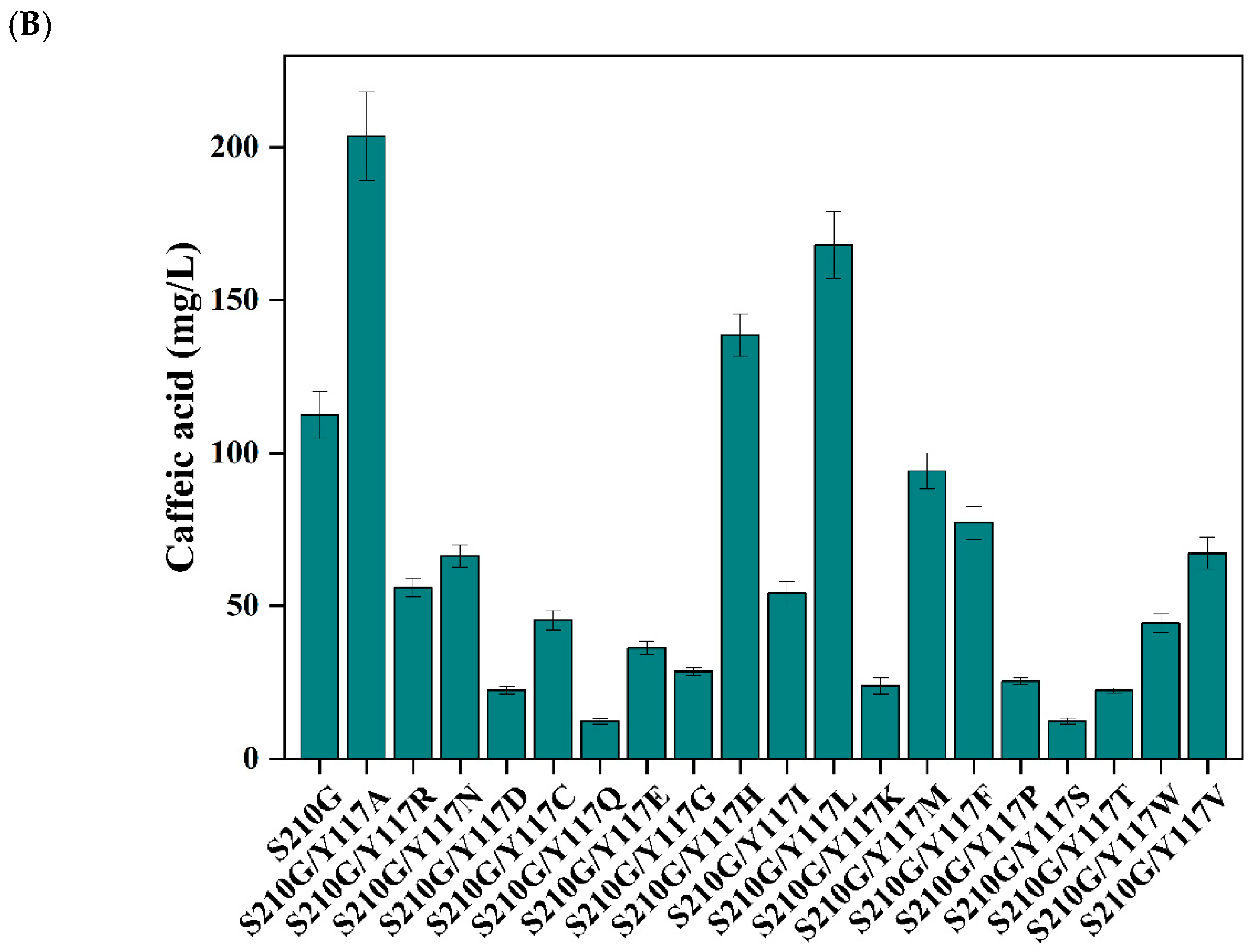
3.3. Iterative Saturation Mutagenesis of EchpaB to Improve the Production of Caffeic Acid
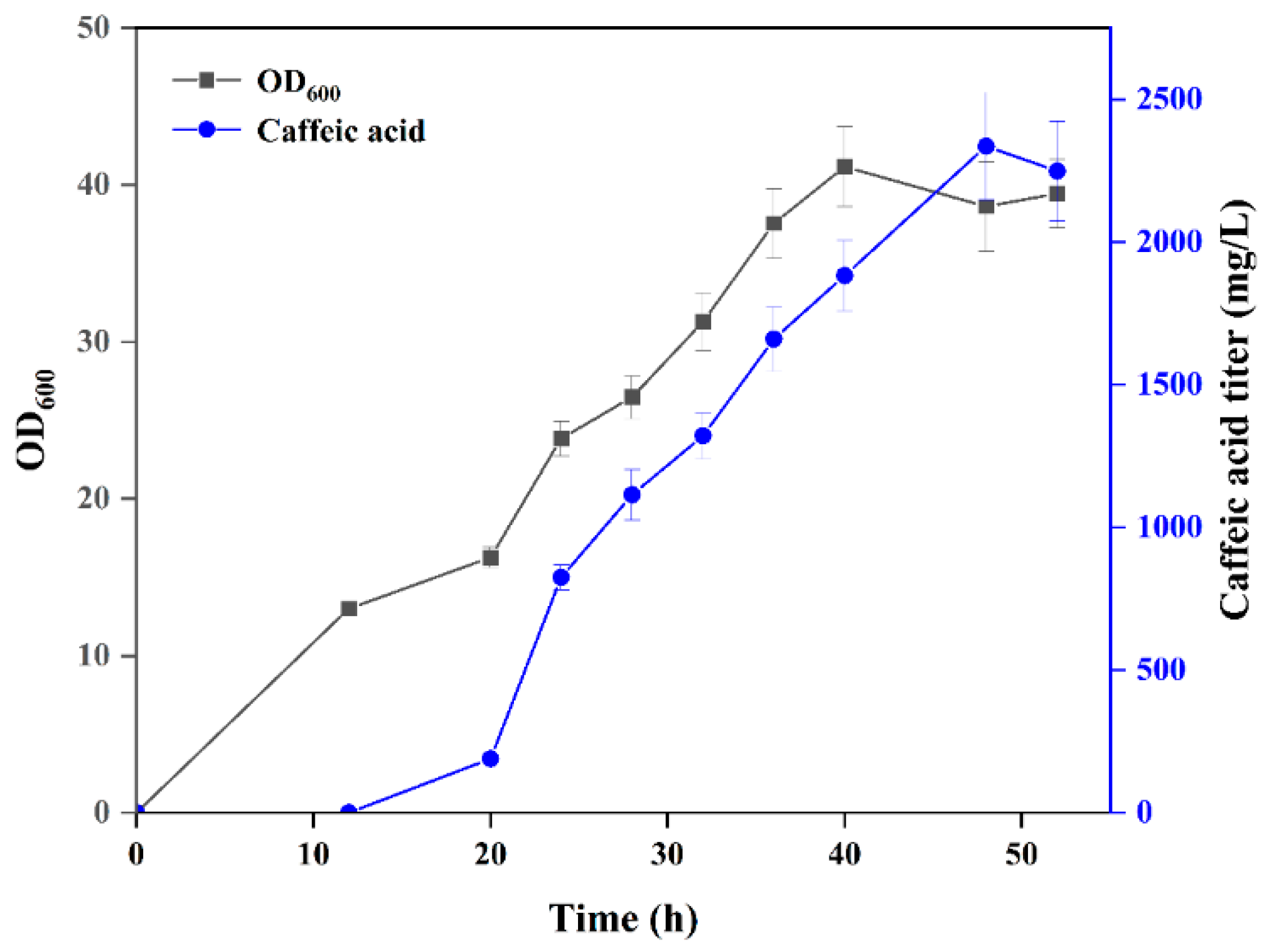
3.4. One-Pot Biotransformation of Caffeic Acid Production at the 5 L Fermenter
4. Discussion
5. Conclusions
Author Contributions
Funding
Institutional Review Board Statement
Informed Consent Statement
Data Availability Statement
Conflicts of Interest
References
- Zhang, Q.; Wang, X.; Zeng, W.; Xu, S.; Li, D.; Yu, S.; Zhou, J. De novo biosynthesis of carminic acid in Saccharomyces cerevisiae. Metab. Eng. 2023, 76, 50–62. [Google Scholar] [CrossRef] [PubMed]
- Shi, A.; Liu, Y.; Jia, B.; Zheng, G.; Yao, Y. Metabolic Engineering of Microorganisms to Produce L-Aspartate and Its Derivatives. Fermentation 2023, 9, 737. [Google Scholar] [CrossRef]
- Zhou, Z.; Zhang, X.; Wu, J.; Li, X.; Li, W.; Sun, X.; Wang, J.; Yan, Y.; Shen, X.; Yuan, Q. Targeting cofactors regeneration in methylation and hydroxylation for high level production of ferulic acid. Metab. Eng. 2022, 73, 247–255. [Google Scholar] [CrossRef] [PubMed]
- Yu, S.; Shan, X.; Lyv, Y.; Zhou, J. Bioproduction of quercetin using recombinant thermostable glycosidases from Dictyoglomus thermophilum. Bioresour. Bioprocess. 2022, 9, 48. [Google Scholar] [CrossRef]
- Yan, K.; Tian, R.; Zhang, L.; Lv, X.; Liu, L.; Liu, Y. Biosynthesis of guanidinoacetate by Bacillus subtilis whole-cell catalysis. Fermentation 2022, 8, 116. [Google Scholar] [CrossRef]
- Zeng, B.; Lai, Y.; Liu, L.; Cheng, J.; Zhang, Y.; Yuan, J. Engineering Escherichia coli for high-yielding hydroxytyrosol synthesis from biobased L-tyrosine. J. Agric. Food Chem. 2020, 68, 7691–7696. [Google Scholar] [CrossRef]
- Yang, J.; Liang, J.; Shao, L.; Liu, L.; Gao, K.; Zhang, J.-L.; Sun, Z.; Xu, W.; Lin, P.; Yu, R. Green production of silybin and isosilybin by merging metabolic engineering approaches and enzymatic catalysis. Metab. Eng. 2020, 59, 44–52. [Google Scholar] [CrossRef]
- Song, G.; Wu, F.; Peng, Y.; Jiang, X.; Wang, Q. High-level production of catechol from glucose by engineered Escherichia coli. Fermentation 2022, 8, 344. [Google Scholar] [CrossRef]
- Sidoryk, K.; Jaromin, A.; Filipczak, N.; Cmoch, P.; Cybulski, M. Synthesis and antioxidant activity of caffeic acid derivatives. Molecules 2018, 23, 2199. [Google Scholar] [CrossRef]
- Da Cunha, F.M.; Duma, D.; Assreuy, J.; Buzzi, F.C.; Niero, R.; Campos, M.M.; Calixto, J.B. Caffeic acid derivatives: In vitro and in vivo anti-inflammatory properties. Free Radic. Res. 2004, 38, 1241–1253. [Google Scholar] [CrossRef]
- Lin, C.-L.; Chen, R.-F.; Chen, J.Y.-F.; Chu, Y.-C.; Wang, H.-M.; Chou, H.-L.; Chang, W.-C.; Fong, Y.; Chang, W.-T.; Wu, C.-Y. Protective effect of caffeic acid on paclitaxel induced anti-proliferation and apoptosis of lung cancer cells involves NF-κB pathway. Int. J. Mol. Sci. 2012, 13, 6236–6245. [Google Scholar] [CrossRef] [PubMed]
- Cha, M.N.; Kim, H.J.; Kim, B.G.; Ahn, J.-H. Synthesis of chlorogenic acid and p-coumaroyl shikimates from glucose using engineered Escherichia coli. J. Microbiol. Biotechnol. 2014, 24, 1109–1117. [Google Scholar] [CrossRef] [PubMed]
- Döring, A.S.; Petersen, M. Production of caffeic, chlorogenic and rosmarinic acids in plants and suspension cultures of Glechoma hederacea. Phytochem. Lett. 2014, 10, cxi–cxvii. [Google Scholar] [CrossRef]
- Pérez, R.; Burgos, V.; Marín, V. Caffeic Acid Phenethyl Ester (CAPE): Biosynthesis, Derivatives and Formulations with Neuroprotective Activities. Antioxidants 2023, 12, 1500. [Google Scholar] [CrossRef] [PubMed]
- Xing, Y.; Peng, H.-Y.; Zhang, M.-X.; Li, X.; Zeng, W.-W.; Yang, X.-E. Caffeic acid product from the highly copper-tolerant plant Elsholtzia splendens post-phytoremediation: Its extraction, purification, and identification. J. Zhejiang Univ. Sci. B 2012, 13, 487–493. [Google Scholar] [CrossRef]
- Liu, L.; Liu, H.; Zhang, W.; Yao, M.; Li, B.; Liu, D.; Yuan, Y. Engineering the biosynthesis of caffeic acid in Saccharomyces cerevisiae with heterologous enzyme combinations. Engineering 2019, 5, 287–295. [Google Scholar] [CrossRef]
- Rodrigues, J.; Araújo, R.; Prather, K.L.; Kluskens, L.; Rodrigues, L. Heterologous production of caffeic acid from tyrosine in Escherichia coli. Enzym. Microb. Technol. 2015, 71, 36–44. [Google Scholar] [CrossRef]
- Li, Y.; Mao, J.; Liu, Q.; Song, X.; Wu, Y.; Cai, M.; Xu, H.; Qiao, M. De novo biosynthesis of caffeic acid from glucose by engineered Saccharomyces cerevisiae. ACS Synth. Biol. 2020, 9, 756–765. [Google Scholar] [CrossRef]
- Rodrigues, J.L.; Rodrigues, L.R. Microbial production of caffeic acid. In Microbial Production of Food Bioactive Compounds; Springer: Berlin, Germany, 2025; pp. 233–266. [Google Scholar]
- Wang, L.; Li, N.; Yu, S.; Zhou, J. Enhancing caffeic acid production in Escherichia coli by engineering the biosynthesis pathway and transporter. Bioresour. Technol. 2023, 368, 128320. [Google Scholar] [CrossRef]
- Zhang, H.; Stephanopoulos, G. Engineering E. coli for caffeic acid biosynthesis from renewable sugars. Appl. Microbiol. Biotechnol. 2013, 97, 3333–3341. [Google Scholar] [CrossRef]
- Haslinger, K.; Prather, K.L. Heterologous caffeic acid biosynthesis in Escherichia coli is affected by choice of tyrosine ammonia lyase and redox partners for bacterial Cytochrome P450. Microb. Cell Factories 2020, 19, 26. [Google Scholar] [CrossRef] [PubMed]
- Sakae, K.; Nonaka, D.; Kishida, M.; Hirata, Y.; Fujiwara, R.; Kondo, A.; Noda, S.; Tanaka, T. Caffeic acid production from glucose using metabolically engineered Escherichia coli. Enzym. Microb. Technol. 2023, 164, 110193. [Google Scholar] [CrossRef] [PubMed]
- Zhou, S.; Liu, P.; Chen, J.; Du, G.; Li, H.; Zhou, J. Characterization of mutants of a tyrosine ammonia-lyase from Rhodotorula glutinis. Appl. Microbiol. Biotechnol. 2016, 100, 10443–10452. [Google Scholar] [CrossRef] [PubMed]
- Hryc, C.F.; Baker, M.L. AlphaFold2 and CryoEM: Revisiting CryoEM modeling in near-atomic resolution density maps. iScience 2022, 25, 104496. [Google Scholar] [CrossRef]
- Tan, H.; Zhou, H.; Guo, T.; Zhang, Y.; Ma, L. Integrated multi-spectroscopic and molecular modeling techniques to study the formation mechanism of hidden zearalenone in maize. Food Chem. 2021, 351, 129286. [Google Scholar] [CrossRef]
- Lin, Y.; Yan, Y. Biosynthesis of caffeic acid in Escherichia coli using its endogenous hydroxylase complex. Microb. Cell Factories 2012, 11, 42. [Google Scholar] [CrossRef]
- Cai, M.; Liu, J.; Song, X.; Qi, H.; Li, Y.; Wu, Z.; Xu, H.; Qiao, M. De novo biosynthesis of p-coumaric acid and caffeic acid from carboxymethyl-cellulose by microbial co-culture strategy. Microb. Cell Factories 2022, 21, 81. [Google Scholar] [CrossRef]
- Qi, H.; Yu, L.; Li, Y.; Cai, M.; He, J.; Liu, J.; Hao, L.; Xu, H.; Qiao, M. Developing multi-copy chromosomal integration strategies for heterologous biosynthesis of caffeic acid in Saccharomyces cerevisiae. Front. Microbiol. 2022, 13, 851706. [Google Scholar] [CrossRef]
- Tian, D.G.; Qin, Z.; Liu, W.L.; Caiyin, Q.; Li, W.G.; Zhao, G.R.; Qiao, J.J. Engineering a biosensor based high-throughput screening platform for high-yield caffeic acid production in Escherichia coli. Metab. Eng. 2026, 93, 128–144. [Google Scholar] [CrossRef]
- Cheng, J.; Xiao, S.; Luo, Q.; Wang, B.; Zeng, R.; Zhao, L.; Zhang, J. Engineering an Artificial Pathway to Improve the Bioconversion of Lysine into Chiral Amino Alcohol 2-Hydroxycadaverine Using a Semi-Rational Design. Fermentation 2024, 10, 56. [Google Scholar] [CrossRef]
- Liu, K.; Yu, H.; Sun, G.; Liu, Y.; Li, J.; Du, G.; Lv, X.; Liu, L. Semi-rational design of L-amino acid deaminase for production of pyruvate and D-alanine by Escherichia coli whole-cell biocatalyst. Amino Acids 2021, 53, 1361–1371. [Google Scholar] [CrossRef]
- Wang, X.-H.; Zhao, C.; Lu, X.-Y.; Zong, H.; Zhuge, B. Production of caffeic acid with co-fermentation of xylose and glucose by multi-modular engineering in Candida glycerinogenes. ACS Synth. Biol. 2022, 11, 900–908. [Google Scholar] [CrossRef]
- Zhou, P.; Yue, C.; Shen, B.; Du, Y.; Xu, N.; Ye, L. Metabolic engineering of Saccharomyces cerevisiae for enhanced production of caffeic acid. Appl. Microbiol. Biotechnol. 2021, 105, 5809–5819. [Google Scholar] [CrossRef]
- Zhou, X.; Du, J.; Zhu, J.; Pang, X.; Yin, X.; Zhou, P. Structure-guided engineering of 4-coumarate: CoA ligase for efficient production of rosmarinic acid in Saccharomyces cerevisiae. J. Biotechnol. 2024, 396, 140–149. [Google Scholar] [CrossRef]
- Wang, X.; Zhao, C.; Lu, X.; Zong, H.; Zhuge, B. Development of a co-culture system for green production of caffeic acid from sugarcane bagasse hydrolysate. Front. Microbiol. 2024, 15, 1379688. [Google Scholar] [CrossRef]
- Yu, F.K.; Zhang, D.Q.; Zhang, J.M.; Wang, W.; Cheng, J.; Zhang, C.J. Artificial intelligence driven meat preservation technology: Research progess, challenges, and future directions. Food Qual. Saf. 2026, fyaf083. [Google Scholar] [CrossRef]



| Strains or Plasmids | Relevant Genotype or Description | Source |
|---|---|---|
| Strains | ||
| DH5α | Wild type | Invitrogen |
| E. coli BL21(DE3) | Wild type | Invitrogen |
| ZJ01 | BL21(DE3) harboring pTrc99a-RgTal | This Study |
| ZJ02 | BL21(DE3) harboring pTrc99a-RgTal-TthpaB-EchpaC | This Study |
| ZJ03 | BL21(DE3) harboring pTrc99a-RgTal-SahpaB-EchpaC | This Study |
| ZJ04 | BL21(DE3) harboring pTrc99a-RgTal-KphpaB-EchpaC | This Study |
| ZJ05 | BL21(DE3) harboring pTrc99a-RgTal-PlhpaB-EchpaC | This Study |
| ZJ06 | BL21(DE3) harboring pTrc99a-RgTal-PphpaB-EchpaC | This Study |
| ZJ07 | BL21(DE3) harboring pTrc99a-RgTal-PahpaB-EchpaC | This Study |
| ZJ08 | BL21(DE3) harboring pTrc99a-RgTal-EchpaB-EchpaC | This Study |
| Plasmids | This Study | |
| pTrc99a-RgTal | pTrc99a carries a tyrosine ammonia lyase (with mutants) from Rhodotorula glutinis, AmpR | |
| pTrc99a-RgTal-EchpaB-EchpaC | pTrc99a carries a tyrosine ammonia lyase (with mutants) from Rhodotorula glutinis, 4-hydroxyphenylacetate 3 monooxygenase HpaB from E. coli, and NADPH-flavin oxidoreductase HpaC from E. coli, AmpR | This Study |
| pTrc99a-RgTal-SahpaB-EchpaC | pTrc99a carries a tyrosine ammonia lyase (with mutants) from Rhodotorula glutinis, 4-hydroxyphenylacetate 3 monooxygenase HpaB from Sulfobacillus acidophilus, and NADPH-flavin oxidoreductase HpaC from E. coli, AmpR | This Study |
| pTrc99a-RgTal-KphpaB-EchpaC | pTrc99a carries a tyrosine ammonia lyase (with mutants) from Rhodotorula glutinis, 4-hydroxyphenylacetate 3 monooxygenase HpaB from Klebsiella pneumoniae, and NADPH-flavin oxidoreductase HpaC from E. coli, AmpR | This Study |
| pTrc99a-RgTal-PlhpaB-EchpaC | pTrc99a carries a tyrosine ammonia lyase (with mutants) from Rhodotorula glutinis, 4-hydroxyphenylacetate 3 monooxygenase HpaB from Photorhabdus luminescens, and NADPH-flavin oxidoreductase HpaC from E. coli, AmpR | This Study |
| pTrc99a-RgTal-PphpaB-EchpaC | pTrc99a carries a tyrosine ammonia lyase (with mutants) from Rhodotorula glutinis, 4-hydroxyphenylacetate 3 monooxygenase HpaB from Pseudomonas putida, and NADPH-flavin oxidoreductase HpaC from E. coli, AmpR | This Study |
| pTrc99a-RgTal-PahpaB-EchpaC | pTrc99a carries a tyrosine ammonia lyase (with mutants) from Rhodotorula glutinis, 4-hydroxyphenylacetate 3 monooxygenase HpaB from Pseudomonas aeruginosa, and NADPH-flavin oxidoreductase HpaC from E. coli, AmpR | This Study |
| pTrc99a-RgTal-TthpaB-EchpaC | pTrc99a carries a tyrosine ammonia lyase (with mutants) from Rhodotorula glutinis, 4-hydroxyphenylacetate 3 monooxygenase HpaB from Thermus thermophilus, and NADPH-flavin oxidoreductase HpaC from E. coli, AmpR | This Study |
Disclaimer/Publisher’s Note: The statements, opinions and data contained in all publications are solely those of the individual author(s) and contributor(s) and not of MDPI and/or the editor(s). MDPI and/or the editor(s) disclaim responsibility for any injury to people or property resulting from any ideas, methods, instructions or products referred to in the content. |
© 2026 by the authors. Licensee MDPI, Basel, Switzerland. This article is an open access article distributed under the terms and conditions of the Creative Commons Attribution (CC BY) license.
Share and Cite
Luo, Q.; Wang, W.; Huang, Q.; Wang, C.; Yan, L.; Kang, J.; Zhang, J.; Cheng, J. Enhancing Caffeic Acid Production in Escherichia coli Through Heterologous Enzyme Combinations and Semi-Rational Design. Metabolites 2026, 16, 62. https://doi.org/10.3390/metabo16010062
Luo Q, Wang W, Huang Q, Wang C, Yan L, Kang J, Zhang J, Cheng J. Enhancing Caffeic Acid Production in Escherichia coli Through Heterologous Enzyme Combinations and Semi-Rational Design. Metabolites. 2026; 16(1):62. https://doi.org/10.3390/metabo16010062
Chicago/Turabian StyleLuo, Qing, Weihao Wang, Qingjing Huang, Chuan Wang, Lixiu Yan, Jun Kang, Jiamin Zhang, and Jie Cheng. 2026. "Enhancing Caffeic Acid Production in Escherichia coli Through Heterologous Enzyme Combinations and Semi-Rational Design" Metabolites 16, no. 1: 62. https://doi.org/10.3390/metabo16010062
APA StyleLuo, Q., Wang, W., Huang, Q., Wang, C., Yan, L., Kang, J., Zhang, J., & Cheng, J. (2026). Enhancing Caffeic Acid Production in Escherichia coli Through Heterologous Enzyme Combinations and Semi-Rational Design. Metabolites, 16(1), 62. https://doi.org/10.3390/metabo16010062