2. Materials and Methods
This study enrolled 42 healthy Japanese women aged 19 to 20 years who gave informed consent to participate. To examine the relationship between equol-producing capacity, dietary habits, and premenstrual symptomatology, we conducted comprehensive surveys encompassing both dietary intake and PMS/PMDD status, as detailed below.
For dietary assessment, we developed a customized dietary questionnaire based on a semi-quantitative dietary questionnaire. Particular emphasis was placed on food items associated with equol production, such as dietary fiber, soy products, and seaweed [
16,
17]. The questionnaire included 30 items, including nine soy-based foods, various vegetables, mushrooms, seaweed, caffeine-rich beverages, alcohol, konjac (a traditional root-derived food), and konjac jelly (a fruit-flavored snack). For each item, both frequency and quantity of intake were recorded.
Intake frequency was categorized into six levels: “hardly ever”, “once a month”, “1–2 times per week”, “3–4 times per week”, “5–6 times per week”, and “once a day or more”. Intake quantity was classified as “0.5×”, “0.8×”, “equal to”, “1.5×”, “≥2× the standard amount”, or “not consumed”. For konjac jelly, an additional category of “three times or more” was incorporated to account for large consumption volumes.
Of the 42 participants, one did not complete the dietary questionnaire and was excluded from analyses. Intake frequency was dichotomized as “high” if the item in question was consumed ≥1–2 times per week, or “low” otherwise. For intake quantity, values exceeding the standard portion size defined in the Japanese Dietary Reference Intakes were categorized as “consumed”, while lower values were considered “not consumed [
18]”.
For assessment of PMS/PMDD, diagnostic classification was performed in accordance with established criteria and standardized evaluation forms published by the Japan Society of Obstetrics and Gynecology [
11]. Participants were stratified into three categories, none/mild, moderate, or severe, based on symptom severity and further classified according to their equol-producing status [
11] (
Supplementary Table S1).
To determine equol production capacity, participants ingested soy products, e.g., one serving of natto or 200 mL of soy milk, the evening before urine collection. First-morning urine samples were collected. Urine samples were divided into two groups: one for equol measurement by liquid chromatography–tandem mass spectrometry (LC–MS/MS) and the other for creatinine measurement using an enzymatic method. Urine creatinine concentrations were quantified at an external testing facility, following the facility’s clinical practice guidelines. Equol concentrations measured by LC-MS/MS were normalized for creatinine to correct for urine concentrations. Equol-producing status was classified using the cutoff value (1.0 µM) applied [
19].
4. Discussion
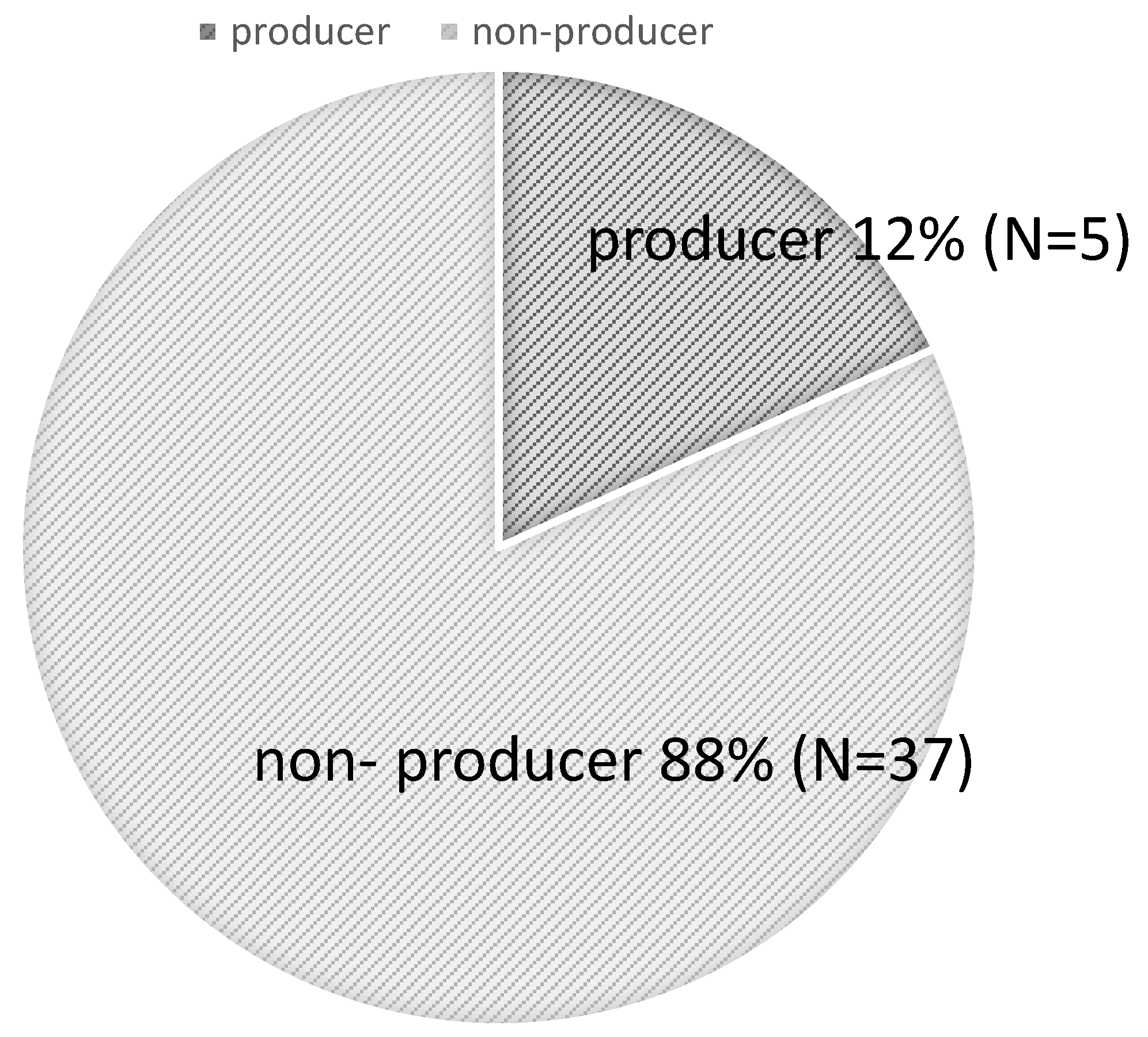
The proportion of equol producers among 19–20-year-old participants in this study was lower than that reported for individuals in their 20s [
8,
22]. This finding is consistent with previous reports suggesting that equol-producing capacity may continue to evolve during early adulthood. The difference observed in this study between equol-producing capacity in individuals aged 19–20 years and that reported for people in their 20s overall may be attributable not only to differences in the degree of dietary westernization, e.g., reduced intake of soy products and fermented foods [
8], but also to the ongoing maturation and stabilization of the gut microbiota during this life stage. Equol-producing bacteria are thought to establish more readily in a sufficiently mature and stable gut environment; however, equol-producing capacity is not a fixed trait and may be reversibly acquired or lost in response to dietary and other environmental factors. Numerous studies have shown that the gut microbiota continues to change throughout life [
23], and even during adulthood, age-related changes in microbial composition and diversity have been documented [
24]. Large-scale cohort analyses have further supported age-associated remodeling of the gut microbiota throughout adulthood [
25]. Taken together, these observations provide a plausible biological context for the relatively low prevalence of equol producers observed in this cohort.
First, the limited proportion of equol producers among women in their early twenties resulted in a small number of participants with detectable equol-producing capacity. This imbalance likely reduced the statistical power of subgroup analyses and should be considered when interpreting the results. Accordingly, the present study was conducted as an exploratory, hypothesis-generating investigation, and its findings should be interpreted in this context.
Dietary intake was assessed using a semi-quantitative questionnaire designed to capture relative intake patterns rather than precise nutrient amounts. Although this method is subject to recall bias and may result in non-differential misclassification, it is considered appropriate, given the exploratory nature of this study. Future studies using more rigorous dietary assessment methods and longitudinal or interventional designs are needed to confirm these findings.
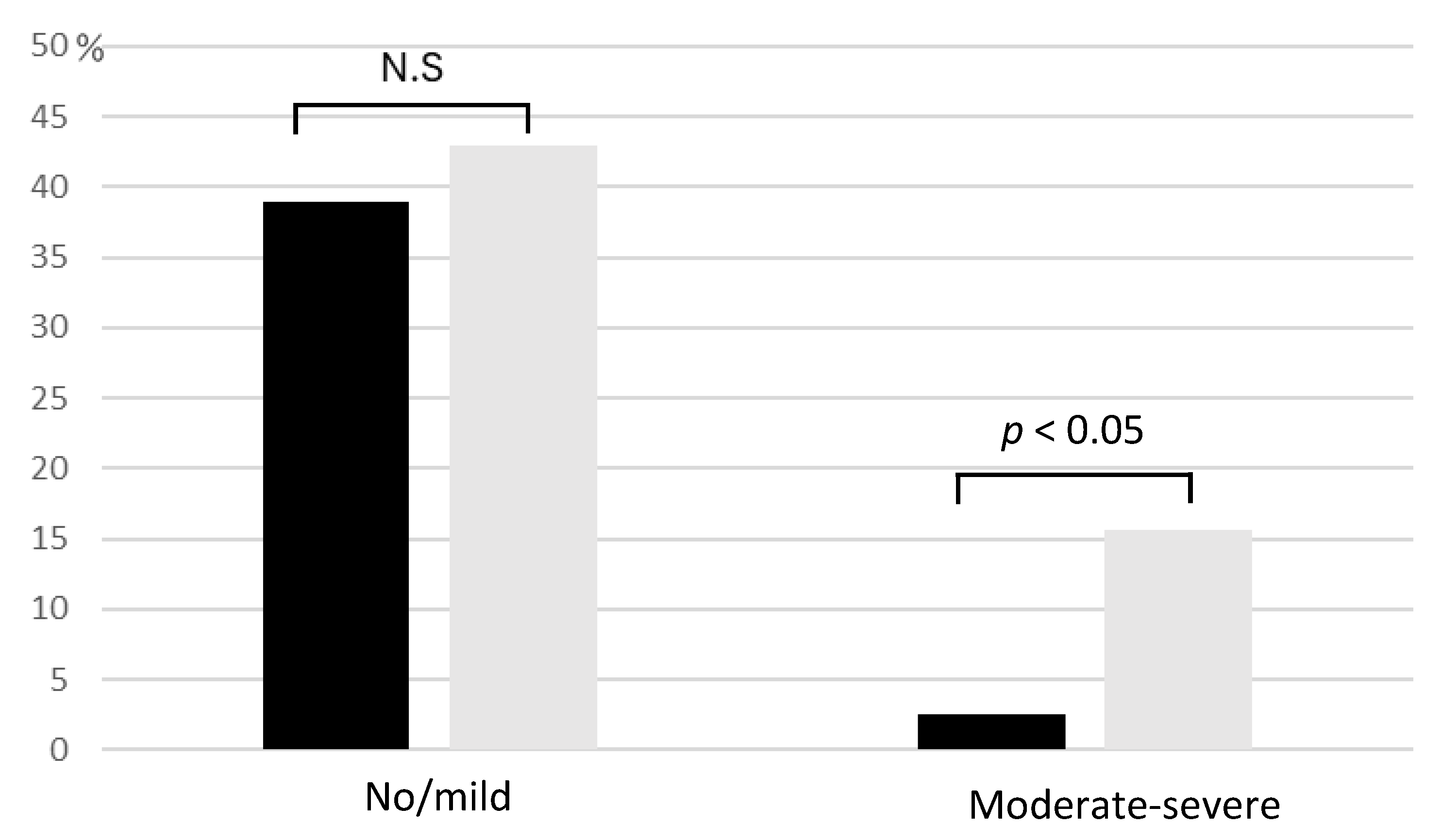
When equol-producing capacity was included as the main explanatory variable and age and PMS severity were employed as covariates in a multivariable logistic regression model, the association between equol-producing capacity and outcome was not substantially attenuated. This suggests that the observed association cannot be fully explained by differences in age or baseline PMS severity alone. Although residual confounding cannot be excluded, these results raise the possibility that equol-producing capacity may be associated with PMS-related outcomes beyond these factors. However, given the cross-sectional design and limited sample size, these findings should not be interpreted as evidence of causality.
Overall, while the limited sample size precludes definitive conclusions, the present findings provide preliminary support for a relationship between equol-producing capacity and clinical features of PMS. Further longitudinal and interventional studies with larger sample sizes are required to confirm these associations and to clarify their clinical relevance.
The relationship between equol-producing capacity and dietary habits suggests that equol producers consume more pumpkin and green tea, as well as greater quantities of soybean sprouts. Although no previous studies have directly reported an association between pumpkin intake and equol-producing capacity, dietary fiber is essential in maintaining the intestinal environment and is considered important for equol-producing bacteria [
26]. The Western pumpkin examined in this study contains approximately 0.9 g of soluble dietary fiber per 100 g [
27], which may promote fermentation by gut microbiota. Experimental studies using ovariectomized mice have shown that soluble fibers such as polydextrose and raffinose increase equol production [
28]. Resistant starch also reportedly enhances equol biosynthesis [
29]. Accordingly, the observed association between pumpkin intake and equol production may reflect the combined effects of soluble fiber and resistant starch, although this interpretation remains speculative. Therefore, because pumpkin is rich in both soluble fiber and resistant starch [
30], its consumption may be associated with a gut environment that is more favorable for equol-producing bacteria. In addition, pumpkin contains vitamin E, which is thought to influence hormonal regulation [
27]. Although the present study did not directly examine these mechanisms, these nutritional characteristics may partly explain the observed association between pumpkin intake and equol-producing status. Further mechanistic studies are needed to clarify whether and how pumpkin consumption contributes to equol production.
Similarly, previous reviews have reported associations between green tea or soy intake and equol production [
31], which is consistent with the present findings. Green tea catechins have been suggested to support beneficial gut bacteria [
26], while soybean sprouts contain relatively high levels of dietary fiber compared with other sprouts [
32,
33]. These dietary characteristics may contribute to a gut environment that promotes equol production, although direct mechanistic evidence in humans remains limited.
The proportion of participants experiencing PMS/PMDD symptoms in this study was higher than that reported previously among Japanese women in their twenties [
11,
13]. One possible explanation is that the survey period overlapped with the university examination period, which may have increased psychological stress and exacerbated symptom severity. Academic stress reportedly exacerbates PMS symptom [
34].
These considerations provided the basis for examining interrelationships between equol production, dietary factors, and PMS/PMDD severity. Equol is a non-steroidal estrogen that binds estrogen receptors with lower affinity than endogenous estrogens and may exhibit both agonistic and antagonistic activity [
27,
35,
36]. PMS/PMDD symptoms typically emerge during the luteal phase, when estrogen levels decline [
9]. It is therefore plausible that equol production partially compensates for reduced estrogenic signaling during this phase; however, this hypothesis requires direct experimental validation.
Among equol producers, a positive association was observed between the frequency of black tea intake and premenstrual symptom severity. Black tea contains substantial concentrations of caffeine [
37], and dietary caffeine restriction has been suggested to alleviate PMS symptoms [
11]. However, given the small number of equol producers and the exploratory nature of this analysis, the present findings should be interpreted with caution and should not be taken to imply a causal relationship.
Among equol non-producers, higher consumption of konjac and konjac jelly was associated with greater PMS/PMDD severity. Konjac glucomannan modulates gut microbial composition and short-chain fatty acid production [
38,
39]; however, in the absence of equol-producing bacteria, such dietary modulation may not translate into symptom improvement [
40]. Similarly, higher intake of pickled radish and broccoli, foods rich in insoluble fiber, was associated with greater symptom severity among non-producers. These findings may reflect differences in dietary patterns rather than direct causal effects.
Finally, equol has been recognized for its antioxidant properties. Experimental studies have demonstrated that equol exhibits stronger antioxidant activity than its precursor isoflavones and can enhance endogenous antioxidant defense systems [
1,
15]. Oxidative stress and neuroinflammation have been increasingly implicated in PMS pathophysiology [
41]. Although oxidative stress markers were not measured in the present study, the observed associations raise the hypothesis that equol may contribute to symptom modulation through antioxidant mechanisms.
Taken together, the present findings suggest that equol-producing status may be associated with differences in dietary patterns and PMS/PMDD symptom expression in young women. While these results should be interpreted as preliminary, they support further investigation of equol as a potential biomarker and mechanistic contributor in future longitudinal and interventional studies.