Article

Metabolome and Essential Element Analyses of Five Underutilized European Crops Reveal Their Nutritional Properties and Potential to Diversify the European Food System


1
Center of Plant Systems Biology and Biotechnology, 14 Knyaz Boris I Pokrastitel Str., 4023 Plovdiv, Bulgaria
2
Department of Botany and Biological Education, Faculty of Biology, University of Plovdiv “Paisii Hilendarski”, 24 Tsar Assen Str., 4000 Plovdiv, Bulgaria
3
Department of Bioorganic Chemistry, Faculty of Pharmacy, Medical University of Plovdiv, 15a Vasil Aprilov Str., 4000 Plovdiv, Bulgaria
4
Department of Plant Physiology, Biochemistry and Genetics, Agricultural University Plovdiv, 12 Mendeleev Str., 4000 Plovdiv, Bulgaria
5
Department of Molecular Biology, Faculty of Biology, University of Plovdiv “Paisii Hilendarski”, 24 Tsar Assen Str., 4000 Plovdiv, Bulgaria
*
Author to whom correspondence should be addressed.
Metabolites 2025, 15(11), 720; https://doi.org/10.3390/metabo15110720
Submission received: 30 September 2025 / Revised: 30 October 2025 / Accepted: 31 October 2025 / Published: 3 November 2025

Abstract

Background/Objectives: People in the developed world tend to consume food that is rich in calories but lacks sufficient nutrients such as essential minerals, vitamins, and other health-promoting metabolites. At the same time, hunger and malnutrition are still problems in other countries. Therefore, various forms of micronutrient deficiencies and diseases caused by unbalanced nutrition are global issues. Methods: In order to elucidate the beneficial potential of alternative food sources, we employed state-of-the-art UHPLC-MS and ICP-MS technologies to perform comprehensive metabolome and metallome analyses of five edible European plants, some of which are known as underutilized crops: Achillea millefolium, Agastache rugosa, Cercis siliquastrum, Crithmum maritimum, and Mespilus germanica. Results: This study reveals valuable nutritional properties such as high levels of essential amino acids, sugars, organic acids, health-promoting secondary metabolites, and essential microelements that are important for human diet. The analyzed samples indicate that A. millefolium, C. siliquastrum, and M. germanica could be marked as a viable source of beneficial flavonoids. In turn, both leaves and fruits of A. rugosa had elevated abundances of organic acids, along with A. millefolium and C. siliquastrum. Similar results were observed for amino acids. Conclusions: Taken as a whole, the fruits of C. siliquastrum could be described as the best source for most of the identified compounds. The M. germanica samples were rich in mineral contents, with indications that they can supply 26% of the recommended daily intake per 100 g for K, 16% for Mg, 26% for Fe, 63% for Mn, and 89% for B. The leaves of C. maritimum and A. millefolium are also a good source of K and Mn. Interestingly, the sampled leaves of C. maritimum contained a very high amount of B, representing more than three times the reference nutrient value for 100 g of plant material. In conclusion, these underutilized species can be used to diversify the European food systems by enriching our diets with essential nutrients and health-promoting metabolites.

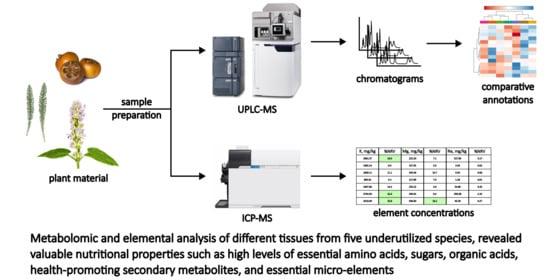
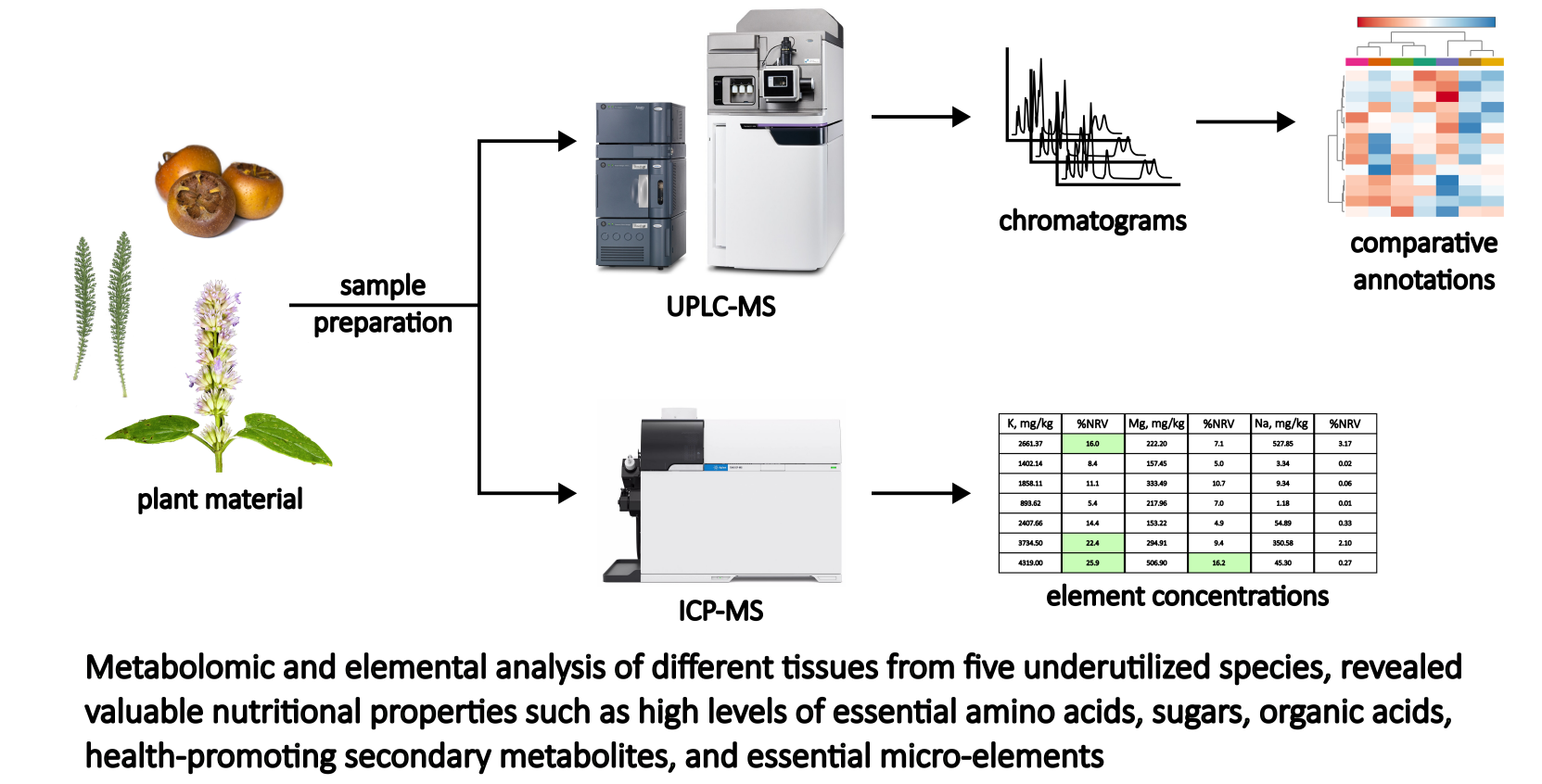
Graphical Abstract

1. Introduction

The growing population on the planet has underlined the necessity for more productive, sustainable, and diverse cropping systems, as hunger and malnutrition remain a major challenge for many developing countries. According to the United Nations, 2.4 billion people face moderate to severe food insecurity, whereas 9.2% of the world’s population find themselves in a state of chronic hunger. A key factor in overcoming this challenge is addressing both the production and consumption aspects of agriculture and food systems. Agriculture in developing regions is often limited by over-reliance on a few staple crops, which leads to low dietary diversity and feeds malnutrition [1]. Diversification of the industry through neglected and underutilized crops can expand food sources, reduce dependency, and encourage more sustainable agricultural practices [2].
In recent years, there has been a growing interest in neglected and underutilized crops (NUCs). Despite being overlooked, these crops possess varied and rich chemical composition, offering unique flavors and high concentrations of essential micronutrients, antioxidants, and bioactive phytochemicals. As such, underutilized crops represent a significant reservoir of natural compounds with promising applications across industrial biotechnology and pharmaceutical development. Additionally, some show climate resilience and economic viability, which could make them crucial elements in strategies to combat poverty, hunger, and malnutrition [3].
Despite their potential, research into the chemical composition and phytochemical profiles of these crops remains limited. While much is known about the antioxidant properties and health benefits of common fruits, the vast majority of underutilized crops remain underexplored. This gap in knowledge prevents full utilization of these crops, hindering their incorporation into food systems and medicinal practices. On the other hand, the antioxidant activity and phytochemical content of fruits can vary significantly due to factors such as genetics, environmental conditions, and the specific plant parts used, which can also impact the safety of their consumption [4]. Meanwhile, in today’s interconnected world, where global travel and social media have made exotic foods more accessible, there is growing concern over the consumption of rare or unfamiliar plant species. Social media influencers, often without scientific expertise, explore exotic cuisines and share their experiences, with limited knowledge of the composition of the foods they promote. High-end restaurants, too, are increasingly using rare plants as decorative elements in dishes, which can come into direct contact with food and raise safety concerns. With the growing interest in wild edible plants (WEPs) and underutilized crops as food supplements for healthy diets, unraveling their complex chemical composition is crucial for the development of novel, safe, and sustainable food sources.
Untargeted comparative approaches help researchers discern conserved primary metabolism, specific metabolite patterns, and family-specific secondary metabolite profiles. They can be applied across different species [5,6], within species [7,8] or across geographical distribution in a single specie [9]. For plants with nutraceutical properties, variances in growing conditions could lead to large fluctuations in the metabolites of interest, making these types of studies of interest.
As part of this study, we explored the properties of five underutilized crops, used in traditional cuisine and folk medicine for centuries: Achillea millefolium (yarrow), Agastache rugosa (Korean mint), Cercis siliquastrum (Judas tree), Crithmum maritimum (samphire), and Mespilus germanica (common medlar). These edible plants have demonstrated diverse applications in nutrition, medicine, and environmental sustainability. A review of the literature indicated they could be utilized as crops because of their uses as edible plants and the lack of acute toxicity in any of the species from normal dietary use or the use of extracts.
The current work aims to build on previous studies on the chemical composition and bioactivity of these five species [10,11,12,13,14,15,16,17,18,19,20,21,22,23,24,25,26,27,28,29,30,31,32,33] using untargeted metabolomics techniques (GC/UHPLC-MS) and ICP-MS to analyze various plant materials from these underutilized species grown in Bulgaria. Our goal is to deepen the understanding of plant metabolomics and phytochemical diversity, which can aid in advancing crop breeding, uncovering novel medicinal compounds and contributing to global biodiversity preservation.
Through continued research into these underutilized crops, their full potential could be unlocked, and they could be integrated into sustainable food systems in a more informed manner.
Achillea millefolium (Asteraceae), commonly known as yarrow, is a resilient “weed” known for its ability to grow in a variety of environments. Yarrow has a long history of use in traditional Balkan recipes and folk medicine—the leaves in salads or other dishes, the dried flowers in teas or as seasoning—and is prized for both its flavor and healing properties [10]. A. millefolium contains a wealth of essential oils, characterized by a complex mix of monoterpenes and sesquiterpenes. Its chemical composition fluctuates depending on the plant’s age and morphotype. These variations enhance its wide range of therapeutic properties like anti-inflammatory and analgesic effects [11,12]. Today, yarrow’s natural antimicrobial activity is being explored as a clean-label alternative to chemical preservatives in the food industry, which is especially relevant given rising concerns over antimicrobial resistance [13]. In summary, it is a versatile plant with substantial medicinal and culinary potential; its anti-inflammatory, antimicrobial, and antioxidant properties make it a valuable asset in both natural medicine and modern food preservation. As consumer demand for natural ingredients grows, yarrow stands out as a promising sustainable solution in both health and industry.
Agastache rugosa (Lamiaceae) is known for its sweet anise-like flavor and fragrant leaves and flowers. It is used in cuisine, teas, and folk medicine, especially for anxiety, insomnia, and pain relief [14,15]. Agastache species are rich in essential oils and bioactive compounds, including flavonoids and phenolic acids, which contribute to their medicinal properties. These compounds show promise for cardiovascular health, metabolic regulation, and antimicrobial activity [16]. Notably, tilianin exhibits cardioprotective effects, while extracts also support metabolic health, with antidiabetic and anti-obesity properties [17]. This species also shows potential in cancer treatment, with cytotoxic effects on certain cancer cell lines [18,19]. Additionally, Agastache oil serves as a natural pesticide, offering a safer alternative to synthetic options [20]. These findings highlight A. rugosa as a valuable source of bioactive compounds with diverse medicinal and industrial applications.
Cercis siliquastrum (Fabaceae), commonly known as the Judas tree, is a deciduous ornamental species [21]. It is renowned for its vibrant pink flowers and heart-shaped leaves and is widely cultivated in temperate urban and garden landscapes. The plant’s young leaves, shoots, and seeds are edible and nutrient-rich, containing a variety of micronutrients, and have traditionally been consumed in salads or roasted. In traditional medicine, C. siliquastrum has been used to treat malaria, anemia, stress, and gastrointestinal disorders [22]. However, gaps remain in understanding its full phytochemical profile and biological activities. Recent analyses have revealed a complex array of volatile compounds and flavonoids that contribute to the tree’s antioxidant, antimicrobial, and anti-inflammatory activities [23]. Notably, myricitrin exhibits neuroprotective properties, while terpenoids like isoborneol and safranal enhance antimicrobial effects. Flavonoids such as kaempferol and quercetin also suggest anticancer potential by inducing apoptosis in cancer cells [22]. Beyond medicinal applications, C. siliquastrum shows promise in cosmetics and agriculture. Its UV-protective and antimicrobial compounds may be useful in natural skincare formulations and eco-friendly pesticides [24]. Furthermore, its resilience in urban environments supports biodiversity and makes it valuable for sustainable urban landscaping. Overall, Cercis siliquastrum is a scientifically and economically valuable species with diverse applications across health, industry, and ecological restoration.
Crithmum maritimum (Apiaceae), commonly known as sea fennel, is a salt-tolerant xerophyte native to coastal habitats and is gaining attention as a promising crop for biosaline agriculture due to its resilience to salinity, nutrient-poor soils, and other abiotic stresses [25]. With growing interest in sustainable agriculture, sea fennel’s potential in the agri-food sector is increasingly recognized. Historically used in Mediterranean cuisine for its refined taste and aroma, C. maritimum also holds value in traditional medicine and cosmetology [26]. Nutritionally, sea fennel is rich in polyunsaturated fatty acids, particularly omega-3 and omega-6, as well as essential minerals [27]. Extracts from the flowers and fruits exhibit strong antioxidant and antimicrobial activities against pathogens such as Staphylococcus aureus and Candida albicans [27]. Medicinally, C. maritimum has demonstrated hepatoprotective effects, including inhibiting hepatocellular carcinoma cell growth and modulating key metabolic pathways like the ones mediated by AMPK and sirtuins [28]. It shows promise in managing lipid accumulation and metabolic disorders [27]. Beyond its therapeutic potential, sea fennel has shown efficacy as a natural pesticide against Spodoptera litura [29] and its high chlorophyll content supports its use as a natural colorant [30]. As such, C. maritimum is a valuable yet underutilized plant with diverse applications in medicine, industry, and ecology.
Mespilus germanica (Rosaceae), known as common medlar, is an underutilized species with a rich history of use dating back nearly 30 centuries [31]. Its fruit is edible but requires post-harvest softening to reduce high tannin levels. Traditionally, all parts of the plant—bark, leaves, and fruit—have been used in folk medicine to treat ailments such as colds, digestive issues, liver disorders, and rheumatism, owing to its antiseptic, laxative, and anti-inflammatory properties [32]. Chemically, M. germanica is rich in essential minerals, organic acids (tartaric, citric, malic, oxalic), and sugars (sucrose, fructose, sorbitol) [33]. The fruit contains significant levels of polyphenols, flavonoids, and pectin, making it valuable for nutritional and industrial applications. For example, pectin derived from medlar is a widely used gelling agent in the food industry [34]. Recent studies highlight emerging uses, such as biodiesel production from medlar kernel oil with linoleic and oleic acids as dominant components [35]. Additionally, the plant’s waste demonstrates high efficiency in removing Ni2+ ions from wastewater, offering a sustainable solution for environmental remediation [36]. Still, despite its versatility, M. germanica remains largely overlooked. Renewed scientific interest could promote its broader application in food, medicine, energy, and environmental sectors.

2. Materials and Methods

2.1. Plant Material Collection

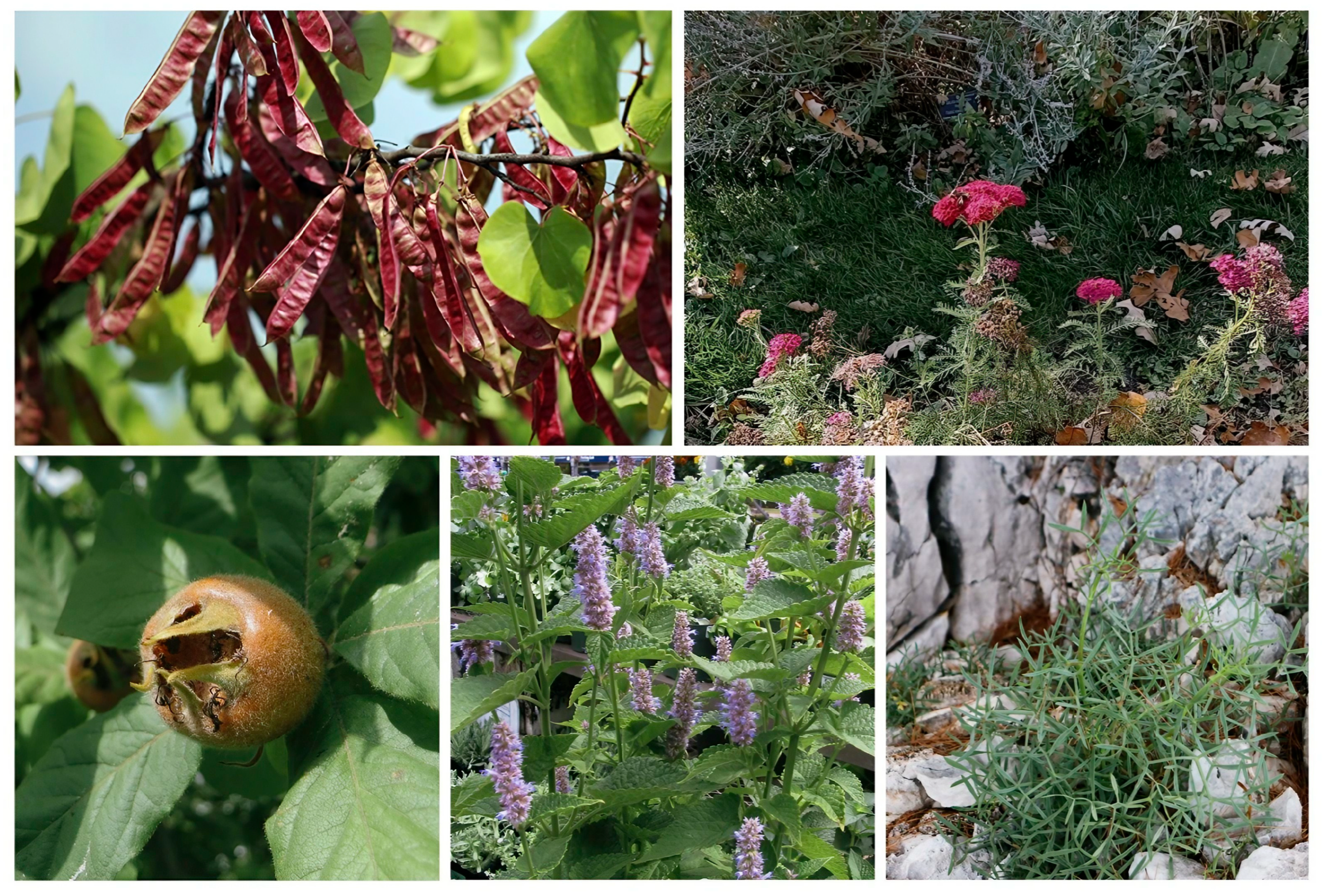
Material from the edible parts of the following species was collected from the following plants: Achillea millefolium ‘pomegranate’ (leaves and flowers), grown in the Sofia University Botanical Garden (location 42°36′ N; 23°25′ E); Agastache rugosa (leaves and flowers) and Cercis siliquastrum (fruits), grown in the Varna Botanical Garden (location 43°14′ N; 28°00′ E); and Crithmum maritimum (leaves), grown in the Balchik Botanical Garden (location 43°24′ N; 28°01′ E). Material from Mespilus germanica (fruits) was collected from plants grown in the Strandzha mountain, Bulgaria (near the Marina Reka protected area; location: 42°06′ N, 27°45′ E). Pictures of the plants and their respective organs used in this study are presented in Figure 1. Three replicates were used for each species and the different organs. All samples were flash-frozen in liquid nitrogen and ground to a coarse powder with a mortar and pestle, followed by additional homogenization to a fine powder using a bead mill (VWR, Darmstadt, Germany) at 30 Hz for 60 s. Subsequently, this material was freeze-dried at −40 °C.

2.2. Metabolomics Analysis

Each sample (20 mg of freeze-dried material) underwent a standard two-phase (methanol–chloroform) extraction [37]. Briefly, 750 µL of 100% MeOH (LC-MS grade; Chromasolv, Honeywell, Charlotte, NC, USA) with isovitexin internal standard was added to the plant material, and the samples were homogenized thoroughly, after which 400 µL of chloroform (HPLC grade; Chromasolv, Honeywell, Charlotte, NC, USA) was added. After homogenization on a shaker at 1200 rpm for 2 min, 800 µL of water (LC-MS grade; LiChrosolv, Merck, Darmstadt, Germany) was added to the samples and vortexed well. Finally, samples were centrifuged for 10 min at 15,000× g. Isovitexin, CAS: 29702-25-8 (Sigma-Aldrich, Merck, Darmstadt, Germany), was used as an internal standard, in order to compensate for technical variation [38]. The aqueous phase was then analyzed on a UHPLC-MS (ACQUITY UPLC I-Class PLUS, SYNAPT XS; Waters, Milford, MA, USA).
Chromatographic conditions: BEH C18 column (1.7 µm, 2.1 mm × 100 mm; Waters, USA), kept at 40 °C. Sampler temperature was set at 15 °C. Mobile phase A was 0.1% formic acid (LiChropur, Merck)–water (LiChrosolv, Merck), and phase B was 0.1% formic acid–acetonitrile (Chromasolv, Honeywell). Flow rate was set at 0.4 mL/min. The gradient was as follows: 0–1 min, 1% B; 1–11 min, 1–40% B; 11–13 min, 40–70% B; 13–15 min, 70–99% B; 15–16 min, 99% B; 16–17 min, 99–1% B; 17–20 min, 1% B. The injection volume was 2 µL.
Q-TOF mass spectrum conditions: an electrospray ion source (ESI) was used. Capillary voltage: 2.5 kV; sampling cone voltage: 40 V; source temperature: 120 °C; desolvation temperature: 250 °C. Cone gas flow was 50 L/h, desolvation gas flow was 600 L/h, and nebuliser gas flow was 6.5 bar. The detector was set in negative mode and resolution analyzer mode, with a continuum survey with a range of 50–1500 Da and scan time of 0.3 s. For MS/MS, a gradient fragmentation energy of 20 to 30 V was used.
Post-acquisition, data were imported into Progenesis QI (Waters/Non-Linear Dynamics, USA) and processed using default parameters. In brief, all runs were assessed for suitability as an alignment reference, performing automatic alignment. Peak picking was performed at automatic sensitivity (default setting), with no retention time limits, a fragment sensitivity of 0.2% the base peak, and all available adducts. Abundances were normalized to the sample mass and isovitexin standard. Compound data were exported and annotated using the metabolite database, available at the Center of Plant Systems Biology and Biotechnology in Plovdiv, and then referenced to publicly available fragmentation spectra databases (e.g., MassBank [39]).
Derivatization was carried out as by Lisec et al. [40] on 100 µL of dried extract using 20 mg/mL methoxyamine hydrochloride (Sigma-Aldrich, Merck, Darmstadt, Germany) in pyridine (Emsure; Merck, Darmstadt, Germany) and trimethylsilyl-N-methyl trifluoroacetamide (Restec, Pittsburgh, PA, USA). Derivatized extracts were analyzed on a TSQ9000 GCMS (Thermo Fisher Scientific, Waltham, MA, USA) following a one-microliter injection. Helium was used as carrier gas at a constant flow rate of 2 mL/sec, and gas chromatography was performed on a 30 m DB-35 column with a 0.32 mm inner diameter and 0.25 μm film thickness (Agilent Technologies, Santa Clara, CA, USA). The injection temperature was 230 °C, and the transfer line and ion source temperatures were set to 250 °C. The initial temperature of the oven (85 °C) increased at a rate of 15 °C/min up to a final temperature of 360 °C. After a solvent delay of 180 s, mass spectra were recorded at 20 scans/s with a 70–600 m/z scanning range. The chromatograms were processed in Xcalibur v.4.1.31, and peaks were annotated to an internal library of over 100 standards recently analyzed on the same instrument. In addition, prominent peaks not present in the internal library were manually annotated by matching spectra to publicly available databases (e.g., Fiehn Spectral library [41]).
Chromatograms are included in the accompanying Supplementary Data.
Only compounds annotated in all five species were included in the comparative analysis. A heatmap was generated, and PCA was performed with the help of the online software MetaboAnalyst 6.0, using the log transformation and autoscaling functions [42].

2.3. Metalomic Analysis

A MARS 6 microwave digestion system (CEM Corporation, Matthews, NC, USA) was used for sample preparation. The digestion was performed in PTFE vessels by adding 0.5 mL trace-metal-grade concentrated HNO3 (Suprapur; Merck) and 2 mL 30% H2O2 (Emsure; Merck) to 0.25 g homogenized and lyophilized samples. The samples were left for 30 min before being placed in the microwave and digested in closed vessels. Samples and method blanks were prepared and digested in a single batch and later diluted to 15 mL with reagent water (Arium Comfort I—H2O-I-1-TOC-T; Sartorius, Göttingen, Germany).
Measurements were performed using an inductively coupled plasma–mass spectrometer (7850 ICP-MS, Agilent Technologies, Santa Clara, CA, USA). The system was fitted with a glass nebulizer, quartz spray chamber, nickel cones, and a torch with a 2.5 mm injector, as well as an Ultra High Matrix Introduction system and ORS4 cell operating in helium (He) mode. The optimized ICP-MS operation conditions for analysis were as follows: RF power of 1600 W, plasma argon flow rate of 15.0 L/min, and nebulizer gas flow rate of 0.9 L/min. Data acquisition was performed using Mass Hunter software. ICP-MS data was imported into Microsoft Excel, and each of the detected elements was calculated using a first-order (linear) calibration curve. Detailed data for all elements is presented in a Supplementary Table.

3. Results

3.1. Metabolomics Analysis

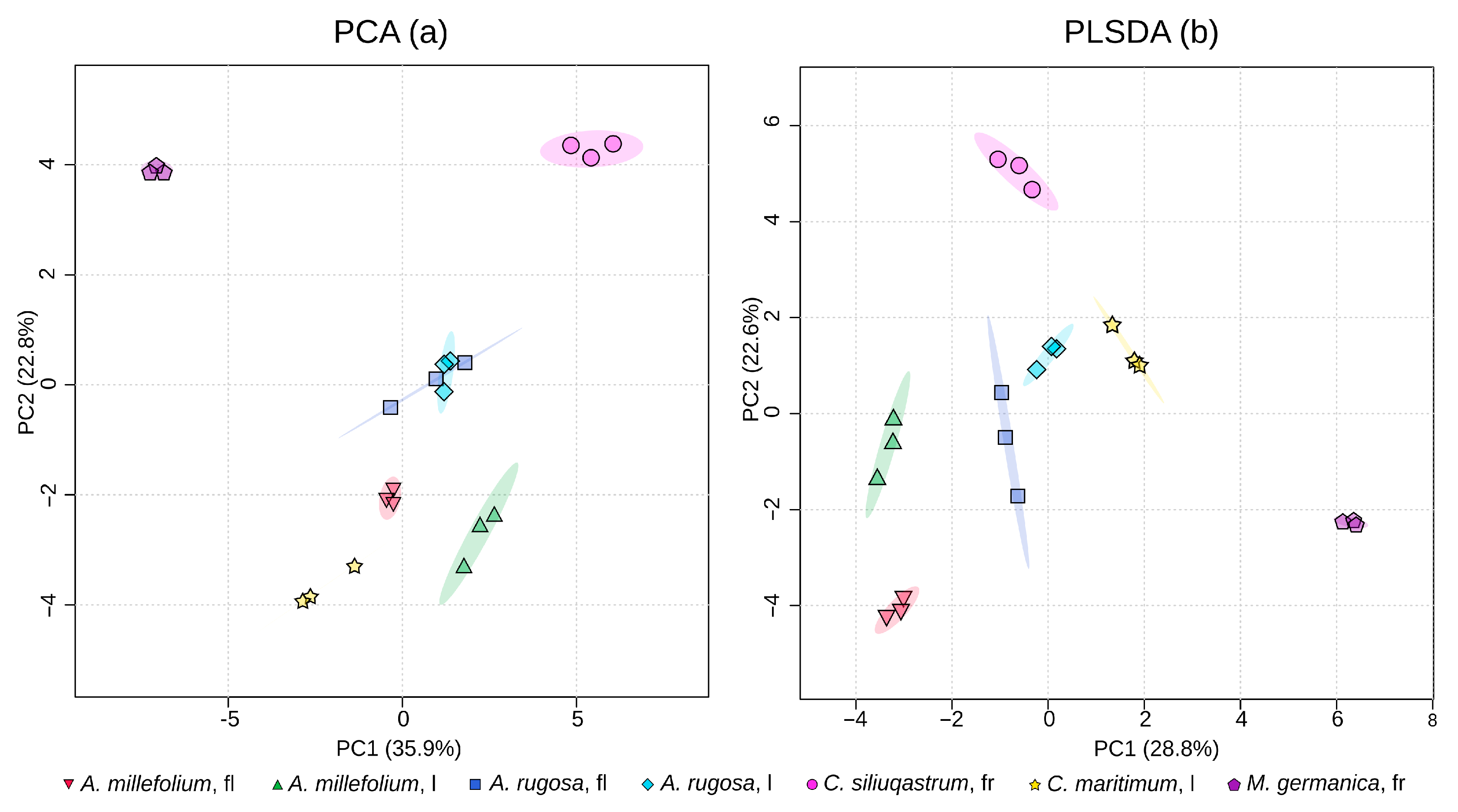
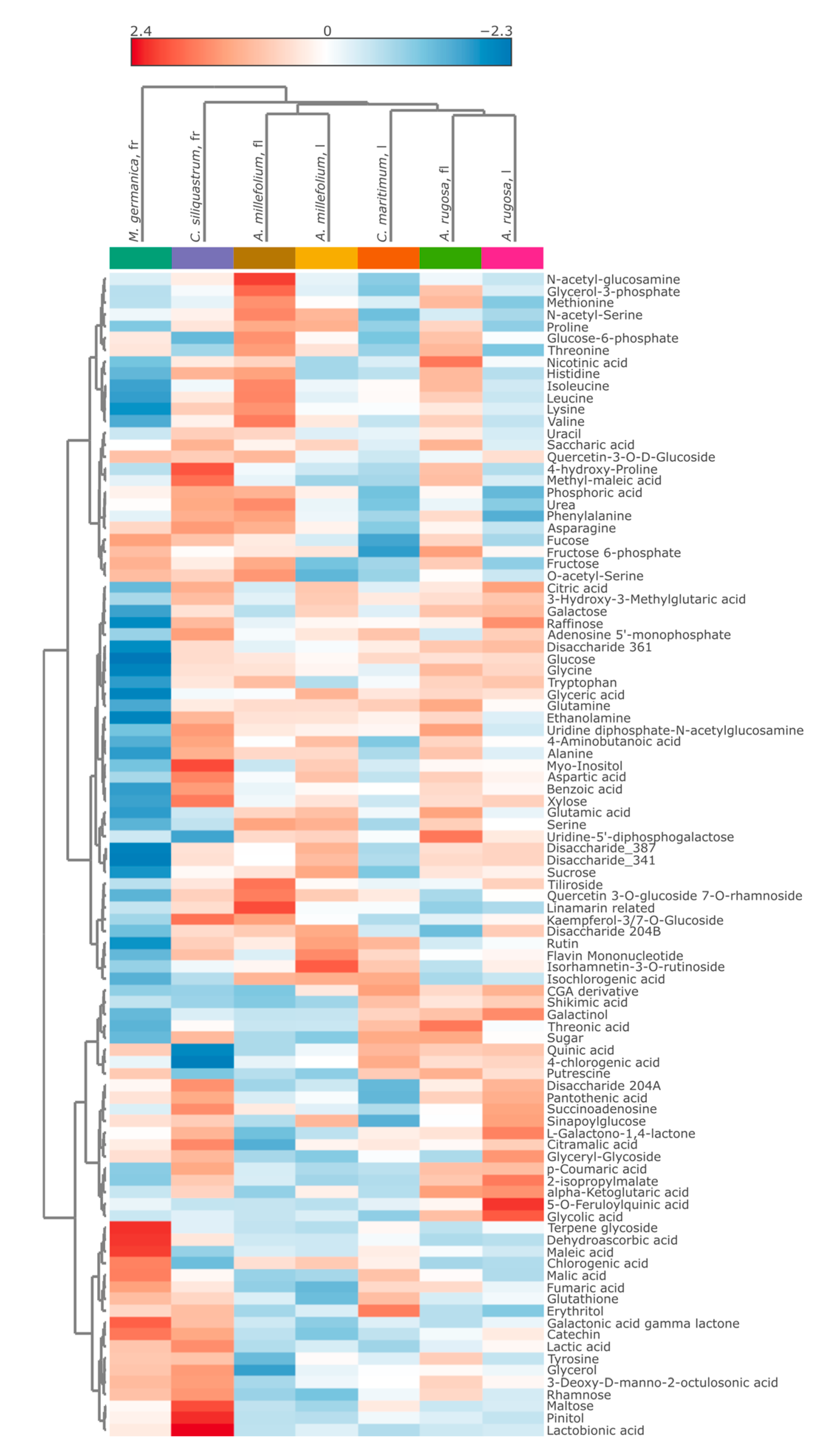
Following systematic annotation of the collected data, a comparative metabolomics analysis across the five analyzed species revealed 98 shared compounds in the data acquired via UPLC-MS and GC-MS (39 and 59, respectively). Full lists of compounds and their detection method could be seen in Supplementary Table S1. Principal component analysis (PCA) showed clear separation between all species, and in most tissues, only the A. rugosa inflorescences and leaves were indistinct from another (Figure 2a). However, these were separated using a supervised approach (Figure 2b).
The identified metabolites exhibited interspecies variation in their distribution patterns and relative abundances, as evident on the heatmap (Figure 3), suggesting potential ecological or physiological adaptations. Most major phytochemical classes, including flavonoids (e.g., quercetin and kaempferol derivatives), organic acids (such as citric and citramalic acids), amino acids (like asparagine, glutamine, histidine), and carbohydrate derivatives were present.

3.1.1. Primary Metabolite Profiles of the Edible Tissues

For amino acids, a robust set was annotated and cross-referenced between all samples. Inflorescences of A. millefolium had the highest abundance in general, with a notable exception being tyrosine, which was lowest in this tissue. Opposite to it, M. germanica fruits had the lowest amount of most amino acids, followed by C. maritimum leaves. Many of these compounds have nutraceutical properties according to published data.
Asparagine was mostly present in C. siliquastrum, followed by A. millefolium inflorescences and then M. germanica. It can be synthesized from aspartate with asparagine synthetase, with reports of deficiencies in this enzyme leading to brain structural abnormalities and cognitive impairments [43]. Aspartate was likewise most abundant in C. siliquastrum, but the second and third most abundant were A. millefolium leaves and A. rugosa inflorescences, respectively. This amino acid is not an essential one, but there is an ongoing discussion on whether, as a structural homolog of glutamate, it acts as a secondary excitatory neurotransmitter in the central nervous system [43]. Glutamine is an extremely versatile amino acid that takes part in numerous biological activities—immune, metabolic, and stress response, among others [44]. The inflorescences of A. rugosa had the highest abundance of this compound, followed by C. maritimum, and both A. millefolium tissues. The essential amino acid histidine was present, in order of concentration, in the generative organs of A. millefolium, C. siliquastrum, and A. rugosa, and finally in the leaves of C. maritimum. Leucine, isoleucine, and tryptophan were present at the highest concentration in the inflorescences of A. millefolium and A. rugosa, while lowest in M. germanica fruit.
One of the annotated shared metabolites is 3-hydroxy-3-methylglutaric acid (HMG) with the highest quantities in the fruits of C. siliquastrum, followed by the leaves of A. rugosa and A. millefolium, and finally A. rugosa inflorescences and C. maritimum leaves.
Two other compounds, with the highest abundance in C. siliquastrum fruits, were lactobionic acid and myo-inositol. Both have been implicated in antioxidant and anti-inflammatory defenses [45,46,47].
Shikimic acid had the highest abundance in the leaves of C. maritimum. Alpha-ketoglutaric acid (AKG) was present in the highest amounts in both tissues of A. rugosa.
Citric acid was detected with the highest abundance in A. rugosa leaves, followed closely by C. siliquastrum fruits and A. millefolium leaves. Results for citramalic acid were similar, with the first and second position reversed.
Fumaric acid was highest in M. germanica, followed by C. maritimum leaves and A. rugosa inflorescences. M. germanica fruits also had high presence of dehydroascorbic acid and maleic acid.

3.1.2. Secondary Metabolite Composition

Most of the detected flavonoids had high abundance in the inflorescences of A. millefolium, with the exception of isorhamnetin-3-O-rutinoside and rutin, most accumulated in its leaves.
One other identified compound in this group—the glycosidic flavonoid tiliroside, has a wide nutraceutical profile, due to its antioxidant and anti-inflammatory activities [48], demonstrating antidiabetic, anti-obesity, hepatoprotective, and lipid-lowering effects, partly through the modulation of adiponectin signaling and inhibition of key inflammatory pathways [49,50,51].
While most of the identified flavonoids in the analyzed fruits of M. germanica were among the lowest across all samples, catechin was the highest—this data supports previous work on polyphenol contents in medlar fruits [52,53].
Numerous organic acids were annotated, with a highly variable profile between species. Quinic acid and its derivatives, 4-chlorogenic acid (4-O-caffeoylquinic or cryptochlorogenic acid) and isochlorogenic acid B were the most abundant in the leaves of C. maritimum, followed by A. rugosa and M. germanica for the first and second and A. millefolium for the third. Chlorogenic acid (5-O-caffeoylquinic acid) had a different distribution, present the most in M. germanica, followed by in A. millefolium and C. maritimum. 5-O-feruloylquinic acid was discovered at very high levels in A. rugosa leaves in comparison to all other examined tissues and species. p-Coumaric acid levels were highest in C. siliquastrum and A. rugosa.
Taken as a whole, C. siliquastrum fruits established themselves as the richest in the sampled tissues, with the highest abundance of a majority of the annotated compounds. On the other hand, M. germanica showed generally lower abundances, except for catechin, which was highest in the sampled tissues. Still, while there are some trends in the distribution of the compounds among the analyzed species and tissues, there is no clear-cut “best” source of flavonoids, amino acids, saccharides, or other compounds.

3.2. Metalomics Analysis

The micronutrient concentration varied widely both between the studied species and between their studied botanical parts, which might depend on the habitat type (Table 1).
Our results show that C. maritimum has the highest Na content, with the potential to provide 3.2% of the recommended daily intake.
It is notable that both the leaves and the inflorescences of A. rugosa and A. millefolium contained significant amounts of the nutrient reference values for Mn—28–47% and 25–66%, respectively. The data shows that the latter can also be considered an excellent source of Cu, which varied between 21 and 24% in the inflorescences and leaves. A meal containing 100 g of A. rugosa can prove to be a good source of Co, providing 21% of the daily recommended intake.
Another interesting finding is that the sampled leaves of C. maritimum showed a very high amount of B, representing more than three times the reference nutrient value for 100 g of plant material.

4. Discussion

This study presents a comprehensive comparative metabolome and metalome analyses of five underutilized crops. The combined analysis of primary and secondary metabolites, as well as essential minerals, is a novelty of this study. The data shows unique metabolite profiles of the five species, with each one possessing specific metabolic and elemental signatures. In A. millefolium, we identified many metabolites, including essential amino acids and minerals that highlight the nutritional values of this species. Leaves of A. millefolium, in particular, are the richest in sucrose among all other species and organs, and one of the richest sources of the essential minerals K, Na, Mn, Mg, and Zn, making them a valuable source of nutrients. The leaves of A. millefolium are also valuable sources of beneficial flavonoids, which makes them important not only for our diet but also for our health. A. rugosa is known for its culinary use and nutritional values. Previous research, however, indicated the presence of valuable primary and secondary metabolites, especially compounds with potential medical applications, but lacked comprehensive metabolome and mineral profiling [14,15,16,17,18,19,20]. Here, we confirm its value and report for the first time that flowers of A. rugosa are the richest source of Mg, an essential element for the human diet that participates in many enzymes and biochemical processes. The areal parts of A. rugosa are also particularly rich in amino acids, specifically glutamine and histidine. Among the other novel findings of our study are the highest abundances of lactobionic acid and myo-inositol in C. siliquastrum fruits. As these compounds are implicated in antioxidant and anti-inflammatory defenses, the fruits of C. siliquastrum appear to be not only an important source of nutrients but also an important source of health-promoting metabolites. We also found that C. maritimum, known previously for its richness in polyunsaturated fatty acids and its medicinal properties [27,28,29,30,31,32,33], has the highest concentration of Na and Ca. This is to be expected, regarding its halophytic environment rich in such ions. We report here, for the first time, that C. maritimum is rich in B—an essential microelement that is not present in the other species. Furthermore, C. maritimum and M. germanica are the two most abundant species in glutathione: an essential antioxidant, important for maintaining the reactive oxygen species balance and for detoxification reactions in both plants and animals. We discuss some of these and other important findings below.

4.1. Species-Specific Levels of Primary and Secondary Metabolites

The metabolite compositional diversity is in accordance with established frameworks in plant systems, where flavonoids often mediate stress responses, while organic acids and sugars are involved in central carbon metabolism and energy homeostasis. The heterogeneity in abundance profiles suggests species-specific regulatory mechanisms, governing various biosynthetic pathways. Such variability may be the product of multiple factors—genetic, environmental, or ontogenetic—underscoring the dynamic interplay between metabolic network foundations and ecological niche adaptation.
Amino acids are fundamental in both dietary and nutraceutical aspects, being critical components for protein synthesis, metabolic regulation, and other cellular processes. Nutritionally, essential amino acids support muscle maintenance, hormone production, and immune function, with deficiencies linked to different metabolic disorders. Tryptophan is an essential amino acid that serves as a precursor to critical neurotransmitters like serotonin and melatonin, making it vital for mood regulation, sleep quality, and neurological help [54]. It is also implicated in the direct modulation of brain activity through the gut–brain axis, with leucine showing similar, but lower activity [55]. There is data suggesting that glycine could provide benefits by improving exercise capacity and supporting muscle protein synthesis and collagen production [56]. Nutraceutically, targeted supplementation can address specific health needs, enhance cognitive and athletic performance, and help with chronic disease management.
Galactinol is mostly studied through the raffinose family oligosaccharides pathway, where it acts as essential precursor and presents as a potential prebiotic, promoting the growth of beneficial bacteria and reducing the harmful bacteria present in the colon [57].
HMG, also known under the name meglutol, has the ability to lower low-density lipoprotein (LDL)—an effect observed both in vitro, and in animal and human studies [58,59,60]. It acts as a statin, inhibiting the HMG-CoA reductase (HMGCR) enzyme, and thus the synthesis of mevalonic acid—the last step of the upper mevalonate pathway, limiting the production of all downstream products, one of which is cholesterol [59]. Another intriguing point is that there are reports suggesting that long-term statin therapy leads to improvement in quality-adjusted life years in men and women aged 70 and above [61]. This might be indicative of health benefits on the dietary inclusion of compounds with statin-like activity, such as HMG.
Pinitol was found in elevated levels in the fruits of C. siliquastrum; given its relation to carob, its high content of this compound is not unexpected. There is substantial peer-reviewed research documenting pinitol’s nutraceutical benefits in multiple contexts—hepatoprotective, antioxidant, anti-inflammatory, and anti-osteoporotic [62,63]. Shikimic acid has various biological activities, including antioxidant, antiviral, immunomodulatory, and anti-inflammatory [64,65]. Due to its use as a precursor for the synthesis of the antiviral molecule oseltamivir (active ingredient of the medication sold under the name Tamiflu), there is research into the antiviral properties of shikimic acid itself. One study found a noted virucidal effect of shikimic acid nanoformulations against bird flu (H5N1); moreover, the presented data also points to strong immunomodulatory effects, inhibiting cytokines and nitric oxide production by approximately 50% [66].
As part of the citric acid cycle, AKG has been implicated in multiple biological activities. Its antioxidant effects are twofold. It has ROS scavenging properties, reacting directly with H2O2, thereby reducing oxidative stress by neutralizing it [67]. Along with that it can modulate the levels of important antioxidant enzymes and compounds. For instance, it can increase the activity of superoxide dismutase (SOD) and glutathione peroxidase (GPx), while lowering the levels of malondialdehyde (MDA) [67]. There is data supporting that AKG supplementation in mouse models leads to improvements in metabolic and glucose homeostasis by increasing brown adipose tissue temperature, oxygen consumption, and whole-body metabolism, significantly decreasing the activity of liver gluconeogenesis enzyme flux and ameliorating hyperglycemia [68].
Fumaric acid and its esters have a diverse profile of biological activity. A study indicates that fumaric acid has a strong inhibitory effect against bacterial and fungal cells, and proves to have selective toxicity against bacterial cells [69]. There are well-described immunomodulatory effects, which are used in the treatment of psoriasis and other autoimmune conditions; a noted potential application is for the alleviation of multiple sclerosis [70]. p-Coumaric acid is another metabolite of interest, due to its multiple documented health benefits—antioxidant, anti-inflammatory, and cardiovascular- and neuroprotective effects [71].
Flavonoids, secondary metabolites synthesized through the phenylpropanoid pathway, are a large class of polyphenolic compounds widely distributed in fruits, vegetables, and grains, recognized for their diverse phenolic structures and biological activities. Nutritionally, flavonoids are valued for their strong antioxidant properties, which help neutralize free radicals and reduce oxidative stress, thereby lowering the risk of chronic diseases such as cardiovascular disease, certain cancers, and neurodegenerative disorders [72]. Medicinally, they are known for anti-inflammatory, antiviral, and neuroprotective effects, acting through mechanisms such as the inhibition of pro-inflammatory enzymes and modulation of key cellular pathways [73]. These properties mark their potential in nutraceutical, pharmaceutical, and therapeutic contexts for disease prevention and health promotion.
Radušienė et al., 2023, noted that leaves of A. millefolium have a higher concentration of rutin, in comparison with the inflorescences consistently observed across multiple regions in Turkey and Lithuania [74]. Rutin is also noted for its antidiabetic activity through enhanced insulin signaling and hepatoprotective benefits by mitigating oxidative liver damage [75].
As with other flavonoids, catechins have antioxidant and anti-inflammatory properties, but they have other beneficial effects, which might prove interesting. There is growing evidence that they possess antidiabetic activity, through multiple mechanisms [76], one of which is an insulin mimetic effect. It promotes GLUT4 (glucose transporter type 4) transport into cells, enhancing the uptake of glucose and glycogen synthesis via glycogen synthase, thus helping to reduce the effects of insulin resistance [76,77]. Another interesting property of catechin is its anti-ulcer activity, for which there are two reported mechanisms. Its antioxidant properties help alleviate damage to gastric mucosa [78], and along with that, it has antibacterial activity, reducing the cell count of Helicobacter pylori in gerbils [79]. While the elimination of H. pylori is not total, it is similar to antibiotic monotherapy; thus, it might prove to be an interesting co-therapeutic agent. It should be noted that some catechins, especially epigallocatechin gallate (EGCG), could pose a health risk if their consumption is excessive, so the current recommendation of the European Food and Safety Administration (EFSA) is to limit intake to 800 mg per day [80].
Based on these data, A. millefolium, C. siliquastrum, and M. germanica could be marked as a viable source of beneficial flavonoids, with the choice of species depending on the compound of interest. While, in general, C. maritimum is low in the discussed flavonoids, it has the potential of being used as a source of isorhamnetin-3-O-rutinoside and rutin, utilizing areas with higher salinity, which might be unsuitable for other cultures. Given that A. rugosa inflorescences and leaves present low contents of all flavonoids, their utility as a source of that group of compounds seems limited.
Quinic acid and its derivatives, chlorogenic acid, 4-chlorogenic acid, and isochlorogenic acid B, have antioxidant and anti-inflammatory activity, through the attenuation of the secretion of inflammatory mediators such as TNF-α, IL-1β, and IL-6 [81,82].
It is known that consumer choices can be influenced by the changing needs regarding health and environmental and ethical considerations. The evaluation of the metalomic profile of these five species could help us obtain a more comprehensive understanding of those underutilized crops as a potential food source.

4.2. Elemental Analysis Reveals Species Rich in Essential Nutrients

Although Na is an essential nutrient and an important factor in neurotransmission and cell function, salt contributes to the increased risk of cardiovascular diseases [83]. However, the analyzed samples were well below the maximum permissible threshold of 2000 mg.
According to Regulation No 1169/2011, values higher than 15% of the nutrient reference values supplied by 100 g of product are regarded as significant [84]. From a public health perspective, several international institutions have issued a list of nutrient reference values expressed per 100 g of fresh plant material [85,86].
In considering that the daily reference intake of K is 2000 mg, C. maritimum and A. millefolium leaves, as well as the fruits of M. germanica, can provide 16 to 25.9% of the recommended daily intake per 100 g, thus marking them significant. The medlar fruits could supply 16% for Mg, 26% for Fe, 63% for Mn, and 88% for B.

4.3. General Limitations of Metabolome and Elemental Analyses

Metabolome and elemental analyses together create a comprehensive picture of nutritional values and health benefits of plant crops. However, we shall bear in mind that plant metabolomes of a single species can vary depending on geographical location, growth conditions, and environmental factors (type of soil, temperature, humidity, biotic stressors, etc.) [87,88,89,90]. This is also related to the respective changes in transcriptomes, which induce the subsequent metabolome reconfigurations. Such variations, observed for both primary and secondary metabolites, are fundamental limitations when interpreting metabolome data. In our study, we used near-optimal growth conditions provided in the Bulgarian botanical gardens. In other locations, under more fluctuating environmental conditions, certain metabolites may deviate from the values we are reporting here. Nevertheless, our cross-species comparison is a useful basis for the identification of potential crops with high levels of particular metabolites and minerals.

5. Conclusions

Now, more than ever, there is a growing demand for healthy diet enriched with all essential nutrients and elements. Therefore, diversifying food sources and embracing the potential of underutilized crops’ environmental and health benefits could be a step closer to achieving zero hunger, enhancing both food security and ecological well-being. With the appropriate focus on crop improvement and sustainable utilization, these promising species might play a role in promoting food sovereignty, health and sustainability in the future. This study focused on five such edible plants, previously shown to be rich in nutrients, minerals, vitamins, and other health-promoting substances, and characterized in greater detail by their chemical composition. Comparatively, Agastache rugosa and Mespilus germanica are well known in Korean and European cuisine, respectively, and are used in various dishes or as fresh fruits, the other three species are underutilized and can be used to supplement our diet. We recommend growing these species as crops and using them more intensively to diversify our food systems.

Supplementary Materials

The following supporting information can be downloaded at https://www.mdpi.com/article/10.3390/metabo15110720/s1, Table S1: Full lists of compounds and their detection method.

Author Contributions

Conceptualization, M.A., P.S., K.T. and T.G.; methodology and formal analysis, M.A., V.I., P.S., R.M., T.M., D.G., S.Z., T.R., K.T., S.B., A.I., M.W., V.P. and T.G.; writing—original draft preparation, M.A., V.I., P.S., R.M., T.M., D.G., S.Z., T.R., K.T., S.B., A.I., M.W., V.P. and T.G.; writing—review and editing, M.A., V.I., P.S., R.M., T.M., D.G., S.Z., T.R., K.T., S.B., A.I., M.W., V.P. and T.G.; supervision, P.S., K.T. and T.G.; funding acquisition, P.S., K.T., V.P. and T.G.; All authors have read and agreed to the published version of the manuscript.

Funding

This work was funded by the Bulgarian National Science Fund, Project Metabolic diversity of botanical gardens in Bulgaria and Germany (Grant No. KП-06-Н76/12). The authors acknowledge the BG16RFPR002-1.014-0003-C01 project, financed by the European Regional Development Fund through the Bulgarian “Program for Research, Innovation, and Digitalisation for Smart Transformation “(PRIDST) Operational Programme. This study was also financed by the European Union-NextGenerationEU, through the National Recovery and Resilience Plan of the Republic of Bulgaria, project No. BG-RRP-2.004-0001-C01.

Institutional Review Board Statement

Not applicable.

Informed Consent Statement

Not applicable.

Data Availability Statement

The UHPLC-MS chromatograms, as well as all other data, are available upon request.

Acknowledgments

The authors thank Plamena Marinova and Valeria Tonova for their help with the preparation of the samples for the UHPLC-MS, GC-MS and ICP-MS, respectively. Image attributions are as follows: A. millefolium—own work; A. rugosa, C. maritimum, C. siliquastrum, and M. germanica—Forest and Kim Starr, Paul Braun, Isasza, and AnRo0002 on MediaWiki, respectively.

Conflicts of Interest

The authors declare no conflicts of interest.

Abbreviations

The following abbreviations are used in this manuscript:
AKGAlpha-ketoglutaric acid;
GPxGlutathione Peroxidase;
HMG3-hydroxy-3-methylglutaric acid;
MDAMalondialdehyde.

References

  1. Li, X.; Siddique, K.H.M. Future Smart Food: Harnessing the Potential of Neglected and Underutilized Species for Zero Hunger. Matern. Child Nutr. 2020, 16, e13008. [Google Scholar] [CrossRef]
  2. Mudau, F.N.; Chimonyo, V.G.P.; Modi, A.T.; Mabhaudhi, T. Neglected and Underutilised Crops: A Systematic Review of Their Potential as Food and Herbal Medicinal Crops in South Africa. Front. Pharmacol. 2022, 12, 809866. [Google Scholar] [CrossRef] [PubMed]
  3. Farooq, M.; Siddique, K.H.M. (Eds.) Neglected and Underutilized Crops: Future Smart Food; Academic Press: London, UK; San Diego, CA, USA, 2023; ISBN 978-0-323-90537-4. [Google Scholar]
  4. Ercisli, S.; Sengul, M.; Yildiz, H.; Sener, D.; Duralija, B.; Voca, S.; Purgar, D.D. Phytochemical and Antioxidant Characteristics of Medlar Fruits (Mespilus germanica L.). J. Appl. Bot. Food Qual. 2012, 85, 86. [Google Scholar]
  5. Suh, D.H.; Jung, E.S.; Lee, G.M.; Lee, C.H. Distinguishing Six Edible Berries Based on Metabolic Pathway and Bioactivity Correlations by Non-Targeted Metabolite Profiling. Front. Plant Sci. 2018, 9, 1462. [Google Scholar] [CrossRef]
  6. Qi, J.; Li, K.; Shi, Y.; Li, Y.; Dong, L.; Liu, L.; Li, M.; Ren, H.; Liu, X.; Fang, C.; et al. Cross-Species Comparison of Metabolomics to Decipher the Metabolic Diversity in Ten Fruits. Metabolites 2021, 11, 164. [Google Scholar] [CrossRef] [PubMed]
  7. Negrel, L.; Baltenweck, R.; Demangeat, G.; Le Bohec-Dorner, F.; Rustenholz, C.; Velt, A.; Gertz, C.; Bieler, E.; Dürrenberger, M.; Gombault, P.; et al. Comparative Metabolomic Analysis of Four Fabaceae and Relationship to In Vitro Nematicidal Activity against Xiphinema Index. Molecules 2022, 27, 3052. [Google Scholar] [CrossRef]
  8. Zhao, X.; Zheng, L.; Shi, Q.; Lin, Y.; Zeng, Z.; Song, C.; Jin, S.; Xiao, L. Comparative Pharmacognosy and Secondary Metabolite Analysis of Balanophorae Herbs from Different Sources. Hereditas 2024, 161, 19. [Google Scholar] [CrossRef]
  9. Li, Z.; Wang, H.; Feng, L.; Song, L.; Lu, Y.; Li, H.; Li, Y.; Tian, G.; Yang, Y.; Li, H.; et al. Comparative Metabolomics Provides Novel Insights into Correlation between Dominant Habitat Factors and Constituents of Stellaria Radix (Stellaria dichotoma L. var. Lanceolata Bge.). Front. Plant Sci. 2022, 13, 1035712. [Google Scholar] [CrossRef]
  10. Shabih, S.; Hajdari, A.; Mustafa, B.; Quave, C.L. Medicinal Plants in the Balkans with Antimicrobial Properties. In Medicinal Plants as Anti-Infectives; Elsevier: Amsterdam, The Netherlands, 2022; pp. 103–138. ISBN 978-0-323-90999-0. [Google Scholar]
  11. Garzoli, S.; Cicaloni, V.; Salvini, L.; Trespidi, G.; Iriti, M.; Vitalini, S. SPME-GC-MS Analysis of the Volatile Profile of Three Fresh Yarrow (Achillea millefolium L.) Morphotypes from Different Regions of Northern Italy. Separations 2023, 10, 51. [Google Scholar] [CrossRef]
  12. Shah, R.; Peethambaran, B. Anti-Inflammatory and Anti-Microbial Properties of Achillea millefolium in Acne Treatment. In Immunity and Inflammation in Health and Disease; Elsevier: Amsterdam, The Netherlands, 2018; pp. 241–248. ISBN 978-0-12-805417-8. [Google Scholar]
  13. Jugreet, B.S.; Suroowan, S.; Rengasamy, R.R.K.; Mahomoodally, M.F. Chemistry, Bioactivities, Mode of Action and Industrial Applications of Essential Oils. Trends Food Sci. Technol. 2020, 101, 89–105. [Google Scholar] [CrossRef]
  14. Hernández-Abreu, O.; Castillo-España, P.; León-Rivera, I.; Ibarra-Barajas, M.; Villalobos-Molina, R.; González-Christen, J.; Vergara-Galicia, J.; Estrada-Soto, S. Antihypertensive and Vasorelaxant Effects of Tilianin Isolated from Agastache mexicana Are Mediated by NO/cGMP Pathway and Potassium Channel Opening. Biochem. Pharmacol. 2009, 78, 54–61. [Google Scholar] [CrossRef] [PubMed]
  15. Verano, J.; González-Trujano, M.E.; Déciga-Campos, M.; Ventura-Martínez, R.; Pellicer, F. Ursolic Acid from Agastache mexicana Aerial Parts Produces Antinociceptive Activity Involving TRPV1 Receptors, cGMP and a Serotonergic Synergism. Pharmacol. Biochem. Behav. 2013, 110, 255–264. [Google Scholar] [CrossRef]
  16. Nechita, M.-A.; Toiu, A.; Benedec, D.; Hanganu, D.; Ielciu, I.; Oniga, O.; Nechita, V.-I.; Oniga, I. Agastache Species: A Comprehensive Review on Phytochemical Composition and Therapeutic Properties. Plants 2023, 12, 2937. [Google Scholar] [CrossRef]
  17. Park, M.-J.; Song, J.-H.; Shon, M.-S.; Kim, H.O.; Kwon, O.J.; Roh, S.-S.; Kim, C.Y.; Kim, G.-N. Anti-Adipogenic Effects of Ethanol Extracts Prepared from Selected Medicinal Herbs in 3T3-L1 Cells. Prev. Nutr. Food Sci. 2016, 21, 227–235. [Google Scholar] [CrossRef]
  18. Kim, M.H.; Chung, W.T.; Kim, Y.K.; Lee, J.H.; Lee, H.Y.; Hwang, B.; Park, Y.S.; Hwang, S.J.; Kim, J.H. The Effect of the Oil of Agastache rugosa O. Kuntze and Three of Its Components on Human Cancer Cell Lines. J. Essent. Oil Res. 2001, 13, 214–218. [Google Scholar] [CrossRef]
  19. Sun, J.; Sun, P.; Kang, C.; Zhang, L.; Guo, L.; Kou, Y. Chemical Composition and Biological Activities of Essential Oils from Six Lamiaceae Folk Medicinal Plants. Front. Plant Sci. 2022, 13, 919294. [Google Scholar] [CrossRef] [PubMed]
  20. Ebadollahi, A.; Safaralizadeh, M.; Pourmirza, A.; Gheibi, S. Toxicity of Essential Oil of Agastache foeniculum (Pursh) Kuntze to Oryzaephilus surinamensis L. and Lasioderma serricorne F. J. Plant Prot. Res. 2010, 50, 215–219. [Google Scholar] [CrossRef]
  21. Pereira, R.F.P.; Rocha, J.; Nunes, P.; Fernandes, T.; Ravishankar, A.P.; Cruz, R.; Fernandes, M.; Anand, S.; Casal, S.; De Zea Bermudez, V.; et al. Vicariance Between Cercis siliquastrum L. and Ceratonia siliqua L. Unveiled by the Physical–Chemical Properties of the Leaves’ Epicuticular Waxes. Front. Plant Sci. 2022, 13, 890647. [Google Scholar] [CrossRef] [PubMed]
  22. Amer, J.; Jaradat, N.; Hattab, S.; Al-hihi, S.; Juma’a, R. Traditional Palestinian Medicinal Plant Cercis Siliquastrum (Judas Tree) Inhibits the DNA Cell Cycle of Breast Cancer—Antimicrobial and Antioxidant Characteristics. Eur. J. Integr. Med. 2019, 27, 90–96. [Google Scholar] [CrossRef]
  23. Moghaddam, M.; Stegemann, T.; Zidorn, C. Flavonoids and Volatile Compounds of Cercis siliquastrum (Fabaceae, Cercideae). Biochem. Syst. Ecol. 2025, 120, 104954. [Google Scholar] [CrossRef]
  24. Babyn, O.; Pinchuk, A.; Derii, A.; Boyko, O.; Likhanov, A. Influence of Urban Environment Factors on Morphometric Parameters and Accumulation of Secondary Metabolites in Cercis canadensis L. and Cercis siliquastrum ‘Alba’. Ukr. J. For. Wood Sci. 2024, 15, 8–24. [Google Scholar] [CrossRef]
  25. Martins-Noguerol, R.; Matías, L.; Pérez-Ramos, I.M.; Moreira, X.; Francisco, M.; Pedroche, J.; DeAndrés-Gil, C.; Gutiérrez, E.; Salas, J.J.; Moreno-Pérez, A.J.; et al. Soil Physicochemical Properties Associated with the Yield and Phytochemical Composition of the Edible Halophyte Crithmum maritimum. Sci. Total Environ. 2023, 869, 161806. [Google Scholar] [CrossRef] [PubMed]
  26. Generalić Mekinić, I.; Šimat, V.; Ljubenkov, I.; Burčul, F.; Grga, M.; Mihajlovski, M.; Lončar, R.; Katalinić, V.; Skroza, D. Influence of the Vegetation Period on Sea Fennel, Crithmum maritimum L. (Apiaceae), Phenolic Composition, Antioxidant and Anticholinesterase Activities. Ind. Crops Prod. 2018, 124, 947–953. [Google Scholar] [CrossRef]
  27. Correia, I.; Antunes, M.; Tecelão, C.; Neves, M.; Pires, C.L.; Cruz, P.F.; Rodrigues, M.; Peralta, C.C.; Pereira, C.D.; Reboredo, F.; et al. Nutritive Value and Bioactivities of a Halophyte Edible Plant: Crithmum maritimum L. (Sea Fennel). Plants 2024, 13, 427. [Google Scholar] [CrossRef]
  28. Gnocchi, D.; Nikolic, D.; Paparella, R.R.; Sabbà, C.; Mazzocca, A. Crithmum maritimum Extract Restores Lipid Homeostasis and Metabolic Profile of Liver Cancer Cells to a Normal Phenotype. Plant Foods Hum. Nutr. 2024, 79, 417–424. [Google Scholar] [CrossRef]
  29. Prajapati, D.; Devi, K.A.; Chouhan, P.; Pal, A.; Saharan, V. Plant-Based Nanoemulsions for Agricultural Application. In Bio-Based Nanoemulsions for Agri-Food Applications; Elsevier: Amsterdam, The Netherlands, 2022; pp. 155–164. ISBN 978-0-323-89846-1. [Google Scholar]
  30. Ghosh, S.; Sarkar, T.; Chakraborty, R. Underutilized Plant Sources: A Hidden Treasure of Natural Colors. Food Biosci. 2023, 52, 102361. [Google Scholar] [CrossRef]
  31. Popović-Djordjević, J.; Kostić, A.Ž.; Kamiloglu, S.; Tomas, M.; Mićanović, N.; Capanoglu, E. Chemical Composition, Nutritional and Health Related Properties of the Medlar (Mespilus germanica L.): From Medieval Glory to Underutilized Fruit. Phytochem. Rev. 2023, 22, 1663–1690. [Google Scholar] [CrossRef]
  32. Cevahir, G.; Bostan, S.Z. Organic Acids, Sugars and Bioactive Compounds of Promising Medlar (Mespilus germanica L.) Genotypes Selected from Turkey. Int. J. Fruit. Sci. 2021, 21, 312–322. [Google Scholar] [CrossRef]
  33. Nistor, D.I.; Marc, R.A.; Mureșan, C.C. Phytochemistry, Nutritional Composition, Health Benefits and Future Prospects of Mespilus germanica L. (Medlar): A Review. Food Chem. X 2024, 22, 101334. [Google Scholar] [CrossRef]
  34. Al-Amoudi, R.H.; Taylan, O.; Kutlu, G.; Can, A.M.; Sagdic, O.; Dertli, E.; Yilmaz, M.T. Characterization of Chemical, Molecular, Thermal and Rheological Properties of Medlar Pectin Extracted at Optimum Conditions as Determined by Box-Behnken and ANFIS Models. Food Chem. 2019, 271, 650–662. [Google Scholar] [CrossRef] [PubMed]
  35. Qasemi, Z.; Jafari, D.; Jafari, K.; Esmaeili, H. Heterogeneous Aluminum Oxide/Calcium Oxide Catalyzed Transesterification of Mespilus germanica Triglyceride for Biodiesel Production. Environ. Prog. Sustain. Energy 2022, 41, e13738. [Google Scholar] [CrossRef]
  36. Khedri, A.; Jafari, D.; Esfandyari, M. Adsorption of Nickel(II) Ions from Synthetic Wastewater Using Activated Carbon Prepared from Mespilus germanica Leaf. Arab. J. Sci. Eng. 2022, 47, 6155–6166. [Google Scholar] [CrossRef]
  37. Perez De Souza, L.; Alseekh, S.; Scossa, F.; Fernie, A.R. Ultra-High-Performance Liquid Chromatography High-Resolution Mass Spectrometry Variants for Metabolomics Research. Nat. Methods 2021, 18, 733–746. [Google Scholar] [CrossRef]
  38. Tohge, T.; Borghi, M.; Fernie, A.R. The Natural Variance of the Arabidopsis Floral Secondary Metabolites. Sci. Data 2018, 5, 180051. [Google Scholar] [CrossRef]
  39. Horai, H.; Arita, M.; Kanaya, S.; Nihei, Y.; Ikeda, T.; Suwa, K.; Ojima, Y.; Tanaka, K.; Tanaka, S.; Aoshima, K.; et al. MassBank: A Public Repository for Sharing Mass Spectral Data for Life Sciences. J. Mass. Spectrom. 2010, 45, 703–714. [Google Scholar] [CrossRef] [PubMed]
  40. Lisec, J.; Schauer, N.; Kopka, J.; Willmitzer, L.; Fernie, A.R. Gas Chromatography Mass Spectrometry–Based Metabolite Profiling in Plants. Nat. Protoc. 2006, 1, 387–396. [Google Scholar] [CrossRef] [PubMed]
  41. Kind, T.; Wohlgemuth, G.; Lee, D.Y.; Lu, Y.; Palazoglu, M.; Shahbaz, S.; Fiehn, O. FiehnLib: Mass Spectral and Retention Index Libraries for Metabolomics Based on Quadrupole and Time-of-Flight Gas Chromatography/Mass Spectrometry. Anal. Chem. 2009, 81, 10038–10048. [Google Scholar] [CrossRef]
  42. Pang, Z.; Lu, Y.; Zhou, G.; Hui, F.; Xu, L.; Viau, C.; Spigelman, A.F.; MacDonald, P.E.; Wishart, D.S.; Li, S.; et al. MetaboAnalyst 6.0: Towards a Unified Platform for Metabolomics Data Processing, Analysis and Interpretation. Nucleic Acids Res. 2024, 52, W398–W406. [Google Scholar] [CrossRef]
  43. Dalangin, R.; Kim, A.; Campbell, R.E. The Role of Amino Acids in Neurotransmission and Fluorescent Tools for Their Detection. IJMS 2020, 21, 6197. [Google Scholar] [CrossRef]
  44. Cruzat, V.; Macedo Rogero, M.; Noel Keane, K.; Curi, R.; Newsholme, P. Glutamine: Metabolism and Immune Function, Supplementation and Clinical Translation. Nutrients 2018, 10, 1564. [Google Scholar] [CrossRef]
  45. Goderska, K. The Antioxidant and Prebiotic Properties of Lactobionic Acid. Appl. Microbiol. Biotechnol. 2019, 103, 3737–3751. [Google Scholar] [CrossRef]
  46. Baldassarre, M.P.A.; Di Tomo, P.; Centorame, G.; Pandolfi, A.; Di Pietro, N.; Consoli, A.; Formoso, G. Myoinositol Reduces Inflammation and Oxidative Stress in Human Endothelial Cells Exposed In Vivo to Chronic Hyperglycemia. Nutrients 2021, 13, 2210. [Google Scholar] [CrossRef]
  47. Rolnik, A.; Olas, B.; Szablińska-Piernik, J.; Lahuta, L.B.; Gromadziński, L.; Majewski, M.S. Antioxidant and Anticoagulant Properties of Myo-Inositol Determined in an Ex Vivo Studies and Gas Chromatography Analysis. Sci. Rep. 2024, 14, 25633. [Google Scholar] [CrossRef] [PubMed]
  48. Corrêa, W.R.; Serain, A.F.; Aranha Netto, L.; Marinho, J.V.N.; Arena, A.C.; Figueiredo De Santana Aquino, D.; Kuraoka-Oliveira, Â.M.; Júnior, A.J.; Bernal, L.P.T.; Kassuya, C.A.L.; et al. Anti-Inflammatory and Antioxidant Properties of the Extract, Tiliroside, and Patuletin 3-O-β-D-Glucopyranoside from Pfaffia townsendii (Amaranthaceae). Evid. Based Complement. Altern. Med. 2018, 2018, 6057579. [Google Scholar] [CrossRef] [PubMed]
  49. Goto, T.; Teraminami, A.; Lee, J.-Y.; Ohyama, K.; Funakoshi, K.; Kim, Y.-I.; Hirai, S.; Uemura, T.; Yu, R.; Takahashi, N.; et al. Tiliroside, a Glycosidic Flavonoid, Ameliorates Obesity-Induced Metabolic Disorders via Activation of Adiponectin Signaling Followed by Enhancement of Fatty Acid Oxidation in Liver and Skeletal Muscle in Obese–Diabetic Mice. J. Nutr. Biochem. 2012, 23, 768–776. [Google Scholar] [CrossRef]
  50. Zhang, W.; Liu, D.; Zhou, E.; Wang, W.; Wang, H.; Li, Q. Hepatoprotective Effect of Tiliroside and Characterization of Its Metabolites in Human Hepatocytes by Ultra-High Performance Liquid Chromatography-High Resolution Mass Spectrometry. J. Funct. Foods 2023, 107, 105675. [Google Scholar] [CrossRef]
  51. Zhong, C.; Yang, J.; Deng, K.; Lang, X.; Zhang, J.; Li, M.; Qiu, L.; Zhong, G.; Yu, J. Tiliroside Attenuates NLRP3 Inflammasome Activation in Macrophages and Protects against Acute Lung Injury in Mice. Molecules 2023, 28, 7527. [Google Scholar] [CrossRef] [PubMed]
  52. De Pascual-Teresa, S.; Santos-Buelga, C.; Rivas-Gonzalo, J.C. Quantitative Analysis of Flavan-3-Ols in Spanish Foodstuffs and Beverages. J. Agric. Food Chem. 2000, 48, 5331–5337. [Google Scholar] [CrossRef]
  53. Mikulic-Petkovsek, M.; Jakljevic, K.; Veberic, R.; Hudina, M.; Rusjan, D. Changes in the Fruit Quality Parameters of Medlar Fruit (Mespilus germanica L.) after Heat Treatment, Storage, Freezing or Hoarfrost. Foods 2023, 12, 3077. [Google Scholar] [CrossRef]
  54. Friedman, M. Analysis, Nutrition, and Health Benefits of Tryptophan. Int. J. Tryptophan Res. 2018, 11, 1178646918802282. [Google Scholar] [CrossRef]
  55. Zanchi, D.; Meyer-Gerspach, A.C.; Suenderhauf, C.; Janach, K.; Le Roux, C.W.; Haller, S.; Drewe, J.; Beglinger, C.; Wölnerhanssen, B.K.; Borgwardt, S. Differential Effects of L-Tryptophan and L-Leucine Administration on Brain Resting State Functional Networks and Plasma Hormone Levels. Sci. Rep. 2016, 6, 35727. [Google Scholar] [CrossRef][Green Version]
  56. Ramos-Jiménez, A.; Hernández-Torres, R.P.; Hernández-Ontiveros, D.A.; Ortiz-Ortiz, M.; López-Fregoso, R.J.; Martínez-Sanz, J.M.; Rodríguez-Uribe, G.; Hernández-Lepe, M.A. An Update of the Promise of Glycine Supplementation for Enhancing Physical Performance and Recovery. Sports 2024, 12, 265. [Google Scholar] [CrossRef]
  57. Elango, D.; Rajendran, K.; Van Der Laan, L.; Sebastiar, S.; Raigne, J.; Thaiparambil, N.A.; El Haddad, N.; Raja, B.; Wang, W.; Ferela, A.; et al. Raffinose Family Oligosaccharides: Friend or Foe for Human and Plant Health? Front. Plant Sci. 2022, 13, 829118. [Google Scholar] [CrossRef] [PubMed]
  58. Lupien, P.; Moorjani, S.; Brun, D.; Bielmann, P. Effects of 3-Hydroxy-3-methylglutaric Acid on Plasma and Low-Density Lipoprotein Cholesterol Levels in Familial Hypercholesterolemia. J. Clin. Pharma 1979, 19, 120–126. [Google Scholar] [CrossRef]
  59. Di Padova, C.; Bosisio, E.; Cighetti, G.; Rovagnati, P.; Mazzocchi, M.; Colombo, C.; Tritapepe, R. 3-Hydroxy-3-Methylglutaric Acid (HMGA) Reduces Dietary Cholesterol Induction of Saturated Bile in Hamster. Life Sci. 1982, 30, 1907–1914. [Google Scholar] [CrossRef]
  60. Iman, M.N.; Haslam, D.E.; Liang, L.; Guo, K.; Joshipura, K.; Pérez, C.M.; Clish, C.; Tucker, K.L.; Manson, J.E.; Bhupathiraju, S.N.; et al. Multidisciplinary Approach Combining Food Metabolomics and Epidemiology Identifies Meglutol as an Important Bioactive Metabolite in Tempe, an Indonesian Fermented Food. Food Chem. 2024, 446, 138744. [Google Scholar] [CrossRef] [PubMed]
  61. Mihaylova, B.; Wu, R.; Zhou, J.; Williams, C.; Schlackow, I.; Emberson, J.; Reith, C.; Keech, A.; Robson, J.; Parnell, R.; et al. Lifetime Effects and Cost-Effectiveness of Statin Therapy for Older People in the United Kingdom: A Modelling Study. Heart 2024, 110, 1277–1285. [Google Scholar] [CrossRef] [PubMed]
  62. Lee, E.; Lim, Y.; Kwon, S.W.; Kwon, O. Pinitol Consumption Improves Liver Health Status by Reducing Oxidative Stress and Fatty Acid Accumulation in Subjects with Non-Alcoholic Fatty Liver Disease: A Randomized, Double-Blind, Placebo-Controlled Trial. J. Nutr. Biochem. 2019, 68, 33–41. [Google Scholar] [CrossRef]
  63. Azab, A. D-Pinitol—Active Natural Product from Carob with Notable Insulin Regulation. Nutrients 2022, 14, 1453. [Google Scholar] [CrossRef]
  64. Estevez, A.M.; Estevez, R.J. A Short Overview on the Medicinal Chemistry of (—)-Shikimic Acid. MRMC 2012, 12, 1443–1454. [Google Scholar] [CrossRef]
  65. Gandhi, G.R.; Vasconcelos, A.B.S.; Antony, P.J.; Montalvão, M.M.; De Franca, M.N.F.; Hillary, V.E.; Ceasar, S.A.; Liu, D. Natural Sources, Biosynthesis, Biological Functions, and Molecular Mechanisms of Shikimic Acid and Its Derivatives. Asian Pac. J. Trop. Biomed. 2023, 13, 139–147. [Google Scholar] [CrossRef]
  66. AbouAitah, K.; Swiderska-Sroda, A.; Kandeil, A.; Salman, A.M.; Wojnarowicz, J.; Ali, M.A.; Opalinska, A.; Gierlotka, S.; Ciach, T.; Lojkowski, W. Virucidal Action Against Avian Influenza H5N1 Virus and Immunomodulatory Effects of Nanoformulations Consisting of Mesoporous Silica Nanoparticles Loaded with Natural Prodrugs. Int. J. Nanomed. 2020, 15, 5181–5202. [Google Scholar] [CrossRef]
  67. Liu, S.; He, L.; Yao, K. The Antioxidative Function of Alpha-Ketoglutarate and Its Applications. BioMed Res. Int. 2018, 2018, 1–6. [Google Scholar] [CrossRef]
  68. Yuan, Y.; Zhu, C.; Wang, Y.; Sun, J.; Feng, J.; Ma, Z.; Li, P.; Peng, W.; Yin, C.; Xu, G.; et al. α-Ketoglutaric Acid Ameliorates Hyperglycemia in Diabetes by Inhibiting Hepatic Gluconeogenesis via Serpina1e Signaling. Sci. Adv. 2022, 8, eabn2879. [Google Scholar] [CrossRef] [PubMed]
  69. Unver, T. A Preliminary Study of Fumaric Acid, Called Allomaleic Acid, as a Pharmaceutical Antimicrobial Compound. Med. Sci. 2024, 13, 383. [Google Scholar] [CrossRef]
  70. Moharregh-Khiabani, D.; Linker, R.; Gold, R.; Stangel, M. Fumaric Acid and Its Esters: An Emerging Treatment for Multiple Sclerosis. Curr. Neuropharmacol. 2009, 7, 60–64. [Google Scholar] [CrossRef]
  71. Chen, F.; Zhang, X.; Wang, J.; Wang, F.; Mao, J. P-Coumaric Acid: Advances in Pharmacological Research Based onOxidative Stress. Curr. Top. Med. Chem. 2024, 24, 416–436. [Google Scholar] [CrossRef]
  72. Panche, A.N.; Diwan, A.D.; Chandra, S.R. Flavonoids: An Overview. J. Nutr. Sci. 2016, 5, e47. [Google Scholar] [CrossRef]
  73. Serafini, M.; Peluso, I.; Raguzzini, A. Flavonoids as Anti-Inflammatory Agents. Proc. Nutr. Soc. 2010, 69, 273–278. [Google Scholar] [CrossRef] [PubMed]
  74. Radušienė, J.; Karpavičienė, B.; Raudone, L.; Vilkickyte, G.; Çırak, C.; Seyis, F.; Yayla, F.; Marksa, M.; Rimkienė, L.; Ivanauskas, L. Trends in Phenolic Profiles of Achillea millefolium from Different Geographical Gradients. Plants 2023, 12, 746. [Google Scholar] [CrossRef] [PubMed]
  75. Al-Dhabi, N.A.; Arasu, M.V.; Park, C.H.; Park, S.U. An Up-to-Date Review of Rutin and Its Biological and Pharmacological Activities. EXCLI J. 2015, 14, 59–63. [Google Scholar] [CrossRef]
  76. Wen, L.; Wu, D.; Tan, X.; Zhong, M.; Xing, J.; Li, W.; Li, D.; Cao, F. The Role of Catechins in Regulating Diabetes: An Update Review. Nutrients 2022, 14, 4681. [Google Scholar] [CrossRef]
  77. Daisy, P.; Balasubramanian, K.; Rajalakshmi, M.; Eliza, J.; Selvaraj, J. Insulin Mimetic Impact of Catechin Isolated from Cassia Fistula on the Glucose Oxidation and Molecular Mechanisms of Glucose Uptake on Streptozotocin-Induced Diabetic Wistar Rats. Phytomedicine 2010, 17, 28–36. [Google Scholar] [CrossRef] [PubMed]
  78. Rao, C.V.; Vijayakumar, M. Protective Effect of (+)-Catechin against Gastric Mucosal Injury Induced by Ischaemia-Reperfusion in Rats. J. Pharm. Pharmacol. 2007, 59, 1103–1107. [Google Scholar] [CrossRef]
  79. Mabe, K.; Yamada, M.; Oguni, I.; Takahashi, T. In Vitro and In Vivo Activities of Tea Catechins against Helicobacter pylori. Antimicrob. Agents Chemother. 1999, 43, 1788–1791. [Google Scholar] [CrossRef]
  80. EFSA Panel on Food Additives and Nutrient Sources added to Food (ANS); Younes, M.; Aggett, P.; Aguilar, F.; Crebelli, R.; Dusemund, B.; Filipič, M.; Frutos, M.J.; Galtier, P.; Gott, D.; et al. Scientific Opinion on the Safety of Green Tea Catechins. EFSA J. 2018, 16, e05239. [Google Scholar] [CrossRef]
  81. Dong, J.; Zheng, H.; Zeng, Q.; Zhang, X.; Du, L.; Bais, S. Protective Effect of D-(−)-Quinic Acid as Food Supplement in Modulating AMP-Activated Protein Kinase Signalling Pathway Activation in HFD Induced Obesity. Hum. Exp. Toxicol. 2022, 41, 09603271221119804. [Google Scholar] [CrossRef]
  82. Huang, J.; Xie, M.; He, L.; Song, X.; Cao, T. Chlorogenic Acid: A Review on Its Mechanisms of Anti-Inflammation, Disease Treatment, and Related Delivery Systems. Front. Pharmacol. 2023, 14, 1218015. [Google Scholar] [CrossRef] [PubMed]
  83. World Health Organization. The SHAKE Technical Package for Salt Reduction; World Health Organization: Geneva, Switzerland, 2016; ISBN 978-92-4-151134-6.
  84. European Parliament, Council of the European Union Regulation (EU). No 1169/2011 of the European Parliament and of the Council of 25 October 2011 on the Provision of Food Information to Consumers, Amending Regulations (EC) No 1924/2006 and (EC) No 1925/2006 of the European Parliament and of the Council, and Repealing Commission Directive 87/250/EEC, Council Directive 90/496/EEC, Commission Directive 1999/10/EC, Directive 2000/13/EC of the European Parliament and of the Council, Commission Directives 2002/67/EC and 2008/5/EC and Commission Regulation (EC) No 608/2004 Text with EEA Relevance 2025; European Parliament, Council of the European Union Regulation (EU): Strasbourg, France, 2025.
  85. EFSA Panel on Nutrition, Novel Foods and Food Allergens (NDA); Turck, D.; Bohn, T.; Castenmiller, J.; de Henauw, S.; Hirsch-Ernst, K.I.; Knutsen, H.K.; Maciuk, A.; Mangelsdorf, I.; McArdle, H.J.; et al. Guidance on Scientific Principles and Data Requirements for the Safety and Relative Bioavailability Assessment of New Micronutrient Sources. EFSA J. 2024, 22, e8946. [Google Scholar] [CrossRef]
  86. FAO/WHO. Human Vitamin and Mineral Requirements 2001; WHO: Bangkok, Thailand, 2002.
  87. Hu, C.; Li, Q.; Ding, X.; Jiang, K.; Liang, W. Exploring Molecular and Genetic Differences in Angelica biserrata Roots Under Environmental Changes. Int. J. Mol. Sci. 2025, 26, 3894. [Google Scholar] [CrossRef] [PubMed]
  88. Obata, T.; Fernie, A.R. The use of metabolomics to dissect plant responses to abiotic stresses. Cell. Mol. Life Sci. 2012, 69, 3225–3243. [Google Scholar] [CrossRef] [PubMed]
  89. Tong, Z.; Zhou, H.; Qi, Z.; Jiang, J.; Li, W.; Wang, C. Metabolomics and Antioxidant Activity of Valonea from Quercus variabilis Produced in Different Geographical Regions in China. Int. J. Mol. Sci. 2025, 26, 3599. [Google Scholar] [CrossRef] [PubMed]
  90. Yang, X.; Chen, H.; Wu, L.; Guo, X.; Xue, D. Diversity and correlation analysis of microbiomes and metabolites of Sphagnum palustre in various microhabitats. BMC Plant Biol. 2025, 25, 761. [Google Scholar] [CrossRef] [PubMed]
Figure 1. Plant species used in this study (for illustration purposes). Clockwise from top left—Cercis siliquastrum, Achillea millefolium, Crithmum maritimum, Agastache rugosa, and Mespilus germanica.
Metabolites 15 00720 g001
Figure 2. Principal component analysis plots (unsupervised, (a); supervised, (b)), indicating the clear separation of the metabolites from all five studied species and their respective organs. For the unsupervised analysis, the first and second principal components were 35.9% and 22.8%, respectively, and 28.8% and 22.6% for the supervised analysis. The plots show clear separation between all species and tissues, with the exception of A. rugosa leaves and flowers, which overlap in the unsupervised analysis. Tissue type is denoted as follows: l—leaves; fl—flowers; fr—fruits.
Metabolites 15 00720 g002
Figure 3. Heat map with all 98 annotated metabolites from the five edible plants.
Metabolites 15 00720 g003
Table 1. Mineral content (mg/kg DW) and calculated values of nutrient reference values per 100 g fresh plant material (%NRV). For values below the limit of detection (LOD), the %NRV cannot be calculated and is thus marked as N/A, with the exception of aluminum, for which EU regulation 1169/2011 does not specify as NRV.
Species and TissueKNa
mg/kgRSD%NRVmg/kgRSD%NRV
Crithmum maritimum, l2661.378.416527.853.173.17
Cercis siliquastrum, fruit 1402.140.88.43.341.60.02
Agastache rugosa Kuntze, fl1858.110.811.19.340.40.06
Agastache rugosa Kuntze, l893.620.95.41.184.70.01
Achillea millefolium ‘pomegranate’, fl2407.660.314.454.890.70.33
Achillea millefolium ‘pomegranate’, l3734.500.722.4350.5812.1
Mespilus germanica, fr4319.004.125.945.300.270.27
K LOD = 0.0450Na LOD = 0.0285
Species and TissueMgZn
mg/kgRSD%NRVmg/kgRSD%NRV
Crithmum maritimum, l222.207.17.10.920.51.1
Cercis siliquastrum, fruit 157.450.850.962.81.2
Agastache rugosa Kuntze, fl333.490.510.73.952.74.7
Agastache rugosa Kuntze, l217.960.273.461.54.1
Achillea millefolium ‘pomegranate’, fl153.220.94.94.590.85.5
Achillea millefolium ‘pomegranate’, l294.911.09.43.922.24.7
Mespilus germanica, fr506.900.416.23.266.63.9
Mg LOD = 0.0161Zn LOD = 0.0347
Species and TissueCaFe
mg/kgRSD%NRVmg/kgRSD%NRV
Crithmum maritimum, l493.487.47.44.782.14.1
Cercis siliquastrum, fruit 65.550.711.961.61.7
Agastache rugosa Kuntze, fl209.640.93.13.280.72.8
Agastache rugosa Kuntze, l333.380.753.741.73.2
Achillea millefolium ‘pomegranate’, fl49.5420.77.661.26.6
Achillea millefolium ‘pomegranate’, l153.331.62.313.340.511.4
Mespilus germanica, fr156.504.12.330.61.126.2
Crithmum maritimum, lCa LOD = 0.0248Fe LOD = 0.0401
Species and TissueMnB
mg/kgRSD%NRVmg/kgRSD%NRV
Crithmum maritimum, l7.890.447.44.471.3357.6
Cercis siliquastrum, fruit 1.162.57below LD2.2N/A
Agastache rugosa Kuntze, fl4.672.928below LD5.6N/A
Agastache rugosa Kuntze, l7.790.946.7below LD0.8N/A
Achillea millefolium ‘pomegranate’, fl4.18225.1below LD3.1N/A
Achillea millefolium ‘pomegranate’, l10.970.665.8below LD3.8N/A
Mespilus germanica, fr156.502.3631.112.9888.8
Mn LOD = 0.0564B LOD = 0.1156
Species and TissueCuAl
mg/kgRSD%NRVmg/kgRSD%NRV
Crithmum maritimum, l0.280.43.43.880.8N/A
Cercis siliquastrum, fruit 0.550.86.61.137.9N/A
Agastache rugosa Kuntze, fl0.870.410.42.371.3N/A
Agastache rugosa Kuntze, l0.512.36.13.588.9N/A
Achillea millefolium ‘pomegranate’, fl1.751.6214.144N/A
Achillea millefolium ‘pomegranate’, l2.031.924.37.166.3N/A
Mespilus germanica, fr0.31.23.6below LD5.2N/A
Cu LOD = 0.0509Al LOD = 0.0521
Species and TissueCoCr
mg/kgRSD%NRVmg/kgRSD%NRV
Crithmum maritimum, l0.0032.70.8below LOD1.8N/A
Cercis siliquastrum, fruit below LOD25.5N/Abelow LOD4.8N/A
Agastache rugosa Kuntze, fl0.0893.221.4below LOD7.2N/A
Agastache rugosa Kuntze, l0.0229.65.3below LOD3.1N/A
Achillea millefolium ‘pomegranate’, fl0.02810.86.6below LOD9.4N/A
Achillea millefolium ‘pomegranate’, l0.0129.32.9below LOD5.4N/A
Mespilus germanica, frbelow LOD4.3N/Abelow LOD14.32N/A
Co LOD = 0.0014Cr LOD = 0.0237
Disclaimer/Publisher’s Note: The statements, opinions and data contained in all publications are solely those of the individual author(s) and contributor(s) and not of MDPI and/or the editor(s). MDPI and/or the editor(s) disclaim responsibility for any injury to people or property resulting from any ideas, methods, instructions or products referred to in the content.