
Article

Metabolites That Confirm Induction and Release of Dormancy Phases in Sweet Cherry Buds

by
Klaus-P. Götz
* and
Frank-M. Chmielewski
Agricultural Climatology, Faculty of Life Sciences, Humboldt-University of Berlin, Albrecht-Thaer-Weg 5, 14195 Berlin, Germany
*
Author to whom correspondence should be addressed.
Metabolites 2023, 13(2), 231; https://doi.org/10.3390/metabo13020231

Submission received: 9 January 2023 / Revised: 18 January 2023 / Accepted: 25 January 2023 / Published: 3 February 2023
(This article belongs to the Special Issue Bioactive Metabolites from Natural Sources)

Abstract

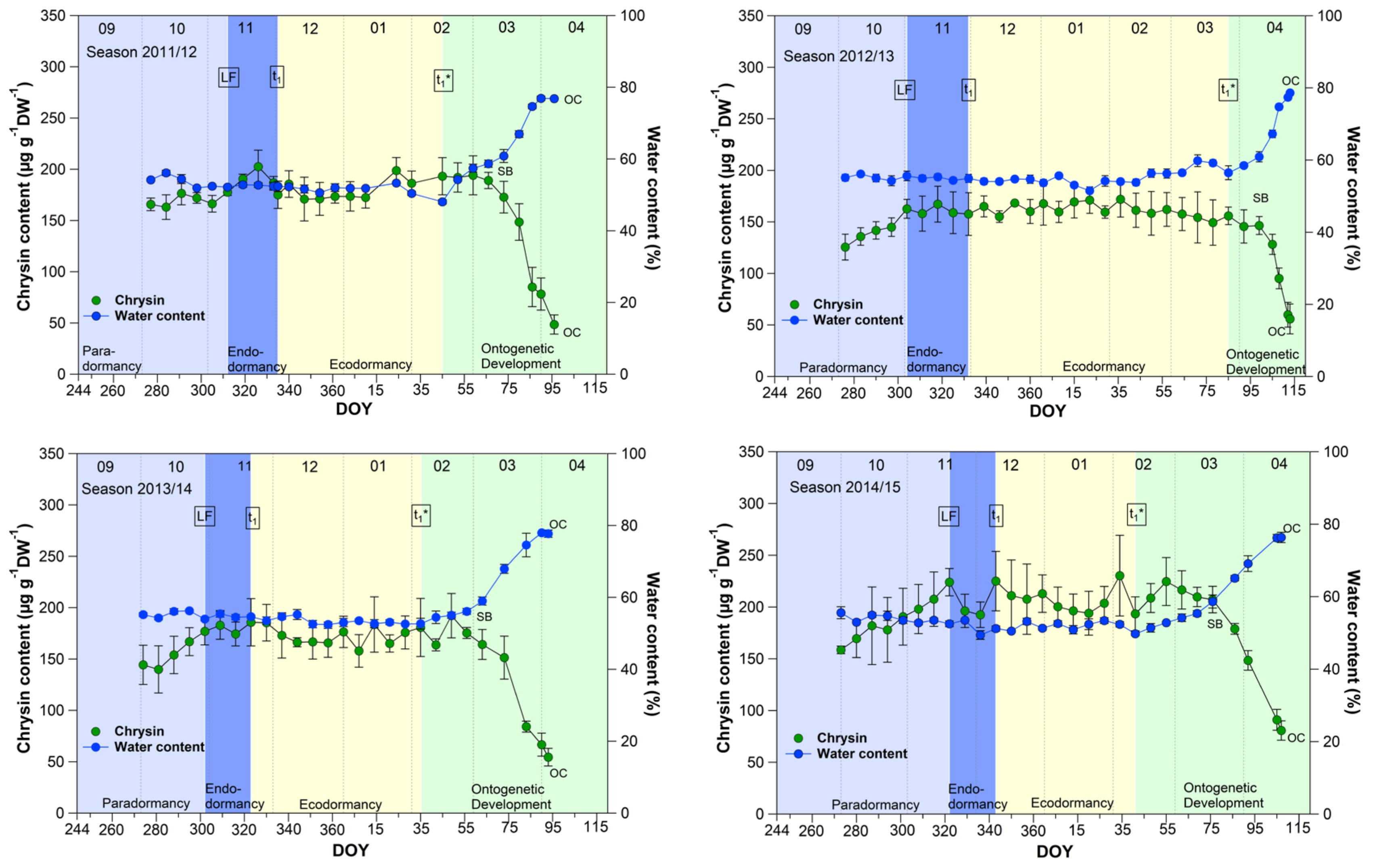
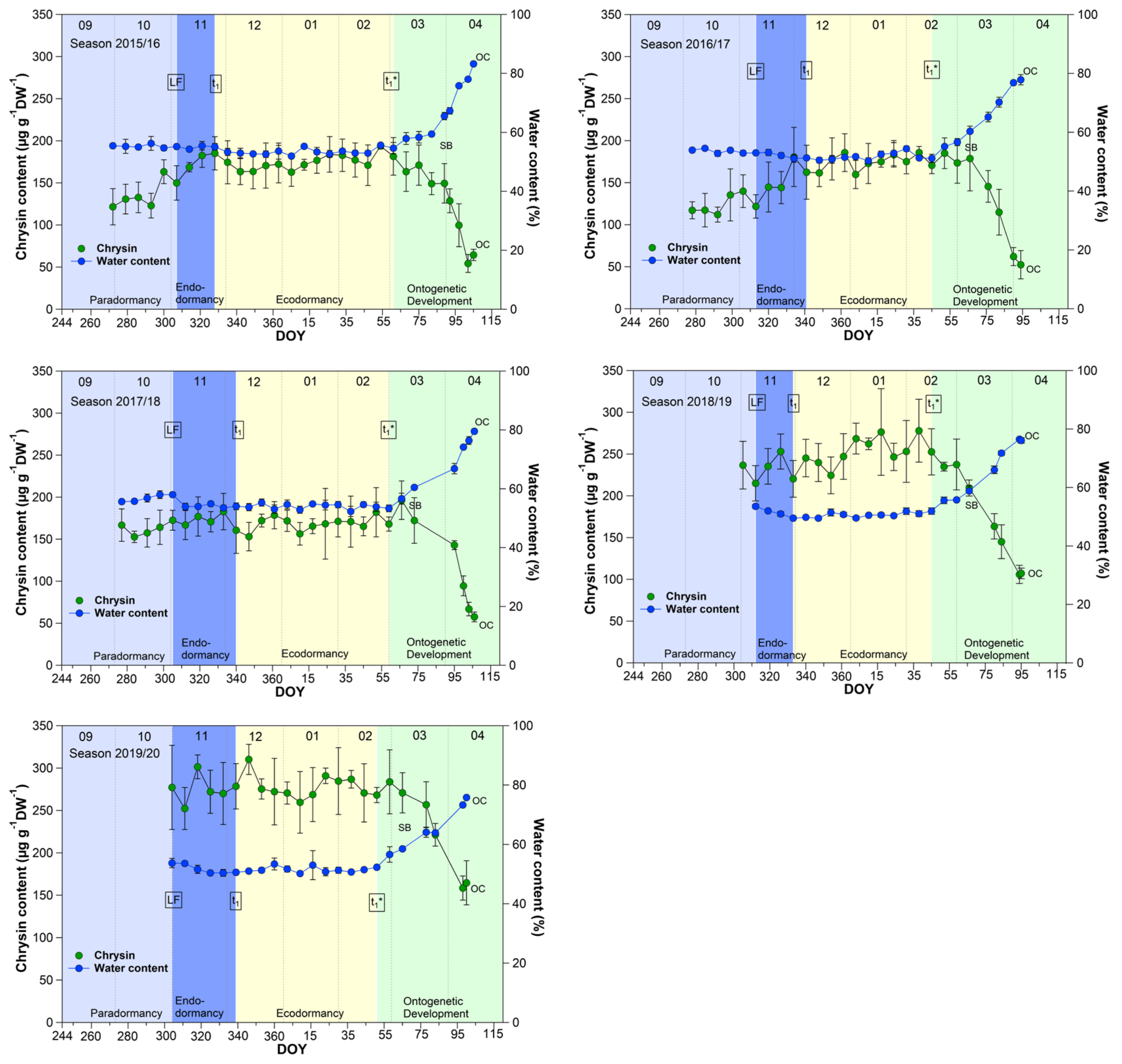
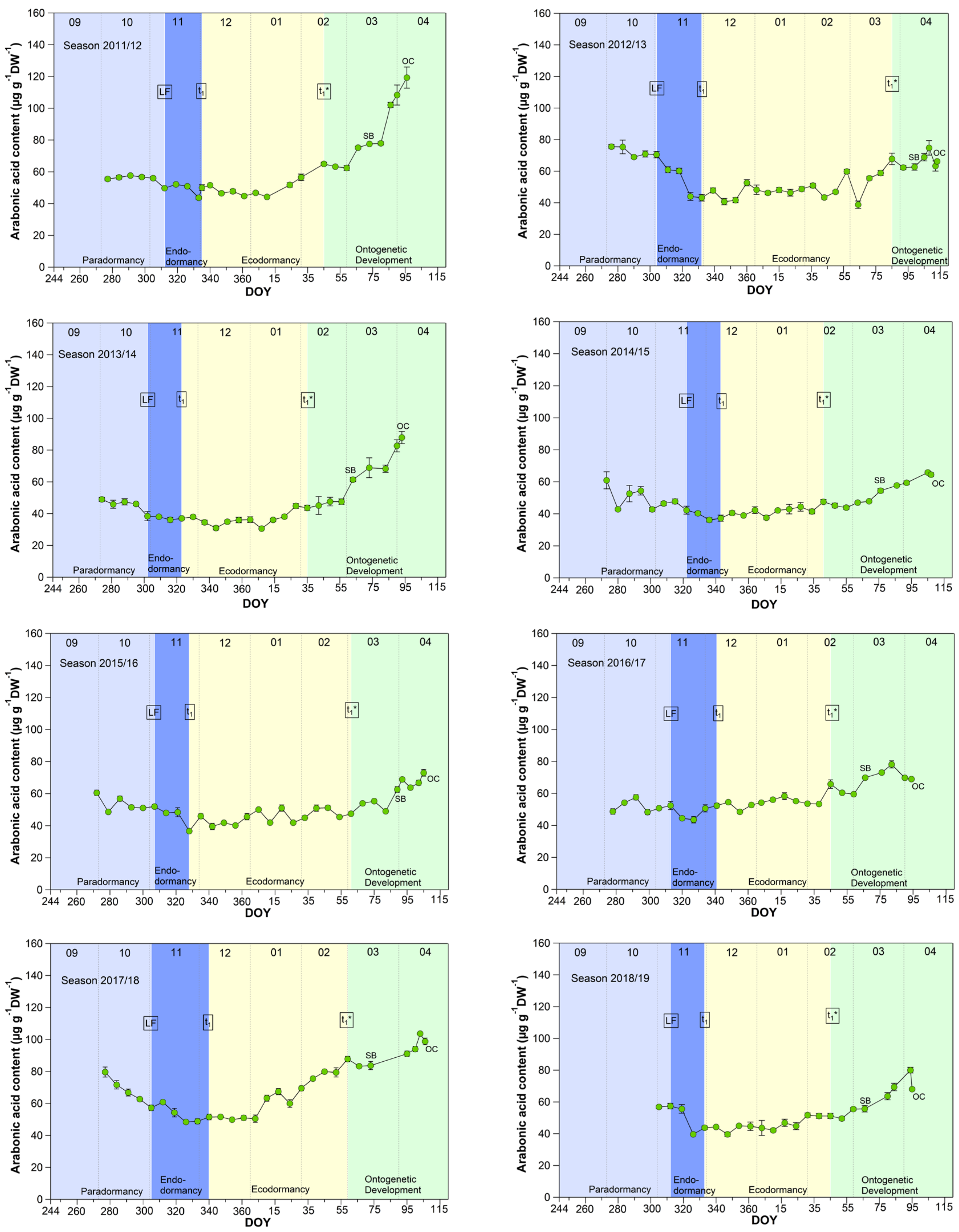
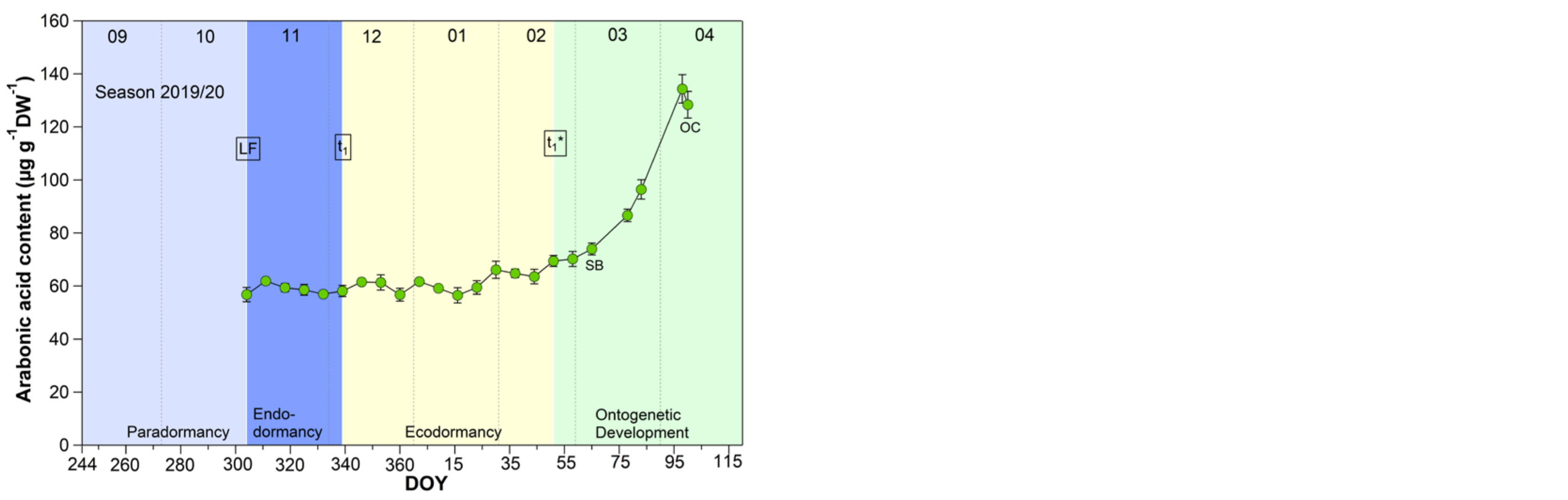
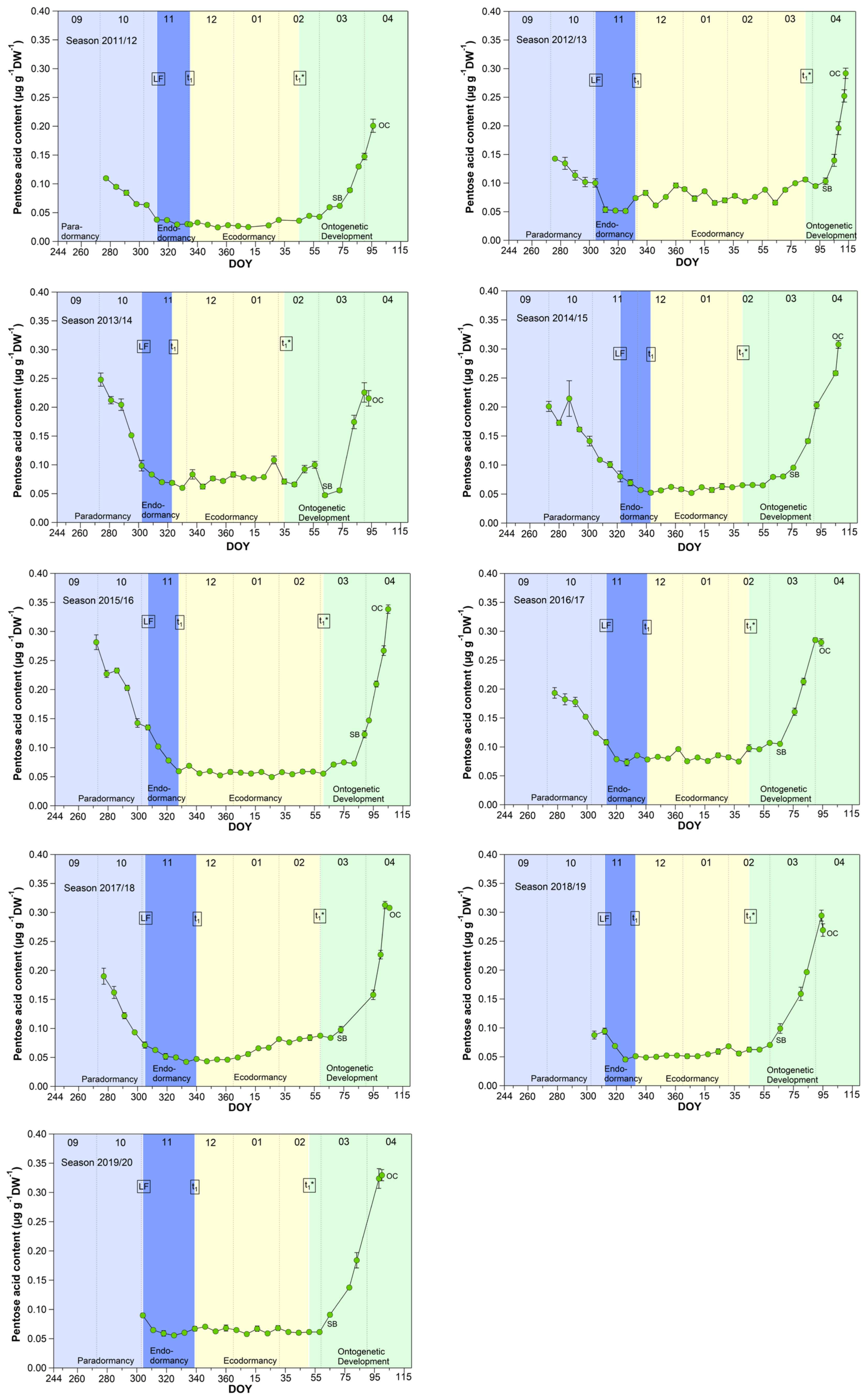
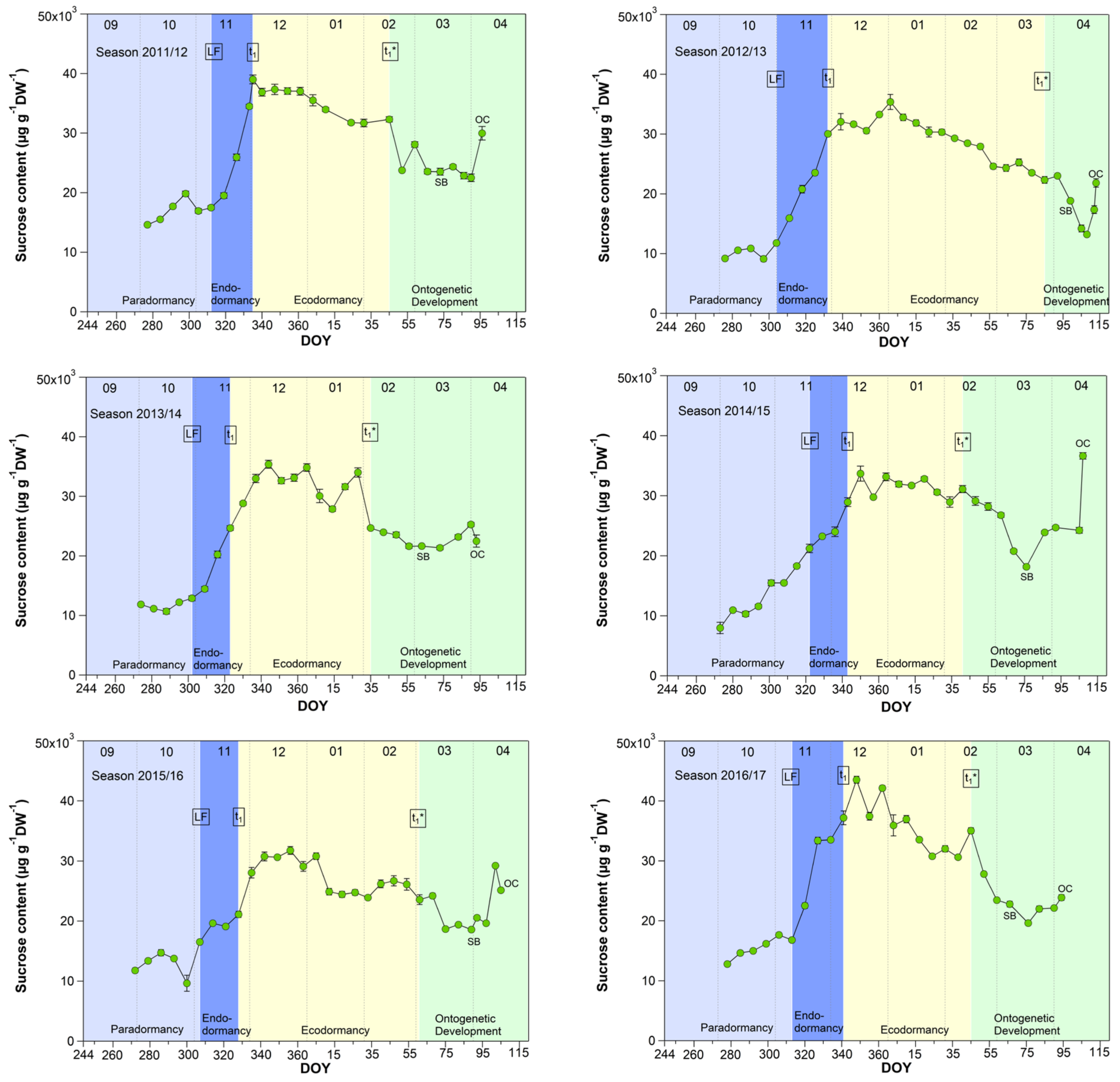
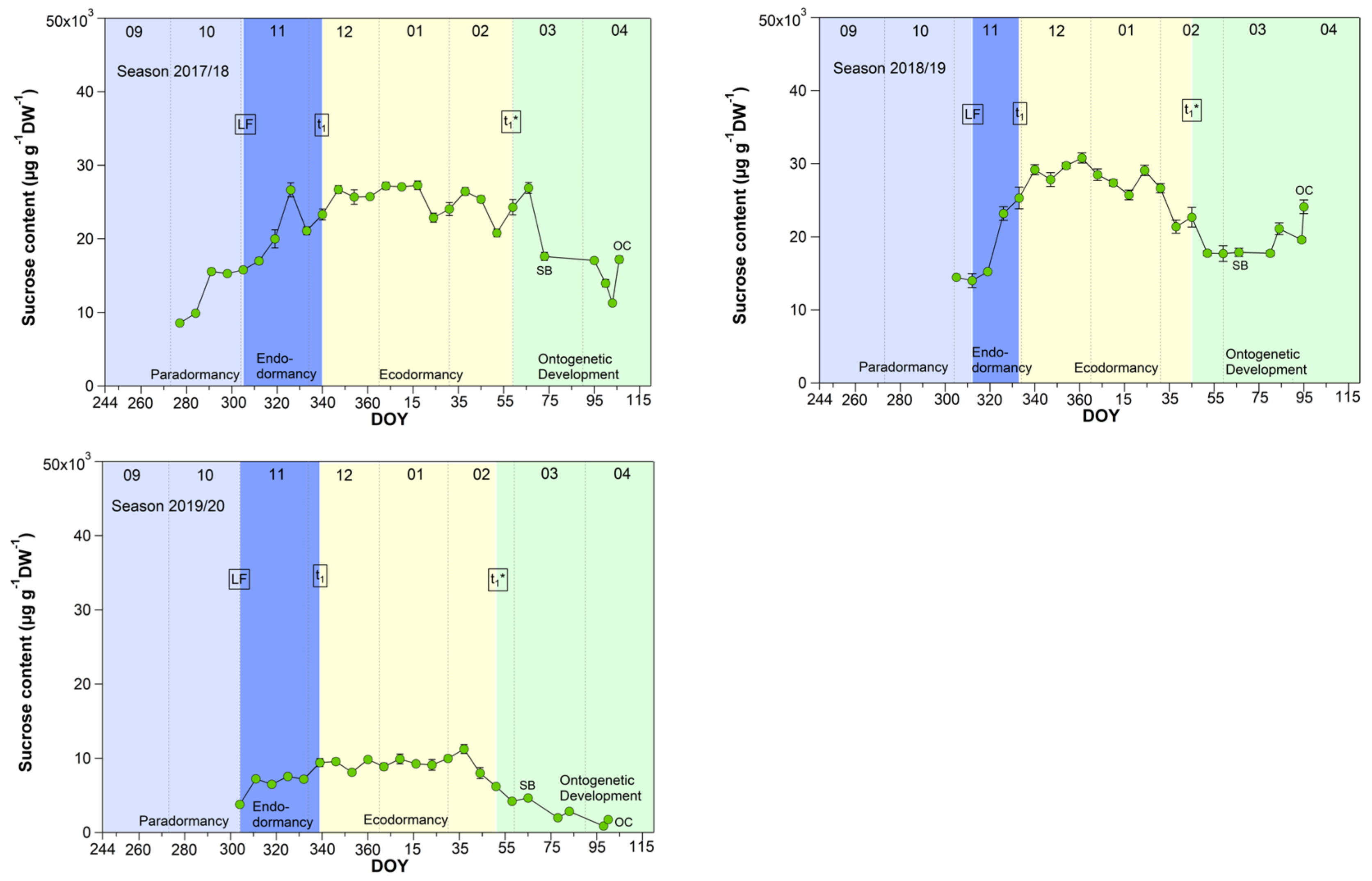
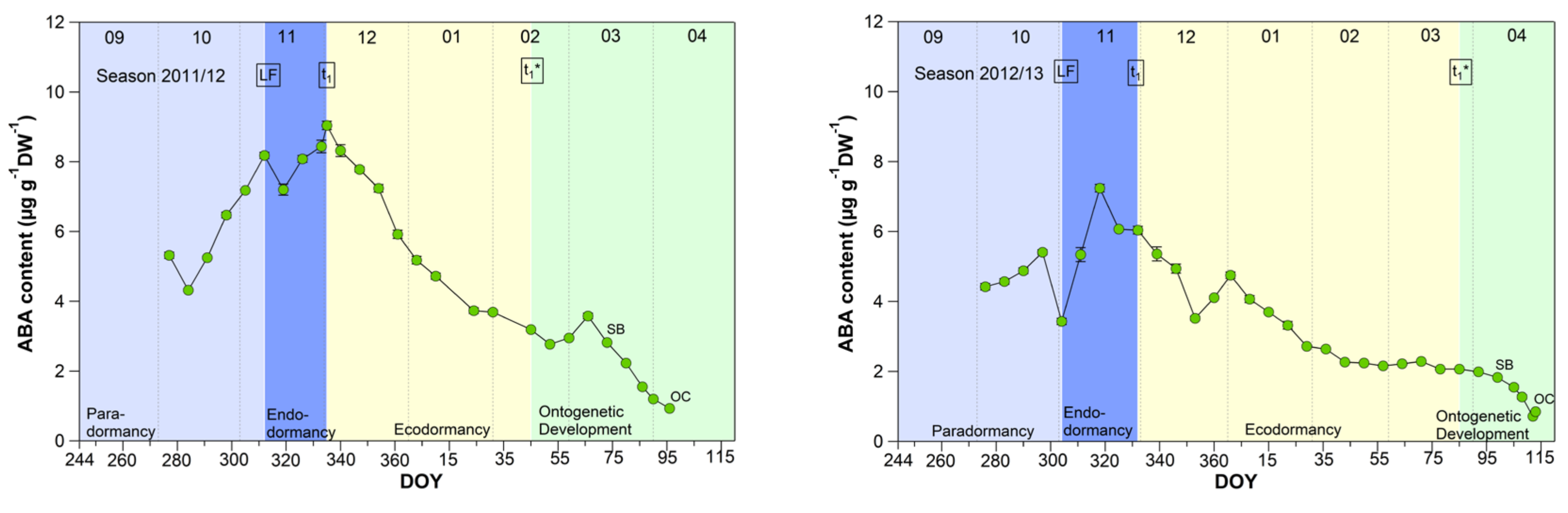
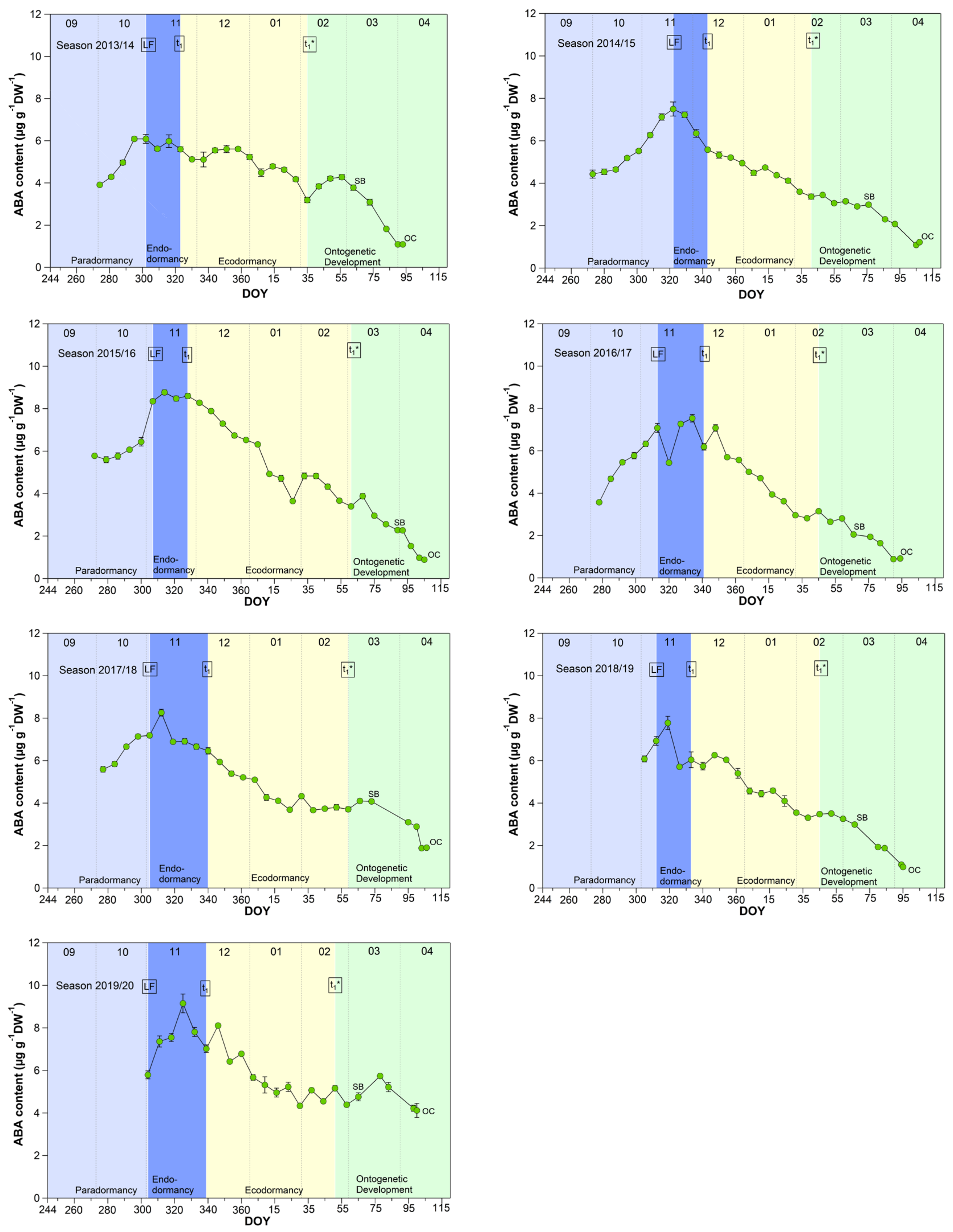
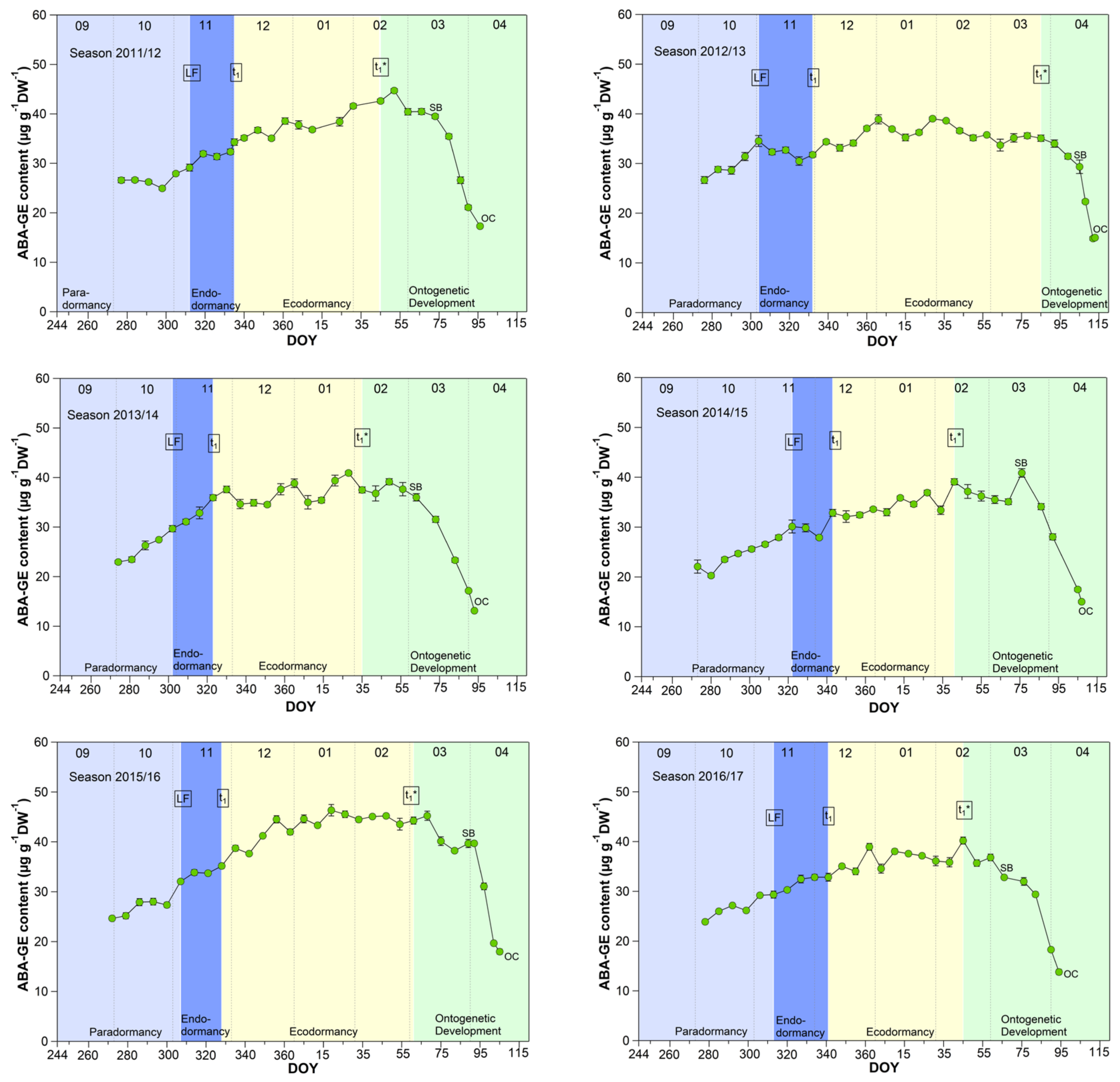
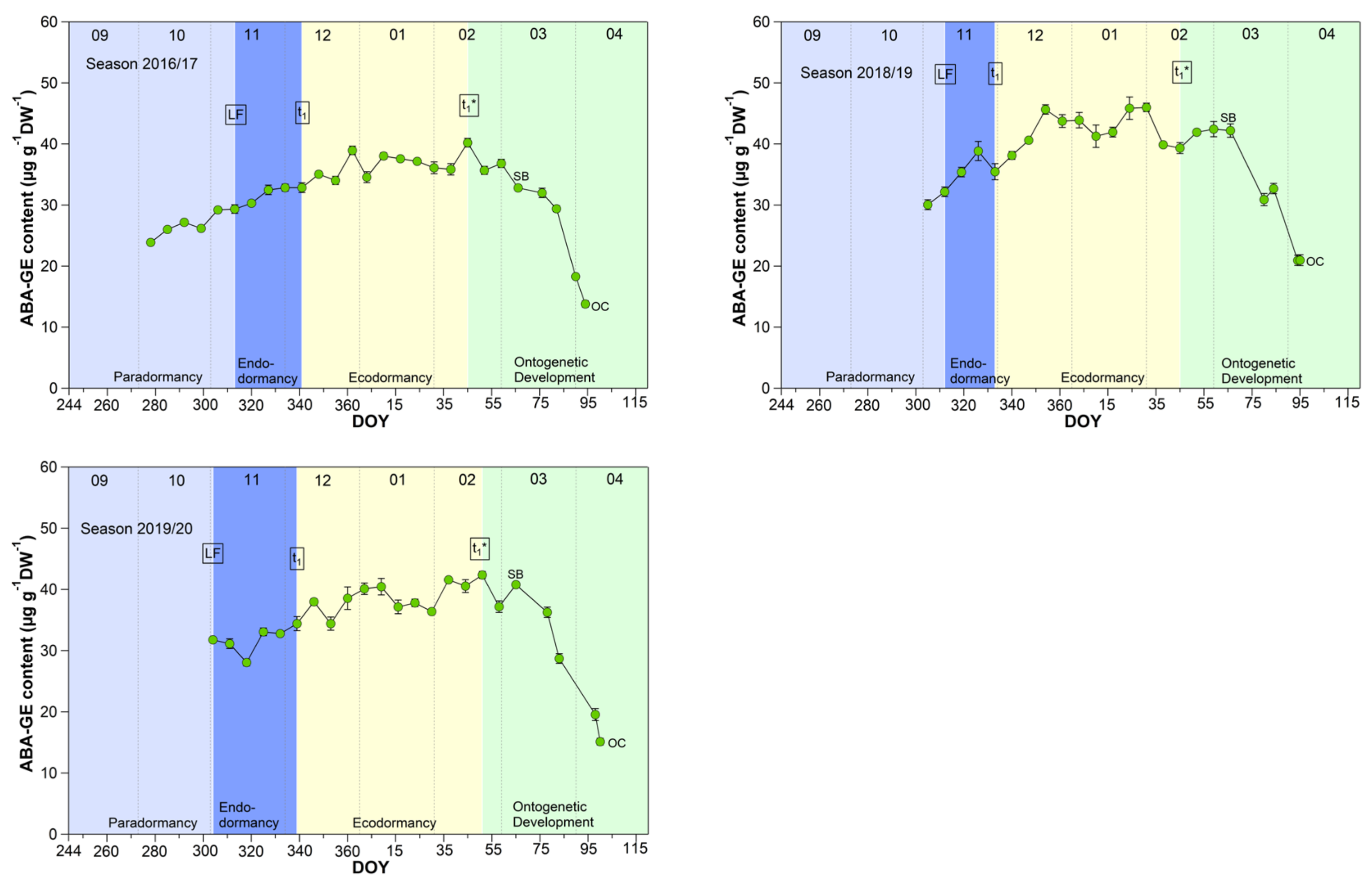
Here we report on metabolites found in a targeted profiling of ‘Summit’ flower buds for nine years, which could be indicators for the timing of endodormancy release (t1) and beginning of ontogenetic development (t1*). Investigated metabolites included chrysin, arabonic acid, pentose acid, sucrose, abscisic acid (ABA), and abscisic acid glucose ester (ABA-GE). Chrysin and water content showed an almost parallel course between leaf fall and t1*. After ‘swollen bud’, water content raised from ~60 to ~80% at open cluster, while chrysin content decreased and lost its function as an acetylcholinesterase inhibitor. Both parameters can be suitable indicators for t1*. Arabonic acid showed a clear increase after t1*. Pentose acid would be a suitable metabolite to identify t1 and t1*, but would not allow describing the ecodormancy phase, because of its continuously low value during this time. Sucrose reached a maximum during ecodormancy and showed a significant correlation with air temperature, which confirms its cryoprotective role in this phase. The ABA content showed maximum values during endodormancy and decreased during ecodormancy, reaching 50% of its content t1 at t1*. It appears to be the key metabolite to define the ecodormancy phase. The ABA-GE was present at all stages and phases and was much higher than the ABA content and is a readily available storage pool in cherry buds.
Keywords: Prunus avium L.; cultivar Summit; dormancy phases; targeted metabolite profiling; chrysin; arabonic acid; pentose acid; sucrose; abscisic acid; abscisic acid glucose ester Prunus avium L.; cultivar Summit; dormancy phases; targeted metabolite profiling; chrysin; arabonic acid; pentose acid; sucrose; abscisic acid; abscisic acid glucose ester