Review

Beyond Proteostasis: Lipid Metabolism as a New Player in ER Homeostasis


1
Graduate Program in Cell and Developmental Biology, The University of British Columbia, Vancouver, BC V6T 1Z4, Canada
2
Centre for Molecular Medicine and Therapeutics, The University of British Columbia, Vancouver, BC V5Z 4H4, Canada
3
Healthy Starts Theme, British Columbia Children’s Hospital Research Institute, Vancouver, BC V5Z 4H4, Canada
4
Department of Medical Genetics, The University of British Columbia, Vancouver, BC V5Z 4H4, Canada
*
Author to whom correspondence should be addressed.
Metabolites 2021, 11(1), 52; https://doi.org/10.3390/metabo11010052

Submission received: 22 December 2020 / Revised: 4 January 2021 / Accepted: 11 January 2021 / Published: 14 January 2021
(This article belongs to the Special Issue Caenorhabditis elegans Applied to Metabolism Research)

Abstract

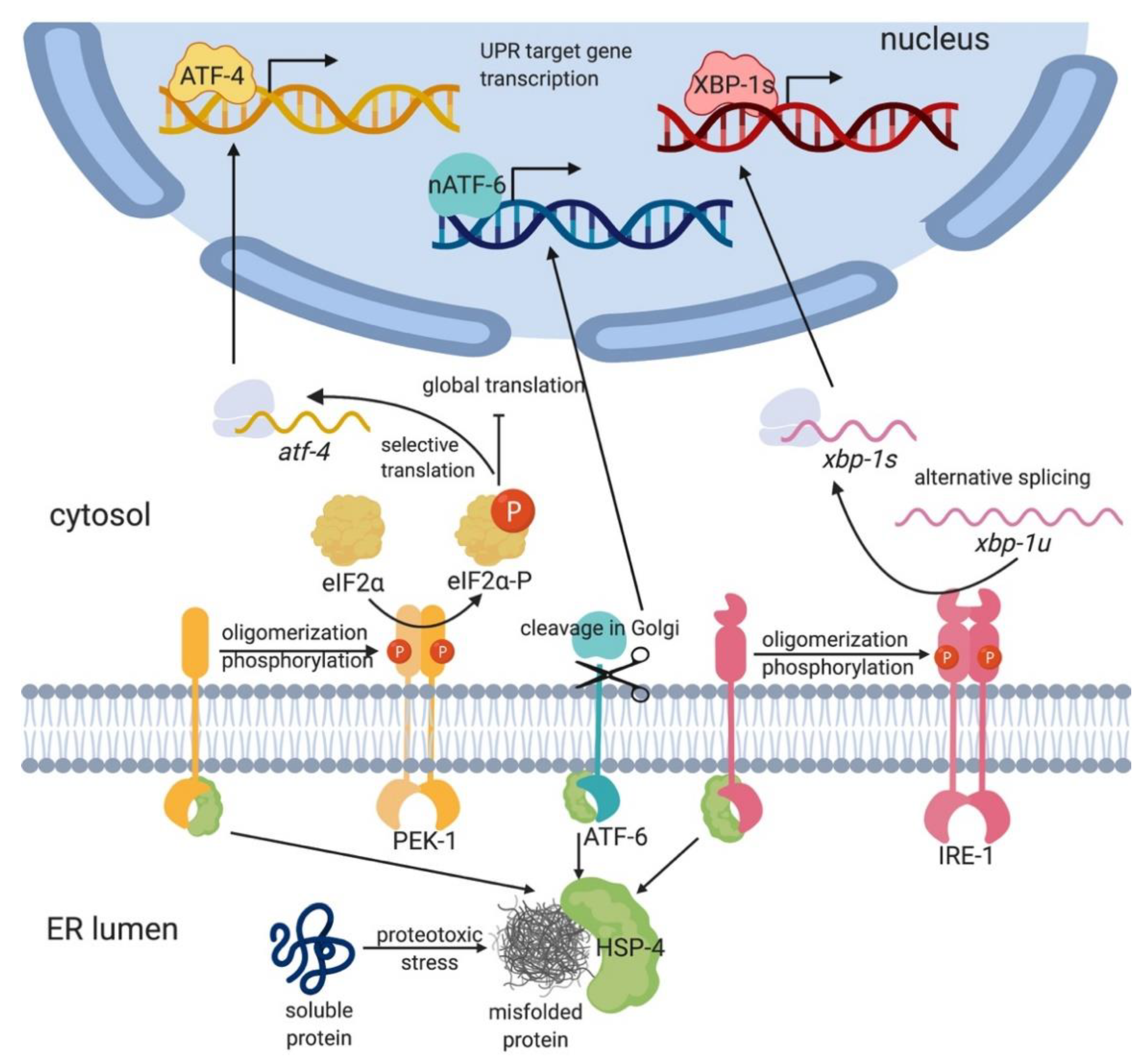
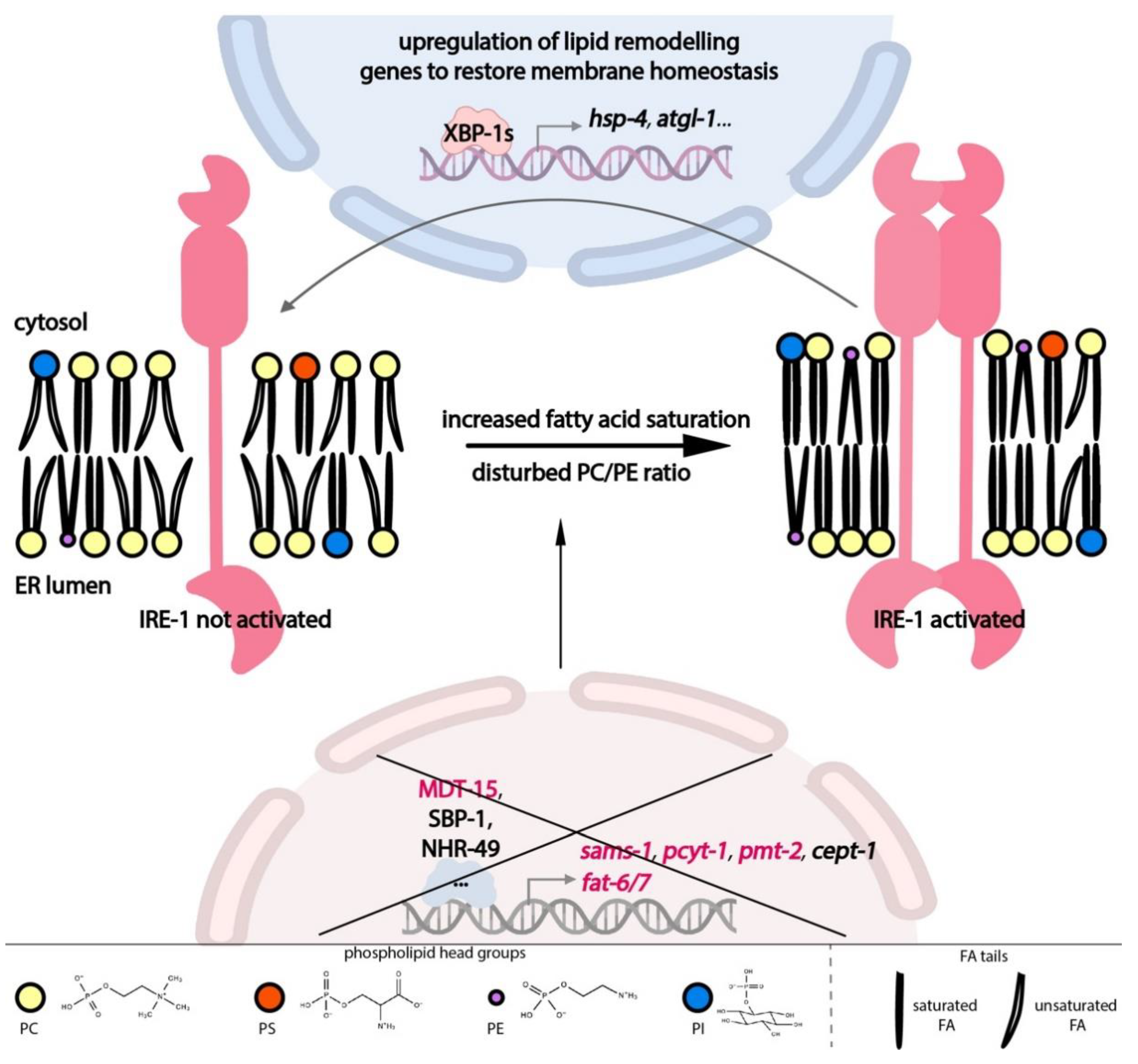
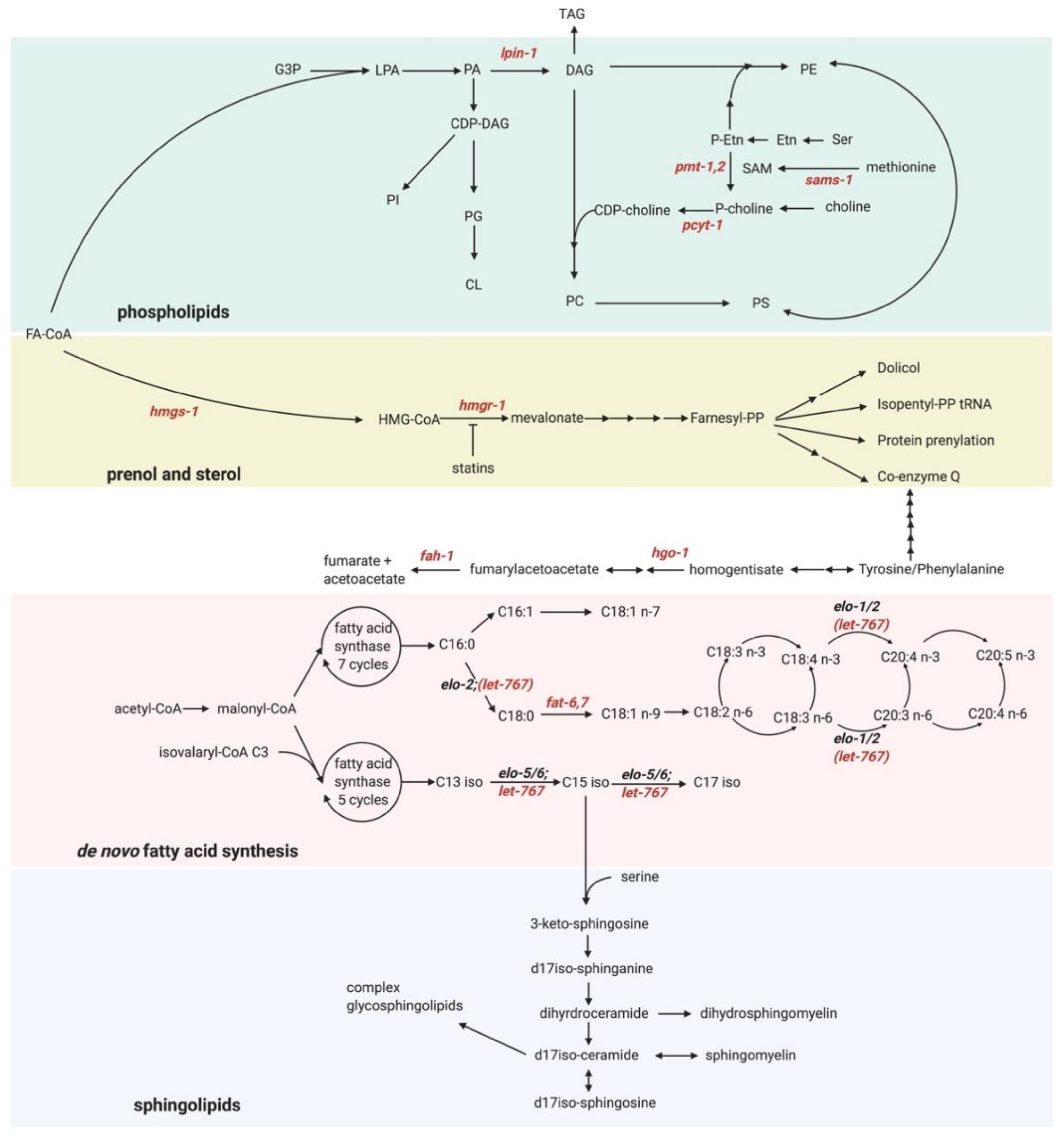
Biological membranes are not only essential barriers that separate cellular and subcellular structures, but also perform other critical functions such as the initiation and propagation of intra- and intercellular signals. Each membrane-delineated organelle has a tightly regulated and custom-made membrane lipid composition that is critical for its normal function. The endoplasmic reticulum (ER) consists of a dynamic membrane network that is required for the synthesis and modification of proteins and lipids. The accumulation of unfolded proteins in the ER lumen activates an adaptive stress response known as the unfolded protein response (UPR-ER). Interestingly, recent findings show that lipid perturbation is also a direct activator of the UPR-ER, independent of protein misfolding. Here, we review proteostasis-independent UPR-ER activation in the genetically tractable model organism Caenorhabditis elegans. We review the current knowledge on the membrane lipid composition of the ER, its impact on organelle function and UPR-ER activation, and its potential role in human metabolic diseases. Further, we summarize the bi-directional interplay between lipid metabolism and the UPR-ER. We discuss recent progress identifying the different respective mechanisms by which disturbed proteostasis and lipid bilayer stress activate the UPR-ER. Finally, we consider how genetic and metabolic disturbances may disrupt ER homeostasis and activate the UPR and discuss how using -omics-type analyses will lead to more comprehensive insights into these processes.
Keywords: lipid bilayer stress; unfolded protein response; unsaturated fatty acid; endoplasmic reticulum; phosphatidylcholine; lipidomics lipid bilayer stress; unfolded protein response; unsaturated fatty acid; endoplasmic reticulum; phosphatidylcholine; lipidomics