


Abstract
The pharmaceutical development of cannabis-based medicinal products is challenged by significant variability in the quality, composition, and standardization of plant-derived active pharmaceutical ingredients (APIs). In Ukraine, despite recent legislative liberalization, a substantial shortage of standardized raw materials continues to limit the development of innovative dosage forms. This study analyses international practices among API manufacturers to identify technological parameters necessary to overcome domestic market barriers and support the implementation of advanced drug delivery systems. Content analysis was conducted on regulatory documentation, professional literature, and manufacturers’ technical specifications. Candidate evaluation followed predefined inclusion and exclusion criteria. The study assessed compliance with Good Manufacturing Practice (GMP) requirements, extraction and purification technologies, the extent of analytical characterization, and batch-to-batch reproducibility. Purposive sampling enabled a comparative analysis of various technological approaches. Marked heterogeneity was observed in API standardization and analytical control indicators among manufacturers. Possession of a GMP certificate was found necessary but may be insufficient to ensure the pharmaceutical equivalence of materials. Differences in extraction methods and purification levels may affect stability profiles, pharmaceutical development strategies, and risk management related to final product quality. The findings demonstrate that manufacturer selection is a critical decision point in pharmaceutical development, with substantiated supplier choice directly influencing dosage form development and regulatory compliance.
1. Introduction
The medicinal use of Cannabis sativa (C. sativa L.) dates back to ancient traditional medicine systems worldwide and has served as a foundation for contemporary pharmacological interest [1].
Over the past decade, medicinal products derived from medical cannabis have been increasingly integrated into clinical practice worldwide. The evolving regulatory frameworks in the European Union, the United States, and Australia have significantly influenced the development of regulatory systems in other countries [2].
The growing number of countries permitting medical cannabis use in clinical settings necessitates the establishment of comprehensive systems for development and production, beginning with the cultivation of raw materials and the standardization of active ingredients [3]. In the context of global legislative liberalization, the pharmaceutical industry is transitioning from the use of substandard plant materials to highly standardized API that comply with GMP requirements [4,5].
C. sativa L. (commonly referred to as hemp) and its bioactive constituents, particularly cannabinoids, have been extensively investigated from both chemical and biological perspectives for several decades following the elucidation of the structure of its principal active compound, Δ9-tetrahydrocannabinol (Δ9-THC). The pharmacological and psychotropic effects of the plant are largely associated with this group of compounds, especially Δ9-THC, which is predominantly synthesized in the leaves and female inflorescences. In addition to Δ9-THC, cannabis contains a variety of non-psychoactive cannabinoids, including cannabidiol (CBD), cannabichromene (CBC), and cannabigerol (CBG), which exhibit diverse therapeutic properties. The plant also comprises numerous non-cannabinoid constituents representing different classes of natural compounds. Over 560 chemical constituents have been identified in Cannabis sativa L., including major and minor cannabinoids, terpenes, and other bioactive compounds relevant to pharmaceutical development and analytical standardization [6,7,8,9].
Extensive scientific research has examined the therapeutic potential of cannabinoids across multiple clinically relevant domains, such as chronic pain management, epilepsy, neurological disorders, and inflammatory diseases [10,11,12,13,14].
Amid the ongoing war in Ukraine, research has increasingly focused on the potential role of cannabinoids in managing post-traumatic stress disorder (PTSD), particularly among veterans and civilians experiencing prolonged combat-related stress [15,16,17,18,19].
Scientific research indicates that the chemical composition of C. sativa L. directs pharmaceutical development and informs the selection of delivery methods for active substances [20]. A number of articles are devoted to extraction methods [21,22,23], analytical techniques [24], and quality control [25]. The abundance of secondary metabolites, such as terpenes and minor cannabinoids, underscores the importance of extraction control to preserve the “entourage effect” and maintain compound stability [26,27,28]. The physicochemical profile of the raw material, whether as a pure isolate or a full-spectrum extract, affects the choice of excipients and the selection of quality control methods, both of which are essential to ensure batch-to-batch reproducibility of therapeutic effects [27]. Due to the low solubility of cannabinoids in water, nanoemulsions or self-microemulsifying drug delivery systems (SMEDDS) are often used to achieve stable gastrointestinal absorption [29,30,31].
Although APIs are widely available globally, standardization remains inconsistent. Differences in cultivation methods significantly affect the stability of secondary metabolite profiles. Such variability poses risks to the reproducibility of the physicochemical properties of final dosage forms [32].
These standardization challenges are evident in the State Pharmacopeia of Ukraine, which underscores the importance of physicochemical characterization and quality requirements for standardized cannabis extracts intended for pharmaceutical use [33].
In Ukraine, where legislation is being harmonized with EU standards, selecting an API supplier is a critical stage in pharmaceutical development.
Law of Ukraine No. 3528-IX, adopted on 21 December 2023, regulates the circulation of Cannabis plants for medical, industrial, and scientific purposes [34]. The law establishes a clear legal framework for the use of cannabis in scientific research, enabling legal studies within Ukrainian institutions. Consequently, the law facilitates large-scale clinical and laboratory studies of cannabinoids in Ukraine, which may serve as a foundation for new scientific advancements in medicine, pharmacy, and biology.
With the development of the cannabis-based pharmaceutical market in Ukraine and the implementation of pharmacy production technologies, it is increasingly important to analyse the API manufacturer landscape, assess manufacturer expertise, and compare product characteristics. A key motivation for this analysis is that, under the designation “standardized extract” of C. sativa L., global manufacturers supply substances with significantly different physicochemical properties. Consequently, selecting a specific API is a fundamental stage in pharmaceutical development rather than a routine procurement decision.
The current literature often bypasses the “technological docking” stage between the physicochemical profile of the raw material and its compatibility with innovative nanocarriers. These differences may influence manufacturing standards, authorization pathways, and quality assurance procedures, ultimately affecting the comparability and reproducibility of pharmaceutical products derived from C. sativa L.
This study aims to comprehensively map and technologically profile global Suppliers of medical cannabis APIs to assess their scientific value for pharmaceutical development in Ukraine. Instead of providing experimental validation of APIs, the research focuses on identifying technological patterns and variability relevant to pharmaceutical development.
This research presents the first structured technological mapping of the global medical cannabis API landscape in relation to Ukrainian pharmaceutical development. It constitutes an exploratory analysis of an emerging and under-researched field.
2. Search Strategy and Data Sources
A structured narrative review was conducted alongside a strategic landscape analysis. Unlike conventional literature reviews, this methodology integrates current regulatory data from manufacturers with pharmaceutical technology principles to provide a comprehensive framework for selecting APIs in emerging markets such as Ukraine.
2.1. Study Design and Information Sources
The methodological approach focused on a systematic collection of technological data and regulatory requirements rather than a quantitative statistical analysis of literature volumes. The methodology included content analysis of scientific literature, examination of the Ukrainian regulatory framework, and comparative evaluation of proposals from global manufacturers of cannabis raw materials and APIs for their potential application in pharmaceutical development.
The literature search was conducted using the following international scientometric databases: PubMed (5043 results), Scopus (4285 results), Web of Science (2850 results), and Google Scholar (123,000 results). The search encompassed publications from 2015 to 2026.
The search strategy utilized the following keywords and their combinations: C. sativa L., standardization, pharmaceutical drug development, API producers, drug delivery systems, and bioavailability of cannabinoids.
2.2. Study Selection Process
The selection process focused on identifying publications that provide specific technical data on cannabinoid extraction and stabilization. This data established the baseline for the subsequent evaluation of international API suppliers.
Articles meeting the inclusion criteria underwent full-text assessment to confirm eligibility for further analysis. The transition from the scientific literature search to the final selection of 24 suppliers followed a multi-stage evaluation process. Candidates were evaluated for compliance with the Ukrainian regulatory framework (Law No. 3528-IX) and international GMP standards. The selection was further refined using the following criteria: (1) technological features of the API, including extraction and purification methods; (2) quality and standardization levels; (3) recommended scope of application, particularly suitability for advanced delivery systems; and (4) applied research and development (R&D) capabilities.
2.3. Eligibility Criteria
The inclusion criteria were as follows: peer-reviewed scientific articles, including original studies and systematic reviews; official regulatory documents; pharmacopeia monographs and current technical documentation from manufacturers; and publications addressing technological, pharmaceutical, or regulatory aspects of cannabinoid-based medicinal product development.
The included studies addressed technologies for the extraction and purification of cannabinoids, the physicochemical standardization of cannabinoid APIs, and the development of drug delivery systems, including nanoemulsions, SMEDDS, and liposomes. Studies investigating the bioavailability of cannabinoids were also included. Publications in English and Ukrainian were considered.
2.4. Exclusion Criteria
The following sources were excluded from the analysis: articles from non-peer-reviewed sources; conference abstracts lacking complete methodological descriptions (except for market reports when no alternative data sources were available); publications focused exclusively on socio-cultural aspects or recreational cannabis use without pharmaceutical or technological relevance; outdated sources rendered irrelevant by significant regulatory or scientific developments; and publications with inaccessible full texts or broken links to official manufacturer resources.
2.5. Analysis of Scientific Literature and Pharmaceutical Development
Current approaches to the development of cannabinoid-based dosage forms were analyzed, with particular attention to challenges related to low bioavailability and chemical instability. The analysis focused on innovative delivery systems, including SMEDDS, nanoemulsions, liposomal forms, transdermal systems, and sublingual systems.
2.6. Regulatory and Legislative Analysis (Ukraine)
Legislative restrictions and opportunities in Ukraine were analyzed based on current regulatory legal acts as of early 2026. The analysis primarily focused on the Law of Ukraine No. 3528-IX, which determines the legal status of medical cannabis and the conditions of scientific activity [34]; Resolutions of the Cabinet of Ministers of Ukraine (No. 282 [35], No. 1123 [36], No. 589 [37]) regarding licensing, import quotas, and recategorization of cannabinoids; and Orders of the Ministry of Health of Ukraine (No. 812 [38], which regulates general rules for manufacturing and quality control, and No. 1586 [39]). The analysis also considered forms of medicinal products permitted for pharmacy production. The list of permitted conditions is dynamic and is being expanded by the Ministry of Health (see Table 1).
Table 1.
Prescribed Conditions and Permitted Dosage Forms in Ukraine.
The requirements for mandatory registration of each transaction in the Electronic System for Accounting for Medical Cannabis Circulation and compliance with the Tetrahydrocannabinol (THC) content threshold (in dried straw of medical cannabis) of at least 0.3% for medical purposes were assessed.
2.7. Comparative Profiling of API Suppliers
For comparative analysis, 24 global suppliers of cannabis-based APIs were purposively selected. Selection criteria included frequent mention and high ranking in leading industry analytical reports, such as the Medical Cannabis Market Report 2024–2033 (IMARC Group), Global Medical Cannabis Market—Industry Trends and Forecast to 2032 (Data Bridge Market Research), and The Global Cannabis Report: 5th Edition (Prohibition Partners) [40]. These market reports were used solely for contextual industry mapping, not as primary scientific evidence. The purposive sampling approach prioritized technological diversity over statistical representativeness. The study examines a diverse array of medical cannabis products that, although marketed as standardized, display considerable regulatory and technological heterogeneity in their API profiles and manufacturing origins. Manufacturer selection was informed by regulatory, geographical, and technological factors, with particular emphasis on European manufacturers due to the high degree of regulatory harmonization within the European Union, including adherence to GMP and pharmacopeia standards.
Manufacturers with registered APIs or documented regulatory interactions in Ukraine were also prioritized, as this indicates practical access to raw materials for domestic pharmaceutical development.
Data were collected from publicly accessible official manufacturer websites between 1 November and 31 December 2025. Limitations of the study: Only information available online during this predefined period was included in the analysis. No direct communication with manufacturers was conducted. Selection criteria included presence in international marketing reports and the level of R&D maturity. The comparison parameters included: technological features: extraction methods (CO2 extraction, cold extraction), types of substances (isolates, distillates, full-spectrum oils); quality standards: compliance with European Union Good Manufacturing Practice (EU-GMP), Good Agricultural and Collection Practice (GACP) standards, availability of Drug Master File (DMF) and Certificate of Analysis (CoA); carrying out clinical research; possible specialization in R&D: suitability for the development of individual dosage forms. The GMP status of selected manufacturers was verified using official regulatory databases, including the EudraGMDP, FDA Orange Book, and publicly available records from Health Canada.
2.8. Synthesis and Systematization
To integrate the obtained data, a SWOT (Strengths, Weaknesses, Opportunities, Threats) analysis was conducted to identify strategies for selecting API suppliers for the Ukrainian market. Systematization of the results enabled classification of manufacturers by their ability to provide stable genetics and reproducible composition, which is critical for pharmaceutical development in line with the requirements of the State Pharmacopeia of Ukraine.
2.9. Terminology and Classification
Within this screening study, pharmaceutical terminology is applied according to the product’s position in the manufacturing value chain, rather than as rigid, isolated categories. Given the emerging status of the Ukrainian market, the terms “botanical raw material”, “standardized extract”, and “API” are considered as points along a continuum. “API” may be defined specifically for materials where the manufacturer explicitly claims GMP compliance for pharmaceutical use. It is recognized that these categories may overlap in practice, and the analysis focuses on their functional transition into finished dosage forms.
To ensure regulatory consistency, this study adheres to the following quality standards: GACP for primary production; EU-GMP for API manufacturing; DMF as the primary documentation for active substance quality; and CoA for batch-specific quality verification.
3. Regulatory Framework in Ukraine
The legalization of medical cannabis in Ukraine represents one of the most significant and complex healthcare and pharmaceutical reforms in recent decades. The enactment of the Law of Ukraine No. 3528-IX on 21 December 2023 established the basis for a new high-tech industry integrating the agricultural sector, advanced chemical manufacturing, and research-driven pharmaceutical production [34]. This legislative change marks a fundamental shift from total prohibition to stringent, lawful regulation, empowering R&D stakeholders to pursue innovation in the treatment of chronic pain, cancer, and neurological disorders.
Ukraine’s current regulatory framework operates through a multi-tiered system of legal acts, with each successive level providing further detail to the provisions established by the preceding one.
Distinguishing between medical and industrial hemp is essential for scientific research. Legislation establishes a specific threshold for THC content: medical cannabis must contain at least 0.3% THC in the dried strain. This threshold is decisive for R&D activities in plant breeding. Research institutions developing new varieties are required to maintain genetic stability to prevent unintended reclassification from industrial to medical hemp, which would alter protection and licensing requirements. Additionally, THC has been added to the list of substances with restricted circulation, enabling research into its interactions with other cannabinoids, such as CBD, CBG, and cannabinol (CBN), within pharmaceutical development. The legislation also delineates research priorities by specifying diseases and conditions for which medical cannabis may be prescribed. The primary focus areas include palliative care, neurology, and oncology (chronic pain, chemotherapy-induced nausea); neurology (multiple sclerosis, epilepsy, Parkinson’s disease); pediatric neurology (Dravet syndrome, Lennox–Gastaut syndrome); and infectious diseases (anorexia and weight loss associated with HIV/AIDS).
A significant restriction for developers is the prohibition of medical cannabis in smoking forms. This limitation encourages innovation in drug delivery systems, including the development of liposomal formulations, microemulsions, transdermal patches (pending future approval), and sublingual rapid-dissolution technologies. Special consideration is given to pediatric formulations, which must not exceed 25 mg/kg/day and require strict composition standardization [34,39].
Scientific institutions lacking in-house cultivation facilities must address the challenge of importing raw materials and seeds. This process is governed by a quota system, with allocations determined by the state based on applications from businesses and research organizations. Legislation permits the importation of seeds (at least second generation) and cannabis plant substances (API). However, exceeding the allocated quota, even for research purposes, is strictly forbidden. Consequently, R&D managers must accurately project material requirements one year in advance.
As a result, the regulatory constraints outlined above redirect attention from general raw material availability to the strategic selection of APIs, requiring a comprehensive analysis of the global suppliers’ landscape.
4. Global Landscape of Cannabis APIs and Strategic Evaluation
A notable advancement is the authorization to manufacture medicines from medical cannabis in pharmacies. This provision facilitates the development of personalized medicine, allowing drug formulations to be tailored to individual patient needs based on physician prescriptions. For the scientific community, this enables research into the following areas:
- excipients and stability: investigation of how various excipients (such as oils, alcohols, surfactants) may influence the bioavailability of cannabinoids in pharmaceutical preparations;
- synergy of components: examination of the impact of terpenes, when added to primary formulations, on therapeutic outcomes;
- express control methodology: development of quality control protocols for pharmacy-compounded drugs to ensure precise THC and CBD dosing.
Scientific and technological standards for standardized medical cannabis extracts guided the selection criteria for API suppliers. Previous content analysis of systematic reviews, randomized controlled trials, and regulatory documents from the FDA, EMA, and WHO demonstrates that variability in raw materials and low bioavailability of THC and CBD require the use of GMP-certified extracts with validated analytical methods, such as high-performance liquid chromatography and gas chromatography mass spectrometry, as well as advanced delivery systems, including SMEDDS and nanoemulsions [41,42,43,44,45,46,47,48,49]. Consequently, manufacturer proposals were analysed to ensure reproducible pharmacological properties in future drug products. To support in-depth scientific analysis, suppliers of raw materials for standardized medical cannabis extracts were investigated to facilitate the development of new dosage forms (see Table 2). Most operate production facilities in multiple countries, and some function as integrated companies encompassing development, production, and distribution.
Table 2.
Comparative characteristics of manufacturers of standardized medical cannabis raw materials.
Variability in publicly disclosed data arises from differences in transparency and reporting standards among manufacturers.
Comparative analysis and systematization of collected information facilitate the identification of products offered by manufacturers of standardized cannabis raw materials.
Variations in medical cannabis raw materials among manufacturers are primarily linked to extraction technologies, purification levels, dosage-form orientation, and the degree of cannabinoid composition standardization. Analysis of these discrepancies enables classification according to the following characteristics.
4.1. Degree of Purification and Composition: Distinctions Between Isolates and Full-Spectrum Products
A comparative assessment of manufacturing approaches demonstrates a strategic divergence between botanical preservation and chemical isolation. Manufacturers vary in the degree of purification and the composition of final cannabinoid products. Some companies prioritize full-spectrum extracts, which retain a broader profile of cannabinoids and terpenes derived from the plant. Producers such as SOMAÍ Pharma and DEMECAN report extraction technologies designed to maintain a wide range of phytochemical constituents.
Other manufacturers focus on producing highly purified isolates or pharmaceutical-grade cannabinoids. For instance, Linnea SA and KD Phyto report the production of purified botanical isolates with high cannabinoid content for pharmaceutical applications.
A separate category comprises companies engaged in the development of registered cannabinoid-based medicines. Jazz Pharmaceuticals manufactures the cannabidiol-based medicinal product Epidyolex®/Epidiolex®, which has received regulatory approval from the FDA and EMA for specific indications.
4.2. Dosage Forms and Delivery Methods
Manufacturers differ in the dosage forms intended for cannabis-derived raw materials. Some companies supply standardized plant material, such as dried inflorescences used as a pharmaceutical raw material. Producers, including Bedrocan and Aurora Medical, describe such approaches.
Other manufacturers focus on raw materials designed for specific pharmaceutical formulations. For example, Panaxia reports the development of cannabinoid formulations for sublingual delivery systems and other specialized dosage forms. In contrast, KD Phyto describes the production of water-soluble cannabinoids and the use of nanoemulsion technologies to enhance formulation properties and bioavailability.
This results in a technological spectrum that ranges from traditional herbal forms, such as inflorescences, to advanced solubilization and nano-delivery systems.
4.3. Level of Standardization and Genetic Stability
The level of standardization of plant material is another distinguishing characteristic among manufacturers. For example, Bedrocan reports using genetically standardized cultivars to ensure consistent cannabinoid composition across production batches.
Other producers cultivate multiple cannabis varieties to achieve different cannabinoid profiles. According to publicly available information, Tilray maintains a portfolio of numerous cultivars for the development of differentiated cannabinoid compositions.
4.4. Therapeutic Positioning
Several companies report involvement in research on therapeutic applications of cannabinoids. For example, Jazz Pharmaceuticals focuses on developing cannabinoid-based medicinal products for neurological disorders. Other manufacturers describe research collaborations and clinical investigations addressing various therapeutic indications, including chronic pain, inflammatory diseases, and neurological conditions.
4.5. Extraction Technologies and Purity
Extraction methods constitute an additional differentiating factor among manufacturers. Reported technologies include supercritical CO2 (SC-CO2) extraction, cold extraction, and other purification methods designed to preserve cannabinoid profiles and remove impurities. The choice of extraction method distinguishes manufacturers targeting high-purity fractions from those prioritizing the “entourage effect”.
For example, Tilray reports using cold extraction methods to preserve volatile compounds, whereas other producers employ supercritical CO2 extraction to obtain purified cannabinoid fractions.
Based on manufacturers’ reported technological characteristics, standardized cannabis raw materials may be used in various pharmaceutical research and development. These areas include the development of APIs with controlled cannabinoid composition, the investigation of novel delivery systems, and the study of cannabinoid pharmacology in clinical research settings.
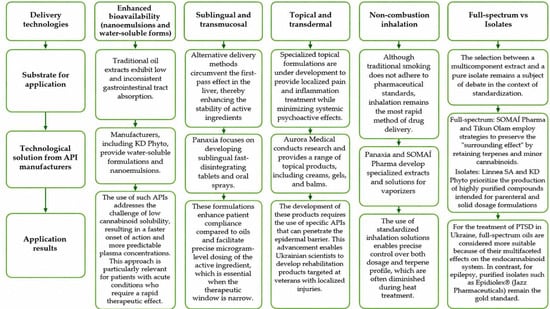
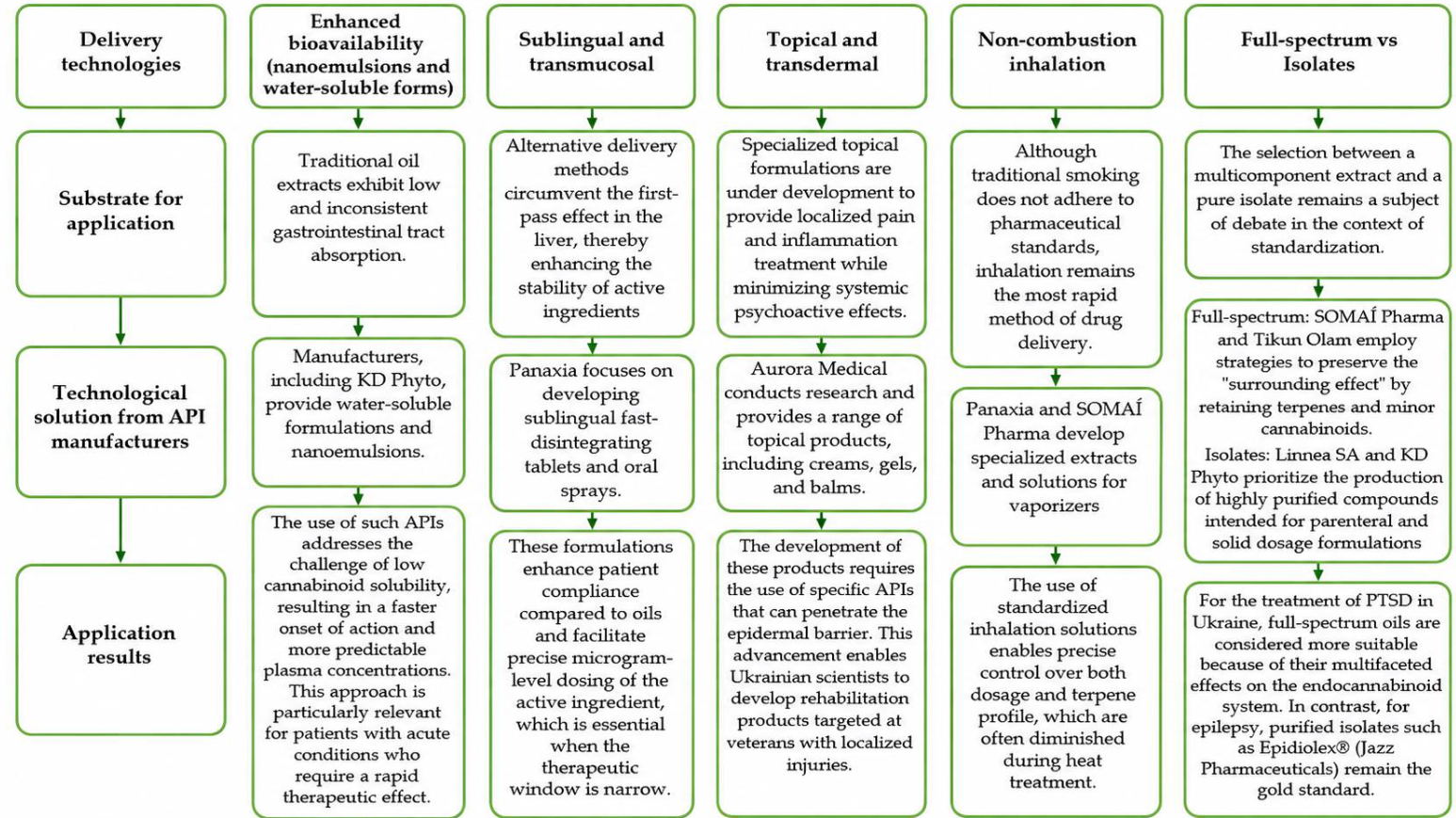
Based on the analysis of the technologies of global manufacturers of medical APIs, several key technological directions can be identified in cannabis (Figure 1).
Figure 1.
A Conceptual Framework for Selecting Medical Cannabis Delivery Systems: Integration of API Manufacturing Technologies and Pharmaceutical Formulations. Source: Compiled and synthesized by the authors.
The results should be interpreted as identifying consistent technological patterns rather than as definitive comparative conclusions.
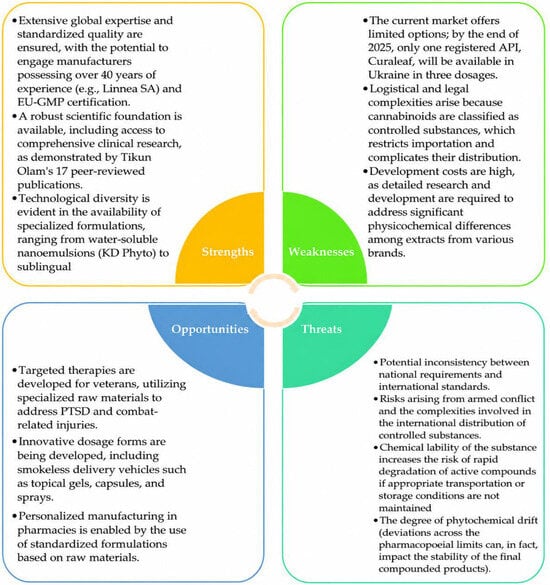
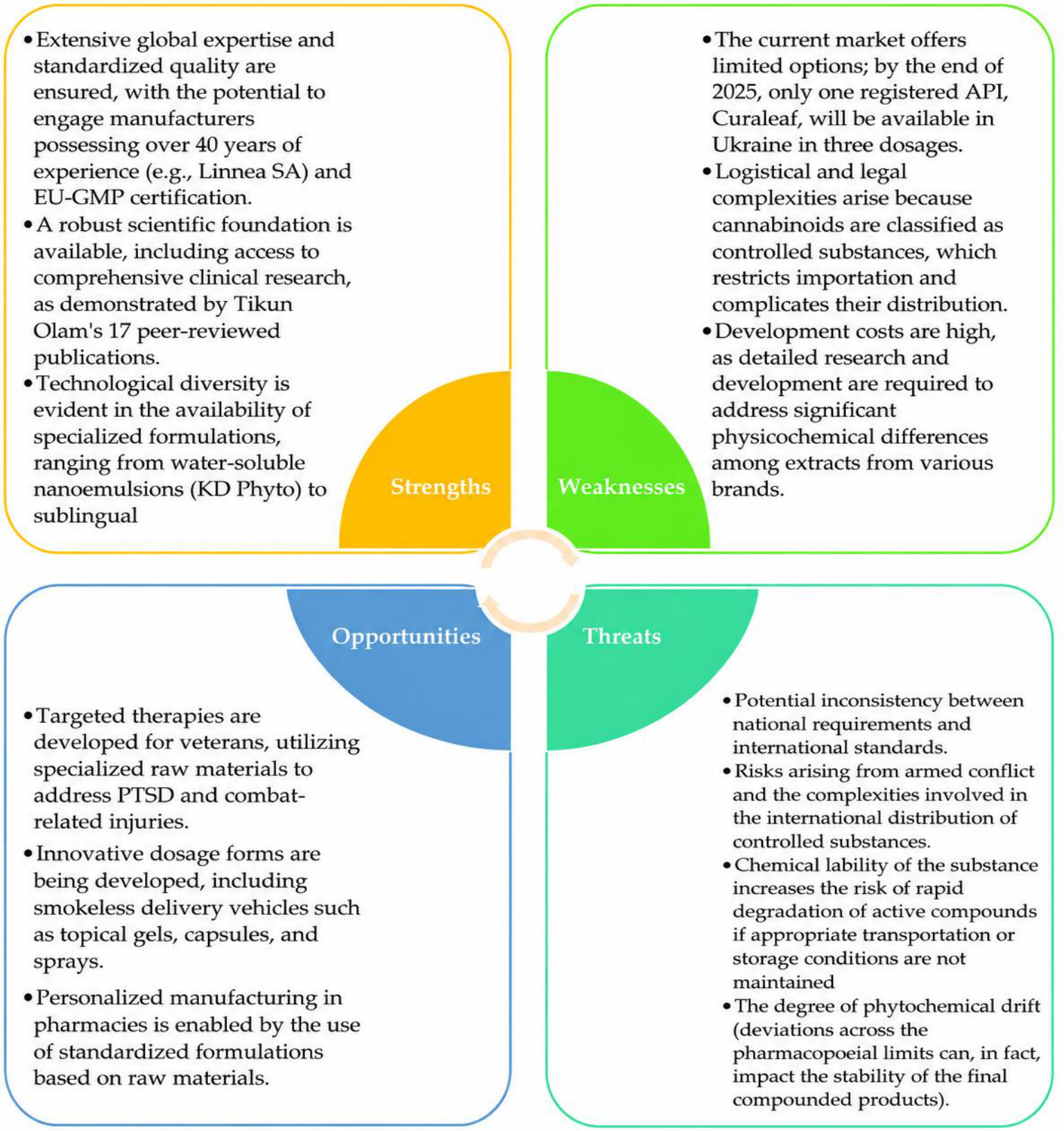
The selection of APIs in Ukraine involves a complex interplay of factors, requiring technological advantages to offset significant regulatory and safety risks, legislative constraints, and elevated raw material costs. A SWOT analysis was conducted to evaluate factors influencing the selection of raw material producers in the context of pharmaceutical development opportunities (Figure 2).
Figure 2.
Strategic Evaluation of Medical Cannabis API Procurement in Ukraine: SWOT Analysis of Opportunities and Risks in an Emerging Regulatory Environment. Source: Compiled and synthesized by the authors.
The SWOT analysis serves as a decision-support framework under conditions of regulatory uncertainty and limited data availability. Specific cases such as Medalchemy are referenced not for promotional purposes but as illustrative benchmarks for the technological standards essential to Ukraine’s integration of medical cannabis. This ‘supplier–developer’ model provides the most robust path for mitigating regulatory risks.
5. Discussion
5.1. Technological Heterogeneity and Standardization Challenges
The findings of this study should be interpreted within the framework of an exploratory technological analysis aimed at identifying reproducible patterns rather than establishing quantitative correlations. The observed variability in data disclosure among global manufacturers highlights the absence of a unified international reporting standard for pharmaceutical-grade cannabis APIs. This inconsistency reflects not only differences in transparency but also heterogeneity in regulatory maturity and quality assurance practices across jurisdictions.
The transformation of botanical raw materials into pharmaceutical-grade APIs requires the application of intensified extraction technologies capable of ensuring chemical stability, selectivity, and reproducibility. Although conventional solvent extraction remains widely used, modern approaches such as ultrasound-assisted extraction (UAE) and SC-CO2 extraction provide significant technological advantages. These methods enable selective fractionation of cannabinoids and terpenes through modulation of pressure and temperature parameters, thereby directly influencing impurity profiles, residual solvent levels, and physicochemical stability of the final API [20,21,22,28,48]. In particular, SC-CO2 extraction preserves thermolabile compounds and reduces oxidative degradation, supporting a more stable and pharmaceutically acceptable product profile [22,23,51,52].
Analytical characterization represents a critical component of API standardization. While high-performance liquid chromatography (HPLC) remains the gold standard for cannabinoid quantification, emerging techniques such as quantitative nuclear magnetic resonance (qNMR) provide absolute quantification without reliance on reference standards. This is particularly important for minor cannabinoids, where certified standards are often unavailable. The use of qNMR reduces inter-laboratory variability and enhances reproducibility, which is essential for ensuring batch-to-batch consistency in pharmaceutical development [24,25,53].
The coexistence of highly standardized pharmaceutical APIs and variable manufacturer-defined extracts reflects a dual-track market structure. This phenomenon is consistent with findings from recent pharmaceutical studies, which indicate that compliance with pharmacopoeial specifications does not necessarily guarantee therapeutic equivalence due to variability in minor constituents and excipient interactions [27,33]. Such variability constitutes a critical risk factor in the development of reproducible dosage forms, particularly when dealing with complex botanical matrices.
5.2. Impact of API Characteristics on Advanced Dosage Forms
The pharmaceutical development of cannabinoid-based medicines requires not only standardized APIs but also a rational formulation strategy. The concept of “technological docking” introduced in this study refers to the alignment of critical material attributes (CMAs) of APIs with formulation parameters to ensure consistent drug performance. This concept is aligned with the QbD paradigm, where the physicochemical characteristics of the active substance directly determine formulation behavior and therapeutic outcomes [29,43].
For purified cannabinoid isolates such as CBD, formulation development typically relies on lipid-based delivery systems, including SEDDS and nanoemulsions. These systems have demonstrated significant improvements in oral bioavailability, with reported increases ranging from two- to five-fold due to enhanced solubilization and lymphatic transport mechanisms [30,31,48,49]. Such approaches are particularly relevant given the inherently low aqueous solubility of cannabinoids.
In contrast, the formulation of full-spectrum extracts presents a higher level of complexity due to the presence of multiple cannabinoids and terpenes, which vary depending on plant chemotype. Terpenes play a dual role, influencing both pharmacological activity and physicochemical behavior. Experimental studies suggest that terpene composition may affect interfacial tension, emulsification efficiency, and drug release kinetics in lipid-based systems [26,28,54]. Consequently, variability in terpene profiles necessitates adaptive formulation strategies, including the selection of appropriate lipid matrices and surfactants.
Advanced delivery platforms, such as Pro NanoLipospheres (PNL), have been proposed to address this variability by incorporating natural absorption enhancers and stabilizing excipients. These systems enable improved bioavailability while maintaining formulation robustness despite fluctuations in API composition [41].
The physicochemical properties of cannabis-derived APIs, including purity, cannabinoid ratio, and terpene composition, directly influence solubility, interfacial behavior, and formulation stability. These parameters determine compatibility with delivery systems such as SMEDDS and nanoemulsions and ultimately affect the reproducibility of therapeutic outcomes.
Importantly, GMP certification alone does not fully ensure pharmaceutical equivalence. While GMP guarantees compliance with manufacturing processes, it does not eliminate variability inherent to botanical raw materials. Previous studies suggest that even GMP-compliant cannabis products may exhibit differences in cannabinoid composition and impurity profiles that could influence formulation performance and clinical consistency [25,30].
5.3. Implications for the Emerging Ukrainian Pharmaceutical Market
The development of the medical cannabis sector in Ukraine occurs within a highly regulated and resource-constrained environment. The limited availability of standardized APIs, combined with strict legislative controls, creates significant barriers to pharmaceutical innovation. Currently, the reliance on a restricted number of registered products limits the ability to develop diverse dosage forms, particularly solid and transdermal systems.
The variability in API characteristics identified in this study introduces additional complexity into supplier selection and risk assessment processes. For pharmaceutical developers in Ukraine, this variability necessitates a shift from traditional procurement strategies toward a more comprehensive evaluation framework that integrates technological, regulatory, and analytical criteria.
From a clinical perspective, the growing demand for cannabinoid-based therapies, particularly in the context of war-related conditions such as PTSD, underscores the importance of selecting APIs with well-characterized pharmacological profiles. The distinction between THC-dominant and balanced THC/CBD formulations is critical for therapeutic efficacy and safety. Scientific evidence supports the need for precise standardization to ensure predictable pharmacodynamic effects across patient populations [15,16,17].
The authorization of pharmacy-based compounding represents a significant opportunity for personalized medicine in Ukraine. However, the successful implementation of this model depends on the availability of APIs with consistent quality attributes. International models, such as the distribution framework employed by German companies, demonstrate the feasibility of integrating standardized APIs into pharmacy practice, providing a potential roadmap for the Ukrainian market.
5.4. Methodological Contribution: The Comparative Mapping Tool
A key contribution of this study is the identification of a critical gap between formal standardization and functional reproducibility of cannabis-derived APIs. The proposed comparative mapping approach provides a structured framework for evaluating manufacturers based on technological, regulatory, and analytical parameters.
This approach enables researchers and pharmaceutical developers to move beyond descriptive market analysis toward a more systematic assessment of API suitability for drug development. By integrating data on extraction technologies, analytical characterization, and formulation compatibility, the framework facilitates the alignment of cannabis-derived APIs with established pharmaceutical quality systems.
Importantly, the findings suggest that the primary limitation in the current market is not the availability of cannabinoids per se, but rather the lack of consistent technological transparency and standardized reporting practices among manufacturers.
5.5. Limitations and Future Directions
Although this study provides valuable insights, its scope is confined to an initial market screening. The analysis primarily describes the product landscape in Ukraine under the new regulatory framework, based on available data and technical specifications. A significant limitation is the exclusive reliance on manufacturer-declared information. While this approach is appropriate for preliminary market assessment, it is important to distinguish between regulatory-validated documentation (such as EU-GMP certifications or DMF summaries) and marketing-driven claims presented on corporate websites. This reliance on self-reported data introduces potential bias, as manufacturers may emphasize specific technological strengths while omitting detailed analytical or stability data. Consequently, the findings reflect the declared technological capabilities and strategic positioning of producers, rather than independently verified experimental outcomes.
Future research should include more detailed technological profiling through direct engagement with manufacturers to obtain comprehensive CoA. Subsequent studies should progress from theoretical technological coupling to experimental validation of API compatibility with innovative delivery systems, such as SMEDDS. This approach will facilitate the development of practical manufacturing protocols for standardized cannabis-based medicinal products.
6. Conclusions
The study provides a comprehensive analysis of the technological and regulatory landscape for medical cannabis APIs, leading to the following conclusions:
- (1)
- Successful pharmaceutical development in Ukraine depends on selecting manufacturers that integrate R&D with validated analytical methodologies. Such integrated approaches ensure that APIs are compatible with advanced delivery systems, including controlled-release and non-inhalation routes.
- (2)
- Regulatory frameworks are not merely legal constraints but active drivers of formulation strategy. Integrating regulatory analysis at the early stages of R&D is essential to mitigate risks and ensure that dosage forms meet international standards (EU-GMP, GACP).
- (3)
- The selection of cannabis-derived APIs is a multidimensional process. Formal pharmacopoeia compliance is a baseline, but functional reproducibility depends on manufacturer-specific technological transparency and batch-to-batch consistency.
- (4)
- The proposed framework enables Ukrainian researchers and pharmacies to move from price-based procurement toward the Quality by Design principle. This approach ensures the predictability of therapeutic effects, even when utilizing heterogeneous starting materials.
- (5)
- While exploratory in nature, this study serves as a conceptual roadmap for the emerging Ukrainian market, particularly for the development of individualized THC/CBD formulations in pharmacy settings under the new legislative framework (Law No. 3528-IX).
Author Contributions
Conceptualization, L.V., M.Y. and I.P.; methodology, M.Y. and I.P.; software, M.Y., I.P., I.Z.S. and O.K.; validation, L.V., M.Y., I.P., I.Z.S., K.D.G. and O.K.; formal analysis, M.Y.; investigation, L.V., M.Y., I.P. and K.D.G.; data curation, L.V., M.Y., I.P., I.Z.S. and O.K.; writing—original draft preparation, L.V., M.Y. and I.P.; writing—review and editing, L.V., M.Y., I.P., I.Z.S., K.D.G. and O.K.; visualization, M.Y., I.P. and I.Z.S.; supervision, L.V. and K.D.G.; project administration, L.V. and K.D.G.; funding acquisition, K.D.G. All authors have read and agreed to the published version of the manuscript.
Funding
This study was funded by European Union-NextGenerationEU, through the National Recovery and Resilience Plan of the Republic of Bulgaria, project № BG-RRP-2.004-0009-C02.
Institutional Review Board Statement
Not applicable.
Informed Consent Statement
Not applicable.
Data Availability Statement
No new data were created or analyzed in this study. Data sharing is not applicable to this article.
Conflicts of Interest
The authors declare no conflicts of interest.
References
- Dalli, M.; Azizi, S.; Azghar, A.; Saddari, A.; Benaissa, E.; Lahlou, Y.B.; Elouennass, M.; Maleb, A. Cannabis sativa L.: A Comprehensive Review on Legislation, Decriminalization, Phytochemistry, Antimicrobial Activity, and Safety. J. Food Drug Anal. 2023, 31, 408–435. [Google Scholar] [CrossRef] [Scilit] [PubMed]
- Jardim, C.; Delgado-Charro, M.B. The Regulatory Environment Surrounding Cannabis Medicines in the EU, the USA, and Australia. Pharmaceutics 2025, 17, 635. [Google Scholar] [CrossRef] [Scilit]
- Gruzieva, T.S.; Korchevnyy, A.I.; Palii, M.V.; Diachenko, K.O.; Korolenko, V.V. Traceability and Control as Levers to Prevent Leakage from Legal Circulation When Legalizing Medical Cannabis. Wiad. Lek. 2024, 77, 635–639. [Google Scholar] [CrossRef] [Scilit]
- Schlag, A.K.; Hindocha, C.; Zafar, R.; Nutt, D.J.; Curran, H.V. Cannabis Based Medicines and Cannabis Dependence: A Critical Review of Issues and Evidence. J. Psychopharmacol. 2021, 35, 773–785. [Google Scholar] [CrossRef] [Scilit]
- Spindle, T.R.; Bonn-Miller, M.O.; Vandrey, R. Changing Landscape of Cannabis: Novel Products, Formulations, and Methods of Administration. Curr. Opin. Psychol. 2019, 30, 98–102. [Google Scholar] [CrossRef] [Scilit]
- ElSohly, M.A.; Radwan, M.M.; Gul, W.; Chandra, S.; Galal, A. Phytochemistry of Cannabis sativa L. In Phytocannabinoids; Kinghorn, A.D., Falk, H., Gibbons, S., Kobayashi, J., Eds.; Progress in the Chemistry of Organic Natural Products; Springer International Publishing: Cham, Switzerland, 2017; Volume 103, pp. 1–36. [Google Scholar] [CrossRef] [Scilit]
- Rock, E.M.; Parker, L.A. Constituents of Cannabis sativa. In Cannabinoids and Neuropsychiatric Disorders; Murillo-Rodriguez, E., Pandi-Perumal, S.R., Monti, J.M., Eds.; Advances in Experimental Medicine and Biology; Springer International Publishing: Cham, Switzerland, 2021; Volume 1264, pp. 1–13. [Google Scholar] [CrossRef] [Scilit]
- Alves, P.; Amaral, C.; Teixeira, N.; Correia-da-Silva, G. Cannabis sativa: Much More beyond Δ9-Tetrahydrocannabinol. Pharmacol. Res. 2020, 157, 104822. [Google Scholar] [CrossRef] [Scilit]
- Oriola, A.O.; Kar, P.; Oyedeji, A.O. Cannabis sativa as an Herbal Ingredient: Problems and Prospects. Molecules 2024, 29, 3605. [Google Scholar] [CrossRef] [Scilit]
- Bilbao, A.; Spanagel, R. Medical Cannabinoids: A Pharmacology-Based Systematic Review and Meta-Analysis for All Relevant Medical Indications. BMC Med. 2022, 20, 259. [Google Scholar] [CrossRef] [Scilit] [PubMed]
- Bjørklund, G.; Oleshchuk, O.; Gontova, T.; Klantsa, M.; Lukanyuk, M.; Denefil, O.; Koshovyi, O.; Shanaida, V.; Shanaida, M. Exploring Natural Analgesics for Chronic Pain Management: Cannabinoids and Other Phytoconstituents. Curr. Med. Chem. 2025, 32, 6412–6434. [Google Scholar] [CrossRef] [Scilit] [PubMed]
- Sic, A.; George, C.; Gonzalez, D.F.; Tseriotis, V.-S.; Knezevic, N.N. Cannabinoids in Chronic Pain: Clinical Outcomes, Adverse Effects and Legal Challenges. Neurol. Int. 2025, 17, 141. [Google Scholar] [CrossRef] [Scilit]
- Farrelly, A.M.; Vlachou, S.; Grintzalis, K. Efficacy of Phytocannabinoids in Epilepsy Treatment: Novel Approaches and Recent Advances. Int. J. Environ. Res. Public Health 2021, 18, 3993. [Google Scholar] [CrossRef] [Scilit]
- Cristino, L.; Bisogno, T.; Di Marzo, V. Cannabinoids and the Expanded Endocannabinoid System in Neurological Disorders. Nat. Rev. Neurol. 2020, 16, 9–29. [Google Scholar] [CrossRef] [Scilit]
- Rodas, J.D.; George, T.P.; Hassan, A.N. A Systematic Review of the Clinical Effects of Cannabis and Cannabinoids in Posttraumatic Stress Disorder Symptoms and Symptom Clusters. J. Clin. Psychiatry 2024, 85, 23r14862. [Google Scholar] [CrossRef] [Scilit] [PubMed]
- Rehman, Y.; Saini, A.; Huang, S.; Sood, E.; Gill, R.; Yanikomeroglu, S. Cannabis in the management of PTSD: A systematic review. AIMS Neurosci. 2021, 8, 414–434. [Google Scholar] [CrossRef] [Scilit]
- Steardo, L.; Carbone, E.A.; Menculini, G.; Moretti, P.; Steardo, L.; Tortorella, A. Endocannabinoid System as Therapeutic Target of PTSD: A Systematic Review. Life 2021, 11, 214. [Google Scholar] [CrossRef] [Scilit] [PubMed]
- Metrik, J.; Stevens, A.K.; Gunn, R.L.; Borsari, B.; Jackson, K.M. Cannabis Use and Posttraumatic Stress Disorder: Prospective Evidence from a Longitudinal Study of Veterans. Psychol. Med. 2022, 52, 446–456. [Google Scholar] [CrossRef] [Scilit]
- Vermetten, E.; Wit, J. Medical Cannabis for Chronic Posttraumatic Stress Disorder in Dutch Veterans: A Health Care Evaluation. Med. Res. Arch. J. 2023, 11. [Google Scholar] [CrossRef] [Scilit]
- Baratta, F.; Simiele, M.; Pignata, I.; Ravetto Enri, L.; D’Avolio, A.; Torta, R.; De Luca, A.; Collino, M.; Brusa, P. Cannabis-Based Oral Formulations for Medical Purposes: Preparation, Quality and Stability. Pharmaceuticals 2021, 14, 171. [Google Scholar] [CrossRef] [Scilit]
- Lazarjani, M.P.; Young, O.; Kebede, L.; Seyfoddin, A. Processing and Extraction Methods of Medicinal Cannabis: A Narrative Review. J. Cannabis Res. 2021, 3, 32. [Google Scholar] [CrossRef] [Scilit]
- Sainz Martinez, A.; Lanaridi, O.; Stagel, K.; Halbwirth, H.; Schnürch, M.; Bica-Schröder, K. Extraction Techniques for Bioactive Compounds of Cannabis. Nat. Prod. Rep. 2023, 40, 676–717. [Google Scholar] [CrossRef] [Scilit]
- Al Ubeed, H.M.S.; Bhuyan, D.J.; Alsherbiny, M.A.; Basu, A.; Vuong, Q.V. A Comprehensive Review on the Techniques for Extraction of Bioactive Compounds from Medicinal Cannabis. Molecules 2022, 27, 604. [Google Scholar] [CrossRef] [Scilit]
- Stefkov, G.; Cvetkovikj Karanfilova, I.; Stoilkovska Gjorgievska, V.; Trajkovska, A.; Geskovski, N.; Karapandzova, M.; Kulevanova, S. Analytical Techniques for Phytocannabinoid Profiling of Cannabis and Cannabis-Based Products—A Comprehensive Review. Molecules 2022, 27, 975. [Google Scholar] [CrossRef] [Scilit]
- Malabadi, R.B.; Kolkar, K.P.; Castaño Coronado, K.V.; Chalannavar, R.K. Chalannavar Cannabis sativa: Quality Control Testing Measures and Guidelines: An Update. World J. Adv. Eng. Technol. Sci. 2025, 14, 110–129. [Google Scholar] [CrossRef] [Scilit]
- Bongiorno, P.; Lopalco, A.; Casiraghi, A.; Spennacchio, A.; Pitruzzella, A.; Lopedota, A.A.; Minghetti, P.; Denora, N. Digital Technologies Applied to Control the One-Step Process of Cannabis Olive Oil Preparations. Pharmaceutics 2023, 15, 870. [Google Scholar] [CrossRef] [Scilit]
- Gabarin, A.; Yarmolinsky, L.; Budovsky, A.; Khalfin, B.; Ben-Shabat, S. Cannabis as a Source of Approved Drugs: A New Look at an Old Problem. Molecules 2023, 28, 7686. [Google Scholar] [CrossRef] [Scilit] [PubMed]
- Pattnaik, F.; Nanda, S.; Mohanty, S.; Dalai, A.K.; Kumar, V.; Ponnusamy, S.K.; Naik, S. Cannabis: Chemistry, Extraction and Therapeutic Applications. Chemosphere 2022, 289, 133012. [Google Scholar] [CrossRef] [Scilit]
- Palrasu, M.; Wright, L.; Patel, M.; Leech, L.; Branch, S.; Harrelson, S.; Khan, S. Perspectives on Challenges in Cannabis Drug Delivery Systems: Where Are We? Med. Cannabis Cannabinoids 2022, 5, 102–119. [Google Scholar] [CrossRef] [Scilit]
- Żółnowska, I.; Gostyńska-Stawna, A.; Jelińska, A.; Stawny, M. Cannabis Medicine 2.0: Nanotechnology-Based Delivery Systems for Synthetic and Chemically Modified Cannabinoids for Enhanced Therapeutic Performance. Nanomaterials 2025, 15, 1260. [Google Scholar] [CrossRef] [Scilit]
- Lazzarotto Rebelatto, E.R.; Rauber, G.S.; Caon, T. An Update of Nano-Based Drug Delivery Systems for Cannabinoids: Biopharmaceutical Aspects & Therapeutic Applications. Int. J. Pharm. 2023, 635, 122727. [Google Scholar] [CrossRef] [Scilit] [PubMed]
- Vaou, N.; Voidarou, C.C.; Rozos, G.; Saldari, C.; Stavropoulou, E.; Vrioni, G.; Tsakris, A. Unraveling Nature’s Pharmacy: Transforming Medicinal Plants into Modern Therapeutic Agents. Pharmaceutics 2025, 17, 754. [Google Scholar] [CrossRef] [Scilit]
- Ukrainian Scientific Pharmacopoeial Center for Quality of Medicines. State Pharmacopoeia of Ukraine, 2nd ed.; Ukrainian Scientific Pharmacopoeial Center for Quality of Medicines: Kharkiv, Ukraine, 2025. [Google Scholar]
- Verkhovna Rada of Ukraine. Law of Ukraine No. 3528-IX on Amendments to Certain Legislative Acts of Ukraine Regarding State Regulation of the Circulation of Cannabis Plants for Medical, Industrial and Scientific Purposes. 2023. Available online: https://Zakon.Rada.Gov.Ua/Laws/Show/3528-20#Text (accessed on 1 February 2026).
- Cabinet of Ministers of Ukraine Resolution No. 282 of 6 April 2016 “Certain Issues of Licensing Business Activities in the Circulation of Narcotic Drugs, Psychotropic Substances and Precursors”. Available online: https://zakon.rada.gov.ua/laws/show/282-2016-%D0%BF (accessed on 1 February 2026).
- Cabinet of Ministers of Ukraine Resolution No. 1123 of 30 September 2024 “On Amendments to Resolution of the Cabinet of Ministers of Ukraine No. 282 of 6 April 2016”. Available online: https://zakon.rada.gov.ua/laws/show/1123-2024-%D0%BF (accessed on 1 February 2026).
- Cabinet of Ministers of Ukraine Resolution No. 589 of 3 June 2009 “On Approval of the Procedure of Conducting Activities Related to the Circulation of Narcotic Drugs, Psychotropic Substances, Precursors Including Medical Cannabis and Control Over Their Circulation”. Available online: https://zakon.rada.gov.ua/laws/show/589-2009-%D0%BF (accessed on 2 February 2026).
- Ministry of Health of Ukraine. Order No. 812 of 17 October 2012 “On Approval of the Rules of Manufacture and Quality Control of Medicinal Products in Pharmacies”. Available online: https://zakon.rada.gov.ua/laws/show/z1846-12#Text (accessed on 2 February 2026).
- Ministry of Health of Ukraine Order No. 1586 of 13 September 2024 “On Approval of the List of Dosage Forms of Medicinal Products That May Be Compounded in a Pharmacy from Cannabis Plant Substance, the List of Diseases and Conditions for Which They Are Prescribed, and the Peculiarities of Their Prescription and Medical Use”. Available online: https://zakon.rada.gov.ua/laws/show/z1424-24#Text (accessed on 2 February 2026).
- Prohibition Partners. The Global Cannabis Report, 5th ed.; Prohibition Partners: London, UK, 2024; Available online: https://prohibitionpartners.com/reports/the-global-cannabis-report-5th-edition/ (accessed on 10 October 2025).
- Cherniakov, I.; Izgelov, D.; Domb, A.J.; Hoffman, A. The Effect of Pro NanoLipospheres (PNL) Formulation Containing Natural Absorption Enhancers on the Oral Bioavailability of Delta-9-Tetrahydrocannabinol (THC) and Cannabidiol (CBD) in a Rat Model. Eur. J. Pharm. Sci. 2017, 109, 21–30. [Google Scholar] [CrossRef] [Scilit]
- Grotenhermen, F. Pharmacokinetics and Pharmacodynamics of Cannabinoids. Clin. Pharmacokinet. 2003, 42, 327–360. [Google Scholar] [CrossRef] [Scilit]
- Stella, B.; Baratta, F.; Della Pepa, C.; Arpicco, S.; Gastaldi, D.; Dosio, F. Cannabinoid Formulations and Delivery Systems: Current and Future Options to Treat Pain. Drugs 2021, 81, 1513–1557. [Google Scholar] [CrossRef] [Scilit] [PubMed]
- Namdar, D.; Anis, O.; Poulin, P.; Koltai, H. Chronological Review and Rational and Future Prospects of Cannabis-Based Drug Development. Molecules 2020, 25, 4821. [Google Scholar] [CrossRef] [Scilit]
- Wang, M.; Wang, Y.-H.; Avula, B.; Radwan, M.M.; Wanas, A.S.; Van Antwerp, J.; Parcher, J.F.; ElSohly, M.A.; Khan, I.A. Decarboxylation Study of Acidic Cannabinoids: A Novel Approach Using Ultra-High-Performance Supercritical Fluid Chromatography/Photodiode Array-Mass Spectrometry. Cannabis Cannabinoid Res. 2016, 1, 262–271. [Google Scholar] [CrossRef] [Scilit] [PubMed]
- Gieringer, D.; St. Laurent, J.; Goodrich, S. Cannabis Vaporizer Combines Efficient Delivery of THC with Effective Suppression of Pyrolytic Compounds. J. Cannabis Ther. 2004, 4, 7–27. [Google Scholar] [CrossRef] [Scilit]
- Kulpa, J.; Pruyn, S.A.; Hodgin, G. Letters From the Field: Challenges and Opportunities in the Development of Botanical Drugs From Cannabis. Clin. Ther. 2026, 48, 38–45. [Google Scholar] [CrossRef] [Scilit]
- Knaub, K.; Sartorius, T.; Dharsono, T.; Wacker, R.; Wilhelm, M.; Schön, C. A Novel Self-Emulsifying Drug Delivery System (SEDDS) Based on VESIsorb® Formulation Technology Improving the Oral Bioavailability of Cannabidiol in Healthy Subjects. Molecules 2019, 24, 2967. [Google Scholar] [CrossRef] [Scilit]
- Nakano, Y.; Tajima, M.; Sugiyama, E.; Sato, V.H.; Sato, H. Development of a Novel Nano-emulsion Formulation to Improve Intestinal Absorption of Cannabidiol. Med. Cannabis Cannabinoids 2019, 2, 35–42. [Google Scholar] [CrossRef] [Scilit]
- ISO/IEC 17025:2017; General Requirements for the Competence of Testing and Calibration Laboratories. International Organization for Standardization: Geneva, Switzerland, 2017.
- Isidore, E.; Karim, H.; Ioannou, I. Extraction of Phenolic Compounds and Terpenes from Cannabis sativa L. By-Products: From Conventional to Intensified Processes. Antioxidants 2021, 10, 942. [Google Scholar] [CrossRef] [Scilit] [PubMed]
- De Aguiar, A.C.; Vardanega, R.; Viganó, J.; Silva, E.K. Supercritical Carbon Dioxide Technology for Recovering Valuable Phytochemicals from Cannabis sativa L. and Valorization of Its Biomass for Food Applications. Molecules 2023, 28, 3849. [Google Scholar] [CrossRef] [Scilit]
- Marchetti, L.; Brighenti, V.; Rossi, M.C.; Sperlea, J.; Pellati, F.; Bertelli, D. Use of 13C-qNMR Spectroscopy for the Analysis of Non-Psychoactive Cannabinoids in Fibre-Type Cannabis sativa L. (Hemp). Molecules 2019, 24, 1138. [Google Scholar] [CrossRef] [Scilit] [PubMed]
- Aizpurua-Olaizola, O.; Soydaner, U.; Öztürk, E.; Schibano, D.; Simsir, Y.; Navarro, P.; Etxebarria, N.; Usobiaga, A. Evolution of the Cannabinoid and Terpene Content during the Growth of Cannabis sativa Plants from Different Chemotypes. J. Nat. Prod. 2016, 79, 324–331. [Google Scholar] [CrossRef] [Scilit] [PubMed]

Disclaimer/Publisher’s Note: The statements, opinions and data contained in all publications are solely those of the individual author(s) and contributor(s) and not of MDPI and/or the editor(s). MDPI and/or the editor(s) disclaim responsibility for any injury to people or property resulting from any ideas, methods, instructions or products referred to in the content. |
© 2026 by the authors. Published by MDPI on behalf of the Österreichische Pharmazeutische Gesellschaft. Licensee MDPI, Basel, Switzerland. This article is an open access article distributed under the terms and conditions of the Creative Commons Attribution (CC BY) license.