Review

Evolution, Validation and Current Challenges in Bioanalytical Methods for Praziquantel: From Fluorometry to LC–MS/MS

by
Edwin Y. Valladares Chávez
1,
Luis A. Moreno-Rocha
2,
Lucia Ortega Cabello
2,
Ponciano García-Gutiérrez
3,* and
Jorge E. Miranda-Calderón
2,*
1
Ciencias Farmacéuticas, Universidad Autónoma Metropolitana-Xochimilco, Calzada del Hueso 1100, Col. Villa Quietud, Coyoacán 04960, Mexico
2
Departamento de Sistemas Biológicos, Universidad Autónoma Metropolitana-Xochimilco, Calzada del Hueso 1100, Col. Villa Quietud, Coyoacán 04960, Mexico
3
Departamento de Química, Universidad Autónoma Metropolitana-Iztapalapa, San Rafael Atlixco 186, Col. Vicentina, Iztapalapa 09340, Mexico
*
Authors to whom correspondence should be addressed.
Sci. Pharm. 2026, 94(1), 4; https://doi.org/10.3390/scipharm94010004
Submission received: 9 October 2025 / Revised: 29 November 2025 / Accepted: 12 December 2025 / Published: 31 December 2025

Abstract

The accurate determination and quantification of praziquantel are essential for optimizing its therapeutic effectiveness in treating schistosomiasis and neurocysticercosis, two significantly neglected tropical diseases. Its challenging physicochemical profile, extensive metabolism, and stereochemical complexity requires robust analytical methods for reliable quantification in clinical, veterinary, and pharmaceutical samples. This review provides a comprehensive and critical evaluation of analytical strategies used for PZQ determination, spanning fluorometric and radiometric assays, HPLC–UV, LC–MS, LC–MS/MS, and enantioselective chromatographic approaches. Particular emphasis is placed on the evolution toward highly sensitive LC–MS/MS methods and their alignment with contemporary regulatory expectations, including ICH M10 requirements. These advancements have significantly improved sensitivity, specificity, and reproducibility, which are crucial for pharmacokinetic, pharmacodynamic, and bioequivalence studies. Enantioselective methods for distinguishing PZQ enantiomers and metabolites are discussed. The aim of these innovations is to increase praziquantel bioavailability, improve patient adherence, and support its continued use in mass drug administration programs. Finally, the review highlights implementation challenges in resource-limited settings and proposes analytical models to expand global bioanalytical capacity. Together, these insights provide a structured foundation for selecting and developing high-quality, regulatory-compliant analytical methods for PZQ.

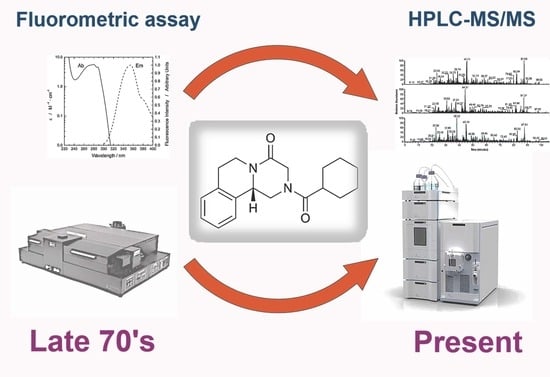
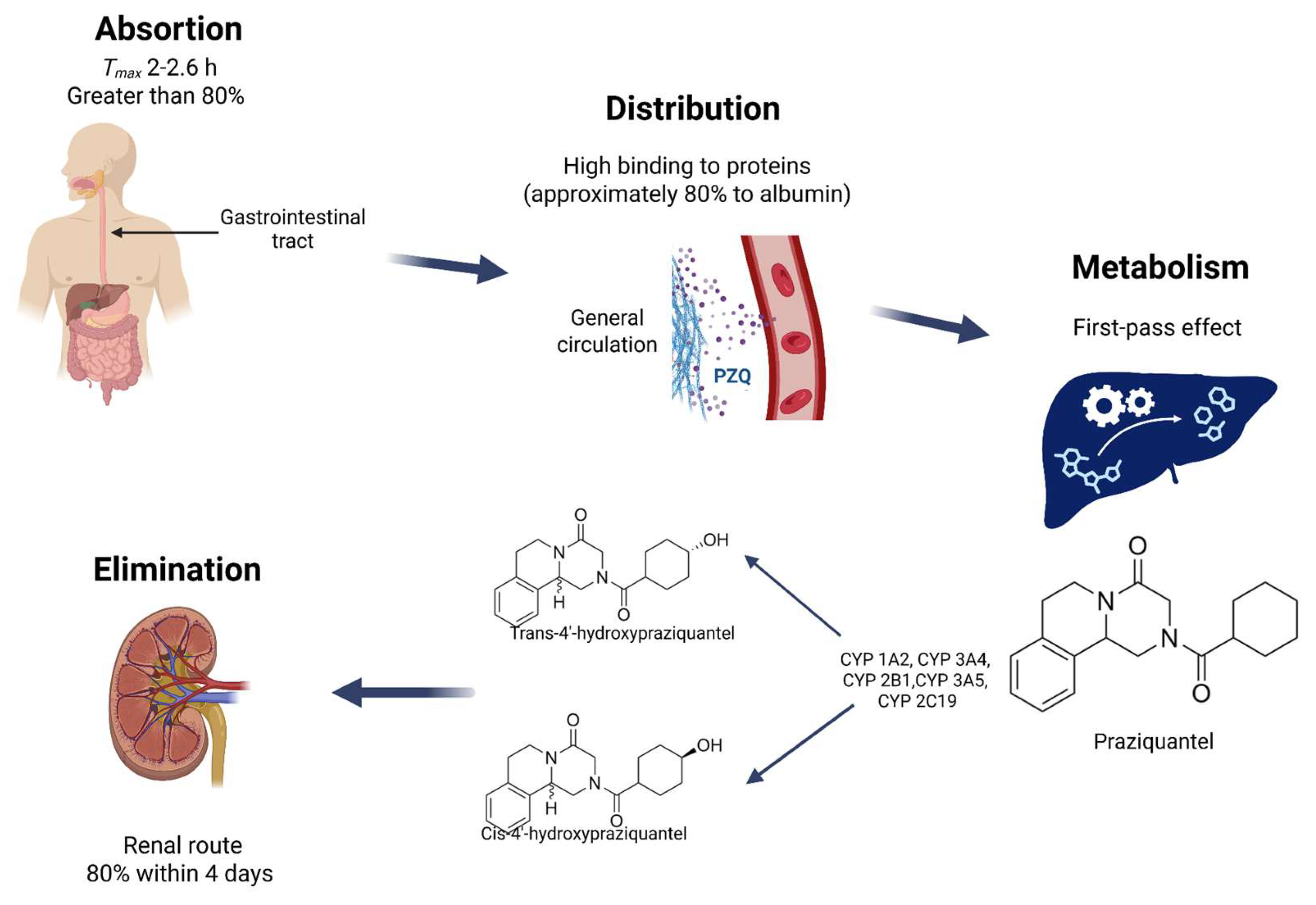
Graphical Abstract

1. Introduction

Praziquantel (PZQ) is the cornerstone therapeutic agent for schistosomiasis (SC) and neurocysticercosis (NC) [1,2], two major neglected tropical diseases that disproportionately affect populations in low-resource regions, where mass drug administration programs remain essential. In Latin America, PZQ is widely used for the treatment of cysticercosis and NC caused by ingestion of Taenia solium eggs [3]. Its long-standing clinical efficacy and favorable safety profile have secured its inclusion on the World Health Organization (WHO) List of Essential Medicines [4], underscoring its relevance to global public health initiatives.
PZQ has substantially reduced morbidity associated with SC and NC, improving long-term outcomes and quality of life in endemic regions [5,6]. Beyond its established anthelmintic effects, emerging evidence indicates potential antiviral properties, including the ability to mitigate virus-induced cellular damage, suggesting additional applications in aquaculture and infectious disease management [7]. Current research therefore focuses on improving its bioavailability, developing pediatric-friendly formulations, and evaluating combination therapies that could broaden its therapeutic utility while mitigating the risk of emerging resistance [8,9].
From an analytical standpoint, PZQ presents unique challenges [10]. Its extensive first-pass metabolism, marked stereochemical complexity, low aqueous solubility, and wide distribution across diverse biological matrices require highly selective and sensitive analytical methodologies [11]. Reliable quantification of both the parent drug and its hydroxylated metabolites is essential not only for pharmacokinetic and pharmacodynamic investigations but also for formulation development, toxicological evaluations, and therapeutic drug monitoring (TDM). TDM is particularly relevant for PZQ given its pronounced interindividual pharmacokinetic variability, driven by genetic polymorphisms, drug–drug interactions, age-related physiological differences, and disease-associated metabolic alterations, which can significantly influence treatment efficacy and safety.
Early analytical strategies, including fluorometric and radiometric assays, played an important role in initial pharmacokinetic characterizations but lacked the selectivity required to differentiate PZQ from structurally similar metabolites. Subsequent adoption of chromatographic methods, including gas chromatography (GC) and high-performance liquid chromatography (HPLC), improved separation efficiency yet remained limited by suboptimal sensitivity in complex matrices. The introduction of liquid chromatography coupled with tandem mass spectrometry (LC–MS/MS) marked a transformative step forward, providing superior detection limits, enhanced selectivity, and greater robustness against matrix-induced interferences. Nevertheless, the analytical landscape remains heterogeneous, with considerable variability in sensitivity, sample preparation requirements, operational cost, reproducibility, and regulatory compliance.
International regulatory frameworks, particularly ICH M10, now provide standardized criteria for method development, validation, and study sample analysis. While many recently published LC–MS/MS methods adhere to key M10 requirements, significant discrepancies persist in the reporting and evaluation of critical parameters such as matrix effects, dilution integrity, stability assessments, and incurred sample reanalysis. These inconsistencies highlight the need for comprehensive, harmonized analytical approaches capable of supporting both high-throughput clinical studies and resource-limited laboratory settings.
This review provides an integrated and up-to-date analysis of the evolution and refinement of analytical methods for PZQ quantification. By contextualizing methodological advances within the framework of ICH guidelines, this work offers a structured perspective for selecting appropriate analytical platforms and supports the ongoing development of robust, accurate, and regulatory-compliant bioanalytical methods for praziquantel.

2. Physicochemical Properties of Praziquantel

2.1. Physicochemical Characteristics

PZQ is chemically known as 2-(cyclohexylcarbonyl)-1,2,3,6,7,11b-hexahydro-4H-pyrazino [2,1-a] isoquinolin-4-one. It appears as a white to off-white crystalline powder and is stable under standard temperature and light conditions, with a melting point ranging from 136 to 142 °C. PZQ is hygroscopic and highly soluble in organic solvents such as chloroform, methanol, and acetonitrile; however, it is poorly soluble in water (0.40 mg/mL), which poses significant challenges for formulation and bioavailability [12,13]. The lipophilic nature of PZQ is reflected in its high Log P value (~2.47), which enhances membrane permeability but limits its solubility in aqueous media. This property, combined with its hygroscopicity, has implications for selecting excipients and formulation strategies. Its isoquinoline structure and cyclohexyl carbonyl group are crucial for its pharmacological activity, facilitating interactions with parasitic calcium channels that disrupt calcium homeostasis. Table 1 summarizes the physicochemical properties of PZQ, including its solubility in various solvents and partition coefficients. These parameters play pivotal roles in determining drug formulation characteristics, oral bioavailability, and analytical performance, particularly in the development of chromatographic techniques and solubility-enhancing drug delivery systems [14,15,16].
These properties are critical considerations for developing reliable bioanalytical methods, such as HPLC, which often require careful optimization of solvent systems and, in some cases, enantioselective separation.
The poor aqueous solubility of PZQ necessitates innovative formulation approaches to improve its bioavailability. These include the use of solubilizing agents, solid dispersions, or nanoemulsions, which have shown promise in enhancing their absorption and therapeutic efficacy. PZQ is chemically stable under standard conditions but may degrade in extreme pH environments, underscoring the importance of careful formulation and storage considerations [10,17].
Compared with other antiparasitic agents, the physicochemical characteristics of PZQ present both opportunities and challenges in drug development, underscoring the importance of ongoing research to optimize its formulation and delivery, ensuring consistent therapeutic outcomes.

2.2. Chirality and Its Impact on Biological Activity

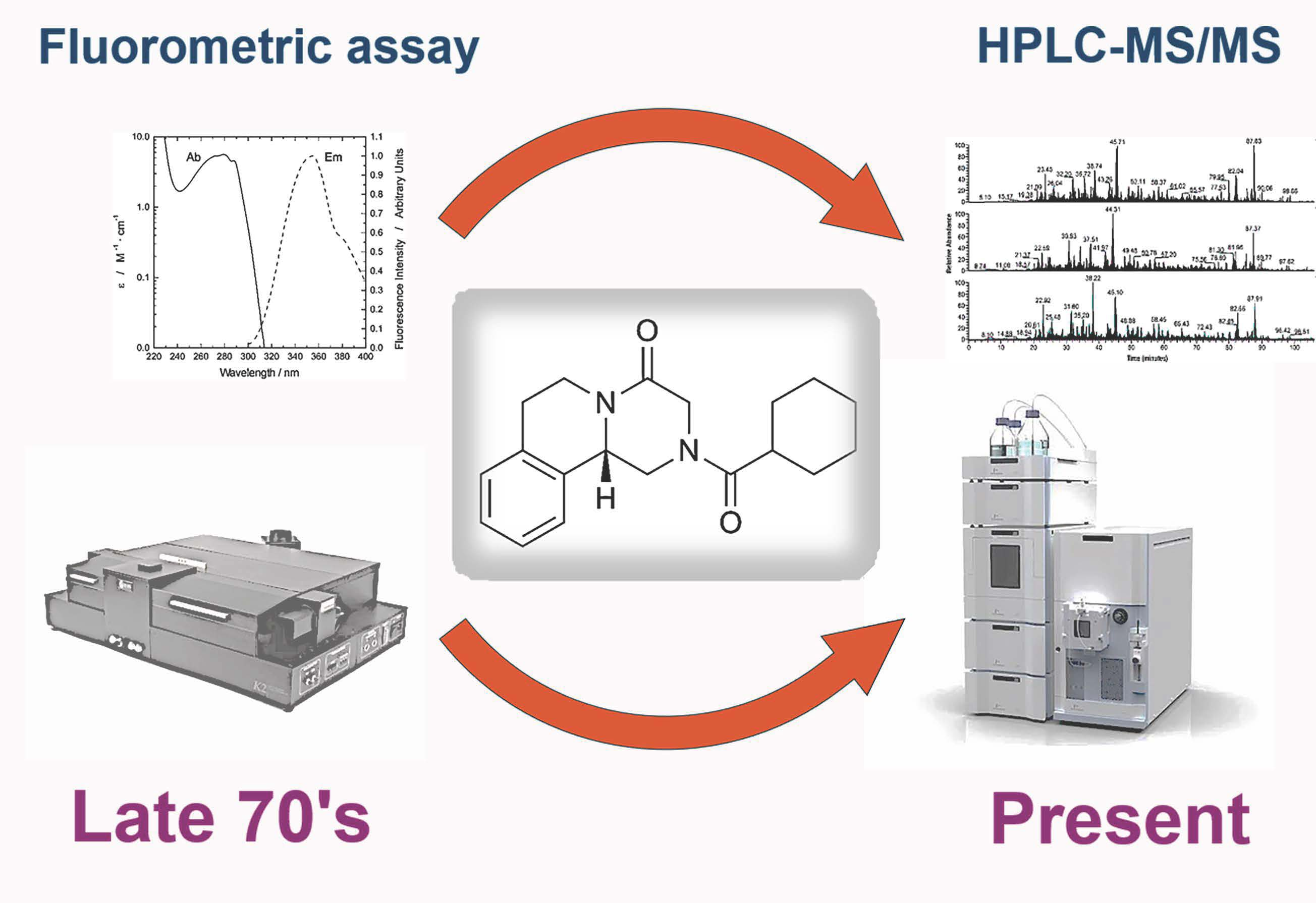
Chirality plays a crucial role in the pharmacological profile of many drugs. PZQ is a chiral compound that exists as a racemic mixture composed of two enantiomers: (−)-R-PZQ and (+)-S-PZQ (Figure 1). Among these, only the (+)-S-PZQ enantiomer exhibits significant biological activity and is responsible for the drug’s therapeutic effects, whereas the (−)-R-PZQ enantiomer is considered inactive [18,19,20]. Despite this, PZQ is used as a racemic mixture in therapy due to practical considerations, such as cost and manufacturing complexity, which have implications for its pharmacokinetics (absorption, distribution, metabolism, and excretion) and toxicity profile. The single chiral center of a molecule governs its enantioselective interaction with parasitic voltage-gated calcium channels. A comprehensive understanding and precise quantification of each enantiomer are essential for optimizing therapeutic outcomes, reducing adverse effects, and informing the rational design of enantiopure pharmaceutical formulations [11].
The inactive (−)-R-PZQ enantiomer may influence the pharmacokinetic profile by competing with the active enantiomer for metabolic enzymes or transporters, potentially altering drug clearance and efficacy. Moreover, its presence could contribute to side effects or influence drug−drug interactions, highlighting the need for detailed enantioselective studies.
The development of enantioselective analytical methods is crucial for quantifying and distinguishing PZQ enantiomers. Techniques such as HPLC with chiral stationary phases and capillary electrophoresis have achieved precise separation and quantification [19]. These methods provide valuable insights into the enantiomer-specific pharmacokinetics and dynamics of PZQ.
Chirality in PZQ is not unique; many drugs, including omeprazole and citalopram, exhibit enantiomer-specific activity, emphasizing the broader relevance of understanding chirality in pharmacology. Future research should explore the feasibility of developing (+)-S-PZQ as a single-enantiomer formulation, potentially improving therapeutic outcomes while reducing unnecessary exposure to the inactive enantiomer.

3. Biopharmaceutics and Pharmacokinetics of Praziquantel

3.1. Biopharmaceutical Properties

PZQ is classified as a Class II, according to the Biopharmaceutical Classification System (BCS), drug characterized by high permeability but low aqueous solubility [21,22,23]. Its experimental solubility in water at 25 °C is approximately 0.40 mg/mL. PZQ exhibits dissolution-rate–limited absorption. Although PZQ is well absorbed from the gastrointestinal tract (~80%), the high therapeutic dose typically required (400–600 mg) is attributed mainly to extensive first-pass hepatic metabolism rather than solubility limitations alone [24,25]. Nonetheless, the low aqueous solubility significantly affects its pharmacokinetic profile by delaying dissolution, reducing peak plasma concentrations, and potentially limiting overall bioavailability [14,26].
These biopharmaceutical constraints complicate the development of effective and patient-friendly dosage forms. For pediatric populations, in particular, the high-dose requirement and pronounced bitter taste of PZQ pose formulation and compliance challenges. Innovative delivery systems such as oral films and dispersible tablets are being explored to increase palatability and improve therapeutic outcomes in children [9].
To overcome solubility-related limitations, several advanced formulation strategies have been developed. Techniques such as solid dispersion systems [14,27], lipid-based delivery approaches [21], and nanotechnology-based formulations [15,28,29,30] have demonstrated significant potential to increase the dissolution rate and systemic availability of PZQ. For example, solid lipid nanoparticles [31] and self-emulsifying drug delivery systems [21] have shown promising results in preclinical studies. Furthermore, amorphous solid dispersions [14] and cocrystal technologies [22,32,33] are emerging as viable strategies to address solubility barriers in PZQ and other BCS Class II drugs, including ibuprofen and carbamazepine.
The continued development of tailored formulation technologies will remain essential to fully realize the therapeutic potential of PZQ, reduce the risk of adverse effects, and simplify dosing regimens, particularly in vulnerable populations, such as pediatric patients.

3.2. Absorption, Distribution, Metabolism and Excretion

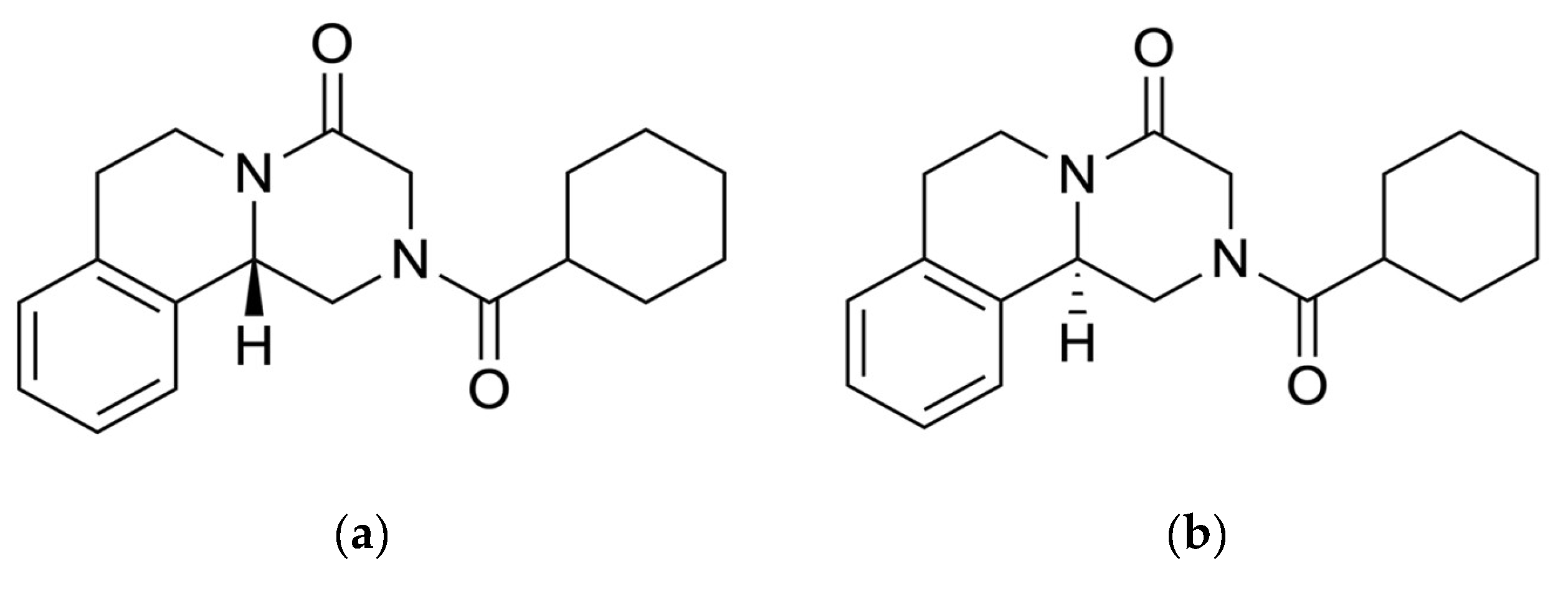
The pharmacokinetics of PZQ exhibit notable differences depending on the route of administration, specifically between oral and intravenous administration [34,35]. These differences arise from physiological factors, including blood flow at the absorption site, gastrointestinal transit time, surface area for absorption, and gastric pH, which can be significantly influenced by food intake [36]. Oral administration of PZQ, at a typical dose of 600 mg, results in rapid gastrointestinal absorption, with a reported Tmax of 2.0–2.6 h and an absorption rate exceeding 80%. Its high lipophilicity and strong plasma protein binding complicate extraction procedures and mandate rigorous evaluation of matrix effects, recovery, and selectivity. The reduced bioavailability reflects both poor solubility and extensive first-pass hepatic metabolism, rather than solubility alone [37].
Once absorbed, PZQ is widely distributed throughout the body, with a particular affinity for tissues such as the liver and kidneys [38]. The drug exhibits significant plasma protein binding (~80%), which restricts the levels of free, pharmacologically active drug. Nutrition, inflammation, or age can affect plasma protein levels, altering free drug concentrations. For example, infants under one year of age exhibit higher free drug levels due to reduced plasma protein concentrations, including those of albumin [35].
PZQ undergoes extensive hepatic metabolism, which is catalyzed predominantly by cytochrome P450 enzymes, including CYP1A2, CYP3A4, CYP2B1, CYP3A5, and CYP2C19 [39,40]. The primary metabolites, cis- and trans-4′-hydroxypraziquantel (Figure 2), are generated through this pathway. This metabolic process introduces considerable variability in pharmacokinetics because of the interindividual pharmacogenetic differences in cytochrome P450 activity, and pathologic conditions, such as liver dysfunction, impair metabolic capacity [35,40].
Chirality further increases analytical complexity: only the (+)-S-PZQ enantiomer is pharmacologically active, whereas the (−)-R-PZQ enantiomer contributes minimally to efficacy [39]. Enantioselective analytical methods therefore require optimized chiral stationary phases, dedicated validation strategies, and tailored sample preparation workflows.
Elimination of PZQ occurs predominantly via the renal route, with approximately 80% of the administered dose excreted within four days. Notably, 90% of this elimination occurs within the first 24 h [35,40]. This rapid elimination emphasizes the importance of optimizing dosing regimens to maintain therapeutic efficacy while minimizing the risk of adverse effects.
The pharmacokinetic properties of PZQ, including its variable metabolism and rapid elimination, highlight the need for individualized dosing strategies and advanced formulation techniques. High-fat meals have been shown to increase PZQ absorption by increasing bile secretion and improving bioavailability after oral administration [41]. Additionally, extended-release formulations or lipid-based delivery systems offer promising solutions to optimize plasma concentrations and therapeutic outcomes.
A schematic representation of the principal pharmacokinetic processes of PZQ absorption, distribution, metabolism, and excretion is provided in Figure 2.

4. Bioanalytical Methods for the Determination and Quantification of Praziquantel

4.1. Non-Chromatographic Techniques

4.1.1. Fluorometric Assay

The fluorometric method was among the first methods for quantifying praziquantel [42]. The fluorometric assay (FA) is based on the emission of light (fluorescence) by substances that absorb energy from light at a specific wavelength. This emission is quantified to determine the concentration of the analyte in a sample. The fluorescence intensity is often directly proportional to the analyte concentration, making FA a helpful technique in fields such as biological sciences, environmental monitoring, and pharmaceutical analysis.
In 1979, Pütter and Held developed an FA to quantify PZQ using propidium iodide. This reagent increased the fluorescence signal from PZQ and its metabolites in plasma, urine, and breast milk after the administration of 20–50 mg/kg doses. However, this method cannot distinguish between PZQ and its hydroxylated derivatives, resulting in overestimation. Matrix components such as proteins and lipids can interfere with the signal, and the reliance on fluorescence-enhancing reagents limits reproducibility [42,43].
FA is considered a cost-effective and rapid technique that does not require complex instrumentation, making it attractive for preliminary screening or use in resource-limited settings. It is particularly useful in high-throughput environments, such as preliminary pharmacokinetic screenings or in vitro drug interaction assays. Advances in fluorometric techniques have addressed some of the traditional limitations. Time-resolved fluorometry enables signal separation based on decay time, improving accuracy by minimizing background autofluorescence [44,45].
Molecularly imprinted polymers (MIPs), synthetic receptors specifically designed to bind PZQ, have been integrated with FA to reduce cross-reactivity and enhance selectivity. Studies have shown that MIP-coated quantum dots allow for the selective detection of target molecules with high precision. For example, Yang et al. demonstrated FA using MIP-coated CdSe/ZnS quantum dots, which achieved standard deviations below 4.9% and detection limits of 2.1 µg/L for dimethoate, demonstrating the robustness and reproducibility of this method [46].
Moreover, the incorporation of FA into microfluidic systems enables low-volume, rapid assays with automated sample handling, thereby reducing human error and increasing throughput. These integrated platforms are being explored for point-of-care diagnostics and field applications in endemic regions.
Modern adaptations of FA yield acceptable performance parameters, including linearity across relevant concentration ranges (typically 10–500 ng/mL), limits of detection below 5 ng/mL, and precision with coefficients of variation of less than 10%. A study by Anumolu et al. developed a sensitive FA for PZQ, reporting a linear range of 1–20 µg/mL, a detection limit of 0.27 µg/mL, and relative standard deviations of less than 2%, all of which were validated under ICH guidelines [17]. However, these results are context-dependent and still require validation under standardized regulatory guidelines, such as ICH M10, for bioanalytical methods. The specific wavelengths at which excitation and emission occur are 535 nm and 617 nm, respectively, indicating the crucial parameters for the analysis. The chemical agent used in this methodology is propidium iodide, which is instrumental in the detection mechanism. The substrate used for this research is human plasma, which serves as the biological fluid from which the samples are derived; the volume of the sample to be analyzed is set at 200 µL, ensuring sufficient material for accurate measurements; and the temperature at which the experiment is carried out is kept at a stable temperature of 25 °C, providing an optimal environment for the reaction to take place. Finally, the reading time after the start of the reaction is designated as 5 min, allowing an adequate duration for the completion of the analytical, postreaction process.
Although other HPLC-based methods, including those coupled with mass spectrometry detection (LC−MS), have been developed for the analysis of PZQ, these approaches primarily focus on aspects such as simultaneous determination with other compounds, stabilityindicating capabilities, and application in diverse biological matrices, such as dog plasma and fish [47,48,49]. These methods, although validated and effective, highlight the versatility and adaptability of analytical techniques for PZQ, each with specific advantages depending on the context of use. The spectrofluorometric method, with its ecological and efficient approach, offers a robust option for the quantification of PZQ, particularly in scenarios where high sensitivity and rapid analysis are needed.

4.1.2. Radiometric Assay

Radiometric assay (RA) represents one of the pioneering techniques used to investigate the pharmacokinetics of PZQ [50], a crucial drug used primarily in the treatment of SC and other parasitic infections. This method typically utilizes radiolabeled compounds, such as 14C-PZQ, which enables accurate monitoring and quantification of drug absorption, distribution, metabolism, and excretion within biological systems. By incorporating radioactive isotopes, researchers can effectively measure the concentration of PZQ in various tissues and fluids over time, providing valuable information about its pharmacological behavior and therapeutic efficacy. Radiometric testing has played a crucial role in advancing our understanding of the pharmacokinetic profile of PZQ, thereby informing dosing regimens and enhancing treatment strategies for affected populations.
Unlike other analytical techniques, the choice of solvent does not influence the detection of radioactivity, making the assay robust across different reaction conditions. RA can be applied to samples with a broad range of substrate concentrations, including those with high product levels. The separation of labeled products and substrates is often straightforward, simplifying experimental workflows [51,52].
While RAs are now less commonly used for PZQ quantification, they remain valuable in specific contexts. RA can be used for preclinical metabolic studies, investigating the pharmacokinetics of new analogs or derivatives of PZQ, and mechanistic enzymology, studying enzyme kinetics in drug metabolism when coupled with labeled substrates.
Patzschke et al. utilized 14C-PZQ to evaluate absorption and excretion profiles in humans, which demonstrated near-complete excretion within four days [50]. However, this technique lacks validation against modern regulatory standards and does not assess parameters such as matrix effects, carryover, or stability under ICH guidelines.
Modern bioanalytical expectations require robust method validation, particularly for pharmacokinetic applications. While RA is less common today because of safety and infrastructure requirements, some studies have applied stringent validation principles. For example, Gandla et al. developed and validated an HPLC method for PZQ and albendazole in coformulated products, establishing parameters such as linearity (5–15 µg/mL), accuracy, precision (RSD < 2%), and robustness [53]. Although this study did not use radiolabeled PZQ, it demonstrates evolving expectations for method reliability.
Malhado et al. conducted a study to evaluate the preclinical pharmacokinetics of PZQ encapsulated in polymeric nanoparticles using a validated LC−MS/MS method with a lower limit of quantification (LOQ) of 1 ng/mL [54]. Their approach highlighted the importance of sensitivity, specificity, and sample stability across different matrices. Additionally, Meister et al. (2016) reported a fully validated enantioselective LC−MS/MS method to quantify PZQ and its hydroxylated metabolite in plasma, dried blood spots, and whole blood [55]. Their method demonstrated consistent performance in line with EMA and FDA bioanalytical guidance [55].
Although these modern validations are not strictly radiometric, they exemplify the bioanalytical rigor expected today. They provide a reference framework for any analytical strategy, including RA, if applied under current standards. Historically, RA methods have typically utilized 14C-PZQ in plasma and urine with 100 µL injection volumes, detected through liquid scintillation counting. However, contemporary expectations demand the inclusion of method performance metrics such as selectivity, carryover, dilution integrity, and matrix effects, alongside comprehensive reporting of analytical conditions similar to those observed in LC−MS/MS or HPLC platforms.
To overcome the limitations of RA, researchers are investigating non-radioactive isotopic labeling techniques, such as stable isotope-labeled compounds combined with mass spectrometry (MS). These methods maintain the quantitative advantages of radiometric techniques while eliminating safety concerns associated with radioactive isotopes. Furthermore, there is a proposal to integrate RA with microfluidic platforms to reduce sample volume and enhance assay precision, potentially leading to more efficient drug metabolism studies [56].

4.2. Chromatographic Techniques

4.2.1. Gas Chromatography

Gas chromatography (GC) is a powerful analytical technique widely used to separate and quantify volatile and semivolatile compounds. It operates by using an inert carrier gas, such as helium or nitrogen, as the mobile phase and a liquid-coated stationary phase within the column. As the sample is propelled through the column, its components interact differentially with the stationary phase, allowing for separation, identification, and quantification.
GC was among the first advanced techniques employed for PZQ quantification. Diekmann developed an early GC method for determining PZQ in plasma, urine, and feces, reporting a detection limit of 0.01 µg/mL and a relative standard deviation of 4.5% for low serum concentrations [57]. This method involves alkaline extraction and derivatization using trimethylsilyl (TMS) reagents to increase volatility. Westhoff and Blaschke later extended GC applications to measure both PZQ and its monohydroxylated metabolites and quantified enantiomeric ratios using a Chiralcel OD column [58].
Furthermore, Shah et al. validated a GC method for the simultaneous detection of albendazole and PZQ in pharmaceutical formulations, achieving excellent linearity (r2 ≥ 0.999), sensitivity (limit of detection 0.05 µg/mL), and reproducibility (RSD < 2%) [59]. In raw material analysis, it was shown that GCs could be used effectively despite excipient interference [47]. In veterinary pharmaceutical research, gas chromatography−mass spectrometry (GC−MS) methods with over 90% recovery and high specificity for metabolite confirmation were demonstrated [60].
The analytical methodology has considerable strengths, notably encompassing the complete separation of metabolites. In addition, the ability of GC to isolate and analyze volatile and semivolatile compounds makes it an indispensable instrument in a wide range of analytical applications [61], ranging from academic research to industrial quality control. The gas chromatography technique is distinguished by its ability to provide accurate and expedited analysis, which is vital in the evaluation of volatile and semivolatile compounds through various matrices [61]. In addition, the consistency in reproducibility and durability is remarkable; such reliability is essential to ensure reliable results in different investigations and applications, particularly within regulatory frameworks that require strict validation. The adaptability and reliability of gas chromatography establish it as an essential methodology for both research efforts and quality assurance in various industries, thereby ensuring accurate quantification of volatile compounds [62].
However, due to the inherently low volatility and high boiling point of PZQ and its corresponding metabolites, GC methods generally require a prior chemical derivatization step to render the analytes sufficiently volatile and thermally stable. As with liquid chromatographic methods, GC relies on specialized instrumentation and trained professionals; however, the additional derivatization step consumes extra time and reagents and increases the overall complexity of the analytical protocol. Consequently, GC-based methods for PZQ face intense competition from liquid chromatography methodologies. Recent advances, such as the incorporation of microcolumns into GC systems, have mitigated some of these limitations, which have improved resolution and reduced analysis times [63,64]. In addition, coupling gas chromatography with mass spectrometry, both in single and tandem modality, has significantly increased analytical specificity, while the development of automated derivatization systems has helped to optimize operational efficiency and improve the reproducibility of the results.
Although GC remains valid for certain specific analytical purposes, such as the profiling of impurities or its application in laboratories with limited resources, the HPLC−MS/MS technique has established itself as the predominant standard for the quantification of PZQ owing to its compatibility with non-volatile analytes and the simplicity of its analytical procedures [18,55,65]. The analytical parameters relevant to the GC methodologies used for the quantification of PZQ within matrices such as plasma, urine, feces, and pharmaceutical formulations include the use of a DB-5 capillary column, helium that serves as a carrier gas, a flow rate of 1 mL/min, a temperature program that increases from 150 to 280 °C, flame ionization detection (FID), and derivatization using trimethylsilyl (TMS) reagents, which have been implemented both in foundational research and in modern validation efforts [66]. The main objective of these conditions is to increase the volatility of the analyte while ensuring the effective separation of PZQ and its metabolites, particularly in scenarios where the availability of more sophisticated techniques such as GC−MS or HPLC−MS/MS is restricted [60].

4.2.2. High-Performance Liquid Chromatography

HPLC is one of the most widely adopted analytical techniques for the quantification of PZQ and its metabolites [67]. This method operates by passing liquid samples through a column filled with a stationary phase under high pressure, using various mobile phases composed of organic solvents and buffer systems. Its ability to handle non-volatile, thermolabile, and polar compounds without the need for derivatization has made it a preferred option in pharmaceutical and clinical laboratories.
HPLC is compatible with diverse detection systems, including ultraviolet (UV), fluorescence, and mass spectrometry (MS) methods. UV detection is commonly used because of the strong absorbance of PZQ at 210–220 nm, allowing for straightforward and reproducible analysis. Fluorescence detection improves sensitivity, whereas MS, particularly tandem mass spectrometry (HPLC-MS/MS), enhances specificity in complex biological matrices.
Several validated HPLC methods have been reported for the quantification of PZQ. For example, a UV detection-based method using a C18 column with a mobile phase of acetonitrile and phosphate buffer (60:40, v/v) at a flow rate of 1 mL/min was developed. The method showed excellent linearity (r2 > 0.999) over the range of 100–2000 ng/mL, with recovery rates above 95% [67].
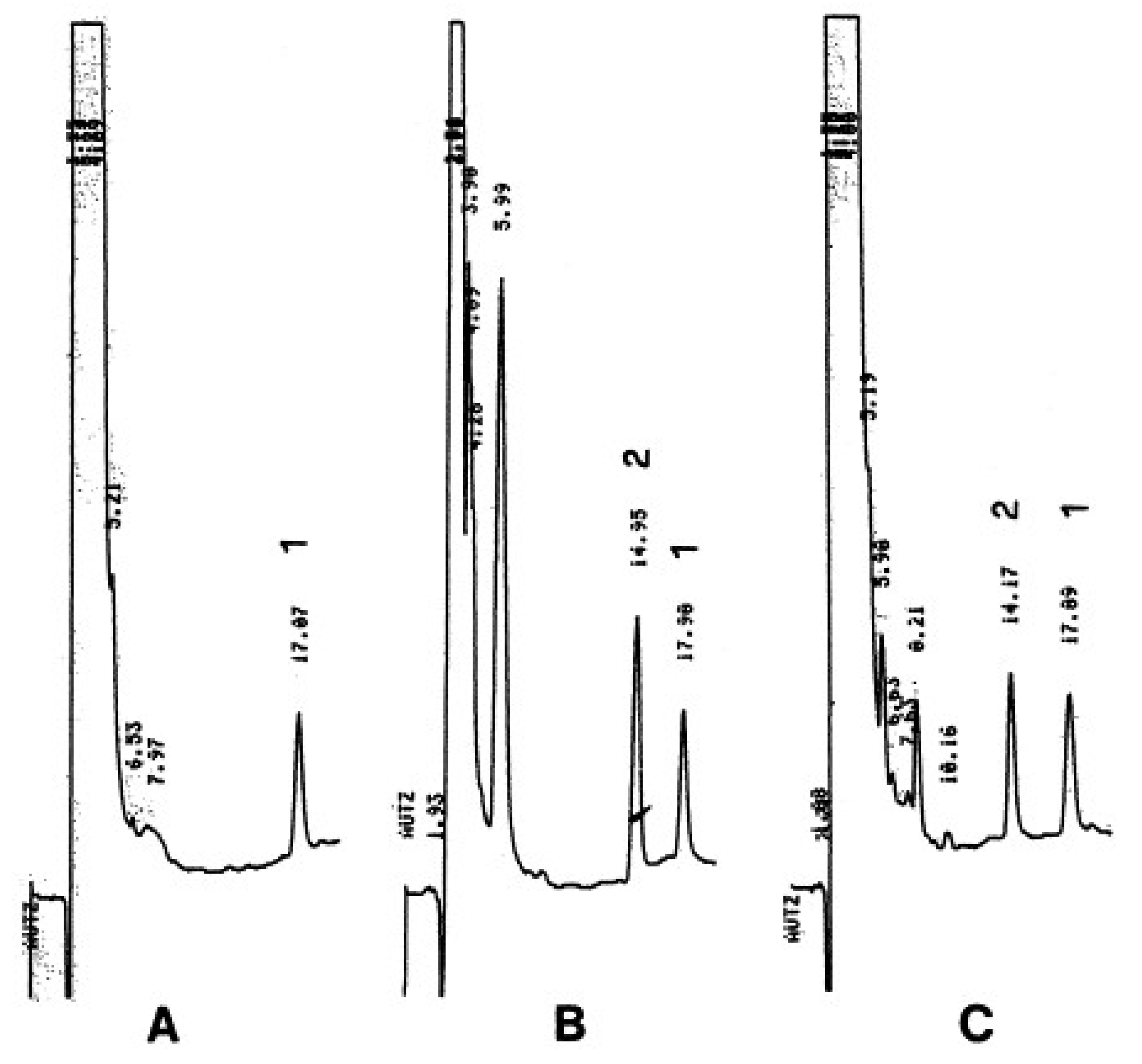
Figure 3 presents representative chromatograms illustrating the HPLC method developed for determining praziquantel concentrations in human plasma. This visually validates the developed HPLC method’s ability to selectively and accurately quantify praziquantel in human plasma by demonstrating clear peak separation and the absence of interfering substances, making it suitable for pharmacokinetic studies [67].
Hanpitakpong et al. similarly validated an HPLC-UV method for analyzing PZQ in human plasma, achieving detection limits of less than 20 ng/mL and precision values of less than 10%. These characteristics make HPLC a valuable tool not only for pharmacokinetic studies but also for quality control in pharmaceutical production [68].
In addition, Liu and Stewart reported the use of a chiral reversed-phase column for the enantiomeric separation of PZQ in serum, highlighting the flexibility of HPLC to resolve stereoisomers, a critical feature in evaluating the pharmacodynamics of racemic versus enantiopure formulations [69]. HPLC remains relevant due to its robustness, affordability, and widespread regulatory acceptance, especially where mass spectrometry is not available.

4.2.3. Liquid Chromatography Coupled with Mass Spectrometry

Klausz et al. developed and validated an electrospray HPLC−MS/MS analytical method for the determination of PZQ in dog plasma. Chromatographic separation was performed on a C6 Phenomenex Gemini-Phenyl C6 column using binary gradient elution with methanol and 50 mM ammonium formate (pH 3) [49]. The method was linear (r2≥ 0.990) over a 24–1000 ng/mL concentration range. The intermediate accuracies were 1.3–10.6% (interday) and 2.5–9.1% (intraday). The coefficient of variation was 9.1%, and the mean recoveries of the five targeted compounds from canine plasma ranged from 77 to 94%. The proposed LC−MS method was fully validated and successfully applied to bioequivalence studies of different antiparasitic formulations, including tablets containing PZQ administered orally to dogs [70,71,72].
Bustinduy et al. conducted the first pharmacokinetic (PK) and pharmacodynamic (PD) study in African children, comparing doses of 40 mg/kg and 60 mg/kg [73]. This study, using PZQ, was conducted in young children to compare doses. Sixty Ugandan children aged 3–8 years with Schistosoma mansoni egg patents received PZQ at 40 mg/kg or 60 mg/kg. Monte Carlo simulations were performed to identify the best and future dosing regimens [74]. There was marked PK variability among children; however, the area under the concentration−time curve (AUC) of PZQ was strongly predictive of the parasitological cure rate. A higher ABC was associated with a more significant antigenic decline in CAA at 24 days. To optimize the performance of PZQ, our simulations suggest that higher doses (60 mg/kg) are necessary, particularly in younger children.
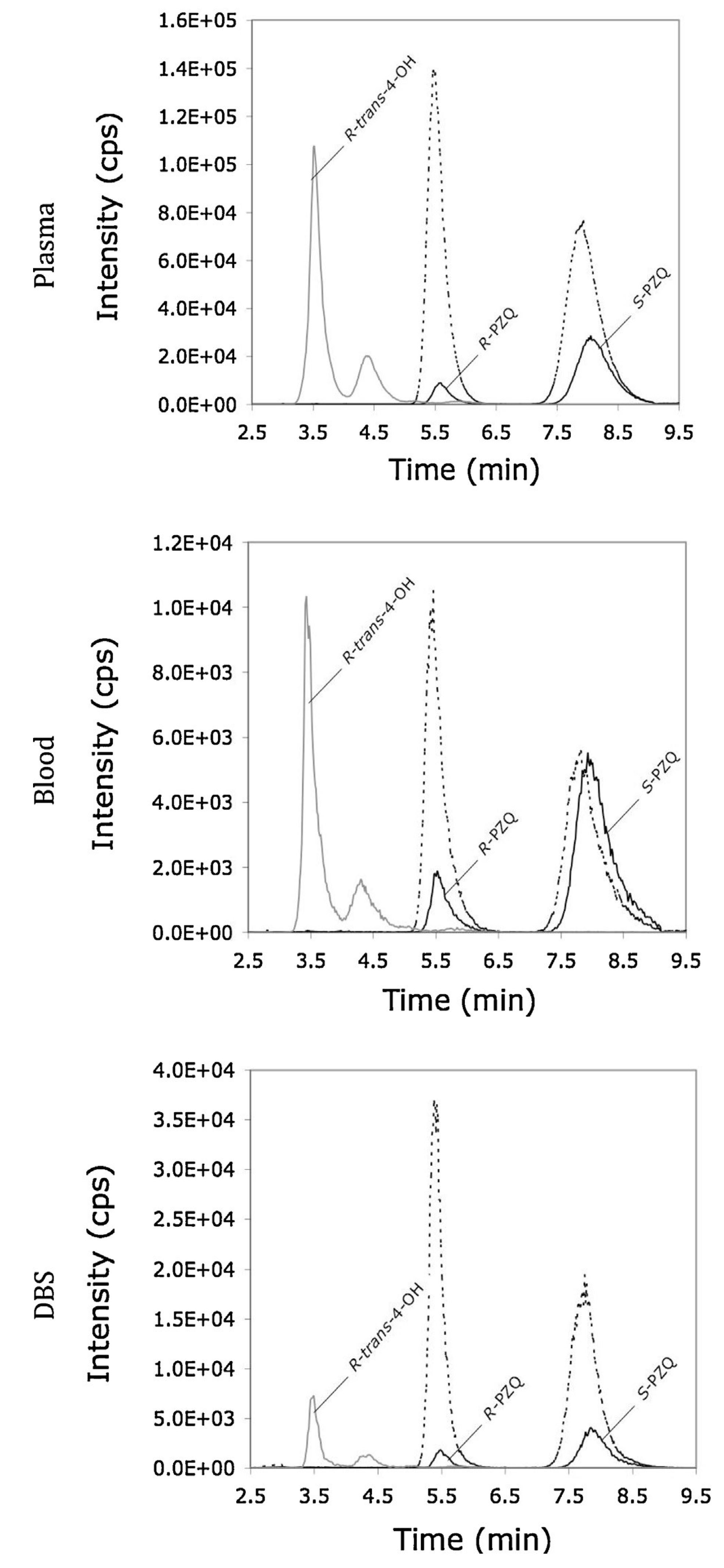
On the other hand, Meister et al. developed and validated an enantioselective analytical method using HPLC-MS/MS for the analysis of PZQ, both R and S, as well as its metabolite R-trans-4-OH-PZQ (m/z ratio 328 to 202). The method met the requirements for precision (15%, 20% at the lower LOQ), intra- and interday precision (85–115%, 80–120% at lower LOQ), and linearity (R2 = 0.998). The analytes were stable in stock solutions, as well as in plasma and blood. The validation results demonstrate that the method presented here is accurate, precise, and selective, making it suitable for use in pharmacokinetic studies [55]. Furthermore, enantioselective separation was achieved with a run time of 11.5 min and a simple sample processing method. Figure 4 presents representative liquid chromatography-tandem mass spectrometry (LC-MS/MS) chromatograms, illustrating the separation and detection of praziquantel (PZQ) enantiomers (R-PZQ, S-PZQ) and its main metabolite (R-trans-4-OH) in human plasma, blood, and dried blood spot (DBS) samples from a patient two hours after treatment. The chromatograms highlight the distinct retention times and signal intensities of these compounds across different biological matrices [55].
He et al. developed a simple, sensitive, and specific method using HPLC−MS/MS [75]. Two cyclic polypeptide-based and two macrocyclic saccharide-based superficially porous particle chiral stationary phases were selected for the enantioselective separation of racemic PZQ. The column that achieved optimal separation was a hydroxypropyl β-cyclodextrin (100 mm × 4.6 mm i.d., 2.7 μm) porous particle surface. Under optimal chromatographic conditions, the chiral selectivity of the HP-RSP column was optimal due to inclusion-complexation, which leads to better interactions between the analyte and bulky substituents near the chiral center, allowing for steric interactions. The method was linear over concentration ranges of 5.00–500 g L−1 for (−)-R-PZQ and (−)-S-PZQ. The mean recoveries of R-PZQ and S-PZQ at three levels of 5.00, 50.00 and 500 g kg−1 (equivalent to half of the concentration of racemic PZQ, respectively) ranged from 86.1% to 98.2%, and the intraday and interday coefficients of variation were less than 5%. The decision limit and detection capability of R-PZQ and S-PZQ in perch muscle matrices were 1.0 g kg−1 and 5.0 g kg−1, respectively. After oral administration, the method was successfully applied to monitor the depletion of PZQ enantiomers in perch muscle, demonstrating that the elimination rates of R-PZQ and S-PZQ in perch muscle tissue are equivalent [75].
Dey et al. developed and validated a reproducible, sensitive, and selective analytical method for the quantification of PZQ in plasma. The validated method was then applied to a pharmacokinetic study of PZQ in three groups of rats administered a single oral dose of 40 mg/kg body weight [38,76].
The method showed high accuracy in recovering 92 to 113 metabolites or drugs with LCs as low as 550 ng/µL. The improved pharmacokinetic data could be attributed to the synergistic effects of ABZ and PZQ on each other. These data have led to the design of a new safe ABZ−PZQ combination dosing regimen for therapeutic applications.
Yoo et al. developed an analytical method involving HPLC−MS/MS to determine PZQ in 5 foods of animal origin (chicken, pork, beef, milk, and eggs). Matrix standard calibration curves (R2 = 0.9752) were obtained for concentrations equivalent to ×1/2, ×1, ×2, ×3, ×4 and ×5 times the maximum residue limit (MRL) stipulated by the Korean Ministry of Food and Drug Safety. Recoveries between 61.2 and 118.4%, with coefficients of variation of 19.9% (intraday and interday), were obtained for each sample at three peak concentrations (1/2, 1, and 2 MRL values). The limits of detection, limits of quantification, and matrix effects were 0.02-5.50 μg/kg, 0.06–10 μg/kg, and −98.8 to 13.9%, respectively (at 20 μg/kg). Therefore, this protocol has been demonstrated to be adaptable, accurate, and precise for quantifying anthelmintic residues in foods of animal origin [77].
Xiaoxi Du et al. analyzed PZQ and 4-hydroxypraziquantel enantiomers in black goat plasma. In this study, the chiral LC−MS/MS method was optimized for the separation and quantification of PZQ, trans-4-OH-PZQ, cis-4-OH-PZQ, and their enantiomers. In black goat plasma, racemic PZQ was rapidly absorbed and metabolized to 4-OH-PZQ, leading to the conclusion that trans-4-OH-PZQ had the highest Cmax and the most significant stereoselectivity [65].
Considerations for Enantioselective Methods
The development of enantioselective methods for praziquantel (PZQ) requires specific attention to column selection, mobile phase optimization, and validation criteria that go beyond those applied in achiral assays [78]. Praziquantel (PZQ) is universally administered as a racemic mixture; however, its pharmacological activity is largely attributed to the (R)-PZQ enantiomer, while its metabolism, yielding stereoselective 4-hydroxypraziquantel (4-OH-PZQ) isomers, further complicates its pharmacokinetics [65,79]. Analytical methods must be capable not only of resolving both enantiomers but also of quantifying them with sufficient sensitivity and robustness to support pharmacokinetic, bioequivalence, and formulation studies. Successfully establishing a chiral Liquid Chromatography–Tandem Mass Spectrometry (LC–MS/MS) method for PZQ and its stereoisomeric metabolites (e.g., trans-4-OH-PZQ and cis-4-OH-PZQ) hinges on three critical factors: Chiral Stationary Phase (CSP) selection, mobile phase optimization, and specialized validation criteria.
From the standpoint of column selection, polysaccharide-based chiral stationary phases are the most commonly used for PZQ and its hydroxylated metabolites. Cellulose- and amylose-derived CSPs coated or immobilized on silica (e.g., “OD/OD-RH”, “AD/AD-RH” type phases) offer broad applicability and robust enantioselectivity for a wide range of lipophilic, neutral analytes. For PZQ, these columns typically provide baseline resolution of the R/S-enantiomers under both normal-phase (n-hexane/ethanol or n-hexane/isopropanol) and reversed-phase (acetonitrile–aqueous buffer) conditions, depending on detection requirements. In LC–MS/MS applications, reversed-phase chiral columns are generally preferred because they avoid non-volatile mobile phase components and high-organic systems that are incompatible with electrospray ionization. In more complex matrices or when metabolite separation is required, columns with enhanced stereoselectivity or mixed-mode chiral phases can be considered, but at the expense of longer optimization times.
Mobile phase optimization should follow a structured, stepwise approach. Initial screening can be performed using isocratic conditions with different organic modifiers (e.g., methanol vs. acetonitrile) and buffer systems across a range of pH values (ammonium formate or ammonium acetate at low concentrations are preferable), compatible with both the CSP and the ionization source. For PZQ, which is a weak base with significant lipophilicity, moderately acidic conditions often yield better peak shapes and improved ionization. Gradient elution is often necessary when PZQ is analyzed together with its hydroxylated metabolites or co-administered drugs in order to balance resolution and run time. Once enantioresolution is achieved, fine-tuning of the organic content, buffer concentration, and temperature can be used to reduce analysis time while maintaining baseline separation.
Sample Preparation
Accurate and reproducible quantification of praziquantel (PZQ) requires carefully designed sample preparation procedures. The preparation of biological and environmental samples remains the most labor-intensive step and often defines the feasibility of implementing a given method in routine or resource-limited laboratories. Sample preparation strategies must be tailored to the physicochemical properties of PZQ, particularly its high lipophilicity, extensive protein binding, and the presence of structurally similar metabolites, as well as, to the complexity of the biological matrix under study. These characteristics influence extraction efficiency, matrix effects, and analyte stability, making sample preparation a critical component of method performance and compliance with ICH M10 guidelines [80]. Table 2 shows some examples of praziquantel quantification from different biological samples.
In most LC–MS/MS methods developed over the last decade for the quantification of PZQ and its hydroxylated metabolites in plasma and other biological matrices, protein precipitation with organic solvents (typically acetonitrile or methanol) has emerged as the preferred first-line strategy due to its simplicity, low cost and suitability for high-throughput workflows [39,86]. Methods applied in pediatric pharmacokinetic studies and clinical bioanalysis typically rely on acetonitrile or methanol precipitation followed by centrifugation and direct injection of the supernatant into LC–MS/MS systems [81]. This approach supports high-throughput workflows and is compatible with low-volume pediatric samples. However, PPT alone may not fully eliminate phospholipid-derived matrix effects, requiring subsequent chromatographic separation or scheduled MRM acquisition to maintain sensitivity at low ng/mL levels. Enantioselective LC–MS/MS methods, also employ precipitation but often combine it with post-extraction dilution to optimize retention on chiral phases and mitigate ion-suppression effects [18].
Liquid–liquid extraction (LLE) provides cleaner extracts and higher enrichment factors, particularly for lipophilic drugs such as PZQ. Extraction into organic solvents such as ethyl acetate, butyl chloride, or methyl tert-butyl ether has been described for both human and veterinary matrices, often yielding improved signal-to-noise ratios and reduced ion suppression [65].
Solid-phase extraction (SPE) is the preferred method when high selectivity and effective matrix cleanup are required—particularly in complex matrices such as fish tissues, hepatopancreas, gill, and environmental water samples. Recent multi-residue LC–MS/MS methods for aquaculture species typically use SPE cartridges based on reversed-phase or mixed-mode sorbents, enabling efficient removal of co-extractives and reducing matrix effects to acceptable levels [82,83]. SPE yields the cleanest extracts for LC–MS/MS but involves higher consumable costs and longer preparation times. Additionally, reproducibility depends strongly on conditioning, washing, and elution protocols, which may require extensive optimization during method development.

4.3. Importance of Bioanalytical Validation

Over the years, various analytical techniques have been developed and validated for the quantification of PZQ in pharmaceutical forms [87] and biological matrices [43,58,88,89,90]. HPLC−MS/MS has emerged as the preferred method because of its superior sensitivity and specificity [55,65,79]. In contrast, spectrophotometric methods may be more appropriate for routine quality control because of their simplicity and cost-effectiveness [91,92]. Validated analytical methods are essential for regulatory submissions, as they assure that the methods meet stringent quality standards and ensure patient safety. Furthermore, by enabling the accurate quantification of PZQ and its impurities, analytical validation supports the control of product quality and consistency, particularly in large-scale manufacturing.
The increasing use of LC–MS/MS for the quantification of praziquantel (PZQ) and its metabolites is expected to comply with the principles outlined in ICH M10. This guideline emphasize that methods must be fit for purpose and require a comprehensive evaluation of selectivity, calibration and range, accuracy and precision, carry-over, matrix effects, dilution integrity and stability under conditions reflecting routine sample handling [93]. Although many influential methods predate the formal release of M10, several contemporary studies already implement substantial portions of its framework.
A comparative examination of recent LC–MS/MS methods demonstrates that core parameters, such as selectivity, calibration model performance, accuracy and precision, recovery, and matrix effect evaluation, are generally well established in the PZQ analytical literature, whereas other elements (e.g., carryover, dilution integrity, extended stability testing, and incurred sample reanalysis) remain inconsistently documented.
Among the most comprehensive examples is the enantioselective LC–MS/MS method, which provides detailed validation of selectivity through chromatographic evaluation of blank plasma, fortified samples, and incurred specimens, demonstrating the absence of endogenous interference at the retention times of each enantiomer and metabolite [18]. The study also reports a wide calibration range with excellent linearity (r2 ≥ 0.999), definition of LLOQ based on accuracy and precision criteria, intra- and inter-day accuracy and precision within ±15% (±20% at the LLOQ), extraction recovery across multiple QC levels, and an explicit evaluation of matrix effects based on the Matuszewski post-extraction addition approach [94]. Short-term stability and freeze–thaw stability are also documented. Collectively, these elements align closely with current M10 expectations for selectivity, calibration, accuracy/precision, matrix effect assessment, recovery, and short-term stability.
A more recent enantioselective LC–MS/MS method developed in veterinary matrices also incorporates several components consistent with M10, including selectivity testing in blank plasma, calibration curves with r2 ≥ 0.99, quantification of LOD/LOQ using signal-to-noise criteria, and systematic evaluation of recovery and matrix effects across multiple plasma lots [65]. These practices reflect increasing harmonization with human bioanalytical guidelines, even though the method is validated under the European regulatory framework for veterinary residue analysis. Nevertheless, extended stability studies and dilution integrity are not described, representing typical omissions in residue-focused validations when compared to full M10-compliant human pharmacokinetic requirements.
In contrast, other PZQ LC–MS/MS applications provide only partial validation [83]. A pharmacogenetic investigation reported a twelve-point calibration curve with quadratic 1/x weighting, evaluation of QC performance at three levels, recovery and precision consistent with regulatory acceptance, and explicit demonstration of the absence of carryover [95]. However, no data are presented on selectivity across multiple lots of matrix, matrix effects, dilution integrity, autosampler stability, long-term storage stability, or reanalysis of incurred samples, which are all mandatory under M10 for full bioanalytical validation. Similarly, pharmacokinetic studies in aquaculture species report LC–MS/MS conditions, LOD/LOQ, and instrument performance but do not provide a complete validation set [83].
Validation of enantioselective methods must explicitly address several issues that are less critical in achiral assays. First, selectivity and resolution must be demonstrated for each enantiomer, ensuring that no endogenous peaks or co-administered drugs co-elute at the retention times of R-PZQ, S-PZQ, or their chiral metabolites. Resolution should be quantified, and chromatographic conditions must be robust enough to maintain separation throughout the life of the column [96]. Second, each enantiomer should have its own calibration curve and quality control levels, with accuracy and precision evaluated separately in accordance with ICH M10 acceptance criteria. This is particularly important when the enantiomeric ratio changes over time or between formulations. Third, matrix effects and recovery should be evaluated on an enantiomer-specific basis. Because PZQ enantiomers and their metabolites can interact differently with plasma proteins and tissue components [97], recovery and ion suppression may differ between R- and S-forms. Matrix effect experiments should therefore compare post-extraction spiked samples to neat standards for each enantiomer independently, using at least six different lots of matrix where possible.
Modern LC–MS/MS methods for PZQ generally comply with ICH M10 in terms of selectivity, quantitative performance (accuracy, precision), calibration model evaluation, and, in the most rigorous cases, matrix effect assessment, recovery, and short-term stability [48,85,97]. However, systematic evaluation of carryover, dilution integrity, extended stability in the matrix, autosampler stability, stock-solution stability, and incurred-sample reanalysis remains less commonly reported, particularly in older methods or studies focused primarily on pharmacokinetics rather than regulatory bioanalysis [98]. While several advanced methods already approximate full M10 compliance, meaningful heterogeneity persists among published LC–MS/MS approaches for PZQ.

4.4. Advantages and Disadvantages of Non-Chromatographic and Chromatographic Techniques

The evolution of analytical techniques for PZQ quantification reflects a transition from non-chromatographic methods such as FA and RA towards chromatographic techniques such as GC, HPLC with conventional detectors and HPLC-MS/MS. Modern liquid chromatographic methods, particularly HPLC−MS/MS, have become the gold standard for PZQ quantification because of their superior sensitivity, specificity, and robustness. These techniques offer:
  • Enhanced accuracy and precision: liquid chromatographic methods provide reliable and reproducible results, enabling precise quantification of PZQ and its metabolites across diverse biological matrices.
  • Improved detection limits: With detection limits as low as nanogram levels, these methods are suitable for low-concentration analyses, which are essential for pharmacokinetic and pharmacodynamic studies.
  • Minimal matrix interference: The advanced separation capabilities of liquid chromatographic methods, particularly when coupled to tandem mass spectrometry, reduce interference from biological components, ensuring accurate analysis.
  • Versatility and Adaptability: These techniques can be applied to various matrices, including plasma, serum, muscle tissue, and even food products, making them highly versatile.
Early methods, such as FA, RA, and GC, play a foundational role in PZQ analysis but exhibit significant limitations. These methods often struggle to differentiate PZQ from its metabolites, leading to overestimated concentrations. FA and RA are susceptible to interference from biological components, such as proteins and lipids, which can compromise accuracy. GC methodology requires the derivatization of PZQ and its metabolites, which increases the preparation time and complexity. Compared with HPLC-MS/MS, these methods have higher detection limits, restricting their applicability in low-concentration analyses.
HPLC-based methods have demonstrated their robustness in supporting next-generation research strategies for PZQ. These techniques are integral to formulation development (optimizing the PZQ dosage, dissolution) and bioequivalence and bioavailability studies.
While non-chromatographic methods remain relevant for exploratory studies or resource-limited settings, modern techniques have revolutionized PZQ analysis. HPLC−MS/MS, for example, combines high specificity and sensitivity with the ability to differentiate PZQ enantiomers and metabolites, a critical feature for advanced pharmacokinetic studies.
The transition from non-chromatographic methods to current analytical techniques reflects the need for more robust, precise, and versatile methods in PZQ analysis. Recent techniques address the limitations of their predecessors, enabling groundbreaking advancements in drug formulation, bioavailability studies, and therapeutic applications. The adoption of HPLC and HPLC-MS/MS ensures compliance with rigorous regulatory standards while supporting the development of safe and effective PZQ-based treatments. Table 3 provides a comparative assessment of their sensitivity, specificity, and detection limits. Table 4 presents studies reporting the simultaneous determination of praziquantel in combination with other antiparasitic agents.

4.5. Implementation Challenges in Resource-Limited Settings

Although LC–MS/MS methods have become the reference standard for praziquantel (PZQ) quantification in human and veterinary pharmacokinetic studies, their implementation in resource-limited settings faces specific challenges related to instrument cost, infrastructure, and personnel training. Recent work in African children treated within mass drug administration campaigns and quantified using LC–MS/MS platforms illustrates the analytical sophistication required: triple quadrupole instruments, stable isotope-labeled internal standards, multi-level calibration and quality control schemes, and comprehensive data processing pipelines [81,95]. Comparable requirements are evident in recent veterinary and aquaculture studies that employ sensitive LC–MS/MS methods for PZQ and its metabolites in goat plasma and various fish tissues, with limits of detection and quantification in the low ng/mL or ng/g range [65,82,83,85].
From a cost perspective, the gradient between different PZQ analytical platforms is substantial. Fluorometric or spectrophotometric assays and HPLC with UV detection, as used in earlier human studies and still prevalent for quality control of PZQ-containing products, require comparatively modest capital investment and lower maintenance costs [100,101,102]. HPLC–UV methods for PZQ typically rely on standard reversed-phase C18 columns, UV detectors, and binary pumps, and they can often be operated with intermittent power supply and relatively simple water purification systems [18,101,102]. These methods represent a more realistic alternative for laboratories with intermediate infrastructure. In contrast, modern LC–MS/MS workflows for enantioselective PZQ and hydroxylated metabolites entail acquisition of high-cost tandem mass spectrometers, regular service contracts, supply of high-purity gases, and dedicated climate control, which together place them beyond the immediate reach of many laboratories in low- and middle-income countries. LC–MS/MS methods described in recent human and veterinary studies require uninterrupted electricity to sustain high-vacuum systems, temperature-stable laboratories, and consistent cooling and ventilation, as well as reliable access to ultrapure water for chromatographic mobile phases [65,83].
Validated LC–MS/MS methods for PZQ, now routinely used in advanced research settings, represent the analytical gold standard but are often not readily deployable in laboratories serving populations most affected by schistosomiasis and neurocysticercosis [65,79,84,97]. A pragmatic strategy for resource-limited settings could involve tiered analytical models: local laboratories using lower-cost chromatographic or spectrophotometric methods for basic monitoring, complemented by centralized or regional reference laboratories equipped with LC–MS/MS for advanced pharmacokinetic, residue, and regulatory bioanalysis. Recognizing and explicitly describing these implementation challenges is essential for contextualizing published PZQ methods and for guiding the development of future analytical strategies that are not only scientifically rigorous but also realistically deployable in the settings where praziquantel is most urgently needed.

5. Discussion

Substantial progress has been made in the development and validation of bioanalytical methods for PZQ, spanning from FA, RA and GC to HPLC and, in particular, HPLC–MS/MS. These platforms have markedly enhanced the precision and reliability of measurements in biological matrices (plasma, serum, urine) and remain central to both preclinical and clinical investigations.
FA and RA, although historically valuable for their high sensitivity, lack the selectivity required to differentiate PZQ from its metabolites, leading to inflated concentration estimates and limiting their suitability for contemporary pharmacokinetic studies. The combination of high lipophilicity, low aqueous solubility, extensive protein binding, and rapid metabolism into structurally similar hydroxylated products presents inherent analytical challenges for PZQ quantification. GC affords greater specificity but typically necessitates derivatization and specialized instrumentation, restricting routine implementation in laboratories with limited resources.
By contrast, HPLC, and especially HPLC–MS/MS, has consolidated its position as the practical standard for PZQ quantification, offering superior sensitivity, accuracy, and robustness across diverse analytical conditions. This transition has been critical for supporting increasingly complex research questions surrounding PZQ, including stereochemical pharmacology, metabolite profiling, pediatric dosing, bioequivalence in diverse populations, and quality assurance in regions where the drug is most needed.
The resurgence of interest in enantioselective analysis further underscores the importance of method specificity. With the development of enantiopure formulations and the growing characterization of stereoselective metabolism, the use of chiral stationary phases and LC–MS/MS detection has become increasingly relevant. Enantiomer-specific pharmacokinetics may differ substantially across populations, which necessitates analytical methods capable of resolving and validating the quantification of R- and S-PZQ with high selectivity and stability. These findings highlight the regulatory importance of independent calibration, enantiomer-specific recovery, and careful evaluation of cross-talk between enantiomeric transitions during validation.
Nonetheless, instrument cost and availability continue to limit the widespread adoption of LC–MS/MS. In settings where lower limits of quantification or narrower selectivity thresholds are acceptable, rigorously validated HPLC methods remain scientifically defensible. Method selection should therefore be aligned with analytical objectives, regulatory requirements, and infrastructure constraints, rather than defaulting to the most sophisticated technology.
Overall, the transition from non-selective assays to LC–MS/MS mirrors a broader shift toward analytical stringency and regulatory alignment. Within this framework, enantioselective considerations and careful optimization of solvent systems are crucial for certain methods, reinforcing the need for deliberate, context-specific methodological choices.
Another critical aspect identified is the inconsistent application of modern validation standards across published analytical methods for PZQ. Although LC–MS/MS methods report high sensitivity and broad calibration ranges, the evaluation of matrix effects, carryover, dilution integrity, and autosampler stability is often incomplete or absent. Since the adoption of ICH M10, contemporary bioanalytical studies of PZQ have begun to incorporate more rigorous validation frameworks, particularly in multicenter clinical trials and pediatric investigations. This alignment with regulatory expectations strengthens data reliability and facilitates international acceptance of pharmacokinetic and bioequivalence results.
The following best practices for determining praziquantel are recommended. First, it is necessary to employ validated analytical methods in accordance with international guidelines, such as ICH Q2 (R2) and M10, to ensure the reliability, reproducibility, and regulatory compliance of the results. Prefer chromatographic techniques with high sensitivity and specificity, particularly liquid chromatography coupled with tandem mass spectrometry (LC–MS/MS), for the quantification of praziquantel and its main metabolites in plasma and other biological samples. These techniques enable detection at low concentration levels and provide greater discrimination from potential interfering substances. Carefully select and prepare biological matrices, such as plasma or serum, adhering to standardized protocols to avoid protein displacement or analyte degradation. Minimize sample handling time and temperature fluctuations to preserve analyte integrity. Apply appropriate sample preparation procedures, such as solid-phase extraction, liquid–liquid extraction, or protein precipitation, to remove endogenous interference and achieve optimal recovery rates, especially when analyzing low-abundance analytes or complex matrices. Continuously monitor for matrix effects and carryover, and, if necessary, adjust sample preparation and instrumental settings to minimize these issues, improving assay robustness and reliability. Implementing these best practices facilitates reliable praziquantel quantification and strengthens the scientific and regulatory acceptance of clinical and pharmaceutical studies involving this important antiparasitic agent.
The necessity of expanding analytical infrastructure in resource-limited settings remains a recurrent theme. In many endemic regions, laboratories lack access to LC–MS/MS instrumentation, a stable electricity supply, trained analytical personnel, or controlled laboratory environments. Consequently, reliance on HPLC–UV or GC–MS continues, even when these methods are not sufficiently sensitive for advanced pharmacokinetic work. These limitations underscore the importance of methodological adaptation rather than simple technological substitution, encouraging hybrid approaches that combine simplified extraction, robust chromatographic conditions, and locally available equipment. Such strategies may support tiered analytical frameworks tailored to the capabilities of individual regions while maintaining regulatory-aligned methodologies for studies conducted in more advanced laboratories.

6. Conclusions

The analytical landscape for praziquantel (PZQ) has undergone substantial transformation, evolving from early fluorometric and radiometric assays to highly selective chromatographic methods and advanced mass spectrometric platforms capable of meeting modern regulatory requirements. This evolution reflects not only improvements in analytical sensitivity and specificity but also a deeper understanding of the physicochemical and pharmacokinetic complexity of PZQ, including its low aqueous solubility, extensive metabolism, and stereochemical considerations. The simultaneous determination of parent drug and metabolites, combined with high sensitivity and robustness across matrices, justifies the preference for LC–MS/MS. LC–MS/MS provides robust frameworks for supporting pharmacokinetic, bioequivalence, toxicokinetic, and formulation-development studies in both clinical and preclinical contexts.
Despite these advances, significant analytical challenges persist, particularly in regions where PZQ is most urgently needed. Limited access to high-performance instrumentation, insufficient analytical training, infrastructure weaknesses, and inconsistent supply chains constrain the implementation of rigorous methods in many low- and middle-income countries. These limitations underscore the necessity of developing analytical strategies that balance technical robustness with practical feasibility, ensuring that high-quality PZQ quantification is accessible across diverse global settings.
Taken together, these innovations position the analytical determination of PZQ at the intersection of technological advancement, regulatory evolution, and global health need. The future of PZQ analysis will likely be shaped by hybrid approaches that combine high-sensitivity chromatographic techniques with sustainable, automated, and accessible methodologies. Continued investment in laboratory capacity, collaborative networks, and context-appropriate technology development will be essential to ensure equitable access to reliable analytical tools. As new formulations, enantiopure products, and public health initiatives emerge, modernized and adaptable analytical methods will play an increasingly central role in optimizing the therapeutic impact and global health relevance of praziquantel.

Author Contributions

P.G.-G. and J.E.M.-C.: Conceptualization, Literature search, Methodology, Supervision, Validation, Writing—Original draft and Editing. L.A.M.-R. and L.O.C. Analysis and selection of literature on bioanalytical chromatographic methods. E.Y.V.C.: Literature search, Methodology, Data curation, Software, Visualization. All authors have read and agreed to the published version of the manuscript.

Funding

This research received no external funding.

Data Availability Statement

No new data were created or analyzed in this study.

Acknowledgments

EYVC thanks to Consejo Nacional de Humanidades, Ciencias y Tecnologías (CONAHCYT) for the scholarship granted provided (CVU: 1166525).

Conflicts of Interest

The authors declare no conflicts of interest.

Abbreviations

The following abbreviations are used in this manuscript:
SCSchistosomiasis
NCneurocysticercosis
PZQpraziquantel
WHOWorld Health Organization
MDAMass drug administration
GCgas chromatography
LCliquid chromatography
HPLChigh-performance liquid chromatography
MSmass spectrometry
ICHInternational Council for Harmonization
BCSBiopharmaceutical Classification System
FAfluorometric assay
MIPMolecularly imprinted polymers
RARadiometric assay
ESIelectrospray ionization
LOQlimit of quantification
LODlimit of detection

References

  1. Waechtler, A.; Cezanne, B.; Maillard, D.; Sun, R.; Wang, S.; Wang, J.; Harder, A. Praziquantel—50 Years of Research. ChemMedChem 2023, 18, e202300154. [Google Scholar] [CrossRef] [PubMed]
  2. Alwan, S.N.; Taylor, A.B.; Rhodes, J.; Tidwell, M.; McHardy, S.F.; LoVerde, P.T. Oxamniquine Derivatives Overcome Praziquantel Treatment Limitations for Schistosomiasis. PLoS Pathog. 2023, 19, e1011018. [Google Scholar] [CrossRef] [PubMed]
  3. Jung-Cook, H. Pharmacokinetic Variability of Anthelmintics: Implications for the Treatment of Neurocysticercosis. Expert Rev. Clin. Pharmacol. 2012, 5, 21–30. [Google Scholar] [CrossRef] [PubMed]
  4. WHO. Model Lists of Essential Medicines. Available online: https://www.who.int/groups/expert-committee-on-selection-and-use-of-essential-medicines/essential-medicines-lists (accessed on 11 February 2025).
  5. Stelzle, D.; Makasi, C.; Schmidt, V.; Trevisan, C.; Van Damme, I.; Ruether, C.; Dorny, P.; Magnussen, P.; Zulu, G.; Mwape, K.E.; et al. Efficacy and Safety of Antiparasitic Therapy for Neurocysticercosis in Rural Tanzania: A Prospective Cohort Study. Infection 2023, 51, 1127–1139. [Google Scholar] [CrossRef]
  6. Colley, D.G. Morbidity Control of Schistosomiasis by Mass Drug Administration: How Can We Do It Best and What Will It Take to Move on to Elimination? Trop. Med. Health 2014, 42, 25–32. [Google Scholar] [CrossRef]
  7. Zhang, X.; Wang, H.; Wang, Z.; Shan, L.; Shen, Y.; He, J.; Liu, L.; Hu, Y.; Chen, J. New Use of Praziquantel as a Broad-Spectrum Anti-Parasitic Agent in Blocking MSRV Infection. Aquaculture 2025, 596, 741847. [Google Scholar] [CrossRef]
  8. Eastham, G.; Fausnacht, D.; Becker, M.H.; Gillen, A.; Moore, W. Praziquantel Resistance in Schistosomes: A Brief Report. Front. Parasitol. 2024, 3, 1471451. [Google Scholar] [CrossRef]
  9. N’Goran, E.K.; Yalkinoglu, Ö.; Kourany-Lefoll, E.; Tappert, A.; Hayward, B.; Yin, X.; Bezuidenhout, D.; Huber, E.; Aka, N.A.D.; Ouattara, M.; et al. Efficacy and Safety of New Orodispersible Tablet Formulations of Praziquantel (Racemate and L-Praziquantel) in Schistosoma Mansoni-Infected Preschool-Age Children and Infants: A Randomized Dose-Finding Phase 2 Study. Front. Trop. Dis. 2021, 2, 679373. [Google Scholar] [CrossRef]
  10. Kumar, A.; Chalannavar, R.K. Characterization of the Major Degradation Products of the Praziquantel API by Mass Spectrometry: Development and Validation of a Stability-Indicating Reversed Phase UPLC Method. J. Liq. Chromatogr. Relat. Technol. 2022, 45, 130–142. [Google Scholar] [CrossRef]
  11. Ding, T.-Y.; Shu, X.-G.; Xiong, R.-P.; Qiu, J.-L.; Li, L.; He, L.-M. Simultaneous Determination of Praziquantel and Its Main Metabolites in the Tissues of Black Goats and Their Residue Depletion. Food Addit. Contam.—Part A Chem. Anal. Control Expo. Risk Assess. 2022, 39, 666–677. [Google Scholar] [CrossRef]
  12. El-Subbagh, H.I.; Al-Badr, A.A. Praziquantel. In Analytical Profiles of Drug Substances and Excipients; Elsevier: Amsterdam, The Netherlands, 1998; Volume 25, pp. 463–500. ISBN 978-0-12-260825-4. [Google Scholar]
  13. D’Abbrunzo, I.; Venier, E.; Selmin, F.; Škorić, I.; Bernardo, E.; Procida, G.; Perissutti, B. Stability of Ternary Drug–Drug–Drug Coamorphous Systems Obtained Through Mechanochemistry. Pharmaceutics 2025, 17, 92. [Google Scholar] [CrossRef]
  14. Polyzois, H.; Nguyen, H.T.; Roberto de Alvarenga Junior, B.; Taylor, L.S. Amorphous Solid Dispersion Formation for Enhanced Release Performance of Racemic and Enantiopure Praziquantel. Mol. Pharm. 2024, 21, 5285–5296. [Google Scholar] [CrossRef] [PubMed]
  15. Mengarda, A.C.; Iles, B.; Longo, J.P.F.; de Moraes, J. Recent Trends in Praziquantel Nanoformulations for Helminthiasis Treatment. Expert Opin. Drug Deliv. 2022, 19, 383–393. [Google Scholar] [CrossRef] [PubMed]
  16. Rodríguez-Ruiz, C.; Salas-Zúñiga, R.; Sánchez-Guadarrama, M.O.; Delgado-Díaz, A.; Herrera-Ruiz, D.; Morales-Rojas, H.; Höpfl, H. Structural, Physicochemical, and Biopharmaceutical Properties of Cocrystals with RS- and R-Praziquantel─Generation and Prolongation of the Supersaturation State in the Presence of Cellulosic Polymers. Cryst. Growth Des. 2022, 22, 6023–6038. [Google Scholar] [CrossRef]
  17. Anumolu, P.D.; Gurrala, S.; Mathew, C.; Panchakatla, V.; Maddala, V. Degradation Kinetics, In Vitro Dissolution Studies, and Quantification of Praziquantel, Anchored in Emission Intensity by Spectrofluorimetry. Turk. J. Pharm. Sci. 2019, 16, 82–87. [Google Scholar] [CrossRef]
  18. Lima, R.M.; Ferreira, M.A.D.; Ponte, T.M.D.J.; Marques, M.P.; Takayanagui, O.M.; Garcia, H.H.; Coelho, E.B.; Bonato, P.S.; Lanchote, V.L. Enantioselective Analysis of Praziquantel and Trans-4-Hydroxypraziquantel in Human Plasma by Chiral LC–MS/MS: Application to Pharmacokinetics. J. Chromatogr. B 2009, 877, 3083–3088. [Google Scholar] [CrossRef]
  19. Jabor, V.A.P.; Bonato, P.S. Enantiomeric Determination of Praziquantel and Its Main Metabolite trans-4-Hydroxypraziquantel in Human Plasma by Cyclodextrin-Modified Micellar Electrokinetic Chromatography. Electrophoresis 2001, 22, 1399–1405. [Google Scholar] [CrossRef]
  20. Rosenberger, L.; Jenniches, J.; von Essen, C.; Khutia, A.; Kuhn, C.; Marx, A.; Georgi, K.; Hirsch, A.K.H.; Hartmann, R.W.; Badolo, L. Metabolic Profiling of S-Praziquantel: Structure Elucidation Using the Crystalline Sponge Method in Combination with Mass Spectrometry and Nuclear Magnetic Resonance. Drug Metab. Dispos. 2022, 50, 320–326. [Google Scholar] [CrossRef]
  21. Santiago-Villarreal, O.; Rojas-González, L.; Bernad-Bernad, M.J.; Miranda-Calderón, J.E. Self-Emulsifying Drug Delivery System for Praziquantel with Enhanced Ex Vivo Permeation. J. Pharm. Innov. 2023, 18, 525–537. [Google Scholar] [CrossRef]
  22. D’Abbrunzo, I.; Procida, G.; Perissutti, B. Praziquantel Fifty Years on: A Comprehensive Overview of Its Solid State. Pharmaceutics 2023, 16, 27. [Google Scholar] [CrossRef]
  23. Seitzer, M.; Klapper, S.; Mazigo, H.D.; Holzgrabe, U.; Mueller, A.; Garba, A. Quality and Composition of Albendazole, Mebendazole and Praziquantel Available in Burkina Faso, Côte d’Ivoire, Ghana and Tanzania. PLoS Negl. Trop. Dis. 2021, 15, e0009038. [Google Scholar] [CrossRef] [PubMed]
  24. Lombardo, F.C.; Perissutti, B.; Keiser, J. Activity and Pharmacokinetics of a Praziquantel Crystalline Polymorph in the Schistosoma Mansoni Mouse Model. Eur. J. Pharm. Biopharm. 2019, 142, 240–246. [Google Scholar] [CrossRef] [PubMed]
  25. Pereira, E.D.; Da Silva Dutra, L.; Paiva, T.F.; De Almeida Carvalho, L.L.; Rocha, H.V.A.; Pinto, J.C. In Vitro Release and In Vivo Pharmacokinetics of Praziquantel Loaded in Different Polymer Particles. Materials 2023, 16, 3382. [Google Scholar] [CrossRef] [PubMed]
  26. Martinez, M.N.; Fahmy, R.; Li, L.; Herath, K.; Hollenbeck, R.G.; Ibrahim, A.; Hoag, S.W.; Longstaff, D.; Gao, S.; Myers, M.J. The Use of Systemically Absorbed Drugs to Explore An In Vitro Bioequivalence Approach For Comparing Non-Systemically Absorbed Active Pharmaceutical Ingredients in Drug Products For Use in Dogs. Pharm. Res. 2024, 41, 1797–1809. [Google Scholar] [CrossRef]
  27. Orlandi, S.; Priotti, J.; Diogo, H.P.; Leonardi, D.; Salomon, C.J.; Nunes, T.G. Structural Elucidation of Poloxamer 237 and Poloxamer 237/Praziquantel Solid Dispersions: Impact of Poly (Vinylpyrrolidone) over Drug Recrystallization and Dissolution. AAPS PharmSciTech 2018, 19, 1274–1286. [Google Scholar] [CrossRef]
  28. Paulino, É.T.; Ribeiro De Lima, M.; Viçosa, A.L.; Silva, C.H.D.; Salomon, C.J.; Real, D.A.; Leonardi, D.; Mello Silva, C.C.; Moraes Neto, A.H.A.D. The Effect of Different Formulations of Praziquantel in Reducing Worms in the Prepatent Period of Schistosomiasis in Murine Models. Front. Public Health 2022, 10, 848633. [Google Scholar] [CrossRef]
  29. De Castro Carvalho Silva, L.; Cunha Dos Reis, L.F.; Malaquias, L.C.C.; Carvalho, F.C.; Novaes, R.D.; Marques, M.J. Impact of Nanostructured Formulations for Schistosomiasis Treatment: A Systematic Review of in Vivo Preclinical Evidence. J. Pharm. Pharmacol. 2025, 77, 341–351. [Google Scholar] [CrossRef]
  30. Correa, S.; Mendes, T.; Alves, T.; Souza, J.; Crescencio, K.; Allegretti, S.; Chaud, M. Lyotropic Liquid Crystal and Self-Emulsifying Drug Delivery Systems Nanoparticles as Artesunic Acid and Praziquantel Carriers: An Innovative Approach for Formulation of Anti-Malaria and Schistosomicidal Drugs. J. Drug Deliv. Sci. Technol. 2024, 101, 106296. [Google Scholar] [CrossRef]
  31. Adekiya, T.A.; Kumar, P.; Kondiah, P.P.D.; Ubanako, P.; Choonara, Y.E. In Vivo Evaluation of Praziquantel-Loaded Solid Lipid Nanoparticles against S. Mansoni Infection in Preclinical Murine Models. Int. J. Mol. Sci. 2022, 23, 9485. [Google Scholar] [CrossRef]
  32. Charpentier, M.D.; Devogelaer, J.-J.; Tijink, A.; Meekes, H.; Tinnemans, P.; Vlieg, E.; De Gelder, R.; Johnston, K.; Ter Horst, J.H. Comparing and Quantifying the Efficiency of Cocrystal Screening Methods for Praziquantel. Cryst. Growth Des. 2022, 22, 5511–5525. [Google Scholar] [CrossRef]
  33. Cugovčan, M.; Jablan, J.; Lovrić, J.; Cinčić, D.; Galić, N.; Jug, M. Biopharmaceutical Characterization of Praziquantel Cocrystals and Cyclodextrin Complexes Prepared by Grinding. J. Pharm. Biomed. Anal. 2017, 137, 42–53. [Google Scholar] [CrossRef] [PubMed]
  34. Mandour, M.E.M.; El Turabi, H.; Homeida, M.M.A.; el Sadig, T.; Ali, H.M.; Bennett, J.L.; Leahey, W.J.; Hanon, D.W.G. Pharmacokinetics of Praziquantel in Healthy Volunteers and Patients with Schistosomiasis. Trans. R. Soc. Trop. Med. Hyg. 1990, 84, 389–393. [Google Scholar] [CrossRef] [PubMed]
  35. Olliaro, P.; Delgado-Romero, P.; Keiser, J. The Little We Know about the Pharmacokinetics and Pharmacodynamics of Praziquantel (Racemate and R-Enantiomer). J. Antimicrob. Chemother. 2014, 69, 863–870. [Google Scholar] [CrossRef] [PubMed]
  36. Dixit, R.P.; Puthli, S.P. Oral Strip Technology: Overview and Future Potential. J. Control. Release 2009, 139, 94–107. [Google Scholar] [CrossRef]
  37. Borrego-Sánchez, A.; Viseras, C.; Sainz-Díaz, C.I. Molecular Interactions of Praziquantel Drug with Nanosurfaces of Sepiolite and Montmorillonite. Appl. Clay Sci. 2020, 197, 105774. [Google Scholar] [CrossRef]
  38. Dey, S.; Ghosh, M.; Rangra, N.K.; Kant, K.; Shah, S.R.; Pradhan, P.K.; Singh, S. High-Performance Liquid Chromatography Determination of Praziquantel in Rat Plasma; Application to Pharmacokinetic Studies. Indian J. Pharm. Sci. 2017, 79, 885–892. [Google Scholar] [CrossRef]
  39. Kapungu, N.N.; Li, X.; Nhachi, C.; Masimirembwa, C.; Thelingwani, R.S. In Vitro and in Vivo Human Metabolism and Pharmacokinetics of S- and R-praziquantel. Pharmacol. Res. Perspect. 2020, 8, e00618. [Google Scholar] [CrossRef]
  40. Zdesenko, G.; Mutapi, F. Drug Metabolism and Pharmacokinetics of Praziquantel: A Review of Variable Drug Exposure during Schistosomiasis Treatment in Human Hosts and Experimental Models. PLoS Negl. Trop. Dis. 2020, 14, e0008649. [Google Scholar] [CrossRef]
  41. Bonate, P.L.; Wang, T.; Passier, P.; Bagchus, W.; Burt, H.; Lüpfert, C.; Abla, N.; Kovac, J.; Keiser, J. Extrapolation of Praziquantel Pharmacokinetics to a Pediatric Population: A Cautionary Tale. J. Pharmacokinet. Pharmacodyn. 2018, 45, 747–762. [Google Scholar] [CrossRef]
  42. Pütter, J. A Fluorometric Method for the Determination of Praziquantel in Blood-Plasma and Urine. Eur. J. Drug Metab. Pharmacokinet. 1979, 4, 143–148. [Google Scholar] [CrossRef]
  43. Pütter, J.; Held, F. Quantitative Studies on the Occurrence of Praziquantel in Milk and Plasma of Lactating Women. Eur. J. Drug Metab. Pharmacokinet. 1979, 4, 193–198. [Google Scholar] [CrossRef]
  44. Nome, R.V.; Flatebø, Ø.; Bøe, S.L.; Klaasen, R.A.; Aamdal, E.; Normann, M.; Bolstad, N.; Warren, D.J. A Simple Automated Assay Format for Measuring Multiple Immune Checkpoint Inhibitors. J. Pharm. Biomed. Anal. 2025, 255, 116657. [Google Scholar] [CrossRef] [PubMed]
  45. Klaasen, R.A.; Egeland, E.J.; Chan, J.; Midtvedt, K.; Svensson, M.; Bolstad, N.; Fellström, B.; Holdaas, H.; Åsberg, A.; Bergan, S.; et al. A Fully Automated Method for the Determination of Serum Belatacept and Its Application in a Pharmacokinetic Investigation in Renal Transplant Recipients. Ther. Drug Monit. 2019, 41, 11–18. [Google Scholar] [CrossRef] [PubMed]
  46. Yang, Y.; Chang, Y.; Guo, Y.; Yu, L.; Zhang, G.; Zhai, D.; Wang, X.; Sun, X. Fluorometric Microplate-Based Dimethoate Assay Using CdSe/ZnS Quantum Dots Coated with a Molecularly Imprinted Polymer. Microchim. Acta 2019, 186, 589. [Google Scholar] [CrossRef] [PubMed]
  47. Mainardes, R.M.; Cinto, P.O.; Gremião, M.P.D. High-Performance Liquid Chromatography Determination of Praziquantel in Tablets and Raw Materials. Acta Farm. Bonaer. 2006, 25, 567–570. [Google Scholar]
  48. Rathnasekara, R.P.; Rustum, A.M. Simultaneous Determination of Praziquantel, Fipronil, Eprinomectin, (S)-Methoprene, Their Key Related Substances and Butylated Hydroxytoluene (BHT) in a Topical Veterinary Drug Product by a Single Stability Indicating High Performance Liquid Chromatography Method. J. Pharm. Biomed. Anal. 2024, 238, 115805. [Google Scholar] [CrossRef]
  49. Klausz, G.; Keller, E.; Sára, Z.; Székely-Körmöczy, P.; Laczay, P.; Ary, K.; Sótonyi, P.; Róna, K. Simultaneous Determination of Praziquantel, Pyrantel Embonate, Febantel and Its Active Metabolites, Oxfendazole and Fenbendazole, in Dog Plasma by Liquid Chromatography/Mass Spectrometry. Biomed. Chromatogr. 2015, 29, 1859–1865. [Google Scholar] [CrossRef]
  50. Patzschke, K.; Pütter, J.; Wegner, L.A.; Horster, F.A.; Diekmann, H.W. Serum Concentrations and Renal Excretion in Humans after Oral Administration of Praziquantel—Results of Three Determination Methods. Eur. J. Drug Metab. Pharmacokinet. 1979, 4, 149–156. [Google Scholar] [CrossRef]
  51. Jackson, R.J.; Keightley, R.G. A Rapid Radiometric Assay for Adenosine Deaminase. Anal. Biochem. 1976, 70, 403–412. [Google Scholar] [CrossRef]
  52. Broschat, K.O.; Gorka, C.; Kasten, T.P.; Gulve, E.A.; Kilpatrick, B. A Radiometric Assay for Glutamine: Fructose-6-Phosphate Amidotransferase. Anal. Biochem. 2002, 305, 10–15. [Google Scholar] [CrossRef]
  53. Gandla, K.; Lalitha, R.; Bommakanti, S.; Suthakaran, R.; Pallavi, K. Development and Validation of RP-HPLC Method for Simultaneous Estimation of Albendazole and Praziquantel in Tablet Dosage Form. Asian J. Pharmac. Anal. 2015, 5, 115. [Google Scholar] [CrossRef]
  54. Malhado, M.; Pinto, D.P.; Silva, A.C.A.; Silveira, G.P.E.; Pereira, H.M.; Santos, J.G.F.; Guilarducci-Ferraz, C.V.V.; Viçosa, A.L.; Nele, M.; Fonseca, L.B.; et al. Preclinical Pharmacokinetic Evaluation of Praziquantel Loaded in Poly (Methyl Methacrylate) Nanoparticle Using a HPLC–MS/MS. J. Pharm. Biomed. Anal. 2016, 117, 405–412. [Google Scholar] [CrossRef] [PubMed]
  55. Meister, I.; Leonidova, A.; Kovač, J.; Duthaler, U.; Keiser, J.; Huwyler, J. Development and Validation of an Enantioselective LC-MS/MS Method for the Analysis of the Anthelmintic Drug Praziquantel and Its Main Metabolite in Human Plasma, Blood and Dried Blood Spots. J. Pharm. Biomed. Anal. 2016, 118, 81–88. [Google Scholar] [CrossRef] [PubMed]
  56. Kumar, V.; Chin, A.; Wong, A.; Cardinal, K.A.; McKinney, E.; Hengel, S.M.; Sun, H.; Lee, A.J. Use of Stable Isotope Labeled (SIL) Antibodies in Cassette Dosing to Improve Pharmacokinetics Screening Efficiency of ADCs with Novel Cytotoxic Payloads. Xenobiotica 2024, 54, 502–510. [Google Scholar] [CrossRef]
  57. Diekmann, H.W. Quantitative Determination of Praziquantel in Body Fluids by Gas Liquid Chromatography. Eur. J. Drug Metab. Pharmacokinet. 1979, 4, 139–141. [Google Scholar] [CrossRef]
  58. Westhoff, F.; Blaschke, G. High-Performance Liquid Chromatographic Determination of the Stereoselective Biotransformation of the Chiral Drug Praziquantel. J. Chromatogr. B Biomed. Sci. Appl. 1992, 578, 265–271. [Google Scholar] [CrossRef]
  59. Shah, S.R.; Dey, S.; Pradhan, P.; Jain, H.K.; Upadhyay, U.M. Method Development and Validation for Simultaneous Estimation of Albendazole and Praziquantel in Bulk and in a Synthetic Mixture. J. Taibah Univ. Sci. 2014, 8, 54–63. [Google Scholar] [CrossRef]
  60. Tonanon, P.; Jalando-On Agpoon, K.; Webster, R.D. A Comparison of the Detection and Quantification of Praziquantel via Electrochemical and Gas Chromatography Methods in Freshwater and Saltwater Samples. Anal. Methods 2024, 16, 1323–1329. [Google Scholar] [CrossRef]
  61. Stashenko, E.; Ren, J. Gas Chromatography-Mass Spectrometry. In Advances in Gas Chromatography; Guo, X., Ed.; InTech: Houston, TX, USA, 2014; ISBN 978-953-51-1227-3. [Google Scholar]
  62. Evans, R.S.; Scott, P.G.W. Precision and Accuracy in Gas Chromatographic Analysis. Nature 1961, 190, 710–711. [Google Scholar] [CrossRef]
  63. Atapattu, S.N.; Temerdashev, A. Recent Advances in Gas Chromatography Injection Port Derivatization in Analytical Method Development. TrAC Trends Anal. Chem. 2023, 168, 117334. [Google Scholar] [CrossRef]
  64. Farajzadeh, M.A.; Nouri, N.; Khorram, P. Derivatization and Microextraction Methods for Determination of Organic Compounds by Gas Chromatography. TrAC Trends Anal. Chem. 2014, 55, 14–23. [Google Scholar] [CrossRef]
  65. Du, X.; Saleh, B.; Li, X.; Zheng, X.; Shu, X.; Liu, R.; He, L. LC-MS/MS Analyzing Praziquantel and 4-Hydroxypraziquantel Enantiomers in Black Goat Plasma and Mechanism of Stereoselective Pharmacokinetics. Biomed. Chromatogr. 2025, 39, e6082. [Google Scholar] [CrossRef] [PubMed]
  66. Yilmaz, B.; Erdem, A.F. Determination of Ibuprofen in Human Plasma and Urine by Gas Chromatography/Mass Spectrometry. J. AOAC Int. 2014, 97, 415–420. [Google Scholar] [CrossRef] [PubMed]
  67. Ridtitid, W.; Wongnawa, M.; Mahatthanatrakul, W.; Punyo, J.; Sunbhanich, M. LC Determination of Praziquantel in Human Plasma. J. Pharm. Biomed. Anal. 2002, 28, 181–186. [Google Scholar] [CrossRef]
  68. Hanpitakpong, W.; Banmairuroi, V.; Kamanikom, B.; Choemung, A.; Na-Bangchang, K. A High-Performance Liquid Chromatographic Method for Determination of Praziquantel in Plasma. J. Pharm. Biomed. Anal. 2004, 36, 871–876. [Google Scholar] [CrossRef]
  69. Liu, J.; Stewart, J.T. High-Performance Liquid Chromatography Determination of Praziquantel Enantiomers in Human Serum Using a Reversed-Phase Cellulose-Based Chiral Stationary Phase and Disc Solid-Phase Extraction. J. Chromatogr. B Biomed. Appl. 1997, 692, 141–147. [Google Scholar] [CrossRef]
  70. Woelfle, M.; Seerden, J.-P.; de Gooijer, J.; Pouwer, K.; Olliaro, P.; Todd, M.H. Resolution of Praziquantel. PLoS Negl. Trop. Dis. 2011, 5, e1260. [Google Scholar] [CrossRef]
  71. Gentile, R.; Gonçalves, M.M.L.; da Costa Neto, S.F.; da Costa, M.M.; Peralta, R.H.S.; Peralta, J.M. Evaluation of Immunological, Parasitological and Molecular Methods for the Diagnosis of Schistosoma Mansoni Infection before and after Chemotherapy Treatment with Praziquantel in Experimentally Infected Nectomys Squamipes. Vet. Parasitol. 2011, 180, 243–249. [Google Scholar] [CrossRef]
  72. Sun, Y.; Bu, S.-J. Simple, Cheap and Effective High-Performance Liquid Chromatographic Method for Determination of Praziquantel in Bovine Muscle. J. Chromatogr. B Anal. Technol. Biomed. Life Sci. 2012, 899, 160–162. [Google Scholar] [CrossRef]
  73. Bustinduy, A.L.; Waterhouse, D.; De Sousa-Figueiredo, J.C.; Roberts, S.A.; Atuhaire, A.; Van Dam, G.J.; Corstjens, P.L.A.M.; Scott, J.T.; Stanton, M.C.; Kabatereine, N.B.; et al. Population Pharmacokinetics and Pharmacodynamics of Praziquantel in Ugandan Children with Intestinal Schistosomiasis: Higher Dosages Are Required for Maximal Efficacy. mBio 2016, 7, e00227-16. [Google Scholar] [CrossRef]
  74. Bustinduy, A.L.; Kolamunnage-Dona, R.; Mirochnick, M.H.; Capparelli, E.V.; Tallo, V.; Acosta, L.P.; Olveda, R.M.; Friedman, J.F.; Hope, W.W. Population Pharmacokinetics of Praziquantel in Pregnant and Lactating Filipino Women Infected with Schistosoma Japonicum. Antimicrob. Agents Chemother. 2020, 64, 9. [Google Scholar] [CrossRef] [PubMed]
  75. He, L.; Gao, F.; Li, E.; Tzuoh Lee, J.; Bian, L.; Armstrong, D.W. Chromatographic Separation of Racemic Praziquantel and Its Residual Determination in Perch by LC-MS/MS. Talanta 2017, 174, 380–386. [Google Scholar] [CrossRef] [PubMed]
  76. Dey, S.; Shah, S.; Ghosh, M.; Karki, N.; Basak, S.; Sahoo, N.G. A Novel, Quick Column Switching RP-HPLC Guided Metabolite Profiling of Albendazole-Praziquantel in Rat Plasma: Designing New Combination Dosage Regimen with Higher Therapeutic Window. Curr. Anal. Chem. 2018, 14, 604–614. [Google Scholar] [CrossRef]
  77. Yoo, K.-H.; Park, D.-H.; Abd El-Aty, A.M.; Kim, S.-K.; Jung, H.-N.; Jeong, D.-H.; Cho, H.-J.; Hacimüftüoğlu, A.; Shim, J.-H.; Jeong, J.H.; et al. Development of an Analytical Method for Multi-Residue Quantification of 18 Anthelmintics in Various Animal-Based Food Products Using Liquid Chromatography-Tandem Mass Spectrometry. J. Pharm. Anal. 2021, 11, 68–76. [Google Scholar] [CrossRef]
  78. Probst, A.; Hofmann, D.; Fedorova, O.S.; Mazeina, S.V.; Sokolova, T.S.; Golovach, E.; Keiser, J. Pharmacokinetics of Ascending Doses of Praziquantel in Adults Infected with Opisthorchis Felineus in Western Siberia, Russian Federation. Antimicrob. Agents Chemother. 2022, 66, e00526-22. [Google Scholar] [CrossRef]
  79. Zhang, F.; Guo, F.; Zhao, X.; Li, C.; Wang, J.; Wang, M.; Ma, R.; Chen, B.; Miao, Q.; Wang, Y.; et al. UPLC-MS/MS Method for Simultaneous Determination of Pyrantel, Praziquantel, Febantel, Fenbendazole and Oxfendazole in Dog Plasma and Its Application to a Bioequivalence Study. Front. Pharmacol. 2025, 16, 1544215. [Google Scholar] [CrossRef]
  80. International Council for Harmonisation (ICH) of Technical Requirements for Pharmaceuticals for Human Use. ICH M10 Bioanalytical Method Validation and Study Sample Analysis; European Medicines Agency: London, UK, 2022; Available online: https://www.ema.europa.eu/en/documents/scientific-guideline/ich-guideline-m10-bioanalytical-method-validation-step-5_en.pdf (accessed on 2 September 2025).
  81. Mnkugwe, R.H.; Ngaimisi Kitabi, E.; Kinung’hi, S.; Kamuhabwa, A.A.R.; Minzi, O.M.; Aklillu, E. Optimal Single Sampling Time-Point for Monitoring of Praziquantel Exposure in Children. Sci. Rep. 2021, 11, 17955. [Google Scholar] [CrossRef]
  82. Kogiannou, D.; Nikoloudaki, C.; Valsamidi, V.; Kotsiri, M.; Golomazou, E.; Rigos, G. Pharmacokinetics of Praziquantel in Gilthead Seabream (Sparus aurata) Plasma and Gills. Aquaculture 2023, 577, 739975. [Google Scholar] [CrossRef]
  83. Mallik, S.K.; Pathak, R.; Kala, K.; Patil, P.K.; Shahi, N.; Tandel, R.S.; Chatterjee, N.S.; Nadella, R.K.; Kunal, K. Pharmacokinetics of Praziquantel in Rainbow Trout, Oncorhynchus Mykiss (Walbaum 1792) Following a Single Dose Oral Administration. Vet. Res. Commun. 2025, 49, 341. [Google Scholar] [CrossRef]
  84. Jung, Y.S.; Kim, D.-B.; Nam, T.G.; Seo, D.; Yoo, M. Identification and Quantification of Multi-Class Veterinary Drugs and Their Metabolites in Beef Using LC–MS/MS. Food Chem. 2022, 382, 132313. [Google Scholar] [CrossRef]
  85. Baralla, E.; Varoni, M.V.; Nieddu, M.; Demontis, M.P.; Merella, P.; Burreddu, C.; Garippa, G.; Boatto, G. Determination of Praziquantel in Sparus aurata L. after Administration of Medicated Animal Feed. Animals 2020, 10, 528. [Google Scholar] [CrossRef] [PubMed]
  86. Mutiti, C.S.; Kapungu, N.N.; Kanji, C.R.; Stadler, N.; Stingl, J.; Nhachi, C.; Hakim, J.; Masimirembwa, C.; Thelingwani, R.S. Clinically Relevant Enantiomer Specific R- and S-Praziquantel Pharmacokinetic Drug-Drug Interactions with Efavirenz and Ritonavir. Pharmacol. Res. Perspect. 2021, 9, e00769. [Google Scholar] [CrossRef] [PubMed]
  87. Dasvani, B.K.; Khristi, A.P. UV Spectroscopic Method Development and Validation of First Derivative Method for Simultaneous Estimation of Praziquantel and Abamectin in Finished Dosage Form. Indian Drugs 2023, 60, 66–72. [Google Scholar] [CrossRef]
  88. Xiao, S.-H.; Catto, B.A.; Webster, L.T., Jr. Quantitative Determination of Praziquantel in Serum by High-Performance Liquid Chromatography. J. Chromatogr. B Biomed. Sci. Appl. 1983, 275, 127–132. [Google Scholar] [CrossRef] [PubMed]
  89. Periša, M.; Babić, S. Simultaneous Determination of Pharmaceuticals and Some of Their Metabolites in Wastewaters by High Performance Liquid Chromatography with Tandem Mass Spectrometry. J. Sep. Sci. 2014, 37, 1289–1296. [Google Scholar] [CrossRef]
  90. Hashem, H.; Ibrahim, A.E.; Elhenawee, M. A Rapid Stability Indicating LC-Method for Determination of Praziquantel in Presence of Its Pharmacopoeial Impurities. Arab. J. Chem. 2017, 10, S35–S41. [Google Scholar] [CrossRef]
  91. Cunha, F.C.; De Holanda, R.C.; Secchi, A.R.; De Souza, M.B.; Barreto, A.G. Simultaneous Absorption of UV–Vis and Circular Dichroism to Measure Enantiomeric Concentrations of Praziquantel under Nonlinear Conditions. Spectrochim. Acta Part A Mol. Biomol. Spectrosc. 2020, 241, 118645. [Google Scholar] [CrossRef]
  92. Soto, C.; Contreras, D.; Orellana, S.; Yañez, J.; Toral, M.I. Simultaneous Determination of Albendazole and Praziquantel by Second Derivative Spectrophotometry and Multivariated Calibration Methods in Veterinary Pharmaceutical Formulation. Anal. Sci. 2010, 26, 891–896. [Google Scholar] [CrossRef]
  93. Vazvaei-Smith, F.; Wickremsinhe, E.; Woolf, E.; Yu, C. ICH M10 Bioanalytical Method Validation Guideline-1 Year Later. AAPS J. 2024, 26, 103. [Google Scholar] [CrossRef]
  94. Matuszewski, B.K.; Constanzer, M.L.; Chavez-Eng, C.M. Matrix Effect in Quantitative LC/MS/MS Analyses of Biological Fluids: A Method for Determination of Finasteride in Human Plasma at Picogram Per Milliliter Concentrations. Anal. Chem. 1998, 70, 882–889. [Google Scholar] [CrossRef]
  95. Mnkugwe, R.H.; Minzi, O.; Kinung’hi, S.; Kamuhabwa, A.; Aklillu, E. Effect of Pharmacogenetics Variations on Praziquantel Plasma Concentrations and Schistosomiasis Treatment Outcomes Among Infected School-Aged Children in Tanzania. Front. Pharmacol. 2021, 12, 712084. [Google Scholar] [CrossRef]
  96. Zhang, D.; Wang, H.; Ji, J.; Nie, L.; Sun, D. A Quantification Method for Determination of Racemate Praziquantel and R-Enantiomer in Rat Plasma for Comparison of Their Pharmacokinetics. J. Chromatogr. B Anal. Technol. Biomed. Life Sci. 2017, 1048, 64–69. [Google Scholar] [CrossRef] [PubMed]
  97. Xie, S.; Lu, Y.; Wang, J.; Lin, C.; Ye, P.; Liu, X.; Xiong, W.; Zeng, Z.; Zeng, D. Development and Validation of an LC–MS/MS Method for the Simultaneous Quantification of Milbemycin Oxime and Praziquantel in Plasma: Application to a Pharmacokinetic Study in Cats. Front. Vet. Sci. 2023, 10, 1285932. [Google Scholar] [CrossRef] [PubMed]
  98. Kovač, J.; Meister, I.; Neodo, A.; Panic, G.; Coulibaly, J.T.; Falcoz, C.; Keiser, J. Pharmacokinetics of Praziquantel in Schistosoma Mansoni- and Schistosoma Haematobium-Infected School- and Preschool-Aged Children. Antimicrob. Agents Chemother. 2018, 62, e02253-17. [Google Scholar] [CrossRef] [PubMed]
  99. Patel, B.D.; Mishra, A.; Chaudhary, A. RP-HPLC Method Development and Validation for Simultaneous Estimation of Pyrantel Pamoate, Praziquantel, Febantel in Tablet. Res. J. Pharm. Technol. 2022, 15, 3535–3539. [Google Scholar] [CrossRef]
  100. Tatar, E.; Ateş, G.; Küçükgüzel, İ. Development and Validation of a RP-HPLC Method for Quality Control of Oxantel Pamoate, Pyrantel Pamoat and Praziquantel in Tablets. Marmara Pharm. J. 2015, 19, 27–35. [Google Scholar] [CrossRef]
  101. Kulik, A.; Szczotkowska, A.; Białecka, W.; Podolska, M.; Kwiatkowska-Puchniarz, B.; Mazurek, A. Determination of Active Substances in Binary Mixture Antiparasitic Veterinary Formulations by HPLC. Acta Pol. Pharm.—Drug Res. 2011, 68, 467–472. [Google Scholar]
  102. Białecka, W.; Kulik, A. Determination of Active Substances in Multicomponent Veterinary Preparations of Antiparasitic Action by HPLC Method. Acta Pol. Pharm.—Drug Res. 2010, 67, 463–468. [Google Scholar]
Figure 1. Enantiomeric chemical structures of PZQ: (a) (−)-R-PZQ, generally regarded as pharmacologically inactive; (b) (+)-S-PZQ, the therapeutically active enantiomer responsible for the antiparasitic activity against Schistosoma and Taenia species. Drawn with ChemDraw 23.1.1 (PerkinElmer Informatics).
Scipharm 94 00004 g001
Figure 2. Schematic representation of the principal pharmacokinetic processes governing PZQ disposition: absorption, distribution, metabolism, and excretion (ADME). Created with BioRender “https://BioRender.com/o9i9jas” (accessed on 27 November 2025).
Scipharm 94 00004 g002
Figure 3. Representative chromatograms illustrating the High-Performance Liquid Chromatography (HPLC) method developed for determining praziquantel concentrations in human plasma. (A) Blank Human Plasma with Internal Standard, (B) Blank Human Plasma with Praziquantel and Internal Standard (Diazepam), and (C) Plasma from a Healthy Subject after Praziquantel Ingestion. Image captured and adapted from Ridtitid et al. (2002) [67]; used for illustrative and academic purposes only, without commercial intent.
Scipharm 94 00004 g003
Figure 4. Representative LC-MS/MS Chromatograms of Praziquantel and its Metabolite, illustrating the separation and detection of praziquantel (PZQ) enantiomers (R-PZQ, S-PZQ) and its main metabolite (R-trans-4-OH) in human plasma, blood, and dried blood spot (DBS) samples from a patient two hours after treatment. Image captured and adapted from Meister et al. (2016) [55]; used for illustrative and academic purposes only, without commercial intent.
Scipharm 94 00004 g004
Table 1. Selected physicochemical properties of PZQ.
Generic NamePraziquantel
Chemical formulaC19H24N2O2
Elemental compositionC (73.05%); H (7.74%); N (8.97%); O (10.24%)
Name (IUPAC)2-(cyclohexylcarbonyl)-1,2,3,6,7,11b-hexahydro-4H-pyrazino [2,1-a] isoquinolin-4-one
CAS Registry number55268-74-1
Appearance, color, and tastePraziquantel is a colorless, almost odorless, crystalline compound that has a bitter taste. It is stable under normal conditions.
Canonical smilesC1CCC(CC1)C(=O)N2CC3C4=CC=CC=C4CCN3C(=O)C2
Molecular weight312.41 g/mol
Number of H-bond acceptors2
Heavy atom counting23
Solubility (25 °C)Water0.40 mg/mL
Ethanol97 mg/mL
Chloroform567 mg/mL
Melting point136–142 °C
Boiling point1377 °C
Partition coefficient (LogP)2.7
Number of H-bond donors0
pKa9.38
Density1.2 ± 0.1 g/cm3
Vapor pressure1.5 mm Hg at 25 °C
Enthalpy of vaporization82.3 ± 3.0 kJ/mol
Molar refractivity96.93
Topological Polar Surface Area (TPSA)40.6 Å2
Rotatable Bond Count1
Covalently Bonded Unit Count1
Table 2. Some examples of praziquantel quantification from different biological samples.
Matrix TypeAnalytical MethodPrimary Sample Preparation
Approach
AdvantagesLimitations/
Requirements
Representative References
Human plasma/bloodLC–MS/MSProtein precipitation (ACN or MeOH)Simple, fast, high throughput; compatible with pediatric volumesMay not fully remove phospholipids; moderate ion suppression; requires clean chromatographic separation[18,81]
Human plasma (enantioselective analysis)LC–MS/MS (chiral)PPT + post-extraction dilution; occasionally LLEImproved retention on chiral column; enhances signal at low concentrationsMore complex handling; greater sensitivity to matrix effects[18,19,65]
Veterinary plasma (goat, sheep)LC–MS/MSLiquid–liquid extraction (MTBE, ethyl acetate)Cleaner extracts; higher enrichment factors; reduced ion suppressionRequires pH optimization; risk of emulsions; longer extraction time[65]
Fish tissues (muscle, liver, kidney, gill)LC–MS/MSSPE (C18 or mixed-mode)Best cleanup for high-fat matrices; low matrix effectsHigher cost; multi-step conditioning/elution; requires vacuum manifold and stable electricity[82,83]
High-lipid tissues (hepatopancreas, adipose tissue)LC–MS/MSModified QuEChERS or EMR-Lipid® cleanupEfficient removal of lipids; scalable to many samples; reduced ion suppressionCleanup sorbents can be matrix-dependent; requires method re-optimization[84,85]
Aquaculture water/environmental waterLC–MS/MSLarge-volume SPE (100–500 mL)Necessary preconcentration; low ng/L detectionLong extraction times; requires reliable vacuum, ultrapure water, and electricity[85]
Table 3. Comparative summary of the sensitivity, specificity, and detection limits of some analytical methods utilized for the quantification of PZQ.
Matrix TypeAnalytical MethodAnalyte(s)LOD
(Standardized)
LOQ
(Standardized)
Reference
Human plasmaLC–MS/MS (enantioselective)R-PZQ, S-PZQ, hydroxylated metabolites0.5–1.0 ng/mL1.0–2.5 ng/mL[18]
Human plasma (pediatric PK)LC–MS/MSPZQ, trans-4-OH-PZQ0.2 ng/mL0.5 ng/mL[81,95]
Goat plasmaLC–MS/MS (enantioselective)PZQ enantiomers + metabolites0.5–2.0 ng/mL1.5–5.0 ng/mL[65]
Rainbow trout tissues (muscle, liver, kidney, gill)LC–MS/MSPZQ0.3–0.8 ng/g1.0–2.5 ng/g[83]
Fish tissues (multi-matrix)LC–MS/MSPZQ10.0 ng/g30 ng/g[82]
Aquaculture waterLC–MS/MSPZQ3.0 ng/g9.3 ng/g[85]
Note: Values were normalized according to the limits reported in each article, while respecting the matrix type. When a study reported values in multiple units (μg/kg, μg/L, ppb), exact conversions to the standardized units were performed. Ranges correspond to the intervals reported in the studies, without analytical alteration.
Table 4. Representative Studies on the Simultaneous Estimation of Praziquantel with Other Antiparasitic Agents.
Target DrugsTechniqueApplicationKey FeaturesReference
Praziquantel, Pyrantel Pamoate. FebantelRP-HPLC-UVTablet formulationHigh specificity and precision for routine QC[99]
Praziquantel, AlbendazolHPLC-UVBulk and synthetic mixturesSimple, cost-effective, minimal pre-treatment[59]
Praziquantel, Fipronil, Eprinomectin, (S)-methopreneStability-indicating HPLC-UVVeterinary topical formulationsDetects actives and degradants under stress[48]
Disclaimer/Publisher’s Note: The statements, opinions and data contained in all publications are solely those of the individual author(s) and contributor(s) and not of MDPI and/or the editor(s). MDPI and/or the editor(s) disclaim responsibility for any injury to people or property resulting from any ideas, methods, instructions or products referred to in the content.