Article

Mitigating Ammonia Volatilization without Compromising Yield and Quality of Rice through the Application of Controlled-Release, Phosphorus-Blended Fertilizers

1
College of Agronomy, Nanjing Agricultural University, Nanjing 210095, China
2
Key Laboratory of Crop Physiology Ecology and Production Management, Ministry of Agriculture, Nanjing Agricultural University, Nanjing 210095, China
3
Jiangsu Collaborative Innovation Center for Modern Crop Production, Nanjing Agricultural University, Nanjing 210095, China
4
China-Kenya Belt and Road Joint Laboratory on Crop Molecular Biology, Nanjing 210095, China
*
Author to whom correspondence should be addressed.
Agronomy 2023, 13(2), 448; https://doi.org/10.3390/agronomy13020448

Submission received: 24 December 2022 / Revised: 18 January 2023 / Accepted: 1 February 2023 / Published: 2 February 2023
(This article belongs to the Special Issue Crop Yield and Quality Response to Cultivation Practices - Series II)

Abstract

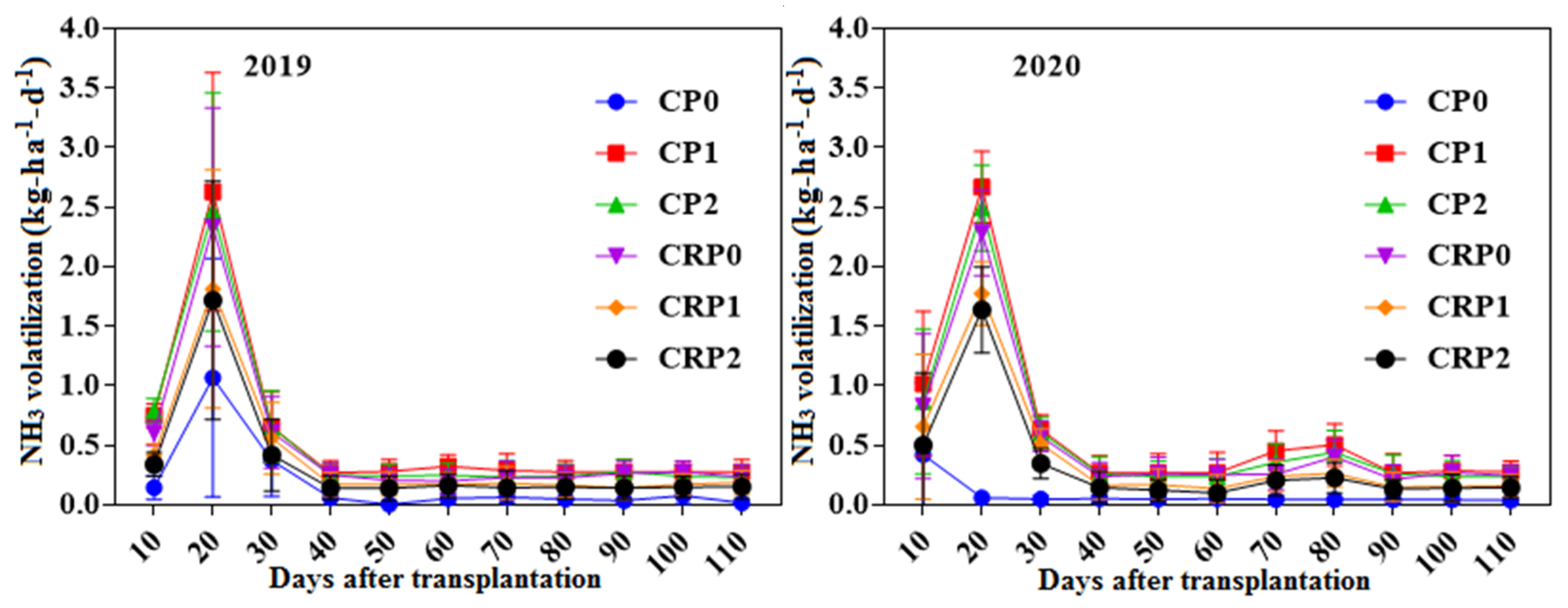
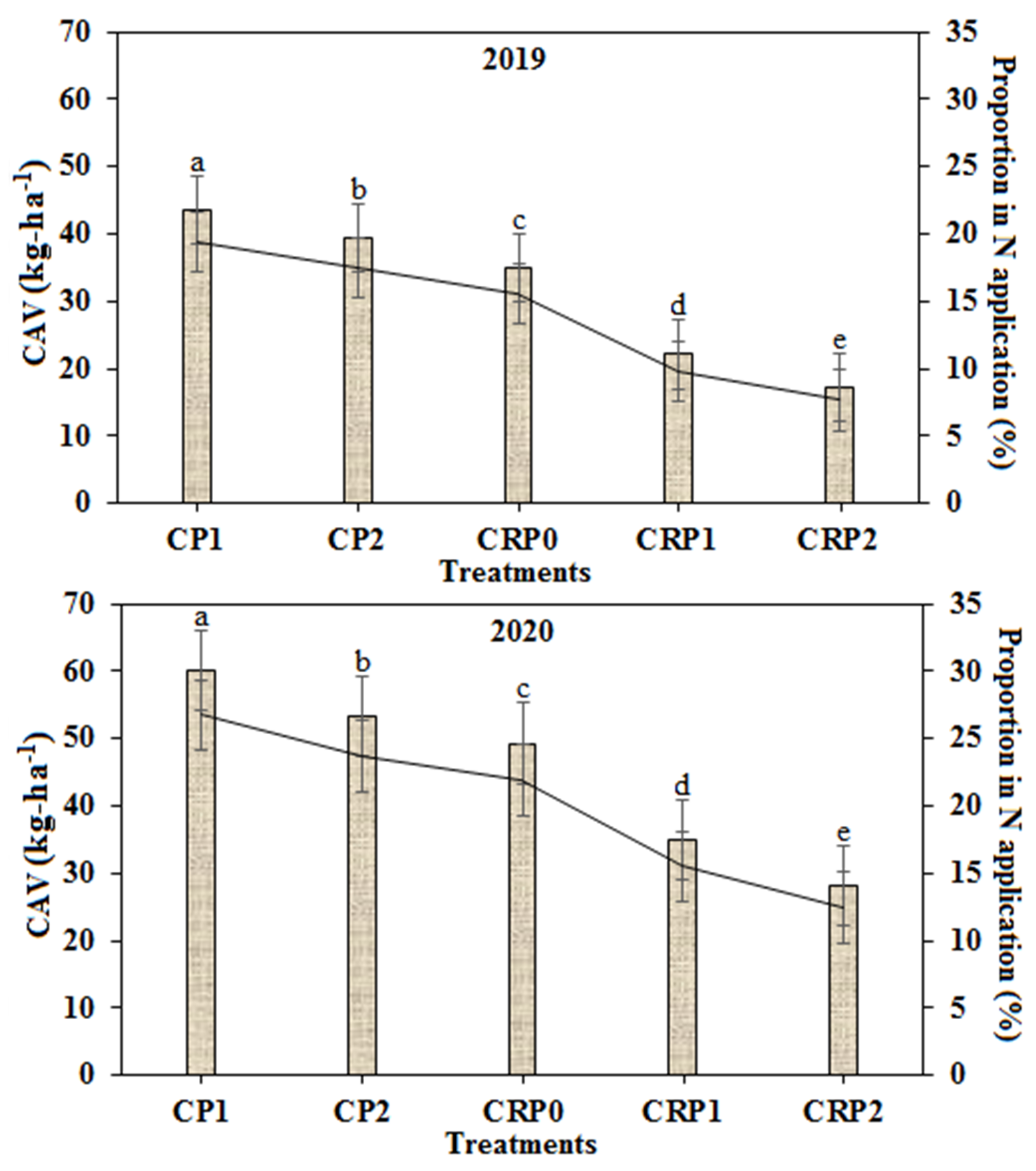
Ammonia (NH3) volatilization from paddy fields is a major issue which leads to poor fertilizer use efficiency and is considered a severe threat to the atmosphere. The previous research studies gave importance to the use of nitrogen fertilizers to mitigate NH3 volatilization, while very little emphasis was given to the role of other fertilizers, such as phosphorus (P), for the alleviation of NH3 volatilization in rice fields. Considering P importance herein, we conducted two consecutive field experiments using an innovative, controlled-release, phosphorus-blended fertilizer (CRPBF, with levels CRP0, CRP1, and CRP2). We compared CP0 (in which no fertilizer was applied), CP1 (112.5 kg P ha−1 P of locally recommended fertilizers), and CP2: (P and K blended fertilizers) to determine the best possible way to reduce NH3 volatilization without affecting the yield and quality of rice. The results of the study suggested that the yield of rice increased significantly with the application of CRP1 (11.11 t ha−1) and CRP2 (11.99 t ha−1). The addition of CRP1 and CRP2 to the rice field also enhanced yield-related components, i.e., panicle weight, total spikelets per unit area, spikelets per panicle, and above-ground biomass. CRP0 showed a lower yield and related components when compared to CP2. The addition of CRP1 and CRP2 demonstrated lower protein contents when compared to other treatments. The CRPBF application improved starch content and taste scores, and reduced the chalkiness of the rice grain during both years. The results showed a decreasing trend in NH3 volatilization from CRPBF amendments by improving the nitrogen use efficiency traits when compared to other treatments: CRP2, CRP1, and CRP0 reduced NH3 volatilization by 45%, 35%, and 15%, respectively. The results of this study indicate that, due to the episodic nature of NH3 volatilization, CRPBFs with 50% P and 100% P can markedly reduce NH3 volatilization from paddy fields without compromising the yield and quality of the crop, and could be a promising alternative to the ordinary commercial fertilizers used in rice fields.
Keywords: controlled-release fertilizers; yield; quality; NUE; NH3 volatilization controlled-release fertilizers; yield; quality; NUE; NH3 volatilization