Article

Towards a Better Understanding of MASLD: Patient Health Literacy, Illness Perception, and Awareness


1
Clinic of Social and Family Medicine, School of Medicine, University of Crete, 70013 Heraklion, Crete, Greece
2
4th Local Primary Health Care Team, 71303 Heraklion, Crete, Greece
3
European Society for Primary Care Gastroenterology, London E1 6HU, UK
4
La Mina Primary Health Care Academic Centre, University of Barcelona, 08007 Barcelona, Spain
5
IDIAP Jordi Gol Research Institute, 08007 Barcelona, Spain
6
Faculty of Health and Life Sciences, Hasselt University, 3500 Hasselt, Belgium
7
School of Nutrition and Translational Research in Metabolism (NUTRIM), Maastricht University, 6211 LK Maastricht, The Netherlands
8
LCRC (-MHU), Department Future Health and Gastro-enterology and Hepatology, Ziekenhuis Oost-Limburg, 3600 Genk, Belgium
9
Department of Family Medicine, CAPHRI Research Institute, Maastricht University, 6229 HA Maastricht, The Netherlands
10
Department of Psychology, School of Social Sciences and Humanities, University of Limassol, Limassol 3025, Cyprus
*
Author to whom correspondence should be addressed.
Diseases 2026, 14(4), 147; https://doi.org/10.3390/diseases14040147
Submission received: 11 March 2026 / Revised: 11 April 2026 / Accepted: 13 April 2026 / Published: 17 April 2026
(This article belongs to the Section Gastroenterology)

Abstract

Objectives: The objective of this study was to investigate metabolic dysfunction-associated steatotic liver disease (MASLD)-related awareness, health literacy (HL), and illness perception among patients at risk of MASLD in European primary care settings. Methods: Participants aged ≥50 years with either obesity, metabolic syndrome (MetS), or type 2 diabetes mellitus (T2DM), and attending general practices (GPs) in Greece, Spain, or The Netherlands were included in the study. The participants completed surveys to collect data on their socio-demographic characteristics and health habits, including the European Health Literacy Survey (HLS-E-Q16), the Brief Illness Perception Questionnaire [B-IPQ], and the Public Awareness of NAFLD Questionnaire. Results: Overall, 234 patients participated in the study (mean age: 66.5 ± 9.5 years; 45.7% were male). Among the participants, 64.5%, 66.2%, and 59.8% had a diagnosis of diabetes, obesity, and MetS, respectively. Almost one-third (27.9%) had never heard about MASLD or discussed MASLD with their GP. Twelve percent (12.1%) had never heard about cirrhosis, and 20.5% were unaware that liver disorders may cause serious health problems. Overall, 43.6% of the patients had a sufficient level of HL (score >13) with a mean score of 11.5 ± 3.3. Illness perception (B-IPQ score) was low at 41.6 ± 11.6. Significantly higher B-IPQ scores were documented for female compared to male respondents (43.1 vs. 39.8; p < 0.01). Multivariate analysis found that knowledge about MASLD was associated with higher HLS-E-Q16 (p = 0.017) and B-IPQ (p = 0.028) scores. Conclusions: Despite being at risk, a significant proportion of the study participants were unaware of MASLD, its risk factors, and their personal susceptibility. This study underscores the importance of enhancing patient HL and promoting prevention and risk reduction, particularly among high-risk patient populations.

1. Introduction

MASLD (metabolic dysfunction-associated steatotic liver disease), formerly known as NAFLD (non-alcoholic fatty liver disease), is associated with disturbed metabolic function and an increased incidence of cardiovascular diseases (CVDs), dyslipidaemia, insulin resistance, type 2 diabetes mellitus (T2DM), and hypertension, which are the components of metabolic syndrome [1,2,3,4,5,6,7]. There is increasing recognition that general practitioners (GPs) and primary care providers (PCPs) play a crucial role in the prevention, early detection (case finding), and long-term management of the MASLD spectrum [1,2,8,9,10,11]. Despite the existence of clinical guidelines, MASLD receives insufficient attention among PCPs in Europe and internationally, with a large proportion of cases remaining undiagnosed or receiving a delayed diagnosis [1,2,4,12,13,14,15].
The prevention and management of MASLD emphasise lifestyle changes and metabolic risk factor management, which both require active patient participation in meeting treatment targets (e.g., weight loss and dietary changes) [1,2]. Patient health literacy (HL), illness perception (IP), and awareness have been identified as important factors in liver disease treatment and in promoting behavioural changes and may have significant implications for doctor–patient interactions and the appropriate communication of the patient’s risk [16]. HL is defined as “people’s knowledge, motivation and competencies to access, understand, appraise, and apply health information in order to make judgments and take decisions in everyday life concerning health care, disease prevention, and health promotion” [17]. People with low HL have an increased risk of experiencing poor health outcomes [18,19,20,21] and tend to receive fewer benefits from health care services, which are often limited to acute care rather than prevention and health promotion [22,23]. Large-scale studies have identified addressing limited HL as an important challenge for health practice and policy in Europe [22]. In addition, risk and illness perception, or an individual’s perceived susceptibility to a potential health threat, has been shown to mediate health and safety-related behaviours and decisions [23,24].
There are a limited number of studies that examined patient HL, IP, and awareness related to MASLD in primary health care (PHC) settings [25,26,27,28]. Documenting the patient perspective can be important in enhancing our understanding of how to best tailor patient education and support engagement in behaviour changes. As such, the aim of this study was to explore the awareness, health literacy, and illness perception of MASLD among at-risk patients in European primary care settings. We also sought to explore how communication pathways affect risk perception among high-risk patients. This study is part of a European collaborative study to support the development of new knowledge and tools to support PC providers in the early detection and management of MASLD [https://www.nash.med.uoc.gr/ accessed on 12 December 2025]. Its main aim was to serve as formative research to inform the design of a training intervention for PCPs in Europe.

2. Materials and Methods

2.1. Study Design

A cross-sectional descriptive study was conducted among patients recruited from three European PC settings in Crete (Greece), Barcelona (Spain), and Maastricht (The Netherlands).

2.2. Setting

A total of 12 PC practices served as data collection sites. In each country, four general practitioners’ (GPs’) practices were selected as study settings for patient recruitment. The GPs were purposively selected to represent a range in gender, age, years of experience, and area of practice (urban/semi-urban/rural) using the following criteria:
(1)
Licenced general practitioner serving in the public or private sector;
(2)
PC practice is in a well-defined health area;
(3)
Available list of patients registered with their practice;
(4)
See a minimum of 15 patients per day in practice.

2.3. Participants and Eligibility Criteria

The study participants were patients at high risk for MASLD that visited the selected GPs. The patient inclusion criteria were as follows:
(1)
Registered with a selected GP;
(2)
Aged 50 years or older;
(3)
Diagnosed with obesity, MetS, or T2DM.
The inclusion criteria were assessed by the selected GPs. Obesity was defined as a BMI of 30 kg/m2 or greater and was identified using physical examination. MetS and T2DM were identified from patient electronic and/or paper-based medical records, namely, whether a confirmed diagnosis of either was recorded or whether the patients are being treated for either condition. The exclusion criteria included unwillingness or inability to provide signed informed consent and complete study procedures due to cognitive impairment, dementia, and/or terminal illness.

2.4. Study Outcomes

Supplementary Table S1 presents the study outcomes and variables, along with the methods used to assess and categorise them during the data collection and analysis. Socio-demographic characteristics, behavioural risk factors, and biomedical indices were assessed. MASLD awareness was assessed using the Public Awareness of NAFLD questionnaire [27]. HL was assessed using the European Health Literacy Survey Questionnaire (HLS-E-Q16), with the scores categorised into three levels of HL: inadequate HL (0–8), problematic HL (9–12), and sufficient HL (13–16) [21,29]. The HLS-E-Q16 has been validated for use in Greek, Dutch, and Spanish. The total HLS-E-Q16 scores were calculated as well as separate scores for its three sub-scales (health care, disease prevention, and health promotion). The Brief Illness Perception Questionnaire (B-IPQ) was used to assess illness perception with cut-offs of <42 indicating low, 42–49 indicating moderate, and ≥50 indicating high perception of risk [30]. A validated translation of the B-IPQ was utilised, and both the total scores and scores for each of the eight sub-scales (timeline, illness concern, consequences, emotional representation, identity, personal control, treatment control, and coherence) were calculated [31,32,33]. All necessary written permissions were obtained from the developers of the questionnaires for use in the present study. The study survey used the term NAFLD, which is now referred to as MASLD.

2.5. Data Collection Procedures

Consecutive patients visiting the participating GPs’ practices during a 6-week recruitment period were assessed for eligibility via medical chart review. The GPs assessed patient eligibility and invited patients to participate in the study. The GP kept track of the flow of patients in the study by completing a weekly logbook that recorded the number of patients screened, found eligible, agreed to participate, and completed the study procedure. Upon providing signed informed consent, the participants were given the study survey. For patients unable to complete the survey independently (inadequate reading skills or poor eyesight), a member of the primary care team assisted them with survey completion by reading the survey questions to them and recording the responses. Behavioural risk factors and biomedical indices were determined and recorded on the case report form by the GP. The study coordinator conducted a site visit at each clinic and monitored adherence to the study protocol.

2.6. Data Analysis

The data were analysed using SPSS v.25 software (IBM Corp., Released 2017, IBM SPSS Statistics for Windows, Armonk, NY, USA). Absolute and relative frequency distributions of the descriptive and clinical characteristics of the participants were estimated. The normality of continuous variables (scales’ scores) was established using Blom’s method (Q-Q plot). Student’s t-tests and χ2 tests were used to compare clinical characteristics and lifestyle habits between genders. χ2 tests were used to assess the frequency distribution of the Awareness Scale scores based on the participants’ country of origin. Descriptive measures of the levels of knowledge (Awareness Scale), illness perception, and health literacy of the participants are presented; their reliability coefficients were assessed using Cronbach’s α, and comparisons between countries were performed using the Kruskal–Wallis test. Finally, in order to assess interaction effects with health literacy, multiple linear regression (based on the Process method (v.3.5.3) and using illness perception as a mediator factor) was used to calculate the (unstandardised) β coefficients for knowledge (about conditions that cause fatty liver) in relation to the health literacy, illness perception, and characteristics of the participants [34]. The significance level was set at 0.05.

3. Results

3.1. Demographic Characteristics

Two hundred and thirty-four (n = 234) eligible patients participated in the study (mean age: 66.5 ± 9.5 years; 54.3% were female). Table 1 summarises the participant characteristics. Almost sixty percent (59.8%) were of Greek origin (n = 140), 33.8% were Spanish (n = 79), and 6.4% (n = 15) were from The Netherlands. Recruitment in The Netherlands and Spain was significantly impacted by COVID-19-related clinic disruptions. Most participants (88.5%) lived in urban areas, and 32.5% had completed high school, while 10.3% had pursued higher education.

3.2. Clinical and Lifestyle Characteristics

The clinical characteristics and lifestyle factors of the study participants, by gender and overall, are presented in Table 2. Overall, 67.5% of the participants were diagnosed with obesity (defined as BMI ≥ 30, up to 84% if determined based on waist circumference). Almost sixty percent of the patients (59.8%) had been diagnosed with metabolic syndrome (MetS). Twenty-one percent (20.9%, n = 49) reported being a current smoker, and most (71.4%) reported no alcohol consumption. Significant differences were found between male and female patients in terms of both alcohol and smoking behaviours. Among those who reported alcohol use, the mean number of standard alcohol drink units per week was 13 glasses/week.

3.3. MASLD Awareness, Health Literacy, and Illness Perception

In total, 220 out of the 234 participants had complete data for MASLD awareness, HL, and IP. Almost one-third (27.9%) of the participants had never heard about MASLD (or NAFLD) from their personal physician. A smaller percentage of 12.1% had never heard about cirrhosis, and 20.5% were unaware that liver disorders may cause serious health problems. More than half of the participants (55.2%) lacked knowledge on the availability of treatments for MASLD.
Knowledge about the conditions that cause fatty liver was limited, with 29% of the participants unaware of any or only knew one causative factor for MASLD. The patients identified the following as the most common factors involved in the development of fatty liver disease: obesity (78.8%), high cholesterol (48.7%), and excess alcohol intake (47.4%). The mean score on the Awareness Scale was 2.5 ± 1.5, where a score of 8 indicates greater knowledge (Table 3). The mean B-IPQ score was 41.6 ±11.6. The timeline component of the B-IPQ had higher mean scores compared to the treatment control and coherence components (7.8 vs. 2.6, p < 0.001). The mean HLS-E-Q16 score was 11.5 (±3.3), with the health care component showing a higher mean score compared to health promotion (5.5 vs. 2.8, p < 0.001). The gender analysis found significantly higher total B-IPQ and illness concern, consequences, and emotional representation sub-scale scores for females versus males. No other gender differences were found.
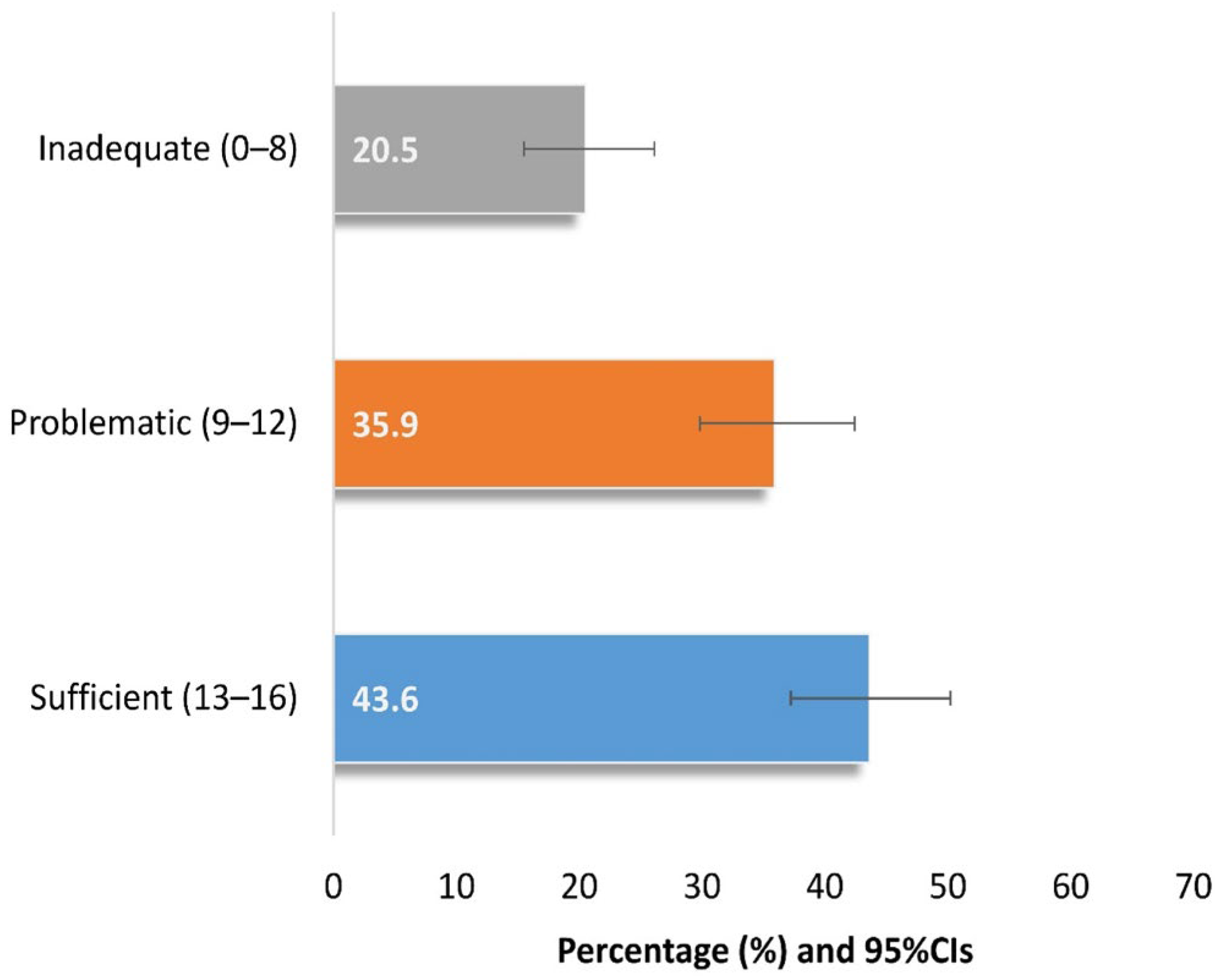
In total, only 43.6% of the participants had a sufficient level of HL (score of 13–16), as depicted in Figure 1.

3.4. Factors Affecting MASLD Awareness

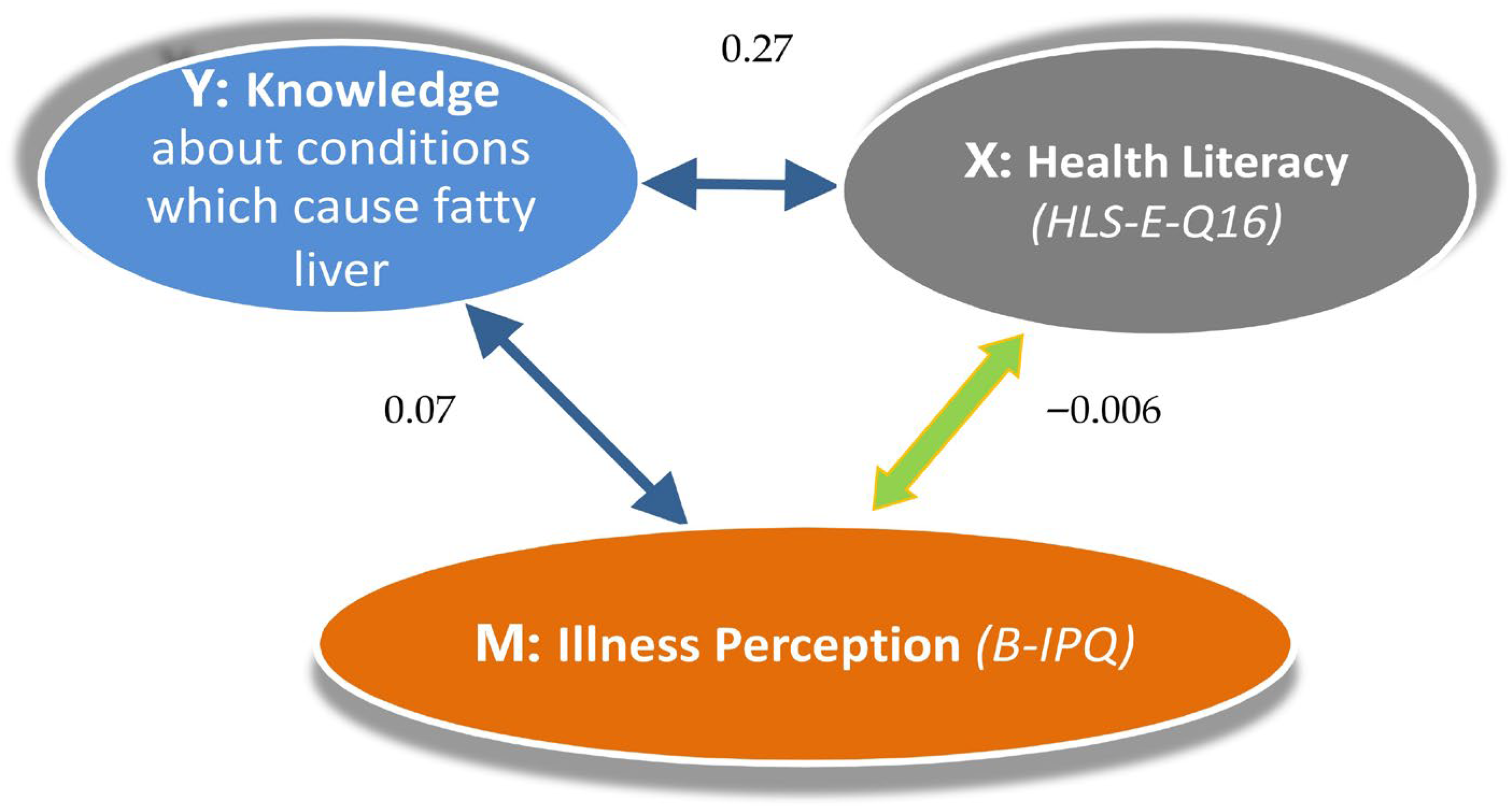
The multiple linear regression analysis of knowledge (about the conditions that cause fatty liver) in relation to the participants’ HL, IP, and characteristics is presented in Table 4. Knowledge about MASLD causative factors was significantly associated with HL (β = 0.27, p = 0.017), IP (β = 0.07, p = 0.028), their negative interaction effect (β = −0.006, p = 0.016), and younger age (β = −0.023, p = 0.033). Knowledge was lower in the participants from Greece compared to the other countries (β = −1.44, p < 0.001). Figure 2 presents the coefficients (effects) for HL and knowledge about the conditions that increase the probability of fatty liver, mediated by IP.

4. Discussion

4.1. Main Findings and Comparison with the International Literature

Overall, this cross-sectional survey documented low to moderate levels of MASLD-related awareness, HL, and IP in the at-risk MASLD primary care patient populations in this study. Almost one-third of patients had never heard about MASLD from their personal physician, and 20.5% reported being unaware that liver disorders may cause health issues. Validated tools for estimating awareness, IP, and HL for MASLD found low to moderate levels in this study sample. In total, 43.6% of patients had a sufficient level of HL. Significantly greater illness perception was documented among female respondents than among males, particularly for the illness concern, consequences, and emotional representation sub-scales. Given the role of patient engagement in prevention and early management through lifestyle changes and risk factor modification, these results support strengthening patient awareness and HL [1,2,35]. While there have been studies assessing PCP MASLD-related awareness [9,13,36,37,38,39,40,41], population-based studies in primary care settings that estimate awareness of MASLD are relatively limited [25,26,27,28]. A recent study in the US, which included 11,700 adults, found that, from 2007–2008 to 2015–2016, although the awareness of liver disease among adults already diagnosed with MASLD improved from 4.4% to 6.3%, it was still 4 to 10 times lower than the awareness of viral hepatitis [28]. Further studies in interventional settings, primarily outside of Europe, show low risk perception regarding MASLD in the community [25,26,27]. Additionally, there are studies that assessed HL among patients with liver disease but there is only one on patients with MASLD [42,43,44,45,46,47,48,49]. A recent study by Saddic et al. reported on HL in a sample of 101 patients attending an ambulatory hepatology clinic [49]. The study found comparable HL scores to those of the present study. The authors observed an association between lower HL and education and more advanced MASLD and metabolic dysfunction.

4.2. Strengths and Limitations

To the best of our knowledge, this is the first cross-sectional study to report on MASLD awareness, HL, and IP among high-risk patients in primary care practice settings. However, the study findings should be interpreted in light of the study’s limitations. Firstly, the study sample was ultimately smaller than the original sample (n = 300) due to COVID-19-related clinic disruptions during the data collection period and the resulting delays in data collection in The Netherlands. As such, the overall results and cross-country comparisons should be interpreted with caution. The present study served as formative research to inform the design of new training programmes for PCPs and subsequent interventions in PHC settings.
The study timeline involved screening patients until a target of 100 patients per county was reached; a maximum of 6 weeks of data collection per PCP was allowed before recruitment was discontinued. Further limitations include the consecutive rather than random selection of study participants, the self-reported nature of the questionnaires, and the descriptive, cross-sectional study design, which does not allow for any causal examination. Furthermore, this study represents a cross-sectional sample in a defined group of PHP practices; therefore, the study findings may not be generalisable beyond this study population.

4.3. Study Implications

Internationally, there has been a call for efforts to increase both PCP and patient HL related to fatty liver disease, with an emphasis on patients at high risk [1,2,4,8,50]. Research suggests that health interventions that successfully incorporate risk perceptions can lead to better behavioural change outcomes [28]. Incorporating these concepts into clinical practice, particularly in PHC, could increase the provision of understandable and accessible information, thereby increasing the impact, uptake, and sustainability of clinical interventions. As the prevalence and burden of MASLD continues to rise in parallel with the global epidemic of obesity and type 2 diabetes mellitus, public health policies should incorporate patient education to facilitate proactiveness, prompt risk stratification, and early diagnosis. These interventions should be informed by a good understanding of current patient perspectives and through monitoring of changes in key areas such as HL and IP over time.
Both the data generated and the methodologies used in the present study provide information and tools that could support future assessments and monitoring of trends in patient HL over time and across EU countries. The study findings can also be utilised to inform European and national policies on raising MASLD awareness among high-risk patients and on the emerging role of PCPs in patient education and shared decision-making. A patient guidance document on MASLD was recently published, which provides insights and lay language to support conversations and efforts to address patient MASLD-related health literacy [50]. The findings of the present study and the importance of PCPs’ efforts in increasing HL among at-risk patients have also been reflected in recently published primary practice recommendations, new PCP training programmes, and MASLD clinical care pathways published by our team in partnership with the European Society for Primary Care Gastroenterology [51,52,53].
At the time of data collection, The Netherlands had implemented an MASLD screening and treatment pathway for primary care, and some efforts from the National Medical Association had been made to raise awareness among medical practitioners. Spain had also developed an MASLD primary care pathway, whereas Greece had introduced a quality assurance and patient-safety project that has recently impacted PHC. The study design did not allow for examination of the associations between efforts to increase PCPs’ awareness and practices related to MASLD and how these efforts may influence patient awareness and health literacy. We do expect a positive relationship between PCPs’ awareness and patient health literacy. Future research should assess both within-country and between-country differences, taking into consideration the efforts being made by PC and national health systems.
The study’s findings may inform the rational planning of PHC services at the national or regional level to reduce health inequalities. For instance, inadequate HL and low levels of awareness in Crete, Greece, may partly account for the high morbidity and mortality associated with liver cancer, as reported in a recent study [54]. Furthermore, the need to enhance both health literacy and nutritional literacy (NL), particularly among individuals with lower educational attainment and lower annual incomes, has been emphasised in previous research and should be prioritised by health care stakeholders and policymakers [55]. In this context, investment in the development of targeted training programmes for PHC practitioners is strongly recommended.

5. Conclusions

The study documented a lack of awareness, HL, and risk perception among patients at high risk of MASLD in European primary care settings. Future research is needed to further examine patient HL, IP, and awareness in primary care settings. Importantly, monitoring trends in these areas could increase our understanding of time trends in order to inform policy and practice.

Supplementary Materials

The following supporting information can be downloaded at: https://www.mdpi.com/article/10.3390/diseases14040147/s1, Table S1. Study outcomes and variables assessment and categorisation.

Author Contributions

Conceptualisation, C.L., S.P., M.A., G.K., J.M. (Juan Mendive) and J.M. (Jean Muris); methodology, C.L., S.P., M.A., I.G., F.A., L.J.M.H., M.L., G.K., J.M. (Juan Mendive) and J.M. (Jean Muris); formal analysis, I.G. and M.L.; investigation, I.G., F.A., L.J.M.H., J.M. (Juan Mendive) and L.J.M.H.; writing—original draft preparation, I.G., S.P. and M.L.; writing—review and editing, C.L., S.P., M.A., I.G., F.A., L.J.M.H., M.L., G.K., J.M. (Juan Mendive) and J.M. (Jean Muris); study administration, C.L.; funding acquisition, C.L., S.P. and M.A. All authors have read and agreed to the published version of the manuscript.

Funding

This study was funded by an unrestricted research grant from Gilead Science Inc. (NASH Models of Care, grant number IN-EU989-5753). PhD candidate L. JM Heyens is funded by a fellowship from Fonds Wetenschappelijk Onderzoek (FWO) (1S73421N). The study funders had no role in the study design, data collection or analysis, or interpretation or reporting of the results.

Institutional Review Board Statement

The study was conducted in accordance with the Declaration of Helsinki and was approved by the University of Crete Research Ethics Committee (protocol number 144/23.06.2020).

Informed Consent Statement

Informed consent was obtained from all subjects involved in the study.

Data Availability Statement

Dataset available on request from the authors.

Acknowledgments

The authors would like to thank Myron Galenianos for the financial administration of the project and all participating primary care clinics and staff.

Conflicts of Interest

The authors declare no conflicts of interest. The funders had no role in the design of the study; in the collection, analyses, or interpretation of the data; in the writing of the manuscript; or in the decision to publish the results.

References

  1. Karlsen, T.H.; Sheron, N.; Zelber-Sagi, S.; Carrieri, P.; Dusheiko, G.; Bugianesi, E.; Pryke, R.; Hutchinson, S.J.; Sangro, B.; Martin, N.K.; et al. The EASL-lancet liver commission: Protecting the next generation of Europeans against liver disease complications and premature mortality. Lancet 2022, 399, 61–116. [Google Scholar] [CrossRef] [Scilit] [PubMed]
  2. European Association for the Study of the Liver (EASL); European Association for the Study of Diabetes (EASD); European Association for the Study of Obesity (EASO). EASL-EASD-EASO Clinical Practice Guidelines on the management of metabolic dysfunction-associated steatotic liver disease (MASLD). J. Hepatol. 2024, 81, 492–542. [Google Scholar] [CrossRef] [Scilit] [PubMed]
  3. Rinella, M.E.; Lazarus, J.V.; Ratziu, V.; Francque, S.M.; Sanyal, A.J.; Kanwal, F.; Romero, D.; Abdelmalek, M.F.; Anstee, Q.M.; Arab, J.P.; et al. A multisociety Delphi consensus statement on new fatty liver disease nomenclature. Hepatology 2023, 78, 1966–1986. [Google Scholar] [CrossRef] [Scilit]
  4. Lazarus, J.V.; Mark, H.E.; Allen, A.M.; Arab, J.P.; Carrieri, P.; Noureddin, M.; Alazawi, W.; Alkhouri, N.; Alqahtani, S.A.; Anstee, Q.M.; et al. A global action agenda for turning the tide on fatty liver disease. Hepatology 2024, 79, 502–523. [Google Scholar] [CrossRef] [Scilit]
  5. Muzurović, E.; Mikhailidis, D.P.; Mantzoros, C. Non-alcoholic fatty liver disease, insulin resistance, metabolic syndrome and their association with vascular risk. Metabolism 2021, 119, 154770. [Google Scholar] [CrossRef] [Scilit]
  6. Bedogni, G.; Gastaldelli, A.; Foschi, F.G. Fatty liver, cardiometabolic disease and mortality. Curr. Opin. Lipidol. 2020, 31, 27–31. [Google Scholar] [CrossRef] [Scilit]
  7. Caussy, C.; Aubin, A.; Loomba, R. The relationship between type 2 diabetes, NAFLD, and cardiovascular risk. Curr. Diabetes Rep. 2021, 21, 15. [Google Scholar] [CrossRef] [Scilit]
  8. Eskridge, W.; Cryer, D.R.; Schattenberg, J.M.; Gastaldelli, A.; Malhi, H.; Allen, A.M.; Noureddin, M.; Sanyal, A.J. Metabolic Dysfunction-Associated Steatotic Liver Disease and Metabolic Dysfunction-Associated Steatohepatitis: The Patient and Physician Perspective. J. Clin. Med. 2023, 12, 6216. [Google Scholar] [CrossRef] [Scilit]
  9. Nadolsky, K.; Cryer, D.R.; Articolo, A.; Fisher, T.; Schneider, J.; Rinella, M. Nonalcoholic steatohepatitis diagnosis and treatment from the perspective of patients and primary care physicians: A cross-sectional survey. Ann. Med. 2023, 55, 2211349. [Google Scholar] [CrossRef] [Scilit] [PubMed] [PubMed Central]
  10. Williams, R.; Alexander, G.; Armstrong, I.; Baker, A.; Bhala, N.; Camps-Walsh, G.; E Cramp, M.; de Lusignan, S.; Day, N.; Dhawan, A.; et al. Disease burden and costs from excess alcohol consumption, obesity, and viral hepatitis: Fourth report of the lancet Standing commission on liver disease in the UK. Lancet 2018, 391, 1097–1107. [Google Scholar] [CrossRef] [Scilit] [PubMed]
  11. Tsochatzis, E.A.; Newsome, P.N. Non-alcoholic fatty liver disease and the interface between primary and secondary care. Lancet Gastroenterol. Hepatol. 2018, 3, 509–517. [Google Scholar] [CrossRef] [Scilit]
  12. Chu, J.N.; Goldman, M.L.; Brandman, D.; Sohn, J.H.; Islam, K.; Ross, L.A.; Fox, R.K. Underrecognition and Suboptimal Quality of Care for Nonalcoholic Fatty Liver Disease Cirrhosis in Primary Care Patients with Diabetes Mellitus. Am. J. Med. 2024, 137, 172–177.e2. [Google Scholar] [CrossRef] [Scilit] [PubMed]
  13. Driessen, S.; de Jong, V.D.; van Son, K.C.; Klompenhouwer, T.; Colardelle, Y.; Alings, M.; Moreno, C.; Anker, S.D.; Castro Cabezas, M.; Holleboom, A.G.; et al. A global survey of health care workers’ awareness of non-alcoholic fatty liver disease: The Aware NASH survey. United Eur. Gastroenterol. J. 2023, 11, 654–662. [Google Scholar] [CrossRef] [Scilit] [PubMed]
  14. Standing, H.C.; Jarvis, H.; Orr, J.; Exley, C.; Hudson, M.; Kaner, E.; Hanratty, B. GPs’ experiences and perceptions of early detection of liver disease: A qualitative study in primary care. Br. J. Gen. Pract. 2018, 68, e743–e749. [Google Scholar] [CrossRef] [Scilit]
  15. Eurostat. 2025. Available online: https://ec.europa.eu/eurostat (accessed on 12 December 2025).
  16. Nutbeam, D. Health literacy as a public health goal: A challenge for contemporary health education and communication strategies into the 21st century. Health Promot. Int. 2000, 15, 259–267. [Google Scholar] [CrossRef] [Scilit]
  17. Sørensen, K.; Van den Broucke, S.; Fullam, J.; Doyle, G.; Pelikan, J.; Slonska, Z.; Brand, H.; (HLS-EU) Consortium Health Literacy Project European. Health literacy and public health: A systematic review and integration of definitions and models. BMC Public Health 2012, 12, 80. [Google Scholar] [CrossRef] [Scilit]
  18. Berkman, N.D.; Sheridan, S.L.; Donahue, K.E.; Halpern, D.J.; Crotty, K. Low health literacy and health outcomes: An updated systematic review. Ann. Intern. Med. 2011, 155, 97–107. [Google Scholar] [CrossRef] [Scilit]
  19. Bostock, S.; Steptoe, A. Association between low functional health literacy and mortality in older adults: Longitudinal cohort study. BMJ 2012, 344, e1602. [Google Scholar] [CrossRef] [Scilit]
  20. Nutbeam, D. The evolving concept of health literacy. Soc. Sci. Med. 2008, 67, 2072–2078. [Google Scholar] [CrossRef] [Scilit]
  21. Sørensen, K.; Pelikan, J.M.; Röthlin, F.; Ganahl, K.; Slonska, Z.; Doyle, G.; Fullam, J.; Kondilis, B.; Agrafiotis, D.; Uiters, E.; et al. Health literacy in Europe: Comparative results of the European health literacy survey (HLS-EU). Eur. J. Public Health 2015, 25, 1053–1058. [Google Scholar] [CrossRef] [Scilit]
  22. Weinstein, N.D.; Rothman, A.J.; Nicolich, M. Use of correlational data to study effects of risk perceptions on precautionary behavior. Psychol. Health 1998, 13, 479–501. [Google Scholar] [CrossRef] [Scilit]
  23. Gaube, S.; Lermer, E.; Fischer, P. The Concept of Risk Perception in Health-Related Behavior Theory and Behavior. In Perceived Safety; Springer Publishing: Cham, Switzerland, 2019; pp. 101–118. [Google Scholar] [CrossRef] [Scilit]
  24. Sheeran, P.; Harris, P.R.; Epton, T. Does heightening risk appraisals change people’s intentions and behavior? A meta-analysis of experimental studies. Psychol. Bull. 2014, 140, 511–543. [Google Scholar] [CrossRef] [Scilit]
  25. Bergram, M.; Nasr, P.; Iredahl, F.; Kechagias, S.; Rådholm, K.; Ekstedt, M. Low awareness of non-alcoholic fatty liver disease in patients with type 2 diabetes in Swedish Primary Health Care. Scand. J. Gastroenterol. 2022, 57, 60–69. [Google Scholar] [CrossRef] [Scilit] [PubMed]
  26. Lee, J.H.; Jung, J.H.; Park, H.; Oh, J.H.; Ahn, S.B.; Yoon, E.L.; Jun, D.W. A survey on the awareness, current management, and barriers for non-alcoholic fatty liver disease among the general Korean population. Sci. Rep. 2013, 13, 15205. [Google Scholar] [CrossRef] [Scilit] [PubMed]
  27. Palavesam, P.; Rajendran, S.S.; Manopriya, T.; Sheriff, D.S. Preliminary Study to Assess Awareness about Non Alcoholic Fatty Liver Disease (NAFLD) and Hypertension. Ann. Community Med. Pract. 2024, 9, 1061. [Google Scholar]
  28. Alqahtani, S.A.; Paik, J.M.; Biswas, R.; Arshad, T.; Henry, L.; Younossi, Z.M. Poor Awareness of Liver Disease Among Adults with NAFLD in the United States. Hepatol. Commun. 2021, 5, 1833–1847. [Google Scholar] [CrossRef] [Scilit]
  29. Ghevariya, V.; Sandar, N.; Patel, K.; Ghevariya, N.; Shah, R.; Aron, J.; Anand, S. Knowing What’s Out There: Awareness of Non-Alcoholic Fatty Liver Disease. Front. Med. 2014, 1, 4. [Google Scholar] [CrossRef] [Scilit]
  30. Broadbent, E.; Petrie, K.J.; Main, J.; Weinman, J. The brief illness perception questionnaire. J. Psychosom. Res. 2006, 60, 631–637. [Google Scholar] [CrossRef] [Scilit]
  31. Giannousi, Z.; Manaras, I.; Georgoulias, V.; Samonis, G. Illness perceptions in Greek patients with cancer: A validation of the Revised-Illness Perception Questionnaire. Psychooncology 2010, 19, 85–92. [Google Scholar] [CrossRef] [Scilit] [PubMed]
  32. de Raaij, E.J.; Schröder, C.; Maissan, F.J.; Pool, J.J.; Wittink, H. Cross-cultural adaptation and measurement properties of the Brief Illness Perception Questionnaire-Dutch Language Version. Man. Ther. 2012, 17, 330–335. [Google Scholar] [CrossRef] [Scilit]
  33. Pacheco-Huergo, V.; Viladrich, C.; Pujol-Ribera, E.; Cabezas-Peña, C.; Núñez, M.; Roura-Olmeda, P.; Amado-Guirado, E.; Núñez, E.; Del Val, J.L. Percepción en enfermedades crónicas: Validación lingüística del Illness Perception Questionnaire Revised y del Brief Illness Perception Questionnaire para la población española. Aten. Primaria 2012, 44, 280–287. (In Spanish) [Google Scholar] [CrossRef] [Scilit]
  34. Preacher, K.J.; Hayes, A.F. SPSS and SAS procedures for estimating indirect effects in simple mediation models. Behav. Res. Methods Instrum. Comput. 2004, 36, 717–731. [Google Scholar] [CrossRef] [Scilit]
  35. Thomas, A. Managing Nonalcoholic Fatty Liver Disease Through Structured Lifestyle Modification Interventions. Am. J. Lifestyle Med. 2025, 20, 463–478. [Google Scholar] [CrossRef] [Scilit] [PubMed]
  36. Said, A.; Gagovic, V.; Malecki, K.; Givens, M.L.; Nieto, F.J. Primary care practitioners survey of non-alcoholic fatty liver disease. Ann. Hepatol. 2013, 12, 758–765. [Google Scholar] [CrossRef] [Scilit]
  37. Kallman, J.B.; Arsalla, A.; Park, V.; Dhungel, S.; Bhatia, P.; Haddad, D.; Wheeler, A.; Younossi, Z.M. Screening for hepatitis B, C and nonalcoholic fatty liver disease: A survey of community-based physicians. Aliment. Pharmacol. Ther. 2009, 29, 1019–1024. [Google Scholar] [CrossRef] [Scilit] [PubMed]
  38. Polanco-Briceno, S.; Glass, D.; Stuntz, M.; Caze, A. Awareness of nonalcoholic steatohepatitis and associated practice patterns of primary care physicians and specialists. BMC Res. Notes 2016, 9, 157. [Google Scholar] [CrossRef] [Scilit] [PubMed]
  39. Sebastiani, G.; Ramji, A.; Swain, M.G.; Patel, K. A Canadian survey on knowledge of non-alcoholic fatty liver disease among physicians. Can. Liver J. 2021, 4, 82–92. [Google Scholar] [CrossRef] [Scilit]
  40. Matthias, A.T.; Fernandopulle, A.N.R.; Seneviratne, S.L. Survey on knowledge of non-alcoholic fatty liver disease (NAFLD) among doctors in Sri Lanka: A multicenter study. BMC Res. Notes 2018, 11, 556. [Google Scholar] [CrossRef] [Scilit]
  41. Lazarus, J.V.; White, T.M.; Manolas, M.; Allen, A.M.; Pannain, S.; Alkhouri, N.; Bansal, M.B.; Charlton, M.; Fortune, B.E.; Handelsman, Y.; et al. Awareness of metabolic dysfunction-associated steatotic liver disease (MASLD) among primary care providers in the four most populous U.S. cities. Ann. Hepatol. 2026, 31, 102200. [Google Scholar] [CrossRef] [Scilit]
  42. Figueroa, G.; Castañeda, S.; McLean, H.; Dukandar, J.; Wilson, S.; Martin, P.; George, S.M.S.; Araya-Acero, L.; Jones, P.D. Low health literacy, lack of knowledge, and self-control hinder healthy lifestyles in diverse patients with steatotic liver disease. Dig. Dis. Sci. 2024, 69, 384–398. [Google Scholar] [CrossRef] [Scilit]
  43. Volk, M.L.; Fisher, N.; Fontana, R.J. Patient knowledge about disease self-management in cirrhosis. Am. J. Gastroenterol. 2013, 108, 302–305. [Google Scholar] [CrossRef] [Scilit] [PubMed]
  44. Kaps, L.; Hildebrand, K.; Nagel, M.; Michel, M.; Kremer, W.M.; Hilscher, M.; Galle, P.R.; Schattenberg, J.M.; Wörns, M.-A.; Labenz, C. Risk factors for poorer health literacy in patients with liver cirrhosis. PLoS ONE 2021, 16, e0255349. [Google Scholar] [CrossRef] [Scilit]
  45. Kaps, L.; Omogbehin, L.; Hildebrand, K.; Gairing, S.J.; Schleicher, E.M.; Moehler, M.; Rahman, F.; Schattenberg, J.M.; Wörns, M.-A.; Galle, P.R.; et al. Health literacy in gastrointestinal diseases: A comparative analysis between patients with liver cirrhosis, inflammatory bowel disease and gastrointestinal cancer. Sci. Rep. 2022, 12, 21072. [Google Scholar] [CrossRef] [Scilit]
  46. Freundlich Grydgaard, M.; Bager, P. Health literacy levels in outpatients with liver cirrhosis. Scand. J. Gastroenterol. 2018, 53, 1584–1589. [Google Scholar] [CrossRef] [Scilit]
  47. Jacobsen, B.G.; Lauridsen, M.M.; Grønkjaer, L.L. Knowledge needs in patients with liver disease: A qualitative study. BMC Nurs. 2023, 22, 406. [Google Scholar] [CrossRef] [Scilit]
  48. Gulati, R.; Nawaz, M.; Pyrsopoulos, N.T. Health literacy and liver disease. Clin. Liver Dis. 2018, 11, 48–51. [Google Scholar] [CrossRef] [Scilit]
  49. Saddic, A.; Mittler, J.N.; Smirnova, E.; DiazGranados, D.; Sanyal, A.J. Lower health literacy is associated with greater severity of metabolic dysfunction and steatotic liver disease. Gastro Hep Adv. 2025, 5, 100873. [Google Scholar] [CrossRef] [Scilit] [PubMed] [PubMed Central]
  50. Francque, S.M.; Marchesini, G.; Kautz, A.; Walmsley, M.; Dorner, R.; Lazarus, J.V.; Zelber-Sagi, S.; Hallsworth, K.; Busetto, L.; Frühbeck, G.; et al. Non-alcoholic fatty liver disease: A patient guideline. JHEP Rep. 2021, 3, 100322. [Google Scholar] [CrossRef] [Scilit]
  51. Anastasaki, M.; Papadakis, S.; Gergianaki, I.N.; Papastamatiou, L.; Aligizakis, E.; Grillaki, N.; Boutzoukaki, E.; Sivaropoulos, N.; Anastasiou, F.; Mendive, J.; et al. Development and pilot evaluation of an evidence-based algorithm for MASLD management in primary care in Europe. Front. Med. 2024, 11, 1383112. [Google Scholar] [CrossRef] [Scilit] [PubMed]
  52. Lionis, C.; Papadakis, S.; Anastasaki, M.; Aligizakis, E.; Anastasiou, F.; Francque, S.; Gergianaki, I.; Mendive, J.M.; Marketou, M.; Muris, J.; et al. Practice Recommendations for the Management of MASLD in Primary Care: Consensus Results. Diseases 2024, 12, 180. [Google Scholar] [CrossRef] [Scilit]
  53. Papadakis, S.; Anastasaki, M.; Gergianaki, I.; Koek, G.; Mendive, J.; Anastasiou, F.; Heyens, L.; Garcia-Retortillo, M.; Muris, J.; Lionis, C. Development and implementation of a continuing medical education program on non-alcoholic fatty liver disease for primary care practitioners in Europe. Front. Med. 2023, 10, 1034626. [Google Scholar] [CrossRef] [Scilit] [PubMed]
  54. Kalpadakis, S.; Sifaki-Pistolla, D.; Symvoulakis, E.K.; Kelefiotis-Stratidakis, P.; Vamvakas, L.; Mavroudis, D.; Lionis, C. Reporting Liver Cancer Trends in the Island of Crete, Greece: Results from a Geo-Epidemiological Study. Int. J. Environ. Res. Public Health 2022, 19, 10166. [Google Scholar] [CrossRef] [Scilit] [PubMed] [PubMed Central]
  55. Michou, M.; Panagiotakos, D.B.; Lionis, C.; Costarelli, V. Socioeconomic inequalities in relation to health and nutrition literacy in Greece. Int. J. Food Sci. Nutr. 2019, 70, 1007–1013. [Google Scholar] [CrossRef] [Scilit] [PubMed]
Figure 1. Health literacy distribution of study participants (n = 220).
Diseases 14 00147 g001
Figure 2. Non-standardised β coefficients (effects) of basic prognostic factors for knowledge about the conditions that cause fatty liver.
Diseases 14 00147 g002
Table 1. Descriptive characteristics of study participants (n = 234).
n%
CountryGreeceDiseases 14 00147 i00114059.8
The NetherlandsDiseases 14 00147 i002156.4
SpainDiseases 14 00147 i0037933.8
GenderMales/females107/12745.7/54.3
Age, yearsMean ± stand. dev. (min, max)66.5 ± 9.5 (50, 86)
EducationElementary school13457.2
High school7632.5
College, university2410.3
Monthly household income, EurosMean (median) [min, max]1079 (1000) [0, 6650]
Area of residenceUrban/rural207/2788.5/11.5
Table 2. Clinical characteristics and lifestyle factors of study participants by gender (n = 234).
TotalGender
MalesFemales
Mean ± SD
Body mass index, kg/m2 32.9 ± 5.831.5 ± 5.2 *34.0 ± 6.0
Normal/overweight (<30.0)76 (32.5) a46 (43.0) *30 (23.6)
Obese (30.0+)158 (67.5)61 (57.0)97 (76.4)
Waist circumference, cm 109.5 ± 13.6111.0 ± 13.1108.4 ± 14.0
Normal (<88/102)36 (16.0)26 (26.0) *10 (8.0)
Overweight/obese (88/102+)189 (84.0)74 (74.0)115 (92.0)
SmokingCurrent smoker49 (20.9)28 (26.2) *21 (16.5)
Former smoker84 (35.9)52 (48.6)32 (25.2)
None101 (43.2)27 (25.2)74 (58.3)
Alcohol consumption bNormal167 (71.4)61 (57.0) *106 (83.5)
Increased67 (28.6)46 (43.0)21 (16.5)
Number of behavioural risk factors cNone47 (20.1)26 (24.3) *21 (16.5)
1108 (46.2)33 (30.8)75 (59.1)
2+79 (33.7)48 (44.9)31 (24.4)
SD = standard deviation. a n (%). b Normal: <14 (for men) and <7 (for women) standard drinks per week; increased: ≥14 (for men) and ≥7 (for women) standard drinks per week. c Number of the following behavioural risk factors: obesity, smoking status, and alcohol consumption. Student’s t- or χ2 tests between genders: * p < 0.05.
Table 3. Overall Awareness Scale, illness perception, and health literacy scores and by gender (n = 220).
Scale and ComponentMeanStand. Dev.MedianCronbach’s αMalesFemales
Mean ± SDp-Value
Knowledge about conditions that cause fatty liver (Awareness Scale) a2.51.52.0--2.5 ± 1.42.5 ± 1.50.877
Brief Illness Perception Questionnaire (B-IPQ) b Timeline7.82.49.0 7.7 ± 2.67.9 ± 2.20.854
Illness Concern6.62.87.06.1 ± 2.87.0 ± 2.70.007
Consequences6.52.77.06.1 ± 2.76.8 ± 2.70.033
Emotional representation6.33.07.05.8 ± 2.86.8 ± 3.10.002
Identity5.32.96.05.1 ± 2.85.4 ± 3.00.325
Personal control3.92.44.03.8 ± 2.43.9 ± 2.40.811
Treatment control2.62.12.02.6 ± 2.32.7 ± 2.00.349
Coherence2.62.32.0 2.6 ± 2.32.6 ± 2.30.998
Total B-IPQ41.611.643.00.73039.8 ± 11.143.1 ± 11.80.013
European Health Literacy Questionnaire 16 (HLS-E-Q16) cHealth care5.51.66.00.8295.7 ± 1.55.3 ± 1.60.093
Disease prevention3.31.33.00.7433.4 ± 1.33.3 ± 1.30.586
Health promotion2.81.23.00.7332.7 ± 1.22.8 ± 1.20.801
Total HLS-E-Q1611.53.312.00.90211.8 ± 3.311.3 ± 3.40.347
SD = standard deviation. a Answer to question 4 of the Awareness Scale (Which of these conditions do you think cause fatty liver?); score is the number of correctly identified conditions out of eight, where a higher score reflects better knowledge. b Responses to the 8-component questionnaire range from 0 to 10, where a higher score reflects a more threatening perception of the illness. Friedman test between the 8 components: p < 0.001. c Responses to the 16-item questionnaire range from 0 to 16 (0 to 4 for each component), where a higher score reflects a sufficient level of literacy (n = 220). Friedman test between the three components: p < 0.001. Mann–Whitney tests used to compare genders.
Table 4. Multiple linear regression analysis of awareness in relation to health literacy, illness perception, and characteristics of study participants.
Modelβ (95% CI)Stand. Errortp-Value
Knowledge about conditions that cause fatty liver
Constant a4.31
(0.15, 8.46)
2.112.040.042
Health literacy (HLS-E-Q16) 0.27
(0.05, 0.49)
0.112.400.017
Illness perception (B-IPQ)0.07
(0.01, 0.13)
0.032.220.028
Health literacy x illness perception−0.006
(−0.011, −0.001)
0.002−2.420.016
Gender (1: male; 2: female)−0.09
(−0.47, 0.30)
0.19−0.440.658
Age (years)−0.023
(−0.044, −0.002)
0.01−2.140.033
Education (1: elementary school; 2: high school; 3: college or university)0.18
(−0.14, 0.50)
0.161.120.262
Behavioural risk factors
(obesity, smoking, and alcohol consumption)
−0.27
(−0.55, 0.01)
0.14−1.910.056
Country 1 (Greece vs. others)−1.44
(−2.28, −0.61)
0.43−3.40<0.001
Country 2 (Spain vs. others)−0.77
(−1.68, 0.12)
0.46−1.700.090
F(9, 210) = 3.30, p < 0.001, R2 = 0.124
The linear regression analysis was based on the Process method (v.3.5.3) [35] and used illness perception as a mediator factor to assess interaction effects with health literacy.
Disclaimer/Publisher’s Note: The statements, opinions and data contained in all publications are solely those of the individual author(s) and contributor(s) and not of MDPI and/or the editor(s). MDPI and/or the editor(s) disclaim responsibility for any injury to people or property resulting from any ideas, methods, instructions or products referred to in the content.