Article

BEGAN v3: Avoiding Mode Collapse in GANs Using Variational Inference


1
Department of Computer Engineering, Sunchon National University, 255 Jungang-ro, Suncheon-city, Jeollanam-do 57922, Korea
2
Department of Data Informatics, Korea Maritime and Ocean University, 727 Taejong-ro, Yeongdo-gu, Busan 49112, Korea
*
Authors to whom correspondence should be addressed.
Electronics 2020, 9(4), 688; https://doi.org/10.3390/electronics9040688

Submission received: 30 March 2020 / Revised: 18 April 2020 / Accepted: 20 April 2020 / Published: 23 April 2020
(This article belongs to the Special Issue Electronic Solutions for Artificial Intelligence Healthcare)

Abstract

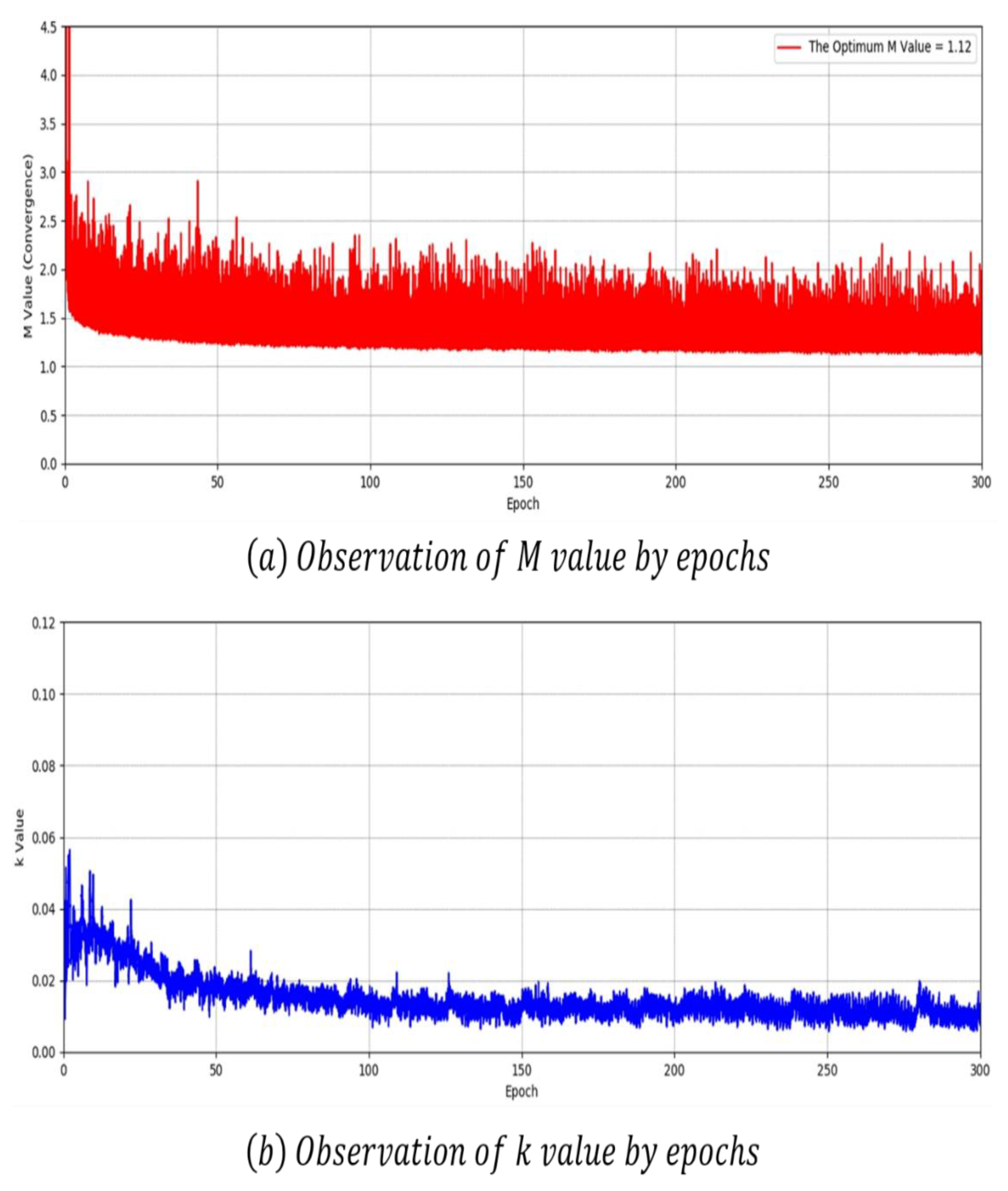
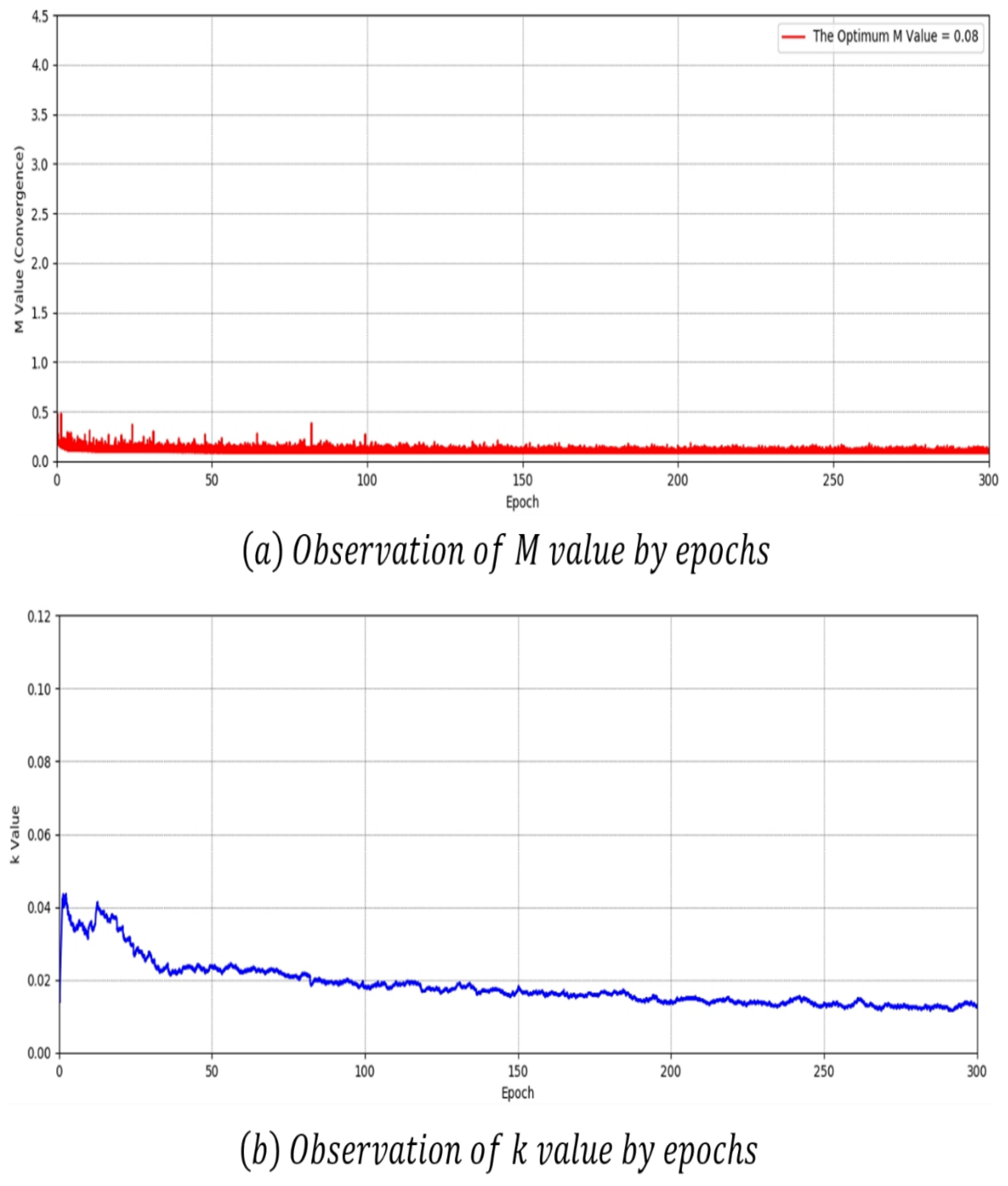
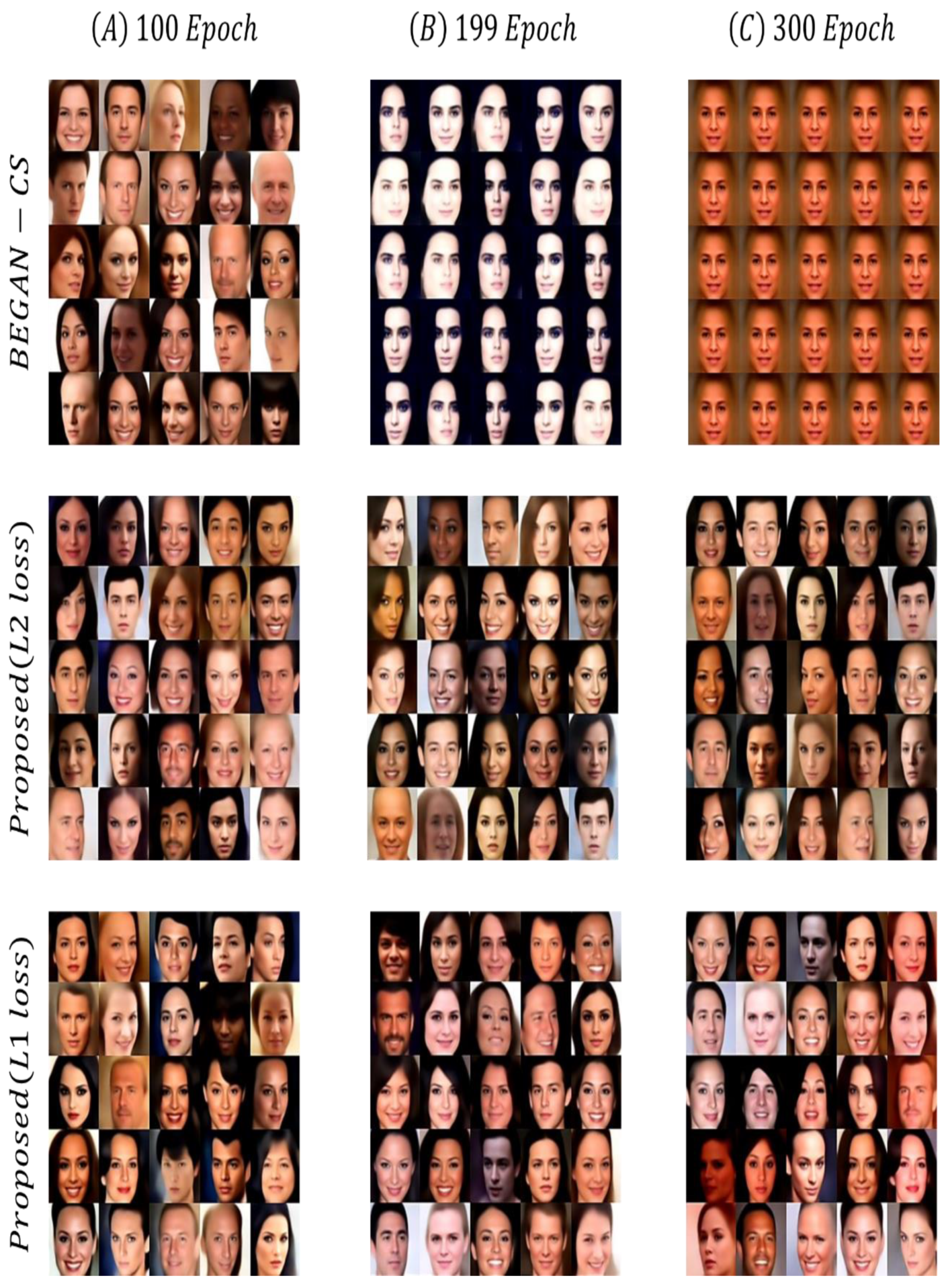
In the field of deep learning, the generative model did not attract much attention until GANs (generative adversarial networks) appeared. In 2014, Google’s Ian Goodfellow proposed a generative model called GANs. GANs use different structures and objective functions from the existing generative model. For example, GANs use two neural networks: a generator that creates a realistic image, and a discriminator that distinguishes whether the input is real or synthetic. If there are no problems in the training process, GANs can generate images that are difficult even for experts to distinguish in terms of authenticity. Currently, GANs are the most researched subject in the field of computer vision, which deals with the technology of image style translation, synthesis, and generation, and various models have been unveiled. The issues raised are also improving one by one. In image synthesis, BEGAN (Boundary Equilibrium Generative Adversarial Network), which outperforms the previously announced GANs, learns the latent space of the image, while balancing the generator and discriminator. Nonetheless, BEGAN also has a mode collapse wherein the generator generates only a few images or a single one. Although BEGAN-CS (Boundary Equilibrium Generative Adversarial Network with Constrained Space), which was improved in terms of loss function, was introduced, it did not solve the mode collapse. The discriminator structure of BEGAN-CS is AE (AutoEncoder), which cannot create a particularly useful or structured latent space. Compression performance is not good either. In this paper, this characteristic of AE is considered to be related to the occurrence of mode collapse. Thus, we used VAE (Variational AutoEncoder), which added statistical techniques to AE. As a result of the experiment, the proposed model did not cause mode collapse but converged to a better state than BEGAN-CS.
Keywords: deep learning; mode collapse; generative adversarial networks; boundary equilibrium generative adversarial networks; variational inference; computer vision; artificial intelligence deep learning; mode collapse; generative adversarial networks; boundary equilibrium generative adversarial networks; variational inference; computer vision; artificial intelligence