Article

Robot Motion Control via an EEG-Based Brain–Computer Interface by Using Neural Networks and Alpha Brainwaves

by
Nikolaos Korovesis
1,
Dionisis Kandris
1,*,
Grigorios Koulouras
2 and
Alex Alexandridis
2
1
microSENSES Research Laboratory, Department of Electrical and Electronic Engineering, Faculty of Engineering, University of West Attica, 12244 Athens, Greece
2
TelSiP Research Laboratory, Department of Electrical and Electronic Engineering, Faculty of Engineering, University of West Attica, 12244 Athens, Greece
*
Author to whom correspondence should be addressed.
Electronics 2019, 8(12), 1387; https://doi.org/10.3390/electronics8121387

Submission received: 2 November 2019 / Revised: 17 November 2019 / Accepted: 19 November 2019 / Published: 21 November 2019
(This article belongs to the Special Issue Machine Learning Techniques for Assistive Robotics)

Abstract

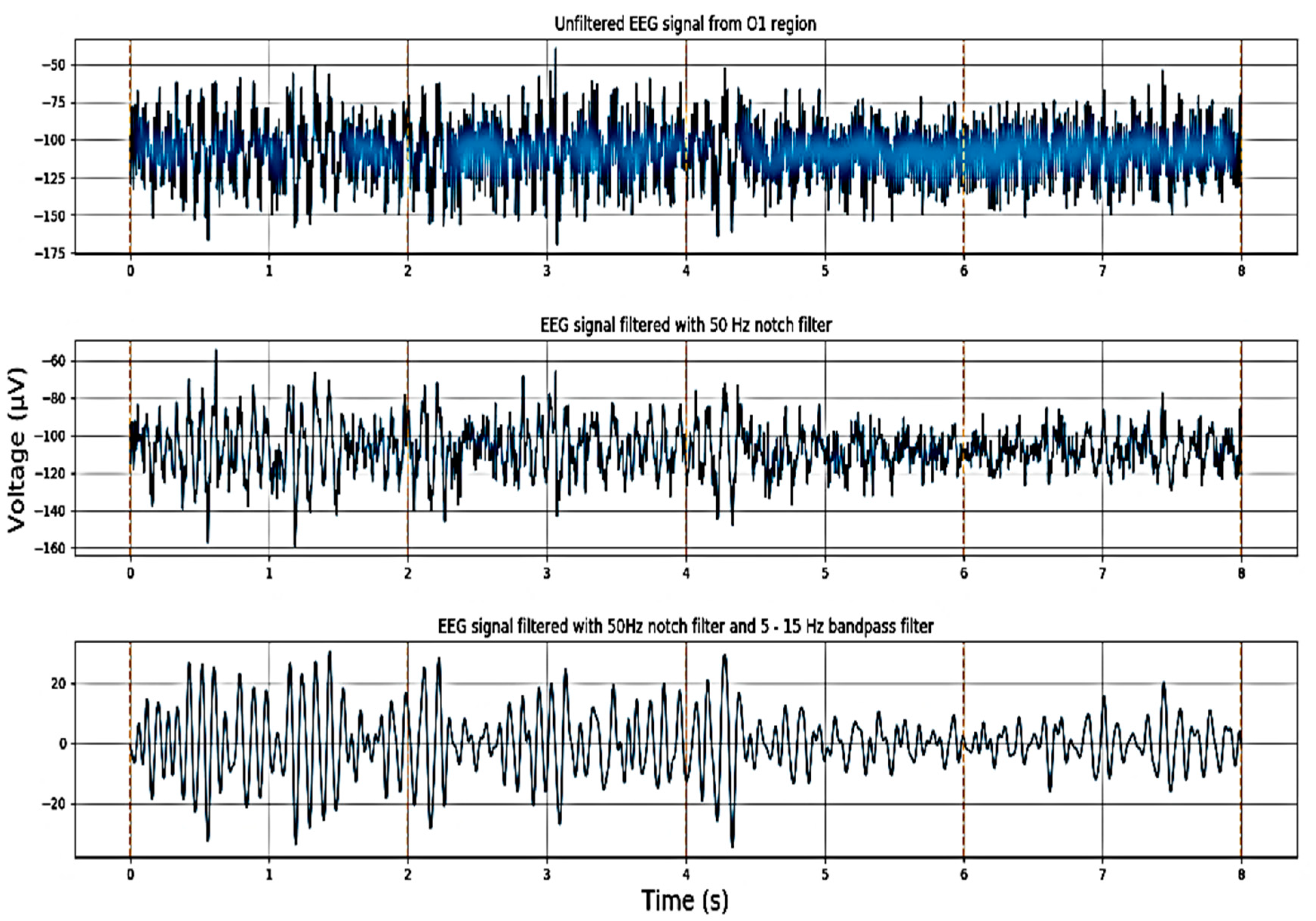
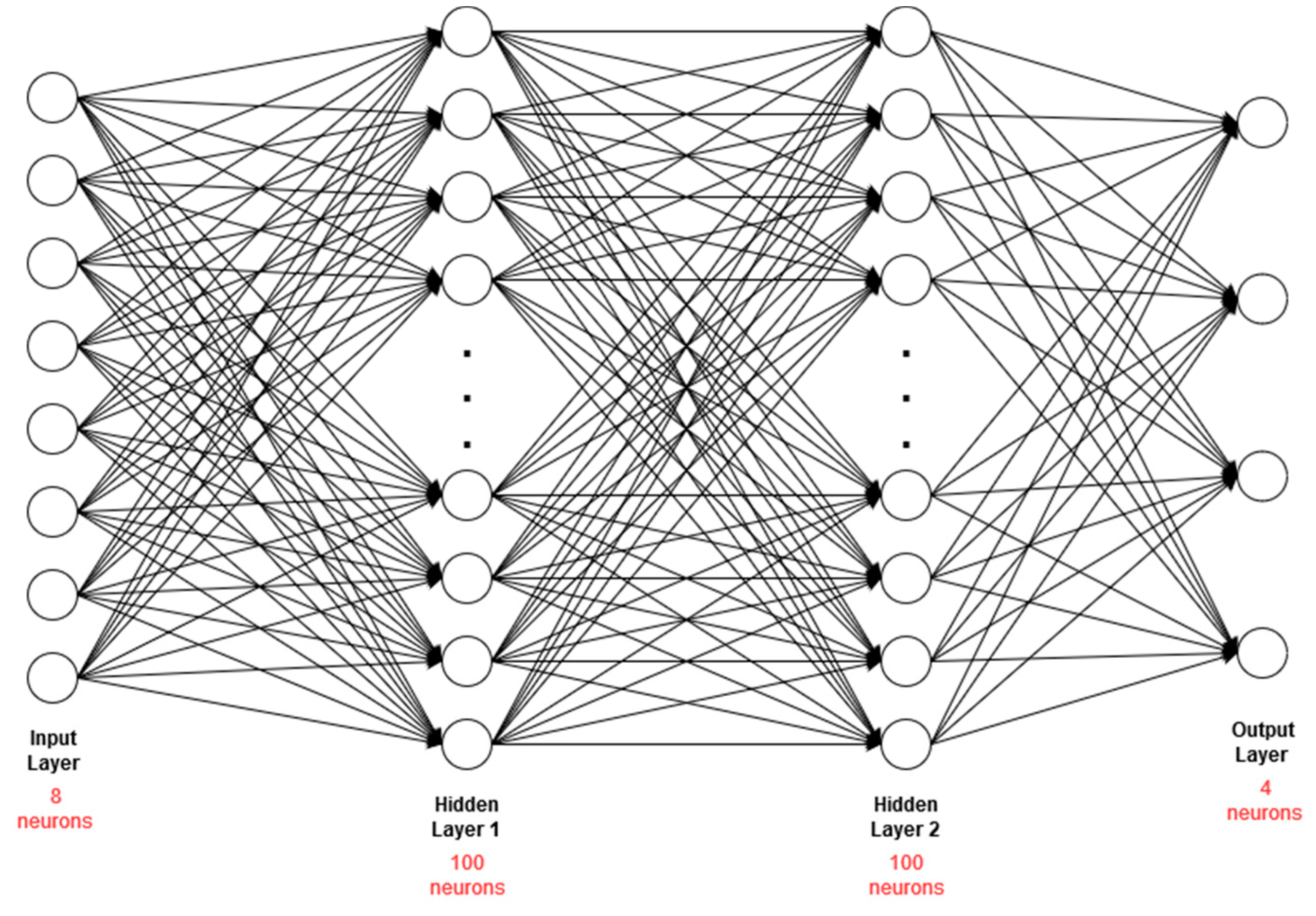
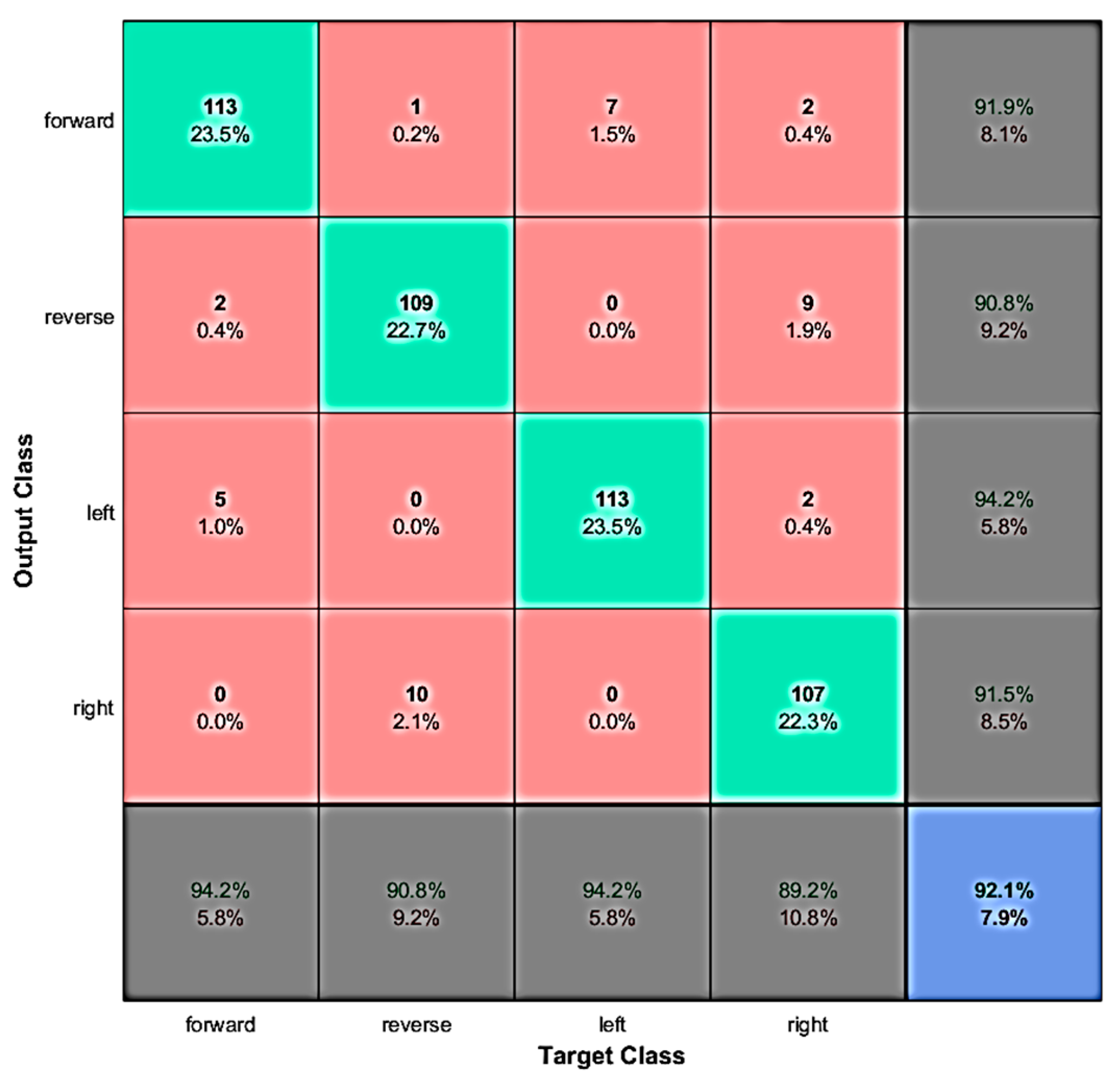
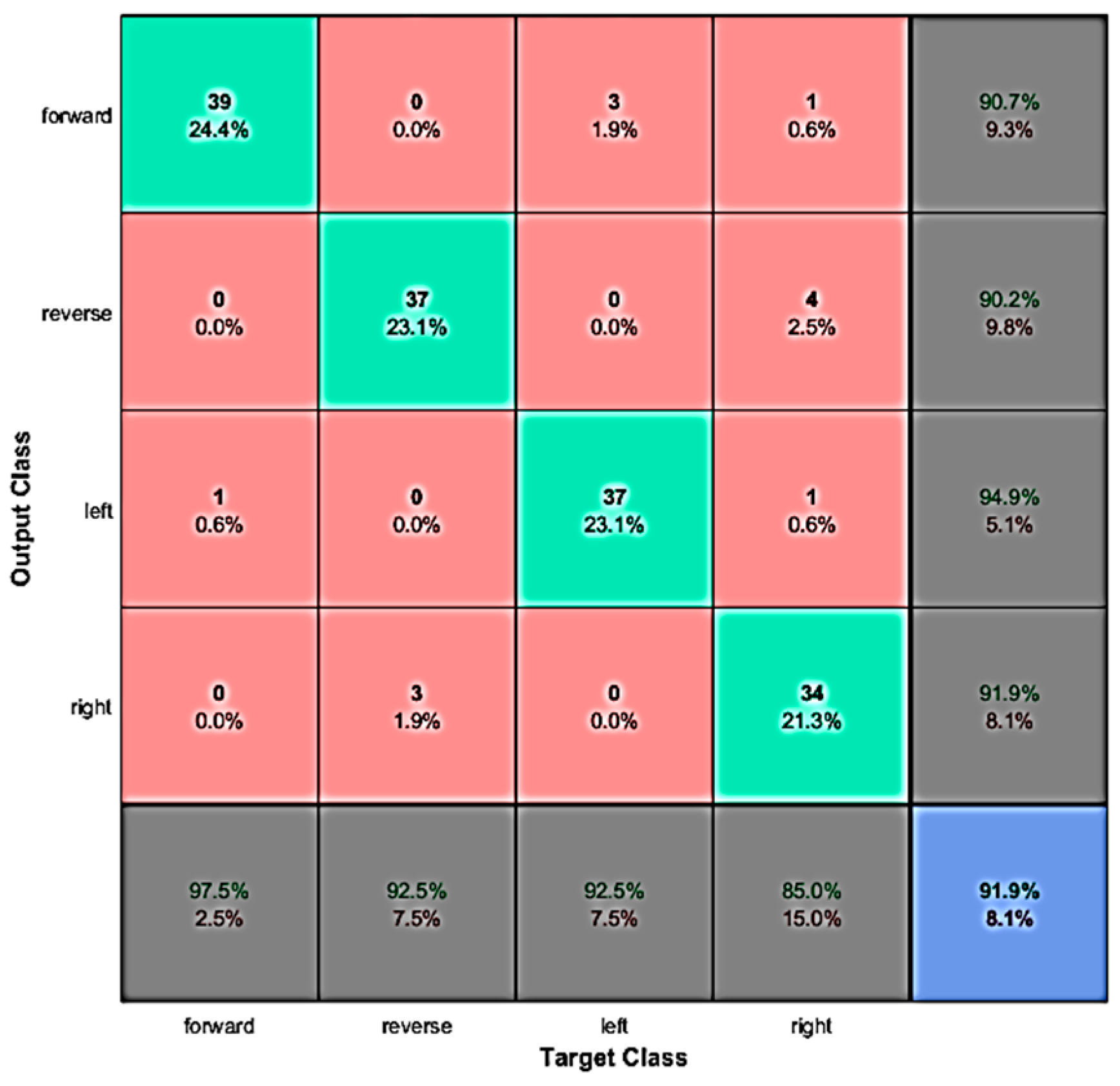
Modern achievements accomplished in both cognitive neuroscience and human–machine interaction technologies have enhanced the ability to control devices with the human brain by using Brain–Computer Interface systems. Particularly, the development of brain-controlled mobile robots is very important because systems of this kind can assist people, suffering from devastating neuromuscular disorders, move and thus improve their quality of life. The research work presented in this paper, concerns the development of a system which performs motion control in a mobile robot in accordance to the eyes’ blinking of a human operator via a synchronous and endogenous Electroencephalography-based Brain–Computer Interface, which uses alpha brain waveforms. The received signals are filtered in order to extract suitable features. These features are fed as inputs to a neural network, which is properly trained in order to properly guide the robotic vehicle. Experimental tests executed on 12 healthy subjects of various gender and age, proved that the system developed is able to perform movements of the robotic vehicle, under control, in forward, left, backward, and right direction according to the alpha brainwaves of its operator, with an overall accuracy equal to 92.1%.
Keywords: brain–computer interface (BCI); human–robot interaction; assistive robotics; motion control; electroencephalography (EEG); alpha brainwaves; neural network (NN). brain–computer interface (BCI); human–robot interaction; assistive robotics; motion control; electroencephalography (EEG); alpha brainwaves; neural network (NN).