1. Introduction
Electromagnetic compatibility (EMC) has become a major design constraint in modern power electronic converters, as higher switching frequencies, increasing power density, and more sophisticated control strategies intensify parasitic coupling and frequency-dependent emission behavior [
1,
2]. The challenge is even more pronounced in multilevel converter systems, where improved waveform quality and reduced device stress are often accompanied by more complex common-mode and differential-mode propagation paths as well as resonance-sensitive spectral responses [
3,
4]. The use of active harmonic filters adds further complexity because the conducted-noise behavior of the overall system is shaped not only by the converter topology but also by the interaction of passive filter elements with the noise propagation path [
5,
6]. In addition, compliance assessment in the conducted-emission band is governed by standardized measurement environments, line impedance stabilization networks (LISNs), receiver settings, and frequency-dependent interpretation procedures [
7,
8,
9]. Conducted EMI should therefore be regarded not as a secondary side effect but as a regulation-sensitive design response that must be addressed explicitly during converter development.
This requirement is particularly important for the three-level neutral-point-clamped (NPC) inverter, which has been widely adopted in grid-connected and renewable energy applications because of its favorable harmonic performance, reduced device voltage stress, and suitability for medium- and high-power conversion [
10]. In such systems, conducted-EMI behavior is strongly influenced by the combined effects of switching transitions, layout-dependent parasitic elements, inverter-side inductance, grid-side inductance, and damping capacitors. These coupled factors can shift resonance frequencies, amplify narrow-band peaks, and alter legal compliance margins in a mode-dependent manner. As a result, a filter configuration that appears acceptable under one operating condition may become inadequate under another, and a design that satisfies average limits may still fail under peak detection or standby operation. For this reason, compliance-oriented EMI filter design cannot rely solely on simplified equivalent-circuit reasoning, designer intuition, or repeated trial-and-error measurements; it requires a predictive framework that can relate passive filter parameters to high-resolution conducted-emission spectra in a systematic and design-relevant manner.
Data-driven modeling has therefore become increasingly attractive for EMI-related design problems. Previous studies have shown that conducted-emission data can support machine learning-based prediction in DC-DC converters [
11], inverter diagnostics based on EMI signatures [
12], condition monitoring through conducted-emission analysis [
13,
14], and waveform-dependent spectrum estimation [
15]. Beyond EMI-specific studies, the broader machine learning literature has also established the suitability of deep models for nonlinear regression [
16,
17], hierarchical feature extraction [
18,
19], and data-driven engineering analysis in complex nonlinear systems [
20,
21]. Nevertheless, the existing literature still leaves an important gap. Much of the available work addresses simpler converter structures, lower-dimensional outputs, or classification-oriented tasks rather than direct prediction of dense conducted-emission spectra under multiple operating scenarios. In addition, systematic comparisons of ANN, CNN, DNN, and PINN models on the same high-resolution EMI regression problem remain limited. Equally important, many studies stop at the prediction stage and do not extend the learned models to practical deployment, compliance-oriented optimization, or experimental verification. These limitations are particularly significant for multilevel converters, where the design problem is inherently multi-parameter, multi-mode, and regulation sensitive.
A further challenge is that low aggregate prediction error does not necessarily guarantee physically credible spectral behavior. In dense EMI regression, a model may reproduce the overall spectral envelope with acceptable global metrics while still generating locally implausible oscillations or, conversely, smoothing out narrow-band structures that are critical for legal-margin assessment. For this reason, physics-informed learning strategies have attracted increasing attention as a means of embedding domain knowledge into the learning process through additional constraints or regularization terms [
22,
23]. Broader discussions of physics-informed machine learning have likewise emphasized the value of such formulations when data fidelity alone is insufficient to ensure physically meaningful behavior [
24]. Related PINN-based approaches have also been explored in electromagnetic modeling [
25,
26] and in inverse or field-reconstruction problems that require consistency with expected physical structure [
27,
28]. In the present study, the PINN is employed in this broader physics-informed sense. More specifically, it does not act as a direct solver of a governing electromagnetic field equation; instead, it augments the data-fitting loss with frequency-domain smoothness and curvature penalties so that the predicted EMI spectra remain more morphologically consistent along the frequency axis. In this way, the PINN formulation used here is intended to introduce physically motivated regularization into spectrum reconstruction rather than to enforce a closed-form first-principles model.
Within this context, the present study develops an experimentally grounded and application-oriented framework for an IGBT-based, SVPWM-controlled three-phase, three-level NPC inverter equipped with an active harmonic filter. Conducted-emission measurements are collected over the 10 kHz–30 MHz range under four operating scenarios: constant-current average, constant-current peak, standby average, and standby peak. The resulting database is used first to evaluate a baseline ANN trained with fourteen supervised learning algorithms and then to construct four advanced surrogate families: ANN, CNN, DNN, and PINN. Their predictive behavior is examined not only through conventional error metrics but also through nested cross-validation, standard 5-fold cross-validation, Monte Carlo resampling, and SHAP-based interpretability analysis in order to assess accuracy, stability, and engineering plausibility more rigorously. The most reliable surrogates are subsequently embedded in a Python-based graphical user interface (GUI) and employed within a compliance-oriented optimization framework to identify optimum filter parameter sets capable of keeping the conducted-emission response below the applicable legal limits across the considered operating scenarios. In this stage, the trained models are used not merely for forward spectrum prediction but also as surrogate-assisted design tools for regulation-compliant filter synthesis under worst-case multi-mode constraints. The selected parameter sets are then examined experimentally in order to verify that the surrogate-guided optimum designs remain consistent with the measured legal-margin behavior. The contribution of this work, therefore, lies not merely in reporting another regression model for EMI estimation but in integrating high-resolution experimental characterization, comparative surrogate modeling, multi-protocol generalization analysis, deployable software implementation, and compliance-aware optimum filter design within a single engineering workflow.
2. Experimental and Computational Methodologies
2.1. Experiments and Dataset Construction
The system investigated in this study is a three-phase, IGBT-based, three-level neutral-point-clamped (NPC) inverter controlled by space vector pulse-width modulation and equipped with an active harmonic filter. The passive design variables of interest are the inverter-side inductance (LIS), the grid-side inductance (LGS), and two capacitive elements (C1 and C2). These four parameters were selected because they directly affect the impedance interactions of the converter and, consequently, the location, amplitude, and bandwidth of resonance-related features in the conducted-emission spectrum. The prediction problem was therefore formulated in terms of a compact passive design vector and a high-resolution EMI spectrum rather than as a scalar compliance label or a reduced set of summary descriptors.
Experimental characterization was carried out in the Sakarya University Electromagnetic Research Center (SEMAM) laboratory by means of conducted-emission (CE) measurements over the 10 kHz–30 MHz frequency range. The measurement chain included a Rohde & Schwarz ESU EMI Test Receiver (Rohde & Schwarz GmbH & Co., KG, Munich, Germany) (20 Hz–8 GHz) and a 4 × 250 A LISN (Model LS2004, MTS Systemtechnik GmbH, Mertingen, Germany) so that the line-side noise of the equipment under test could be evaluated on a standardized impedance basis. Although regulatory assessment was ultimately performed in the 150 kHz–30 MHz band, the lower 10–150 kHz interval was also recorded in order to capture the broader low-frequency evolution of the spectra and to preserve the descriptive completeness of the experimental database. To ensure a consistent frequency grid, measurements were sampled with a 500 Hz step from 10 kHz to 150 kHz and with a 4 kHz step from 150 kHz to 30 MHz, yielding 7744 spectral points for each recorded EMI response. This measurement structure was adopted so that all surrogate models would operate on a common and fixed-resolution frequency representation.
The inverter was evaluated under two operating states: a constant-current mode, in which the converter actively injected current into the grid, and a standby mode, in which the inverter remained energized without current injection. For each operating state, both average and peak detectors were used. This produced four distinct EMI scenarios: constant-current average, constant-current peak, standby average, and standby peak. The distinction is methodologically important rather than merely descriptive. The same passive network may exhibit different spectral behavior depending on whether the converter is loaded or idle, and detector selection may substantially alter the apparent severity of localized narrow-band peaks. The four-scenario formulation therefore aligns the learning framework with the actual compliance problem instead of with a simplified single-condition approximation.
A broad experimental campaign was then conducted by systematically varying the filter parameters. In total, 250 different filter parameter combinations were tested, and four CE measurements were obtained for each combination, resulting in 1000 measurements overall. The 250 combinations were not generated through purely random sampling or a formal design-of-experiments scheme. Instead, they were constructed from the inductors and capacitors available in the laboratory, including practically realizable values obtained through series and parallel connections. The aim was to maximize the number and diversity of feasible parameter sets within the experimentally accessible design space while preserving physically implementable filter configurations. The campaign therefore emphasized broad practical coverage of the realizable parameter region rather than abstract combinatorial sampling. It began with individual parameter variations in order to reveal isolated sensitivities and was subsequently extended to pairwise, triple, and fully joint variations so that higher-order interaction effects could also be captured. As a result, the database reflects not only monotonic trends but also resonance migration, damping changes, and mode-dependent spectral reshaping caused by interacting passive elements.
A full measurement-uncertainty analysis was not performed for the entire experimental campaign. However, repeatability was checked during the initial stage of the study by repeating several representative measurements under unchanged setup and operating conditions. In these repeated tests, the measured EMI spectra showed near-complete overlap, indicating good short-term repeatability and low observable variation under fixed laboratory conditions. Each measured sample corresponds to a full EMI spectrum over the predefined frequency axis. Instead of reducing the output to a limited number of scalar performance indices, the present framework treats the entire spectrum as the prediction target. This choice preserves resonance locations, narrow-band peaks, global envelope tendencies, and operating-mode-dependent spectral shifts, all of which are critical for EMC interpretation and legal-margin assessment. It also transforms the modeling task into a high-dimensional regression problem that is considerably more demanding than binary pass/fail classification but substantially more faithful to practical engineering needs. The surrogate models were developed and evaluated within the experimentally covered parameter domain; therefore, the reported predictions should be interpreted primarily as interpolation within the sampled design space rather than as validated extrapolation beyond it.
Two additional observations emerging from the experimental campaign justify the modeling strategy adopted later in the paper. First, the four passive variables do not influence EMI independently. The inverter-side inductance strongly affects low- and mid-frequency behavior through impedance modification, the grid-side inductance alters attenuation and resonance migration over a wide band, and the capacitive elements modify both resonance location and damping. Their interaction may either suppress or generate narrow-band peaks, meaning that a parameter choice that improves one spectral region may deteriorate another. Second, standby-mode emissions, although often lower in absolute magnitude, remain highly relevant for compliance evaluation because the corresponding legal limits are also lower. In this regime, apparently modest peaks may become compliance critical, particularly under peak detection. These observations explain why the present study proceeds beyond univariate sensitivity analysis toward multi-scenario surrogate modeling and worst-case compliance-oriented optimization.
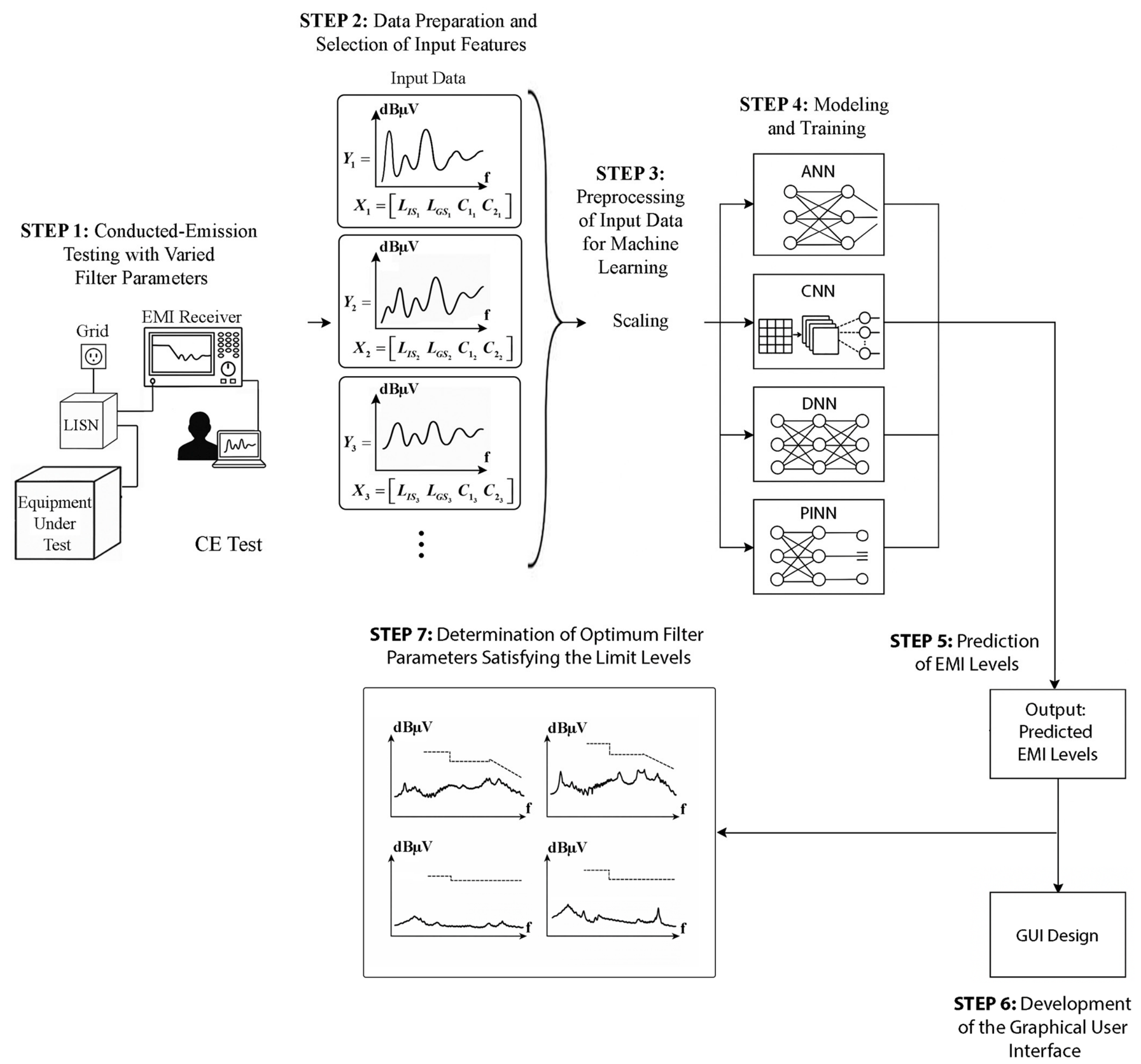
Figure 1 shows the overall workflow that transforms raw CE measurements into a predictive and optimization-ready design framework. The process begins with controlled EMI testing under varying filter configurations, continues through data organization and scaling, and then branches into ANN-, CNN-, DNN-, and PINN-based modeling. The predicted spectra are subsequently used not only for numerical evaluation but also for GUI-based engineering interaction and compliance-oriented filter optimization.
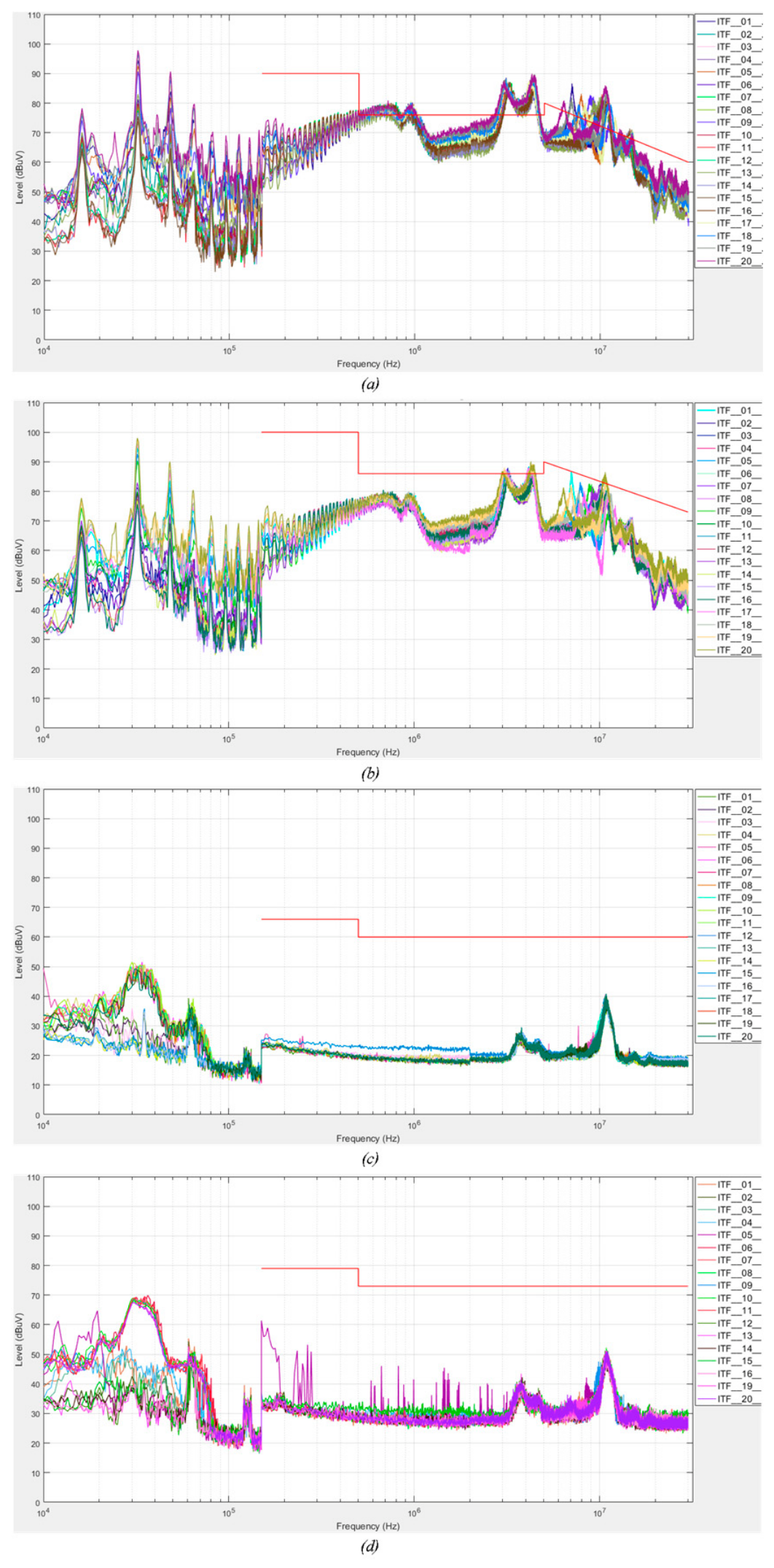
Figure 2 presents a representative single-parameter sensitivity study in which only the inverter-side inductance is varied while the remaining filter parameters are kept constant. More specifically,
Figure 2 compares the measured EMI responses in the constant-current average, constant-current peak, standby average, and standby peak scenarios, thereby allowing the effect of the same parametric perturbation to be examined under both operating-state and detector-type changes.
As seen in
Figure 2, the influence of
LIS is not uniform across either frequency or operating mode: in some regions it mainly alters the broadband spectral level, whereas in others it shifts localized resonances and narrow-band peaks. This figure therefore illustrates why EMI-aware filter design cannot be reduced to a single operating condition or a single detector setting and why the subsequent surrogate-modeling framework is formulated in a multi-scenario and full-spectrum manner.
2.2. Surrogate Modeling and Multi-Protocol Validation
2.2.1. Surrogate Architectures
The surrogate-modeling stage was designed not as a single-model exercise but as a comparative evaluation of four neural network families with different representational biases for high-resolution EMI spectrum reconstruction. The objective was not only to identify the model with the lowest numerical error but also to determine which architectural family is most suitable for reconstructing dense EMI spectra with sufficient morphological fidelity for compliance-oriented engineering use.
The development process was organized in two phases. In the first phase, a compact ANN model with a single hidden layer of ten neurons was trained using fourteen supervised learning algorithms in order to assess the basic learnability of the EMI prediction problem and the influence of training dynamics on spectral regression. In the second phase, four advanced surrogate families were evaluated in a unified framework: ANN, CNN, DNN, and PINN. This progression from a compact baseline to more expressive architectures was adopted to distinguish between simple learnability and architecture-dependent gains in spectral reconstruction quality.
Within the advanced-model stage, the ANN and DNN should not be interpreted as interchangeable labels. In the present study, the ANN denotes a compact multilayer perceptron used as a baseline fully connected surrogate, whereas the DNN denotes a deeper fully connected architecture with greater representational depth and a broader hyperparameter search space. The purpose of this distinction is to compare a relatively compact dense baseline against a higher-capacity dense model and then to contrast both with a convolutional model and a physics-informed alternative. Accordingly, the comparison is not intended as a strict parameter-matched benchmark across all architectures but as an evaluation of representative model families under a common EMI prediction task, a common input–output definition, and a consistent validation protocol.
The passive design vector is defined as
and the corresponding measured EMI spectrum sampled over
frequency points is written as
The surrogate-modeling task is therefore to learn a nonlinear mapping from the passive design vector to the full spectral response. Because the target is a long frequency-indexed output vector rather than a scalar indicator, the problem is substantially more demanding than conventional regression: a model with acceptable global error may still fail to reconstruct the localized features that determine practical EMI compliance.
Here,
denotes the model with trainable parameters
, and
is the predicted EMI spectrum. In this formulation, the prediction target is not a scalar quantity but a long frequency-indexed output vector containing broadband trends, local extrema, resonance-related structures, and operating-mode-dependent variations. This makes the problem significantly more demanding than ordinary regression, since a model with acceptable global error may still fail to reproduce the spectral features that determine practical EMI compliance.
For the purely data-driven surrogate families, namely ANNs, CNNs, and DNNs, the training objective is defined through a conventional mean squared error term.
This term drives the models to minimize the average discrepancy between measured and predicted EMI amplitudes across the training set and the frequency grid. However, optimizing only the data-fitting loss does not explicitly constrain the geometric behavior of the reconstructed spectrum. As a result, a model may achieve low average error while still producing locally irregular traces that are less convincing from a physical or engineering perspective.
To address this limitation, the PINN formulation used in the present study augments the data-fitting term with a smoothness regularization term defined along the sampled frequency axis. The resulting loss can be written as
Here, the smoothness regularization coefficient is a non-negative parameter controlling the balance between data fidelity and spectral smoothness. In the implemented PINN model, this term penalizes abrupt point-to-point variation in the predicted spectrum and encourages smoother morphology along the physically meaningful frequency axis.
The current formulation therefore does not enforce a closed-form electromagnetic field equation or converter-specific differential equation; instead, it incorporates physics-informed behavior through loss-function design.
For this reason, the PINN used here should be understood as a physics-informed surrogate in a broader regularization-based sense rather than as a full first-principles solver.
This clarification is important because the actual implementation employs smoothness regularization only; no separate curvature penalty is active in the final training code.
Taken together, these four surrogate families provide a deliberately diverse modeling set. The ANN represents a compact dense baseline, the CNN emphasizes local spectral feature extraction, the DNN increases nonlinear representational depth within a dense framework, and the PINN introduces physics-informed spectral regularity beyond pure data fit. Their joint evaluation therefore enables comparison not only of predictive accuracy but also of architectural suitability for high-resolution EMI spectrum reconstruction and subsequent compliance-oriented filter design.
2.2.2. Evaluation of Multi-Protocol Model Stability in Advanced Deep Learning Models
The architectural configurations and training settings of the four advanced surrogate families are summarized in
Table 1. All models receive the same four-dimensional input vector (
LIS,
LGS,
C1,
C2) and produce a 7744-point EMI spectrum as output. In the revised implementation, the input variables are normalized to [0, 1] using Min–Max scaling, whereas the EMI spectra are kept in their original output scale. Each model is trained separately for each of the four operating scenarios.
A key feature of the evaluation framework is that model assessment does not rely exclusively on a single train–test split. Single-split evaluation may inflate apparent performance when model selection and performance estimation become statistically entangled [
29,
30]. Instead, three complementary resampling-based validation protocols were employed: nested cross-validation, standard 5-fold cross-validation, and Monte Carlo resampling. The purpose of this design was not merely to report another set of goodness-of-fit values but to examine how sensitively each surrogate family responds to changes in the available training subset and how stable its predictions remain under repeated resampling. This distinction is important for EMI modeling, because the downstream objective is not only accurate spectrum reconstruction but also sufficiently reliable behavior for compliance-oriented design support.
In the nested cross-validation stage, the outer loop used 5 shuffled folds, while the inner loop used 3 shuffled folds within each outer-training subset. The architectural family itself was not tuned in the inner loop; the ANN, CNN, DNN, and PINN were treated as separate surrogate classes and compared afterward at the family level. What was tuned in the inner loop were model-specific hyperparameters. For the ANN, the search covered hidden-layer configuration, dropout level, and learning rate. For the CNN, the search included the number of filters, kernel size, dense-layer width, and learning rate. For the DNN, the tuned quantities were hidden-layer configuration, dropout level, and learning rate. For the PINN, the network architecture was kept fixed, and only the smoothness-regularization coefficient was selected from a predefined lambda grid. The best configuration identified in this inner loop was then used to train the corresponding outer-fold model, again with early stopping referenced to the same external validation spectrum.
After the nested stage, the most frequently selected hyperparameter setting for each surrogate family was retained as the model-specific configuration for the remaining analyses. Standard 5-fold cross-validation was then carried out using this fixed configuration in order to examine how the surrogate behaved under ordinary changes in the training subset once hyperparameter selection had already been completed. Monte Carlo validation was conducted through repeated 80/20 ShuffleSplit resampling, using 30 repetitions for the ANN and 50 repetitions for the CNN, DNN, and PINN.
In the implemented validation workflow, the resampling procedures were anchored to a fixed external validation case for each model family and operating scenario. More specifically, for every mode, a single user-defined passive-parameter combination and its corresponding experimentally measured EMI spectrum were used as the external validation target. This external validation spectrum served two functions simultaneously: it was used as the early-stopping reference during training, and it also provided the common evaluation target across repeated resampling runs. Accordingly, the reported nested CV, standard CV, and Monte Carlo results should be interpreted as stability-oriented repeated-resampling analyses with respect to a fixed external validation case rather than as classical fold-test estimates in which each outer or held-out subset is scored independently.
Beyond numerical accuracy, interpretability was examined through SHAP (SHapley Additive exPlanations) [
31]. For each surrogate and operating scenario, SHAP values were computed with respect to the four passive design variables
LIS,
LGS,
C1, and
C2 in order to reveal which parameters most strongly influenced the predicted EMI response. This analysis was included as a methodological complement to the resampling study because a surrogate that performs well numerically but attributes spectral behavior to implausible variables should be treated cautiously in engineering design. SHAP thus links statistical performance to physical meaning by showing whether the learned importance pattern remains stable and technically credible across operating scenarios.
2.2.3. GUI-Based Deployment for Engineering Decision Support
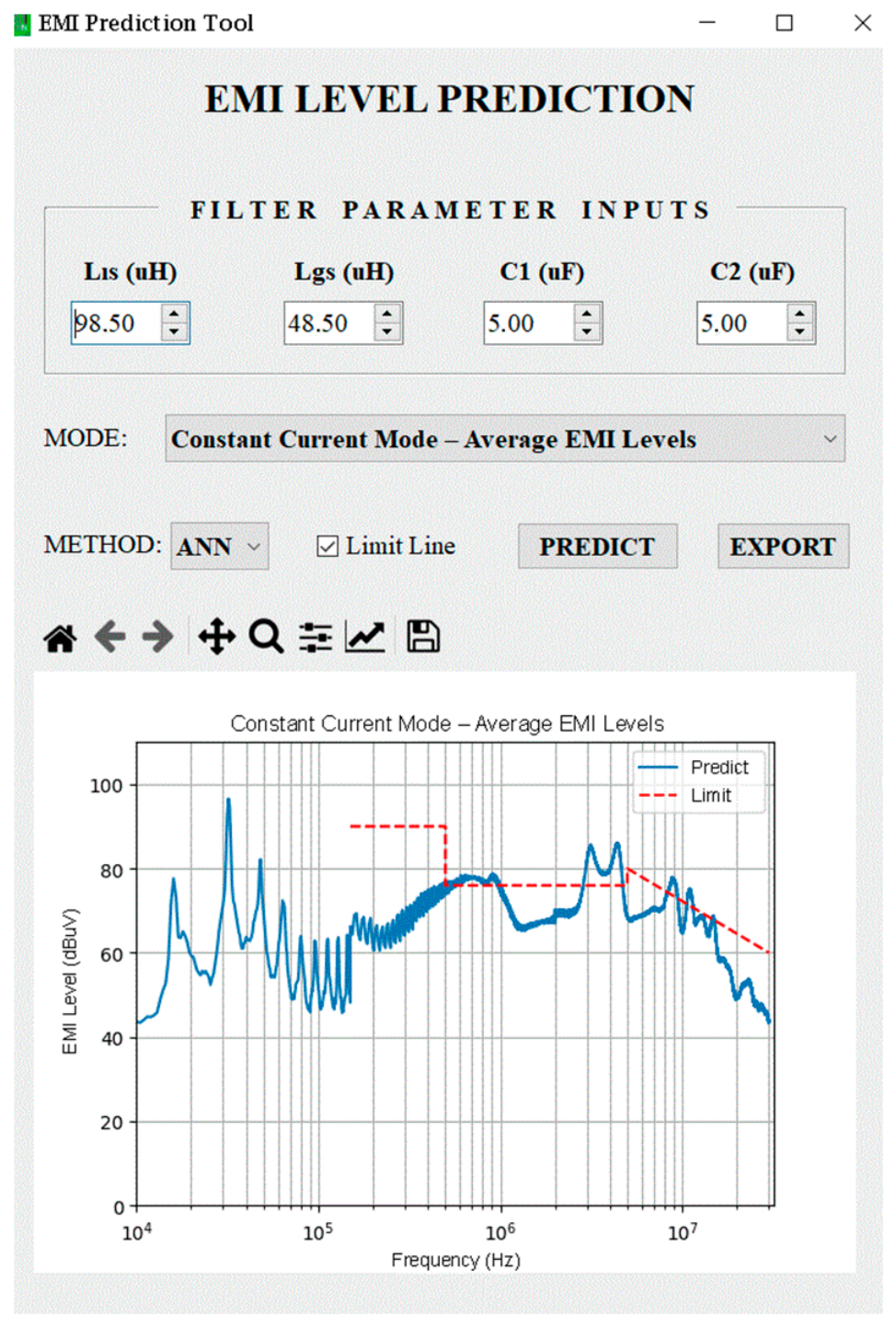
To facilitate the practical use of the trained surrogates, the ANN, CNN, DNN, and PINN models were integrated into a Python-based graphical user interface (GUI). This deployment layer was designed to enable rapid EMI estimation for user-defined passive filter configurations without requiring direct interaction with the underlying training scripts, preprocessing routines, or model files. The resulting environment extends the study beyond offline model development and provides a practical decision-support tool for EMI-aware filter design exploration.
The GUI allows the user to enter the four passive design parameters, namely LIS, LGS, C1, and C2, select the operating scenario, and choose the surrogate architecture to be used for prediction. Based on these inputs, the corresponding trained model and its associated preprocessing objects are invoked to generate the full EMI spectrum over the predefined frequency grid. The predicted response is then visualized on a logarithmic frequency axis, which is consistent with standard EMI interpretation practice and facilitates the inspection of resonance-sensitive regions, broadband emission trends, and proximity to regulatory limits. The interface also supports the overlay of the relevant legal limit curves so that compliance relevance can be assessed immediately.
From an engineering perspective, the GUI provides three practical benefits. First, it enables rapid exploration of the learned design space, allowing different parameter combinations to be evaluated without rerunning experiments or retraining models. Second, it supports direct comparison of different surrogate families under identical filter settings, which is valuable when the models exhibit different strengths in numerical accuracy, spectral smoothness, or scenario-dependent stability. Third, it integrates prediction, visualization, and result export into a single workflow, making the learned surrogates directly usable for practical filter design studies rather than limiting them to offline academic comparison.
Figure 3 shows the Python-based GUI developed for EMI prediction, mode selection, limit-curve overlay, and result export. Through this interface, the user can inspect the predicted EMI spectrum, determine whether critical spectral regions approach or exceed the legal limit envelope, and save the results for documentation or further analysis. In this sense, the GUI should not be viewed merely as a presentation layer. It functions as an operational component of the overall framework, linking surrogate prediction to engineering interpretation, compliance inspection, and design-oriented decision support.
3. Results: Predictive Accuracy, Generalization, and Interpretability
3.1. Single-Split Predictive Performance
Table 2 summarizes the single-split predictive performance of the ANN, CNN, DNN, and PINN across the four EMI scenarios using R
2, mean absolute deviation (MAD), mean squared error (MSE), root mean squared error (RMSE), and mean absolute percentage error (MAPE). Several clear patterns emerge from these results. First, the CNN delivers the strongest overall predictive performance, with R
2 values ranging from 0.998167 to 0.999073 and consistently low MAD, MSE, RMSE, and MAPE values across all operating scenarios. This behavior indicates that convolution-based feature extraction is particularly effective for EMI spectra, which contain both broadband envelope variations and localized narrow-band structures. From a compliance perspective, this advantage is especially relevant because regulatory violations are often governed by a limited number of local spectral excursions rather than by the average agreement of the full spectrum.
The ANN remains a competitive and practically useful surrogate despite its simpler fully connected structure. Its single-split R2 values remain high in all scenarios, and its error levels are substantially lower than those obtained by the DNN. This result suggests that a compact dense architecture can still reconstruct the global EMI envelope with useful engineering accuracy. In this study, the ANN should therefore be understood as a compact baseline dense surrogate, whereas the DNN represents a deeper fully connected alternative with greater representational depth rather than a merely renamed version of the same architectural class. From a design standpoint, the ANN offers a favorable balance between simplicity, stability, and predictive capability, particularly when the objective is to obtain a reliable approximation of the full spectrum without introducing the additional complexity of deeper dense models.
The DNN presents a different profile. Although its single-split R2 values may initially appear acceptable, the corresponding MAD, MSE, RMSE, and MAPE values are consistently worse than those of both the CNN and ANN. This indicates that deeper fully connected architecture alone does not guarantee superior EMI spectrum reconstruction. Instead, the DNN appears to capture the broad spectral trend only partially and is less effective in reproducing localized details. In practical EMI analysis, this weakness is important because compliance is often determined not by global agreement but by the accurate reconstruction of narrow-band peaks that approach or exceed the legal threshold. For this reason, the limitation of the DNN should be interpreted not merely as weaker regression accuracy but also as lower suitability for compliance-oriented downstream use.
The PINN, in turn, exhibits one of the most distinctive performance profiles in the study. Although it does not surpass the CNN in single-split accuracy, it frequently competes with or exceeds the ANN and clearly outperforms the DNN in several load-related conditions. More importantly, PINN predictions are visually smoother and less affected by spurious local oscillations. This property is valuable in engineering applications where interpretability and physical plausibility are important alongside numerical fit. A surrogate that yields very low aggregate error while introducing unstable local artifacts may be less trustworthy for legal-margin assessment and filter optimization than a slightly less accurate predictor whose spectral behavior remains more morphologically disciplined.
3.2. Multi-Protocol Generalization Analysis
The single-split results provide an initial comparison, but the distinction among the surrogate families becomes more informative in the multi-protocol evaluation summarized in
Table 3. When nested cross-validation, standard cross-validation, and Monte Carlo validation are considered together, the CNN, ANN, and PINN remain strong in several operating conditions, whereas the DNN reveals a substantially more fragile profile than the single-split metrics alone would suggest. In the constant-current peak scenario, for example, the CNN reaches 0.9989 ± 0.0002 in nested CV and yields nearly identical values in the other two protocols, indicating exceptionally stable behavior with respect to changes in the training subset. The PINN in the constant-current average scenario also remains highly stable, suggesting that physics-informed regularization can improve not only spectral smoothness but also resampling robustness in selected operating regimes.
The DNN results support a markedly different interpretation. In both constant-current average and constant-current peak operation, its cross-validated performance drops sharply relative to the single-split impression, and in standby peak mode, all three validation protocols yield negative R2 values. This behavior indicates that the DNN is particularly sensitive to resampling in scenarios where the learned mapping is governed by localized and mode-dependent spectral complexity. The issue is therefore not simply that the DNN underperforms numerically but that its apparent performance becomes unstable when the training subset changes. For a surrogate intended for inverse design and compliance-oriented optimization, such instability constitutes a more serious limitation than a modest loss in average regression quality.
The ANN shows a more balanced generalization profile. It remains reliable in constant-current average, constant-current peak, and standby average scenarios while showing increased variance in standby peak operation. Even in that difficult regime, however, its degradation is considerably less severe than that of the DNN. The CNN remains the most consistently robust model overall, whereas the PINN offers an especially attractive compromise between stability and physical regularity in load-related scenarios. The principal limitation of the PINN appears in standby peak EMI, where the smoothness-promoting regularization becomes overly restrictive for a regime dominated by sharper, higher-variability spectral features. This result is informative in itself because it indicates that physics-informed regularization is beneficial only when it remains compatible with the morphology of the target spectrum.
The consistent degradation observed in standby peak EMI across all surrogate families warrants an electromagnetic interpretation rather than a purely algorithmic one. In this regime, the absolute emission level is lower than under load, the relative contribution of residual parasitic coupling becomes more pronounced, and the legal limit envelope is also more restrictive. The resulting target function is therefore shaped by smaller but more compliance-critical narrow-band features, whose location and amplitude are highly sensitive to parameter changes. The peak detector further accentuates such localized maxima. Under these conditions, both deep dense models and smoothness-regularized models may become vulnerable, albeit for different reasons: the former may exhibit unstable fold-to-fold learning, whereas the latter may oversmooth peaks that remain physically meaningful and legally critical.
3.3. Representative Spectral Behavior, Validation Dynamics, and SHAP Interpretation
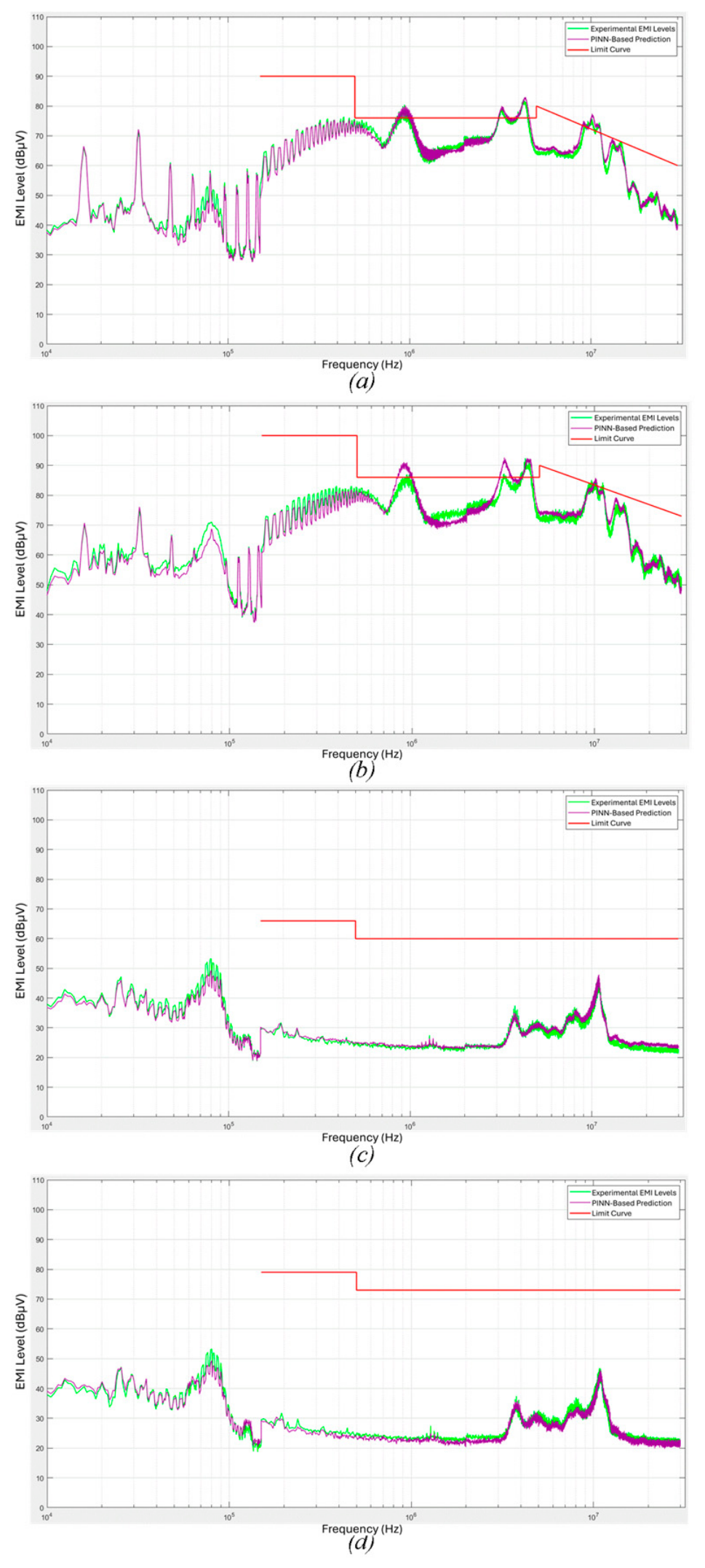
Figure 4 compares representative PINN predictions with the corresponding experimental spectra for the four EMI scenarios. The figure shows that the PINN retains the dominant spectral contour and reproduces the main resonance regions across all cases. At the same time, the predicted traces appear smoother than the measured curves, indicating that the regularization term suppresses part of the local fluctuation content. In average EMI scenarios, such smoothing can improve interpretability and provide a more physically plausible reconstruction. In peak EMI scenarios, however, especially under standby operation, the same tendency may reduce the fidelity of very narrow-band local maxima.
Figure 4 therefore reinforces an important point: in EMI modeling, aggregate numerical accuracy is not sufficient on its own; local spectral morphology also matters because compliance can be controlled by a small number of critical peaks.
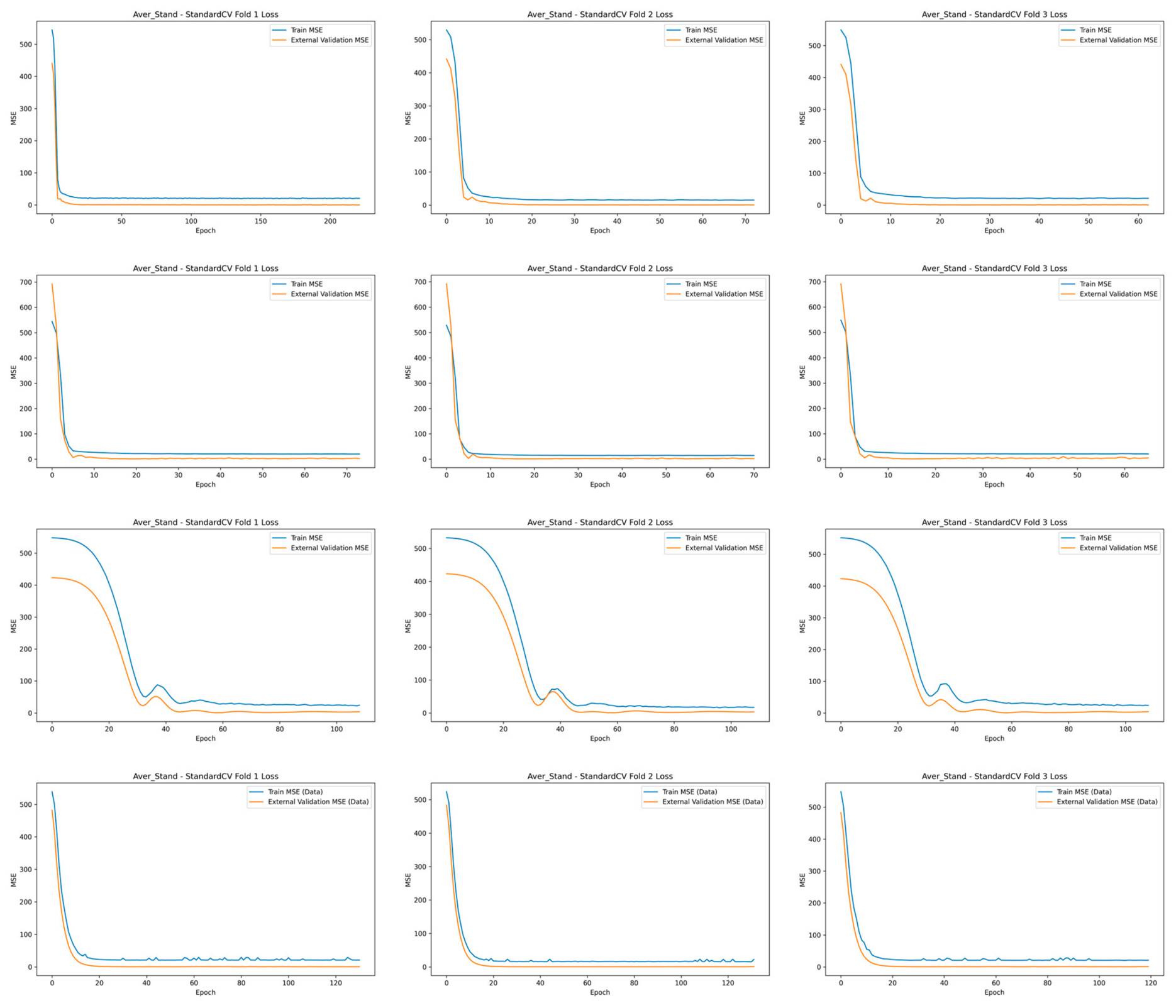
Figure 5 presents the standard-cross-validation loss trajectories of the ANN, CNN, DNN, and PINN for the standby average scenario over the first three folds. The figure is useful not only because it compares final validation losses but also because it reveals differences in convergence behavior. In this relatively stable regime, all four models converge smoothly and maintain low external validation loss. This indicates that standby average prediction is not intrinsically difficult for the tested architectures and supports the interpretation that the severe degradation observed in harder conditions, especially standby peak EMI, is associated more with scenario-dependent spectral complexity than with a universal inability of the models to learn. As seen in
Figure 5, architecture still matters, but operating-mode-dependent spectral difficulty remains a decisive factor in the final generalization profile.
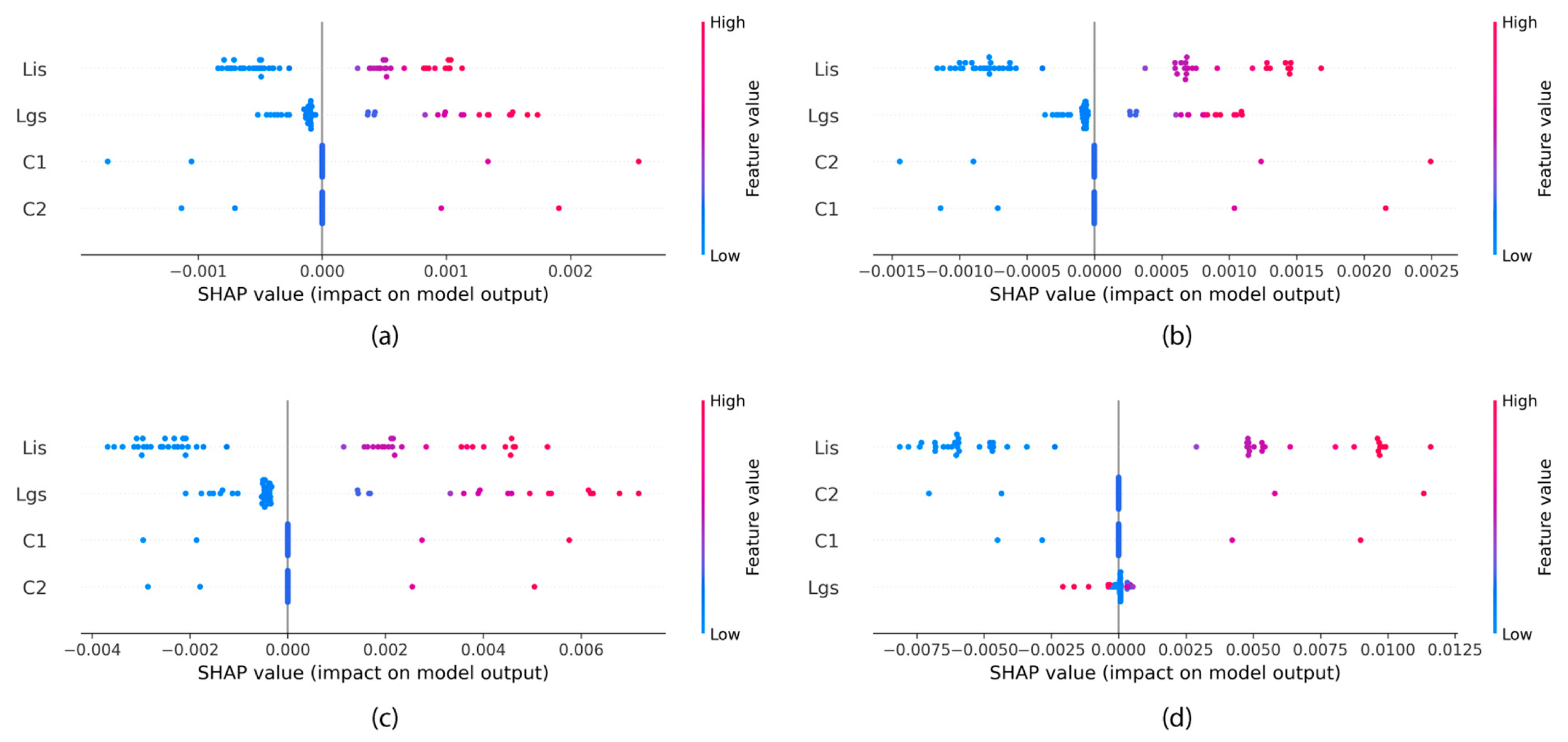
Figure 6 adds an interpretability perspective through SHAP-based feature attribution. The PINN frequently identifies
LIS as the dominant feature, which is consistent with the strong role of inverter-side inductance in shaping attenuation and spectral morphology. The ANN often shows a similar emphasis, suggesting that even without explicit physics-guided regularization, a well-trained fully connected architecture can still learn a physically meaningful inductive influence pattern. The CNN, in contrast, tends to assign greater importance to
C1 and
C2, especially where localized resonant detail becomes more prominent. This behavior is physically plausible because capacitive elements directly affect resonance location, damping, and local transitions, which are precisely the kinds of structures convolutional extraction is well suited to detect. The DNN exhibits the least stable attribution pattern, with the dominant feature shifting more strongly between
LIS and
LGS across scenarios.
Figure 6 therefore supports the broader conclusion that surrogate comparison in EMI regression should not rely only on error statistics but should also consider whether the learned importance structure remains physically interpretable and scenario consistent.
3.4. Design-Oriented Interpretation of Prediction Reliability
The results of
Table 2 and
Table 3 and
Figure 4,
Figure 5 and
Figure 6 indicate that surrogate quality in the present problem should be interpreted in a design-oriented manner rather than in a purely regression-oriented one. For compliance-aware filter design, a useful surrogate must combine numerical accuracy, resampling stability, physically credible spectral morphology, and interpretable feature attribution. The CNN best satisfies these requirements overall, since it combines the highest single-split accuracy with the strongest multi-protocol stability. The PINN remains attractive where smoother and more physically disciplined reconstructions are desirable, particularly in load-related regimes. The ANN offers a favorable compact baseline with balanced behavior across most scenarios. The DNN appears least suitable for compliance-oriented downstream design, not only because of its weaker error metrics but also because of its pronounced instability under repeated resampling and its less consistent attribution behavior. In this sense, the comparative analysis does not merely rank models by prediction quality; it identifies which surrogate families are sufficiently reliable to support optimization and experimentally guided EMI-aware design.
4. Filter Parameter Dependent Optimization and Experimental Verification
4.1. Compliance Oriented Optimization Formulation
Following the training and validation of the surrogate models, the study addressed the problem of conducted-emission levels exceeding the applicable legal limits by seeking the values of LIS, LGS, C1, and C2 that would maintain compliance across all four operating scenarios. Rather than re-deriving the limit curves in detail, the optimization stage directly used the scenario-specific legal envelopes employed throughout the experimental campaign as fixed compliance constraints. The task is therefore not a generic parameter search but a regulation-aware design problem in which each candidate component set is evaluated against the full multi-mode conducted-emission envelope.
The legal limit for operating scenario
at frequency
is denoted by
, whereas the surrogate predicted EMI spectrum corresponding to the design vector
is denoted by
. Based on these definitions, a natural legal-margin function can be written as
where
denotes the set of four operating scenarios, and
denotes the frequency grid over the conducted-emission band. A positive value of
indicates that the predicted EMI spectrum remains below the legal limit for all frequencies and all operating conditions, whereas a negative value indicates that at least one regulatory violation occurs.
In addition to the legal margin, this study also considers a more conservative internal design target defined as 15 dB below the legal limit. The corresponding safety margin function is expressed as
A positive value of means that the predicted spectrum satisfies the internal safety target across the full frequency band and in all operating scenarios, while a negative value indicates that the design exceeds the conservative (Limit—15 dBµV) threshold at least once. This distinction is useful because it separates strict legal compliance from a more conservative engineering design objective.
4.2. Theoretical Optimum Parameter Sets
The twelve optimization strategies considered in this study were selected to cover a broad range of search paradigms relevant to the present EMI-constrained filter design problem. This choice was motivated by four characteristics of the optimization landscape: the objective is nonconvex and potentially multi-modal in a four-dimensional continuous design space; constraint evaluation requires querying a trained surrogate over thousands of frequency points under four operating scenarios; gradient information is directly exploitable only in the PINN-based gradient formulation; and the compliance criterion is governed by worst-case narrow-band spectral behavior rather than by a single aggregated scalar response. On this basis, the optimization set included gradient-based surrogate exploitation (PINN gradient), population-based single-objective metaheuristics (GA, ABC, DE, and PSO), multi-objective evolutionary methods (NSGA-II and MOEA-D), a deterministic derivative-free global strategy (DIRECT-L), and a constrained Bayesian optimizer (TuRBO-C/qNEI). CMA-ES, MADS, and DiffOpt were also included as representative examples of covariance-adaptive evolution, mesh-based direct search, and differentiable optimization, respectively, in order to examine how such methods behave under frequency-dependent worst-case EMI constraints.
A further practical point concerns the distinction between continuous theoretical optima and realizable hardware values. The parameter sets listed in
Table 4 represent continuous solutions generated within the surrogate-assisted optimization space. In practice, however, the final filter must be implemented using discrete inductance and capacitance values obtainable from available components and their series/parallel realizations. The theoretical stage should therefore be interpreted as identifying promising compliant regions in parameter space, whereas final design validity must be judged only after projection to realizable component values and subsequent laboratory verification. This distinction is particularly important for solutions located closer to the compliance boundary, where relatively small parameter deviations may reduce the legal reserve.
Table 4 summarizes the theoretically obtained optimum parameter sets and their nearest legal margins. Several patterns emerge from this comparison. First, GA, ABC, DE, and PSO converge to a closely clustered solution family, with
LIS values around 115–117 µH, L
GS values around 145.5–146.0 µH,
C1 values around 9.77–9.85 µF, and
C2 values around 6.00–6.19 µF, yielding theoretical worst-case legal margins of approximately 11.87–11.89 dBµV. Second, PINN, NSGA-II, and MOEA-D converge to a nearby but distinct family, centered around
LIS ≈ 125.7–126.8 µH,
LGS ≈ 145.6–145.7 µH,
C1 ≈ 9.75–9.82 µF, and
C2 ≈ 6.19–6.46 µF, with margins of about 11.40–11.52 dBµV. These clusters indicate that the surrogate-defined objective contains broad compliant basins rather than a singular needle-like optimum, which is encouraging from a practical design standpoint because it suggests some tolerance to small parameter variation within the compliant region. DIRECT-L and TuRBO-C/qNEI also produce compliant theoretical solutions but with smaller predicted reserves of 7.65 dBµV and 9.96 dBµV, respectively.
The experimental verification stage is central to the engineering value of the study. It shows that the trained surrogates operate not only as predictive regression tools but also as practical design aids capable of guiding filter selection toward realizable compliant solutions. It also reveals that the most critical frequencies are not arbitrary: some design families are limited by margins around 4.2–4.3 MHz, whereas others are constrained by peaks near 9–11 MHz. This observation suggests that future optimization formulations may benefit from assigning additional emphasis to critical spectral regions instead of treating the full frequency axis uniformly.
By contrast, CMA-ES, MADS, and DiffOpt converge to noncompliant theoretical solutions with negative legal margins of −3.07 dBµV, −5.52 dBµV, and −10.27 dBµV, respectively. These outcomes suggest that within the present design space and compliance formulation, some optimization paradigms are less effective than others at locating robust feasible regions. One possible explanation is that the worst-case EMI objective is highly sensitive to localized narrow-band peaks, so methods that perform well on smoother continuous landscapes may not retain the same advantage when feasible regions are irregular and strongly shaped by local spectral violations. For this reason, the present results are interpreted not as a universal ranking of optimization algorithms but as evidence that optimizer performance in EMI-aware design depends strongly on how the search strategy interacts with a multi-mode, frequency-dependent compliance landscape.
4.3. Experimental Verification of Optimum Filter Parameter Sets
The study extends beyond theoretical optimization by experimentally validating realizable component values that approximate the continuous optima. Because several theoretically optimal solutions were clustered very closely in parameter space, they were consolidated into common experimental runs. PINN, NSGA-II, and MOEA-D were jointly evaluated using LIS = 125.68 µH, LGS = 145.5 µH, C1 = 10 µF, and C2 = 6 µF, whereas GA, ABC, DE, and PSO were jointly evaluated using LIS = 113.71 µH, LGS = 145.5 µH, C1 = 10 µF, and C2 = 6 µF. Other methods were tested individually because their theoretical solutions were more clearly separated from these clusters. This grouping strategy reduced the experimental burden while still allowing the study to test whether closely neighboring theoretical solutions indeed belonged to the same practical design basin after projection to realizable hardware values.
Table 5 reports the experimental worst-case legal margins of the validated design families. The combined PINN + NSGA-II + MOEA-D group remains compliant and exhibits an experimental closest margin of 9.76 dBµV, with the most critical point occurring in constant-current average mode near 9.409 MHz. The combined GA + ABC + DE + PSO group shows the strongest experimental performance, with a closest margin of 11.50 dBµV near 9.049 MHz in the same mode. DIRECT-L also remains compliant, but with a narrower reserve of 7.26 dBµV around 4.314 MHz. TuRBO-C/qNEI achieves an experimental closest margin of 8.81 dBµV, with the critical point appearing in standby peak mode around 10.937 MHz. In contrast, CMA-ES, MADS, and DiffOpt remain experimentally noncompliant, with closest margins of −2.59 dBµV, −4.37 dBµV, and −18.17 dBµV, respectively. These results show that surrogate-assisted optimization does not merely produce numerically appealing continuous optima; it can also distinguish between design families that remain compliant after implementation and those that do not.
Because a single manual baseline filter design was not predefined in the present study, the benefit of optimization was assessed relative to the experimentally measured pre-optimization design space rather than to one fixed manual reference design. Within the 250 measured pre-optimization combinations, none satisfied the applicable legal limits across the full frequency band and all four operating scenarios. The best measured pre-optimization combination still exhibited a worst-case legal margin of −3.7 dBµV, indicating residual noncompliance. By contrast, the best experimentally verified optimized design achieved a positive worst-case legal margin of 11.50 dBµV. From this perspective, the optimization stage improved the worst-case legal margin by 15.20 dBµV and transformed the design from noncompliant to compliant operation. More broadly, the experimentally validated optimized solutions produced positive worst-case legal margins between 7.26 dBµV and 11.50 dBµV, depending on the optimization strategy.
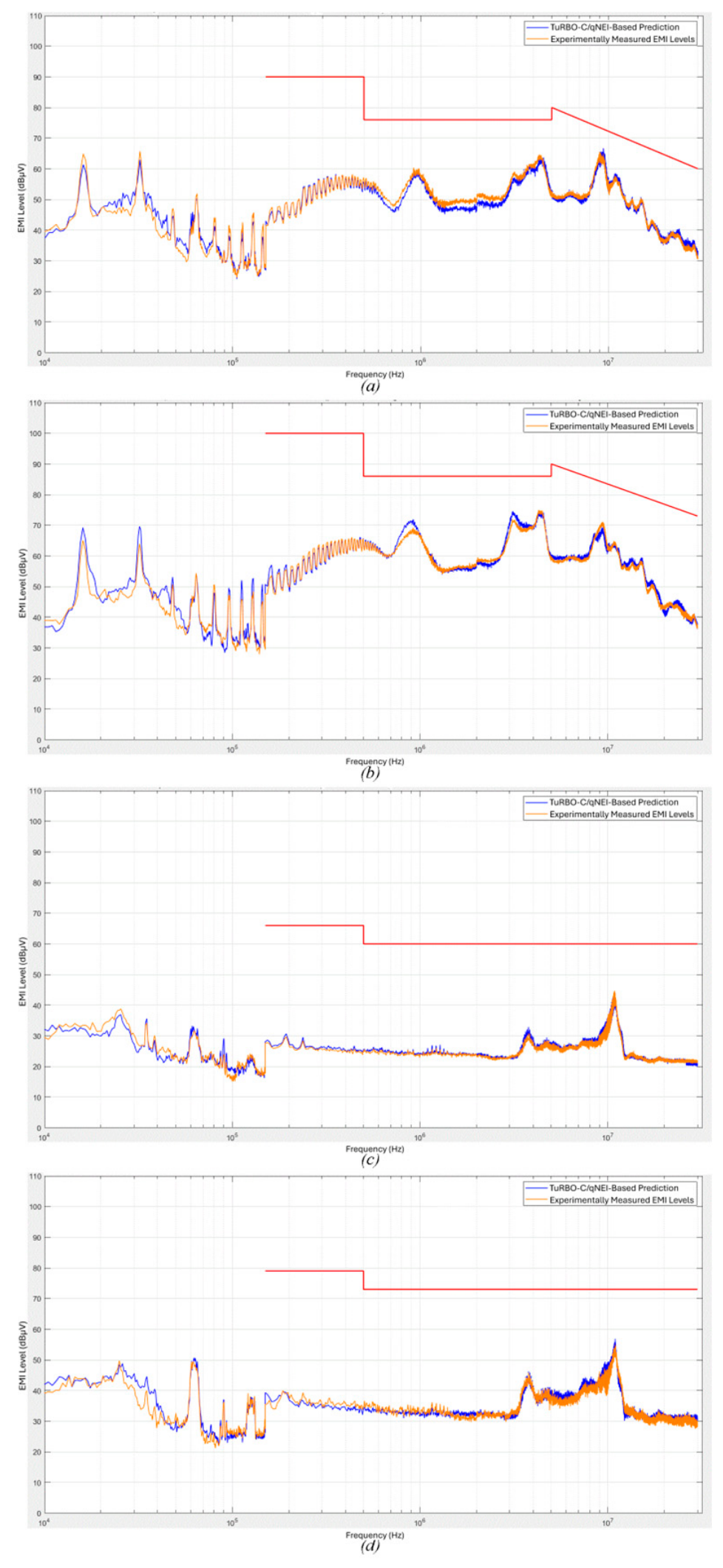
Figure 7 compares the GUI-predicted and experimentally measured EMI spectra of the TuRBO-C/qNEI design across the four operating scenarios. The overall agreement supports the claim that the surrogate-guided search identifies not only numerically favorable parameter sets but also realizable hardware designs whose compliance behavior remains valid after implementation. This visual agreement is especially important in the standby peak scenario, which constitutes the critical condition for this design family and determines the experimental legal margin near 10.937 MHz. In this sense,
Figure 7 should be interpreted not merely as a prediction-versus-measurement comparison but as direct visual evidence that the TuRBO-C/qNEI design remains compliant in the experimentally limiting band.
5. Practical Implications and Future Directions
The findings of this study indicate that the selection of surrogates for electromagnetic interference (EMI) prediction should be informed by spectral structure rather than generic assumptions regarding model complexity. In both single-split and cross-validated evaluations, the convolutional neural network (CNN) demonstrates the most reliable overall performance. This is attributed to the presence of localized resonant features, narrow-band peaks, and mode-dependent transitions in conducted-emission spectra, which are well suited to convolutional feature extraction. In contrast, the deep neural network (DNN), despite its greater nominal depth, exhibits reduced robustness and heightened mode sensitivity. This suggests that architectural depth alone is insufficient for high fidelity EMI modeling when the target is a dense spectrum rather than a scalar response.
The physics-informed neural network (PINN) offers a distinct advantage. Although it does not surpass the CNN in overall predictive accuracy, it frequently generates smoother and more physically plausible spectra, particularly in load-related scenarios. This characteristic is crucial when predicted levels are utilized not only for numerical comparison but also for interpretation and optimization. However, the weaker performance observed in the standby peak case indicates that physics-guided regularization cannot be presumed universally beneficial across all operating conditions. In EMI-oriented learning, regularization should therefore remain mode aware and, if necessary, frequency band sensitive.
Another outcome of this study is the recognition that validation, deployment, and optimization cannot be treated as discrete stages. A surrogate that performs well under a single split but loses stability under nested cross-validation or Monte Carlo resampling is not a sufficiently reliable basis for inverse design. Similarly, a model that is accurate in testing but cannot support legal-margin assessment, GUI-based deployment, or experimentally verified optimization remains of limited practical value. The primary methodological contribution of this work is thus the integration of high-resolution prediction, multi-protocol validation, engineering-oriented deployment, and regulation-aware optimization within a single workflow.
From a design perspective, the results also offer several practical insights. First, passive EMI design should be approached as a spectrum shaping problem rather than as the minimization of a single aggregate error or attenuation value. In the present dataset, legal compliance is repeatedly determined by a limited number of narrow-band peaks rather than by the average level of the full spectrum. This implies that filter tuning based solely on broadband attenuation intuition may be misleading. Second, mode coverage is essential. A parameter set that appears satisfactory in constant current operation may become critical under standby peak detection because the limit envelope is lower and because a previously secondary spectral feature may become margin limiting. Third, surrogate behavior near the legal boundary is more significant than average accuracy when the model is embedded within an optimizer. Once optimization begins to search for edge cases, even small local prediction errors can lead to unsafe design choices. For this reason, the most useful surrogate is not merely the one with the lowest mean error but the one that remains stable in the critical regions most likely to determine compliance.
The findings of this study propose a pragmatic engineering workflow for the development of converters constrained by electromagnetic interference (EMI). Initially, a finite yet meticulously structured measurement campaign can be employed to train multiple candidate surrogate models. The most reliable models can subsequently be utilized within a lightweight prediction interface, facilitating compliance-oriented optimization prior to implementing hardware modifications. Although experimental verification remains essential, the number of costly laboratory iterations can be minimized, as candidate designs are pre-screened against multi-mode legal margin criteria. Thus, the framework developed herein is both predictive and operational.
Several limitations should also be acknowledged. First, the surrogate models were developed and evaluated within the experimentally covered parameter region; the reported results should therefore be interpreted primarily as interpolation within the sampled design space rather than as validated extrapolation beyond it. Second, although limited repeatability checks indicated good short-term measurement consistency, a full uncertainty analysis was beyond the scope of the present work. Third, the PINN formulation adopted here should be interpreted as a regularization-based physics-informed surrogate rather than as a direct solver of governing electromagnetic field equations. These limitations do not diminish the value of the framework, but they help define the scope within which the present conclusions should be interpreted.
Future work may extend the present framework in several directions. A broader experimental campaign could improve coverage of the feasible design space and support more detailed uncertainty-aware validation. Compliance-oriented diagnostics such as false pass/fail analysis and margin-error statistics could complement the current regression-based evaluation. On the modeling side, mode-adaptive, physics-informed regularization may help address the limitations observed in high-variability scenarios such as standby peak EMI. On the design side, the optimization framework may be expanded toward multi-objective formulations that consider EMI performance together with component cost, size, thermal behavior, and implementation tolerance. Overall, the study provides a practical and experimentally supported foundation for surrogate-guided EMI-aware design in multilevel power converters.
Despite these strengths, several limitations persist. The dataset, while substantial in terms of experimental effort, is confined to the operating conditions examined in the laboratory. Broader generalization would necessitate additional variability in switching frequency, DC-link conditions, cable configurations, and thermal states. The physics-informed neural network (PINN) formulation employed here is guided by physics rather than being fully derived from it; it promotes spectral smoothness but does not yet encode a converter specific electromagnetic field model. On the optimization front, the current formulation employs continuous design variables, whereas practical component selection must consider discrete catalog values, manufacturing tolerances, and commercial availability. The current graphical user interface (GUI) should similarly be regarded as an engineering decision-support environment rather than a comprehensive digital twin.
These limitations suggest several avenues for future research. One promising extension is uncertainty-aware surrogate modeling, enabling optimization to incorporate predictive confidence alongside point estimates. Another is robust optimization under discrete component libraries and tolerance-induced variability. A third is hybrid surrogate design that integrates convolutional neural network (CNN)-level local feature extraction with PINN-style spectral regularization or circuit-informed residual constraints. Finally, future objective functions may benefit from critical band reweighting, as experimental results indicate that compliance is often governed by a few frequency regions rather than uniformly across the full band. Collectively, these directions can advance the current framework from a high-performing research prototype toward a more deployment ready methodology for compliance-aware EMI filter design.
6. Conclusions
This study developed and experimentally grounded a surrogate-based framework for predicting and optimizing conducted EMI in an IGBT-based, SVPWM-controlled three-phase, three-level NPC inverter equipped with an active harmonic filter. By formulating the problem as full-spectrum regression from passive filter parameters to 7744-point EMI responses under four operating scenarios, the work moved beyond scalar compliance indicators and addressed the spectral morphology that actually governs legal-margin assessment. In this sense, the study treated conducted EMI not merely as a measurable by-product but as a design-dependent engineering response that can be modeled, interpreted, and optimized.
The comparative modeling results showed that the four surrogate families do not contribute in the same way. The CNN provided the most consistent combination of predictive accuracy and repeated-resampling stability, making it the most reliable overall surrogate for compliance-oriented design support. The ANN remained a strong compact baseline and demonstrated that a relatively simple dense architecture can still reconstruct the global EMI envelope with useful engineering fidelity. The DNN, despite its greater depth, did not provide a corresponding improvement in robustness and proved particularly fragile under repeated-resampling evaluation in several operating regimes. The PINN offered a different advantage: although it did not outperform the CNN in overall accuracy, it produced smoother and more physically disciplined spectral reconstructions in several load-related cases, highlighting the value of physics-informed regularization when numerical fit alone is insufficient to ensure plausible spectral behavior.
A central outcome of the study is that surrogate quality in EMI analysis should not be judged solely by aggregate regression metrics. Numerical accuracy, resampling stability, spectral morphology, and physical interpretability must be considered jointly when the intended downstream task is compliance-oriented filter design. The results showed that models with acceptable global error can still differ substantially in their suitability for legal-margin assessment and inverse design. This was especially evident in the standby peak scenario, where the spectral structure becomes more difficult to learn and the distinction between accurate prediction and reliable compliance-oriented reconstruction becomes more critical.
Beyond prediction, the study demonstrated that experimentally trained surrogates can be embedded in a practical engineering workflow. The trained models were integrated into a Python-based GUI for rapid EMI estimation and inspection, and they were further employed within a compliance-oriented optimization framework. This optimization stage did not merely refine already compliant solutions. Within the experimentally measured pre-optimization design space, none of the 250 tested filter combinations satisfied the applicable legal limits across the full band and all operating scenarios, and the best measured pre-optimization combination still exhibited a worst-case legal margin of −3.7 dBµV. By contrast, the best experimentally verified optimized design achieved a positive worst-case legal margin of 11.50 dBµV, corresponding to an improvement of 15.20 dBµV in worst-case legal margin. This result confirms that the proposed framework contributes not only to EMI prediction but also directly to regulation-aware filter synthesis.