1. Introduction
Power dividers are widely used in microwave systems to provide signal samples for measurement or monitoring, feedback, feeds to and from antennas and amplifiers, antenna beamforming, taps for cable distributed systems (such as cable TV), and separation of the transmitted and received signals in transceivers [
1]. The Wilkinson power divider is one of the most common choices, mainly because of its good impedance matching at all ports; additionally, it achieves high isolation between the output ports by employing an isolation resistor [
2]. Despite these advantages, the quarter-wavelength (λ/4) transmission-line sections of the conventional Wilkinson divider significantly restrict its operating bandwidth. Because of this limitation, bandwidth enhancement has been a frequent topic in power divider research.
Several variations in the Wilkinson divider have been reported in the literature. Stepped-impedance transmission lines, series delta stubs, and folded layouts were used to replace the conventional λ/4 sections [
3,
4]. These modifications extended the operating bandwidth and reduced the circuit size, without significantly affecting the basic operating principle of the divider. In [
5], the conventional λ/4 transmission-line sections were replaced by stepped-impedance transmission lines, resulting in a compact structure with a wideband operation, making it suitable for WLAN and 5G communication systems.
Coupled lines with open stubs have also been employed for wideband operation and compact structures [
6]. In [
7], the size of the divider was further reduced, and harmonics suppression was achieved by combining high- and low-impedance resonator cells. However, the strong coupling between the lines increased design sensitivity.
Additionally, branch lines have been employed to replace multiple isolation resistors, achieving a wide operating bandwidth and acceptable isolation between the output ports [
8]. Furthermore, a defected-ground microstrip power divider with a floating conductor was reported in [
9]; wideband operation was achieved by modifying the ground plane, but fabrication tolerances were a critical factor.
Multistage Wilkinson power dividers are still widely used in broadband applications. A two-stage divider employing λ/4 transmission lines and short-circuited stubs that control the frequency response was proposed in [
10]; coupled lines and DC isolation were also included to improve the output-port isolation over a wide frequency range. In [
11], the conventional T-junction input was replaced by microstrip-to-slotline transitions. Open-ended stubs and isolation resistors were used at the output ports, resulting in a wideband divider with a compact layout.
Artificial transmission lines have also been employed to reduce the overall power divider size. In [
12], Pi-shaped structures were used to replace the conventional λ/4 sections, resulting in a compact wideband divider. In [
13], open-stub artificial transmission lines were employed to achieve a similar performance and size. The wide- and multiband operation of a seven-section Wilkinson divider over the S-, C-, and X-bands was reported in [
14]. Stable power division and good isolation were achieved across the operating bands; however, the size of the divider was relatively large.
In [
15], parallel stripline technology was employed, and capacitors were connected in series with the isolation resistors to achieve ultrawideband operation with a reduced electrical length. A different structure based on a ring configuration was proposed in [
16] and analyzed using the even- and odd-mode theory. The divider achieved a broad bandwidth and good isolation; however, the achievable bandwidth was limited by the ring geometry. A multisection wideband Wilkinson power divider for 4G/5G wireless applications was designed and simulated in [
17] using conventional transmission-line theory. Operating at a center frequency of 2.5 GHz, the divider achieved good impedance matching, high isolation between the output ports, and equal power division. Additionally, issues related to circuit size and harmonic suppression were addressed. Furthermore, it was demonstrated that artificial intelligence could be utilized in future work in the design and optimization of RF/microwave power dividers.
A planar wideband power divider/combiner with high-power-handling capability using grounded 50 Ohm loads was presented in [
18]. The divider showed efficient operation over the 7–12 GHz frequency range. In [
19], a compact ultra-wideband power divider with enhanced performance and error-tolerant design using microstrip lines was reported. The divider was optimized via a detailed parametric study and achieved stable performance over the 1.6–7.0 GHz frequency range. A planar dual-band power divider with arbitrary power division and a wide isolated frequency band was reported in [
20].
The power dividers reported in the aforementioned studies can achieve the required wideband performance and meet small-size restrictions; however, their structures are rather complicated. The design reported in [
5] features a simple and compact size, but its wideband performance is rather limited, especially near the low and high frequencies of the desired frequency band. To address this issue and further reduce the overall size of the divider, we propose a new compact wideband power divider based on the stepped-impedance transmission-line design reported in [
5]. Specifically, we introduce open-circuited parallel stubs to enhance the operating bandwidth and achieve further size reduction. Initially, the proposed wideband power divider was analyzed using transmission-line theory to extract the design equations. Next, it was simulated and optimized. Finally, it was fabricated on a microstrip substrate and experimentally characterized. The measured results showed good agreement with the theoretical and simulation analyses.
2. Circuit Analysis
The proposed power divider was designed by extending the stepped-impedance topology reported in [
5]. In the traditional Wilkinson power divider, two λ/4 transmission lines with characteristic impedances of √2Z
0 are employed to achieve impedance matching and equal power division over a narrow frequency range. In [
5], these λ/4 sections were substituted by stepped-impedance transmission lines to achieve bandwidth enhancement and size reduction. In this study, we further modified the structure proposed in [
5] by adding open-circuited parallel stubs to further enhance the bandwidth and reduce the overall size of the divider, thus achieving a more compact structure.
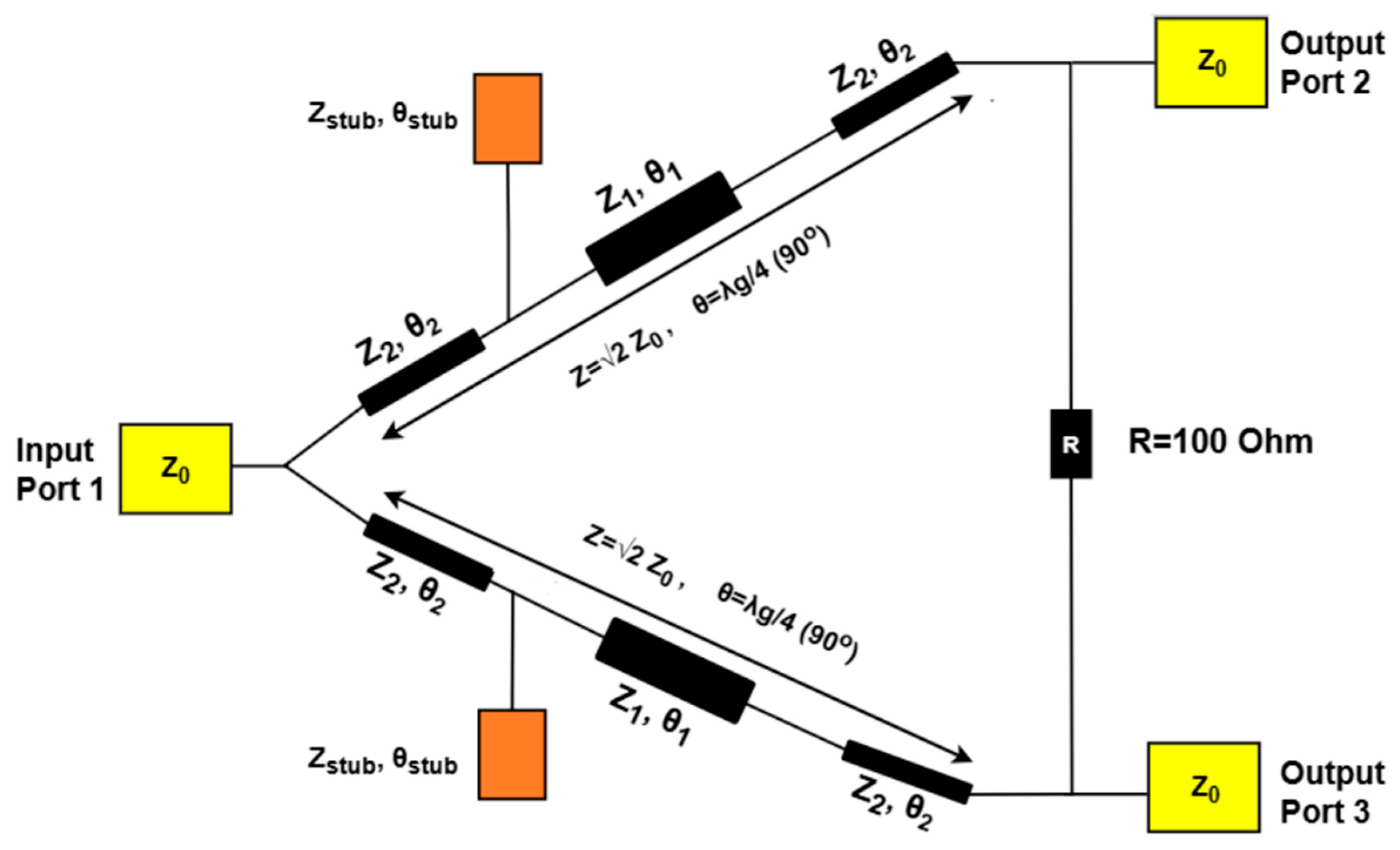
The topology of the proposed power divider is shown in
Figure 1. Each λ/4 branch is substituted by a stepped-impedance transmission-line section with low (Z
1) and high (Z
2) characteristic impedances and electrical lengths θ
1 and θ
2, respectively. Additionally, a parallel open-circuited stub with characteristic impedance Z
stub and electrical length θ
stub is introduced in each λ/4 branch.
The extraction of the design equations of the proposed wideband divider was based on the transmission-line theory. The transmission (ABCD) matrix of each branch can be obtained by combining the transmission matrices of the stepped-impedance transmission-line sections and the open-circuited stub. Accordingly, the overall transmission matrix of each branch can be expressed as follows:
where M
1 and M
2 denote the transmission matrices of the low-(
Z1) and high-(
Z2) impedance transmission-line sections, respectively; M
stub denotes the transmission matrix of the open-circuited parallel stub.
Matrices M
1 and M
2 are given by the following equations:
Matrix M
stub is given as follows:
By substituting (2)–(4) into Equation (1) and performing the required matrix multiplications, the elements of the transmission matrix M
ABCD are obtained as follows:
The transmission matrix M
λg/4 of an ideal λ/4 transmission line is given as follows:
To achieve impedance matching and equal power division at the design frequency
f0 = 2.5 GHz, matrix M
ABCD is equated to matrix M
λg/4, leading to the following equations:
By substituting
Y1 = 1/
Z1 and
Y2 = 1/
Z2 into Equation (10) and performing the necessary algebraic calculations, we obtain
From Equation (11), after performing the necessary algebraic calculations, we obtain
Similarly, from Equation (12), we obtain
By substituting
Y1 = 1/
Z1 and
Y2 = 1/
Z2 into Equation (13) and performing the necessary algebraic manipulations, we obtain
Adding Equations (14) and (17) and performing the necessary algebraic calculations we obtain
Finally, adding Equations (15) and (16) and performing the necessary algebraic calculations, we obtain
3. Circuit Implementation and Results
Equations (18) and (19) are the design equations, which are satisfied for a number of solutions. To obtain a compact and practically realizable wideband power divider, we selected Z1 = 60 Ohm and Z2 = 90 Ohm for the characteristic impedance values of the stepped-impedance transmission-line sections; for the open-circuited parallel stubs, we selected Zstub = 120 Ohm and θstub = 25°. Additionally, we selected R = 100 Ohm for the isolation resistance value.
By substituting the above values, as well as
Z = Z
0√2 = 70.71 Ohm (Z
0 = 50 Ohm) and
Υ = 1/
Ζ = 0.0141 Siemens, into Equation (19), we obtained two solutions for θ
1: (i) θ
1 = 55.38° and (ii) θ
1 = 9.85°. Consequently, we selected θ
1 = 9.85° to achieve a compact design. This value was then substituted into Equation (18), yielding two solutions for θ
2: (i) θ
2 = −55.16
o and (ii) θ
2 = 34.84°. Obviously, θ
2 = −55.16
o has no physical meaning, and therefore it was excluded from the design procedure; thus, we selected θ
2 = 34.84°. The design parameter values of the proposed wideband power divider are summarized in
Table 1.
The isolation resistor R = 100 Ω was connected between the output ports to ensure high isolation. All ports of the divider were terminated to 50 Ohm loads. The calculated electrical lengths result in a compact structure that achieves impedance matching and equal power division over a wide frequency range with a center design frequency f0 = 2.5 GHz. This frequency was selected to enable the proposed divider to operate at the designated frequency bands of several modern wireless technologies, including Wi-Fi, Bluetooth, GPS, DCS, WCDMA, and sub-6 GHz communication systems.
For an arbitrary frequency band specified by frequencies
f1 and
f2 (with a center frequency
f0), the electrical lengths of the transmission lines can be obtained as follows [
20]:
Based on the calculated electrical parameter values, the proposed wideband power divider was initially simulated via Advanced Design System (ADS 2015.01) software (Keysight Technologies) using microstrip-line technology on a TACONIC substrate with the following parameters:
Relative dielectric constant, εr = 2.2;
Dielectric loss, tan δ = 0.0009;
Substrate thickness, H = 1.575 mm;
Copper thickness, T = 0.017 mm;
Copper conductivity: 5.813 × 10⁷ Siemens/m.
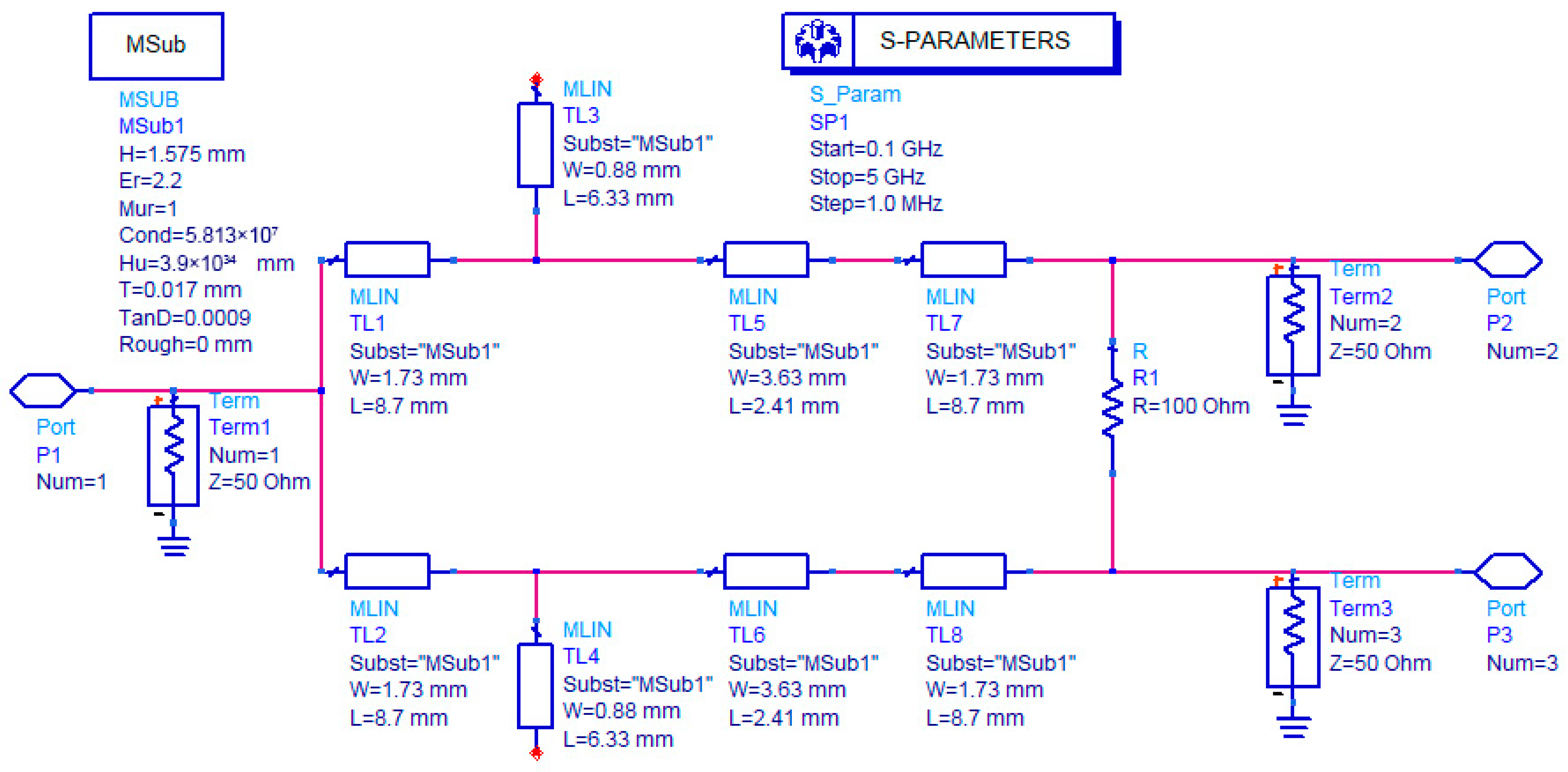
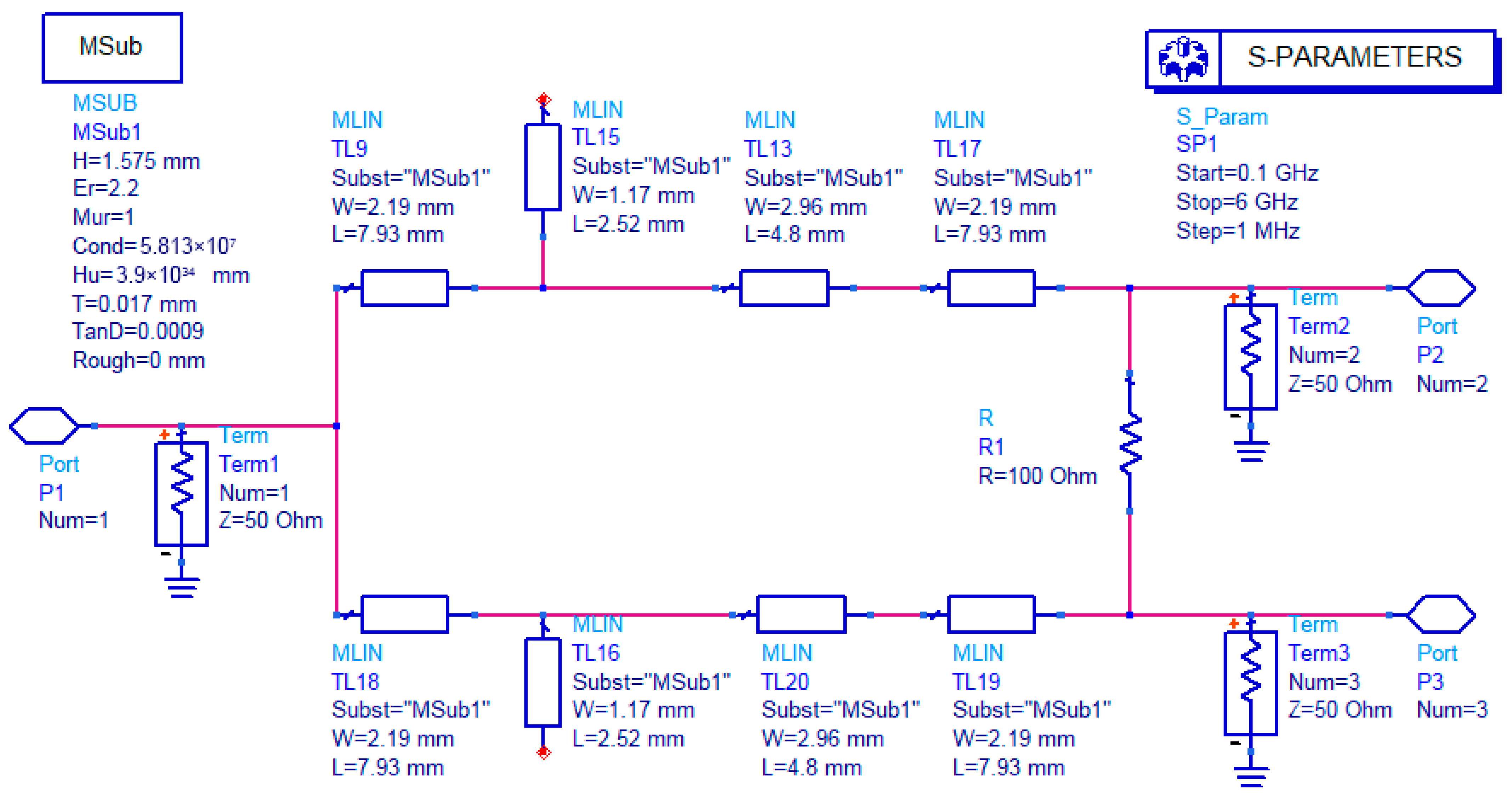
Based on the parameter values calculated using design Equations (18) and (19) and the TACONIC substrate parameters, the dimensions of the microstrip lines were derived using the LineCalc routine of ADS. The microstrip-line circuit of the proposed wideband power divider is presented in
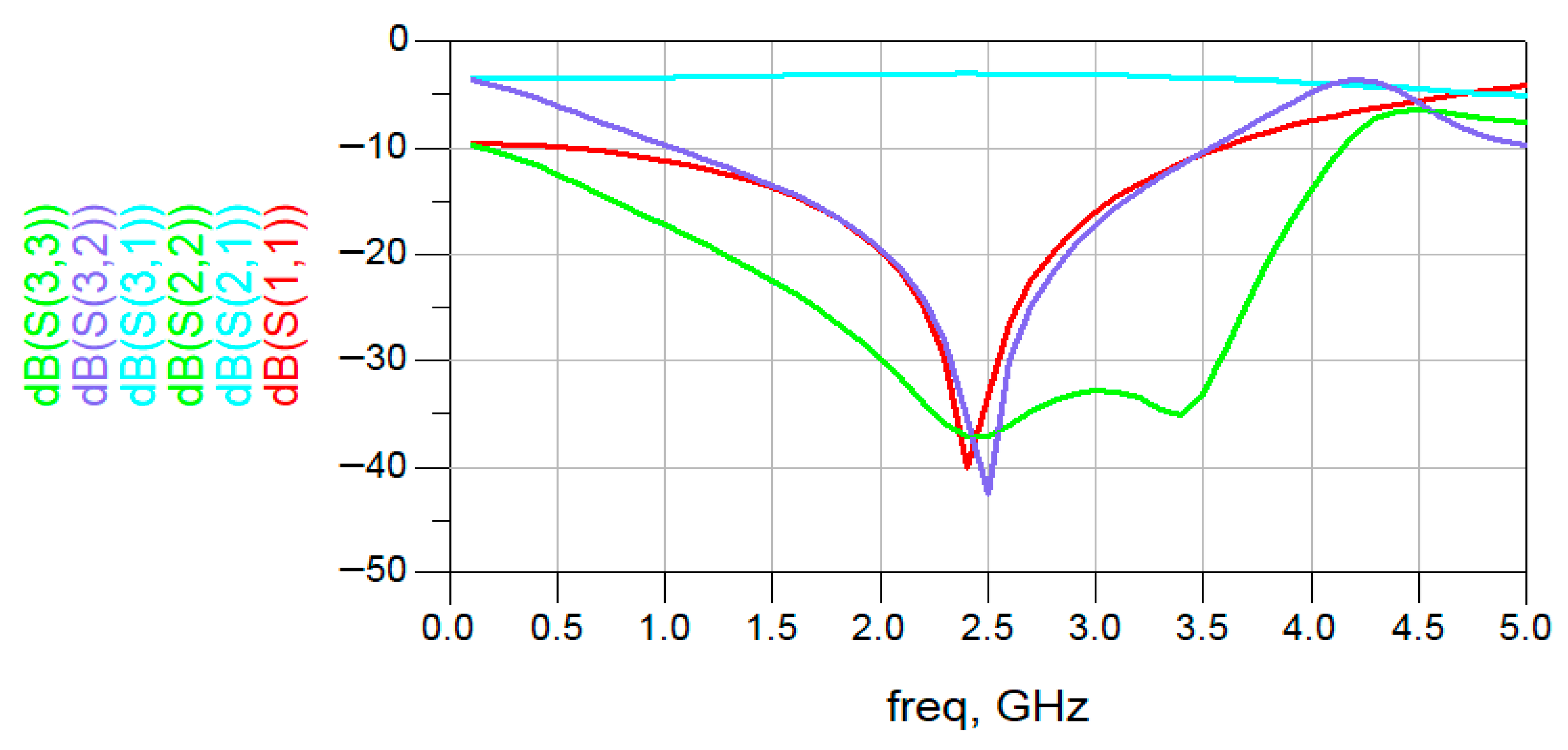
Figure 2. The variation in its corresponding simulated scattering parameters (S-parameters) with frequency is presented in
Figure 3.
Subsequently, the power divider shown in
Figure 2 was optimized in ADS by setting the following optimization goals in the 1–4 GHz frequency range:
Initially, random optimization was used, followed by gradient optimization.
Table 2 shows the optimization variables, optimized values, and parameter bounds. An electromagnetic simulation was not necessary because of the simplicity of the structure. The optimized wideband power divider is presented in
Figure 4.
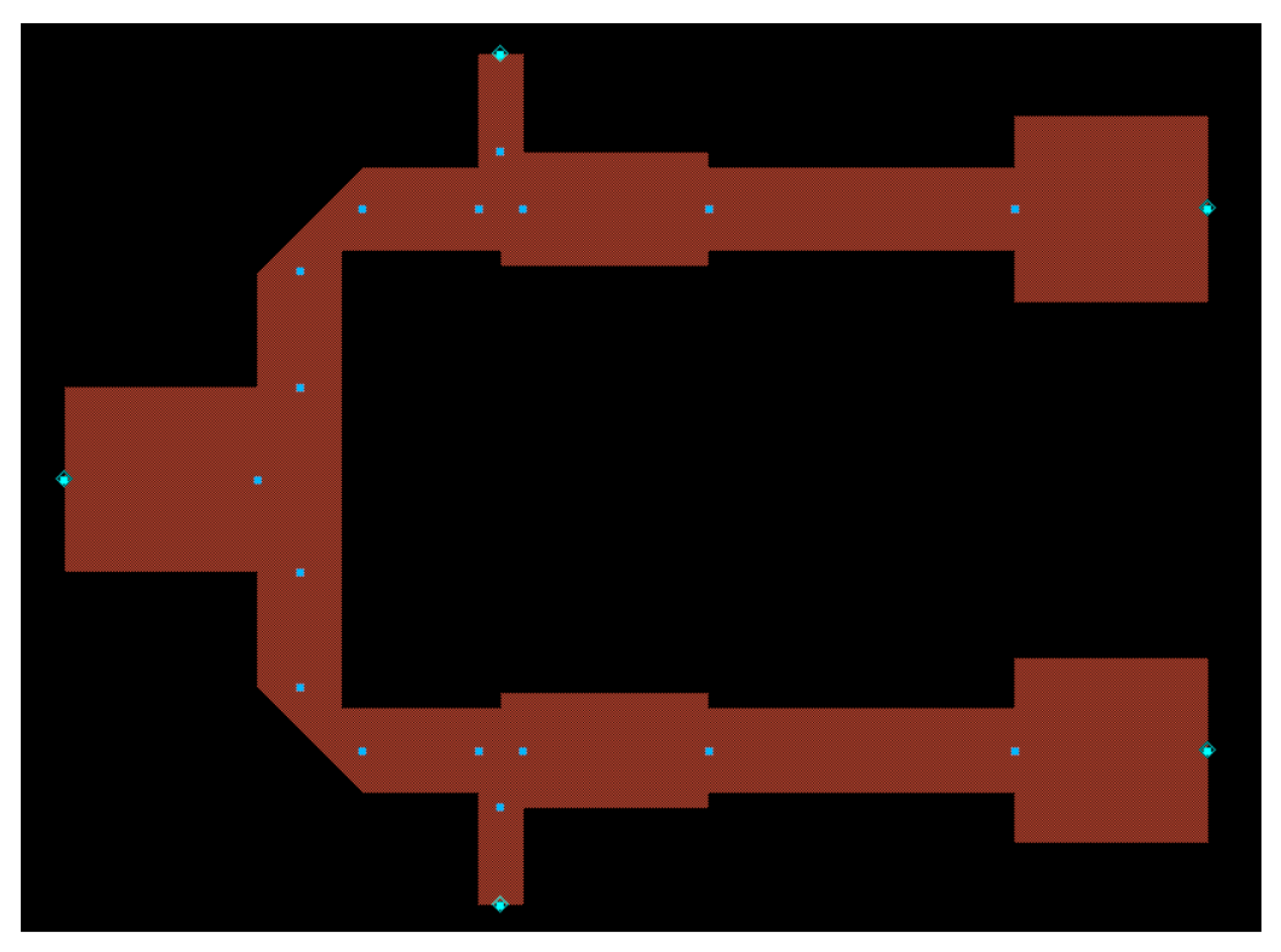
Based on the microstrip-line layout generated by ADS (
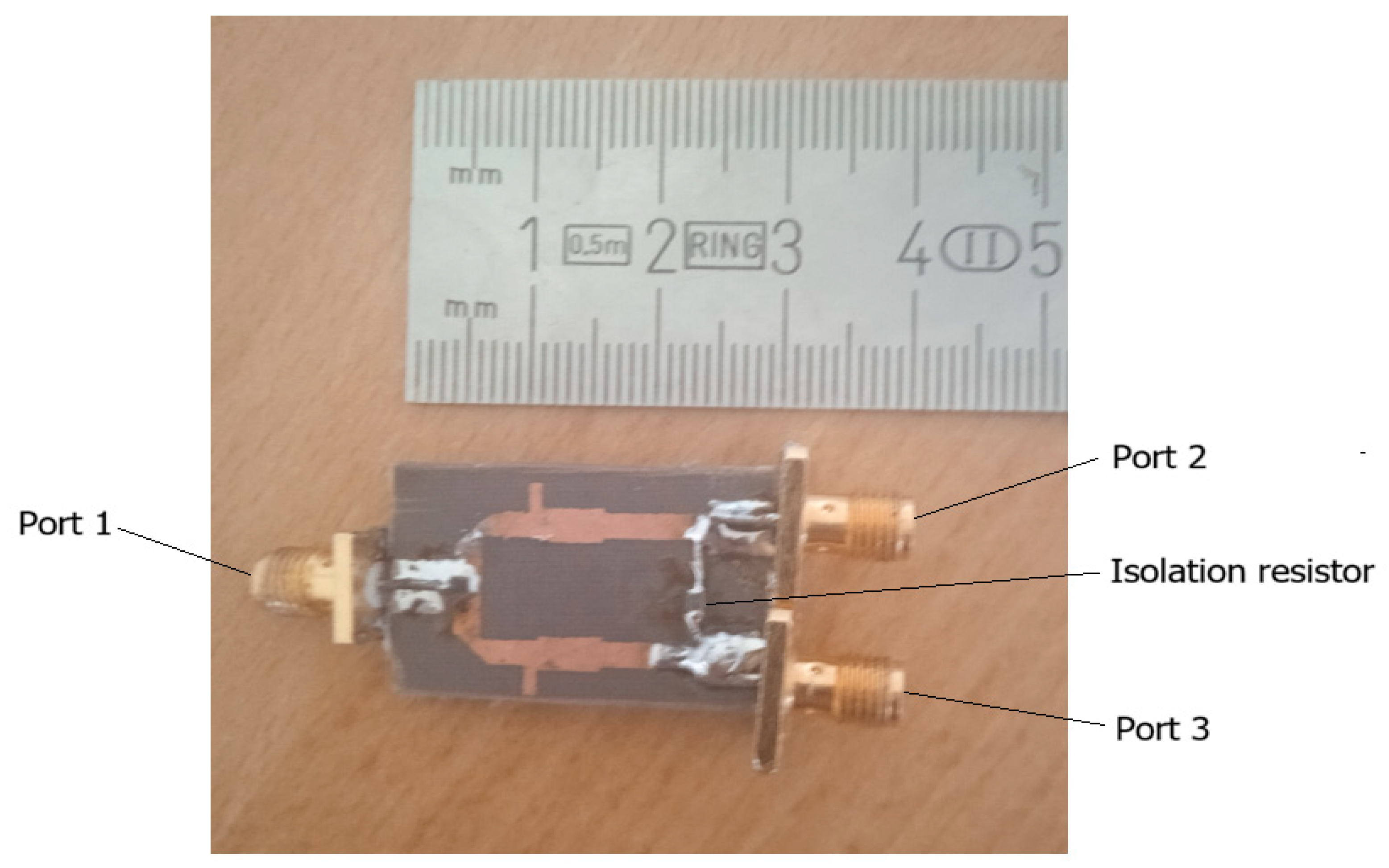
Figure 5), we fabricated the optimized wideband power divider on a printed circuit board (PCB) using the TACONIC substrate mentioned above. During fabrication, we placed a mask of the layout on the top copper surface of the TACONIC substrate and immersed it in a sodium hydroxide solution to remove the unwanted copper. Thus, the upper conductors of the microstrip lines with the desired dimensions were obtained. To avoid the parasitic effects caused by commercial resistors, we used a microwave 100 Ohm resistor to achieve the necessary isolation between the output ports.
Figure 6 shows the fabricated wideband power divider.
The Agilent E5071C vector network analyzer was used to measure the S-parameter values (amplitude and phase) of the fabricated power divider. Before conducting measurements, we performed the standard short, open, and broadband load calibration procedure; the calibration reference plane was at the input of each connector.
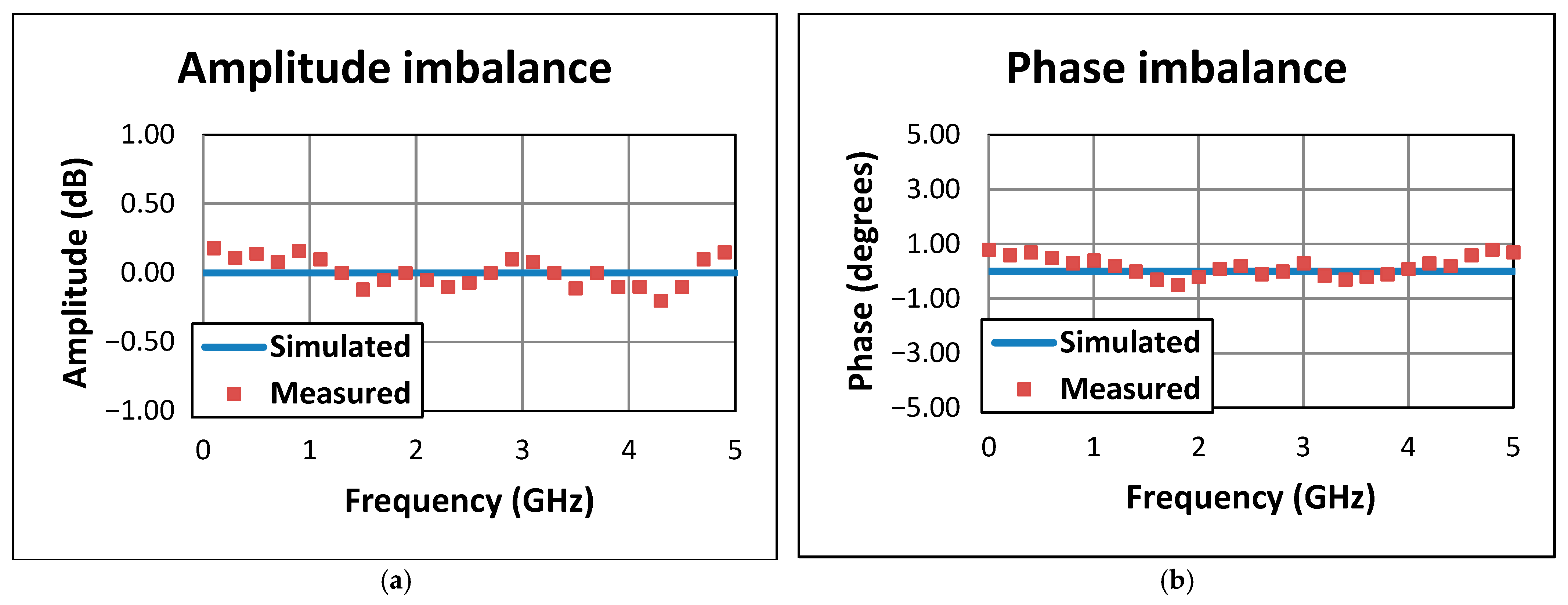
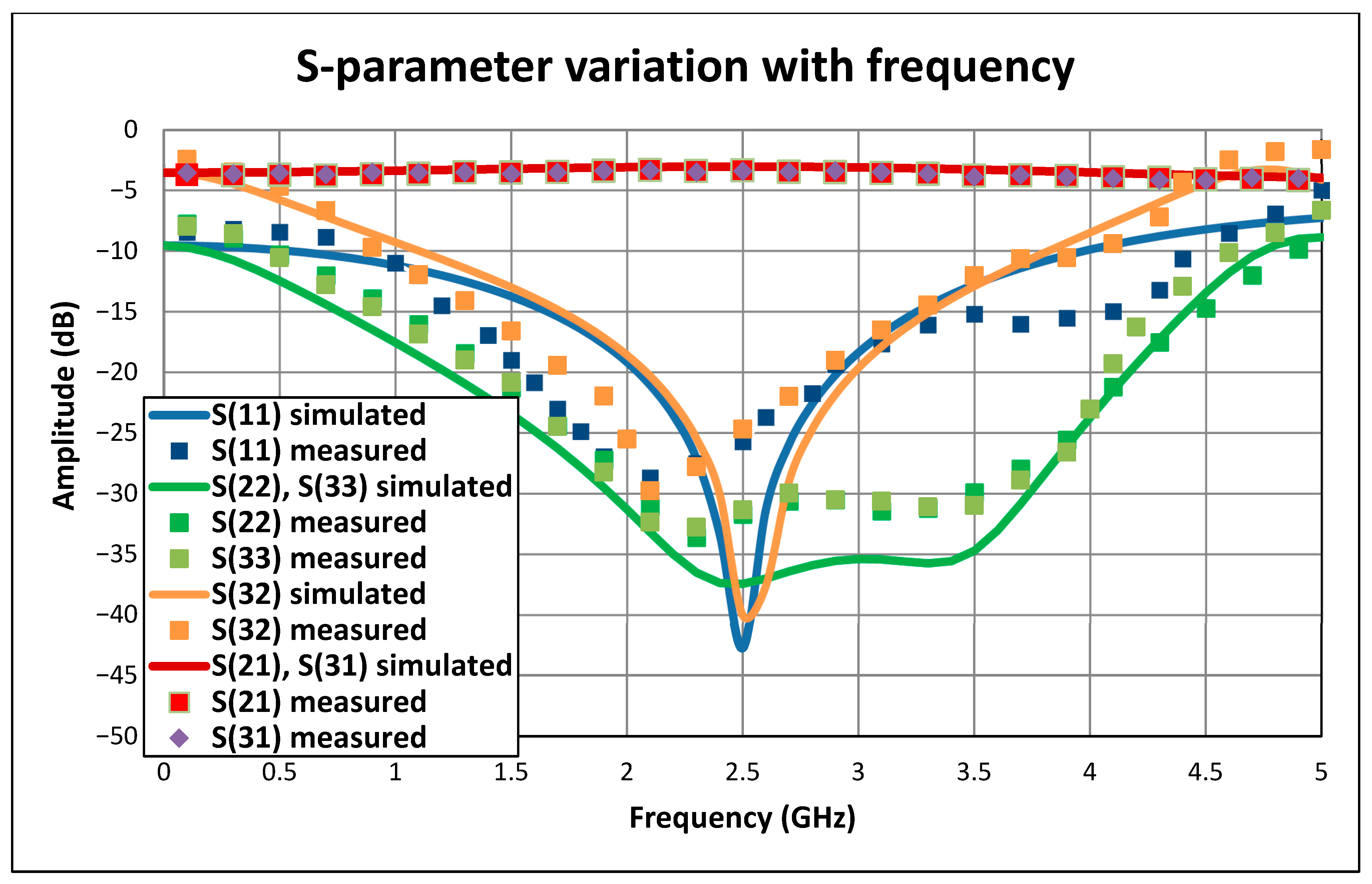
Figure 7 shows the simulated and measured S-parameter results. Furthermore, the amplitude- and phase-imbalance results are presented in
Figure 8a and
Figure 8b, respectively.
4. Discussion
Figure 7 and
Figure 8 show that the simulated and measured S-parameter results of the proposed wideband power divider are in good agreement. The small discrepancies are attributed to fabrication tolerances, connector effects, and variations in the dielectric constant of the substrate material. It is evident that the proposed design exhibits wideband operation in the 1–4 GHz frequency range, corresponding to a
fractional bandwidth. Over this bandwidth, the measured return loss at the input port (parameter S
11) is <−10 dB; the corresponding return loss at the output ports (parameters S
22 and S
33) is <−15 dB; the measured insertion loss (parameters S
21 and S
31) is −3.73 ± 0.42 dB (including connector losses), indicating equal-split division; the measured isolation between the output ports (parameter S
32) is approximately −25 dB at the design frequency of 2.5 GHz, reaching approximately −30 dB at 2.1 GHz. Furthermore, the amplitude and phase imbalances are minimal over the entire operating frequency range (i.e., 0 ± 0.2 dB and 0 ± 0.8 degrees, respectively), as shown in
Figure 8a and
Figure 8b, respectively. These results indicate that the combined use of stepped-impedance transmission lines and open-circuited parallel stubs provides bandwidth enhancement while preserving compactness.
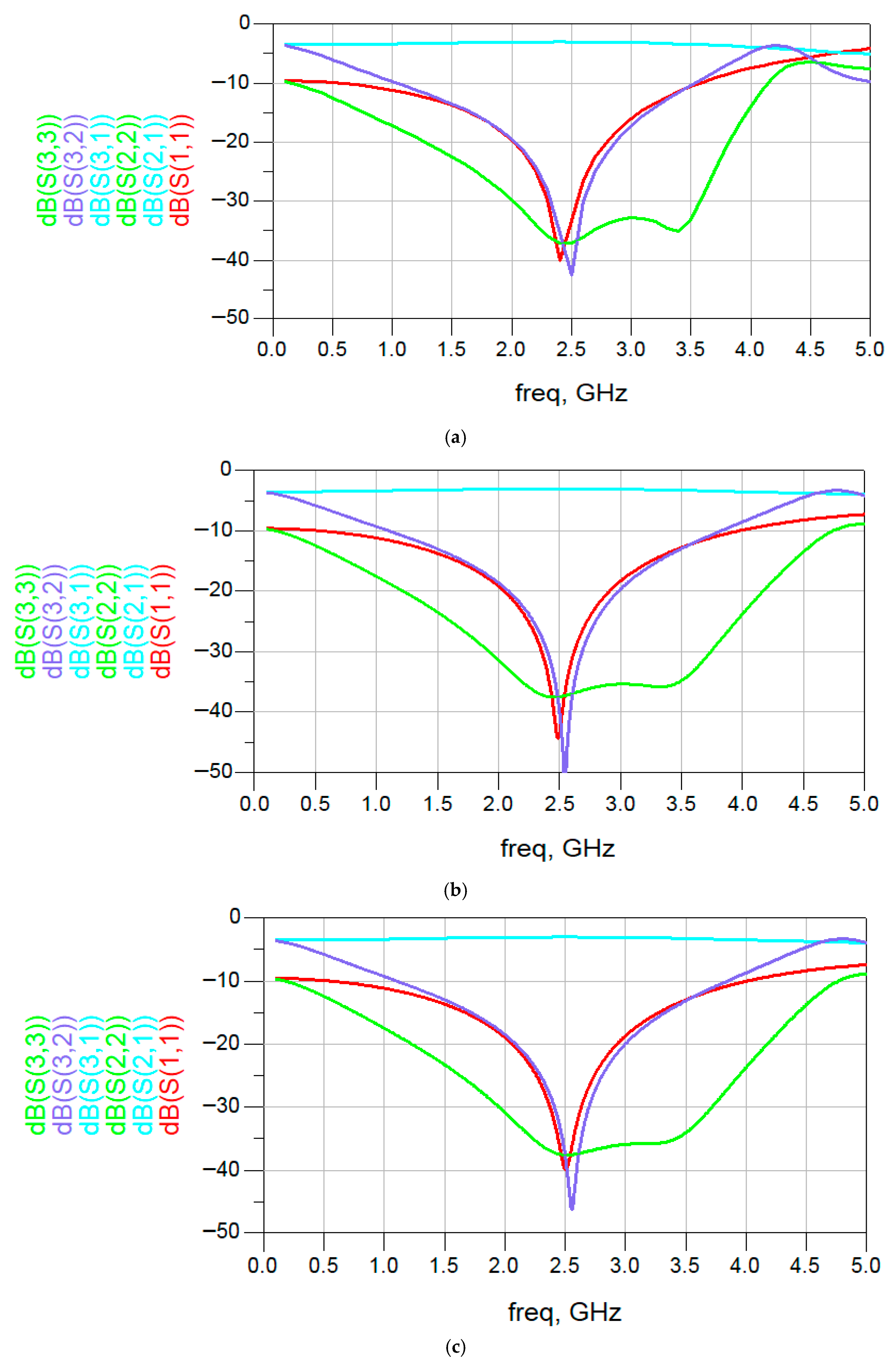
To assess the sensitivity of the achieved bandwidth to manufacturing tolerances, we conducted additional simulations by varying the stub length by ±1 mm. The S-parameter results are presented in
Figure 9b,c. A comparison with those corresponding to the initial dimensions (
Figure 9a) indicates minimal differences.
A performance comparison of the proposed wideband Wilkinson power divider with previously reported designs is presented in
Table 3. It is evident that the proposed design exhibits a favorable combination of compact size, broad bandwidth, high isolation, good impedance matching (especially at the output ports), high isolation, and minimal amplitude and phase imbalances. Although the designs reported in [
9,
14] achieve better broadband characteristics, they exhibit complicated topologies and occupy large layout areas. Based on
Table 3, a performance comparison between the proposed design and other designs operating at
approximately the same center frequency indicates that the proposed design is superior regarding input return loss, output return loss, and insertion loss; furthermore, it excels in the overall size except for the design reported in [
3], which features a rather complicated geometry. In
Table 3, the relevant merits of the proposed design are highlighted in cyan. Overall, the proposed wideband power divider features a simple and compact structure with practically realizable microstrip transmission lines, making it particularly suitable for broadband wireless applications.
5. Conclusions
In this work, a wideband, simple-structure, compact equal-split power divider was designed by combining stepped-impedance transmission lines with open-circuited parallel stubs. Initially, based on the transmission line theory, we extracted the design equations. Subsequently, the proposed design was simulated and optimized in ADS and then fabricated using microstrip-line technology. Finally, its performance was measured using the Agilent E5071C vector network analyzer. The measured results showed good agreement with the predicted performance, verifying that, despite its simple and compact structure, the proposed design operates efficiently across the desired frequency range; its performance is similar to or better than those of previously reported designs. Furthermore, it exhibits good sensitivity to manufacturing tolerances. In future work, additional parallel stubs could be employed at the two λ/4 branches of the proposed power divider to further improve its performance. Overall, the proposed design provides an efficient, simple, and compact structure for practical wideband wireless applications.