1. Introduction
With the rapid expansion of wind and photovoltaic (PV) generation, the mismatch between variable renewable supply and end-use demand has become increasingly prominent. Green hydrogen produced by water electrolysis is widely regarded as an effective pathway for converting intermittent electricity into a storable and transportable energy carrier, thereby enhancing renewable-energy accommodation and supporting deep decarbonization in industry, transport, and integrated energy systems [
1,
2,
3,
4,
5,
6]. In this context, the operation scheduling of renewable-powered hydrogen production systems has attracted increasing attention, since it directly affects not only hydrogen yield and renewable utilization, but also operational flexibility, economic performance, and equipment durability.
Among commercially relevant electrolysis technologies, alkaline electrolyzers (AELs) remain highly attractive for large-scale hydrogen production because of their technological maturity, relatively low cost, and industrial applicability. However, unlike an ideal flexible electric load, an AEL plant is constrained by minimum loading limits, multi-state operation, start-up and shutdown transitions, thermal inertia, and part-load efficiency variation [
4,
5,
7,
8,
9,
10,
11]. More importantly, repeated start–stop actions and strong short-term load fluctuations may accelerate degradation, increase maintenance burden, and shorten service life. Therefore, the scheduling of renewable-powered hydrogen systems should not be limited to maximizing hydrogen output or renewable utilization, but should also account for the operational boundaries and health-related impacts of electrolyzer operation [
4,
5,
7,
8,
9,
10,
11].
Substantial progress has been made in the coordinated scheduling of wind–PV–hydrogen systems, hydrogen-based microgrids, and integrated electricity–hydrogen systems. Existing studies have shown that the joint optimization of renewable generation, battery storage, hydrogen production, and grid interaction can effectively improve operational flexibility and economic performance [
12,
13,
14,
15,
16,
17,
18]. In particular, day-ahead scheduling under time-of-use (TOU) tariffs or electricity-price signals is of practical significance for grid-connected hydrogen production projects, because it enables electricity purchases to shift toward low-price periods while improving the economic value of renewable power and hydrogen production [
13,
14,
15,
16,
17,
18]. However, most of these system-level studies treat the electrolyzer plant as an aggregated controllable load, and the internal coordination among parallel electrolyzer units is usually simplified [
12,
13,
14,
15,
16,
17]. However, these studies either treat the electrolyzer as a lumped controllable load or do not explicitly embed TOU responsiveness and unit-level health coordination into a unified day-ahead framework, leaving the interaction between economic arbitrage and unit-level degradation largely unaddressed.
In practical hydrogen production plants, however, the total hydrogen-production power must be allocated among multiple electrolyzer units operating in parallel. If this allocation follows only equal power sharing or short-term output matching, some units may be exposed to stronger power fluctuations, more frequent start–stop cycles, or higher thermal stress than others, resulting in uneven aging and higher degradation-related operating costs. To address this issue, recent studies have investigated multi-electrolyzer coordination from the perspectives of collaborative array operation, active–reactive coordinated management, degradation-aware cluster allocation, cold/hot start-integrated control, rotation-based control, and uncertainty-aware dispatch [
19,
20,
21,
22,
23,
24,
25,
26,
27]. These works have significantly improved the understanding of unit-level lifetime balancing and operational adaptability. Nevertheless, most of them are developed mainly from the perspective of array control or local dispatch, and are not closely linked to TOU-responsive system-level economic scheduling within a unified day-ahead framework [
19,
20,
21,
22,
23,
24,
25,
26,
27]. While these array-level approaches effectively balance lifetime, they are typically decoupled from system-level economic dispatch, so TOU arbitrage opportunities are not captured at the unit-allocation layer.
At the same time, degradation-aware operation has begun to receive more explicit attention. Recent studies have incorporated degradation penalties, state-transition effects, and thermal management into the scheduling or control of alkaline water electrolysis systems, while broader review work has emphasized the importance of jointly considering durability, dynamic operation, and system-level integration for large-scale green hydrogen deployment [
4,
5,
25,
28,
29]. These developments confirm the practical relevance of degradation-aware scheduling. However, they are often concerned with local thermal–electrochemical management or specific operating scenarios, rather than with grid-connected wind–PV hydrogen production under TOU tariffs with explicit multi-electrolyzer health coordination [
25,
28,
29]. These studies focus on local thermal–electrochemical behavior rather than on embedding degradation awareness into grid-connected day-ahead optimization under TOU tariffs.
Another challenge lies in computational tractability. A detailed day-ahead scheduling model for a grid-connected wind–PV–hydrogen system usually includes battery dynamics, hydrogen storage constraints, grid power exchange, multi-state electrolyzer logic, and binary variables associated with start-up/shutdown and state transitions. As the time resolution becomes finer and the model structure becomes richer, the corresponding mixed-integer optimization problem may become computationally burdensome for engineering-scale applications [
30,
31,
32,
33,
34,
35,
36,
37,
38,
39,
40]. Time-series aggregation and related temporal reduction methods have therefore been widely adopted to reduce computational complexity while preserving representative intertemporal characteristics [
30,
31,
32,
33,
34,
35,
36,
37,
38,
39]. However, existing studies have also shown that temporal aggregation may smooth extreme periods, weaken peak-sensitive operational responses, and introduce errors when the reduced-order schedule is mapped back to the original time scale, especially in storage-coupled systems [
31,
32,
33,
34,
35,
36,
37,
38,
39].
From the above review, it can be seen that existing studies have advanced four important directions, namely system-level economic scheduling, multi-electrolyzer coordination, degradation-aware operation, and computational acceleration. However, these directions are still not fully integrated for grid-connected wind–PV hydrogen production under TOU tariffs. (i) Existing TOU-responsive scheduling studies [
13,
14,
15,
16,
17,
18] typically aggregate the electrolyzer plant into a single controllable load, so unit-level health imbalance caused by non-uniform stress distribution is not captured. (ii) Array-level rotation and balancing strategies [
19,
20,
21,
22,
23] are mostly designed as local controllers below the EMS layer, so TOU price signals cannot directly shape unit-level allocation decisions. (iii) When rich multi-state logic and unit-commitment binaries are simultaneously included, direct engineering-scale day-ahead MILP becomes computationally demanding, as reported in [
30,
31,
32,
33,
34]. Recent review work on grid-connected electrolyzer dynamics and control has further indicated that unified system-level scheduling and state-aware unit-level coordination remain insufficiently coupled in current studies [
29].
To more explicitly position the present work against recent state-of-the-art studies,
Table 1 summarizes a selection of representative works published between 2022 and 2026 along five key dimensions: system scope, TOU responsiveness, unit-level health coordination, degradation modeling, and computational tractability strategy. Only the dimensions directly relevant to the research gap identified in this work are included; capacity planning, harmonic mitigation, and ancillary-service studies are not listed.
To address these issues, this paper proposes a hierarchical day-ahead scheduling framework for a grid-connected wind–PV hydrogen production system under TOU electricity prices. The novelty of this work does not lie in hierarchical optimization, degradation-aware scheduling, or rotation-based unit control considered in isolation. Rather, its contribution lies in integrating these elements into a unified engineering-oriented framework. Specifically, the upper layer performs TOU-responsive system-level economic dispatch by jointly considering renewable utilization, battery operation, grid interaction, hydrogen production demand, and equivalent cycling-related degradation penalties. The lower layer introduces a health-aware non-uniform rotation mechanism to transform the upper-layer aggregate electrolyzer power command into differentiated unit-level operating states, thereby reducing synchronous aging and balancing lifetime consumption across the electrolyzer array. In addition, a tractability-oriented solution strategy based on time-series feature aggregation is employed to support engineering-scale day-ahead implementation.
Accordingly, the main contributions of this work are threefold. First, a TOU-responsive lifecycle-cost dispatch model is developed for grid-connected wind–PV hydrogen production systems by explicitly coordinating renewable generation, battery storage, grid trading, hydrogen production, and equivalent cycling-related degradation cost. Second, a health-aware non-uniform rotation mechanism is proposed to convert the aggregate electrolyzer power command into differentiated unit-level allocation decisions, thereby reducing fluctuation exposure and balancing degradation across parallel electrolyzer units. Third, a tractability-oriented day-ahead optimization framework is established by combining multi-state scheduling with time-series feature aggregation, so as to improve engineering applicability while preserving the main intertemporal scheduling characteristics of the original problem.
The remainder of this paper is organized as follows.
Section 2 presents the hierarchical scheduling model.
Section 3 describes the case study and simulation results.
Section 4 provides further analysis and discussion. Finally,
Section 5 concludes the paper.
2. Materials and Methods
This chapter explains the modeling, scheduling, and solution approach for a wind–PV hydrogen production system. It develops a full lifecycle cost model that includes O&M features and nonlinear degradation, proposes a hierarchical coordinated scheduling framework that incorporates electrolyzer health states, and introduces a time-series-aggregation-based MILP method to reduce problem dimensionality for efficient solving (see
Table 2).
2.1. System Description and Lifecycle Cost Modeling
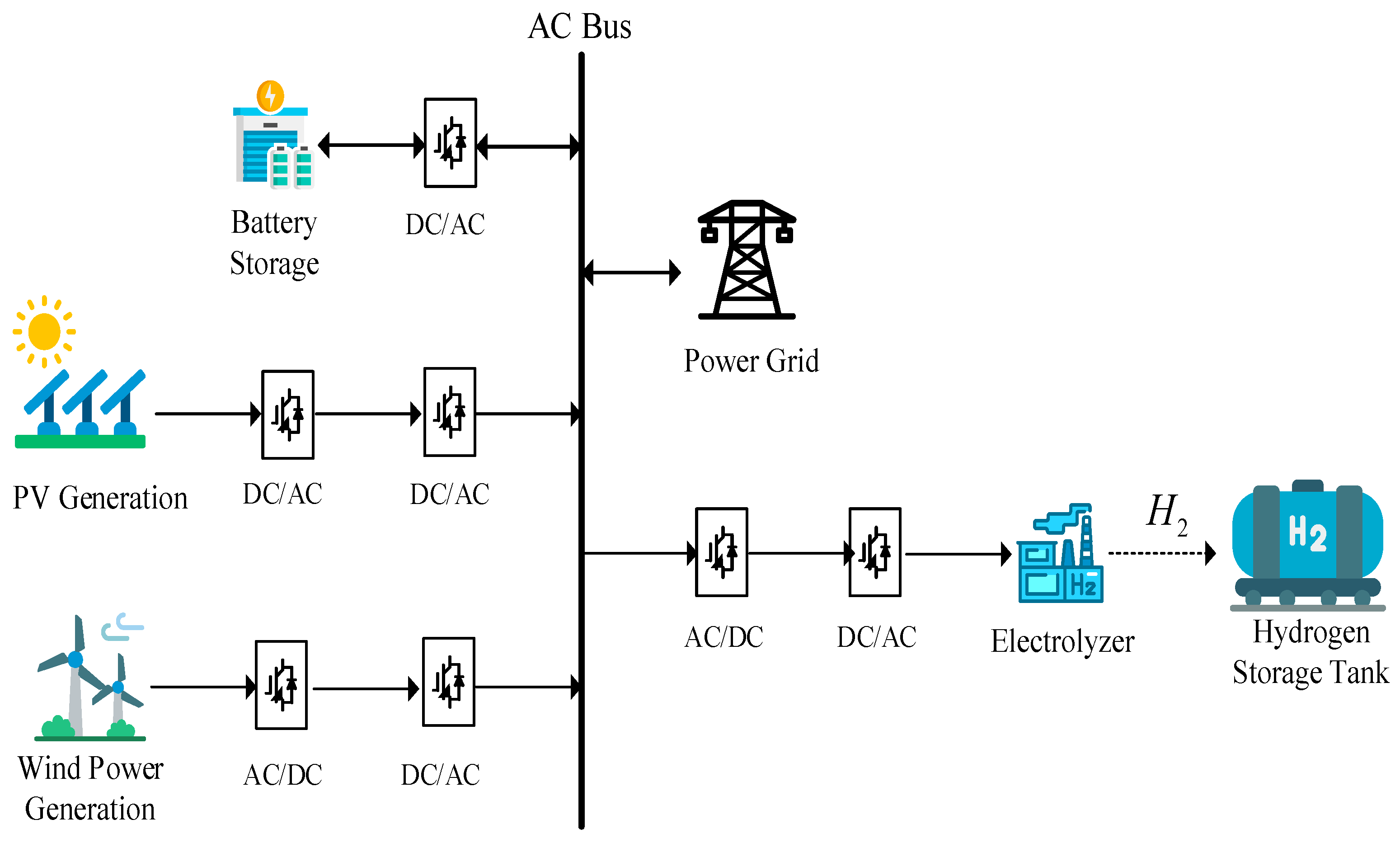
As shown in
Figure 1,the wind–PV coupled hydrogen production system consists primarily of a wind power generation system, a photovoltaic (PV) power generation system, a battery energy storage system (BESS), and a water electrolysis hydrogen production system, with the external grid connected via an AC bus. The system integrates electrical energy from PV, wind, and battery storage; it converts power into AC via DC/AC converters for grid integration and into DC via AC/DC converters to supply the electrolyzers. The hydrogen generated from the water electrolysis reaction is subsequently stored in hydrogen tanks. This configuration achieves the coordinated utilization and conversion of multiple energy sources, thereby enhancing comprehensive energy utilization efficiency.
2.1.1. Topology of the Hydrogen Production System
The topology of the wind–PV coupled hydrogen production system developed in this study is illustrated in
Figure 1. The system integrates wind generation (wind), photovoltaic generation (PV), a battery energy storage system (BESS), and an alkaline water electrolysis (AEL) unit for hydrogen production. The system is connected to the external power grid via an AC bus, and power is exchanged among units through power electronic converters, enabling bidirectional or unidirectional power flows. The core energy-management logic is to exploit wind–PV complementarity to supply green electricity to the electrolyzer, while the BESS mitigates power fluctuations and performs energy time-shifting, and the external grid serves as backup flexibility support and an interface for economic arbitrage. The present work focuses on the power-to-hydrogen side of the system, in which hydrogen is produced, stored, and delivered to downstream demand. Fuel cell-based hydrogen reconversion is beyond the scope of the current day-ahead scheduling framework.
2.1.2. Lifecycle Cost Objective Function
To jointly optimize system economics and equipment durability, a day-ahead scheduling model is established with the objective of minimizing the lifecycle operating cost over the scheduling horizon. Let
denote the horizon length (24 h),
denote the dispatch interval, and
denote the number of discrete intervals. The objective function is formulated as:
where
,
,
,
,
and
denote the renewable-generation O&M cost, BESS O&M cost, electrolyzer O&M cost, grid transaction cost, hydrogen revenue, and equivalent cycling-related degradation cost in interval
, respectively.
The renewable-generation and BESS O&M costs are expressed as
The electrolyzer operation and cycling-related degradation costs are given by
The grid transaction cost is defined as
If hydrogen storage and delivery are explicitly modeled, the hydrogen-production and revenue terms are written as
where
and
are the wind and PV power outputs, respectively;
and
are the charging and discharging powers of the BESS;
is the aggregate electrolyzer power;
and
are the electricity purchase and selling tariffs;
and
are the corresponding grid purchasing and selling powers;
is the electricity-to-hydrogen conversion coefficient; and
is the hydrogen selling price.
In practical engineering applications, the equivalent degradation cost associated with electrolyzer startup and shutdown may vary with stack aging condition. However, since the present study focuses on day-ahead scheduling rather than long-term lifetime prediction, the cycling-related degradation is represented by equivalent startup/shutdown cost coefficients so that the impact of frequent start–stop operation can be explicitly incorporated into the optimization model while maintaining tractability. Continuous-operation degradation, such as partial-load stress and long-term electrochemical aging, is not explicitly modeled in the current formulation and is regarded as a higher-order effect to be addressed in future work.
2.1.3. Multi-Dimensional Physical Operating Constraints of the System
To ensure the engineering feasibility of the scheduling strategy, the model must strictly satisfy the following physical and logical constraints:
Power balance constraint. Maintaining real-time supply–demand balance to ensure frequency stability:
Equation (9) enforces the instantaneous power balance of the grid-connected wind–PV hydrogen production system. It ensures that the total incoming electric power from renewable generation, grid purchasing, and BESS discharging is equal to the total outgoing electric power consumed by the electrolyzer system, BESS charging, and grid selling at each dispatch interval.
Safe operating boundary constraints. To prevent equipment overloading, the power output of each unit must be constrained within its allowable range:
Equations (9)–(13) impose the safe operating limits of the renewable-generation units and the BESS. The wind and PV outputs are bounded by their feasible power ranges, while the BESS charging and discharging powers are limited by the converter rating. The mutually exclusive binary-state constraint prevents simultaneous charging and discharging in the same dispatch interval.
Electrolyzer physical constraints. To avoid excessive hydrogen-in-oxygen at low load and overload operation, the electrolyzer must satisfy power upper/lower bounds and ramp-rate constraints:
Equations (15)–(18) describe the physical operating constraints of the electrolyzer system. The aggregate electrolyzer power is linked to the number of online units so that zero power is feasible when all units are shut down, whereas each online unit is required to operate above its minimum safe load. The ramping constraints further limit adjacent-interval power changes to avoid excessive load swings and unstable operation.
State-of-charge (SOC) dynamics constraint. To prevent battery overcharge and overdischarge, a discrete-time SOC model is established as follows:
Equations (19) and (20) describe the SOC dynamics of the BESS and restrict the SOC within its safe operating range. These constraints ensure intertemporal energy conservation of the storage system and prevent overcharge or overdischarge.
Hydrogen storage capacity constraints. The hydrogen storage inventory evolves according to the hydrogen production and delivery process, i.e.,
where
is the hydrogen inventory in the storage tank at interval
,
is the hydrogen production, and
denotes the hydrogen sold or delivered to downstream demand. These constraints ensure inventory conservation, safe storage operation, and end-of-horizon feasibility.
Equation (21) constrains the hydrogen inventory within the admissible storage range, and the end-of-horizon inventory condition avoids obtaining an artificially optimistic schedule by depleting the hydrogen tank at the end of the day-ahead horizon
Unit-commitment logical constraints.
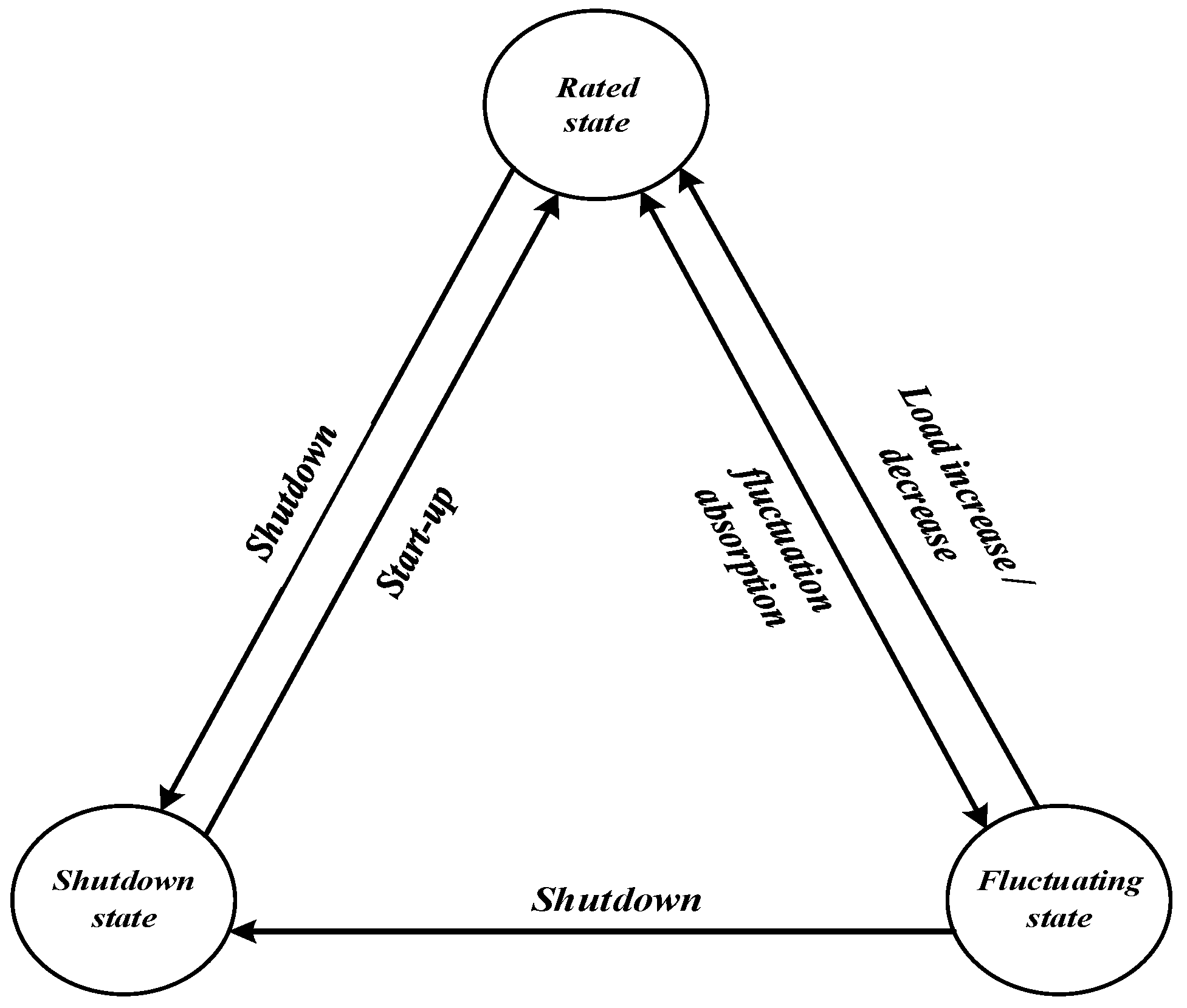
Figure 2 illustrates the logical operating-state transitions of the electrolyzer units considered in the scheduling model. In this work, each unit is categorized into three states, namely rated operation, fluctuating operation, and shutdown. The rated state represents stable power output with relatively low degradation exposure, whereas the fluctuating state represents the regulating condition in which the unit absorbs short-term power variation and is therefore associated with higher operational stress. The shutdown state indicates that the unit is offline and produces no hydrogen. The arrows in
Figure 2 denote the admissible transitions among these states and provide the physical interpretation of the logical constraints in Equations (20)–(23), including start-up, shutdown, and minimum up/down-time enforcement:
where
and
denote the minimum up-time and minimum down-time, respectively. This set of constraints translates the discrete operational characteristics of the physical equipment into logical constraints within a mixed-integer programming formulation, providing the mathematical basis for lifecycle cost evaluation.
Equations (23)–(26) formulate the unit-commitment logic of the electrolyzer array. Equation (23) links startup and shutdown events to the change in the running state of unit . Equation (24) prevents simultaneous startup and shutdown in the same interval. Equation (25) enforces the minimum up-time after a startup event, while Equation (26) enforces the minimum down-time after a shutdown event. Together, these constraints translate the discrete operating characteristics of practical electrolyzer units into a mixed-integer scheduling formulation and provide the basis for evaluating the equivalent cycling-related degradation cost.
2.2. Hierarchical Optimal Scheduling Strategy Considering Health States
To address the challenge of jointly optimizing system economics and equipment durability across multiple time scales, this paper proposes a bi-level coupled scheduling architecture. The upper level performs time-of-use (TOU)-based macro-level energy-flow optimization to respond to grid price signals and determine the optimal power exchange with the grid and the aggregate hydrogen production command. The lower level implements health-state-based micro-level array control that optimally allocates the upper-level aggregate power command to individual electrolyzer units, and minimizes the overall lifetime loss of the array via a health-aware non-uniform rotation mechanism.
Although a single-level formulation could in principle co-optimize system-level energy scheduling and unit-level electrolyzer allocation, such a formulation would substantially increase the dimensionality of the mixed-integer model because each dispatch interval would simultaneously require system-level energy-flow decisions, unit-level power-allocation variables, state-transition binaries, and rotation-related logical constraints. More importantly, the two subproblems correspond to different decision abstractions: the upper layer determines the economically optimal aggregate electrolyzer power trajectory under TOU electricity prices, whereas the lower layer redistributes the prescribed aggregate power among parallel units to shape degradation exposure and lifetime balance within the array. Therefore, separating the problem into upper and lower layers preserves the optimal system-level power trajectory while enabling health-aware unit-level control without repeatedly solving the full system-level MILP at the unit scale. This decomposition improves model interpretability, computational tractability, and engineering implementability.
Regarding the coupling and dynamic consistency between the two layers, the upper and lower layers are coupled through the aggregate hydrogen-production power command. The upper layer determines the economically optimal system-level total electrolyzer power trajectory under the shared constraints of power balance, grid interaction, BESS dynamics, hydrogen storage, and electrolyzer operating limits. The lower layer does not re-optimize the system-level energy flow; instead, it decomposes the upper-layer aggregate power command into unit-level power allocations using the health-aware non-uniform rotation mechanism. Therefore, the system-level optimal power trajectory is preserved, while only the spatial distribution of operational stress within the electrolyzer array is adjusted. In this way, dynamic consistency is maintained between the macro-level dispatch and the micro-level array control.
2.2.1. TOU-Based Macro-Level Economic Scheduling
The core of the upper-level strategy is to construct a price-responsive energy management mechanism (Price-Responsive Energy Management). Based on the peak–valley characteristics of time-of-use electricity prices, the source–grid–load–storage energy flows are dynamically adjusted to minimize electricity purchase costs and maximize electricity selling revenue.
To ensure secure power transfer and logical consistency, the power exchange between the system and the grid must satisfy the following physical boundary constraints and mutually exclusive state constraints:
Mutually exclusive grid-interaction constraint. To avoid unnecessary power circulation, the system must operate in either the electricity-purchasing or electricity-selling mode at any given time. This constraint is formulated as follows:
where
are the binary state indicator and
is the upper capacity limit of the point of common coupling (PCC).
Time-segment-based energy-flow direction criteria: Based on the grid time-of-use (TOU) pricing scheme, the energy management strategy is dynamically adjusted across three distinct periods. During the off-peak period (valley price), a “storage- and production-maximization” strategy is implemented, and the system operates in a “net-load” mode. The system prioritizes purchasing low-priced grid electricity to charge the energy storage system (ESS) to a high state-of-charge (SOC) level. Meanwhile, if the renewable output is insufficient to maintain the electrolyzer’s minimum safe power, grid electricity is utilized to support continuous hydrogen production. To avoid economic losses, electricity export to the grid is strictly prohibited during this period.
During the shoulder period (flat price), the system adopts a “dynamic self-balancing” strategy, operating in a “self-consumption” mode. Renewable generation is prioritized to meet the hydrogen production demand; surplus power is stored in the ESS, and any deficit is compensated by storage discharging. In this stage, grid interaction is treated as the last balancing resort and is minimized to ensure system autonomy.
During the peak period (high price), the strategy switches to “profit-oriented discharging,” and the system operates in a “net-source” mode. To avoid high operational costs, electricity purchases from the grid are strictly prohibited, and any hydrogen production shortfall is covered solely by the ESS. Furthermore, when renewable and storage resources are abundant, the system maximizes electricity export to the grid to capture peak–valley arbitrage revenue.
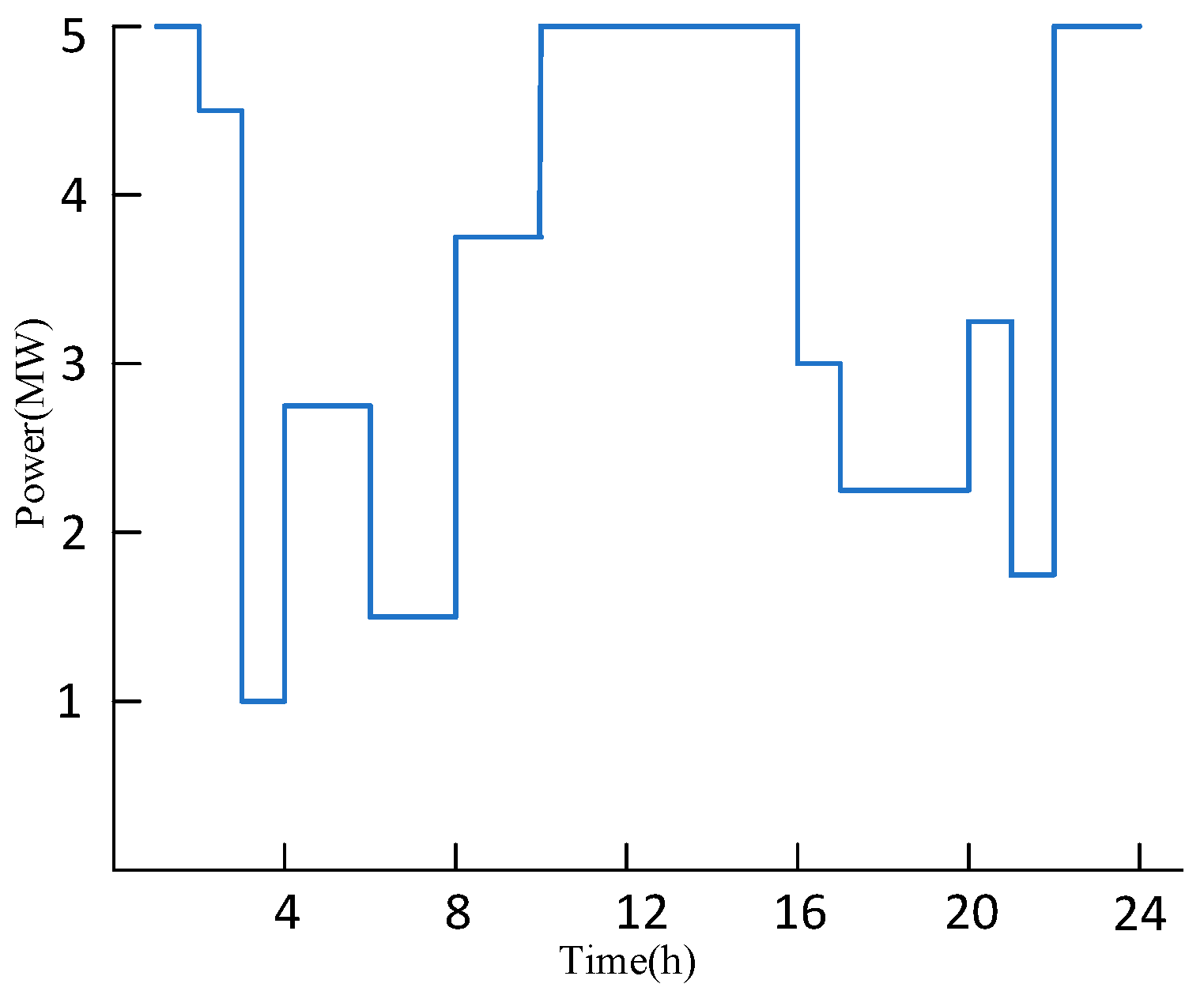
The outputs of the upper-layer optimization include the grid purchasing/selling schedule, the BESS charging/discharging trajectory, and, most importantly, the aggregate electrolyzer power command at each scheduling interval, which is then passed to the lower layer as the unit-allocation reference.
2.2.2. Health-Aware Micro-Level Rotation Control for Electrolyzers
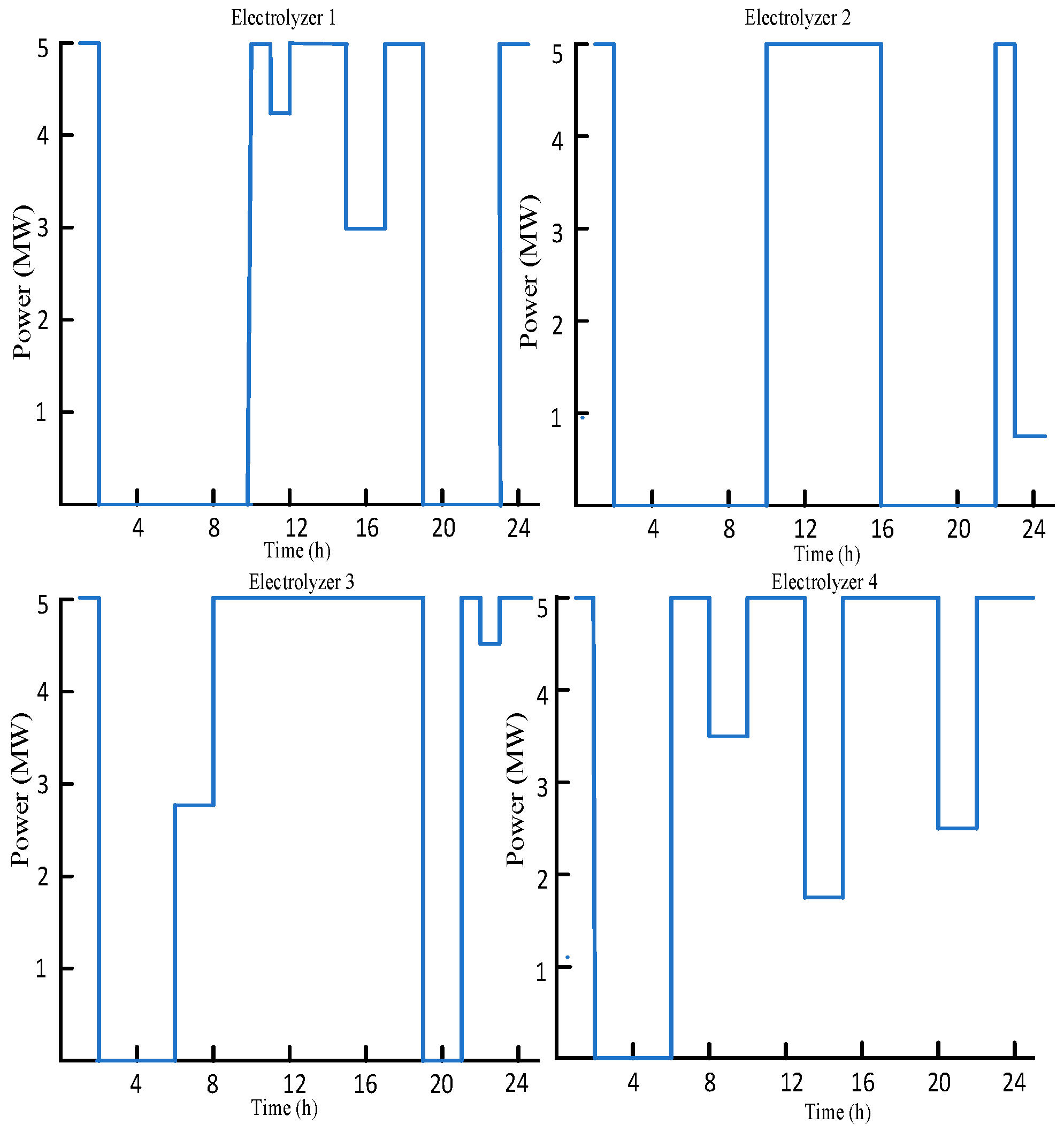
To address the synchronous aging of electrolyzer arrays caused by conventional equal power-sharing strategies, the lower-level controller implements a health-aware non-uniform rotation mechanism. The central principle of this mechanism is fixed-point fluctuation absorption, which aims to isolate degradation risks by decoupling the operating conditions across the array.
At each time interval, the lower-layer allocation must satisfy the power-conservation requirement that the sum of unit-level electrolyzer powers equals the aggregate power command issued by the upper layer. Hence, the lower layer only redistributes the prescribed total power among individual units and does not alter the system-level dispatch result.
Equation (30) enforces the coupling consistency between the two layers. The lower layer does not modify the aggregate electrolyzer power command determined by the upper layer; instead, it only redistributes this prescribed total power among individual electrolyzer units.
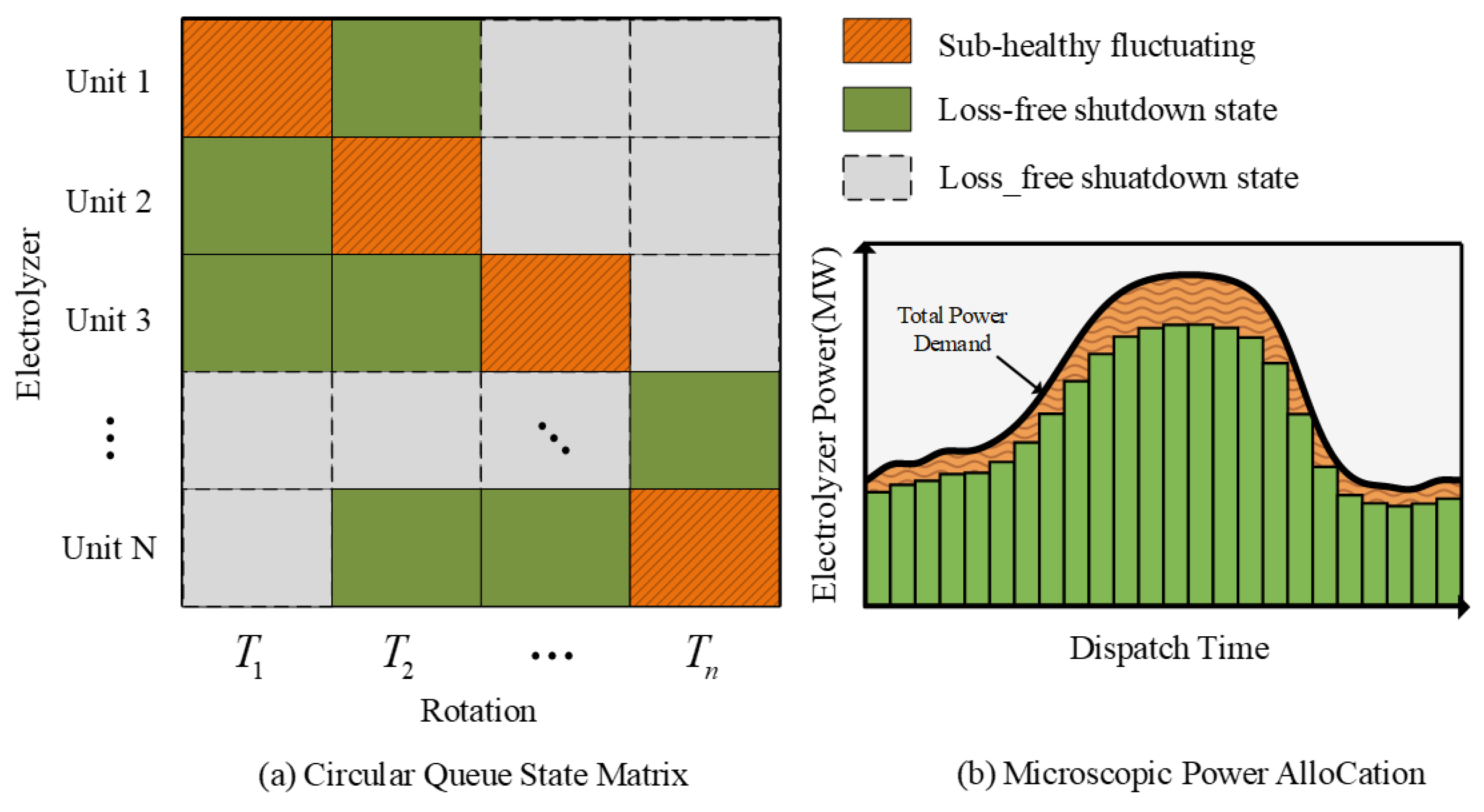
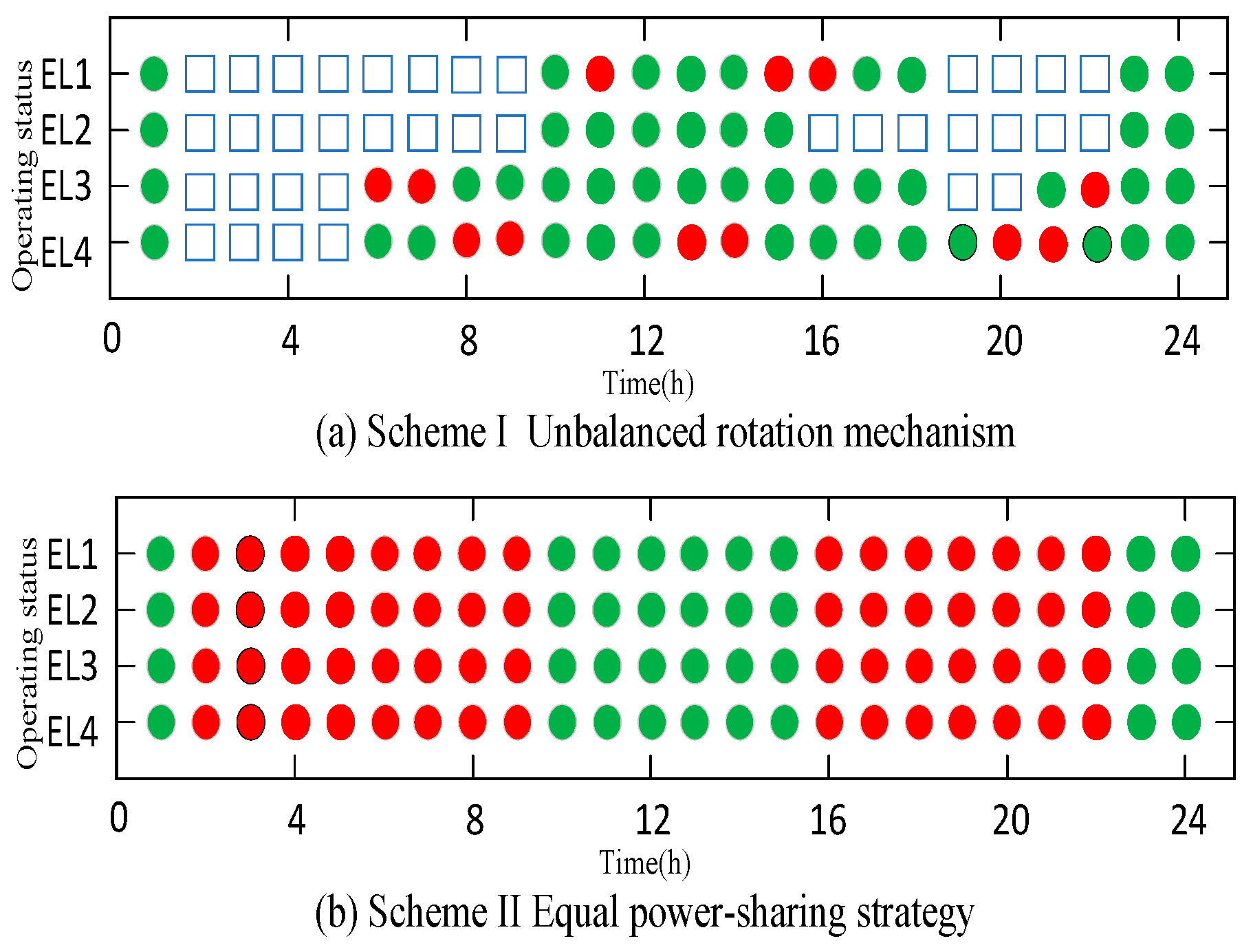
Specifically, the mechanism discretizes electrolyzer operating modes into three representative states: a healthy rated state, a sub-healthy fluctuating state, and a loss-free shutdown state. Unlike the baseline strategy that distributes power fluctuations across all units, the proposed strategy follows a “maximize rated operation” principle when allocating the upper-level aggregate power command. The allocation logic ensures that, at any time, high-frequency power fluctuations are concentrated on a single regulating unit, while the vast majority of units in the array remain in benign rated-operation or shutdown states. The mathematical formulation of this allocation logic is given as follows:
Equations (31)–(34) describe the lower-layer health-aware non-uniform allocation rule. Most online electrolyzer units are maintained at the rated operating state, while the remaining fluctuation is absorbed by at most one regulating unit. Here, denotes the number of units operating at rated power, denotes the number of shutdown units, is the rated power of one electrolyzer unit, is the power assigned to the regulating unit, and indicates whether a regulating unit exists. In this way, short-term power fluctuation is spatially isolated within the array, so that most units remain in benign rated or shutdown states.
To prevent a specific regulating unit from excessive degradation due to long-term exposure to fluctuations, the system integrates an array temporal rotation strategy based on circular-queue logic, as illustrated in
Figure 3. By setting the rotation period
, the physical indices of the electrolyzers are cyclically shifted among the “rated position,” “fluctuation position,” and “shutdown position.” This mechanism achieves two key objectives: it realizes spatial isolation of operating conditions at the micro level; and it ensures that the accumulated state of health (SOH) of all units in the array tends to converge over the full life cycle at the macro level. By avoiding the “weakest-link effect,” in which overuse of a single unit causes premature retirement of the entire system, this strategy effectively extends the overall service life of the hydrogen production plant.
2.3. MILP Solution Algorithm Based on Time-Series Aggregation
The hierarchical optimal scheduling model formulated above contains a large number of binary variables representing equipment start-up/shutdown states and electricity purchasing/selling states. As the scheduling time resolution is refined from an hourly to a minute-level scale and the electrolyzer array size increases, the number of integer variables in the model grows exponentially. When solved directly, this high-dimensional mixed-integer linear programming (MILP) problem suffers from a severe combinatorial explosion, and the computational time often fails to meet the stringent timeliness requirements of day-ahead scheduling. To address this challenge, this paper introduces time-series feature aggregation (TFA) and accelerates the solution process by constructing a dimensionality-reduction mapping model.
2.3.1. Time-Domain Dimensionality Reduction Mapping Mechanism
For a continuous variable
, where
, the aggregated variable in period
is defined by the mean-value mapping
This mapping preserves the representative intertemporal trend of the day-ahead scheduling problem while reducing the dimensionality of the optimization model. However, it also exhibits a low-pass-filtering effect and may smooth short-duration high-frequency renewable-power spikes. Therefore, the aggregated model is intended to capture the dominant scheduling pattern rather than to reproduce all instantaneous fluctuations at the original temporal resolution.
2.3.2. Constraint Aggregation and Reconstruction
In the aggregated low-dimensional space, the original physical constraints must be conservatively reconstructed to preserve engineering feasibility after decompression. In particular, the BESS SOC cannot be directly averaged because it is a temporally accumulated state variable. Therefore, an inter-period recursive reconstruction is adopted. In addition, a conservative safety margin
is introduced to compensate for possible intra-group fluctuation underestimation caused by the aggregation smoothing effect. In this work,
is treated as a parameter calculated from the fluctuation characteristics of renewable generation, rather than as an optimization variable. This treatment improves the robustness of the reconstructed schedule when it is mapped back to the original time scale.
Second, the temporal recursive reconstruction of the state of charge (SOC) of the energy storage system constitutes a key challenge in the aggregation algorithm. Because the SOC exhibits temporal accumulation characteristics, it cannot be aggregated via simple averaging, and an inter-group recursive relationship must be established. Let
denote the state of charge at the initial time of the
-th aggregated period; its dynamic equation is reconstructed as follows:
In addition, to compensate for the risk of intra-group fluctuation violations caused by the aggregation smoothing effect, a slack variable
is introduced to tighten the capacity constraint [
35,
37,
38,
39]. Specifically, it is required that
must lie within the interval
. Here,
denotes a safety margin calculated based on the fluctuation rates of wind and photovoltaic power, and this constraint ensures that when the solution is restored to the original time scale, the SOC trajectory does not exceed its physical limits.
As a result, the reduced-order model may underestimate short-duration fluctuation peaks, which can affect the representation of instantaneous BESS regulation pressure, short-term SOC boundary occupation, and transient fluctuation exposure of the electrolyzer system; similar issues have also been discussed in previous studies on aggregated time-series modeling and storage-coupled energy systems [
34,
36,
37,
38]. Existing studies have shown that time-series aggregation may weaken extreme-period information and peak-sensitive operational constraints, especially in storage-coupled systems. Therefore, in this work, the aggregation-induced effect is treated as a tractability–accuracy trade-off, and conservative reconstruction with slack variable and safety margin is adopted to improve engineering feasibility.
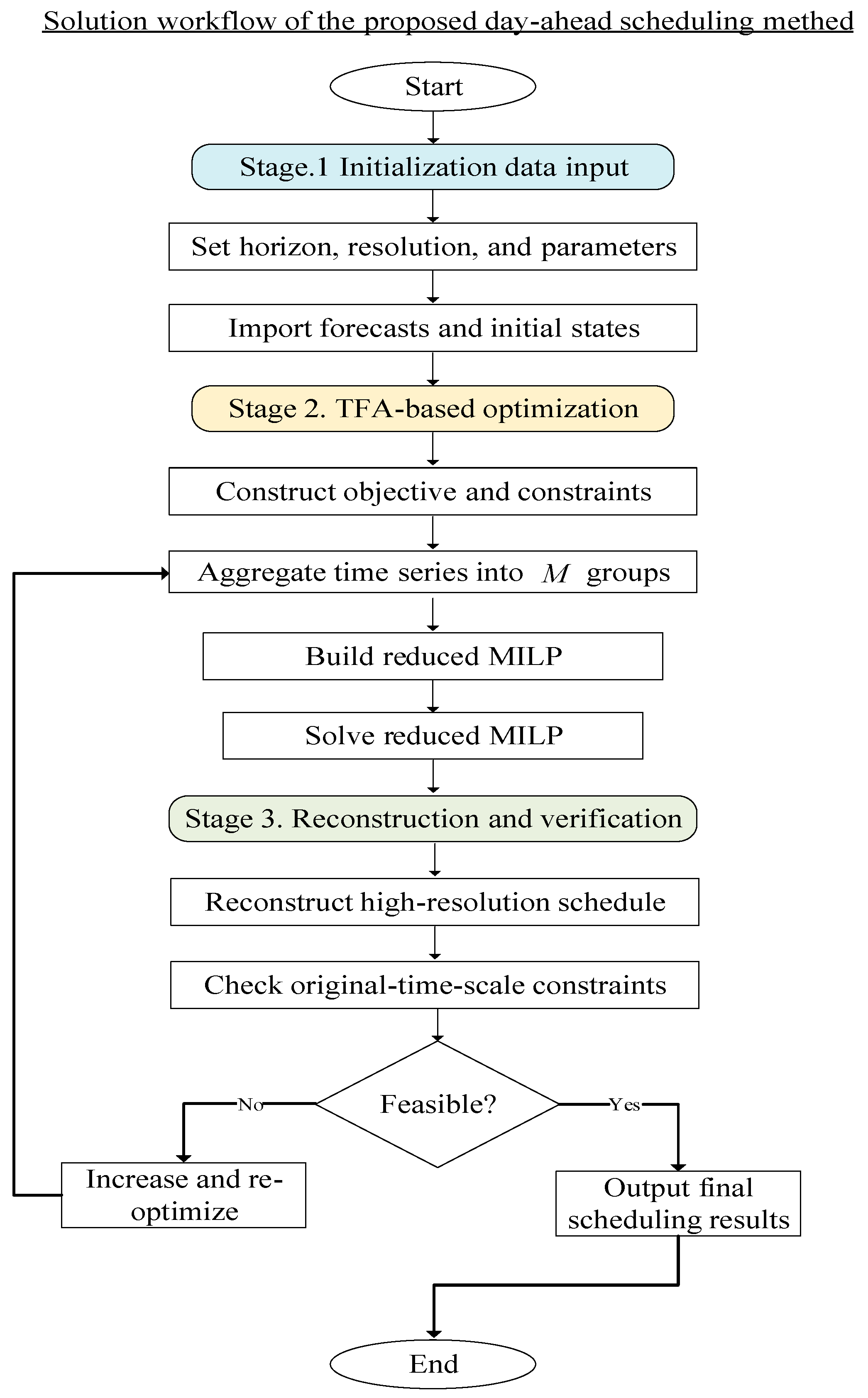
2.3.3. Solution Procedure
The implementation process of the proposed day-ahead scheduling strategy is structured as a rigorous methodological closed loop, as illustrated in
Figure 4. The solution procedure is detailed as follows:
Stage 1: System initialization and data configuration. The scheduling horizon is set to h, and the time resolution is specified as min. Meanwhile, the topological parameters of the wind–PV hydrogen production system are instantiated, including the electrolyzer array size, conversion efficiency, degradation penalty coefficient, and time-of-use (TOU) electricity tariff. By importing the day-ahead wind power forecast series , photovoltaic power forecast series , and load demand curve, the boundary conditions required for optimization are established;
Stage 2: Model construction and optimization. The system formulates the lifecycle operating cost and physical operational constraints according to Equations (1)–(38). To alleviate computational complexity, the TFA operator is applied to transform the high-dimensional original model into a reduced MILP form. The reduced MILP model was implemented in MATLAB (version R2026a), using YALMIP, optimization modeling toolbox for MATLAB, as the modeling interface and Gurobi Optimizer (Beaverton, OR, USA), Gurobi as the solver. The branch-and-bound algorithm was then executed to obtain the optimal decision variables for the aggregated period groups;
Stage 3: Solution reconstruction and feasibility verification. The aggregated solution is mapped back to the original time scale through linear interpolation, which serves to ensure consistency between the reduced-order optimization result and the executable high-resolution schedule. The reconstructed schedule is then checked against the original physical and logical constraints, especially those related to electrolyzer start-up and shutdown. If any violation is detected, the aggregation granularity is refined and the optimization is repeated until a feasible schedule is obtained.
4. Discussion
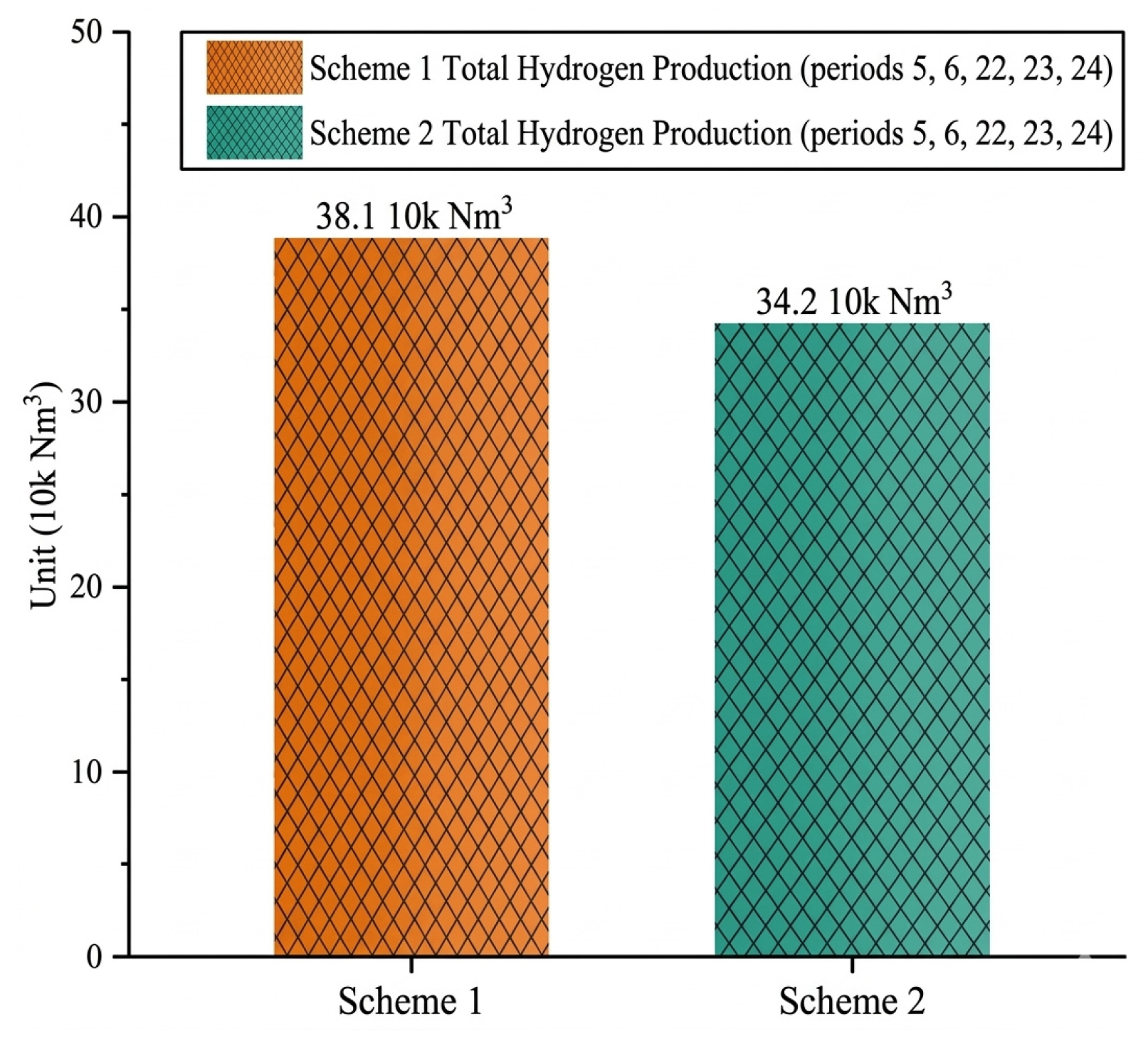
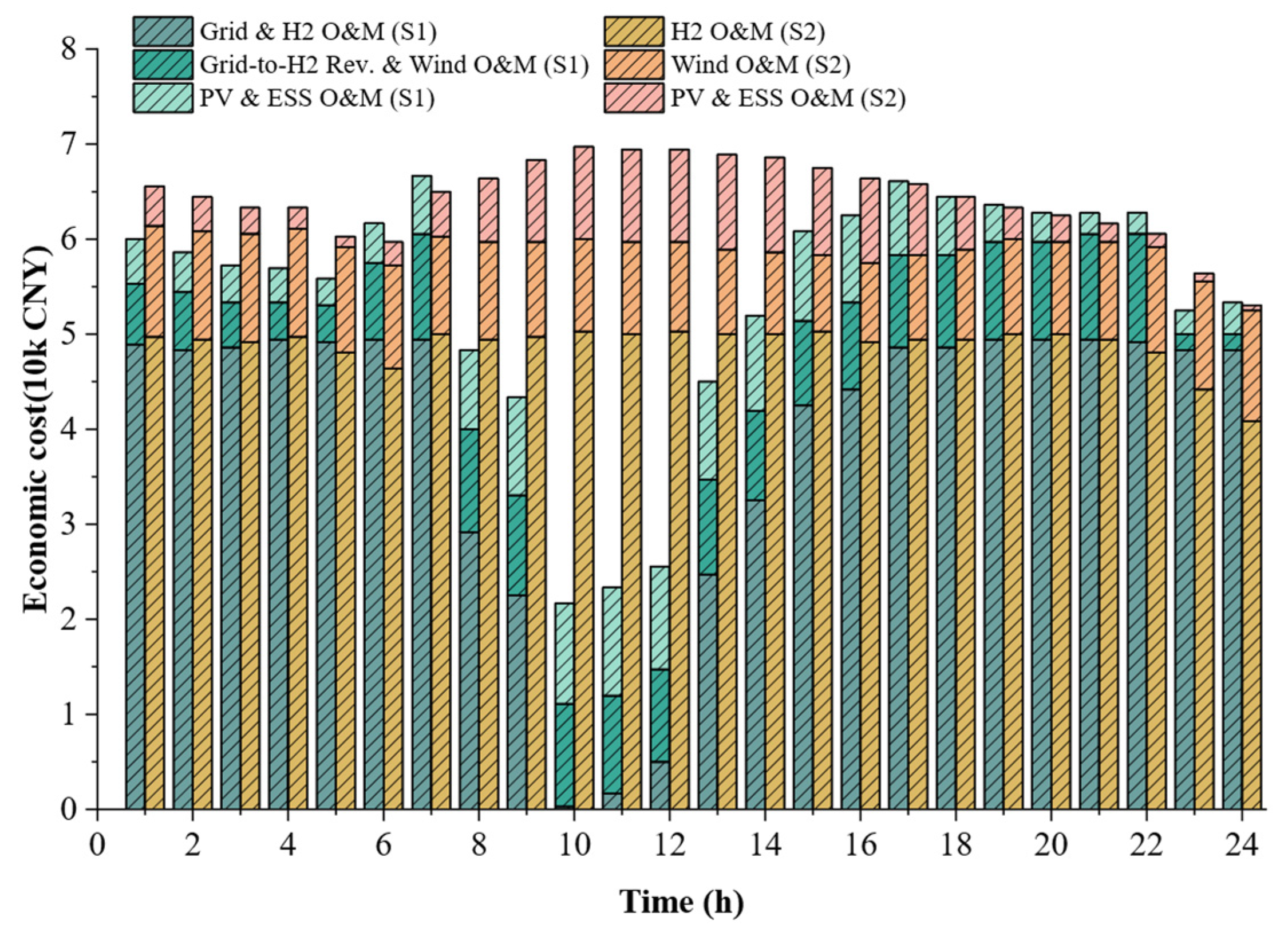
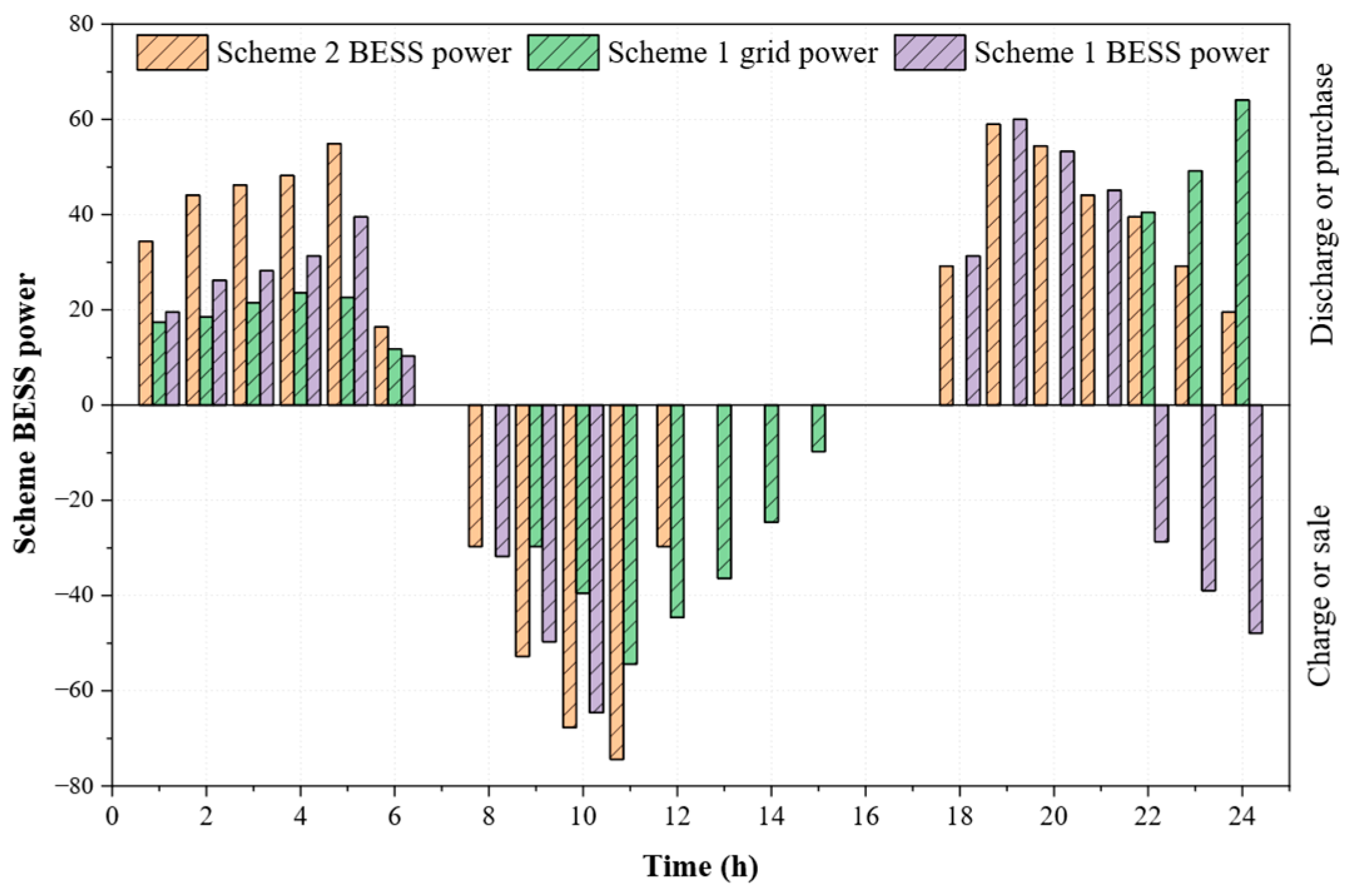
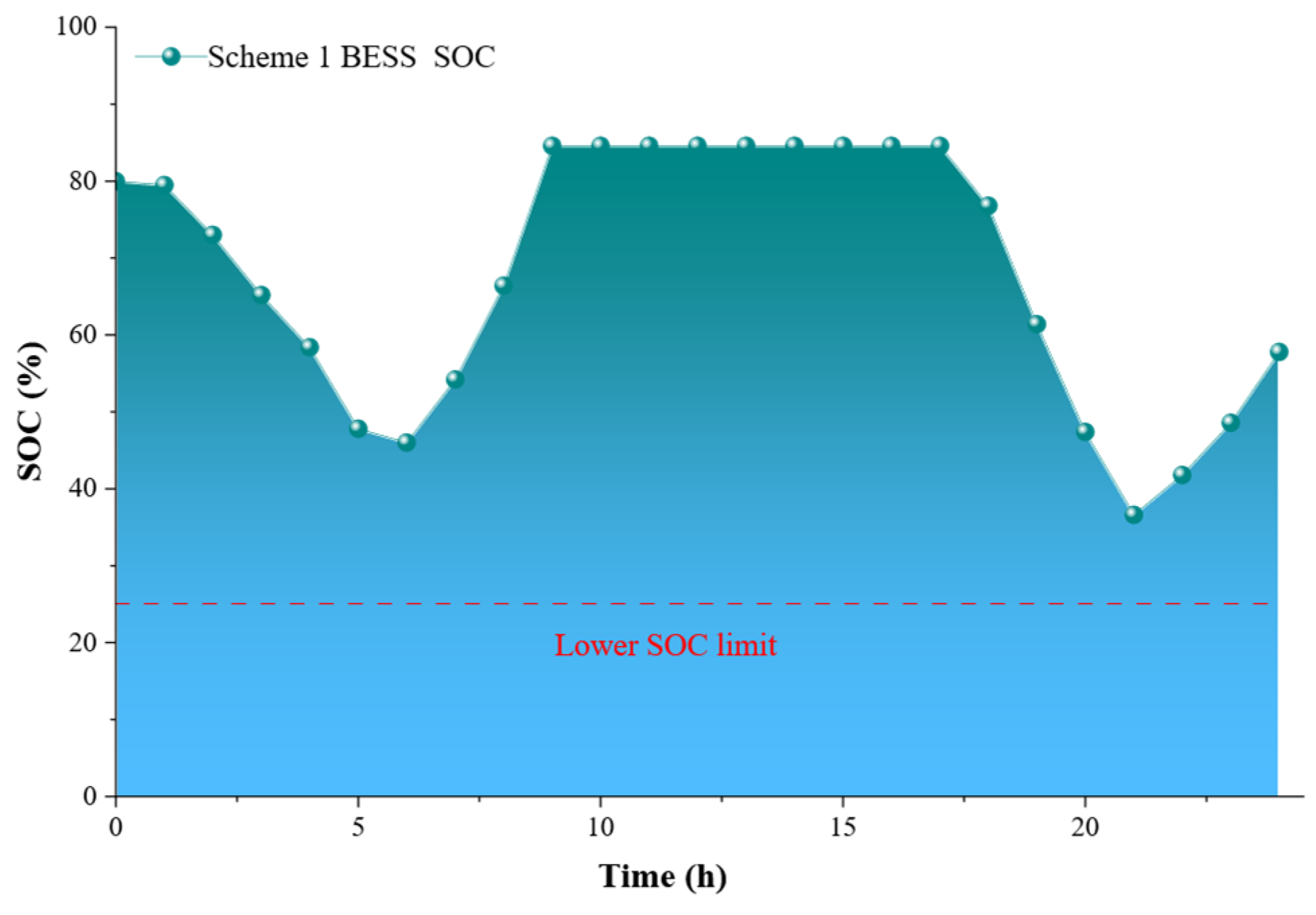
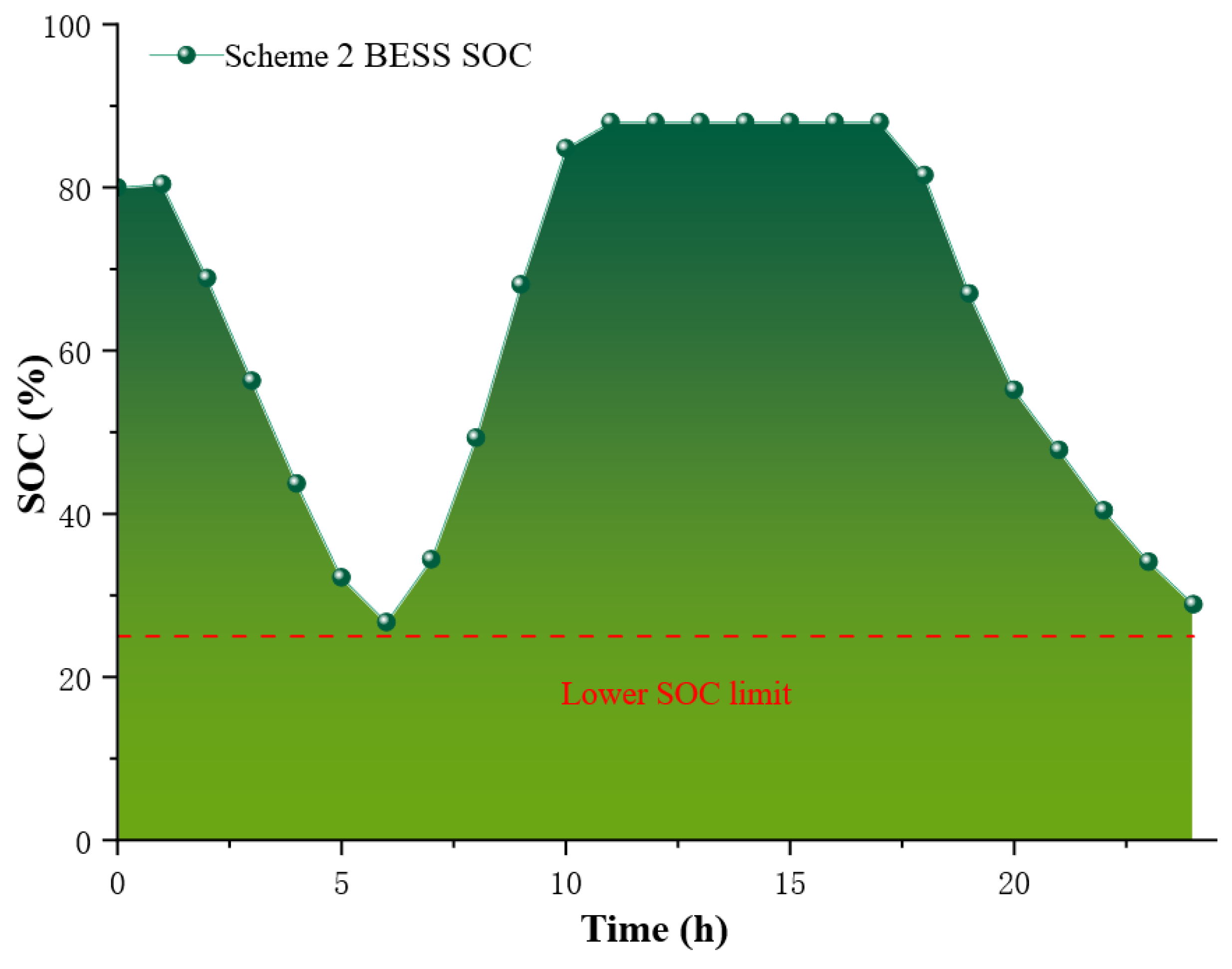
The results indicate that the superiority of the proposed hierarchical day-ahead scheduling strategy arises from the coordinated action of the upper-layer TOU-responsive dispatch and the lower-layer health-aware non-uniform rotation mechanism. At the system level, the upper layer converts electricity-price signals into executable intertemporal energy-allocation decisions. By purchasing electricity and charging the BESS during valley-price periods, and by suppressing electricity purchase while promoting BESS discharge and grid export during peak-price periods, the strategy improves the SOC safety margin and maintains hydrogen-production continuity under renewable-scarce conditions. This mechanism explains why hydrogen production during low wind–PV generation periods increases from 342,000 Nm3 to 381,000 Nm3.
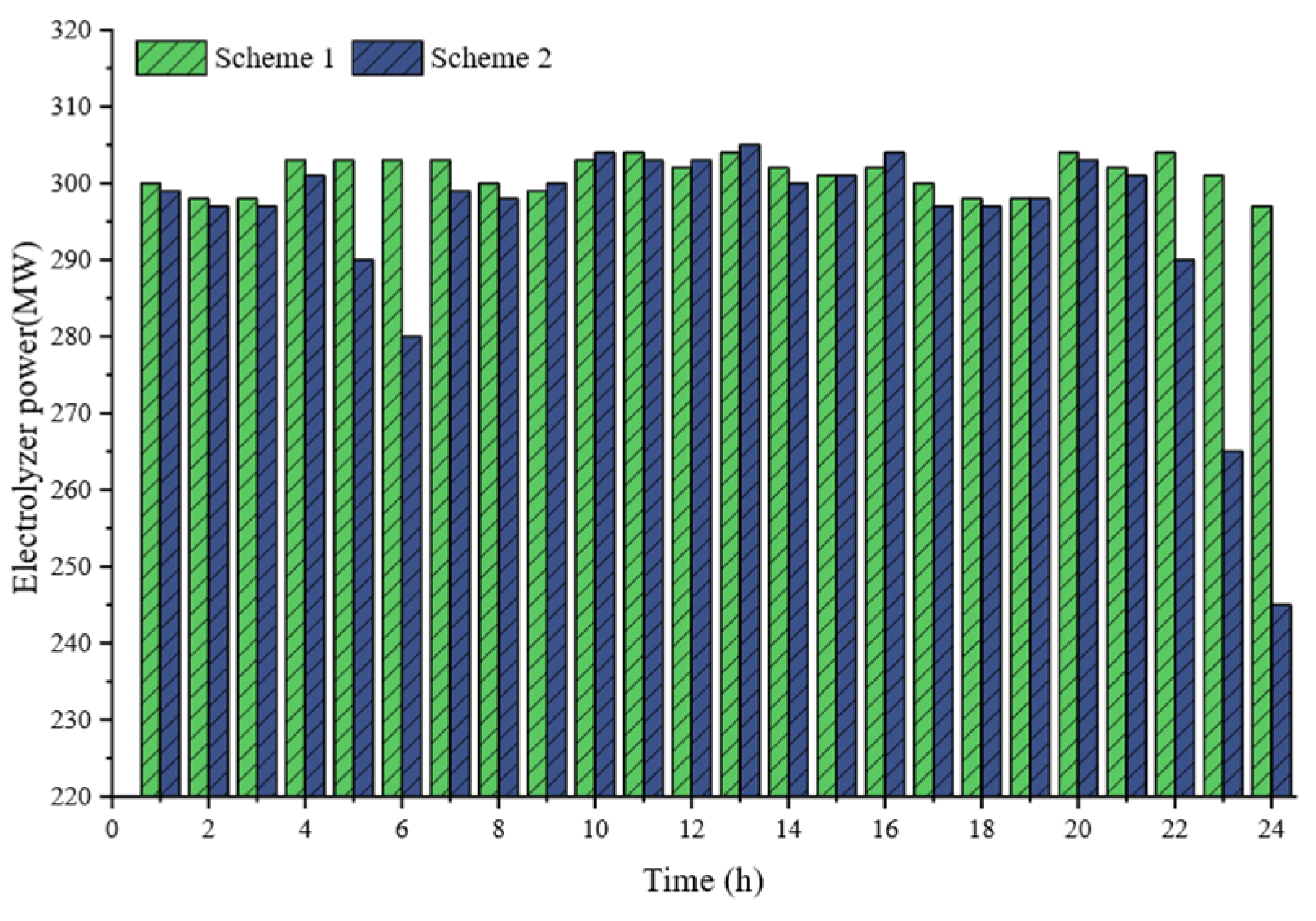
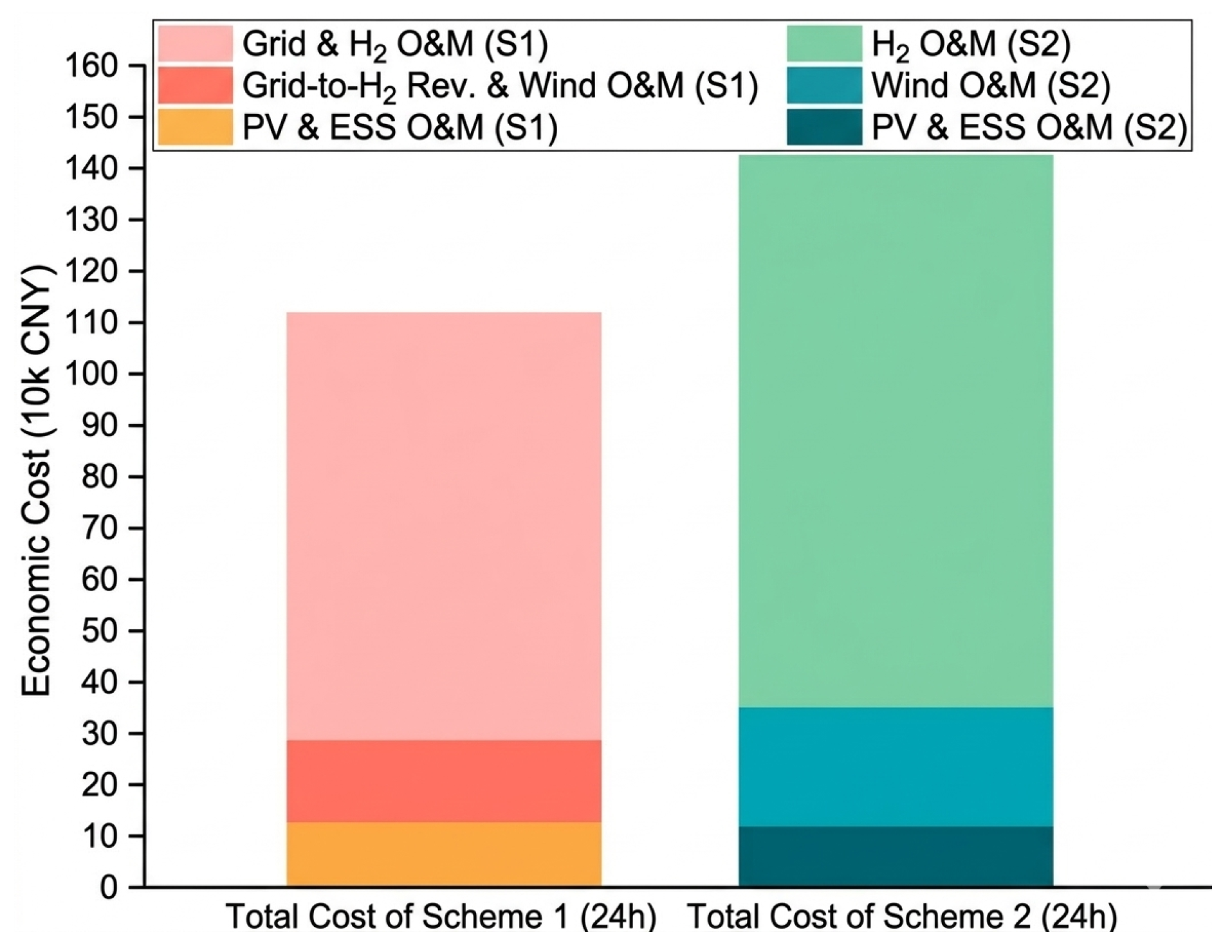
At the array level, the lower-layer control mitigates cycling-related degradation by spatially isolating short-term fluctuation exposure. Instead of distributing fluctuation uniformly across all online units, the proposed mechanism concentrates the residual regulation burden on at most one unit while the remaining units stay in rated or shutdown states. Through queue-based rotation, the regulating burden is periodically shifted among units, which prevents long-term overuse of a specific unit and mitigates the weakest-link effect. This mechanism is consistent with the observed reduction in fluctuating-state exposure from 62.5% to 12.5% and the decrease in average daily start–stop frequency from 8.0 to 4.8. As a result, the equivalent cycling-related degradation penalty is reduced by about 40%, which becomes a major contributor to the overall 27.3% reduction in lifecycle operating cost.
From the perspective of methodological positioning, the main advantage of the proposed framework lies in its coordinated treatment of system-level economic scheduling and array-level health management. Compared with conventional TOU-based scheduling approaches that treat the electrolyzer plant as an aggregated controllable load, the present method explicitly captures unit-level health imbalance and synchronous-aging risk. Compared with array-control-oriented balancing or rotation strategies, the proposed framework embeds health-aware unit allocation into a grid-connected day-ahead economic dispatch process, rather than treating it as an isolated local control problem. In addition, by introducing time-series feature aggregation, the method remains applicable to engineering-scale day-ahead optimization while improving computational tractability.
From the methodological perspective, the main advantage of the proposed framework lies in its coordinated treatment of system-level economic scheduling and array-level health management. Compared with conventional TOU-based scheduling approaches that treat the electrolyzer plant as an aggregated controllable load, the present method explicitly captures unit-level health imbalance and synchronous-aging risk. Compared with array-control-oriented balancing or rotation strategies, the proposed framework embeds health-aware unit allocation into a grid-connected day-ahead economic dispatch process rather than treating it as an isolated local control problem. In addition, the use of time-series feature aggregation improves the tractability of the engineering-scale mixed-integer optimization problem.
Despite these advantages, several limitations remain. First, the present study is conducted in a deterministic day-ahead setting and does not explicitly consider forecast uncertainty. Second, the degradation term is represented by an engineering-oriented equivalent cycling penalty, rather than by a detailed aging-evolution model that depends on thermal history, partial-load operation, and stack condition. Third, although time-series aggregation improves computational efficiency, some short-term fluctuation information may be smoothed, and the resulting accuracy–efficiency trade-off has not yet been systematically quantified. Future work may therefore focus on uncertainty-aware scheduling, more detailed degradation modeling, and sensitivity analysis of the aggregation strategy and rotation parameters.
5. Conclusions
This paper proposes a hierarchical day-ahead scheduling strategy for a grid-connected wind–PV hydrogen production system under TOU electricity prices. The framework combines upper-layer price-responsive economic scheduling with lower-layer health-aware non-uniform rotation control, while incorporating lifecycle operating-cost modeling, unit-commitment logic, and time-series feature aggregation. The case study results show that the proposed strategy improves both economic performance and equipment durability. Compared with the benchmark strategy, hydrogen production during renewable-scarce periods increases from 342,000 Nm3 to 381,000 Nm3, the fluctuating-state ratio decreases from 62.5% to 12.5%, and the average daily start–stop frequency declines from 8.0 to 4.8. Consequently, the equivalent cycling-related degradation penalty is reduced by about 40%, and the lifecycle operating cost decreases by 27.3%.
The case study results show that the proposed strategy improves both economic performance and equipment durability. Compared with the benchmark strategy, hydrogen production during renewable-scarce periods increases from 342,000 Nm3 to 381,000 Nm3, the fluctuating-state ratio decreases from 62.5% to 12.5%, and the average daily start–stop frequency declines from 8.0 to 4.8. Consequently, the equivalent cycling-related degradation penalty is reduced by about 40%, and the lifecycle operating cost decreases by 27.3%.
These results indicate that the upper-layer TOU-based dispatch primarily improves cross-period energy utilization and hydrogen-production continuity, whereas the lower-layer health-aware rotation mechanism mainly mitigates synchronous aging and cycling-related degradation exposure at the array level. Their coordination enables simultaneous improvement in economic performance and durability while maintaining engineering feasibility. Nevertheless, the present framework is still developed for deterministic day-ahead scheduling, the degradation model remains engineering-oriented, and the accuracy–efficiency trade-off introduced by time-series aggregation has not yet been systematically quantified. Future work should therefore extend the framework toward uncertainty-aware scheduling, more refined degradation modeling, and more comprehensive sensitivity analysis.
Nevertheless, the present work still has several boundaries. The current framework is developed for deterministic day-ahead scheduling, the degradation model is represented by an engineering-oriented equivalent penalty, and the accuracy–efficiency trade-off introduced by time-series aggregation has not yet been systematically quantified. Future work should therefore extend the framework toward uncertainty-aware scheduling, more refined degradation modeling, and more comprehensive sensitivity analysis for practical large-scale deployment.




 ,
,